Kyoto Beyond the Crowd: Where the Gates Do Not Open for the General Public
Kyoto is often introduced through its most famous silhouettes: vermilion torii rising in rhythmic succession, a gilded pavilion floating above a mirror pond, and stone paths that pulse with the footfall of a thousand visitors at once. Yet the Kyoto that endures in memory for truly seasoned travelers is not the Kyoto you queue for—it is the Kyoto that becomes silent.
Within the city’s great temple complexes and monastic precincts lie spaces that are not designed for casual circulation: sub-temples, cloistered gardens, and tatami rooms whose thresholds are crossed only by appointment, by season, or by invitation. These are not “secret” in the theatrical sense; they are simply protected—kept in a state of calm so that contemplation remains possible.
For ultra-high-net-worth travelers, the luxury is not only proximity to beauty. It is the rare privilege of experiencing Kyoto’s sacred landscapes without the ambient noise of sightseeing: a private garden viewing before opening hours, a reserved sub-temple visit within a sprawling Zen complex, a hushed moment of incense and calligraphy with a practitioner who knows the lineage of the place. The contrast is profound—between the city’s photogenic bustle and a sanctuary where your footsteps are the only sound.
What “Closed” Means in Kyoto—And Why It Matters
Kyoto’s temples and gardens exist on a spectrum of access. Some are open daily with ticketed entry; others admit visitors only during limited seasons; many contain sub-temples (tatchū) and internal areas that are typically closed to the public, or available only through special reservations and introductions. These restrictions are not a marketing device. They are often rooted in practical stewardship—protecting fragile architecture, preserving gardens, safeguarding rituals, and maintaining the monastic rhythm of the precinct.
In certain instances, access to non-public areas may be possible through a legitimate booking framework (for example, a reserved visit to a sub-temple that accepts advance appointments), or through special arrangements coordinated carefully and respectfully with the temple’s policies and schedule. When such access is granted, it tends to be quiet, purposeful, and time-specific. The etiquette is not optional; it is part of what keeps these places alive.
The Emotional Payoff: Kyoto in a Lower Register
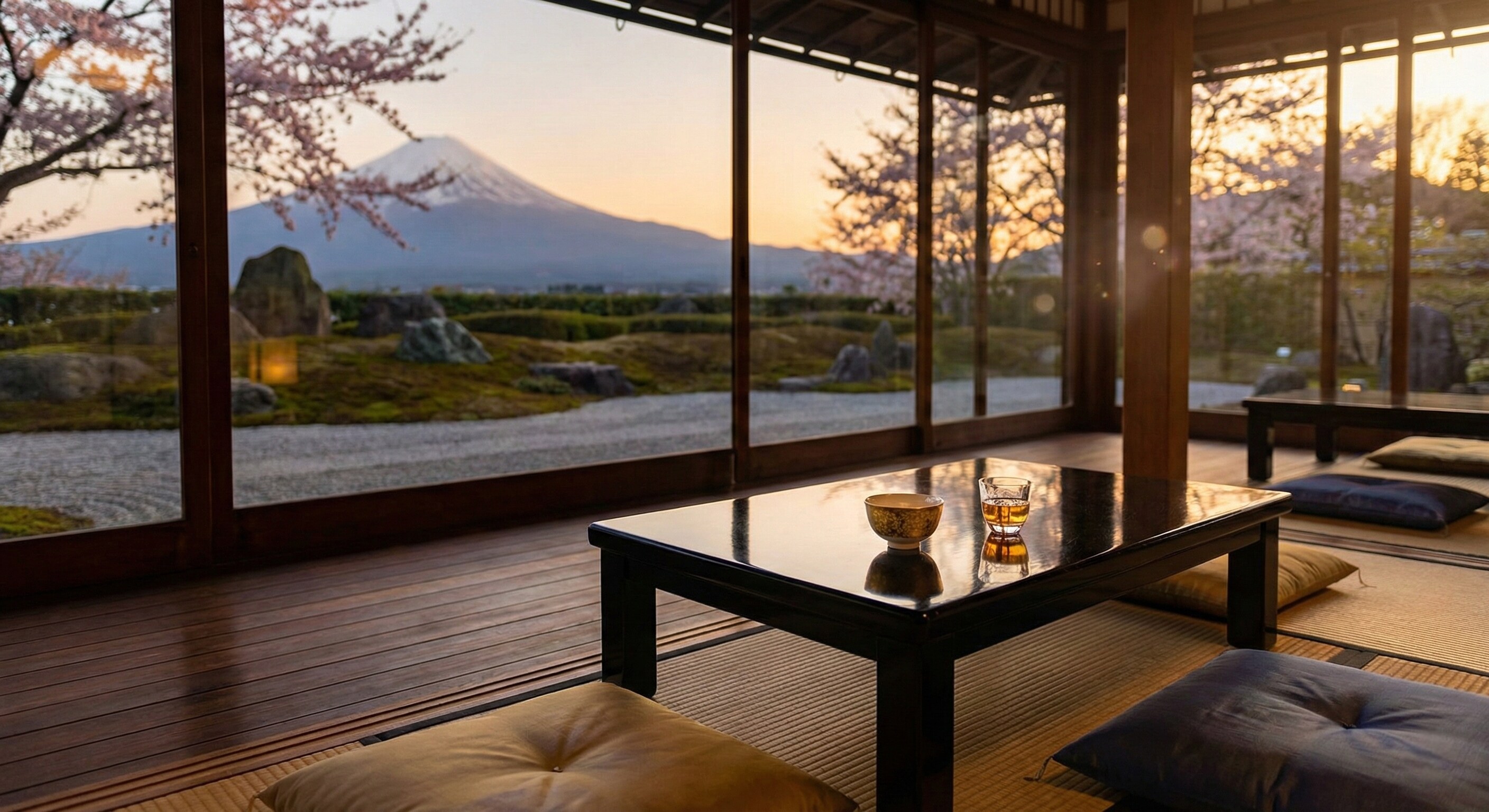
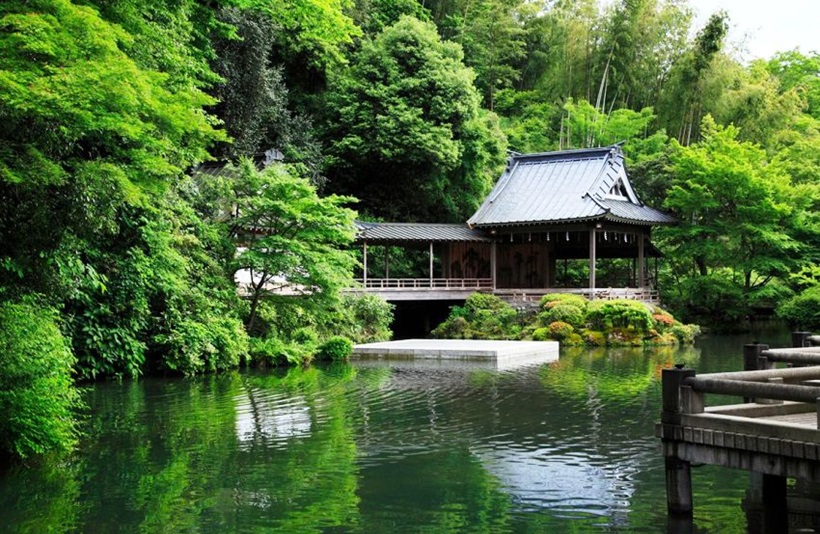
Kyoto’s most visited sites can be magnificent, yet the presence of crowds changes the register of the experience. In a private or limited-access garden viewing, the same city becomes intimate: the sound of water in a basin, the subtle geometry of raked gravel, the way moss holds moisture after rain. Without the constant interruption of cameras and conversation, the garden reads as it was intended—an environment for the mind, not merely the lens.
Temple Precincts Where Sub-temples and “Inner” Spaces Create True Rarity
The most convincing “closed garden” experiences are often found within larger temple complexes—places that contain multiple sub-temples, each with its own architecture and garden tradition. Below are real Kyoto sites where visitors can encounter a meaningful contrast between public flow and more contained, reservation-oriented spaces. Availability and access policies can change; every visit should be planned with respect for the temple’s rules, religious calendar, and conservation needs.
Daitoku-ji (大徳寺): A Zen City of Sub-temples in Kita Ward
Daitoku-ji is one of Kyoto’s great Zen temple complexes, celebrated for its cultural influence and for the density of sub-temples within its walls. The atmosphere here is distinct: even when Kyoto feels saturated, Daitoku-ji’s broad lanes and understated gates seem to absorb sound.
Several sub-temples are known for accepting visitors (often with specific opening hours), while others remain closed except for special openings. This structure makes Daitoku-ji an ideal setting for refined, low-profile visits that prioritize serenity and context over spectacle. The experience deepens when it is curated: arriving at a measured hour, with time to take in the architectural details, and with a guide who can translate Zen aesthetics without turning it into performance.
Within Daitoku-ji, the possibility of focusing on one sub-temple and its garden—rather than “seeing everything”—often creates the most elevated result. The point is not breadth; it is absorption.
Myoshin-ji (妙心寺): Kyoto’s Largest Rinzai Zen Temple Complex
Myoshin-ji is another vast Rinzai Zen precinct, composed of many sub-temples and corridors of calm. It is an environment where the phrase “hidden in plain sight” finally feels accurate: travelers pass through the main gates, yet the true character of the place is found in its quieter corners and the discipline of its spatial design.
Here, the notion of “closed” often expresses itself through the structure of the complex: certain areas are accessible, others are not, and sub-temples may have distinct visitation rules. For travelers accustomed to seamless access worldwide, Myoshin-ji offers a more meaningful form of privilege—the privilege of being guided correctly, arriving with appropriate timing, and entering spaces where the atmosphere remains intact.
Kennin-ji (建仁寺): Elegance and Restraint in Gion
In the heart of Gion, where Kyoto can be at its most kinetic, Kennin-ji provides a different cadence. As Kyoto’s oldest Zen temple (founded in 1202), it has long served as a place where art, ritual, and garden aesthetics coexist with composure.
Kennin-ji’s appeal for high-end travelers is the juxtaposition: the city’s most famous entertainment district on one side, and an interior world of measured steps and contemplative spaces on the other. Visiting with a thoughtfully paced plan—rather than during peak hours—can heighten that contrast dramatically.
Shoren-in (青蓮院門跡): A Monzeki Temple with a Refined Garden Presence
Shoren-in, near Chion-in and the eastern hills, is known as a monzeki temple—historically associated with imperial or aristocratic lineage. Its garden atmosphere is especially compelling for travelers who respond to subtlety: a sense of enclosure, carefully framed views, and an aesthetic that feels courtly without being ostentatious.
In Kyoto, where grandeur is often expected, Shoren-in reminds you that refinement can be quiet. It is well-suited to private planning that emphasizes low-crowd timing and a deepened interpretive layer—history, seasonal garden cues, and the etiquette that keeps the site dignified.
Nanzen-ji (南禅寺): Monumental Gates, Hidden Composure
Nanzen-ji is one of Kyoto’s most significant Zen temples, with a commanding presence and a broad precinct that draws visitors. Yet within and around such an eminent site, the most memorable moments often come from deliberately stepping away from the central flow and into calmer sub-areas—spaces that reward precision planning and a willingness to linger.
For luxury travelers, the distinction is not merely access, but orchestration: arriving when light is soft, navigating the precinct without rush, and preserving the mood through considerate logistics—private transport, efficient routing, and a pace that feels intentional rather than reactive.
Seasonal Openings: When Kyoto Reveals Gardens Usually Kept Behind the Screen
Some of Kyoto’s most coveted garden experiences are not “private” in the strict sense; rather, they are limited in time. Certain temples open special areas only during particular seasons—often spring and autumn—when gardens are at their most expressive and when the city’s cultural calendar naturally turns toward viewing.
For the discerning traveler, seasonal openings still deliver something rare: access that requires foreknowledge, disciplined timing, and a willingness to plan around the temple’s schedule rather than one’s own. When executed well, it feels less like sightseeing and more like participation in Kyoto’s internal rhythm.
Jikishian (直指庵): A Quiet Northern Kyoto Temple with Limited Hours
Jikishian, in the northern hills area near Kyoto’s famous temple district, is known for a calm, reflective atmosphere and for being less trafficked than headline sites. Its visitation is not designed for mass flow; it rewards travelers who are willing to move gently through Kyoto and accept that some places keep shorter hours.
When framed as part of a bespoke day—rather than an afterthought—Jikishian can offer an intimacy that is increasingly scarce in Kyoto: the sense that you are visiting a living, tenderly maintained place rather than a stage set for tourism.
Temple Special Openings in Kyoto: The Art of Timing
Kyoto’s cultural life includes periodic special openings of normally closed areas (often announced by the temples or through official channels). These are not guaranteed, and they should never be treated as entitlements. But when a special opening aligns with your travel window, it can become a defining moment—precisely because it is not always available.
For guests of Japan Royal Service, the value lies in identifying what is realistically accessible in a given season, confirming policies with care, and building the itinerary around what Kyoto is willing to reveal—without forcing the city to perform.
Designing a “Closed Garden” Day in Kyoto: How True Luxury Feels
In a city where so much depends on timing, the most meaningful exclusivity can be created through impeccable sequencing and discretion. A closed-garden-focused itinerary is not a checklist. It is a composition—light, silence, texture, and human encounter.
1) A First Entrance Before the City Fully Wakes
Even where temples have set opening hours, arriving at the earliest appropriate moment can transform the experience. Kyoto is a city of narrow streets and concentrated landmarks; crowds swell quickly. By beginning with a calm, early visit to a temple precinct known for subdued movement—such as Daitoku-ji or Myoshin-ji—you allow the day to open on a quieter note.
The difference is immediate: the soundscape softens, and the gardens feel less like attractions and more like environments. For travelers accustomed to privacy, this is the Kyoto that makes sense.
2) Sub-temple Focus Instead of Temple-Hopping
Within large Zen complexes, choosing a single sub-temple to visit properly—without rushing—can feel far more exclusive than a whirlwind of famous names. This approach also respects the sites: it reduces footfall, preserves the atmosphere, and allows staff and caretakers to manage visitation with dignity.
3) A Cultural Immersion Layer That Is Real, Not Performative
Kyoto’s most elevated cultural encounters are grounded in authenticity: meeting an artisan in their working environment, visiting a traditional district with a knowledgeable interpreter, or being introduced to the etiquette and symbolism that shape temple spaces. The goal is not to “add an activity,” but to deepen the way you perceive what you see.
We avoid invented “ceremonies” and theatrical add-ons. Kyoto does not need embellishment. It requires understanding—and the right introductions when appropriate.
4) Seamless Logistics that Protect the Mood
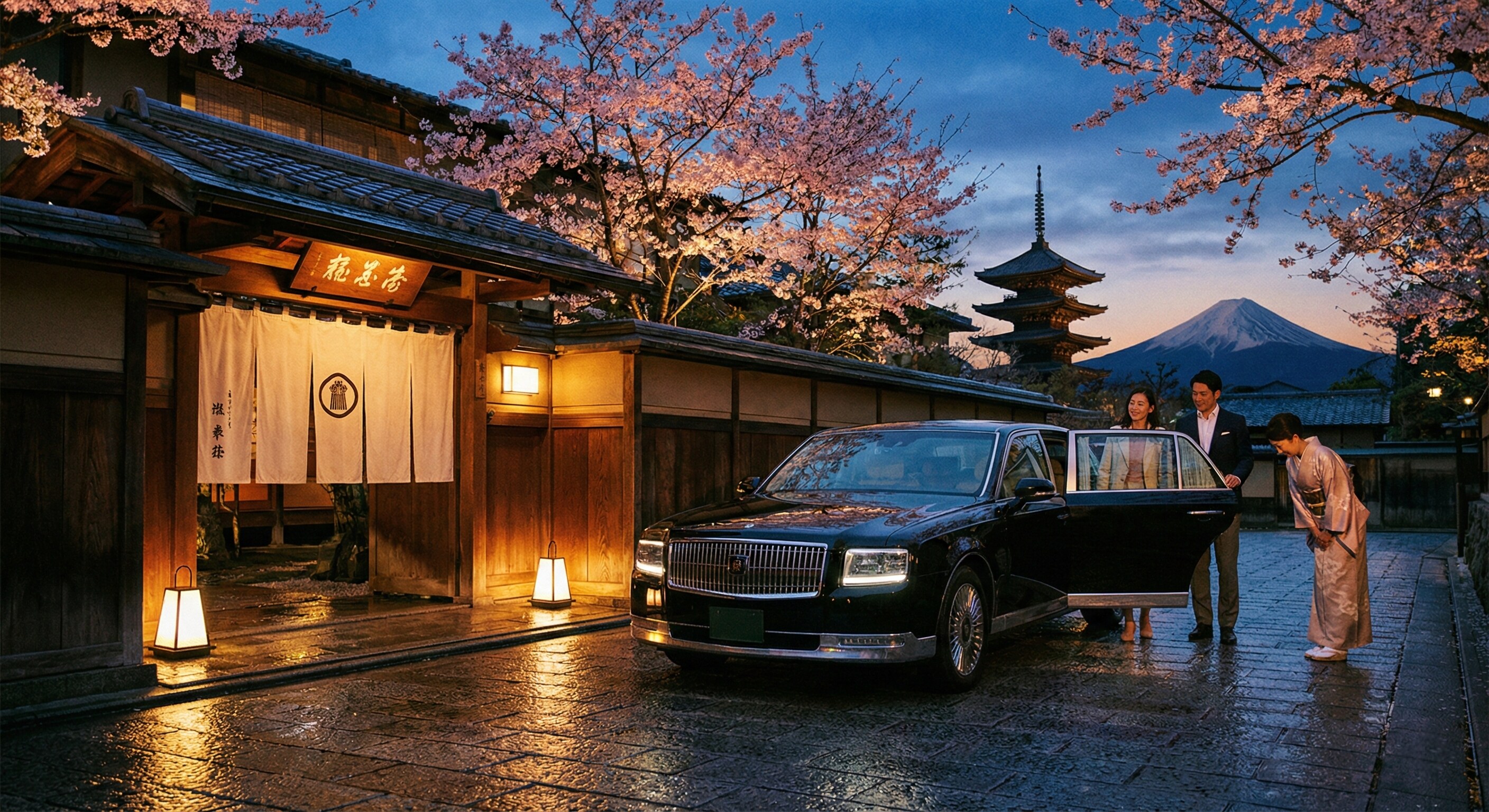
In Kyoto, logistics are not merely transportation. They are mood management. A private vehicle and a precisely spaced schedule prevent the day from being punctured by queues, crowded taxis, or hurried decisions. The most coveted luxury is continuity: moving from one garden to the next without friction, without noise, and without losing the contemplative thread.
Etiquette and Cultural Stewardship: The Price of Entry Is Respect
In invitation-only or limited-access temple areas, etiquette is not a formality—it is a condition of access. Many sub-temples and inner areas maintain strict rules around photography, footwear, and behavior. Even in publicly accessible gardens, there may be restrictions designed to protect artworks, tatami, fusuma paintings, and fragile landscaping.
For travelers who value discretion, these rules align naturally with the tone of the experience. Japan Royal Service prepares guests in advance so that nothing interrupts the moment: not uncertainty about where to stand, not confusion over photography, not a misstep that draws attention in a place devoted to quiet.
- Dress and comportment: Understated, respectful attire supports the atmosphere and avoids unwanted attention.
- Photography awareness: Many temple interiors and certain garden viewpoints restrict or prohibit photos. We advise on what is permitted where, so you can remain fully present.
- Silence as a privilege: In Kyoto’s most refined precincts, quiet is not emptiness—it is the medium through which the place communicates.
Kyoto’s Hidden Gardens as a Private Dialogue
It is tempting to describe “hidden gardens in Kyoto” as if they were treasures to be collected. Yet the most profound garden experiences are not trophies. They are conversations—between architecture and season, between stone and moss, between the visitor and the discipline of the place.
When access is limited—whether through a sub-temple’s policies, a seasonal opening, or a carefully arranged visit—the garden feels less like a product and more like a trust. You are not simply allowed in; you are received. And in Kyoto, being received correctly changes everything.
Conclusion: The Kyoto You Cannot Wander Into
Most travelers meet Kyoto at full volume: famous sites, bright midday, dense foot traffic. But there is another Kyoto—one that exists behind secondary gates and within precincts designed to remain calm. In these “closed” gardens and inner temple spaces, the city returns to its original purpose: a place for refinement, ritual, and the cultivation of attention.
Japan Royal Service designs Kyoto journeys for guests who do not need more attractions—they need fewer interruptions. If you wish to experience exclusive Kyoto temple access, private Kyoto garden tours, and VIP Kyoto temple experiences crafted with discretion and cultural integrity, we will curate a route defined by silence, seasonal beauty, and the rare privilege of time well spent.
Enquire with Japan Royal Service to begin designing your private Kyoto garden itinerary—tailored to your travel dates, your preferred pace, and the most meaningful access that can be arranged respectfully within Kyoto’s living sacred landscape.