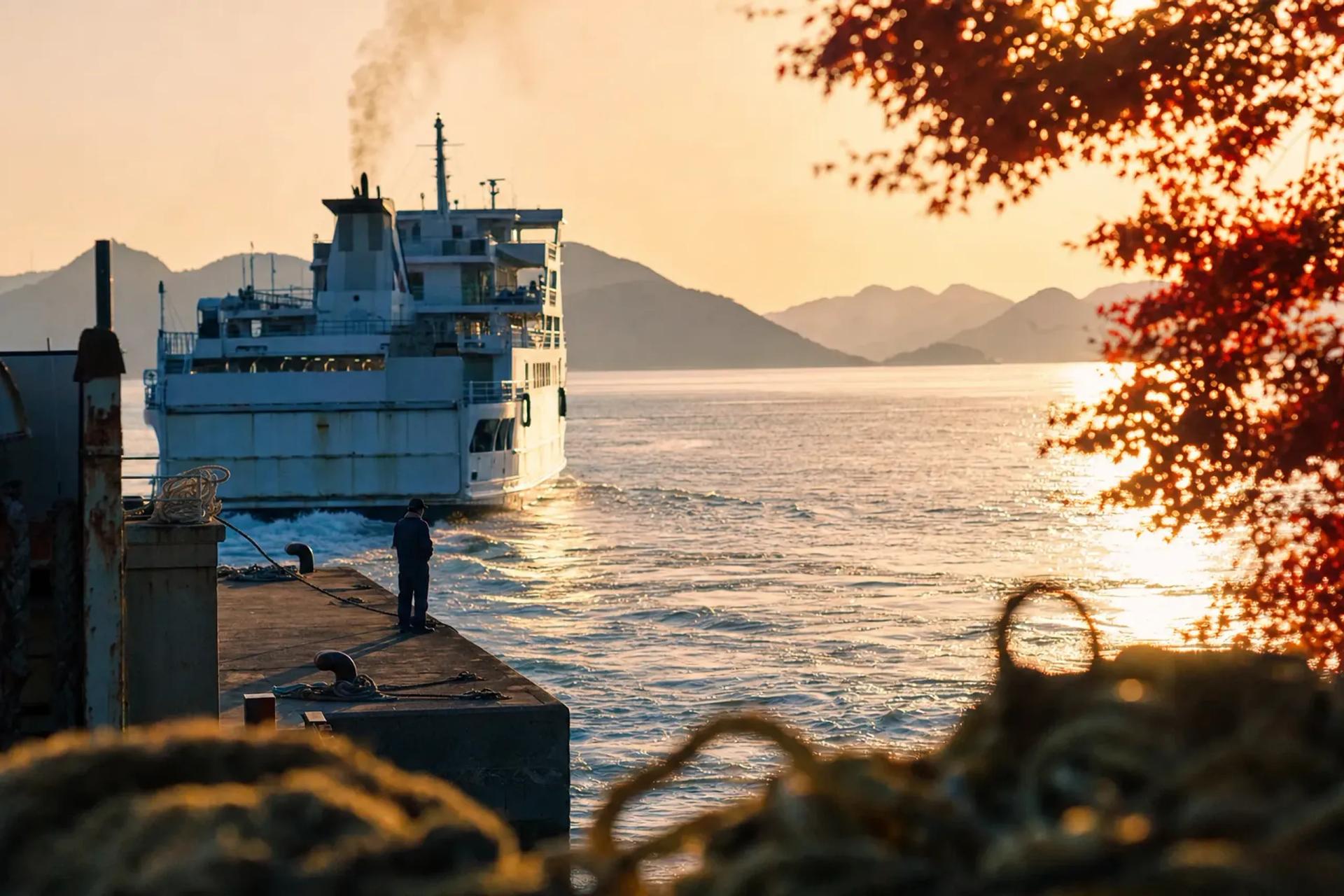
Japan's islands run on sea and sky, not on timetables. A ferry departs when the swell allows it, a high-speed boat stops when the forecast turns, and a flight to a small island strip can be held for wind. The timetable tells you the intention. The weather decides the day.
So here is the single rule that protects the rest of your trip: never leave an island the day before your international flight home. Spend at least one night on the mainland between the island and your departure. Everything else in this guide supports that one habit.
The Rule That Protects Your Flight Home
Keep a buffer day. On any island reached by sea, plan to be back on the mainland the night before your flight home, not racing a ferry to the airport the same morning.
The reason is simple. A cancelled crossing on departure day cannot be fixed by money or by wishing. It can only be absorbed by slack you built in earlier. Put the island early or mid-trip. Let the mainland sit between the sea and the sky.
In our experience, the guests who travel most calmly treat the island as a chapter, not a finale. The final night belongs to a mainland city with rail and road alternatives. From there, missing a flight is almost never on the table.
The buffer-day rule: at least one mainland night between leaving an island and boarding an international flight. On sea-only islands and winter Sea of Japan crossings, build in more.
What Usually Stops First
Fast boats stop first.
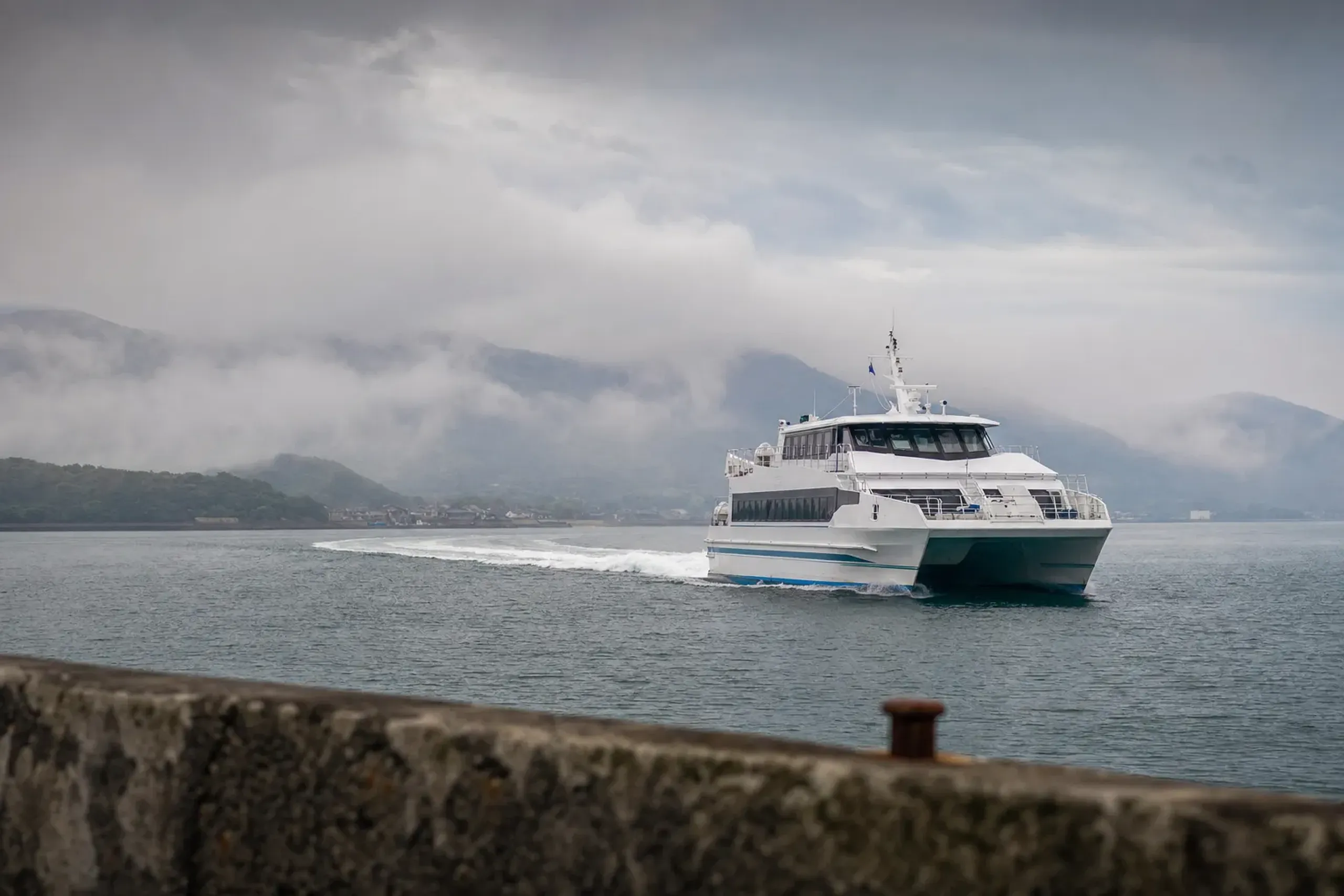
On Japan's islands, the weather decides the day, not the timetable.
When the sea turns, the high-speed craft is the earliest to be held, slower car ferries and flights are the usual fallbacks, and nothing is guaranteed.
Think of each crossing as a ladder of resilience. At the top sits the jetfoil or the fast catamaran, quick and comfortable, and the first to feel the swell. Below it, the heavier car ferry, slower but often described as steadier. Alongside both, where it exists, the flight.
Decisions are made on the day, sometimes within an hour of departure. Sado is a clear example: sailings there are judged on waves, swell, wind and visibility, and there is no published cancellation threshold to plan around. You do not get a number. You get a morning call.
That is why the person watching the status is part of the plan. Our concierge team tracks each crossing and speaks to the guest before anyone stands at a quiet pier wondering what happens next.
Air One Way, Sea The Other
Where an island has both air and sea access, fly one way and sail the other. Keep the mode you did not use as a backup for the day the other one fails.
Gotō shows the logic well. You might fly into Fukue from Nagasaki or Fukuoka in about forty minutes, spend your days, then leave by the high-speed boat or the car ferry.
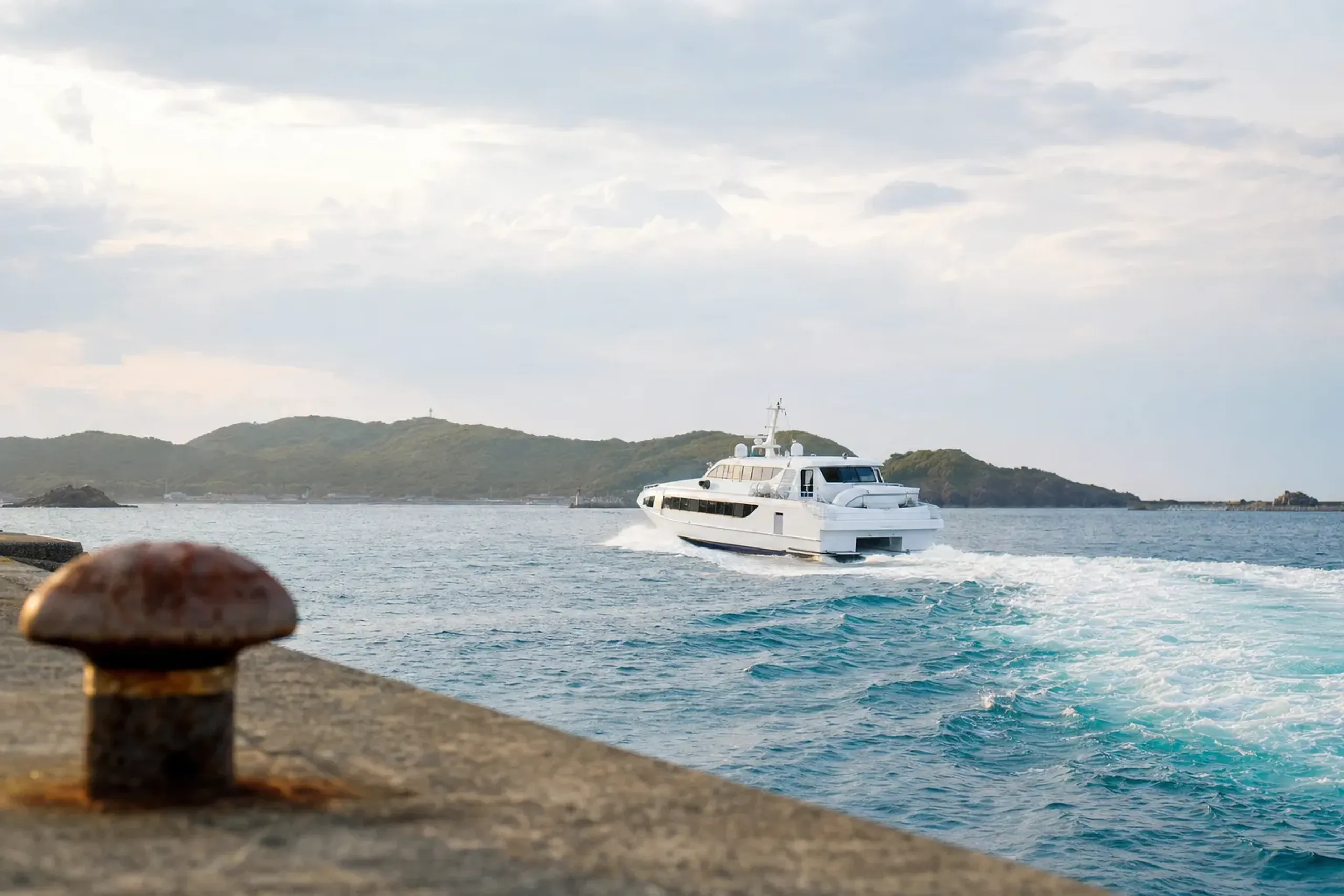
If the sea closes on your way out, the flight is already a known quantity. If the strip is fogged, the ship is there.
Tsushima works the same way. A fast boat from Hakata, or a flight of around thirty to thirty-five minutes from Fukuoka, gives you two independent doors in and out. Our planners at Japan Royal Service build itineraries with both doors open, so a single bad forecast does not close the island on you.
Island By Island
What follows is the access shape of each island, kept to the essentials. Each links to its own guide, where the destination itself is covered properly.
Oki
Reached by ferry or the Rainbow Jet high-speed boat from Shichirui Port in Shimane or from Sakaiminato in Tottori. There are also flights to Oki Airport on Dōgo from Izumo and from Osaka Itami. The high-speed boat is the first to be held; the ferry or a flight is the usual fallback. More on the islands themselves in our Oki Islands guide.
Tsushima and Iki
From Hakata Port, a fast boat reaches Iki in about an hour and ten minutes, the ferry in about two hours twenty. Tsushima (Izuhara) is about two hours fifteen by fast boat, around four and a half hours by ferry. Flights run to Tsushima from Fukuoka and Nagasaki in about thirty to thirty-five minutes, and Iki has a short hop from Nagasaki.
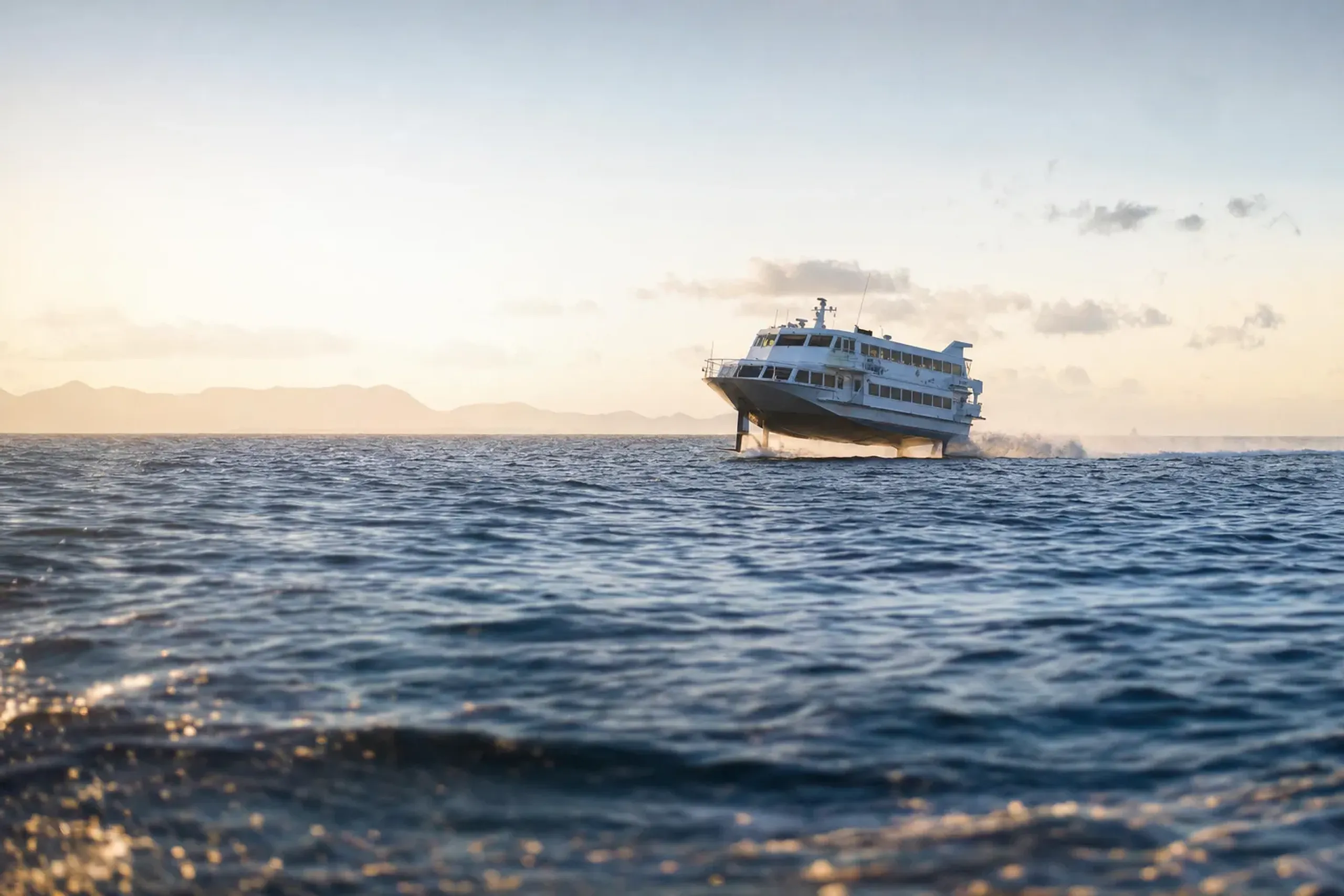
Fast boats can be cancelled in poor seas; the slower ferry is often described as more stable. See the Tsushima and Iki guide.
Gotō
From Nagasaki to Fukue, a high-speed boat takes about ninety minutes, a car ferry about three hours, with some sailings stopping at Nakadōri. Flights to Fukue run from Nagasaki and from Fukuoka in about forty minutes. The high-speed boat stops first; the car ferry or a flight is the fallback. More in the Gotō Islands guide.
Sado
A jetfoil crosses from Niigata to Ryōtsu in about one hour seven minutes, and a car ferry on the same route in about two and a half hours. A seasonal car ferry links Naoetsu and Ogi in about two hours forty. There is no air alternative here, and no published cancellation threshold, so Sado needs more slack than most. The Sado loop guide has the detail.
Rishiri and Rebun
A ferry from Wakkanai reaches either island in about two hours. Flights serve Rishiri Airport from Sapporo, both Okadama and New Chitose. Rebun has no flight, so the ferry is its only door. If the sea closes, the Rishiri flight or simply another day is the fallback. See the Rishiri and Rebun guide.
Kerama
High-speed boats run from Tomari Port in Naha: Tokashiki in about forty minutes, Aka in about fifty, Zamami in about fifty to seventy.
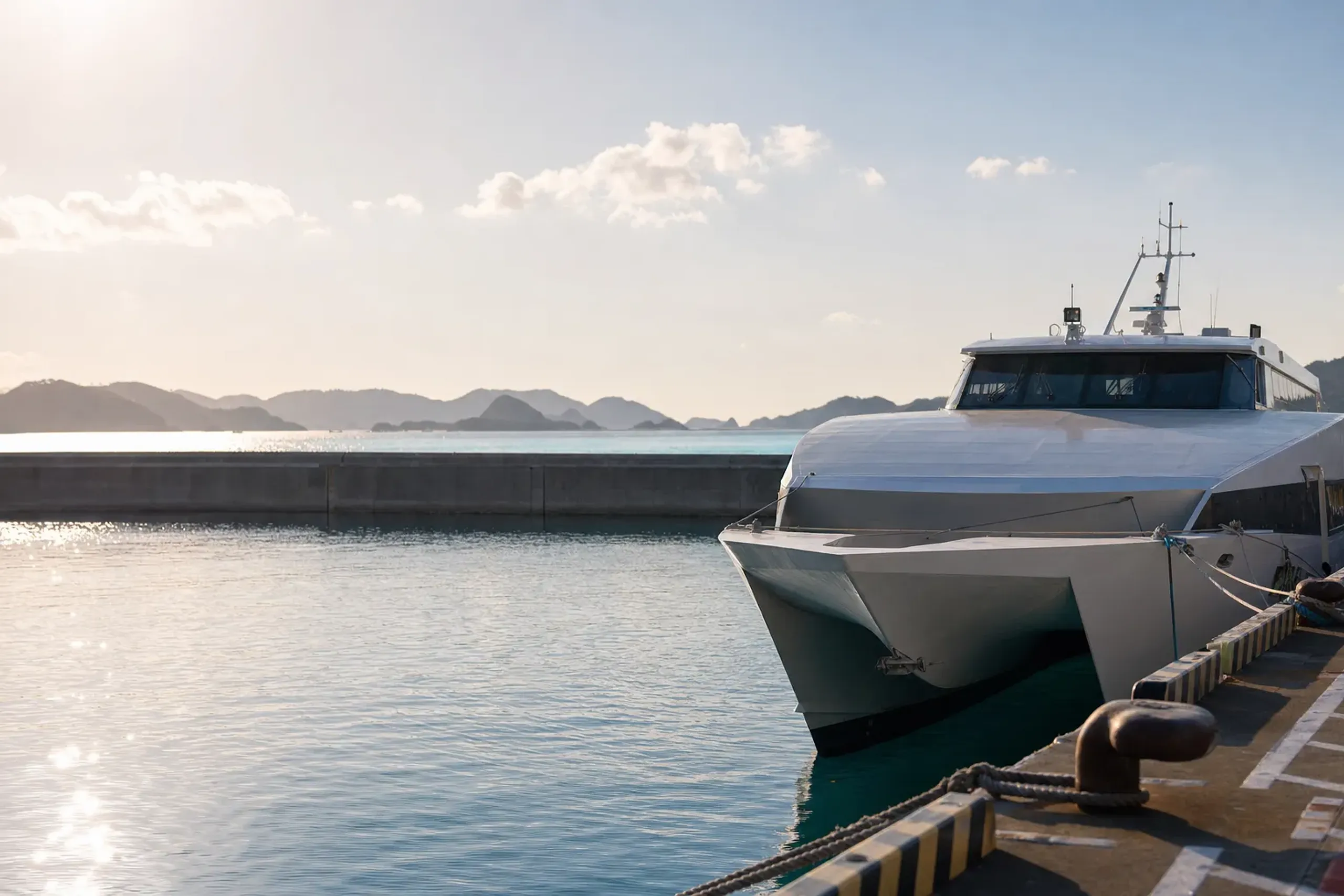
Slower car ferries also run. There is no airport here, so a rough forecast can cancel the fast boat and leave only the car ferry, or another day. More in the Kerama Islands guide.
Yaeyama
Ishigaki has direct flights to Tokyo Haneda and to Naha, which makes it a sturdy gateway. Fast ferries run from Ishigaki Port to Taketomi and Iriomote. Iriomote has two ports, Uehara in the north and Ohara in the south, and the Uehara route is especially exposed to northerly winds in winter. When an Uehara sailing is cancelled, passengers are moved to an Ohara sailing, with a shuttle bus running toward Uehara in about fifty to sixty minutes. Decisions are made from the morning up to just before departure. See the Yaeyama Islands guide.
Ogasawara
There is no airport. The Ogasawara Maru sails from Takeshiba Pier in Tokyo to Futami Port on Chichijima in about twenty-four hours each way. In most seasons it sails roughly once a week, and that pattern shapes the entire trip. Hahajima lies about two hours further by local ferry. This is the island that most rewards a patient plan. The Ogasawara guide explains why.
At A Glance
| Island group | How you get there | What usually stops first | The usual fallback |
|---|---|---|---|
| Oki | Ferry, high-speed boat, flight | High-speed boat | Ferry or flight |
| Tsushima and Iki | Fast boat, ferry, flight | Fast boat | Ferry or flight |
| Gotō | High-speed boat, car ferry, flight | High-speed boat | Car ferry or flight |
| Sado | Jetfoil, car ferry | Jetfoil | Car ferry, or another day |
| Rishiri and Rebun | Ferry, flight (Rishiri only) | Ferry | Flight from Rishiri, or another day |
| Kerama | High-speed boat, car ferry | High-speed boat | Car ferry, or another day |
| Yaeyama (Taketomi, Iriomote) | Fast ferry from Ishigaki | Uehara route (Iriomote) | Ohara sailing plus shuttle, or another day |
| Ogasawara | Ogasawara Maru only | The sailing itself | The next sailing |
Conditions vary by day and season; the JRS concierge team confirms directly with the guest at time of arrangement.
Seasons That Change The Plan
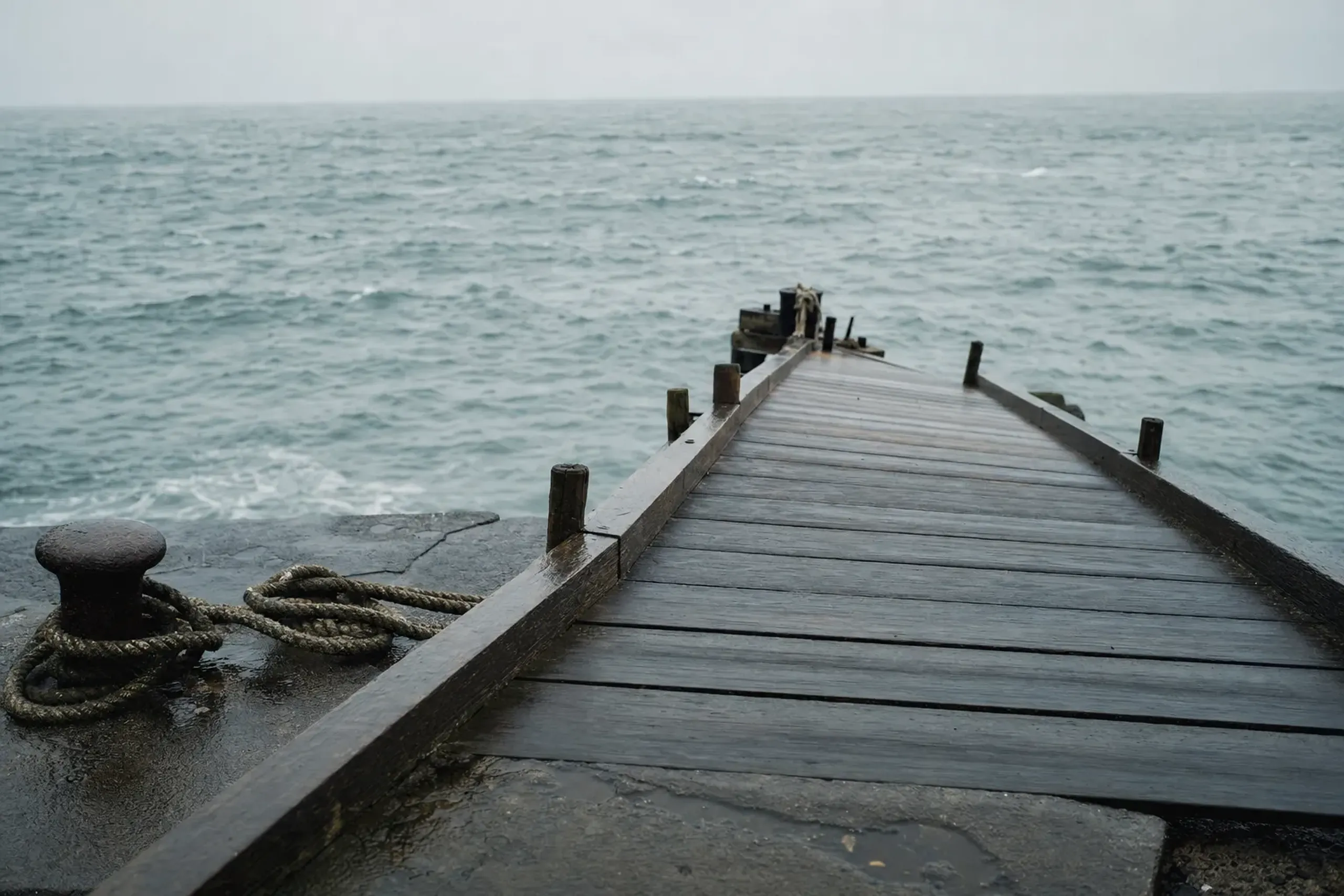
Two weather patterns reshape island plans more than any other. Knowing which one you are travelling through tells you how much slack to carry.
Typhoon season affects the southern crossings most, and it can close fast boats across Okinawa and Kyushu for days at a time. We cover the detail elsewhere rather than repeat it: see our notes on Okinawa's shoulder season, and our wider thinking on planning around unsettled weather.
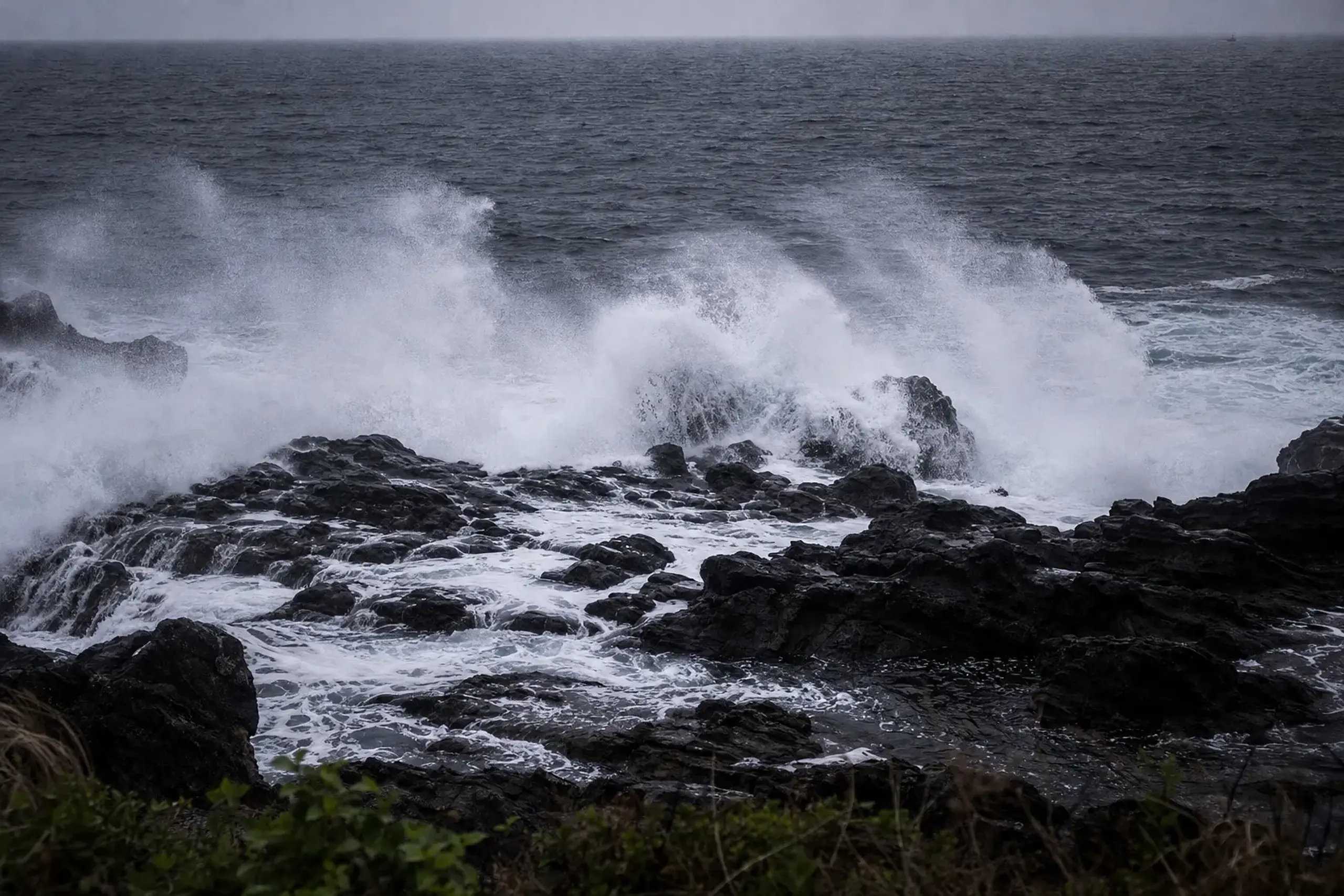
Winter on the Sea of Japan side brings a different problem. Cold northerly winds build swell on the routes to Oki and Sado, and on the Uehara approach to Iriomote far to the south. The fast craft feel it first. In these months, add an extra night of slack and keep the flight or the car ferry firmly in reserve.
Bags, Rail And The First Night Back
Keep the first mainland night after an island loose. A hotel near the port or airport, and rail you can change, turn a delayed crossing into a minor adjustment rather than a scramble.
For luggage, we usually forward the heavy cases ahead so you cross with only what you need for the island; the mechanics are explained in how luggage moves through an itinerary. On the mainland legs we favour changeable rail, including Green Car, and the trade-offs between road and rail are set out in how you actually move through Japan. The broader picture of what makes a trip run smoothly sits in our piece on the logistics decisions that shape a trip.
Questions We Are Often Asked
Which Japanese islands can you fly to instead of taking a ferry?
Oki, Tsushima, Iki, Gotō (Fukue), Rishiri and Ishigaki in the Yaeyama group all have airports, so you can fly in and sail out, or the reverse. Sado, Rebun, Kerama and Ogasawara have no flight option.
Do high-speed boats in Japan get cancelled in bad weather?
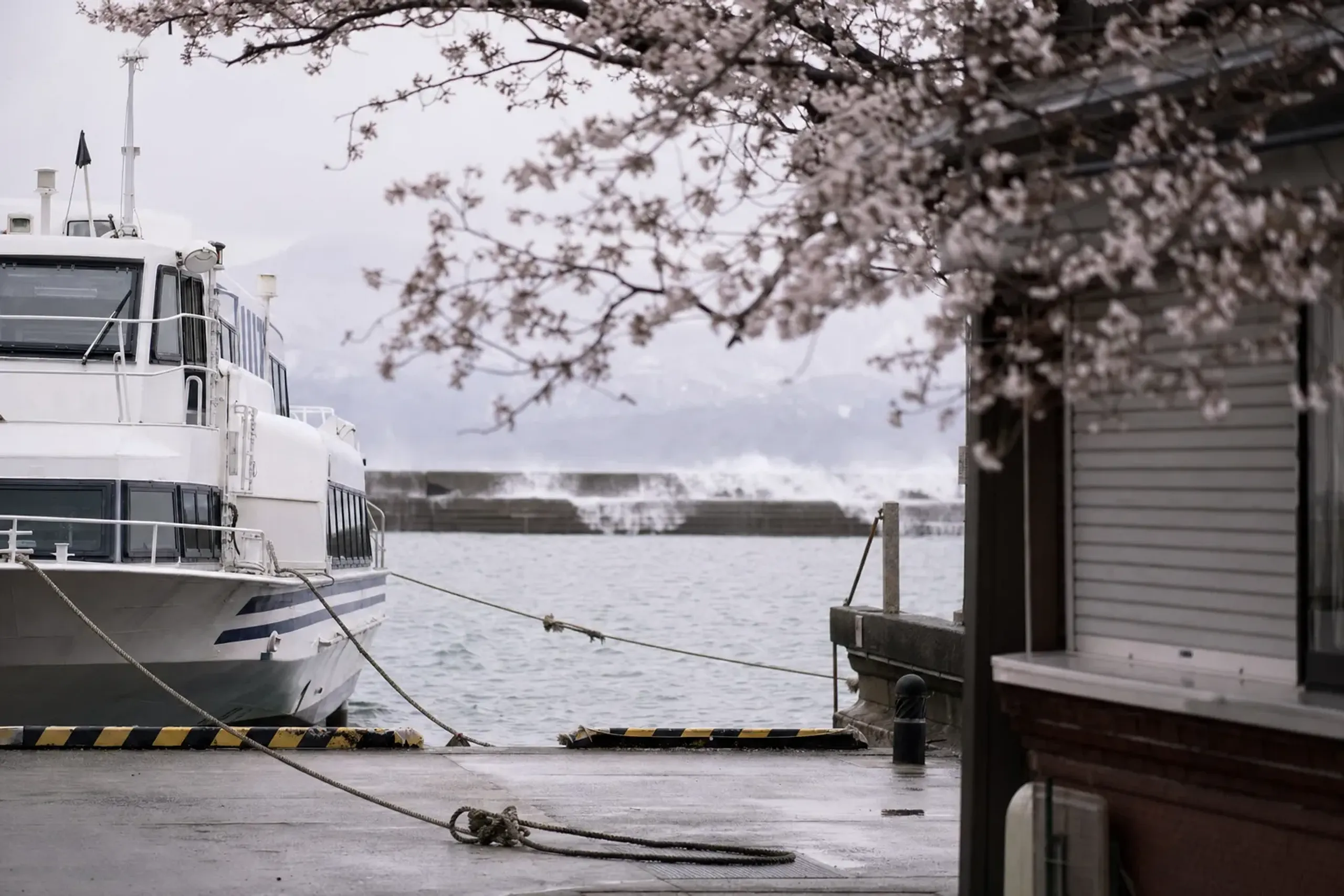
Yes. High-speed and fast boats are the first crossings to be held when the sea turns, and decisions are often made the same morning. Slower car ferries and flights are the usual fallbacks, though nothing is guaranteed.
How many buffer days should I leave after an island in Japan?
At least one mainland night before an international flight home. On sea-only islands such as Sado and Kerama, and on winter Sea of Japan crossings, add more; Ogasawara needs the most because its sailing runs only about once a week.
Can I reach Ogasawara by plane?
No. Ogasawara has no airport. The only way in is the Ogasawara Maru from Takeshiba Pier in Tokyo to Chichijima, about twenty-four hours each way, sailing roughly once a week in most seasons.
How JRS Arranges It
Our role is to make the sea leg behave like part of a considered plan rather than a gamble. At Japan Royal Service, we handle:
- Island routing, with flights and ferries booked where booking is available.
- Vehicles from partner companies with English-speaking drivers for the port and airport legs.
- English-speaking guides, booked separately from drivers.
- Ryokan and hotel booking, and rail tickets for mainland legs, including Green Car.
- Luggage forwarding.
- Same-day re-planning when a crossing changes, built into a tailor-made itinerary from the start.
Because sailing decisions are made on the day, we keep someone watching the status for you, and we confirm each variable directly before it matters. To begin planning, contact our team here.