In this guide
- 01How Long Is The Ferry Crossing To Sado Island?
- 02Do The Sado Ferries Run In Rough Seas?
- 03Ogi And The Tub Boats
- 04The Coast: Senkaku Bay, Ōnogame And The Summer Beaches
- 05The Gold Mines And The Crested Ibis
- 06When Is The Earth Celebration Drum Festival On Sado?
- 07Food And Weather In Summer
- 08Getting There And How Japan Royal Service Plans Sado
- 09Plan Your Sado Summer With Us
- 10Frequently Asked Questions
The Jetfoil pushes off from the Niigata terminal and lifts onto its foils, and for a moment the city slides away behind the wake. Then nothing but the open water of the Sea of Japan. About an hour later a long grey-green shape resolves on the horizon — two mountain ranges with a plain slung between them. That is Sado. It arrives slowly, the way an island should.
Here is the honest truth about this place. Sado is a commitment. You cross water to reach it, you need a car to see it, and you want a day for each coast. Rush it and you will spend your time driving. Plan it well, and summer hands you a few things that are easy to miss from a mainland spreadsheet: tub boats on a glassy bay, a short official swimming season, a drum festival at the very end of the road, and a UNESCO gold mine that deserves far more than a glance. Our team at Japan Royal Service builds Sado as an unhurried loop — with the sea, not the itinerary, in charge of the clock. That willingness to let the water set the pace is precisely the kind of discreet, carefully judged planning that separates a genuine island journey from a rushed box-ticking exercise.
How Long Is The Ferry Crossing To Sado Island?
The fastest crossing is the Sado Kisen Jetfoil from Niigata to Ryōtsu, about 1 hour 7 minutes; the car ferry on the same route takes roughly 2 hours 30 minutes.
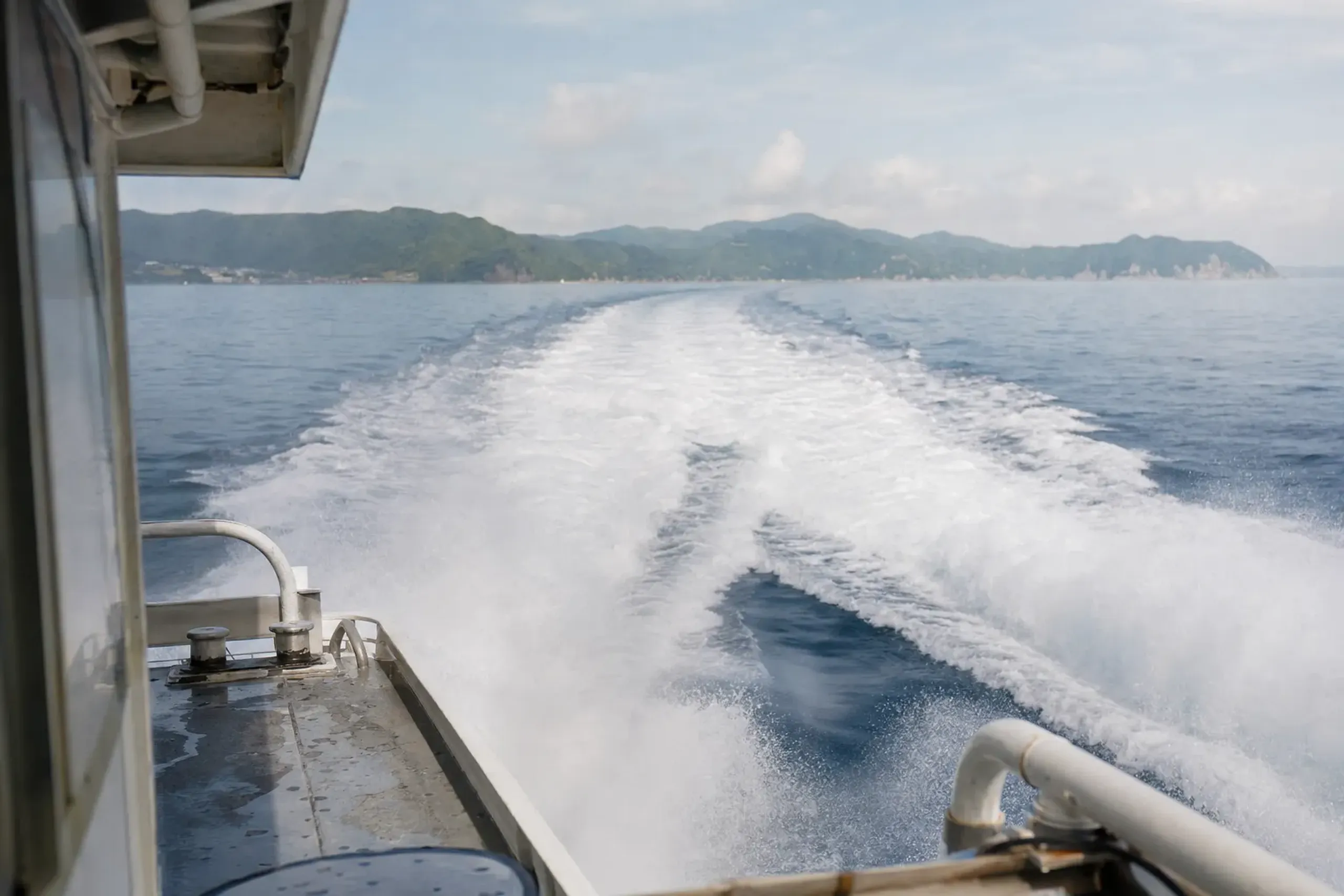
Those are the two choices on the main route, and they are genuinely different experiences. The Jetfoil is quick, seated, and businesslike — ideal for guests arriving tired from a Shinkansen. The car ferry is slower, but you can walk the decks, feel the wind shift, and watch the island grow from a smudge into a coastline. From Tokyo, the Jōetsu Shinkansen reaches Niigata in about two hours; some guests enjoy the Gran Class carriage for that leg before the water.
Niigata Station to the ferry terminal is short — about 15 minutes by bus, roughly 10 by taxi. There is a second, quieter way in: the car ferry from Naoetsu to Ogi, the Kogane Maru, about 2 hours 40 minutes, sailing from 20 March to 23 November in the 2026 season. It is a car ferry only. You may still find older pages describing a Jetfoil on that route — ignore them; it no longer runs. Arriving at Ogi puts you straight into the south, which some itineraries prefer.
Key fact: Sailings are decided on waves, swell, wind and visibility — there is no published cancellation threshold. Always check the status page on the day. Our concierge monitors it for you ahead of each crossing.
Do The Sado Ferries Run In Rough Seas?
Not always. Sado Kisen cancels or delays sailings based on wave height, swell, wind and visibility, with no fixed published cutoff, so summer typhoons and strong fronts can suspend service with little notice.
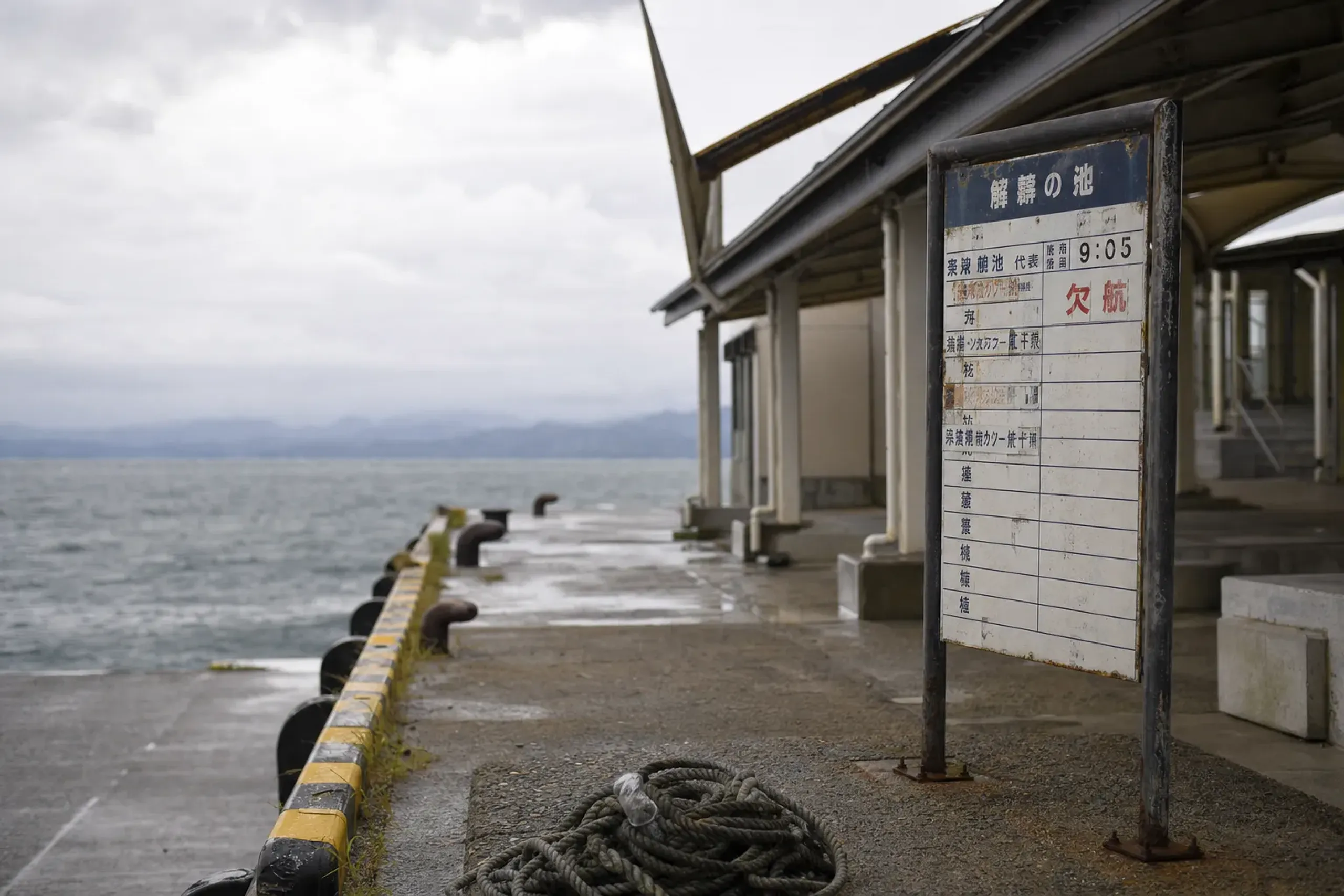
This is the single most important planning fact about Sado, and most mainland itineraries bury it. The sea is the scheduler. In practice that means building slack into the trip — a buffer day on each side, flexible first-night and last-night plans, and a willingness to swap the Jetfoil for the sturdier car ferry when swell builds. It is a mistake to plan a same-day connection to an international flight off a Sado departure. We don't. Our team watches the forecast and the live status in the days before you sail, and we keep a quiet Plan B ready for the morning you need one — the kind of anticipatory care you never have to ask for.
Ogi And The Tub Boats
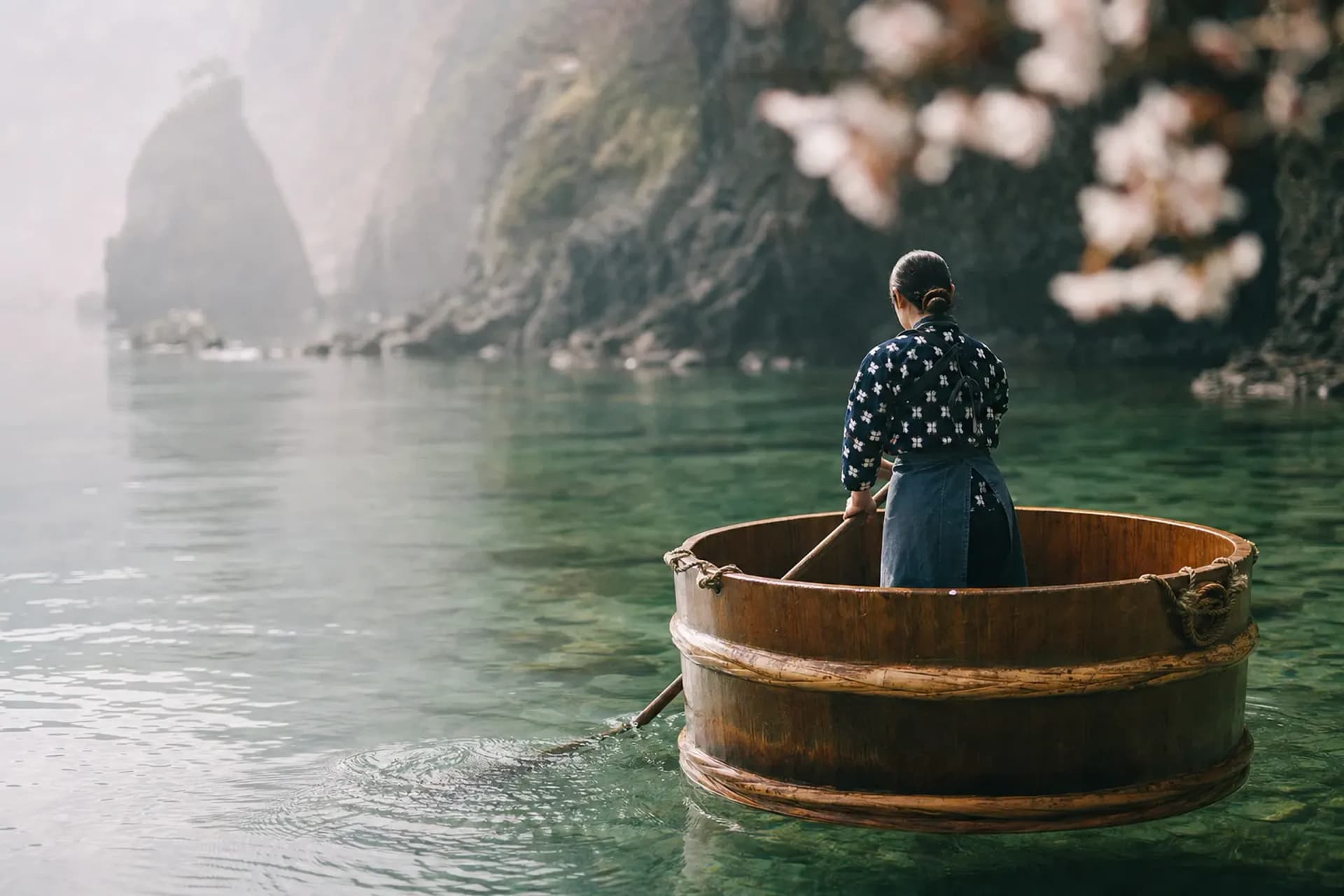
Ogi, on the southern tip, is where Sado turns strange and lovely. In a sheltered cove sit the tarai-bune — round tub boats, descendants of halved miso barrels, which is why they are also called hangiri. Each is roughly 150 by 130 by 50 centimetres and can carry about 500 kilos. The tourism association traces them to the late Edo period, when women used them to gather shellfish and seaweed off Ogi's jagged reefs, slipping into coves a conventional hull could never reach.
You climb in, a boatwoman sculls with a single oar, and the whole vessel spins and glides across water so still it mirrors the cliffs. It is slow. It is a little absurd.
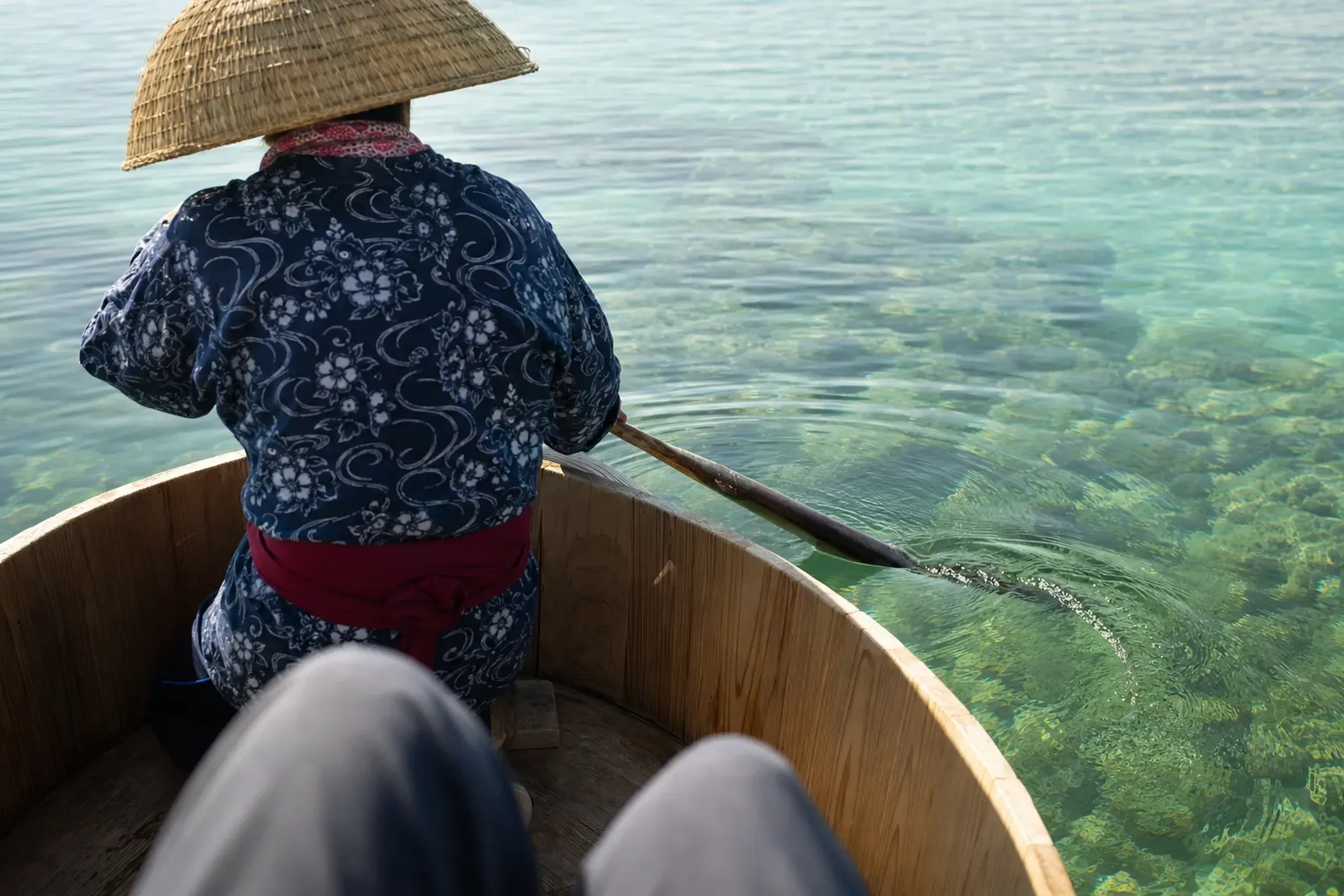
And it is the best few minutes on the island — a small, perfect piece of the Japan that no guidebook can quite prepare you for.
Three operators work the area and the seasons differ, so timing matters:
- Rikiya Kankō Kisen — at Ogi Port, open year-round.
- Yajima Experience Center — April to October, a ride of about 7 to 8 minutes in a postcard cove.
- Hangiri at Shukunegi — late March to late November, beside the old shipbuilders' village.
Shukunegi itself is worth the walk afterwards — a dense warren of weathered wooden houses built by the carpenters who once made Sado's merchant ships, packed into a hollow against the wind. There is a restraint to the place, a quiet patina of age that rewards slow attention rather than a quick pass. Our coordinator usually pairs a morning tub-boat ride with a slow hour here before the light goes hard.
The Coast: Senkaku Bay, Ōnogame And The Summer Beaches
Drive north and the coastline changes character entirely. At Senkaku Bay (Ageshima Park) the cliffs drop in columns to clear water; the undersea viewing boat runs May to September, 8:30 to 17:30. Further up the island, Ōnogame rises 167 metres from the sea — a vast turtle-shaped rock that earned two Michelin stars for scenery. Note that its famous Tobishima daylily bloom runs late May to early June, so by high summer that flower is gone; come for the form of the rock and the sweep of the coast, not the colour.
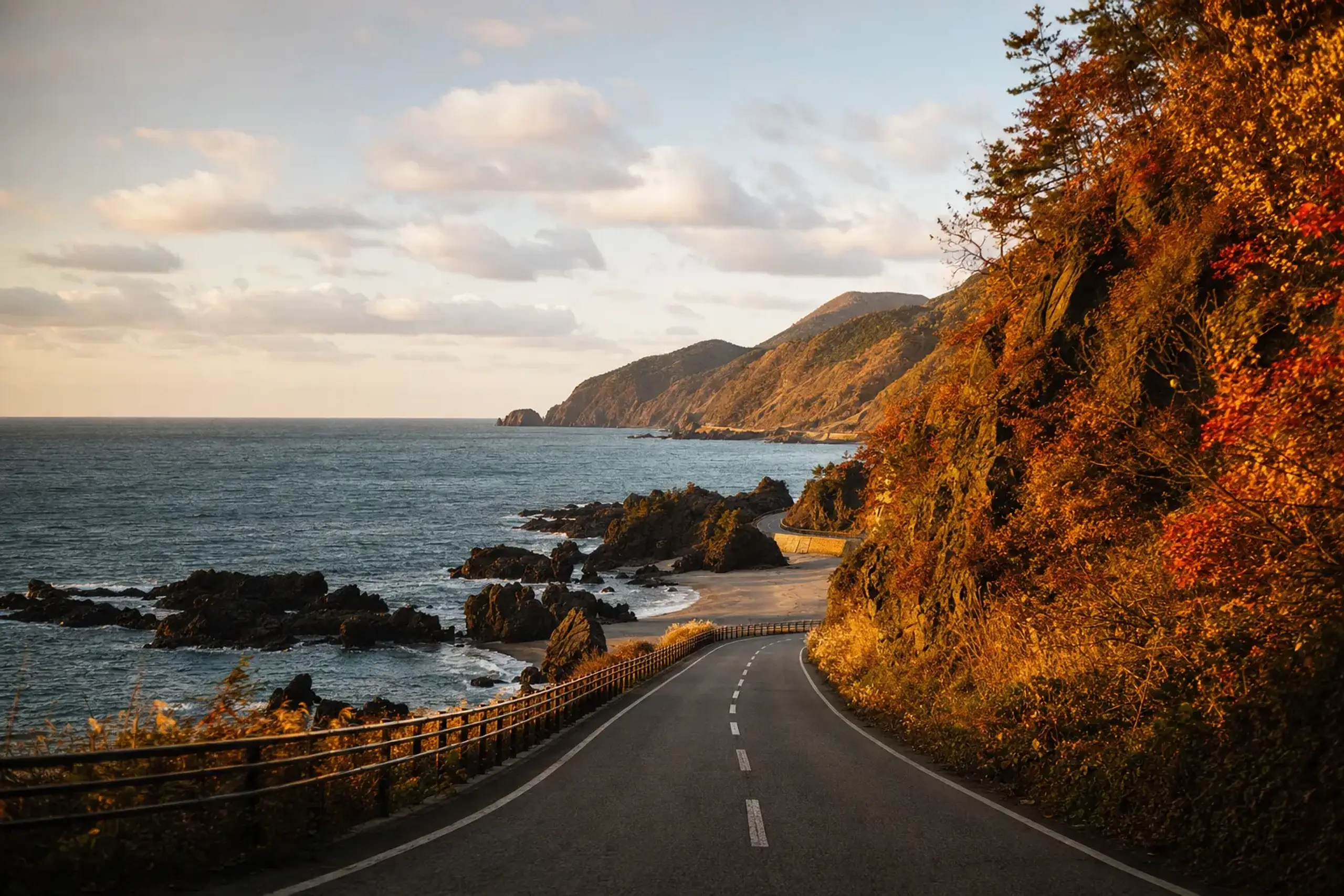
Near the northern tip, Futatsugame is the beach that ends up on every poster — twin rocks joined to the shore by a thin bar of sand. Reaching the water means 355 steps down from the car park, and back up again, so factor that in. The campground there ran 25 April to 31 October in the 2026 season.
If swimming is the point, note the calendar carefully. Sado has seven designated swimming beaches — Akagame/Kazeshima, Sawata, Jōgahama, Sotohama, Tassha, Irisaki and Futatsugame — and the official season is short. In 2026 it ran 11 July to 29 August. Outside those dates the beaches are still beautiful to walk; they simply aren't staffed for swimming.
The Gold Mines And The Crested Ibis
Inland above Aikawa sit the Sado Island Gold Mines, inscribed by UNESCO in 2024. Since April 2025 the Historic Site Sado Gold Mine runs one combined course through the Sōdayū and Dōyū tunnels, 60 to 90 minutes, carrying you from Edo-era hand-dug shafts into the machine age. Regular hours from 1 April 2026 were 8:00 to 16:00 with last entry at 16:00, though renovation work may shift them — check before the visit. After dark, the hulking Kitazawa Flotation Plant is lit up; that light-up ran 17 April 2026 to 5 January 2027. The free walking street of Aikawa Kyōmachi, about 1.2 kilometres, fills a pleasant late afternoon. Both Japan and UNESCO have called for the mine's full history to be interpreted, and that work is still being developed — we cover the mine and its layers properly in our dedicated Sado gold mine guide.
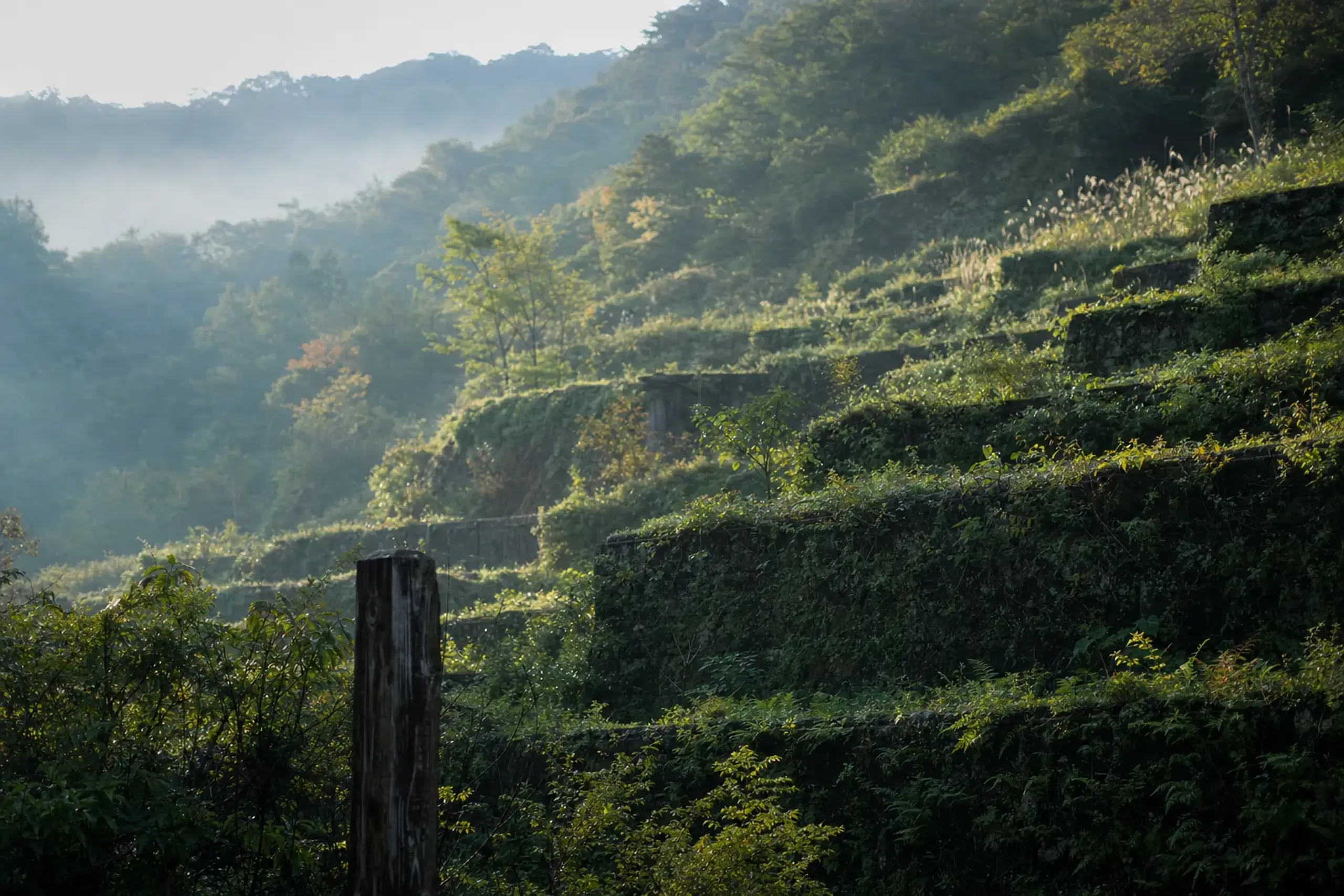
Sado is also the last home of the toki, the Japanese crested ibis. At the end of December 2025 the Ministry of the Environment counted 473 wild birds (down from 576 a year earlier — these are living populations, and they fluctuate). The Toki Forest Park Exhibition Hall is open 8:30 to 17:00, closed Mondays outside March to November; the working conservation centre is not open to the public, and that boundary matters. Watching ibises feed in a rice paddy at dusk, pale against the green, is a quiet, unhurried thing — exactly the right note for conservation-minded guests who prefer distance and patience to a photo opportunity.
When Is The Earth Celebration Drum Festival On Sado?
Earth Celebration, the three-day arts and music festival hosted by the Sado-based taiko ensemble Kodo, is held over a long weekend in the second half of August; in 2026 it ran 21–23 August, with 2027 planned for 20–22 August.
This is the reason many guests choose late August, and it changes the shape of the loop. The format centres on evening Harbour Concerts at Ogi Port Park, with fringe stages and daytime workshops threading through the town. The drums carry across the water as the light fades — a sound you feel in the chest before you place it. These are public concerts, so we plan comfort around them: where to base, how to move quietly after dark when the small roads fill, and which quieter afternoon hours are worth protecting for rest.
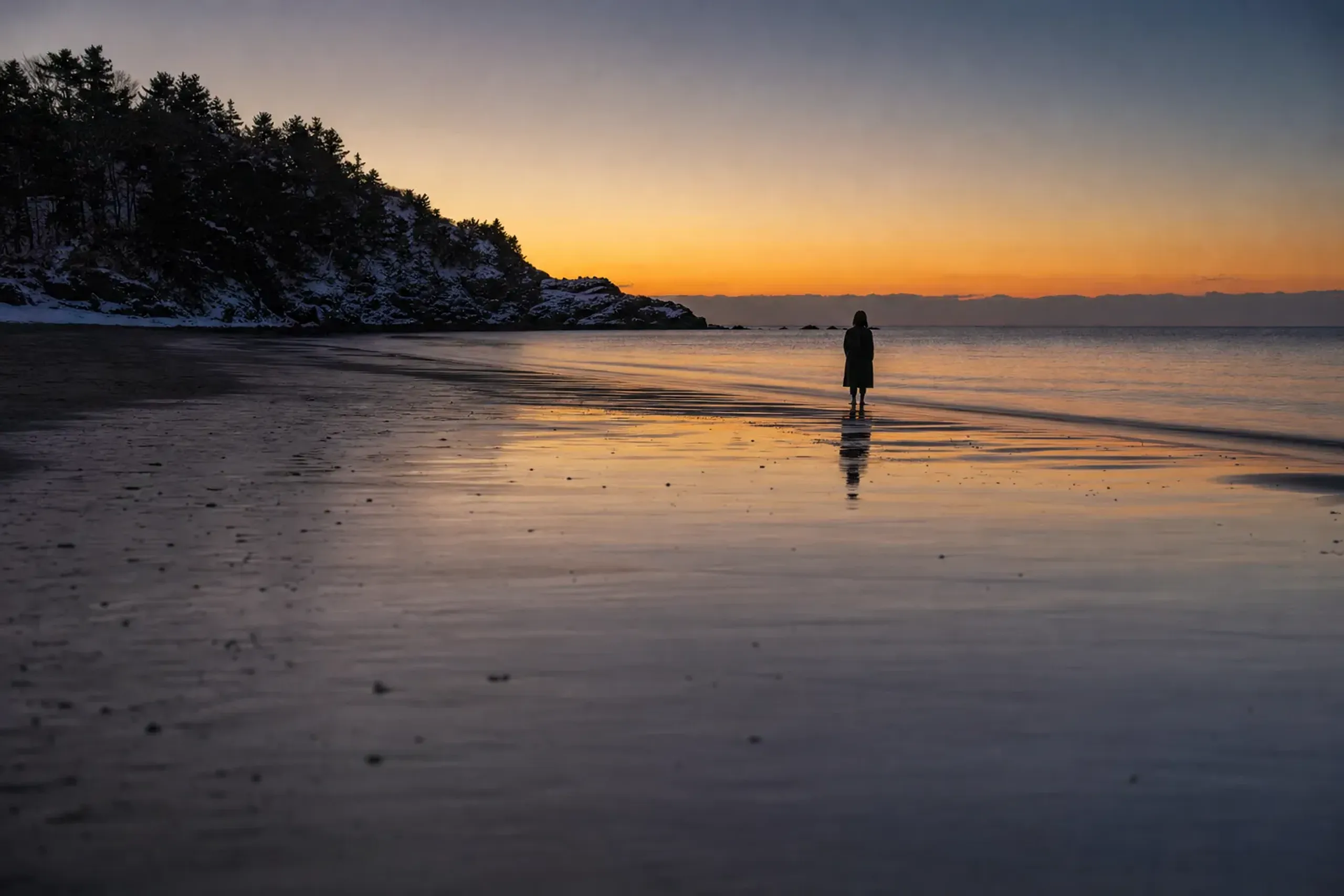
Ogi books out early in festival week. Our concierge checks event terms and lodging pressure for your dates well in advance, discreetly securing the comforts that make a public festival feel private.
Earth Celebration doesn't sit alone on the August calendar. In 2026 the Yoru no Gozen Odori dance ran on six August dates, Ryōtsu held its Tanabata on 8 August, and the Ogi Port Festival fell on 29 or 30 August (sources differ). The island's own folk song, Sado Okesa, is said to descend from a Kyushu drinking tune carried north by sailors — a reminder that everything here arrived by sea. For travellers tracking the wider summer season, our Japan summer festival calendar sets Sado's dates in context.
Food And Weather In Summer
Sado eats from its own water, and from its own fields. The iwagaki rock oyster is in season through summer, deep and briny; abalone and turban shell are also caught in the warm months. The island grows serious rice on the Kuninaka Plain between its two ranges, which is why the sake here is worth lingering over. We leave the menu to the kitchens and the season, and build meals around what the boats bring in that morning — a quiet pleasure that no amount of advance planning can manufacture.
Weather is kind in August.
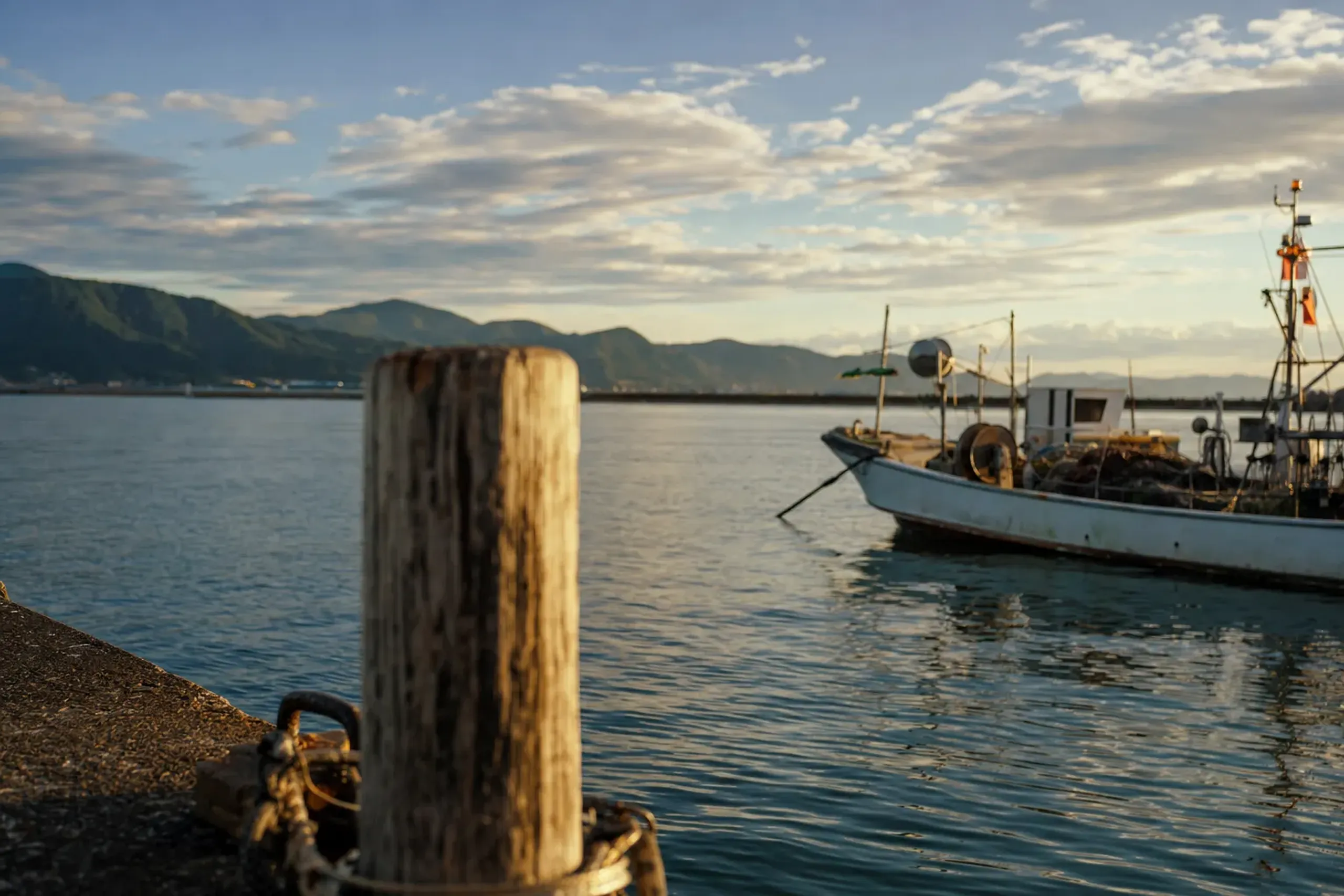
Ryōtsu's monthly mean sits around 26 °C, with daily highs near 29.6 °C and lows around 23 °C — warm, humid, and sea-cooled in the evenings. One practical comfort worth knowing: there are no bears, wild boar, monkeys or deer on Sado, so coastal walks and quiet trails carry none of the wildlife caution the mainland sometimes demands.
Getting There And How Japan Royal Service Plans Sado
The spine is simple. Tokyo to Niigata on the Jōetsu Shinkansen, about two hours. Niigata Station to the terminal, 10 to 15 minutes. Then the Jetfoil or car ferry to Ryōtsu — or, from the west, the Naoetsu-to-Ogi car ferry in the 2026 sailing window. There are no scheduled flights to Sado. A one-off charter flew on 28 May 2026, and charter packages have been floated for autumn 2026, but none of that is scheduled service you can plan a trip around.
Once ashore, you need wheels. Public buses run (the English timetable even notes tap-to-pay on the main Honsen line), but for guests who value their days, a private chauffeur and guide-driver removes the friction entirely — vehicles can be arranged on the island itself. What we do, and don't, is worth stating plainly, because discretion begins with honesty. Our team at Japan Royal Service provides the cultural interpreter guiding, private transfers, accommodation coordination, meals and the day-by-day plan. The ferries, the tub boats, the mine tour and the festival are all public services — we don't run private boats, private mine access or festival privileges, and we won't pretend otherwise.
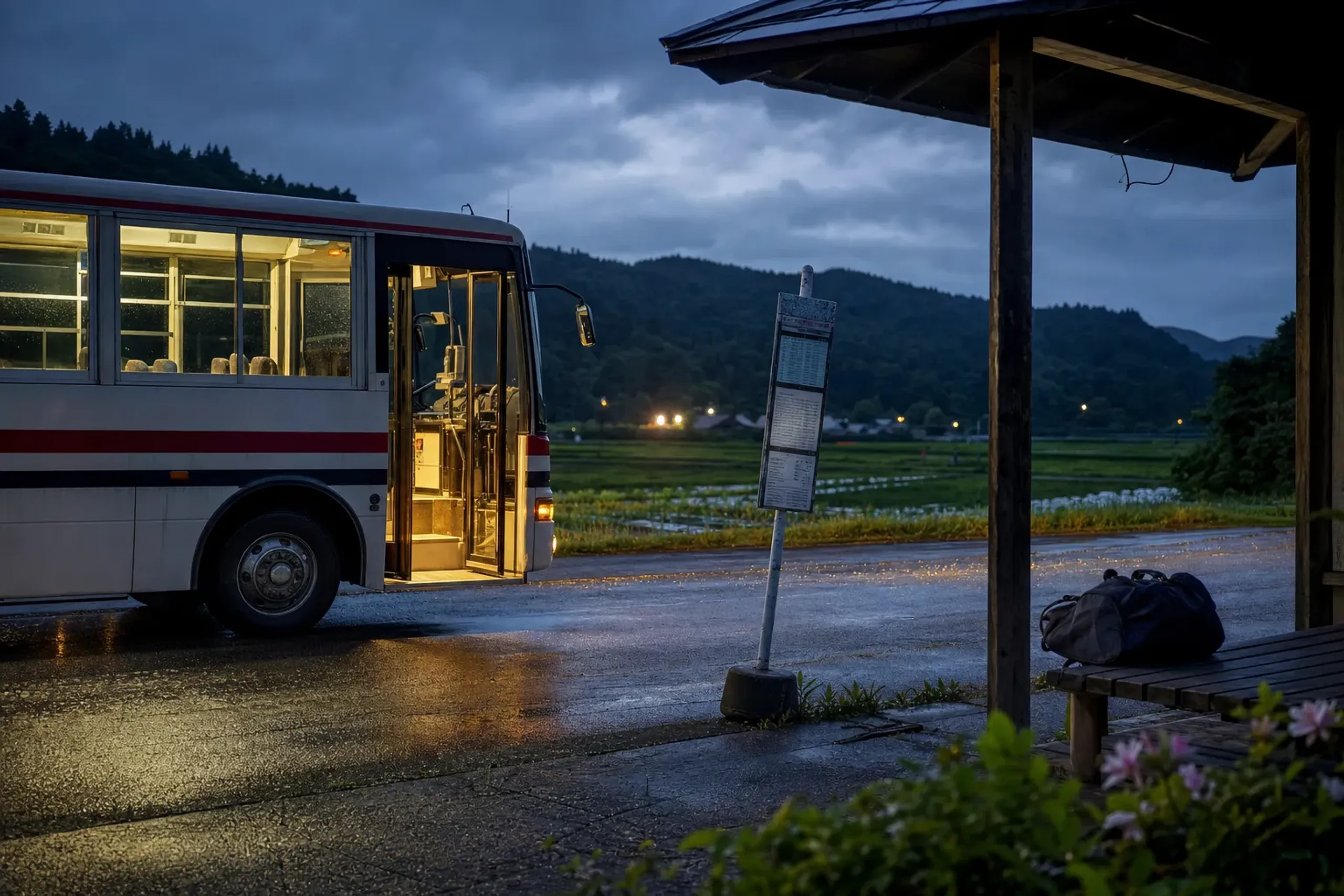
What we do is check ferry status, mine hours and event terms on your behalf before you arrive, and build a tailor-made itinerary with the slack an island trip needs — while keeping your identity and your schedule entirely confidential.
The shape we most often recommend: three to four nights, a base that fits your priorities (Ogi for the festival and tub boats, Aikawa for the mine and sunsets, Ryōtsu for easy ferry access), and one deliberate rest day with nothing booked — because the best Sado days tend to arrive when the sea decides to be still.
Plan Your Sado Summer With Us
Sado rewards those who let the sea lead and travel with someone who knows its rhythms. If a summer loop — tub boats at Ogi, the UNESCO gold mine, Kodo's drums carrying across the harbour at dusk — is the kind of journey you have in mind, let us shape it around your dates, your pace and your privacy. To begin a quiet conversation about a tailor-made Sado itinerary, contact us here for a proposal built entirely around you.
Frequently Asked Questions
How long does the Jetfoil take from Niigata to Sado Island?
The Sado Kisen Jetfoil from Niigata to Ryōtsu takes about 1 hour 7 minutes. The car ferry on the same route takes roughly 2 hours 30 minutes. Both are run by Sado Kisen; schedules vary by season.