In this guide
- 01When Do Fuefuki Peach Blossoms Bloom?
- 02The Viewpoints: Yatsushiro, Misaka And Ichinomiya
- 03The Festival And How To Use Its Transport
- 04Orchard Manners In A Working Landscape
- 05A Note On Staying: Isawa
- 06How Far Is Fuefuki From Tokyo?
- 07How The Concierge Team Plans A Fuefuki Morning
- 08Frequently Asked Questions
- 09Why Choose Japan Royal Service
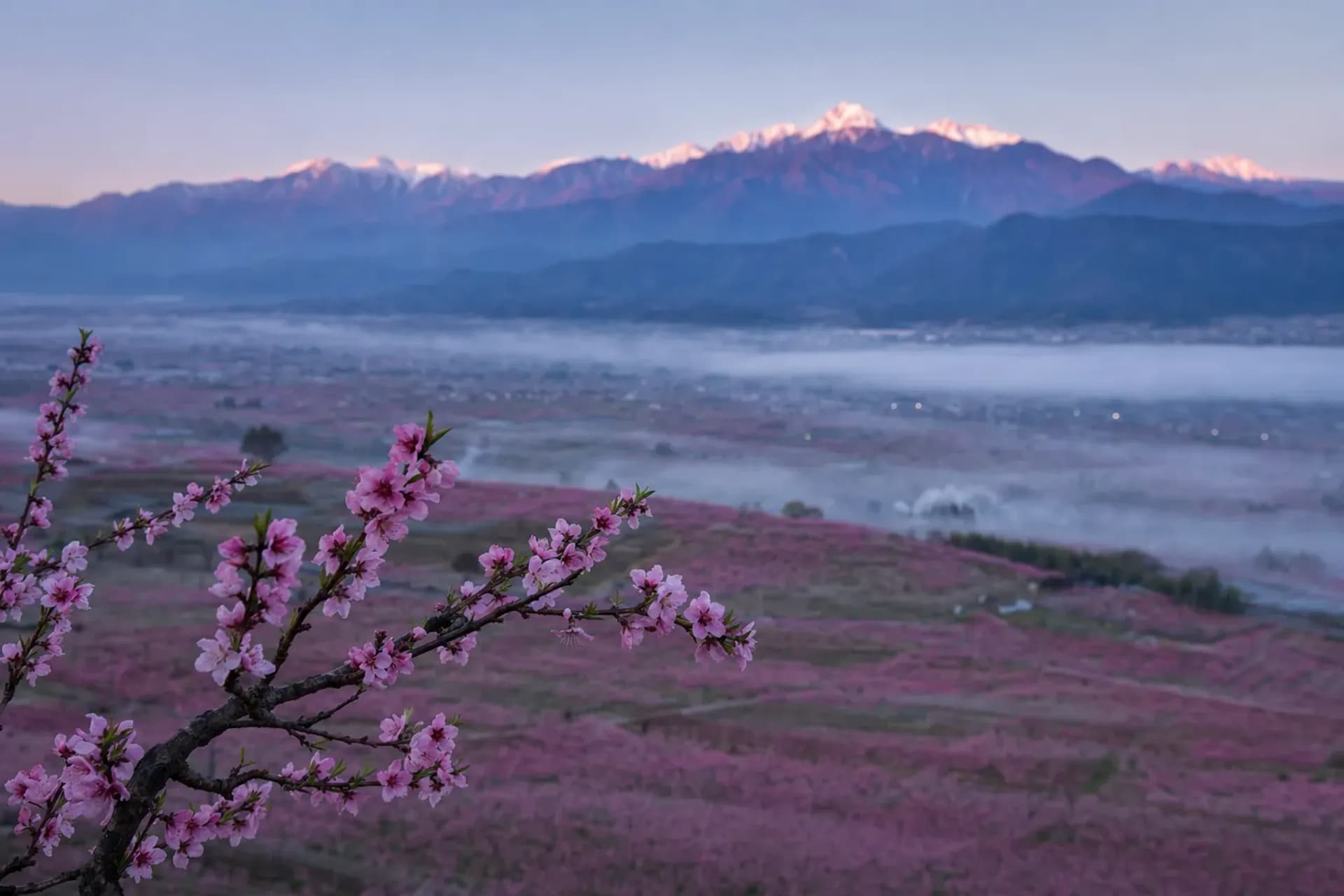
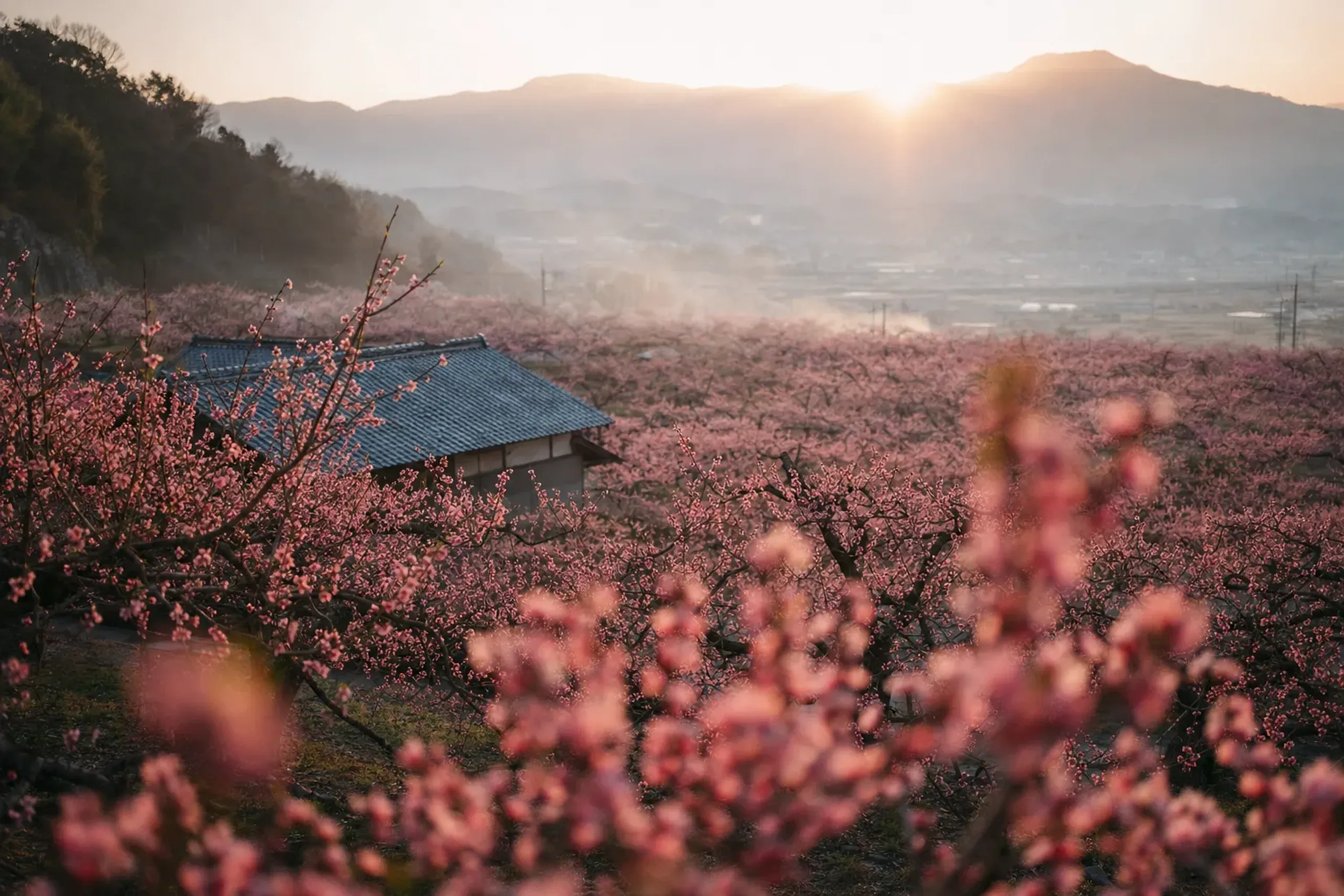
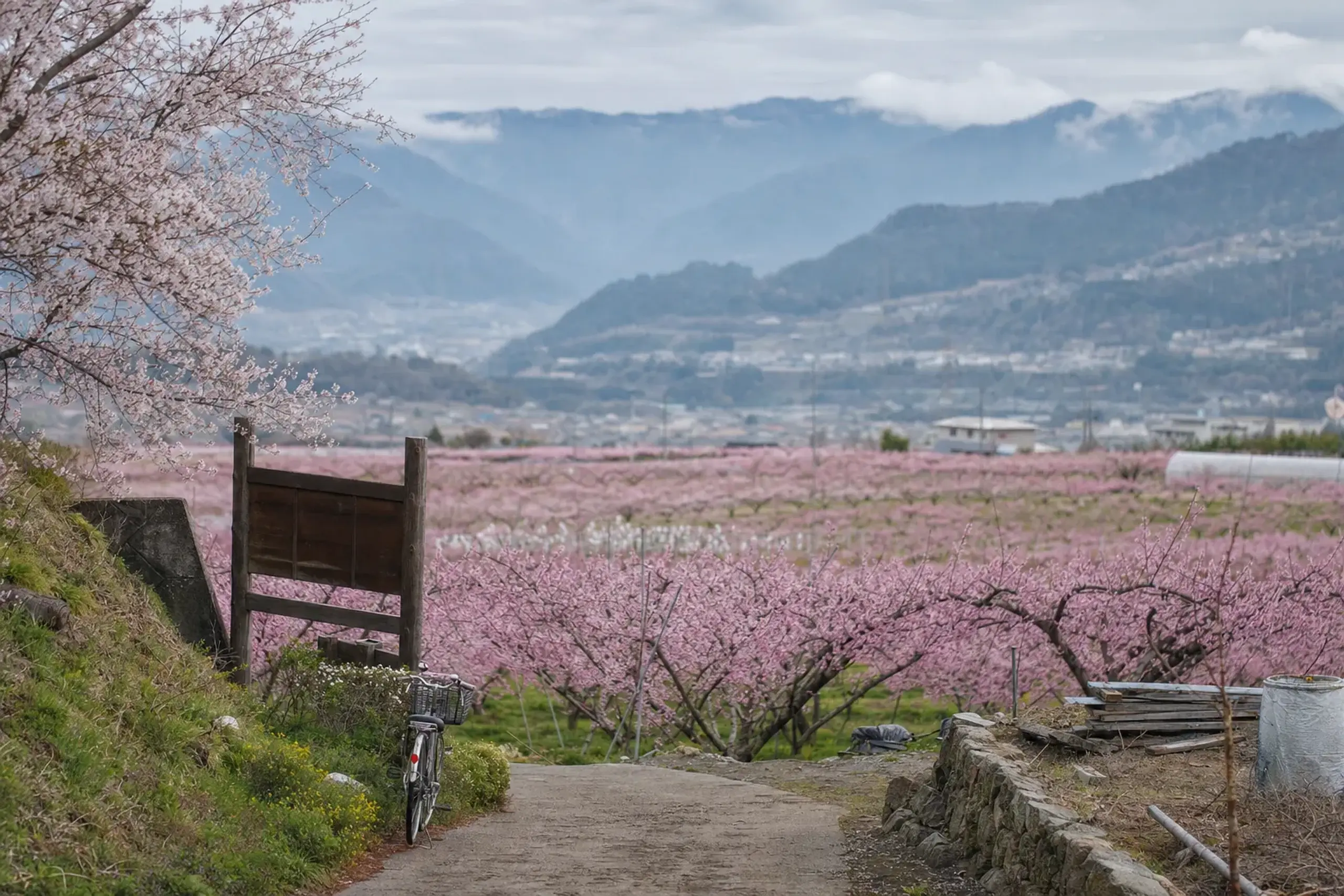
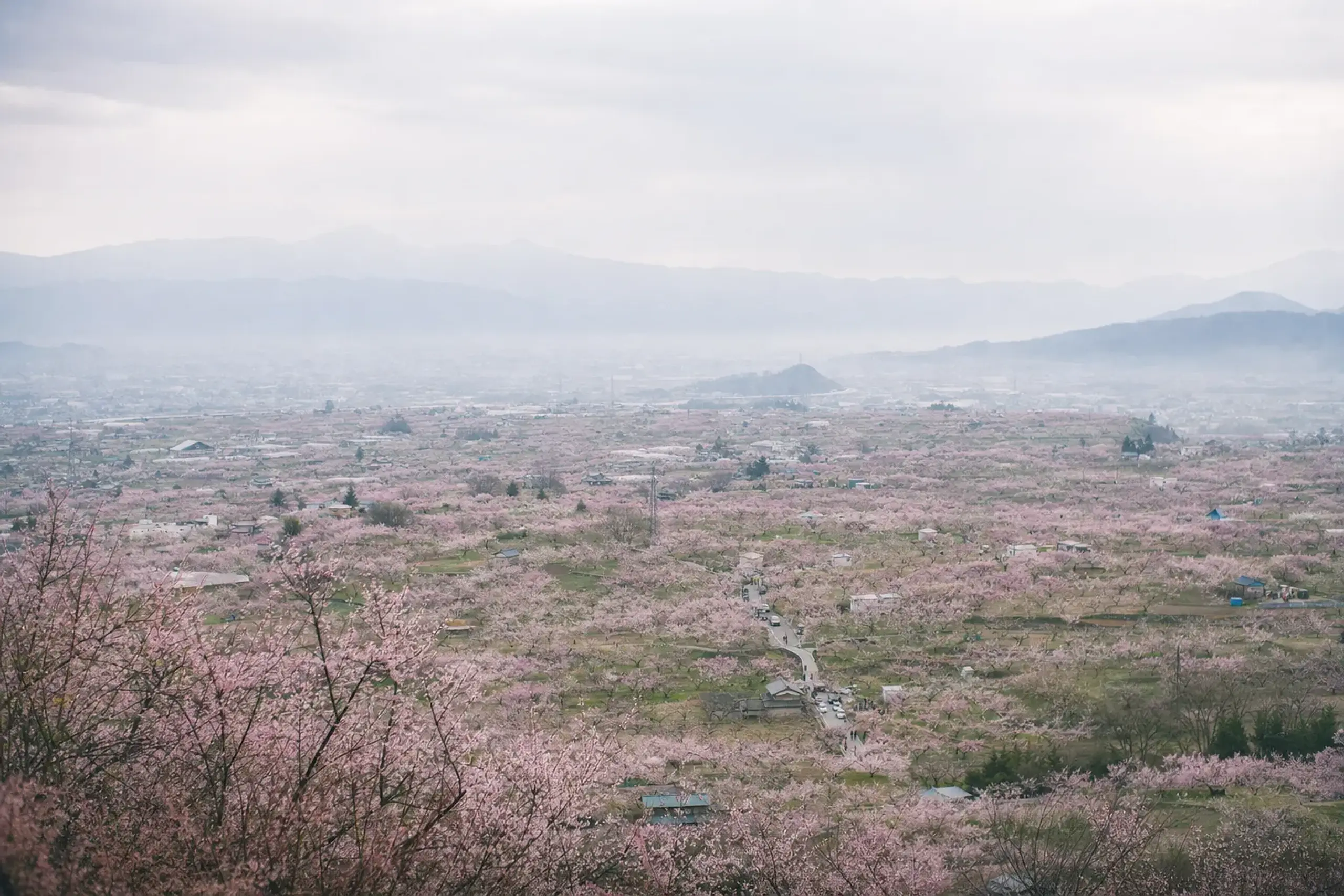
The air is cold before seven. You stand on a slope above the Kofu Basin, your breath showing, hands buried in your pockets. Below you, the orchards run down toward the valley floor in long, orderly rows. And then the light arrives — low and sideways — and the whole hillside turns the softest pink you have ever seen. Peach, not cherry. A deeper, warmer shade that no photograph quite captures.
A farmer is already at work two rows down, pruning with small, quiet movements. He does not look up. This is a working farm, and the blossoms are a by-product of the fruit that will come in summer. That is part of what makes Fuefuki feel so different from the cherry parks of Tokyo. Nobody planted these for you — and that restraint, that unforced beauty, is precisely the point.
Fuefuki City, in central Yamanashi, calls itself Japan's leading peach-growing city. Each April its alluvial fans above the basin bloom in waves. Our team at Japan Royal Service has sent guests here as a calmer, more contemplative counterpoint to the sakura crush, and the question is always the same: when, exactly, and where do I stand? This guide answers both, honestly.
When Do Fuefuki Peach Blossoms Bloom?
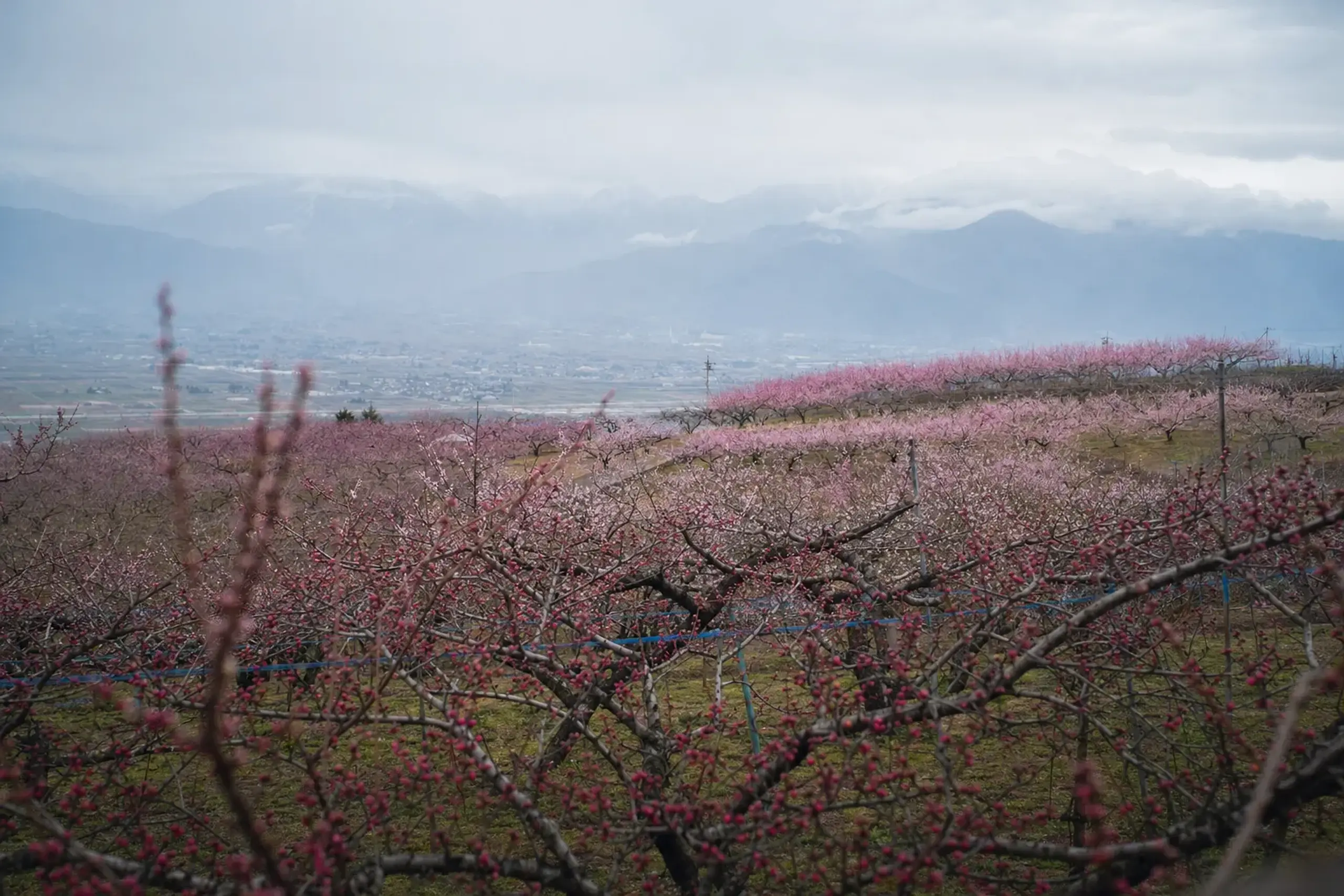
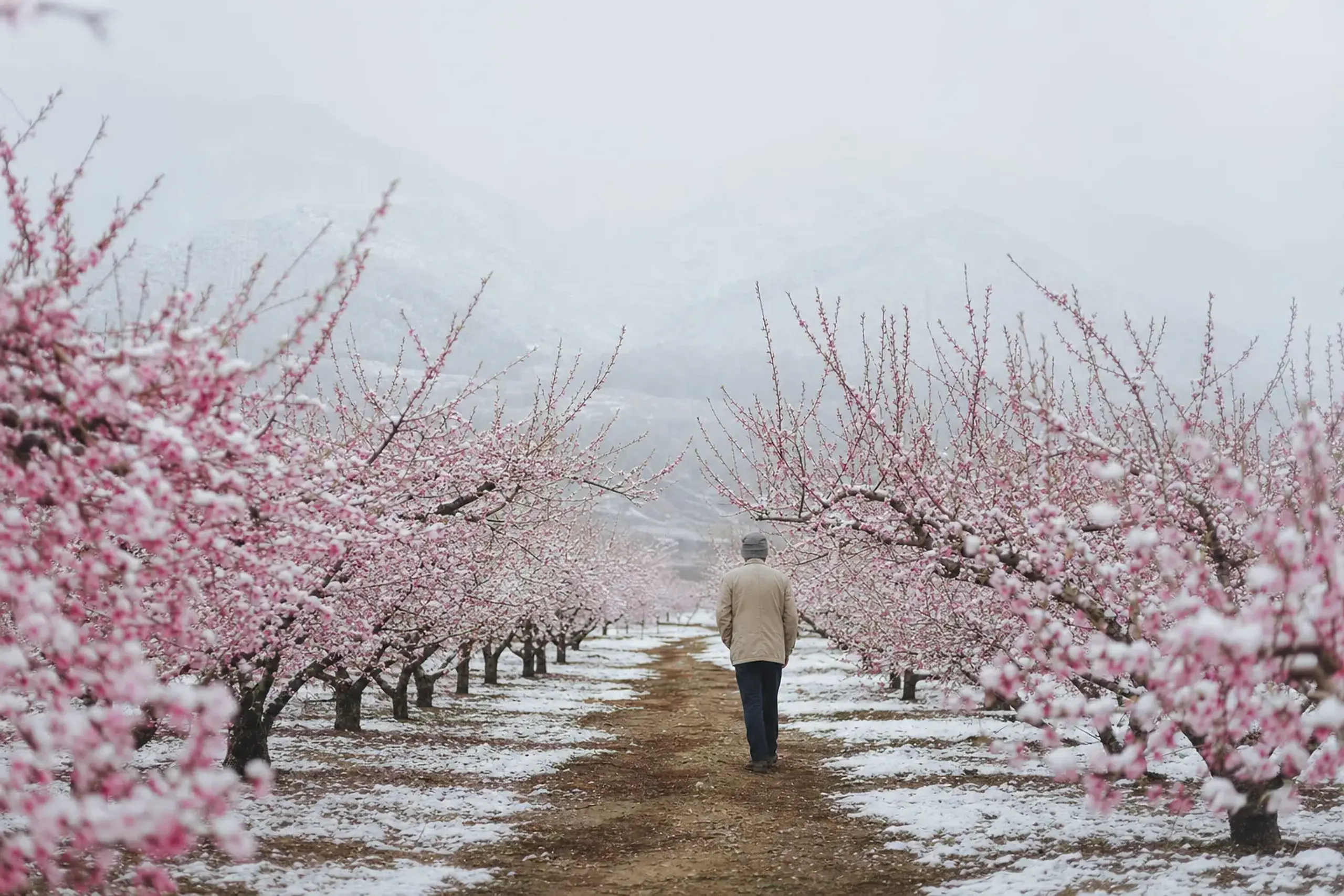
Fuefuki's peach blossoms bloom from early to mid April, varying by year and by elevation. Cherry blossoms peak first, then the peach bloom climbs the slope behind them. There is no single reliable peak date — and anyone who promises you one is guessing.
That last point matters more than any calendar. The orchards here are stacked up a mountainside, and bloom follows altitude. Yamanashi Tourism lists early to mid April as the best window at its Fuefuki spots, with full bloom around the tenth of April at Misaka in a typical year. The city's own festival material stretches the opening as early as late March.
Here is the useful way to think about it. In a recent year, the lower orchards near the basin floor opened first while the higher fields were still tight in bud. Orchards around 600 metres at Hanamidai were still closed on the ninth of April that spring. Higher up at Tokura, near 688 metres, the trees were roughly half open by the fifteenth. Some Misaka orchards sit above 700 metres and bloom later still. This vertical staggering is the whole secret of the season — and knowing how to read it is exactly what separates a wasted trip from a perfect morning.
Key fact: The bloom climbs the slope. Plan by altitude, not by one date. If the low orchards have gone over, go higher. If the high fields are still tight, stay low.
So the best plan is a range, not a day. Give yourself a few days inside the first half of April and let the week's reports steer you. Our concierge team verifies bloom status on a client's behalf ahead of a visit, reading the official bloom page that the Fuefuki Tourism Federation maintains each spring.
We cannot promise bloom. Nobody can. But we can tell you honestly where it stands the week you arrive — and that candour, in our experience, is worth more than any guarantee.
The Viewpoints: Yatsushiro, Misaka And Ichinomiya
There is no one spot that holds all of Fuefuki. The pleasure here is moving between a handful of them across a single morning, each framing the basin a little differently, each catching the light its own way.
Yatsushiro Furusato Park
This hillside park is the classic overlook. From its slopes you see the Southern Alps standing white on the far side of the Kofu Basin, and below you the pink of the orchards spread across the valley floor. The park also has its own cherry trees — several hundred of them — so in a good week you get cherry in the foreground and peach in the basin below. It is the single easiest place to understand the whole landscape at once, and a fine way to begin a morning before descending into the orchards themselves.
Misaka
Misaka's orchards are open to visitors, who can walk among the blossoms with the Southern Alps rising behind. This is where you get close. The scent, the bees working the flowers, the rows curving gently with the land. Because Misaka climbs higher, it often holds colour a little later than the basin floor, which makes it an ideal second stop if the lower fields have already passed.
Ichinomiya And Hanamidai
Hanamidai in Ichinomiya sits around 600 metres and is the one Fuefuki viewpoint that Yamanashi Tourism officially describes as showing Mt. Fuji alongside the Southern Alps. Keep your expectations honest: the same listing notes that haze is common here, so Fuji appears only on a clear day. Nearby, the Peach Line near Kasugaicho Station runs through orchards fringed with bright yellow rapeseed — a lovely roadside stretch of pink and gold.
The city makes a further claim worth repeating in its own words: Fuefuki is the place in Japan where the Southern Alps and Yatsugatake can be seen together before the snow melts. Take that as local pride, and enjoy the mountains for what they are on the day.
The Festival And How To Use Its Transport
The Fuefuki Togenkyo Spring Festival runs across the bloom season, built around a Sunday-to-Sunday window. In 2026 it ran from the twenty-second of March to the nineteenth of April, with Yatsushiro Furusato Park as the main venue. Treat those 2026 dates as a worked example. The organiser sets the window afresh each year; the next festival is expected in spring, late March into mid April, and remains to be confirmed.
The programme shifts year to year. The 2026 edition included a walking event over the weekend of the fourth and fifth of April (with a fee), a peach-blossom taxi service running from late March to mid April, reservation-only bus tours, and an e-bike ride-and-walk through most of the festival window, also by reservation.
Key fact: The organiser warns of weekend congestion and recommends the peach-blossom taxi. On peak weekend days in 2026, roadside parking was banned near the Kuroko venue, with designated lots and a circular shuttle bus instead.
The lesson is simple. These narrow orchard lanes were never built for crowds, and on a sunny Saturday the roads clog. The festival's own taxi and shuttle exist precisely to keep you out of that. Use them — or better, sidestep the problem entirely with a weekday morning. For a wider look at how driving and rail trade off in situations like this, our note on private driver versus rail in Japan is a useful companion read.
Orchard Manners In A Working Landscape
Remember what you are walking into. These are farms, and the people in them are growing a crop, not staging a view. The blossoms you admire become the peaches the region is known for — a quiet reminder that the loveliest moments here belong to someone's livelihood.
- Follow local signs and stay on the paths and roadsides that are open to visitors.
- Use the official parking lots. Do not block a farm track or a private lane.
- Ask the farm before stepping into a private field. Some welcome walkers; some do not.
- Keep your distance from anyone working, and never touch or pull the branches.
No official rules on photography or drones in private orchards were published at the time of writing, which is all the more reason to err toward courtesy.
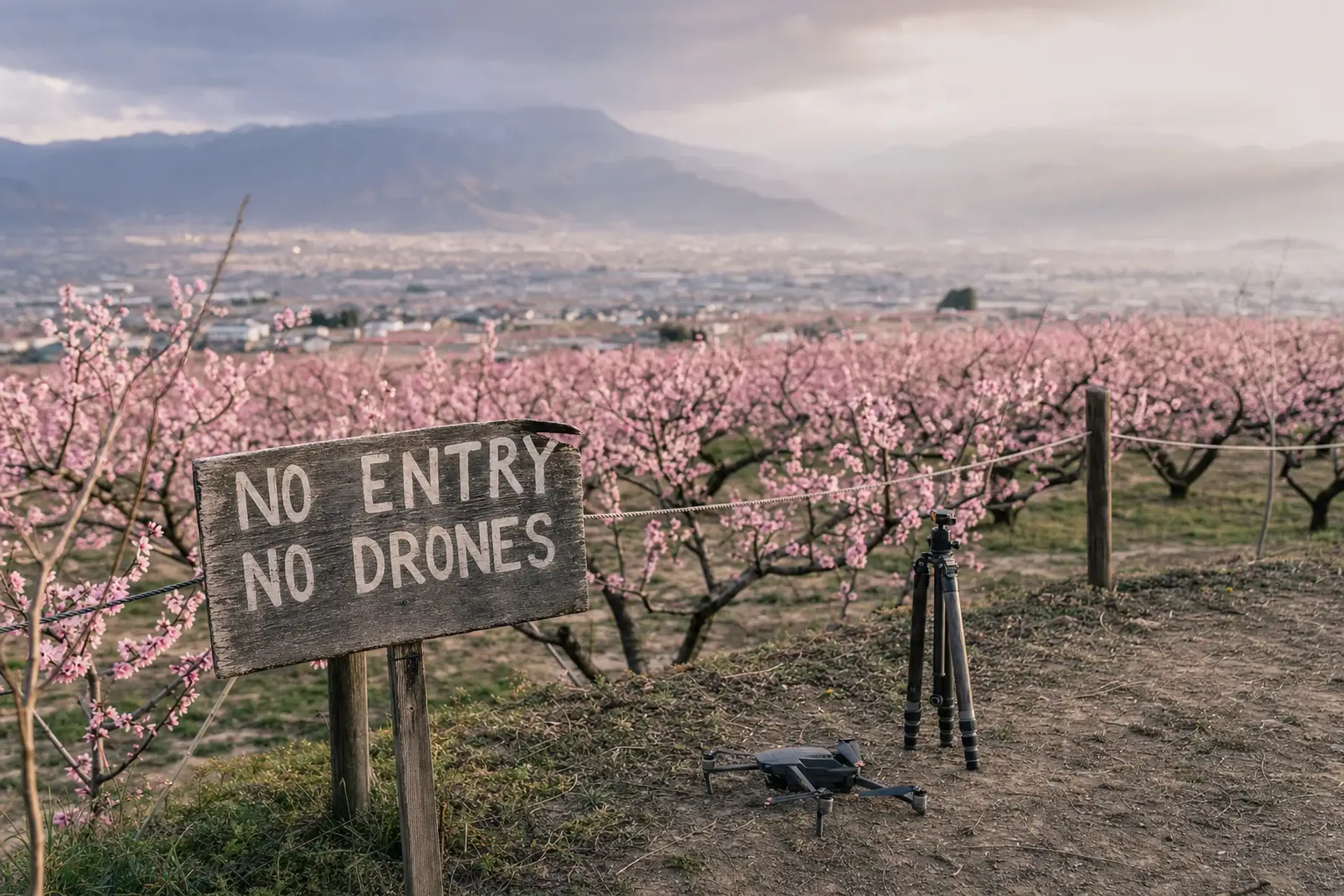
A visitor who treats the place as someone's livelihood is always welcome back.
A Note On Staying: Isawa
The Isawa and Kasugai hot-spring areas lie within Fuefuki itself, which makes a night here very convenient. Base yourself in the Isawa area or in nearby Kofu and you are minutes from the orchards at dawn, well ahead of the day-trippers coming up from Tokyo. By taxi from Isawa-Onsen Station, Misaka is roughly fifteen minutes and Ichinomiya about twenty. Fuefuki also has its own wineries, should an evening call for a glass of local wine; the Katsunuma wine district, often confused with this area, actually sits in neighbouring Koshu City. To wake to mist over the orchards, soak before the first light, and step onto the slope before another soul arrives — that is the kind of quiet morning the basin reserves for those who stay close.
How Far Is Fuefuki From Tokyo?
From Tokyo, Fuefuki is about an hour and a half by rail or road. Yamanashi Tourism puts the Shinjuku-to-Kofu limited express at 87 minutes; Isawa-area bodies give roughly 90 minutes to Isawa-Onsen Station on the JR Chuo Line.
Isawa-Onsen Station is the rail gateway. Note that Ichinomiya-Misaka is an expressway interchange, not a train station: by car, Hanamidai is around five minutes from that interchange.
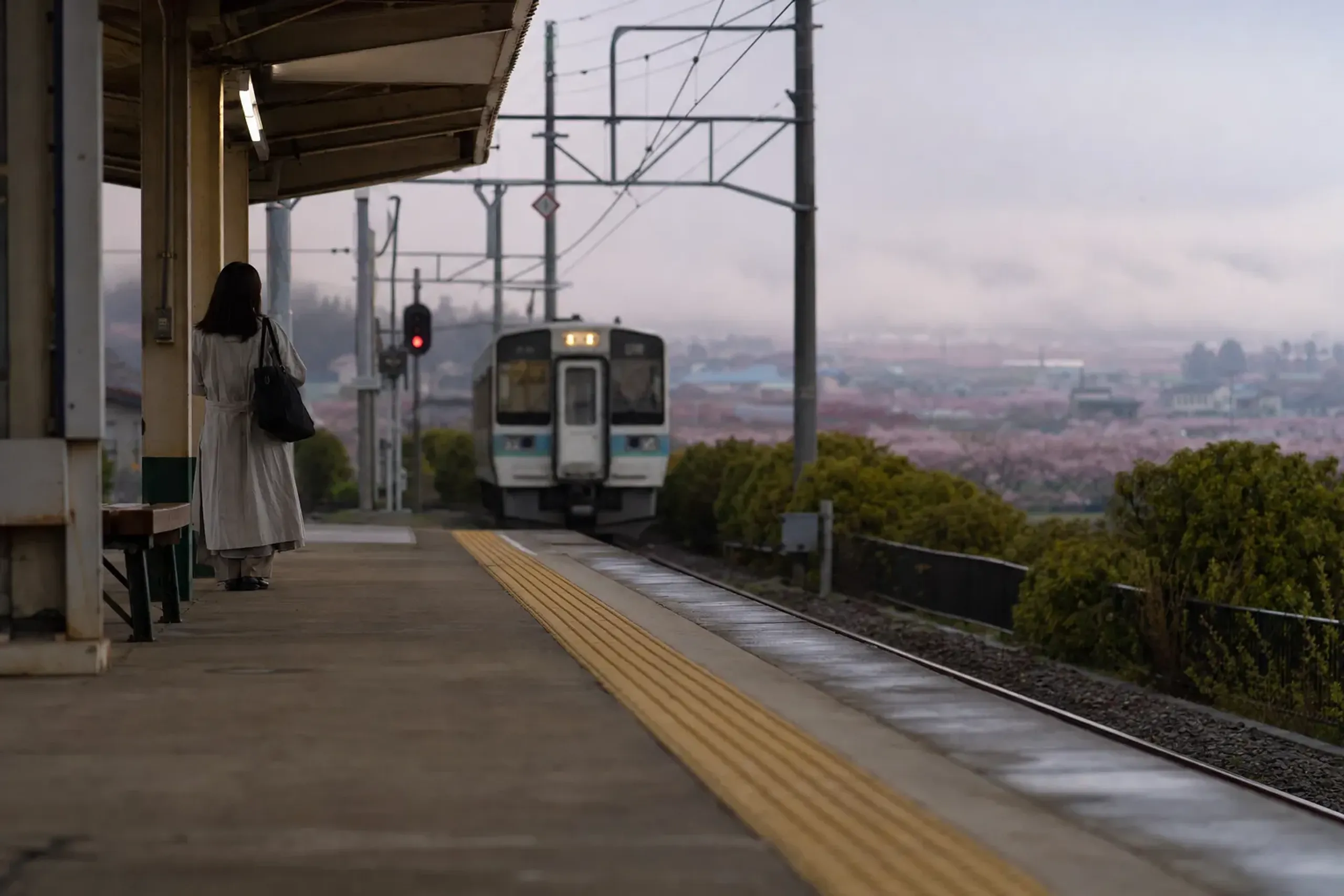
If you arrive by rail, a short taxi ride connects you to each cluster of viewpoints. If you come by private car, you gain the freedom to chase the bloom up or down the slope as the week dictates — which is exactly the flexibility this altitude-driven season rewards. Our overview of how you actually move through Japan weighs up both.
How The Concierge Team Plans A Fuefuki Morning
In our experience, the difference between a lovely morning and a frustrating one comes down to timing and good information. Here is how our team at Japan Royal Service shapes a Fuefuki visit, strictly within what we actually do.
- Guiding. An English-speaking cultural interpreter guide who explains the orchards, the alluvial-fan farming that shaped this landscape, and how to read each viewpoint. The eastern Kofu Basin's fruit-farming system was designated a FAO Globally Important Agricultural Heritage System in 2022, and Fuefuki is one of its three cities. A good guide makes that heritage legible — and turns a pretty view into a landscape you understand.
- Private transfer. A partner-fleet vehicle with a private chauffeur moving you between the station, the viewpoints and your hotel, so you can climb the slope as the bloom dictates without chasing taxis.
- Accommodation. Coordination of a hotel in the Isawa area or Kofu, placing you minutes from a dawn start.
- Planning. A tailor-made itinerary built around an early departure and a route that dodges the weekend traffic. Ahead of the visit, our concierge verifies the bloom status, that year's festival programme and the week's parking arrangements on your behalf. Your plans, like your identity, stay entirely between us.
What we will never do is pretend.
These are public viewpoints and working farms. We arrange no private, early or restricted orchard access, and we promise no bloom, no mountain view and no empty field. What we offer instead is a sharp plan, honest intelligence and a quiet morning that most visitors miss entirely.
If cherry blossoms also figure in your spring, our guides to Japan cherry blossom timing and the Yamataka Jindai-zakura in Hokuto sit naturally alongside a Fuefuki day.
Frequently Asked Questions
When Is The Best Time To See Peach Blossoms In Fuefuki?
Early to mid April, varying by year and by elevation. Cherry blossoms peak first, then the peach bloom climbs the slope. Lower orchards open before the higher fields around 600 to 700 metres, so give yourself a few days' flexibility.
Can You See Mt. Fuji From The Fuefuki Peach Orchards?
Mt. Fuji is officially described from only one Fuefuki viewpoint, Hanamidai in Ichinomiya, alongside the Southern Alps. Even there, haze is common, so Fuji appears only on clear days. Most other viewpoints frame the Southern Alps across the Kofu Basin.
Are Fuefuki Peach Blossoms Crowded On Weekends?
Yes. The festival organiser warns of weekend congestion on the narrow orchard roads and recommends the peach-blossom taxi. On peak weekend days, roadside parking is banned at some venues in favour of designated lots and a shuttle bus.
A weekday morning is calmer.
How Do You Get To Fuefuki From Tokyo?
Take the JR Chuo Line limited express toward Kofu; Yamanashi Tourism lists Shinjuku to Kofu at 87 minutes, and Isawa-Onsen Station is the local gateway at about 90 minutes. From Isawa-Onsen, Misaka is roughly 15 minutes by taxi and Ichinomiya about 20.
What Happens If It Rains During My Visit?
Rain softens the colour and can thin the blossoms, but clear air often follows a shower, lifting the haze from the Southern Alps. Build a flexible window into your plan rather than a fixed day, and let the week's conditions guide which viewpoint you choose.
Why Choose Japan Royal Service
Fuefuki rewards good intelligence more than almost any blossom destination in Japan, because the bloom moves with altitude and the roads betray you on a sunny weekend. That is where our team earns its place. We read the official bloom reports the week you travel, we confirm the festival's transport and parking, and we shape a route that starts before the crowds and climbs the slope as the flowers do.
If a pink morning above the Kofu Basin belongs in your spring, let us plan it around the week you arrive and the blossoms as they actually stand. To begin shaping a discreet, altitude-aware Fuefuki morning of your own, contact us here and our concierge team will take it from there.