In this guide
- 01The Short Answer: Rail For The Long Leg, A Car At Each End
- 02Airport Arrival: The First Two Hours Set The Tone
- 03City Days In Tokyo Or Kyoto: Do You Want Density Or Drift?
- 04Intercity Legs: Shinkansen Comfort, Then A Soft Landing
- 05Rural Areas, Onsen Towns, And Peninsulas: Flexibility Wins
- 06Groups And Families: Staying Together Is A Feature
- 07Heavy Or Oversized Luggage: The Rule That Changes Everything
- 08Luggage, In Detail: What Travels With You, What Goes Ahead
- 09Rail Classes, Briefly: Green Car And Gran Class
- 10How Japan Royal Service Plans Transportation Leg By Leg
- 11Frequently Asked Questions
- 12Why Choose Japan Royal Service
You don’t choose “car or train” once in Japan. You choose it over and over.
Airport day is one problem. A Kyoto morning is another. The leg to a rural onsen has its own logic. Miss that, and you end up with the wrong kind of tired.
Our team at Japan Royal Service plans transportation leg by leg, because the best answer is rarely pure rail or pure private vehicle. It is a blend. Quietly timed. With the bags already dealt with.
The Short Answer: Rail For The Long Leg, A Car At Each End
For most luxury itineraries in Japan, take rail for long intercity legs and use a private vehicle with a driver for the “ends” of the day: hotel, station, ryokan, and rural last-mile.
That pattern holds because Japan’s rail network is direct on the big corridors, while a door-to-door vehicle removes the friction that drains energy: station-to-hotel transfers, complex luggage, and the last 10–30 minutes where public transport thins out.
One detail decides more trips than people expect. Luggage. On several shinkansen lines, large suitcases require specific reserved seating rules. Ignore those rules and your day can slide sideways.
So we plan the whole chain. A premium rail seat where it makes sense. A driver waiting where it matters. And, when useful, luggage forwarding so you travel light and arrive calm.
Airport Arrival: The First Two Hours Set The Tone
The cleanest airport arrival plan is usually a private vehicle with a driver for door-to-door comfort, especially after an international flight with checked baggage.
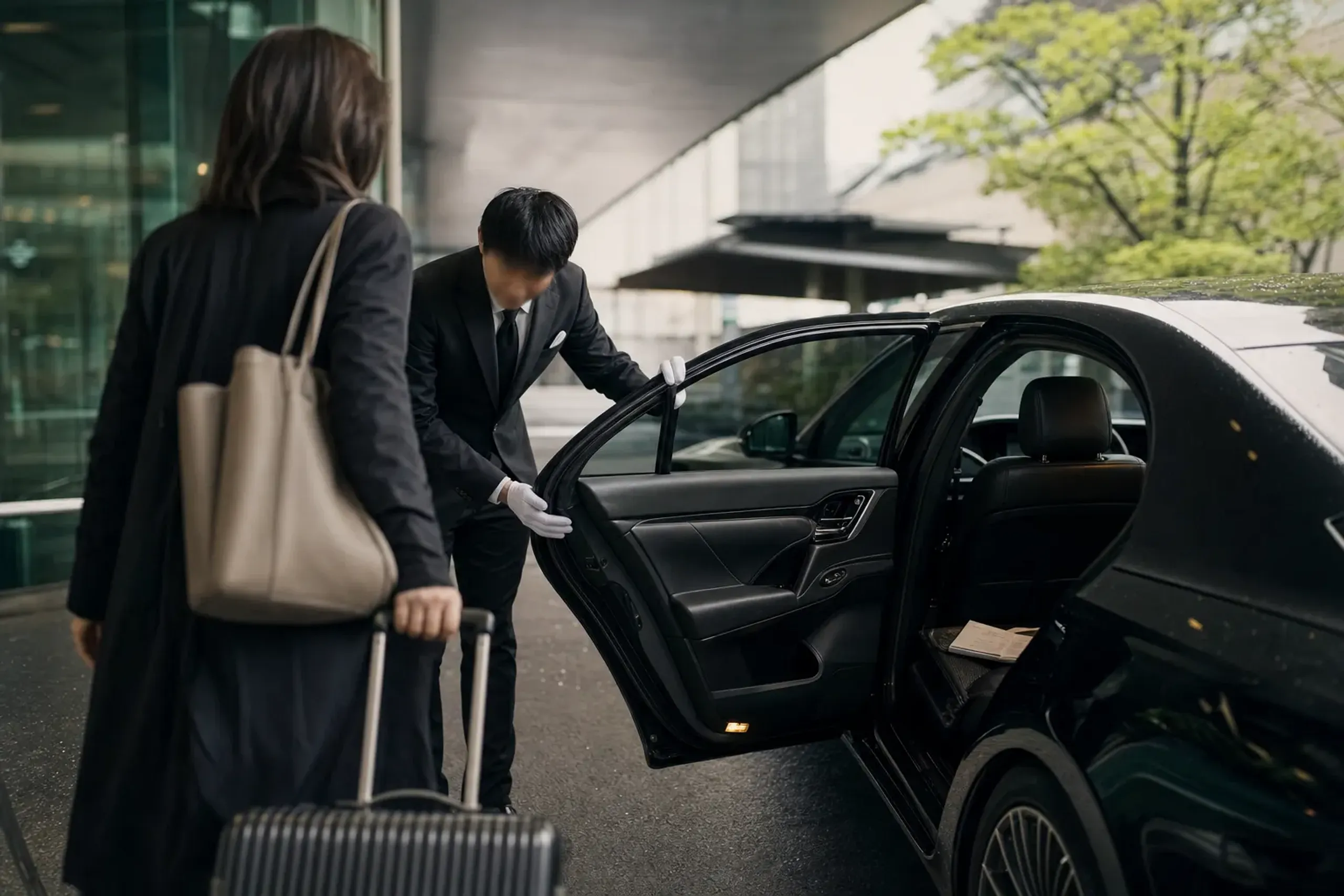
You can absolutely ride rail from airports in Tokyo and Osaka. Many experienced travelers do. But the question is how you want to feel when you reach the hotel lobby.
After a long-haul flight, “simple” beats “clever.” A driver means one handoff, one trunk, one arrival. No escalator hunt. No guessing which car to board with multiple suitcases.
In our experience, the airport day is also where timing matters most. Late landings happen. Lines move in waves. A private transfer absorbs that variability with less mental load.
Verdict: Car for airport arrival in most HNW itineraries, especially with checked baggage or tight dinner plans.
City Days In Tokyo Or Kyoto: Do You Want Density Or Drift?
For city sightseeing days, the best choice depends on whether your schedule is dense (car helps) or deliberately open (rail and walking shine).
Tokyo rewards rail when you are staying central and your day is built around a few neighborhoods. Rail plus walking can feel brisk and clean. But it can also fragment a day when you want back-to-back appointments, shopping, and a precise lunch reservation.
Kyoto is its own case. Some areas are best on foot. Others are awkward by public transport when you are moving as a pair or a small group with a strict timeline.
If you want Kyoto specifics, we keep that guidance in a dedicated guide rather than cramming it here.
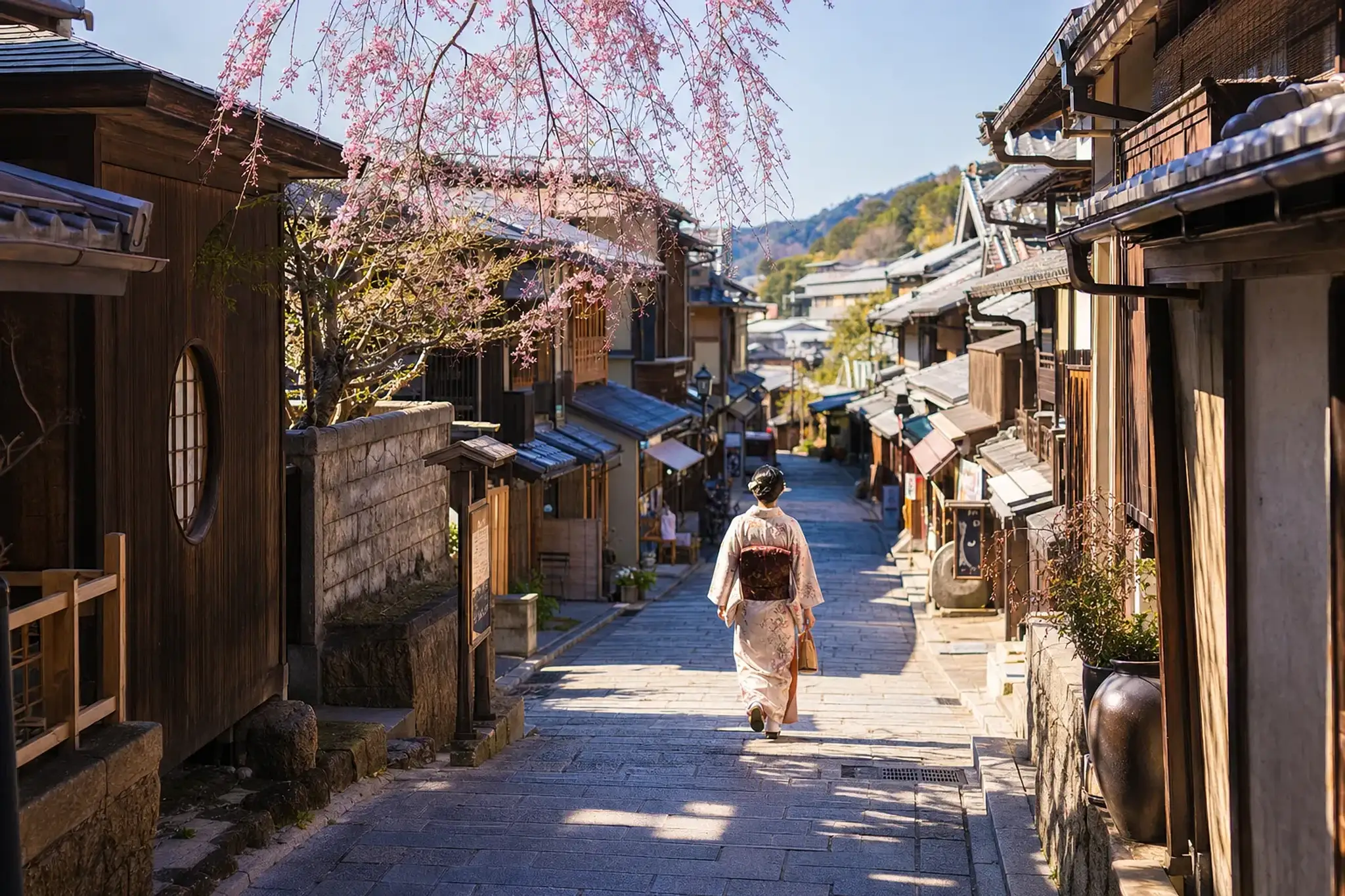
Read our Kyoto chauffeur planning article, then use this framework to decide which days deserve a car and which days should stay light.
And one nuance people miss: in Japan, a driver and a licensed guide are generally separate roles. A “driver who also guides” is not the standard model. If your day needs guiding and driving, plan for both.
Verdict: Combined for most trips: rail/walking for simple neighborhood days, and a private vehicle on high-density days.
Intercity Legs: Shinkansen Comfort, Then A Soft Landing
For long intercity legs, rail is usually the cleanest backbone, with a private vehicle used for station transfers on both sides.
The shinkansen is built for exactly this job. City-center stations. Predictable departures. Reserved premium classes when you want more space and quiet. It is why many luxury trips feel effortless even when you change cities often.
Use a few real examples to calibrate your expectations. Tokyo to Hachinohe is about three hours on the Tohoku Shinkansen. Tokyo to Matsumoto is about 2 hours 40 minutes to 3 hours by the Azusa limited express. Kyoto to Himeji is roughly 44 to 56 minutes by shinkansen.
Where trips go wrong is not the train. It is the edges. The taxi line at the wrong exit. The hotel that is a longer walk than you expected. The “easy” station transfer that becomes a maze when you are carrying shopping bags.
That is why our default pattern is blended.
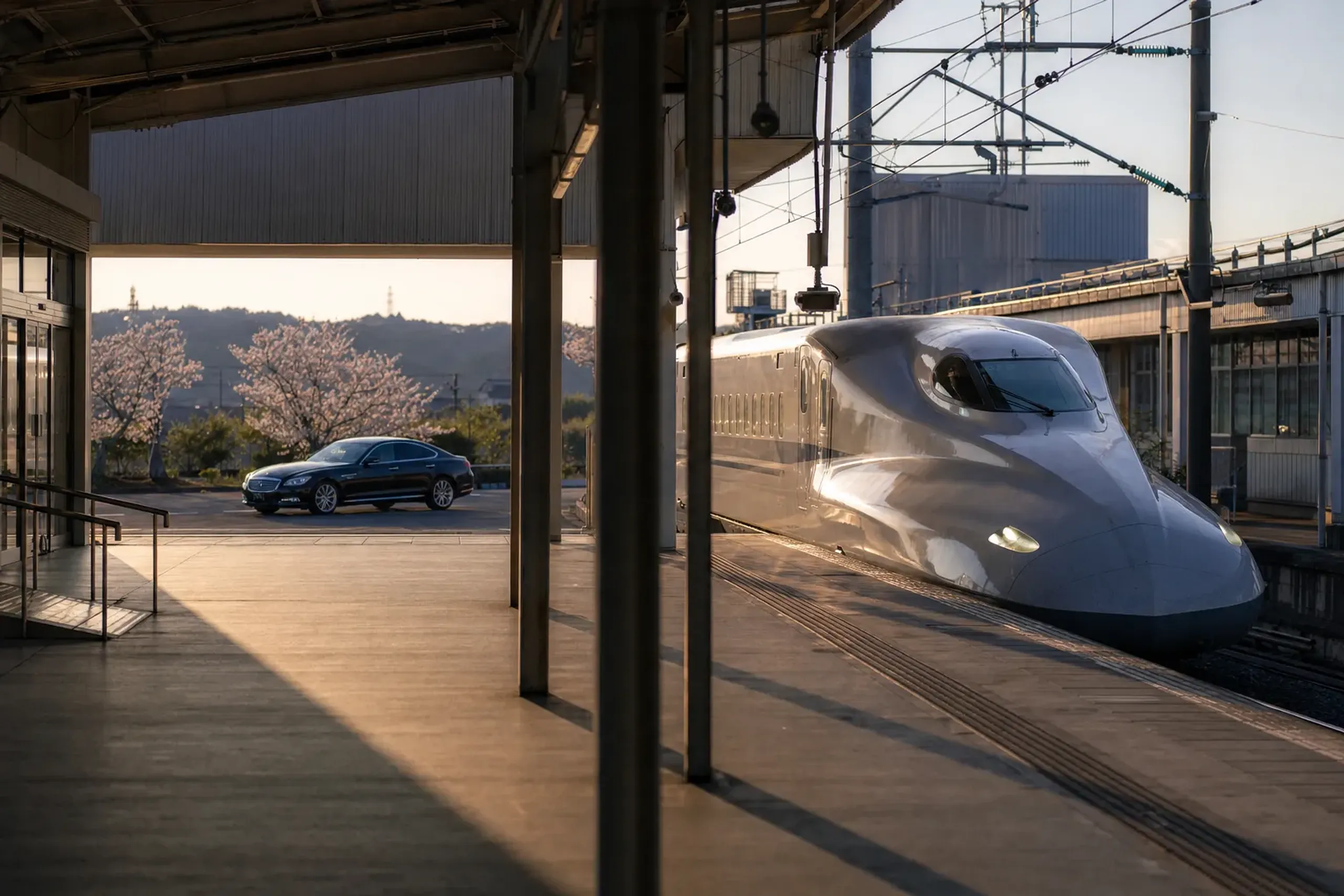
Rail for the long leg. A driver to meet you at the station, especially when you are heading to a ryokan, a countryside property, or a multi-stop afternoon.
Verdict: Combined for most intercity days: rail for the core leg, private vehicle for station-to-door transfers.
Rural Areas, Onsen Towns, And Peninsulas: Flexibility Wins
When your itinerary moves beyond major cities, a private vehicle with a driver is often the difference between “possible” and “pleasant,” especially in areas with sparse or seasonal transport.
Japan’s countryside is not one thing. Some towns are easy by rail. Some are not. The final approach to an onsen area can involve infrequent buses, limited taxis, and early last services.
A concrete example: on the Shimokita Peninsula in Aomori, a car is the more flexible way to move around, and the bus to Osorezan does not run from November through April. That one seasonal gap can reshape a whole day.
Rail still matters here. You can often take rail to a hub, then switch to a vehicle for the last-mile and for the day’s stops. Our team uses this pattern frequently when clients pair northern scenery with sacred sites and hot springs.
If you want an example of what that looks like in a real itinerary, our Tohoku planning pieces show how legs link together across remote landscapes without turning the journey into a logistical contest.
Verdict: Car in many rural regions, or combined when rail reaches a hub and a vehicle finishes the day.
Groups And Families: Staying Together Is A Feature
For families and small groups, a private vehicle often reduces friction because everyone stays together from lobby to destination.
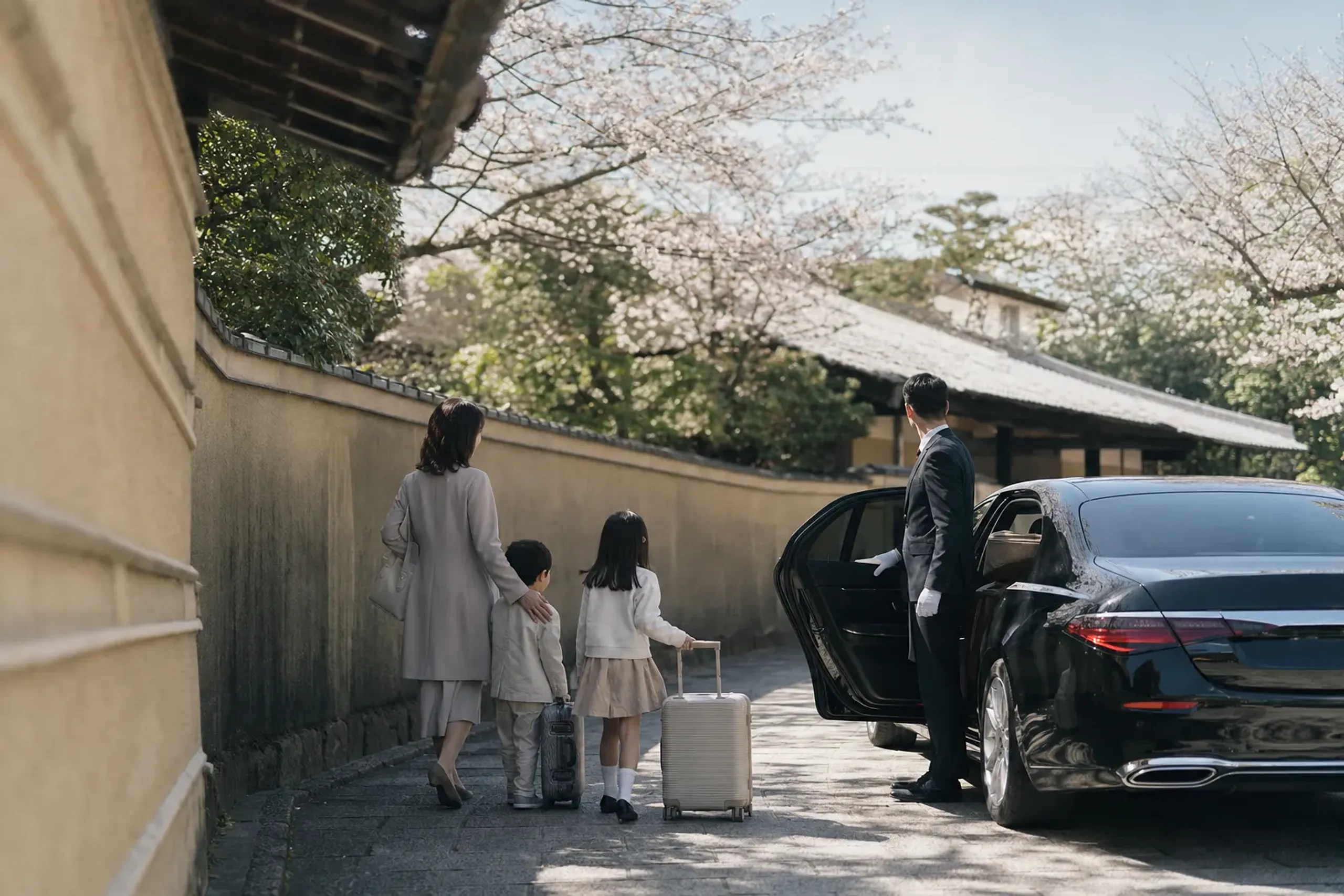
Rail can still be the right backbone for long legs. But groups change the texture of the day. You can get split across carriages. Someone lingers at the platform kiosk. A child needs a break at the wrong moment. Small delays ripple.
A vehicle keeps one shared rhythm. One meeting point. One set of items to manage. That matters when you are balancing grandparents, teenagers, shopping, and a dinner time that should not move.
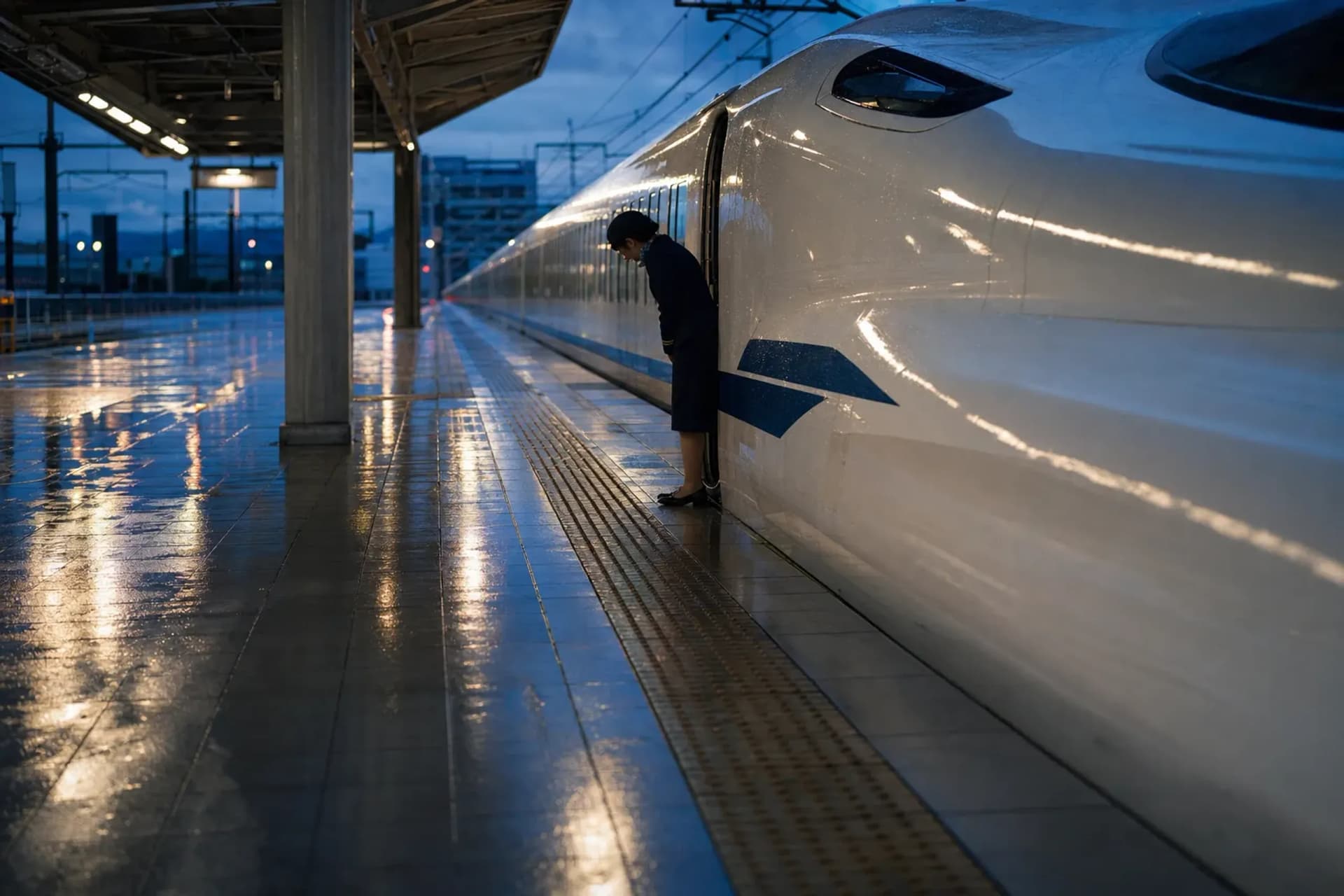
When rail is clearly better for the long segment, we look at the station experience itself. Platform assistance can be the difference between a calm transfer and a tense one, especially when you are moving with multiple bags.
The goal is not to avoid trains. It is to avoid the day breaking into pieces.
Verdict: Combined for most families: rail for long intercity legs, and a private vehicle to keep the party together at the ends.
Heavy Or Oversized Luggage: The Rule That Changes Everything
If you are traveling with large suitcases, golf bags, or ski-style luggage, choose rail only after you confirm the oversized-baggage rules for your shinkansen line—or use luggage forwarding or a private vehicle.
Here is the rule that catches luxury travelers off guard. On the Tokaido, Sanyo, Kyushu and Nishi-Kyushu Shinkansen, baggage of 160–250 cm in total dimensions (length plus width plus height) requires a seat with an oversized-baggage area reserved in advance.
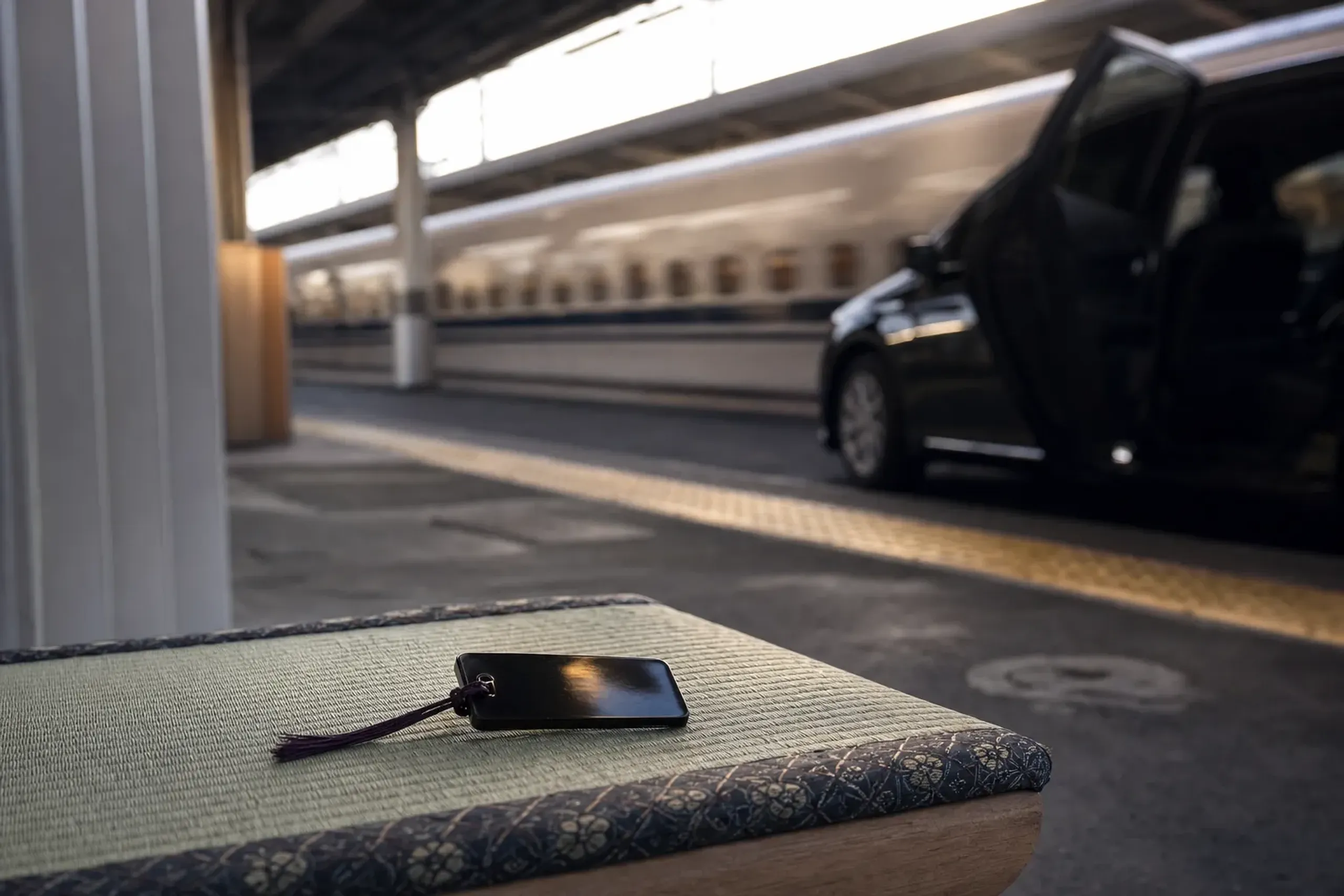
Without that reservation, a fee applies and the bag may be moved to a designated space. If seats are full, the passenger may be asked to take a later train. Bags over 250 cm in total dimensions cannot be brought on board.
One suitcase can force a different plan. Big mistake.
That is why we often separate “travel bags” from “arrival bags.” A small set stays with you. Everything else goes by luggage forwarding, typically hotel to hotel. Delivery is usually next day, and sometimes same day over short distances, but distant destinations can take two days or more.
There is one more constraint. The receiving hotel should be consulted first, because some smaller hotels cannot store deliveries. Our concierge team confirms these details directly with you at the time of arrangement, then builds the day around what will actually be waiting in your room.
Verdict: Combined most often: forward the big bags, take rail for the long leg, then use a vehicle for station-to-door.
Luggage, In Detail: What Travels With You, What Goes Ahead
Luggage planning is not a footnote in Japan. It is the hinge.
If you want the shinkansen to feel like the elegant choice it is, travel with fewer pieces on the day. Keep a day bag, a small carry-on, and the essentials you need for one night.
Send the rest ahead.
Luggage forwarding in Japan is door to door, including hotel to hotel. Delivery is usually next day, sometimes same day over short distances, and can take two days or more for distant destinations. That timing shapes your packing.
We also plan around what your next property can accept. The receiving hotel should be consulted first; some smaller hotels cannot store deliveries. Our concierge team confirms those rules directly with the guest at the time of arrangement.
When you must keep larger items with you, we plan rail seating around the oversized-baggage rule on the Tokaido, Sanyo, Kyushu and Nishi-Kyushu Shinkansen lines:
- 160–250 cm total dimensions requires reserving a seat with an oversized-baggage area in advance.
- Without a reservation, a fee applies and the bag may be moved to a designated space; if seats are full, you may be asked to take a later train.
- Over 250 cm total dimensions cannot be brought onboard.
This is where a private vehicle day can be the simplest decision. Not because rail is hard. Because the rule is strict.
Rail Classes, Briefly: Green Car And Gran Class
Green Car is the premium reserved class on the shinkansen, including the Tokaido Shinkansen. If you want a quick orientation before you decide, see our guide: Shinkansen Green Car: Is the Premium Upgrade Worth It?
Gran Class is a different tier, but it is also more limited than many travelers assume. It runs on the Tohoku, Hokkaido, Hokuriku and Joetsu Shinkansen only.
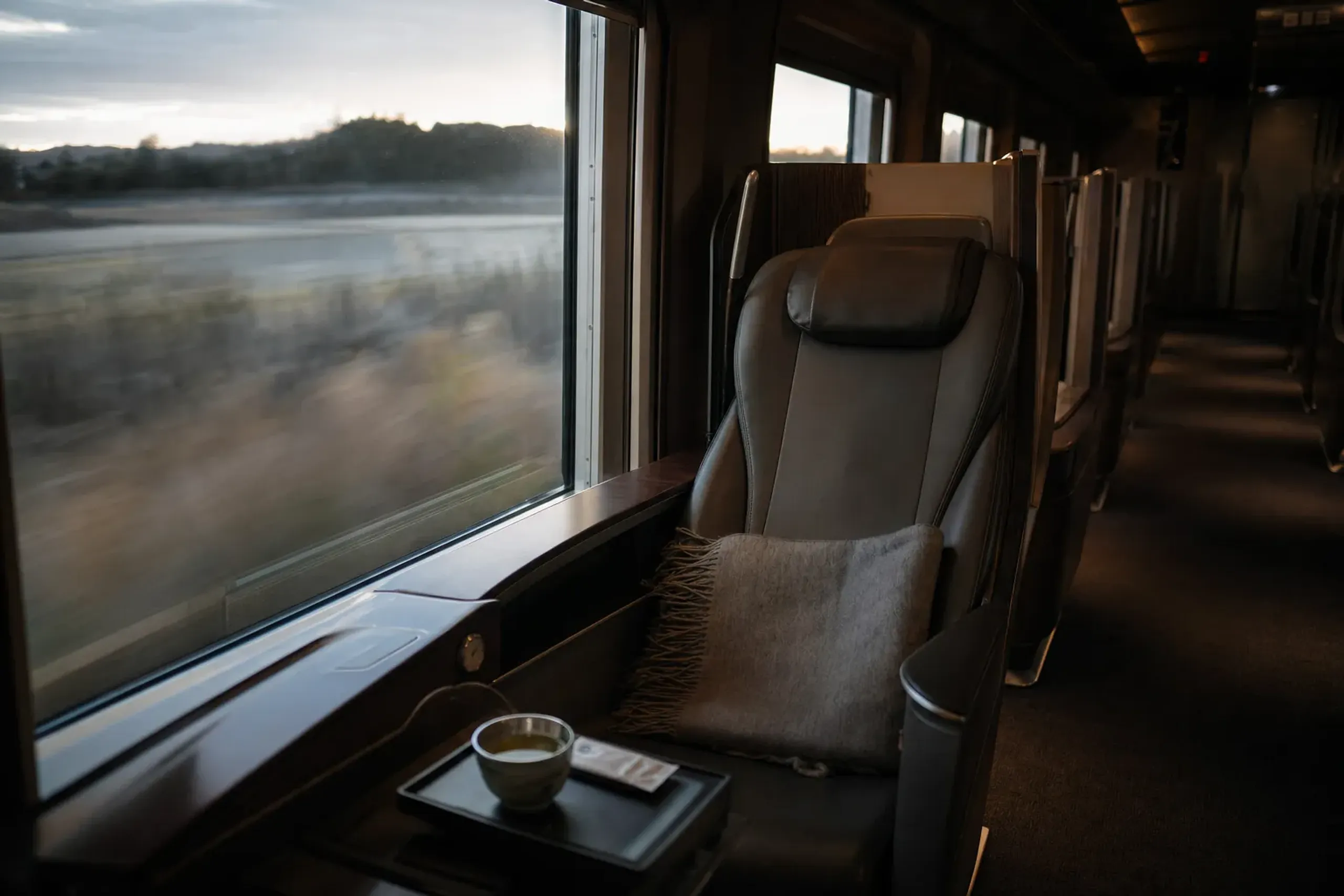
It does not run on the Tokaido or Sanyo lines.
Gran Class has 18 seats per car. Service matters, too. Meal and attendant service in Gran Class varies by train, and some trains have no attendant service at all. Our concierge team confirms which service applies at the time of arrangement, so expectations match the exact train you are taking.
And yes, 2026 changes the conversation on the Tokyo–Osaka corridor. JR Central’s Supreme Class private cabin concept launches on October 1, 2026. For travelers who want privacy while staying on rail, this becomes a real third option alongside chauffeur and standard premium seats.
How Japan Royal Service Plans Transportation Leg By Leg
We plan transportation the way a calm trip actually works: by day, by leg, and by what you are carrying.
On the private-vehicle side, Japan Royal Service coordinates partner-supplied vehicles with professional drivers, including sedans, premium vans, Sprinter-style vans, and high-deck buses when the party calls for it. Drivers and guides are separate roles, and we design the day accordingly.
On the rail side, we coordinate point-to-point tickets, premium seating options such as Green Car and Gran Class where they operate, and station support such as platform assistance. When the new private-cabin products apply, we explain what they do well and what they still don’t solve.
We also handle the glue that most itineraries miss: luggage forwarding timing, which bags stay with you, and the handoffs between hotel, station, and next property.
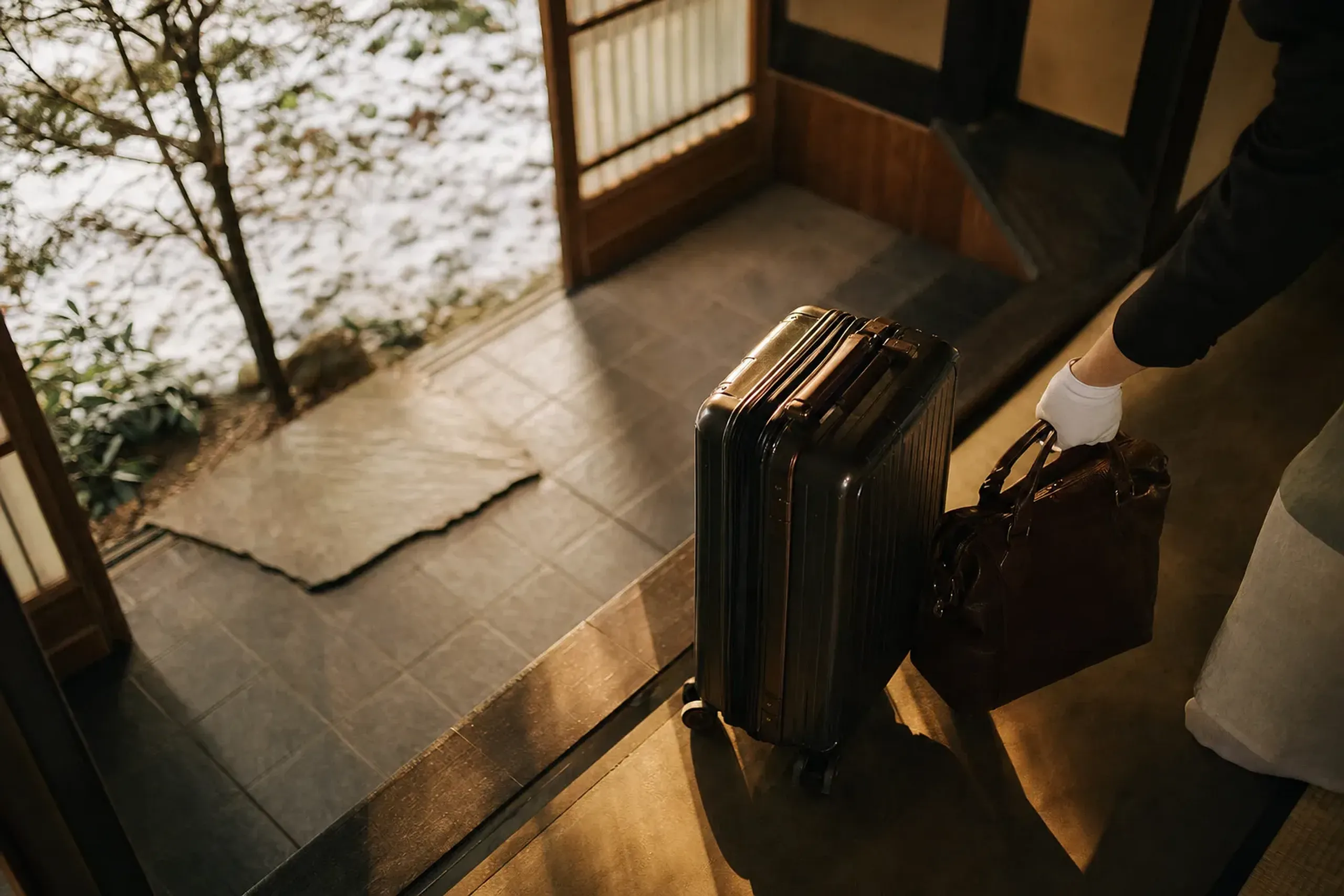
Clean transfers matter. So does a quiet margin of time.
If you want a concrete example of leg-by-leg thinking across castles and regional hubs, see Japan's National Treasure Castles: 5, 7 and 10-Day Routes. For a remote-region blueprint where cars become essential at the edges, see 7 Days in Tohoku in Summer: Towada, Osorezan and Hanagasa.
Frequently Asked Questions
Is A Private Driver Or Rail Better For A 10-Day First Trip To Japan?
A blended plan is usually best: rail for long intercity legs, then a private vehicle with a driver for airports, station transfers, and rural days where public transport thins out.
For most first trips, the shinkansen makes city-to-city movement feel simple. The private vehicle days are what keep the trip from turning into a constant search for exits, elevators, and taxi queues.
What Are The Oversized Luggage Rules On The Tokaido Shinkansen?
On the Tokaido, Sanyo, Kyushu and Nishi-Kyushu Shinkansen, baggage of 160–250 cm total dimensions requires a reserved seat with an oversized-baggage area in advance.
Without a reservation, a fee applies and the bag may be moved to a designated space; if seats are full, you may be asked to take a later train. Over 250 cm cannot be brought onboard.
Does Gran Class Run Between Tokyo And Kyoto Or Osaka?
No—Gran Class runs on the Tohoku, Hokkaido, Hokuriku and Joetsu Shinkansen, not on the Tokaido or Sanyo lines used for Tokyo–Kyoto–Osaka.
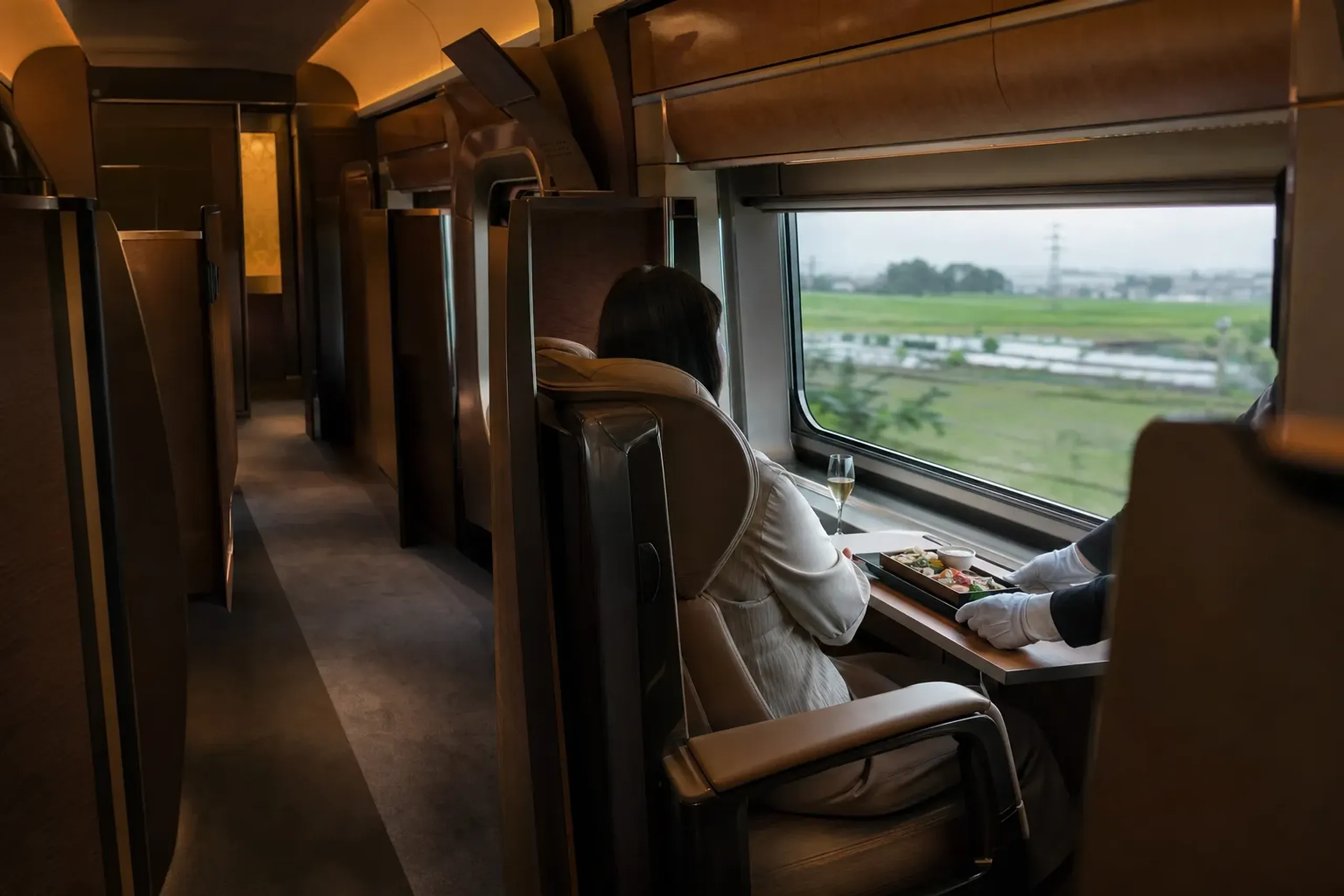
Gran Class has 18 seats per car, and meal/attendant service varies by train; our concierge team confirms what applies for your specific departure at the time of arrangement.
Can A Guide Also Drive In Japan, Or Do I Need Two People?
In Japan, a guide-interpreter generally does not drive, and a chauffeur is a professional driver, so a day that needs guiding and driving is typically two separate hires.
This is one of the most common mismatches we see in self-planned luxury itineraries. We design the day with the right roles so you are not forced to choose between good interpretation and safe, focused driving.
Why Choose Japan Royal Service
Luxury travel in Japan often fails in the gaps. Not the headline experiences. The gaps between them.
Our approach at Japan Royal Service is leg-by-leg precision, built around three things HNW travelers feel immediately: shokunin-level care in the details, hidden-Japan routing that respects regional realities, and an imperial-class standard of timing and manners in every handoff. A single misjudged transfer can flatten a day. We don’t let it.
We stay practical. No slogans. You get clear decisions: when rail is the backbone, when a driver day protects your energy, and when luggage forwarding turns an ambitious itinerary into a calm one.
If you’d like a transportation plan designed around your dates, luggage, and pace, reach our team privately via WhatsApp or LINE, or contact us here.