In this guide
- 01What Is The Yamataka Jindai Zakura At Jissō-ji?
- 02The Tree Up Close: Age, Species, And What You Actually See
- 03The Designation: Why This Tree Is Treated Like Cultural Heritage
- 04Two Legends Told Softly (And Labeled As Legends)
- 05How Fragile Is The Jindai Zakura, And How Should Visitors Behave?
- 06The Uchū-zakura: The “Space Cherry” Seedling In The Precinct
- 07What The Visit Feels Like At Peak Bloom: Daffodils Below, Kaikomagatake Behind
- 08When Does Yamataka Jindai Zakura Usually Bloom?
- 09How Do You Get To Jissō-ji From Tokyo Or Other Bases?
- 10Can You Park At Yamataka Jindai Zakura During Sakura Season?
- 11A Step-By-Step Plan For Visiting Well (Without Turning It Into A Checklist)
- 12Where This Tree Fits In A Bigger Spring Trip (One Sentence Only)
- 13What Our Team At Japan Royal Service Can Coordinate For This Visit
- 14Frequently Asked Questions
You arrive expecting “a famous cherry tree.”
Then you see it. One wild Edo-higan, older than the habits of modern travel, standing in front of Jissō-ji in Hokuto, Yamanashi.
Everything else goes quiet.
What Is The Yamataka Jindai Zakura At Jissō-ji?
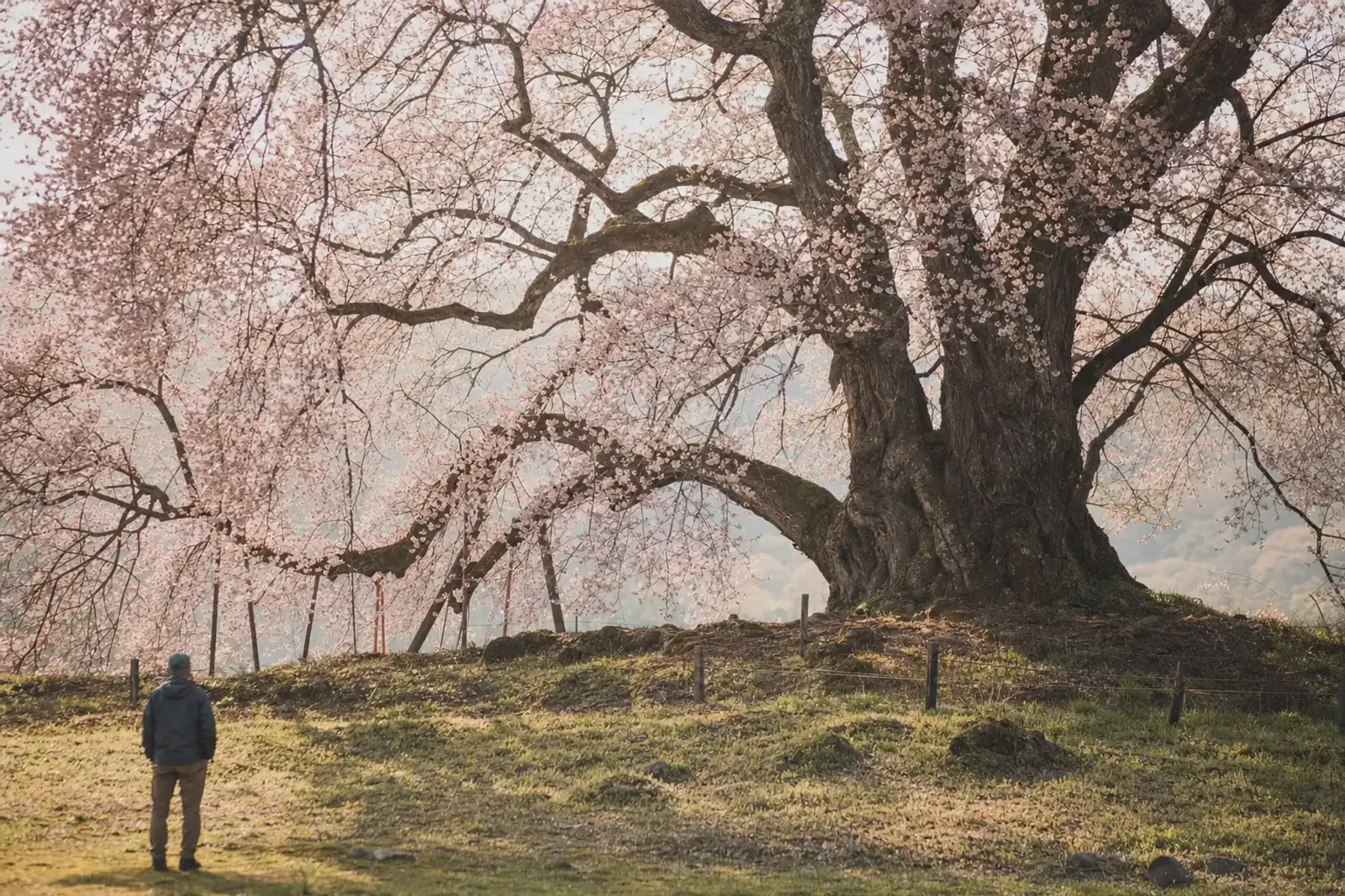
The Yamataka Jindai Zakura is an Edo-higan cherry tree at Jissō-ji Temple in Hokuto, Yamanashi, said to be roughly 1,800–2,000 years old and nationally designated as a protected monument.
This is not a “sakura spot” in the usual sense. Most cherry trees are visited for a single season and then left behind. This one is visited for its age, its quiet endurance, and the careful stewardship now required simply to keep it standing.
It is commonly counted among Japan’s Three Great Cherry Trees, alongside Miharu Takizakura in Fukushima and Usuzumi-zakura in Gifu. One sentence is enough to place it. The Jindai Zakura can hold the entire day on its own.
Jissō-ji (實相寺) is a Nichiren-sect temple. The precinct is public. The tree is public. The sense of responsibility, though, still feels unmistakably personal when you are standing in front of it.
The Tree Up Close: Age, Species, And What You Actually See
Expect variation, not uniformity.
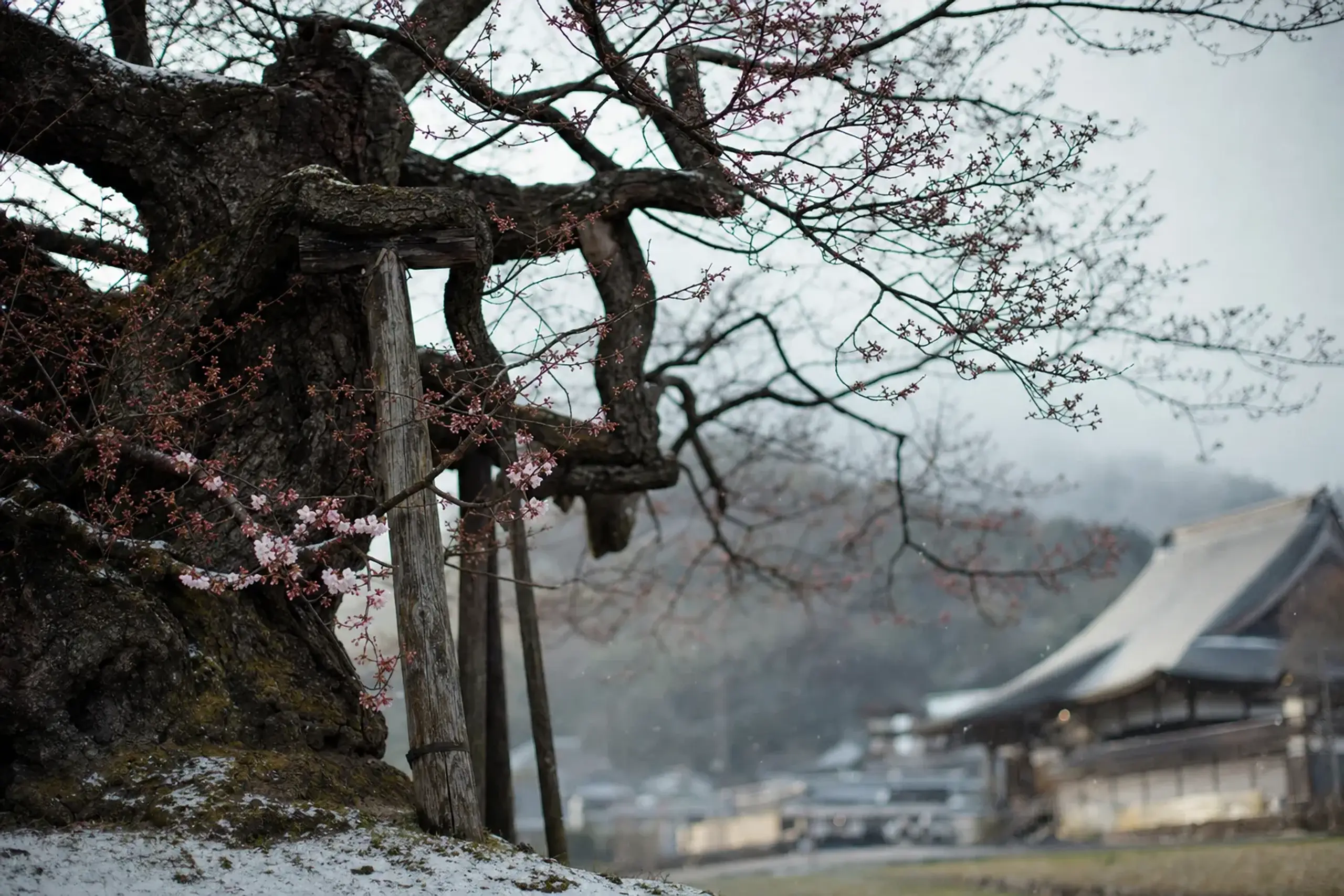
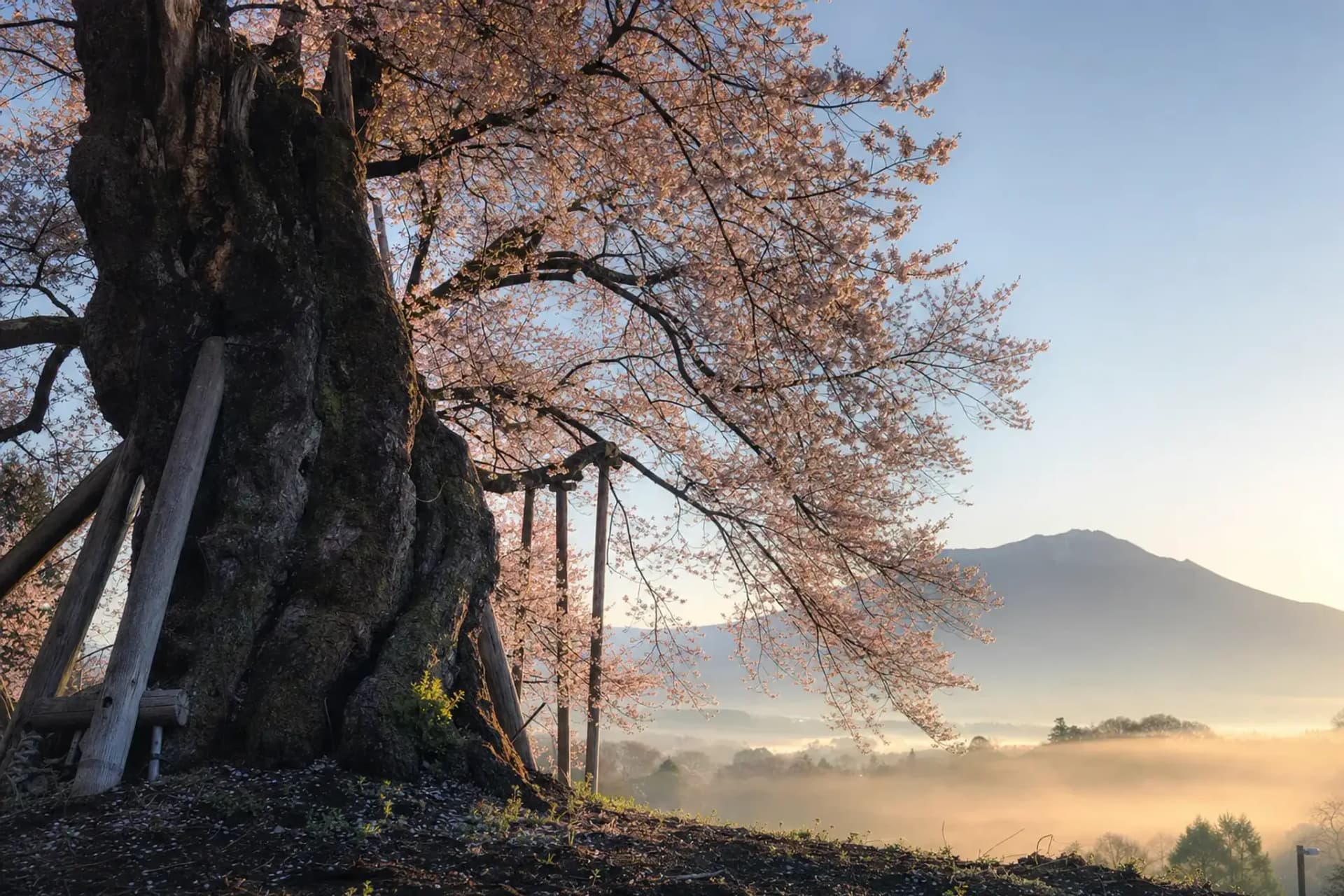
The Yamataka Jindai Zakura is an Edo-higan (エドヒガンザクラ), a wild-type cherry. Its blossoms can shade from deeper pink to nearly white on the same tree, which reads very differently from the even pastel wash of the familiar Somei-Yoshino.
It is often described as roughly 10 metres tall, with a trunk circumference of around 12 metres. Sources publish different measurement methods and figures, so we treat the numbers as a guide rather than a trophy statistic.
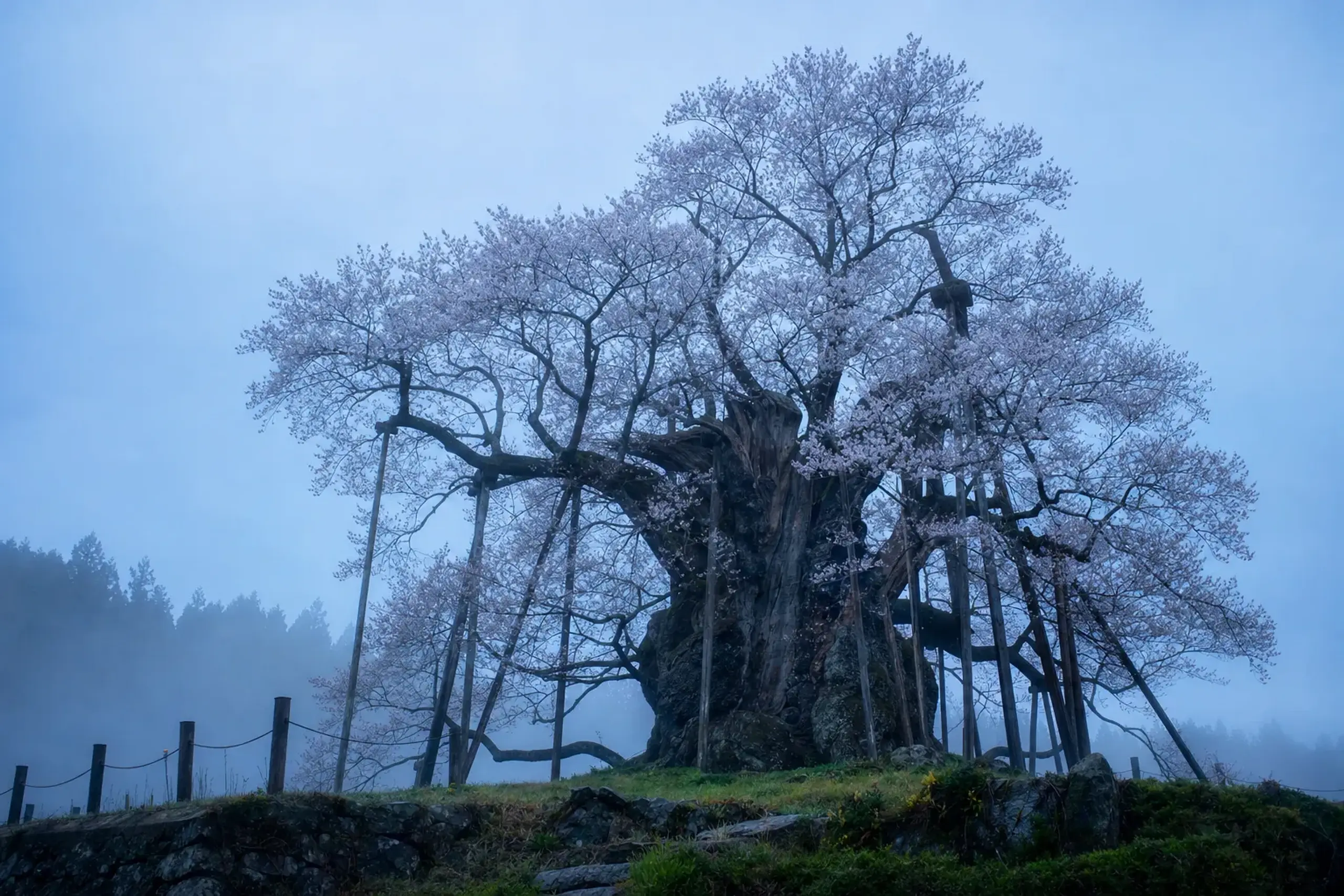
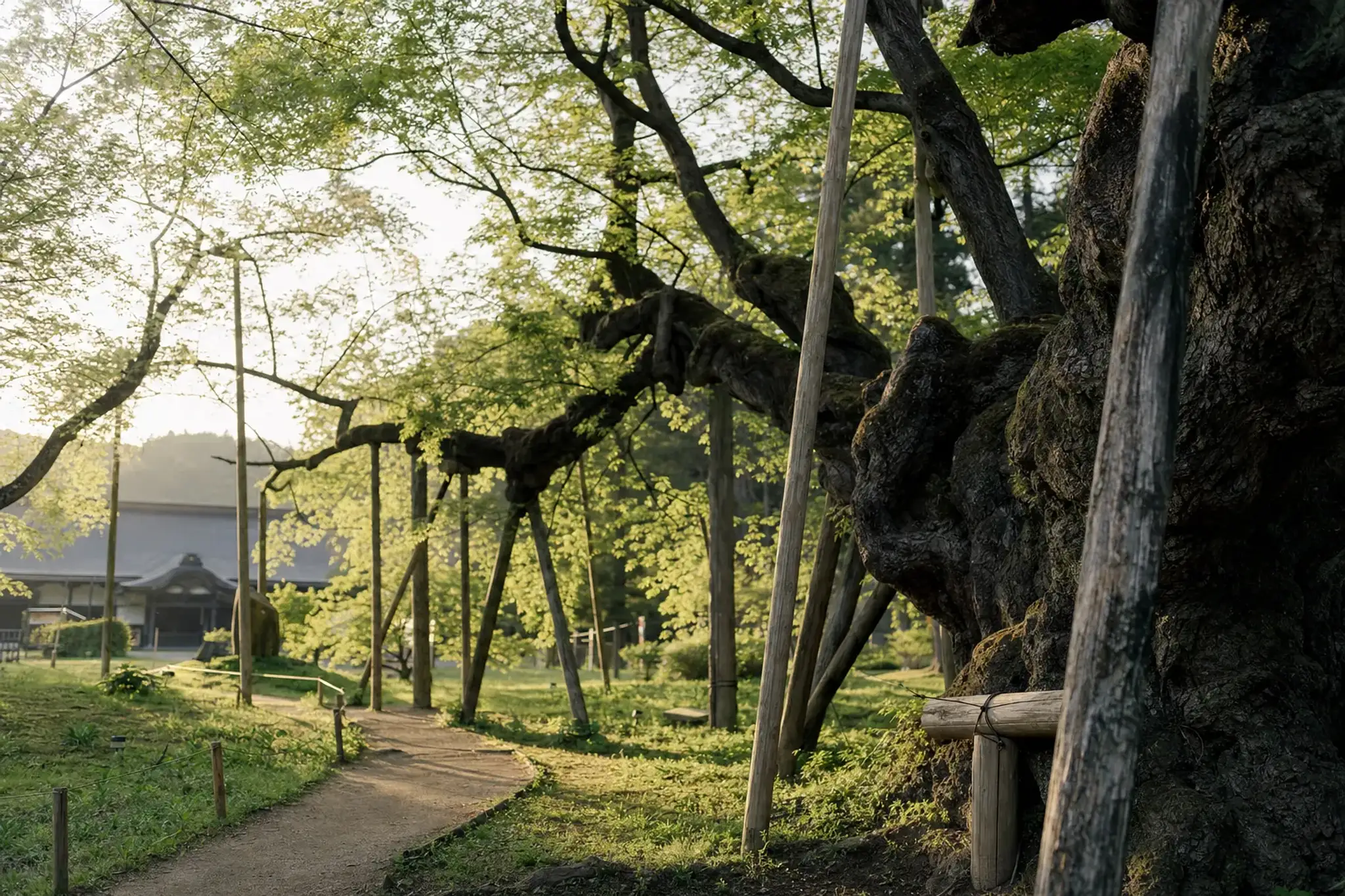
In person, scale is not the headline. Texture is. Old bark. Deep cavities. A branch architecture that looks as though it has been negotiated with time rather than designed. This is wabi and sabi made visible—beauty that lives in weathering, restraint, and survival rather than in anything polished or new.
The Designation: Why This Tree Is Treated Like Cultural Heritage
The Yamataka Jindai Zakura is a nationally designated Natural Monument, commonly described in local materials as “Natural Monument No. 1,” designated in the Taishō era (early 1920s).
That status changes the atmosphere around the tree. It is not a prop. It is managed, monitored, and protected, and visitors are quietly expected to accept its boundaries without complaint.
Hokuto City’s materials describe it as a top-tier cultural asset of the region, and Japan Heritage coverage frames it as a “living monument” with an ongoing recovery story rather than a static relic.
If you have traveled widely, you will notice the difference immediately. The site’s value is treated as long-term. Your visit should be, too.
Two Legends Told Softly (And Labeled As Legends)
Legends attach themselves to long-lived things. This tree carries two that are repeated often, and they work best when kept brief.
Legend 1: Yamato Takeru
The tree is said to have been planted by the warrior prince Yamato Takeru during an eastern campaign—a story of passage, of leaving a living marker behind.
No proof is needed to feel why the story persists. People want an origin that matches the tree’s staggering age.
Legend 2: Nichiren And The Name Myōhō-zakura
Another tradition holds that in the 13th century the priest Nichiren prayed for the tree when it was failing, and so it is also called Myōhō-zakura.
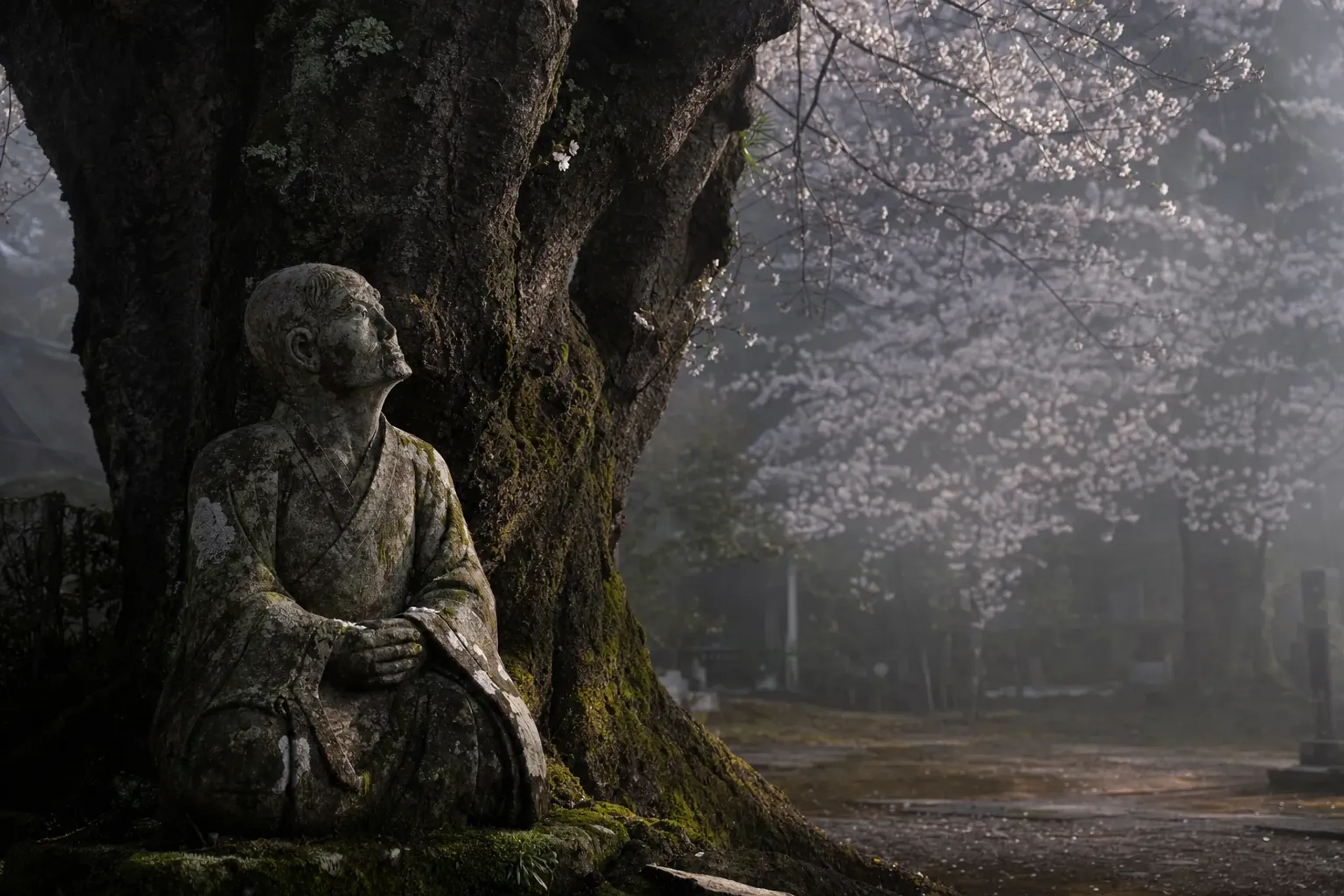
Again: tradition, not documentation.
What matters for visitors is the tone. This is a place where faith, landscape, and living nature are still spoken of in the same breath.
How Fragile Is The Jindai Zakura, And How Should Visitors Behave?
The tree is still considered fragile, and visitors should keep to the designated viewing areas, move slowly, and avoid any contact whatsoever with the trunk or roots.
Official and heritage coverage emphasizes that the tree has required hands-on care for decades. A widely cited comment from the head priest notes that a large portion of the trunk has withered, and restoration work by specialist arborists began in the early 2000s. The recovery story continues—not as a marketing line, but as patient, ongoing maintenance.
Here is what “respectful” looks like on the ground. Simple. Non-negotiable.
Key fact: Treat the area around the tree like a conservation site, not a picnic lawn—follow ropes and signs, keep children close, and never step into restricted soil near the roots.
Our team at Japan Royal Service plans visits with exactly this in mind. We would rather arrive early, stand back, and let the tree set the pace than push for a single “perfect angle.”
The Uchū-zakura: The “Space Cherry” Seedling In The Precinct
At Jissō-ji, you can also see the Uchū-zakura, a seedling grown from seeds that traveled to space and returned, shown to the public since 2016.
This detail is easy to miss if you rush. Don’t. The parent tree speaks in centuries; the seedling speaks in the present tense.
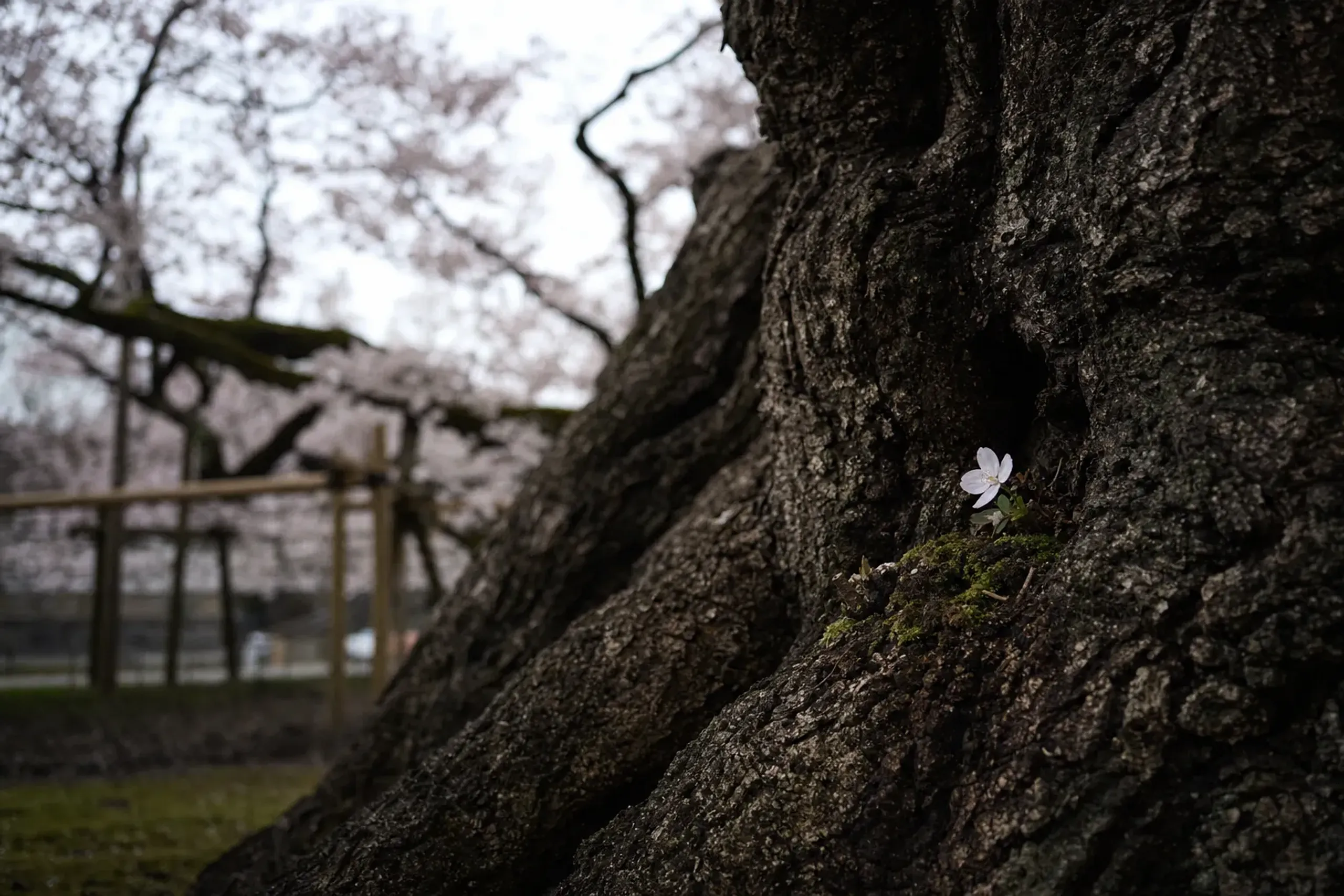
Japan Heritage coverage notes the space episode in 2008 in connection with the Jindai Zakura seeds (without needing you to memorize the vehicle). The seedling’s flowers are described as sometimes having six petals and facing downward, unlike the parent tree’s.
It is a small detour, measured in a handful of steps. But it changes the mood entirely. Suddenly the site holds both deep past and modern experimentation within the same quiet yard.
What The Visit Feels Like At Peak Bloom: Daffodils Below, Kaikomagatake Behind
In bloom, you are not looking at the tree in isolation. You are reading a layered scene.
In the foreground, trumpet daffodils gather in great numbers—often described as tens of thousands—forming a bright, low band of yellow. Above them, the Jindai Zakura’s canopy breaks into uneven color: blush, then pale, then almost white.
And behind it all, on a clear day, Mt. Kaikomagatake rises from the Southern Alps. Snow can still rest on the upper ridgelines while the precinct below fills with spring light. That contrast is part of the point—part of the Japanese sense of shun, the perfect seasonal moment that exists only briefly and only here.
This is precisely why we encourage an unhurried visit. You are not “ticking off a tree.” You are reading a landscape that will never repeat itself in quite the same way.
When Does Yamataka Jindai Zakura Usually Bloom?
Yamataka Jindai Zakura typically reaches its best viewing from late March into early April, with year-to-year variation depending on the weather.
Local guidance often describes peak viewing as “around early April.” To keep expectations honest, we use past seasons as illustrations, not predictions.
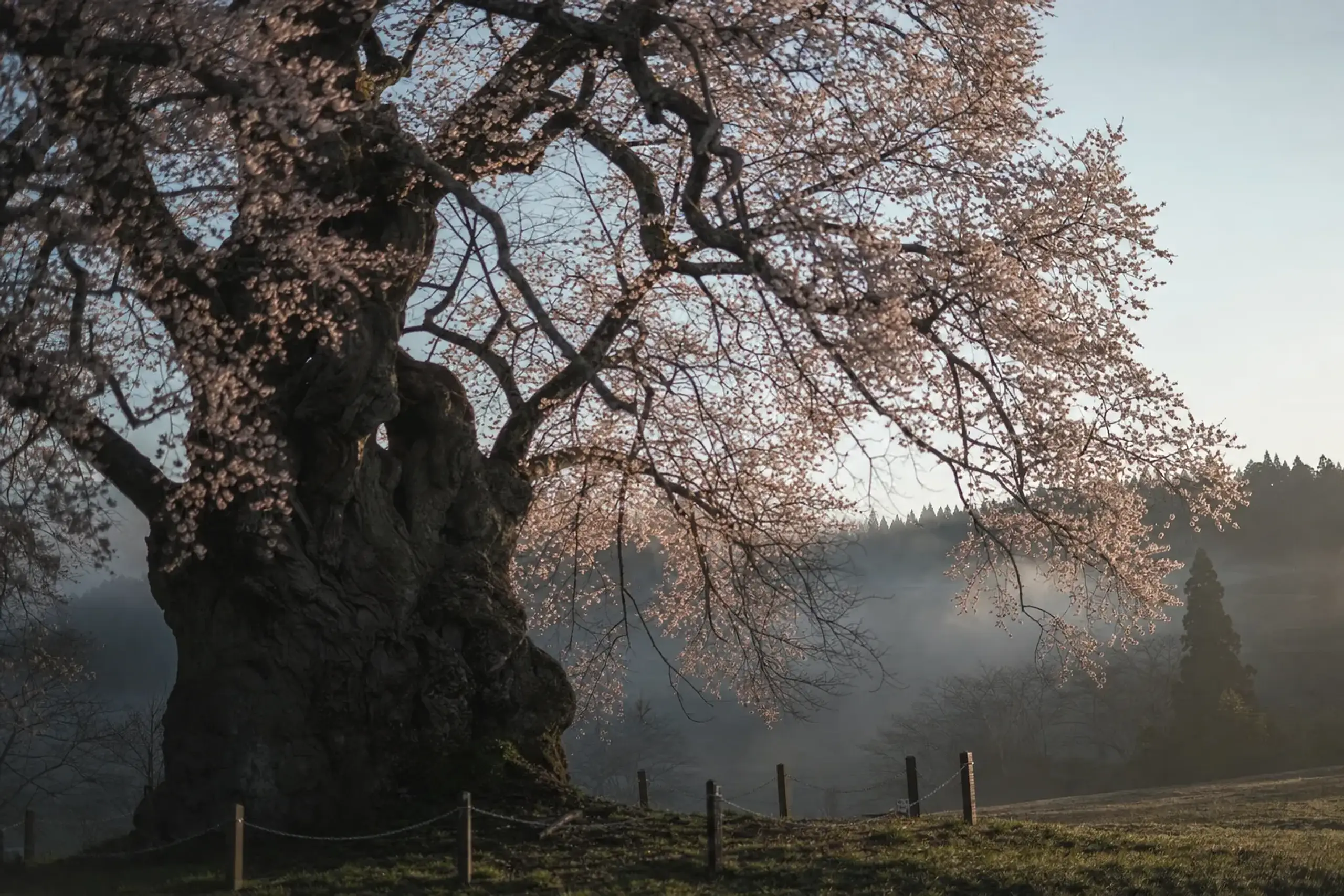
For example, one published report for the 2025 season described a full-bloom stretch running roughly from 30 March to 11 April. Treat that as a reference point only.
The Jindai Zakura Matsuri is commonly held from late March into mid-April; one season’s illustration is the 2026 festival window as presented in local listings. But your real planning lever is not the festival. It is timing.
Why Early Arrival Matters More Here Than At Urban Sakura Spots
Parking is limited. The precinct is not large. Peak days compress quickly.
Our preferred rhythm is simple: arrive early, stay long enough to let the first wave pass, then leave gently. A rushed mid-day stop is the single mistake that turns a living monument into a traffic problem.
How Do You Get To Jissō-ji From Tokyo Or Other Bases?
Most visitors reach Jissō-ji via the JR Chūō Line corridor, then take a short taxi ride, or arrive by road from the Chūō Expressway via Sudama IC.
The nearest station often cited is JR Chūō Line’s Hinoharu Station, about 15 minutes by taxi. That final link matters enormously. It is what makes the morning either calm or complicated.
If you are driving, published guidance commonly states around 15–20 minutes from Sudama IC on the Chūō Expressway. During bloom season, traffic conditions can stretch that window considerably.
Buses may run from JR Nirasaki Station in some seasons, but route names and the final walk differ across sources. When clients want a public-transport plan, our concierge team checks the latest local notices ahead of the visit and builds in a realistic walking buffer.
Can You Park At Yamataka Jindai Zakura During Sakura Season?
Yes—temporary parking is typically provided during the bloom period, but it is limited (often cited around 100 cars), and the details can change by season.
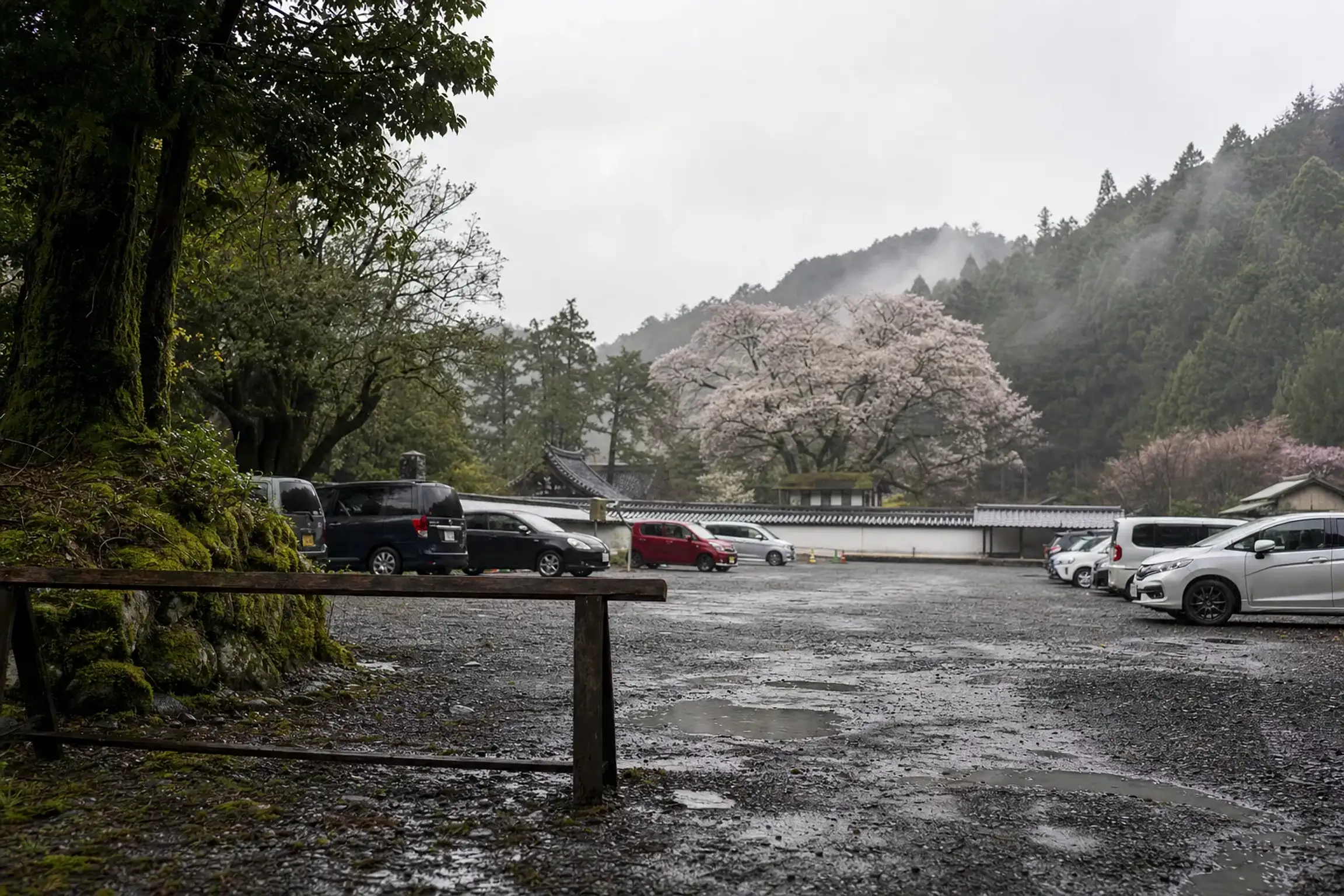
Hokuto City materials note temporary paid parking during bloom season. Other sources describe different arrangements, so we deliberately do not publish fees, hours, or exact rules as if they were permanent.
What we do share is the practical implication: if you arrive late, you may circle, wait, or be redirected. Not fun. Our team plans around drop-off timing and foot-traffic flow rather than betting the day on finding a space.
If you are traveling with family, or you simply prefer a quieter, more discreet arrival, this is where private ground planning earns its keep—especially when coordinated with a flexible private transportation / chauffeur service plan that can adapt in real time to congestion.
A Step-By-Step Plan For Visiting Well (Without Turning It Into A Checklist)
Think of this as a gentle sequence. Not an itinerary flex.
Step 1: Choose Your Base For Less Morning Stress
Kōfu, Kawaguchiko, the Lake Suwa area, or Tokyo can all work as bases. The right answer depends on how early you can comfortably start and how you want the rest of the day to feel.
Our team at Japan Royal Service often designs the day so that the tree is the first anchor, not an afterthought squeezed between other stops.
Step 2: Aim For An Early Arrival Window
Arrive early enough that you can stand back and watch the precinct slowly wake. That is when the tree feels oldest—and when discretion and silence become part of the experience itself.
If you come at the same moment as everyone else, you will mostly remember cars, cones, and the feeling of being hurried. A big mistake.
Step 3: Spend Time With The Details
Walk the viewing perimeter slowly. Look for the color shifts across the blossoms. Notice where the trunk has endured and where it has been quietly supported.
Then find the Uchū-zakura seedling. It resets your sense of scale.
Step 4: Leave The Site The Way You Found It
Stay on the paths. Keep voices low. Follow staff guidance and signage without trying to negotiate for a better angle.
This is stewardship in its smallest form: not taking anything from a place that is already giving everything.
Where This Tree Fits In A Bigger Spring Trip (One Sentence Only)
If you are collecting the Three Great Cherry Trees slowly across multiple trips, you may also enjoy our guides to Miharu Takizakura and Usuzumi-zakura—but the Jindai Zakura deserves a day that does not compete with anything else.
What Our Team At Japan Royal Service Can Coordinate For This Visit
We provide tailored guidance and private coordination around the visit, centered on timing, interpretation, and comfort—without ever treating a public temple and a public tree as a private venue.
Within the confirmed scope for this destination, our concierge team can support:
- Cultural interpreter guiding at the tree and within the Jissō-ji precinct, so the visit carries real context and calm pacing.
- Ground logistics with a partner-fleet vehicle from Tokyo, Kawaguchiko, or your chosen base, timed for an early arrival whenever possible.
- Route design and meal planning around the visit, built to avoid unnecessary backtracking during peak traffic periods.
- Accommodation guidance for choosing the right base area—including the kind of hidden ryokan that reward an introduction rather than a search engine (without publishing property names in a public article).
If you are also weighing broader pacing for a spring journey, our approach to a tailor-made / bespoke itinerary is the same here: fewer stops, better timing, and space to notice what you came for.
Discretion is assumed throughout—your identity and your itinerary remain entirely your own.
When you are ready to stand before one of Japan’s oldest living things at the quietest, most luminous moment of its year, contact us here and we will begin shaping a visit around your season, your pace, and your privacy.
Frequently Asked Questions
How Old Is The Yamataka Jindai Zakura, Really?
It is commonly described as being about 1,800–2,000 years old, but that age is an estimate, so we describe it as “said to be” or “estimated.”
Different sources phrase the age slightly differently, and responsible writing avoids turning an estimate into a certainty. What you can trust is that it is among Japan’s best-known ancient cherry trees, carefully protected as cultural heritage.
When Is The Best Time To See Yamataka Jindai Zakura In Bloom?
The usual best viewing is late March to early April, with peak often described as around early April, though weather shifts the timing each season.
We recommend planning with flexibility and using recent bloom reporting as the trip approaches. For one illustration only, a 2025 report described full bloom running roughly from 30 March to 11 April.