In this guide
- 01How Do You Get To Aizu-Wakamatsu From Tokyo?
- 02Day One: Aizu-Wakamatsu And Tsuruga Castle
- 03Day Two: Ōuchi-juku, A Thatched Post Town Still Lived In
- 04Day Three: Urabandai And The Goshikinuma Ponds
- 05When Is The Best Time To Visit Fukushima's Aizu Region?
- 06How Japan Royal Service Arranges The Three-Day Loop
- 07Frequently Asked Questions
- 08Why Choose Japan Royal Service
Inland Fukushima holds three different Japans within a short drive. A castle town where the Aizu domain rose and fell. A thatched post town, still lived in, where the Edo road paused for a meal and a bed. A plateau of coloured ponds formed by a volcano in 1888. Each belongs to a separate century. Each sits close enough to reach by car in a single, unhurried loop.
This is slow country. Rail serves it, but slowly, with changes and waits between the places worth seeing. What follows is a three-day route through the Aizu region, told the way our team at Japan Royal Service arranges it: one castle town, one post town, one volcanic landscape, linked by a car and a driver who knows the roads.
How Do You Get To Aizu-Wakamatsu From Tokyo?
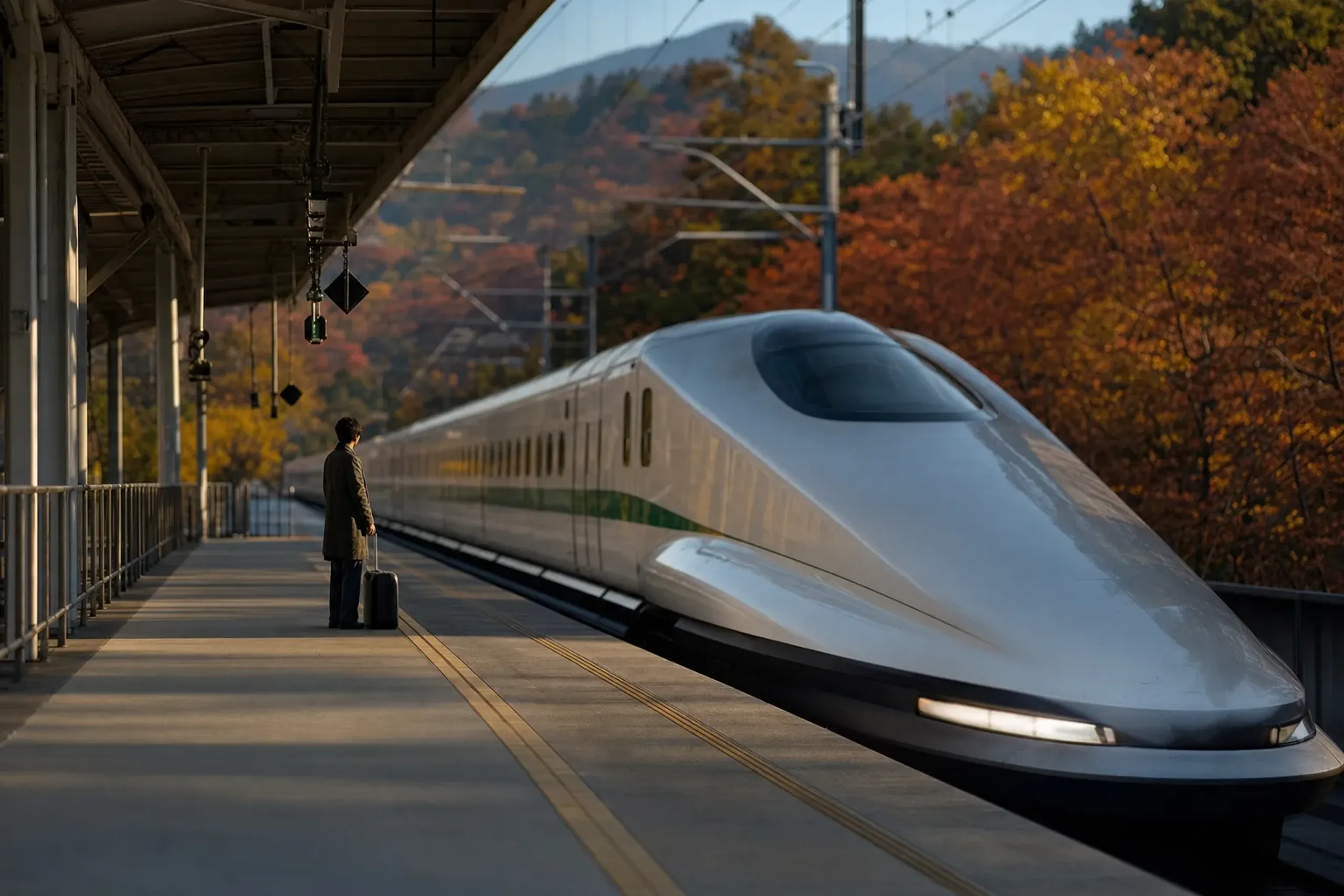
From Tokyo, take the Tōhoku Shinkansen to Kōriyama in about 75 to 90 minutes, then the JR Ban'etsu West Line local train to Aizu-Wakamatsu in roughly 1 hour 10 minutes. That is the standard public route.
It works. It is also where the slowness begins. The local line is a single-track country railway, and the connections between the region's three anchors do not line up neatly. Rail reaches each place; it does not stitch them together.
Our concierge usually arranges the shinkansen leg to the region and a private car and driver waiting on arrival.
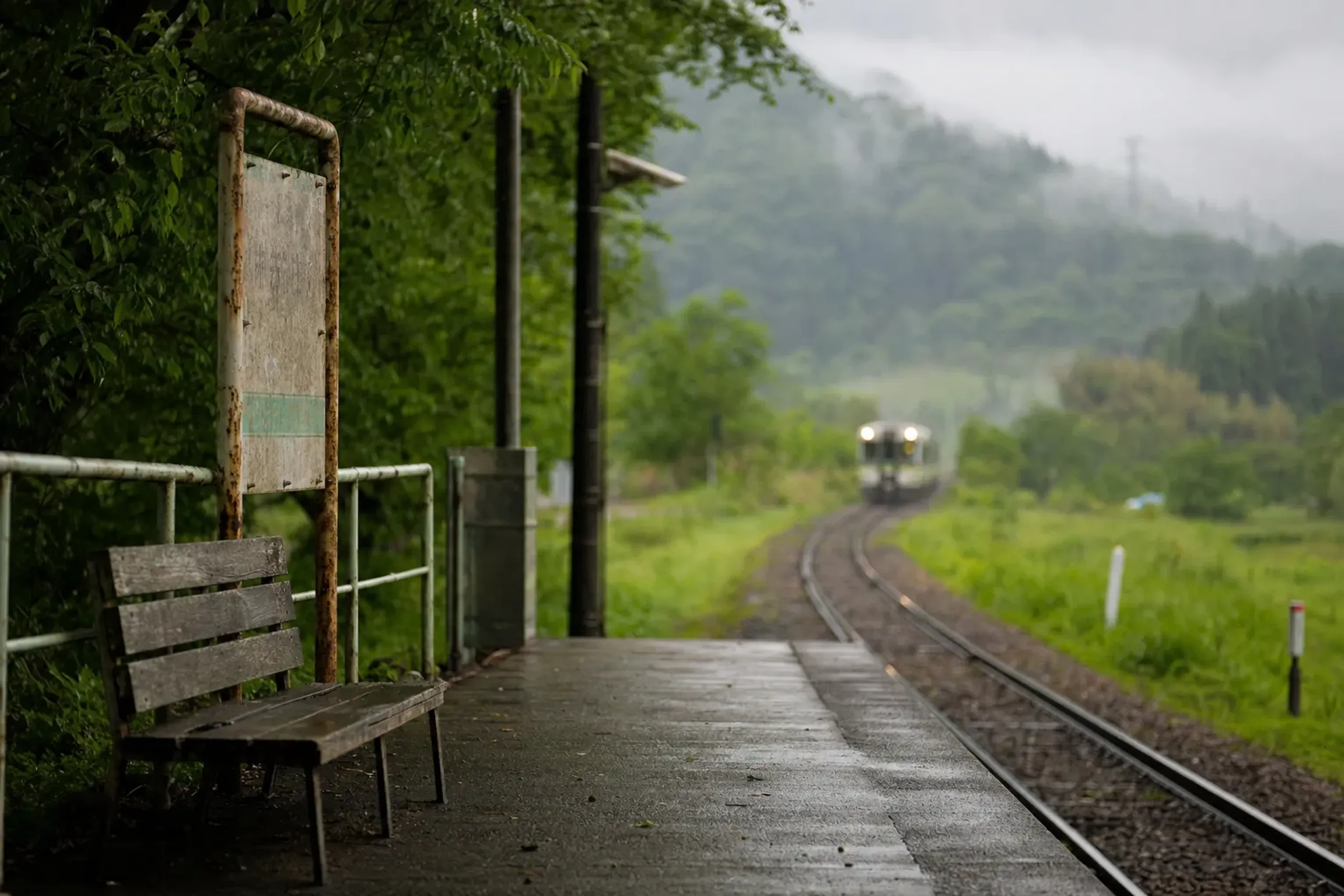
From that point, the loop is yours to pace. Road conditions and any rail service changes on the Ban'etsu West Line are confirmed directly with you at the time of arrangement, so the plan you hold is the plan that runs.
Day One: Aizu-Wakamatsu And Tsuruga Castle
Start with history. Aizu-Wakamatsu was the seat of the Aizu domain, and its centre is Tsuruga Castle, the stronghold that tells the region's story.
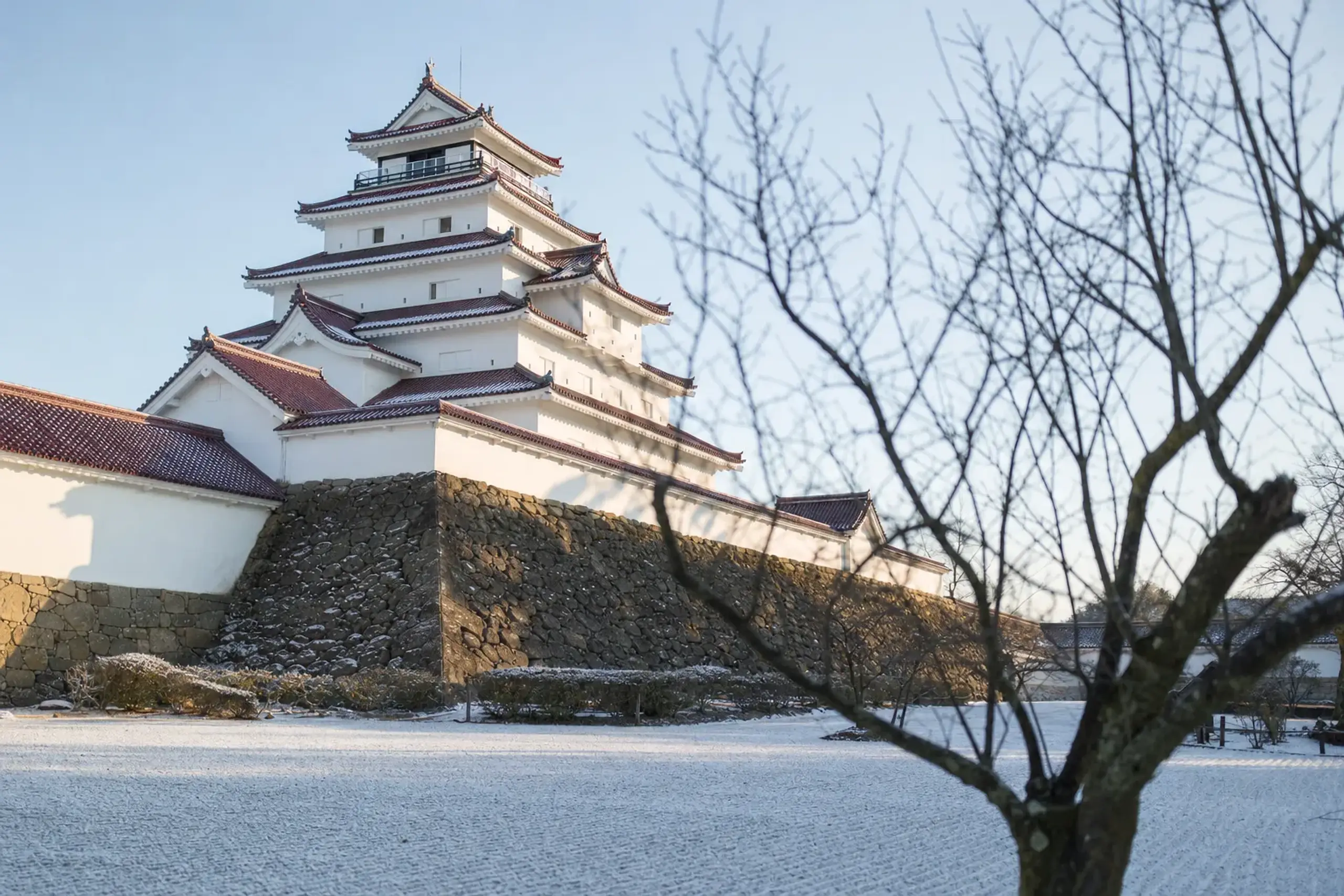
The castle was built in 1593 by the feudal lord Gamō Ujisato. In the Edo period it became the political and cultural heart of Aizu. After a 1611 earthquake damaged the original, the keep was rebuilt with five storeys, the form it keeps today.
The Boshin War And A Month Under Siege
By the late Edo period, Aizu stood as a key northern stronghold of the shogunate. When the Boshin War broke out in 1868, the castle held. For a month it withstood a siege before its garrison surrendered to imperial forces. The war ended an era, and Aizu was on the losing side of it.
The keep was dismantled in the early Meiji period and rebuilt in 1965. Its roof tiles are the detail people remember: glazed red to resist freezing, unique among Japanese castle keeps, and restored to that red in 2011. Inside, a museum covers Aizu samurai culture and the final battle. A good guide makes the difference here.
The siege, the domain, the clans who held the walls — the story carries weight when someone can tell it room by room.
Iimoriyama, Remembered Quietly
A short way from the castle rises Iimoriyama, a hill tied to the Byakkotai, a unit of teenage samurai, during the Boshin War. It is a site of tragedy, and the town treats it as one. Our guides mention it with care and let the hill speak for itself.
If you are drawn to how Japan's great fortresses compare, our guide to Japan's Five National Treasure Castles, and who should climb sets Tsuruga in wider company. It is a reconstructed keep rather than an original, but its red roof and its history give it a place of its own.
End the day in the town. Aizu keeps a quiet dignity after dark, and an evening here rewards an unhurried walk before dinner.
Day Two: Ōuchi-juku, A Thatched Post Town Still Lived In
Ōuchi-juku is about 55 minutes by car from Aizu-Wakamatsu. Go in the morning, before the main street fills.
This was a post town on the old road between the north and Edo, a place where travellers found meals, lodging and rest. Then the Meiji era redrew the routes and bypassed it. Left aside, Ōuchi-juku escaped modern development, and that accident of history is why it survives.
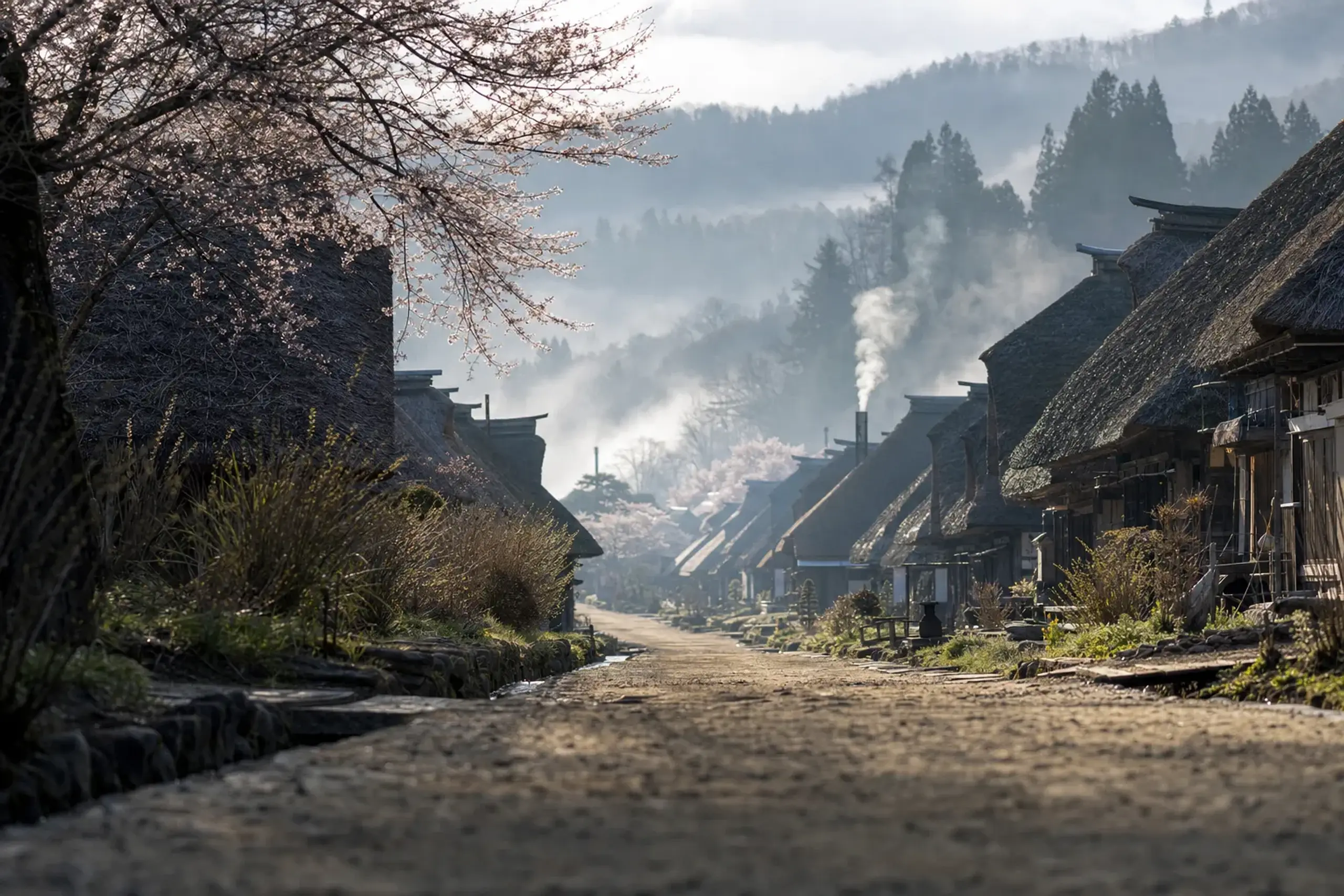
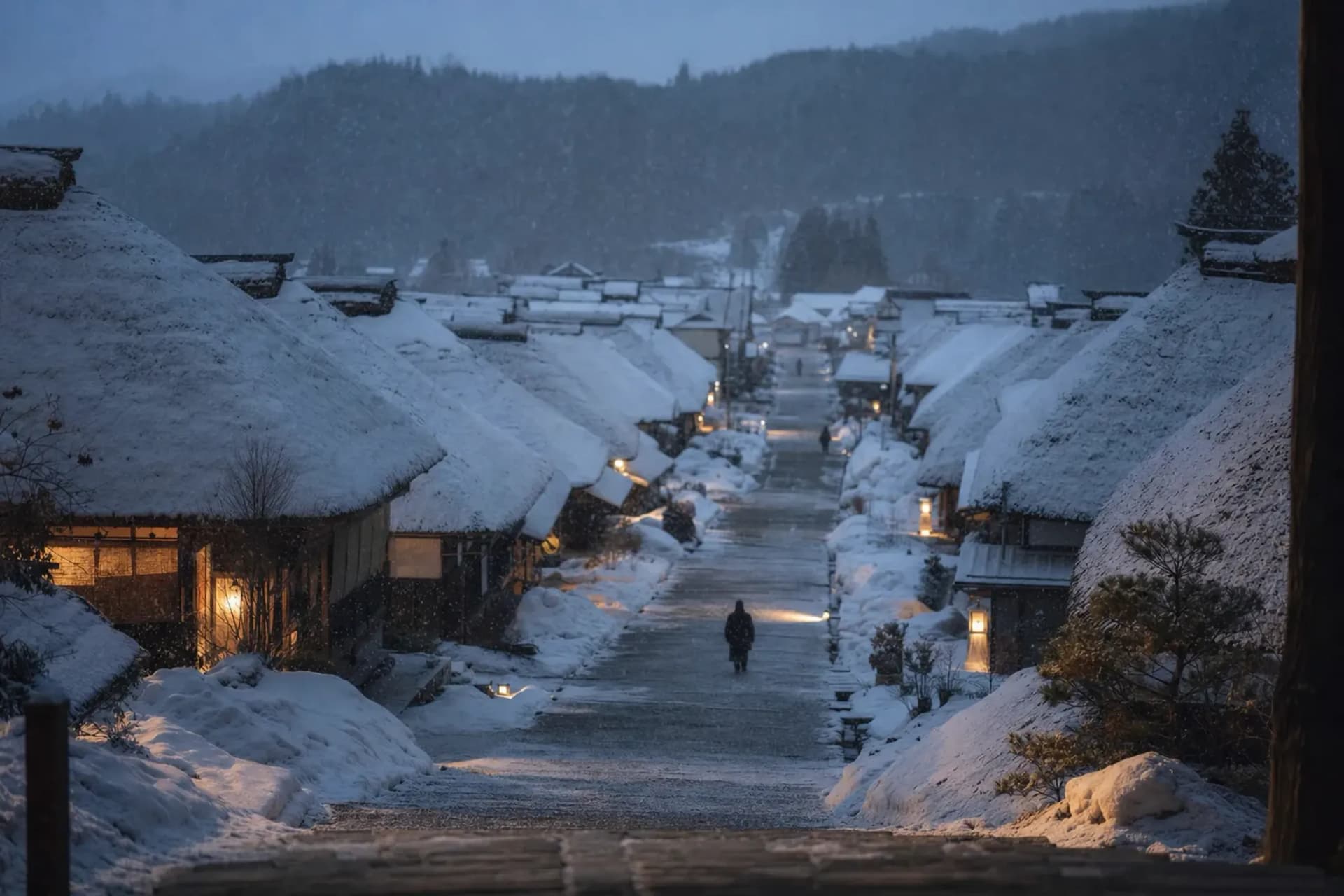
More than 30 thatched-roof houses line a single 450-metre street. Many are around 300 years old. They are not a museum set. People live here, run shops here, and re-thatch the roofs themselves with pampas grass, as their families have for generations. The village is a nationally designated preservation district, and walking it feels like walking an Edo road with the shutters still open.
Key fact: Ōuchi-juku is a lived-in village, not a reconstruction. The thatched houses are homes and working shops, and the street is narrow — early morning offers the quietest, clearest walk.
Negi Soba, Eaten With A Leek
Lunch here is negi soba: buckwheat noodles served with a whole leek. The leek is both flavouring and utensil — you scoop and eat with it, a local custom that is part meal, part performance. It is honest country food, and it is the dish Ōuchi-juku is known for.
From here the route can turn back toward Aizu for the night, or continue. The nearest station, Yunokami Onsen on the Aizu Railway, sits a taxi ride away, which tells you plainly why a private car earns its place on this loop. If you are weighing the question for your own trip, our private driver or rail in Japan decision framework lays out when each makes sense.
Day Three: Urabandai And The Goshikinuma Ponds
The third Japan is the youngest.
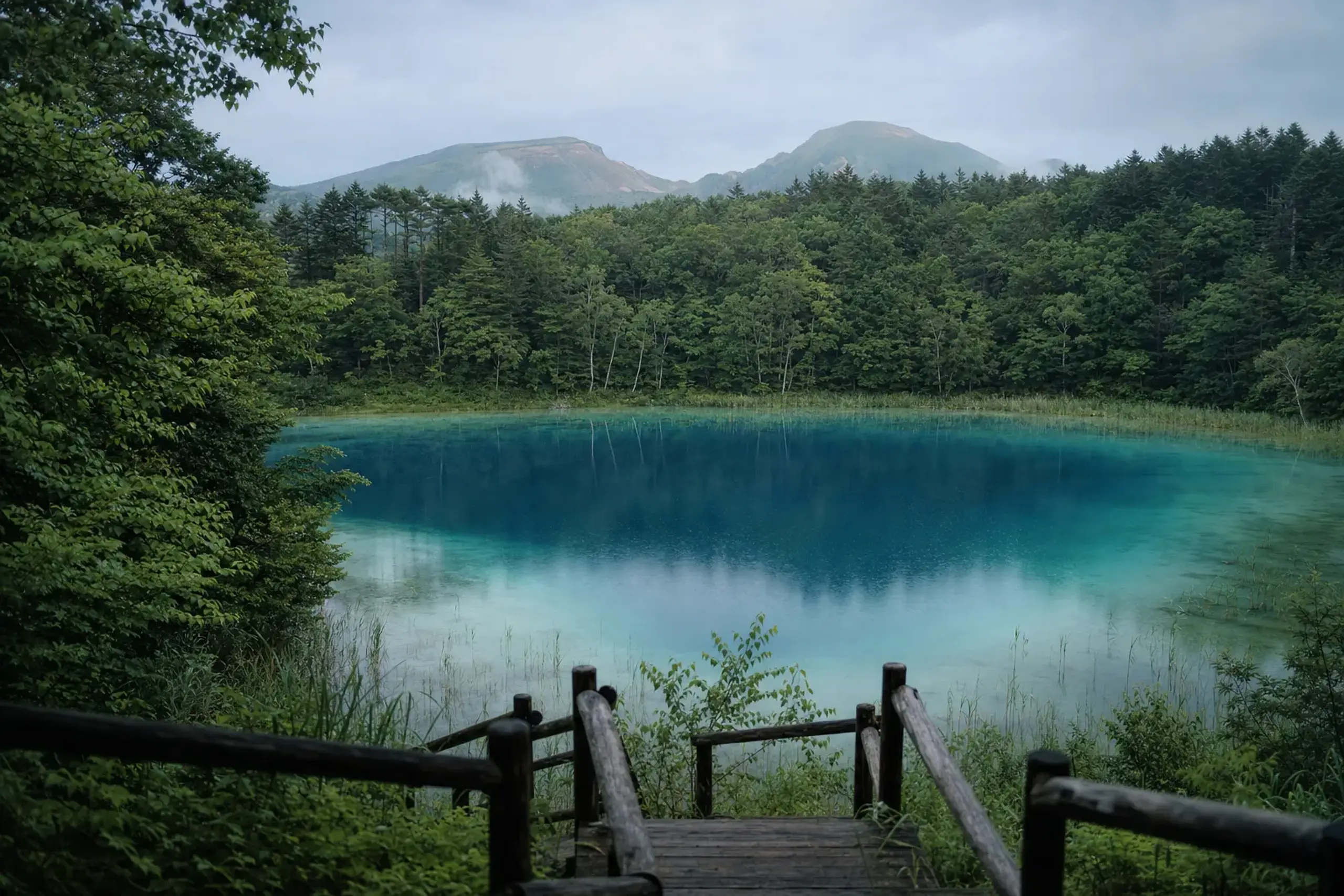
Urabandai, the plateau on the north side of Mount Bandai, was shaped in a single day in 1888, when the volcano erupted and a landslide dammed the rivers below.
What the dam left behind is the Goshikinuma, the "five-coloured ponds" — around 30 of them, scattered through the forest. Volcanic sediments and minerals tint the water, and the colours shift with the light and the angle of your gaze. One pond reads cobalt; another, a few steps on, turns a cloudy jade. No two hours look quite the same.
A level trail runs 4 kilometres from the Urabandai Visitor Center to Lake Hibara, about 90 minutes one way. It is gentle walking, well suited to an unhurried morning. Our team can arrange the car to meet you at the far end, so the walk stays one direction and you are not retracing your steps. Interpretation adds a great deal here — the geology, the eruption, the way the ponds came to hold their colours. The landscape looks pretty without it and reads far deeper with it.
When Is The Best Time To Visit Fukushima's Aizu Region?
There is no single best season — each one changes the route. Spring brings the cherries near Fukushima City; autumn colours the Urabandai woods; winter lays snow on Ōuchi-juku's thatched roofs.
In spring, the add-on is Hanamiyama, a hillside park just outside central Fukushima City.
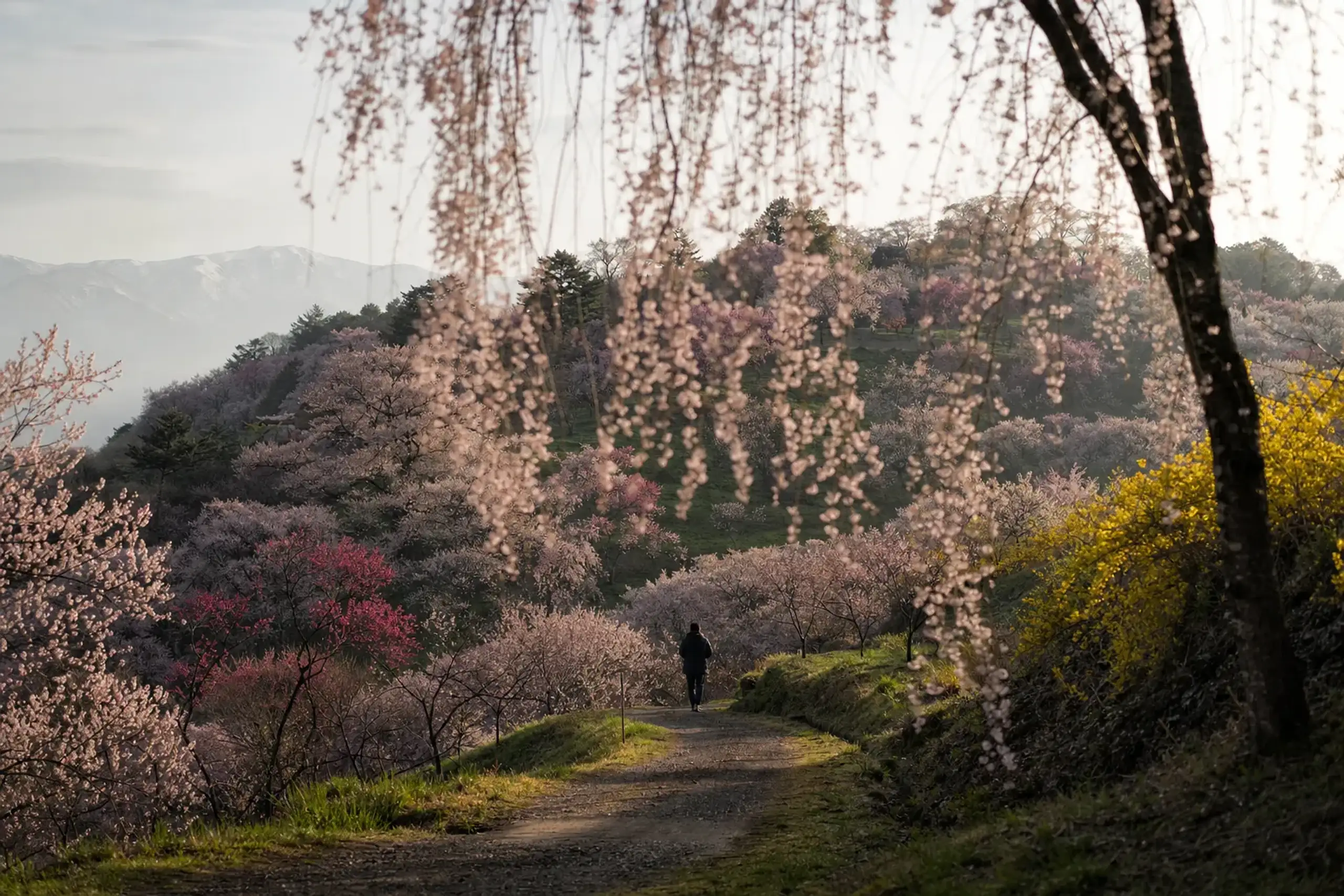
Local farmers began it, planting flowering trees around their land, and it opened to the public in 1959. Peak bloom usually falls in mid to late April, led by Somei Yoshino cherries among other flowering trees. In blossom season, shuttle buses run from Fukushima Station. For travellers who prefer their hanami away from the crowds, our piece on hidden hanami spots and Japan's best-kept secrets is a useful companion.
Autumn turns Urabandai's ponds and forest to colour, the reflections deepening on still water. Winter is its own picture: snow on the thatched roofs of Ōuchi-juku, the village hushed and white. Bloom timing, foliage, snow and shuttle schedules all vary year to year, so the Japan Royal Service concierge team confirms timing directly with you at the time of arrangement, and shapes the loop around the season you choose.
How Japan Royal Service Arranges The Three-Day Loop
The case for a car here is practical. Rail reaches each place but runs slowly between them, with changes, taxis from country stations, and timetables that rarely cooperate. A private car and driver turns three scattered destinations into one clean circuit.
Our team arranges the shinkansen to the region, a partner-supplied private vehicle with a driver for the loop, lodging matched to your pace, and a guide for the Aizu history where you want one. The tailor-made itinerary is built around your season and your appetite for walking — the Goshikinuma trail in full, or a shorter stretch with the car meeting you partway.
Details that change — opening hours, shuttle timing, any adjustment on the Ban'etsu West Line — are confirmed with you directly before you travel. You carry a plan that holds. If this route pairs with a wider loop through the region, our seven days in Tōhoku in summer itinerary shows how Aizu connects onward.
Frequently Asked Questions
How far is Ōuchi-juku from Aizu-Wakamatsu by car?
Ōuchi-juku is about 55 minutes by car from Aizu-Wakamatsu. A private vehicle lets you arrive early, before the single main street fills, and continue on to Urabandai without depending on country rail connections.
Is the Goshikinuma trail in Urabandai an easy walk?
Yes. The Goshikinuma trail is level and runs 4 kilometres from the Urabandai Visitor Center to Lake Hibara, about 90 minutes one way. Our team can position the car at the far end so you walk only one direction.
Can you see all three places — Aizu, Ōuchi-juku and Urabandai — in three days?
Yes, comfortably, with a car and driver. The standard route gives Day 1 to Aizu-Wakamatsu and Tsuruga Castle, Day 2 to Ōuchi-juku, and Day 3 to the Urabandai ponds, each place getting an unhurried pace.
What is negi soba, the dish Ōuchi-juku is known for?
Negi soba is buckwheat noodles served with a whole leek used as both flavouring and eating utensil.
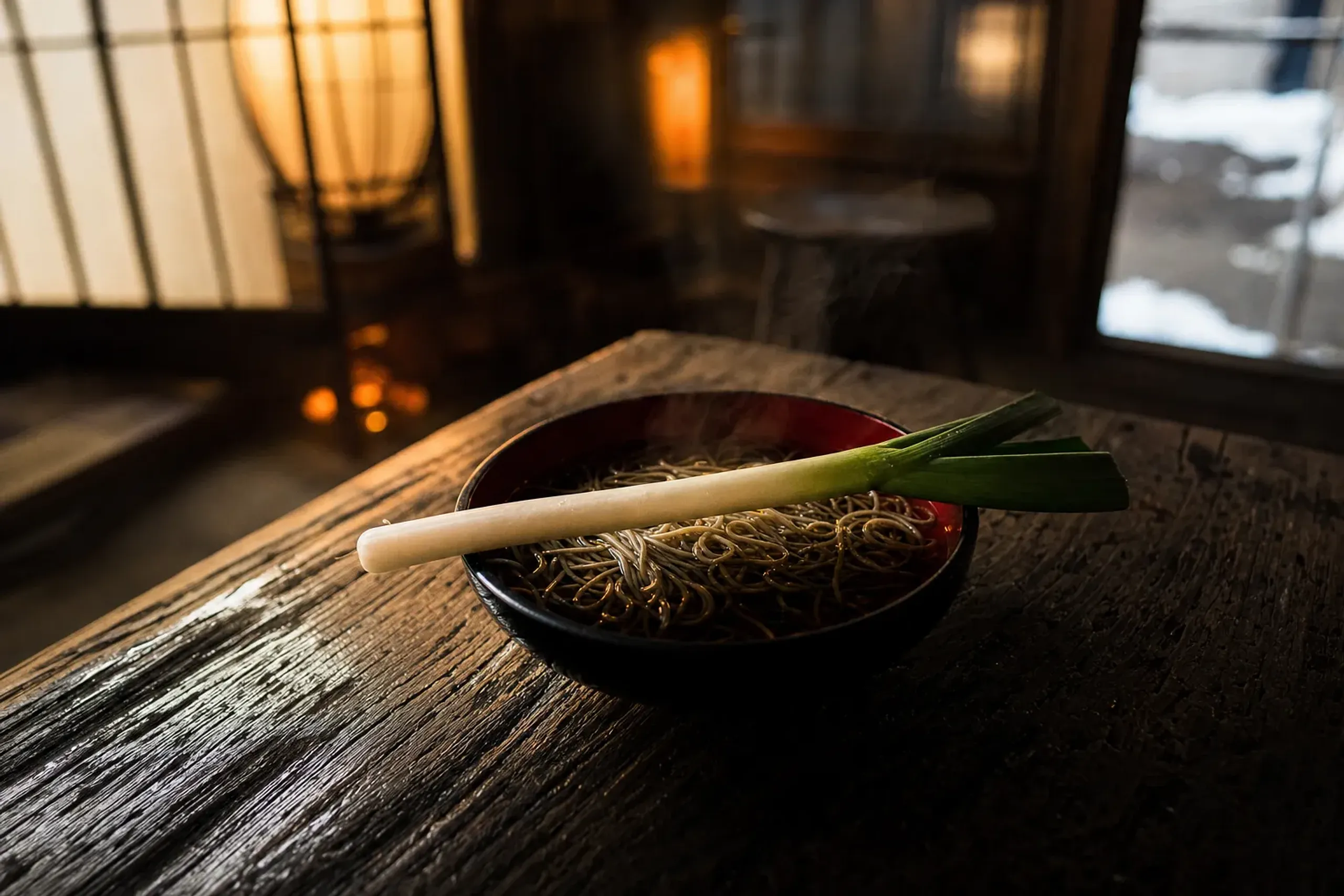
You scoop and eat the noodles with the leek — a local custom unique to Ōuchi-juku.
When do the cherry blossoms peak at Hanamiyama near Fukushima City?
Peak bloom at Hanamiyama usually falls in mid to late April, led by Somei Yoshino cherries. Exact timing shifts each year, so our concierge confirms the window directly with you when arranging a spring visit.
Why Choose Japan Royal Service
Inland Fukushima is not a region you book from a drop-down menu. It is a place that rewards someone who knows the roads between the castle, the post town and the ponds, and who can read a season before you arrive. That is the work our team does.
We arrange the rail into the region, the private car and driver that makes the loop possible, lodging matched to your pace, and a guide who can tell the Aizu story with the care it deserves. We hold your plans in confidence, and we keep them quiet. In our experience, the difference between a good trip through Aizu and a memorable one is the hand that arranges the parts you never have to think about.
To plan your three days through Aizu, Ōuchi-juku and Urabandai, reach our team privately via WhatsApp or LINE, or contact us here.