
LINE ID japanroyalservice
+817013781777 click here
+817013781777 click here

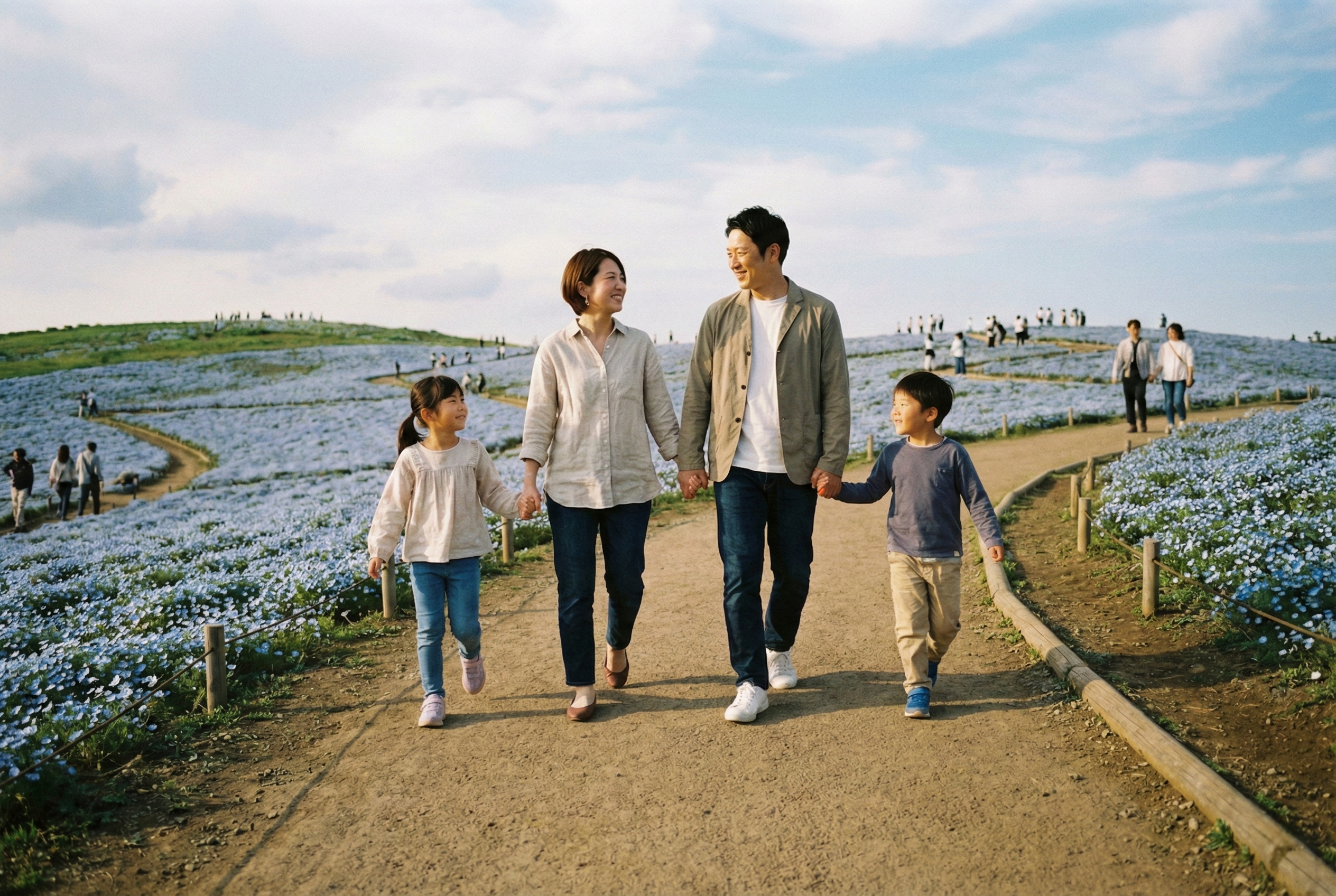
Imagine standing at the foot of a gentle hill. As you look up, the ground seems to dissolve into the sky. Millions of tiny, bell-shaped flowers carpet the earth in a shade of blue so pure it is hard to tell where the flowers end and the horizon begins.
This is not a fantasy. This is spring in Japan.
While the cherry blossoms (sakura) often steal the spotlight, there is another floral phenomenon that captures the hearts of sophisticated travelers: the blooming of the Nemophila , or “Baby Blue Eyes.”
At Japan Royal Service , we believe that true luxury is about exclusive experiences and breathtaking moments. A private journey to see the Nemophila is one of the most serene and photogenic experiences you can add to your Japan itinerary.
In this guide, we will take you through everything you need to know about these blue wonders, from the best viewing spots to tips for a comfortable, crowd-free experience.
Nemophila are small, delicate annual flowers native to North America. However, they have found a spectacular second home in Japan. The name “Nemophila” comes from the Greek words for “grove” and “love,” suggesting a flower that loves the woodland glades.
In Japan, they are affectionately known as “Baby Blue Eyes.” They grow close to the ground, rarely exceeding 20 centimeters in height. When planted in the millions, they create a seamless carpet of blue that is unlike anything else in the botanical world.
The visual effect is calming and surreal. Walking among them feels like walking on clouds or floating in a calm blue ocean.
If you search for images of Nemophila in Japan, you are almost certainly looking at Hitachi Seaside Park in Ibaraki Prefecture. This represents the gold standard for flower viewing in Japan.
Located about two hours northeast of Tokyo, this spreading park covers 350 hectares. The star attraction is the Miharashi Hill . This ancient sand dune offers panoramic views of the Pacific Ocean on one side and the park on the other.
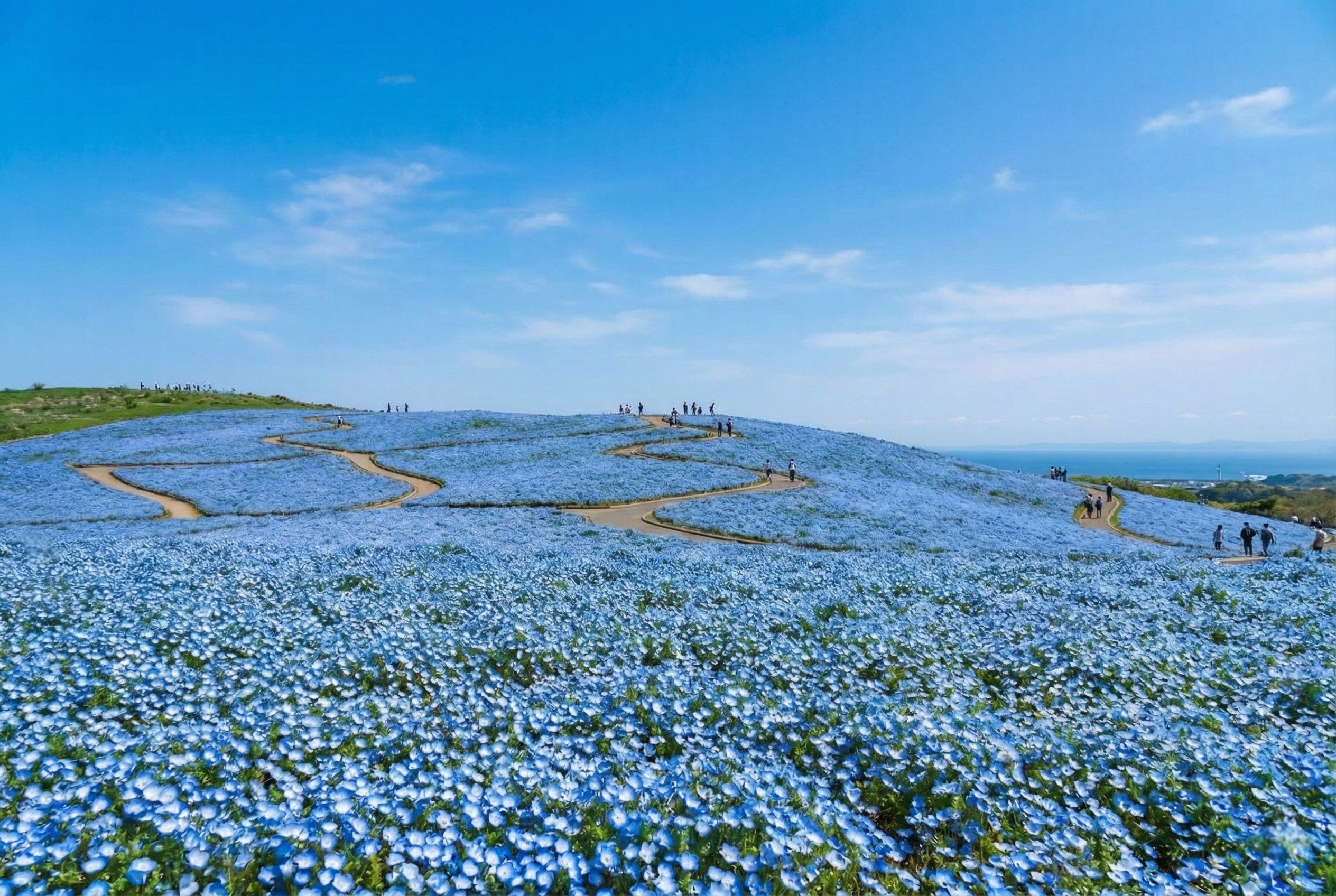
During the peak season, the park staff plants an astounding 5.3 million Nemophila on this hill.
Every spring, the park hosts an event called “Nemophila Harmony.” The contrast is stunning. You have the vivid blue of the flowers, the deep blue of the ocean, and the light blue of the spring sky. It is a triple threat of azure beauty that creates a 360-degree blue universe.
Timing is everything when planning a luxury trip. Nature follows its own schedule, but we can predict the best windows for viewing.
Generally, the Nemophila season runs from mid-April to early May .
Mid-April: The flowers begin to bloom. The green leaves are still visible, giving the hill a fresh, greenish-blue hue.
Late April (Golden Week): This is usually the “peak bloom.” The flowers are fully open, creating that famous solid blue carpet. However, this often coincides with “Golden Week,” a major Japanese holiday period.
Early May: The flowers remain beautiful, but intermingled with fresh green shoots as the season winds down.
Because this sight is world-famous, it attracts thousands of visitors daily during peak season.
For our clients, we recommend aiming for late April before the Golden Week holidays begin, or immediately after they end.
Alternatively, visiting on a weekday morning is essential. With Japan Royal Service , we can arrange a private departure from Tokyo in the early morning hours. This ensures you arrive at the park just as it opens, allowing you to enjoy the serenity before the midday rush arrives.
While Hitachi Seaside Park is the most famous, it is not the only place to enjoy these blooms. If you prefer a location further west or want to avoid the Tokyo crowds, there are excellent alternatives.
If your travels take you to the Kansai region (near Kyoto and Osaka), this is your destination. Located on an artificial island in Osaka Bay, this park boasts about 1 million Nemophila .
The setting here is unique because it is right on the water. The blue of the flowers contrasts beautifully with the white clouds and the sparkling bay. It is a fantastic sunset spot, where the golden light hits the blue flowers, creating a magical atmosphere.
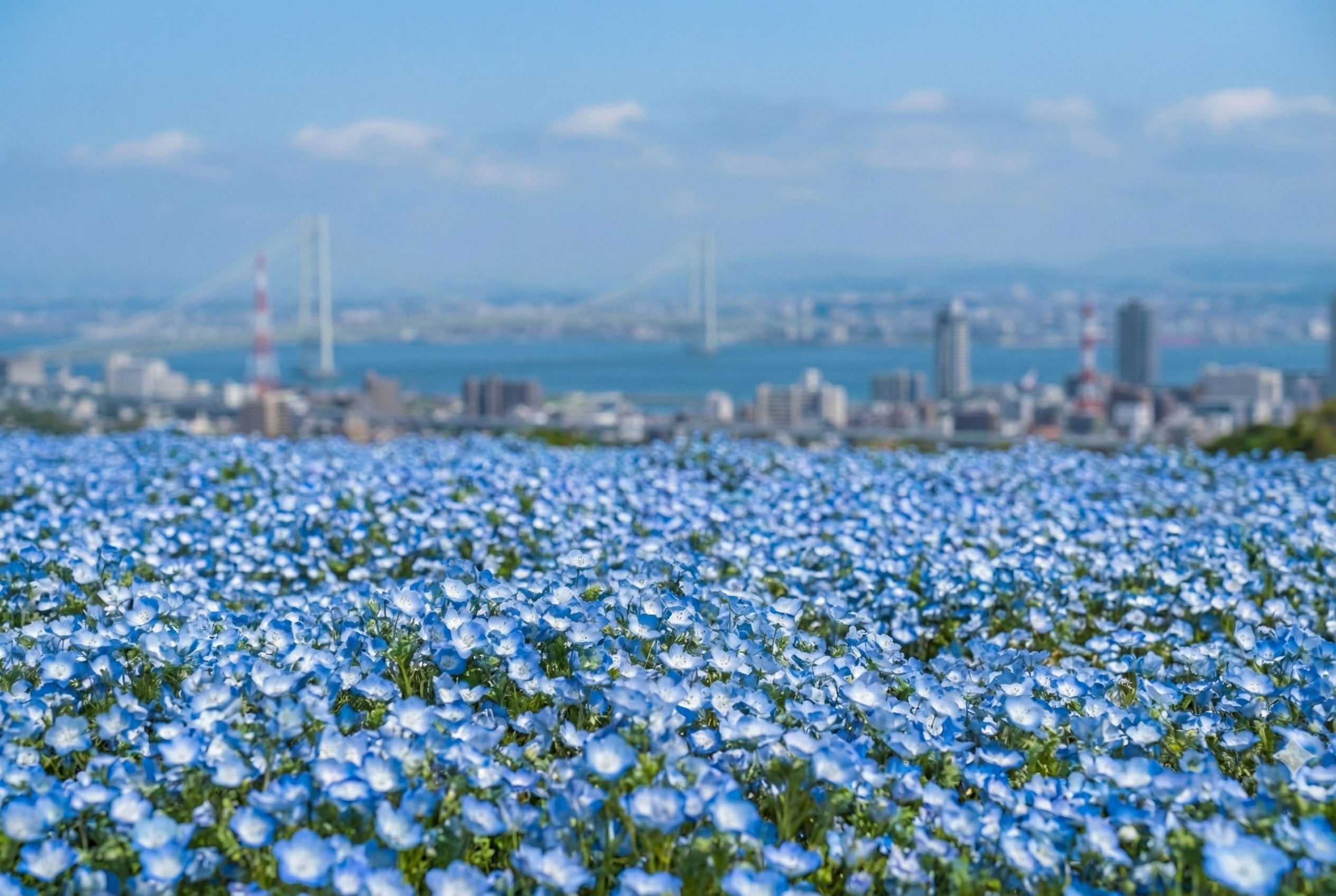
For those exploring the southern island of Kyushu, this park in Fukuoka is a must-visit. It is a massive family-friendly park. The Nemophila here are often planted in artistic patterns or mixed with other colorful spring flowers like tulips.
This creates a “flower mosaic” effect that is different from the solid blue carpet of Hitachi but equally beautiful. It is less crowded than the Tokyo neighbors and offers a very relaxed, local vibe.
Why book your Nemophila experience with a boutique agency like Japan Royal Service ?
Viewing flowers in Japan can sometimes be physically taxing due to large crowds and complex public transport. We transform this potentially stressful excursion into a seamless luxury experience.
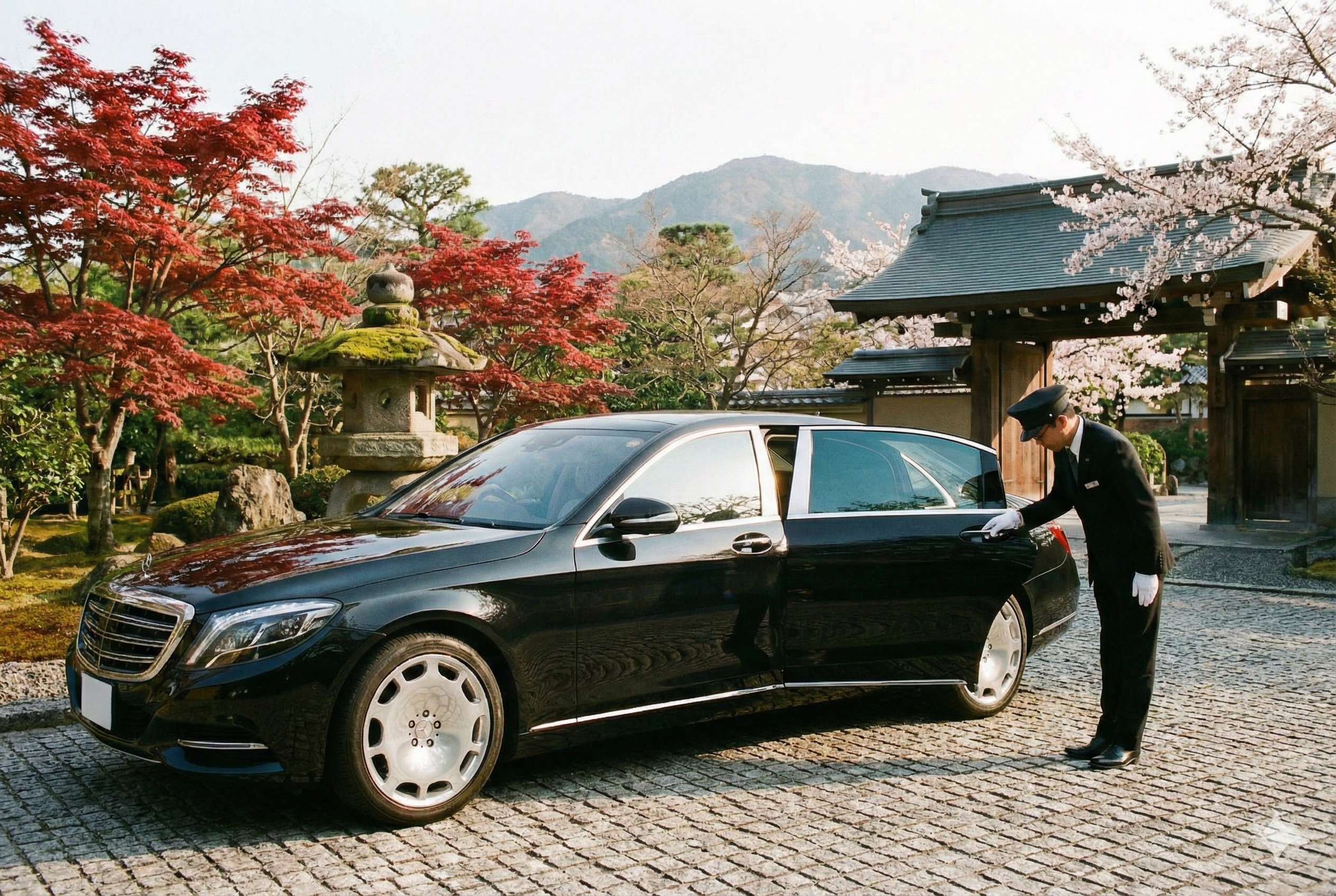
Getting to Hitachi Seaside Park from Tokyo by train involves transfers and shuttle buses that can be packed. With our service, a private luxury vehicle picks you up from your hotel lobby. You can relax in comfort, enjoy Wi-Fi and refreshments, and arrive at the park gate refreshed and ready to explore.
Most visitors eat at the park’s crowded food stalls. We can arrange something different. After your morning walk among the flowers, your driver can whisk you away to a high-end local kaiseki restaurant or a hidden gem serving Hitachi beef (a local delicacy).
We don’t just take you to see flowers; we build a day around them. We can combine your visit with a stop at Kairakuen Garden in Mito, one of the three most beautiful landscape gardens in Japan. Or, visit a local sake brewery that is not open to the general public.
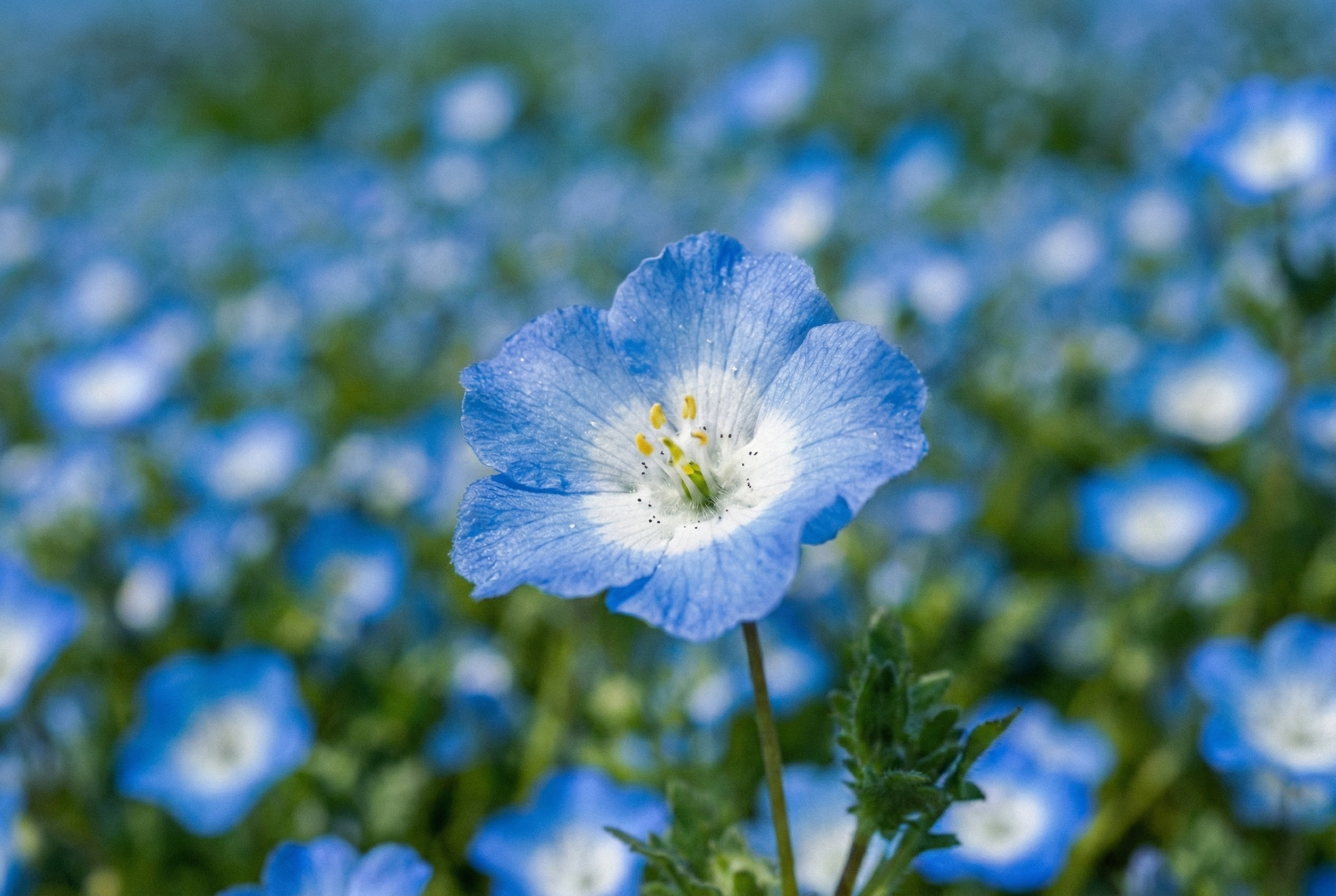
You will want to capture this beauty. Whether you are using a smartphone or a professional DSLR, here are a few tips to get that “influencer-style” photo.
Get Low: The flowers are short (about 20cm). To get the best impact, crouch down and shoot from a low angle. This makes the field look denser and allows you to frame the flowers against the sky.
Use Portrait Mode: If you are photographing a person, use portrait mode (aperture priority) to blur the background. This makes the blue color wash together into a dreamy backdrop.
Look for Contrast: Try to include something in the frame that isn’t blue for scale and contrast. A single tree, a white dress, or a bright red parasol can make the blue pop even more.
Soft Light is Best: The mid-day sun can be harsh. The soft light of early morning or late afternoon brings out the delicate pastel hues of the Baby Blue Eyes.
Practicality meets style. Since you will be walking outdoors, comfort is key, but you also want to look good in photos.
Footwear: Miharashi Hill is a gentle climb, but it is still a walk. Wear comfortable, flat walking shoes. Avoid high heels as the paths can be unpaved in areas.
Clothing Colors: White, beige, or light yellow clothes look stunning against the blue flowers. Avoid wearing blue, or you might blend into the background!
Layers: Spring weather in Japan is unpredictable. It can be warm in the sun but chilly when the ocean breeze picks up. Bring a light cardigan or a stylish trench coat.
If you are visiting Japan in late April, you are in luck. The Nemophila season overlaps with several other spectacular floral events.
Wisteria (Fuji): Late April is the start of the Wisteria season. Ashikaga Flower Park is famous for its tunnels of purple flowers. It is possible, though a long day, to combine Hitachi Seaside Park and Ashikaga Flower Park into a “Grand Spring Flower Tour” with a private driver.
Late Cherry Blossoms (Yaezakura): While the main cherry blossoms (Somei Yoshino) fall by early April, the multi-layered “Yaezakura” bloom later. Hitachi Seaside Park has areas where yellow narcissus and late-blooming cherry trees bloom near the Nemophila, creating a tapestry of yellow, pink, and blue.
Here is what a typical day looks like when you book with Japan Royal Service:
08:00 AM: Pick-up from your 5-star hotel in Tokyo in a luxury sedan.
10:00 AM: Arrival at Hitachi Seaside Park. Priority entry.
10:15 AM: Guided stroll to Miharashi Hill. Enjoy the view before the peak crowds.
12:30 PM: Depart the park for a private lunch reservation at a local upscale restaurant serving seasonal Ibaraki cuisine.
02:30 PM: Visit a local shrine or a traditional Japanese garden in Mito city for a quiet cultural experience.
04:30 PM: Relaxing drive back to Tokyo.
06:30 PM: Drop-off at your hotel or dinner reservation.
This itinerary allows you to see the sights without the fatigue of navigating the rail system or walking long distances to bus stops.
Japan is a country of seasons, and the Nemophila season is one of its most enchanting chapters. Standing amidst millions of blue flowers, with the ocean breeze on your face, is a moment of pure tranquility.
It is a reminder of the delicate beauty of nature.
However, navigating the crowds and logistics to see these flowers can be a challenge for the uninitiated. That is where we come in. At Japan Royal Service , we specialize in smoothing the path so you can simply enjoy the view.
Whether you choose the grandeur of Hitachi Seaside Park or a hidden gem in Osaka, the “Baby Blue Eyes” are waiting to welcome you.
Don’t let the logistics of travel dim the beauty of your experience. Contact Japan Royal Service today to start planning your bespoke spring itinerary. Let us whisk you away to the blue hills of Japan in comfort and style.