
LINE ID japanroyalservice
+817013781777 click here
+817013781777 click here
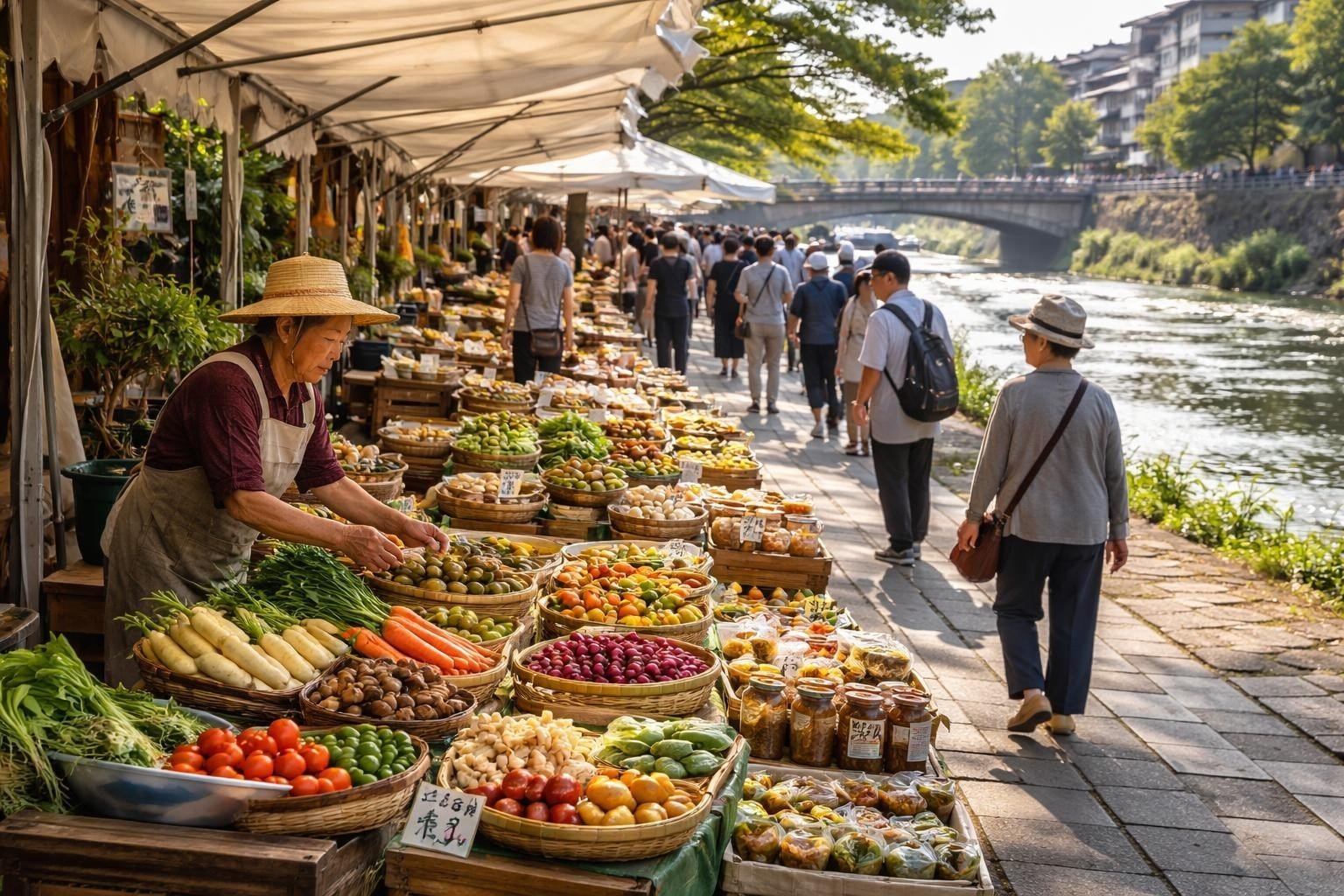
Nestled along the picturesque Miyagawa River in the Japanese Alps, the Miyagawa Morning Market in Takayama represents one of Japan’s most authentic cultural traditions. Operating since the Edo period, this vibrant marketplace brings together local farmers, artisans, and food producers who have maintained their ancestral practices for generations. The market serves as both a commercial hub and a living museum, where visitors can experience genuine Japanese hospitality while discovering regional specialties unique to the Hida region. For discerning travelers seeking authentic cultural encounters beyond the typical tourist circuit, this morning market offers an unparalleled glimpse into rural Japanese life and traditions.
The Miyagawa morning market in Takayama traces its origins to the late 1600s, when farmers’ wives began selling surplus vegetables and handmade goods near the Jinya-mae market area. Over centuries, this humble gathering evolved into a structured marketplace that now stretches along the eastern bank of the Miyagawa River. The historical tradition of Takayama’s morning markets reflects the region’s agricultural heritage and the tight-knit relationship between mountain communities and their natural environment.
Throughout the Meiji, Taisho, and Showa periods, the market adapted to changing economic conditions while preserving its fundamental character. Vendors traditionally belonged to farming families who cultivated vegetables in the surrounding mountains, bringing their harvest to town before dawn. This practice continues today, with many stalls operated by third and fourth-generation vendors who maintain recipes and techniques passed down through their families.
The market weathered significant challenges during Japan’s modernization, including competition from supermarkets and changing consumer habits. However, its resilience speaks to the deep cultural value placed on direct producer-consumer relationships in Japanese society.

Location and Accessibility
The Miyagawa morning market in Takayama extends approximately 350 meters along the Miyagawa River, positioned between the Kaji Bridge and the Yayoi Bridge. This strategic location places it within easy walking distance of Takayama’s historic districts, making it convenient for visitors staying in the old town area.
Operating Schedule
| Season | Operating Hours | Days |
|---|---|---|
| April – October | 6:00 AM – 12:00 PM | Daily |
| November – March | 7:00 AM – 12:00 PM | Daily |
| Year-round | Extended hours during festivals | Variable |
The market operates regardless of weather conditions, though vendor numbers may decrease during heavy snow in the winter months. Early morning visits between 7:00 and 9:00 AM offer the best selection and opportunity to interact with vendors before the afternoon crowds arrive.
More than 60 stalls line the riverside pathway during peak season, while in winter, 20-30 vendors brave the cold. The official Miyagawa Morning Market website provides updated vendor lists and special event information for trip planning purposes.
Stalls are positioned facing the river, creating a natural flow for browsing. Most vendors speak limited English, but communication through gestures and smiles transcends language barriers. Many stalls display prices clearly, and vendors often offer samples of pickles, dried fruits, or other specialties.
The Miyagawa morning market in Takayama showcases the remarkable diversity of Hida-region agriculture, with offerings changing dramatically across seasons. This variability reflects the traditional Japanese philosophy of shun, which calls for consuming ingredients at their seasonal peak for maximum flavor and nutritional value.
Fresh Mountain Vegetables
Spring visitors encounter vegetables that rarely appear in international markets, many of which are foraged by vendors themselves, gathered in the surrounding mountains. These wild ingredients command premium prices in urban Japanese restaurants, yet remain affordable at source.
| Season | Featured Products | Peak Availability |
|---|---|---|
| Summer | Heirloom tomatoes, cucumbers, eggplant | July – August |
| Early Autumn | Asian pears, apples, grapes | September |
| Late Autumn | Persimmons, chestnuts, ginkgo nuts | October – November |
The variety of goods available at the market demonstrates the agricultural richness of the Hida region, where the mountain climate creates ideal conditions for cool-weather crops.
Winter transforms the market into a showcase of preservation techniques perfected over centuries. Pickled vegetables (tsukemono) dominate the stalls, with families selling their proprietary recipes for daikon radish, turnips, and Chinese cabbage. Sarubobo dolls, traditional Hida good-luck charms, become more prominent as visitors seek meaningful souvenirs.

Beyond agricultural products, the Miyagawa Morning Market in Takayama serves as an important venue for regional craftspeople to sell their handmade creations directly to consumers. These artisan goods reflect centuries of Hida craftsmanship tradition.
Woodwork and Textiles
Hida region is renowned for its woodworking heritage, particularly the intricate joinery techniques that require no nails or screws. Market vendors offer:
Functional Art
The boundary between utility and aesthetics blurs in Japanese craft tradition, and market offerings exemplify this philosophy. Bamboo baskets serve practical kitchen purposes while displaying remarkable craftsmanship. Handmade brooms fashioned from mountain grasses combine functionality with rustic beauty, complementing modern design sensibilities.
The distinctive red faceless dolls called sarubobo originated in the Hida region as protective charms for children and families. Vendors at the market create these dolls in various sizes and colors, each hue representing different wishes: traditional red for general good fortune, pink for romantic success, yellow for financial prosperity, and blue for academic achievement.
The Miyagawa morning market in Takayama offers immediate gratification for food enthusiasts, with numerous vendors preparing hot items for on-the-spot consumption. These casual culinary encounters provide authentic taste experiences unavailable in restaurant settings.
Breakfast Specialties
Hida Beef Products
Though morning markets traditionally focus on vegetables and crafts, several vendors now offer Hida beef products, capitalizing on the region’s reputation for exceptional wagyu. These include:
The Japan National Tourism Organization highlights these culinary offerings as essential elements of the market experience, recommended for visitors seeking authentic regional flavors.
No aspect of the Miyagawa morning market in Takayama better demonstrates regional food culture than the extensive pickle selection. Hida’s cold climate and abundant mountain water create ideal conditions for fermenting vegetables, and local families guard pickle recipes as closely as other culinary traditions.
Common varieties include:
Discerning visitors seeking authentic cultural immersion should approach the Miyagawa Morning Market in Takayama with specific strategies to maximize the experience while maintaining comfort and efficiency.
Best Visiting Hours
| Time Period | Advantages | Considerations |
|---|---|---|
| 7:00 – 8:00 AM | Fresh inventory, uncrowded, best photography light | Requires an early start |
| 8:00 – 9:30 AM | Full vendor presence, manageable crowds | Balanced experience |
| 10:00 – 11:30 AM | Warmer temperatures in winter | Picked-over selection, crowds |
Practical Preparations
Arriving with a lightweight shopping bag demonstrates cultural awareness, as vendors appreciate customers who avoid excessive packaging. Carrying small bills (1,000 yen notes and coins) facilitates smooth transactions, as many vendors operate with limited change for large bills.
While English proficiency among vendors varies considerably, several phrases enhance interactions:

Photographing vendors requires a respectful approach. Asking for permission through a gesture or a simple inquiry (shashin ii desu ka?) demonstrates courtesy. Most vendors welcome photography, particularly when a genuine interest in their products is evident.
Identifying Quality Products
Experienced travelers recognize superior quality through several indicators:
Optimal Purchases for International Travelers
Certain market products travel exceptionally well and serve as meaningful gifts or personal souvenirs:
The personal insights from experienced visitors offer valuable guidance for first-time market explorers, particularly regarding shipping options for larger purchases.
The Miyagawa morning market in Takayama is an essential component of comprehensive Takayama exploration, particularly for travelers seeking authentic cultural encounters beyond standard sightseeing routes. Strategic integration into broader travel plans enhances the overall Japanese Alps experience.
Same-Day Combinations
Following a morning market visit, several nearby attractions create cohesive cultural narratives:
These comprehensive Takayama cultural sites complement morning market visits to create full-day cultural immersion experiences.
Travelers allocating multiple days to the region can expand beyond Takayama proper to discover complementary experiences:
Multi-Day Itinerary Elements
Luxury travelers benefit from coordinating these elements into seamless itineraries that balance cultural discovery with comfort and efficiency. Premium transportation between locations eliminates logistical stress while maximizing time at each destination.
The Miyagawa morning market in Takayama operates year-round, but seasonal variations dramatically affect the experience, merchandise availability, and surrounding atmosphere. Understanding these fluctuations enables strategic visit planning.
Takayama Matsuri Integration
The renowned Takayama Festival occurs twice annually (April 14-15 and October 9-10), transforming the entire city into a celebration of traditional culture. During these periods, the morning market expands, with both vendor numbers and visitor attendance increasing. The festival’s ornate floats parade through streets near the market, offering exceptional opportunities for cultural immersion.
Spring festivals coincide with cherry blossom season, adding natural beauty to the market riverside setting. However, accommodation scarcity and premium pricing during these periods require planning.
June through August brings comfortable temperatures and extended daylight, ideal for combining morning market visits with hiking, mountain exploration, or visits to nearby alpine regions. Summer produce reaches peak diversity, with heirloom tomatoes, cucumbers, and other warm-weather vegetables dominating stalls.
September through November represent optimal visiting conditions for many travelers. Moderate temperatures, brilliant autumn foliage, and harvest-season abundance create ideal market conditions. Apple varieties, Asian pears, persimmons, and chestnuts fill vendor displays, while mushroom foragers bring rare mountain specimens unavailable elsewhere.
The Miyagawa morning market in Takayama assumes a quieter, more intimate character during the inter months. Fewer vendors brave the cold, but those who maintain their stalls often represent the most dedicated families with centuries of market tradition. Snow-dusted stalls create photogenic scenes, while hot amazake and roasted chestnuts provide warming comfort.
Winter visitors encounter extensive pickle selections as families prepare preserved vegetables for the season. The contrast between cold morning air and steaming food creates an atmospheric market experience distinct from that of warmer seasons.
Beyond simple shopping and eating, the Miyagawa Morning Market in Takayama serves as an educational portal into the food philosophy, agricultural practices, and culinary traditions that shape Japanese gastronomy more broadly.
Unlike commercial agriculture, dominated by distributors and wholesalers, Takayama’s morning market maintains direct producer-consumer relationships, a relationship increasingly rare in developed economies. Farmers who personally grow the vegetables staff their stalls, enabling conversations about cultivation methods, variety selection, and preparation recommendations.
This directness ensures freshness impossible through conventional supply chains. Vegetables picked the previous afternoon or early morning retain crispness, flavor intensity, and nutritional value that deteriorate rapidly after harvest. Discerning food enthusiasts recognize this quality difference immediately.
The extensive pickle offerings represent accumulated wisdom about food preservation developed over centuries when mountain communities remained isolated during heavy winter snows. Each family’s pickle recipes reflect distinct approaches to fermentation time, salt ratios, and additional ingredients like yuzu, shiso, or chili peppers.
Engaging vendors about their preparation methods reveals a sophisticated understanding of beneficial bacteria, enzymatic processes, and flavor development through controlled fermentation. This knowledge parallels current international interest in fermented foods for both culinary and health purposes.
Commercial agriculture worldwide has dramatically reduced genetic diversity, with a small number of high-yield varieties replacing thousands of regional cultivars. The Miyagawa morning market in Takayama serves as a living seed bank, where farmers continue growing heirloom vegetables suited to mountain conditions but commercially unviable due to irregular shapes, lower yields, or specialized growing requirements.
These varieties often demonstrate superior flavor, reflecting the Japanese concept that aesthetic imperfection can accompany culinary excellence. Vegetables with unusual shapes, varied coloring, or non-standard sizes offer tastes unavailable through conventional produce channels.
The Miyagawa Morning Market in Takayama offers exceptional photography opportunities for travelers documenting their Japanese experiences. Strategic approaches maximize visual impact while respecting vendor privacy and maintaining cultural sensitivity.
Lighting Considerations
Early morning visits between 7:00 and 8:30 AM offer soft, directional light ideal for food and portrait photography. The riverside location provides natural reflectors that soften shadows and enhance subject dimensionality. Overcast conditions, common during certain seasons, provide even illumination, ideal for capturing product details without harsh highlights.
Compositional Elements
The market’s linear layout along the river creates natural leading lines that guide the viewer’s eye through the images. Vendor stalls provide colorful, organized subject matter with inherent visual interest. Traditional architecture across the river serves as complementary background elements that establish the location context.
Professional and serious amateur photographers should adopt approaches that honor vendor dignity and daily work:
These practices align with Japanese cultural values regarding reciprocity and consideration for others. Vendors who feel respected often become enthusiastic photography subjects, even arranging products or demonstrating preparation techniques for compelling images.
International travelers frequently discover products at the Miyagawa morning market in Takayama that they wish to transport home, but face practical challenges with packaging, customs regulations, and preservation during transit.
Several established market vendors offer shipping services for larger or fragile purchases. This convenience particularly benefits travelers acquiring multiple items or purchasing breakable ceramics and crafts. Shipping costs remain reasonable for domestic Japanese destinations, though international rates vary considerably.
Airport-Friendly Purchases
Certain market products transit exceptionally well in checked or carry-on luggage:
Customs and Agricultural Restrictions
Travelers must research the destination country’s regulations regarding agricultural products. Many nations prohibit fresh produce, certain preserved foods, or items containing specific ingredients. The United States, Australia, and New Zealand maintain particularly strict agricultural import restrictions.
Understanding these regulations before purchasing prevents disappointment and potential customs penalties. When uncertainty exists, photographing products and researching regulations afterward enables online ordering from specialty importers as alternatives.
The Miyagawa morning market in Takayama stands as a remarkable testament to Japanese cultural continuity, where centuries-old traditions persist amid modern life. This authentic marketplace offers discerning travelers a direct connection with regional food culture, artisan craftsmanship, and the unhurried rhythms of rural Japanese community life. For those seeking experiences beyond conventional tourism, Japan Royal Service creates bespoke itineraries that incorporate the morning market into comprehensive cultural explorations, complete with expert guides, luxury transportation, and seamless logistical coordination that transforms independent travel challenges into effortless discovery. Contact Japan Royal Service to design your personalized journey through Takayama and the broader Japanese Alps region.