
LINE ID japanroyalservice
+817013781777 click here
+817013781777 click here
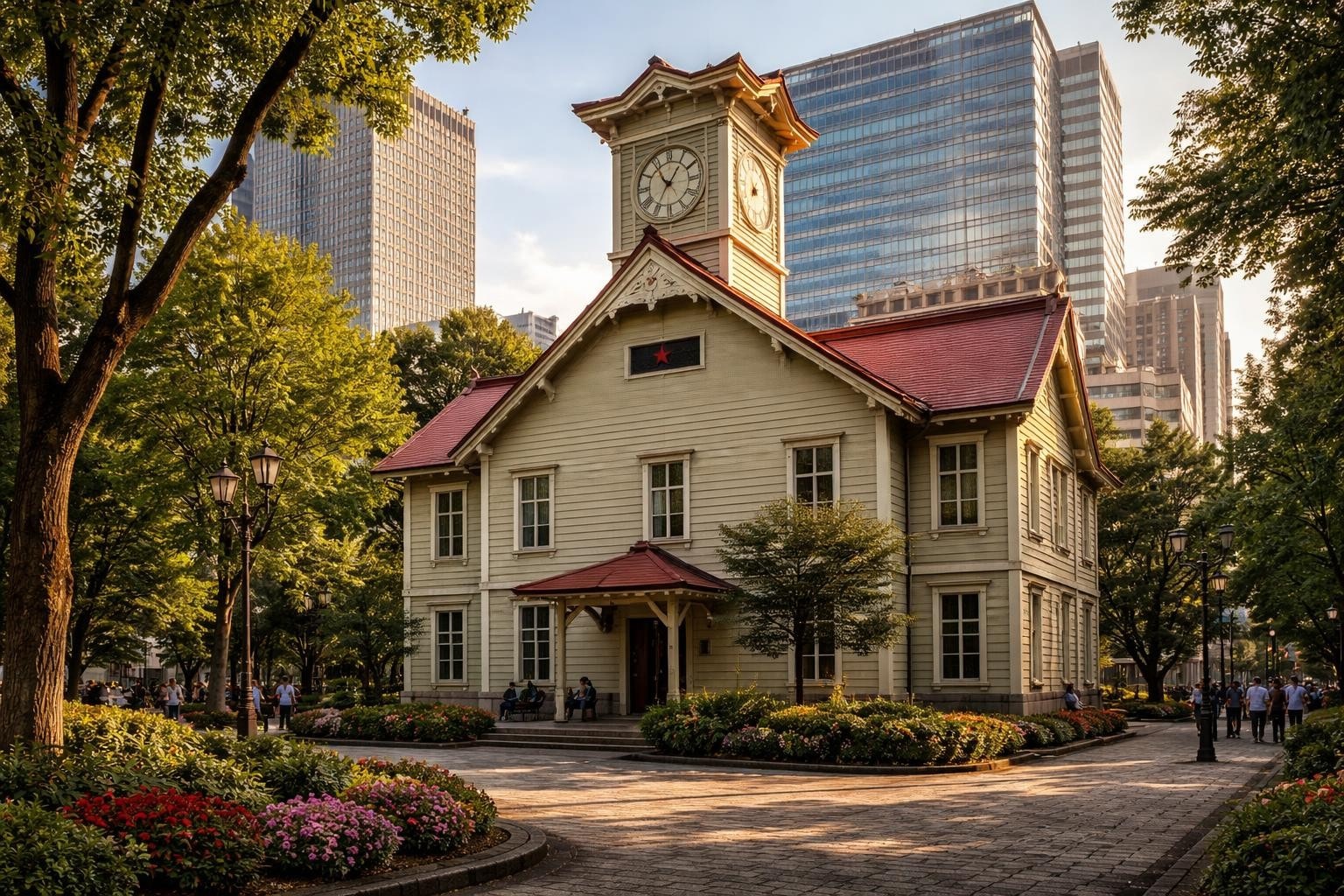
The Sapporo Clock Tower stands proudly in the heart of Japan’s northern capital, a testament to the city’s pioneering spirit and remarkable transformation. Built in 1878 during the Meiji era, this iconic white wooden structure represents more than just architectural heritage-it embodies the ambitious modernization efforts that shaped Hokkaido into the thriving region it is today. For discerning travelers seeking authentic cultural experiences beyond the typical tourist circuit, this National Important Cultural Property offers a fascinating glimpse into Japan’s journey toward westernization and the unique history of its northernmost island.
The clock tower in Sapporo originated as the Military Drill Hall of the Sapporo Agricultural College, established during a transformative period in Japanese history. The Sapporo Agricultural College, founded in 1876, served as a cornerstone institution for developing Hokkaido’s untapped resources and establishing modern agricultural practices. The building’s construction reflected the ambitious vision of American advisors who helped shape the college’s curriculum and infrastructure.
Dr. William Smith Clark, the college’s founding vice-principal, profoundly influenced the design and purpose of this structure. Though Clark spent only eight months in Sapporo, his impact resonated through generations. The drill hall embodied his philosophy of combining academic excellence with physical discipline, providing students with a space for military exercises and communal gatherings.
The building served multiple purposes from its inception:
The distinctive clock mechanism itself arrived later, added in 1881 to complete the building’s transformation into the landmark we recognize today. This addition elevated the structure from a functional drill hall to a civic timepiece that regulated daily life across the developing city.

The architectural design of the Clock Tower Sapporo represents a fascinating fusion of American colonial aesthetics and Japanese craftsmanship. The structure showcases American balloon-frame construction techniques, a revolutionary building method that enabled rapid construction using standardized lumber dimensions. This approach, relatively novel in Japan during the 1870s, demonstrated the technological exchange occurring during the Meiji Restoration.
The building’s exterior features a distinctive white clapboard facade, steeply pitched rooflines, and symmetrical window arrangements characteristic of New England colonial architecture. These design elements created a striking contrast against traditional Japanese buildings, visually representing Hokkaido’s unique development path as Japan’s frontier region.
| Architectural Feature | Description | Cultural Significance |
|---|---|---|
| Balloon-frame construction | American wood-framing technique | Symbolized the Western technological adoption |
| White clapboard siding | Traditional New England exterior | Reflected American advisor influence |
| Bell tower cupola | Four-faced clock mechanism housing | Established civic timekeeping standard |
| Gabled roof design | Steep pitch for snow management | Practical adaptation to the Hokkaido climate |
The clock mechanism is an exceptional 19th-century American work of craftsmanship, manufactured by the Howard Clock Company of Boston. This mechanical timepiece continues functioning after more than 140 years, requiring manual winding three times weekly. The rhythmic chiming that echoes through Sapporo’s streets maintains an authentic connection to the city’s founding era.
The interior of Clock Tower Sapporo houses meticulously curated exhibitions that transport visitors through Hokkaido’s modernization journey. The ground floor museum features authentic artifacts from the Sapporo Agricultural College era, including student uniforms, academic instruments, and personal belongings of early scholars who shaped the region’s development.
The second floor preserves the original assembly hall configuration, complete with period-appropriate wooden flooring and carefully restored architectural details. This space conveys the atmosphere of 19th-century academic ceremonies and community gatherings, offering a rare opportunity to experience historical ambiance in its authentic setting.
Highlighted exhibition elements include:
The museum experience provides context that transforms a simple sightseeing stop into a meaningful cultural encounter. For luxury travelers accustomed to superficial tourist attractions, this depth of historical presentation offers genuine intellectual enrichment. Understanding the clock tower in Sapporo within its broader historical context deepens appreciation for Hokkaido’s unique role in Japanese modernization.
Planning a visit to the Clock Tower in Sapporo requires understanding the practical logistics to ensure a seamless experience. The landmark is centrally located in Sapporo’s business district, along North 1 West 2, approximately a 10-minute walk from Sapporo Station. This convenient placement allows integration into broader itineraries exploring the city’s cultural attractions.
According to Japan Guide, the clock tower welcomes visitors year-round with consistent operating hours. The facility opens at 8:45 AM and closes at 5:10 PM, with last admission accepted at 5:00 PM. Annual closures occur on January 1-3 for New Year observances and during a brief maintenance period in early November.
Admission fees remain modest, reflecting the site’s educational mission rather than commercial tourism orientation. Adult tickets cost 200 yen, while students receive discounted rates. This accessibility ensures visitors can enjoy the experience without significant financial commitment, though the modest entry fee belies the substantial cultural value it contains.
Optimal visiting strategies include:

The clock tower in Sapporo faces unique preservation challenges as contemporary development reshapes the city’s central area. Towering commercial buildings now surround this modest two-story wooden structure, creating dramatic visual juxtapositions that some consider detrimental to the landmark’s aesthetic presentation. This tension between historical preservation and urban progress characterizes many Japanese cities, balancing heritage conservation with economic development.
Photography enthusiasts initially seeking iconic shots sometimes express disappointment upon discovering the building’s downtown business district setting. The Wikipedia entry notes this phenomenon, acknowledging that expectations shaped by promotional imagery don’t always align with ground-level reality. However, this modern context actually reinforces the clock tower’s significance as a survivor connecting Sapporo’s pioneering past with its metropolitan present.
Preservation efforts require constant vigilance and substantial resources. The building underwent comprehensive restoration in 1997, earning designation as a National Important Cultural Property. This status ensures governmental support for ongoing maintenance while establishing rigorous standards for any modifications or repairs.
Beyond its physical preservation, the Sapporo Clock Tower serves as a powerful cultural symbol of Hokkaido’s identity. The structure appears on countless promotional materials, serving as visual shorthand for Sapporo’s blend of tradition and modernity. This symbolic weight extends the building’s significance far beyond its architectural or historical merits alone.
The landmark features prominently in local education, with schoolchildren throughout Hokkaido learning about its role in the region’s development. This educational integration ensures generational continuity in appreciation for historical landmarks, cultivating cultural stewardship among future preservationists.
The clock tower represents multiple layers of meaning:
For luxury travelers seeking authentic cultural understanding, recognizing these symbolic dimensions transforms a simple landmark visit into a meditation on Japan’s complex modernization journey. The clock tower in Sapporo becomes not merely a photographic subject but a tangible connection to the ambitions, challenges, and achievements that created modern Japan.
Sophisticated travelers increasingly seek experiences offering genuine cultural insight rather than superficial sightseeing. The clock tower in Sapporo perfectly suits this preference when positioned within thoughtfully designed itineraries that provide historical context and intellectual engagement. Rather than treating the landmark as a brief photographic stop, luxury travel designers can frame it as an anchor point for exploring Hokkaido’s unique development narrative.
Pairing the clock tower visit with complementary experiences creates thematic coherence. Following the historical exploration, with visits to the Hokkaido Museum or the former Hokkaido Government Office Building, establishes a chronological narrative flow. Alternatively, contrasting this Meiji-era landmark with contemporary Sapporo attractions, such as Moerenuma Park, highlights the city’s architectural evolution over the centuries.
Private guided experiences elevate the standard museum visit into personalized cultural education. Knowledgeable guides specializing in Hokkaido history can provide nuanced interpretations connecting the clock tower’s story to broader patterns in Japanese development, American-Japanese relations, and architectural preservation philosophy.
| Experience Level | Approach | Duration | Value Proposition |
|---|---|---|---|
| Standard Visit | Self-guided museum tour | 30-45 minutes | Basic historical orientation |
| Enhanced Visit | Audio guide with detailed narratives | 60 minutes | Deeper architectural understanding |
| Premium Experience | Private historian-guided tour | 90 minutes | Contextual cultural insights |
| Luxury Integration | Multi-site thematic itinerary | Half day | Comprehensive Meiji-era exploration |
Hokkaido’s dramatic seasonal variations create distinctly different experiences when visiting Clock Tower Sapporo throughout the year. Each season offers unique atmospheric qualities that influence both the practical logistics and aesthetic appreciation of this historical landmark.
Winter visits present the clock tower against Sapporo’s famous snowscapes, with accumulations often reaching several feet. The white wooden structure appears particularly striking against fresh snowfall, creating photographic opportunities that capture both architectural heritage and Hokkaido’s renowned winter character. However, winter visitors must navigate icy sidewalks and dress appropriately for temperatures frequently dropping below freezing.
Spring brings renewal and comfortable conditions:
Summer offers extended daylight hours and warm weather, making it conducive to comprehensive city exploration. The clock tower provides welcome air-conditioned respite during the July and August heat, making it an ideal midday stop within broader itineraries. Autumn presents spectacular foliage, with nearby trees displaying vibrant colors that complement the landmark’s historic character.

The Sapporo Clock Tower exists within a constellation of historical landmarks that collectively tell the story of Hokkaido’s development. The former Hokkaido Government Office Building, known locally as the Red Brick Office, is approximately a 15-minute walk away. This 1888 American neo-baroque structure reinforces themes of western architectural influence while representing governmental rather than educational modernization.
Hokkaido University, successor to the Sapporo Agricultural College, maintains beautiful grounds featuring historic buildings and the Botanic Garden established in 1886. These sites create opportunities for thematic walking tours connecting educational heritage across generations. Understanding how the clock tower fits within this broader institutional landscape deepens appreciation for Hokkaido’s systematic development approach.
The Visit Hokkaido official site provides comprehensive information about these interconnected landmarks, enabling travelers to design self-guided historical tours or work with specialists to develop customized explorations. This approach transforms isolated landmark visits into coherent cultural narratives.
Balanced itineraries integrate historical exploration with contemporary cultural experiences that showcase Sapporo’s evolution into a vibrant modern city. After contemplating 19th-century history at Sapporo Clock Tower, travelers might explore Susukino’s entertainment district or sample the city’s renowned ramen culture at specialized restaurants.
Sapporo’s position as Hokkaido’s capital creates unique culinary opportunities featuring regional specialties. Fresh seafood from nearby fishing ports, dairy products from Hokkaido’s extensive pasturelands, and agricultural produce benefit from the region’s climate and soil conditions. These gastronomic experiences connect to the agricultural education mission that originally motivated the construction of the clock tower.
Complementary Sapporo experiences include:
Luxury travelers benefit from seamless integration of these diverse experiences into cohesive itineraries that balance education, relaxation, and cultural immersion. Professional travel designers familiar with Sapporo’s offerings can craft days that flow naturally between historical contemplation and contemporary enjoyment.
Photography enthusiasts visiting the Clock Tower in Sapporo encounter both challenges and opportunities when attempting to capture this landmark’s essence. The surrounding modern buildings complicate the composition, requiring creative framing to minimize visual distractions while maintaining architectural context. However, these same structures enable interesting commentary on historical preservation within urban development.
Early morning light provides optimal conditions, with soft illumination enhancing the texture of the white clapboard exterior, while fewer pedestrians allow unobstructed shots. The clock tower’s compact footprint allows circumnavigation, revealing different perspectives from each cardinal direction. Western approaches offer frontal symmetry, while eastern angles incorporate more surrounding context.
Interior photography restrictions are in place to protect artifact integrity and maintain a high-quality visitor experience. Available natural light creates atmospheric conditions, though tripods and professional equipment require advance permission. Serious photographers should contact facility management regarding specific requirements and limitations.
Technical photography recommendations:
| Consideration | Approach | Rationale |
|---|---|---|
| Lens selection | 24-70mm zoom range | Versatility for composition variations |
| Time of day | 7:00-9:00 AM or 4:00-6:00 PM | Optimal light quality and reduced crowds |
| Weather conditions | Overcast days or fresh snowfall | Even lighting or a dramatic seasonal context |
| Perspective technique | Lower angles emphasizing verticality | Minimizes surrounding building impact |
| Seasonal timing | Late April or late October | Spring blossoms or autumn foliage enhancement |
The clock tower in Sapporo maintains an active presence on social media, with official accounts sharing historical content, visitor photos, and event announcements. Travelers sharing their experiences contribute to the ongoing cultural dialogue surrounding this landmark’s significance and contemporary relevance.
Effective digital storytelling extends beyond simple landmark photographs to explore themes of cultural preservation, architectural heritage, and historical continuity. Thoughtful captions providing context educate audiences while demonstrating sophisticated travel engagement. This approach aligns with luxury travel values, emphasizing meaningful experiences over superficial tourism.
The Sapporo Clock Tower transcends its physical presence, embodying Hokkaido’s distinct regional identity within Japan’s broader cultural landscape. Unlike Honshu’s ancient temples and traditional architecture, Hokkaido’s relatively recent development created heritage anchored in modernization rather than feudal history. This difference shapes regional pride and cultural self-perception.
Residents view the clock tower with protective affection, evidenced by grassroots preservation efforts and community engagement in maintenance fundraising. This ownership extends beyond governmental designation or tourist attraction status, representing authentic cultural stewardship rooted in shared identity.
Educational programs introduce Hokkaido schoolchildren to the clock tower’s significance, ensuring generational continuity in heritage appreciation. These initiatives cultivate understanding of regional history while fostering pride in Hokkaido’s unique development trajectory. The landmark becomes a teaching tool connecting past sacrifices with present prosperity.
Among Japan’s vast array of historic landmarks, Sapporo’s clock tower stands out, representing Meiji-era westernization rather than traditional Japanese heritage. While Kyoto preserves temples spanning centuries and Tokyo showcases Edo-period culture, Sapporo’s relatively recent founding creates different preservation priorities and cultural narratives.
This distinction appeals to travelers seeking a comprehensive understanding of Japan’s multifaceted history. The clock tower demonstrates that Japanese heritage encompasses not only ancient traditions but also achievements in modernization and international collaboration. For sophisticated travelers pursuing nuanced cultural understanding, this broader perspective enriches their Japan experience beyond conventional temple and shrine circuits.
The building’s modest scale contrasts with grand castle reconstructions or elaborate shrine complexes, yet this unpretentious character reinforces its authenticity. Unlike many historical reconstructions, the clock tower Sapporo stands as a genuine 1878 structure, weathering 148 years while maintaining functional integrity. This authenticity resonates with discerning travelers valuing genuine heritage over manufactured attractions.
The clock tower in Sapporo offers valuable insights into the challenges of heritage preservation in rapidly developing cities worldwide. Observing how Sapporo balances landmark protection with urban growth provides lessons applicable across cultural contexts. The building’s survival despite surrounding development demonstrates institutional commitment and community advocacy power.
Preservation extends beyond physical maintenance to include interpretive programming that makes history accessible and relevant to contemporary audiences. The museum’s educational exhibits succeed by connecting 19th-century events to current regional characteristics, helping visitors understand how historical decisions shaped present conditions.
Contemporary relevance emerges through multiple lenses:
Luxury travelers often possess a sophisticated understanding of the complexities of cultural preservation, having encountered similar issues globally. The clock tower’s preservation story resonates with these experienced observers, providing intellectual engagement beyond superficial tourist experiences.
Beyond factual historical education, the clock tower in Sapporo invites philosophical reflection on progress, identity, and cultural continuity. The building embodies tensions between tradition and modernization, isolation and international engagement, preservation and development that characterize Japan’s broader national experience.
Standing within the assembly hall where 19th-century students gathered, contemporary visitors might contemplate the universal human drive toward improvement and the sacrifices required for transformative change. The clock’s steady ticking creates a meditative atmosphere conducive to reflection, offering respite from the intensity of modern urban life.
For travelers seeking meaningful experiences rather than mere sightseeing, these opportunities for contemplation represent authentic luxury. Time for reflection, space for intellectual engagement, and freedom from hurried itineraries enable the deepest forms of travel satisfaction.
The Sapporo Clock Tower stands as an enduring symbol of vision, perseverance, and cultural openness that transformed Hokkaido from a frontier wilderness into a thriving modern region. This modest wooden building offers profound insights into Japan’s complex modernization journey while providing an authentic connection to pioneering spirits who shaped the nation’s northern territory. Whether you’re drawn to architectural heritage, cultural history, or simply seeking experiences that transcend conventional tourism, Japan Royal Service can design a bespoke Hokkaido itinerary that places landmarks like the clock tower within thoughtfully curated narratives tailored to your specific interests, ensuring every moment of your journey delivers the depth, comfort, and exclusivity that defines truly exceptional travel.