In this guide
- 01A Name Earned At The Moment Of Falling
- 02Did Emperor Keitai Really Plant This Tree?
- 03The Essay That Saved It In 1968
- 04Designation, Dimensions, And A Date Shared With Miharu
- 05Is The Usuzumi-zakura Still Healthy Today?
- 06How Do You Get To Usuzumi Park In Motosu?
- 07What Japan Royal Service Arranges
- 08Frequently Asked Questions
- 09Why Choose Japan Royal Service
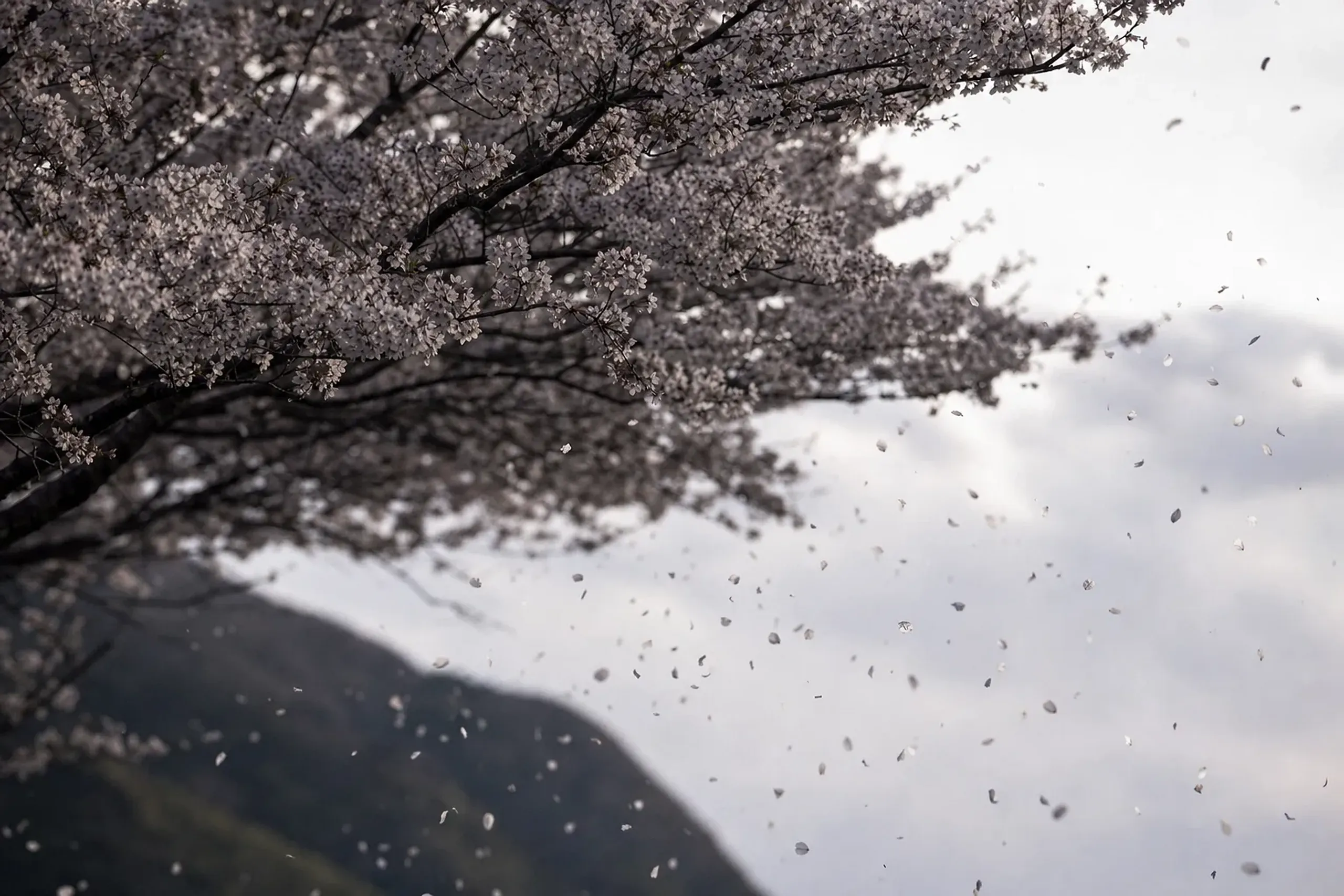
Stand beneath it in early April, and you watch a color you have no name for in most languages. The buds opened weeks ago, pale pink against bare mountain sky. At full bloom the flowers turned white. Now the petals are letting go. And as they fall, they turn grey.
Not brown. Not the tired beige of a spent blossom. A soft, deliberate ink-grey — the tone a calligrapher makes when the brush runs almost dry. The Japanese call that color usuzumi-iro. Pale ink. And the tree is named for it.
This is the Neodani Usuzumi-zakura, in Motosu, Gifu. Roughly 1,500 years old by common account. One of only a handful of cherry trees in the country protected as a National Natural Monument. Most cherries are named for how they look at their peak. This one is named for how it looks as it dies back, each spring, in front of anyone patient enough to stay.
A Name Earned At The Moment Of Falling
Here is the mechanism, precisely, because it is the whole point.
Three stages. Buds emerge a light, blushing pink. At full bloom, the flowers open white — the crowds arrive for this, cameras raised, and most of them leave believing they have seen the tree. They have seen half of it.
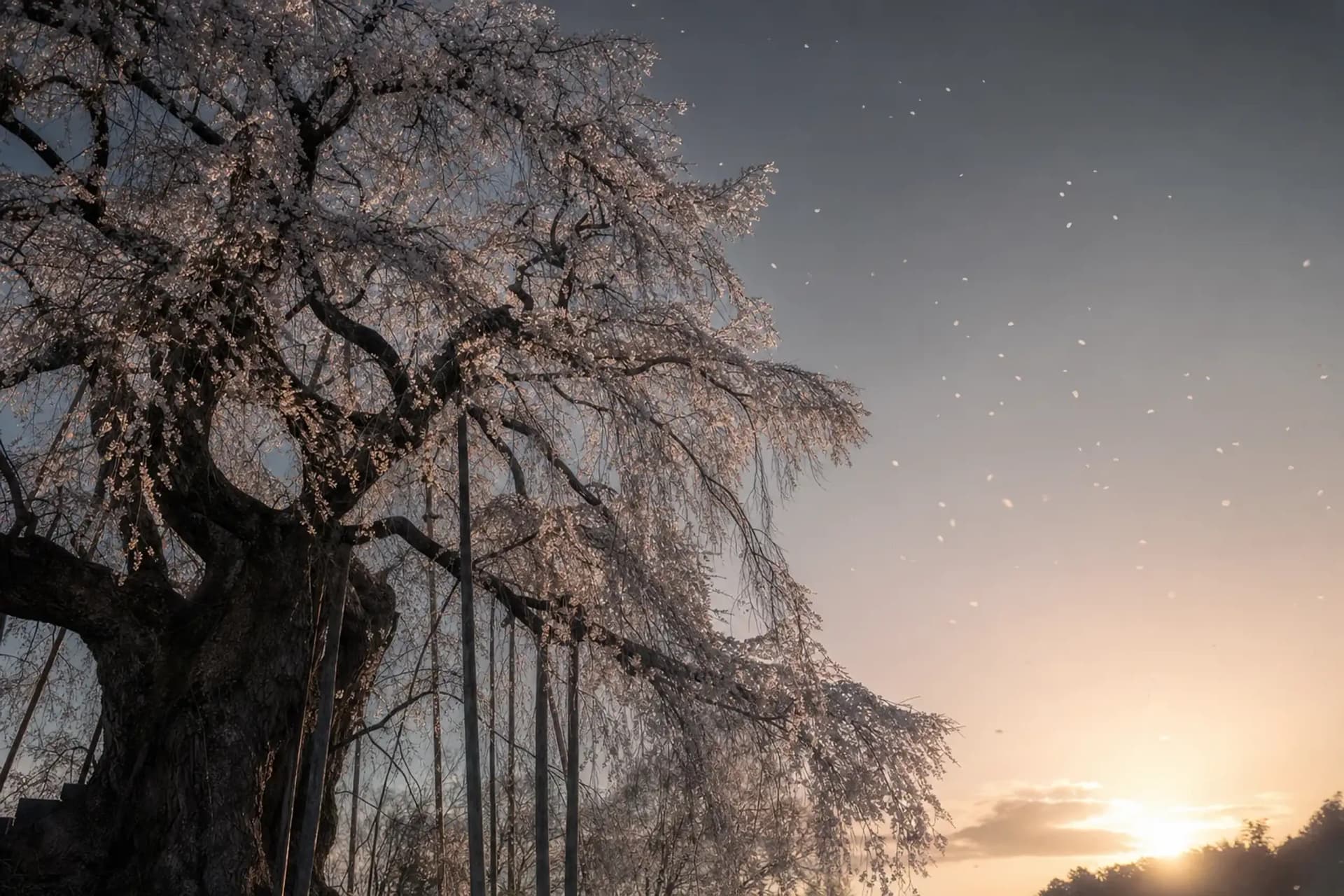
Then the petals begin to fall. And in that falling, over the course of a few days, the whole canopy shifts to that pale ink-grey. Usuzumi. The name does not describe the tree's beauty in bloom.

The falling petals turn a pale ink-grey — usuzumi-iro — the color the tree is named for.
It describes its surrender.
The rarely photographed phase: Peak white bloom draws the visitors. The ink-grey falling stage — the one the tree is actually named for — lasts only days and is what our team times a visit around when a client wants to understand, not just tick off, this monument.
You do not plan around this by accident. Peak bloom and the ink-grey fall are separated by a narrow window, and that window moves year to year with the weather. Getting it right is the difference between a nice photo and standing inside the thing the tree was named for.
Did Emperor Keitai Really Plant This Tree?
No — that is tradition, not verified history, though the story has been told for centuries and at least one detailed local account states plainly it is legend. It remains worth telling.
The tale attaches this tree to Emperor Keitai, a sixth-century sovereign with genuine ties to the region. Two versions circulate, and they do not quite agree. In one, he planted it at the site of his birth-hut, before he was called to the throne. In the other, he planted it as a parting gift to the villagers of this remote valley — Neo-dani — when he was finally summoned back to the capital after years of sheltering here during a succession dispute.
We tell our guests both, and we tell them it is legend. That honesty is part of the pleasure. A tree old enough to have watched fifteen centuries pass earns the right to a story nobody can prove and nobody wants to disprove.
The Essay That Saved It In 1968
By the late 1950s the tree was dying. The 1959 Ise Bay Typhoon — one of the most destructive storms in modern Japanese history — left it badly damaged, and it declined from there.
Then, in April 1967, the novelist Uno Chiyo came to see it. She found a ruin. A great ancient thing failing in a mountain valley, and, it seemed, nobody coming to help.
She did not walk away. In 1968 she published an essay — titled simply Usuzumi Zakura — in a national magazine. It reached readers. It reached, specifically, the sitting governor of Gifu, who brought the question of the tree's protection and restoration before the prefectural cultural properties council.
Consider the chain. One writer, distressed by a dying tree, chose to write about it. That single piece of writing moved a government to act. Not a vague "it was later restored" — a traceable line from one person's grief to formal preservation.
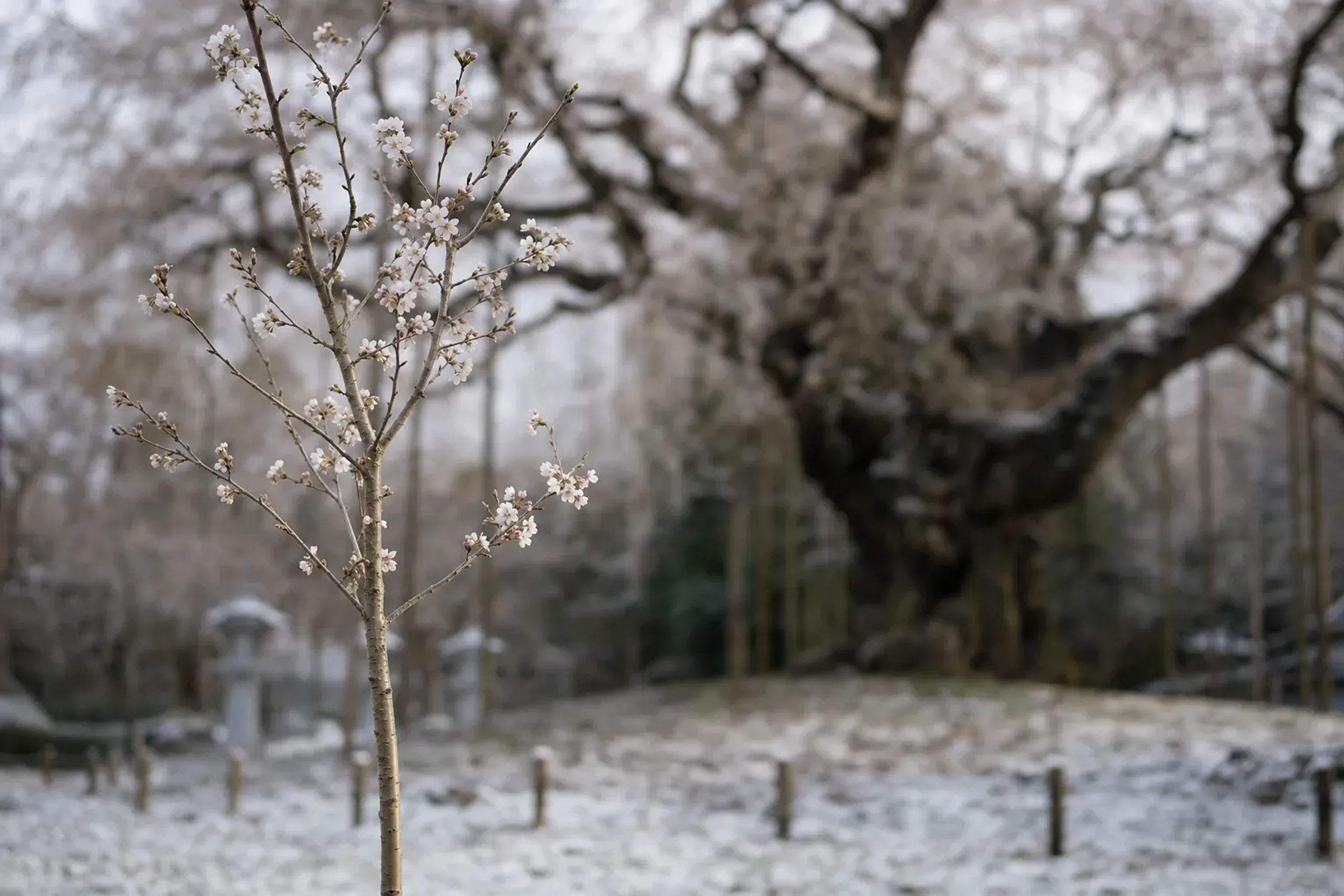
And it did not stop there. In 1983, a later Gifu governor carried seedlings from the tree to a separate park and planted a descendant, so the line would continue beyond the original trunk.
Designation, Dimensions, And A Date Shared With Miharu
The plain facts, kept in one place.
The Usuzumi-zakura was designated a National Natural Monument on 12 October 1922. That exact date matters here for a reason: it is the same day the famous Miharu Takizakura in Fukushima received its own designation, as part of the same group of five trees honored together. Two of Japan's most storied ancient cherries, entered into national protection on one autumn day. We explore Miharu's very different story — its honestly-estimated age — in our companion piece, Miharu Takizakura: Nobody Has Counted Its Rings.
On the groupings, precision matters and the two counts are often carelessly merged:
- It is counted among Japan's Three Great Cherry Trees.
- It is also counted among Japan's Five Great Cherry Trees — a separate, larger grouping.
Both are true. They are not the same list, and collapsing them into one number is a common error.
As for size, figures vary by survey year and source: height roughly 16.3 to 17.3 metres; trunk circumference roughly 9.4 to 9.9 metres.
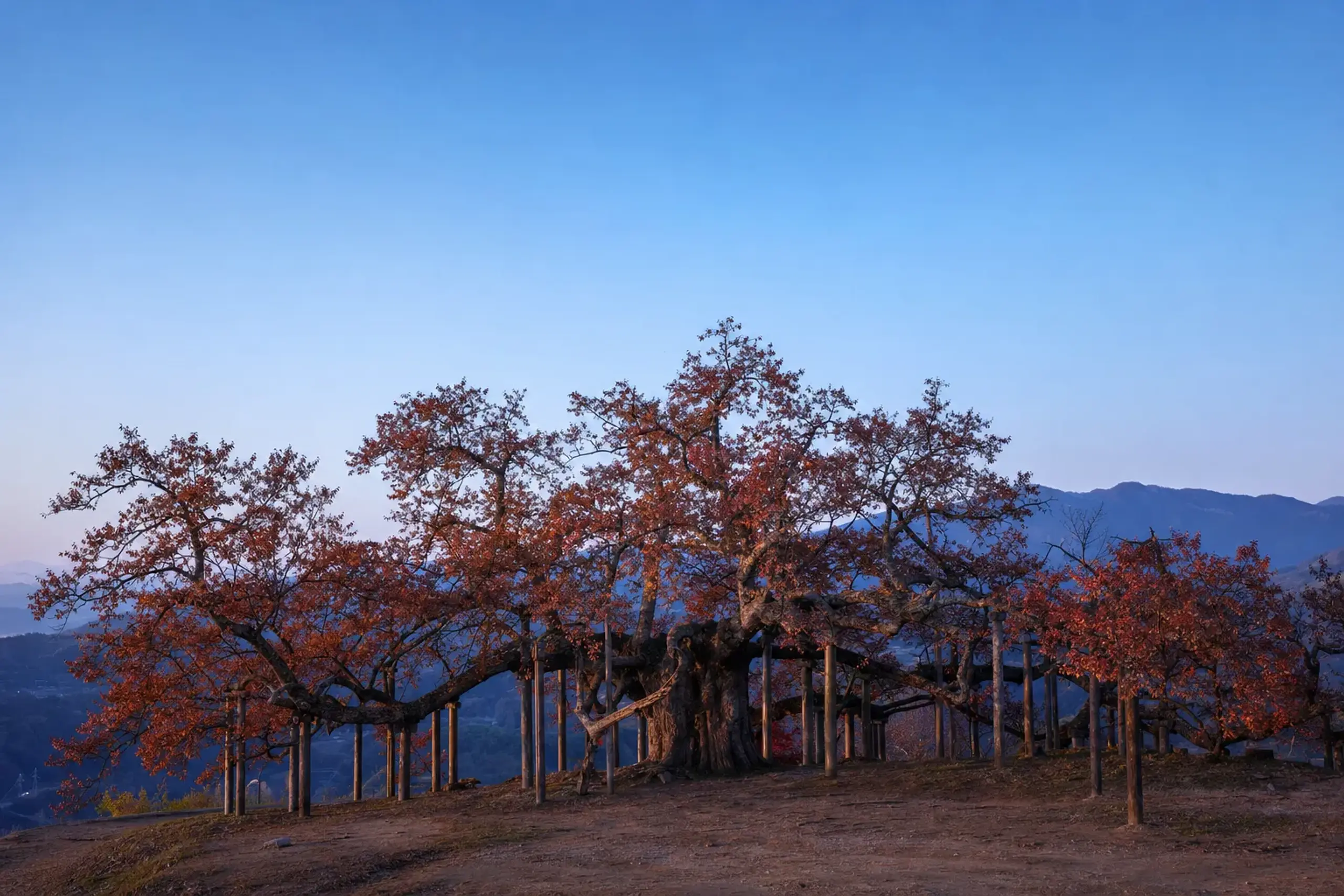
The branch spread runs about 27 metres east to west and 20 metres north to south — a canopy wider than most houses.
Is The Usuzumi-zakura Still Healthy Today?
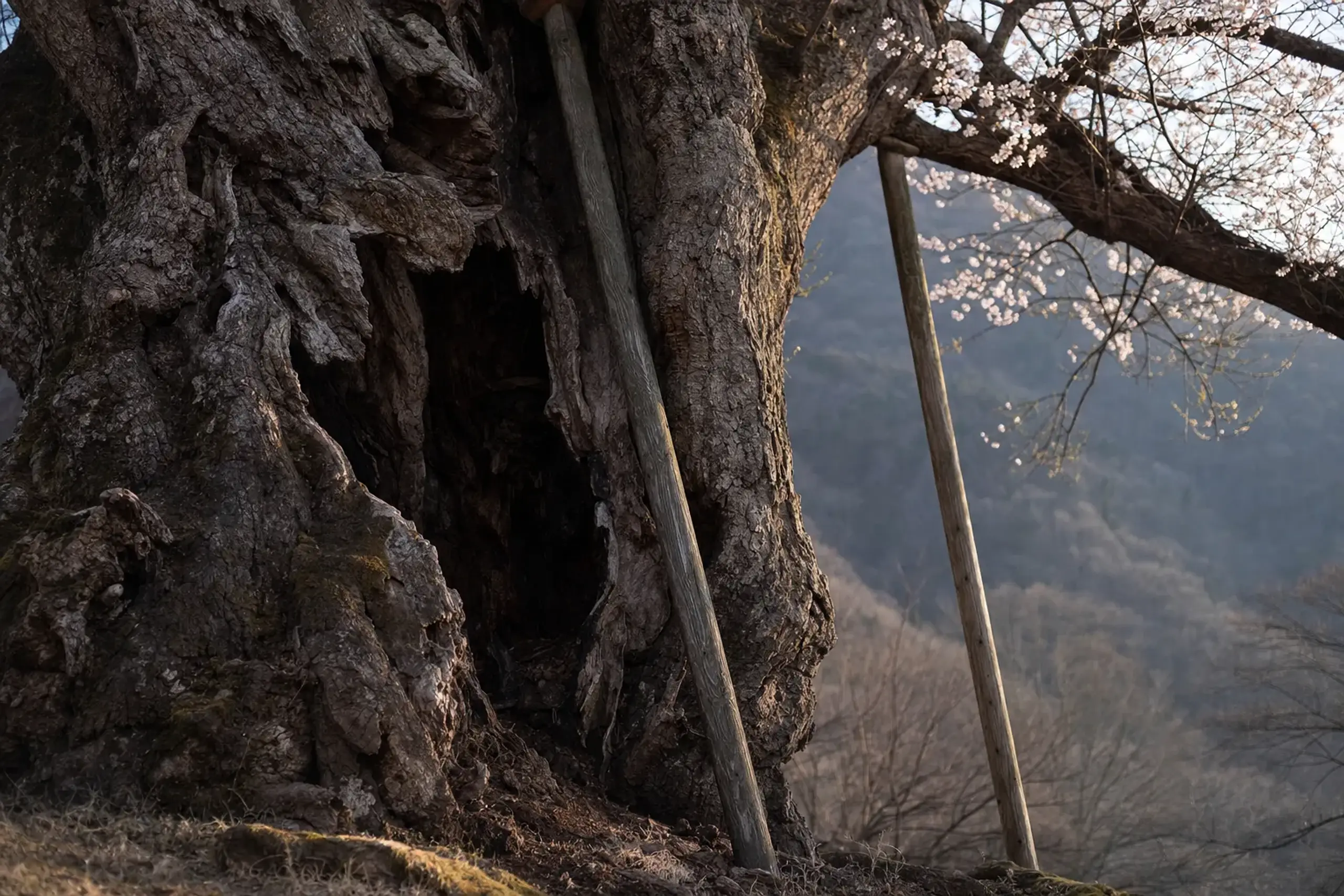
It survives through constant, active care — the internal trunk cavity keeps widening with age, and tree doctors and local residents manage its ongoing decline rather than reverse it.
This is the honest state of things. The tree is not eternally, effortlessly vital. It is a very old living organism, hollowing from within, held up by props and skilled hands and the attention of people who refuse to let it fall on their watch. That is arguably the truer luxury of visiting: not a flawless specimen, but a fifteen-century survivor still being coaxed through each spring by human devotion.
How Do You Get To Usuzumi Park In Motosu?
Usuzumi Park sits in the Neo area of Motosu City, Gifu, reachable by car or by the Tarumi Railway, the local line that serves this valley. For drivers, Motosu City's own guidance suggests setting a navigation destination near the Neo branch office to reach the park area cleanly.
During bloom season, the Tarumi Railway runs a special "Sakura timetable" (桜ダイヤ) with extra seasonal services — a slow, photogenic way to arrive that rail enthusiasts have taken to documenting. For 2026, the tree was illuminated after dark from 13 March to 19 April, with lights on from 6:40 pm to 9:00 pm, turning the ink-grey canopy into something else entirely against the night.
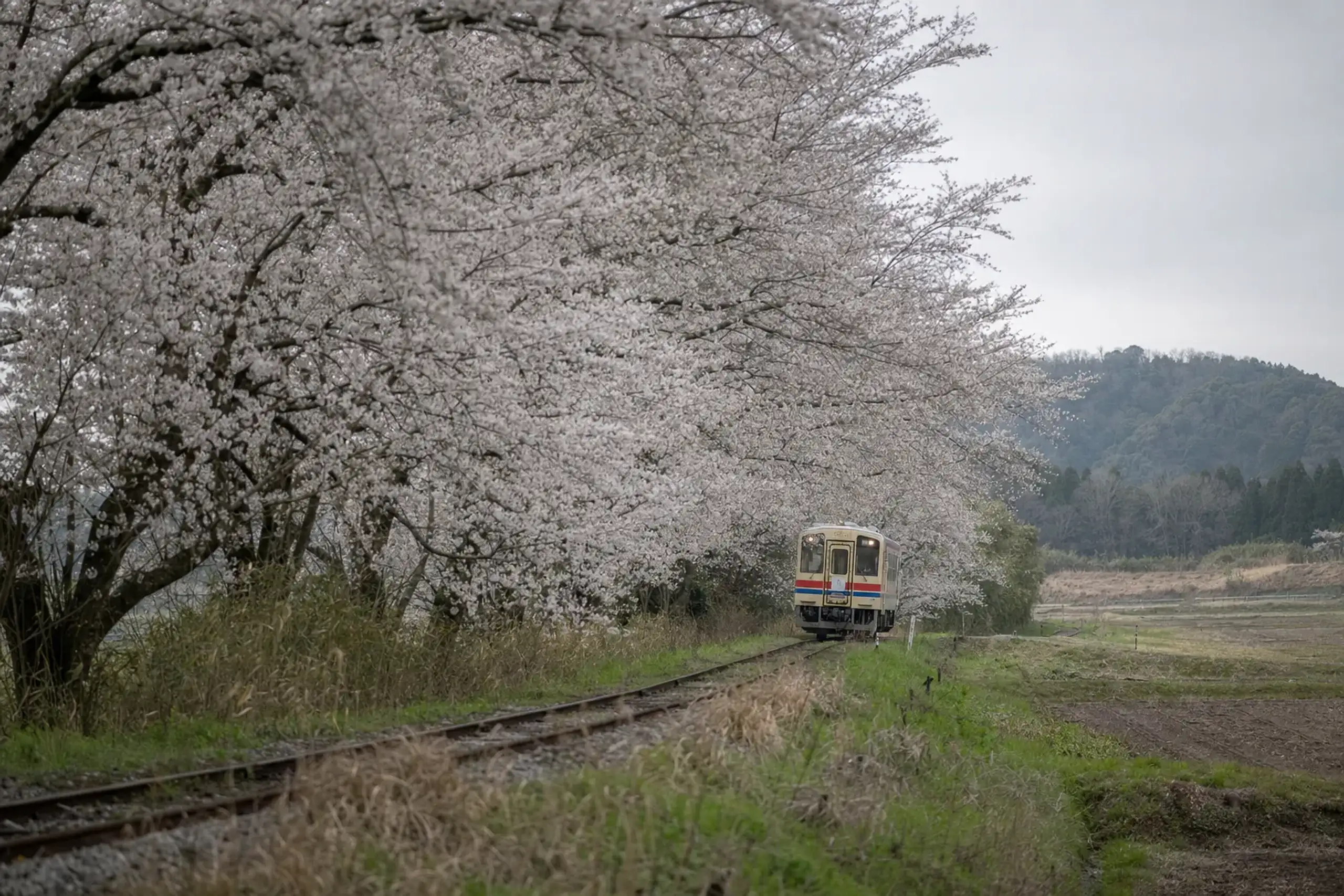
Bloom timing shifts every year with the weather, and Motosu City publishes an official flowering-status update each season. Our concierge team verifies the current-year timing on each client's behalf before a visit is set — the single most important step for a tree whose defining stage lasts only days.
What Japan Royal Service Arranges
For this destination, plainly: private guiding, and private chauffeured transfers. Our private chauffeured transportation brings you from Nagoya, Gifu, or further afield into the Neo Valley on your own schedule — which, for the ink-grey falling stage, is what makes the timing possible at all. We also advise on nearby overnight accommodation so a night illumination viewing and an early-morning return — the tree in two different lights — becomes an easy, unhurried arc rather than a rushed day trip.
A worthwhile pairing for the intellectually curious: the Neodani Fault Observation Center, a short distance away, which preserves the earthquake fault from the 1891 Nōbi Earthquake — a Special Natural Monument in its own right. A 1,500-year-old tree and the visible scar of deep geological time, in one quiet valley. Few itineraries think to place them together. We arrange bespoke pairings like this through a tailor-made itinerary.
Frequently Asked Questions
Why is the Usuzumi-zakura's color so unusual?
Its blossoms pass through three stages: pale pink buds, white at full bloom, then a distinctive pale ink-grey — usuzumi-iro — as the petals fall. The tree is named for that final falling-petal color, not for its peak bloom.
When is the best time to see Usuzumi-zakura in Motosu, Gifu?
Early April is the usual window, but timing shifts each year with the weather. Motosu City publishes an official flowering status, and our team verifies the current-year bloom on your behalf so a visit lands on the right days — including the brief ink-grey falling stage.
How old is the Neodani Usuzumi-zakura?
It is commonly described as about 1,500 years old, and tradition holds Emperor Keitai planted it — though that origin is legend rather than verified history. It was designated a National Natural Monument on 12 October 1922.
Can you see the Usuzumi-zakura illuminated at night?
Yes. The tree is lit during bloom season; in 2026 the illumination ran 13 March to 19 April, from 6:40 pm to 9:00 pm. A night viewing paired with an early-morning return shows the canopy in two entirely different lights.
Is the Usuzumi-zakura related to the Miharu Takizakura?
Both were designated National Natural Monuments on the same day — 12 October 1922 — as part of the same group of five trees.
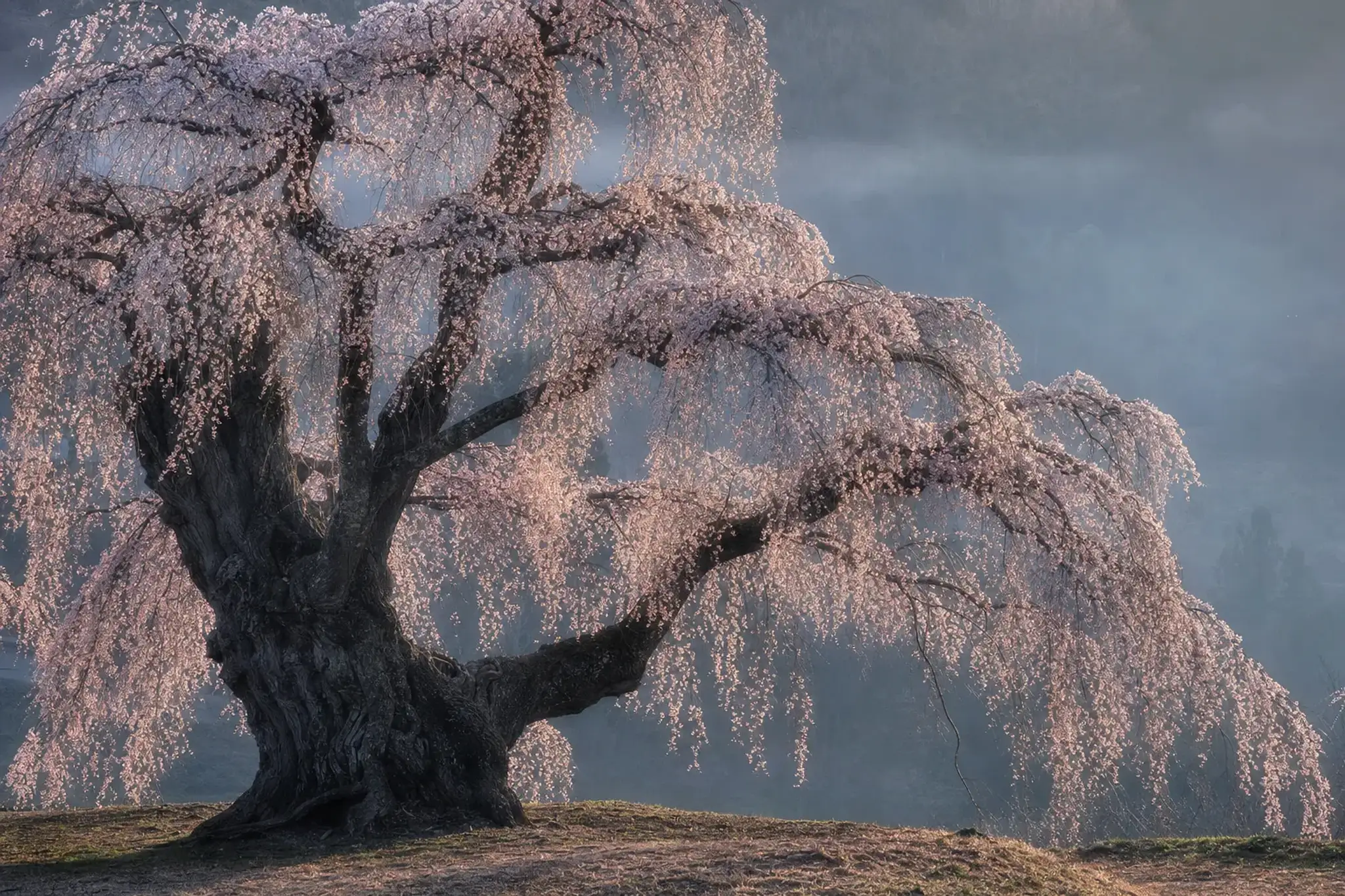
Their stories differ: Miharu is known for its estimated age, Usuzumi for its color-change and its 1968 rescue.
Why Choose Japan Royal Service
Reaching a tree like this is easy. Reaching it at the right moment is not. A place whose defining feature lasts only days rewards planning that most itineraries never bother with — and punishes the ones that arrive a week late.
That is our work. Our concierge tracks the official Gifu bloom reports through the season, holds a flexible plan, and moves the day when the tree moves. We add private guiding that explains what you are actually looking at — the three-stage color shift, the Uno Chiyo story, the shared 1922 date — and quiet chauffeured transport that lets you stay for the falling petals instead of racing a train timetable. Discretion throughout; your itinerary and your presence remain entirely your own.
The Neo Valley is not on the Golden Route. That is precisely why it is worth the effort — and why it repays travelers who let someone who knows the calendar handle the timing.
To plan a private visit to the Usuzumi-zakura in its finest week, reach our team directly via WhatsApp or LINE, or contact us here.