In this guide
- 01When Is The Yamagata Hanagasa Festival Held?
- 02What The Hanagasa Parade Looks Like
- 03Free Sidewalk Viewing Versus Reserved Seating
- 04Can Visitors Join The Hanagasa Dance?
- 05A Modern Festival, Stated Plainly
- 06Food, Heat, And Crowds
- 07Can You See Hanagasa Outside August?
- 08Who Should Choose Hanagasa, And Who Should Skip It
- 09Frequently Asked Questions
- 10Why Choose Japan Royal Service
You are planning August in Tohoku. Nebuta, Kanto, Tanabata — those three names fill the search results and the itineraries. There is a fourth, and most plans miss it. Yamagata Hanagasa asks you to do something the others do not: step into the parade and dance.
This guide covers the mechanics. When it runs, how to watch, how to join, and the calendar problem that forces a choice. Our team at Japan Royal Service arranges reserved seating, lodging, transport, and guiding around it — but the facts come first.
When Is The Yamagata Hanagasa Festival Held?
The Yamagata Hanagasa Festival runs August 5 to 7 every year in Yamagata City. The dates are fixed. Only the weekdays they land on change from year to year.
That fixed window is where the complication starts. Early August in Tohoku is crowded with festivals, and Hanagasa sits right in the middle of the busiest run. If you are weighing it against the region's three biggest draws, read our overview of the Three Great Festivals of Tohoku for their dates and character first.
Key fact: Hanagasa (Aug 5–7) overlaps Nebuta (Aug 2–7), Kanto (Aug 3–6), and Tanabata (Aug 6–8). The weeks collide. A Tohoku-in-August trip cannot do everything — it has to pick.
We are not going to tell you Hanagasa can be combined with any of those three. Whether two festivals fit into one trip depends on your dates, your tolerance for transfers, and what is available when you ask.
That is something our concierge confirms directly with you, not a promise a guide should make.
What The Hanagasa Parade Looks Like
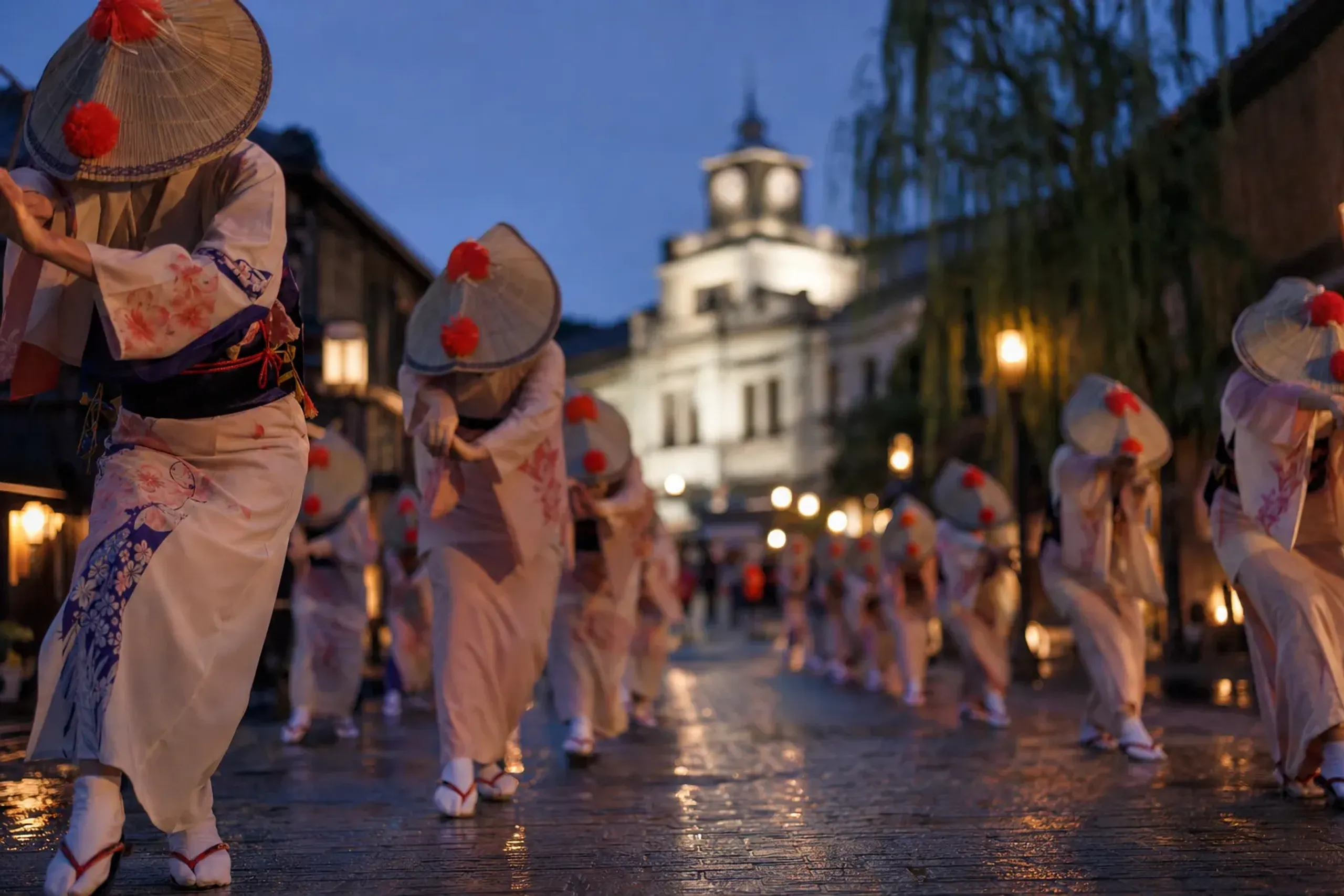
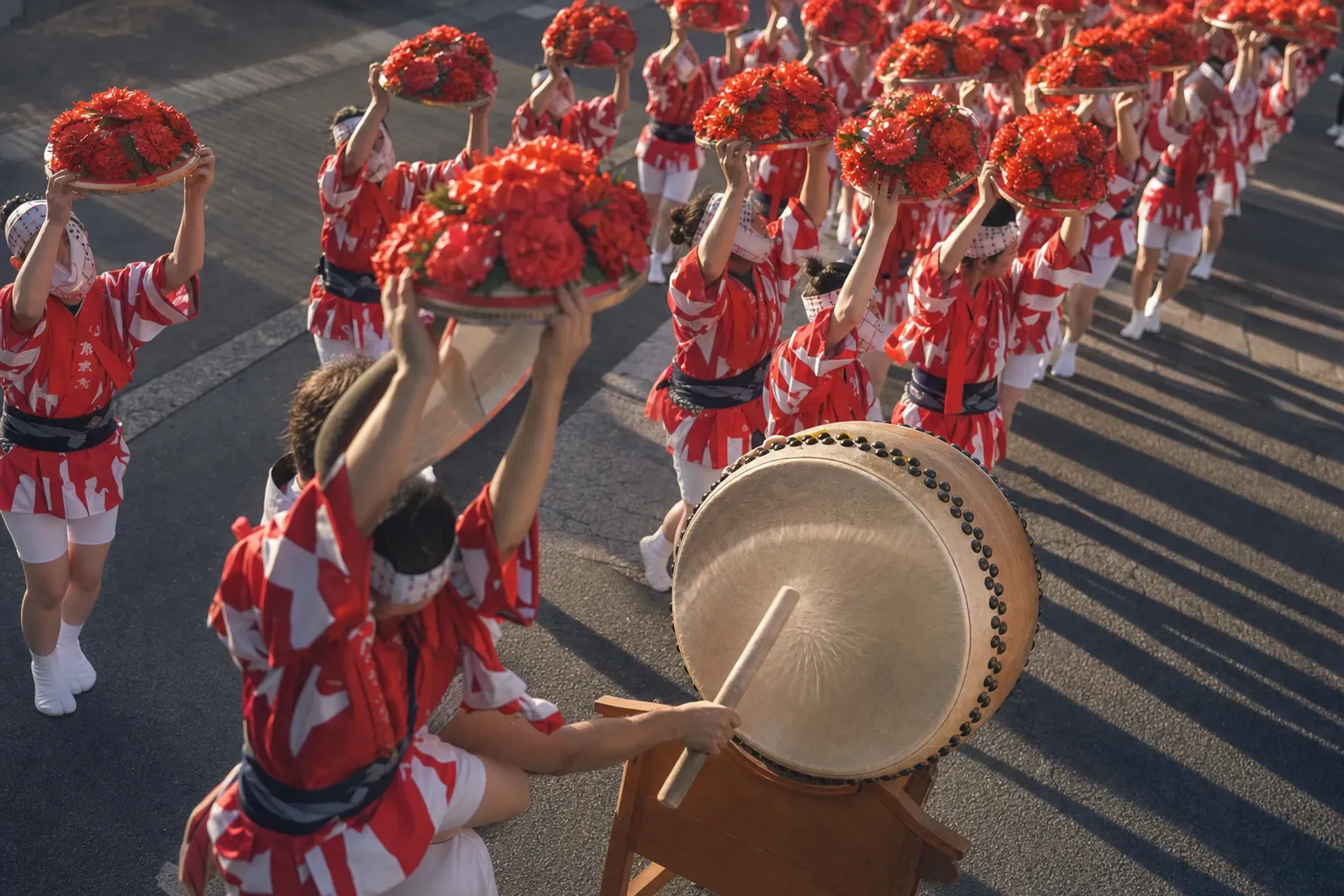
The core of the festival is an evening parade down central Yamagata's main street. Close to 10,000 dancers take part, moving in groups toward the old prefectural office, the Bunshokan. It begins around 6 pm.
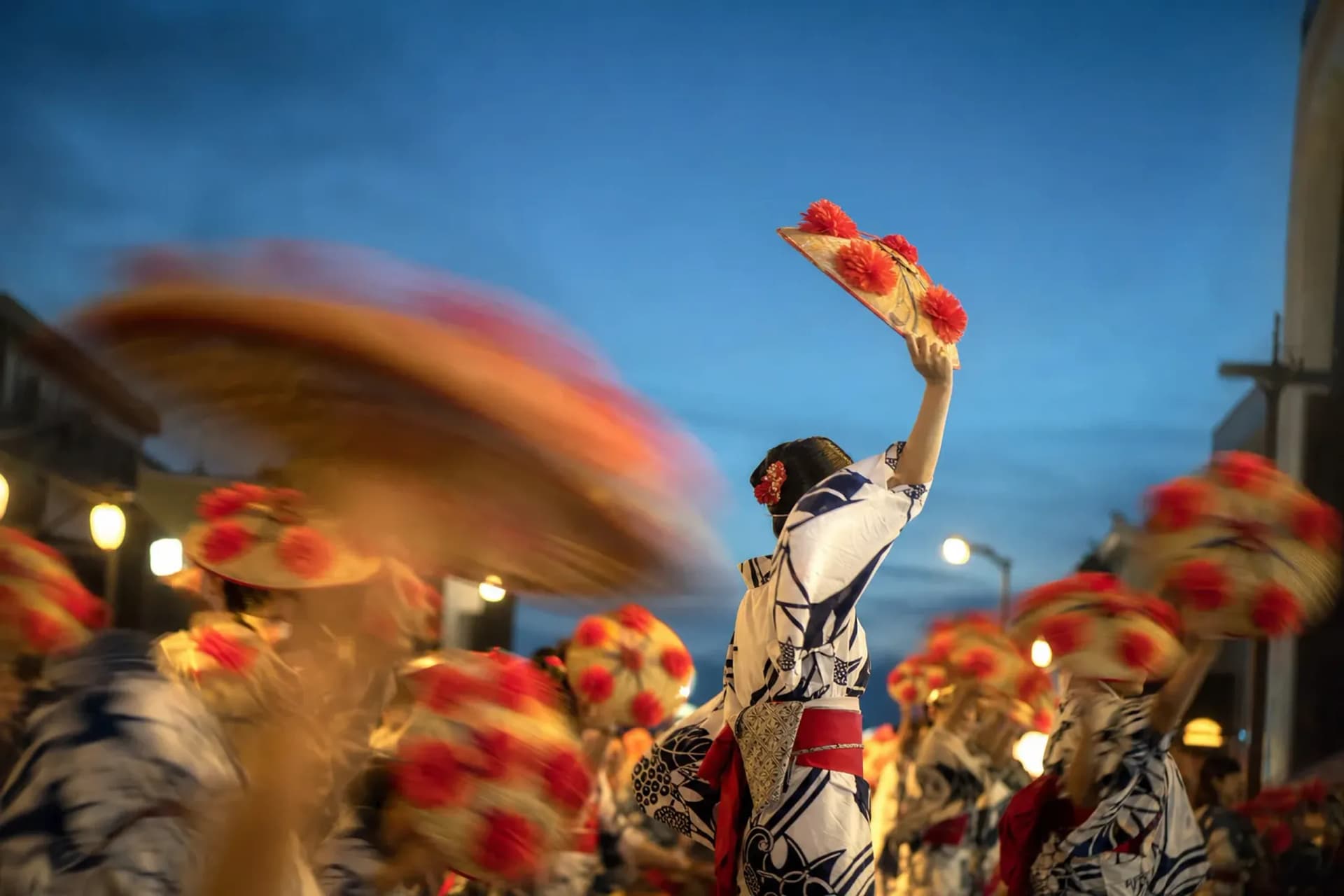
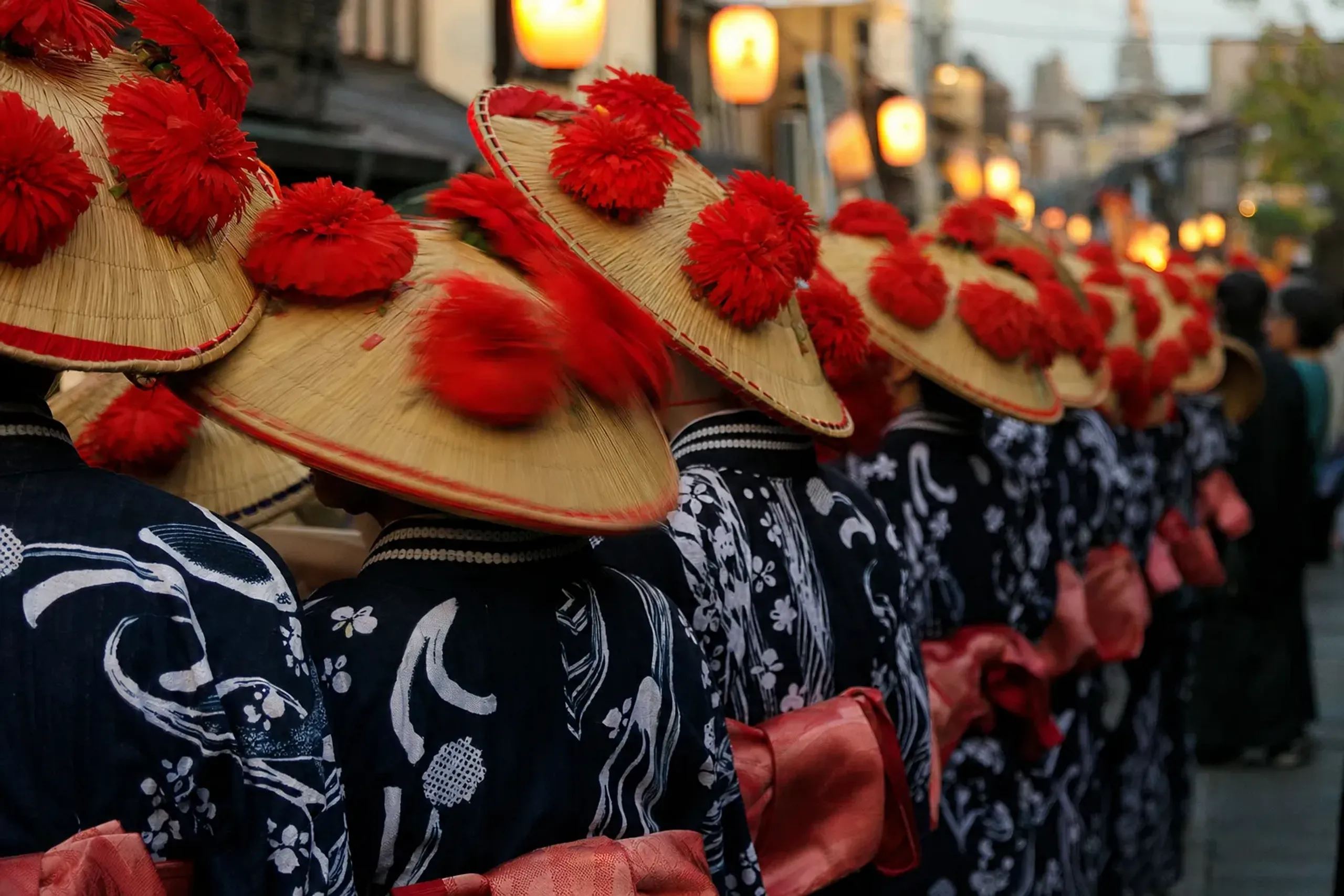
The dancers wear straw hats trimmed with red safflowers — benibana, the prefectural flower of Yamagata. As they move they call out "Yassho, Makasho," a chant that rolls down the closed street ahead of the drums. Rows of red hats rise and turn in unison. The sound reaches you before the dancers do.
The route follows sections of the city's main street through Tokamachi, Honmachi, and Nanokamachi before ending near the Bunshokan. The whole thing is a procession, not a stage show. You stand along the edge of it, or you walk in it.
Free Sidewalk Viewing Versus Reserved Seating
Free viewing is available along the sidewalks the whole length of the route. Reserved seating is sold for a stand in front of Yamagata City Hall.
Each has a trade. The sidewalks put you close, at street level, with the parade passing an arm's length away — but you are standing, among the crowd, holding your spot. The reserved stand gives you a seat, a fixed vantage, and a clear sightline over the procession, with less jostling for position.
Neither is better. A traveler who wants to be inside the energy and does not mind standing is well served by the sidewalk. A traveler who wants to sit, see the full sweep, and arrive without staking out ground earlier will prefer the stand. We can arrange reserved seating; we do not guarantee specific seats, since availability moves and the festival is weather-dependent.
Can Visitors Join The Hanagasa Dance?
Yes. In normal years, a visitor with no booking and no rehearsal can join the Hanagasa dance. The official festival offers two free chances each evening.
The first is an opening dance circle near the finish, where a free fan is handed out and anyone can step in. The second is a walk-in section at the tail of the parade — you fall in behind the organized groups and dance the route with them. Neither requires reservation or a costume.
One honest caveat. In some years the walk-in section at the tail has been suspended. Whether it runs in a given year is not something to assume. Our concierge confirms the current year's format with you before you build an evening around it.
If you want to go in prepared rather than improvising, there is another route — covered below under seeing the festival outside August.
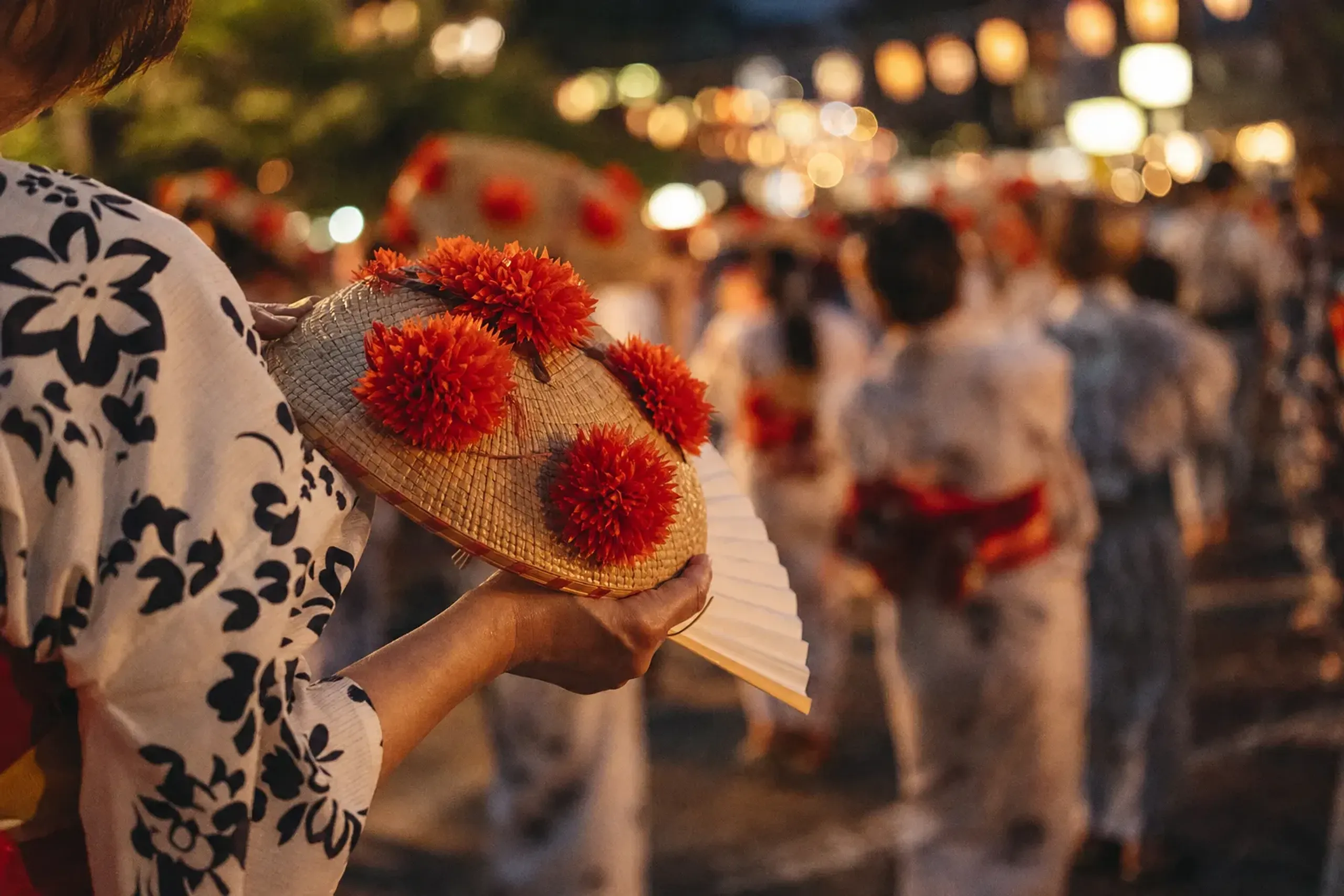
This is the quality that sets Hanagasa apart from its neighbors. Most big festivals ask you to watch. This one invites you to take part. In spirit it sits closer to Awa Odori, Japan's great dance festival, than to the float processions elsewhere in Tohoku.
A Modern Festival, Stated Plainly
Hanagasa in its current form is not ancient. The event dates to the 1960s. It debuted within the Zao summer festival in 1963 and became an independent festival in 1964.
That modern form was built on an older folk dance and the safflower hats tied to Yamagata's craft history, but the parade you attend is a twentieth-century creation. It is worth saying without dressing it up. If you came to Tohoku for centuries-old rite, Hanagasa is not that, and pretending otherwise does the festival no favors.
The Zao connection is a nice thread to pull. The same mountains that host the summer festival where Hanagasa began are better known in winter — see the snow monsters of Zao for the other face of the range.
Food, Heat, And Crowds
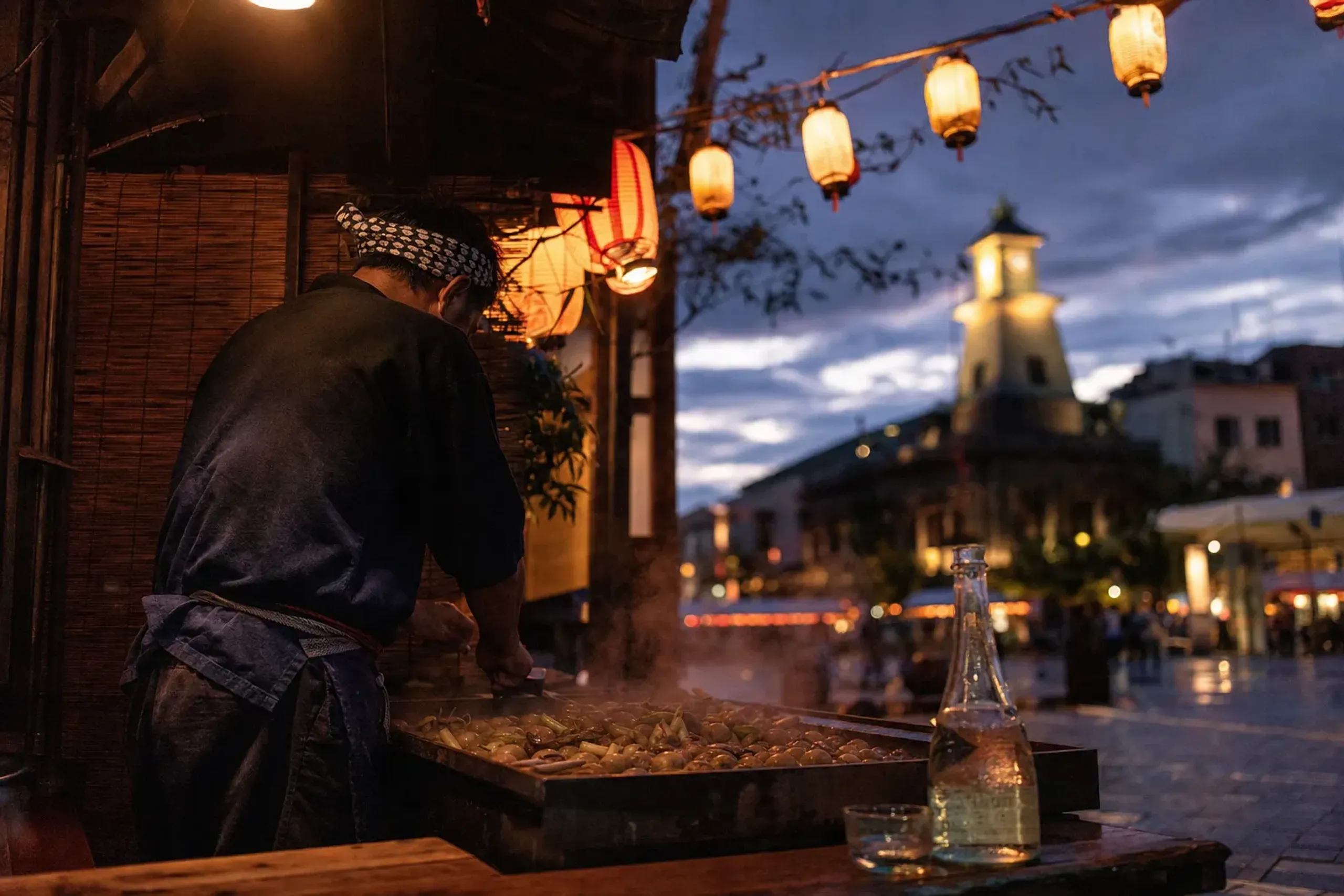
Food stalls selling local specialties operate near the finish plaza through the festival. That is a reason to arrive early — eat, settle, and let the procession come to you rather than racing the crowd once it builds.
Two plain warnings. Early August in Tohoku is hot, often humid, and you will be outdoors into the evening.
Hydration and shade between arriving and the 6 pm start matter more than visitors expect. Second, reported attendance is around a million spectators across the three days. The streets fill. Exits bottleneck after the parade ends, so planning how and when you leave is part of planning how you watch.
For older travelers and families, these two facts — heat and crowd density — usually decide between the sidewalk and the reserved stand more than any question of atmosphere does.
Can You See Hanagasa Outside August?
Yes. A hanagasa dance experience can be arranged in Yamagata year-round, except on the festival days themselves.
This is the answer for two kinds of traveler. One cannot be in Yamagata on August 5 to 7 but still wants the dance and the hat in their hands. The other wants to attend the real parade and join it — but go in rehearsed rather than guessing at the steps on the night. A private lesson before August turns the walk-in section from an improvisation into something you can actually do.
Who Should Choose Hanagasa, And Who Should Skip It
Choose Hanagasa if you want to take part, not only watch. The dance circle and the walk-in tail make it the one festival in the early-August cluster where a visitor becomes a participant. If that appeals more than the best seat at a parade, this is your festival.

Skip it if you have your heart set on Nebuta's illuminated floats or Tanabata's streamers hanging over the shopping arcades. Hanagasa is neither of those things. It is red hats, a chant, and a dance you can join — and if that is not what you came north for, one of the other three will serve you better.
Frequently Asked Questions
What are the exact dates of the Yamagata Hanagasa Festival?
The festival runs August 5 to 7 every year in Yamagata City. The dates are fixed annually; only the weekdays shift. The evening parade begins around 6 pm, weather permitting.
Can tourists join the Hanagasa dance without booking?
In normal years, yes. The festival offers two free, no-booking chances each evening: an opening dance circle near the finish where a free fan is given out, and a walk-in section at the tail of the parade. The walk-in section has been suspended in some years.
What is the difference between free viewing and reserved seating?
Free sidewalk viewing runs the full route and puts you at street level among the crowd, standing. Reserved seating is a paid stand in front of Yamagata City Hall offering a seat and a fixed sightline with less jostling.
Does the Hanagasa Festival overlap other Tohoku festivals?
Yes. Its August 5–7 window overlaps Nebuta, Kanto, and Tanabata, all held in early August. A single Tohoku trip usually has to choose among them; whether any two fit together is confirmed case by case.
Is Hanagasa an ancient festival?
No. In its current form it dates to the 1960s — it debuted within the Zao summer festival in 1963 and became independent in 1964. It is a modern festival built on an older folk dance and Yamagata's safflower-hat tradition.
Why Choose Japan Royal Service
Hanagasa rewards travelers who plan early and plan plainly. The festival's dates are fixed, its hotels fill against three competing festivals the same week, and the single most important decision — which festival your trip is actually built around — has to be made before the rooms are gone.
Our team at Japan Royal Service arranges reserved seating, accommodation, private chauffeured transport, and on-the-ground guiding for Yamagata in August. We work from your dates backward in a tailor-made itinerary, confirm whether the walk-in dance runs the year you travel, and start the lodging search while inventory still exists. We do not guarantee specific seats or rooms — we secure them while they are there to secure, and we tell you honestly when they are not.
If you are weighing Hanagasa against Nebuta, Kanto, or Tanabata and cannot tell which fits your week, we can confirm that for you. To plan privately, reach our team via WhatsApp or LINE, or contact us here.