In this guide
- 01The Island Sets The Terms
- 02Can I Drive To The Arakawa Trailhead Between March And November?
- 03Where Do You Buy Arakawa Trekking Bus Tickets On Yakushima?
- 04The Two Contributions: What You Pay, And Why It Matters
- 05How Hard Is The Jōmon Sugi Trek, Really?
- 06What Weather Actually Cancels The Yakushima Trekking Bus?
- 07The Tree’s Fame Began In 1967, Not In Deep Time
- 08Choose Your Forest: Jōmon Sugi Vs Shiratani Unsuikyō Vs Yakusugi Land
- 09Guides, Turnaround Times, And The Skill People Forget To Buy
- 10How To Reach Yakushima From Kagoshima (And Why Buffers Matter)
- 11Where To Stay For A Serious Forest Day
- 12Practical Packing: Rain, Feet, And The Long Railway
- 13A Sample Two-Day Structure That Respects The Island
- 14What Japan Royal Service Coordinates For Yakushima (Stated Once)
- 15Frequently Asked Questions
- 16Why Choose Japan Royal Service
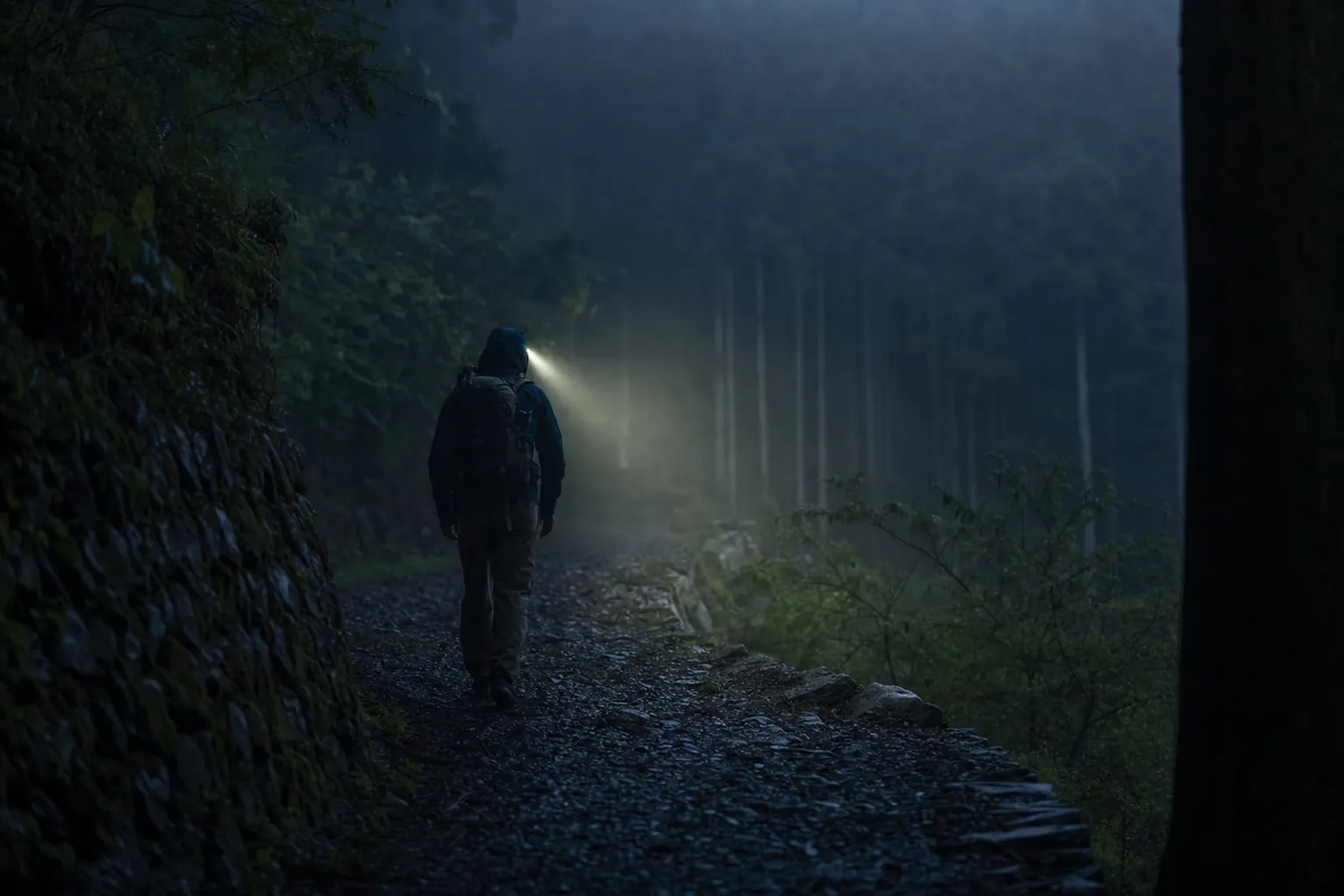
Dawn on Yakushima arrives softly, then all at once. A headlamp beam skims wet gravel. A dark line of forest waits, patient, as if it has watched a thousand early starts and found them all slightly rushed.
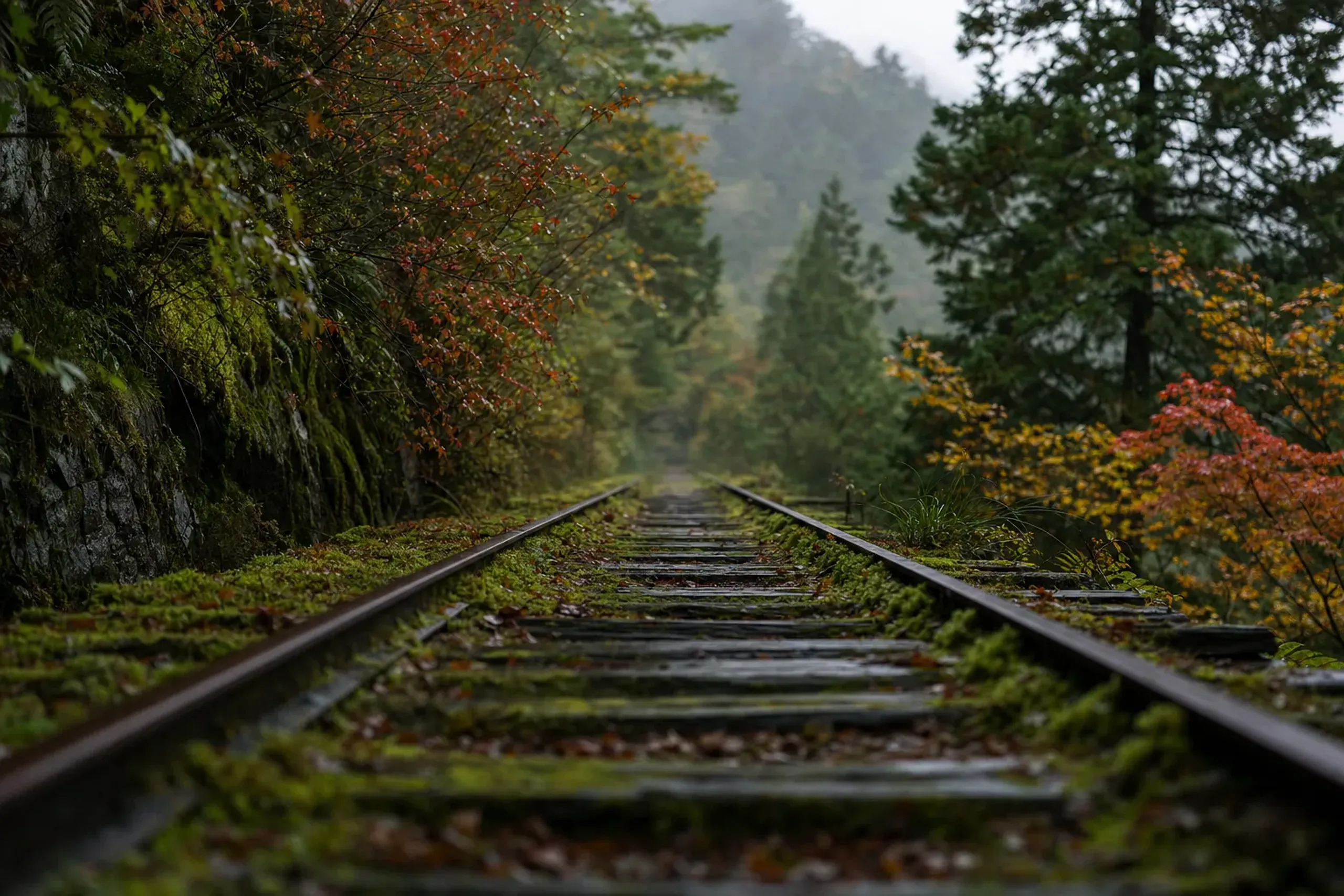
The first kilometres are not “scenic” in the way people expect. They are practical. A disused logging railway, straight and level, pulling you forward into a climate where rain is not an incident but a setting. Quietly relentless.
This island does not bend to your calendar. Not even for luxury travellers.
The Island Sets The Terms
Yakushima decides your day: access is restricted for nine months of the year, bus tickets must be purchased in advance, and weather can cancel the bus, not the hike you hoped to do.
That single sentence is the real guide. Everything else is details that flow from it. Get those details wrong and you lose the day, because the Jōmon Sugi walk is not something you “fit in” between late breakfast and a scenic drive.
On paper, it is simple: about 22 kilometres, roughly ten hours, out-and-back from the Arakawa trailhead. In real life, it is a chain of small obligations—timing, tickets, contributions, and turn-back discipline—held together by one fixed point: the last bus.
Our team at Japan Royal Service plans Yakushima in a different register from the Golden Route. Fewer promises. More buffers. And a level of discretion that keeps your identity—and your itinerary—quiet.
Can I Drive To The Arakawa Trailhead Between March And November?
No—between 1 March and 30 November, private cars, rental cars, and motorcycles cannot reach the Arakawa trailhead.
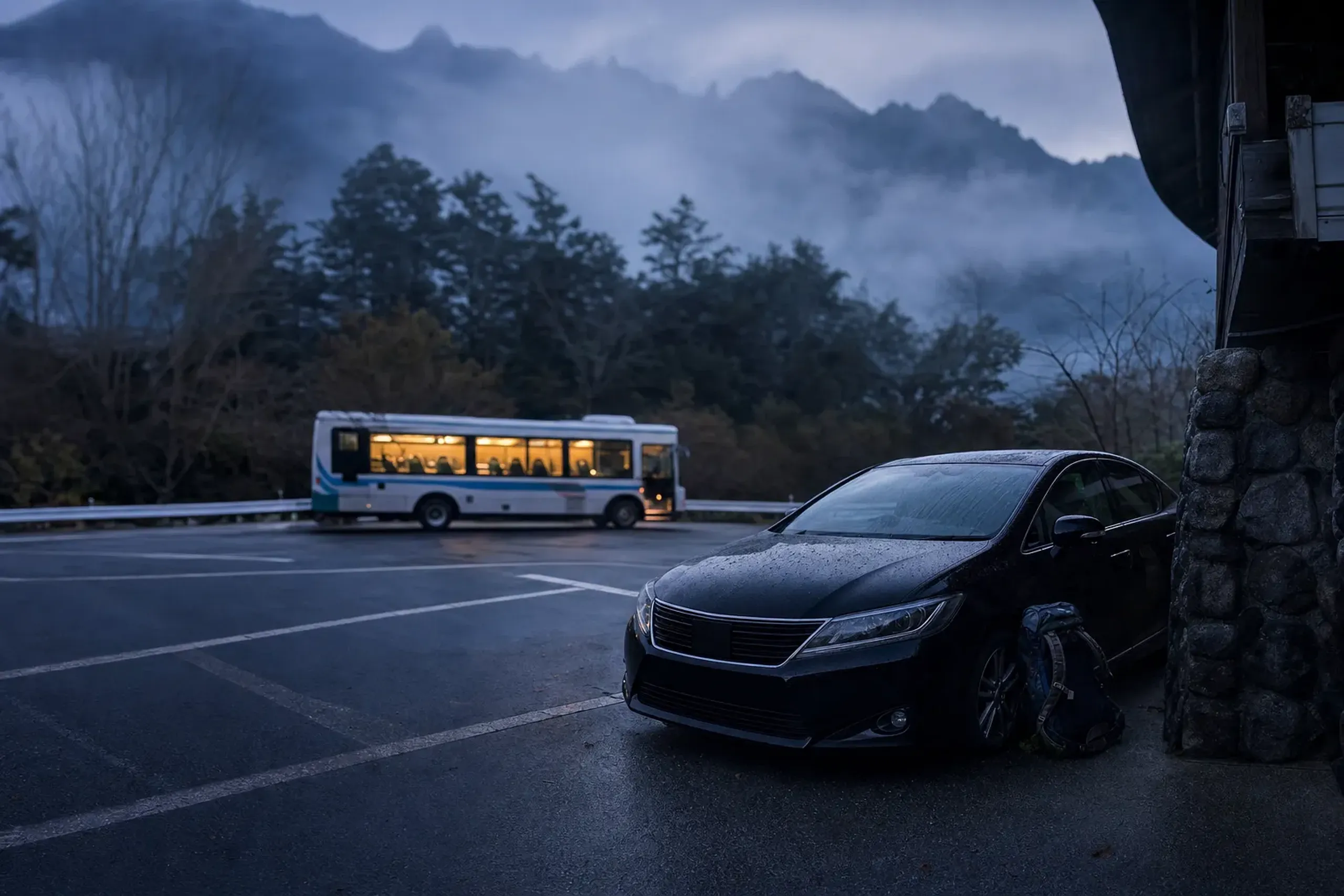
Yakushima starts early, and it starts on the island’s terms.
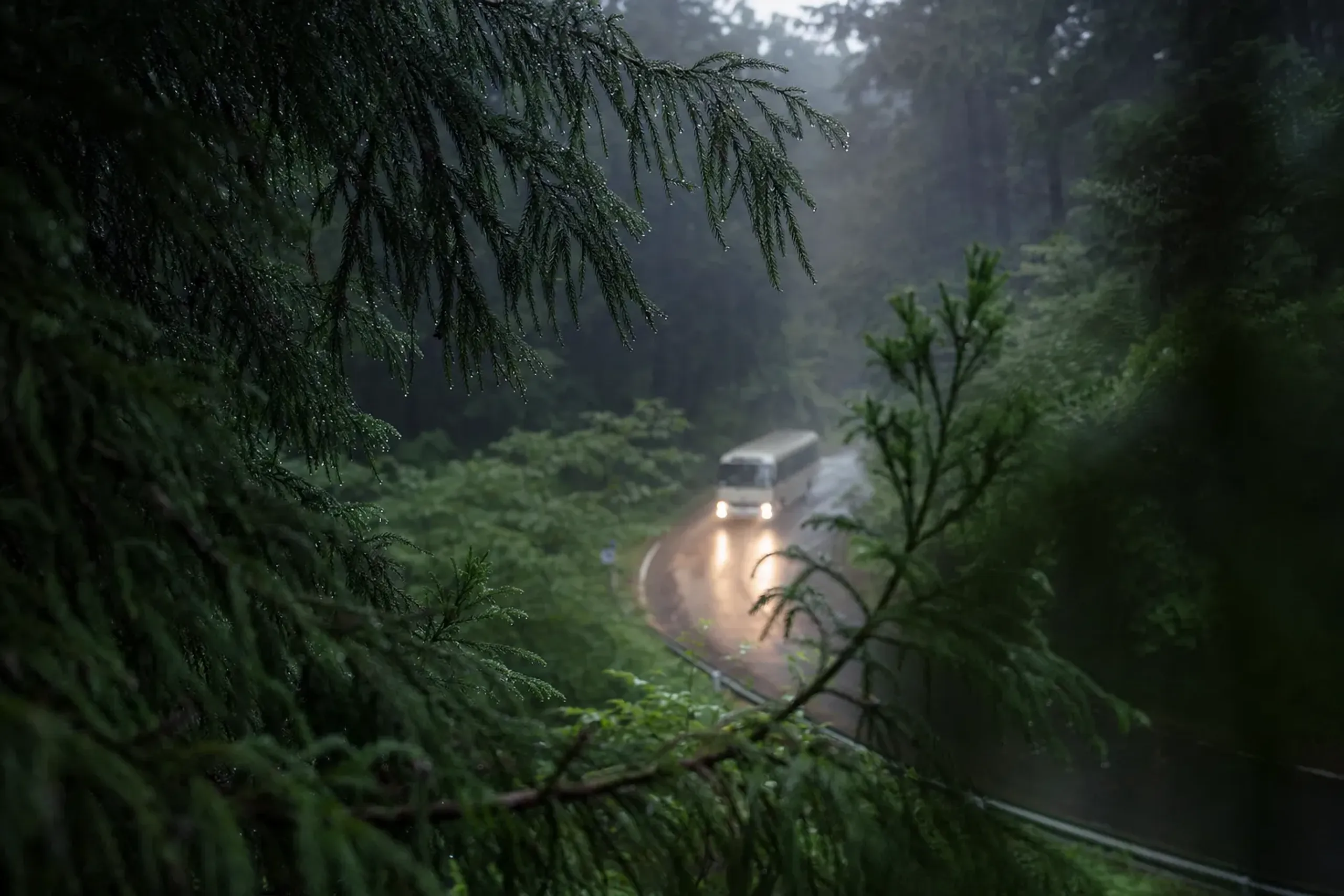
This regulation exists for a blunt reason: congestion and environmental damage increased as the route became famous. During the restricted period, visitors park at the Yakusugi Museum and use the dedicated Arakawa climbing bus to reach the trailhead, a ride of roughly 40 minutes.
There is one nuance that matters for private travellers. Chartered buses and taxis may use the road, but passengers must hold an Arakawa route usage ticket purchased in advance. That is the practical method for a private party that wants controlled timing and less crowd friction, while still respecting the same rule set.
Weather remains the real authority. Services can be suspended or rescheduled due to bad weather, snow, or ice, with changes announced through the operator’s official channels on the day.
Key fact: The trek is rarely “cancelled.” The bus might be.
Where Do You Buy Arakawa Trekking Bus Tickets On Yakushima?
Arakawa climbing bus tickets must be purchased in advance at designated outlets around Yakushima; they are not sold on the bus.
Tickets are sold via Yakushima tourism association offices (including at the airport, Anbō, and Miyanoura), and also through participating hotels and other outlets on the island. This is why Yakushima punishes last-minute planning: the ticket purchase itself is an extra stop, and the early-morning schedule leaves little margin for improvisation.
Unused bus tickets are refundable at tourism association windows. The environmental contribution generally is not, except where the bus itself is cancelled.
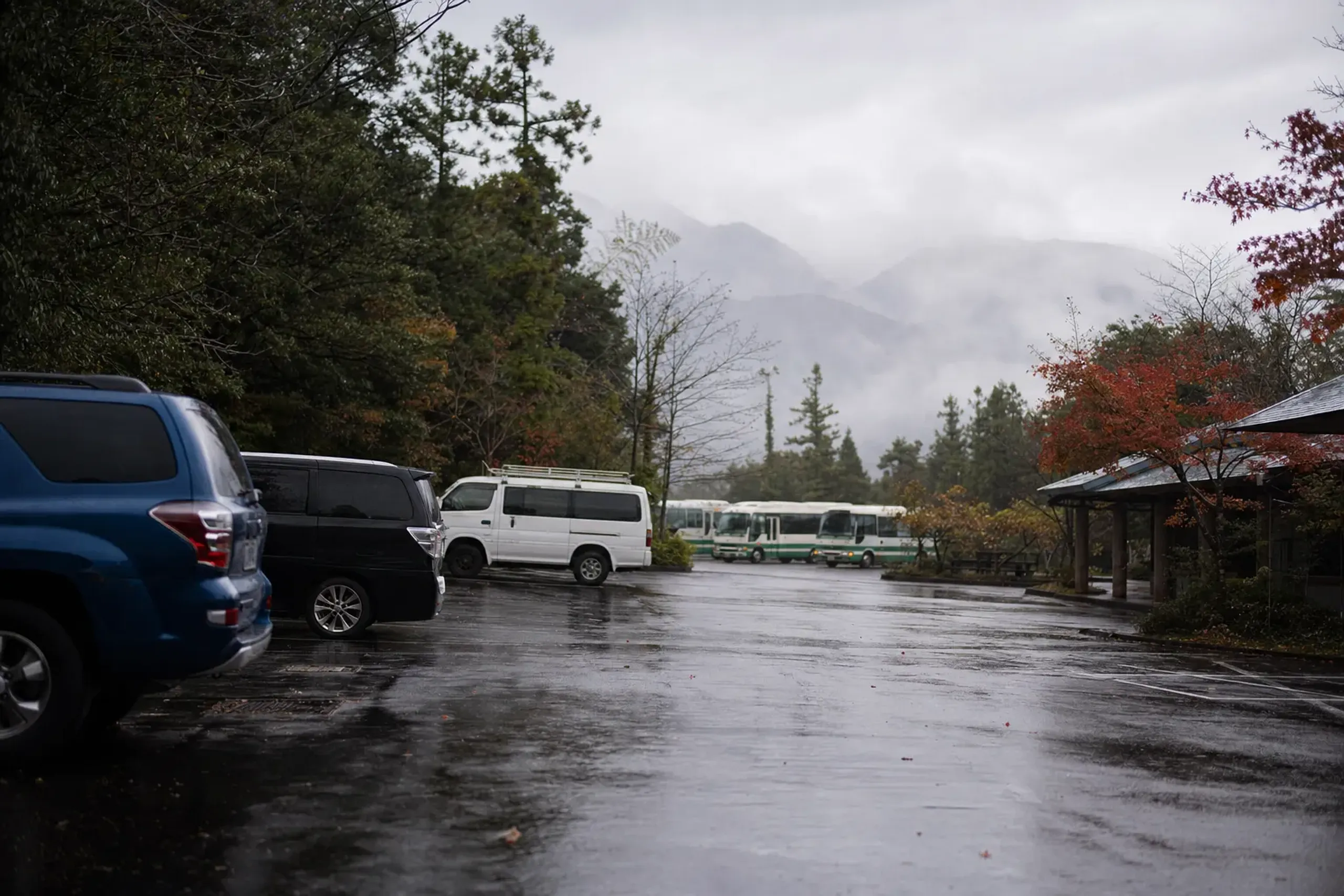
From March to November, access shifts from private cars to controlled transport.
If you are used to large, forgiving destinations, this can feel oddly strict. It is. That strictness is part of what protects the forest.
The Two Contributions: What You Pay, And Why It Matters
Yakushima has two separate conservation contributions for these forests, and they are not interchangeable.
The first is the mountain area environmental conservation contribution that applies to the Jōmon Sugi routes, including approaches from Shiratani Unsuikyō toward Wilson’s Stump and Jōmon Sugi. The second is the forest environment contribution that applies to Shiratani Unsuikyō alone, for the section between the management building and Tsuji Pass, paid at the entrance.
Both are paid in advance at designated outlets, and a certificate must be shown to staff at the trailhead. Amounts have been revised over time, so we do not publish figures; confirm the current position close to travel.
This is not bureaucracy for its own sake. It is the island reminding you that access is a privilege with a ledger attached.
How Hard Is The Jōmon Sugi Trek, Really?
The Jōmon Sugi trek is a full day: roughly 22 km round trip and typically 9–10 hours of walking on uneven ground, started before dawn in a climate where rain is normal.
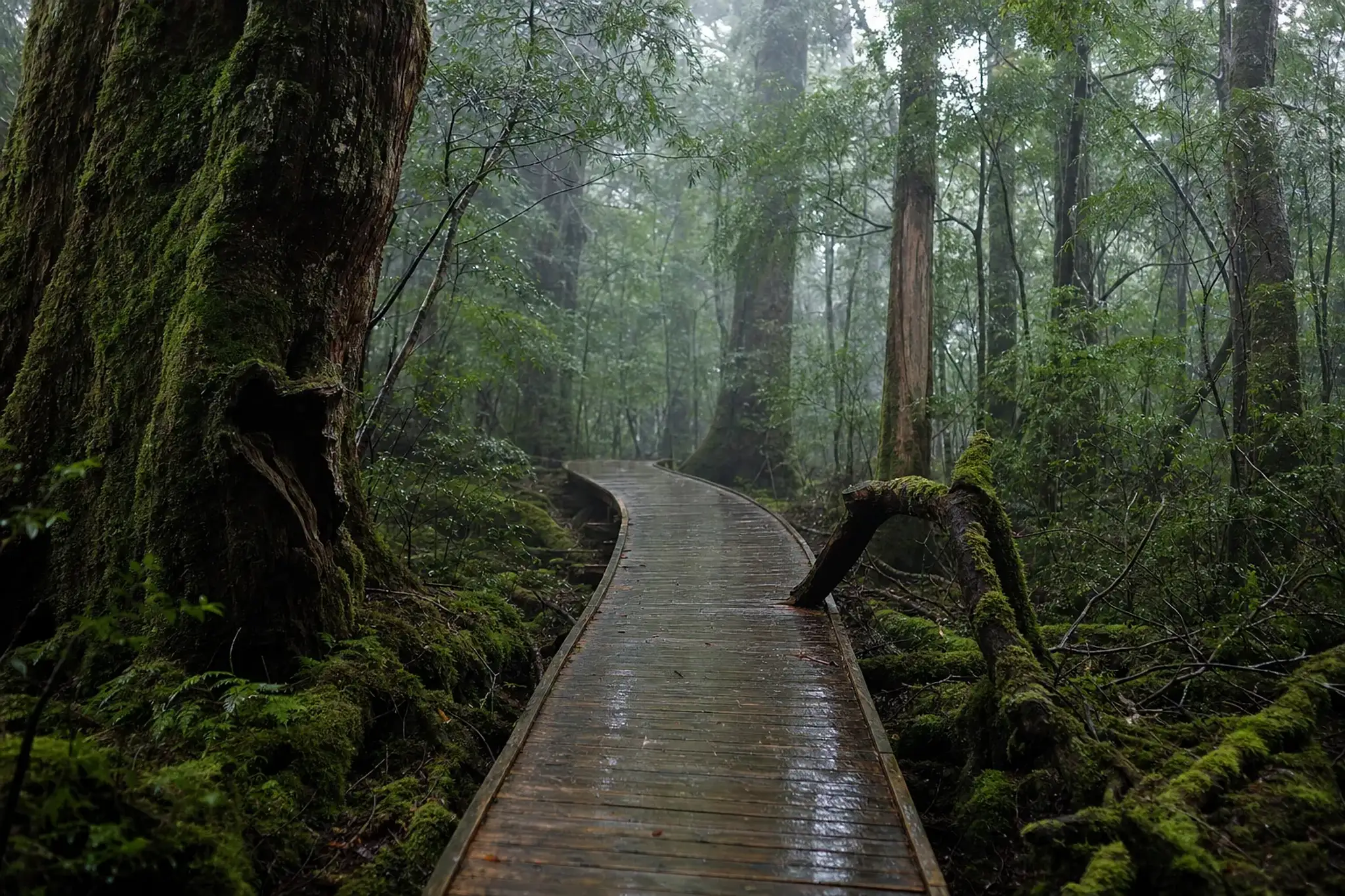
The outward leg begins with the old logging railway. It is long, level, and strangely monotonous, which catches people off guard; they expected drama immediately, and instead they get hours of steady forward motion with few “milestones” beyond bridges, sleepers, and the rhythm of boots on wet timber.
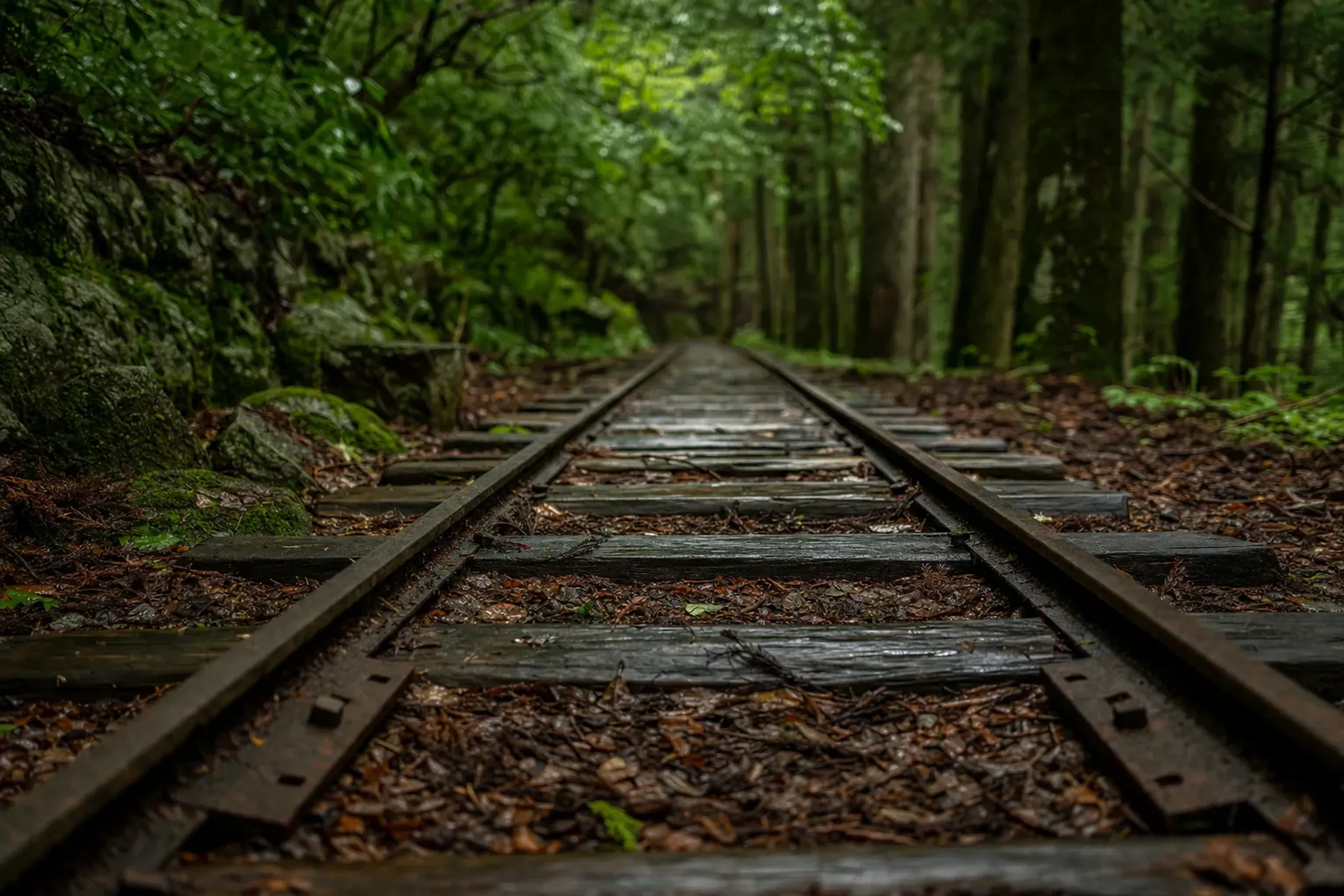
The first hours are long and level—then the mountain begins.
Then the character changes. From the Ōkabu path entrance, the trail turns steep, with steps, exposed roots, and rock that stays slick even when the air feels calm.
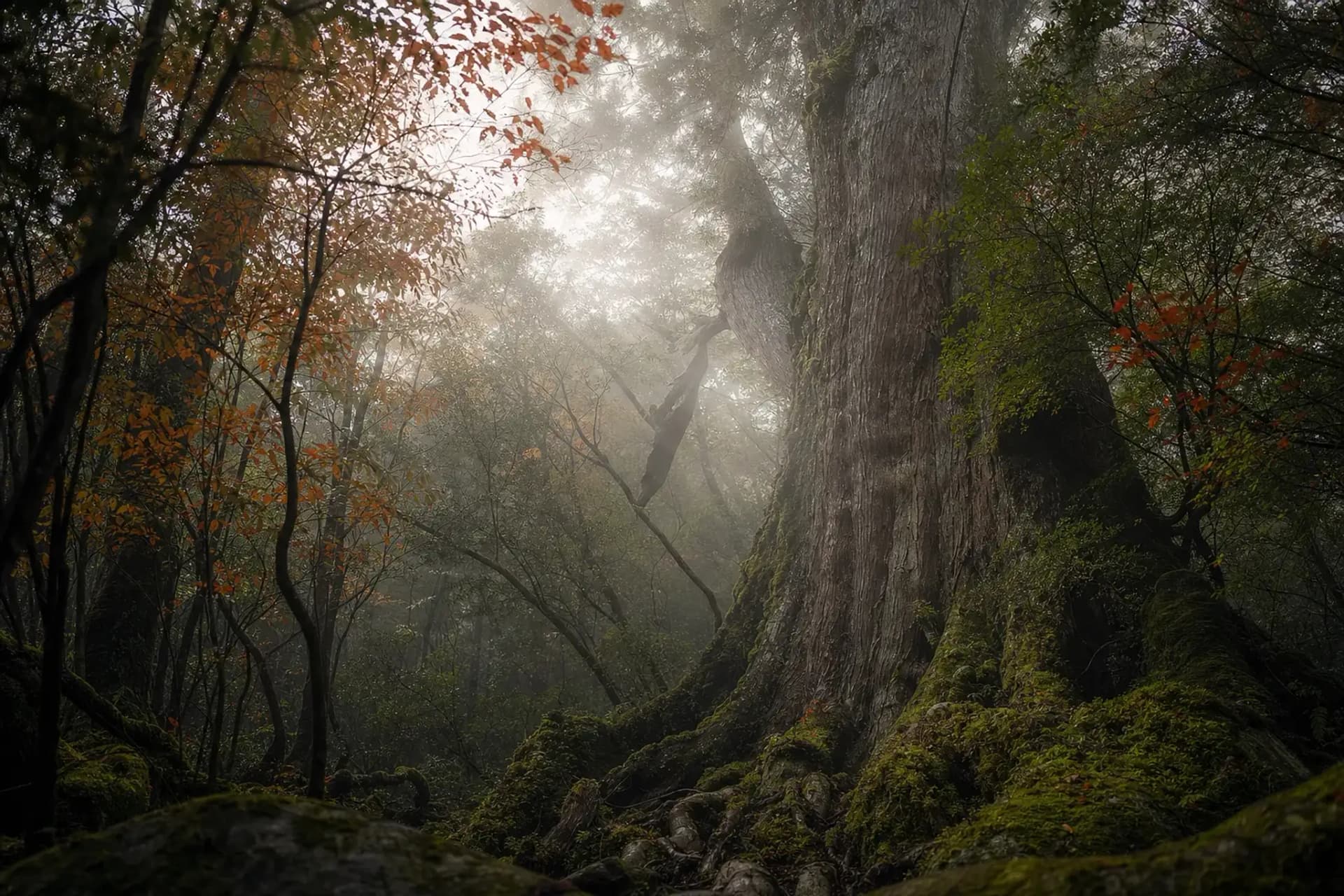
Wilson’s Stump lies on the route. And Jōmon Sugi stands beyond, on a southeast slope near the ridge of Takatsukayama, inside a national park special protection zone, inside a forest ecosystem reserve, and inside the World Heritage area. You view it from the designated deck. You do not touch it. Full stop.
What Weather Actually Cancels The Yakushima Trekking Bus?
Abnormal weather—such as 220 mm or more rainfall in 24 hours, snow, or ice—can trigger road closures to trail entrances and suspension of the trekking bus service.
This threshold comes from official trekking etiquette guidance by the Ministry of the Environment’s Yakushima World Heritage Conservation Center. It is the kind of information that matters more than inspirational photography, because it tells you what “risk” looks like in operational terms.
Yakushima is among the wettest places in Japan. Rain is not a bad-luck story you tell later; it is the default. Gear matters because the walk happens anyway unless the road closes. The bus is the brittle point.
There are also established smoking areas on the Jōmon Sugi Cedar Trail (between the Arakawa Trail entrance and the Takatsuka Hut) as a wildfire prevention measure. Even that detail says something about the island: it anticipates human behaviour, then puts boundaries around it.
The Tree’s Fame Began In 1967, Not In Deep Time
Yakusugi can be thousands of years old, but Jōmon Sugi’s modern fame has a date on it.
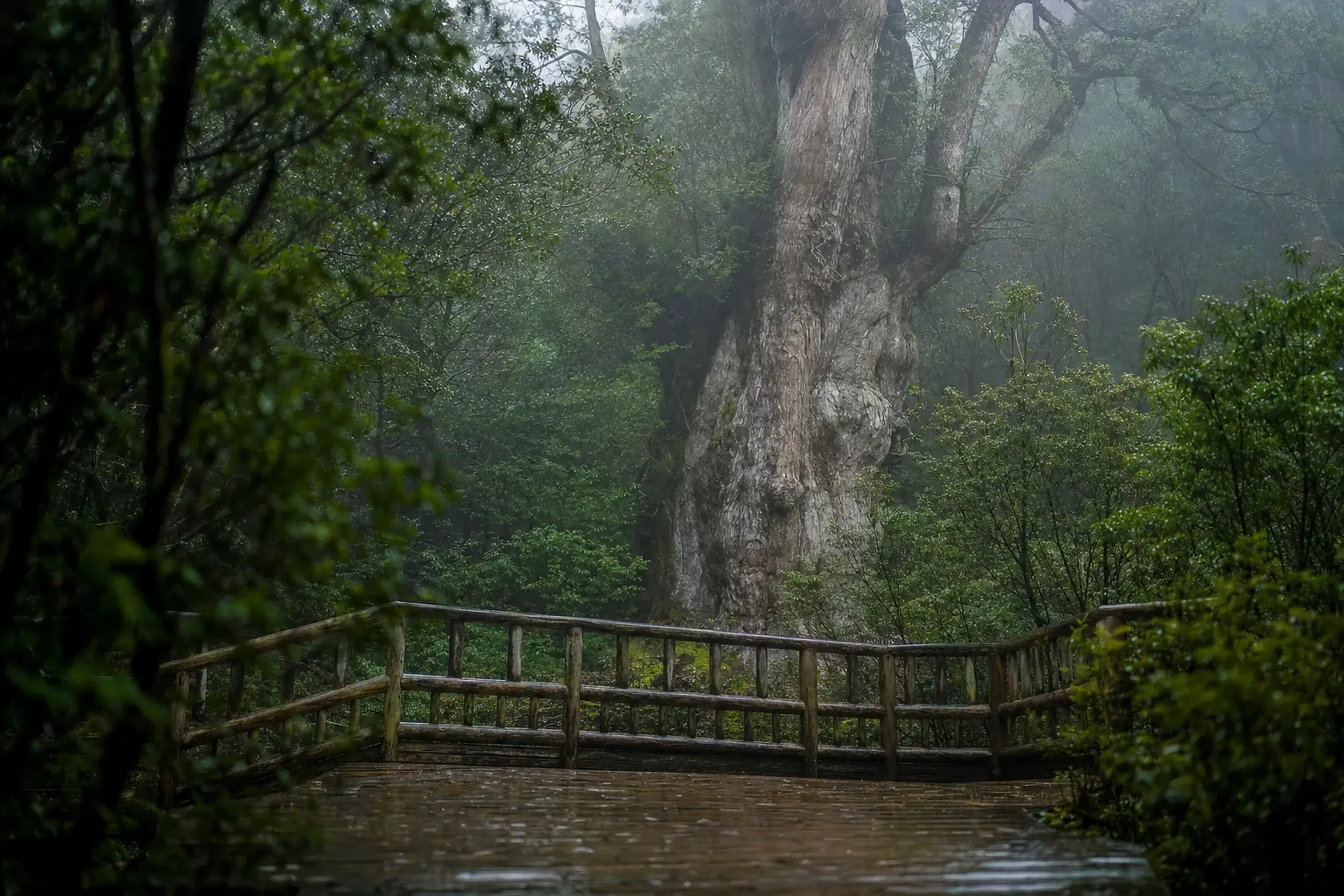
Fame arrived in 1967; the tree was already old.
It was first written about in a Kagoshima newspaper on New Year’s Day, 1967, and the boom began with that article.
We like that story because it strips away cliché. A tree can be ancient and still be “discovered” by public attention in a single column. It reminds us that popularity is recent, and therefore fragile.
Yakushima itself was inscribed as a UNESCO World Natural Heritage site in December 1993, alongside Shirakami-Sanchi, as one of Japan’s first two natural World Heritage sites. Part of the case was the island’s outstanding growing environment for sugi, including natural forest with yakusugi over 1,000 years old.
If you want a “why,” that is it. Not spectacle. Conditions.
Choose Your Forest: Jōmon Sugi Vs Shiratani Unsuikyō Vs Yakusugi Land
Yakushima rewards travellers who choose the right route for their body, their patience, and their definition of a good day.
Option A: Jōmon Sugi (For Guests Who Want The Walk As Much As The Tree)
This is the commitment route. It asks for a pre-dawn start, advance ticketing, and ten hours of concentration.
- Time on foot: typically 9–10 hours
- Distance: roughly 22 km round trip from Arakawa
- Terrain: long railway approach, then steep roots and rock past the Ōkabu path entrance
- Risk: bus suspension if abnormal weather triggers road closures
If you book this because it is “the famous one,” and you cannot walk it, you have lost a day.
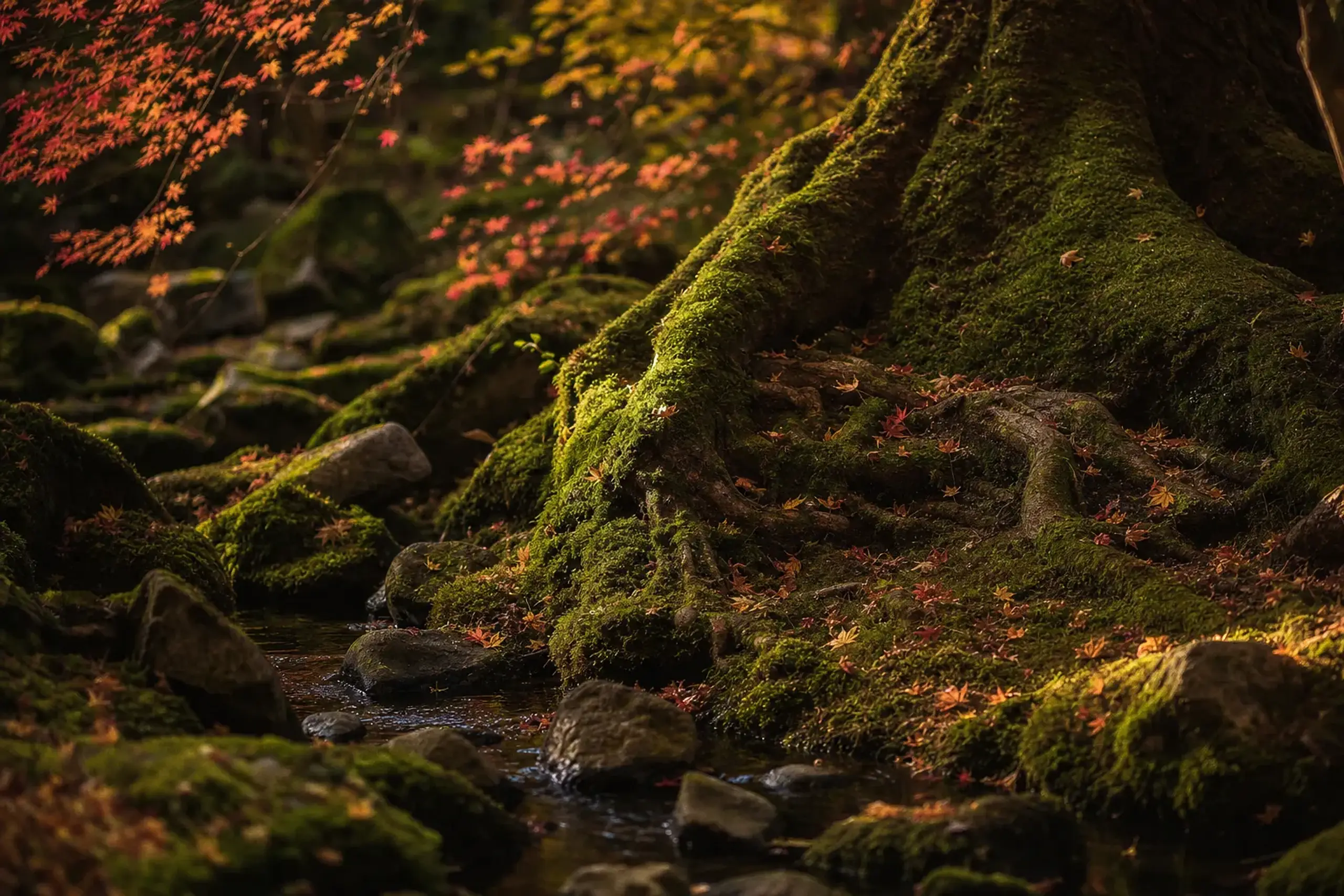
Not every Yakushima day needs to be ten hours.
Harsh, but accurate.
Option B: Shiratani Unsuikyō (For Moss, Water, And Shorter Routes)
This is the forest most visitors picture: soft green, wet stone, filtered light. It also has flexibility.
- Routes: several lengths, from an hour or two upward
- Contribution: the separate forest environment contribution applies to Shiratani Unsuikyō alone (for the specified section)
If your party wants a forest day without the ten-hour wager, this is often the better choice.
Option C: Yakusugi Land (For Boardwalk Comfort And A Wider Range Of Fitness)
Yakusugi Land offers more forgiving access and walking options among old cedars, which can suit multi-generation parties or travellers managing knees and pacing.
It is not “less real.” It is simply a different contract with the day.
Guides, Turnaround Times, And The Skill People Forget To Buy
On Yakushima, a licensed mountain guide is not a narrator. They are a timekeeper.
On a ten-hour walk with a fixed last bus, knowing when to turn back is the craft being purchased. A guide reads weather shifts, watches footfall and fatigue, and keeps the day within the limits that the island has already set.
In our experience, travellers who are used to high service sometimes underestimate this. They assume comfort will erase the need for judgement. It won’t.
This is also where discretion matters. A private party may want to move quietly, avoid attention, and keep a low profile at trailhead and on rest stops; the best guiding style respects that without turning the mountain into a stage.
How To Reach Yakushima From Kagoshima (And Why Buffers Matter)
Yakushima is reached from Kagoshima by air or by sea, and each option has different weather sensitivities.
Because ferry and flight operations can change with weather and maintenance, we advise building time into the plan. A spare day is not “wasted” on Yakushima; it is insurance that protects the core experience when schedules shift.
Official notices underline the point. Yakushima Town published a notice on August 26, 2026 regarding dock entry for “Ferry Taiyo 2,” indicating a near-term operational change that can affect marine access planning. The ferry operator also posts dated service notices and notes that its Sunday departure from Kagoshima and Monday departures from Tanegashima and Yakushima are suspended.
Yakushima decides. Again.
Where To Stay For A Serious Forest Day
For the Jōmon Sugi route, your lodging choice is less about “luxury features” and more about sleep, breakfast timing, and where you wake up relative to early logistics.
Some travellers prefer to be near Miyanoura for access and services. Others choose Anbō for their own routing logic. What matters is that your morning is not chaotic: you need time to collect tickets, show certificates, and start early without rushing in the dark.
For travellers who want a resort-grade stay on the island, sankara hotel & spa Yakushima is a known luxury property, and it has posted dated operational notices such as its Jan 31, 2026 announcement that it would reopen from Feb 1 after a closed period ended.
We treat those notices as planning signals—real-world rhythm, not brochure language.
Our approach leans toward hidden-Japan choices where possible: places that feel calm, private, and low-noise, so the forest day doesn’t start with a crowded lobby.
Practical Packing: Rain, Feet, And The Long Railway
Yakushima punishes casual gear. Kindly, but firmly.
- Rain protection: bring reliable waterproof layers; assume you will use them
- Footing: prioritize grip for wet wood, rock, and roots
- Lighting: a headlamp for pre-dawn starts
- Pacing: plan your food and water for a ten-hour day, not a “nice hike”
The railway section is deceptive. It feels easy, so people go too fast, too early. Then the steep section arrives and the body sends invoices.
We prefer restraint over bravado. That is the only “style” that belongs here.
A Sample Two-Day Structure That Respects The Island
This is a planning blueprint, not a promise. Weather and regulations still set the boundaries.
Day 1: Arrive and keep the schedule light. Confirm ticketing, contributions, and morning timing. Sleep early. Simple.
Day 2: Pre-dawn departure, trailhead formalities, full-day trek, and an early night after. No late dinner plans that require performance.
If you can spare a third day, make it a buffer for weather. That buffer is what allows you to stay calm if the bus is suspended, rather than trying to “force” the forest on a bad day.
What Japan Royal Service Coordinates For Yakushima (Stated Once)
Japan Royal Service coordinates accommodation, guiding and transfers; licensed mountain guides; Arakawa access arrangements including chartered vehicle passage and route tickets; environmental contributions and permits; boat and air transfers from Kagoshima; and mountain hut arrangements when an overnight route is taken.
On the public page, we keep this factual and minimal. Private coordination is handled discreetly after you inquire, because privacy is part of the service, not an add-on.
If you want to understand how our broader planning style works outside Yakushima, you may also like our guide to The Kyushu Onsen Circuit: Beppu, Kurokawa, and Unzen and our notes on Yakushima for Private Travellers: Access, Forest, Timing.
Frequently Asked Questions
Is The Jōmon Sugi Trek Suitable For Most Fit Travellers?
The Jōmon Sugi route is typically 9–10 hours and about 22 km, so it suits travellers who are genuinely comfortable with a full day on uneven, wet terrain.
If your fitness is “gym fit” but not “all-day walking fit,” consider Shiratani Unsuikyō or Yakusugi Land instead, then return for Jōmon Sugi on a future trip.
Can I Buy The Arakawa Bus Ticket At The Bus Stop That Morning?
No, Arakawa climbing bus tickets are sold in advance at designated outlets on Yakushima and are not sold on the bus.
Build this into Day 1 planning, especially if you arrive late afternoon and shops close earlier than you expect.
What Is The Difference Between The Two Conservation Contributions?
The mountain area contribution applies to the Jōmon Sugi routes, while the separate forest environment contribution applies to Shiratani Unsuikyō alone for the specified section between the management building and Tsuji Pass.
They are paid at different points through designated outlets, and you must show the certificate to staff where required.
What Happens If Weather Cancels The Trekking Bus?
If abnormal weather triggers road closures, the trekking bus can be suspended or rescheduled, and updates are announced through the operator’s official channels on the day.
This is why we encourage buffer days and a flexible route choice so the trip remains satisfying even when the island says “not today.”
Why Choose Japan Royal Service
Yakushima does not reward loud planning. It rewards precise planning, carried out quietly.
Japan Royal Service is built for that kind of travel. We focus on discretion first, then on craft: matching you with licensed mountain guides who respect turnaround times, building a plan that accounts for access rules and conservation contributions, and shaping the days so you arrive rested rather than rushed.
We also understand the hidden-Japan dimension of Yakushima—the fact that the real luxury here is not a shiny checklist, but the ability to move through a protected landscape without friction, without attention, and without wasting the one day you came for.
If you want Yakushima designed around your pace and privacy, reach our team privately via WhatsApp or LINE, or contact us here.
The first mention of private transportation planning can be explored here: private transportation. If you are considering a multi-stop plan, read about our tailor-made itinerary approach.