In this guide
- 01What Makes Yakushima Worth The Journey
- 02How Do You Actually Get To Yakushima?
- 03When Is The Best Time To Visit Yakushima?
- 04The Forests Worth Seeing — And Which One Suits You
- 05Where Do Private Travellers Stay On Yakushima?
- 06Building A Sensible Yakushima Itinerary
- 07Combining Yakushima With The Rest Of Japan
- 08Frequently Asked Questions
- 09Why Choose Japan Royal Service
There is a place off Japan's southern tip where trees older than most nations still stand in the rain. Yakushima. A near-circular island of granite and cedar, wrapped in cloud, roughly 60 kilometres south of the Ōsumi Peninsula in Kagoshima Prefecture.
Most visitors treat it as a hard hike and little else. That is a mistake. For the traveller who values silence over spectacle, Yakushima offers something rarer than a summit photograph: unhurried access to a living forest that UNESCO recognised as a World Heritage site in 1993. Our team at Japan Royal Service arranges quiet, private journeys here for guests who want the ancient forest without the crowds that ring it.
This guide covers what the island actually is, how access really works, when to go, and how to fold Yakushima into a wider itinerary without turning it into an endurance test.
What Makes Yakushima Worth The Journey
Yakushima is a mountainous island where cedar trees — some over a thousand years old — grow in one of the wettest climates in Japan. The oldest, Jōmon Sugi, is estimated at 2,000 to 7,000 years.
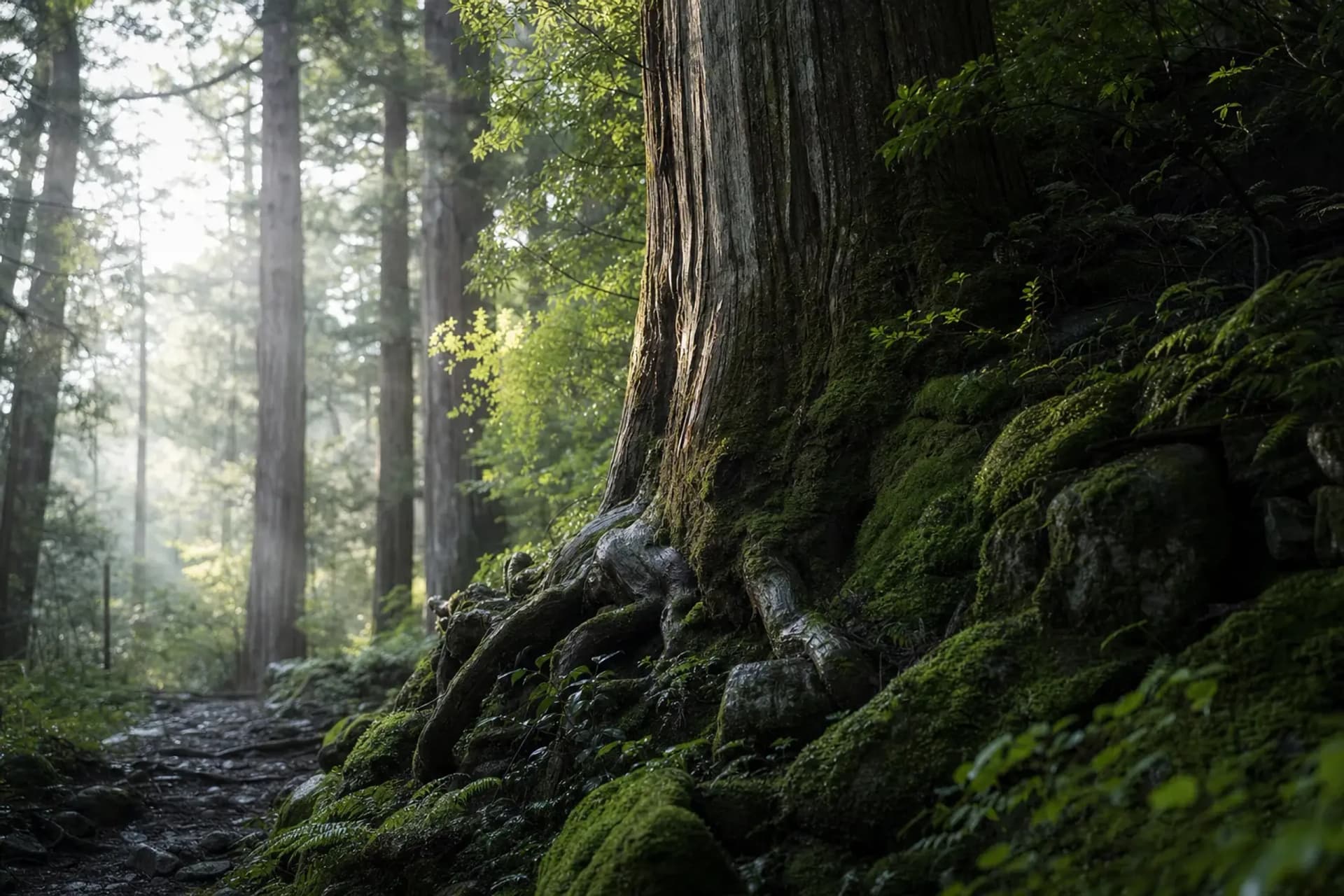
The forest here is unlike anything on the main islands. Moss coats the granite. Water threads through everything. Roots grip stone in shapes that look deliberate, almost drawn.
This is wabi-sabi in its rawest form. Not the polished restraint of a Kyoto tearoom, but weathered permanence — bark scarred by centuries, deadfall slowly returning to soil, a quiet that has nothing to prove. Studio Ghibli's art team famously drew inspiration from the Shiratani Unsuikyo ravine here.
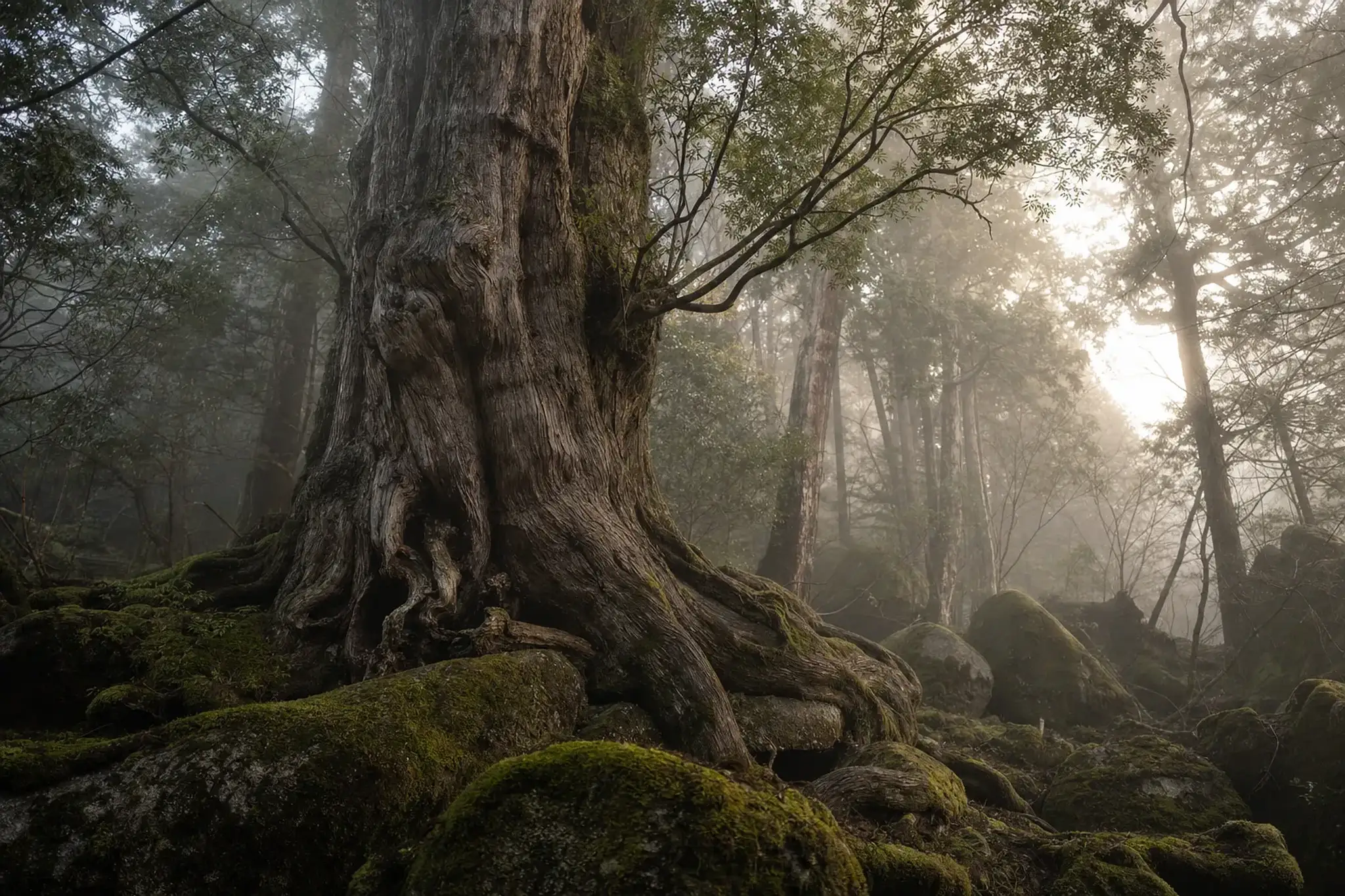
Stand in it and you understand why.
Cedar over a thousand years old carries a local name: yakusugi. Younger trees are simply kosugi. That distinction matters to the islanders, and it should matter to anyone walking among them.
How Do You Actually Get To Yakushima?
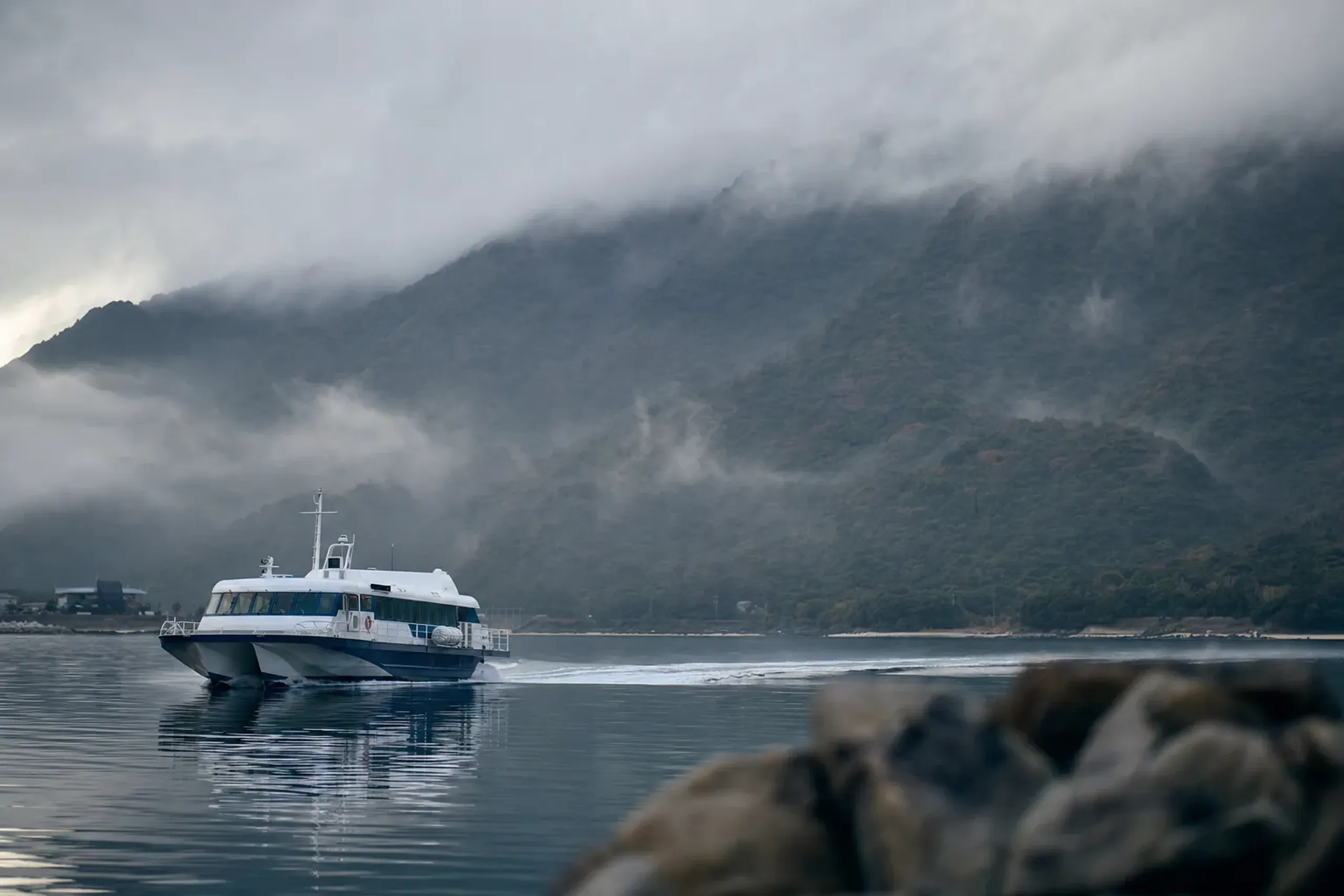
You reach Yakushima by a short flight from Kagoshima Airport (about 35 minutes) or by high-speed jetfoil ferry from Kagoshima port (roughly 1 hour 50 minutes). There is no direct international connection.
The practical route for most guests runs through Kagoshima on the mainland of Kyushu. From Tokyo, that means a flight to Kagoshima Airport first — around two hours — then the island hop.
Japan Air Commuter operates the propeller flights to Yakushima Airport. Seats are limited and the aircraft is small, so booking well ahead matters, especially in peak months. The jetfoil, run by Tanegashima & Yakushima Kōsoku-sen, is the reliable alternative and lands at Miyanoura port on the island's north coast.
Key fact: Yakushima weather is famously changeable. Flights and ferries are occasionally cancelled for wind or fog. Build a buffer day into any itinerary — arriving the day before a planned forest walk is prudent, not excessive.
On the island itself, distances are deceptive. The coast road loops the whole circumference, but mountain trailheads sit up narrow, winding routes. A private chauffeur removes the guesswork of pre-dawn departures and unpredictable local buses. Our private chauffeured transport can be positioned on the island so that guests move on their own schedule, not the timetable's.
When Is The Best Time To Visit Yakushima?
The best months to visit Yakushima are late April through May and October through November, when temperatures are mild, humidity eases, and the heaviest rains hold off. Avoid the June rainy season and peak typhoon weeks in late summer.
Here is the honest truth locals repeat: it rains a great deal in Yakushima. An old saying claims it rains "35 days a month." Rain is part of the experience, not a defect. The moss glows greener for it.
That said, timing changes everything.
Spring And Early Summer
Late April into May brings fresh green and comfortable walking weather. The rhododendrons in the high country bloom around late May into June. Then the tsuyu rainy season arrives — beautiful, but demanding.
Autumn
October and November are, in our experience, the sweetest window. Air clears. Crowds thin after the summer school holidays. The high peaks may show early colour.
Winter
Winter is quiet and stark. Snow can dust the interior mountains while the coast stays mild — a strange, beautiful contrast. Some higher trails become impassable. For guests who prize solitude above all, this is worth considering.
| Season | Character | Best for |
|---|---|---|
| Apr–May | Fresh green, mild, some rain | First-time forest walks |
| Jun–Jul | Rainy season, deepest moss | Photographers who don't mind wet |
| Oct–Nov | Clear air, thinner crowds | The ideal all-round window |
| Dec–Feb | Stark, snow inland, very quiet | Solitude seekers |
The Forests Worth Seeing — And Which One Suits You
Not every guest needs to reach Jōmon Sugi.
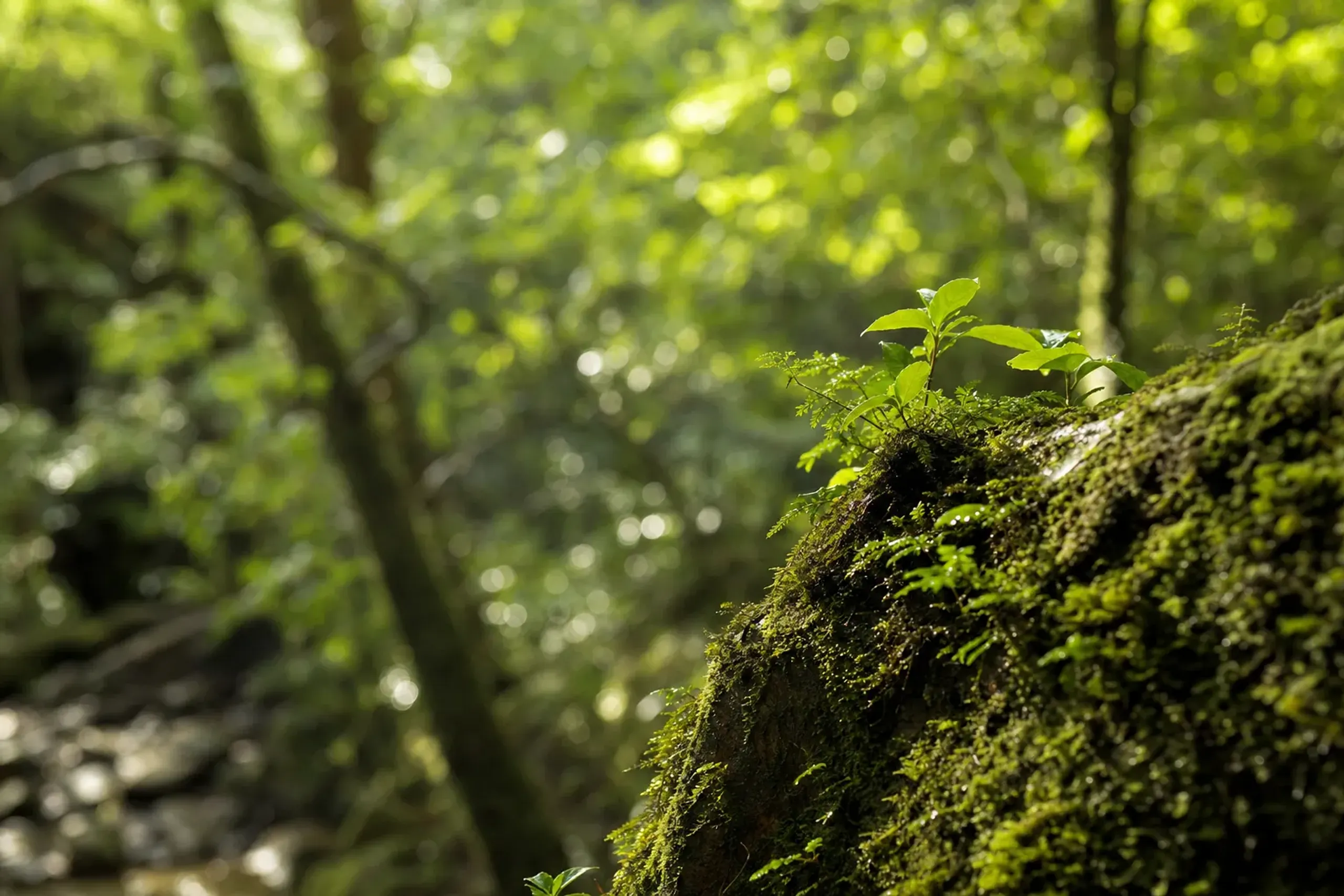
The trek to it is long and strenuous — roughly 10 to 11 hours round trip on foot, starting before dawn. For the very fit, it is unforgettable. For most, there are gentler ways into the same primeval world.
Shiratani Unsuikyo Ravine
This is the forest that inspired Ghibli's artists. A network of trails winds through moss-carpeted granite and cedar. You can choose a short one-hour loop or a longer half-day route. It delivers the essence of Yakushima without a punishing schedule — our most-recommended option for guests wanting depth over distance.
Yakusugi Land
Despite the plain name, this is a serene highland forest with boardwalk trails ranging from 30 minutes to several hours. Ancient cedars stand within easy reach. Excellent for guests who want to walk among thousand-year-old trees without a full expedition.
Wilson's Stump
The hollow remains of an enormous felled cedar, large enough to step inside. From a certain angle within, the opening frames a heart shape against the sky. It sits on the Jōmon Sugi route but is a rewarding turnaround point in its own right.
Where Do Private Travellers Stay On Yakushima?
Sankara Hotel & Spa Yakushima is the island's leading luxury property, a hillside villa-style retreat on the quieter southeast coast with sea views, a French-inflected dining programme, and a spa. It is the natural base for discerning guests.
Sankara is intimate — a small number of villas and suites — which means availability tightens fast in the autumn window.
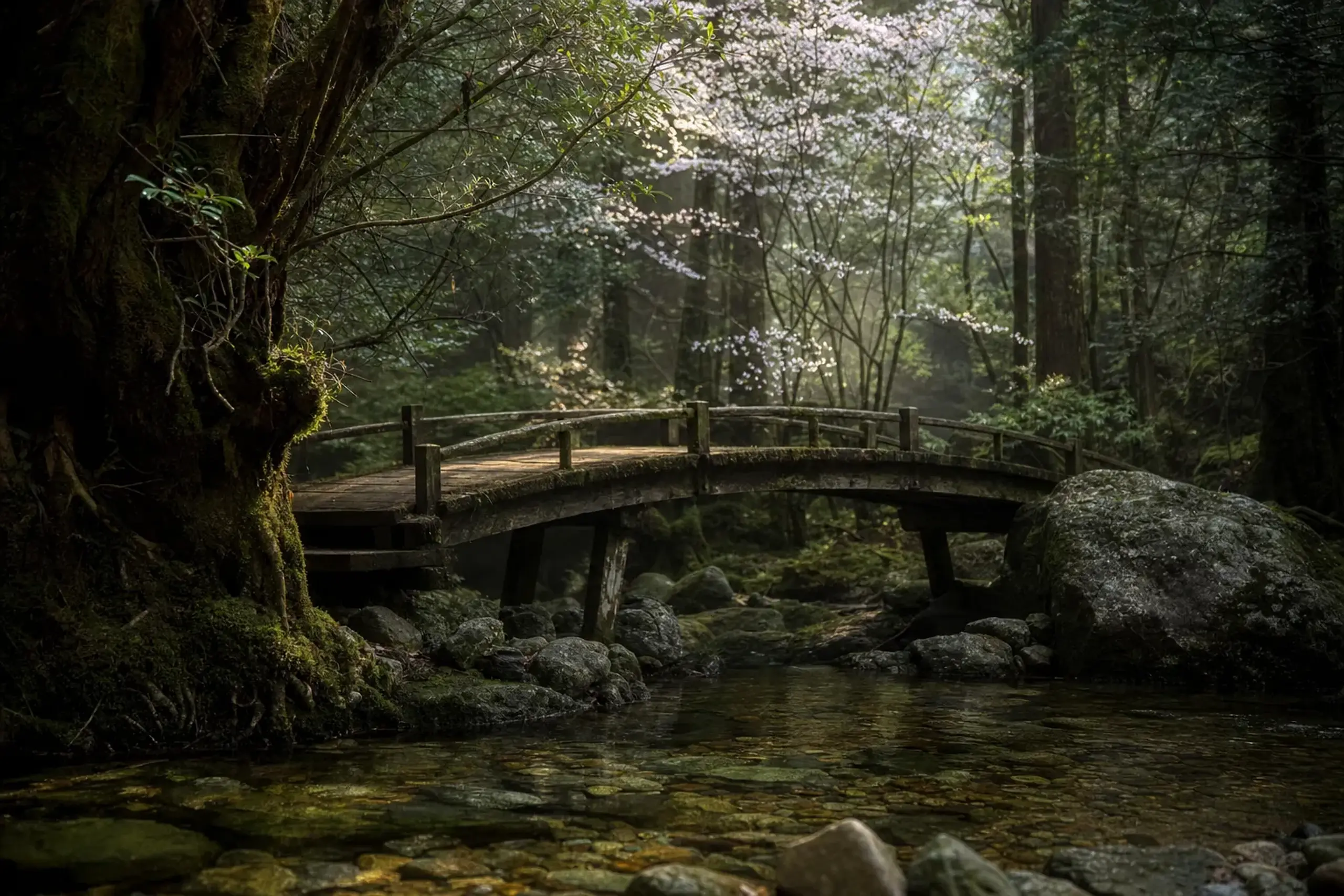
Its restaurant works closely with island producers, and the flying-fish and local citrus find their way onto the plate in season.
Beyond Sankara, the island's lodging is modest by design. That modesty is part of Yakushima's honesty. For guests who want a higher register of comfort, we often build the trip so that the deeper luxury sits on the Kyushu mainland — a refined ryokan or hotel in Kagoshima before and after the island leg — with Yakushima itself experienced as a focused, unfussy immersion.
This mirrors a wider shift we're seeing among sophisticated travellers: pairing a polished base with quieter, harder-to-reach interludes. Japan's 2025–2026 hotel openings on the mainland make that pairing easier than ever, though the pleasure of Yakushima lies precisely in its lack of gloss.
Building A Sensible Yakushima Itinerary
Three nights is the comfortable minimum. It absorbs a weather buffer and gives you two clear forest days.
A workable shape looks like this:
- Day 1: Arrive from Kagoshima by air or jetfoil. Settle in. A gentle coastal drive, perhaps to Ōkonotaki, one of Japan's tallest waterfalls, tumbling straight toward the sea.
- Day 2: Shiratani Unsuikyo or Yakusugi Land with a private guide. Early start, unhurried pace.
- Day 3: A second, contrasting walk, or a slow morning and a visit to Ōura beach on the northeast coast, where loggerhead sea turtles nest in early summer.
- Day 4: Return to the mainland.
A licensed local guide is not a formality here.
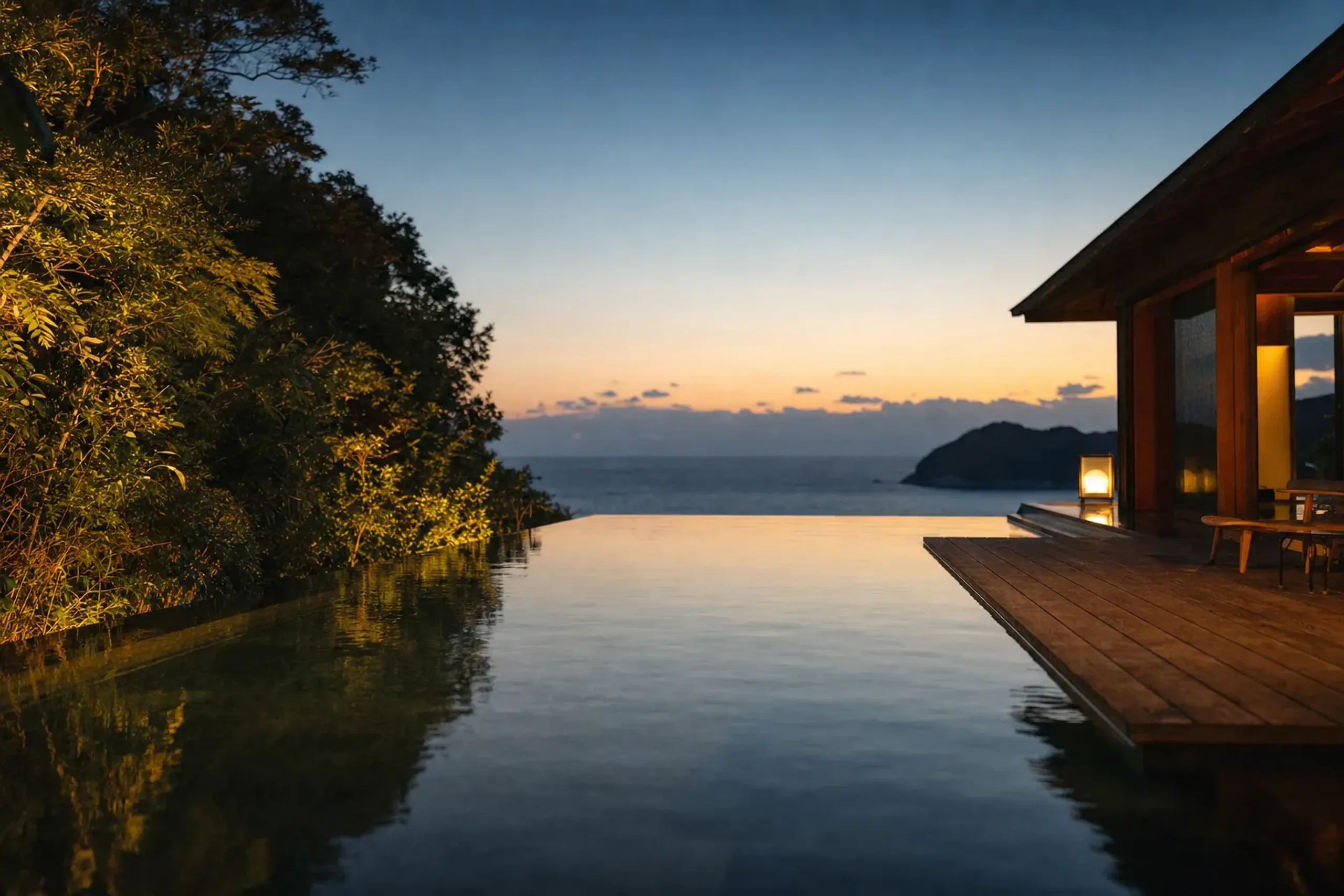
Trail conditions, tree lore, and the rhythm of the weather are things only islanders truly read. We work with English-speaking guides who know which trailhead will be quietest on a given morning.
The forest asks for restraint. Rushing Jōmon Sugi in a single day, then flying out exhausted, misses the point entirely. Yakushima rewards those who slow down.
Combining Yakushima With The Rest Of Japan
Because access runs through Kagoshima, the island pairs naturally with southern Kyushu. Kagoshima city sits beneath the smoking cone of Sakurajima, an active volcano across the bay — a dramatic counterpoint to the island's green calm.
From there, guests often continue to the onsen town of Kirishima, or fly onward to join a broader route. A tailor-made itinerary can thread Yakushima between mainland comfort and cultural depth, so the island becomes a still centre rather than a logistical outlier.
For guests drawn to the same spirit of remote islands and craft, our writing on Naoshima by sea or by air and on private helicopter transfers and luxury ryokan stays explores how discreet access transforms a Japanese journey.
Frequently Asked Questions
How many days do you need to see Yakushima properly?
Three to four nights is ideal. This absorbs Yakushima's frequent weather delays, allows two full forest days at an unhurried pace, and leaves room for the coast without turning the trip into an endurance march.
Do you have to hike all day to see the ancient cedars?
No. The famous Jōmon Sugi trek takes 10 to 11 hours round trip, but Shiratani Unsuikyo and Yakusugi Land both offer short trails, from 30 minutes upward, that reach thousand-year-old cedars with far less effort.
Is there a luxury hotel on Yakushima?
Yes. Sankara Hotel & Spa Yakushima is the island's leading luxury property — an intimate villa-style retreat on the southeast coast with a spa, sea views, and a dining programme built around island produce. Availability is limited, so book early.
What is the best month to visit Yakushima for good weather?
October and November offer the clearest air and thinnest crowds. Late April and May are also excellent. Avoid the June rainy season and late-summer typhoon weeks, and always plan a buffer day for cancelled flights or ferries.
Can you arrange an English-speaking private guide on Yakushima?
Yes. Our concierge team works with licensed, English-speaking island guides who read the trails and weather intimately. For private coordination, reach our team directly via WhatsApp or LINE, or contact us here.
Why Choose Japan Royal Service
Yakushima is not a place to improvise. Weather turns, small aircraft fill, the best guides book out, and the single fine luxury property has few rooms. The difference between a rushed, damp scramble and a quietly extraordinary journey lies entirely in the planning.
Our team at Japan Royal Service is based in Japan, with an in-house fleet and a network of introductions that reaches well beyond the Golden Route. We handle the choreography — the buffer days, the pre-dawn departures, the right guide for the right forest — so that guests experience only the calm. Discretion is absolute. Your identity and itinerary stay private, always.
Where competitors sell a checklist, we curate access to the Japan that stays out of view.
To begin shaping a private Yakushima journey, reach our team privately via WhatsApp or LINE, or contact us here. Our concierge will craft a proposal built entirely around how you prefer to travel.