In this guide
- 01The Ryokan Day: The Three Times That Control Everything
- 02How Do You Get To A Snow-Country Onsen Ryokan From Tokyo In Winter?
- 03What Time Should You Arrive At A Ryokan In Winter To Not Miss Dinner?
- 04Luggage That Goes Ahead: Takuhaibin As A Winter Comfort Tool
- 05Small Onsen Towns In Winter: Why Access Can Be Limited
- 06How Japan Royal Service Builds A Winter Onsen Plan That Stays On Time
- 07Frequently Asked Questions
- 08Why Choose Japan Royal Service
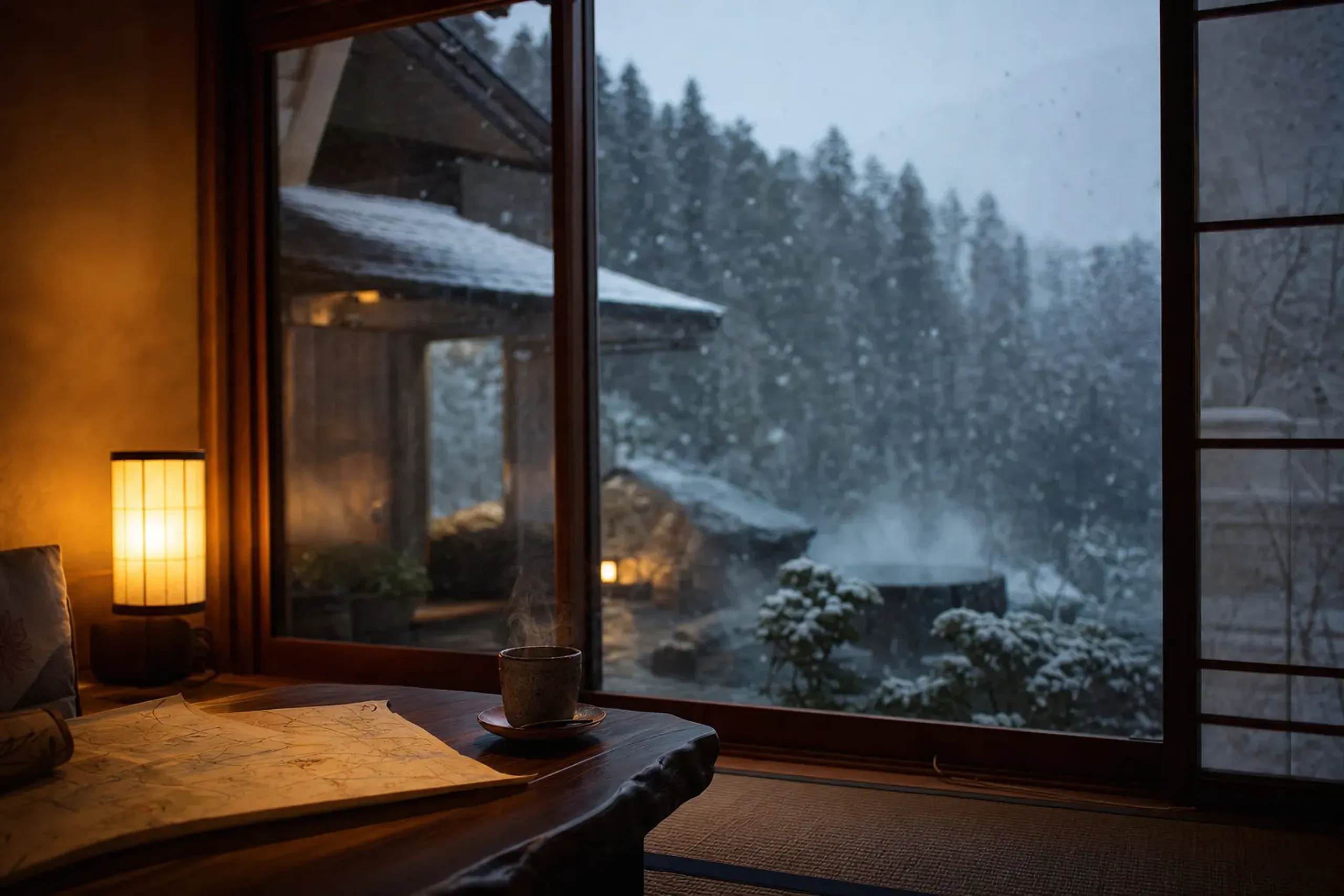
Winter changes the order of a ryokan stay. Not the other way around.
In snow country on the Sea of Japan side, daylight fades early and the last leg can slow without warning. That matters because a ryokan day runs on fixed points, and dinner most of all. Miss it, and the entire evening feels subtly out of tune.
This guide is the practical layer most travelers only discover after a misstep. Arrival timing. Luggage that travels a day ahead. Slack where it actually counts. Our team at Japan Royal Service plans winter onsen itineraries around these mechanics, so you arrive composed rather than hurried, and so the night can unfold at the pace the ryokan intends.
The Ryokan Day: The Three Times That Control Everything
Most ryokan open check-in around 3:00 p.m., serve dinner at a set time around 6:00–7:00 p.m., and ask for check-out between 10:00 and 11:00 a.m. Plan the entire day around those three fixed points.
A small detail. Large consequences.
In winter you feel the schedule more sharply, because the margin shrinks. You may leave Tokyo under clear sun and arrive in a mountain basin to snow, earlier darkness, and a slower final transfer. Your sightseeing does not drive the plan. Dinner does.
Check-In: Why “Around 3 P.M.” Still Changes Your Route
Most ryokan begin welcoming guests in the mid-afternoon, and that “usually around 3 p.m.” window is your anchor. Arrive too early and you may find yourself waiting in a lobby in full winter outerwear, juggling bags and a damp umbrella. Arrive too late and the next fixed point is already closing in.
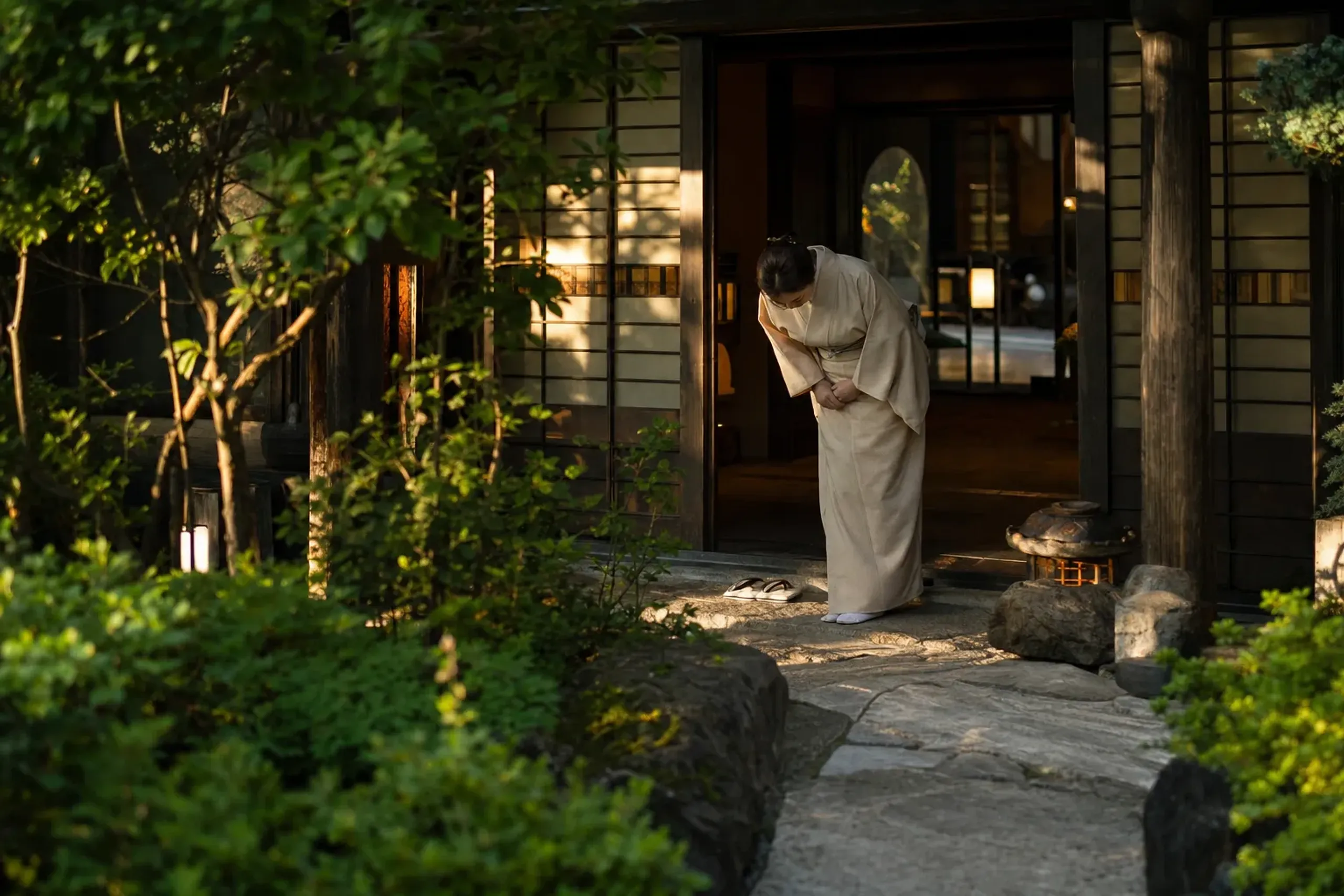
Our concierge team builds a day that aims for a calm check-in, not a heroic one. We plan lunch, transfers, and any short stops so you are not watching the clock at every intersection. That is the difference between “we made it” and “we arrived well.”
Dinner: The Quiet Deadline Most First-Timers Misjudge
Dinner at a ryokan is usually served at a set time, often around 6 to 7 p.m. Arrive late, and you can miss the meal entirely.
That is the part that surprises otherwise capable travelers. In cities, dinner flexes. In a ryokan, the kitchen is pacing multiple rooms at once, and the service rhythm is part of the experience. Winter also raises the odds of delay on the final approach, so the plan should assume you may be running behind at least once.
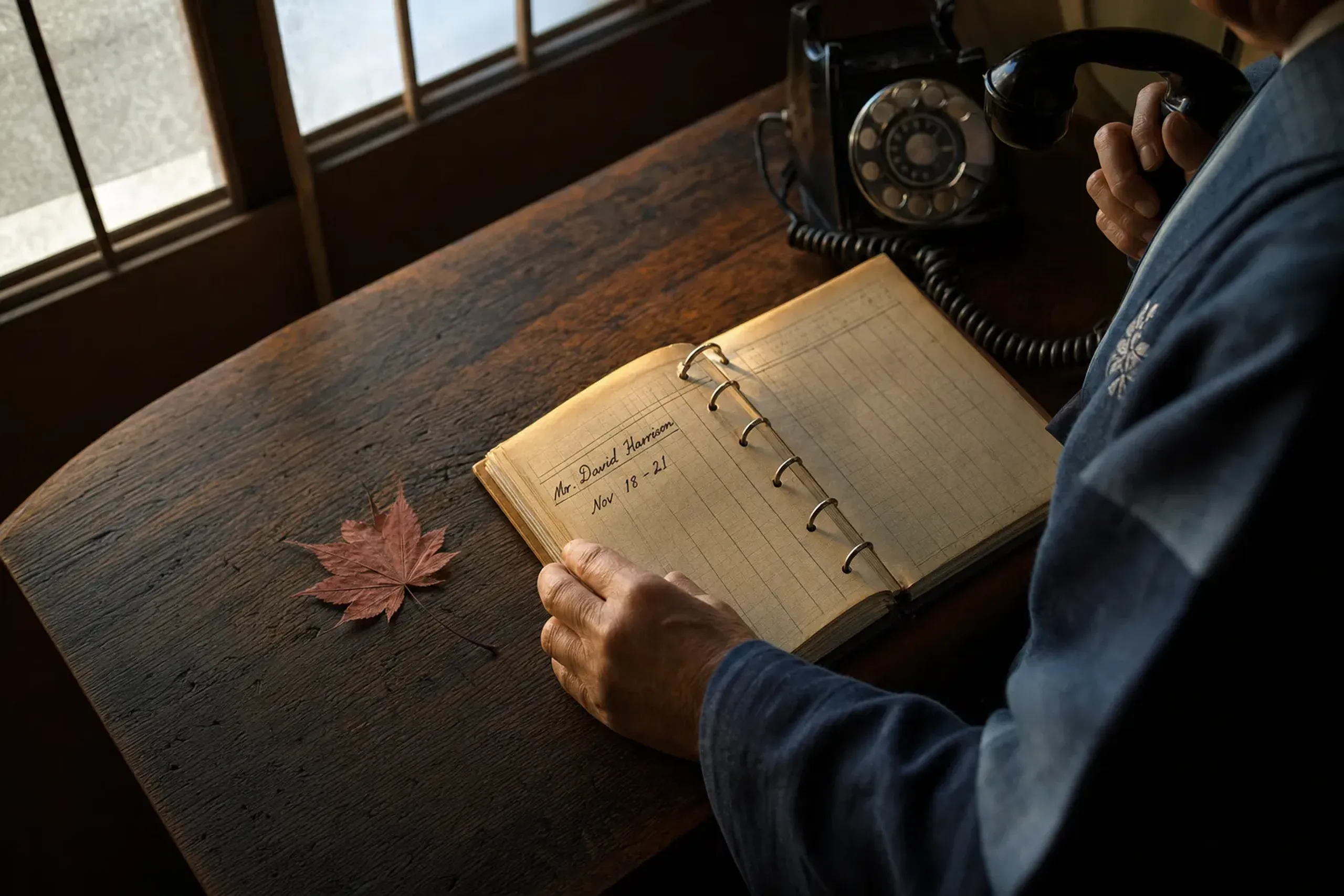
If a delay does occur, the ryokan should be told in advance. Our role here is simple: we keep communication clean and prompt, so the property has context rather than uncertainty.
Key fact: A late arrival can mean missing dinner, so winter onsen days should be designed around dinner first, and everything else second.
Check-Out: The Morning Constraint People Forget
Check-out is usually 10 to 11 a.m. That sounds generous until you remember that winter packing takes longer: layers, boots, and the perennial “where did I put that glove” problem. If you are continuing to another city, a tight morning departure can turn the last hour into a scramble.
Our preference is to keep the morning simple. A composed breakfast, an unhurried departure, and enough time to re-pack without turning the tatami room upside down.
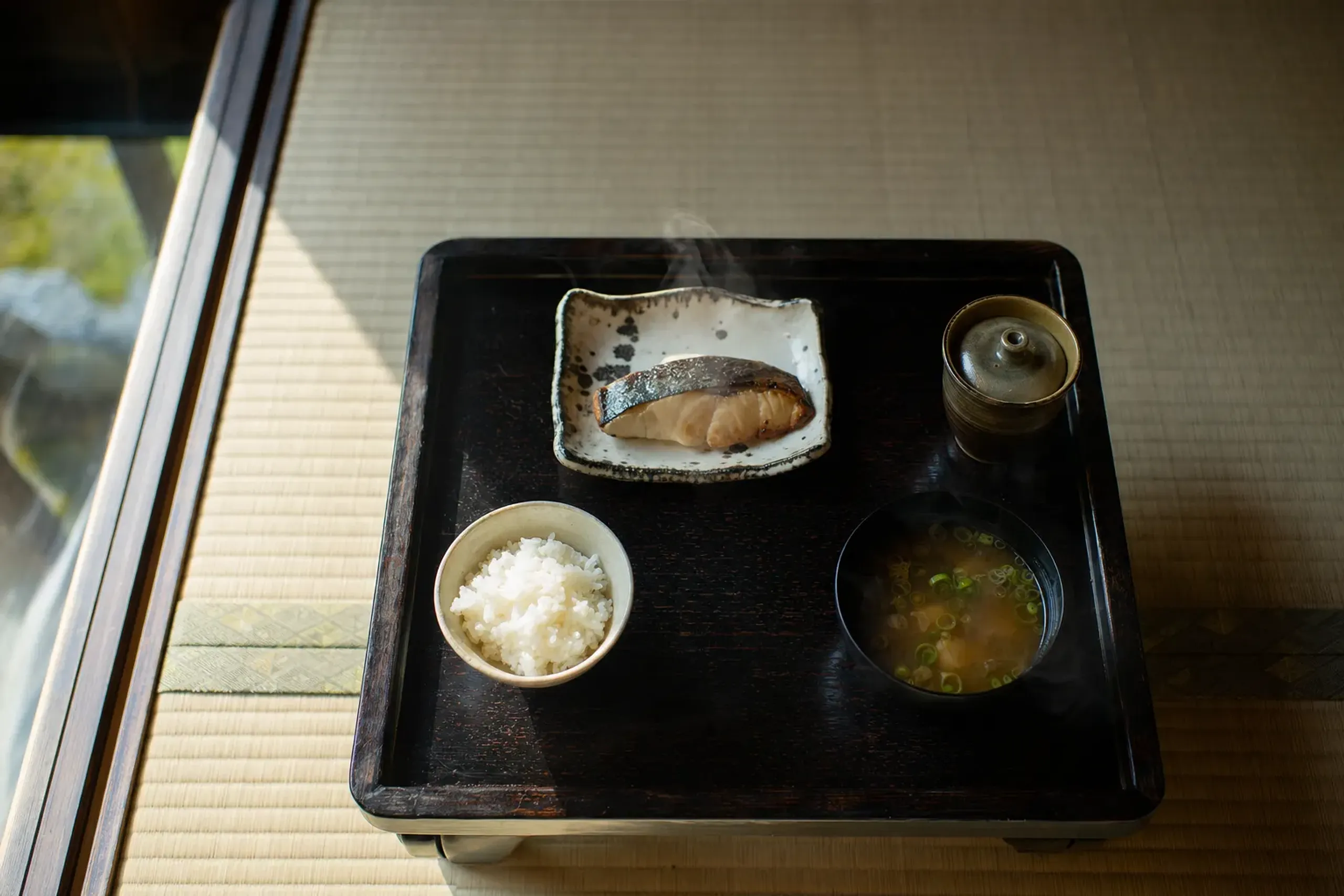
Quiet wins.
How Do You Get To A Snow-Country Onsen Ryokan From Tokyo In Winter?
You get there by planning the last leg first, then adding generous buffer time to protect the ryokan dinner window.
Snow country on the Sea of Japan side of the mountains receives heavy winter snowfall. Even when rail service runs well, the day can slow precisely where trains meet local roads, or where a station handoff becomes a vehicle handoff. That is where most plans crack.
Echigo-Yuzawa: The “Closer Than It Sounds” Example
Echigo-Yuzawa in Niigata is less than 80 minutes from Tokyo Station on the Joetsu Shinkansen. That single fact is useful because it resets expectations: you do not need to fly across Japan to reach deep winter atmosphere.
But do not confuse “fast to the gateway” with “simple all the way.” The closer you draw to smaller valleys and rural addresses, the more the plan depends on connection quality, weather, and how much slack you built in earlier.
Buffers Beat Tight Connections
In our experience, winter onsen trips fail for predictable reasons: too many moving parts, too little buffer, and a dinner deadline that cannot slide. So we build days with space. Real space.
That can mean choosing fewer stops, or moving one stop to the morning after. It can mean arriving at the gateway earlier than feels necessary on paper. It is not pessimism. It is professionalism.
Seasonal Suspensions Exist—So We Plan Like They Do
Winter can quietly reshape transport corridors in snowy regions through seasonal suspensions.
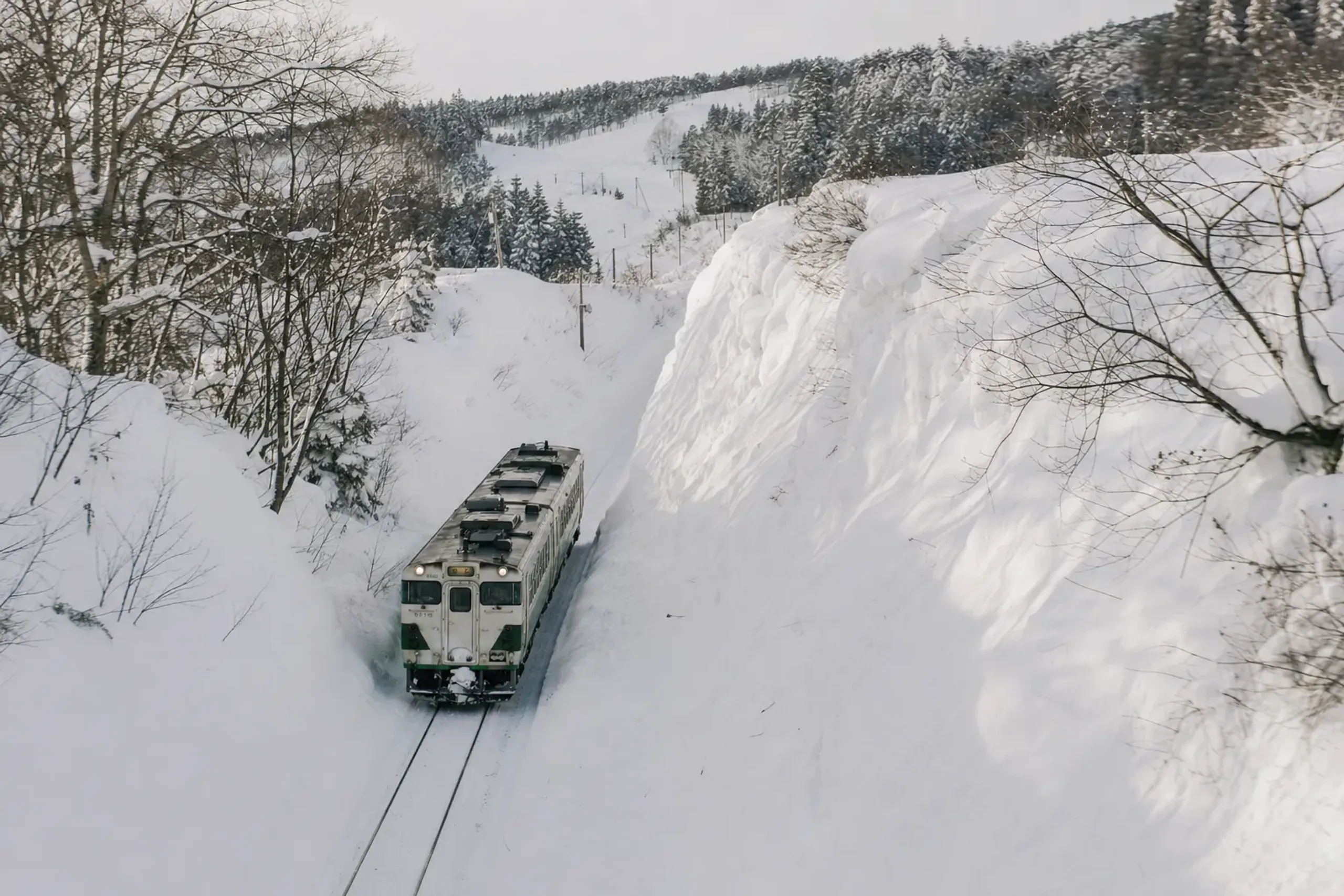
JR Bus Tohoku, for example, has posted a 2026 notice that service between Aomori and Oirase Gorge/Lake Towada is suspended during the winter period starting November 12, 2026.
You do not need to memorize that particular route to take the lesson. Winter planning must be date-specific and corridor-specific. Our concierge team confirms conditions directly with you at the time of arrangement, because carrying a summer itinerary mindset into winter is the fastest way to arrive late.
What Time Should You Arrive At A Ryokan In Winter To Not Miss Dinner?
Plan to arrive by ryokan check-in (usually around 3 p.m.) and treat dinner (usually 6–7 p.m.) as a hard deadline, building buffer for winter delays.
If you are aiming for a calm check-in, you are already protecting dinner. That is the trick.
For a one-night winter onsen stay, many travelers try to “do one more thing” in the afternoon. A museum. A view. A long lunch. It is rarely worth it, because the cost is stress in the final hour and a rushed first impression of the ryokan—the very impression you came for.
Our team typically frames the day in two layers:
- The non-negotiables: transfer plan, check-in target, dinner time window.
- The optional layer: anything that can be cut without spoiling the stay.
In snow country, you want more optional layer than you think. That way you can drop something without feeling you “lost the day.”
Luggage That Goes Ahead: Takuhaibin As A Winter Comfort Tool
Luggage forwarding (takuhaibin) usually delivers door to door by the next day, so you can travel to a winter ryokan with one small overnight bag.
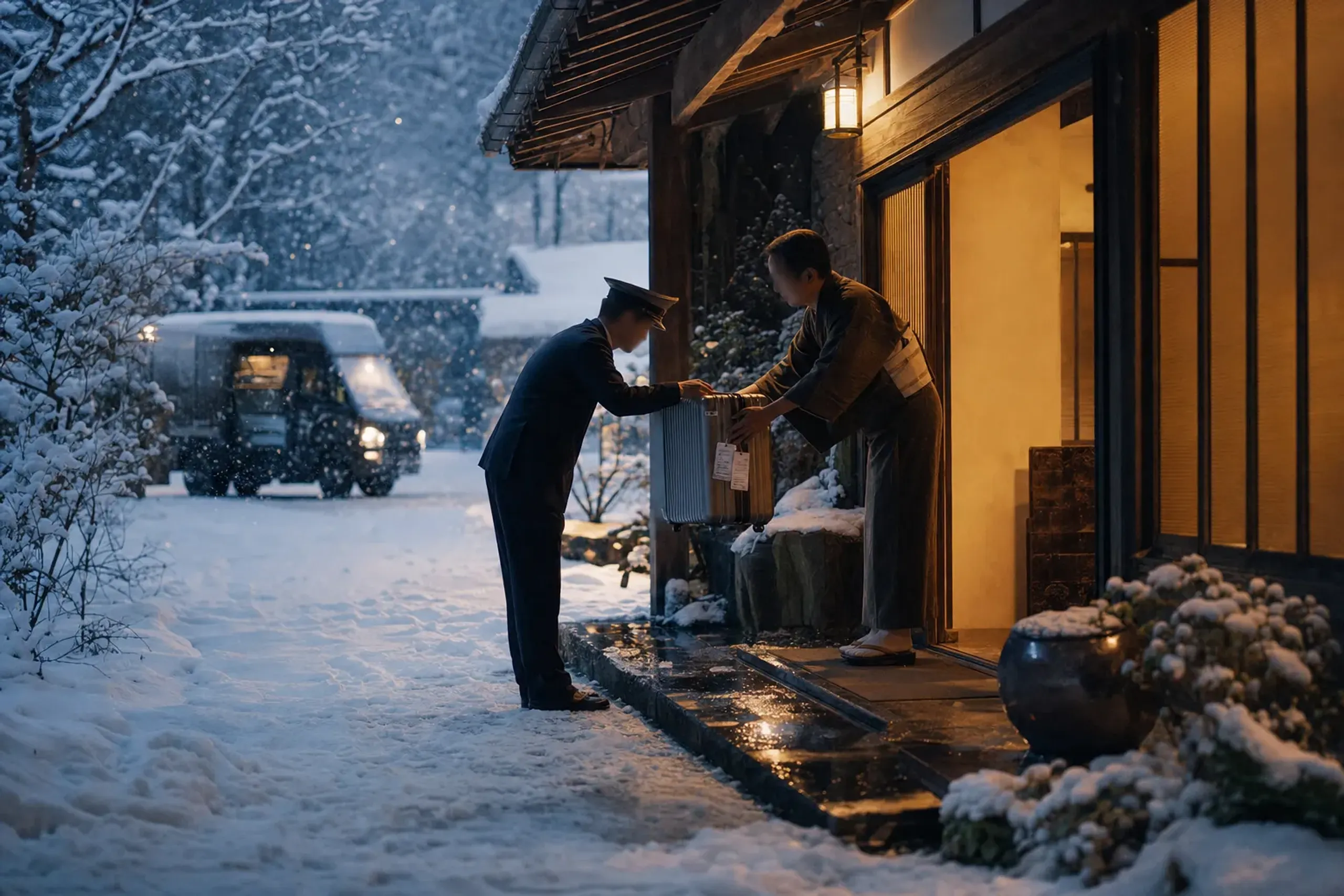
This is one of the cleanest upgrades you can make without changing the spirit of the trip. A heavy coat. Wet boots. A suitcase that barely fits behind your knees on a crowded train. You can avoid nearly all of it.
How The “One Small Bag Night” Actually Works
We often plan a staging night before the ryokan. You carry a compact bag for that single night and forward the larger suitcase onward. The next day you travel lighter, move faster through stations, and arrive looking as though you meant to.
It also removes a common winter friction point: where to put bulky bags while you navigate transfers in heavy outerwear. Less handling means fewer mistakes.
Delivery Timing: Next-Day Is Typical, Two Days Can Happen
Takuhaibin delivery is usually next day, though same-day is sometimes possible over short distances. More distant destinations can take two days or more.
That range is why our concierge team plans luggage like a separate itinerary in its own right. It is not “send it and hope.” It is a timed movement with a backup thought behind it: what you carry, what you forward, and what you keep with you because it cannot be replaced quickly.
Can Every Ryokan Accept Forwarded Luggage?
Not always. Some smaller properties may lack the storage space to accept deliveries, so the accommodation should be consulted first.
We handle that confirmation directly with the ryokan before finalizing any forwarding plan. If a property cannot accept a delivery early, we redesign the staging so you never end up with a suitcase arriving somewhere that cannot store it.
Shinkansen Oversized Baggage Rules: The Winter Packing Trap
Winter gear makes luggage bigger without you noticing. A long coat, boots, thick knitwear, and a few gifts picked up in Tokyo can quietly push you over the line.
On the Tokaido–Sanyo–Kyushu Shinkansen, baggage with total dimensions (length + width + height) between 160 cm and 250 cm requires reserving a seat with an oversized baggage area; bringing it without a reservation incurs a ¥1,000 fee (tax included). Baggage with total dimensions exceeding 250 cm cannot be brought onboard those lines under the oversized baggage rules.
Even if your winter onsen trip itself uses other lines, many Japan itineraries touch this corridor somewhere in the larger journey. Our planning approach is deliberately conservative: pack sharper, forward what you can, and never discover the rule while you are already standing on the platform.
Round Trip And Ski Shipping Products: When They Fit (And When They Don’t)
Some travelers extend winter travel with sports gear. Yamato Transport’s Ski TA-Q-BIN allows travelers to send ski and snowboard equipment along with other luggage to snow resorts; parcels heavier than 30 kg are not accepted, and travelers are instructed to drop off items at least two days (or in some areas three days) before arriving at the resort.
For round-trip style luggage services, staffing matters. Yamato’s Round Trip TA-Q-BIN can send bags to accommodations only where the property has a front desk capable of receiving and sending luggage; delivery to a private residence or Airbnb cannot be arranged through this service.
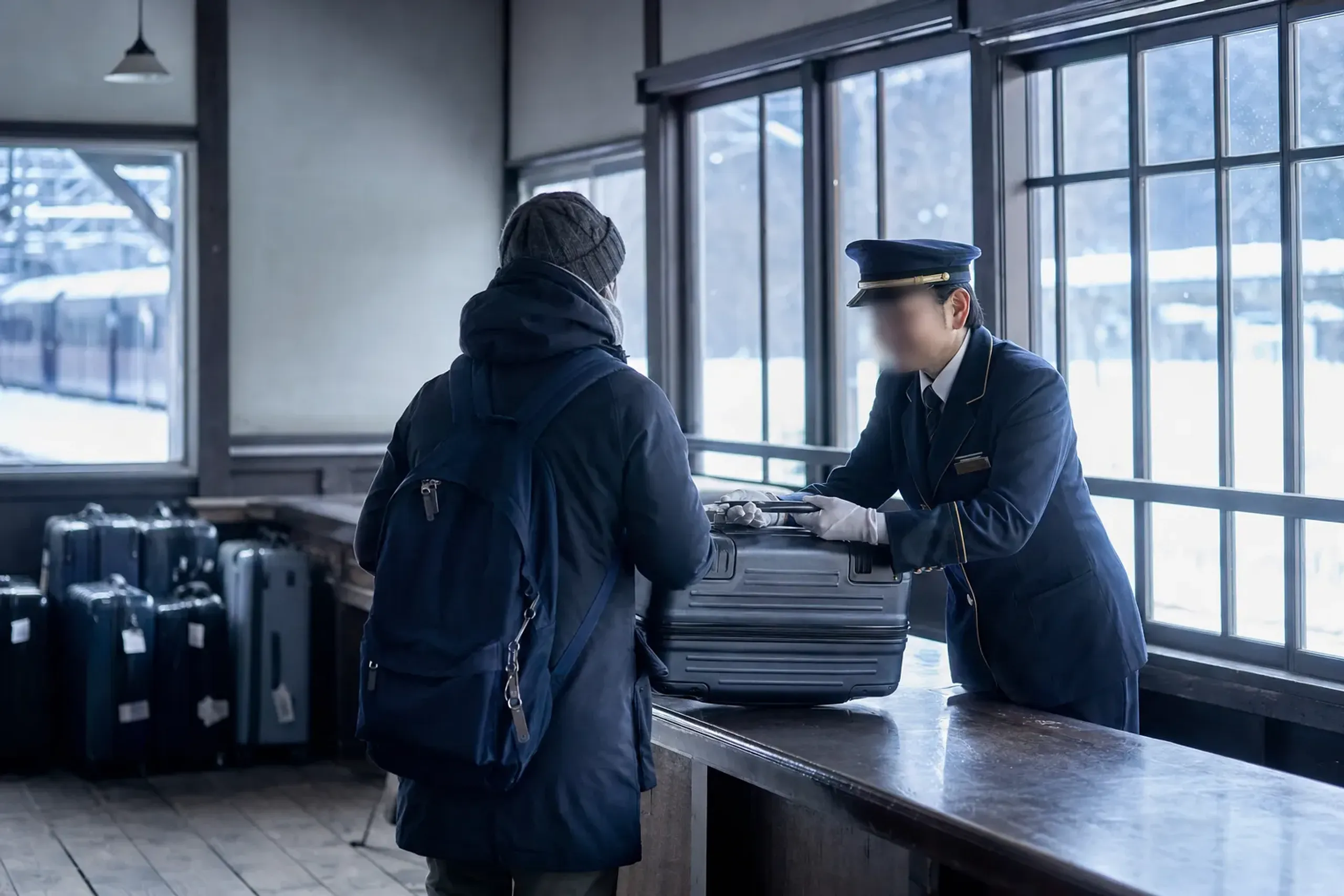
That distinction is decisive for travelers who prize privacy and space. If you are blending a private residence stay with ryokan nights, we plan forwarding with the reality of staffed reception firmly in mind.
Small Onsen Towns In Winter: Why Access Can Be Limited
Some small onsen towns restrict vehicle entry or visitor numbers in winter, so the access plan should be confirmed for your exact dates.
This is not about drama. It is about capacity.
In winter, roads narrow under snow banks, parking grows scarce, and local authorities sometimes manage traffic flow. We treat this as a general planning condition, then our concierge team confirms the on-the-ground constraints directly with you at the time of arrangement. No assumptions. No wishful thinking.
How Japan Royal Service Builds A Winter Onsen Plan That Stays On Time
Japan Royal Service arranges the ryokan booking, private vehicle transfers with a driver, luggage forwarding between stops, and the arrival-timing plan built around the ryokan’s set dinner schedule.
Here is what that looks like in practice. Quietly disciplined. Very specific.
1) We Design The Day Backwards From Dinner
We start with the dinner window (usually 6–7 p.m.) and work backwards to set a target arrival. Then we set check-in as the preferred early anchor (usually around 3 p.m.). Only once those points are protected do we layer in optional stops.
It sounds strict. It feels freeing.
2) We Keep Transfers Legible, With Slack Built In
Winter travel punishes complicated routing. Our team avoids tight connections and fragile sequences, especially when the last leg is a vehicle transfer into a smaller area.
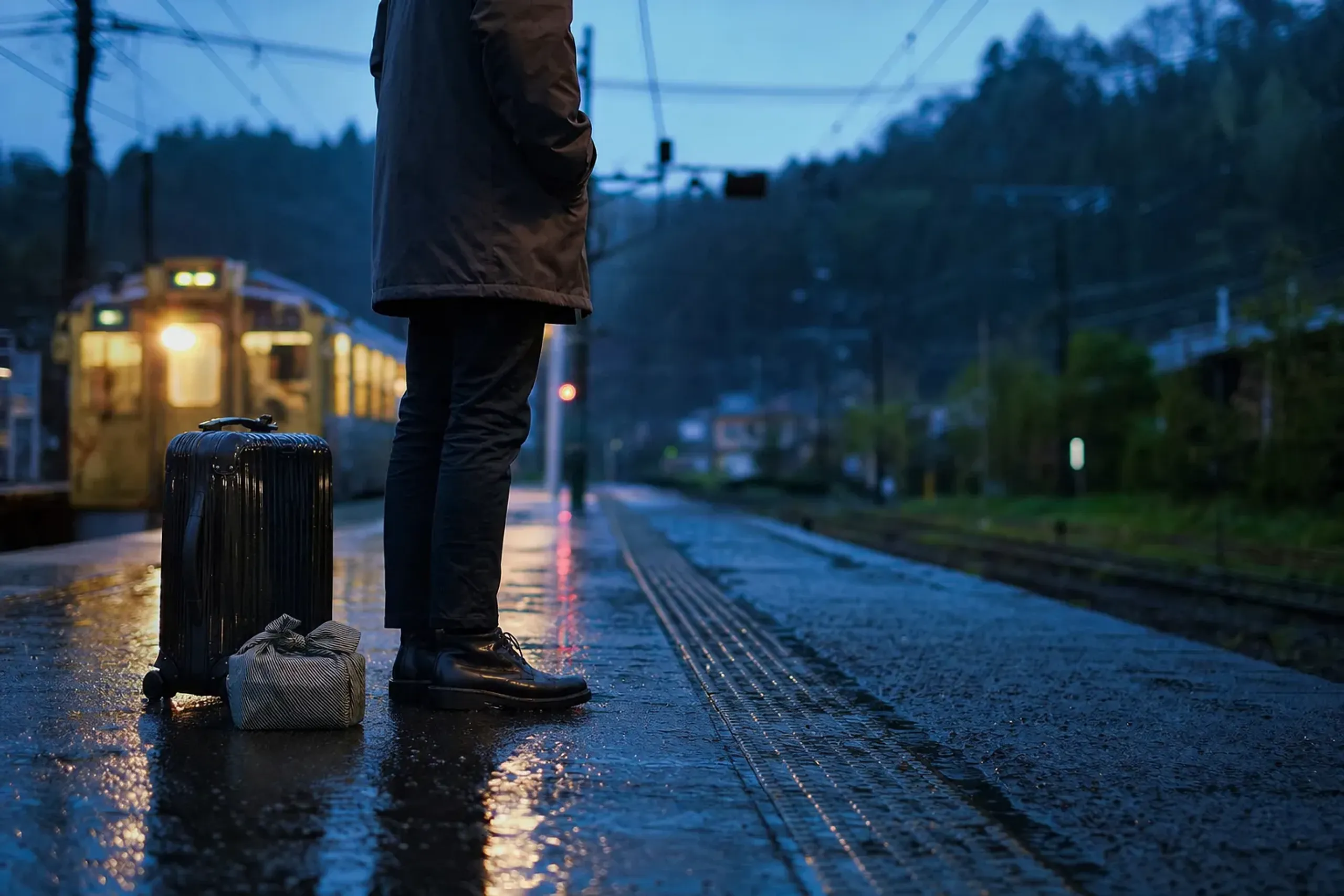
We confirm conditions at the time of arrangement and choose routing that leaves you room to breathe.
There is a reason the best winter itineraries feel simple. They are.
The first time private transport enters your planning, it should not be an abstraction. It should be a concrete tool you can rely on for winter reliability and privacy. Learn more about our approach to private transportation when you want the day kept firmly in hand.
3) We Stage Luggage So You Travel Light When It Matters
We use luggage forwarding as a comfort tool, never as a gamble. Our concierge team plans which bags move ahead, when they move, and what you keep with you for the in-between night. We confirm whether the ryokan can accept deliveries and how early it can store them.
One small bag. That is the winter upgrade.
4) We Communicate If You Are Delayed
Late arrivals can miss dinner, and when there is a delay the ryokan should be told in advance. When weather or transport disruption shifts your timing, we contact the property promptly with clear context.
That single step changes the whole tone of arrival. It turns uncertainty into coordination.
5) We Keep The Style Quiet: Discretion, Hidden-Japan Sensibility, And Restraint
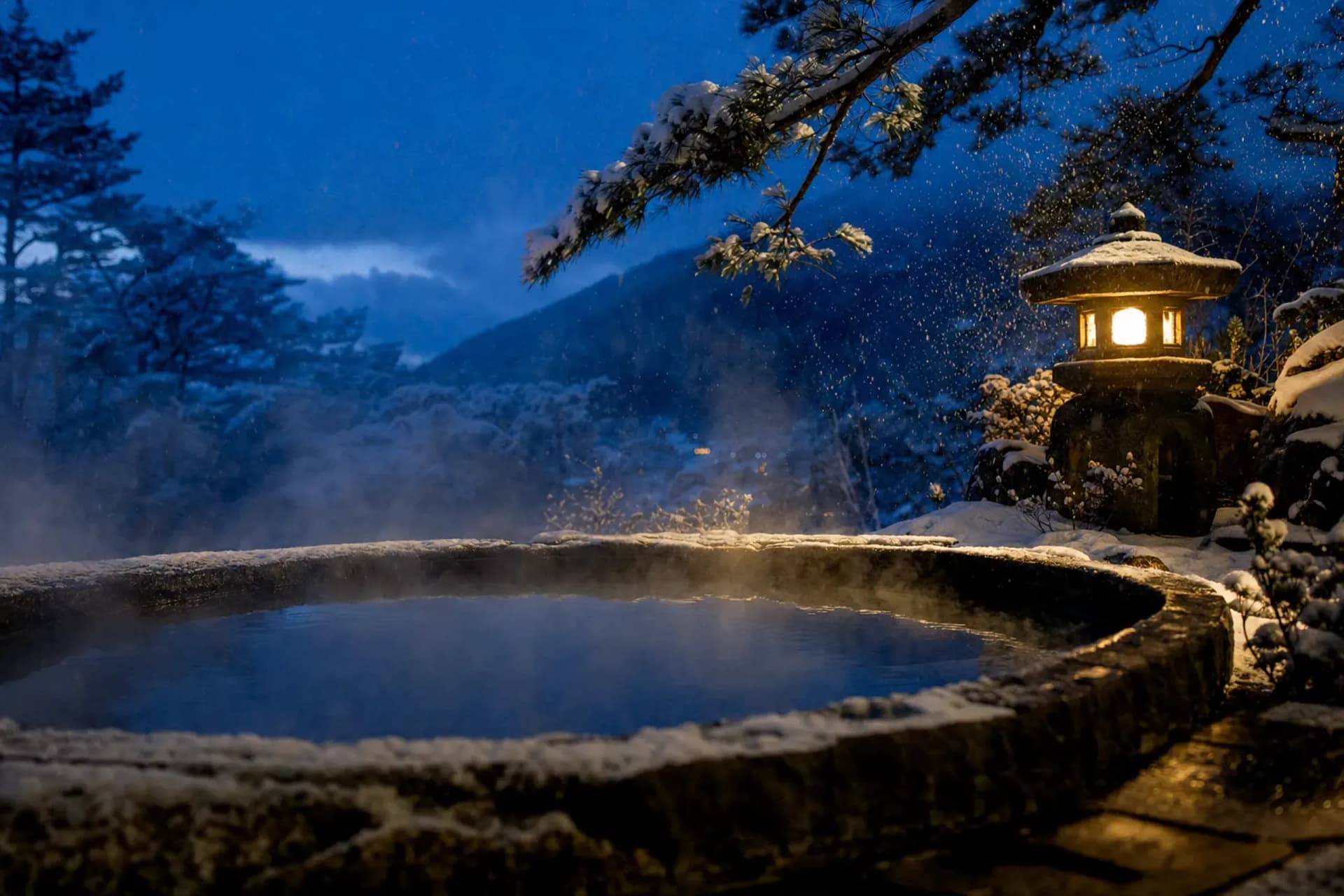
Luxury in winter onsen travel is rarely about spectacle. It lives in restraint: the feeling of arriving without friction, stepping into a calm space, and letting the night run at the ryokan’s own pace. Wabi-sabi inhabits that calm—the hush of snow on a moss-covered stone lantern, the steam rising from an outdoor bath at dusk.
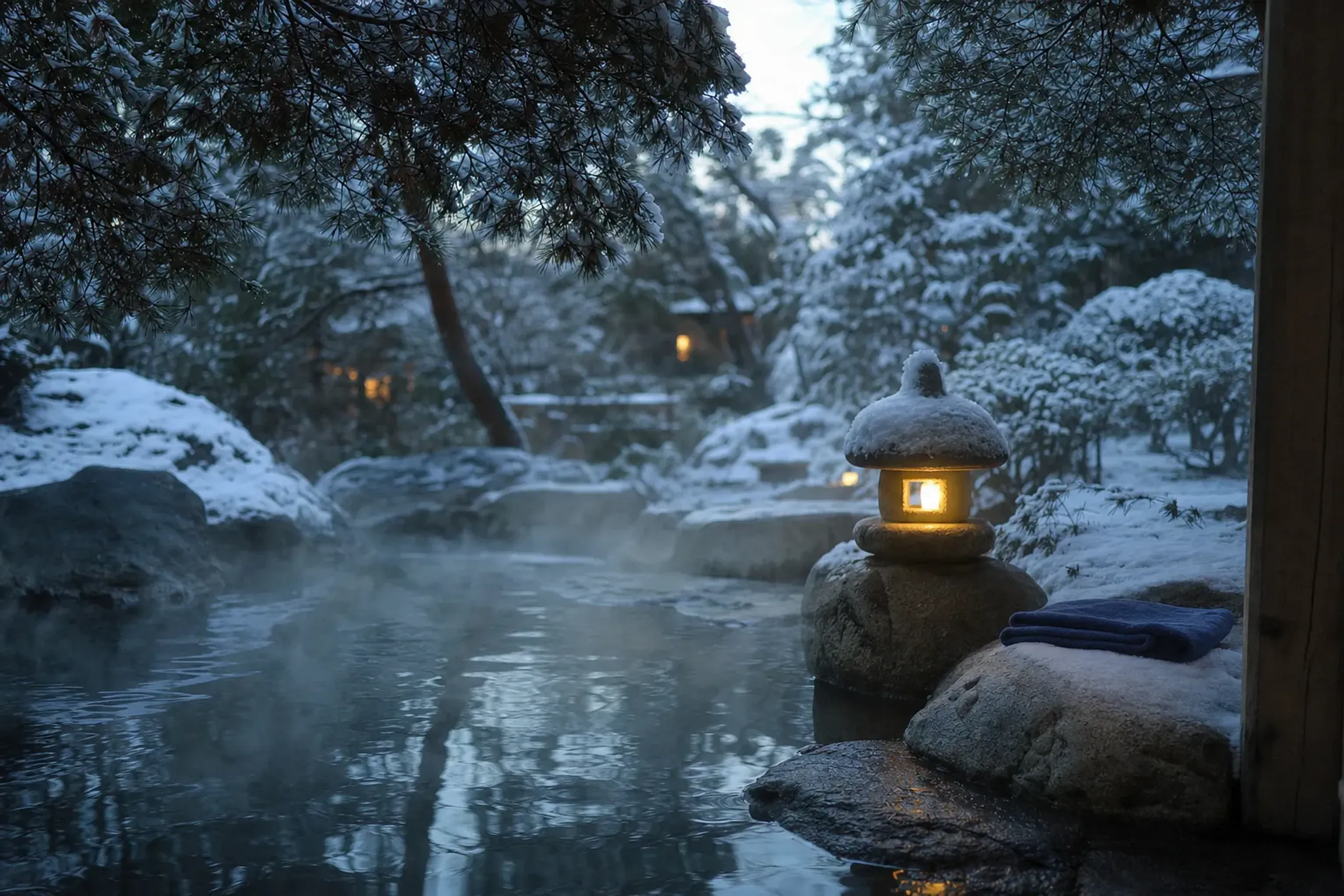
For many of our guests, discretion is the primary requirement. We plan with privacy built in, keeping personal details and movements confidential throughout. And through introductions built over years, we can open the door to a quieter, hidden Japan—the ryokan and valleys that are not shouting for attention, the kind of places a search engine will never surface for you. We design the trip so that it stays, entirely, yours.
If you want a larger journey arranged around the onsen night, this is where a tailor-made itinerary matters most. Winter is less forgiving than spring. The plan should reflect that.
For seasonal reliability thinking, you may also appreciate our guide to Japan’s Summer Festival Calendar: Dates and Overlaps—a different season, the same principle: dates and timing control the experience. And if your route touches northern nature corridors, see Summer at Lake Towada: The Waterfall That Kept Fish Out for how dramatically access can change by season.
Frequently Asked Questions
What Happens If I Arrive Late To A Ryokan Dinner In Winter?
Late arrivals can miss the dinner, so it is important to inform the ryokan in advance if you are delayed.
In winter, we plan buffer time on purpose and keep the routing simple. If disruption strikes, our concierge team updates the ryokan promptly, so the property can respond with context instead of surprise.
Is Luggage Forwarding In Japan Next-Day, Or Can It Be Same-Day?
Luggage forwarding in Japan is usually next-day, while same-day is sometimes possible over short distances, and longer routes can take two days or more.
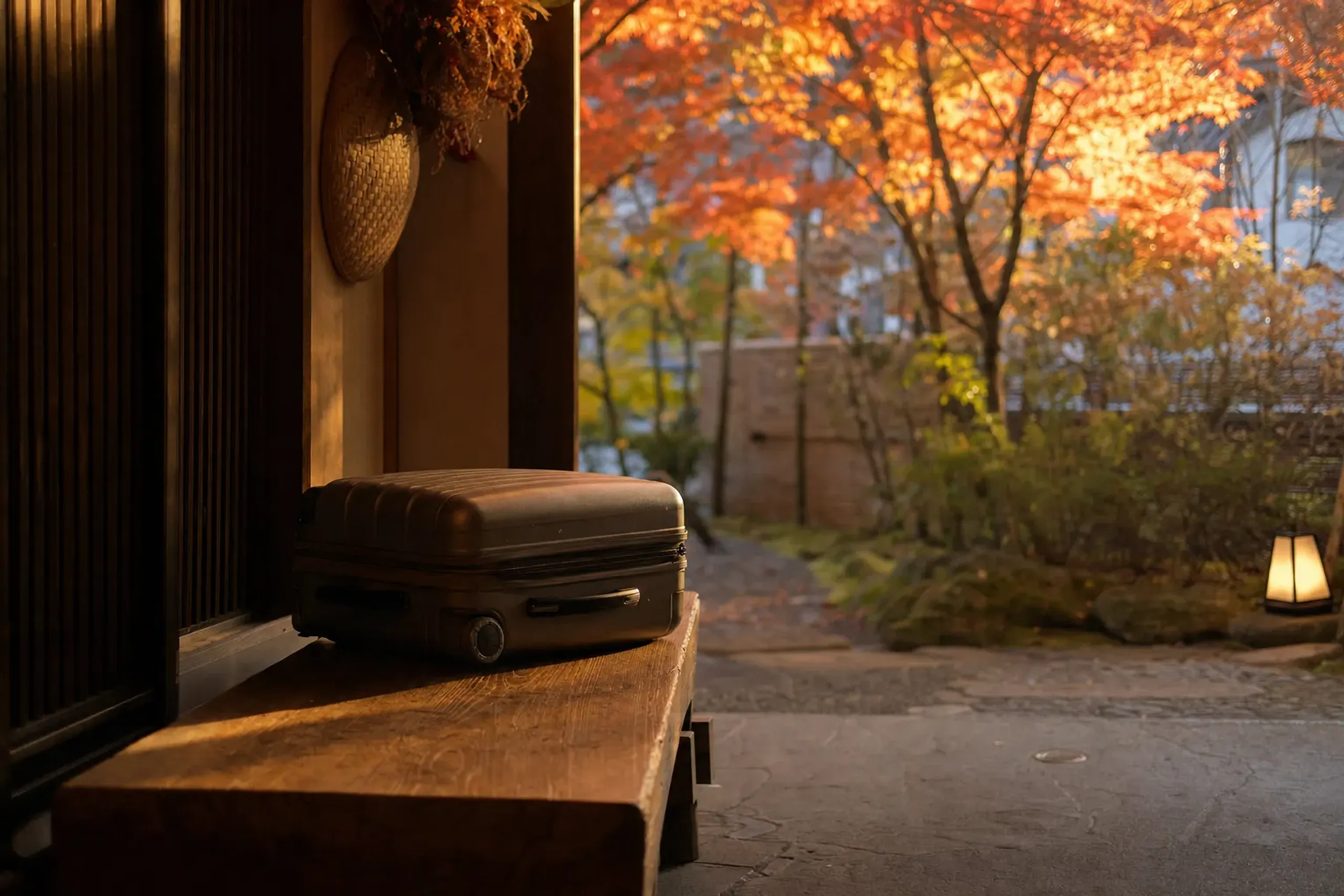
We plan your bags as a timed movement and ask the receiving accommodation about acceptance and storage before committing to any forwarding schedule.
Can I Use Round Trip TA-Q-BIN If I’m Staying In An Airbnb Or Private Residence?
No—Round Trip TA-Q-BIN can send bags only to accommodations with a staffed front desk, and it cannot be arranged to a private residence or Airbnb.
If your winter itinerary mixes hotels, ryokan, and private stays, our concierge team will suggest a luggage strategy that matches those reception realities.
Do I Need To Reserve Oversized Baggage Space On The Shinkansen For Winter Luggage?
On the Tokaido–Sanyo–Kyushu Shinkansen, baggage totaling 160–250 cm requires a seat reservation with an oversized baggage area, and bringing it without a reservation incurs a ¥1,000 fee.
Because winter coats and boots inflate luggage size fast, we advise measuring early, forwarding what you can, and keeping your station movements light.
Why Choose Japan Royal Service
Winter onsen travel rewards people who respect the schedule. It also punishes improvisation.
Japan Royal Service is built for the practical details that protect the feeling of the trip: discreet coordination, legible routing, and a plan that treats ryokan dinner as the organizing fact. We arrange your ryokan booking, private transfers with a driver, luggage forwarding, and the timing framework that keeps your arrival calm even when winter slows everything down.
When you are ready to plan a winter onsen stay that unfolds exactly as it should—quietly, privately, and precisely on time—contact us here for a tailored proposal.