In this guide
- 01The Fish-Stopping Fall: Why A Lake This Large Was Said To Be Empty
- 02Wainai Sadayuki And The Autumn Of 1905
- 03What Is Oirase Gorge Like In Summer (And How Long Is The Walk)?
- 04How Do You Visit Oirase Stream In Summer When The Trail Is Partly Closed?
- 05Lake Towada: Deep Blue Water, Shrine Shore, And A Summer Pace
- 06What Should Discerning Travelers Pair With Oirase And Towada In 2026?
- 07Summer Safety And Timing: Rain, Bears, And The Problem With Rigid Plans
- 08Getting There Without Guesswork: Transfers, Timing, And Realistic Travel Days
- 09A Summer Walking Plan That Still Works If The Gorge Is Not Fully Open
- 10What We Mean By Shokunin In A National Park Setting
- 11Frequently Asked Questions
- 12Plan Your Summer At Oirase And Lake Towada
The first sound you notice is not a waterfall. It is the constant, close hiss of moving water, everywhere at once, as if the forest itself were breathing.
Oirase Stream slides out of Lake Towada as the lake’s only outlet, then braids through shade so thick the light turns green. Mist clings to moss. Your shoes stay cool, even in July.
And yet, for a long time, people said the lake behind you held no fish. Not a single one.
Current Status & Summer Hazards (Read First): On 14 April 2026, part of the Oirase Gorge walking path reportedly collapsed near the Tamasudare Falls public toilet, and about 150 metres was barricaded with no recovery outlook at that time; we cannot confirm the current status after that date. Over the past year, heavy rain, landslides, and fallen trees have closed the road along the stream and parts of the path multiple times, including one closure of about nine kilometres of the path after landslides, with pre-emptive closures after heavy-rain forecasts. Summer is heavy-rain season here, so closure risk is real. Bear notices are common in this region—follow posted guidance. Aomori Prefecture has also trialled private-car restrictions along the Oirase road ahead of a planned bypass, with dates that change by year.
The Fish-Stopping Fall: Why A Lake This Large Was Said To Be Empty
The usual explanation is disarmingly simple: fish could not reach the lake because Chōshi Ōtaki blocks them.
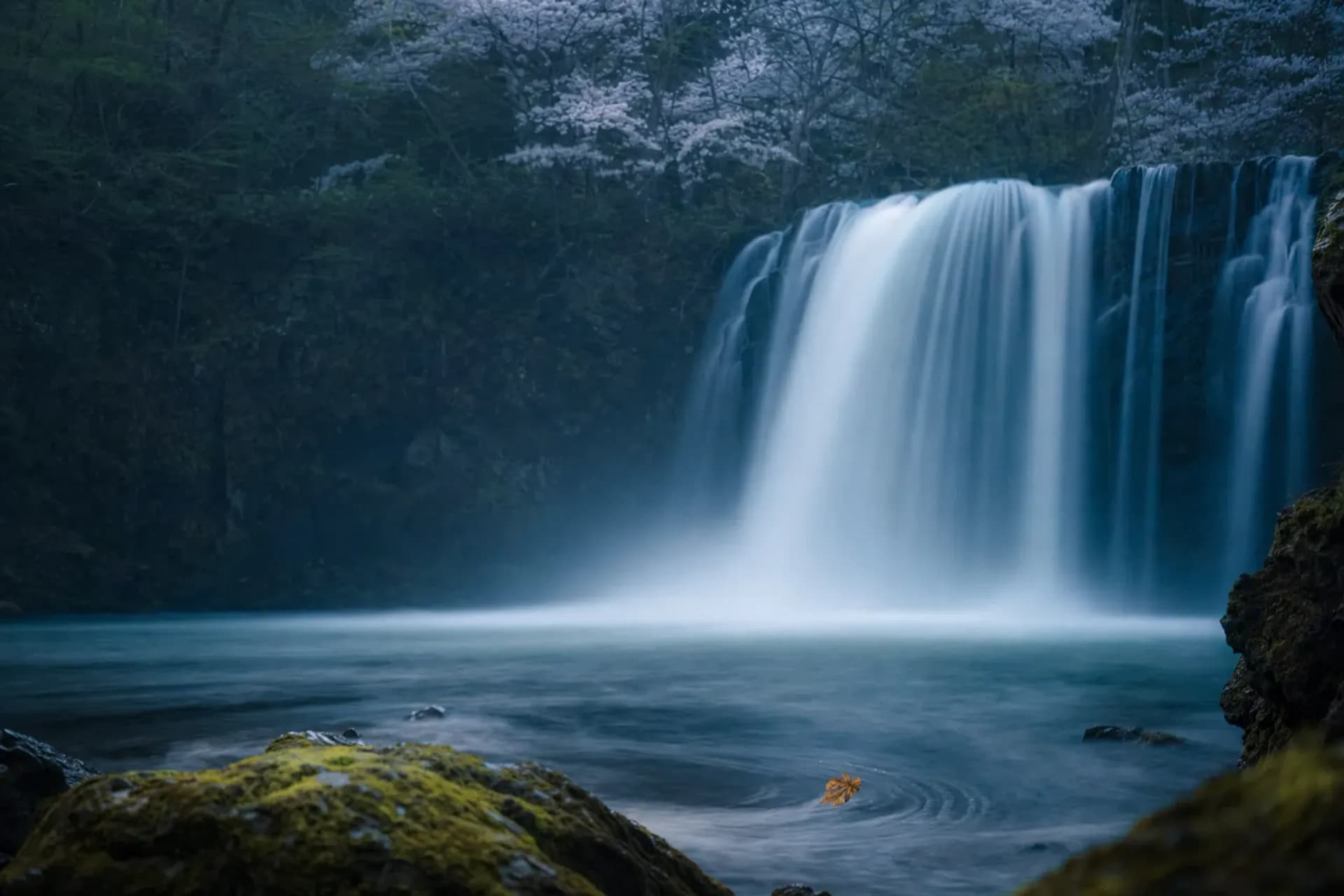
Chōshi Ōtaki (銚子大滝) sits on the Oirase Stream’s main course, about 7 metres high and roughly 20 metres wide. It is often called the “fish-stopping fall,” and one common view is that it formed along a fault and kept fish from swimming upstream to Lake Towada.
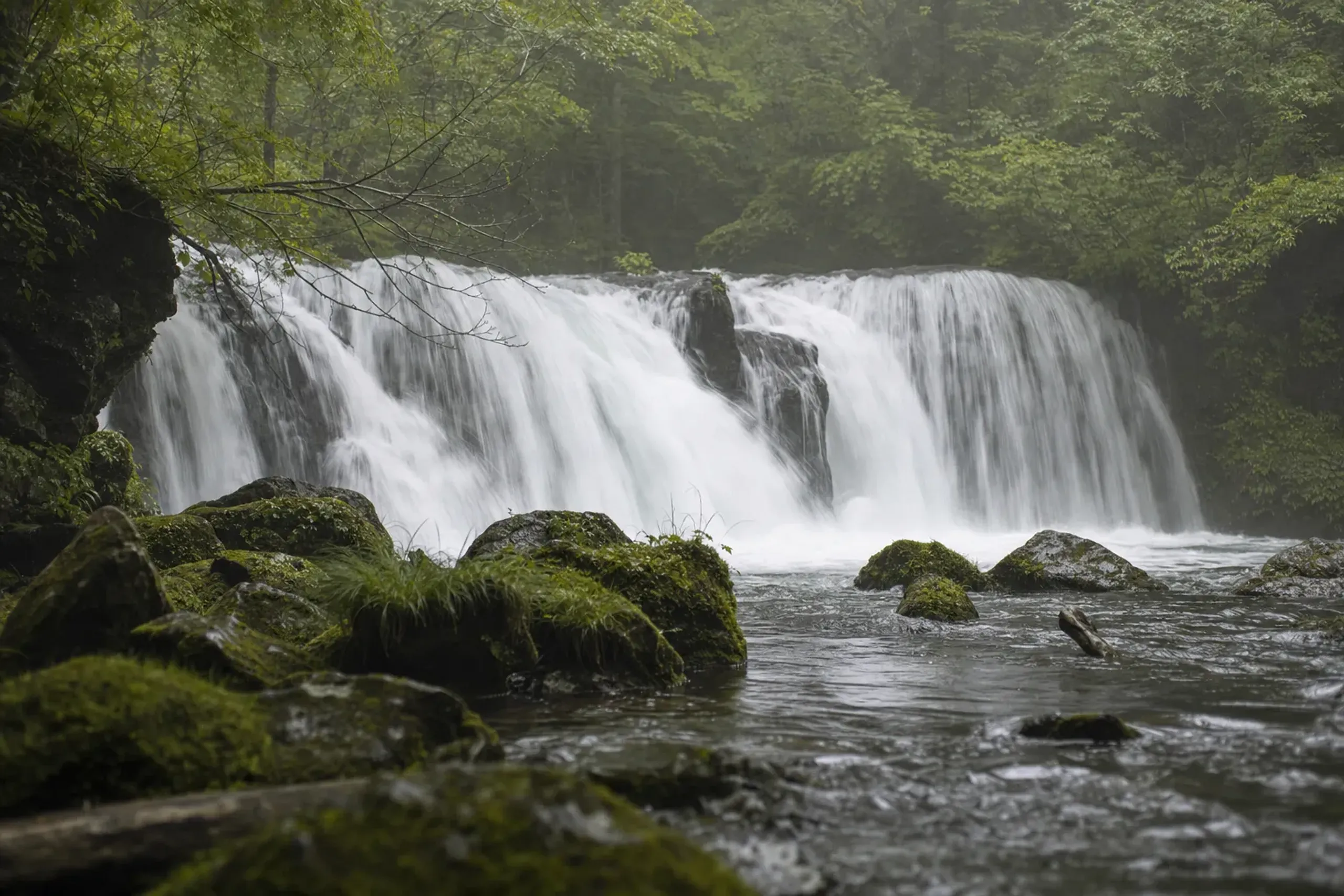
That story travels well because you can stand there and feel its logic. The water drops with a blunt, heavy force. Big mistake, any fish would think, eyeing the climb.
There is also a second explanation you will hear: Lake Towada is low in nutrients, so it does not easily support fish populations. We treat both points as context, not proof, because the “fish-stopping” idea is a widely repeated account rather than a settled demonstration.
Wainai Sadayuki And The Autumn Of 1905
He tried. He failed. Then he waited.
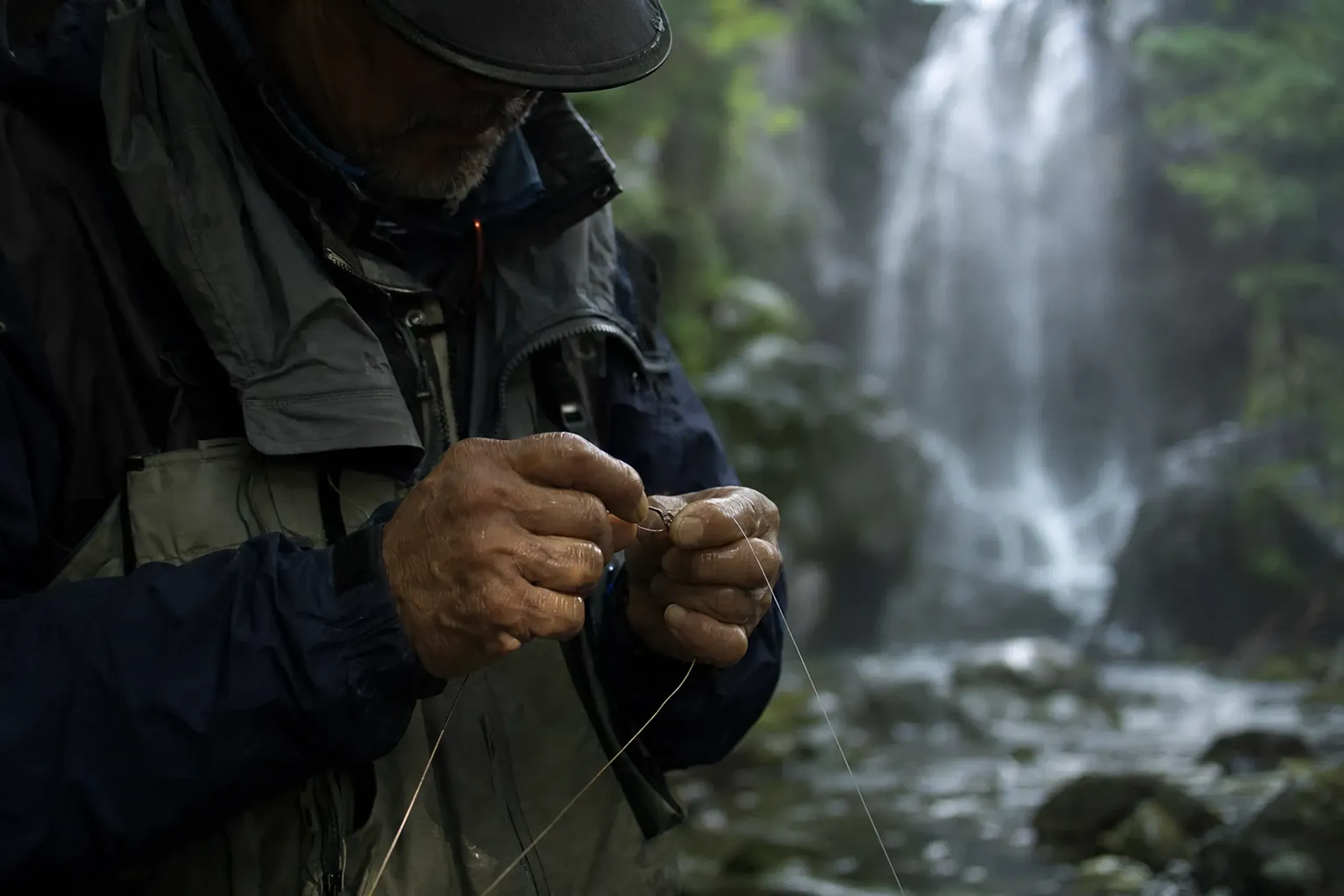
Wainai Sadayuki was an Akita fish-culturist who set himself a stubborn task: to stock Lake Towada. He first released carp, crucian carp, and other trout, and those attempts did not succeed. Char had also been stocked in 1855 without success.
In 1902, Wainai obtained eggs of himemasu (a landlocked red salmon) from Lake Shikotsu in Hokkaido, through Aomori Prefecture. Sources differ on the exact number, placing it somewhere between 30,000 and 50,000 eggs. The fry were released in 1903.
A hatchery followed around 1904 to 1905, depending on the account. The detail that matters is the moment of proof: in autumn 1905, the released fish returned to spawn near the shore, showing at last that the stocking had worked. Wainai’s remembered exclamation was that he had seen a “phantom fish.”
One detail makes his success feel less like luck. He solved the food problem by moving small shrimp from Hachirōgata, giving the fish something dependable to eat. One account says his aim was to feed miners at a nearby mine; we present that as one recorded motive, not the only one.
Later, Lake Towada became a supply source of himemasu eggs for lakes across Japan. Quiet ripple. Long reach.
What Is Oirase Gorge Like In Summer (And How Long Is The Walk)?
Oirase Gorge is a ~14 km walking corridor from Nenokuchi (lakeside) to Yakeyama, and walking the full length typically takes about four to five hours with breaks.
The gorge section is the part most travelers mean when they say “Oirase Stream.” It begins at Nenokuchi, where Lake Towada spills into a narrower channel, and it finishes at Yakeyama. The path and the road run beside the stream at nearly the same height, with a gentle gradient that makes the walking feel steady rather than punishing.
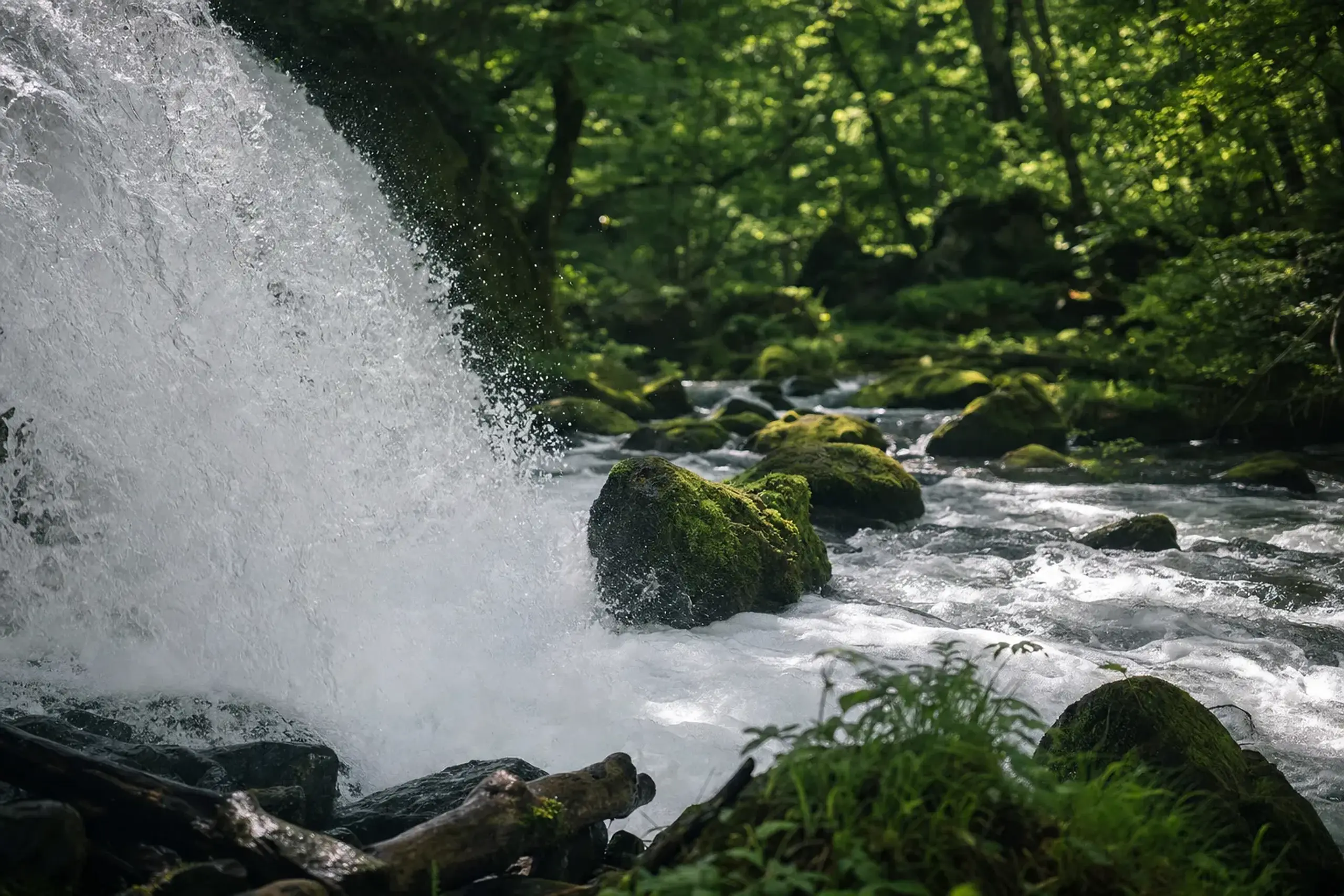
Summer here is not about autumn crowds. It is about the color green, in every shade imaginable, and the constant water-sound under a high canopy. You stop often. You should.
Asura no Nagare is the best-known stretch, where the current breaks into restless rapids and the stream looks suddenly impatient. If you enjoy photography, summer is kinder than you’d guess: soft diffused light, wet stone, and moss that reads like velvet—the quiet, wabi-sabi beauty of restraint rather than spectacle.
Historically, a forest path along the stream opened in 1903 as a 1.2-metre-wide track, and a vehicle road to the lake and buses followed in 1920. The 1903 date sits intriguingly close to the first himemasu release, but we treat it as coincidence, not cause.
You may also see the claim that the sound of Oirase’s moving water was selected among Japan’s “100 Soundscapes” in 1996. We have seen this repeated, but we treat it carefully because the commonly cited trail for that fact is not a primary source.
How Do You Visit Oirase Stream In Summer When The Trail Is Partly Closed?
You visit by planning short, flexible sections between bus-accessible points and keeping a backup route ready for rain closures.
This is the part that separates a pleasant day from a wasted one. Oirase is not a theme-park walkway where “open” is guaranteed until closing time. In summer, heavy rain can trigger pre-emptive closures, and landslides or fallen trees have closed both road and trail segments, including a reported closure of roughly nine kilometres of the path in the past year.
Our team at Japan Royal Service builds Oirase days the way a watchmaker builds a case: with tolerances. We plan a primary walking segment, a second-choice segment that still feels complete, and an indoor or lakeside alternative should the weather turn sharp. A well-made bespoke itinerary absorbs these uncertainties quietly, so the day never feels improvised.
Practical examples that work well for discerning travelers include:
- A 60–120 minute “moss and falls” walk with frequent stops and a quick return to the vehicle or bus access point.
- A half-day gorge plan that treats the walk as a sequence of short scenes rather than a single 14 km “achievement.”
- A lake-first day at Towada with a short Oirase taste, if closures are likely.
If Aomori Prefecture implements private-car restrictions along the Oirase road on your date, we adjust the timing and routing around those rules. Dates change by year. No assumptions.
Lake Towada: Deep Blue Water, Shrine Shore, And A Summer Pace
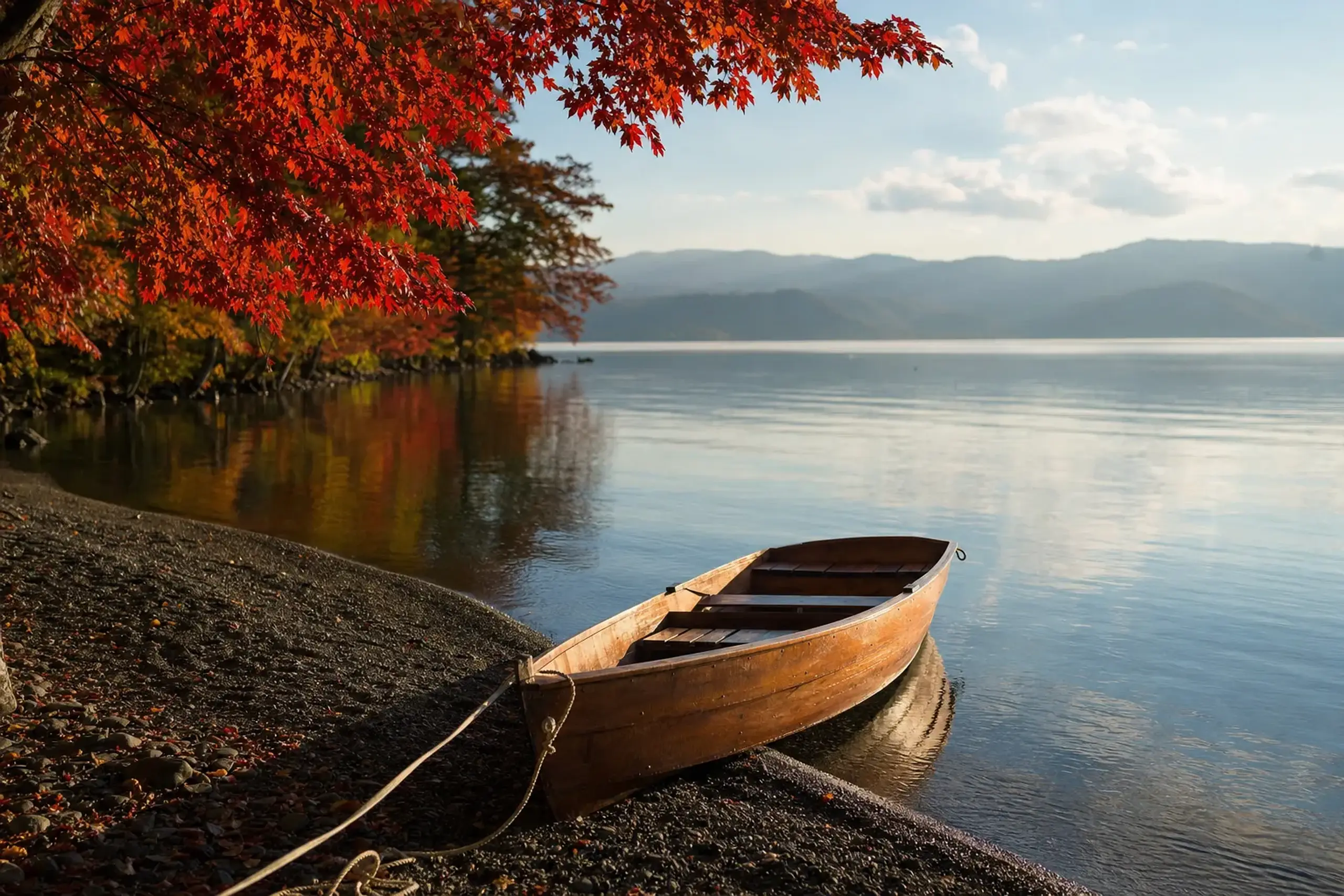
Lake Towada is a caldera lake on the Aomori–Akita border, and its water renews in about 8.5 years.
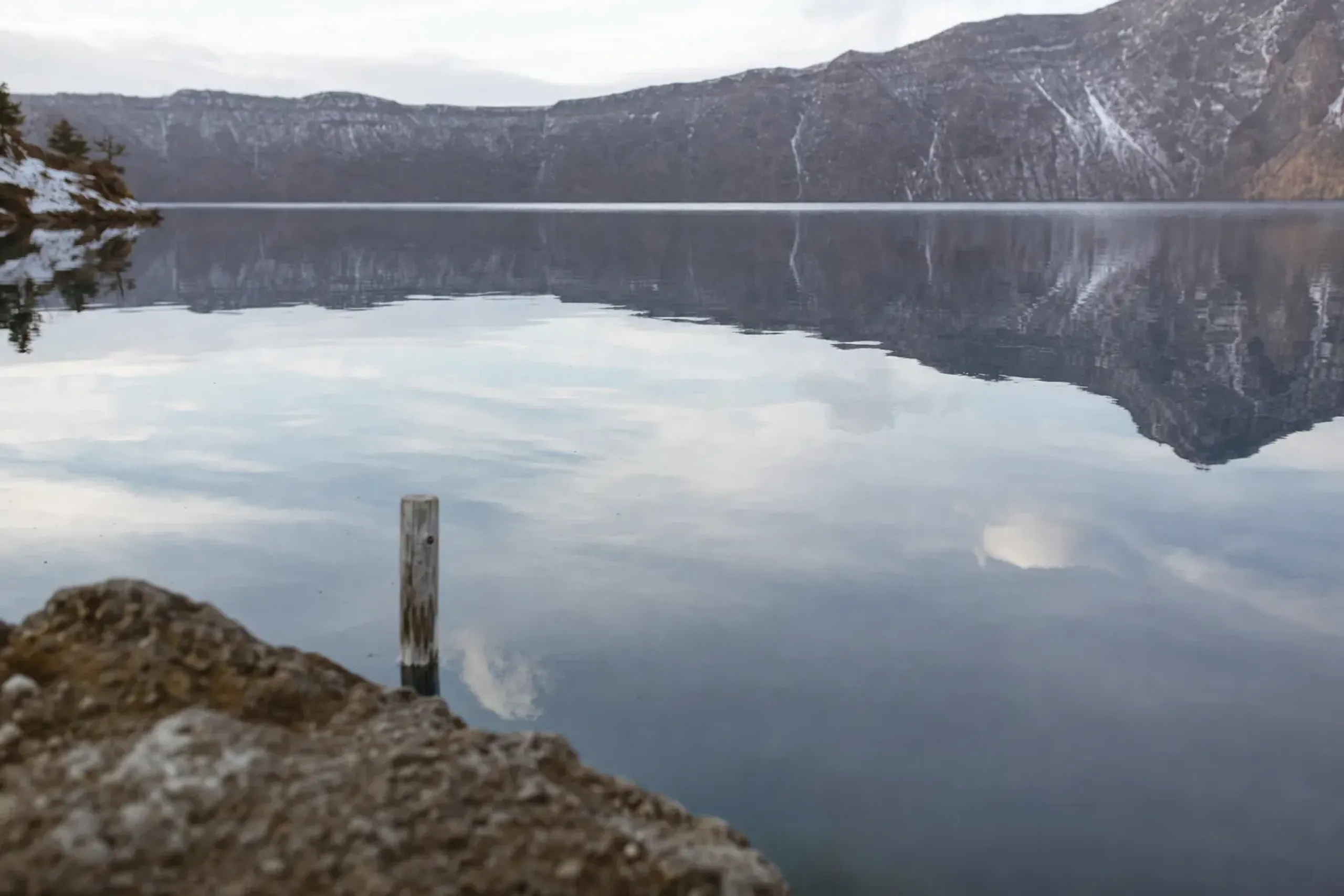
The lake was formed by volcanic activity beginning about 200,000 years ago, and it is known for a deep blue color tied to its depth. It became part of Towada-Hachimantai National Park on February 1, 1936. Standing at the shore, those dates feel like someone else’s scale of time.
Summer is when the lake’s edges soften. The air is warmer, the forest is fully leafed, and the water looks less like a postcard and more like a living surface that changes by the minute. Calm. Then a wind line. Then calm again.
Towada Shrine sits on the shores of Lake Towada, and it is one of the simplest—and most quietly rewarding—cultural pairings you can make here. A short visit can reset the day’s rhythm, especially if weather makes the gorge less predictable. This is the Japan that rarely appears in a search result: a place reached by introduction and timing, not by a pin on a map.
What Should Discerning Travelers Pair With Oirase And Towada In 2026?
In 2026, pair the gorge and lake with Towada Art Center and the Towada Lake Festival for a nature-and-culture loop that stays grounded in real schedules.
If you prefer your travel to carry an intellectual edge, Towada City supplies one. Towada Art Center has published exhibition programming including Tsubaki Noboru: FREEDOM—Living with “the Elephant in the Room” running from June 6, 2026 to November 8, 2026. That range matters, because it overlaps the green season.
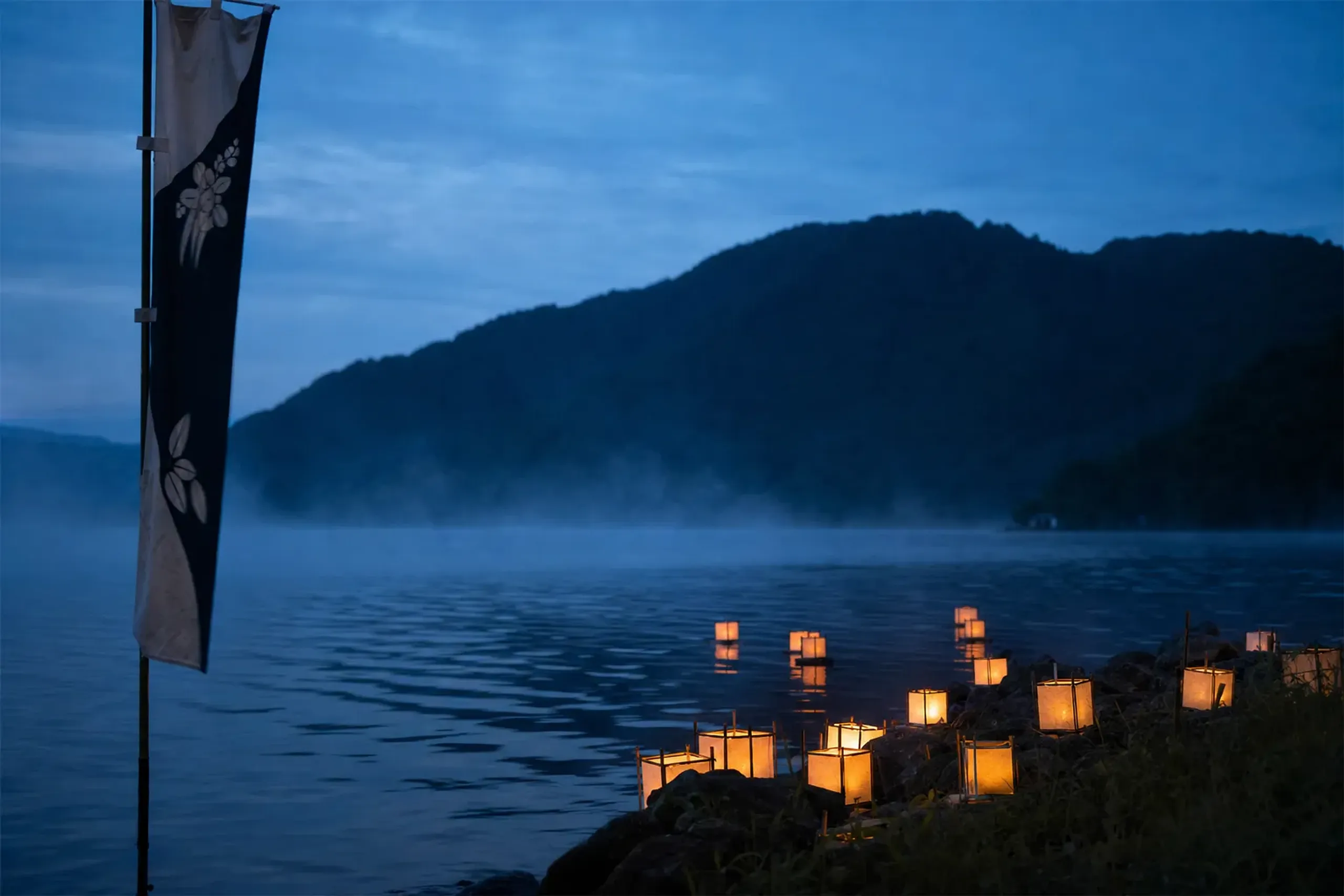
For early summer, the 61st Towada Lake Festival is scheduled for Saturday, June 13, 2026 at Yasumiya on Lake Towada, with a bad-weather alternative date of June 14. It is a concrete, date-fixed anchor in a region where nature usually sets the terms—and knowing precisely what to experience where and in which month is exactly the sort of seasonal timing worth planning around.
We also favor this pairing for a softer reason. After hours of water-sound, standing before contemporary work in a quiet gallery can feel oddly clarifying. Different kind of attention. Same slow pulse.
Summer Safety And Timing: Rain, Bears, And The Problem With Rigid Plans
Expect heavy rain risk, follow bear notices, and keep your day flexible enough to change route segments without losing the experience.
Summer in Aomori is not merely “warm season.” It is also heavy-rain season, and Oirase has seen repeated disruptions from landslides, fallen trees, and forecast-based closures. That is not rare bad luck; it is a real planning constraint.
Bear notices are common in this region. Read the signs, take them seriously, and avoid earbuds that block awareness. Simple rule.
We recommend starting earlier than you think you need, because weather tends to worsen later in the day. Bring a light rain layer even if the morning is bright, and treat the gorge as a sequence of short walks rather than a single, fragile plan.
Getting There Without Guesswork: Transfers, Timing, And Realistic Travel Days
Oirase and Lake Towada reward travelers who treat access as part of the experience, not an afterthought.
Public transport exists, and JR Bus Tohoku publishes seasonal timetables for Lake Towada (Yasumiya) that can change across the year, with some route pages showing schedules effective from September 18, 2026. For planning purposes, that is a reminder: do not rely on last year’s screenshots when your trip is this year.
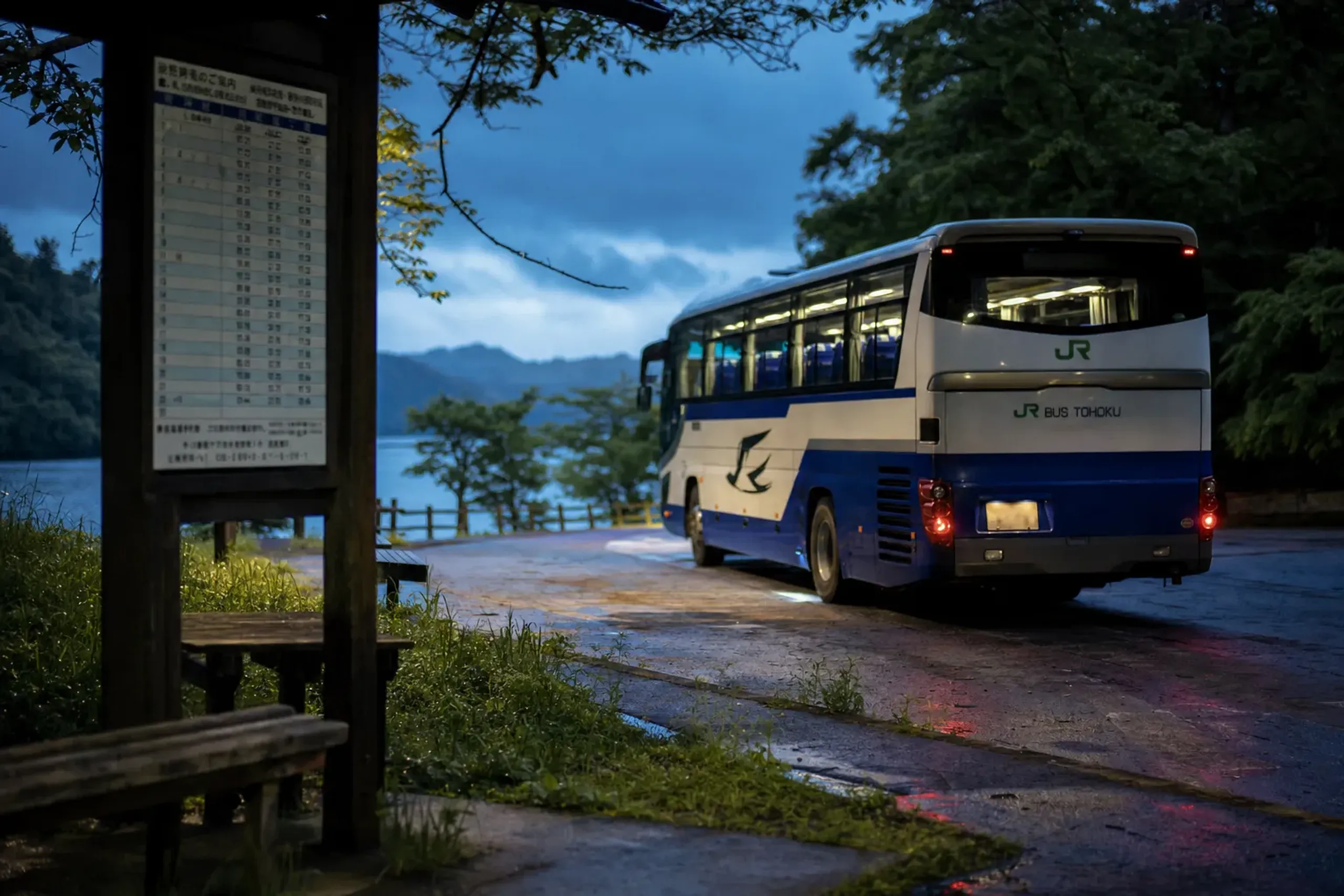
Comfort, too, is part of the calculus. After a damp walk under cedar and beech, stepping into a quiet cabin with chilled water and a towel waiting is not “extra.” It preserves your day—the kind of unspoken, anticipatory care that turns logistics into hospitality.
When private mobility is appropriate, our first recommendation is a discreet, punctual chauffeur setup via our private transportation service, planned around real closure risk and the day’s walking segment rather than a rigid sightseeing checklist.
A Summer Walking Plan That Still Works If The Gorge Is Not Fully Open
Build the day around one high-quality short section, then “earn” extra distance only if conditions stay stable.
In our experience, the mistake visitors make is psychological: they arrive believing the full 14 km is the only “real” way to see Oirase. It isn’t. The stream is strongest when you slow down enough to hear the difference between a rapid and a fall.
Use this step-by-step structure:
- Step 1: Confirm the latest trail and road status on the morning of the visit, especially after overnight rain.
- Step 2: Choose one segment you will do no matter what, then set a turnaround point.
- Step 3: Add a second segment only if conditions remain stable and posted notices allow it.
- Step 4: Keep a lake-side alternative ready: Towada Shrine, a short shoreline walk, or time in Towada City.
And yes, you should respect barricades. No exceptions. A closed 150 metres can be the difference between a pleasant day and an avoidable rescue headline.
What We Mean By Shokunin In A National Park Setting
Shokunin here is not a person with a kiln. It is a way of moving.
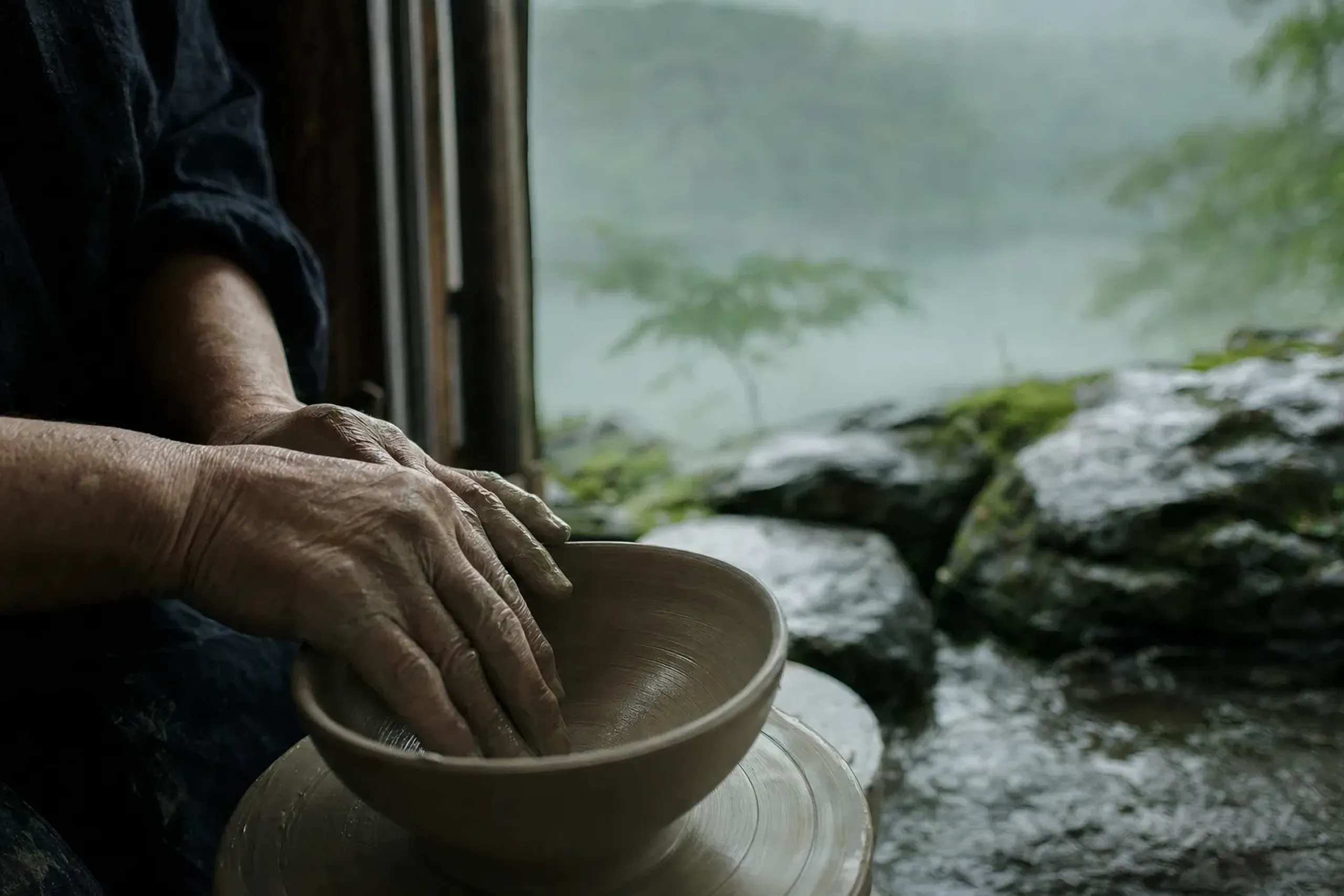
Oirase rewards travelers who approach nature with the same discipline they bring to craft: attention to small shifts, respect for conditions, and the patience to return if the first attempt is washed out. That is a luxury skill. Not a splurge.
Our concierge team plans these days with a quiet, shokunin mindset: we choose the hour for light, the side of the path that stays drier after rain, and the pacing that keeps the experience calm for a couple, a family, or a small executive group.
Discretion matters as much as comfort. We keep itineraries low-profile and names confidential, and we avoid the loud choreography that turns a public landscape into a performance. What you do, and when, remains yours alone.
Frequently Asked Questions
Is The Oirase Gorge Walk Guaranteed To Be Open In Summer 2026?
No—summer brings heavy-rain closures, and after the reported April 14, 2026 path collapse near Tamasudare Falls, the exact on-the-day status may change without much notice. This is precisely why we build each Oirase day with alternatives rather than a single fixed route.
Plan Your Summer At Oirase And Lake Towada
The quietest luxury in this corner of Aomori is not a single waterfall or a famous view. It is arriving on the right morning, walking the right short section, and never feeling the seams of the planning behind it—the trail status checked before dawn, the chauffeur waiting, the lakeside alternative held in reserve.
Let us design a discreet, flexible summer itinerary around Oirase Stream, Chōshi Ōtaki, and Lake Towada—calibrated to the season, the weather, and your pace. To begin a tailored, confidential proposal, contact us here.