In this guide
- 01Footwear Is The Decision
- 02Socks, Briefly And Seriously
- 03What A Ryokan Supplies, And What That Removes From The Bag
- 04Dress Register By Setting
- 05Seasonal Swing, And Layers Over Bulk
- 06The Overnight Bag, Given Bags Move Separately
- 07What People Bring And Never Use
- 08What To Buy There, And What Is Hard To Find
- 09Bag Choice
- 10Why Choose Japan Royal Service
Amenities at ryokans vary significantly between properties, as there is no standard for toiletries, yukata sizing for taller guests, or in-room features. Japan Royal Service verifies these details in advance, allowing you to pack a minimal, strategic fallback rather than overpacking just in case. Amenities at ryokans vary significantly between properties. Available toiletries, yukata sizing for taller guests, and in-room features are never universal. Japan Royal Service verifies these details in advance, allowing you to pack a minimal, strategic fallback rather than overpacking just in case. By mid-afternoon on the first full day, you have taken your shoes off four times. Once at the temple. Once at the private dining room. Once at the garden pavilion, then once more at the tearoom that was not on the plan. You start to notice which pair you brought.
Packing for a week in Japan is not really about clothes. It is about footwear, and about how often your day interrupts itself to ask you to remove them. Get that decision right and the rest gets lighter. Get it wrong and you spend the trip crouched over laces in a genkan while your host waits. This is a practical guide for a Tokyo–onsen–Kyoto week, written for people who would rather decide once and move on.
Footwear Is The Decision
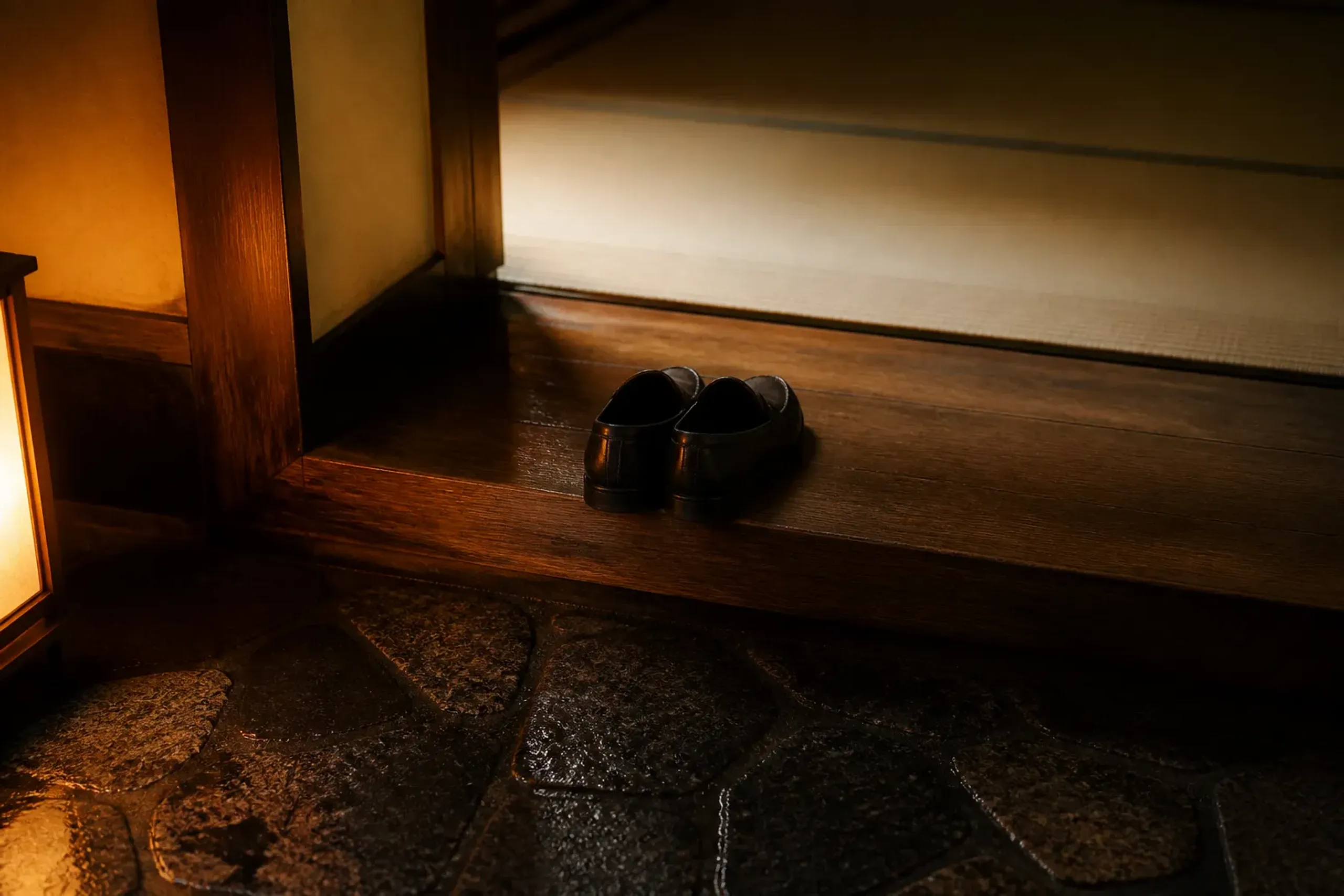
The shoe that comes off standing up saves you a dozen small ordeals a day.
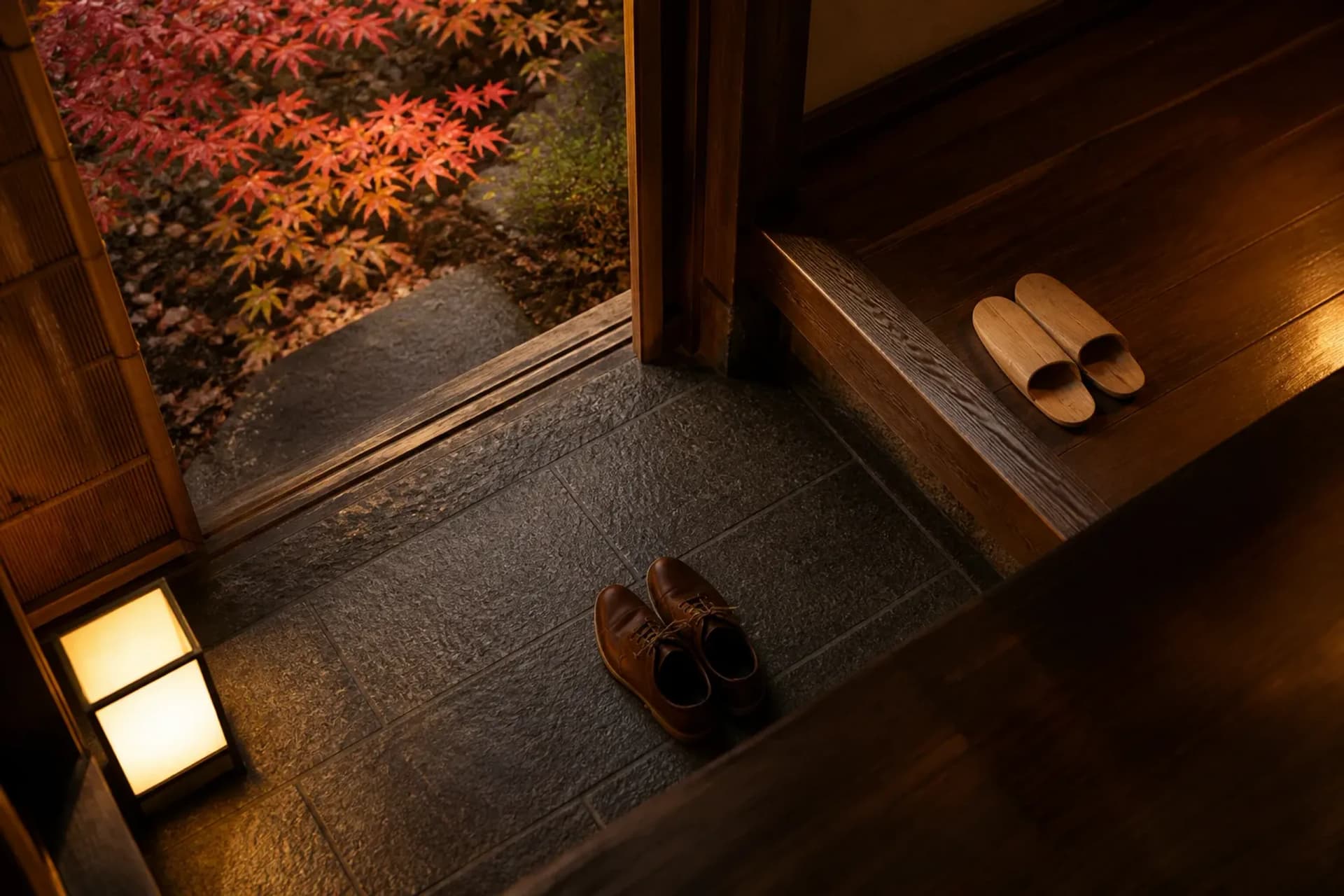
In Japan, shoes come off more than most visitors anticipate. Temples with wooden floors. Traditional restaurants with tatami rooms. Ryokan, always. Private dining spaces, sometimes without warning. Certain shops, certain shrines, certain homes. It happens repeatedly, and it happens on someone else's schedule, not yours.
So the shoe you want is the one you can step out of standing up, without sitting, without a shoehorn, without a bent knee and a fumble. Slip-ons. Loafers with give. Anything that releases the heel cleanly. Laces are the enemy of the smooth genkan exit, and a laced boot that takes ninety seconds each way turns a lovely lunch into a small ordeal, twice.
Then there is the ground. You will walk far more than you expect. Most of it on pavement, temple gravel, and worn stone that has been polished slick by four centuries of feet. Visitors routinely pack shoes chosen for how they photograph, then discover on day two that the sole was never meant for eight kilometres of granite. Bring one pair that is genuinely comfortable and quietly presentable. Wet weather adds a second consideration entirely; our guide on routing around Japanese rain covers footwear grip when stone turns to glass.
One good, easily removed, comfortable pair does most of the week's work. A second pair for evenings, if you want them. That is usually the whole footwear conversation.
Socks, Briefly And Seriously
Once your shoes come off that often, your socks become part of the outfit. People see them. In a tatami room you will kneel or sit, and the sole of your foot faces the person across the table.
So bring socks you are content to be seen in. Intact ones. No thinning heels, no logos shouting from the ankle, no holes you have been ignoring since spring. Darker, plain, well-kept. It is a small thing that quietly signals you understand the room. Pack a few more pairs than you think, because they are the one item that gets a real workout and dries slowly in humid weather.
What A Ryokan Supplies, And What That Removes From The Bag
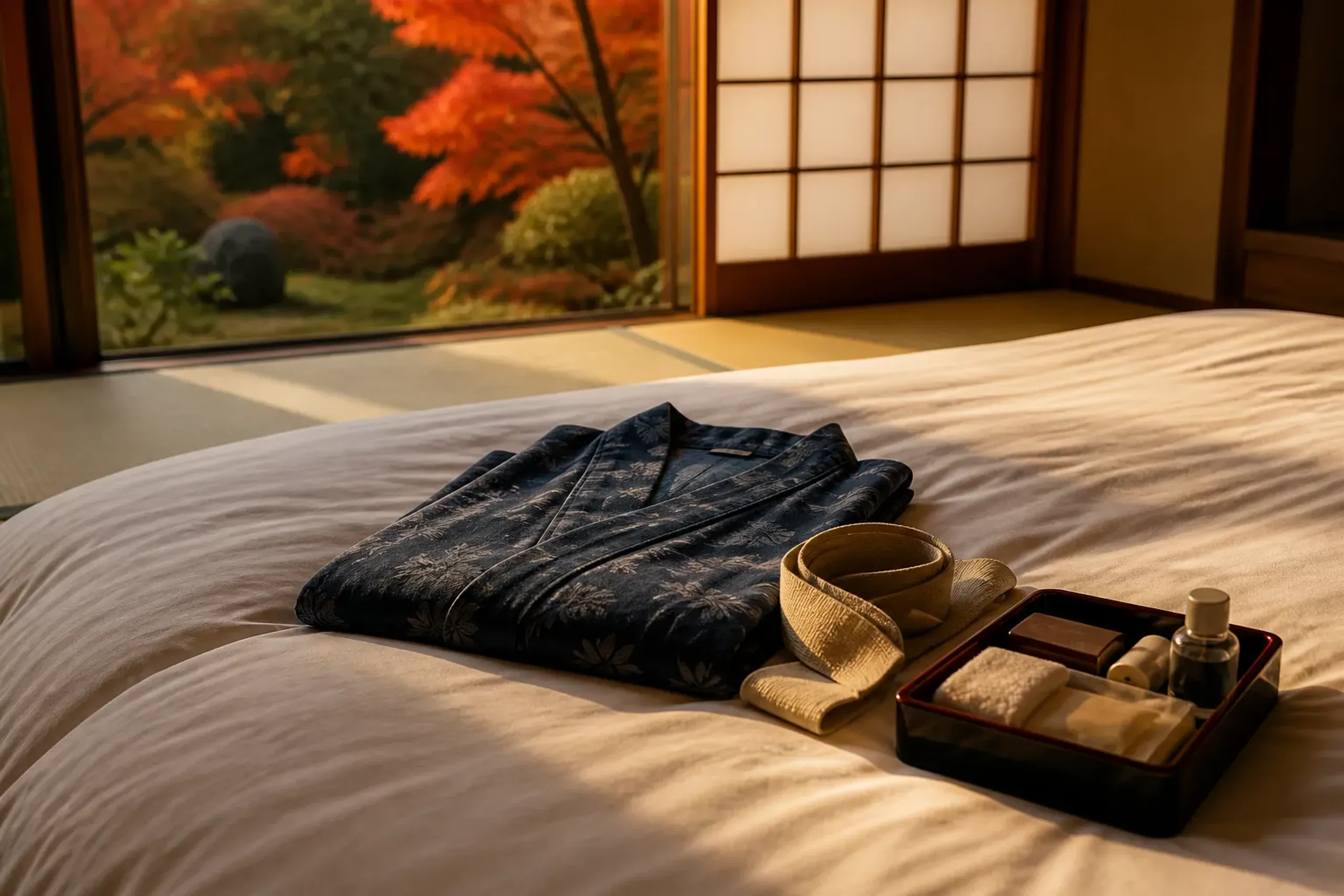
A yukata for the evening lightens the case — but what else is supplied varies by property.
A ryokan changes your packing math. In the evening, you are usually given a yukata to wear around the property and often to dinner. Basic toiletries are commonly provided. Many places supply little beyond that, and some supply more; it varies, and you should not assume.
What this means in practice: your evening clothing gets lighter. You are not dressing for a formal dinner out; you are wearing what the ryokan hands you, then relaxing. That removes a whole category of "nice evening outfit" from the suitcase for the nights you are in ryokan. We cover the format itself, including yukata and in-room dining, in choosing between a traditional or modern stay, so we will not re-cover it here.
Assume nothing, confirm early: Amenities vary significantly between ryokans, with no industry standard for toiletries, yukata sizing for taller guests, or in-room features. Japan Royal Service verifies these details in advance, allowing you to pack a minimal, strategic fallback rather than overpacking just in case.
Dress Register By Setting
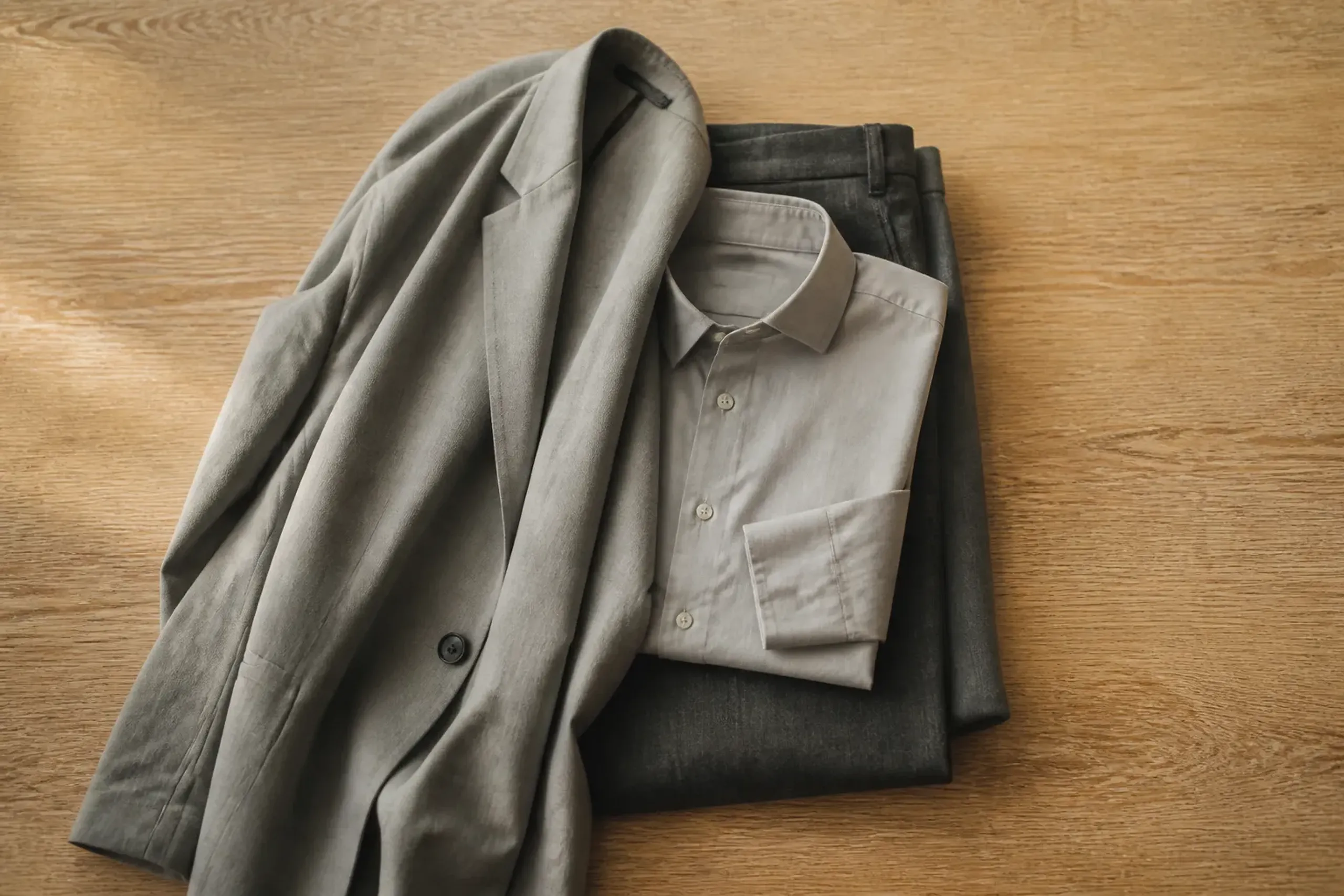
Japan runs on register, not dress codes. The difference matters. A kaiseki counter, a hotel dining room, a temple, a garden walk — each has an expected key, and the key is understated rather than formal.
You want clothing that reads as considered and quiet. Nothing loud, nothing straining for effect. A jacket or a soft blazer covers most evening settings. Neat trousers, a clean shirt or a simple dress, good posture. At temples and gardens, err toward covered shoulders and modest lines. We have already made the full argument for blending in rather than standing out in notes for the quiet traveler, so take the short version here: aim below the room's volume, never above it.
Seasonal Swing, And Layers Over Bulk
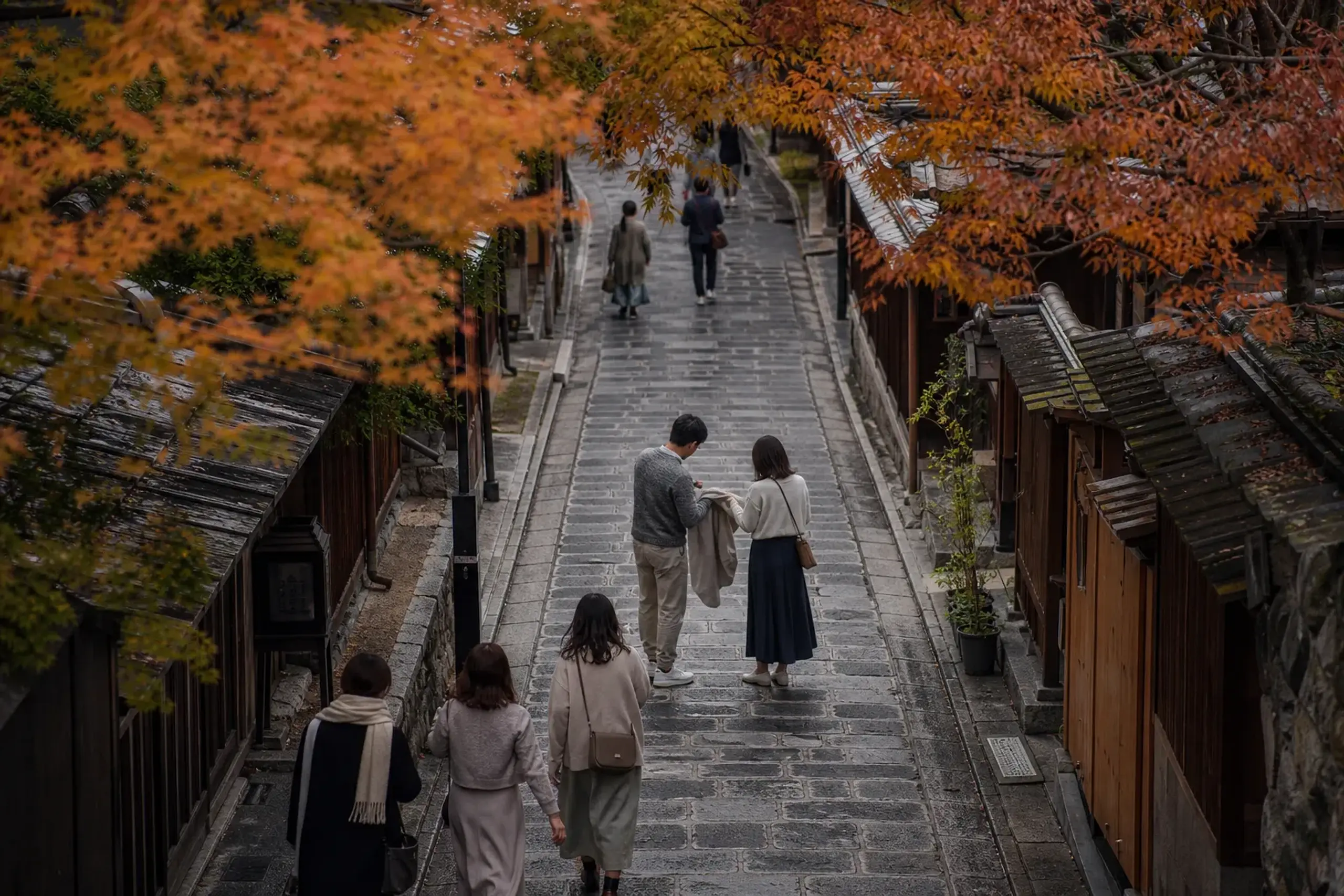
Layers flex across a week that shifts from Tokyo to Kyoto; the heavy coat rarely earns its space.
The season moves more than newcomers expect, sometimes within a single trip. Summers run humid. Winters run dry and cold. Spring and autumn swing between the two, and a week that starts in Tokyo and ends in Kyoto can shift under you as you go.
Layers beat bulk. A thin base, a mid-layer, and one adaptable outer piece flex across a wider range than one heavy coat that is wrong half the time. In the shoulder seasons especially, the heavy coat is the classic mistake: carried for a week, worn for an hour, resented the rest. Pack the ability to add and subtract, not the single garment for the coldest possible morning. (Actual temperatures and humidity vary by year and region; plan against the forecast, not a memory.)
The Overnight Bag, Given Bags Move Separately
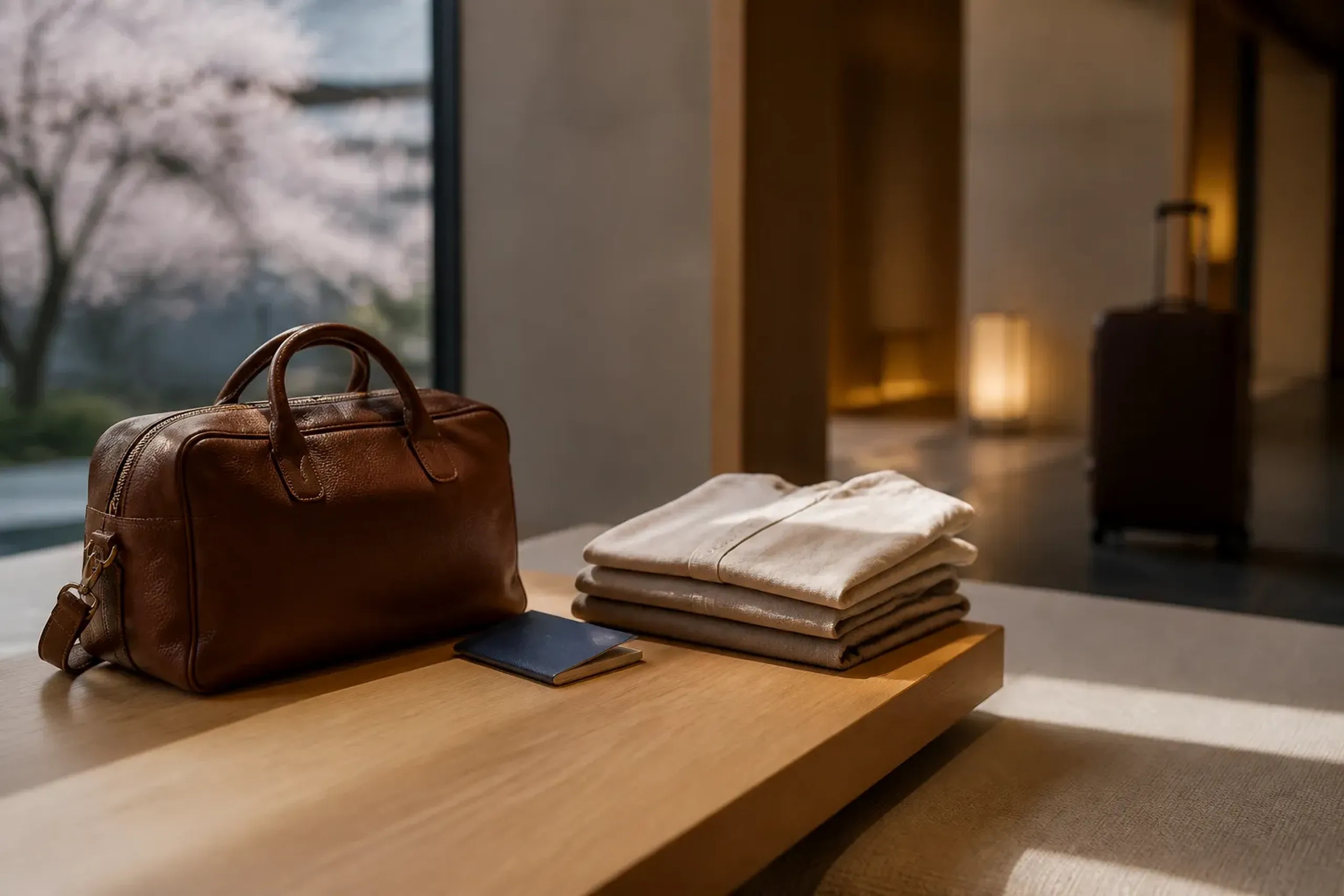
When the main case travels ahead, the overnight bag carries the twenty-four hours before it arrives.
Here is where packing becomes a real decision. On a well-run Japan itinerary, your main luggage often travels ahead of you — hotel to hotel, or airport to hotel — using Japan's excellent forwarding network. Yamato Transport and similar services make this ordinary, and JNTO actively promotes hands-free travel, encouraging visitors to look for the Hands-Free Travel logo at airports, stations, and hotels. We arrange this movement as part of the trip, and we explain the mechanics fully in where your bags are while you travel.
The consequence for packing: your big case is not with you the day it moves. So the overnight bag matters. It carries everything you need before the main luggage catches up.
- Any medication, in its original packaging, with you and not in the forwarded case.
- Passport, documents, and anything you cannot afford to be a day behind.
- That evening's clothes and the next morning's, in case the forwarded bag arrives after you do.
- Chargers, glasses, and the small things whose absence ruins an evening.
Think of the overnight bag as "the twenty-four hours the big case is out of reach." Pack it for that gap and the forwarding system does the rest.
What People Bring And Never Use
Some things travel across the ocean and back untouched. The heavy coat in shoulder season, discussed above. The stack of formal pieces for dinners that turn out to run understated, not black-tie. Travel adaptors bought for the wrong standard. Large toiletry volumes, when Japan sells excellent versions of nearly everything on any corner.
The pattern is over-preparation for the formal and the just-in-case, under-preparation for the actual day: walking, layering, taking shoes off. Pack for the day you will have.
What To Buy There, And What Is Hard To Find
A great deal is easier bought in Japan than carried. Toiletries, umbrellas, basic layers, a phone cable you forgot — all trivially available and often better than what you own. Do not haul volume you can replace in five minutes near your hotel.
The genuine exception is sizing. Larger clothing sizes and, especially, larger shoe sizes are hard to find in Japan. If you wear above roughly a men's US 11 to 12 shoe, or need generously cut clothing, bring what you need rather than assuming you can buy it there. This is not a small caveat; it is the one category where "buy it locally" reliably fails, so pack around it deliberately.
One more, without specifics: some common medications are restricted in Japan, and rules differ from other countries. Check your own before you travel and carry documentation for anything prescribed.
Bag Choice
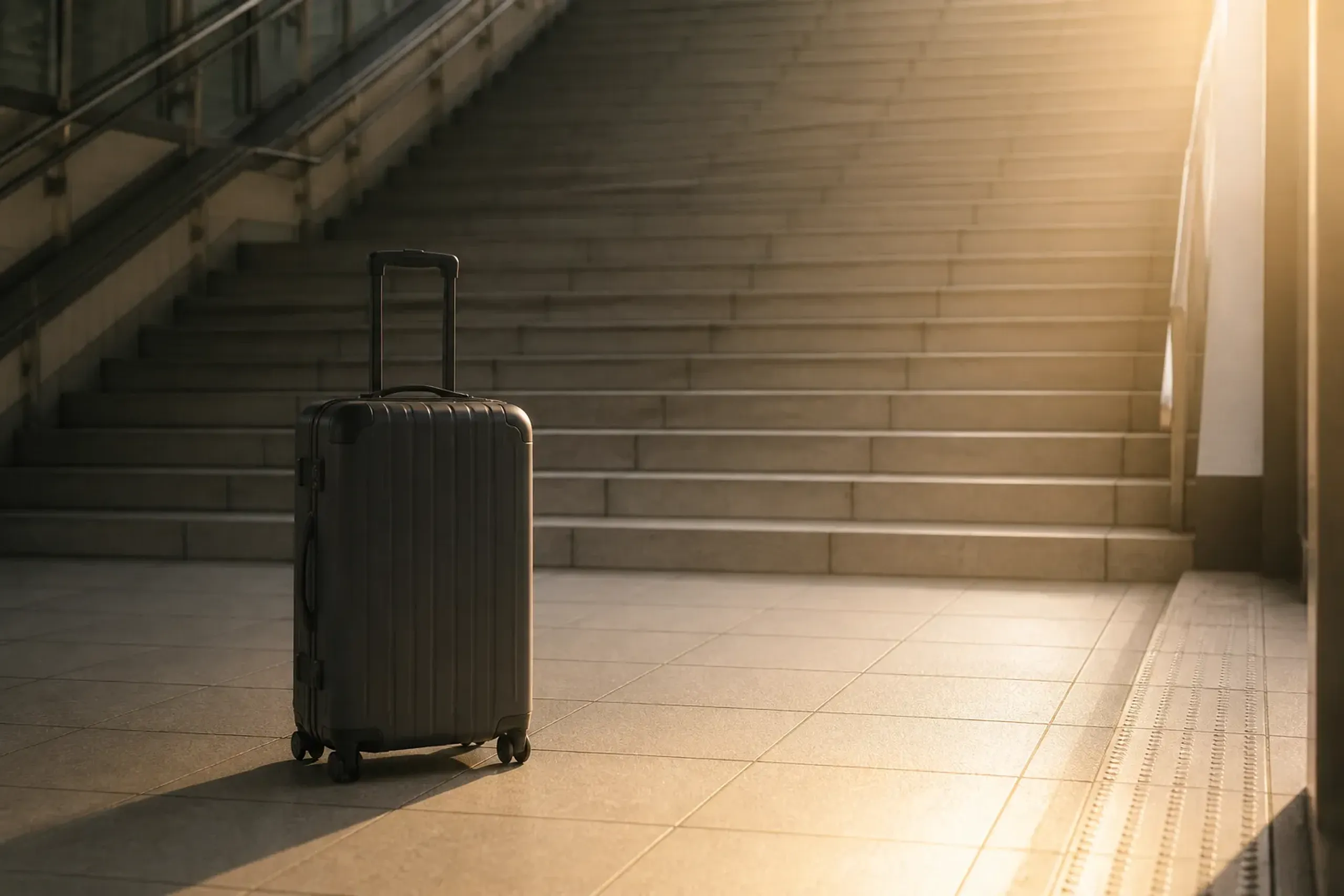
One well-packed hard case forwards cleanly; many small bags multiply the chances one goes astray.
Fewer, larger bags beat many small ones, particularly when someone else is moving them for you. A single well-packed case forwards cleanly. Five scattered items create five chances for one to go astray.
Give a thought to surfaces. Hard-shell cases handle station stairs, gravel approaches to a ryokan, and the occasional cobbled lane better than soft luggage that sags or a wheeled bag that fights every step up. If your case is being carried and forwarded rather than dragged behind you all week, choose the one that survives handling, not the one that looks best in an airport lounge.
Why Choose Japan Royal Service
Packing lighter for Japan works because the logistics behind it are handled. At Japan Royal Service, moving your main luggage between Tokyo, your onsen town, and Kyoto is part of the arrangement, not an errand you run. Your case travels ahead; you carry an overnight bag and a good pair of shoes.
Our concierge team advises on the details that packing lists cannot: what a specific ryokan tends to supply, what register a given dinner counter expects, and how the season will actually move across your dates. We also handle private chauffeured transport between bases and design each tailor-made itinerary so the day flows without friction. In our experience, the guests who travel best are the ones carrying the least. Discretion is standard; your itinerary and your identity stay private.
Tell us your dates and the shape of your week, and we will advise against your specific itinerary — footwear, forwarding windows, and what genuinely needs to be in the bag that stays with you. For private coordination, reach our team directly via WhatsApp or LINE, or contact us here.