In this guide
- 01Where Tsuwano Is And Why People Call It A Little Kyoto
- 02What Happens At The Washibara Hachimangu Yabusame?
- 03Taikodani Inari And Its Path Of Red Torii
- 04Tonomachi, The Carp Canals And The Catholic Church
- 05The Castle Ruins And The Chairlift
- 06How Do You Reach Tsuwano?
- 07How The Concierge Team Plans The Day
- 08Frequently Asked Questions
- 09Why Choose Japan Royal Service
At the edge of town, a yabusame course runs for 220 metres. In early April, a horse thunders down it. The rider wears samurai hunting clothes and carries three arrows, and he has only a few seconds to loose them at the targets as he passes. This is the yabusame of Washibara Hachimangu Shrine, and it is one of three reasons spring is a fine time to come to Tsuwano.
Tsuwano is small. You can walk most of it. The yabusame course, the red torii of Taikodani Inari and the carp canals of the old samurai street all sit within a short distance of one another. Below is how to read the town, and how our team at Japan Royal Service shapes a single spring day around it.
Where Tsuwano Is And Why People Call It A Little Kyoto
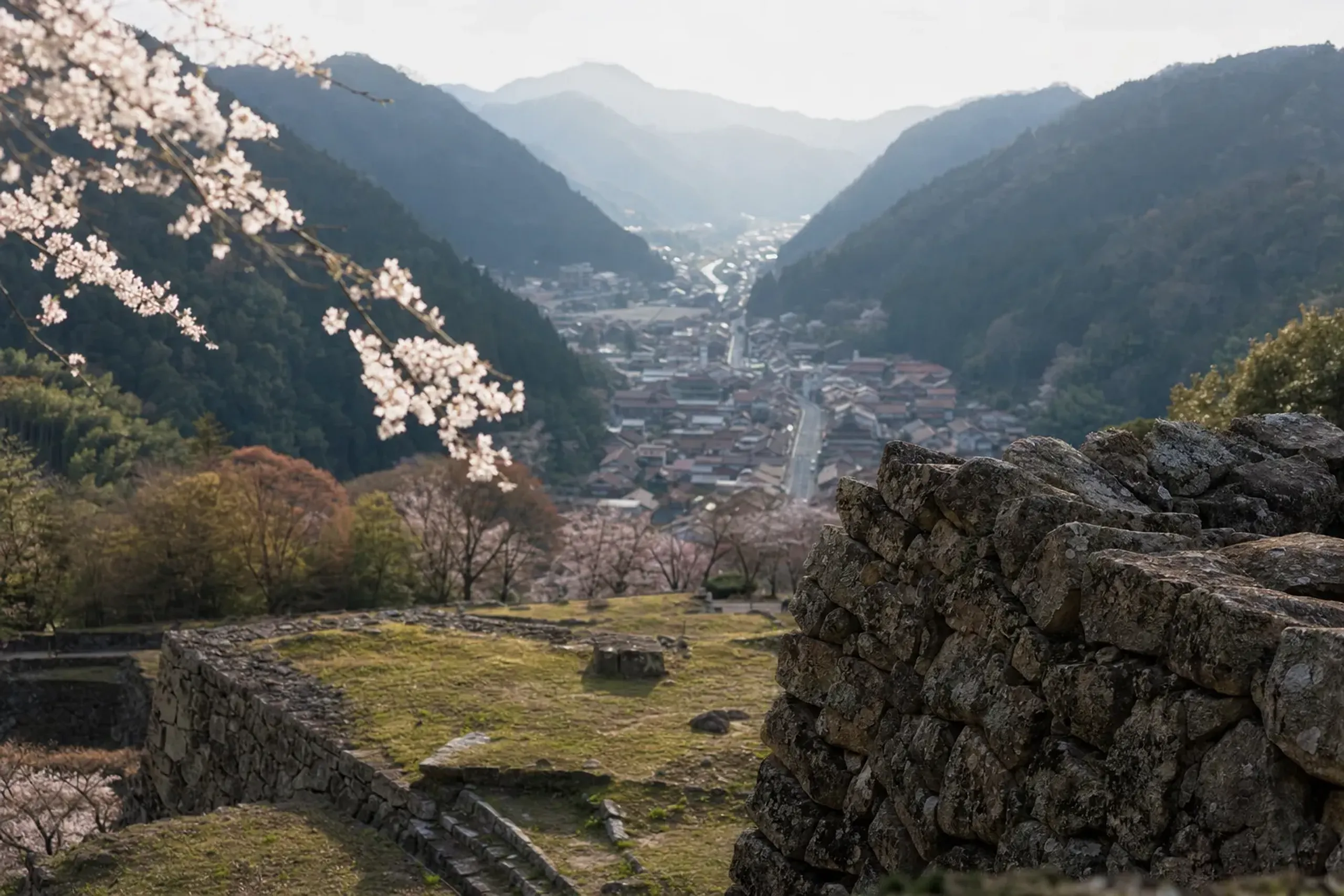
Tsuwano is a castle town in the far west of Shimane, in the San'in region. People call it the "Little Kyoto of San'in". The name fits the old street of white-walled residences, the stone-paved lanes, and the slow water that runs along them.
The town lies in a narrow valley. Mountains rise on either side. The castle ruins sit above on Shirayama hill, and the shrines climb the slopes. It is a place built on a human scale, and that is the point of it. You are not racing between landmarks. You are walking one short town end to end.
Getting here takes planning, which we will come to. Tsuwano Station is on the JR Yamaguchi Line, away from the main Shinkansen corridor. That distance is also what keeps the town quiet.
What Happens At The Washibara Hachimangu Yabusame?
The Tsuwano yabusame is held at Washibara Hachimangu Shrine in early April, with the date set each year. The JRS concierge team confirms the exact date directly with the guest at time of arrangement.
Here is what you see. A horse gallops down a 220-metre course. On its back is an archer in samurai hunting dress, and in the few seconds of the run he must fire three arrows at the targets along the track. The event keeps the traditional Ogasawara style of mounted archery, and it is framed by Shinto rituals. According to the festival calendar, the archery is shown twice a day.
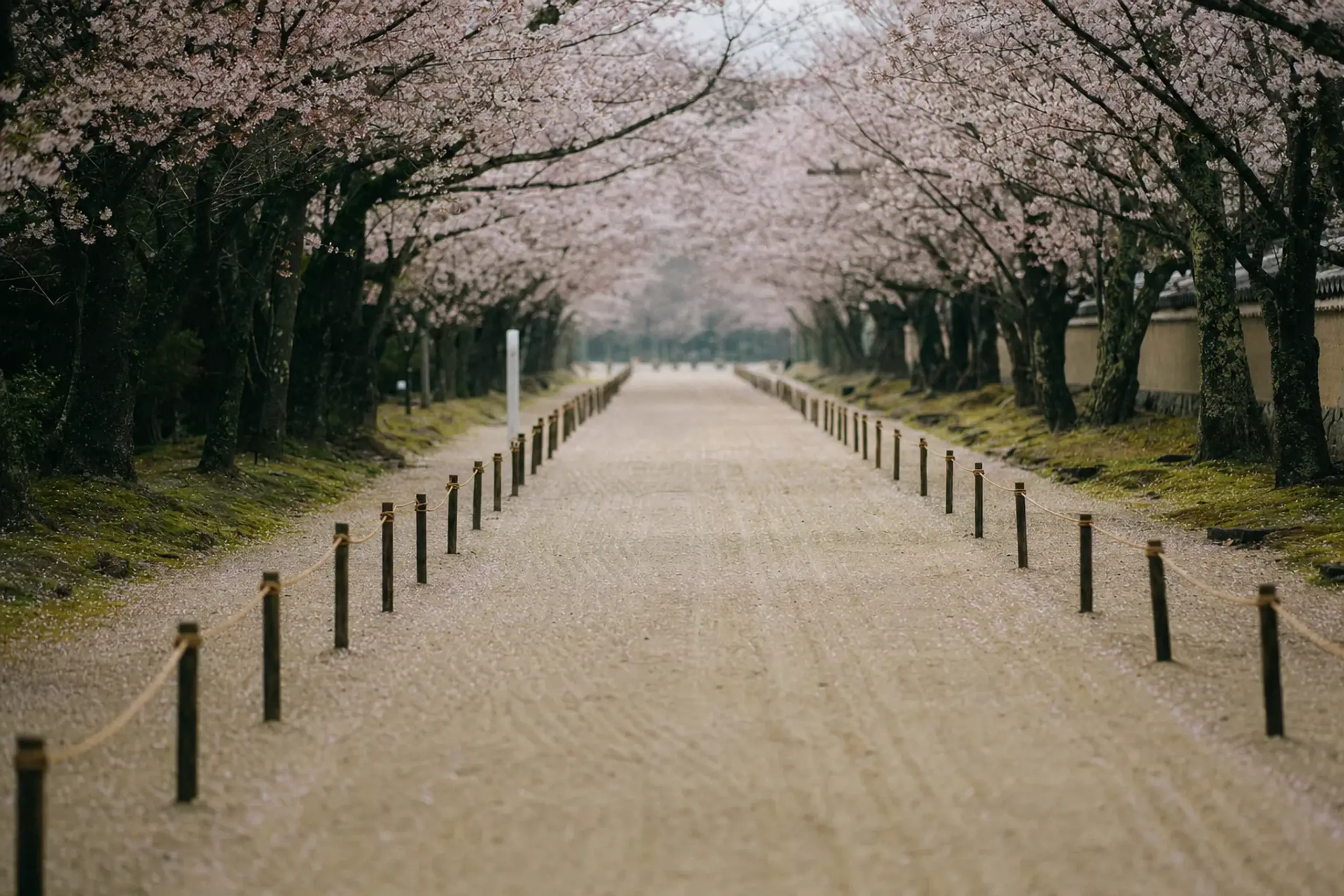
The track has its own beauty in spring. About 100 cherry trees line the course, and they bloom in April, per japantravel.com. That same source notes an open practice the day before the main event.
Key fact: The yabusame date is set each year. The JRS concierge team confirms the date, session times and shuttle directly with the guest at time of arrangement.
On reaching the grounds: per JNTO, free shuttle buses run from Tsuwano Station to Nagomi Road Station, where there are food stalls and kagura performances, and the shrine is a few minutes' walk from there.
The shuttle and timings change, so we confirm them before the day rather than print a schedule that may not hold.
Taikodani Inari And Its Path Of Red Torii
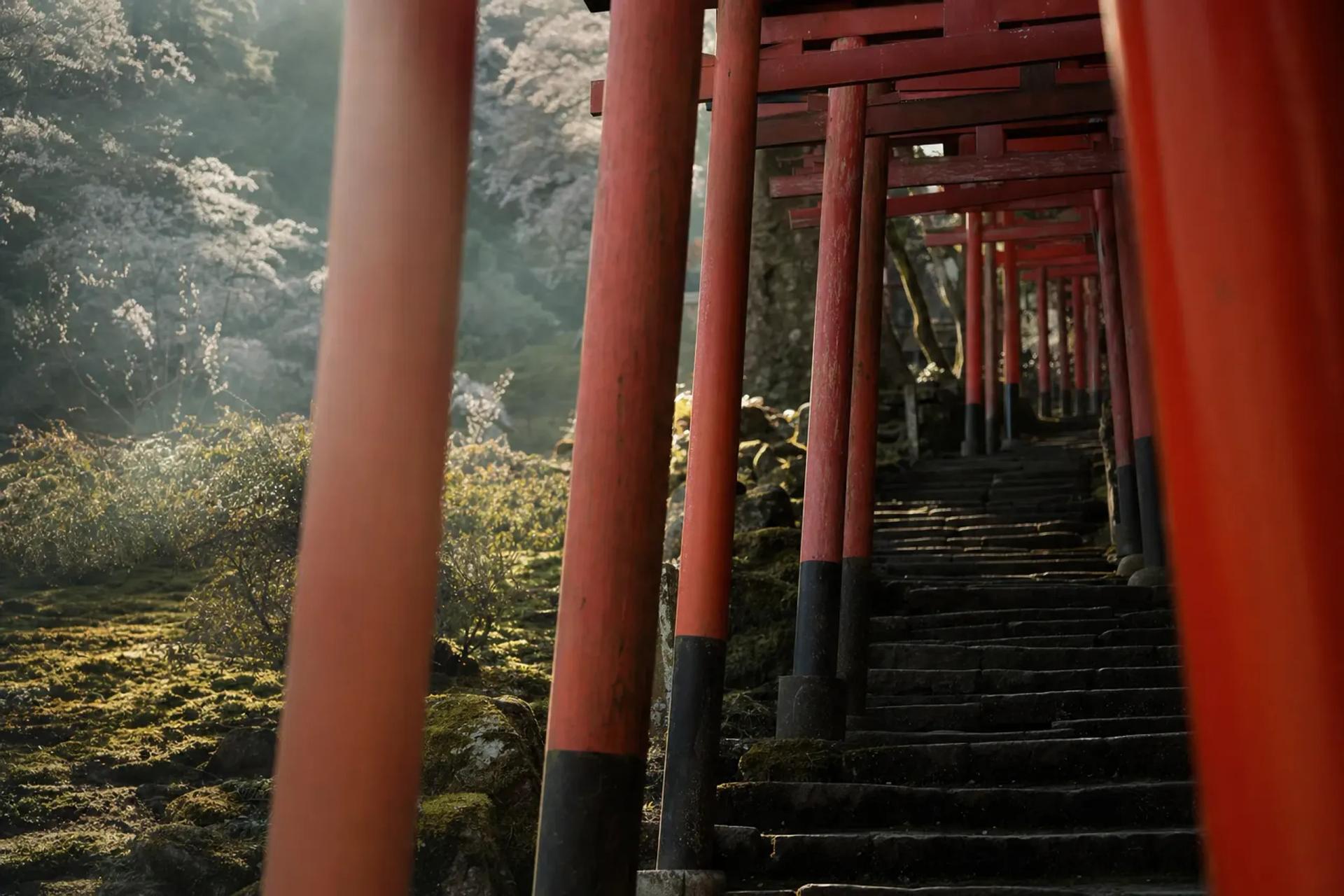
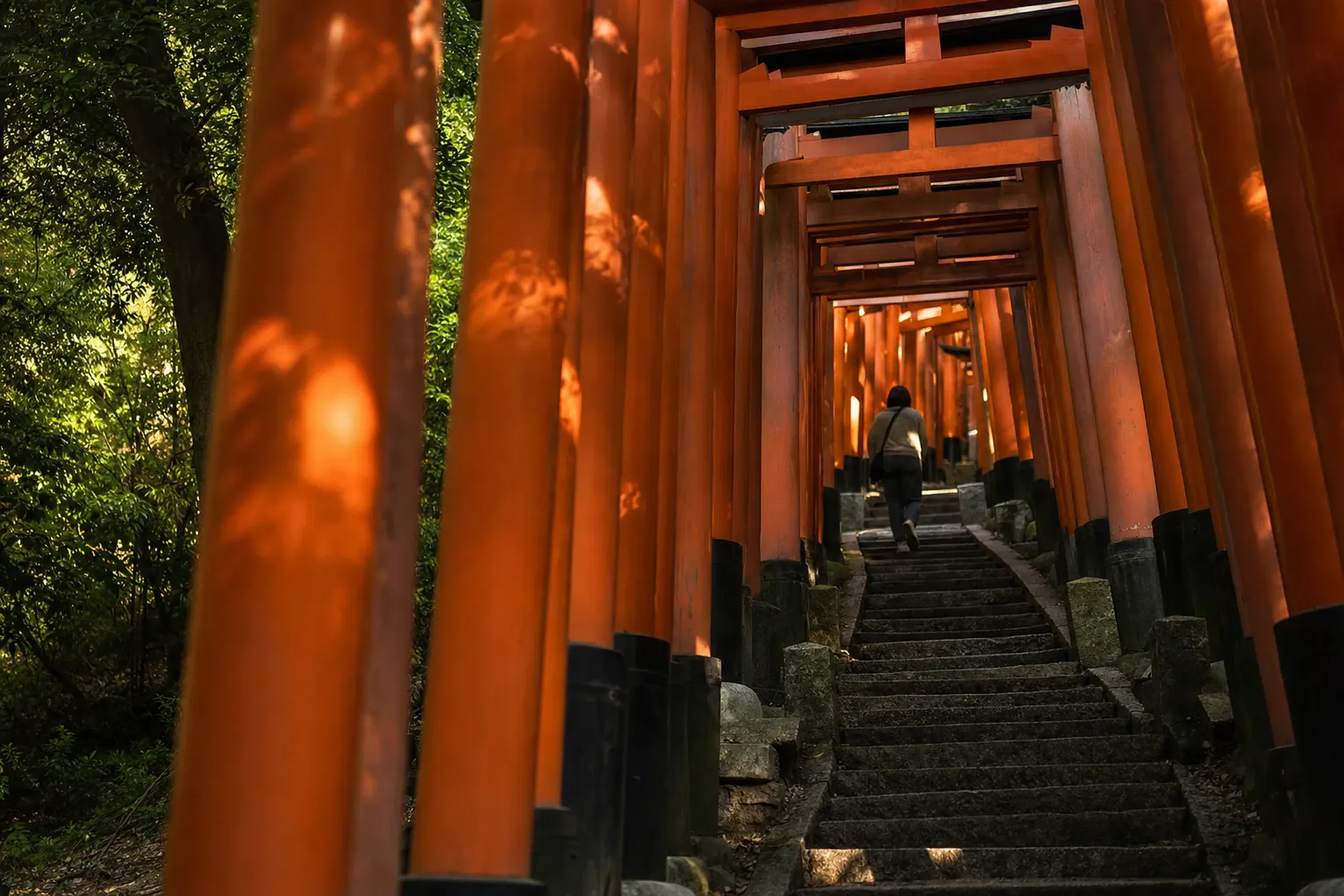
More than 1,000 red torii gates form a tunnel along the path up to Taikodani Inari Shrine. You walk through them. The light shifts as you climb, red overhead and red to either side, and the town falls away below.
The shrine was founded in 1773 by the lords of the castle that once stood on the mountaintop above. JNTO lists it among the five major Inari shrines in Japan. It opened to the public in the late 19th century, and big festivals take place here in spring and autumn.
Access is simple. Per JNTO, it is a 15-minute walk from Tsuwano Station, then a 10-minute walk up the hill. A taxi from the station takes about six minutes. If the yabusame falls on your day, this is a natural second stop once the archery is done and the crowds thin.
Tonomachi, The Carp Canals And The Catholic Church
Tonomachi is the old samurai street. It is known for its residences and white walls, its stone-paved lanes, and the colourful carp that swim in the canals beside the road. The water is clear.
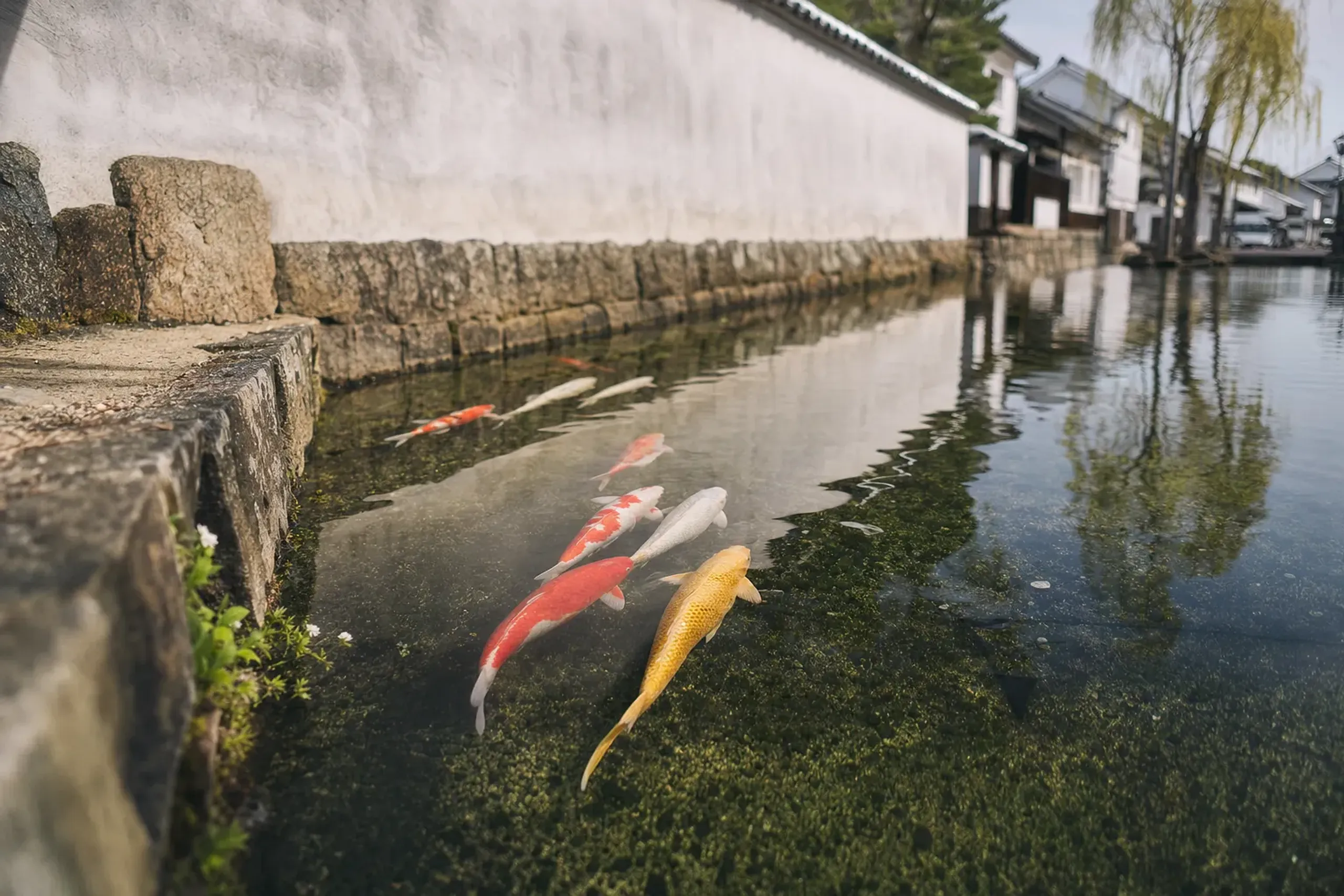
This street, more than any other, is why the town earns its "Little Kyoto of San'in" name.
The cherry blossoms here bloom in full from late March to April, per jeepe.jp. Walk the lane under them and the white walls take on the pink cast of the trees.
A short way along stands the Tsuwano Catholic Church, a Gothic-style building dedicated in 1931 and a Registered Tangible Cultural Property. It is an unexpected shape in a town of shrines and old merchant houses, and worth the few minutes it takes to step inside. The church is about 15 minutes on foot from Tsuwano Station, or 5 minutes by taxi, per jeepe.jp.
The Castle Ruins And The Chairlift
The castle ruins stand on Shirayama hill above the town. What remains is stonework, the base of what once was, with a long view down the valley. There is no tower now. Per japantravel.com, the main tower burned in 1680 after a lightning strike.
The history runs long. The first fortification dates to 1295 under the Yoshimi clan, and the Kamei clan held the domain from 1616 to 1868, per japantravel.com. Standing on the stones, you look down on the same valley those lords watched.
To reach the ridge, there is a chairlift. Per JNTO, it is 2 km from Tsuwano Station, and it starts on the road to the Taikodani Inari car park, per japantravel.com.
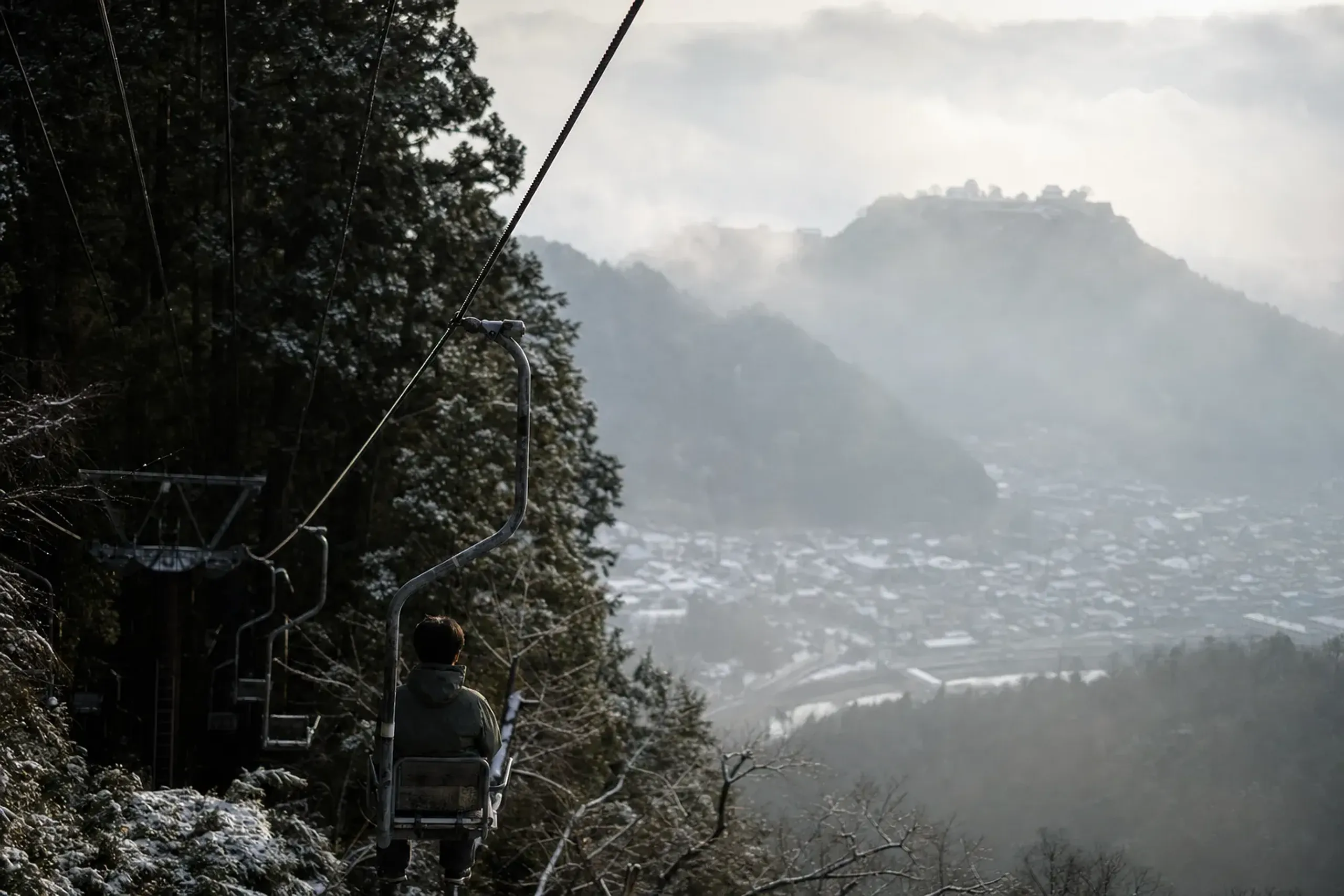
From the top of the chairlift, about a 15-minute walk leads to the main area of the ruins. The chairlift status changes with weather and season, so we confirm whether it is running before the day.
How Do You Reach Tsuwano?
Tsuwano Station sits on the JR Yamaguchi Line. The town is far from the main rail lines, so the last stretch to Tsuwano is the part that needs thought, and the part where a car earns its place.
The usual shape of the journey is rail to the nearest Shinkansen station, then a transfer for the final leg. Our concierge team confirms the route and timing with you at time of arrangement, because the best combination depends on where your day begins and when the yabusame is set. For travellers weighing the choice between rail and a car for the final leg, our private driver versus rail decision framework lays out how we think about it.
Once in the region, a vehicle with an English-speaking driver removes the small frictions that eat a day in a town off the main lines. The transfer is arranged through a partner company; the driver and the guide are separate roles, and the driver carries you between the station, the shrine, Tonomachi and the chairlift.
How The Concierge Team Plans The Day
A spring day in Tsuwano has one fixed point and several movable ones.
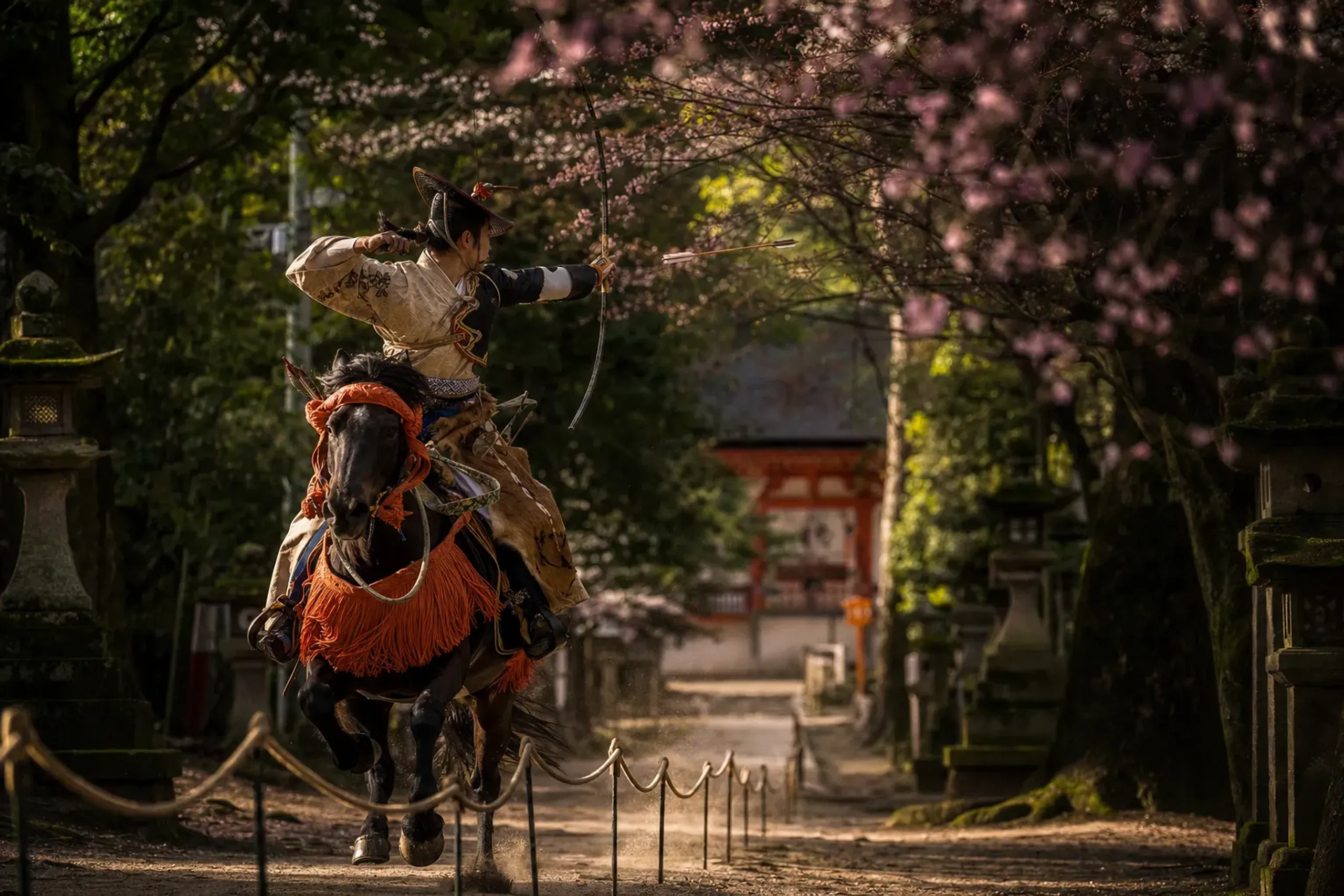
The fixed point is the yabusame, if it falls on your date. Everything else arranges itself around it.
Our tailor-made planning for Tsuwano covers the following, and only what is confirmed within this town's scope:
- Planning. We build the day around the yabusame date, the bloom and the weather, with a fallback if rain closes the grounds.
- Guiding. An English-speaking cultural interpreter guide, booked separately from the driver, for the yabusame, the shrine and the samurai district.
- Transfer. A vehicle from a partner company with an English-speaking driver, which matters because Tsuwano is a small town far from the main rail lines. Driver and guide are separate roles.
- Accommodation and meals. Ryokan and restaurant booking in Tsuwano or the wider region, with dietary needs passed ahead.
- Rail. Tickets to the nearest Shinkansen station, including Green Car and Gran Class where available, platform assistance and luggage forwarding.
- Same-day re-planning. When the weather turns, we reshape the day.
All of these sites are public. The JRS concierge team confirms directly with the guest at time of arrangement the yabusame date and session times, the shuttle bus, any viewing seats that are sold and the chairlift status.
Tsuwano also rewards a second visit in another season. Its summer Heron Dance is a thing worth planning around, and we cover it in our guide to the Tsuwano Heron Dance. If you are building a wider San'in and western Honshu route, the nearby castle town of Hagi suits spring, covered in our Hagi in spring guide, while Matsue Castle in spring and Izumo Taisha round out the Shimane side.
For other landmarks within reach, see our notes on the Kintai Bridge at Iwakuni and Akiyoshido Cave. If it is the horse archery itself that draws you, the Kamakura yabusame offers a second chance in eastern Japan. And to time any of this around the blossom, our cherry blossom timing guide helps.
Frequently Asked Questions
When Is The Tsuwano Yabusame Held At Washibara Hachimangu Shrine?
The Tsuwano yabusame is held at Washibara Hachimangu Shrine in early April, with the date set each year. The JRS concierge team confirms the exact date directly with the guest at time of arrangement.
How Long Is The Yabusame Course At Tsuwano?
The course runs 220 metres. A horse gallops its length carrying an archer in samurai hunting clothes who has only a few seconds to fire three arrows at the targets, in the traditional Ogasawara style.
How Do You Reach Washibara Hachimangu Shrine And Taikodani Inari From Tsuwano Station?
For the yabusame, per JNTO, free shuttle buses run from Tsuwano Station to Nagomi Road Station, with the shrine a few minutes' walk beyond. Taikodani Inari is a 15-minute walk from the station plus a 10-minute climb, or about six minutes by taxi.
When Do The Cherry Blossoms Bloom In Tsuwano?
Cherry blossoms in Tonomachi bloom in full from late March to April, per jeepe.jp.
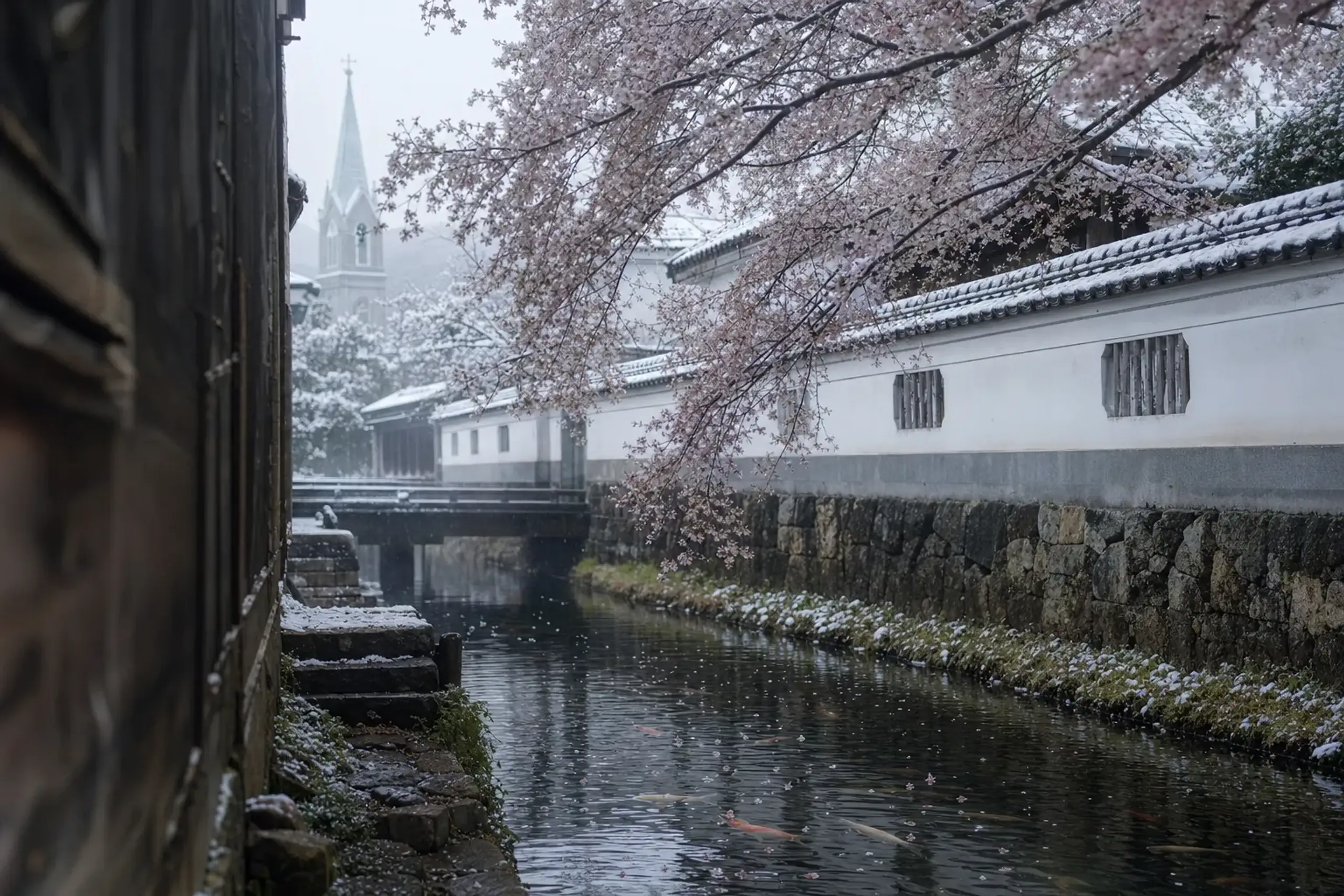
About 100 cherry trees also line the yabusame course and bloom in April, per japantravel.com, so the archery runs under blossom.
How Do You Reach Tsuwano?
Tsuwano Station is on the JR Yamaguchi Line, away from the main Shinkansen corridor. The practical route is rail to the nearest Shinkansen station, then a car for the final leg. Our concierge team confirms the exact route and timing at time of arrangement.
Why Choose Japan Royal Service
Tsuwano is a small town that asks for good timing. The yabusame date moves. The bloom moves. The weather can close the castle grounds. A day here goes well when someone has already thought through the order of it, the fallback for rain, and the drive between sites in a town off the main lines.
That is the work our concierge team does. We hold the fixed point of the yabusame and arrange the town, the torii path, the samurai street and the ruins around it, with an English-speaking guide and a driver who knows the roads. In Tsuwano the difference is in the small coordination: the shuttle confirmed, the chairlift status checked, the car waiting when the archery ends. That is what Japan Royal Service brings to a spring day in western Shimane.
To begin planning, contact our team here.