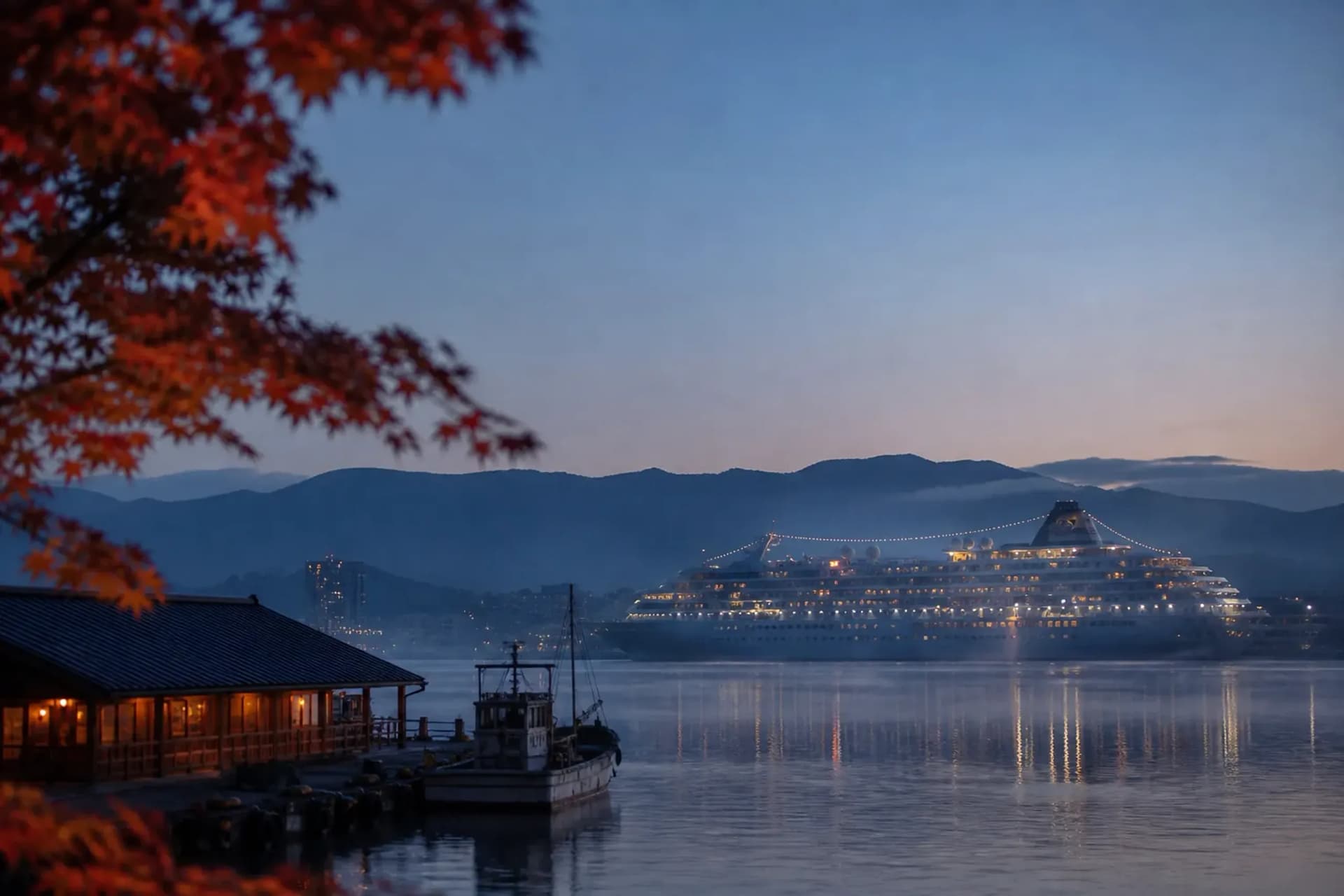
A Japanese port call typically runs eight to ten hours. What a longer stay makes possible — dawn access, fixed-schedule sites, and the country inland — is a different set of options entirely.
A Japanese port call typically runs eight to ten hours, and a standard shore excursion four to eight. That window decides everything. It reaches what is near the berth, during public opening hours, on the day the ship happens to be alongside — and very little else.
Almost everything that makes Japan worth the detour sits outside that window. Not because it is exclusive, but because it is scheduled: a garden that is best at dawn, a studio that opens three days a week, a stage that is only lit after dark, a workshop that needs weeks of notice. When a ship stays a second day, or simply sails late, the list of what is reachable changes completely. That is the subject of this page.
The window as the organising fact
Every constraint below follows from the length of the call. Japan is full of places that open two or three days a week, take one party at a time, or require a month's notice. On an eight-hour call they are a gamble. On a longer call they are simply a matter of choosing the right morning.
The five constraints that follow are what a season programmer is actually working against. Each carries a real example from published work.
1. Time of day
Some places are only themselves at dawn or dusk.
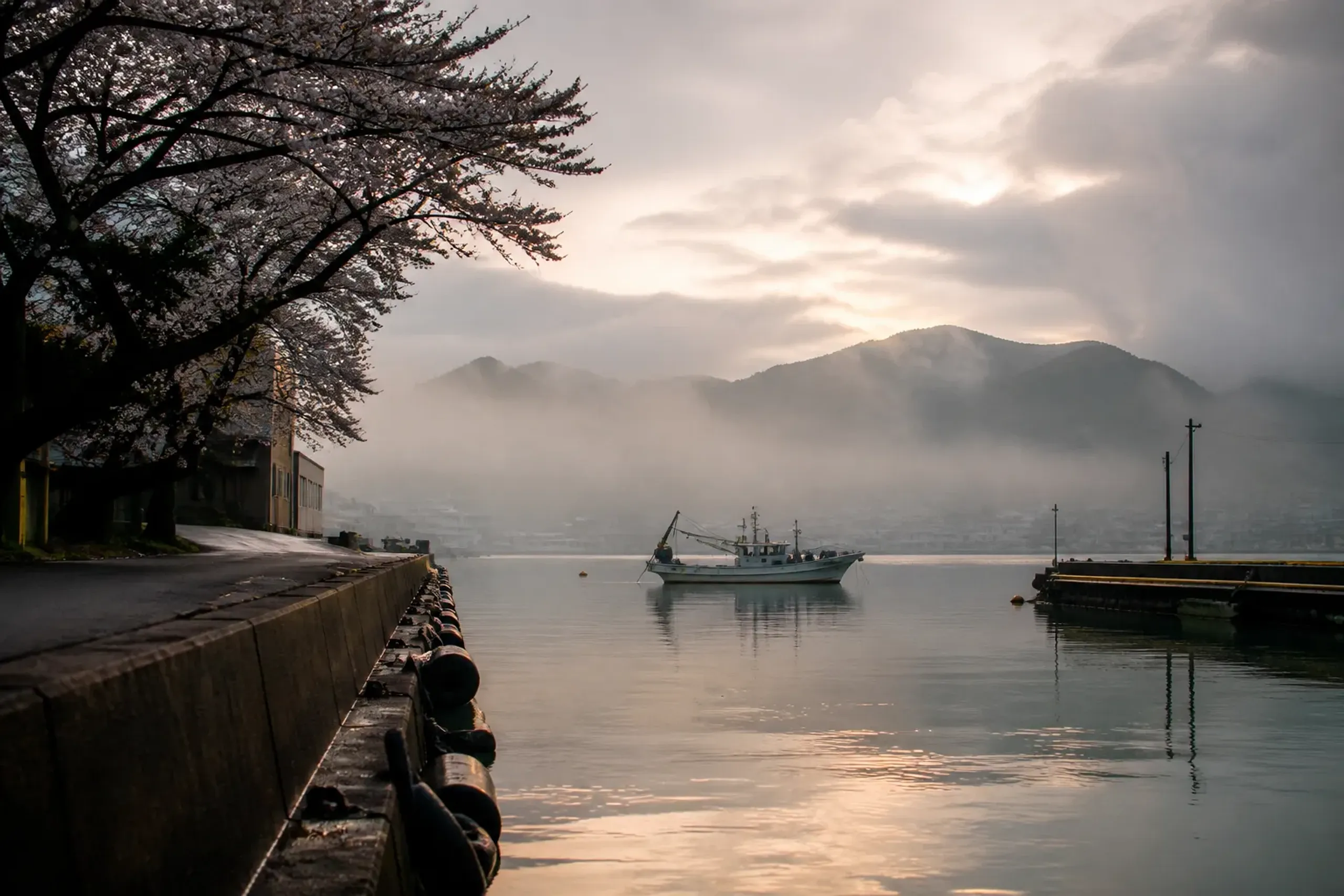
A private hour in a garden before the public gates open, or a plateau where the sunset and the city lights below run continuous, cannot be reached in a window that begins after breakfast and ends before dinner.
Two examples from a single port illustrate both ends of the day: a private morning at Ritsurin Garden in Takamatsu — a hundred years in the building, a thousand pines shaped by hand, ten minutes from the berth — taken before the gates open; and a private evening on Yashima, the 1185 battlefield with temple eighty-four and a glass building on the summit taken after closing, when the light and the city below run together. Neither fits inside a daytime window.
2. Days of the week
Fixed-schedule sites do not move for a ship. Isamu Noguchi's studio at Mure, near Takamatsu, is a foundation-run museum left as he stopped work in 1988. It opens Tuesday, Thursday and Saturday only, by reservation, at set hours and with capped numbers. Either your call date falls on one of those mornings or it does not — and a season programmer needs to know that before the itinerary is fixed, not after. A ship in port for a single day may miss it entirely; a ship in port for three days will always catch it. The full account is here: Isamu Noguchi's studio at Mure.
3. A night ashore
Certain things are overnights by definition — a castle keep held from early evening to the following morning, a ryokan, a temple lodging.
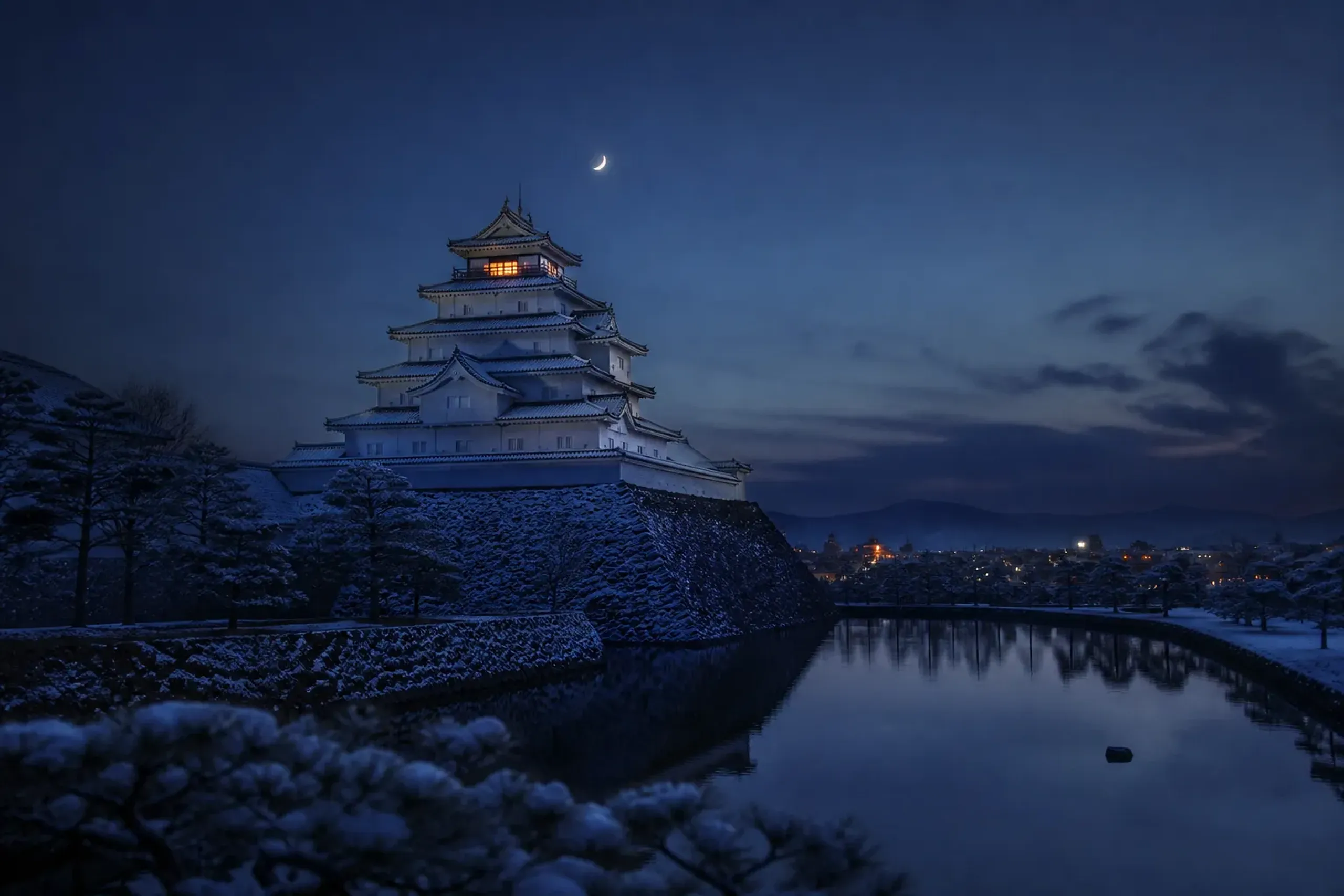
They cannot be compressed into a day, and a guest who wants one needs the ship to release them.
An hour inland from Matsuyama there is a castle you can sleep in. One night as the lord of Ōzu Castle is Japan's first castle stay: a conch shell, retainers in armour, a matchlock salute recreating an arrival of 1617, dinner inside an Important Cultural Property, and then the keep to yourself. It takes an entire evening and the following morning, and cannot be done between two tenders. Over a multi-day call it is straightforward.
4. Lead time
Workshops, makers and private arrangements need notice — weeks, sometimes months. The constraint here is not access but preparation. A working stone craftsman will give a visitor one to three hours — a real conversation with an interpreter, tools in your hands, the quarry road — rather than a twenty-minute demonstration, precisely because he is not trying to process a coach. That is the difference between meeting a stonecutter of Aji, who works the hardest granite in Japan as his forebears have for eight hundred years, and watching a performance. The same ground yields a second stone: sanukite, cut into tuned slabs and played. Both are sessions with a shokunin, not stops on a route, and both require that the arrangement be made well in advance and in Japanese.
5. Distance inland
The best of Japan is often an hour or more from any berth.
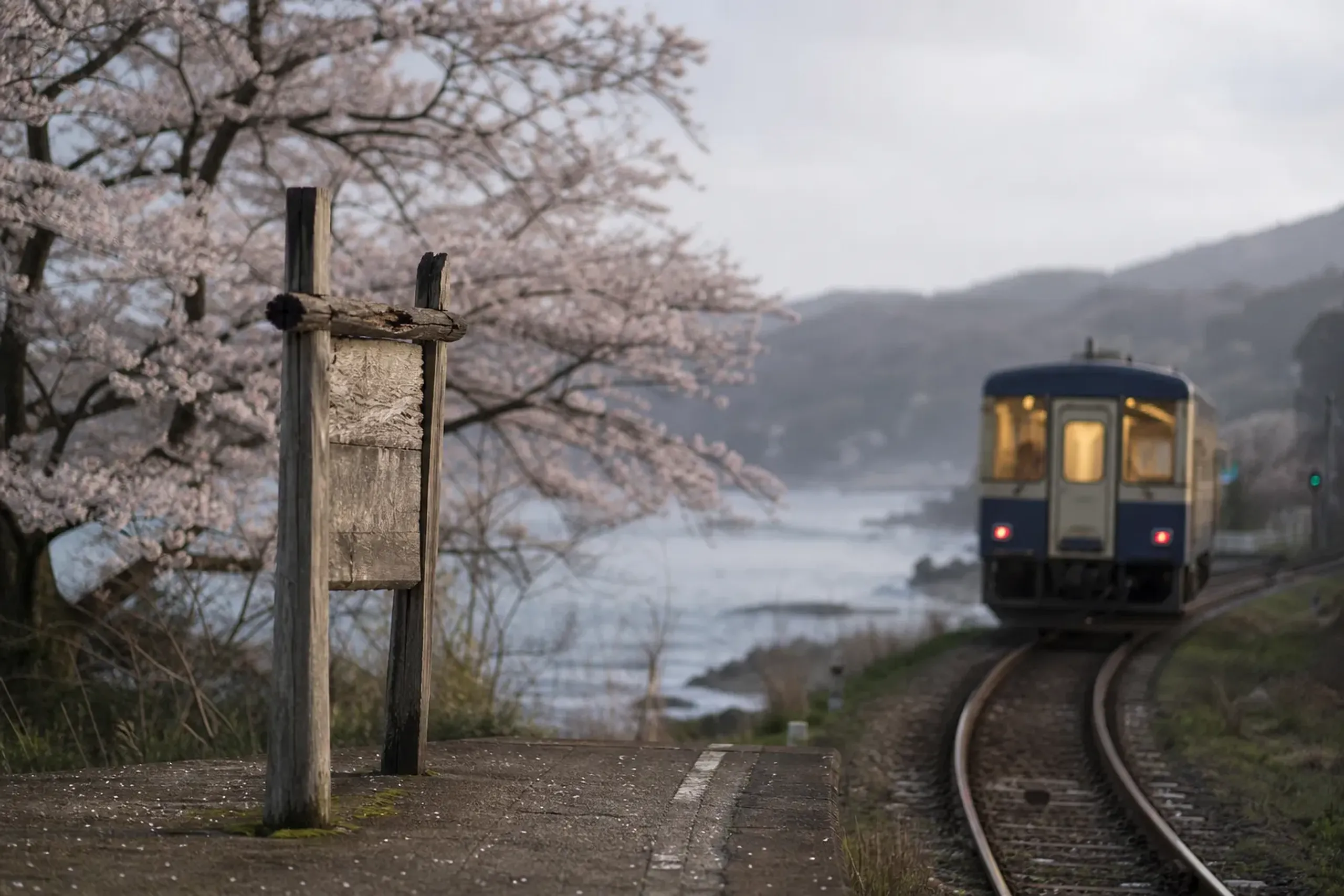
A ten-hour call spends a third of itself on the road; a longer call absorbs that transfer without the day becoming one. Ōzu Castle, an hour inland from Matsuyama, is one example; existing coverage of Hiroshima and Miyajima from the Inland Sea ports is another. Reaching either, and doing it justice, is a question of how long the ship stays rather than how fast the car goes. Where the distance is real, chauffeured transport is arranged around the alongside time rather than against it.
Port realities worth stating
A few facts establish the ground a programmer is working on. They are worth stating plainly.
- Japan has more than forty cruise ports. Almost all of the major ones berth alongside; tendering is limited to a few smaller island calls.
- Berth assignment changes the day materially. At Yokohama, Ōsanbashi sits centrally while the largest ships use Daikoku. At Hakata, most calls use Chūō Wharf, with Hakozaki assigned as an alternative. The assignment is confirmed close to arrival and can change.
- Indicative transfer times: Yokohama to central Tokyo around 45 minutes by road; Kobe or Osaka to Kyoto around 50 minutes; Shimizu to the Fuji Five Lakes 60 to 90 minutes.
- Some ports actively incentivise overnight stays and turnarounds through berth allocation, and overnight calls are increasingly common on smaller and luxury vessels.
- Standard guidance is to arrange shore programming three to six months ahead, and earlier for cherry blossom and autumn foliage, when the properties and restaurants that shape an itinerary book first.
Berth details for any specific call should be confirmed at the time of planning.
Seasonality and weather
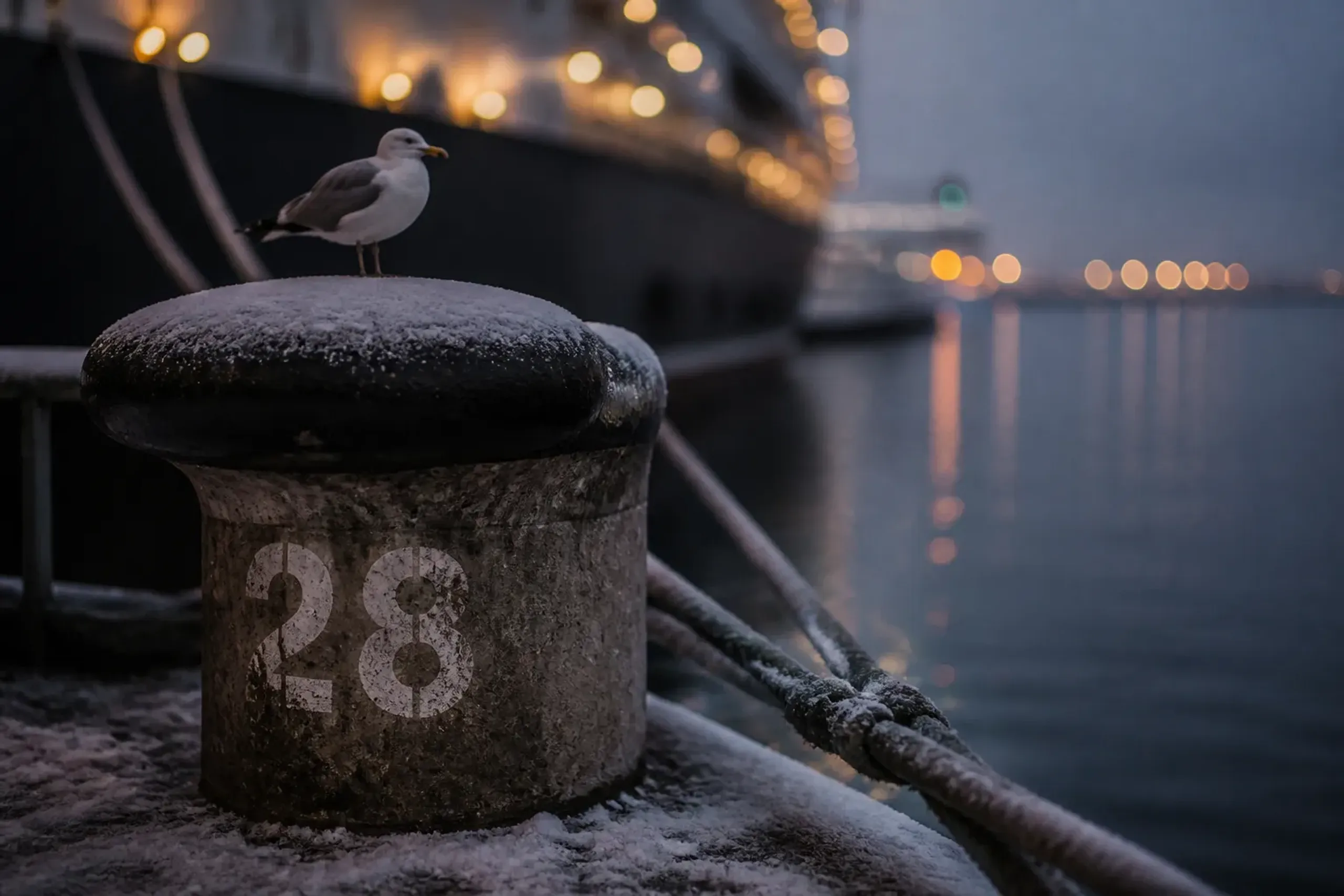
Seasonality in Japan is a scheduling argument, not an atmospheric one. Blossom and foliage windows shift by up to a fortnight year to year, and northern and southern ports peak weeks apart. A season built on fixed dates chosen a year out will miss one or the other. Knowing what to experience where in which month — and building the call around it — is the work.
Weather requires the same discipline. Typhoon season runs from late summer into autumn, and outdoor programming needs an alternative held in reserve rather than a cancellation on the day. So does party size and mobility: private arrangements suit contained groups, numbers change what is possible, and several of the best sites sit on uneven ground. Each linked page states what a wheelchair user will and will not be able to see at that specific place, including the things they will not.
What Japan Royal Service arranges — and what it does not
We arrange private shore programming, guiding, chauffeured transport and accommodation ashore at Japanese ports of call. Those arrangements are made at any Japanese port, not only the ones named above — a tailor-made itinerary is built around the ship's alongside time as the fixed point and rebuilt when it moves, which is a normal part of the work rather than an exception. Where a night ashore is involved, the accommodation is arranged as part of the same plan.

Two things about how we work are worth stating plainly.
We are Japanese, and in Japan. The arrangements are made in Japanese, by people the other side already knows. That is not a marketing line; it is the difference between a request being considered and a request being declined by a form. The people who matter most at these sites — the craftsmen, the performers, the priests — generally do not speak English, and we would not want them replaced by someone who does. We supply the interpreter and treat it as part of the experience rather than an extra.
We tell you what is closed. Every linked page carries the access limits we were given, in the words we were given them: a sculpture garden that cannot take a wheelchair, a boat that cannot be boarded from one, a quarry floor that is not safe. Where we have contacted the people concerned, spoken to them in Japanese and confirmed what they will and will not do, we write it down. Where we have not, we say so. We would rather lose a booking than have a guest discover a limit at the gate.
Say plainly what we do not do: we do not act as port agent, and we do not handle vessel clearance. Naming the limit is what makes the rest credible.
We also do not publish our clients — no names, no itineraries, no photographs of anyone's family, and no rates.

Discretion that only applies to strangers is not discretion.
Frequently Asked Questions
How far ahead should arrangements be made?
As far ahead as you can. The scarce things here — a castle for one night, a museum with fixed tour times, a craftsman's whole afternoon — are held months in advance, and the constraint is almost never money. If a Japan call is on the itinerary, that is the moment to start.
Can experiences be arranged for a single household rather than a group?
Yes. Almost everything described here is built for one party, and several of them cannot be done any other way.
Do you work with guests who use a wheelchair?
Yes, and we ask the access question of every venue in writing before it goes into a plan. Each of these pages states what a wheelchair user will and will not be able to see at that specific place, including the things they will not.
Is everything conducted in English?
The people who matter most — the craftsmen, the performers, the priests — generally do not speak English, and we would not want them replaced by someone who does. We supply the interpreter and treat it as part of the experience rather than an extra.
What if the ship's schedule changes?
It does, and we build for it. Arrangements are made with the alongside time as the fixed point and rebuilt when it moves, which is a normal part of the work rather than an exception.
The close
A longer call is not more of the same day. It is a different set of options entirely — the dawn garden, the studio open three mornings a week, the castle held overnight, the afternoon with a maker, the site an hour inland. To discuss what a specific call makes possible, and what it does not, contact us here. We will tell you what is possible, what is not, and what we have not yet checked.