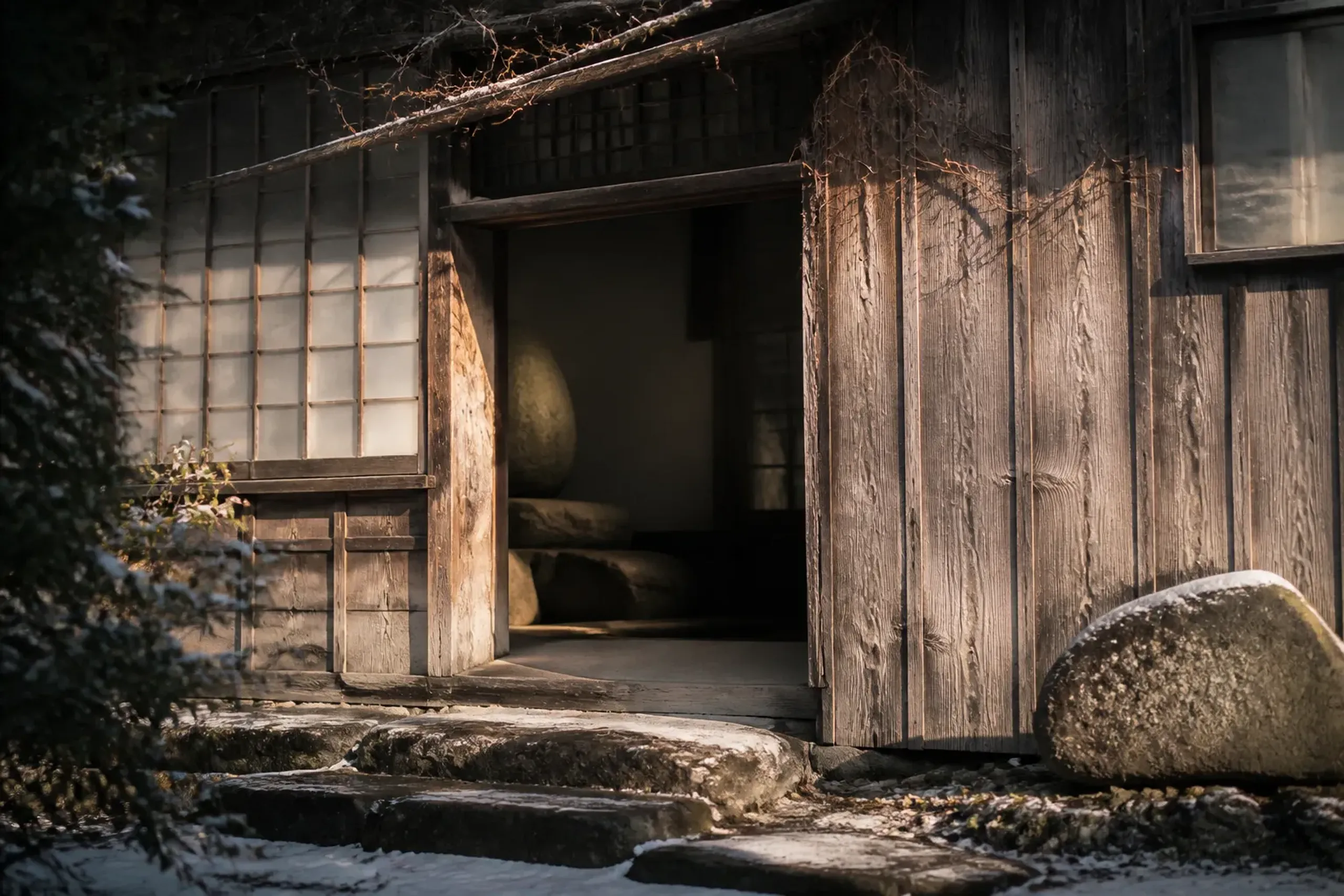
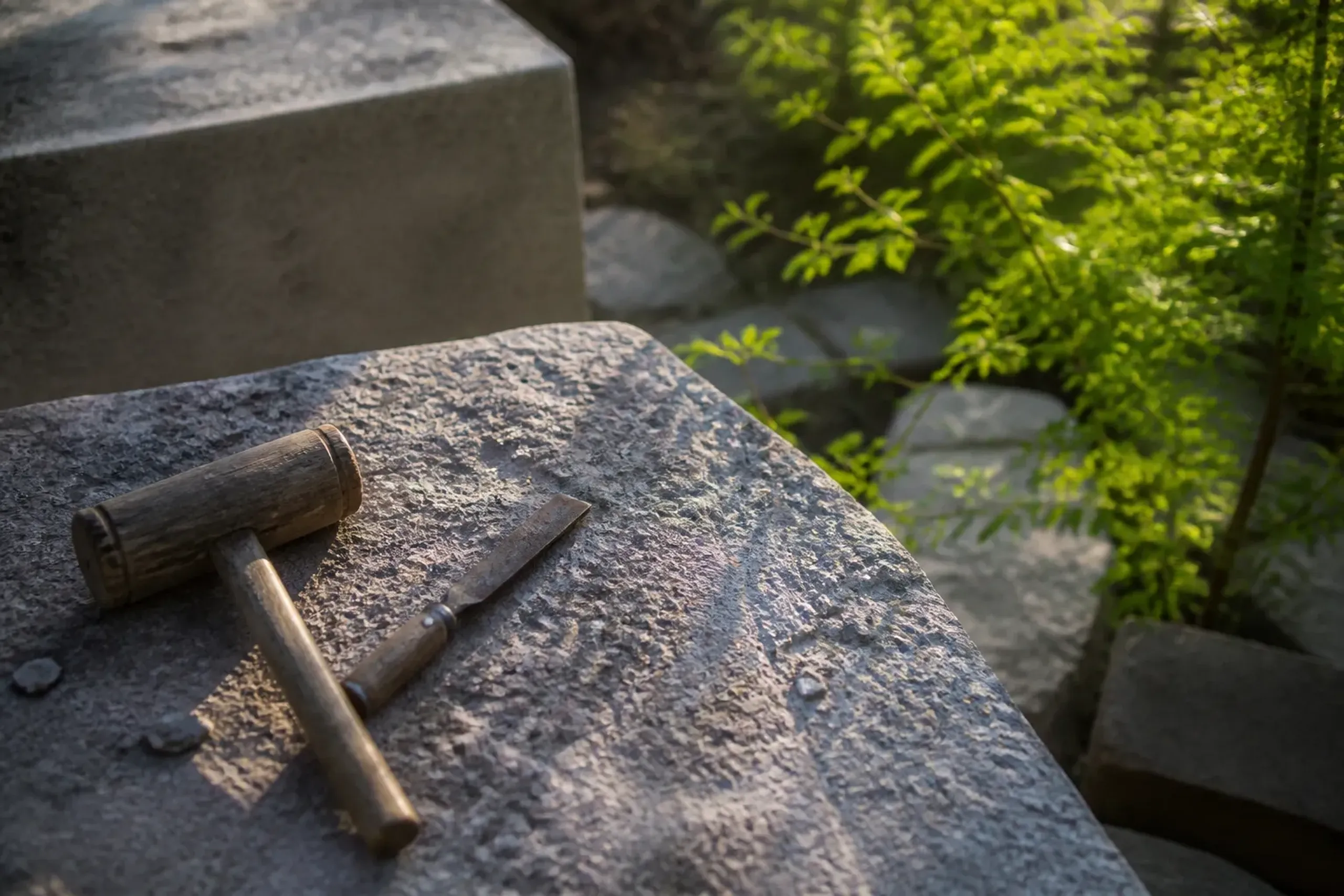
Stand for a moment inside the low stone-wall circle that Noguchi once used as his open-air studio, and the world narrows to what he cared about: rough granite catching the light, tools resting where hands set them down, the quarried mountains rising behind. The pieces around you are not arranged for viewing. They stand where he left them. Some are finished and carry his signature; many are not, and never will be. This is not a collection assembled about a sculptor after his death. It is the place where he worked, kept as he kept it.
Isamu Noguchi could have worked anywhere in the world, and for much of his life he did. He chose a village on Shikoku, a short drive from where the cruise berth lies at Sunport Takamatsu, because the stone there was the stone he wanted and the men who could cut it lived within walking distance. This is the studio he maintained for roughly twenty years, and it survives, preserved, as a private shore day from Takamatsu.
Who Noguchi was, and why Mure
Noguchi first came to Mure in 1956, drawn by Aji stone — the granite quarried in these hills for well over a thousand years. From 1969 he kept a studio and residence on this site, set between the twin heights of Yashima and Gokenzan, and worked here for some two decades, moving between Mure and New York until his death in 1988. What he left behind is not a museum in the ordinary sense.
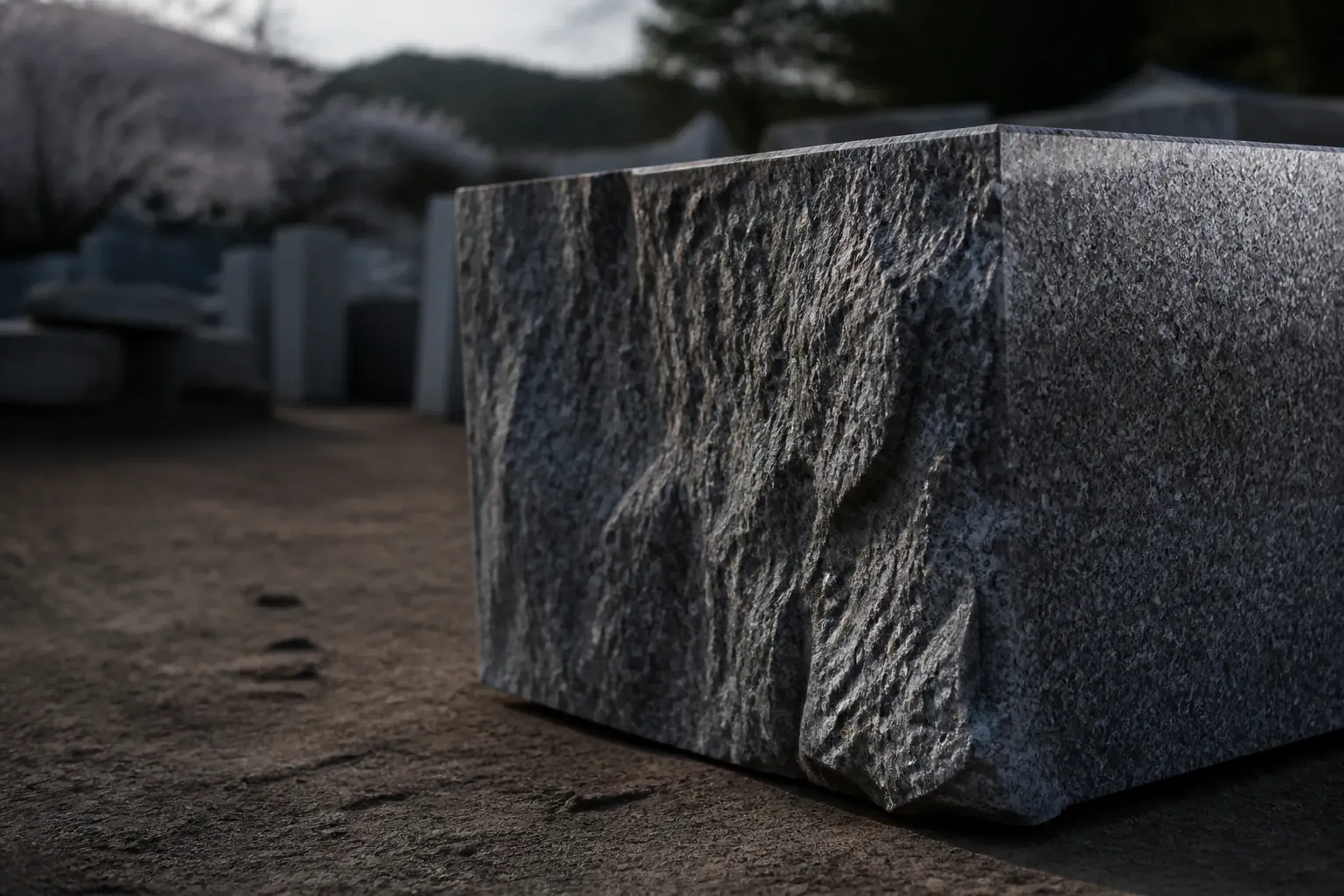
It is a working studio that was never cleared out.
The place opened as a museum in 1999, realising Noguchi's own wish that it become a source and resource for the artists, researchers and others who would come after him. That intention still shapes everything about it. It reads as a studio because it was one, and because those who care for it have refused to let it become anything else.
Aji stone and Izumi Masatoshi
The granite of Mure and Aji is unusually hard, unusually fine-grained, and it takes a polish that brings up a faint mottling in the surface — the local masons call it fu — that no two blocks share. It is the reason Noguchi came, and the reason he stayed.
The men who work this stone are specialists to a degree that has no real equivalent in Western stonecutting: separate hands for splitting, for shaping, for lettering, for hand-polishing. Chief among them was the stone sculptor Izumi Masatoshi, Noguchi's partner in the work and today the chair of the foundation that safeguards the site. Their long collaboration is the reason the studio exists at all, and the reason the work within it looks the way it does. To meet the material and the tradition that sustained it — the register of the shokunin, the master craftsman whose knowledge lives in the hands — is to understand why this particular hillside could hold an artist of Noguchi's stature for so long.
What the site contains
Around one hundred and fifty sculptures stand across the grounds, many of them unfinished.
Noguchi worked on several pieces at once, over years, and when he died they simply stopped. The completed works carry his signature; the unfinished ones do not — a distinction visible on site, and worth carrying with you as you look. You are seeing the interrupted middle of a body of work, not a curated selection of its conclusions. There is little in the world of art more instructive than a great sculptor's unfinished stone, and rarely any chance to stand before it.
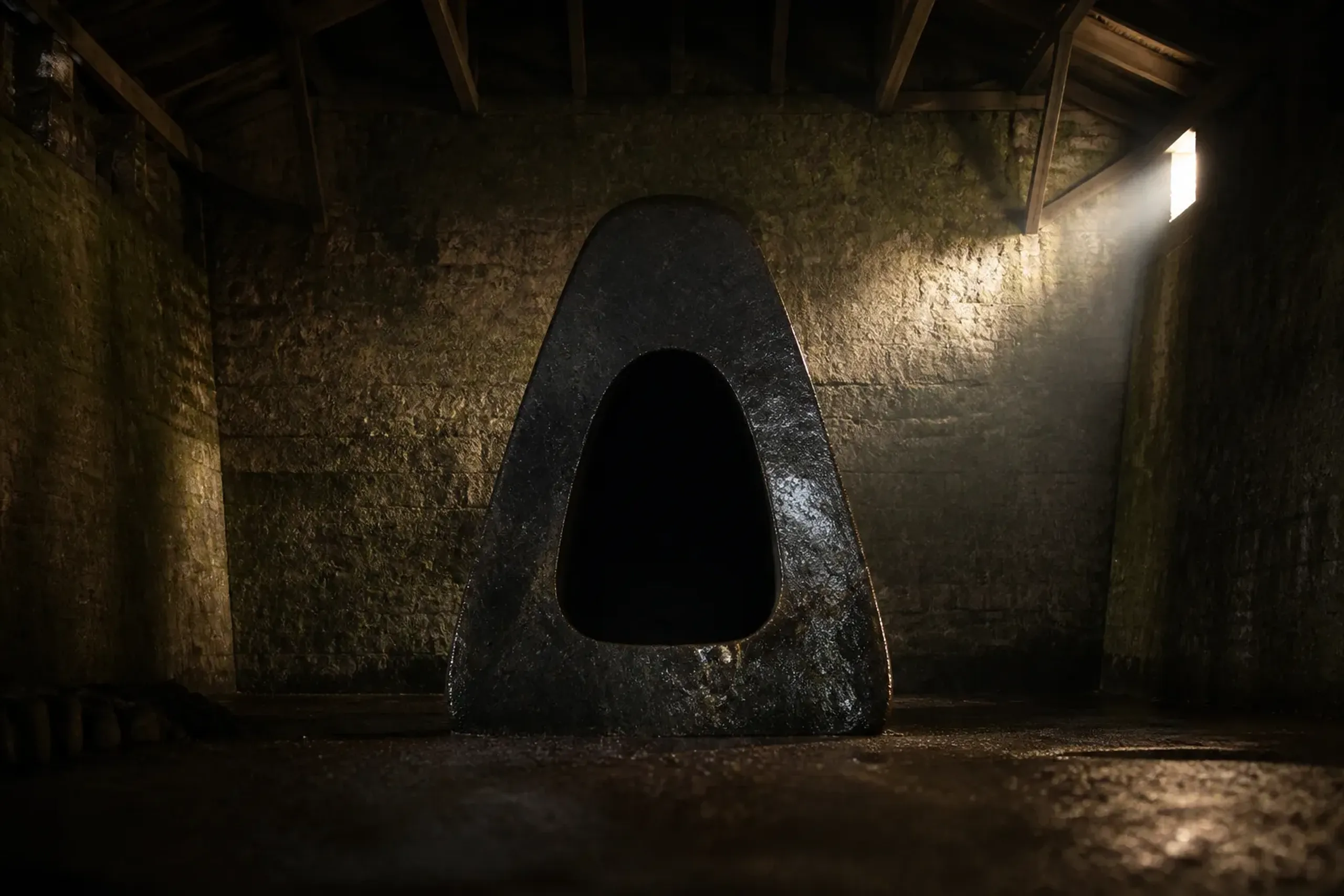
The grounds hold the exhibition storehouse, where Energy Void stands; the stone-wall circle that served as the studio itself; the Isamu House, a samurai residence brought from Marugame and rebuilt here as his home; and the sculpture garden he designed late in life, where finished pieces stand in the open against the sky. The whole is intended not as a set of exhibits but as a single environmental work — one composition, with Yashima and Gokenzan borrowed as its backdrop.
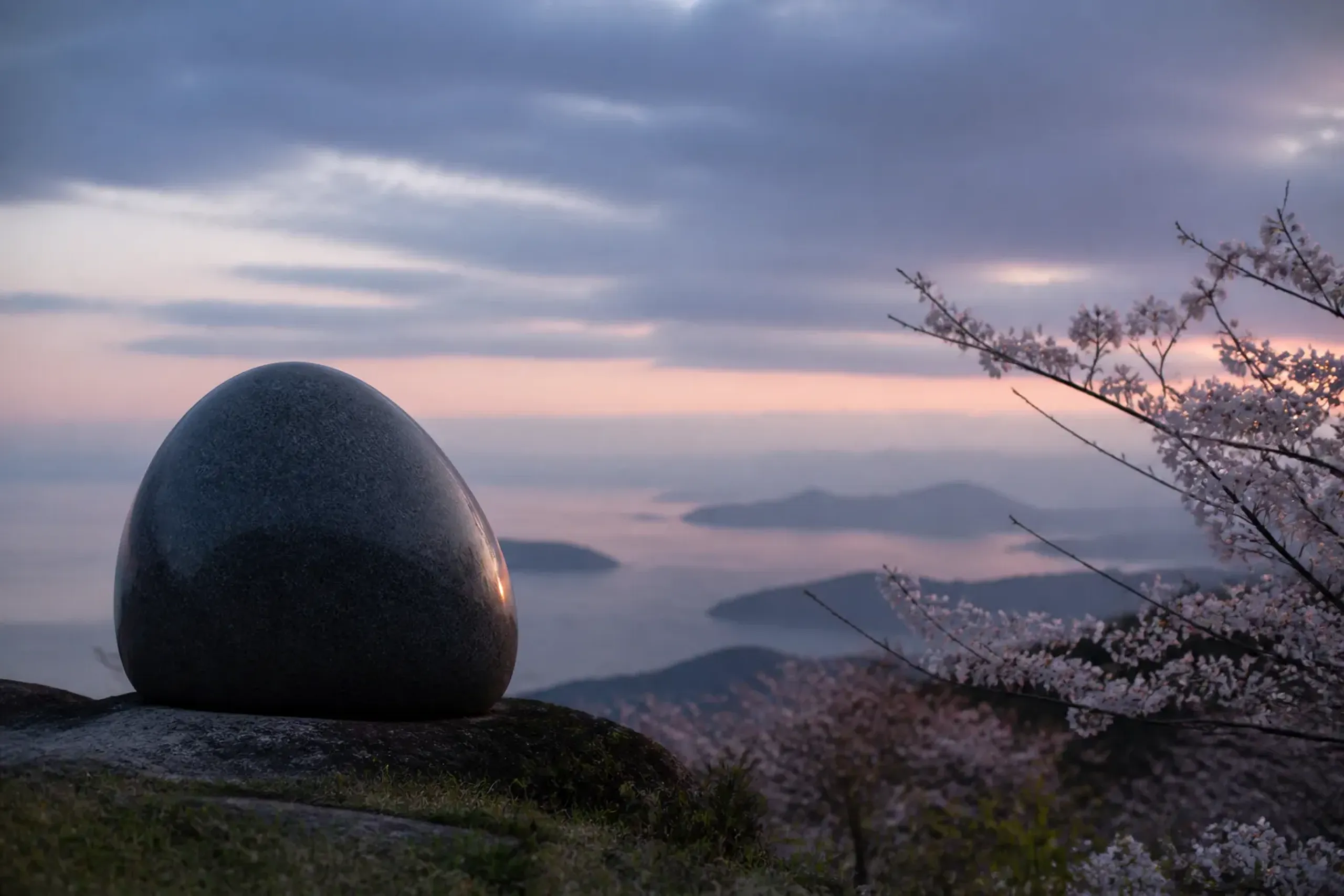
On the hill above sits an egg-shaped stone. The view from beside it, out across the Seto Inland Sea, was one Noguchi described as among the finest he knew. It is worth the climb.
The Emperor and Empress visited the museum in 2004 — a measure of the regard in which the place is held.
The rules that do not bend
Two rules apply here without exception, to every visitor and every arrangement, and it is far kinder to state them plainly now than to have a guest meet them at the gate.
Photography and video are prohibited throughout the museum. This is a foundation rule that protects the works themselves. It is not a function of which session a visitor is on, and it applies fully to private arrangements. A guest who arrives expecting to photograph a private session will be turned away from the camera, not the place — but the disappointment is real, and avoidable. Come to look, not to record.
The works may not be touched, and the Isamu House interior is closed to entry. The house is a Kagawa Prefecture Tangible Cultural Property; it is viewed from its entrance and through its windows, not walked into. This is domestic architecture preserved as he lived in it, and it is protected accordingly.
None of this is obstruction. It is the condition on which the place has stayed intact, and the reason it still reads as a studio rather than an attraction.
What a private arrangement adds
The museum admits visitors on scheduled sessions, and much of the day's craft lies in placing you well within them. Japan Royal Service reserves places on a session at the hour that suits your time ashore. Beyond that — where circumstances allow — we can arrange a private session, access outside standard hours, and knowledgeable guiding within the grounds, so that the unfinished pieces become legible and the stone trade behind them is understood rather than merely seen.
A chauffeured transfer carries you from the berth to reception and back, timed to the session rather than to traffic.
What a private arrangement does not do is lift the two rules above. Photography remains prohibited; the house interior remains closed. The value here is not access to what others cannot see — the museum is internationally known and runs at capacity — but the quiet of an unhurried arrangement, guided by someone the foundation already knows, discreetly made. Your identity and your itinerary remain entirely your own; we publish neither.
Sessions, booking and the three open days
This is the plain-register section, and it is the one to read twice before building a day around the museum.
- Open days. Tuesday, Thursday and Saturday only. Closed Monday, Wednesday, Friday and Sunday; closed 13–16 August; and closed from late December to 5 January. A port call that falls on a Monday, Wednesday, Friday or Sunday cannot include this visit — there is no exception to be had, and it is exactly the fact to establish before setting a season's schedule.
- Session times. 10:00, 13:00 and 15:00 from January to June and September to December. In July and August, 10:00 and 11:30 only. Each session runs roughly one hour — a staff introduction followed by viewing — and capacity is limited.
- Reservation. Required, and made through the museum's own online form. Since December 2024 this replaced the earlier postcard, fax and email system. Online booking closes twenty-four hours before the session.
- Admission. ¥3,300 in advance, ¥3,800 on the day. High-school students and under are free with ID. Group bookings are handled by telephone.
- Reception. Reception is at a different location from the museum itself. Visitors go to reception first — a detail that catches people out.
- Late arrivals are admitted, but the session is not extended.
- Weather. Visits may be suspended if the Meteorological Agency issues a warning for the area.
Hours, prices and session times should be confirmed at the time of planning; they change, and the online booking system itself is recent.
The port, and building a day around a fixed session
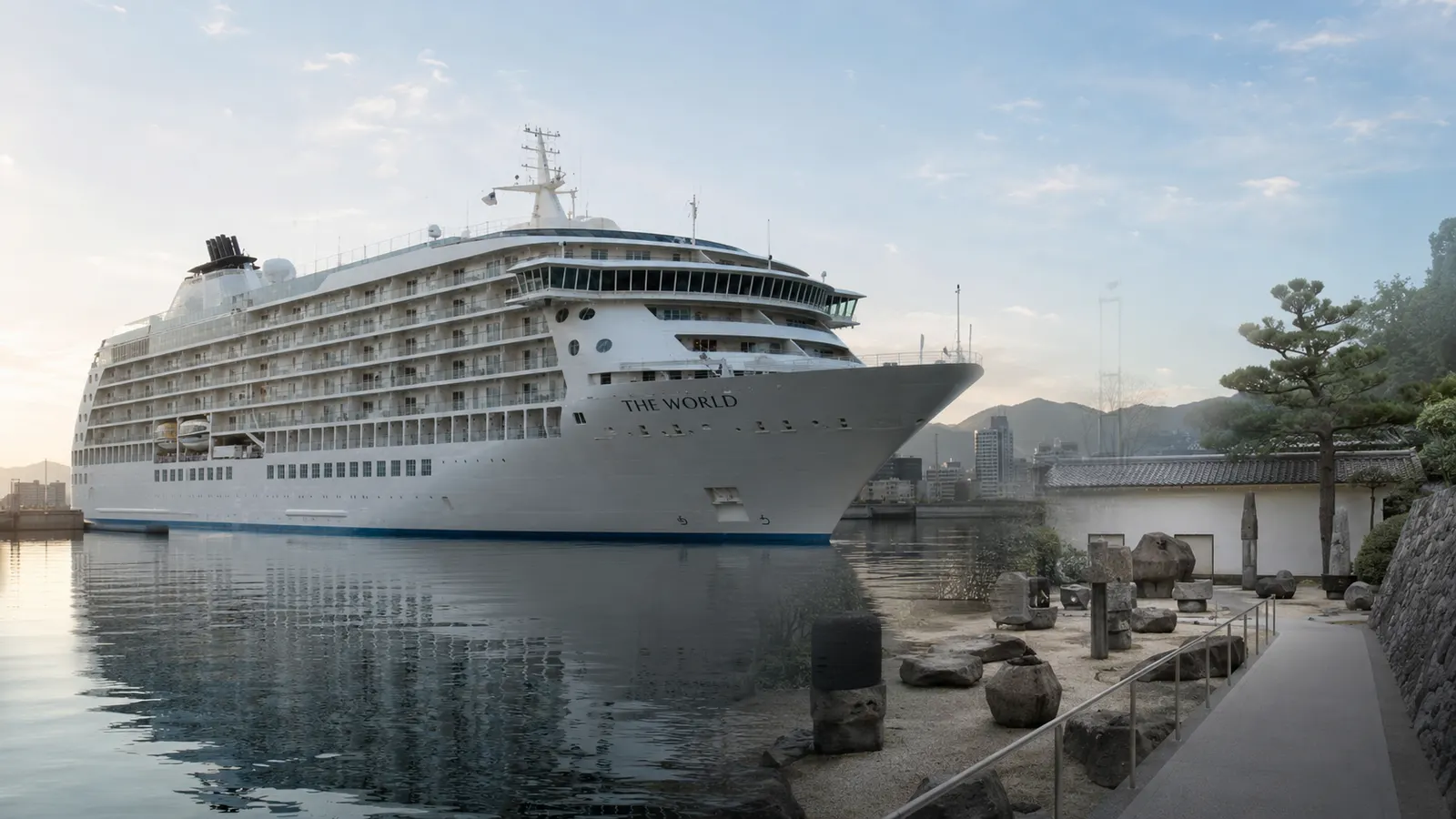
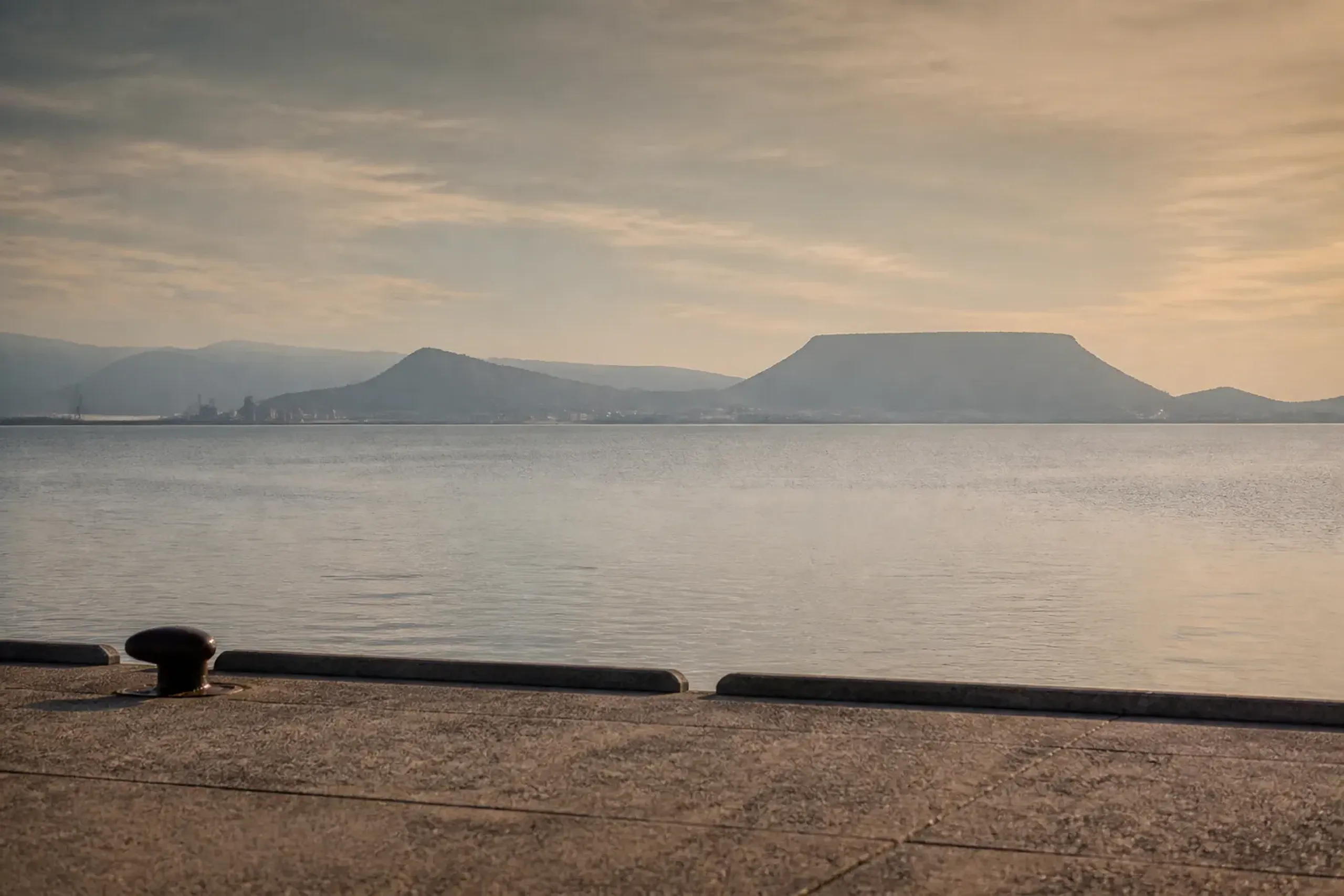
The cruise berth lies at Sunport Takamatsu, in the Tamamo district: a 310-metre quay, including an 85-metre dolphin section, with 10 metres of depth, a 20-metre apron, built to the 50,000-tonne class. Vessels above roughly 100,000 GT berth instead at the Asahi district container terminal, farther from the city.
Mure lies around thirty minutes from central Takamatsu by public bus, and less by private car. The museum's fixed session times are the single real constraint on a port call. With a mid-morning or afternoon session and roughly ten hours ashore, the sensible move is to build the day around the museum rather than trying to fit it in — the drive, the reception stop, the hour within the grounds and the return all planned backward from the session hour. This is the planning insight, and it is why a call here is best discussed before the ship arrives, not after.
Mobility
Viewing is largely outdoors, on uneven ground and including the hill above where the finished sculptures and the egg-shaped stone stand. Sturdy footwear is needed, and the terrain should be weighed honestly against the party's comfort on foot. Apart from the sculpture garden, much of the site — the studio, the buildings, the approach from beside reception — can be seen without the climb; the hill itself is the one part that firmer footing cannot spare.
If the day still has room, Yakuri-ji sits nearby, reached by a short cable car.
Planning the call
We build the day backwards from the gangway: the ship's alongside time first, then the drive and the reception stop, then how long you truly wish to stand among the stones — and only then the session. A tailor-made day ashore at Mure pairs naturally with our wider Setouchi coverage, and with our private transportation throughout the region.
We are Japan Royal Service, a Japanese company working in Japanese, with the people who care for these places. That is the whole of the advantage: the arrangements are made by someone the other side already knows. To place a session and shape the day around it, contact us here.