In this guide
Every spring, a pale pink wave moves across Japan. It begins in the south, climbs the islands week by week, and disappears almost as quickly as it arrives. The tree behind nearly all of it has a name most visitors never learn: Somei Yoshino.
This single cultivar shapes how Japan experiences spring. It is the reason a forecast can predict, almost to the day, when a riverbank in Kyoto will turn white. At Japan Royal Service, we have spent years learning where these trees bloom in quiet, and how to stand beneath them without a crowd. This guide explains the flower itself — and how a discerning traveler can meet it on private terms.
What Somei Yoshino Actually Is
Somei Yoshino (染井吉野) is not a wild tree. It is a hybrid, cultivated by gardeners in the Somei district of old Edo — today's Toshima ward in Tokyo — around the mid-19th century. Its parents are Prunus speciosa, the Oshima cherry, and Prunus pendula f. ascendens, the Edo higan cherry.
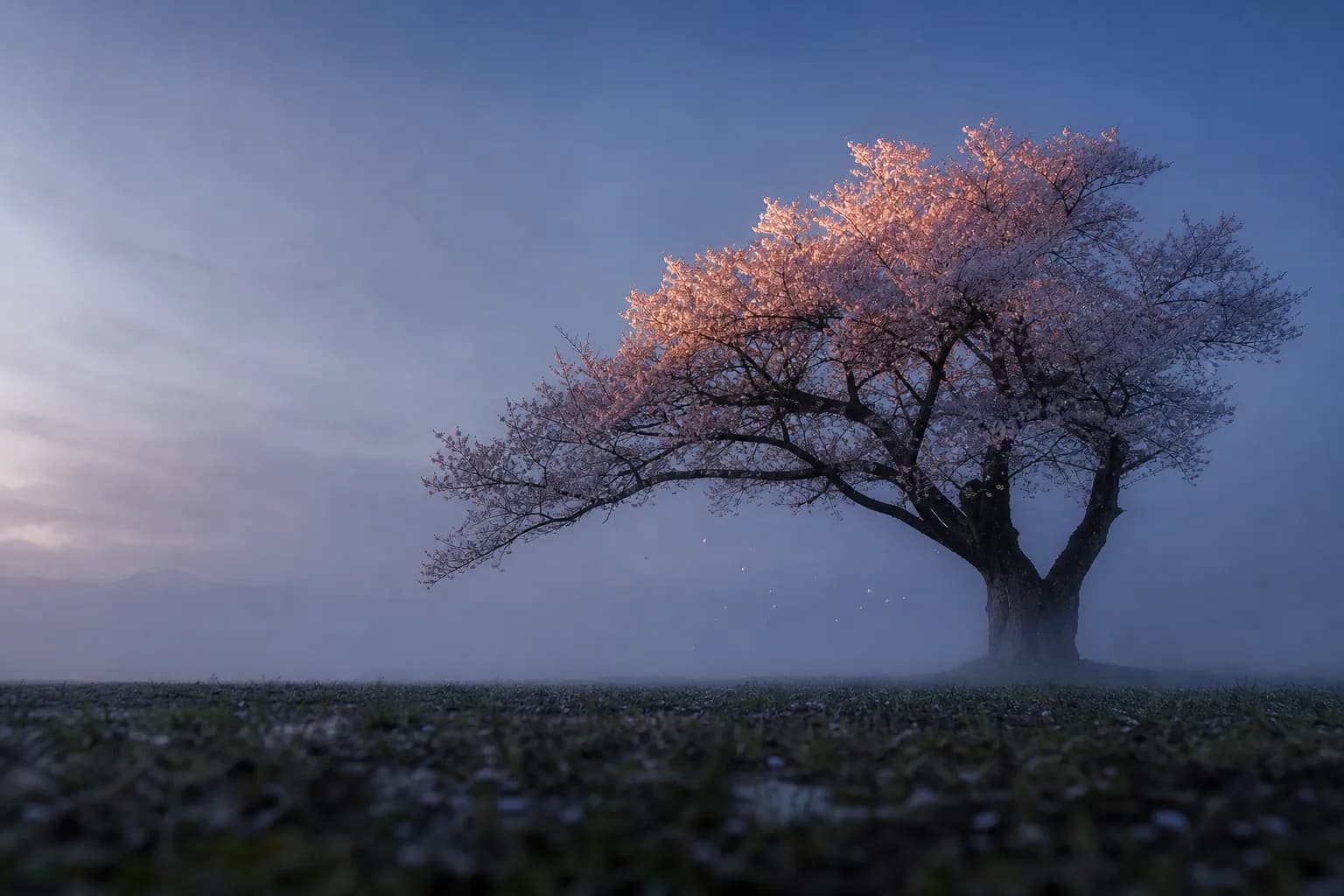
The cross produced something remarkable. Pale blossoms that open before a single leaf appears. The effect is a soft, weightless cloud of petals — five to a flower, faintly pink at first, fading toward white as the days pass.
Here is the part most people miss. Every Somei Yoshino in Japan is a clone. The tree sets no viable seed, so it spreads only by grafting. Cut a branch, graft it, and you have an exact genetic copy of the original.
Key fact: Because they are genetic clones, Somei Yoshino in the same area bloom almost in unison. That synchronized burst — the famous "sakura tunnel" — is biology, not coincidence.
How to Recognise the Tree
Once you know the markers, Somei Yoshino is easy to identify even out of season. The blossoms carry five petals, roughly 3 to 3.5 centimetres across, on slender stalks. Color is the giveaway: pale pink ripening to near-white.
The bark is purplish-brown, marked with horizontal lenticels — fine pale lines that run sideways across the trunk. Young branches show a reddish cast that greys with age. Leaves are elliptical, with serrated edges and a sharp tip, and they only unfurl once the flowers have begun to fall.
| Feature | What to Look For |
|---|---|
| Blossom colour | Pale pink, fading to white |
| Petals | Five per flower, ~3–3.5 cm |
| Bloom timing | Flowers open before leaves |
| Bark | Purplish-brown, horizontal lenticels |
| Mature height | Roughly 10–12 metres, broad canopy |
Why This One Tree Came to Define Spring
For centuries, Japan admired many native cherries — the mountain yamazakura, the weeping shidarezakura, dozens of others. Hanami existed long before Somei Yoshino. But the hybrid changed the scale of it.
During the Meiji era and into the early 20th century, Somei Yoshino was planted in enormous numbers along rivers, in parks, around schools and shrines. Because every tree was identical, whole avenues bloomed at once. A city could now circle a date on the calendar and know its parks would be in full flower.
That predictability built the modern hanami calendar. Today the Japan Meteorological Corporation and other forecasters track the sakura zensen — the cherry blossom front — and pinpoint peak bloom within a couple of days.
There is a deeper layer, too. The flowering lasts barely a week, often less after rain. That brevity feeds the old idea of mono no aware — a quiet ache at the beauty of things that do not last. The Somei Yoshino, gone almost as soon as it arrives, is the perfect vessel for it.
When and Where It Blooms Across Japan
The front moves from south to north. It opens in Kyushu, sweeps through Honshu, and finishes weeks later in Hokkaido. Warmer recent springs have nudged the dates a little earlier than the historical averages, which is exactly why we plan around live forecasts rather than fixed dates.
| Region | Typical Peak Bloom |
|---|---|
| Fukuoka (Kyushu) | Late March to early April |
| Tokyo (Kanto) | Late March to early April |
| Kyoto & Osaka (Kansai) | Early to mid-April |
| Sendai (Tohoku) | Mid to late April |
| Sapporo (Hokkaido) | Early to mid-May |
A note for the truly flexible traveler. Because the front migrates, you can, in theory, follow a single spring north and see peak bloom three or four times in one trip. We have built exactly this kind of itinerary for guests who could spare the days.
Famous Avenues — And The Quieter Ones
The celebrated spots earn their fame. The Philosopher's Path in Kyoto, Ueno Park and the Meguro River in Tokyo, the moat at Osaka Castle — all deliver the postcard. They also deliver dense crowds at peak hour, which is the part no postcard shows.
There is another way to see Somei Yoshino. Japan is full of riverbanks, temple precincts, and old castle grounds where the same trees bloom with a fraction of the foot traffic.
Tokyo And Around
Beyond Ueno and Meguro, the grounds of the former Hama-rikyu and the long avenue of the Imperial Palace's outer moat reward an early start. In our experience, dawn changes everything. The light is soft, the petals are still, and the crowds are still asleep.
Kyoto And Kansai
Kyoto's Somei Yoshino glow along the Kamo River and the Okazaki canal, and within temple gardens that open early to a small number of guests. A private chauffeur lets you reach two or three sites before mid-morning, then retreat before the day fills. Pairing that with a calm base — Capella Kyoto, which opened in March 2026, or the new Imperial Hotel, Kyoto in Gion — makes the whole rhythm gentler.
Beyond The Golden Route
For guests who want the bloom without the bustle, the castle towns of Tohoku and the riverside paths of regional Honshu offer Somei Yoshino in near-silence. This is the hidden-Japan side of sakura: known to locals, invisible on the international itinerary.
How We Plan A Private Sakura Journey
Timing is the whole game. Peak bloom is a moving target, and a single warm week or a hard rain can shift it. We watch the forecasts daily through the season and keep itineraries flexible enough to adjust by a day or two when the trees decide otherwise.
Movement matters as much as timing. A private chauffeured vehicle — a Lexus LM, a Toyota Alphard, a Mercedes V-Class for a larger party — lets you slip between viewing sites without queuing for taxis or trains. Early starts. Quiet exits. A flask of tea waiting in the car.
Our concierge can also weave the blossoms into something richer than a photo stop: an introduction-only garden viewing, a quiet kaiseki lunch as petals drift past the window, a session with an artisan whose work echoes the season. The flower is the centrepiece. The setting is what we curate around it.
Somei Yoshino: Questions We Hear Most
How Long Do The Blossoms Last?
From first open to falling petals, usually seven to ten days. Full bloom — mankai — holds for only a few of those. Rain or wind can shorten it sharply, which is why exact dates are never promised this far out.
Is Somei Yoshino Different From Other Cherry Blossoms?
Yes. It is one specific hybrid cultivar, not a catch-all term for sakura. Its pale, near-white flowers and synchronized bloom set it apart from wild mountain cherries and the deep-pink kanzan, which bloom later.
When Should I Arrive To Catch Peak Bloom In Tokyo Or Kyoto?
For both cities, late March into the first half of April is the safe window, with Kyoto often peaking a touch later than Tokyo. We recommend keeping two or three buffer days and letting the forecast confirm the exact viewing days once you are closer.
Can I See The Blossoms Without Crowds?
Absolutely. Early mornings, lesser-known sites, and private access to certain temple gardens make it entirely possible to stand beneath Somei Yoshino in something close to quiet. That is much of what we plan around.
Why Choose Japan Royal Service
Anyone can stand in Ueno Park at peak bloom. Few can watch the same trees in stillness, at the hour the light is best, with no one else in frame. That difference is the work we do.
Japan Royal Service plans private spring journeys for travelers who value discretion and calm over the standard checklist. We track the bloom forecast daily, hold itineraries flexible, and pair the flowers with the parts of Japan that do not appear on the public map — quiet gardens, introduction-only tables, and craftspeople who rarely receive outside guests.
Our chauffeured fleet, our multilingual concierge, and our long relationships across Tokyo, Kyoto, and the regions let us move you gently through the busiest week of Japan's year. The crowds never have to be your problem.
To explore a private Somei Yoshino journey for the coming spring, reach our concierge through the contact form or directly via WhatsApp. We will listen first, then propose something made for you.