In this guide
- 01The Premise: Start Before The Workshop
- 02The Material Timeline Is The Revelation
- 03Which Season Works Best For A Shokunin Lineage Journey (7–10 Days)?
- 04What Does A Source-Stage Day Actually Feel Like?
- 05Preparation Is The Least Visible Stage—And Often The Most Skilled
- 06Workshop Days: Where The Material Finally Becomes An Object
- 07How Many Days Do You Need To Follow One Craft From Source To Workshop?
- 08Geography Is Part Of The Story, Not Overhead
- 09Which Crafts Suit A Lineage Journey—and Which Do Not?
- 10Ishikawa As A 2026 Anchor: Urushi And Kogei Without The Crowds
- 11Discretion And Conduct: How To Be Present Without Taking Over
- 12What You Take Away: A New Way To See Objects
- 13Frequently Asked Questions
- 14Why Choose Japan Royal Service
A finished bowl can look effortless. Smooth rim, quiet glaze, a weight that sits right in your palm. The shock is the time behind it. Much of that time happens before the maker ever begins.
Most craft travel starts where the shokunin starts: at the workbench, the wheel, the lacquered counter where the light falls cleanly. Useful. But incomplete. Our team at Japan Royal Service designs a different arc: you begin earlier, at the material’s first life, then follow it forward as far as the season allows.
This is a journey built for the traveler who has seen the “best of Japan” and felt oddly unsatisfied. Too much gloss. Too little substance. If you want wabi-sabi calm, hidden-Japan access, and discretion that keeps your name off other people’s stories, a single-material route changes how Japan looks.
The Premise: Start Before The Workshop
Our premise is simple: a craft object is not born in the studio. It begins in a forest, a hillside, or a pit. Sometimes it begins in a warehouse where time itself is the main tool.
You meet different people at each stage. Source-stage workers often do not get credited, even when their judgement determines whether the material will ever become usable. That is the point. Seeing those hands changes what you value later.
We design these itineraries in a restrained register. Quiet roads. Appointment-based meetings. A pace that leaves room for listening, not collecting proof.
The Material Timeline Is The Revelation
Luxury craft travel often sells the moment of making.
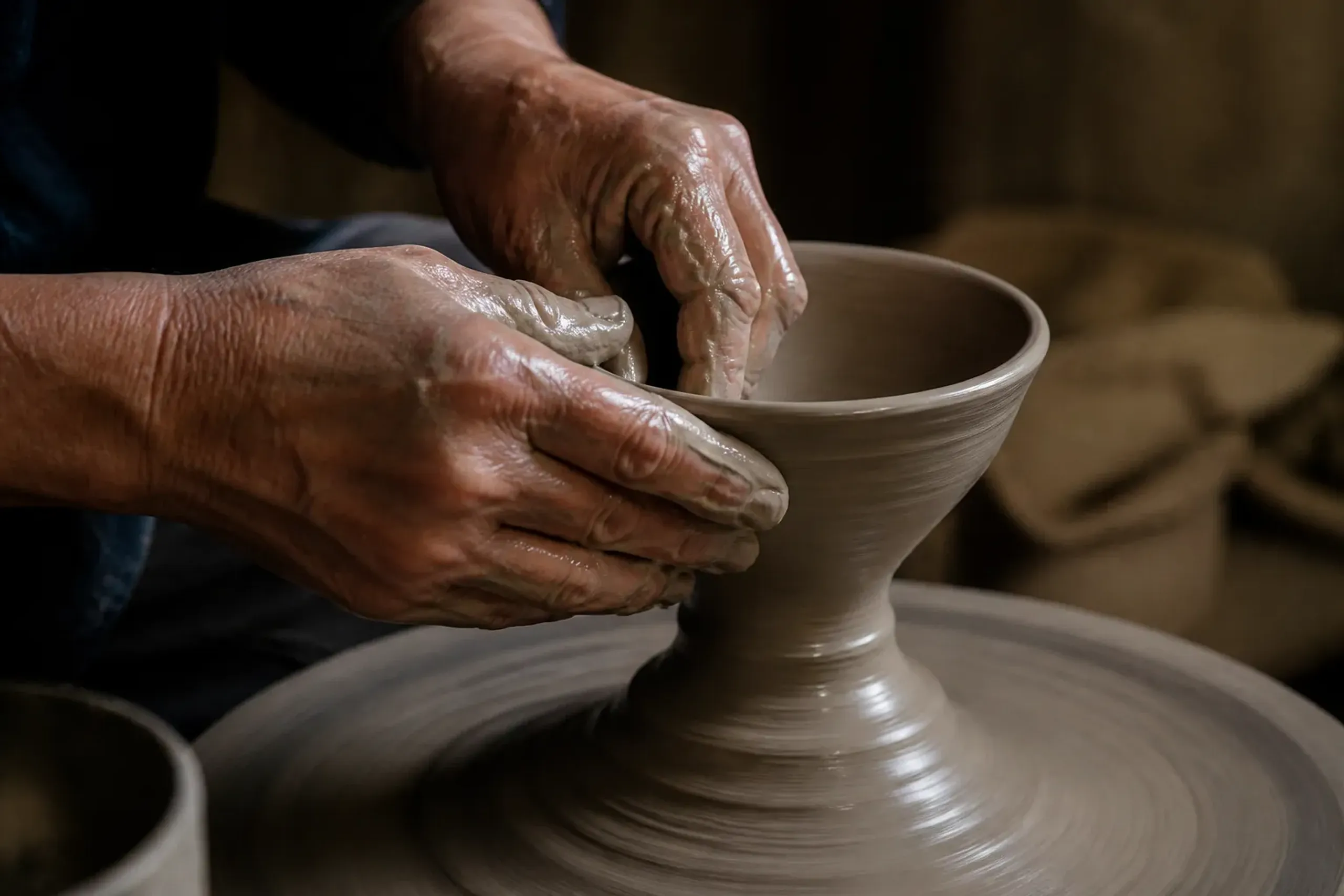
The lineage journey sells what comes before. Drying, resting, filtering, ageing, sorting, discarding. Slow work that resists photographs.
That slowness is not “dead time.” It is skill, often concentrated in small teams who know exactly when not to touch a material. A good preparation stage can look like nothing is happening. That’s why most visitors never see it.
When you return home, the object stops being “a souvenir.” It becomes an index of years: handled carefully, stored carefully, moved carefully. Wabi-sabi is not decoration here. It is patience made visible.
Which Season Works Best For A Shokunin Lineage Journey (7–10 Days)?
The best season is the one when at least one source stage and one preparation stage are active, so you can see real work rather than a staged demonstration.
We say this early because it protects the integrity of the trip. Some stages have narrow windows. Others are geographically distant. Many processes include long waiting periods that are the craft, not an inconvenience.
So we build honestly. You follow the stages that are happening while you are in Japan, and we explain the rest in context—through materials, tools, and conversations—without pretending you “saw the whole cycle.”
If you want a calendar framework for thinking this way, the logic mirrors cuisine: you plan around what is alive right now, then you let the rest remain aspirational. For that mindset, our team often points guests to The Ingredient Calendar as a parallel way to plan around natural constraints.
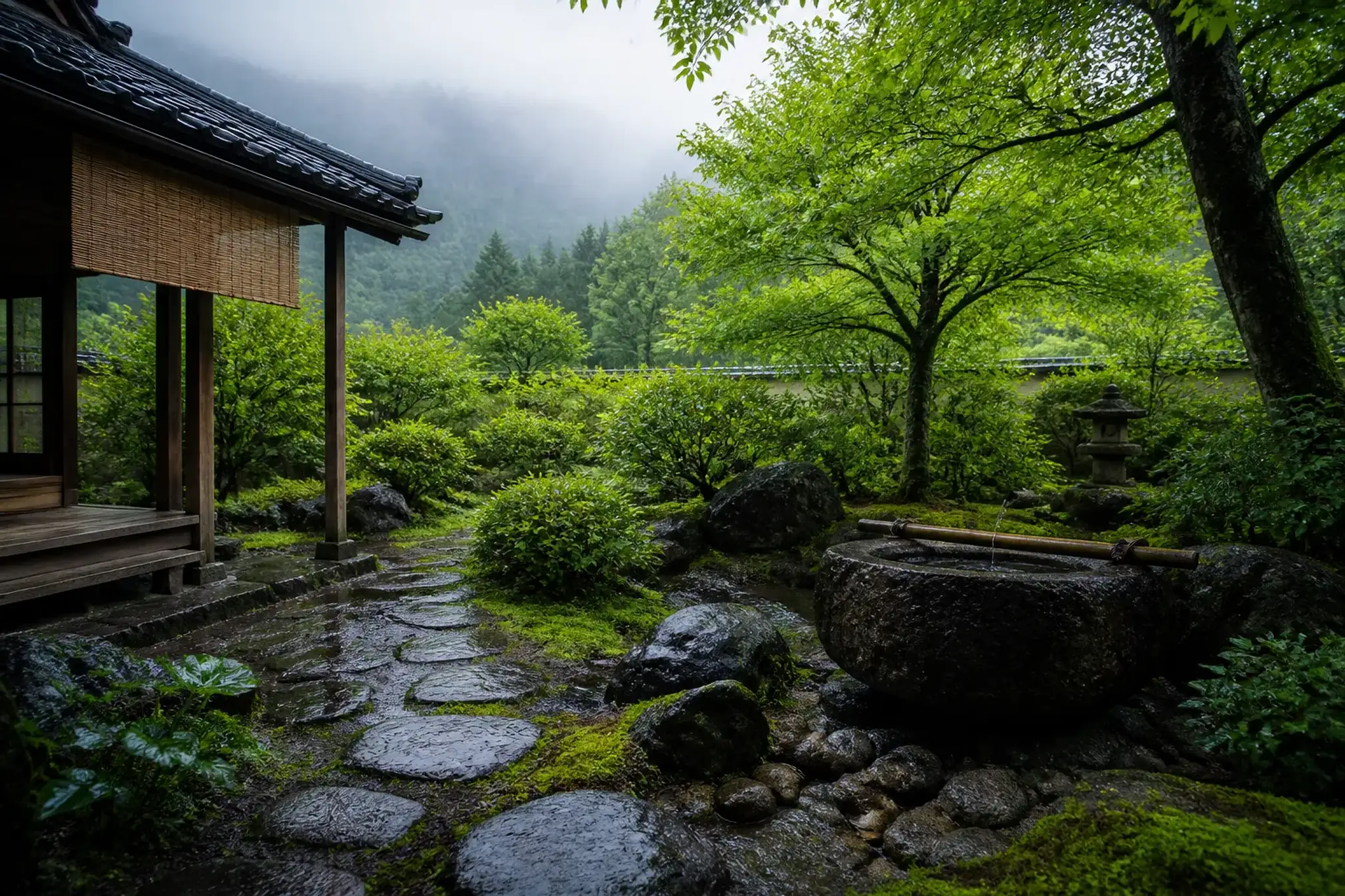
Key fact: The full material cycle cannot be witnessed in one trip. A lineage journey is about following the active stages and learning to recognize the inactive ones without forcing them.
What Does A Source-Stage Day Actually Feel Like?
A source-stage day feels like work, not a museum. You are outside, sometimes far from cities, and the rhythm is set by weather, light, and transport rather than by your camera. Mud on boots happens. Silence happens.
These sites can be visually modest. A stand of trees. A cut slope of earth. A shed where material is sorted. The meaning arrives later, when you understand how a tiny decision here will echo through the finished piece.
Source-stage people are not “supporting characters.” They are specialists with their own standards. Treat them that way.
Example: Forestry-Linked Craft Learning Near Kyoto
Kyoto Prefecture has official, forestry-focused activities that show how timber moves from felling to lumber at a sawmill, including context around regional woods such as Tanshu timber in the Chutan area along the Yura River. It is practical. It is grounded.
Keihoku (in Ukyo-ku, Kyoto) also has documented, hands-on forest experiences tied to Kitayama cedar, with a structure that can include forest work and visits to related processing. For the right traveler, this is where craft becomes physical again.
From there, we can layer in a workshop stage that uses wood or wood-adjacent materials, keeping the day-to-day logic intact: source first, then preparation, then making. One stage per day. No rush.
Preparation Is The Least Visible Stage—And Often The Most Skilled
Preparation is where most people lose interest.
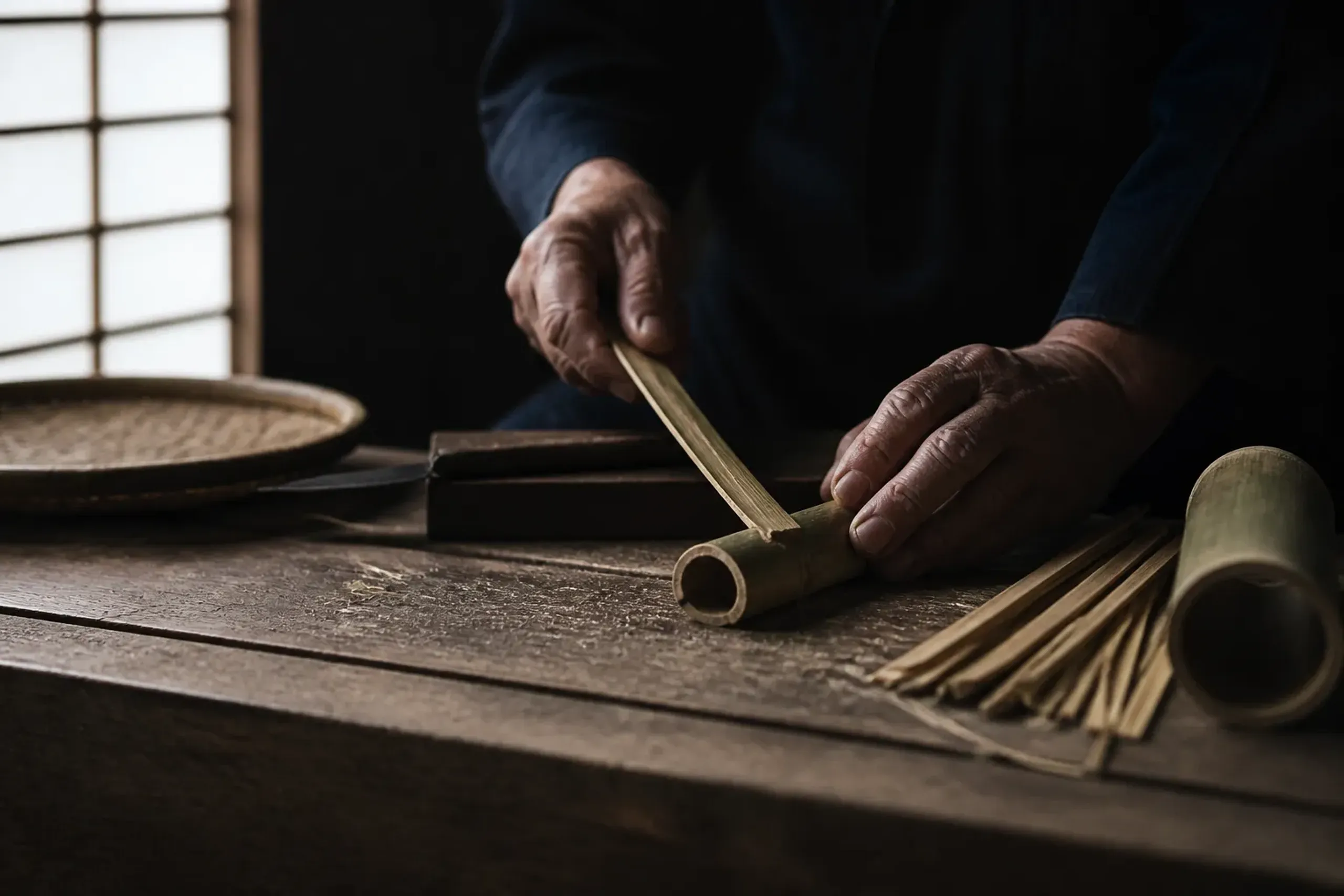
That’s exactly why it matters. The work can look like sorting, washing, aging, drying, or repeatedly refining a substance until it behaves.
In our experience, this is also where hidden-Japan access becomes real. Many preparation spaces are not built for visitors. They are working environments, and permission is personal.
You also begin to see the ethics of craft. Waste exists. Rejection exists. The best teams are honest about what does not make the grade. That honesty is a form of discretion: quiet standards, not marketing language.
Why High-Net-Worth Travelers Appreciate Preparation
HNW travelers are used to paying for outcomes. Preparation teaches you to pay attention to process. That shift is oddly calming.
It also sharpens your eye. You learn what “good material” looks like before it is polished into desirability. Later, in a gallery or shop, you can sense when a story is too tidy.
Workshop Days: Where The Material Finally Becomes An Object
The workshop is still essential. You want to see hands at full concentration, tools that fit the body, and a workroom that is arranged for repetition rather than display. The difference is that you arrive already informed.
That changes the conversation. Instead of asking only “how long does it take,” you can ask what the material demanded earlier, and what compromises it refuses now. Small questions. Better answers.
When the workshop is connected to a master, we treat it as a shokunin encounter, not a performance.
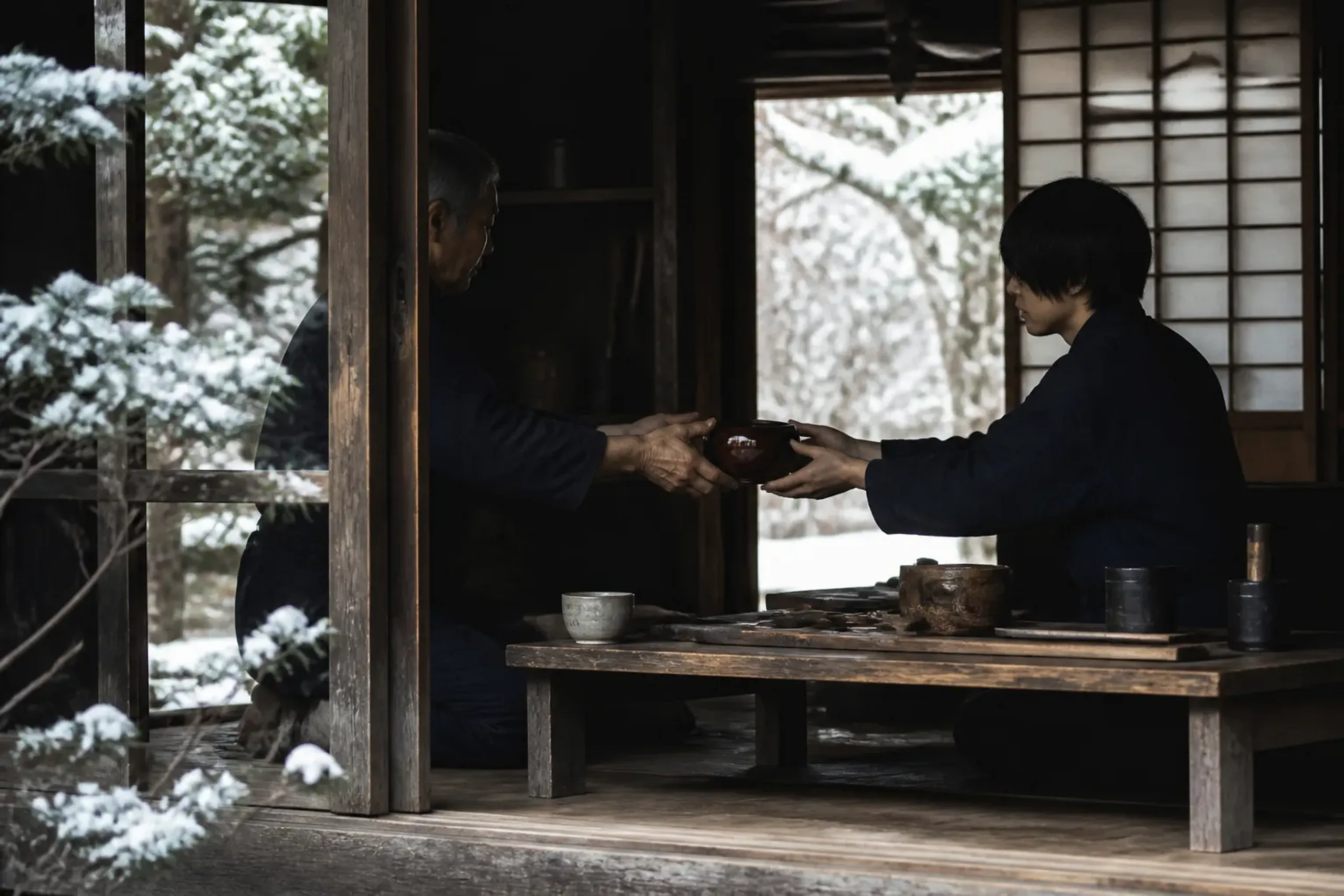
We keep groups small. We keep time generous. We keep the tone quiet.
How Many Days Do You Need To Follow One Craft From Source To Workshop?
For most crafts, 4–5 days covers a truthful arc: at least one source stage, at least one preparation stage, and at least one workshop day, without compressing the very slowness you came to understand.
A 7–10 day journey is not “more stages.” It is more geography, more decompression, and more room to align with what is active. It also lets you add a cultural anchor—an exhibition or fair—without turning the route into a checklist.
We do not pad. If a craft’s active stages only support five days with integrity, we would rather end at five and leave you wanting the next chapter.
| Trip Length | What You Can Realistically See |
|---|---|
| 4–5 Days | One source-stage day, one preparation-stage day, one to two workshop days, plus travel time and a buffer for weather or access constraints. |
| 7–10 Days | The above, plus cross-prefecture movement, a calm rest day, and one major cultural anchor (fair/exhibition) without rushing daily stages. |
Geography Is Part Of The Story, Not Overhead
Material does not respect your hotel base. Clay, timber, urushi sap, kiln fuel, and the workshop that finishes the object can sit far apart. Sometimes across prefectures. That distance is not wasted time. It is the chain.
We plan the route like a relay. One stage per day. A clean handoff from one set of specialists to the next.
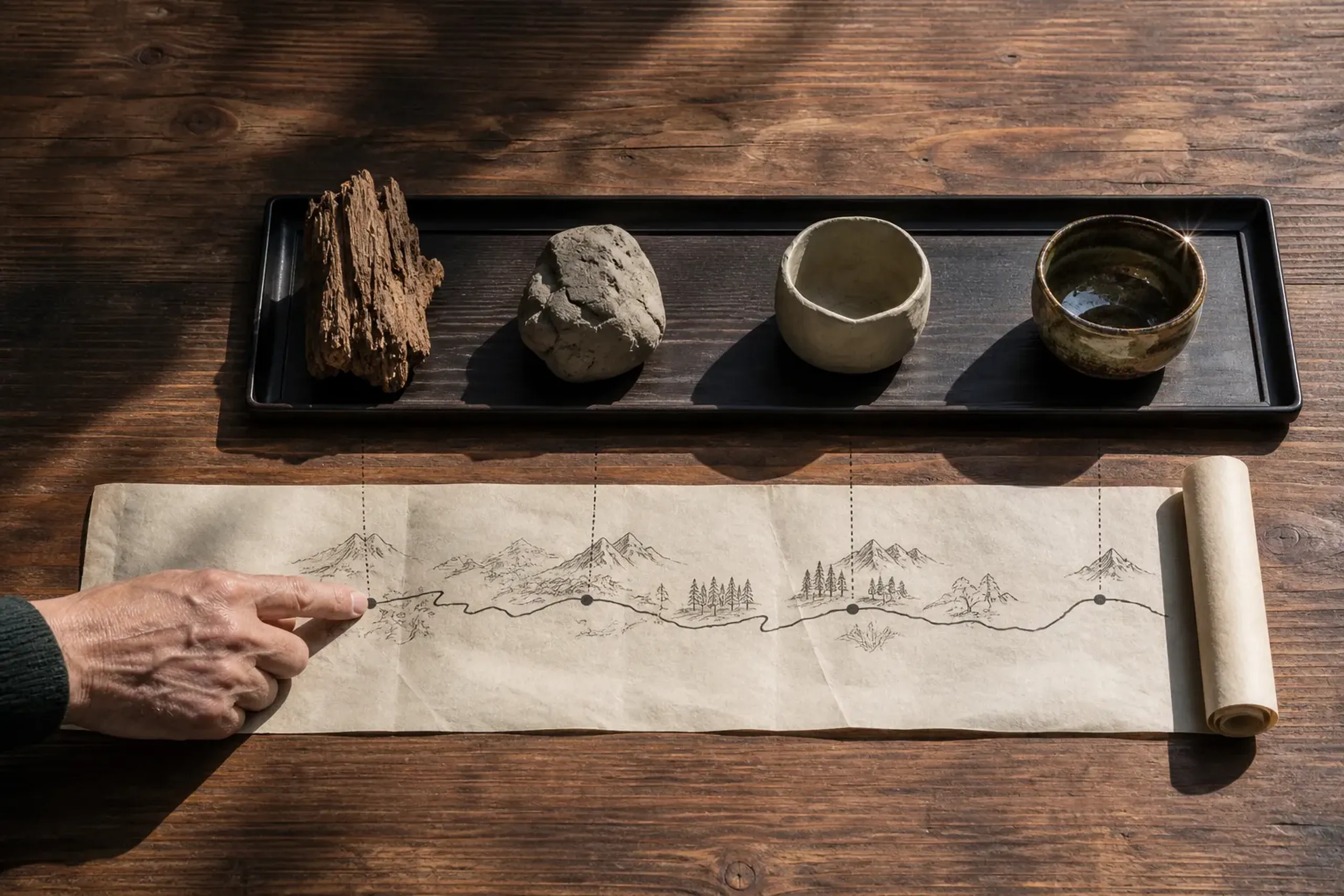
If you compress it into two stages a day, you will remember only driving.
For movement, our private transportation is designed to disappear into your day: quiet cabin, watchful timing, and a driver who understands that a rural arrival should not feel like an event. First-time readers can see our approach to private transportation here.
Which Crafts Suit A Lineage Journey—and Which Do Not?
Lacquer and ceramics tend to suit this structure because you can speak clearly about source material, preparation, and workshop transformation without forcing a complete life-cycle into a single visit.
Wood-linked crafts can work when you can ethically visit forestry and processing stages that are already operating. The point is not to cosplay labor. It is to understand the supply chain with humility.
Some crafts do not suit this format. If a craft’s source stage is inaccessible, too hazardous, or simply not visitable in a respectful way, we do not treat that as a problem to “solve.” We choose a different craft, or we shift the journey to preparation and workshop depth.
Ishikawa As A 2026 Anchor: Urushi And Kogei Without The Crowds
Ishikawa offers a rare thing for craft-focused travelers: public cultural anchors that can frame private learning, without turning your trip into a retail crawl. Quietly, it’s one of the strongest places to think about urushi and contemporary kogei in the same breath.
The Ishikawa International Urushi Exhibition will hold its 14th event in 2026, and it notes three major urushi production areas in Ishikawa: Wajima, Yamanaka, and Kanazawa.
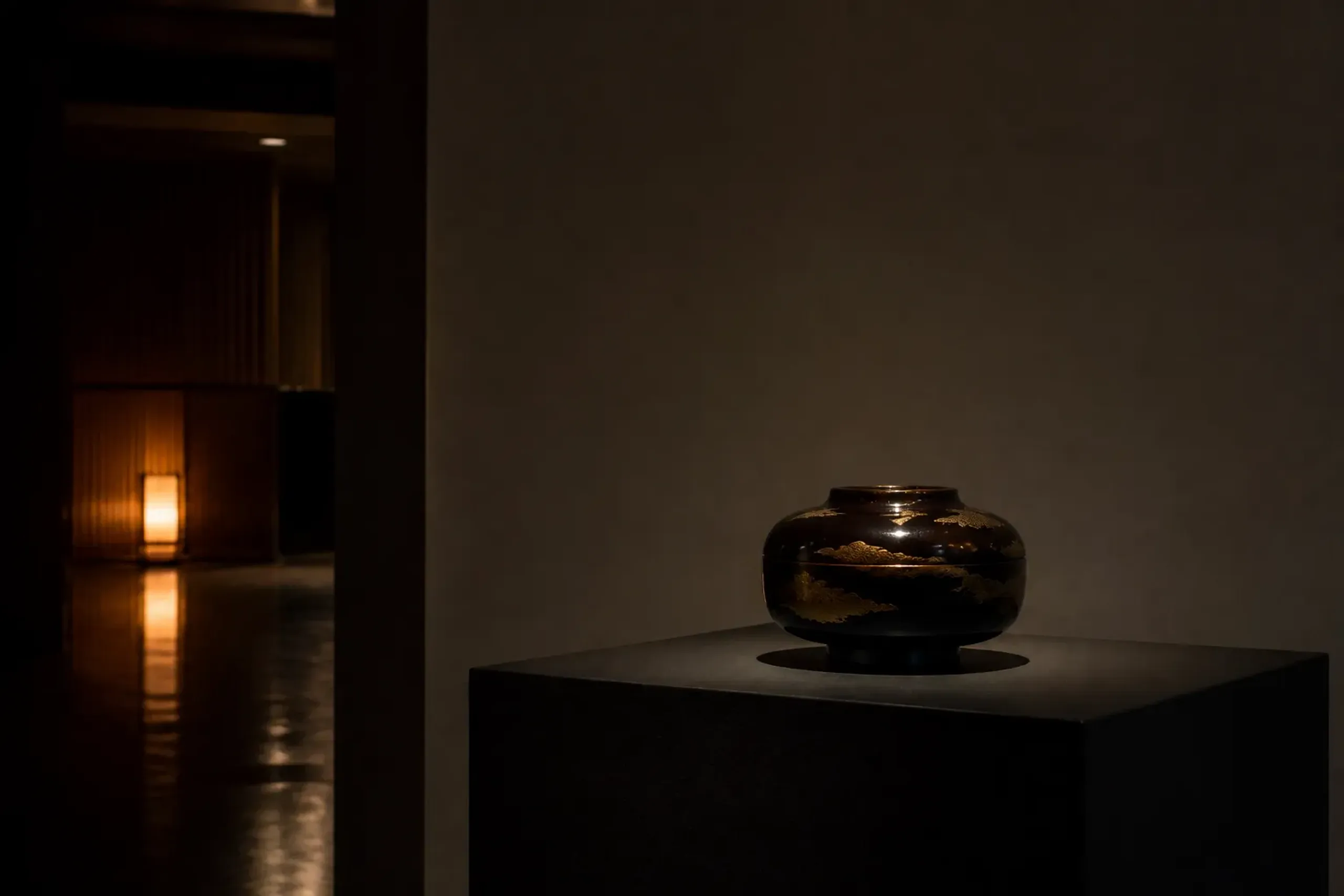
That matters because it lets you understand “lacquerware” as a regionally textured practice, not a single label.
KOGEI Art Fair Kanazawa describes itself as Japan’s only art fair dedicated to crafts, and it announced in March 2026 that exhibitor applications for 2026 opened. For HNW travelers, a fair like this can be the right public-facing capstone: you see the contemporary landscape after you have learned what materials demand.
We also handle this region with care. The Noto region of Ishikawa Prefecture was struck by a magnitude 7.6 earthquake on January 1, 2024, and recovery has been widely covered. A lineage journey is never disaster tourism. It is permission-based, low-footprint travel that respects what communities can host.
Discretion And Conduct: How To Be Present Without Taking Over
Discretion is not a slogan for us. It is operational behavior: small parties, quiet arrivals, and an understanding that not every meaningful moment should be posted or even photographed.
Conduct changes by stage. A workshop may welcome questions at set times. A source site may not. Preparation spaces can be the most sensitive of all because they are where materials—and reputations—are made.
We brief you in advance with a simple aim: arrive as if you were introduced by someone the host trusts. Because you are.
What You Take Away: A New Way To See Objects
After a lineage journey, you stop reading craft as decoration. You start reading it as accumulated decisions: what was rejected, what was waited for, what was protected from haste.
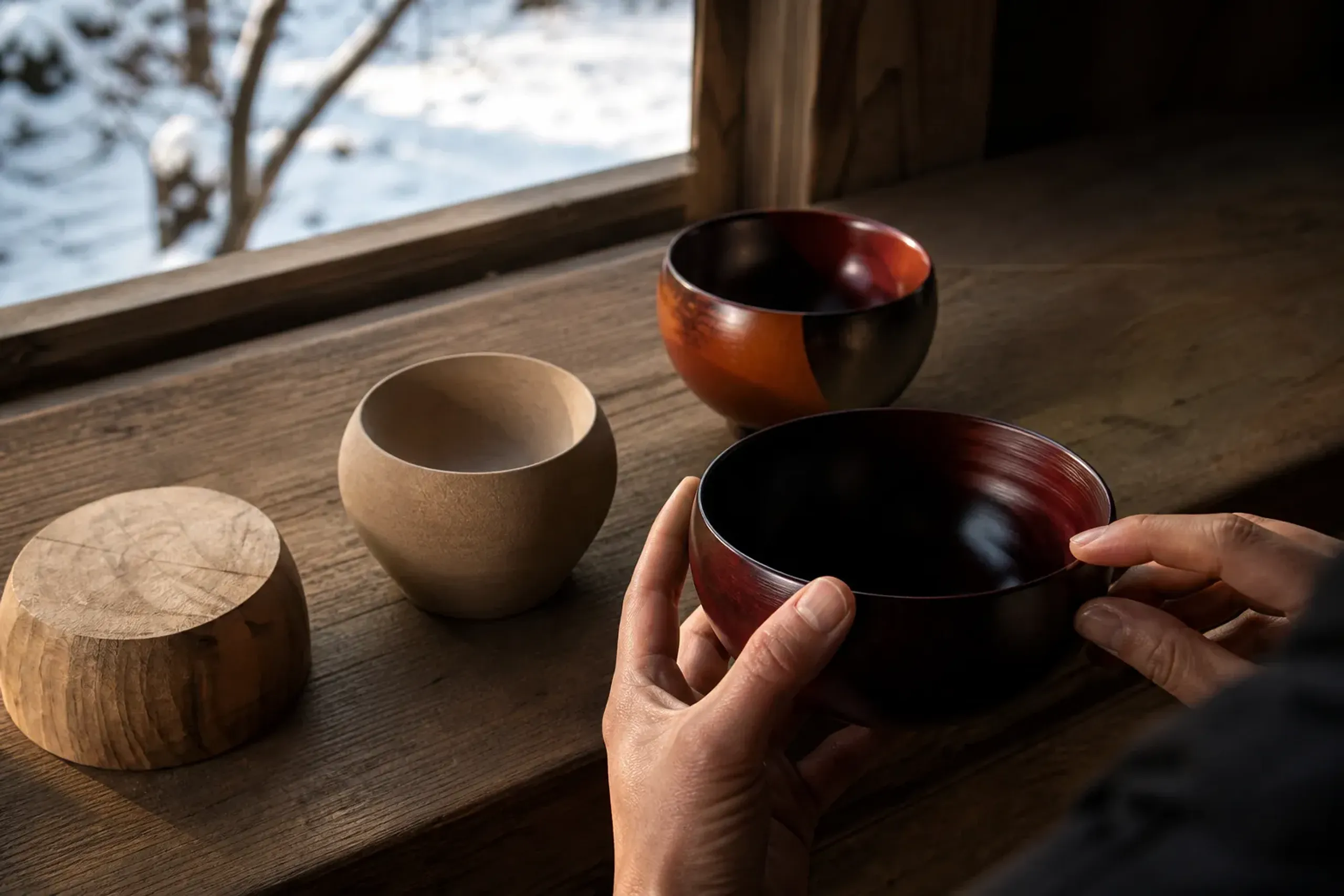
The object becomes a quiet document.
This also changes how you shop, even if you do not plan to purchase anything on the trip. You ask sharper questions. You spot the difference between a story told for tourists and a story told for accuracy.
And you carry home something rarer than a bag. A lens.
Frequently Asked Questions
How Do I Plan A 7–10 Day Shokunin Lineage Journey Without Rushing?
A 7–10 day lineage journey works best when you schedule one stage per day and allow travel time between prefectures as part of the narrative, not an interruption.
We typically map the route so that source and preparation days happen when your attention is freshest, then workshop time deepens the learning you already earned. Rest is not indulgence here. It keeps your eye sharp.
Can I See Urushi Tapping, Preparation, And Lacquerware Making In One Trip?
You can follow active urushi stages available during your travel window, but you should not expect to witness the entire cycle end-to-end in a single visit.
In Ishikawa, public anchors like the Ishikawa International Urushi Exhibition (14th event in 2026) help frame the craft landscape, while private learning focuses on what is genuinely happening when you are present.
Is Visiting Noto After The 2024 Earthquake Appropriate For Luxury Travelers?
Visiting Noto can be appropriate only when it is permission-based, low-impact, and aligned with what local communities are currently able and willing to host.
We encourage a respectful mindset: your itinerary should not treat recovery as a spectacle.
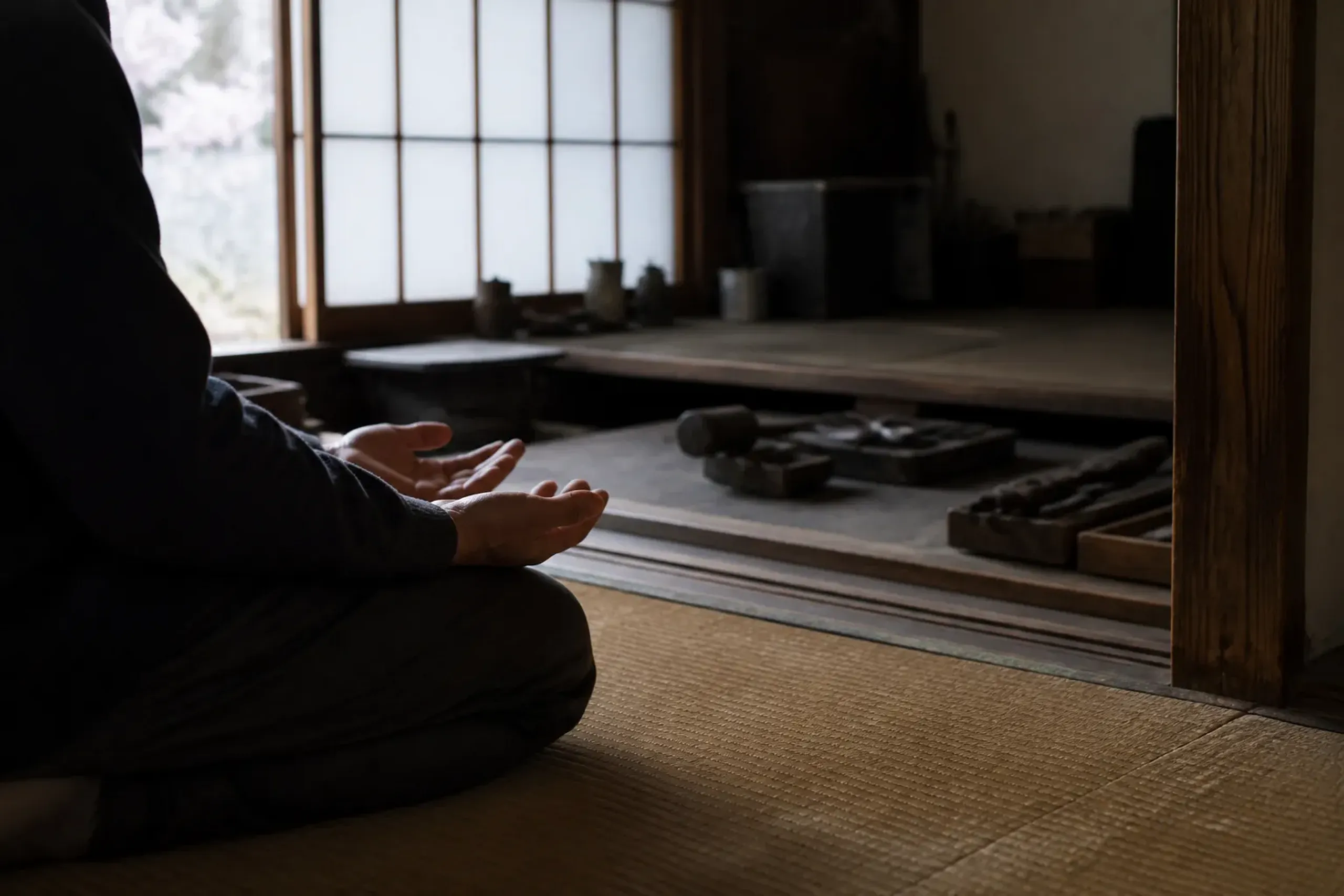
It should treat craft, livelihoods, and local rhythm as the priority.
Do I Need To Be A Collector To Enjoy A Craft Lineage Itinerary?
No—this journey is designed to teach you how to see process, time, and restraint, even if you never buy a single object.
Many HNW guests simply want depth. They want to understand what they are looking at, and why it feels different from mass-produced design.
Why Choose Japan Royal Service
Luxury travelers choose Japan Royal Service when they want Japan without noise. Our work is built on discretion, hidden-Japan access, and a wabi-sabi sense of restraint that values silence as much as scenery.
Competitors like Black Tomato, Remote Lands, and Scott Dunn often win visibility with broad destination storytelling. We respect that. Our difference is narrower and deeper: we build single-material journeys that start before the workshop, and we curate introductions that are not findable through a search bar.
We also keep the trip physically comfortable. Private movement matters when days begin far from cities, and when you need a calm cabin to review what you learned. For itinerary design, our tailor-made itinerary approach keeps the craft and the season in charge, not a pre-set route.
For private coordination, reach our team at Japan Royal Service privately via WhatsApp or LINE, or contact us here.