In this guide
- 01Jump To A Month
- 02How A Kaiseki Counter Thinks About A Month
- 03January
- 04February
- 05March
- 06April
- 07May
- 08June
- 09July
- 10August
- 11September
- 12October
- 13November
- 14December
- 15Regional Variation Is The Whole Game
- 16The Short Windows Worth Planning Around
- 17When The Ingredient Calendar And The Crowd Calendar Disagree
- 18Booking Implications
- 19Why Choose Japan Royal Service
- 20Tell Us Your Dates. We Will Tell You What Is At Peak.
You booked April for the weather. The mornings were mild, the light was long, and the counter set a course in front of you that was correct for the room and forgettable on the plate. Three weeks later, something you will never taste came into season a few hundred kilometres south. That is the quiet cost of choosing a month by climate alone.
This guide is about the other calendar. Not when the weather is pleasant or the crowds thin — we cover that in How to Travel Japan Without the Crowds or the Noise — but what is at its peak, and what a serious kitchen will therefore be buying. The word for this is shun: the short window in which an ingredient is at the height of its condition, before it declines. Most things can be had year-round now. Shun is the difference between having a thing and having it right. State that principle once; the rest of this article is the calendar.
How to read this guide: Windows shift by region and by year. Most English-language travel writing gets them wrong. Where a window could not be confirmed against a primary source at the time of writing, we have flagged it [VERIFY] inline rather than assert it. A short correct calendar is worth more than a complete invented one. Ask our concierge to confirm current-year windows for your exact dates.
Jump To A Month
- January · February · March
- April · May · June
- July · August · September
- October · November · December
- Regional variation · The short windows · When the two calendars conflict · Booking implications
How A Kaiseki Counter Thinks About A Month
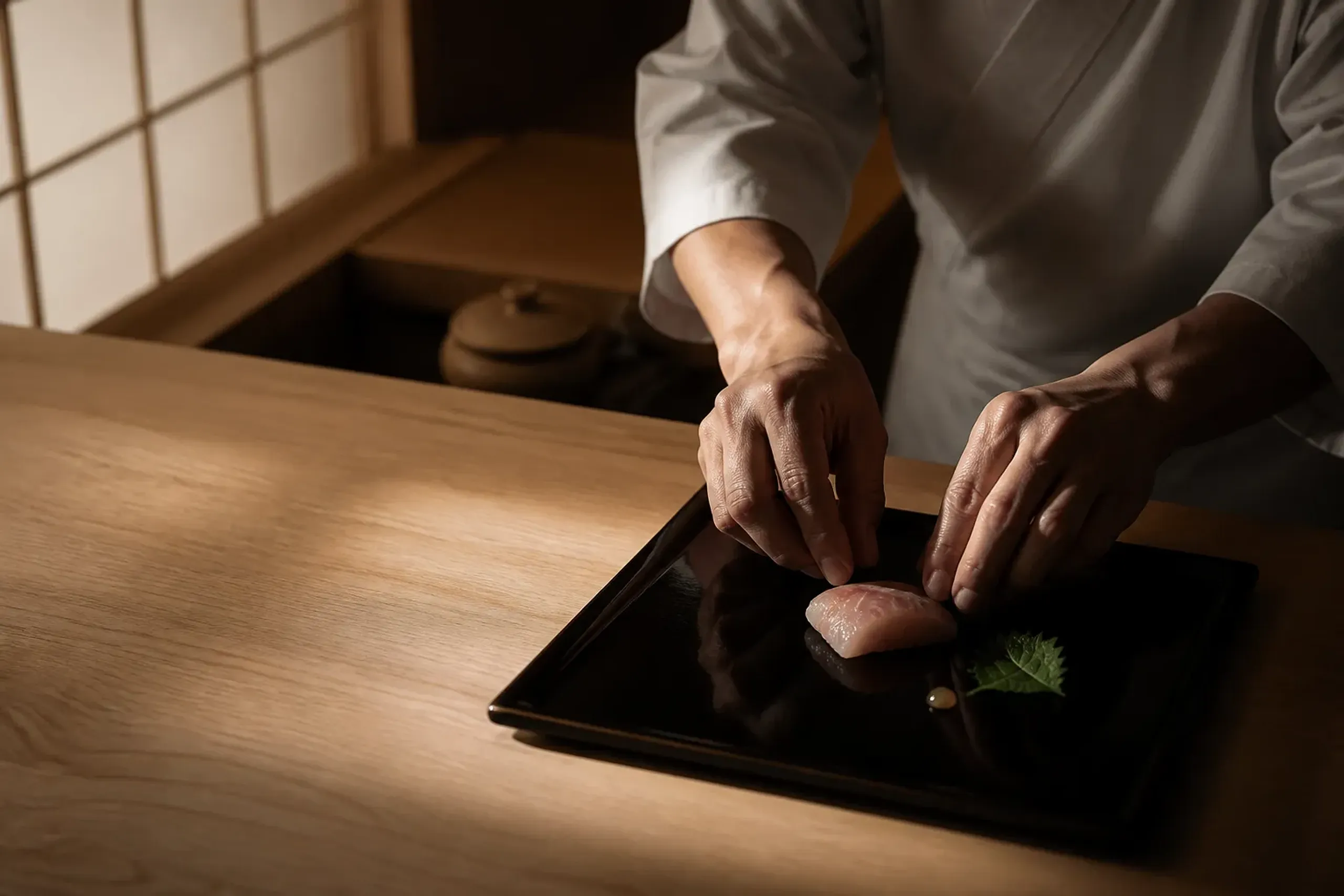
The course order at a kaiseki counter moves with the calendar, not the booking.
A multi-course kaiseki meal is built around what is in season and how it is presented — the JNTO describes seasonal ingredient emphasis as the form's defining logic, not decoration. That has a practical consequence for you. The course order, the cooking method, and the garnish all move with the calendar. A chef will read an ingredient in three phases: the first arrivals of the year, the middle when it is fullest, and the tail end when it is fading and treated with a certain wistfulness. [VERIFY: the three-phase framework — hashiri / sakari / nagori — is widely cited but confirm terminology against a primary culinary source before quoting.] This is also why a menu cannot be requested out of season. If the ingredient is not landing, the kitchen will not serve a lesser version of it to satisfy a booking. That refusal is the point.
January
At peak: Cold-water winter fish and shellfish across much of the country; citrus continues, as JETRO notes Japanese citrus runs from fall through spring. Arriving: early spring greens begin appearing in the far south. Ending: the deepest-winter items begin their tail. [VERIFY specific fish windows by region — winter fish peaks differ between the Sea of Japan coast and the Pacific side.]
At a counter this month you will likely see fish handled cold and lean cuts prized for their winter fat. Sweets and tea service lean to the wintering-over motifs the Agency for Cultural Affairs documents in namagashi confectionery.
February
At peak: late-winter seafood; citrus. Arriving: the first hints of spring vegetables in Kyushu and other southern zones. Ending: the coldest-water items. [VERIFY regional spring-vegetable start dates — these move north as the season advances.]
A kaiseki course this month often still opens cold and closes warm, with the first bitter spring notes used sparingly as a signal of what is coming rather than the main event.
March
At peak: early spring vegetables in southern and central Japan. Arriving: the broader spring vegetable season pushing north. Ending: winter citrus tapers as spring produce takes over. [VERIFY named spring vegetables and their prefectural windows against a primary source before publishing specifics.]
Counters begin to lighten. The bitter, green register of early spring produce starts to lead the vegetable courses.
April
At peak: mid-spring produce across central Japan. Arriving: the season continues north into Tohoku and Hokkaido. Ending: the earliest spring items in the south are already fading. [VERIFY specific ingredient windows by region.]
This is the month many travellers choose for climate and blossom. The kitchen is competent and pleasant here — but note that some of the shortest, sharpest windows fall just before or just after it, which is exactly the lede of this guide.
May
At peak: late-spring produce; new-season tea. Hand-picking of tea leaves is one of the seasonal experiences JNTO highlights on its food-culture pages, and the first flush is a spring event. Arriving: early summer items. Ending: spring greens. [VERIFY tea first-flush dates by region — Uji, Shizuoka, and Kagoshima differ.]
New-season tea appears at the table and in tea service. Vegetable courses reach their fullest spring expression before the summer register takes over.
June
At peak: early summer produce and fish. Arriving: high-summer items. Ending: the last of the spring vegetables. [VERIFY early-summer fish windows by coast.]
Menus turn toward cooling presentation — chilled dishes, clear broths, and lighter cooking that reads as a response to the rising heat.
July
At peak: high-summer seafood and vegetables. Arriving: midsummer specialities. Ending: early-summer items. Tsukiji Jisaku, a historic Tokyo ryotei, has published summer kaiseki listings built around specific summer ingredients, which is a useful marker that this is a distinct summer register rather than a continuation of spring. [VERIFY named summer ingredients against the current-year menu.]
Expect chilled openers, and dishes constructed to feel cold on a humid evening.
August
At peak: late-summer produce and fish. Arriving: the first early-autumn items in the north. Ending: high-summer items begin their tail. [VERIFY regional windows — northern and southern peaks diverge sharply in this month.]
The kitchen is still cooling the room, but the first autumn signals begin to appear at the edges of a menu, particularly in Hokkaido and Tohoku.
September
At peak: early autumn produce and seafood. Arriving: the broader autumn season. Ending: the last of summer. [VERIFY specific autumn ingredient windows — several move south through autumn, the reverse of spring.]
Courses grow warmer and more grounded. The wistful, tail-end handling of departing summer items appears alongside the first confident autumn dishes.
October
At peak: autumn produce, mushrooms, and seafood across much of the country. Arriving: late-autumn and early-winter items. Ending: early-autumn items. [VERIFY named autumn ingredients and their prefectural windows — autumn peaks are among the most region-specific in the year.]
This is one of the richest months at a counter. Cooking deepens; the vegetable and mushroom courses carry the meal.
November
At peak: late-autumn produce and seafood; the start of several winter items. Arriving: winter fish and shellfish. Ending: autumn produce. [VERIFY winter fish opening dates by region — several open in a narrow late-autumn window.]
The register turns toward winter: warmer cooking, richer broths, and the first of the cold-water seafood that will define the coming months.
December
At peak: early-winter seafood and shellfish; citrus resumes prominence, in line with JETRO's fall-to-spring citrus window. Arriving: deep-winter items. Ending: the last of autumn. [VERIFY specific winter seafood windows by coast.]
Counters are firmly in their winter register. Fat-forward winter fish and warming courses lead, with citrus threading through the sweet and palate-cleansing moments of the meal.
Regional Variation Is The Whole Game
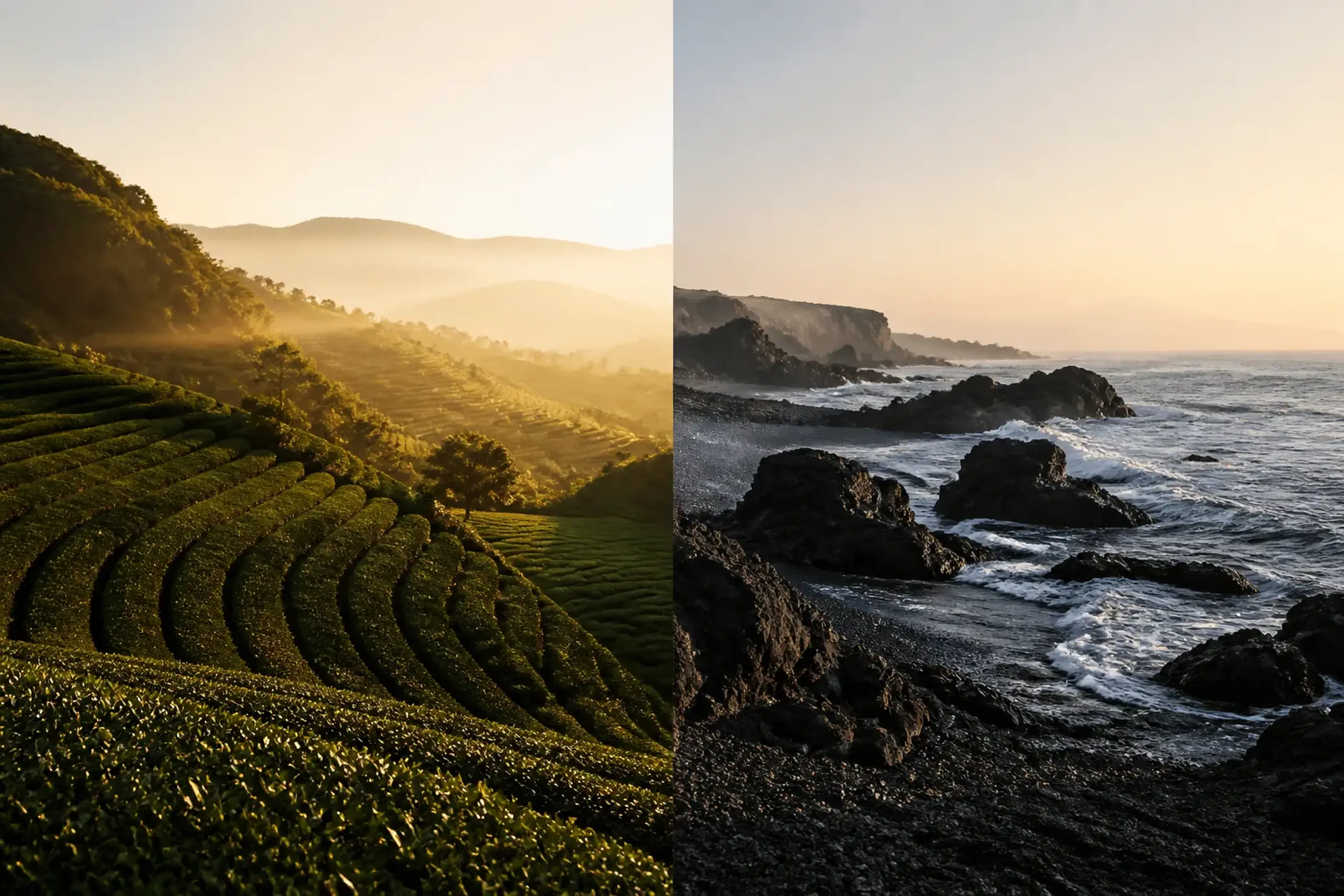
A window in Kyushu is not a window in Hokkaido. Region and month must be chosen together.
A window in Kyushu is not the same window in Hokkaido. This is the single most common error in English seasonal writing, which tends to state one national date and move on. Do not trust a national date.
Two patterns are worth holding in mind. Spring produce generally moves north as the season advances — the same vegetable that peaks in Kyushu in one month may not peak in Tohoku or Hokkaido until weeks later. Several autumn and winter seafood windows move in the opposite direction, arriving first in the north and pushing south as the water cools. [VERIFY the direction and timing of specific ingredient migrations against primary harvest and fishery sources before relying on them for date selection.]
The Agency for Cultural Affairs frames Japanese food culture as sustained by ingredients nurtured by regional climates as much as by the calendar. That is not a poetic flourish. It is the reason a single trip anchored in one city can miss a peak that is happening, at that exact moment, one island away. If a specific ingredient is the reason for your trip, the region and the month must be chosen together, not in sequence.
The Short Windows Worth Planning Around
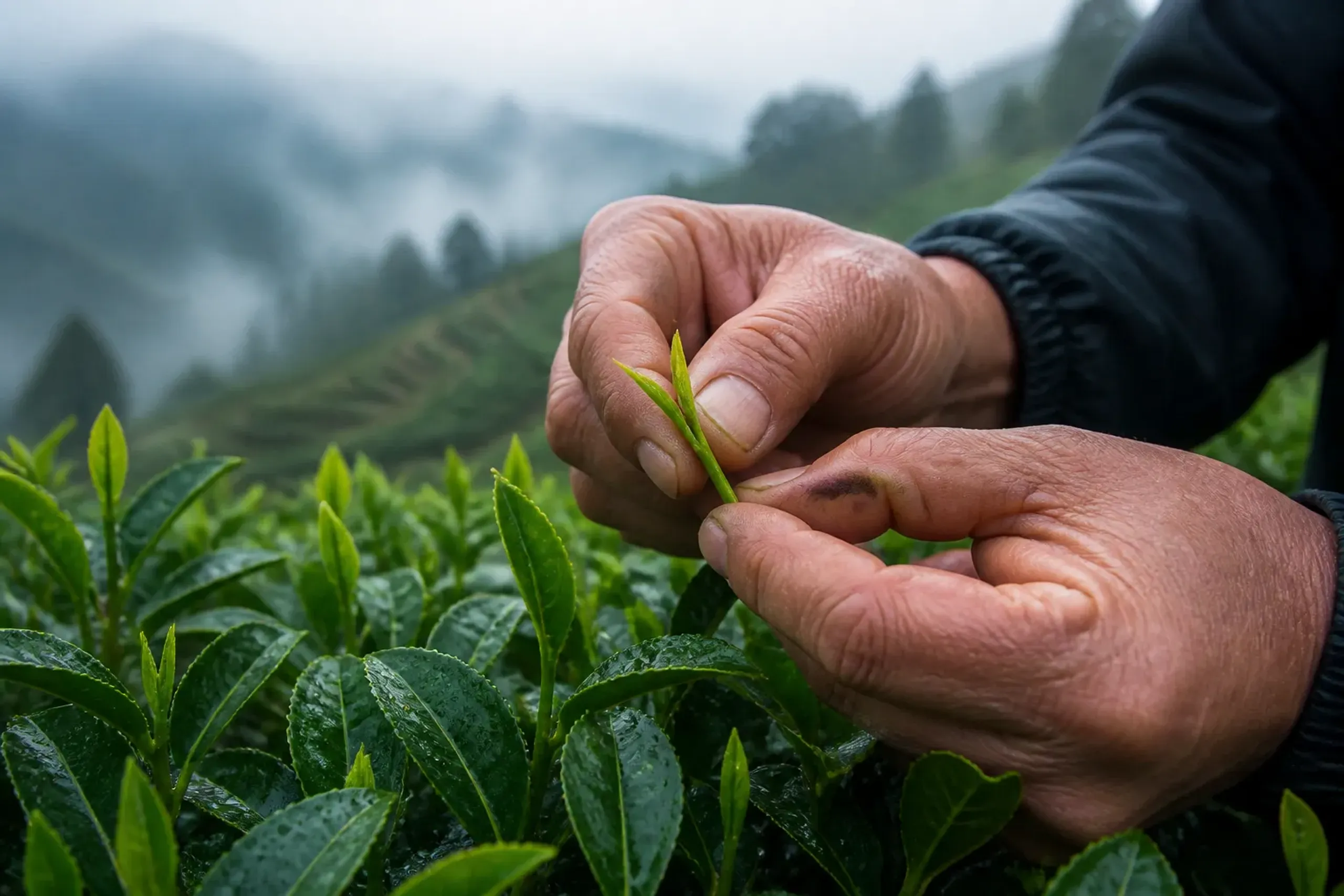
The first flush of new-season tea is a matter of weeks, not months.
Most peaks are generous. A produce season can run two or three months, and if you land anywhere inside it you will eat well. Those are not the reason this guide exists.
A handful of windows are measured in weeks, not months. The first flush of new-season tea is one. The opening of certain seafood seasons is another — a narrow window that opens on a set date and is prized precisely at the start. [VERIFY which specific ingredients carry sub-month windows, and their current-year dates, before planning a trip around them. These are the items most often misdated in travel content, and the ones least forgiving of a guess.]
If one of these short windows is your reason for travelling, the calendar drives the itinerary rather than the other way around. Everything else — the city base, the ryokan nights, the routing — is arranged around a fixed two-week target.
When The Ingredient Calendar And The Crowd Calendar Disagree
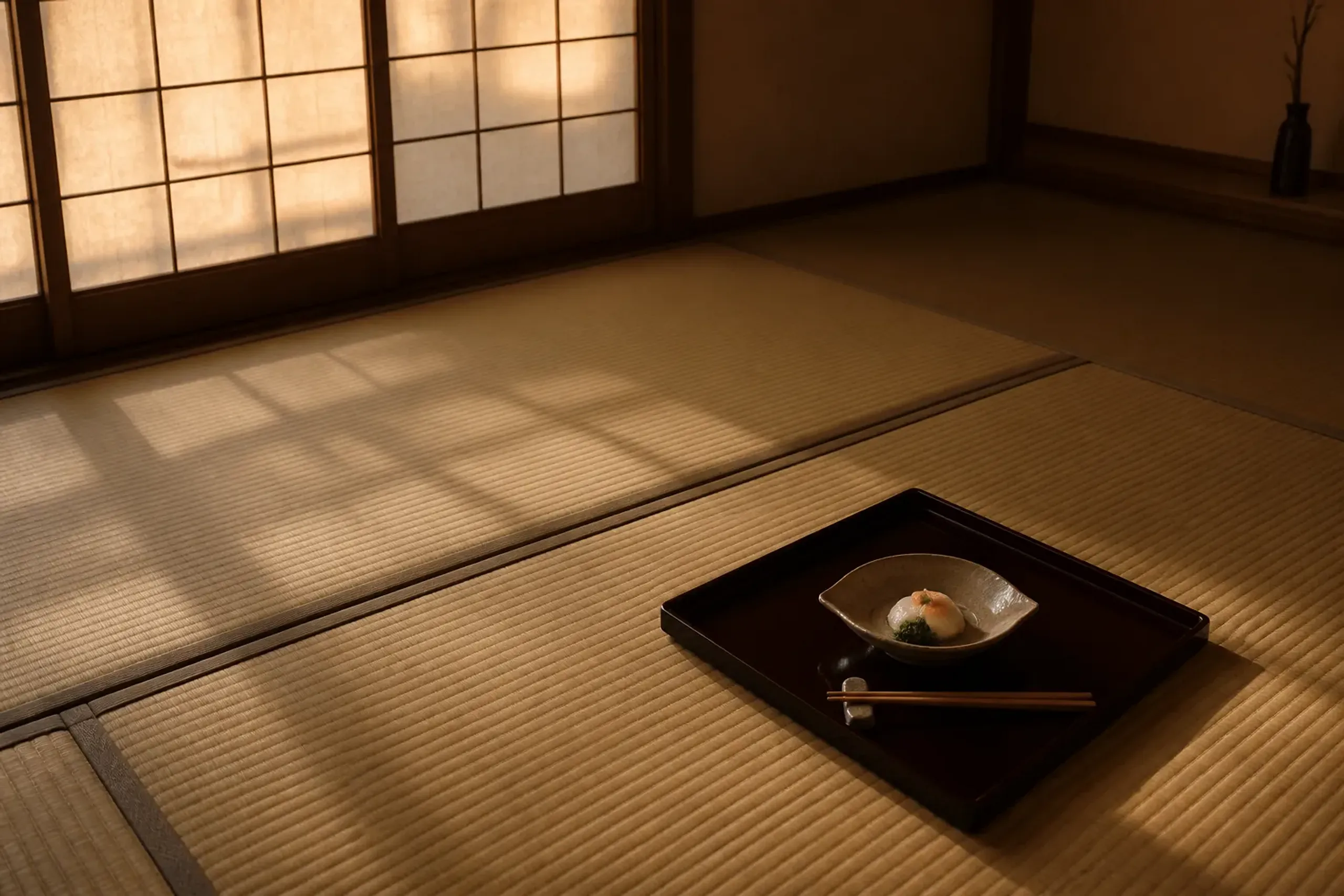
When the two calendars diverge, decide first what kind of trip this is.
This is the section for the reader who has already read our guide to travelling Japan without the crowds. The two calendars do not always point at the same month, and when they diverge you have to choose which one wins.
The conflict is easiest to see at the seams of the year. The most comfortable travel months — mild, dry, uncrowded — do not always coincide with the peak of a specific ingredient you have come for. A short seafood window may open in a month the crowd calendar would have you avoid for weather or congestion. A produce peak may fall in a heavy travel period when the best counters are hardest to secure.
Here is how we think about the choice. If your trip has a specific ingredient at its centre — a short window you have decided is the point — the ingredient calendar wins, and you accept the weather or the crowds that come with it. If your trip is about Japan broadly and the food is one pleasure among several, the crowd and weather calendar should lead, and you accept a competent seasonal menu rather than a peak one. The mistake is trying to optimise both at once and getting neither. Where the two conflict, decide which kind of trip this is first. The dates follow from that decision, not the reverse.
There is a quieter third case. Some of the finest eating months are also the busiest at the best rooms — autumn in particular. Here the calendars agree on the food and disagree on ease of access, which is a booking problem rather than a dates problem, and we treat it as one below.
Booking Implications
Two facts drive the lead times. First, the shortest windows are the least forgiving, because a two-week peak leaves no margin — if a counter is full for those specific evenings, there is no adjacent week that serves the same thing. Second, the richest months compound the problem, because everyone wants the same rooms at the same time.
Autumn is the clearest example of both pressures at once: the food is at its best and the best rooms fill earliest. If your dates fall inside a peak that is both short and popular, the practical horizon for securing a serious counter is long, and it lengthens further for private or introduction-only rooms. [VERIFY current-year lead times before quoting any specific number of months.]
The general rule holds regardless of the exact figure: the shorter and more sought-after the window, the earlier it must be committed. A generous three-month produce season can be arranged with comfortable notice. A two-week seafood opening in a popular month cannot.
Why Choose Japan Royal Service

The best-fed guests build the whole itinerary around a fixed seasonal target.
Most seasonal travel writing tells you which month is pleasant. Fewer sources can tell you, for your exact dates, what will actually be landing and where — and fewer still will tell you plainly when a window they cannot confirm is a window they will not assert. That restraint is the same discretion we bring to every part of a journey: we would rather check a date than guess it, just as we would rather protect a guest's identity than mention it.
In our experience, the guests who eat best in Japan are the ones who chose the region and the month together, then built everything else — the city base, the discreet ryokan nights, the private chauffeured transport between them — around that fixed target. Our concierge works the calendar the way a kitchen does, and shapes a tailor-made itinerary around what is genuinely at its peak rather than what is merely available. That is the whole of it. Japan Royal Service exists to close the three-week gap between the month you would have chosen and the month you should have.
Tell Us Your Dates. We Will Tell You What Is At Peak.
Give us a month, or a fixed set of dates, and we will confirm against current-year sources what will be at its peak in each region — and, where a short window is the reason to travel, what the itinerary would need to look like around it. For private, unhurried guidance, reach our team via WhatsApp or LINE, or contact us here.