In this guide
- 01Saijō’s Contribution: Method, Not A Map Of Springs
- 02How Far Is Saijō From Hiroshima City, And Is It A Kyoto Day Trip?
- 03Miura Senzaburō: The Human Center Is Generosity
- 04Satake Riichi And The Machine That Made Ginjō Possible
- 05What Happened At The 1907 National Sake Competition?
- 06Saijō Sakagura-dōri: Seven Breweries You Can Walk Without Rushing
- 07The 2024 National Historic Site: Which Kura You Can Actually Enter
- 08When Is The Best Time To Visit Saijō For Brewing Season?
- 09How To Taste Ginjō In Saijō Without Blunting Your Palate
- 10The Private Tier In Saijō: What Our Guests Often Request
- 11How The Annual Japan Sake Awards 2026 Reinforces “Technique”
- 12A Concierge-Grade Planning Checklist For Saijō (Durable And Honest)
- 13How We’d Place Saijō In A Hiroshima Itinerary (Without Overstuffing)
- 14Reading The Series In Order (If You Haven’t Yet)
- 15Frequently Asked Questions
- 16Why Choose Japan Royal Service
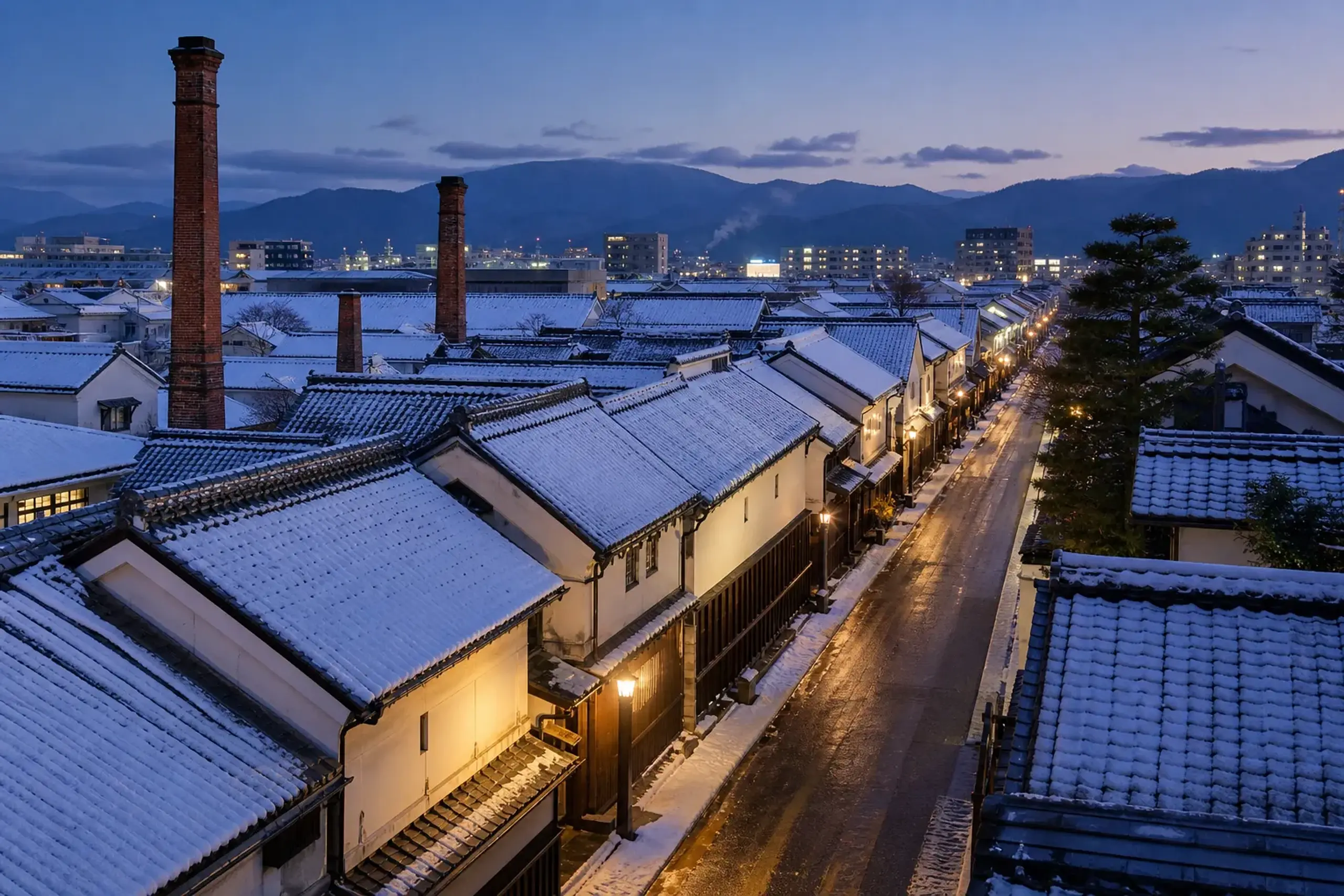
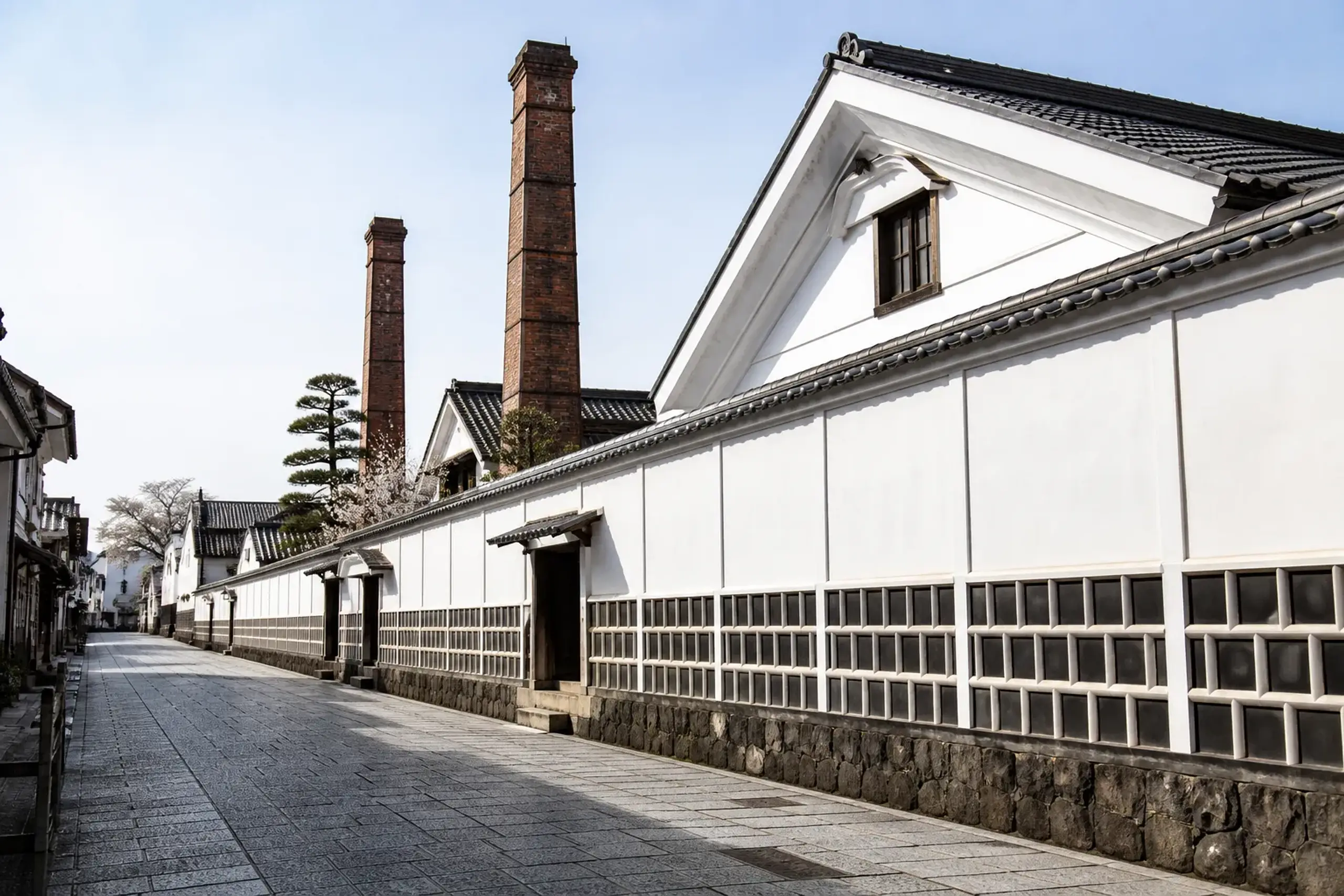
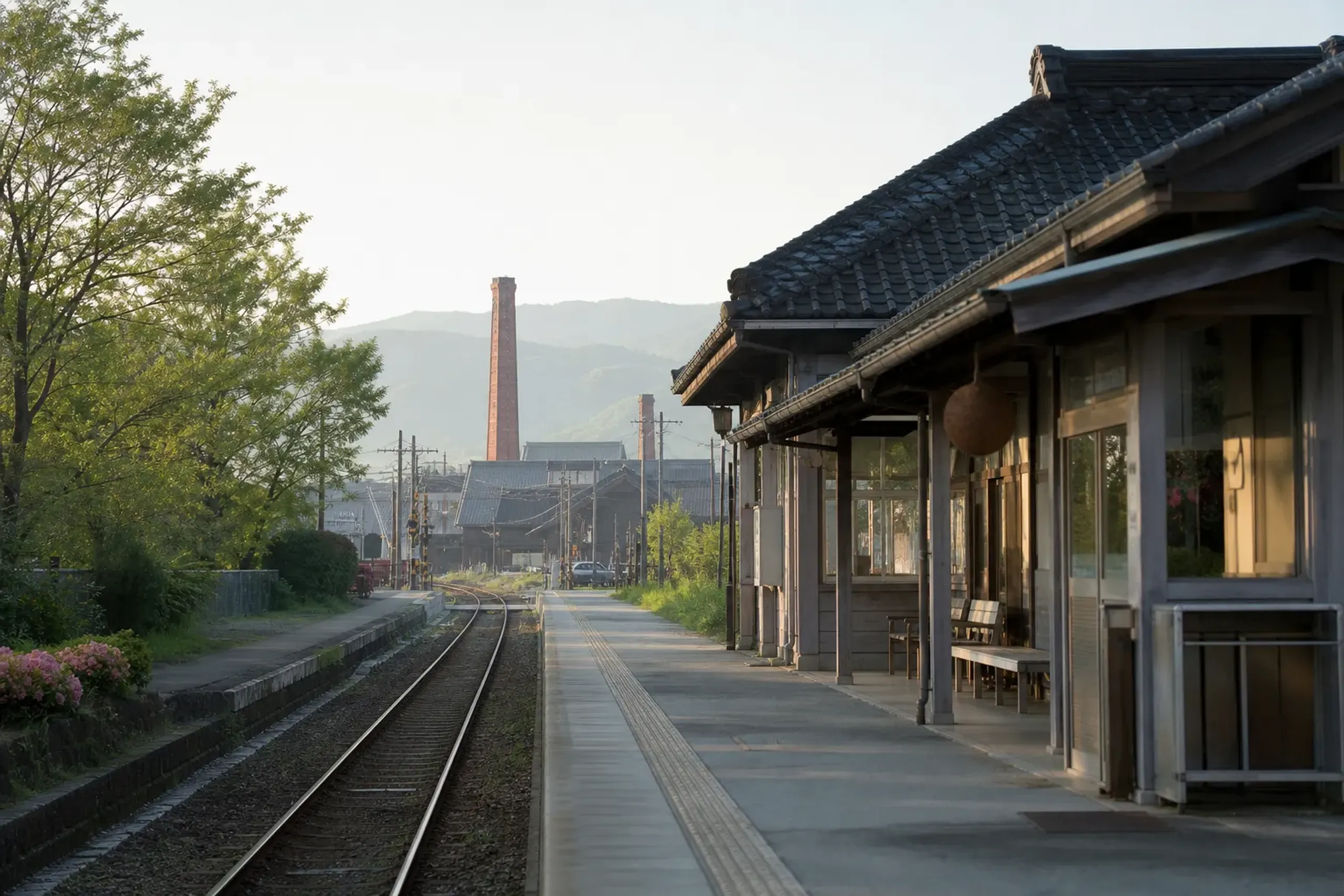
On Saijō Sakagura-dōri, white plaster walls catch winter light and red brick chimneys rise above kura rooftops. The air smells faintly of steamed rice when the season is on. Footsteps sound crisp on the pavement. Quiet wins here.
If you read our Nada and Fushimi pieces, you already know how much water shaped those districts. Saijō is the series’ correction. Saijō’s influence is not a spring.
Saijō, in Higashihiroshima, is where technique became the story. Two Meiji-era inventions changed modern sake brewing more than any single well: Miura Senzaburō’s soft-water brewing method, and Satake Riichi’s mechanised rice polishing. Together, they built the logic of ginjō.
Our team at Japan Royal Service uses Saijō when a guest wants to understand Japan through method, not souvenir. The street is walkable, the history is specific, and the learning sticks. No theatrics.
Saijō’s Contribution: Method, Not A Map Of Springs
Nada and Fushimi are famous for water stories; Saijō is famous because technique moved the ceiling of what sake could be. That shift is why Higashihiroshima is called the birthplace of ginjō sake. It is not marketing fluff.
Two facts keep the story honest. First: Miura Senzaburō worked in Mitsu, Akitsu, a coastal town that is now part of Higashihiroshima. He did not work in Saijō, and we do not place him there.
Second: Saijō’s wells yield chūkōsui, medium-hard water, which is unusual in Hiroshima. That mattered because Saijō brewers could adopt Miura’s soft-water method and still use hard-water-style approaches, creating what’s often described as the Saijō medium-hard-water method.
Saijō’s brewery street is compact, walkable, and defined by method as much as architecture.
It is flexible. That flexibility is the point.
This is also why Saijō pairs naturally with a luxury traveler’s mindset. Precision over spectacle. Wabi-sabi in liquid form. And, when done well, a kind of discretion you can taste.
How Far Is Saijō From Hiroshima City, And Is It A Kyoto Day Trip?
Saijō is roughly 40 minutes from Hiroshima City and it belongs on a Hiroshima itinerary, not a Kyoto day trip.
We say that plainly because planning mistakes waste time, and time is what HNW travelers protect most fiercely. Saijō sits in Hiroshima Prefecture, in the city of Higashihiroshima, with JR Saijō Station as the practical arrival point for the brewery street.
If you are based in Kyoto or Osaka, Saijō becomes a long transit day with little margin for tastings, lunch, and a measured walk. Big mistake. It reads fine on a map, then bites you in real life.
Where it does fit: a Hiroshima stay that also includes the Peace Memorial Park and Museum, or Miyajima (Itsukushima). Those are real anchors that justify coming this far west. Saijō then becomes the cerebral counterweight—an afternoon of technique, aroma, and winter air.
Miura Senzaburō: The Human Center Is Generosity
Miura Senzaburō is called the father of ginjō sake because he established a brewing method suited to soft water and made it teachable at scale. That is the legacy. Not a plaque.
Hiroshima’s water conditions were historically a liability for brewing, and Miura’s work helped solve that problem by emphasizing more precise, science-influenced control.
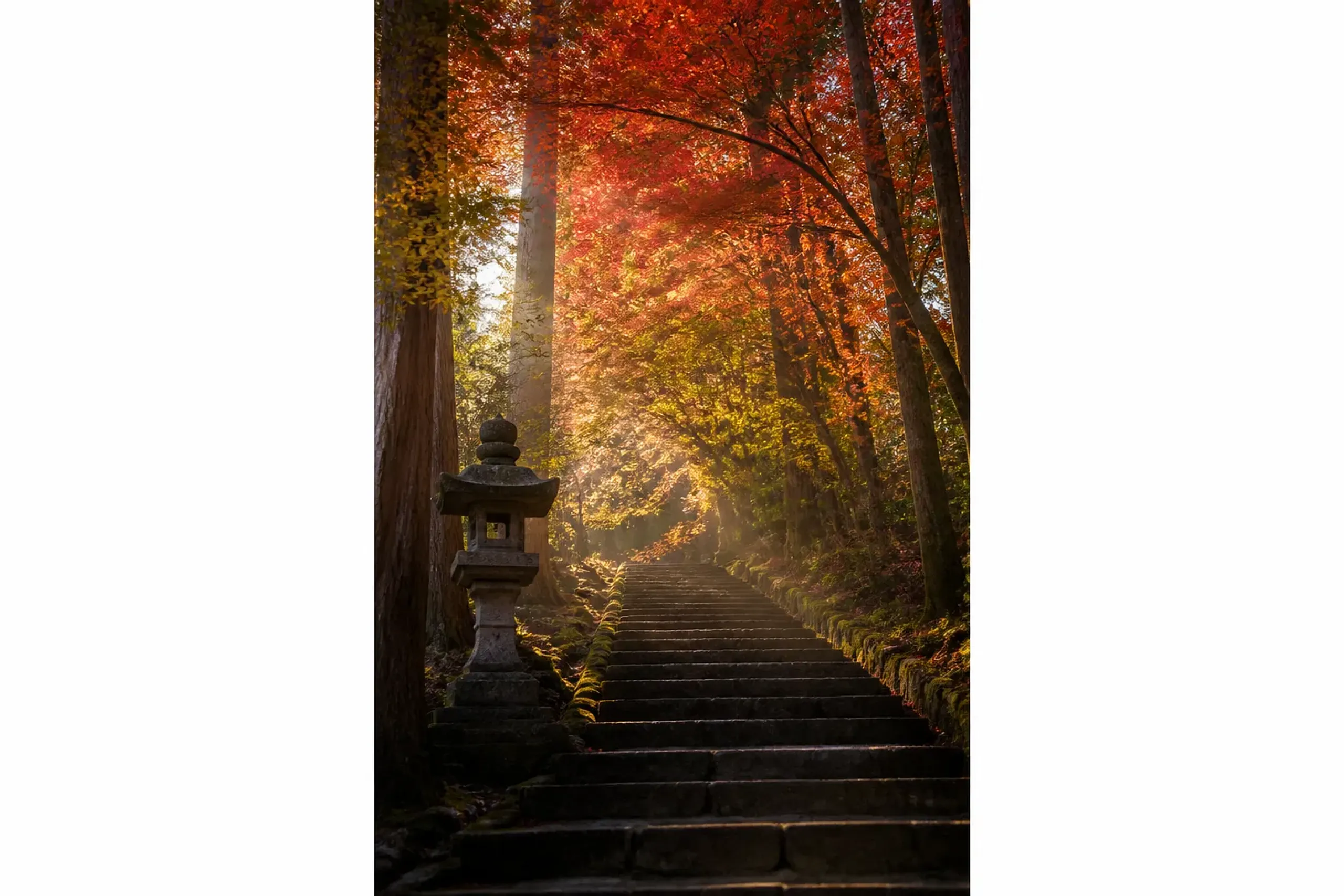
Miura’s legacy is remembered in Akitsu—rooted in teaching, not exclusivity.
His motto was hyakushi senkai (百試千改): a hundred trials, a thousand improvements. Short sentence. Hard standard.
The detail that makes him a person is what he did next. In 1898, he published Kaijōhō Jissenroku (改醸法実践録) and distributed it freely to members of the Hiroshima brewing association rather than guarding it as proprietary know-how. That one decision is why the method spread.
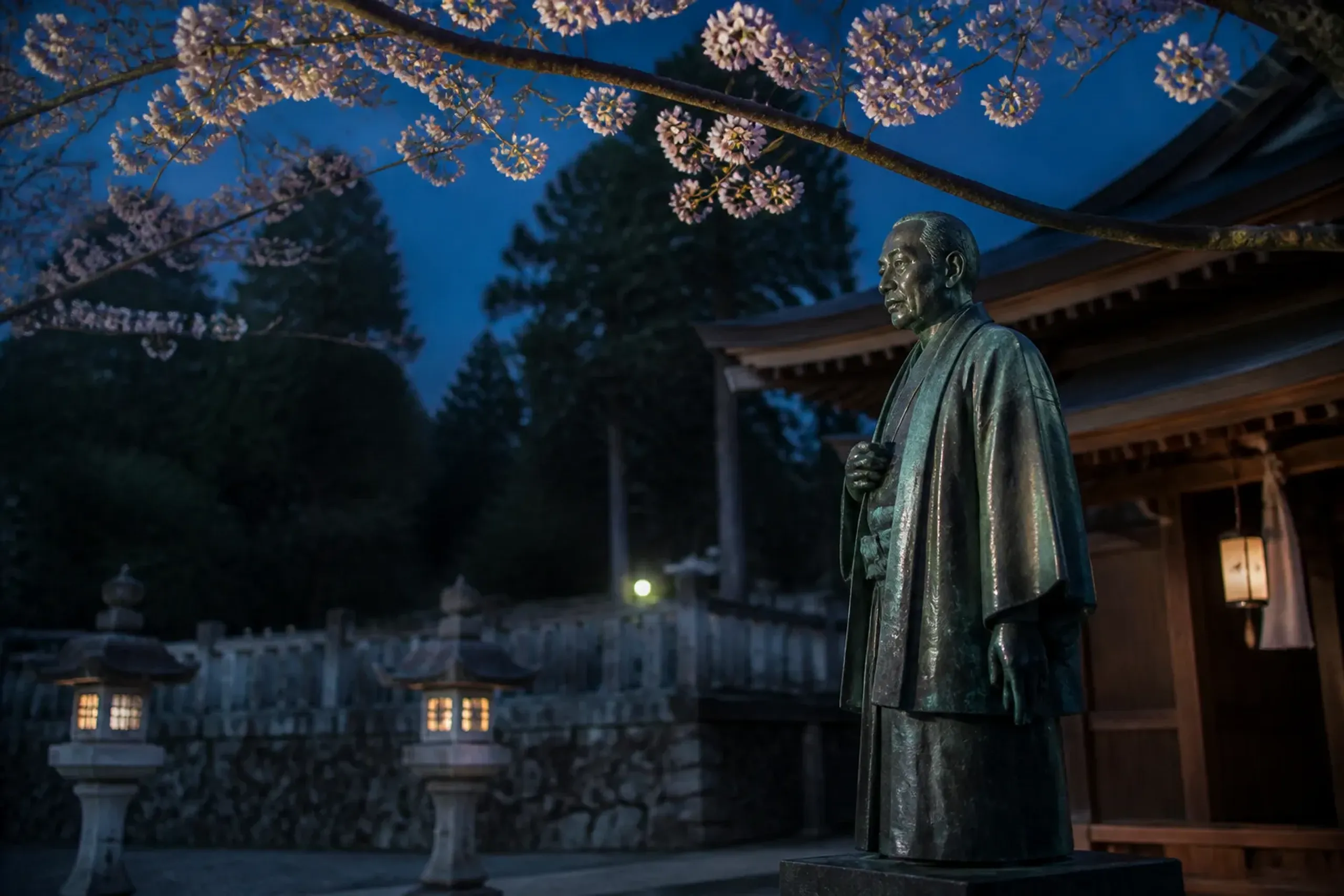
He also founded the Mitsu tōji guild and trained brewers systematically. The Mitsu tōji later carried the method across Japan and abroad—Shikoku, Kyushu, Shizuoka, Nagano, Kantō, and as far as Sakhalin and Hawaii. Miura died in 1908 at age 61, and a bronze statue was raised in 1921, later re-erected at Sakakiyama Hachiman Shrine in Akitsu in 1990.
For our guests, this becomes more than history. It becomes a tasting lens: when you smell a clean, lifted ginjō aroma, you are also smelling a culture of repeatable technique that was intentionally shared.
Satake Riichi And The Machine That Made Ginjō Possible
Ginjō is not only fermentation control. The rice matters too, because polishing changes what flavors and textures remain, and how fermentation behaves.
Satake Riichi’s mechanised rice polishing is the second invention that moved the baseline of modern brewing. It made high, consistent polishing practical and repeatable. That repeatability is what allows a regional method to become a national standard.
In Saijō, this connects to a specific, verifiable story: Kamotsuru—then known as Kimura Shuzō—combined the vertical rice polisher with Miura’s soft-water method.
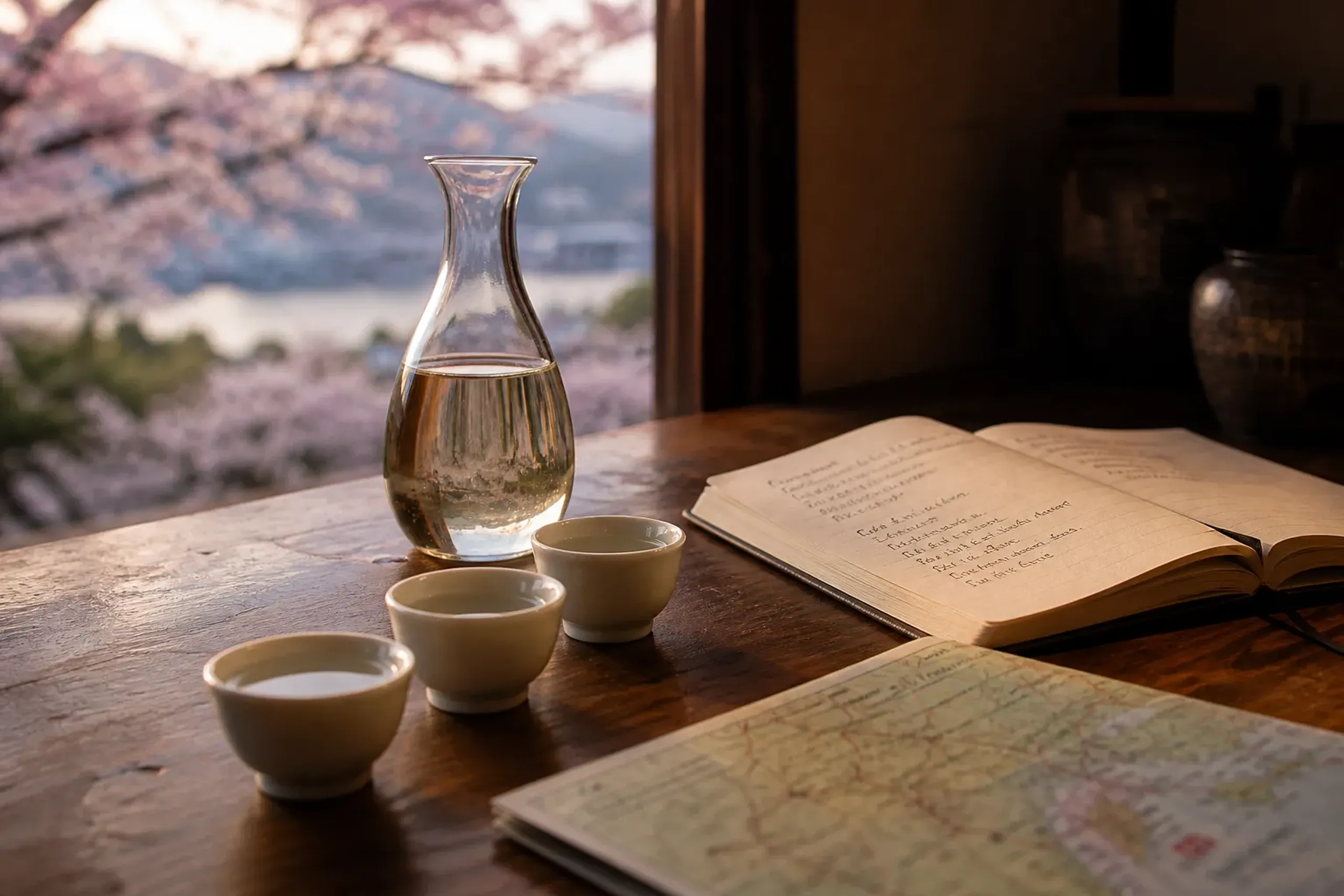
Technique becomes memorable when you taste with structure and write one line per pour.
That pairing underpins modern ginjō brewing. A quiet technical marriage. Lasting consequences.
When you visit Saijō with a serious palate, this is the moment you stop asking “What is the best?” and start asking “What is the method?” That question travels well, even if you never drink the same label twice.
What Happened At The 1907 National Sake Competition?
At the first national sake competition in 1907, Hiroshima sake took the top two places, beating Nada and Fushimi.
This is the payoff the series needed. For decades, Nada and Fushimi shaped the mainstream story; 1907 proved that soft-water regions could compete at the top when technique was rigorous and shared.
The national effect was practical, not poetic. Brewers in other soft-water areas learned that their water was not destiny. Technique could outrun it. That is why Saijō matters even if you never become a sake obsessive.
For HNW travelers who like craft, this is the same thrill as meeting a shokunin: you are watching a discipline get refined, then transmitted. Hidden Japan is often framed as a place. Here it is a method passed hand-to-hand.
Saijō Sakagura-dōri: Seven Breweries You Can Walk Without Rushing
Saijō is the easiest of the three major sake districts in this series to visit properly because the core street is compact and walkable from JR Saijō Station.
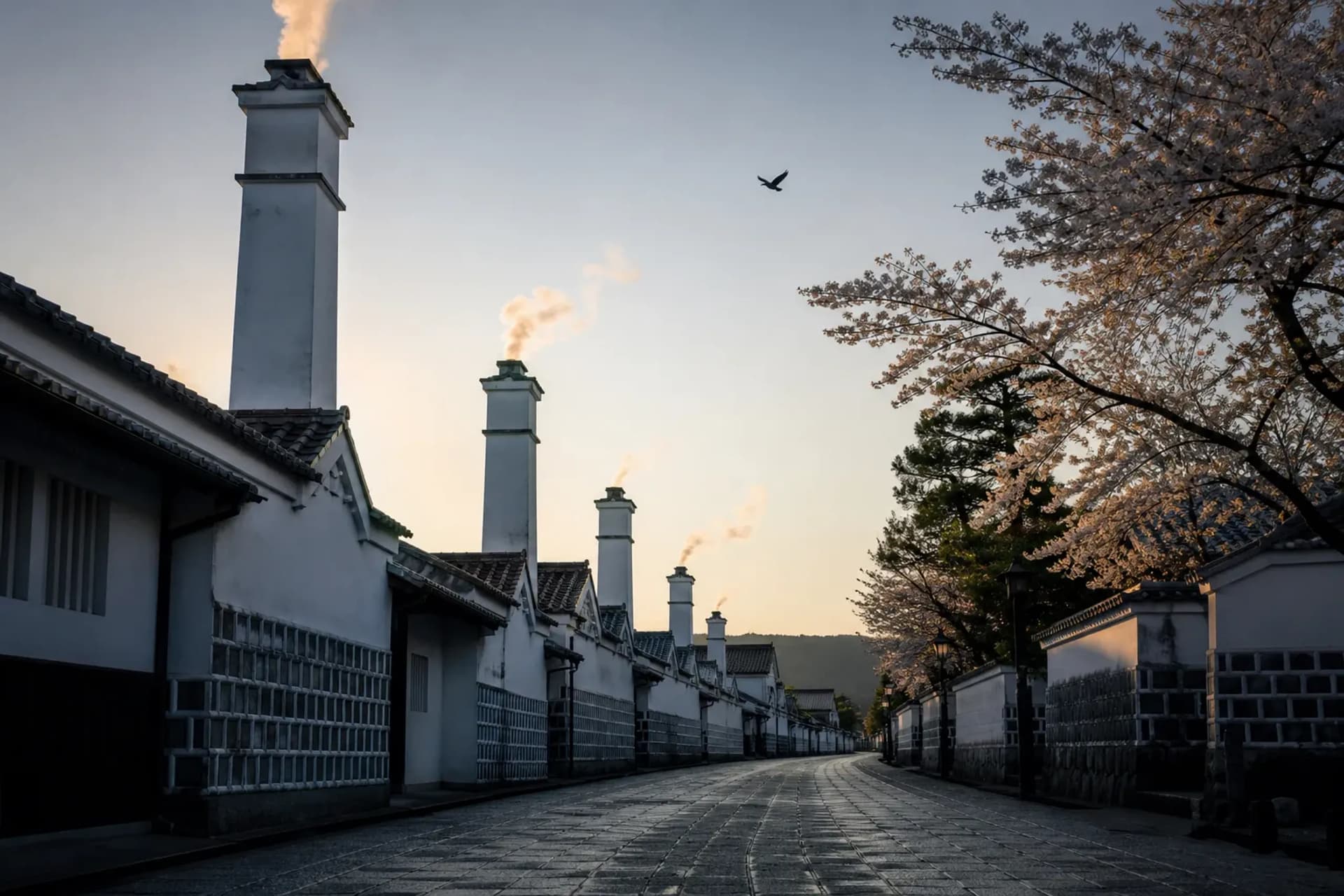
Saijō Sakagura-dōri has seven breweries within walking distance: Kamotsuru, Kamoizumi, Saijōtsuru, Hakubotan, Kirei, Fukubijin, and Sanyōtsuru. The street’s signature look is consistent: white plaster walls, red brick chimneys, and kura buildings—many listed as Registered Tangible Cultural Properties.
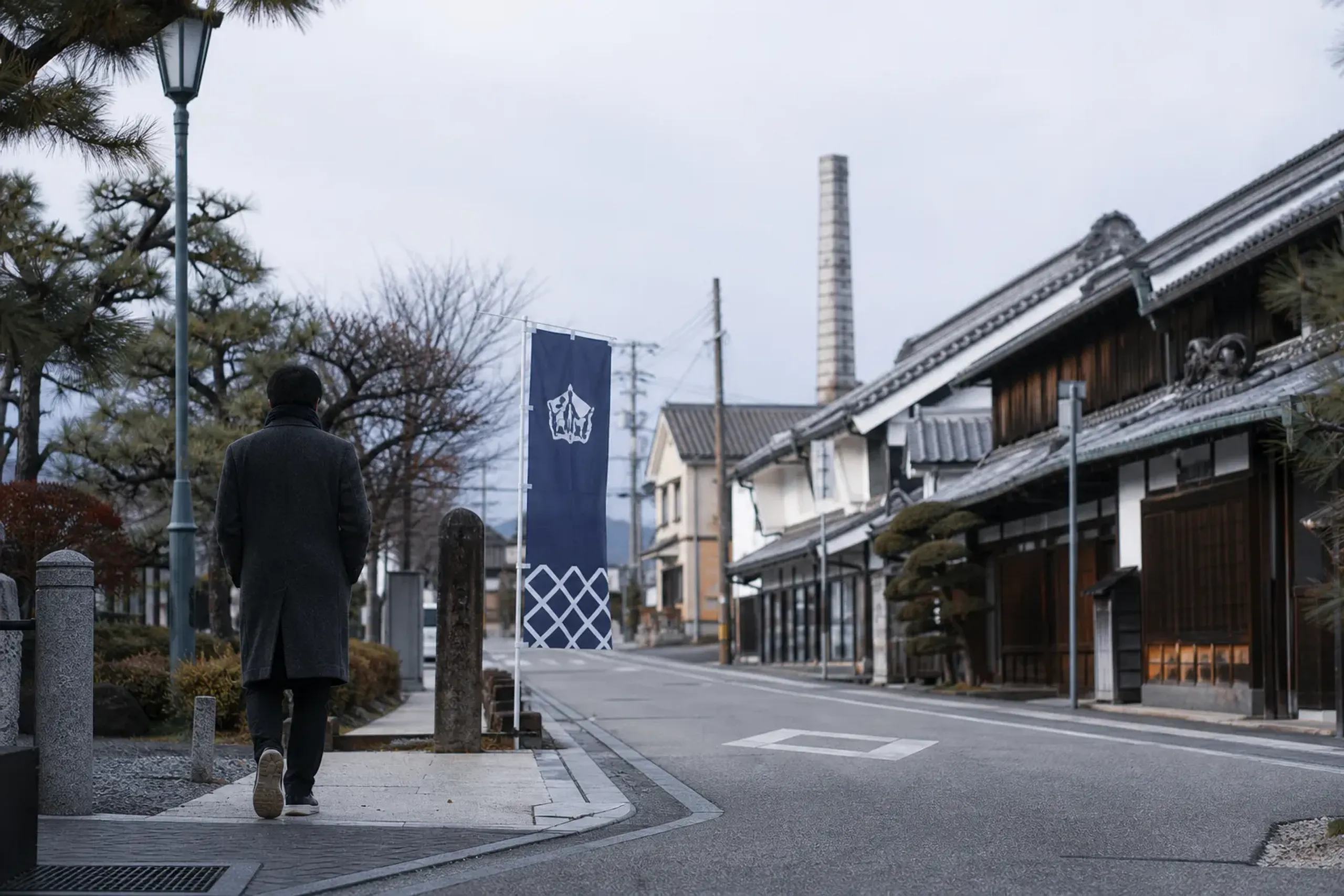
Saijō’s advantage is simple: seven breweries close enough to visit without rushing.
There is also institutional memory. Fukubijin’s site once housed what was known as the Saijō Brewing School, where brewers and tōji came from across Japan. That “school” detail changes how you read the street. It was not only commerce.
Plan for reality. Each brewery’s opening hours and tasting arrangements differ, and they can change; the official VISIT Higashihiroshima opening-hours page shows an update date (2026/07/29), which is exactly the kind of operational signal we like our guests to rely on.
A Practical Walking Route From JR Saijō Station
Start at JR Saijō Station and walk toward Sakagura-dōri at a calm pace. No sprinting. Give yourself time to reset your palate between stops, and keep one “buffer slot” in the schedule for whatever surprises you.
Our concierge team usually suggests a rhythm: one focused tasting, a short walk, then another tasting. Add lunch in the middle, not at the end, so your decisions stay sharp. Water in between helps. Quietly.
What To Eat: Bishunabe As A Grounding Lunch
Bishunabe, a local sake-cooked hotpot, is a natural lunch in Saijō. It is warming in winter, and it slows you down in the right way.
Don’t turn it into a scavenger hunt. Pick a convenient, calm place near the street, eat, and return to tasting with your senses intact. Ginjō aromas disappear when you are rushed.
The 2024 National Historic Site: Which Kura You Can Actually Enter
On 21 February 2024 the national government designated Saijō Sakaguragun, the Saijō brewery group, a Historic Site — the first time anywhere in the country that sake breweries have been designated one at all. Four buildings are covered, chosen to be read as one sequence rather than four separate monuments.
Hakubotan's Enpō-gura. The oldest surviving brewing kura in Saijō and among the oldest anywhere: a copy of a ridge tag inside is dated 1675, and a town drawing from 1862 already marks a kura on the same spot. Not open to visitors.
Kamotsuru's Ichigō-gura. Raised in 1873 by the founder of what became Kamotsuru — the first kura built here in the modern era. The main house is gone, its site now Saijō Honmachi History Plaza, but the kura itself is open, converted into the brewery's own exhibition and retail hall.
The former Hiroshima Prefectural Brewing Experiment Station. Completed in 1929, because Saijō was by then the recognised centre of the prefecture's sake industry; it closed in 1975. The grounds now belong to Kamoizumi, and the 1929 building is open today as a sake café.
Fukubijin's Daikoku-gura. A working kura was normally a sengoku-gura — about a thousand koku, roughly 180,000 litres, across one winter. Daikoku-gura was built to two thousand, the only kura in Saijō at that scale, put up in 1925 by a company floated by the town itself. Not open to visitors.
Two open, two closed. Worth saying plainly to anyone planning a day here: a national designation is not a national door. What it does confirm, in the government's own terms, is that this single street is now read as a unit — the sequence of buildings, not any one bottle, is the protected thing.
When Is The Best Time To Visit Saijō For Brewing Season?
The best time to visit Saijō for brewing-floor atmosphere is October through March, when brewing season is active.
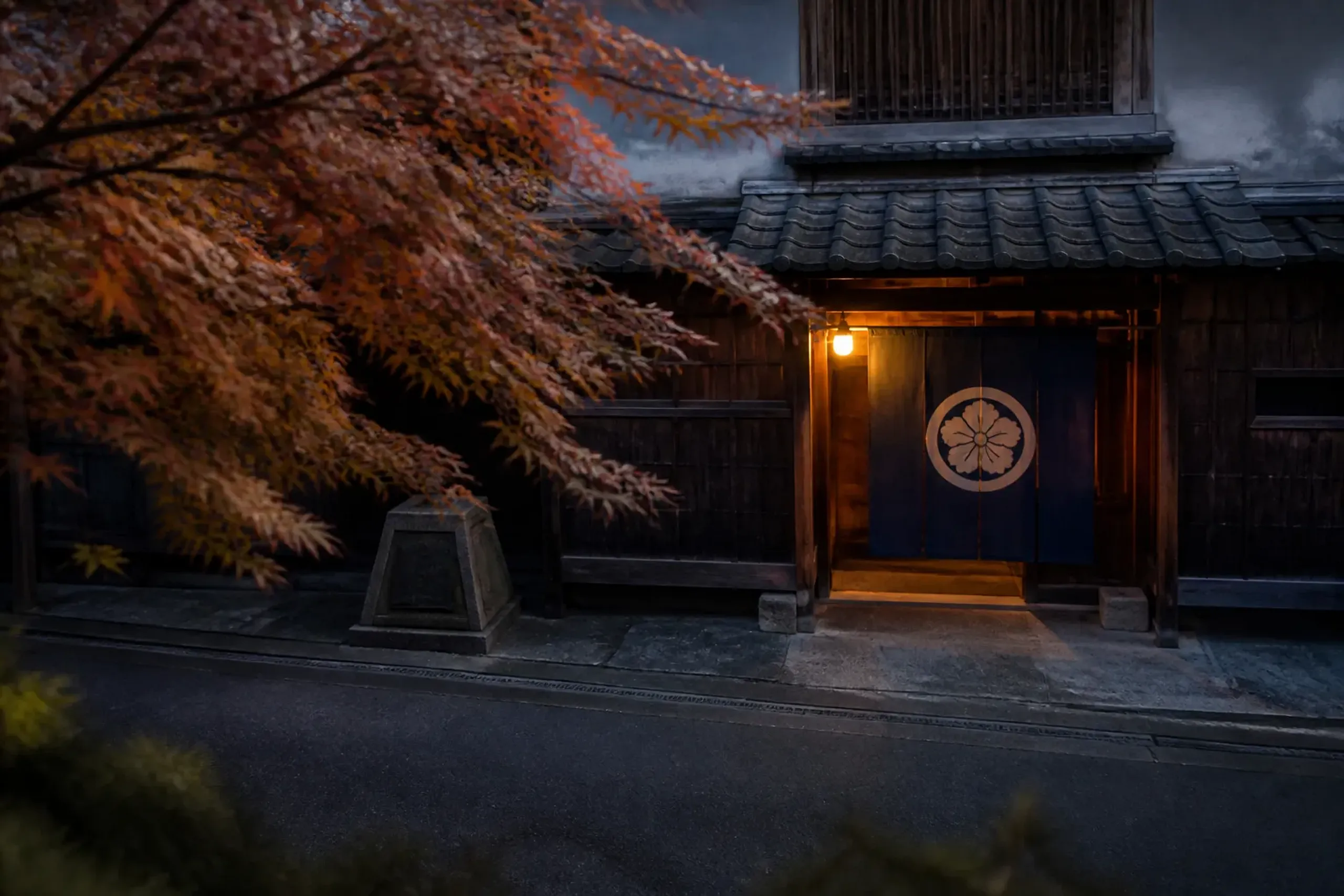
For guests who value privacy, the best visits are calm, respectful, and carefully timed.
Winter is not a drawback in the Saijō basin. It is part of the district’s physical advantage, along with local groundwater. Cold air supports fermentation control, and it changes the mood of the kura streets; chimneys, breath, and that clean bite in the evening.
If you want a festival vibe instead of quiet kura time, the Saijō Sake Matsuri has published 2026 dates: October 10 (Sat) and October 11 (Sun), 2026, with hours listed on the official festival site. Expect crowds. Plan your pacing.
Our approach is simple: choose your goal. Learn like a brewer in winter, or taste like a celebrant in October. Both are valid. They are not the same day.
How To Taste Ginjō In Saijō Without Blunting Your Palate
Ginjō tasting goes sideways when you treat it like a bar crawl. Keep it structured.
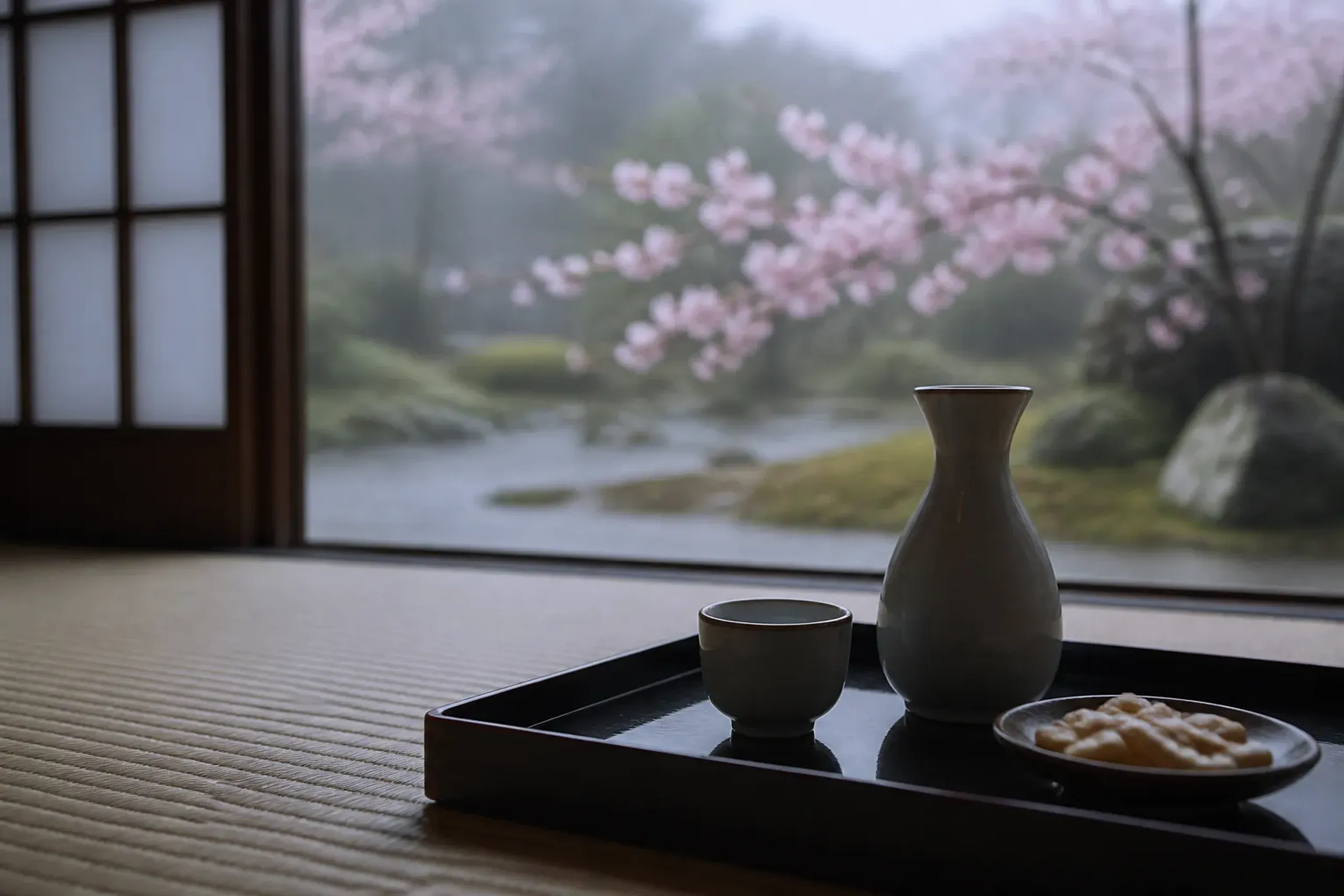
Start with a small number of pours and ask for a guided progression across grades and styles, where available. Smell first, then sip, then wait. The pause matters more than people think.
Temperature changes everything. If a sake is served chilled, note how the aroma sits higher; if it is slightly warmer, texture can come forward and the impression can widen. Write one line per pour. That’s enough.
Food pairing should be quiet. Avoid heavily sweet snacks that coat your mouth, and don’t overload on strong flavors between tastings. You are there for technique. Keep the channel clear.
The Private Tier In Saijō: What Our Guests Often Request
Some visitors want only the public tasting counters. Others want a controlled, low-visibility day where learning is the main event. We understand that split.
In a bounded, private-tier context, our team at Japan Royal Service can discuss bespoke possibilities such as private tastings outside public hours, a guided tasting across grades, meetings with a tōji or a brewery head, access to houses that do not receive visitors, and brewing-floor access during the season (October through March), with what you can see depending on where the season stands.
Conditions are not negotiable. Expect hygiene protocols, restrictions on perfume, and a request to avoid fermented foods such as nattō before a visit; party size is typically limited. Good. It protects the kura, and it protects you from turning a serious place into a spectacle.
This is where discretion stops being a slogan and becomes a working style: minimal exposure, low noise, and a day that does not advertise itself.
How The Annual Japan Sake Awards 2026 Reinforces “Technique”
The Annual Japan Sake Awards 2026 positions undiluted ginjō-shu as a national technique benchmark, with entries brewed at the manufacturer’s own licensed site.
The National Research Institute of Brewing (NRIB) published an outline dated May 20, 2026 describing the awards as the 114th iteration, first held in 1911. That timeline matters because it shows how long Japan has been evaluating ginjō quality with formal rigor, not only by reputation.
For travelers, the takeaway is practical.
Saijō is not just “a nice tasting stop.” It is a place where technique is part of civic identity, and where you can feel the link between invention, training culture, and national judging standards.
If you enjoy craft disciplines—ceramics, knives, architecture—this is the sake equivalent. Shokunin thinking, applied to fermentation.
A Concierge-Grade Planning Checklist For Saijō (Durable And Honest)
Saijō rewards planning because the street is compact, but the rules vary by brewery. Simple checklist. High return.
- Confirm brewery opening hours close to your date using official visitor information; hours change and tastings are not uniform.
- Choose your season: brewing atmosphere (Oct–Mar) versus festival energy (Oct 10–11, 2026 for Saijō Sake Matsuri).
- Decide your learning depth: casual tasting, or a structured progression with time for notes and conversation.
- Mind personal etiquette: avoid perfume; avoid strong fermented foods such as nattō before sensitive visits; keep clothing easy to manage in winter.
- Plan shipping realistically: domestic delivery within Japan is usually straightforward; export is the constraint, and unpasteurised sake travels poorly.
One more operational truth: photography on brewing floors or of workers should never be assumed. Ask first. Always.
How We’d Place Saijō In A Hiroshima Itinerary (Without Overstuffing)
We build Saijō days for guests who want one clean thesis: technique over terroir. That means not stuffing the day with unrelated detours.
A common shape is two nights in Hiroshima, with one day for the city’s major historical sites and one day for Saijō plus a calmer evening meal.
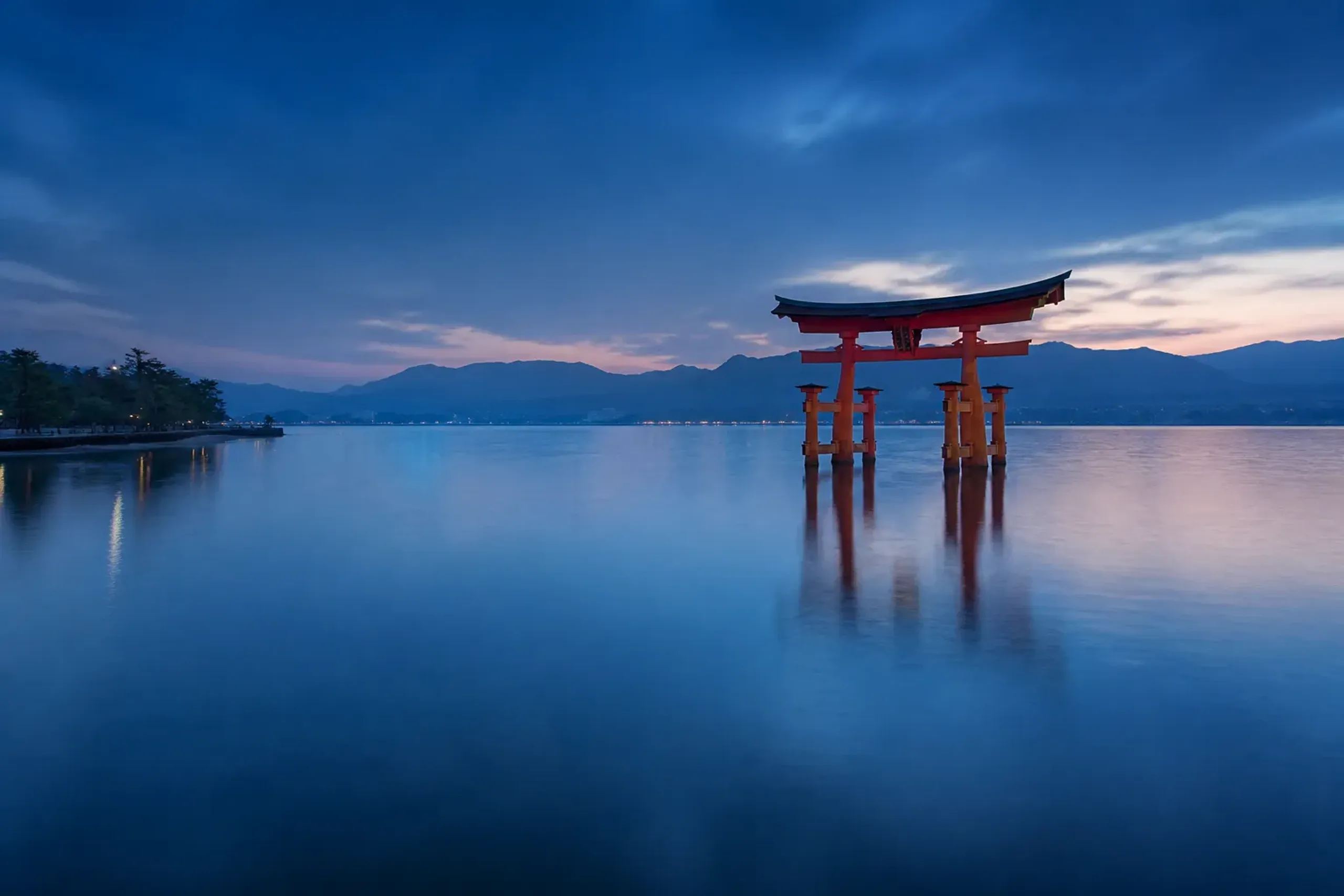
Another shape adds Miyajima as a half-day or full-day extension, depending on your walking appetite and crowd tolerance.
Transportation matters here because Saijō is not “next door” to central Hiroshima, and winter daylight is shorter. For discreet, low-friction movement, our private transportation guidance starts with the right vehicle and timing, not a flashy entrance; see our chauffeur options at private transportation.
If you want the whole west-Japan arc—Hiroshima, Saijō, and onward—our concierge can map a tailor-made itinerary that keeps transfers calm and avoids the brittle “last train” feeling.
Reading The Series In Order (If You Haven’t Yet)
This post lands best if you have the earlier chapters nearby. Keep them open in another tab. It changes how you taste.
- Depachika: Where to Eat When You Don't Have a Reservation (useful if you route through Hiroshima or Osaka and need a high-quality fallback meal)
- Shokunin Lineage Journeys: One Craft, Forest to Finish (the mindset that makes Saijō’s technique story click)
If you are also choosing where to base yourself in Japan when popular properties are full, our team often shares this practical read: What to Book When Japan's New Openings Are Full. It pairs well with a Hiroshima-first plan.
Frequently Asked Questions
Is Saijō The Same As The “Soft-Water Hiroshima” Story I Hear About?
Saijō is not simply “the soft-water corner,” because Saijō’s wells are medium-hard (chūkōsui) and the district is defined by technique adoption, not a single water source.
Miura Senzaburō developed a method suited to soft water in Mitsu, Akitsu, and Saijō later adopted it; Saijō also used approaches associated with hard-water brewing, which is why the district’s method story is more nuanced.
Can I Visit All Seven Saijō Breweries In One Day On Foot?
Yes, the seven breweries on Saijō Sakagura-dōri are within walking distance of JR Saijō Station, but opening hours and tasting availability differ by brewery.
We recommend choosing 3–5 tasting stops for a calm pace, then leaving time for lunch and palate breaks. Confirm hours close to your travel date using official visitor information.
When Are The Saijō Sake Matsuri 2026 Dates?
The Saijō Sake Matsuri 2026 is scheduled for October 10 (Sat) and October 11 (Sun), 2026, with daily hours listed on the festival’s official site.
Those dates can be a strong travel anchor, but the area will be busy; if your priority is quiet learning, consider winter brewing season instead.
What Etiquette Rules Matter Most For A Brewery Visit In Japan?
The most important rules are hygiene compliance, avoiding perfume, and following any food restrictions such as avoiding fermented foods like nattō before sensitive visits.
Breweries vary in what they allow, especially during brewing season. Photography rules can be strict, and some areas may be off-limits depending on production and safety.
Which Buildings On The Street Are Part Of The 2024 National Historic Site, And Can I Go Inside Them?
Four buildings are covered by the 21 February 2024 designation — Hakubotan's Enpō-gura, Kamotsuru's Ichigō-gura, the former Hiroshima Prefectural Brewing Experiment Station, and Fukubijin's Daikoku-gura — and only two of the four are open to visitors: Kamotsuru's kura, now an exhibition and retail hall, and the former Experiment Station, now a sake café.
The designation protects the group of buildings as a historical unit, not individual public access, so confirm which houses are open on your date rather than assuming the designation itself guarantees entry.
Can Japan Royal Service Help Me Plan A Discreet Saijō Day With A Private Chauffeur?
Japan Royal Service can provide tailored guidance and private-day planning for Saijō, with discretion as the default and logistics designed around your pace and privacy.
For private coordination, reach our team directly via WhatsApp or LINE, or contact us here.
Why Choose Japan Royal Service
Luxury travelers don’t choose Saijō because it is famous. They choose it because it teaches. Our job is to keep that teaching clear, private, and well-timed.
First, we lead with discretion. That means a low-visibility schedule, calm arrivals, and an itinerary that doesn’t leak your movements through avoidable friction. Quiet is a service.
Second, we lean into hidden-Japan rather than the loudest checklist. Saijō is a rare case where the “hidden” element is not hard-to-reach geography; it is the depth of the method story, and the doors that open only with careful introductions.
Third, we curate for shokunin value: the people behind technique. When a guest wants more than a tasting counter, we shape the day around disciplined learning, not buzzwords.
If you want a Saijō day that feels composed—winter air, measured tastings, and a technique narrative that stays with you—reach our team privately via WhatsApp or LINE, or contact us here.