In this guide
- 01What A Kyoto Ryokan Really Offers (And What It Doesn't)
- 02Where To Stay: Reading Kyoto's Districts
- 03The Onsen Question: What Makes A Bath Worth Travelling For
- 04Kyoto's 2026 Openings: Hotel Or Ryokan?
- 05Ryokan Etiquette Worth Knowing Before You Arrive
- 06How To Plan And Book A Luxury Kyoto Ryokan
- 07Beyond The Ryokan: The Kyoto Google Cannot Find
- 08Frequently Asked Questions
- 09Why Choose Japan Royal Service
Kyoto rewards the quiet traveler. Beneath the famous temples and the maiko hurrying through Gion at dusk, there is a slower city — one of cedar bathwater, hand-laid futon, and a host who already knows you take your tea without sugar. The ryokan is where that Kyoto reveals itself.
But here is the thing most guides skip. Not every ryokan calling itself "luxury" earns the word. Some are exquisite. Some are tired heritage names coasting on reputation. And a handful — the ones our team at Japan Royal Service value most — are nearly impossible to enter without an introduction.
This guide explains how to choose well in 2026. Which districts feel genuinely private. What an onsen stay should actually deliver. And how the city's newest openings change the calculus for the discerning traveler.
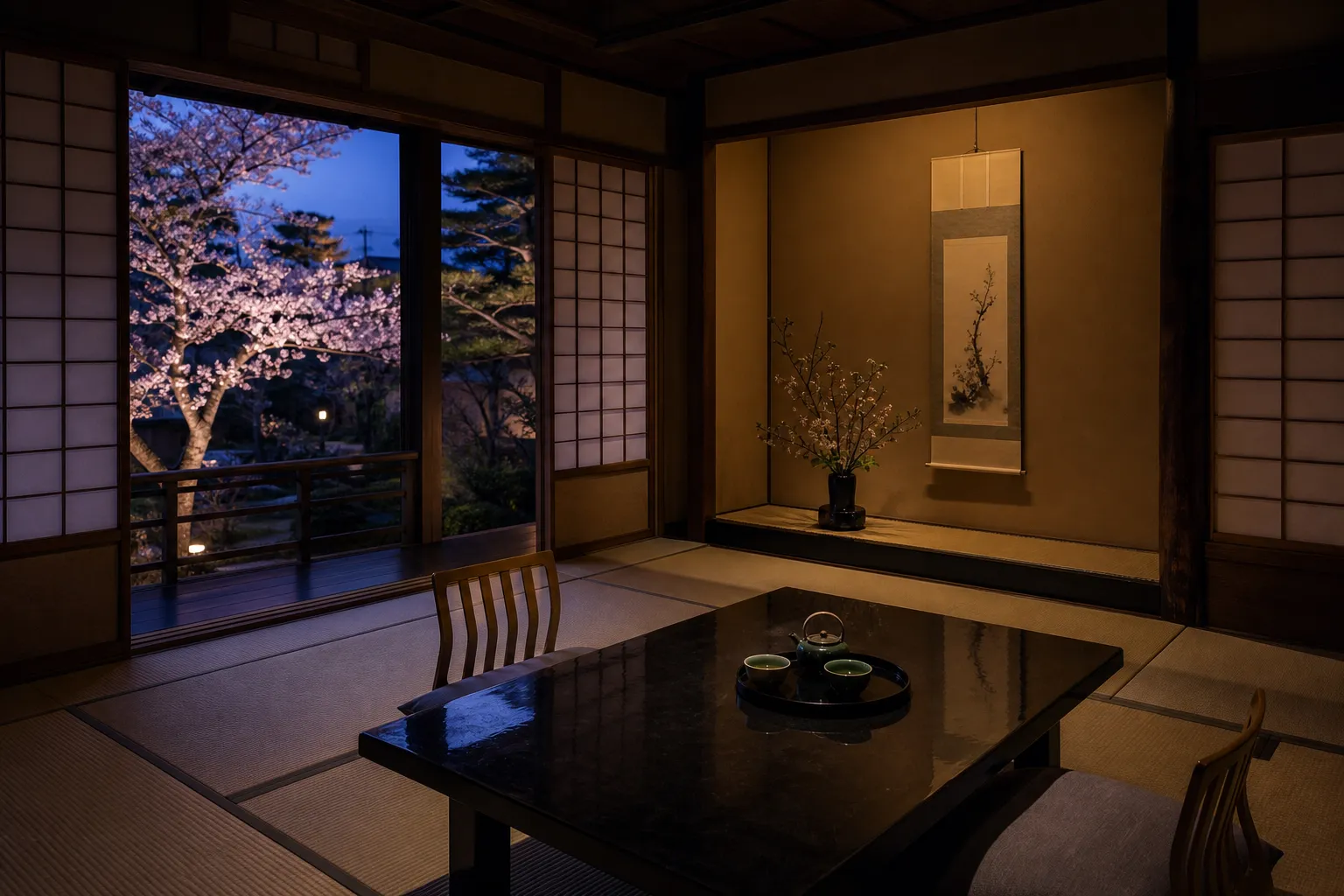
Restraint as luxury: a Kyoto ryokan room composed around space and natural materials.
What A Kyoto Ryokan Really Offers (And What It Doesn't)
A ryokan is not a hotel with tatami floors. The distinction matters. At its best, the stay is a single composed experience — architecture, bathing, dining, and care folded into one rhythm that begins the moment you slip off your shoes.
Expect a tatami-matted room with shoji screens and a tokonoma alcove holding a single seasonal scroll. Expect futon bedding laid out while you bathe. Expect a yukata, a kaiseki dinner of many small courses, and a host — the nakai — who anticipates rather than asks.
What you should not expect: the loud opulence of a five-star city hotel. The Kyoto ryokan aesthetic runs on wabi-sabi — restraint, natural materials, the beauty of a weathered stone or an unglazed bowl. Gold leaf is rare. Silence is the luxury.
Key fact: Most authentic ryokan rates include both a multi-course kaiseki dinner and breakfast. This is unlike Western hotels — the meals are central to the stay, not an add-on, and skipping them undermines the whole experience.
Where To Stay: Reading Kyoto's Districts
Location shapes everything. The same standard of service feels entirely different depending on what waits outside the gate. Here is how the key areas compare.
| District | Character | Best For |
|---|---|---|
| Gion & Higashiyama | Historic, geisha quarter, stone lanes | Cultural immersion, evening atmosphere |
| Arashiyama | Bamboo, river, hillside calm | Nature, privacy, early-morning quiet |
| Higashiyama hills | Temple slopes, city views | Walkers, spiritual ambiance |
| Central Kyoto | Connected, walkable | First visits, shorter stays |
Gion is the cliché for a reason. Stay near Shirakawa and you may glimpse a geiko crossing the canal at twilight, the wood facades glowing under paper light. It is theatrical and lovely. It is also the busiest part of old Kyoto by day.
Arashiyama is the antidote. The bamboo grove is mobbed at noon and empty at seven in the morning. A ryokan along the Oi River — Hoshinoya Kyoto, reached only by boat — turns that quiet into the entire point. In our experience, guests who prize seclusion settle here without regret.
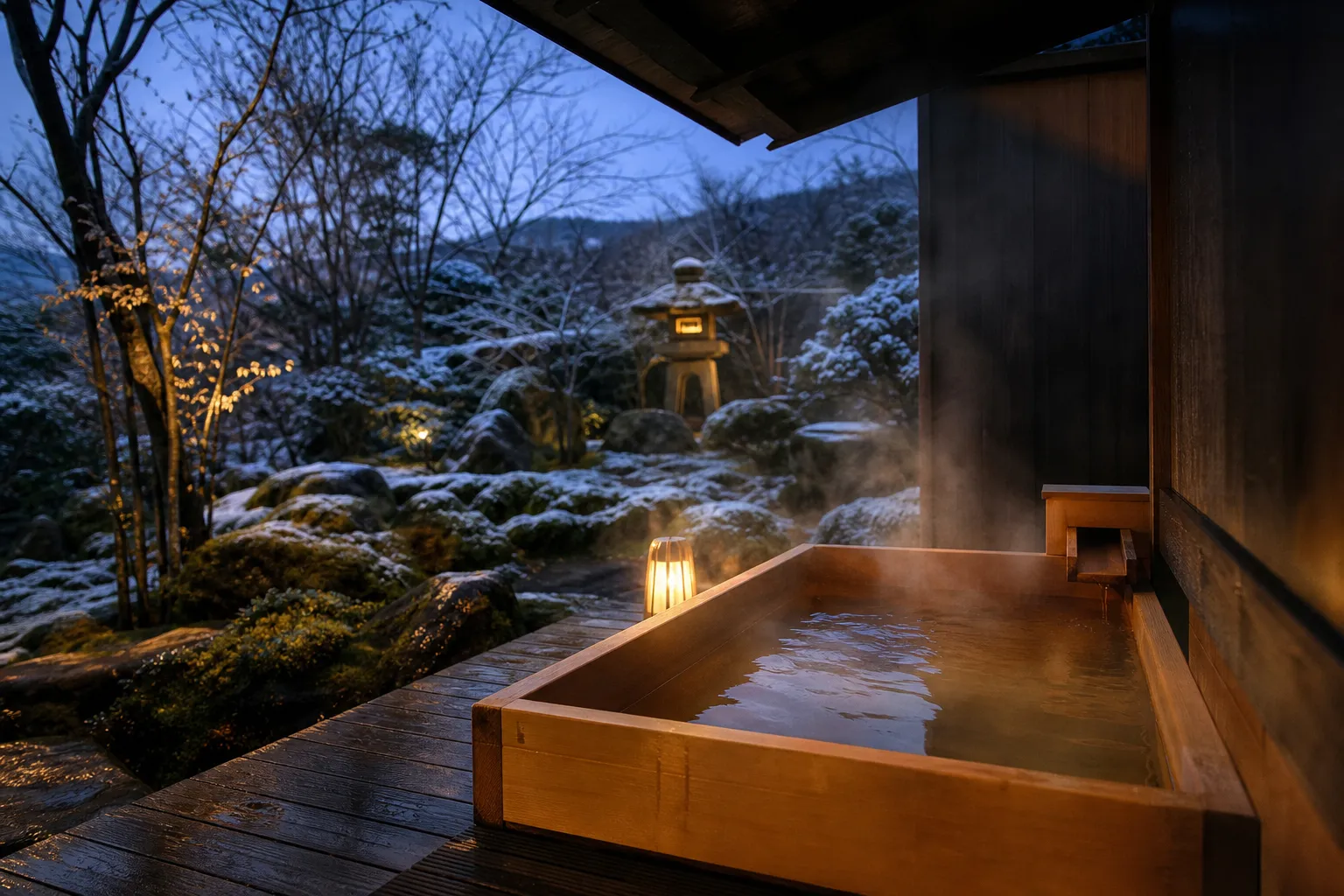
A private hinoki tub facing a moss garden — the Kyoto bath at its most serene.
The Onsen Question: What Makes A Bath Worth Travelling For
Kyoto is not an onsen town in the way Hakone or Kusatsu are. The city sits on limited natural hot-spring sources, so be wary of marketing that blurs the line between a true mineral onsen and a heated cedar bath.
That said, the bathing experience here can still be sublime. A private hinoki tub on your own veranda, steam rising into a maple-shaded garden, the only sound a shishi-odoshi knocking against stone. That is the Kyoto bath at its finest.
Two things separate a memorable soak from an ordinary one. First, privacy — a kashikiri (reservable private bath) or an in-room tub removes the etiquette friction many Western guests quietly dread. Second, the view. A bath facing a moss garden or the river is worth far more than its plumbing.
If You Want A True Onsen, Pair Kyoto With A Day Trip
For genuine hot-spring volume, our concierge often suggests anchoring in Kyoto and adding a short journey out. Hoshino Resorts' KAI Kusatsu opened on June 7, 2026, giving travelers a fresh, calm base in one of Japan's oldest spring towns — useful precisely because it sidesteps Hakone's most saturated corridors. It is a longer haul from Kyoto, but for an onsen-led leg of a wider itinerary, it is worth knowing about.
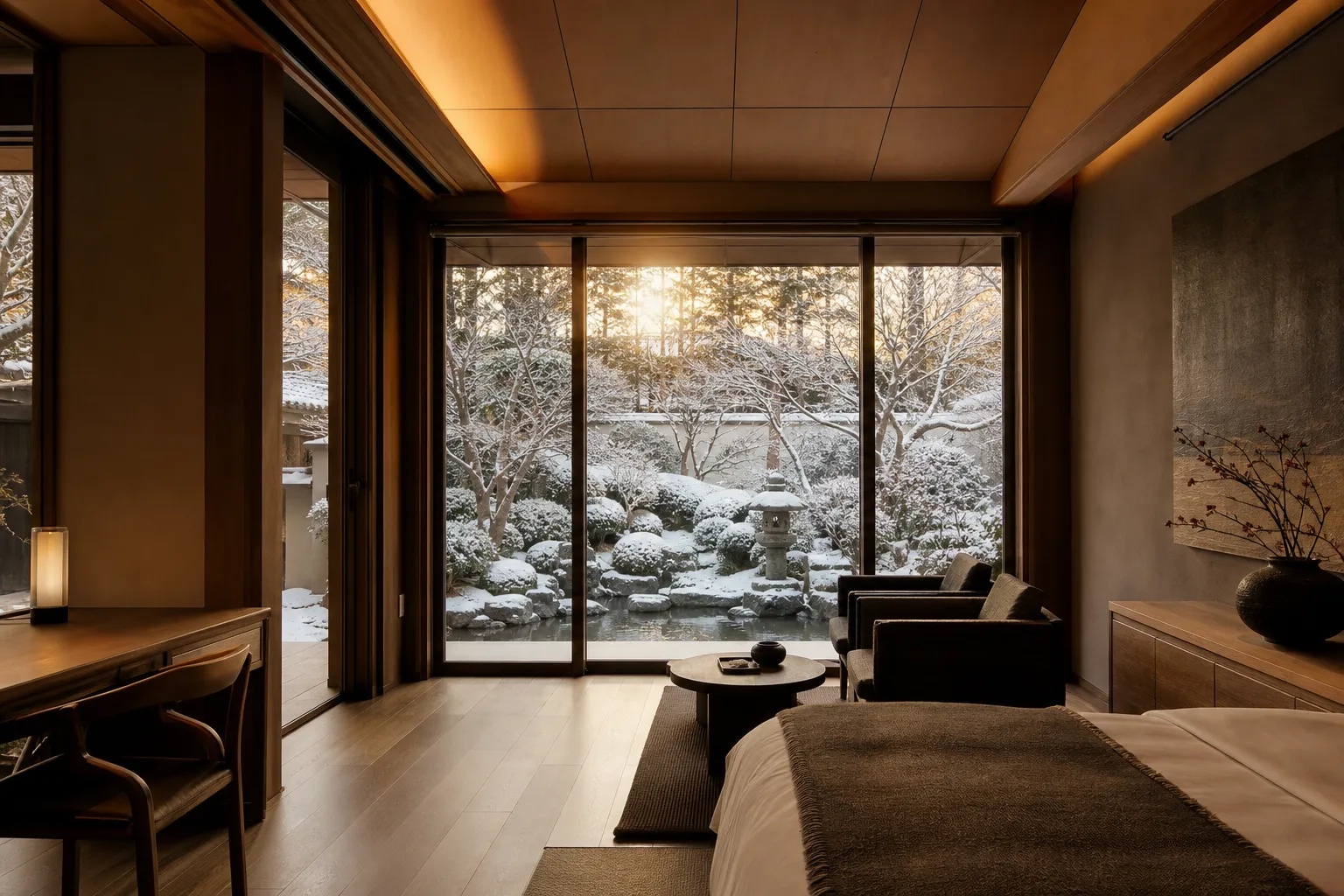
The new openings offer a polished, private basecamp for exploring older Kyoto.
Kyoto's 2026 Openings: Hotel Or Ryokan?
Two major properties debuted in Kyoto this spring, and clients ask about them constantly. Neither is a traditional ryokan — but both reshape how a refined Kyoto stay can be built.
Capella Kyoto
Capella's first property in Japan opened on March 22, 2026. The tone is contemporary ultra-luxury delivered quietly — restraint over flash, exactly the register a wabi-sabi-minded traveler appreciates. It suits those who want modern comfort and discretion as a base, then step out into older Kyoto for the cultural depth.
Imperial Hotel, Kyoto
The Imperial Hotel opened its Kyoto address on March 5, 2026, in the Gion area. The heritage weight of the Imperial name carries a strong association with state-guest history, which lends itself to a more formal, imperial-class register. For a guest who wants prestige and a storied address within walking distance of the geisha quarter, it is a compelling choice.
Here is how we frame these for clients. A hotel like Capella or the Imperial gives you a polished, private basecamp. A true ryokan — Tawaraya, Hiiragiya, Hoshinoya — gives you the immersive ritual. Many of our most considered itineraries use both: two nights in a ryokan for the ceremony of it, then a hotel for the freedom to come and go.
Ryokan Etiquette Worth Knowing Before You Arrive
The customs are not obstacles. They are part of the pleasure once understood. A little preparation lets you relax into the rhythm rather than second-guess it.
- Shoes off at the genkan. Switch to house slippers. On tatami, even slippers come off — socks or bare feet only.
- Toilet slippers are separate. They stay in the washroom. Forgetting to swap back is the classic first-timer's slip.
- The welcome tea matters. Your nakai will serve tea and a sweet while explaining dinner timing. This is the relationship beginning. Receive it unhurried.
- Wash before you bathe. In any shared onsen, scrub thoroughly at the shower stations first. The tub is for soaking, never washing.
- Tattoos and shared baths. Policies vary. A private or in-room bath sidesteps the issue entirely — worth requesting in advance.
The yukata, by the way, wraps left over right. The reverse is reserved for funerals. A small detail your host will quietly correct if needed — without ever making you feel it.
How To Plan And Book A Luxury Kyoto Ryokan
The finest ryokan are small. Tawaraya holds a handful of rooms. That scarcity is the whole appeal, and it means booking windows are tight.
For the two peak seasons — cherry blossom in late March to early April, and autumn foliage in November — serious travelers reserve six to twelve months ahead. Off-peak, a few months may suffice, though the best rooms with private gardens go first regardless of season.
A few practical notes drawn from how these properties actually operate:
- Confirm whether your room includes a private bath, a garden view, or both — these are the details that define the stay.
- Note your dietary needs early. Kaiseki is planned around them, not adjusted at the table.
- Some historic ryokan prefer guests arrive with an introduction or through a trusted intermediary. This is not snobbery; it is how they protect the intimacy of a tiny house.
Where a property has its own reservation channel, that is the official route. For the introduction-only houses and for stitching a ryokan stay into a wider Kyoto itinerary, our concierge can offer tailored guidance.
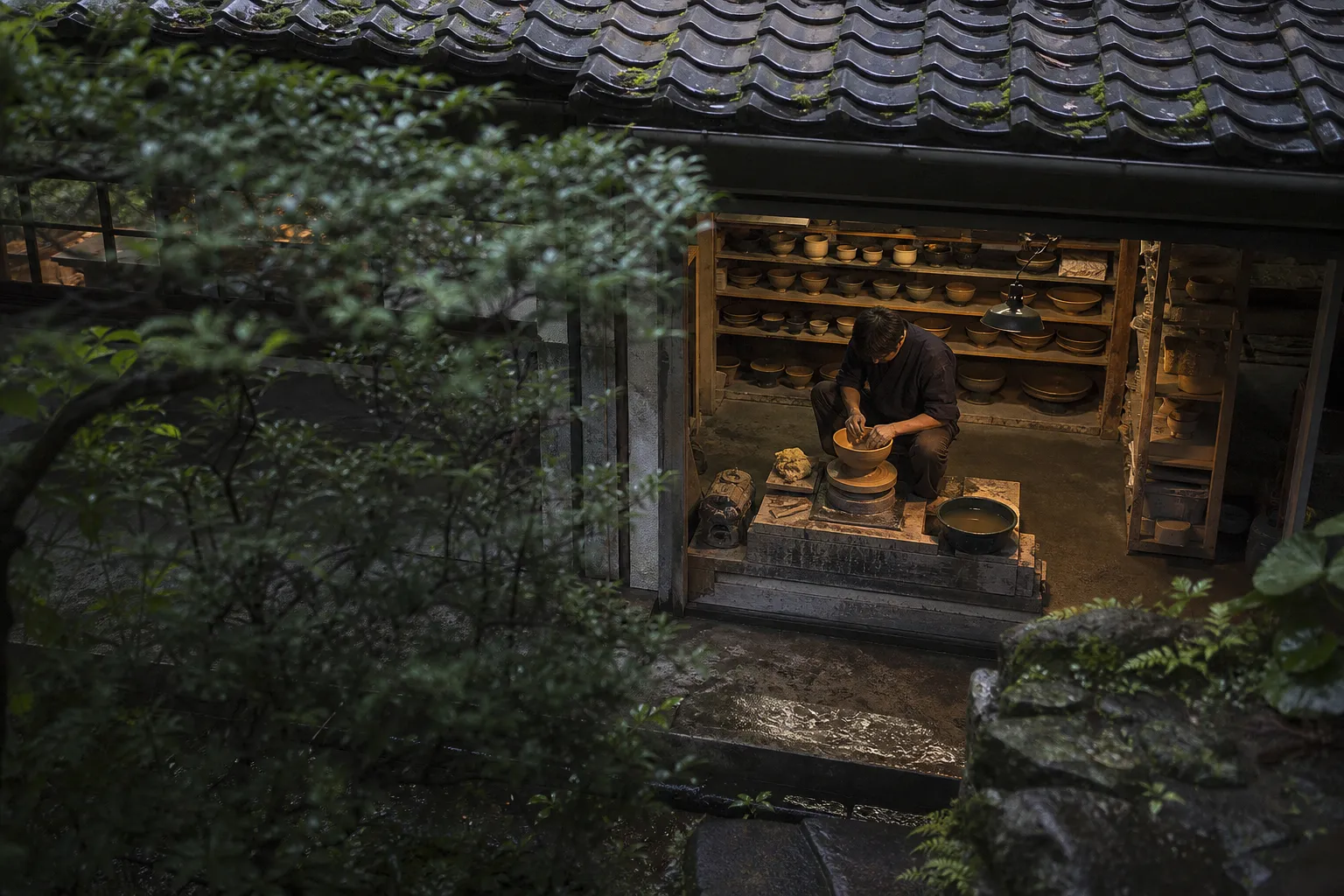
Private sessions with a shokunin who does not take walk-in guests — the real reason to come.
Beyond The Ryokan: The Kyoto Google Cannot Find
A great room is only the base. The real reason to come to Kyoto sits in the experiences arranged around it.
Consider a private session with a kiln master in the hills above the city, the kind of shokunin who does not take walk-in guests. A morning of kintsugi with a lacquer artisan. A tea gathering in a sukiya teahouse that does not appear on any map. These are the moments our team at Japan Royal Service spends years cultivating relationships to make possible.
Movement matters too. Kyoto's narrow lanes and seasonal crowds reward private chauffeured transport — a Lexus LM or Toyota Alphard waiting discreetly, a driver who knows which temple gate opens early and which back street avoids the coach parties. Privacy on the road is as much a part of the experience as privacy at the bath.
Frequently Asked Questions
Does Kyoto have real natural onsen?
Kyoto has limited natural hot-spring sources, so most luxury ryokan baths are heated cedar or hinoki tubs rather than mineral springs. For a true volcanic onsen, our concierge often suggests pairing Kyoto with a day or overnight trip to a spring town such as Kusatsu.
How far ahead should I book a luxury ryokan in Kyoto?
For cherry blossom season (late March to early April) and autumn foliage (November), reserve six to twelve months ahead. The smallest, most sought-after houses fill earliest. Off-peak, a few months is usually workable.
Is a kaiseki dinner included in the room rate?
At most authentic ryokan, yes — dinner and breakfast are typically included and are central to the stay. Inform the property of dietary restrictions well in advance, as menus are planned around the season and the guest.
Should I choose a ryokan or one of the new luxury hotels?
A ryokan offers the immersive ritual; the new Capella Kyoto or Imperial Hotel, Kyoto offers a polished, flexible base. Many of our itineraries combine both — a couple of nights in a ryokan, then a hotel for freedom of movement.
Why Choose Japan Royal Service
The difference between a good Kyoto stay and an unforgettable one is rarely the room. It is access, timing, and the quiet confidence of people who know the city from the inside.
Our team at Japan Royal Service works with the houses that do not advertise, the artisans who do not take strangers, and the private bathing rooms that never appear in search results. We hold guest identity and itinerary in complete confidence — the discretion our clients value above all else. And we match the season to the experience, so you arrive when the maples are at their reddest or the garden bath is at its most still.
We do not sell a checklist. We compose a stay around how you actually want to feel in Kyoto.
If you are planning a luxury ryokan or onsen journey in Kyoto for 2026, reach our concierge directly via WhatsApp or the contact form for a tailored proposal. We would be glad to begin a quiet conversation.