In this guide
- 01The Chinese Roots Of Nagasaki's Winter Lights
- 02Where Are The Lanterns In Nagasaki?
- 03Parades And Processions: The Emperor, Mazu, And The Dragon
- 04How Long Does The Nagasaki Lantern Festival Last?
- 05Temples In Red And Gold: Sōfuku-ji And Kōfuku-ji
- 06What Is The Best Way To Travel To The Festival?
- 07Evenings And Dining: Champon And Shippoku
- 08Frequently Asked Questions
- 09Why Choose Japan Royal Service
Red and gold light reflects on wet stone. Steam rises from food stalls into the cold February air, carrying the heavy, rich scent of pork broth and hot oil. Two and a half weeks of winter lanterns transform a port city with deep Chinese roots into a nocturnal canvas. Our team at Japan Royal Service watches the crowds move, then guides our clients elsewhere.
The Nagasaki Lantern Festival does not happen in a single, fenced enclosure. It spills across a dozen neighborhoods. It reshapes the evening commute. For the luxury traveler, attempting to stand in the thickest crush of spectators is unnecessary. The appeal lies in how you move through the city, stepping out of a quiet, warm vehicle into a targeted viewing zone, and then retreating to an excellent table before the night turns freezing.
This is a festival of motion, memory, and street food, built on centuries of maritime history. Knowing exactly when to step into the light—and when to step away—makes all the difference.
The Chinese Roots Of Nagasaki's Winter Lights
Shinchi Chinatown is small. It forms a cross of paved streets about 250 meters across, sheltering roughly 40 shops and restaurants. Built on reclaimed land in the Edo period, it originally served as a storage area for cargo unloaded from Chinese trade ships. These deep roots anchor the modern festival.
For decades, this community held a Spring Festival to mark the Lunar New Year.
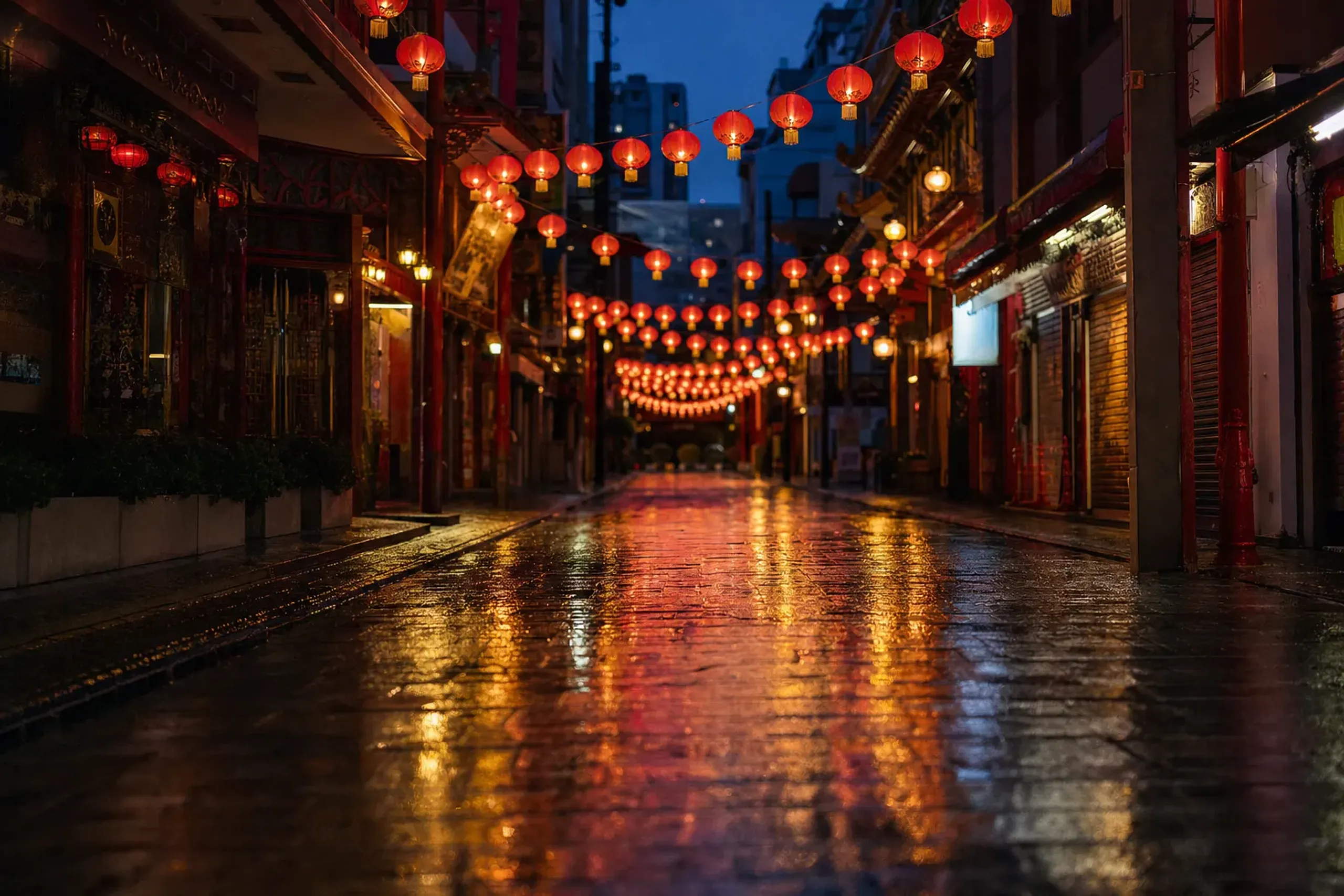
In 1994, the city recognized the magnetism of those winter nights and reorganized the local celebration into the city-wide Nagasaki Lantern Festival. Today, roughly 15,000 lanterns illuminate the urban grid.
Despite the scale, the festival retains its historical core. The lanterns radiate outward from the Chinese quarter, tying the modern shopping arcades back to the ancient port. You do not merely look at the displays. You walk the trade routes of an older world.
Where Are The Lanterns In Nagasaki?
The official festival venues center around Shinchi Chinatown, the Kankō-dori arcade, the Dōzagawa area, and Nakashimagawa Park near Spectacles Bridge. They sit closely together, making walking the ideal strategy.
During the festival, different neighborhoods take on distinct colors and moods. Navigating them effectively requires a clear plan, particularly on busy weekend nights.
Option A: Shinchi Chinatown And The Minato Area
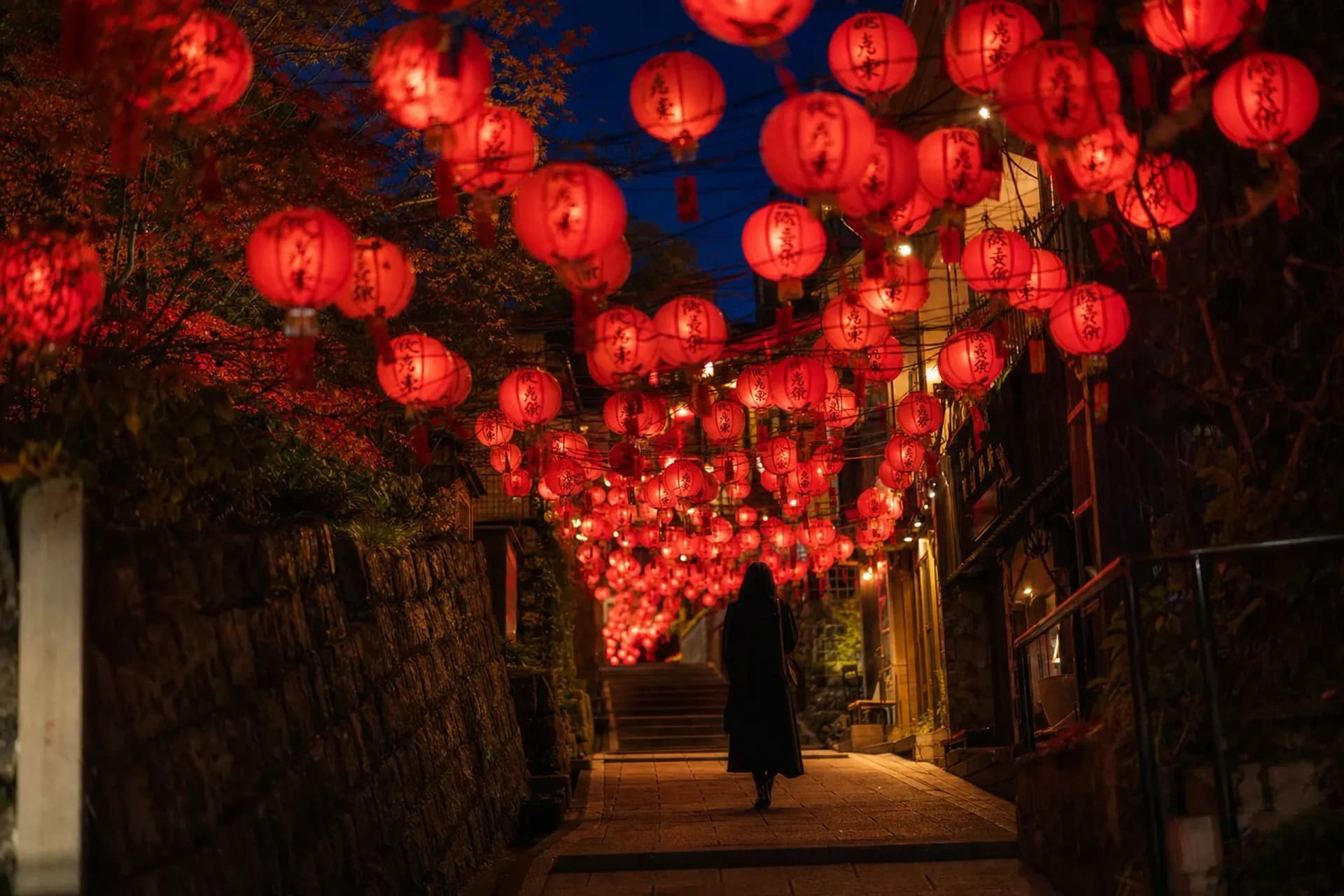
The heart of the festival beats here. Pink lanterns blanket the streets, casting a heavy, theatrical glow over the neighborhood. This is where the crowds are thickest and the food stalls the most active. Our concierge team typically advises passing through this area early in the evening to absorb the energy before the walking paths become congested.
Option B: Nakashimagawa Park And Spectacles Bridge
A short walk north brings a sharp shift in atmosphere. Yellow lanterns line the banks of the Nakashima River, reflecting in the dark water.
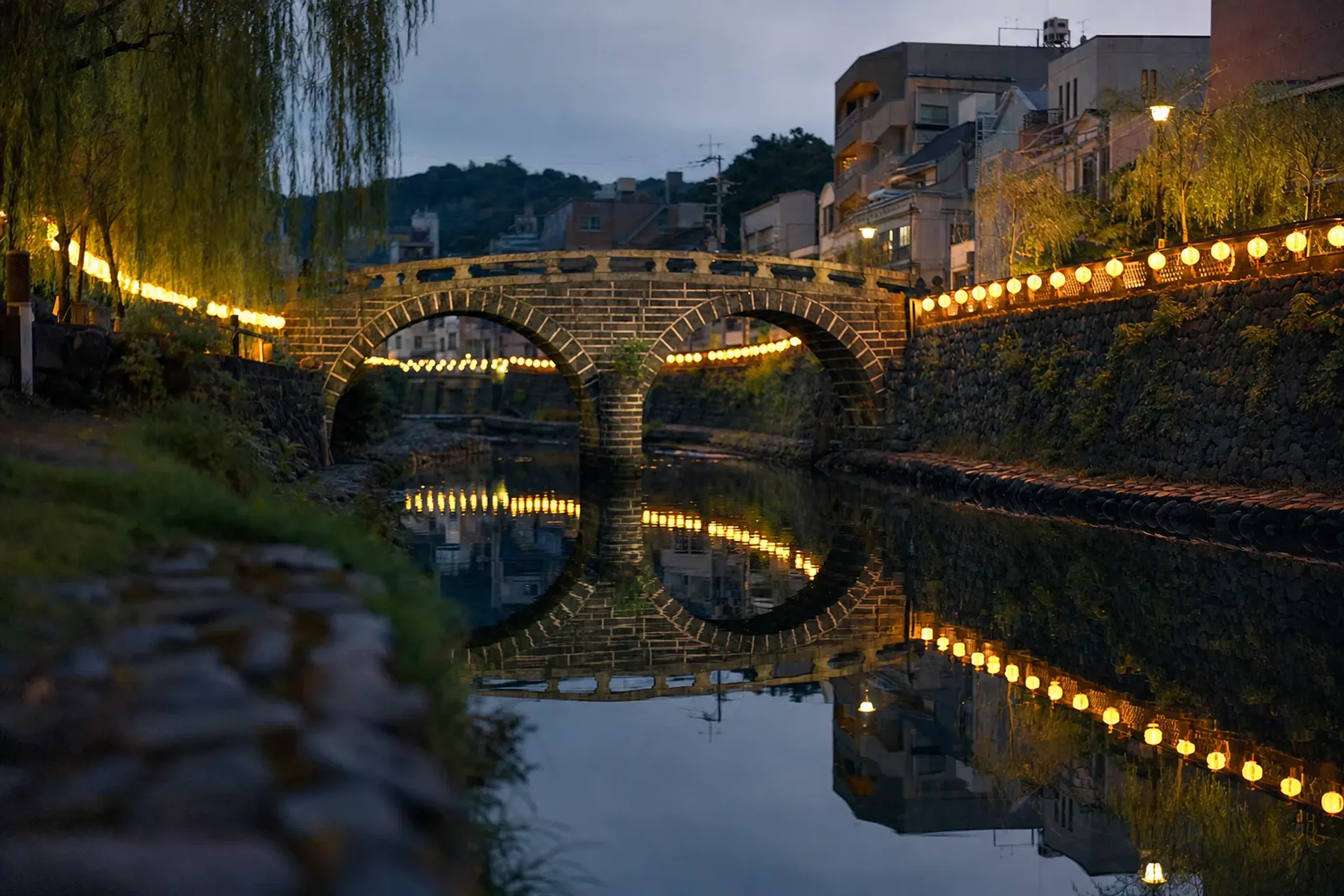
The famous Spectacles Bridge (Meganebashi) forms a quiet, striking focal point. The crowds thin out here, allowing for unhurried observation and a more relaxed evening walk.
Option C: Kankō-dori And The Arcades
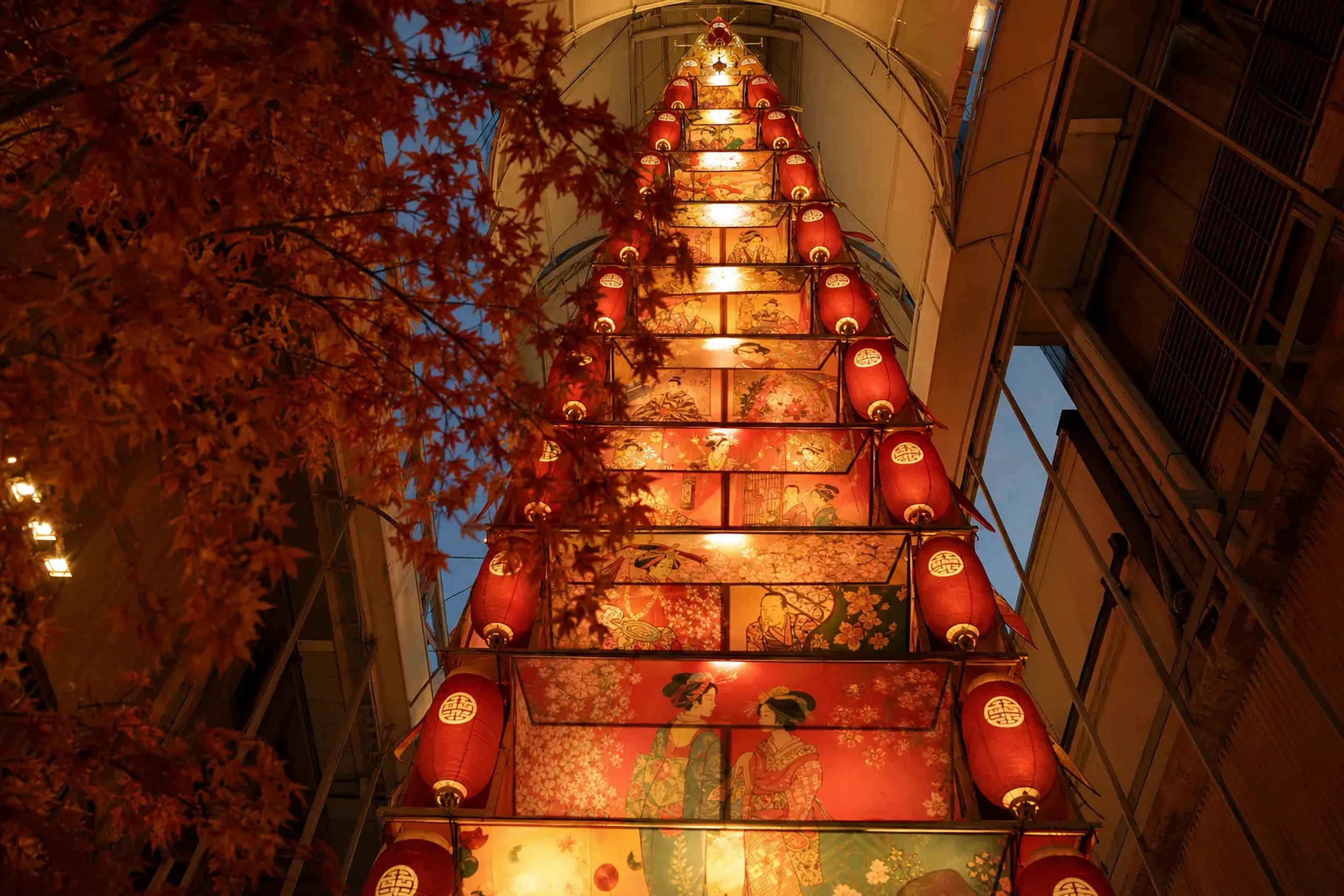
The covered shopping arcades, including Bernard Kankō-dori, host massive lantern pieces. Some of these elaborate decorations stand up to 10 meters tall. On Bernard Kankō-dori, you will find a matchmaker-themed display where visitors often linger. This area blends daily city life with festival spectacle.
Parades And Processions: The Emperor, Mazu, And The Dragon
Static lights only account for half the experience. The festival pulses with scheduled motion. The daily dragon dance features a dragon approximately 20 meters long, winding through the streets to the sharp crack of percussion. It is loud, physical, and completely absorbing.
The Emperor Parade takes place on Saturdays during the festival. Around 150 people in Qing Dynasty period costumes march through the city. The parade begins at Chuo Park and winds its way toward the Chinatown area. Finding a good vantage point requires knowing the route and arriving with precise timing.
On Sundays, the Mazu Procession alters the rhythm. This reenactment honors Mazu, the deity of sea safety. It mirrors the processions of Edo-period ship crews who came to Nagasaki to enshrine the goddess. Watching the procession move through the modern streets creates a sharp, surreal bridge to the past.
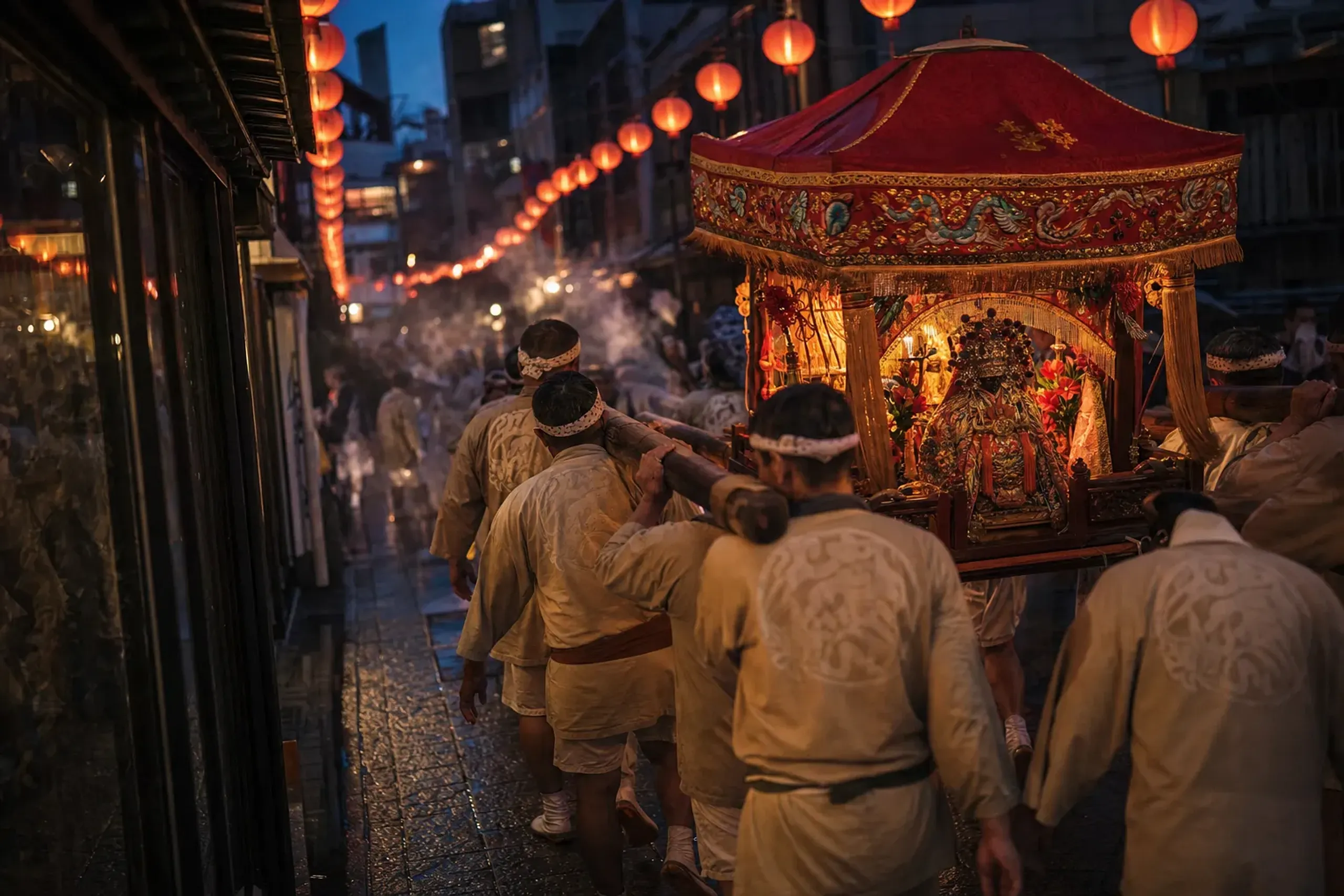
Key fact: Parade times and routes change annually. Always check the official Nagasaki City program or consult your coordinator for the exact schedule before finalizing your daily itinerary.
How Long Does The Nagasaki Lantern Festival Last?
The festival typically runs for 17 days in February, opening the day before Lunar New Year. As an example, the 2027 festival takes place from 5 to 21 February.
The lantern lighting hours generally span the evenings, roughly from 17:00 to 22:00, though daytime events occur as well. Weather matters deeply here. High winds or heavy rain can pause performances. A sharp winter chill rolling off the harbor is guaranteed. Dress in windproof layers.
Because the event spans more than two weeks, you can choose your timing strategically. Weekends bring the parades and the massive crowds. Weekdays offer quieter streets and an easier approach to popular restaurants. A well-planned itinerary balances both.
Temples In Red And Gold: Sōfuku-ji And Kōfuku-ji
To fully understand the festival's origins, you must visit the city's Chinese temples. Sōfuku-ji, founded in 1629 by a monk from Fuzhou, holds two National Treasures: its first gate and its main hall. Kōfuku-ji, an early 17th-century Ōbaku temple, offers a masterclass in architectural restraint.
This is where the Japanese aesthetic of wabi-sabi—the appreciation of quiet, imperfect, and weathered beauty—meets the bright festival energy. Visit Kōfuku-ji in the early morning.
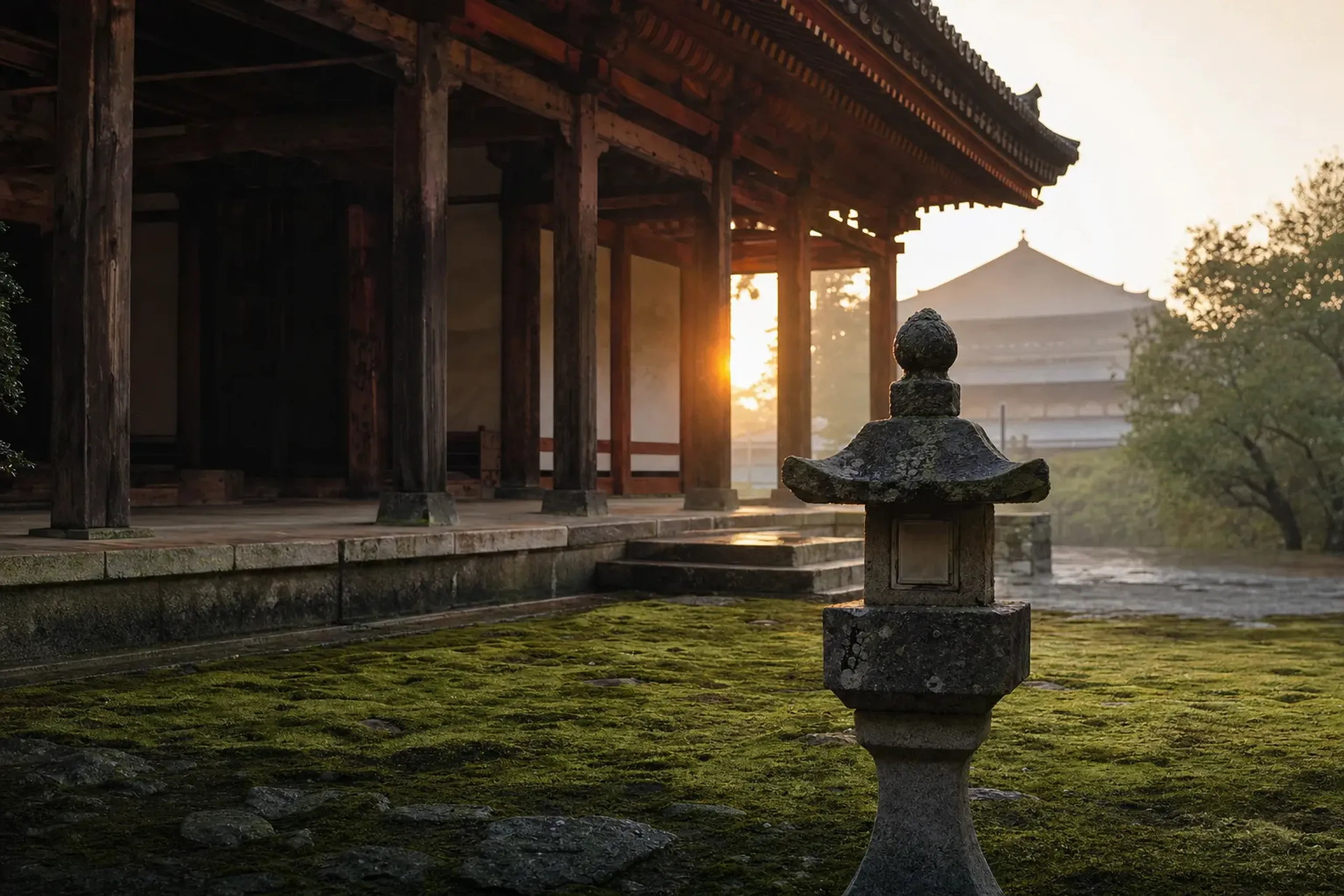
Experience the moss-covered stone silence. Let the weathered wood ground you. Later, when night falls and the city ignites in red and gold, the contrast will be startling. Big mistake to only see the city at night.
The Nagasaki Confucius Temple acts as an official festival venue. It remains open until 18:00 (with last entry at 17:30) and often hosts the dramatic face-changing show during the festival run. The speed and precision of the performers demand close attention.
What Is The Best Way To Travel To The Festival?
Fly into Nagasaki Airport and take a 40-minute bus ride, or take the Nishi-Kyushu Shinkansen from Takeo-Onsen. From Nagasaki Station, tram line 1 reaches Chinatown in roughly seven minutes.
Once you arrive in the city, logistics require a watchful eye. Road closures occur frequently near Chinatown and along the parade routes, forcing buses and cars to detour. Navigating these closures in the dark is frustrating for the uninitiated.
When arranging a bespoke itinerary, our team checks the road closures and tram status on your behalf. We coordinate private transportation with trusted partner fleets to execute smooth drop-offs near the pedestrian zones, minimizing your exposure to the cold wind while keeping you close to the action.
Evenings And Dining: Champon And Shippoku
Nagasaki's culinary heritage is as layered as its history. Do not leave without trying champon—a rich, hearty noodle dish born in the local Chinese community to feed students cheaply, which has since evolved into the city's signature bowl.
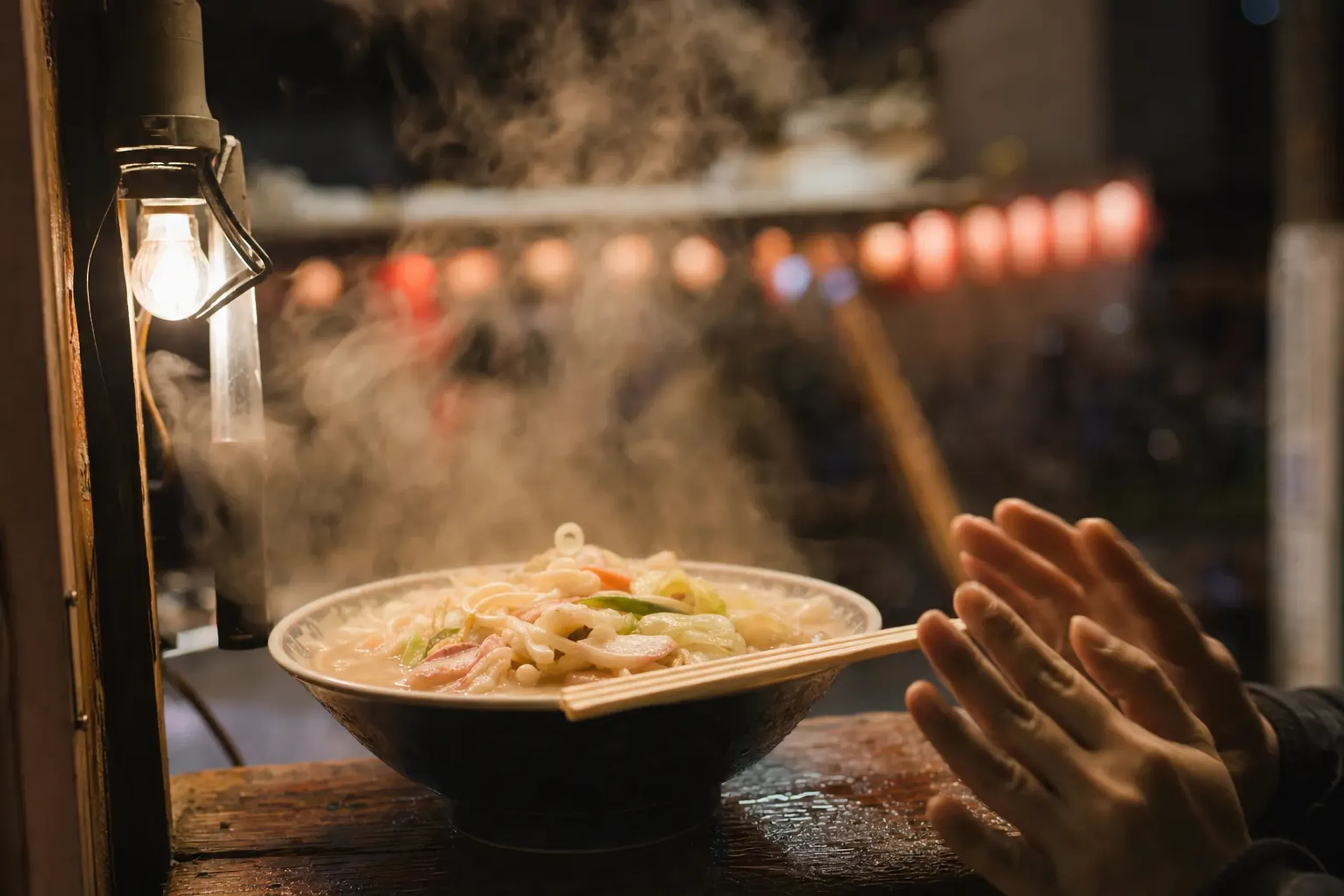
Sara udon offers a crispier, textured alternative.
For a formal evening, shippoku cuisine presents a round-table feast that blends Japanese, Chinese, and Dutch influences. It is communal, historic, and deeply satisfying after a cold walk. By day, explore the side streets for castella, the sponge cake introduced by the Portuguese. Watching a shokunin (master artisan) slice the dense, yellow cake with a long, impossibly sharp knife is a quiet pleasure.
Dining during the festival requires advance strategy. The best venues fill up weeks in advance. JRS coordinates your meals and evening planning, securing tables where possible and steering you away from the chaotic peak-hour lines.
For more insights on structuring your days in the area, review our Nagasaki base stay guide, or delve into the trading history with our Dejima guide to understand the Dutch influence.
Frequently Asked Questions
When does the Nagasaki Lantern Festival take place?
It takes place every February over roughly 17 days, aligned with the Lunar New Year. Exact dates shift annually, so verifying the calendar is essential. For instance, the 2027 festival runs from 5 to 21 February.
Do I need tickets to see the lanterns?
No tickets are required for the main street displays or parades, as it is a public street festival.
Certain temples and designated venues may charge their standard entry fees during daytime hours.
How crowded does the festival get?
Weekends during the Emperor Parade draw large crowds to the central venues. Walking becomes slow, and popular food stalls develop long lines. Weekday evenings offer a significantly quieter and more manageable experience.
Can I see the entire festival in one evening?
You can walk the main lantern districts in one evening. However, allowing two nights gives you the breathing room to watch the performances, visit the illuminated temples, and enjoy a sit-down dinner without rushing.
Why Choose Japan Royal Service
Navigating a city-wide public festival of this scale requires careful curation. The Nagasaki Lantern Festival is magnificent, but without local insight, it is easily overwhelming. Our team at Japan Royal Service understands how to extract the elegance from the chaos.
We do not manage the public parades or the city's infrastructure. Instead, we manage your time within them. We arrange cultural interpreter guides who possess deep ties to the city. We secure your accommodation, plan your routing around the complex evening road closures, and ensure your dining reservations are locked in before the crowds arrive. We bring imperial-class discretion and quiet precision to every element of your stay.
Reach our team privately via WhatsApp or LINE, or contact us here, to start planning your bespoke journey to Kyushu's illuminated port city.