In this guide
- 01The Festival At A Glance
- 02The Floats, And Why Only Four Perform
- 03The Days: 13, 14, 15 And 16 April
- 04The Boys, The Training, And A Word Of Respect
- 05The Museum And The Town
- 06Do You Need A Ticket, Or Can You Just Watch From The Street?
- 07How Our Concierge Team Plans A Visit
- 08Frequently Asked Questions
- 09Plan Your April In Nagahama
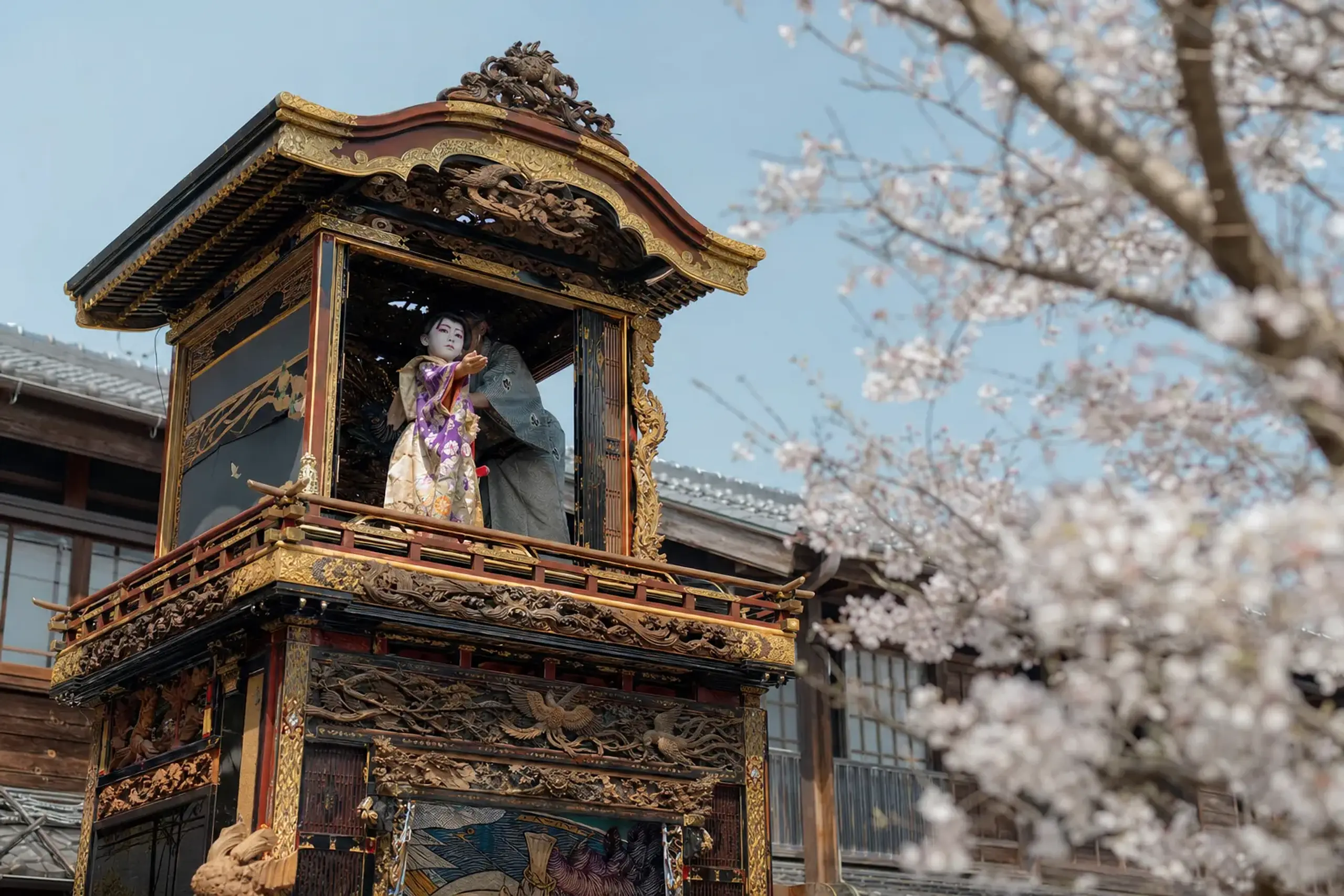
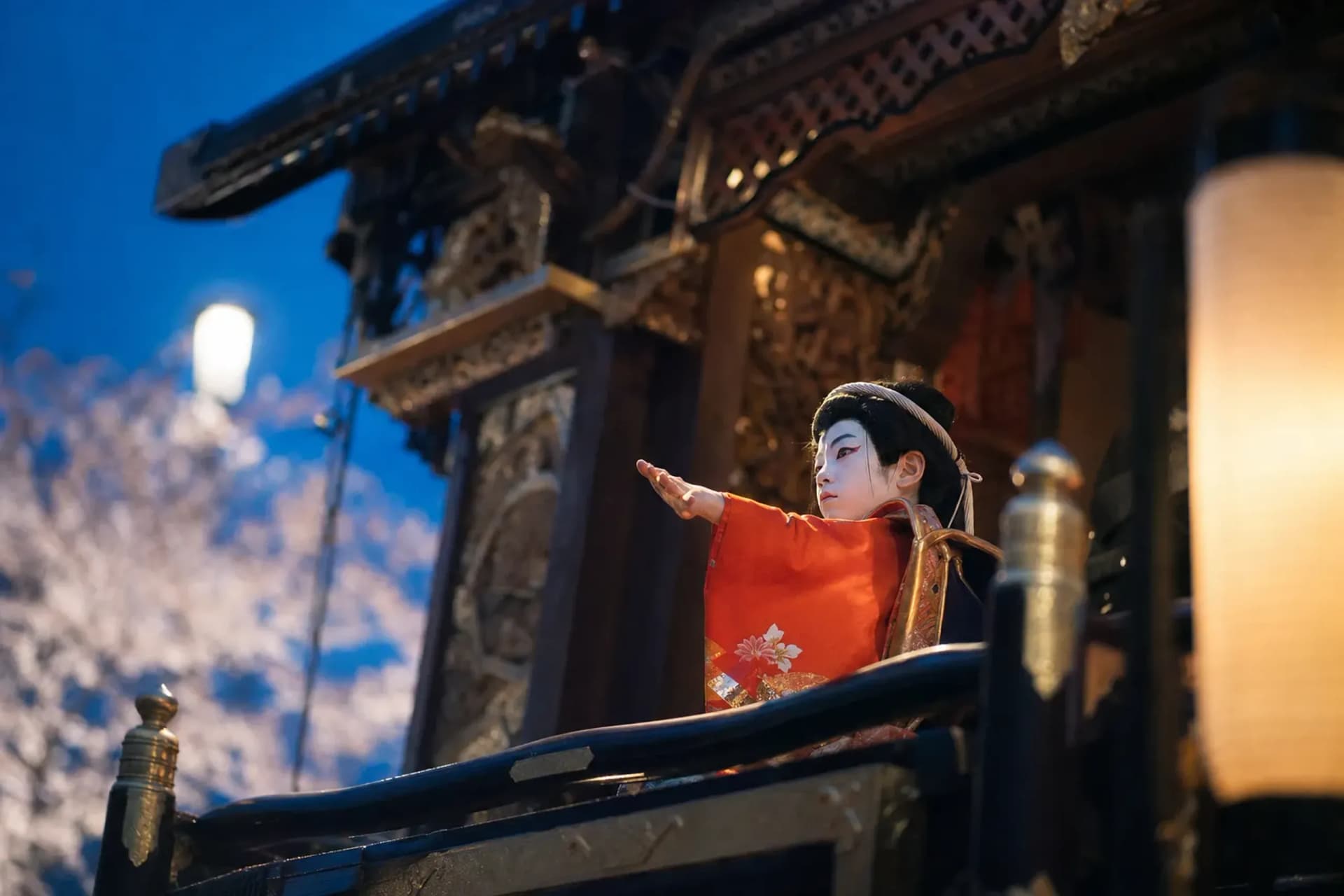
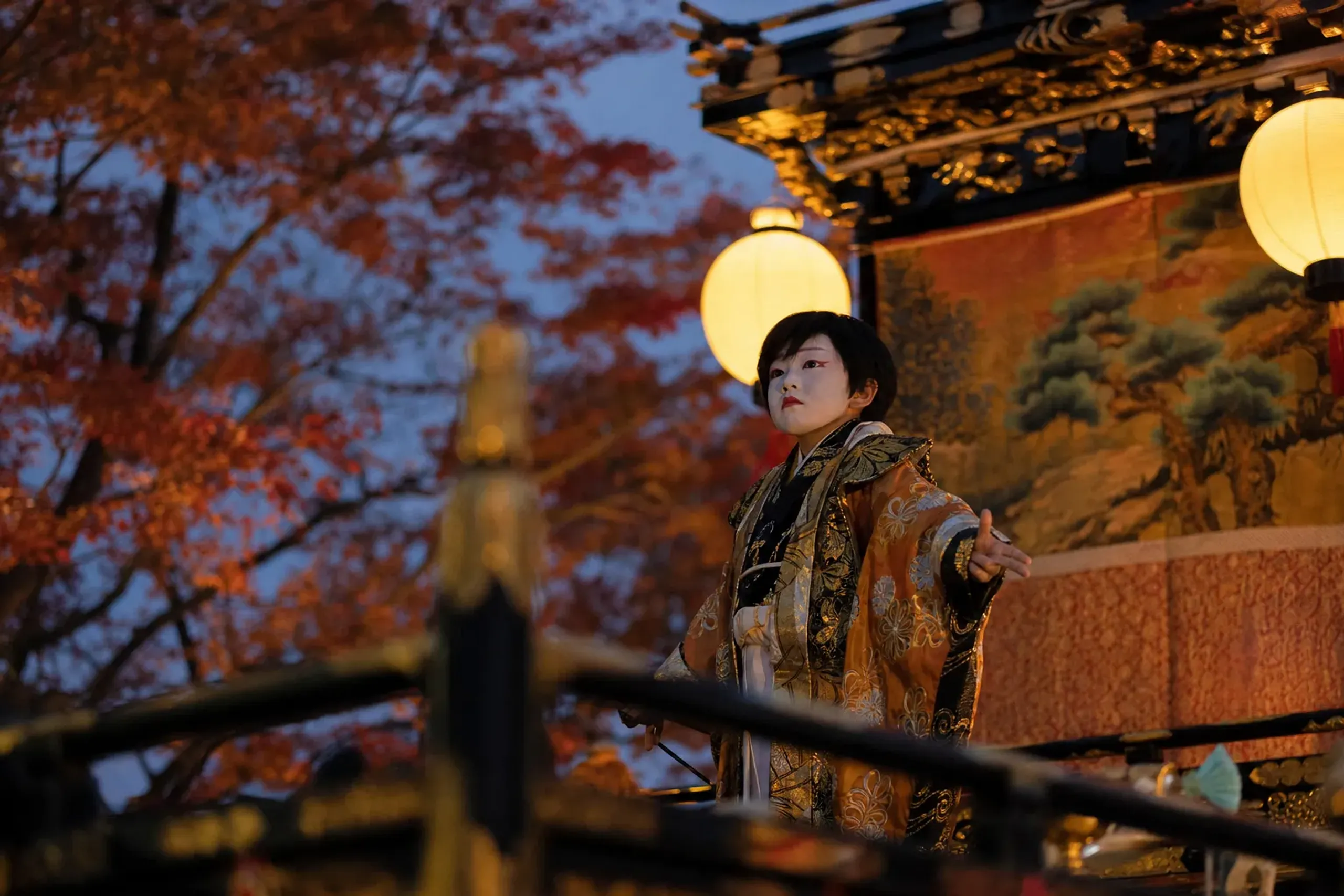
The street is quiet before it isn't. A drum sounds somewhere past the old shop fronts of Nagahama, low and unhurried, and the first people drift toward a float that looks less like a cart than a small lacquered theatre on wheels. You catch the scent of cut wood, a thread of incense, the damp of an April morning. Then the curtain at the front of the float parts, a small figure steps onto the stage, and a boy of perhaps eight begins to speak lines written centuries before his grandfather was born.
This is the Nagahama Hikiyama Festival, held each April in a castle town on the eastern shore of Lake Biwa. It is, at heart, a theatre festival carried on wheels — and one of the quiet, hard-to-find corners of Japan that reward the traveller who arrives knowing what to look for. Our team at Japan Royal Service has built unhurried, well-paced days around it, and the planning starts with one honest truth: the festival rewards the traveller who knows which single day to choose.
The Festival At A Glance
The Nagahama Hikiyama Festival runs within 9 to 17 April each year, with child kabuki performed on the float stages across four of those days. Only four of the twelve stage floats appear in any given year — a scarcity that is part of the festival's quiet power.
The spectacle is kodomo kabuki — kabuki performed by boys of the float districts. Each performing float becomes a stage. The boys act, dance, and carry the female roles too, by long tradition. Around them the town works: floats are pulled through the streets, gathered at the shrine, and returned to their districts after dark, their lanterns lit.
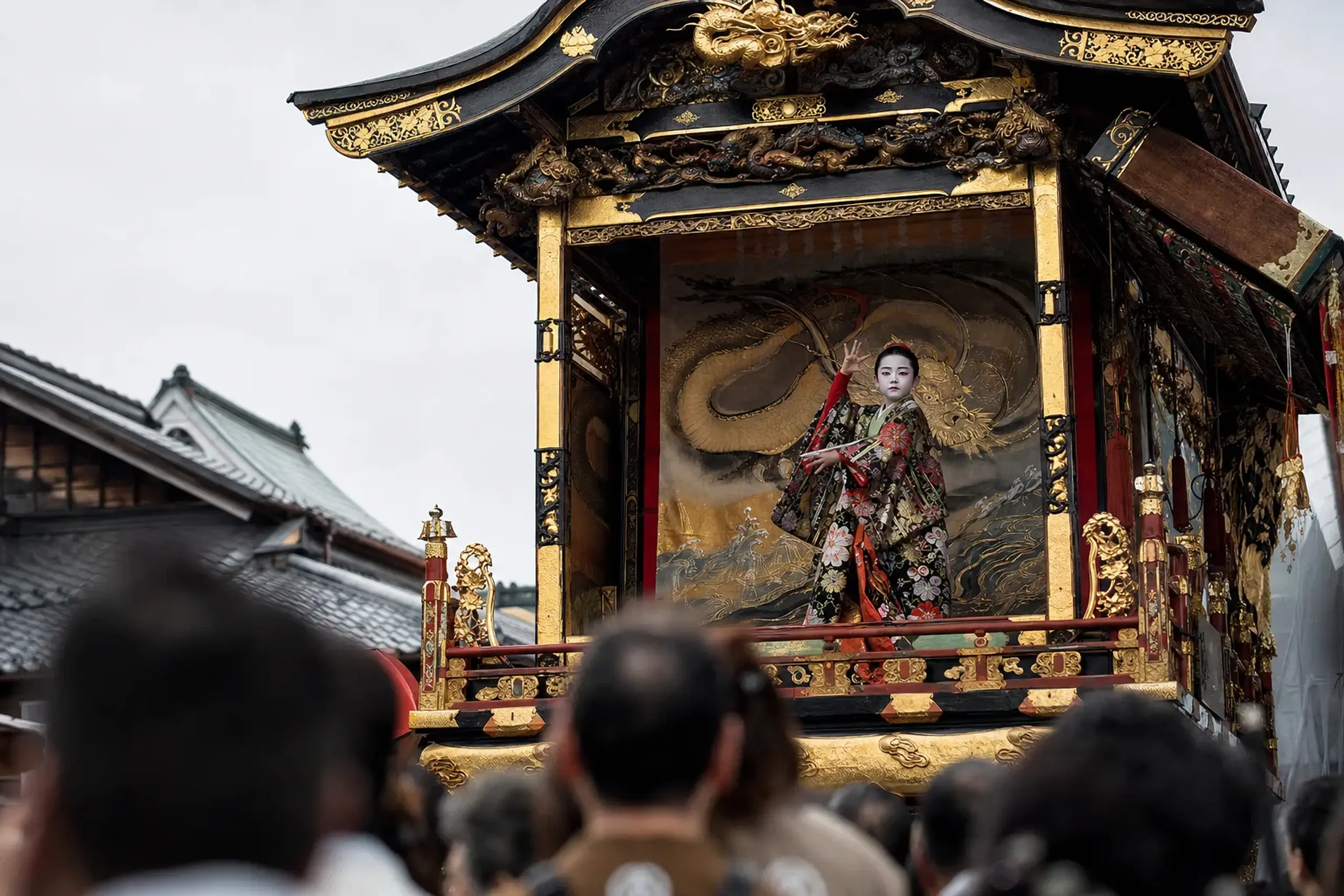
The heritage credentials are serious. The festival is a National Important Intangible Folk Cultural Property, recognised in 1979. It also belongs to UNESCO's "Yama, Hoko, Yatai, float festivals in Japan," inscribed in 2016 and extended in 2025. For a culturally literate traveller, this is not a village curiosity. It is living craft of the first rank — shokunin tradition held not in a single master's hands but in the shared memory of an entire town.
Key fact: No programme for the next festival is published in advance. The window is expected to fall again within 9 to 17 April (our calculation from the organiser's rule, to be confirmed with the organiser each spring).
The Floats, And Why Only Four Perform
There are thirteen floats and thirteen float districts. Twelve of them carry kabuki stages; four of those perform each year. The thirteenth, Naginata-yama, carries swords and has no stage. Do the arithmetic and you see why each stage float appears only about once every three years — an ordinary year leaves most of them resting in their storehouses, a restraint that feels almost deliberate.
These are not flimsy constructions. The floats stand 6 to 9 metres tall and weigh 5 to 6 tonnes. Their bodies date from the 1700s and early 1800s, and their surfaces are a catalogue of craft: lacquer, gold leaf, deep carving, worked metal. The museum calls the festival "The Moving Art Gallery," and the name earns itself the moment you stand under one.
Then there are the tapestries. The back curtains of two floats are 16th-century Belgian tapestries, woven in Brussels and in Oudenaarde, and designated Important Cultural Properties.
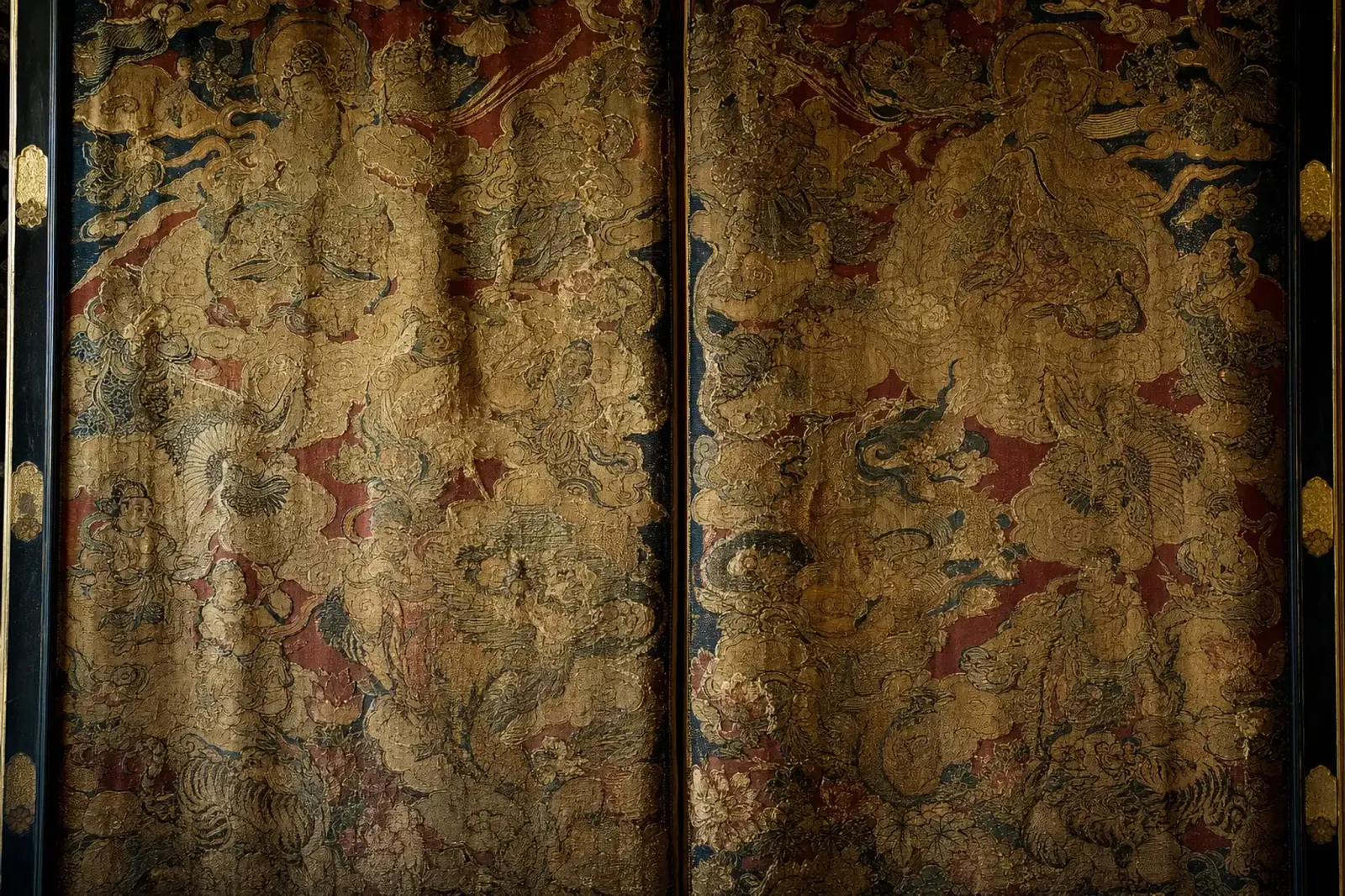
Think about that for a moment. A textile that crossed the world by sea centuries ago now hangs behind children reciting Edo-period drama in a lakeside town. That kind of layered, improbable history is exactly what we love to unpack for guests who ask the right questions — the detail that turns a morning in the crowd into something you carry home.
The decoration is the reason the organiser's account of the festival's origin runs the way it does. The tradition, as the town tells it, is that gold dust given to the townspeople long ago seeded the first floats, and Shiga Prefecture describes a lineage of roughly four hundred years. We pass that on as tradition, not as a dated fact — which is how the organiser frames it too.
The Days: 13, 14, 15 And 16 April
The festival's long window hides a tight schedule. Child kabuki is performed across four days, and each one has its own character. All times below are guidelines — the 2026 brochure says so itself, and they shift year to year. We use the 2026 programme here as a worked example.
13 April: The Lot And The First Shows
An early drum opens the day. The lot ceremony, held around 13:00 at Nagahama Hachimangu, decides the running order. In 2026 that ceremony fell on the 13th. Then, in the evening, each performing float gives its first kabuki on its own district street — intimate, local, with the home crowd pressed close. This is the festival at its most quietly domestic, before the wider crowds arrive.
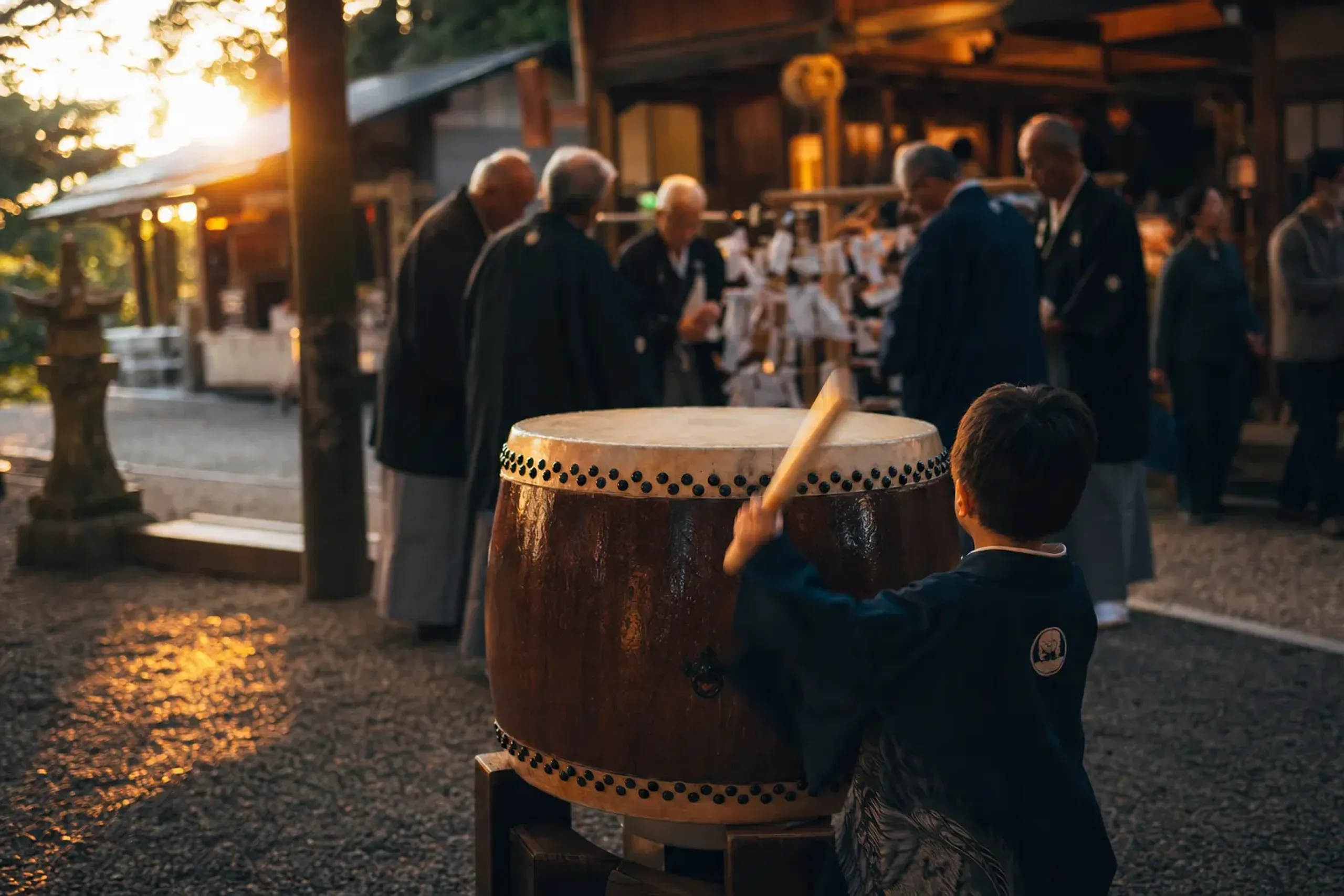
14 April: Gathering And The Evening Procession
Performances run again in the morning. From early afternoon the floats converge on the shrine. The day's quiet drama comes after dark: an evening procession, around 19:00, moving toward the museum area. Lanterns, the groan of wheels, the slow turn of a six-tonne stage at a corner. It is a fine evening to watch if you cannot give the festival its main day.
15 April: The Main Day
This is the day. Around 7:00, the costumed boys walk to the shrine — a sight worth rising early for, small actors in full dress moving through the morning town while most visitors are still asleep. Kabuki follows at the shrine and along its approach road, and again at the festival's rest point as the floats move through. Then, at night, the lit floats return to their districts. If you spend only one day in Nagahama, spend this one.
16 April: Closing Shows In The Districts
The floats perform again in their home districts, each closing with a final show at night. There is a ticketed hall performance at the Nagahama Cultural Arts Hall on this day, though the floats themselves do not go inside. It is the festival drawing breath before the closing rite on the 17th.
The Boys, The Training, And A Word Of Respect
The performers are boys of the float districts, about 5 to 12 years old. They carry every role, the women's parts included, because that is how it has always been done here. A boy opens each performance with the Sanbaso dance, the right to which is settled by an arrow-lot ritual at the shrine.
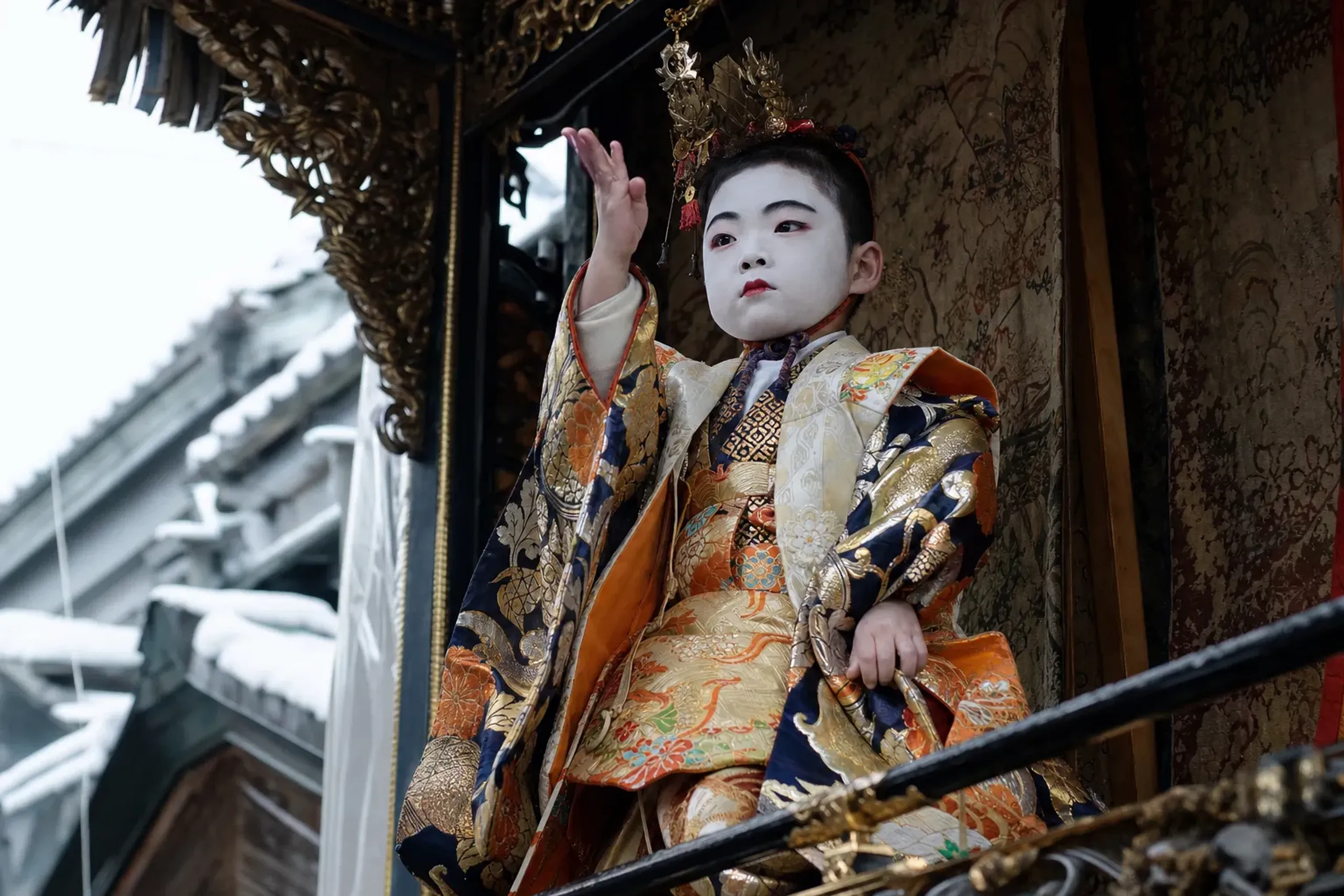
What you are watching is the end of roughly three weeks of concentrated work. From late March the boys train with professional choreographers, chanters, and shamisen players. Lines, movement, timing, the weight of a wig — all of it compressed into a short, intense apprenticeship each spring. The community does the teaching; the children do the carrying.
We ask guests to hold that in mind. These are not actors on a tourist bill. They are children of the town's own families, keeping something alive. Watch generously, applaud warmly, and photograph with care.
The Museum And The Town
The Nagahama City Hikiyama Museum is the festival's year-round companion, and its rainy-day one. It shows two full-size floats at a time, a replica stage, and videos of past performances, so you can study the carving and metalwork at arm's length without a crowd. Photography of the floats inside is allowed.
Opening hours run 9:00 to 17:00, with last entry at 16:30. It closes on Mondays — the next weekday if a Monday is a holiday — and over the New Year period, from 29 December to 3 January. It can also close for weather or exhibit changes, so our concierge team confirms status on the day of a visit.
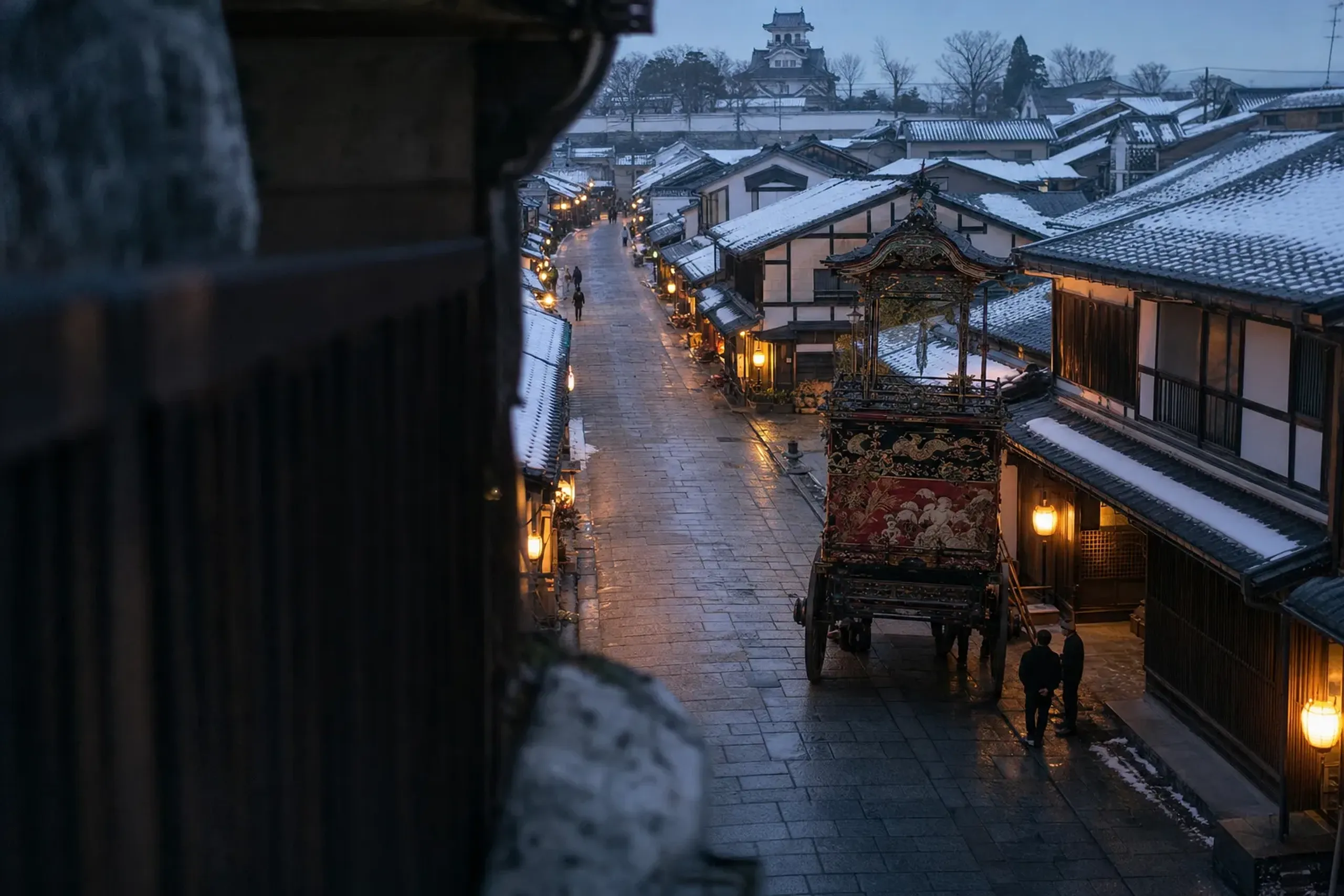
The festival centres on the old castle town below the site of the castle Hideyoshi once built here, with the glass-craft streets of Kurokabe Square a short stroll away and Lake Biwa on the western edge. The reconstructed Nagahama Castle Historical Museum stands on the lakeshore. It is a compact, walkable town — part of why a well-paced day here feels so unhurried, with time to notice the moss on an old stone wall or the hush of a side street between performances.
Do You Need A Ticket, Or Can You Just Watch From The Street?
Most of the Nagahama Hikiyama Festival is a free, public, standing event in the streets. In past years, seated viewing in the grounds of Nagahama Hachimangu on 15 April was sold separately through the Nagahama-Maibara Tourism Association, with sales opening around early February.
The 16 April hall performance at the Nagahama Cultural Arts Hall is ticketed, though the floats stay outside. Street viewing is standing, and we have found no official statement setting aside positions on the street for visitors. Seat prices and sale dates change every year, so we do not print them; our team verifies the current arrangement with the organiser before your trip.
One honest note on comfort. This is a public festival. We do not promise a viewing position, and we do not imply reserved, priority, or early access to anything — because none exists to promise. What we do, quietly and well, is plan your hours so the crowds work for you rather than against you.
How Our Concierge Team Plans A Visit
The planning problem here is pacing, not access. Four performing floats, timed shows, partial traffic control around the museum on 14 and 15 April, and a town that fills up. The craft is in the sequence of your day. For some guests, a tailor-made itinerary built around the 15 April morning walk and the night return is the whole trip; for others it is one luminous chapter in a wider spring journey.
Here is how we approach it, within the scope of this festival:
- Verification first. Each spring, once the organiser publishes the programme and the lot order, our concierge team confirms that year's dates, performance times, traffic control, and any seating arrangements directly with the organiser, on your behalf.
- An English-speaking cultural interpreter guide. Someone to read the floats, the kabuki, the Sanbaso opening, and the shrine aloud for you — so the morning does not pass as a blur of ritual you cannot decipher, but as a story you can follow line by line.
- Private transfer to the edge of the controlled zone. A private chauffeured vehicle from our partner fleet carries you to the boundary of the traffic-controlled area; from there, the old town is yours on foot.
- Accommodation coordination. A base in Nagahama itself, or in Kyoto or Osaka with a managed day trip, depending on how you want your evenings to feel.
- A timed day and meals. A plan built around the performances and the museum fallback — so a rainy afternoon becomes a quiet hour with two floats indoors rather than a wash-out.
Deciding between a Nagahama base and a day trip by rail is its own small calculation. If you are weighing the trade-offs of car versus train for a day like this, our thinking on a private driver versus rail in Japan maps neatly onto a festival day with traffic control. And if your spring runs wider, our notes on cherry blossom timing help you decide whether the floats come before or after the petals — the kind of seasonal precision that separates a good spring trip from a perfectly timed one.
Frequently Asked Questions
Which Day Of The Nagahama Hikiyama Festival Should I Go If I Can Only Go Once?
Choose 15 April, the main day. It brings the costumed boys' morning walk to the shrine around 7:00, kabuki at the shrine and on its approach road, performances at the rest point, and the lit floats returning to their districts at night.
Do I Need To Buy Seats To Watch The Child Kabuki In Nagahama?
No ticket is needed for most of the festival, which is free, public, and standing. In past years, seated viewing in the Nagahama Hachimangu grounds on 15 April was sold through the Nagahama-Maibara Tourism Association from around early February; our team confirms each year's arrangement before your visit.
What Happens If It Rains During The Festival?
The festival proceeds in rain — the 2026 edition ran in wet weather. April days in the town can be cool and damp, so bring layers and waterproofs. The Nagahama City Hikiyama Museum, open 9:00 to 17:00 and closed Mondays, is the natural indoor companion if you want a dry hour with the floats.
Plan Your April In Nagahama
A festival like this cannot be ordered from a catalogue; it has to be timed, read, and quietly navigated by people who know the town and its calendar. If you would like us to shape a day — or a wider spring journey — around the boy actors of Nagahama, with the pacing, the interpreter, and the private transfers handled discreetly on your behalf, contact us here. We will confirm the year's programme with the organiser and build your hours around the single luminous day that matters most.