In this guide
- 01The Lake At A Glance: 423.4 Metres Deep
- 02Tatsuko And The Western Shore
- 03Goza-no-ishi, The Vermilion Torii And The North Shore
- 04A Summer On The Lake: Swimming, The Cruise, Cycling And Kayak
- 05A Lake With A History: The Acid Water And The Kunimasu
- 06How Do You Get To Lake Tazawa And Travel Around It?
- 07How The Japan Royal Service Team Plans A Day At The Lake
- 08Frequently Asked Questions
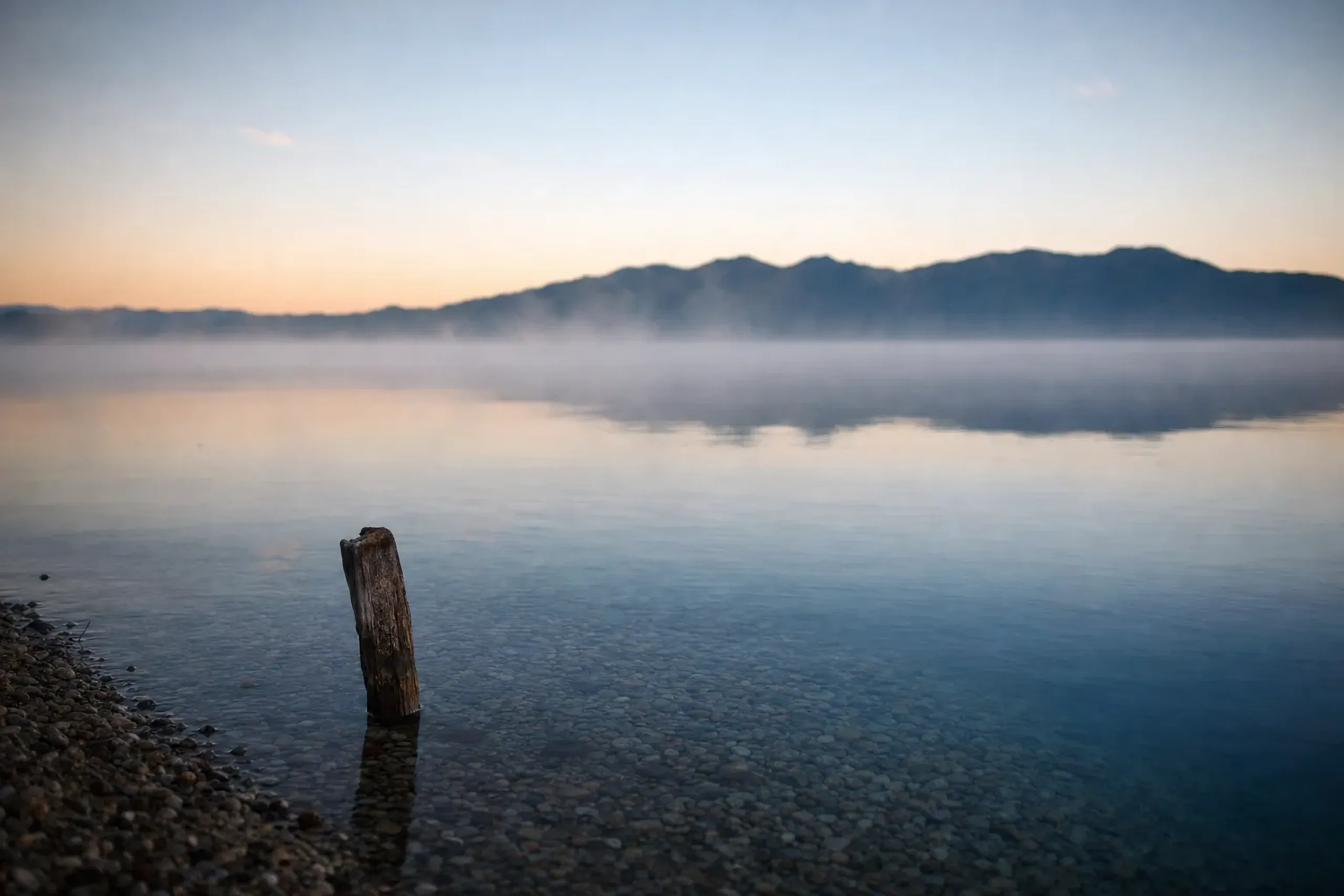
You arrive at Shirahama before the heat finds the water. The beach is quiet. A thin line of white sand curves away toward the pine, and the lake lies flat and very blue in front of you — the kind of blue that seems to rise from below rather than fall from the sky. A single sightseeing boat idles at the pier. Somewhere behind you, the forest holds its morning silence, and you understand, without being told, that you have arrived somewhere few travelers think to go.
This is Lake Tazawa, in Semboku City, Akita. It is a round lake, the deepest in Japan, and the way to understand it is not to pass through but to go around. The shore road makes a near-perfect circle. You choose one way to travel it — by boat across the middle, by bicycle along the rim, by car, or by the infrequent loop bus — and you give the lake a full day. Our team at Japan Royal Service plans these days for discerning travelers who prefer the quiet north over the crowded Golden Route, and who find more in stillness than in spectacle. Here is what the official sources confirm, what summer adds, and — in the spirit of discretion and honesty — what we could not verify.
The Lake At A Glance: 423.4 Metres Deep
Lake Tazawa reaches 423.4 metres at its deepest point, making it the deepest lake in Japan according to the Geospatial Information Authority of Japan, Semboku City, and the local tourism association.
The surface sits about 249 metres above sea level. The water area is roughly 25.8 square kilometres — the tourism association lists 25.5, so call it about 25.8 — and the shoreline runs close to 20 kilometres in an almost complete ring.
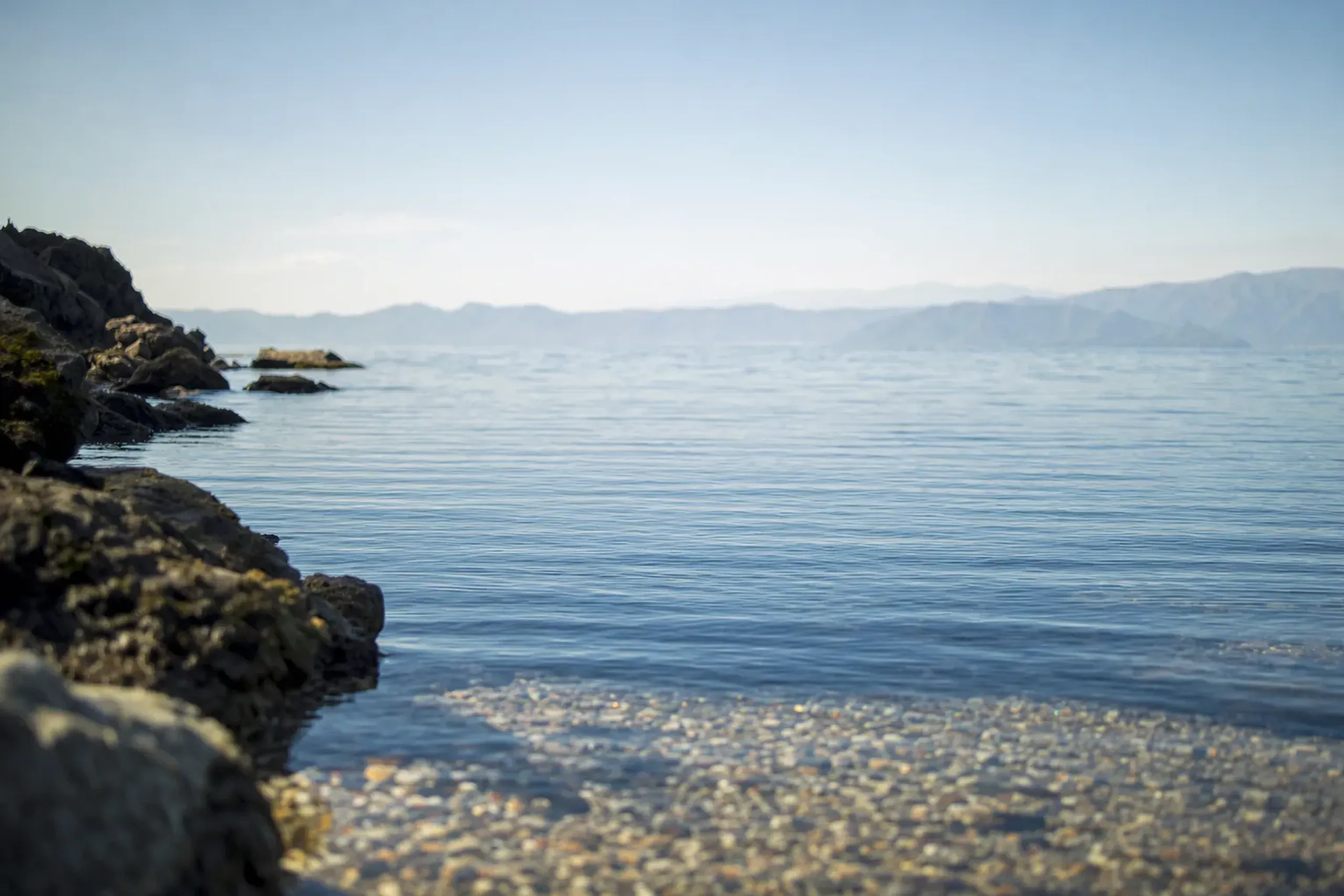
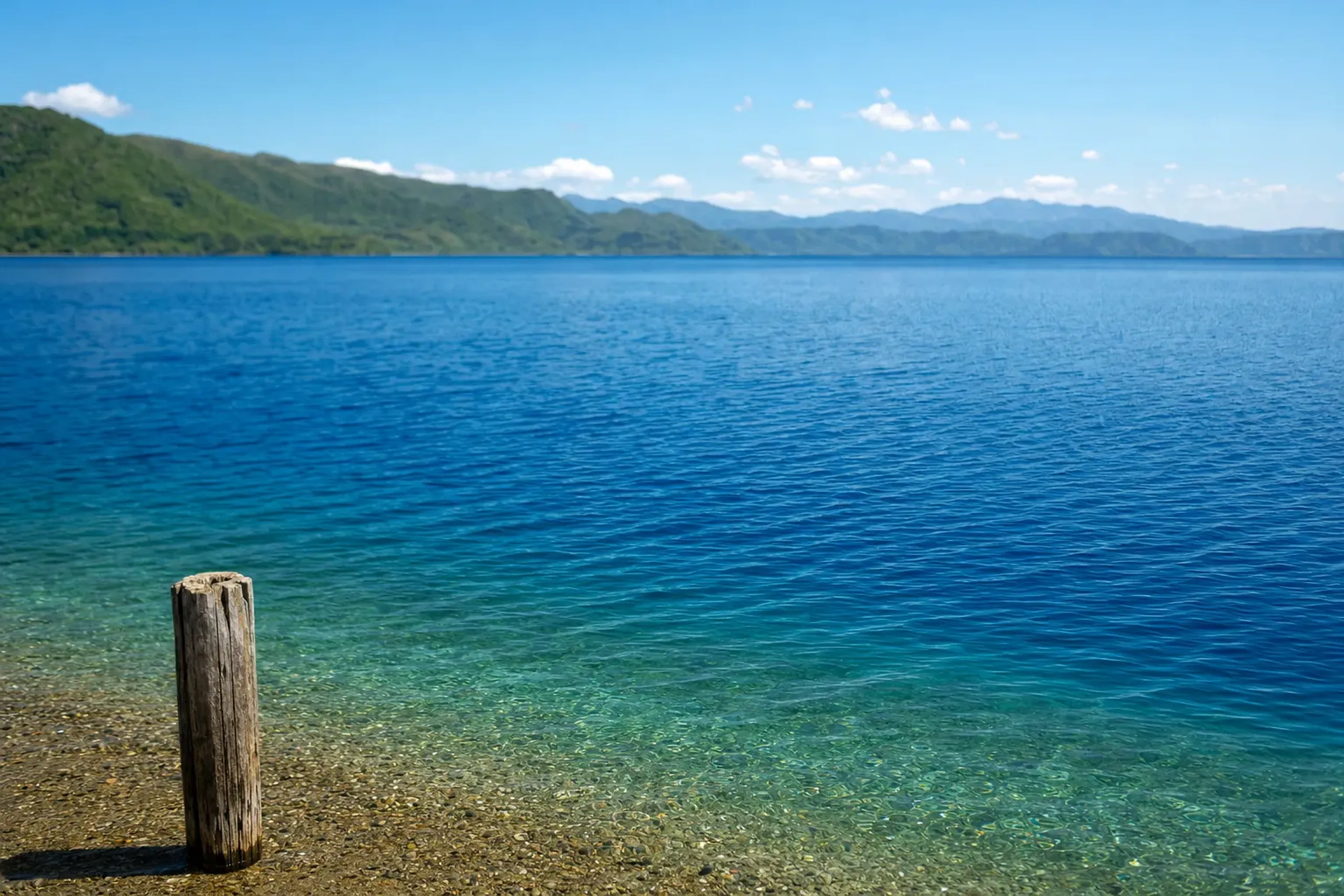
Semboku and the tourism association describe the colour as ruri, a lapis blue that shifts with the light and the season.
The lake is thought to be a caldera lake, formed in a volcanic depression. That depth and that shape explain the stillness. On a calm morning the far shore holds its reflection whole, unbroken. By afternoon, when a wind rises off Mt. Akita-Komagatake behind it, the surface breaks into countless small lights. Knowing which hour brings which face of the water — the mirror or the shimmer — is precisely the kind of seasonal timing our planning exists to capture.
Key fact: Lake Tazawa is 423.4 m deep (deepest in Japan), about 20 km around the shore, and close to circular. Plan it as a full day, and choose one way round in advance.
Tatsuko And The Western Shore
On the western shore at Katajiri stands a gold-coloured bronze statue of a young woman, facing the water. The sculptor Funakoshi Yasutake made it, and it was erected on 12 May 1968. In the right afternoon light it catches the sun and seems to glow against the blue.
Legend has it that Tatsuko was a girl of great beauty who wished for eternal youth. She drank from a spring to keep it, the story goes, and in drinking was transformed into a dragon. She became the deity of the lake. The tale is old and told in several forms along the shore; we repeat it as legend, not as record.
The statue is a short stop, but one worth timing with care. Morning light comes from behind the figure; late afternoon sun strikes the statue and the water together, a few fleeting minutes that reward the traveler who plans for them. The loop bus calls here, and the cruise makes a brief stop at Katajiri — though the operator has noted that call was suspended at times, so confirm before you count on it.
Goza-no-ishi, The Vermilion Torii And The North Shore
On the north shore sits Goza-no-ishi Shrine, with a vermilion torii that overlooks the lakeshore. The red frames the blue. It is one of the most photographed points on the circle, and for good reason — the gate, the water, and the line of forest behind make a composition that needs no help.
The name goes back to 1650, when the Akita lord Satake Yoshitaka rested on a rock at this spot. Goza refers to the seat of a noble — a small echo of imperial-era bearing still carried by the place. Treat the grounds as the sacred space they are: a short bow at the torii, quiet on the approach, no climbing on the rock or the gate. Our cultural interpreter guides explain the shrine's history and the small courtesies that let you move through it respectfully, so that your presence leaves no trace and your experience loses none of its depth.
A Summer On The Lake: Swimming, The Cruise, Cycling And Kayak
Summer is when Lake Tazawa opens to the water itself. There are four ways to meet it, and you can comfortably combine two in a single day.
Can You Swim In Lake Tazawa?
Yes — swimming is permitted only in the designated, rope-marked area at Shirahama (the Haruyama side), open typically from mid-July to late August.
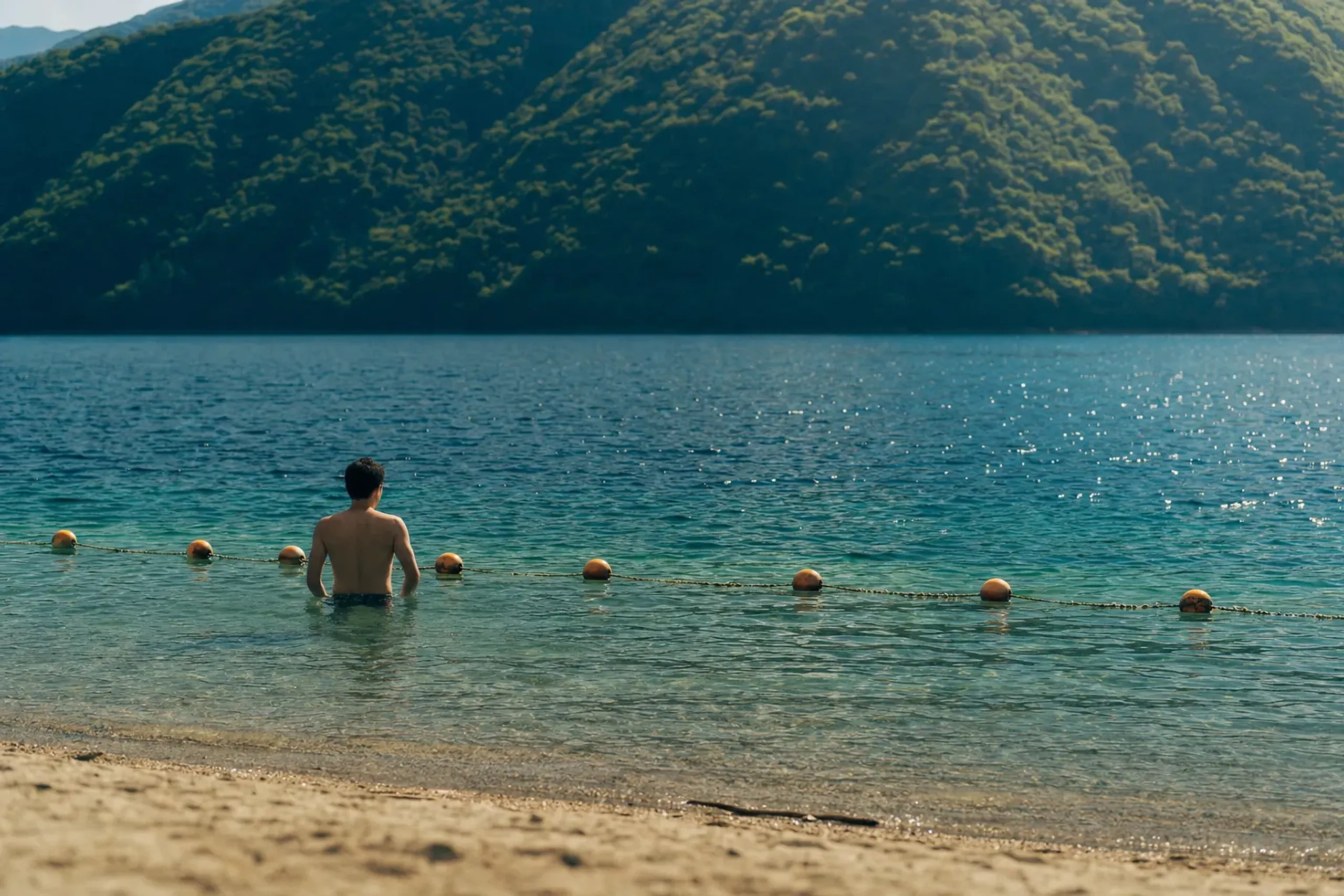
Confirm the exact dates each year.
In the 2026 season the swimming area ran 18 July to 30 August, 8:30 to 17:00. In 2024 it ran 13 July to 31 August, which is why the window is never fixed — the dates are confirmed closer to the season each spring. Barbecues, bonfires, fireworks, and swimming with pets are all banned in the area. Akita Prefecture's pre-opening survey for the 2025 season graded the water AA, with chemical oxygen demand under 0.5 mg/L and transparency to the bottom.
The Cruise Across The Middle
The sightseeing boat boards at Shirahama and crosses the lake, with brief calls at Goza-no-ishi and Katajiri. A sailing runs about 40 minutes, and there are roughly four a day. In the 2026 season the cruise ran 11 April to 15 November, with reduced sailings from 9 to 15 November. A fare applies, and no advance booking was needed. The boat does not sail in strong wind or high waves, so weather decides the day as much as the timetable does.
Cycling The Circle
The loop around the lake is about 20 kilometres, two to three hours at an easy pace, with few steep sections according to Semboku. Rental cycles are available near the lakeside. This is the purest way to feel the circle — the blue always on one side, the forest and the mountain turning past you on the other, the whole lake measured by your own rhythm.
Kayak And SUP
Operators offer kayak and stand-up paddle tours, generally running 9:00 to 17:00.
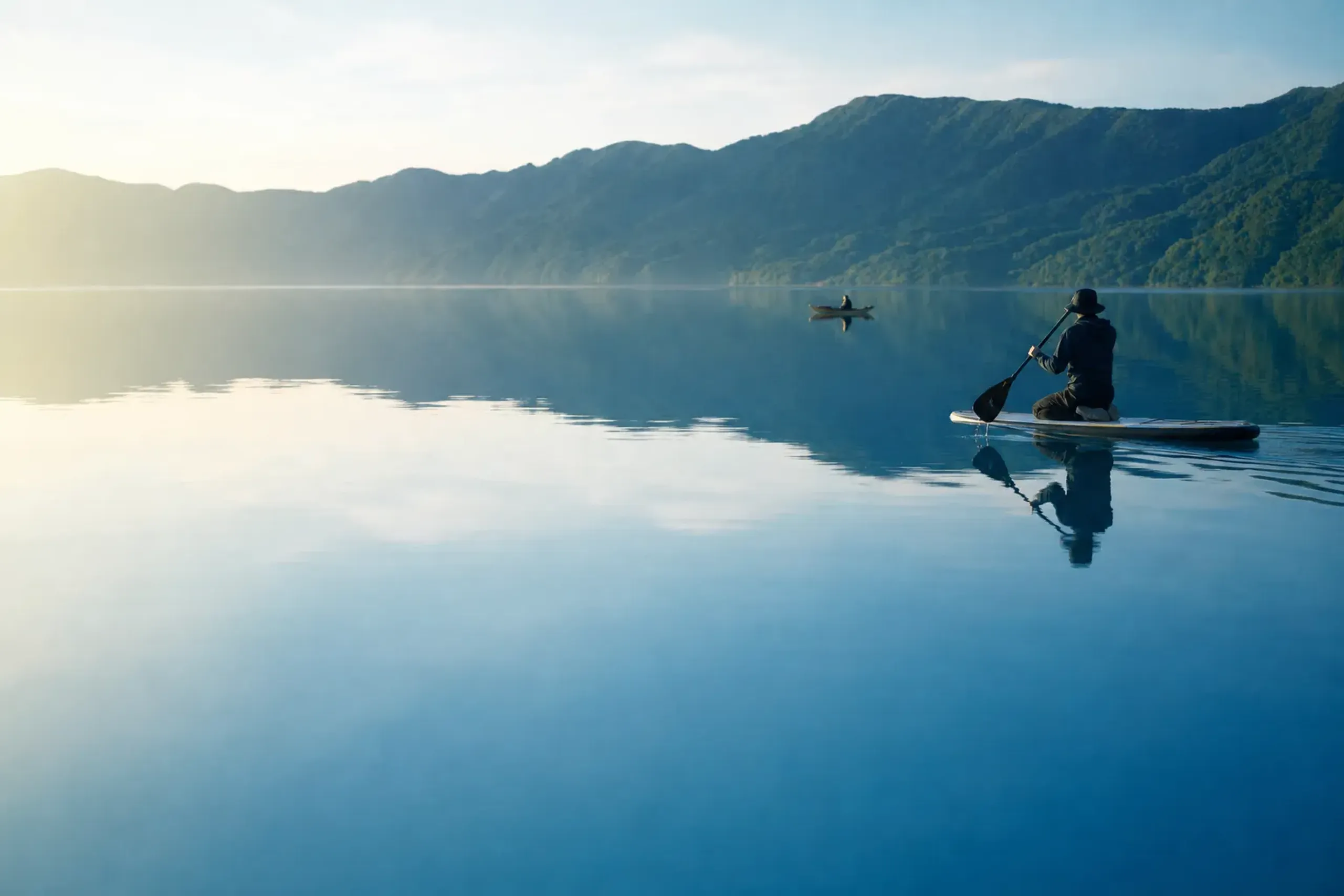
At Osawa, use is non-motorised only. From the waterline the lake feels larger and stiller, the far shore a thin green band — a quiet that belongs entirely to you.
If you are weighing water days against festival days, Akita's summer calendar is full. The Omagari fireworks competition and the Nishimonai Bon Odori both fall within reach of a Tazawako base. Lake Tazawa has its own fireworks too: the Tazawa-ko Ryujin Matsuri, held at the lakeside event plaza typically on a Saturday in late July — confirm the date each year, as it has moved and was once cancelled for a heavy-rain warning.
A Lake With A History: The Acid Water And The Kunimasu
The blue has a harder story underneath it, and we tell it plainly. From 1940, acidic water from the Tama River was diverted into Lake Tazawa, and the lake turned acidic. The prefecture reports that neutralisation began in 1989, and that since 2003 the pH at the lake centre has ranged from 5.0 to 5.4.
A fish once lived here that lived nowhere else: the kunimasu. After 1940 it died out in the lake. For decades it was thought extinct — until 2010, when it was found alive at Lake Nishi in Yamanashi. Today the Kunimasu Future Museum at Lake Tazawa shows live fish. The history sits quietly beside the beauty. It makes the blue feel less like decoration and more like something the place has carried through loss and recovery — a story that rewards the traveler willing to look past the surface.
How Do You Get To Lake Tazawa And Travel Around It?
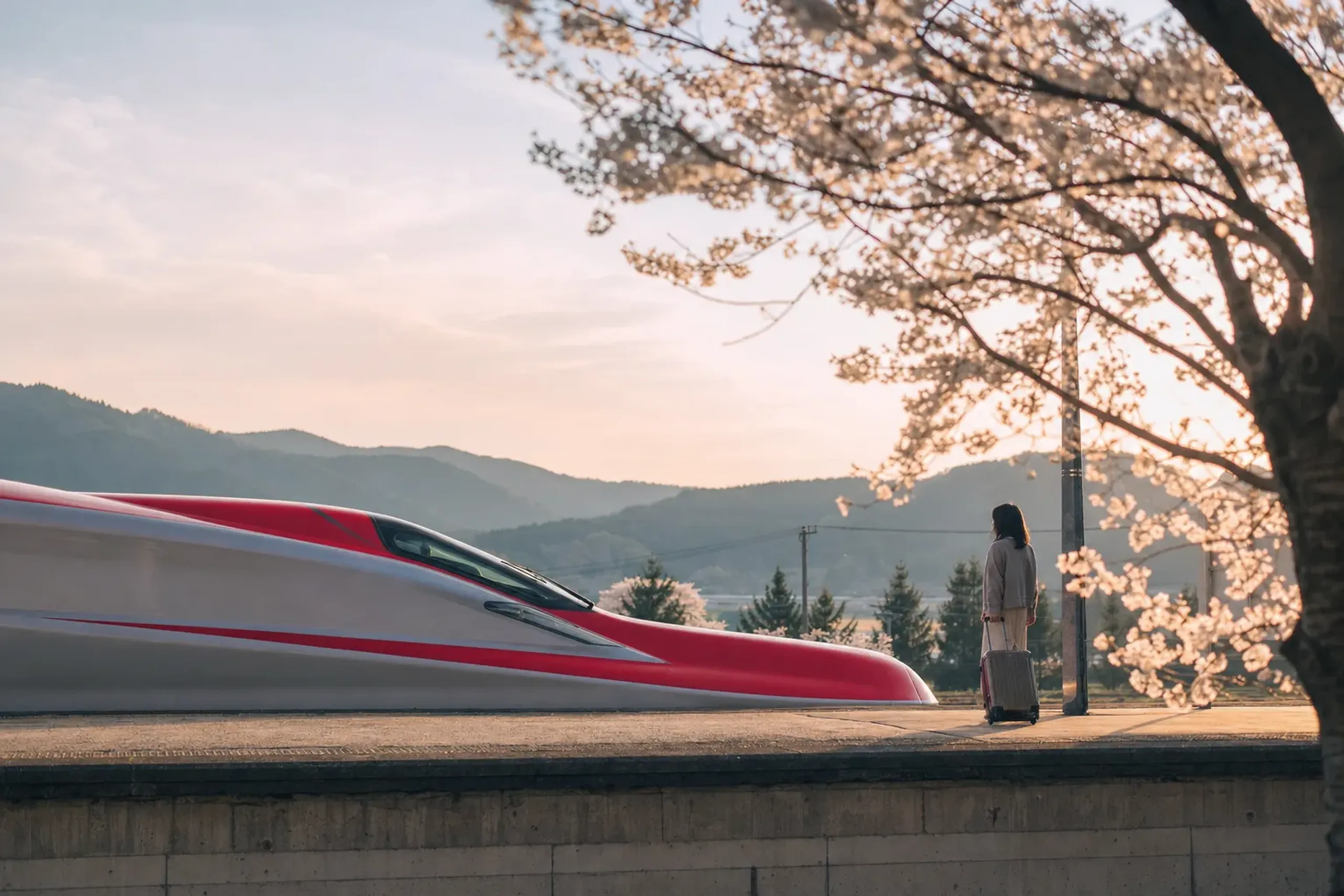
The Akita Shinkansen reaches Tazawako Station in just under three hours from Tokyo, and from Akita Station the ride is about an hour.
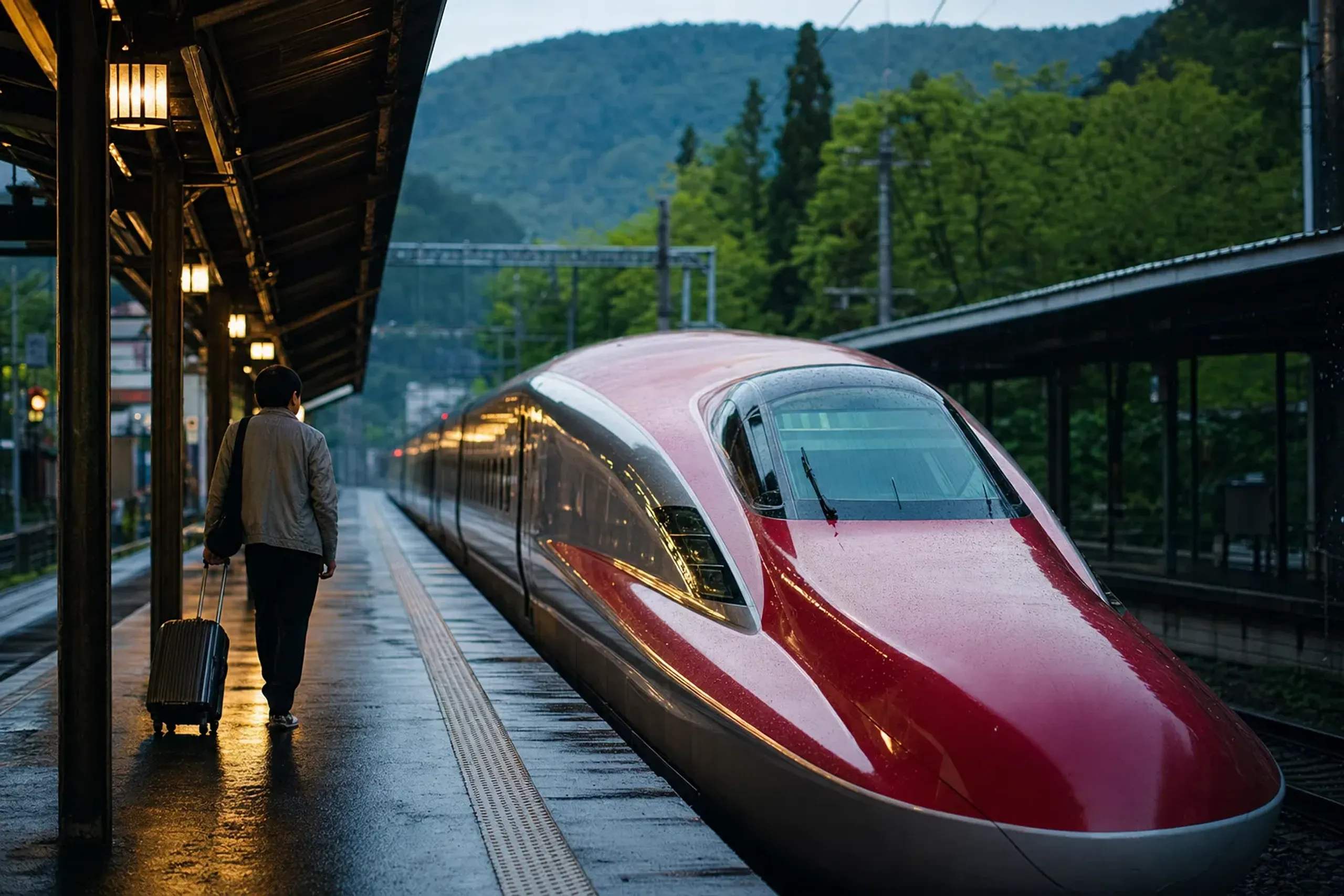
From Tazawako Station, a Ugo Kotsu bus runs to the lakeside in about 12 to 15 minutes. The Tazawako loop bus makes five trips a day with stops at Katajiri and Goza-no-ishi — useful, but infrequent, so the timetable decides your rhythm rather than you deciding it. Kakunodate is about 30 minutes by car on Route 46. Two car parks at Shirahama hold about 80 and 180 vehicles.
The difficulty is the circle itself. Buses are too sparse to let you move freely between the statue, the shrine, the beach, and the pier on your own schedule. This is where a private, chauffeured vehicle changes the day entirely. Our partner-fleet private transfer from Tazawako Station or Kakunodate lets you take the loop road at your own pace, stopping where the light is best rather than where the bus happens to call. If you are deciding between driving and the rails for the wider journey, our private driver versus rail framework lays out when each one wins.
Beyond the shore, three places sit close: Mt. Akita-Komagatake, at 1,637 m the highest peak in Akita, rises behind the lake; Nyuto Onsen, a cluster of hot-spring inns, lies up the valley; and Kakunodate, the old samurai town, is a short drive west. Each deserves its own day, and each can be woven into a longer, unhurried itinerary through the north.
How The Japan Royal Service Team Plans A Day At The Lake
Within the scope of this lake, our work is straightforward and precise. We provide an English-speaking cultural interpreter guide who explains the lake, the Tatsuko legend, and the courtesies of the shore and shrine.
We coordinate a private partner-fleet vehicle for the loop road, so you are never held to the five-bus timetable. We arrange accommodation near the lake or in the Kakunodate area — including the kind of hidden ryokan one enters by introduction rather than booking engine — and we shape the hours of the day around the cruise, the cycling, or a slow walk at Shirahama as the light demands.
Before you travel, our concierge team verifies on your behalf the cruise operation, the bus timetable, the swimming-area dates, and the current bear notices — the details that move every season. This quiet, anticipatory work happens before you arrive, so that nothing asks for your attention once you are standing by the water. Bears are active around Akita's forested areas in summer and autumn; in the 2026 season Akita Prefecture held a prefecture-wide bear warning to 30 September, easing to an advisory in October. Semboku's notices did not name Lake Tazawa itself, but we check both before any trail walk and keep guests on the shore when the mountain is best left alone.
Lake Tazawa is a public place, and we do not pretend otherwise. What we offer is sequencing, language, a vehicle that follows the light, the privacy to move unobserved, and the quiet confirmation of what is open on the day you come. For how we decide between cars, rail, and the mix, our guide on how you actually move through Japan is a good companion read.
When you are ready to give a quiet northern lake the full, unhurried day it deserves — timed to the light, held in confidence, and shaped around you — contact us here to begin a tailor-made itinerary.
Frequently Asked Questions
How Deep Is Lake Tazawa, And Is It Really Japan's Deepest Lake?
Lake Tazawa is 423.4 metres deep, which makes it the deepest lake in Japan according to the Geospatial Information Authority of Japan, Semboku City, and the tourism association. Its shoreline runs close to 20 kilometres.
Can I Swim In Lake Tazawa In Summer?
Yes, but only in the roped designated area at Shirahama on the Haruyama side, open typically mid-July to late August from 8:30 to 17:00. In 2026 the season ran 18 July to 30 August. Barbecues, fireworks, and pets are banned in the area.
When Does The Lake Tazawa Sightseeing Cruise Run?
The cruise typically runs from spring into mid-November, boarding at Shirahama for roughly 40-minute sailings about four times a day. In 2026 it operated 11 April to 15 November. It is cancelled in strong wind or high waves, so weather decides each day.
Are There Bears Around Lake Tazawa?
Bears are active in Akita's forested areas in summer and autumn. In 2026 Akita Prefecture held a prefecture-wide bear warning to 30 September, then an advisory in October. Check Akita Prefecture and Semboku City notices before any trail walk; our team confirms current advisories before each visit.
How Long Does It Take To Reach Lake Tazawa From Tokyo?
The Akita Shinkansen reaches Tazawako Station in just under three hours from Tokyo, and about an hour from Akita Station. From the station, a bus runs to the lakeside in about 12 to 15 minutes, or a private transfer covers the loop road at your own pace.