In this guide
- 01Where The Southern Kii Coast Is, And Why It Is A Long Trip
- 02Hashigui-iwa And Its Legend
- 03Cape Shionomisaki: The Lighthouse And The Lawn
- 04Kii-Oshima: The Bridge, Kashinozaki And The Ertugrul Story
- 05The Coral Waters And The Marine Park
- 06The Summer: The Sea, The Typhoon Season, The Numbers
- 07How Do You Reach Kushimoto From Osaka?
- 08How The Concierge Team Plans The Coast Day
- 09Frequently Asked Questions
- 10Why Choose Japan Royal Service
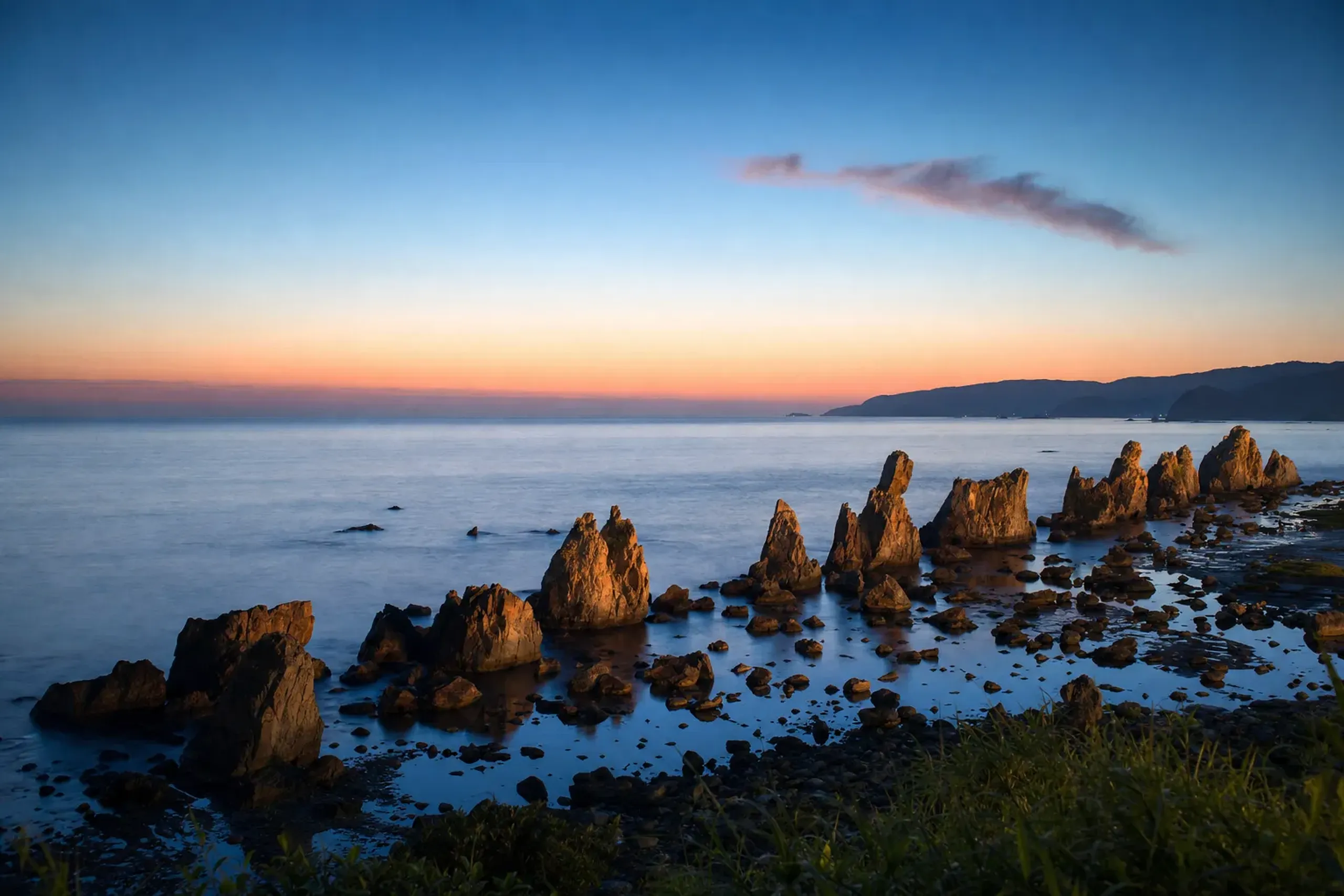
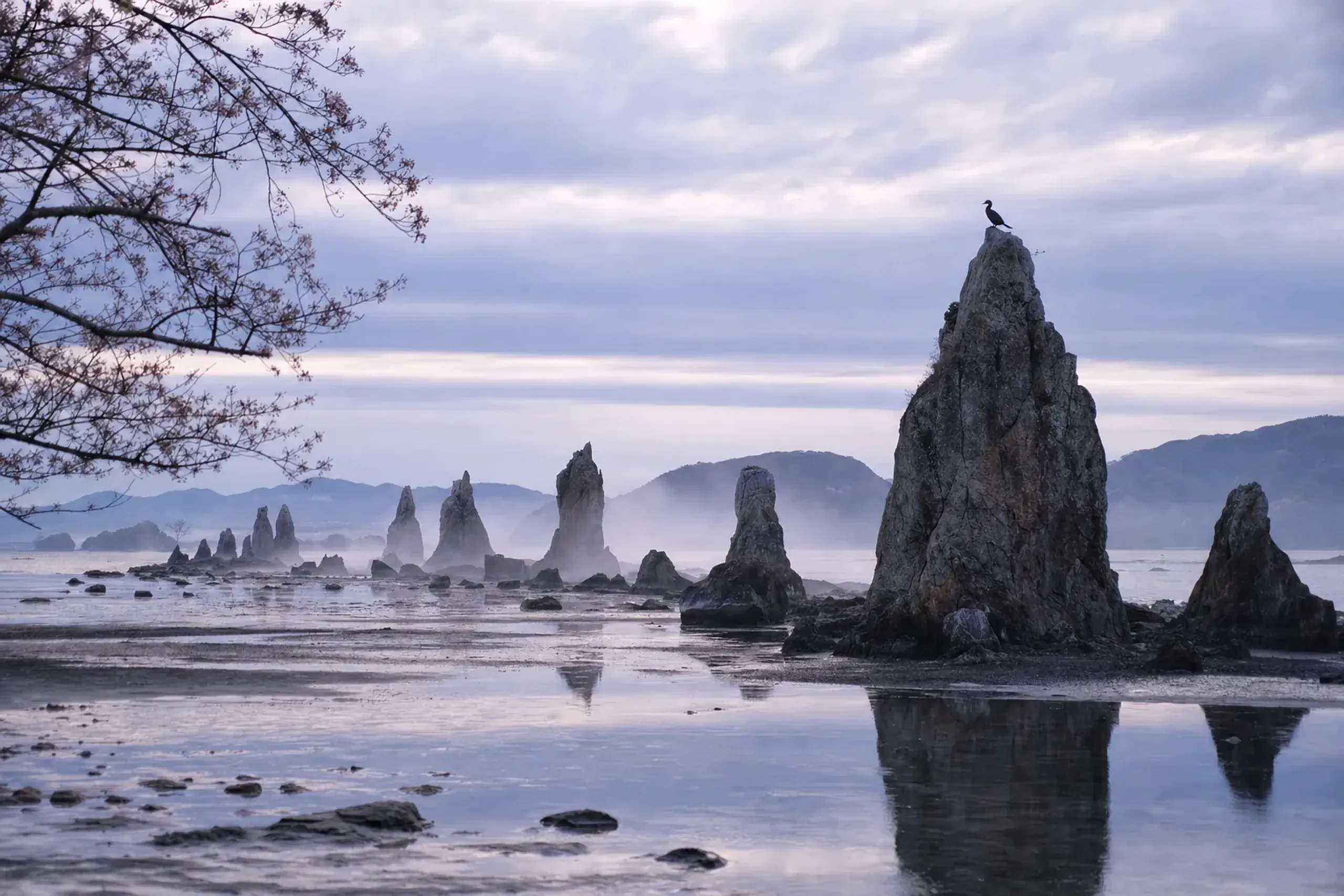
You stand on the Kushimoto shore and the sea does something strange. A line of stone pillars walks out across the water toward the island, evenly spaced, like the piers of a bridge someone began and never finished. This is Hashigui-iwa. About forty rocks, some rising to around fifteen metres, running roughly 850 metres from the land toward Kii-Oshima.
The water laps between them. Fishing boats pass behind. On a calm morning the whole row stands clear against the open Pacific, and you understand at once why the old story needed a bridge to explain it.
This is the far end of the Kii Peninsula, where the land runs out into warm southern water. Our team at Japan Royal Service plans days along this coast for travellers who want the rock pillars, the cape, the lighthouse island and the coral sea — and who accept, happily, that it takes a while to get here.
Where The Southern Kii Coast Is, And Why It Is A Long Trip
Kushimoto sits at the southern tip of Wakayama Prefecture, on the Pacific edge of the Kii Peninsula. The Kuroshio limited express takes about three hours thirty minutes from Shin-Osaka. That is the honest figure. This is not a half-day from Kyoto.
The reward for the distance is a coast with four distinct things strung along it. Rock pillars at Hashigui-iwa. A cape and a white lighthouse at Shionomisaki. An island, Kii-Oshima, reached by a bridge, carrying an old stone lighthouse and a shipwreck story that still binds two countries. And warm, shallow coral water, registered under an international treaty.
The whole area lies within Yoshino-Kumano National Park, designated in 1936 and spread across Mie, Nara and Wakayama.
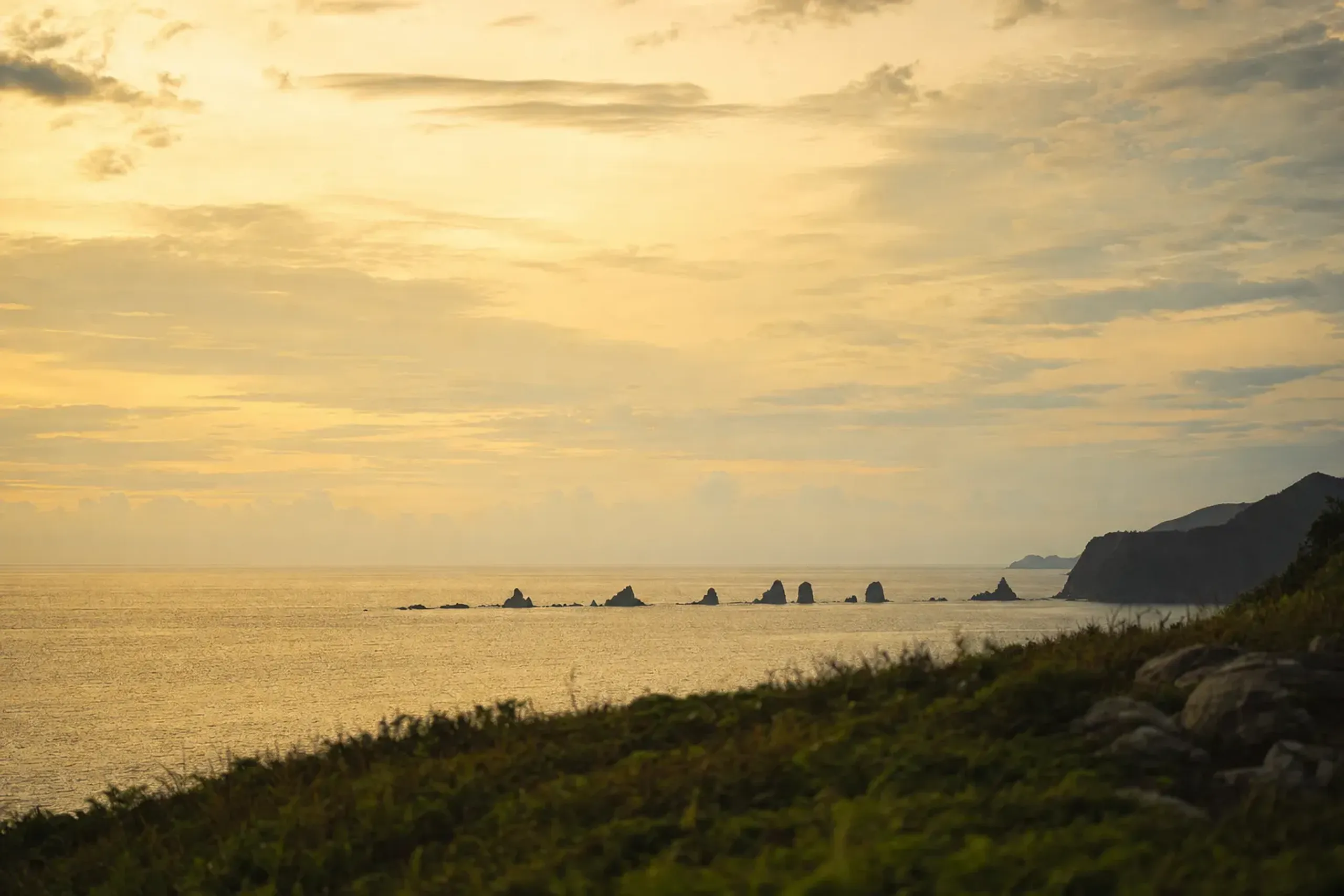
The sea here is the subject, not a backdrop. In summer, the sea often decides what your day becomes.
Hashigui-iwa And Its Legend
Hashigui-iwa is a national Place of Scenic Beauty and a Natural Monument. The row of pillars formed as the sea wore away the softer rock around harder stone, which stayed standing in a line. About forty pillars remain. The pillars rise to roughly fifteen metres, according to Wakayama tourism.
The name means "bridge-pillar rocks," and the legend explains why.
As the town tells it: Kobo Daishi, the great monk, made a wager with a mischievous spirit — an amanojaku — that the spirit could not build a bridge across to Oshima in a single night. The amanojaku worked fast and nearly finished. Near dawn, fearing he would lose, Kobo Daishi imitated the crow of a rooster. The spirit, believing the night was over and the bet lost, stopped. The pillars are the unfinished bridge.
Tell it as a legend, because that is what it is. Wakayama tourism lists the site among "Japan's 100 sunrises" and notes its morning views. Hashigui-iwa stands about twenty-five minutes on foot, or roughly three minutes by car, from Kushimoto Station.
Cape Shionomisaki: The Lighthouse And The Lawn
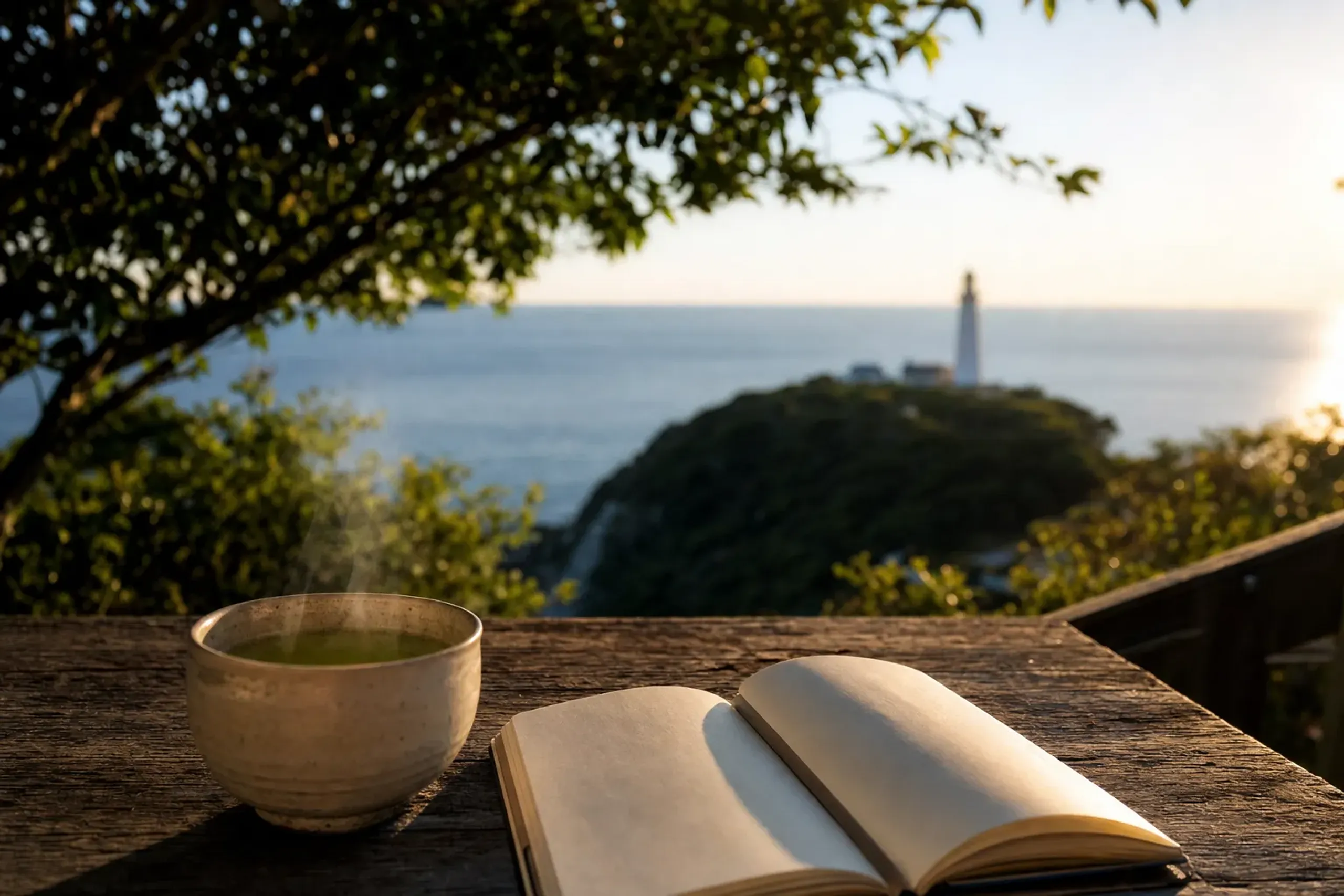
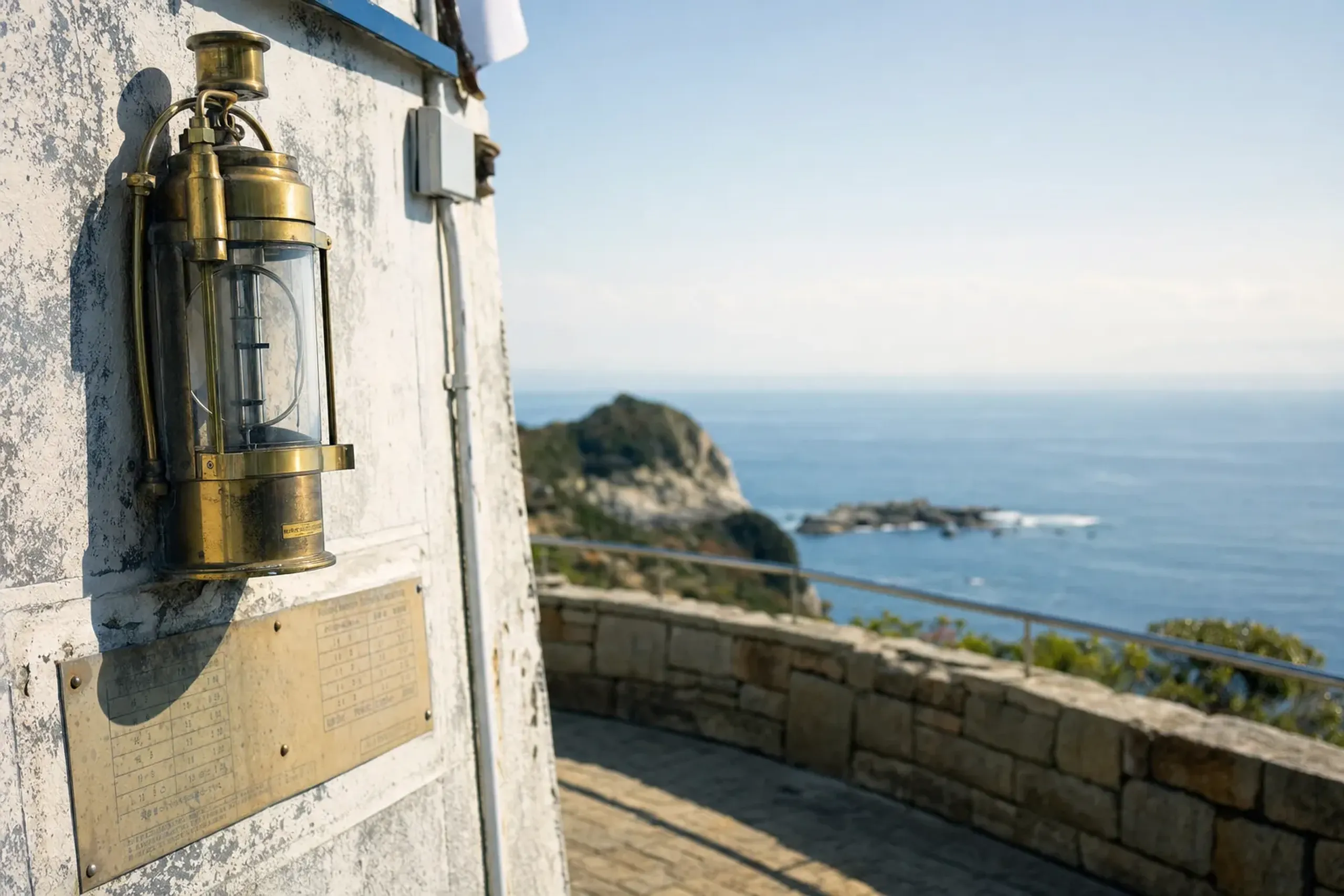
South of the town the land narrows to a point. Kushimoto Town and Wakayama tourism call the tip of Cape Shionomisaki the southernmost land of Honshu. The white tower here, Shionomisaki Lighthouse, was first lit on 15 September 1873.
You can climb the stairs to the observation deck.
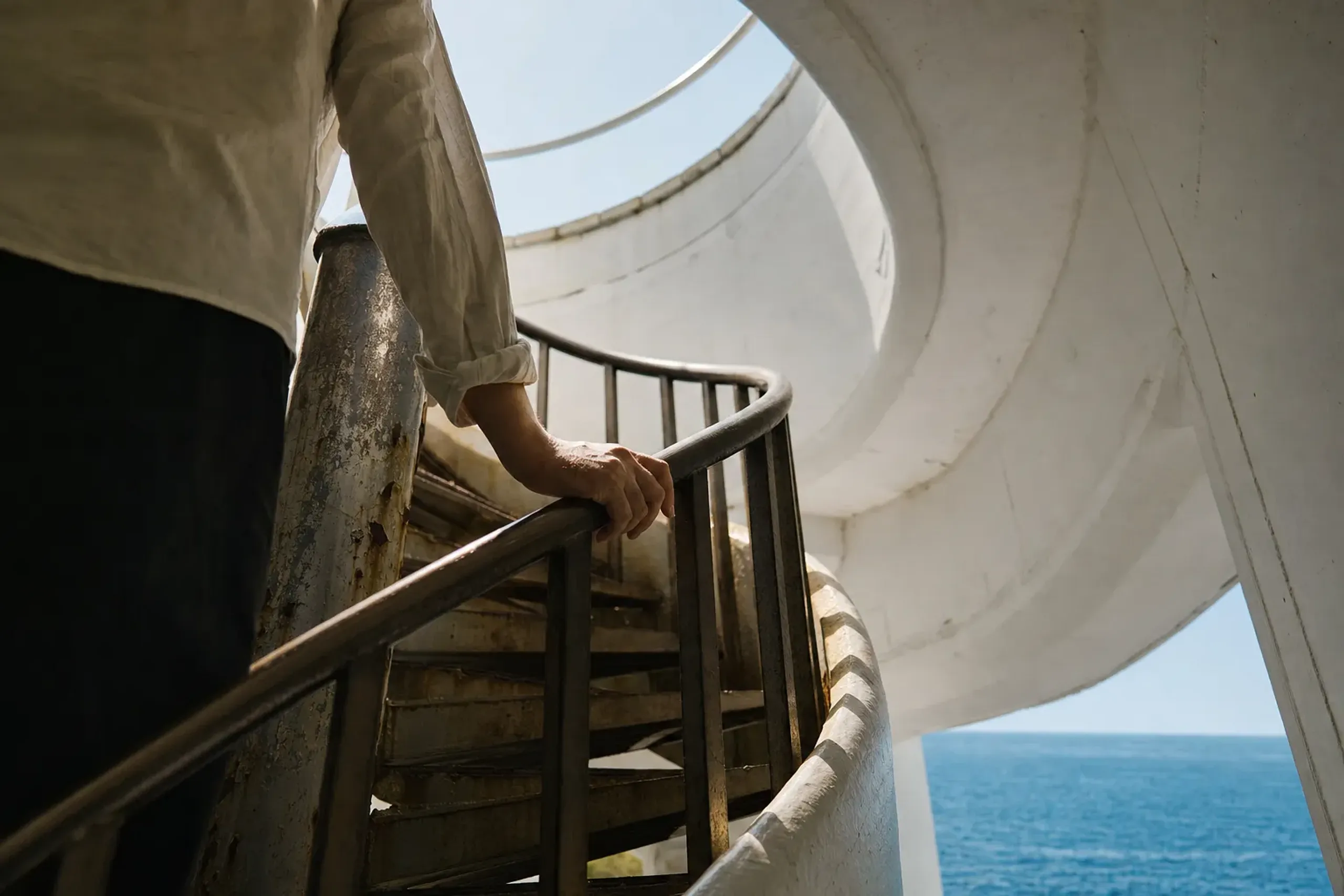
From the top the Pacific opens in every direction, a flat grey-blue plate with nothing on it but light. Entry hours shift with the season, so we do not print them; the JRS concierge team confirms directly with the guest at time of arrangement.
Beside the lighthouse lies a broad lawn of about 100,000 square metres, on the site of a former naval lookout. Open grass, sea on three sides, wind coming straight off the water. In summer it is bright and warm and very quiet between the arrivals of the community bus. Bring a hat. The light here is hard.
Kii-Oshima: The Bridge, Kashinozaki And The Ertugrul Story
Off the mainland, one to two kilometres out, sits Kii-Oshima. Over a thousand people live there. Since 8 September 1999 the island has been joined to the shore by the Kushimoto Ohashi bridge, its main span 290 metres. It is about ten minutes from Kushimoto Station by bus or taxi, and then you are driving out over the sea.
On the island's eastern height stands Kashinozaki Lighthouse. The Agency for Cultural Affairs calls it one of Japan's earliest stone lighthouses, first lit in 1870 and designed by the British engineer R. H. Brunton as one of the "Edo Treaty lighthouses." In 2021 it was designated a National Historic Site together with the Ertugrul Incident Site. Visitors can climb it or use the observation deck. It stands about twenty minutes by car from Kushimoto Station.
The Ertugrul
Near the lighthouse, the sea holds a sombre memory. The Ertugrul was an Ottoman frigate on its first goodwill mission, sailing from Yokohama toward Kobe.
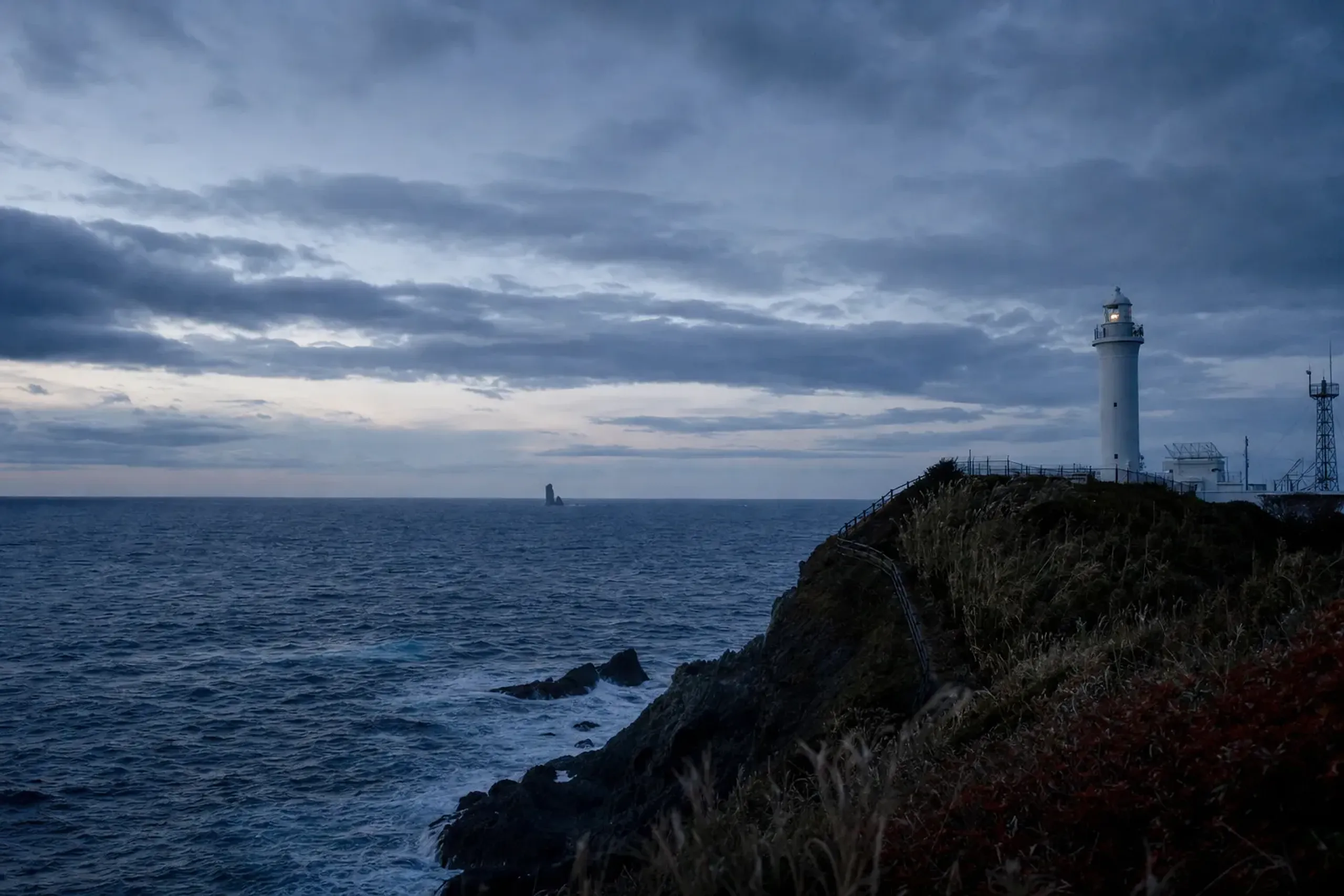
On the night of 16 September 1890 it was wrecked in a typhoon off Kashinozaki, striking a rock about 100 metres offshore. Of those aboard, 587 died and 69 were rescued, largely by the residents of Kii-Oshima, who went into the storm to pull strangers from the water.
The Turkish Memorial Museum, run by Kushimoto Town, stands near the lighthouse. The story is why many Turkish travellers know the name Kushimoto before they know anything else about Wakayama. Our cultural interpreter guide can tell it in full as you look out over the rock.
The Coral Waters And The Marine Park
The sea off Kushimoto is warm enough for coral. The Ministry of the Environment describes many coral species here living at their northern worldwide limit, and the waters were registered under the Ramsar Convention on 8 November 2005.
Kushimoto Marine Park sits within this environment. There is an underwater observation tower, an underwater sightseeing boat — Wakayama tourism describes a semi-submersible with side windows — and an aquarium. The marine-park zones fall inside Yoshino-Kumano National Park.
The water, seen from above, is a pale clear green over sand and reef. It is the surprise of the coast: this far south, the Kii Peninsula ends not in cold open ocean but in something closer to a subtropical shallows.
The Summer: The Sea, The Typhoon Season, The Numbers
Summer here is warm and wet, and the sea runs the schedule.
At the Shionomisaki observation station, the 1991–2020 normals give an August mean of 26.9°C, a mean maximum of 29.8°C and a mean minimum of 24.8°C, with 260.3 mm of rainfall across the month.
Warm nights. Sticky afternoons. Rain that arrives in sheets and leaves the stone shining.
Key fact: JMA's regional table for the Kinki area shows typhoon approaches concentrated from July to October. A passing storm can close the sea and reshape a day. A flexible plan matters more here than almost anywhere.
The town's two beaches, Hashikui and Tawara, open for sea bathing from late June, with dates the town sets each year. A summer festival with fireworks is held at the fishing port, also set each year. Local rules apply and can change; follow your guide's briefing, and the JRS concierge team confirms current conditions directly with the guest at time of arrangement.
How Do You Reach Kushimoto From Osaka?
Take the Kuroshio limited express — about three hours thirty minutes from Shin-Osaka, or roughly three hours from Tennoji. There is no faster rail option to this part of the coast.
Some Kuroshio services do not run every day, so we hold off on printing a timetable; the JRS concierge team confirms the services at time of arrangement. Where available, we arrange Green Car seats, platform assistance and luggage forwarding, so the long ride down the peninsula is as easy as possible.
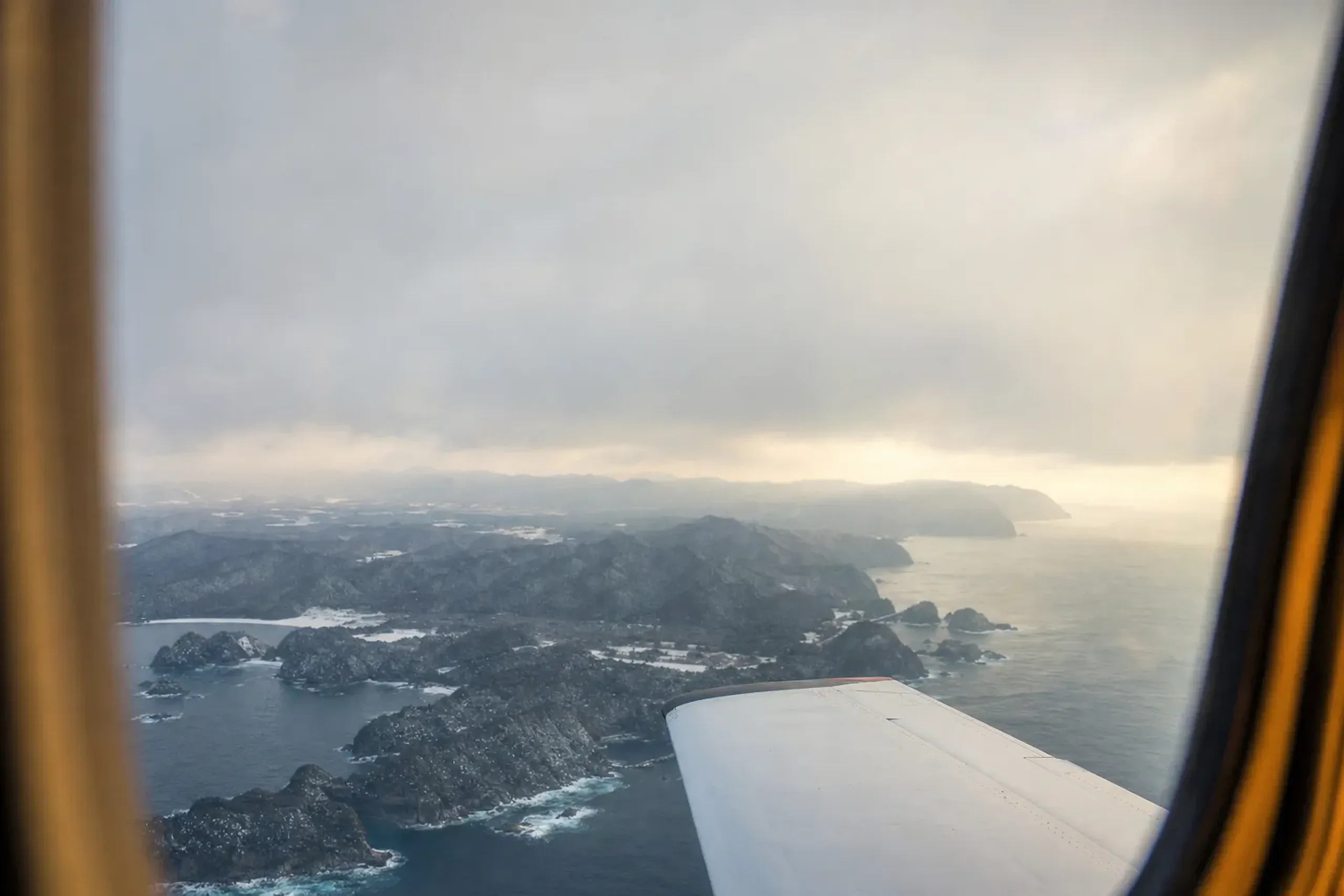
By air, there is an airport near Shirahama, about 55 kilometres away — roughly one hour by car, or about seventy minutes by airport bus to Kushimoto Station. Flying in and then driving the final stretch is often the gentlest way to arrive. Whether you come by the Kuroshio or by the air route, the deciding factor is usually what happens once you land, which is the car.
For a wider view of this choice, our note on private driver versus rail in Japan lays out the trade-offs.
Kushimoto's community buses do serve the marine park, the Shionomisaki lighthouse, Oshima and Kashinozaki, and Hashigui-iwa. But they cover a long coast only in part, and the waits are real. This is why a private car with an English-speaking driver changes the day entirely — the sights are strung out, and a vehicle that moves on your rhythm lets you catch the light at Hashigui-iwa and still cross to the island before the afternoon turns.
How The Concierge Team Plans The Coast Day
We build the Kushimoto day around three things: the roads, the sea and the typhoon season. The order of a good day writes itself — the rock pillars, the cape, the island, the water — but the weather can rewrite it, so we plan a fallback from the start.
Within this coast, here is what our team at Japan Royal Service arranges, and only what we can confirm:
- Planning: a tailor-made itinerary for the coast, built around the drive and the sea, with a clear plan B if a storm closes the water.
- Guiding: an English-speaking cultural interpreter guide, booked separately from the driver, for the Hashigui-iwa legend, Kashinozaki Lighthouse and the Ertugrul story.
- The car: a vehicle from a partner company with an English-speaking driver — the driver and guide are separate roles, and we do not own the vehicles.
- Stays and meals: ryokan and restaurant booking in the Kushimoto or Shirahama area, with dietary needs passed ahead. Our guide to dietary requests at ryokan and restaurants explains how this works.
- Rail and air: Kuroshio tickets including Green Car where available, platform assistance, luggage forwarding, and a domestic flight to the airport near Shirahama where booking is available.
- Same-day re-planning: when the weather changes, the day changes with it.
We do not run the marine-park boats.
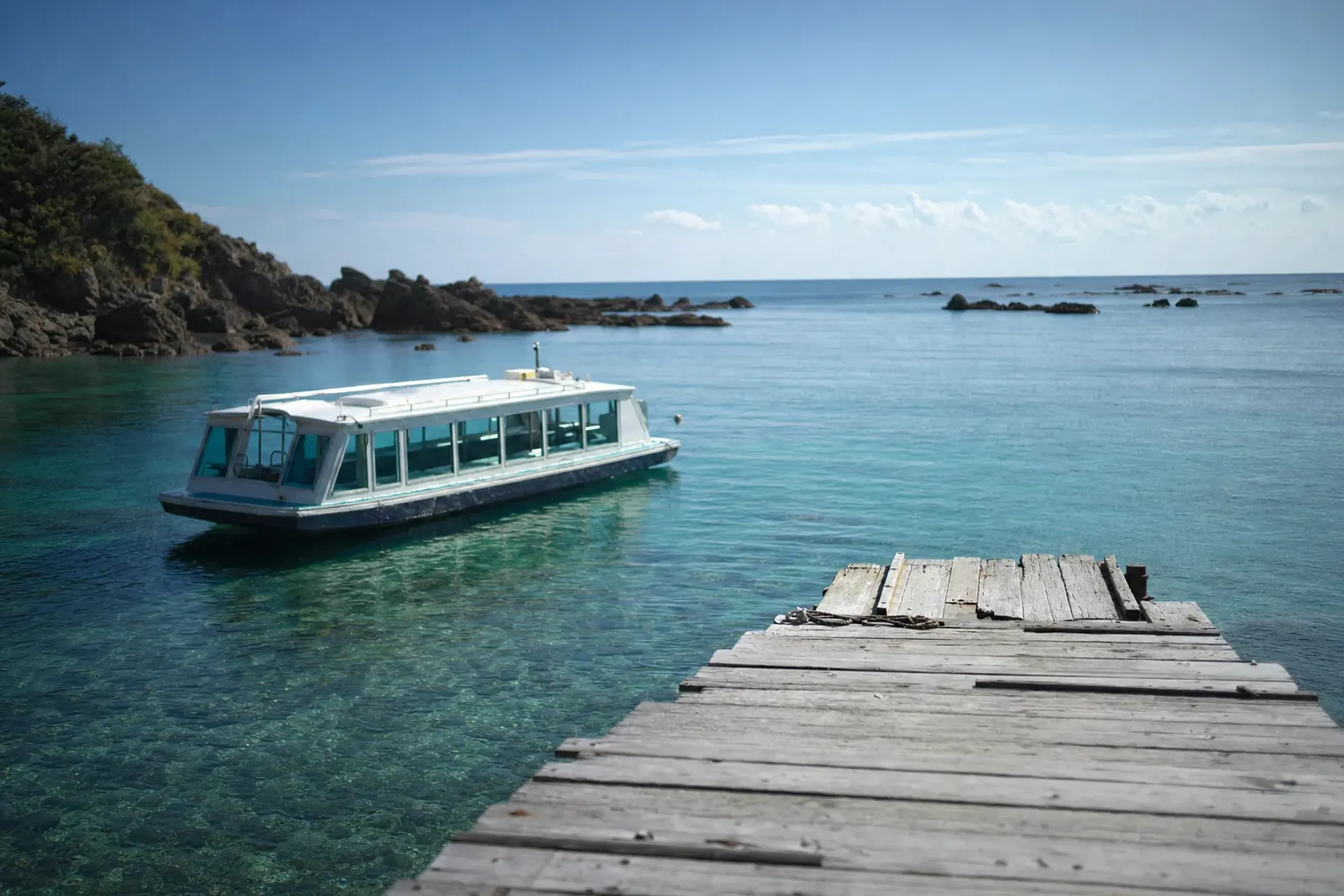
If you wish to ride one and the operator is sailing, the concierge team can fit it into the day. The JRS concierge team confirms directly with the guest at time of arrangement the lighthouse entry, the sea-bathing and festival dates, the boat status, the airport details and the driving times. All of these sites are public.
If the southern coast forms one leg of a longer peninsula journey, the pilgrimage routes lie not far north: see our Kumano Kodo walking guide, the broader Kumano Kodo pilgrimage, and Nachi Falls with the Kumano Sanzan grand shrines. For a resort base up the coast, there is Shirahama; across the water in Mie, the Kumano sea fireworks light the same stretch of Pacific.
Frequently Asked Questions
How do you reach Kushimoto from Osaka?
Take the Kuroshio limited express from Shin-Osaka, about three hours thirty minutes, or around three hours from Tennoji. Some services do not run daily; the JRS concierge team confirms the services at time of arrangement.
What is the legend of Hashigui-iwa?
The legend says Kobo Daishi wagered that a mischievous spirit could not bridge the sea to Oshima in one night. Near dawn the monk mimicked a rooster's crow; the spirit stopped, leaving the rock pillars as an unfinished bridge.
What is Kashinozaki Lighthouse?
Kashinozaki is a stone lighthouse on Kii-Oshima, first lit in 1870 and designed by British engineer R. H. Brunton. The Agency for Cultural Affairs calls it one of Japan's earliest stone lighthouses; it was designated a National Historic Site in 2021 with the Ertugrul Incident Site.
When does sea bathing open at Kushimoto?
The town's Hashikui and Tawara beaches open for sea bathing from late June, with dates set each year by Kushimoto Town. The JRS concierge team confirms current conditions directly with the guest at time of arrangement.
How wet is August on the southern Kii coast?
At the Shionomisaki station, August averages 260.3 mm of rainfall, with a mean temperature of 26.9°C. The summer also carries a typhoon season; JMA's regional table shows approaches concentrated from July to October.
Why Choose Japan Royal Service
This coast rewards people who plan it well. The sights sit far apart, the buses reach them only in part, and the sea can close without much warning. A good day here is built, not improvised.
Our team at Japan Royal Service designs the Kushimoto day around the roads, the water and the typhoon season, with an English-speaking cultural interpreter guide for the stories and a separate driver who knows the coast. We handle the Kuroshio tickets or the flight to the airport near Shirahama, the ryokan and the meals, and we re-plan the moment the weather turns. The long trip south becomes the easy part.
To begin planning, contact our team here.