In this guide
- 01What Rokugo Manzan Means
- 02Futago-ji Near The Top Of Mount Futago
- 03Why Is Fuki-ji Important?
- 04Maki Odo And Kumano Magaibutsu
- 05What Is Usa Jingu?
- 06Can You Visit The Kunisaki Peninsula Without A Car?
- 07Fitting The Peninsula Into An Oita Stay
- 08How Japan Royal Service Arranges It
- 09Frequently Asked Questions
- 10Why Choose Japan Royal Service
In northeastern Oita, the Kunisaki Peninsula rises to Mount Futago and holds dozens of temples and shrines across its countryside. The religious culture here mixes Buddhism, Shinto and mountain worship, and it is known as Rokugo Manzan. At the base of the peninsula stands Usa Jingu, the head shrine of Hachiman.
The area is spread out. Buses are infrequent. A day here runs on a vehicle with a driver, moving from one hall to the next.
What Rokugo Manzan Means
Rokugo Manzan is the temple culture of the Kunisaki Peninsula. According to japan-guide, the peninsula centres on Mount Futago, which reaches 721 metres. The countryside holds dozens of temples and some shrines.
The name points to an old division. Rokugo Manzan was traditionally split into six areas. The religious culture mixes Buddhism, Shinto and mountain worship, and it centres on the temples and on Usa Jingu.
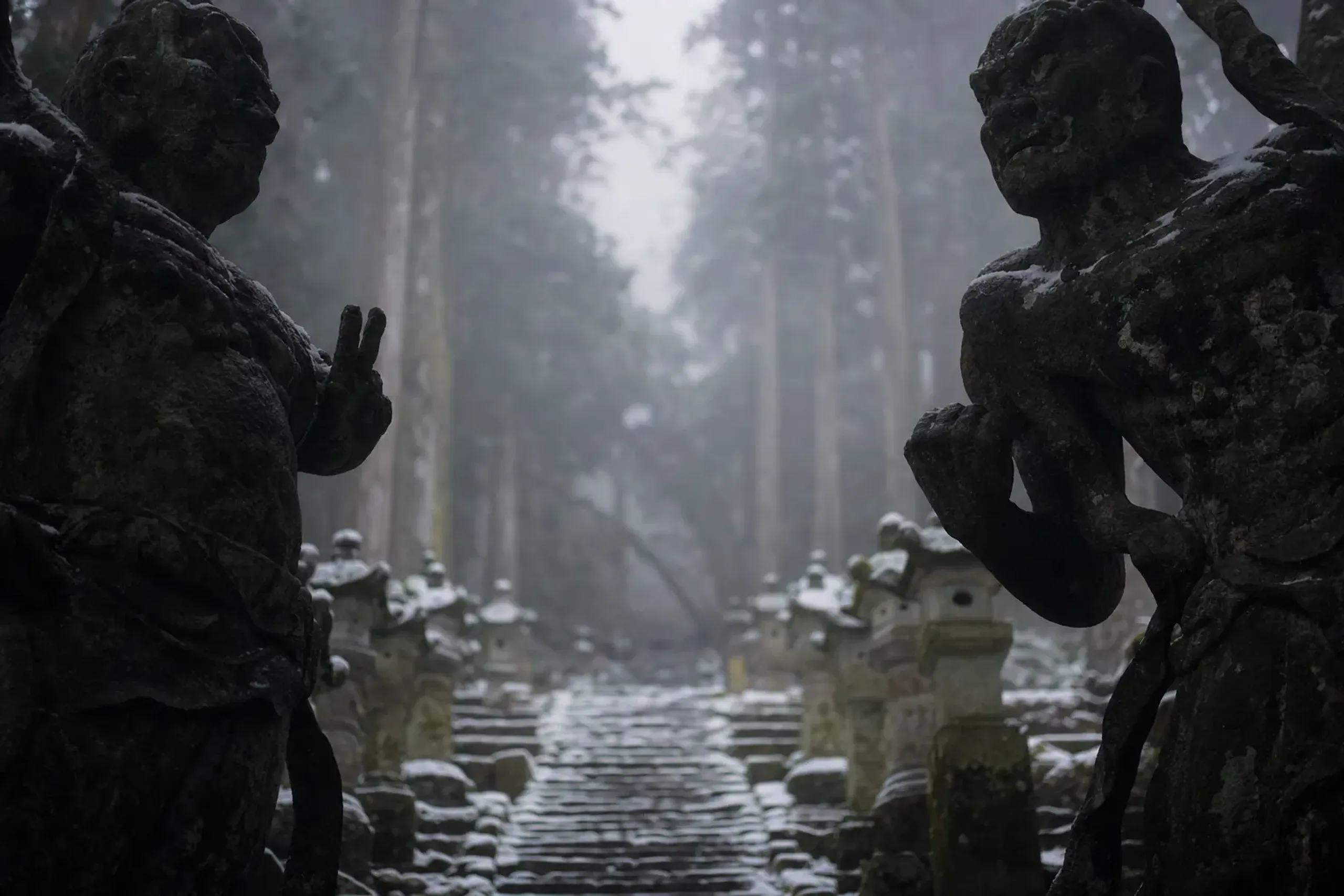
Stone figures are a feature of the peninsula. Statues of Buddhas and guardians stand across the temple grounds.
Futago-ji Near The Top Of Mount Futago
Futago-ji sits near the peak of Mount Futago. Japan-guide gives it a history of more than 1,300 years.
A pair of stone Nio guardians stands at the start of the approach. From there, steps lead up to the main halls. These include the Gomado Hall, dedicated to Fudo Myoo, and the Okunoin Hall, which holds a thousand-armed Kannon.
Why Is Fuki-ji Important?
Fuki-ji matters because its main hall is a National Treasure, dedicated to Amida and dating to the late Heian period. The temple sits in Bungotakada and is also known as Fuki-ji Odo.
JNTO dates the temple to 718. Both JNTO and japan-guide call its main hall the oldest wooden structure in Kyushu. Inside, the seated wooden Amida is an Important Cultural Property, according to JNTO.
JNTO places it about 20 minutes by car from central Bungotakada, and about 30 minutes from Kitsuki. That distance is one more reason the day works better on a vehicle than on the local bus.
Key fact: Fuki-ji's main hall is a National Treasure from the late Heian period.
Maki Odo And Kumano Magaibutsu
Maki Odo stands about 5 kilometres south of Fuki-ji.
Maki Odo
Maki Odo's treasure house holds wooden figures. Among them are an Amida, the Four Heavenly Kings and a Fudo Myoo. The original hall was lost to fire about 700 years ago, and the statues were saved.
Kumano Magaibutsu
At Kumano Magaibutsu, two figures are carved into a cliff.
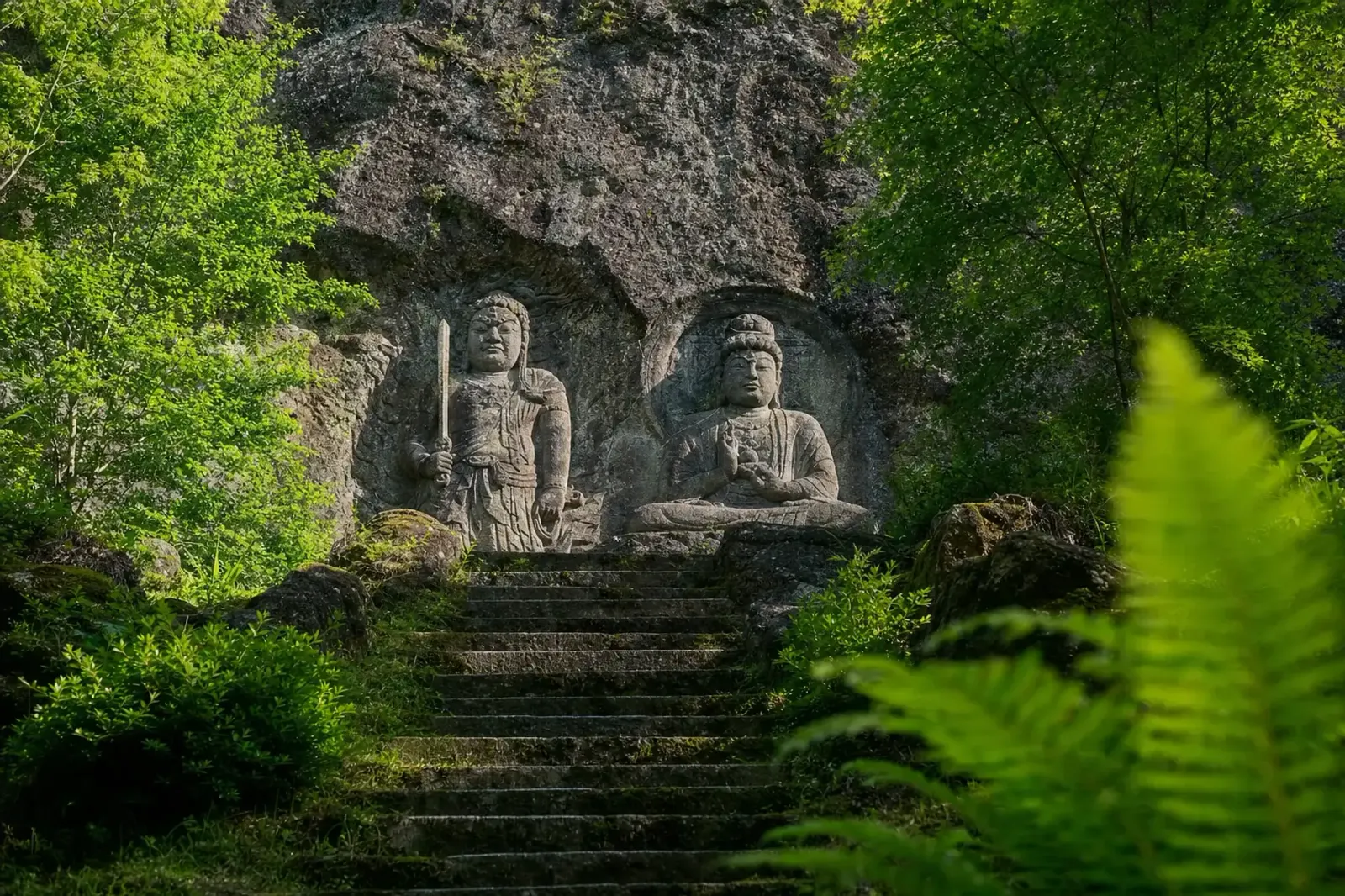
One is a Fudo Myoo about 8 metres tall. The other is a Dainichi Buddha of nearly 7 metres. Japan-guide dates the pair likely to the late Heian period.
What Is Usa Jingu?
Usa Jingu is the head shrine of Hachiman, with more than 40,000 shrines under it, according to Visit Kyushu. It sits at the base of the peninsula, and its main hall is a National Treasure.
The deities enshrined here are Hachiman, identified with Emperor Ojin, together with Empress Jingu and Hime Okami, according to japan-guide. The shrine was built in the 8th century. Its main hall is the prototype of the Hachiman-zukuri style, two gabled buildings joined front to back.
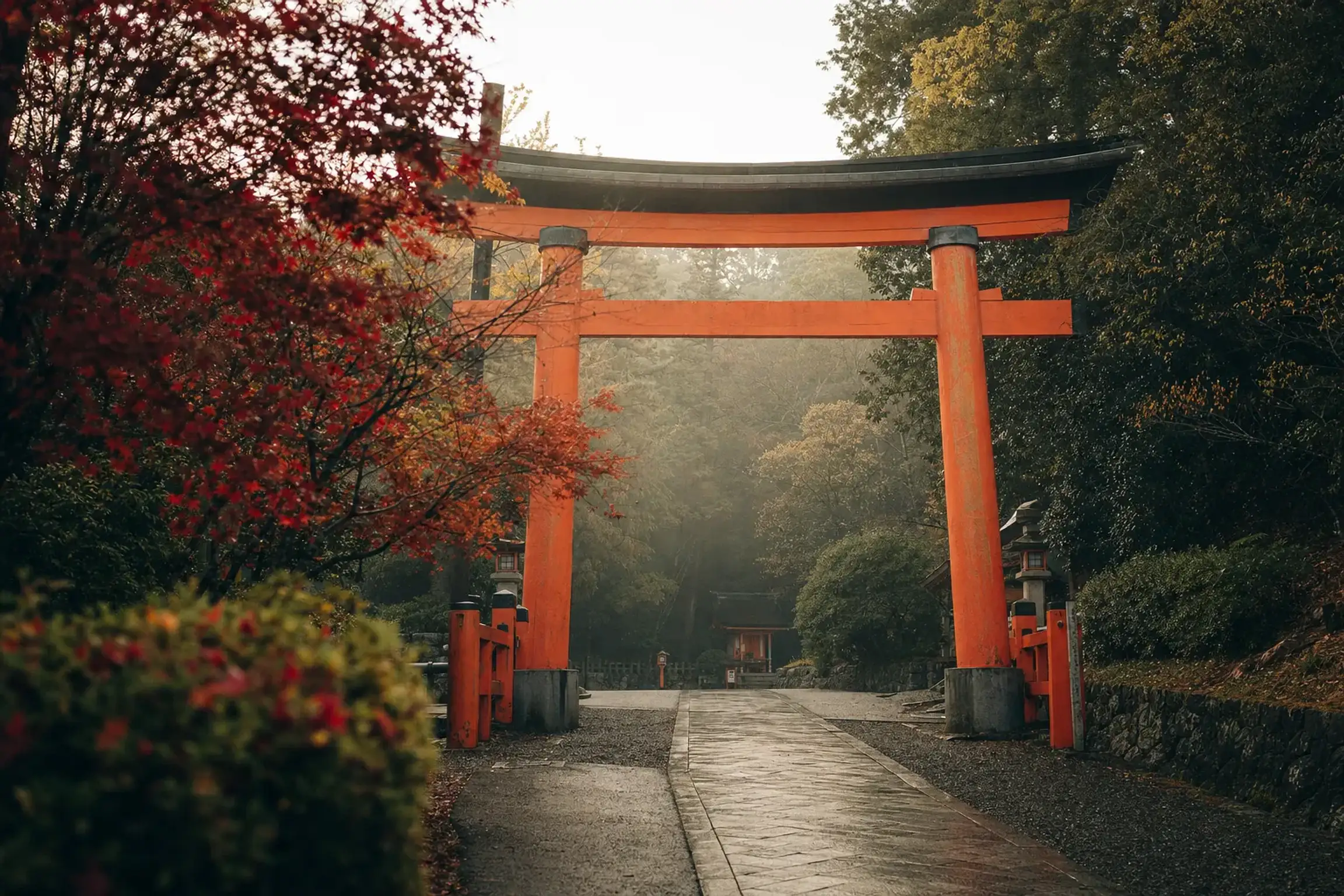
There are upper and lower shrine complexes, each with three main halls. Visit Kyushu describes a large vermilion torii at the entrance, a treasure house, a roofed bridge and a lotus pond. Everything here is open to the public.
Can You Visit The Kunisaki Peninsula Without A Car?
It is difficult. Japan-guide describes public transport on the peninsula as hard, with infrequent buses, and JNTO recommends a taxi or car for Fuki-ji. The temples sit far apart.
Usa Jingu itself is easier to reach than the inland temples. Usa Station is on the JR Nippo Main Line, which links Usa with Hakata, according to JNTO.
From Usa Station, buses to Usa Jingu take about 7 minutes, per japan-guide. From Oita Airport, a bus to Usa Jingu takes about 60 minutes.
For the peninsula's temples, though, the practical answer is a vehicle. A day here moves from Futago-ji to Fuki-ji, on to Maki Odo and Kumano Magaibutsu, and then to Usa Jingu. The JRS concierge team confirms directly with the guest at time of arrangement which halls and treasure houses are open.
Fitting The Peninsula Into An Oita Stay
The Kunisaki Peninsula works as one or two days inside a wider Oita or Kyushu trip. You can base in Beppu, in Oita, or near Oita Airport, and reach both the inland temples and Usa Jingu from there.
Oita has more to see nearby. Usuki, to the south, is known for its stone Buddhas and old castle town, which we cover in our guide to Usuki's stone Buddhas. Beppu's hot-spring "hells" are described in our Beppu Jigoku hells guide. Yufuin, inland, is a hot-spring town below Mount Yufu, which we write about in our Yufuin onsen town guide.
The JRS concierge team builds the peninsula and Usa Jingu into the rest of your Oita stay as one or two days.
How Japan Royal Service Arranges It
Our concierge team builds the Kunisaki Peninsula and Usa Jingu into an Oita or Kyushu itinerary. We plan it as one or two days from Beppu, Oita or Oita Airport, and we shape a tailor-made itinerary around the halls you most want to see.
For moving between the temples, we arrange a vehicle from a partner company with an English-speaking driver, from Oita Airport, Beppu, Oita or Usa Station. Since buses on the peninsula are infrequent, the vehicle carries the whole day.
For the temples, the carved Buddhas and the shrine, we can book an English-speaking cultural interpreter guide, arranged apart from the driver. We also handle ryokan and restaurant booking in Oita prefecture, with dietary needs passed ahead, and we arrange rail tickets to Usa Station or Oita, including Green Car where available, platform assistance and luggage forwarding. If weather changes, we re-plan the same day. The JRS concierge team confirms directly with the guest at time of arrangement which halls and treasure houses are open.
Frequently Asked Questions
What is Rokugo Manzan on the Kunisaki Peninsula?
Rokugo Manzan is the Kunisaki Peninsula's temple culture, mixing Buddhism, Shinto and mountain worship. Centred on Mount Futago, it was traditionally divided into six areas, and the countryside holds dozens of temples and some shrines, according to japan-guide.
Why is Fuki-ji worth visiting?
Fuki-ji's main hall is a National Treasure, dedicated to Amida and dating to the late Heian period.
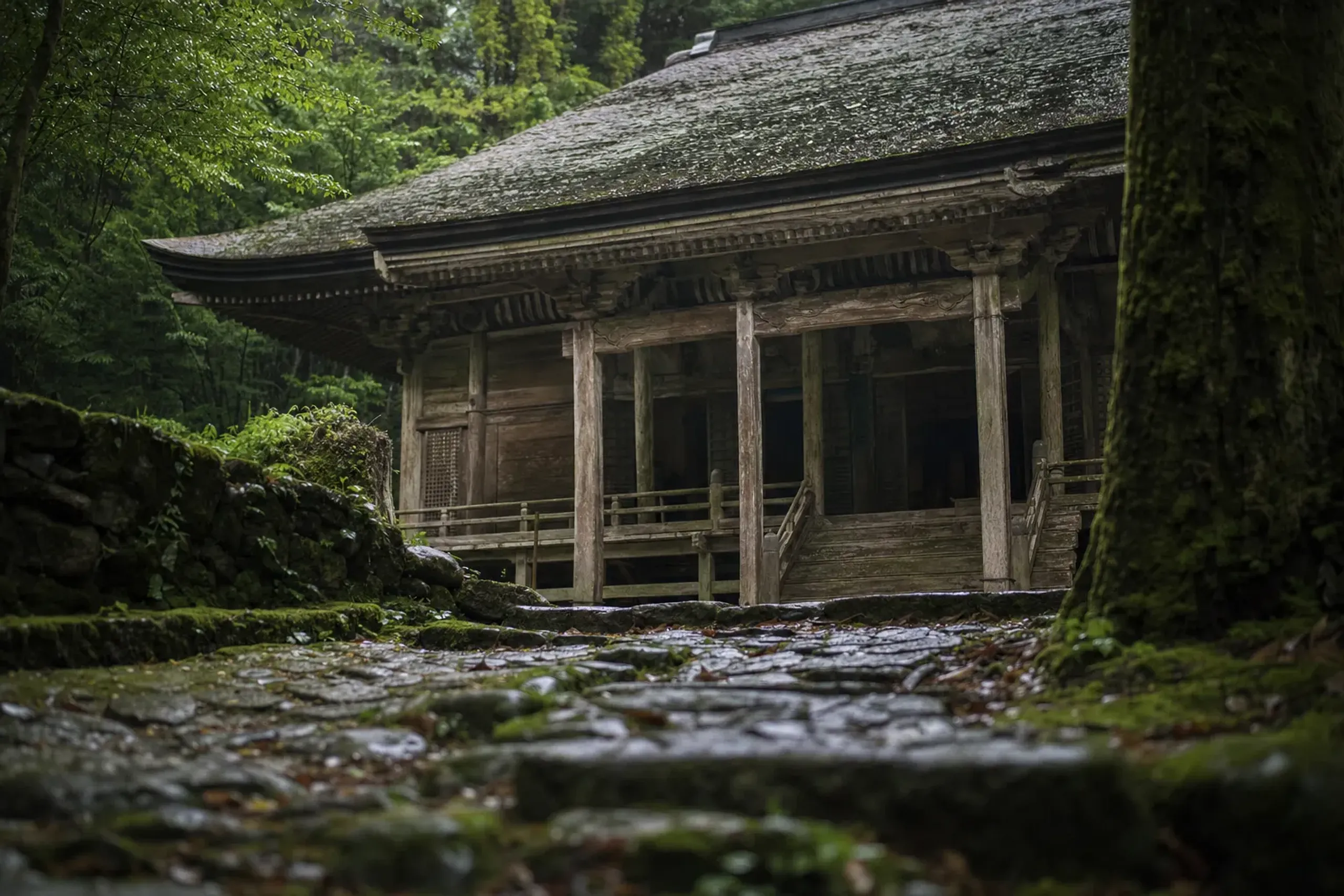
It stands in Bungotakada, about 20 minutes by car from the town centre.
What is Usa Jingu the head shrine of?
Usa Jingu is the head shrine of Hachiman, with more than 40,000 shrines under it, according to Visit Kyushu. Its main hall is a National Treasure and the prototype of the Hachiman-zukuri style, built in the 8th century.
Can you reach the peninsula's temples without a car?
It is difficult. Japan-guide describes buses on the peninsula as infrequent, and JNTO recommends a taxi or car for Fuki-ji. Usa Jingu is reachable by bus from Usa Station in about 7 minutes, but the inland temples sit far apart.
Why Choose Japan Royal Service
Japan Royal Service plans the Kunisaki Peninsula and Usa Jingu as part of a wider Oita or Kyushu journey. Our concierge team arranges a vehicle from a partner company with an English-speaking driver, books an English-speaking cultural interpreter guide for the temples and the shrine, and handles rail tickets, ryokan and restaurant booking across Oita prefecture.
Because the peninsula is spread out and its buses are few, the planning is practical work: the driving between sites, the order of the halls, and same-day re-planning when weather changes. The JRS concierge team confirms directly with the guest at time of arrangement which halls and treasure houses are open.
To begin planning, contact our team here.