In this guide
- 01What Is The “Four Parts Strength, Six Parts Skill” Ratio At Akita Kantō Matsuri?
- 02Akita Kantō Matsuri At Night: Candlelight, Heat, And A Street Of Lanterns
- 03How Old Is Akita Kantō Matsuri, And What Is Its Origin?
- 04The Four Pole Sizes: How Kantō Is Taught Across Generations
- 05How Do You Watch Kantō Like A Local, Not A Camera?
- 06Night Processions Vs Daytime Competition: Which Kantō Event Should You Attend?
- 07Akita Kantō Matsuri 2026 Dates, Hours, And What Happens Each Day
- 08Festival Comfort And Safety In 2026: Heat, Crowds, And Local Advisories
- 09How To Get To Akita City For Kantō Matsuri (And Move Comfortably At Night)
- 10Where To Stand And When To Arrive: A Step-By-Step Viewing Strategy
- 11What To Know About Photography Etiquette (And Why Candlelight Changes Everything)
- 12How Kantō Fits Into The “Three Great Tōhoku Festivals” Circuit
- 13How To Plan An August 2026 Kantō Trip Like A Luxury Traveler (Without Overcomplicating It)
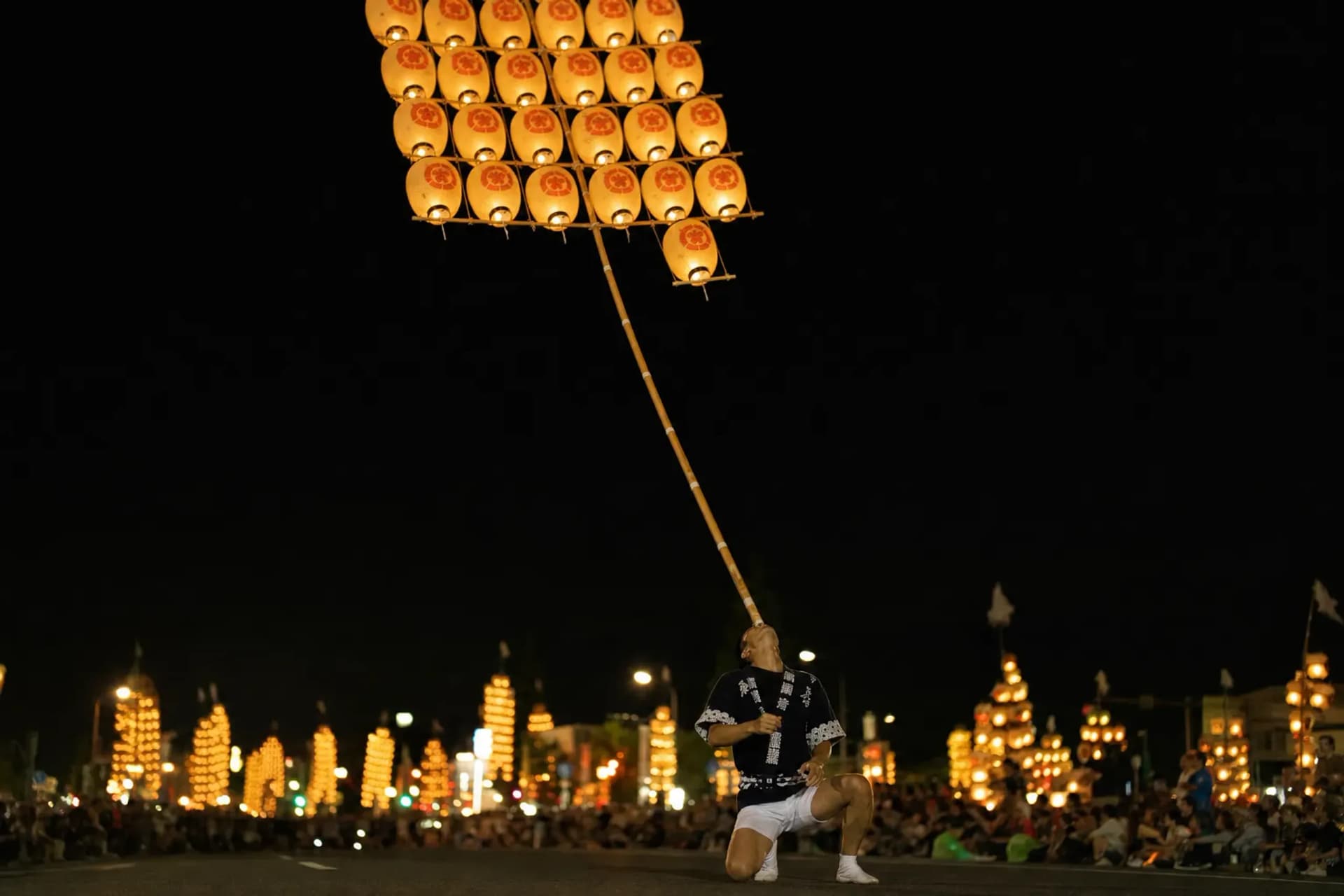
A single candlelit pole leans into the night over Akita City. Fifty kilograms of bamboo and lantern. Up to twelve meters of it. And one sashite steadies the whole of it on his forehead as if the wind itself has been quietly negotiated into silence. Your first instinct is to call it strength.
Then you hear the ratio locals repeat without drama. Chikara yonbu, waza rokubu. Four parts strength, six parts skill. That single sentence changes what you are watching.
Our team at Japan Royal Service plans Akita Kantō Matsuri evenings for guests who want the spectacle, yes, but also the meaning, the mechanics, and a calm, considered way through crowded summer streets. Quiet matters here. So does getting it right, down to the last detail.
What Is The “Four Parts Strength, Six Parts Skill” Ratio At Akita Kantō Matsuri?
The performers themselves describe Kantō as four parts strength, six parts skill, because balance, micro-footwork, and impeccable timing matter far more than raw power when a 50 kg pole shifts from one body point to the next.
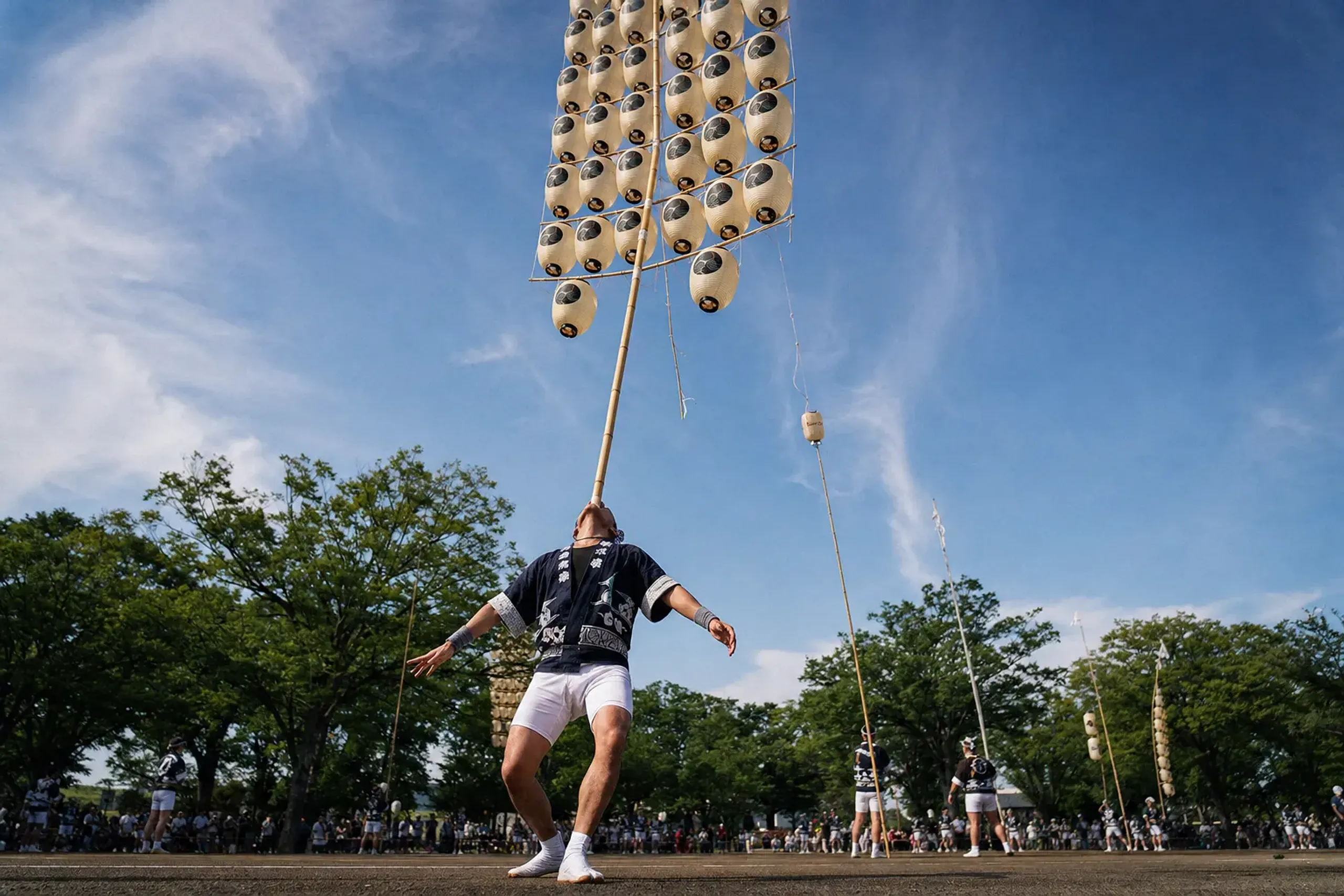
You can see the truth of it in the smallest details. The sashite’s feet never stop adjusting—tiny, rapid steps that carry a constant conversation with gravity. The face does the opposite. Still. Watchful. Eyes up, locked on the pole’s bend and the slow sway of the lanterns.
When the pole transfers from palm to forehead, or from shoulder to lower back, the crowd reacts as though it were a daring stunt. It isn’t. It is a practiced handover of a moving center of gravity, performed without breaking the procession’s rhythm for even a beat.
This is why daylight matters too. At night you feel the drama. In the daytime competition you can actually study the skill—like watching a master craftsman’s hands at work rather than only admiring the finished object on a shelf.
Akita Kantō Matsuri At Night: Candlelight, Heat, And A Street Of Lanterns
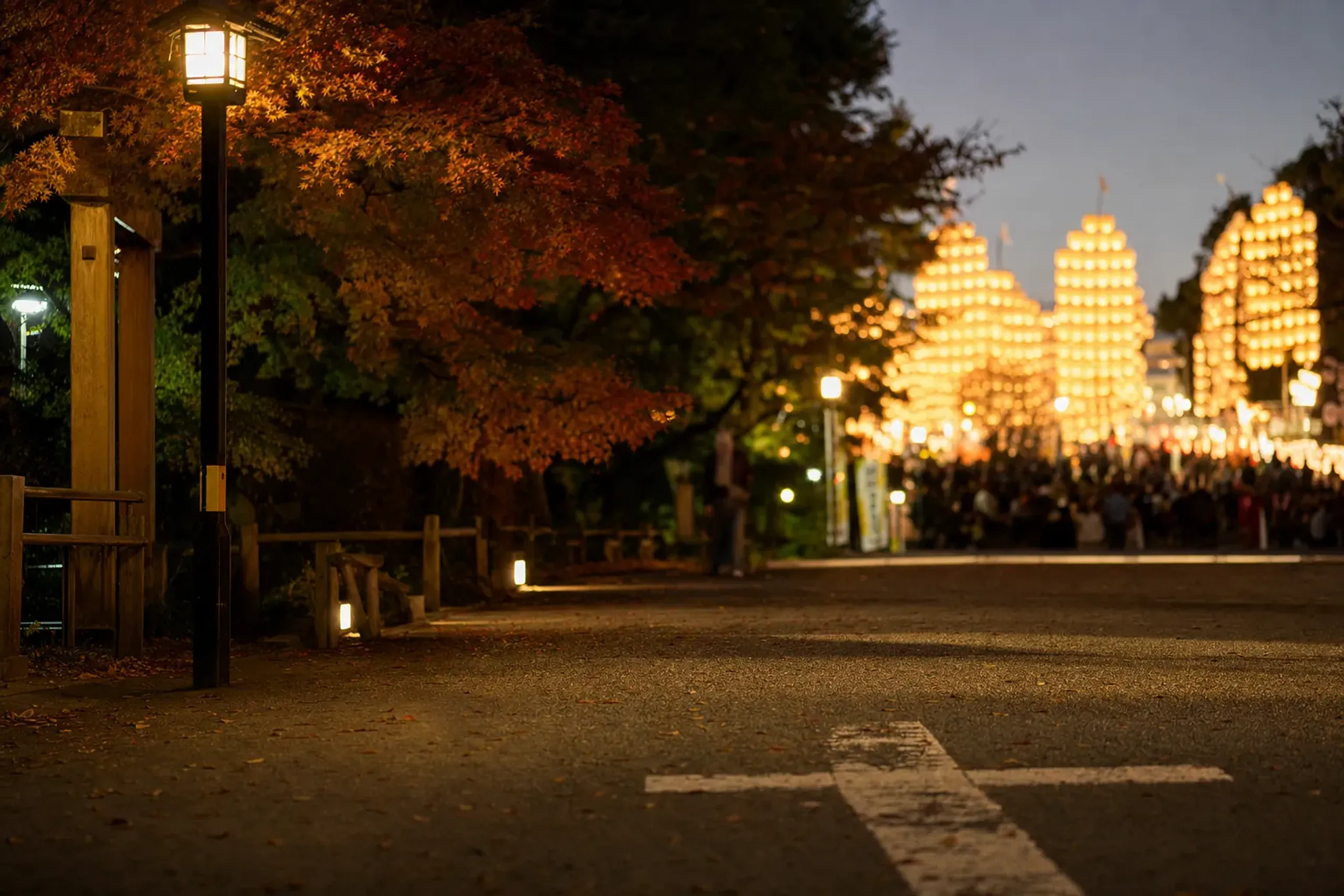
The image most travelers carry with them is real: Kantō poles lit with actual candles, rising over Kantō Ōdori in central Akita. The lanterns are arranged to resemble ripening ears of rice. Harvest prayers, made visible against the dark.
The street has a particular summer density to it. Warm asphalt underfoot. Shoulder-to-shoulder pauses. A sudden opening in the crowd, then the next wave of people. It can, honestly, feel like a lot.
Plan your evening as you would plan a night at the theater in a city you respect. Arrive early enough to claim your position, but not so early that you drain your patience before the first pole rises. And decide on your exit before the performance ends. That is a bigger difference than it sounds.
During the night procession, you will hear Nagashi-bayashi—taiko drums and fue flutes carrying the poles through town. When the balancing begins, the sound shifts to Hon-bayashi. The same instruments, yet a wholly different insistence beneath them. There is a wabi-quiet restraint to the sound at first, then a rising intensity that never tips into showiness.
How Old Is Akita Kantō Matsuri, And What Is Its Origin?
Akita’s festival committee traces Kantō’s roots to the Hōreki era (1751–1764), and the earliest written record appears in a 1789 travel diary describing an already well-established custom.
That distinction matters. Origins are lived long before they are recorded. The 1789 diary is evidence, not a start date.
The practice descends from Neburi Nagashi, a Tanabata and Obon purification custom found across Tōhoku. Summer drowsiness, impurity, and the very real fears of epidemic illness were symbolically transferred to bamboo grass or lanterns, then floated away on river or sea.
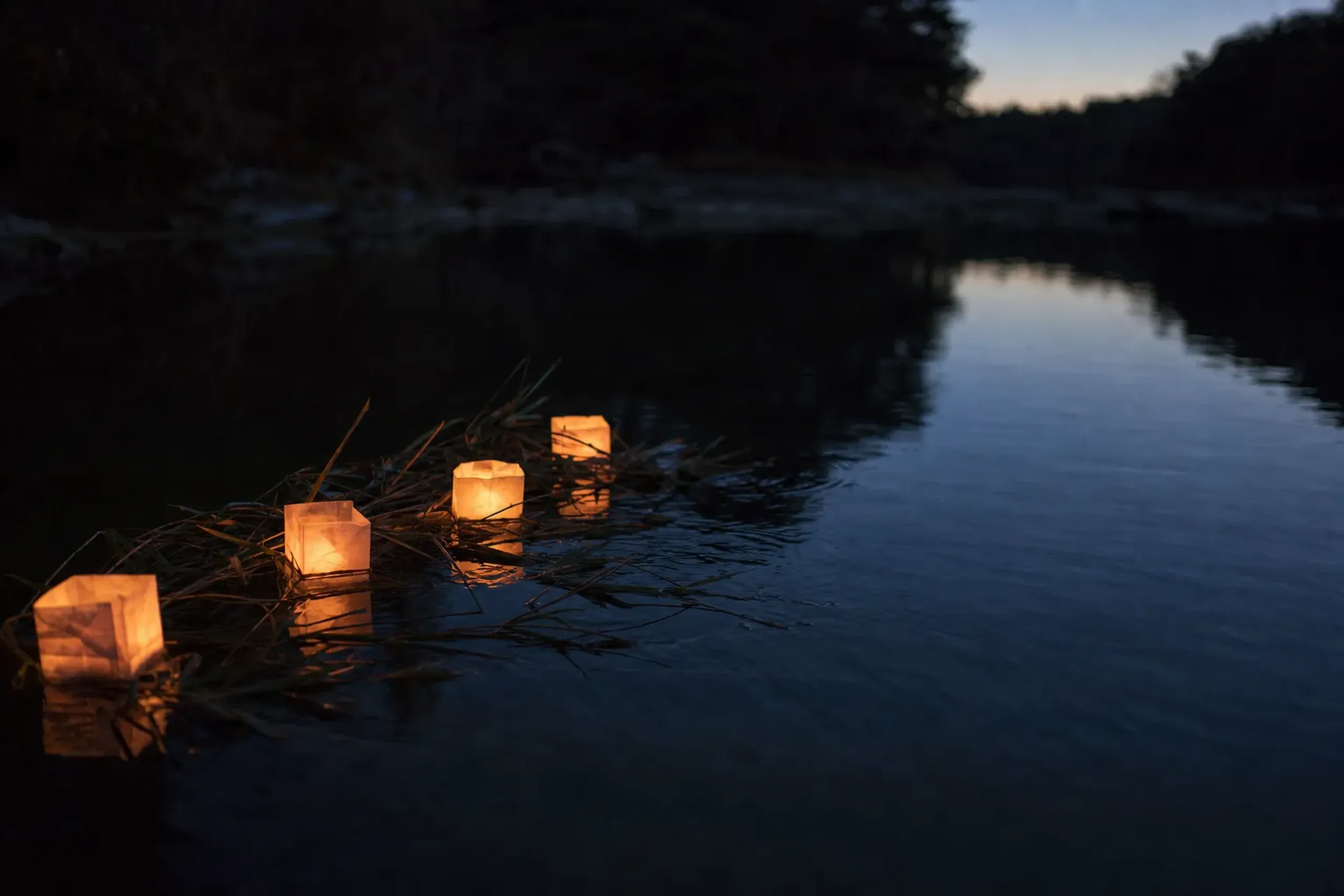
In Akita, that tradition fused over time with Obon gate-fire customs and heartfelt prayers for a good harvest.
In 1980, the festival was designated an Important Intangible Folk Cultural Property. It is public. It is protected. And it still feels remarkably personal when you watch a family group cheering, unguardedly, for “their” neighborhood team.
The Four Pole Sizes: How Kantō Is Taught Across Generations
Kantō is not a single prop. It is a graduated system, quietly designed for continuity across a lifetime.
There are four sizes: Ōwaka (largest), Chūwaka, Kowaka, and Yōwaka (the smallest, built for children). That ladder is the entire point. It allows technique to be handed down through the stages of a life, not merely performed by adult specialists.
The Ōwaka reaches roughly 12 meters once the extension poles (tsugidake) are added mid-performance. It weighs about 50 kilograms and carries 46 lanterns. Real candles, even now. No shortcut, no substitute.
Training is carried through local associations called Kantō-kai, often rooted in neighborhood, workplace, or school ties. In our experience, you can feel that lineage in the way the older members stand close—not instructing loudly, simply watching, ready to catch a mistake before it ever becomes a fall. It is a form of transmission the outside world rarely gets to see up close, and one we can, with the right introductions, help you observe with real understanding.
How Do You Watch Kantō Like A Local, Not A Camera?
Watch the feet first, then the face: the skill lives in the constant corrections below and the stillness above, and once you notice it, the performance stops looking like brute force altogether.
Most visitors look only at the lanterns. Understandable. They are bright, alive, and slightly wavering against the dark.
Try a different approach.
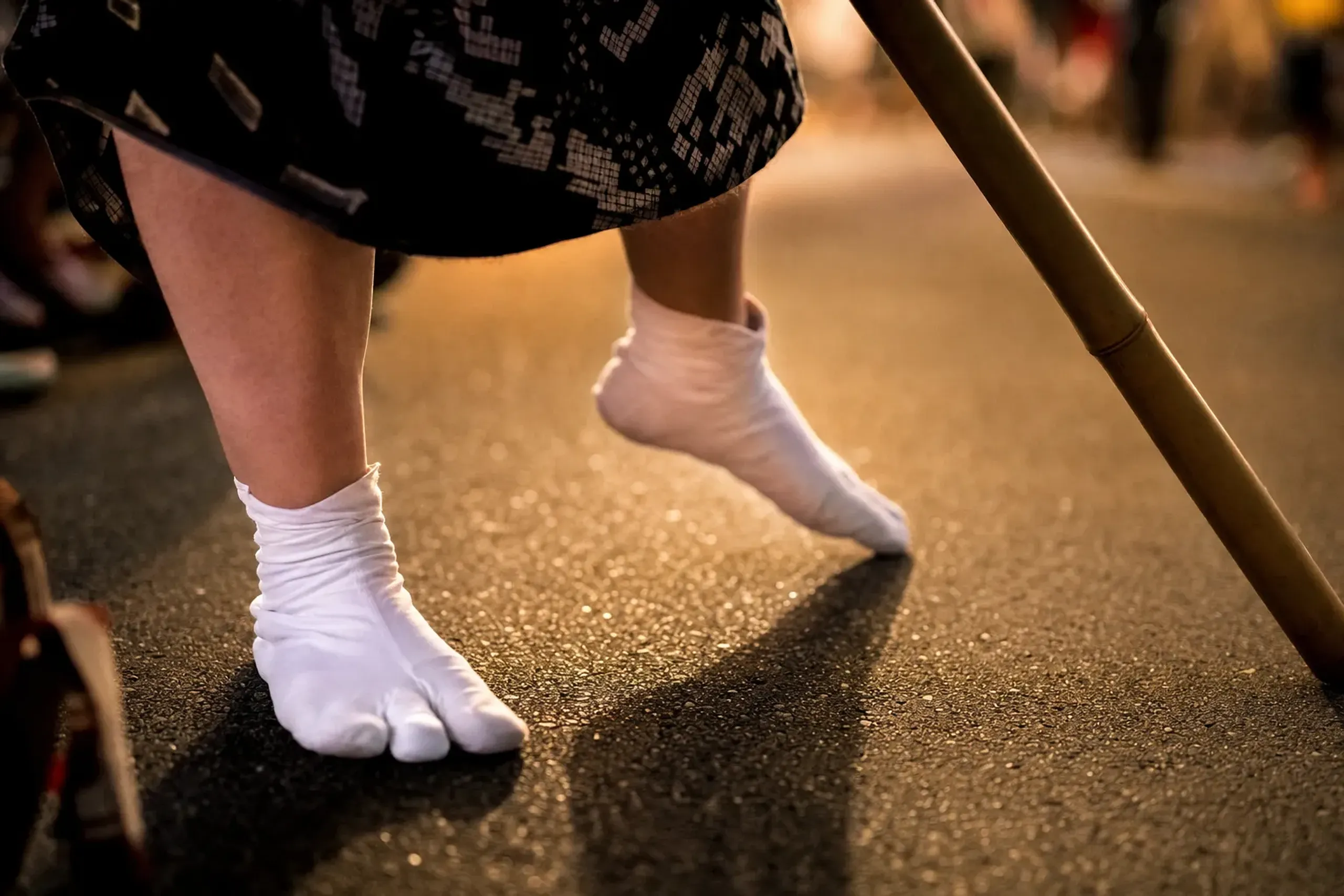
Pick one sashite and follow the transfer points—palm, forehead, shoulder, lower back—without losing track of the footwork. Those small steps are the real “steering.” The upper body is a calm mask laid over relentless effort.
If you appreciate craft, this is a shokunin moment in a folk setting: mastery expressed through repetition, restraint, and a quiet refusal to show strain. Not flashy. Precise. It is exactly the kind of understated excellence—the beauty of things worn smooth by practice—that rewards a slower, more knowing gaze.
Night Processions Vs Daytime Competition: Which Kantō Event Should You Attend?
Go to the night event for the candlelit spectacle on Kantō Ōdori, and add the daytime Kantō Myōgi Taikai at Area Nakaichi if you want to see the technique clearly in bright, forgiving light.
These are two genuinely separate experiences, and most first-time visitors plan only for the night. In doing so, they miss the part that teaches the eye.
Option A: The Main Nighttime Event On Kantō Ōdori
This is the signature scene: lanterns against the sky, music rising through the crowd, and the feeling of all of Akita’s summer gathering into one long, glowing street.
- Best for: first-time visitors, photographers who want candlelight, travelers who love atmosphere
- Trade-off: it can be harder to see the micro-movements in dimmer light
- Comfort tip: decide on a post-performance meeting point before the crowd begins to flow
Option B: Kantō Myōgi Taikai (Daytime Skill Competition) At Area Nakaichi
This is where the craft truly reveals itself. The balancing reads entirely differently when you can see the feet and the subtle bending of the bamboo in full daylight.
- Best for: travelers who want to understand technique, families, guests sensitive to night crowds
- Trade-off: less “night magic,” more clarity
- Insider move: attend the daytime session first, then the night event—you’ll watch with a far sharper eye
After some performances, Akita also runs a Fureai Kantō session, where visitors may approach and photograph the poles up close.
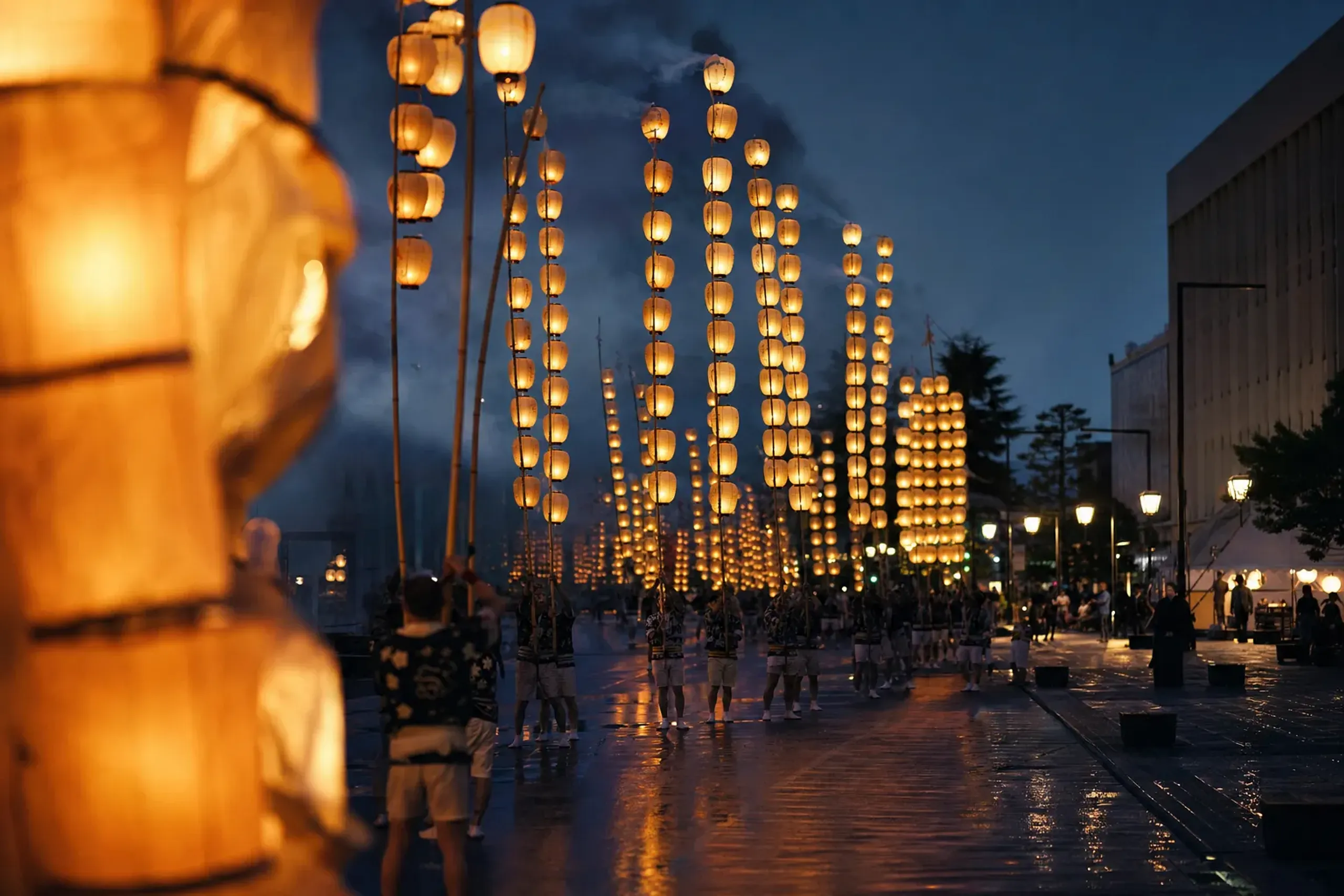
It’s a different kind of access. Slower. More conversational. Closer.
Akita Kantō Matsuri 2026 Dates, Hours, And What Happens Each Day
In 2026, the main nighttime Kantō events run August 3–6, with a pre-festival evening on August 2, while the daytime Kantō Myōgi Taikai runs August 4–6 at Area Nakaichi.
Schedules can shift for weather and on-the-day conditions, so we treat the times below as planning ranges rather than a promise carved in stone. Smart travelers do the same.
Key fact: Whether a supplementary drone show runs is announced the same day via the festival’s official site.
| Event | Where | 2026 Dates | Typical Hours (Approx.) |
|---|---|---|---|
| Main Nighttime Event | Kantō Ōdori, Akita City | Aug 3–6 (plus pre-festival Aug 2) | Roughly 15:00–21:30 |
| Kantō Myōgi Taikai (Daytime Competition) | Area Nakaichi (Nigiwai Hiroba) | Aug 4–6 | Aug 4–5: 9:00–15:40; Aug 6: 9:20–15:00 |
Paid reserved seating is available for the main event. We do not publish prices—inquire for a tailored proposal. If comfort is your priority, plan early and keep your expectations realistic in the peak of summer demand.
Festival Comfort And Safety In 2026: Heat, Crowds, And Local Advisories
Plan for the heat and the crowd flow, follow local advisories, and keep your evening logistics simple—your experience will feel calmer, and you’ll spend your energy on the performance rather than on navigation.
Akita in early August can be genuinely hot and humid. Bring water. Wear breathable clothing. It sounds obvious.
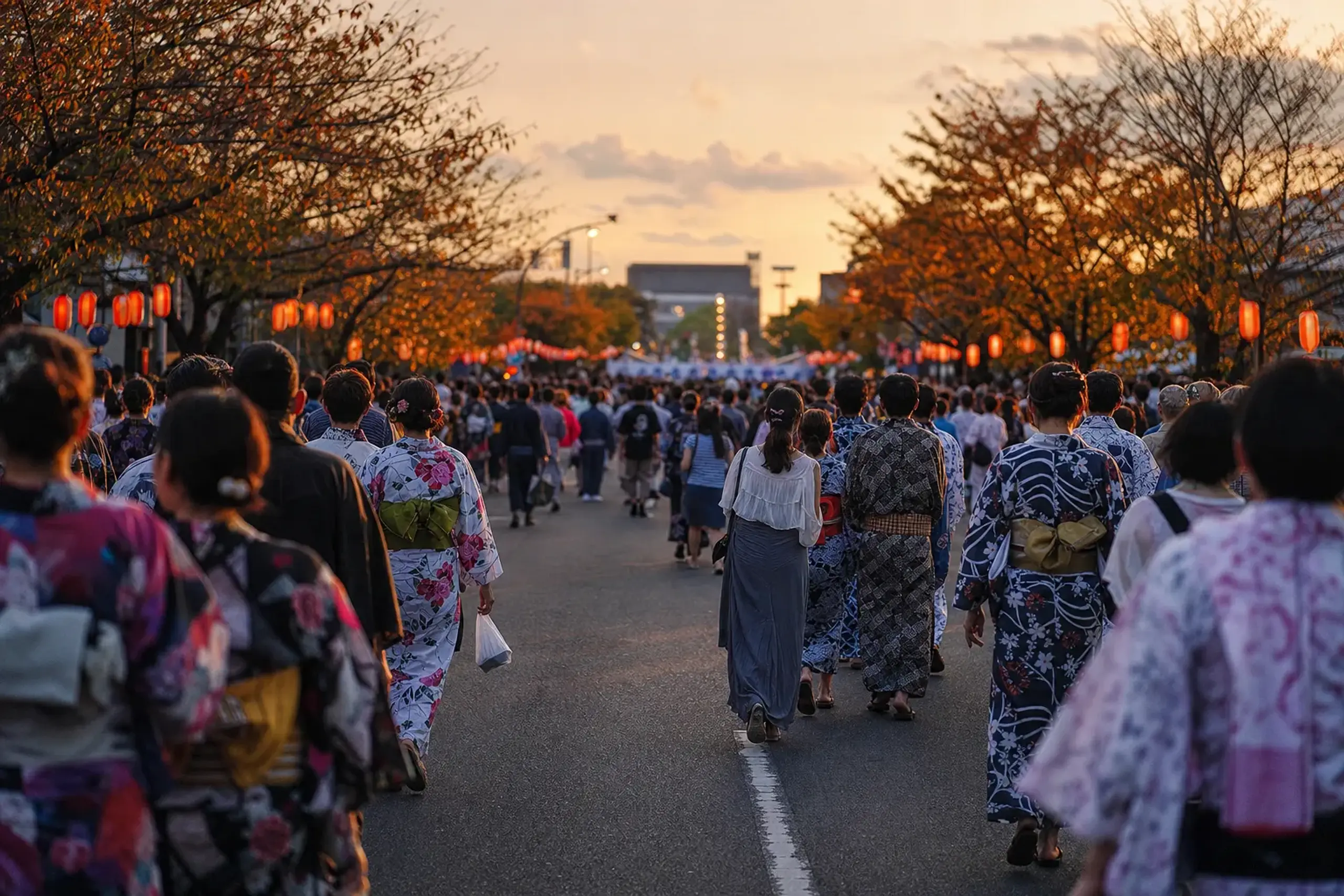
It is also the very first thing people forget the moment the lanterns rise into the sky.
For 2026, Japanese media reported strengthened safety measures around the Tōhoku summer festivals, including patrols carrying bear-repellent sprays at the Akita Kantō Festival. You are not expected to manage any of that yourself. But you should respect that conditions and advisories can change on the day.
Our approach is a simple one: we build an itinerary with real margin—time buffers, earlier arrivals, and a clean pickup plan—so the night feels like a celebration rather than a test of stamina. This is where the quiet, anticipatory care of true hospitality shows itself, in the details you never have to notice.
How To Get To Akita City For Kantō Matsuri (And Move Comfortably At Night)
Most HNW travelers reach Akita City by flying into Akita Airport (AXT) or by taking the Akita Shinkansen to Akita Station, then using a short city transfer to the festival area.
The final kilometers are where the nights tend to get messy. Roads narrow. Drop-off points shift. Your timing suddenly starts to matter a great deal.
For comfort-first travel, we recommend thinking in three clean steps: airport or station arrival, hotel check-in, then a separate transfer to Kantō Ōdori with a pre-agreed meeting point for departure. Simple beats clever, every time.
When guests want a discreet arrival and an orderly exit, our team can provide guidance and, where appropriate, private transportation in Akita and across the wider Tōhoku region. The goal is never flash. It is control—and the confidentiality that comes with it.
Where To Stand And When To Arrive: A Step-By-Step Viewing Strategy
A good Kantō night is planned from the end backward. Start with how you want to leave, then decide where you want to watch.
Step 1: Choose your priority: photographs, atmosphere, or technical observation. One. Not all three. The trade-offs are real.
Step 2: Aim to be in position earlier than you think you need to be. The crowds swell in pulses. Missing your window is genuinely frustrating.
Step 3: Keep your hands free. One small bag. A bottle of water. No juggling act.
Step 4: After the performance, wait a beat before you move. Let the first surge pass. Then walk with intent toward your meeting point.
If you want that close-up moment, ask us about Fureai Kantō timing for the specific evening you attend. It is a small add-on, but it transforms the memory: the grain of the bamboo, the scent of wax, the soot-darkened edges of the lanterns.
What To Know About Photography Etiquette (And Why Candlelight Changes Everything)
The candles make the lanterns feel alive. They also make photography genuinely tricky.
Be considerate with flashes. Avoid blocking sightlines, especially for seated guests and families. And never step into the performance corridor for a better angle. That space is work space.
If you want clean images, use a faster lens and accept a little motion blur. It’s honest. The poles are never static, and pretending otherwise will only push you into poor choices in a dense crowd.
And when you put the camera down for ten seconds and simply listen to the flutes, you will remember exactly why you came. That is the real upgrade.
How Kantō Fits Into The “Three Great Tōhoku Festivals” Circuit
Akita Kantō Matsuri is widely promoted as one of the Three Great Tōhoku Festivals, alongside Aomori Nebuta and Sendai Tanabata, yet it stands apart in both mechanism and mood.
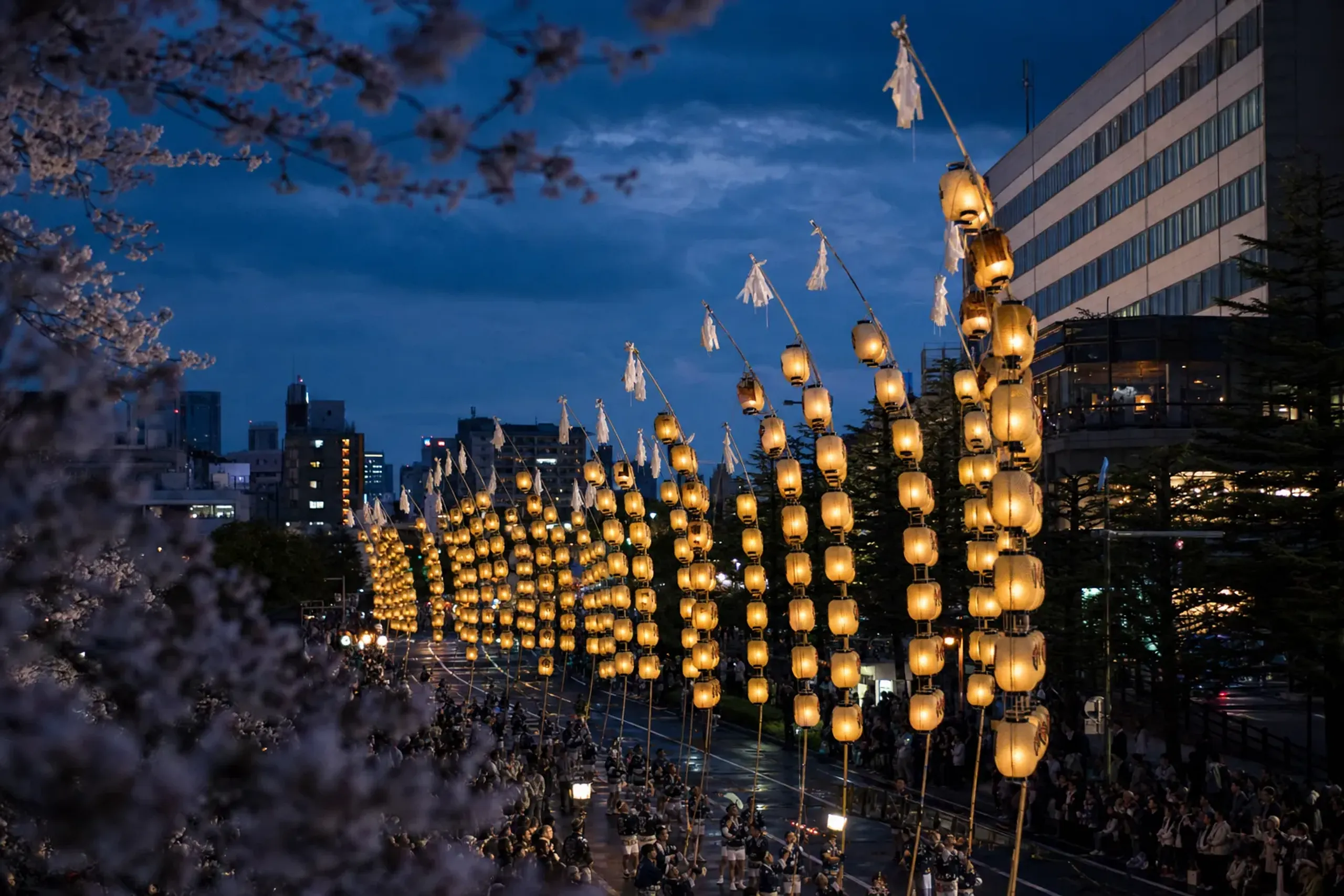
Kantō is about balance—vertical tension, candlelight, and the human spine acting like the mast of a ship. It feels intimate even in the thick of a crowd.
If you are building a longer early-August trip, keep the pacing humane. Don’t sprint from city to city every single morning. Leave yourself recovery space. Knowing precisely what to experience, where, and in which week of the season is exactly the sense of timing that turns a good trip into a memorable one.
For context on the broader festival grouping, you may also like our separate, distinct guide to Sendai Tanabata. We mention it only to orient the circuit, not to blur the festivals into one: read here for how we structure our “which experience fits you” comparisons. The same decision logic applies. Pick what you truly want to feel.
How To Plan An August 2026 Kantō Trip Like A Luxury Traveler (Without Overcomplicating It)
Keep the itinerary tight, build in cooling breaks, and treat the daytime competition as your “learning session” before the night performance delivers the true emotional peak.
We often suggest arriving in Akita with enough time to properly settle in before your first night out. Even a single calm hour in your room changes the shape of the entire evening.
Then anchor two moments: one daytime session at Area Nakaichi, one nighttime performance on Kantō Ōdori. Everything else is support—dinner that doesn’t require rushing, transfers that don’t gamble on last-minute decisions, and a next-morning start that respects your sleep.
When guests ask for a broader Tōhoku journey built around Kantō, we design a tailor-made itinerary that keeps the festival as the centerpiece, never an exhausting checkbox. Total discretion is woven into that design. So is real kindness to your own energy.
If Akita Kantō Matsuri in August 2026 is calling to you, let us plan it around your pace, your privacy, and the moments you most want to feel. To begin shaping your evening beneath the lanterns, contact us here, and we will craft a proposal made only for you.