In this guide
- 01What Is The Difference Between TeamLab And Nabana No Sato?
- 02TeamLab Borderless Vs TeamLab Planets: Which Should You Choose?
- 03Do You Need To Book TeamLab Tickets In Advance?
- 04Should You Visit Both TeamLab Venues In One Day?
- 05Where Does Each TeamLab Venue Fit In A Tokyo Evening?
- 06How Does Nabana No Sato Compare As An Alternative?
- 07Who Should Choose TeamLab, And Who Should Choose Traditional Illumination?
- 08Frequently Asked Questions
- 09Why Choose Japan Royal Service
You decide to "go see some lights" in Japan. Simple enough. Except the moment you start planning, that one plan splits into at least two entirely different evenings. One is a digital art museum where technology is the medium; the other is a seasonal outdoor illumination stretched across a botanical garden. They are not two versions of the same thing.
At Japan Royal Service, this is one of the most common misunderstandings our concierge team untangles. A guest asks for "the light show" and means teamLab. Another means Nabana no Sato. A third means both, on the same night, which is a plan we gently talk people out of. This guide sorts the categories, then makes the practical choice most Tokyo visitors actually face: teamLab Borderless or teamLab Planets.
What Is The Difference Between TeamLab And Nabana No Sato?
TeamLab is a year-round, ticketed digital art museum using light as its artistic medium; Nabana no Sato is a seasonal, outdoor illumination at large physical scale. Different traditions, different questions.
Think of it as two answers to "what do you want from an evening of light." One tradition is architectural and interactive. You walk into rooms built for projection and reflection, and the work responds to you. The other is horticultural and grand: an outdoor field of illumination that changes with the season, rooted in a display culture that stretches back decades in Japan.
The practical differences follow from that. TeamLab runs all year, indoors, weather-independent, and requires a timed ticket. Traditional illumination like Nabana no Sato is outdoors and seasonal, tied to a fixed run each winter. Neither is "better." They reward different appetites.
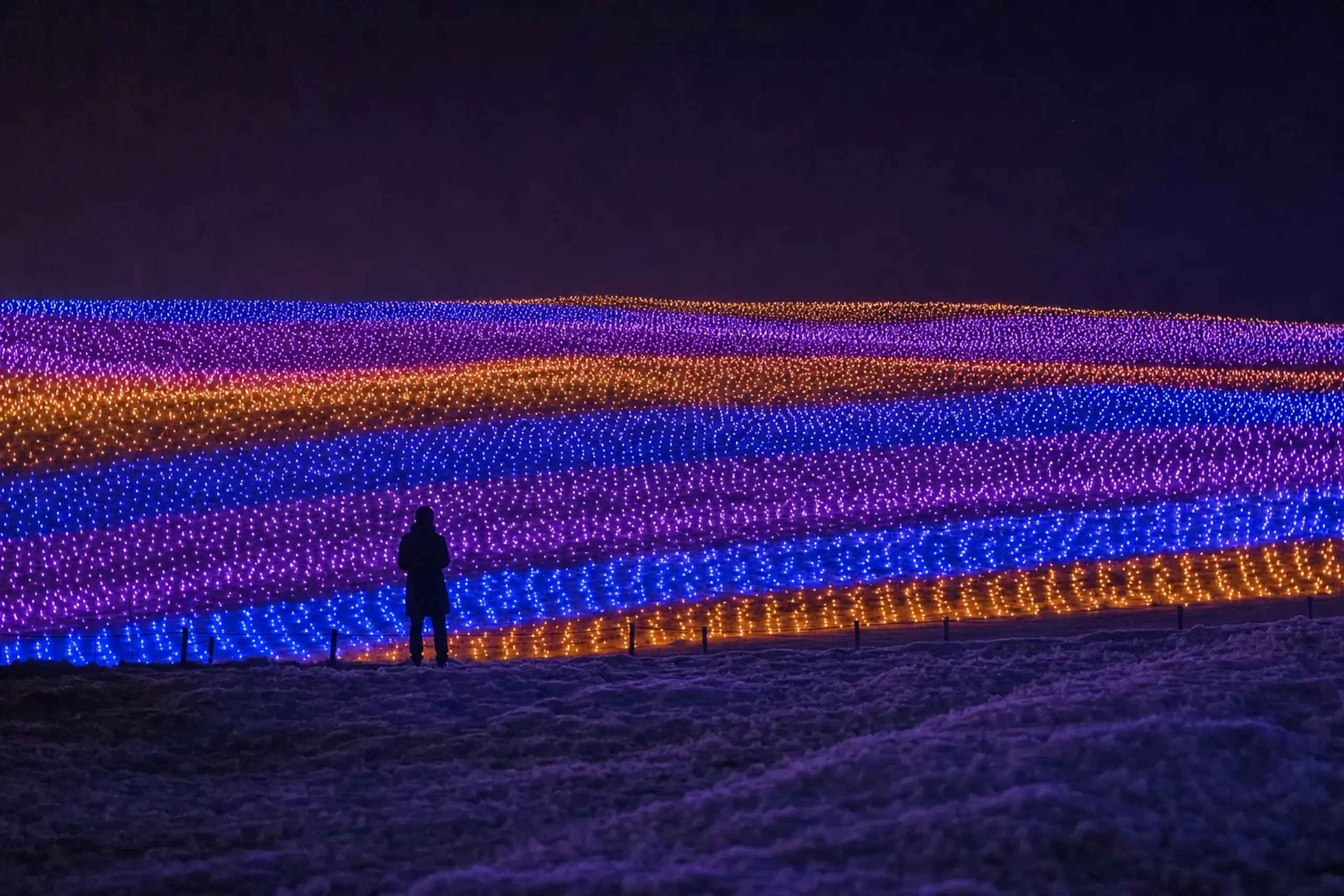
Key distinction: teamLab uses light as an art medium inside a building. Traditional illumination uses light as seasonal decoration across an outdoor landscape. Choose based on which one you actually want to stand inside.
TeamLab Borderless Vs TeamLab Planets: Which Should You Choose?
Choose Borderless if you want to wander with no fixed route; choose Planets if you want a directed, barefoot sequence through water. That single difference in format decides it for most visitors.
These are genuinely separate venues, not one museum in two locations. They share a creative studio and a philosophy about immersion. Almost everything else about the visit differs.
TeamLab Borderless At Azabudai Hills
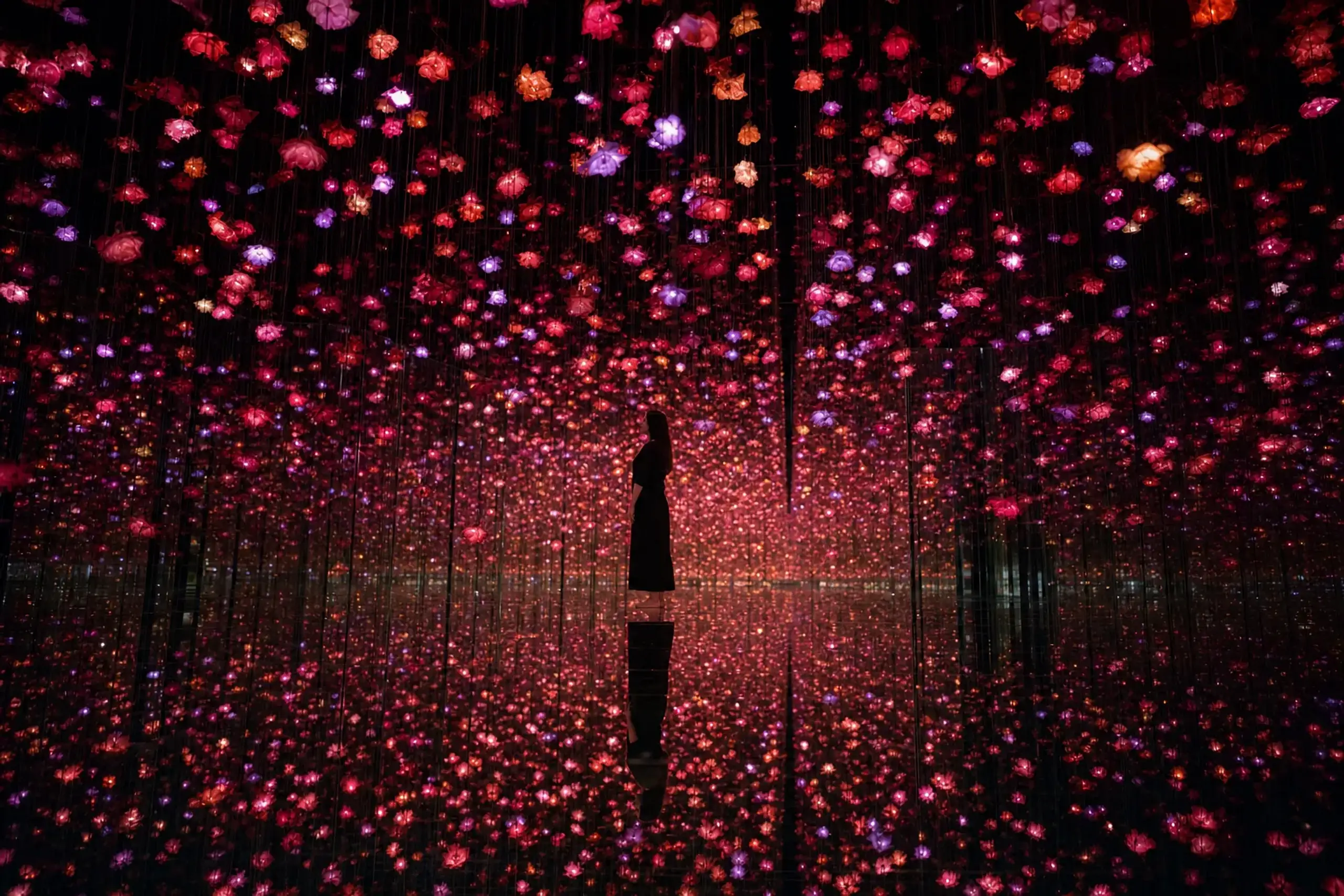
Borderless reopened in 2024 at Azabudai Hills in Minato, after the original Odaiba venue closed. The name is the concept. There is no fixed route and no map. Installations spill between rooms and move across walls, so the same space feels different depending on when you arrive and where you drift.
You are meant to get lost on purpose. That is the point, and also the frustration for some. You round a corner and lose your bearings entirely. Time softens. For travellers who want an open-ended, exploratory evening — no checklist, no correct order — Borderless is the one. The venue has drawn enormous crowds since reopening, with the official site citing a milestone of more than four million visitors as of mid-2026.
TeamLab Planets In Toyosu
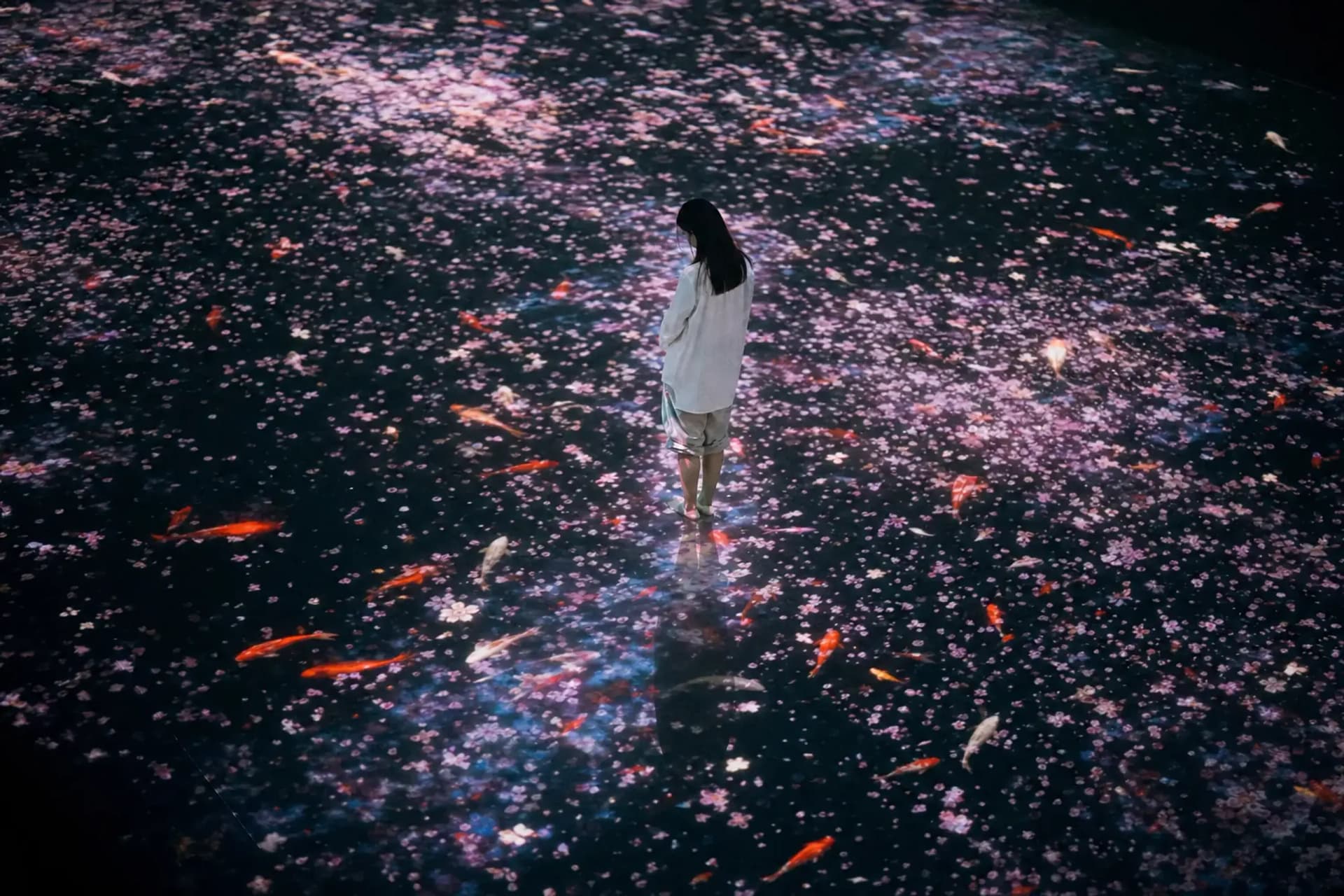
Planets sits in Toyosu, on the other side of central Tokyo, and works in the opposite way. Here there is a prescribed route. You remove your shoes at the entrance and move barefoot through the sequence, which includes rooms where you wade through water that rises around your ankles and shins.
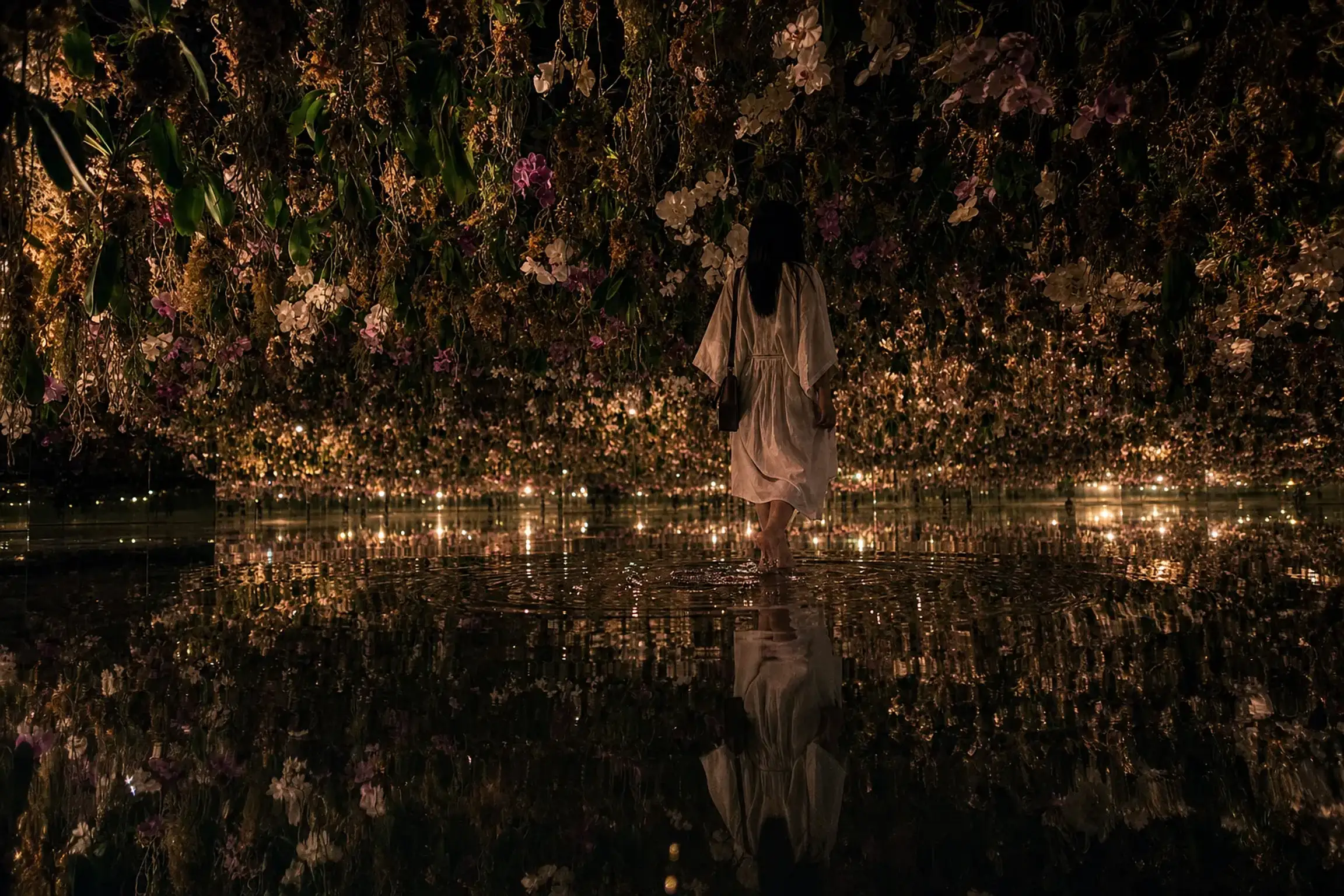
The sensation is the draw. Warm water underfoot, koi projected onto the surface, a garden of living plants suspended overhead. Planets completed a major expansion in January 2025 that brought it to a scale comparable to Borderless, and it is confirmed open through the end of 2027. Because the route is directed, families with children and anyone who prefers a clear beginning-middle-end tend to find Planets easier to enjoy.
- Location
- Borderless: Azabudai Hills, Minato
- Planets: Toyosu
- Format
- Borderless: Free wandering, no map
- Planets: Fixed barefoot route
- Water immersion
- Borderless: No
- Planets: Yes — wading rooms
- Best for
- Borderless: Open-ended explorers
- Planets: Families, directed experience
- Ticketing
- Borderless: Timed, advance
- Planets: Timed, advance
A practical note on dress for Planets. You will roll trousers above the knee, so anything too tight or too long makes the water rooms awkward. Skirts and dresses can be a problem given reflective floors. Our coordinator flags this to guests before the visit.
Do You Need To Book TeamLab Tickets In Advance?
Yes. Both venues require timed, advance tickets, and popular slots — weekends, late afternoon, early evening — sell out well ahead of the date. This is not a walk-up experience for the times most people want.
This is the single most important practical point in the whole comparison. Arriving hopeful at the door on a Saturday evening rarely works. The desirable windows go first, sometimes within days of a release date. Weekday slots and off-peak hours hold on longer, but nothing about the popular times is casual.
In our experience, guests underestimate this precisely because both venues feel like museums, and museums usually admit walk-ups.
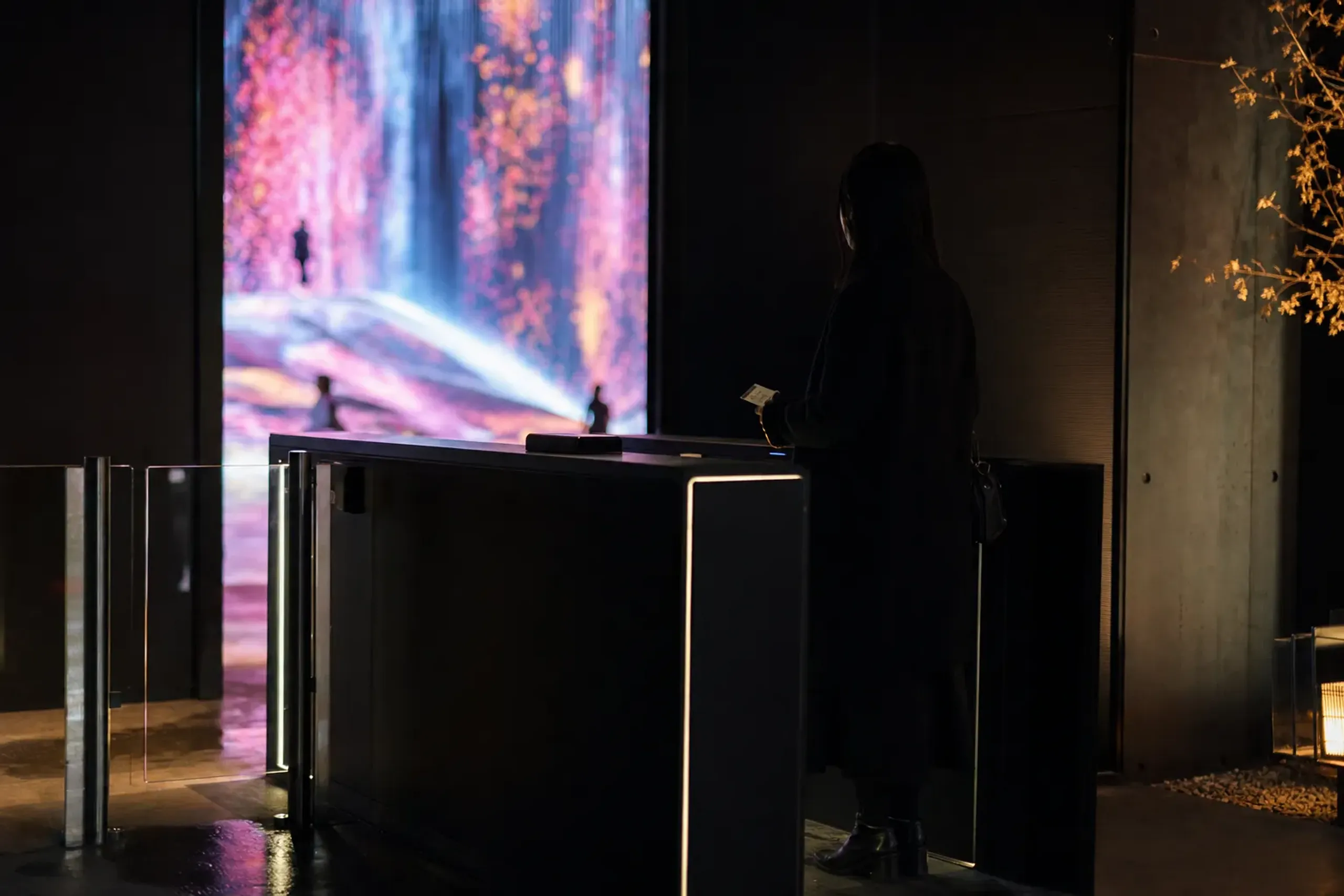
TeamLab does not behave that way. Securing the right time slot — one that fits the rest of your evening rather than fighting it — is where advance planning earns its keep. Our concierge holds timed entry as part of a broader Tokyo day so the pieces connect.
Should You Visit Both TeamLab Venues In One Day?
No. We advise against it. The cross-city transfer plus the sensory intensity of either venue makes stacking both in a single day a poor plan, and this is our honest recommendation rather than a soft caution.
Here is the reality. Borderless and Planets sit on opposite sides of central Tokyo. Each venue is designed to overwhelm the senses in a good way — but two full doses in one day leaves most people numb by the second, and the transfer eats a chunk of the afternoon. You end up rushing the first to make the timed slot for the second.
If you want both, split them across two evenings. Give each its own space. The contrast lands harder when you are not comparing them through a fog of fatigue.
Where Does Each TeamLab Venue Fit In A Tokyo Evening?
Borderless sits inside Azabudai Hills near Roppongi, so it slots naturally into that district's dining and evening character. Planets in Toyosu is more standalone and pairs best as its own focused outing.
Borderless has an advantage of neighbourhood. Azabudai Hills is a dense complex of restaurants and shops, and Roppongi is minutes away, so an early-evening visit can flow into dinner without a long transfer.
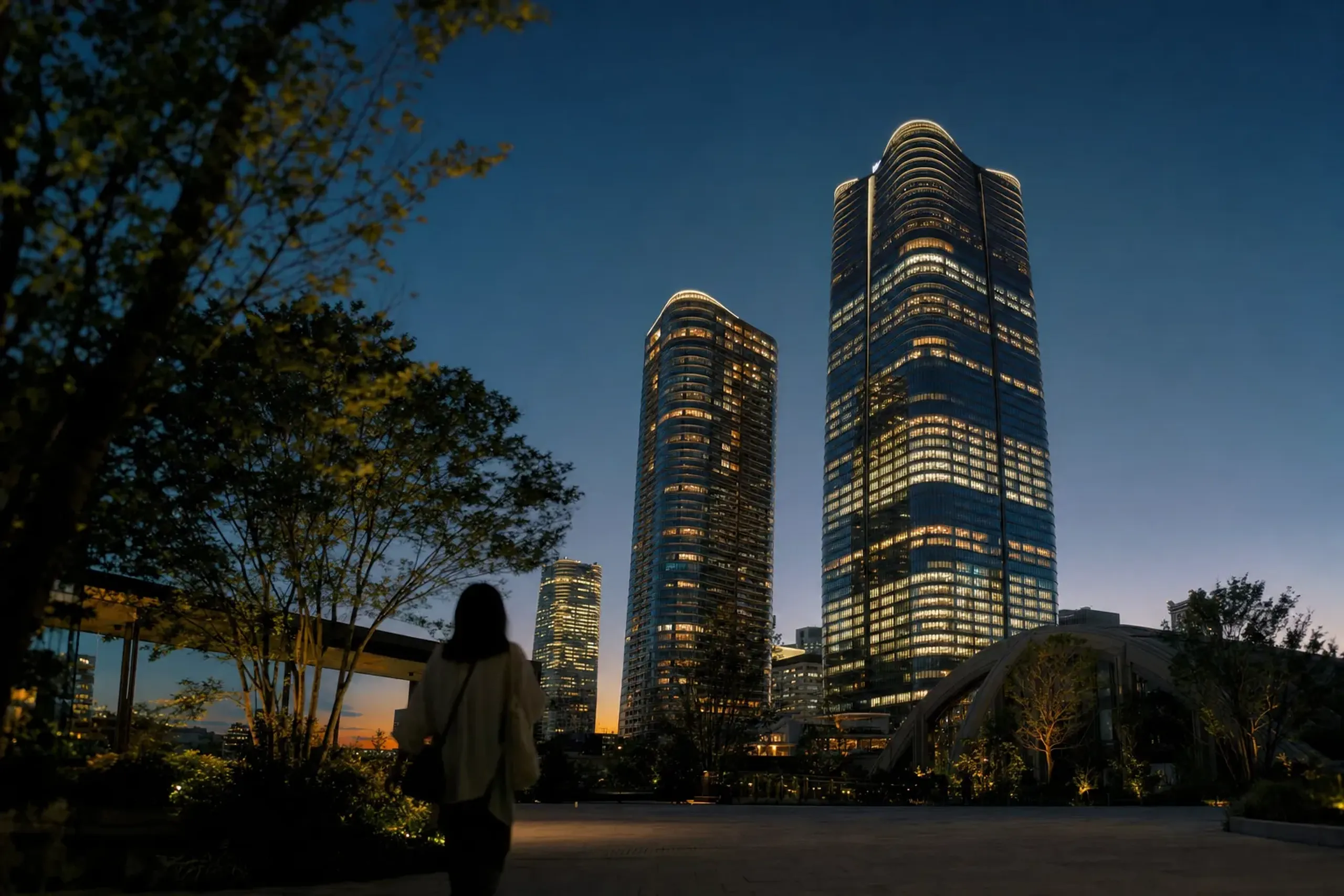
Planets, by contrast, rewards a standalone approach. Toyosu is quieter and less woven into a dining district, so most guests treat the visit as the evening's centrepiece rather than one stop among several. That is not a drawback. It suits travellers who want a single, undiluted experience without the pull of a busy district next door. Private transport smooths both — a chauffeured car meets you at the door and avoids the timed-entry scramble that public transit can create. Our private chauffeur service handles the door-to-door timing.
How Does Nabana No Sato Compare As An Alternative?
Nabana no Sato is the opposite category: an outdoor, seasonal, traditional-format illumination at very large physical scale, in Mie Prefecture near Nagoya. It answers a different question than either teamLab venue.
Where teamLab is architectural, interactive, and year-round, Nabana no Sato is horticultural, panoramic, and tied to a winter season that runs from mid-October into late spring. It is not in Tokyo, and it is not indoors. Choosing it means choosing a different register of evening entirely — closer to the classic Japanese winter illumination tradition than to contemporary digital art.
We deliberately do not re-profile it here, because we cover it in full elsewhere. For the confirmed 2026–2027 dates, how designated-date tickets work, and the premium transport plan from Nagoya, see our dedicated guide to Nabana no Sato's winter illumination. That piece owns the traditional-illumination story; this one owns the category comparison.
Who Should Choose TeamLab, And Who Should Choose Traditional Illumination?
Choose teamLab if you want contemporary art and technology, an indoor and weather-independent evening, or you are visiting outside the winter illumination season.
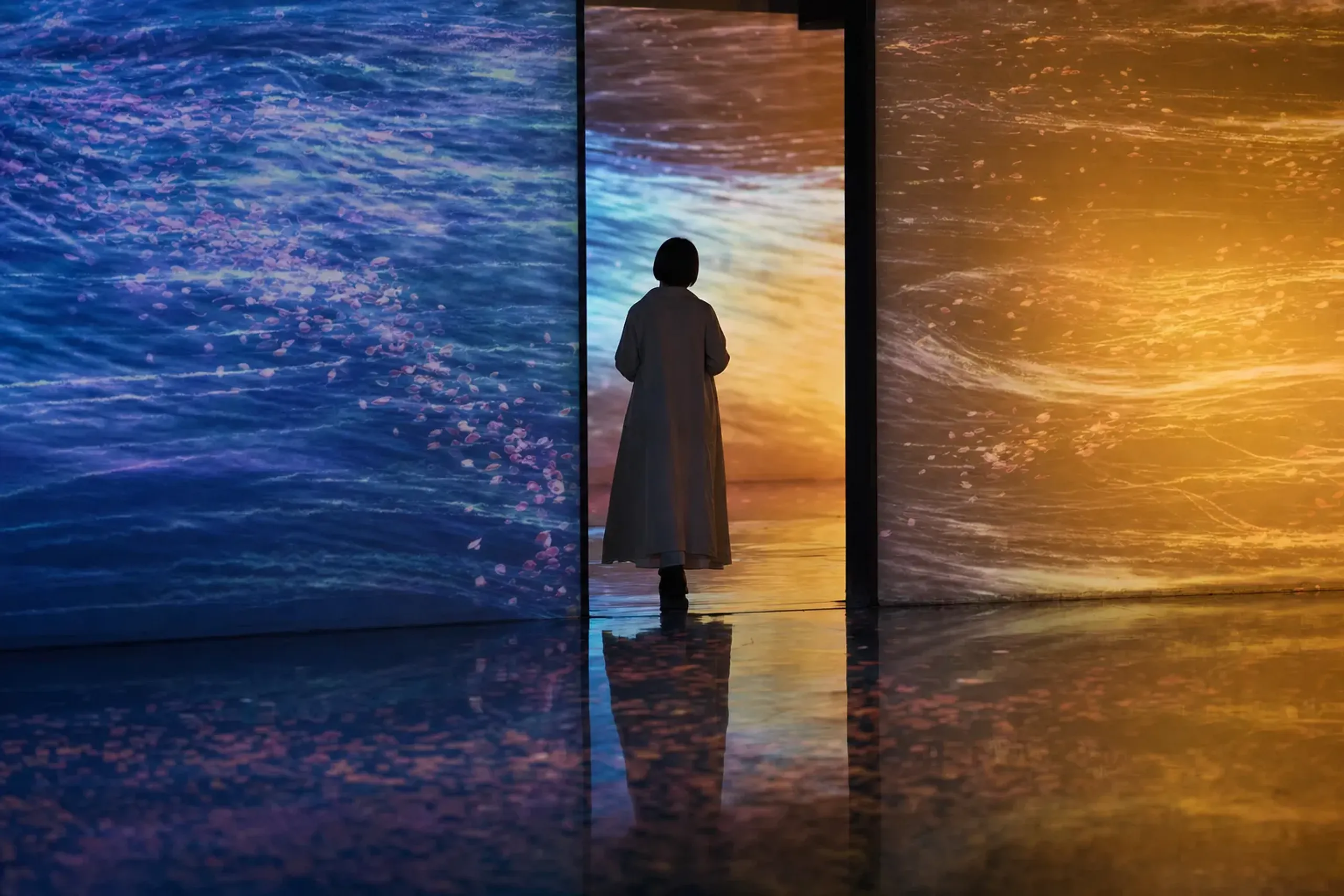
Choose traditional illumination if you want a seasonal, outdoor, more classically Japanese winter experience.
The teamLab case is strong for several travellers. Anyone drawn to contemporary art and immersive technology. Families wanting an indoor option that ignores rain or cold. Visitors in spring, summer, or early autumn, when the winter illumination season has not started. And travellers based in central Tokyo who want a remarkable evening without leaving the city.
The traditional-illumination case is equally clear. Travellers chasing a seasonal, outdoor, distinctly Japanese winter scene. Those who have already built a trip around Nagoya or the Mie region. Anyone who finds the digital-art register too intense and prefers the slow drift of walking through an illuminated garden. These are not competing versions of one taste. They are different tastes, and knowing yours is the whole game.
Frequently Asked Questions
Is teamLab Borderless or Planets better for young children?
Planets is generally easier for young children because it follows a fixed, directed route with a clear sequence, so families are less likely to lose their bearings. The barefoot water rooms tend to delight kids, though the wading may need supervision.
Can I buy teamLab tickets at the door on the day?
You should not rely on it. Both venues use timed, advance tickets, and the desirable slots — weekends, late afternoon, early evening — sell out well ahead of the date. Off-peak weekday times hold longer but are never guaranteed.
How far apart are teamLab Borderless and teamLab Planets?
They sit on opposite sides of central Tokyo — Borderless at Azabudai Hills in Minato, Planets in Toyosu.
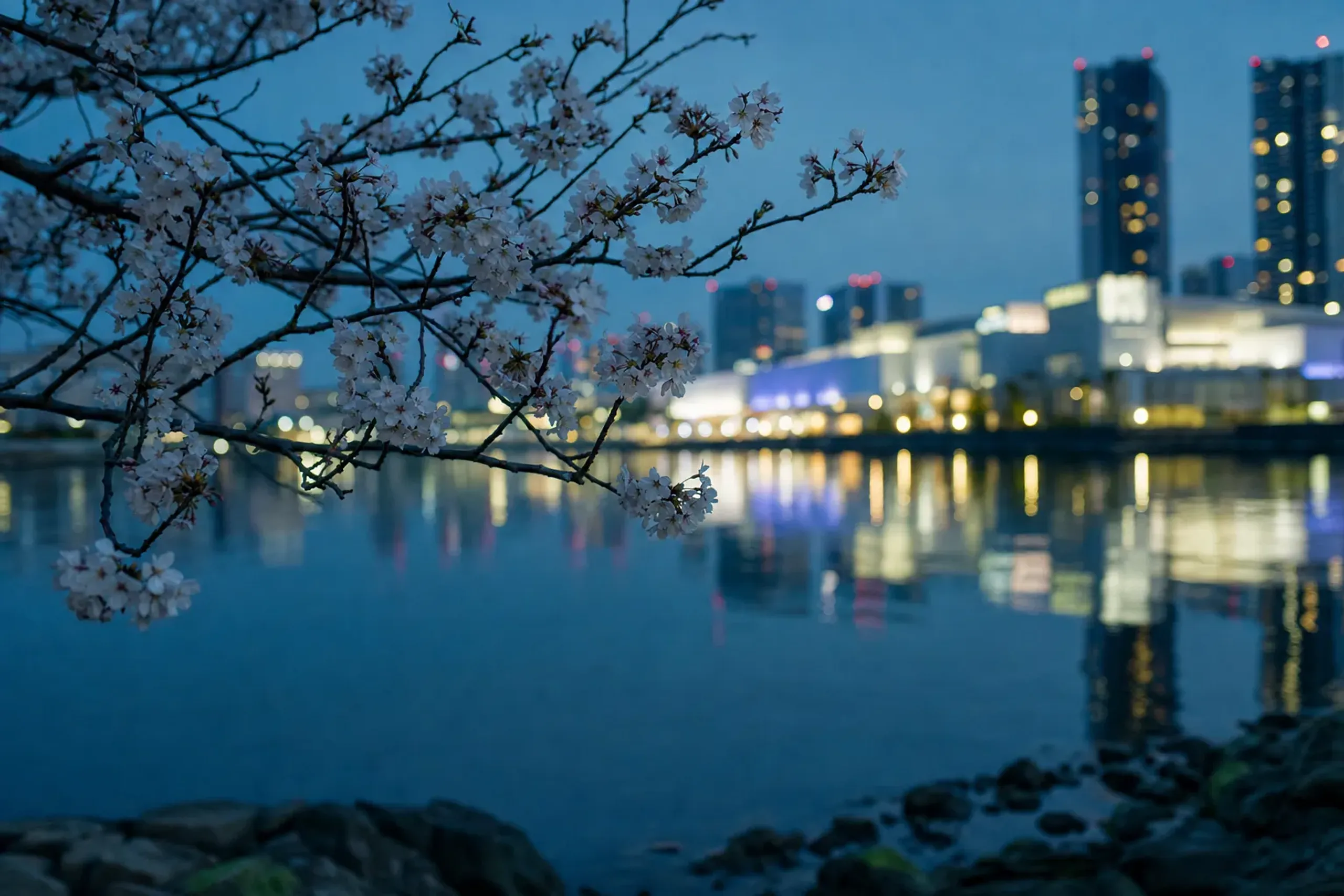
The cross-city transfer, combined with each venue's sensory intensity, is why we advise against visiting both in a single day.
Is teamLab a good alternative to Nabana no Sato if I visit in summer?
Yes. TeamLab runs year-round and indoors, so it is an ideal light experience when the winter illumination season at Nabana no Sato has not started. The two are different categories, not seasonal substitutes for the same evening.
What should I wear to teamLab Planets?
Wear clothing you can roll comfortably above the knee, since you wade barefoot through water rooms. Avoid long or tight trousers, and be mindful that reflective floors can make skirts and dresses impractical. Our team briefs guests on this before arrival.
Why Choose Japan Royal Service
Light experiences in Japan reward precise timing more than almost anything else on an itinerary. The right teamLab slot has to fit your evening, not fracture it. That coordination is quiet work, and it is ours.
Japan Royal Service arranges timed tickets and private transport to both teamLab venues, and to traditional illuminations when the season fits your trip. Where a specific detail — exact ticket availability, closed dates, current entry windows — needs confirming, our concierge verifies it directly with you at the time of arrangement. No guesswork, no walk-up gambles, no rushed cross-city transfers. Just an evening that unfolds the way it should.
If you want to fit Borderless or Planets into a planned Tokyo stay, reach our team privately via WhatsApp or LINE, or contact us here. We will place it in the evening where it belongs.