
LINE ID japanroyalservice
+817013781777 click here
+817013781777 click here
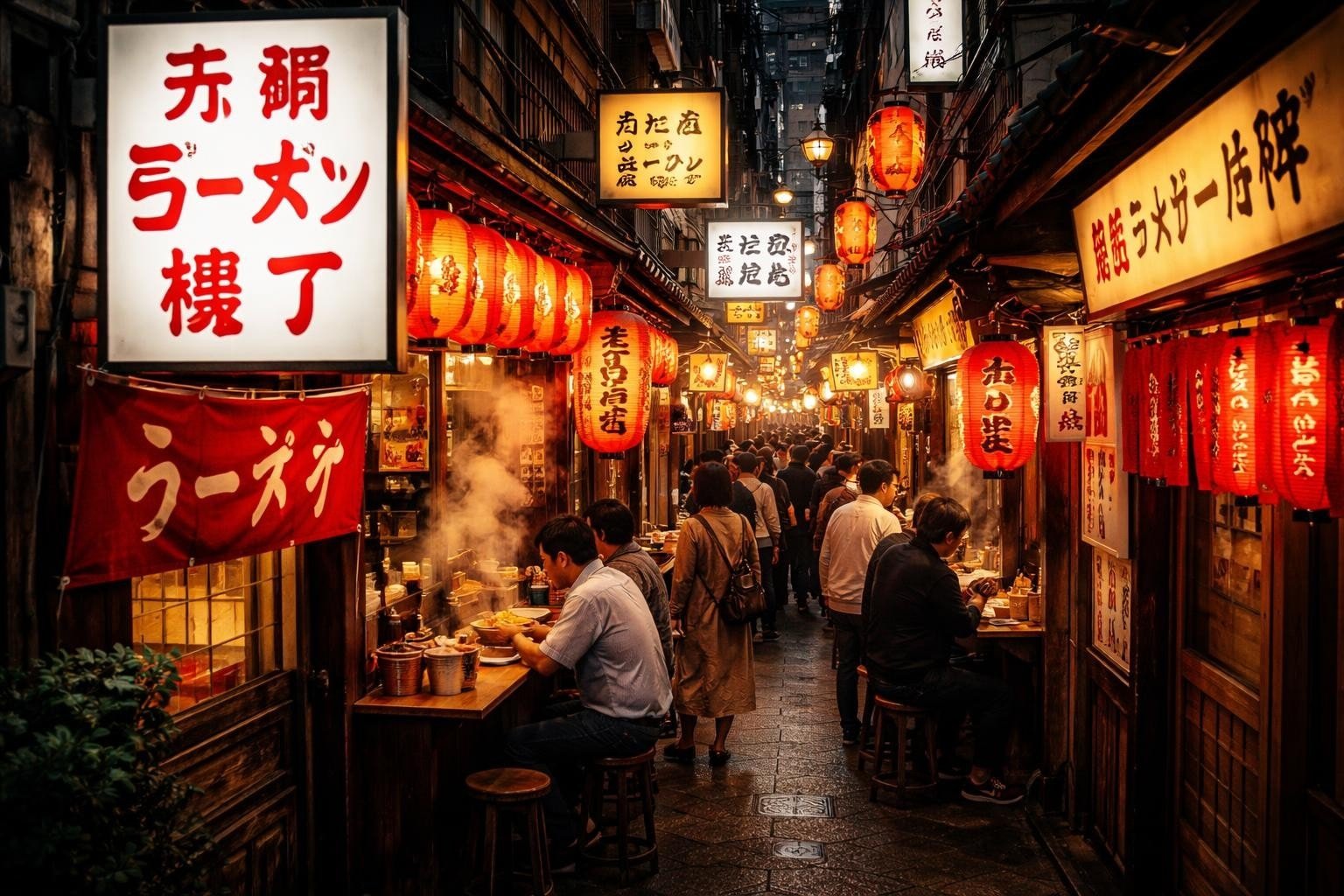
Tucked away in Sapporo’s bustling Susukino district, Ganso Ramen Yokocho stands as a testament to Japan’s dedication to culinary perfection and cultural preservation. This narrow, atmospheric alley, barely 100 meters long, houses 17 intimate ramen shops that have been perfecting their craft since 1951. For discerning travelers seeking authentic Japanese culinary experiences, Ramen Alley represents far more than a dining destination. It embodies the essence of Japanese food culture, where master chefs dedicate decades to perfecting a single dish, and where the boundaries between sustenance and artistry blur into something extraordinary.
The story of ramen alley begins in the post-war era, when Sapporo was rapidly rebuilding and establishing itself as Hokkaido’s cultural and economic center. In 1951, a group of entrepreneurial ramen vendors gathered in a narrow street, creating what would become the birthplace of miso ramen, a variety now celebrated worldwide.
The evolution of this culinary landmark reflects several pivotal moments:
The Original Sapporo Ramen Alley has preserved its authentic character while adapting to modern expectations. Unlike contemporary food courts or sanitized tourist attractions, this alley maintains the intimate, slightly worn atmosphere that characterized mid-century Japanese dining culture.

The physical space of ramen alley defies modern urban planning principles. Each shop occupies roughly 100 square feet, with seating for 7 to 10 guests. The narrow corridor between the facing establishments creates an enclosed environment where cooking aromas, steam, and the sounds of boiling broth combine to create a multisensory experience.
This intimate scale serves a purpose beyond mere space efficiency. The proximity between chef and diner eliminates barriers, transforming each meal into a personal interaction. Chefs remember regular customers’ preferences, adjust seasoning to weather conditions, and offer the kind of hospitality that luxury travelers increasingly seek: authentic, unpretentious, and deeply human.
Miso ramen represents Hokkaido’s contribution to Japan’s ramen landscape, distinguished by its soy-based broth, unlike the tonkotsu styles of Kyushu or the soy-based broths common in Tokyo. The culinary legacy of Ramen Alley centers on this distinctive preparation, which combines fermented soybean paste with rich pork or chicken stock.
| Ramen Style | Primary Base | Origin Region | Characteristic Flavor |
|---|---|---|---|
| Miso | Fermented soybean paste | Hokkaido/Sapporo | Rich, savory, slightly sweet |
| Shoyu | Soy sauce | Tokyo/Kanto | Clear, lighter, umami-forward |
| Tonkotsu | Pork bone | Kyushu/Fukuoka | Creamy, intense, fatty |
| Shio | Salt | Hakodate | Delicate, refined, subtle |
The development of miso ramen in Sapporo wasn’t accidental. Hokkaido’s harsh winters demanded heartier, more substantial meals. The addition of miso created a broth with greater body and warmth, perfectly suited to the climate, while showcasing local fermentation traditions.
Despite the common miso foundation, each of the seventeen shops in ramen alley has developed distinct interpretations. Some emphasize sweetness by adding caramelized onions in pork fat. Others incorporate butter and corn, ingredients abundant in Hokkaido’s agricultural regions. Several establishments offer spicy miso variations, blending traditional recipes with modern palates.
Notable specialty variations include:
This diversity within a single alley demonstrates Japanese culinary philosophy-respect for tradition combined with continuous refinement and innovation.
Approaching ramen alley requires consideration beyond simply arriving and selecting a shop. The experience benefits from strategic planning, particularly for travelers accustomed to luxury service and personalized attention.
The alley operates from late morning through late evening, but timing significantly affects the experience. Authentic tips about Ramen Alley suggest several considerations for discerning visitors.
The early afternoon (2:00-4:00 PM) is the quietest period, offering unhurried interaction with chefs and guaranteed seating. Late evening (9:00-11:00 PM) provides an authentic local atmosphere as Sapporo residents finish work and seek comfort food. Avoid peak dinner hours (6:00-8:00 PM), when queues form, and service speeds up to accommodate the volume.

First-time visitors often feel overwhelmed by choice. Each shop displays its specialty through window displays, menu boards, and photographs of signature bowls. Several strategies can guide selection:
Research-based approach: Identify shops with specific reputations before arrival. Sumire and Keyaki are frequently mentioned for their traditional preparation. Kokuichi offers innovative interpretations while maintaining classical techniques.
Observation method: Spend ten minutes walking the alley, noting which establishments attract locals versus tourists, queue lengths, and the demeanor of chefs visible through windows.
Recommendation system: Ask your hotel concierge or tour guide for current favorites, as quality can shift when ownership changes or new chefs arrive.
For travelers experiencing multiple visits, methodical sampling across several shops reveals the spectrum of interpretations possible within a single culinary tradition. This approach transforms dining into education, revealing the nuances that distinguish competent execution from mastery.
Ramen Alley maintains traditional Japanese dining customs; understanding these protocols enhances both your experience and the reception you receive from shop owners.
Most shops operate on a first-come, first-served basis, with no reservations. Queuing occurs outside, often in weather that tests commitment. Once seated at the counter, the only seating configuration in most establishments, order promptly using either the ticket machine (券売機, kenbaiki) or by speaking directly with staff.
Proper etiquette includes:
Eating ramen properly demonstrates respect for the chef’s craft. Slurping isn’t merely acceptable-it’s expected, as it aerates the broth and cools noodles. Use chopsticks to lift noodles, allowing excess broth to drip back before consuming. The soup spoon serves as a ladle for broth and to support noodles during the journey from bowl to mouth.
Finishing the entire bowl, including broth, signals appreciation. Leaving significant portions suggests dissatisfaction, though leaving a small amount of broth is acceptable if truly too full. After finishing, a simple “gochisousama deshita” (ごちそうさまでした – thank you for the meal) acknowledges the effort invested in your bowl.
Sophisticated travelers might question whether a narrow alley of tiny ramen shops aligns with luxury travel expectations. The answer reveals an evolving definition of luxury that prioritizes authenticity, exclusivity of experience, and cultural depth over mere physical comfort.
Ramen alley functions as a cultural counterpoint to Sapporo’s luxury hotels and upscale restaurants. A day might begin with Hokkaido Guide’s comprehensive overview to understand the context, continue with a guided exploration of Sapporo’s architectural heritage, and culminate in an intimate ramen experience that no amount of money can replicate in a conventional restaurant.
| Experience Level | Approach | Value Proposition |
|---|---|---|
| Independent Visit | Self-guided exploration | Authentic immersion, flexible timing |
| Guided Introduction | Expert accompaniment | Cultural context, language assistance |
| Private After-Hours | Exclusive shop access | Personalized preparation, chef interaction |
| Multi-Shop Tasting | Curated progression | Comparative education, comprehensive understanding |
The most sophisticated approach involves private arrangements with individual shops for after-hours visits or reserved counter seats during quieter periods. This requires advance coordination through local connections-precisely the service that bespoke travel companies provide.

Ramen Alley’s location in Susukino places it within walking distance of major hotels, yet private car service adds comfort, particularly during Sapporo’s winter months. Premium transportation allows pre-dinner cocktails without concern for navigation, and eliminates post-meal complications when satiated and relaxed.
The proximity to Susukino’s nightlife district offers optional extensions-jazz clubs, whisky bars, or traditional izakayas-creating a comprehensive evening itinerary that balances culinary focus with broader cultural exploration.
Ramen Alley’s character shifts with Hokkaido’s dramatic seasonal changes, each period offering distinct advantages for visitors.
Sapporo’s famous snow festival transforms the city, and ramen alley becomes particularly appealing as temperatures plunge below freezing. The contrast between frigid outdoor air and steaming bowls intensifies the comfort food appeal. However, queues lengthen as both tourists and locals seek warmth.
Moderate temperatures and fewer crowds make these ideal times to visit. The experience feels less touristic, with higher proportions of regular customers whose interactions with chefs reveal the alley’s community function.
Hot weather reduces the appeal of ramen for some visitors. Yet, summer offers opportunities to experience cold ramen variations (冷やし中華, hiyashi chuka) that several shops add to seasonal menus. The cultural perspective from Japan Experience notes how these adaptations demonstrate the alley’s ongoing evolution.
Ramen occupies a unique position in Japanese food culture, simultaneously as everyday sustenance and an object of devoted study. Understanding this duality enriches the ramen alley experience.
Many ramen chefs train for decades, treating their work with the same seriousness as sushi masters or kaiseki practitioners. The broth for a single bowl might simmer for 18 hours. Noodle thickness, alkalinity, and water content are continuously adjusted based on temperature and humidity. Toppings: chashu pork, bamboo shoots, green onions-each follows specific preparation protocols.
This dedication to craft resonates with luxury travelers who appreciate expertise and the pursuit of excellence. A bowl of ramen from a master chef is not mere food, but the culmination of years of refinement, making it as worthy of a culinary pilgrimage as any Michelin-starred establishment.
Ramen democratizes excellent food. A bowl of ramen at Ramen Alley costs 800-1,500 yen ($5-10 USD), making exceptional cuisine accessible to people of all economic statuses. This egalitarianism reflects Japanese values: quality shouldn’t be reserved for the wealthy.
For luxury travelers, this accessibility offers perspective. Experiencing world-class food alongside salarymen, students, and families demonstrates that Japanese excellence transcends price points, challenging assumptions about the relationship between cost and quality.
Successfully navigating ramen alley requires addressing several practical considerations that might not be immediately obvious to international visitors.
Most shops have minimal English signage, and staff may not speak English fluently. However, visual menus, ticket machines with pictures, and the universal language of pointing facilitate ordering. Learning basic phrases enhances interaction: “osusume wa nan desu ka?” (お勧めは何ですか?- what do you recommend?) invites chef recommendations.
Traditional ramen contains pork-based broth, making vegetarian or halal options rare. Some shops offer chicken-based alternatives upon request. Communicating allergies requires written cards in Japanese explaining restrictions, which hotels or tour guides can prepare.
Cash remains preferred at most establishments, though some accept IC cards (Suica, Pasmo). Credit cards are generally not accepted due to the small transaction sizes. Tipping is not practiced and may cause confusion or discomfort.
Photographing food is acceptable and expected. However, request permission before photographing chefs or other diners, and avoid using flash in confined spaces, as it disrupts both the dining experience and kitchen workflow.
Ramen alley functions as a gateway to understanding Sapporo’s broader culinary landscape and cultural character. The city offers numerous complementary experiences that create a comprehensive understanding of Hokkaido’s regional identity.
Related Sapporo experiences include:
These experiences collectively reveal how Hokkaido’s climate, agricultural abundance, and historical development created a distinct regional culture within Japan. Ramen alley represents one thread in this larger cultural tapestry.
As Sapporo prepares for increased international tourism and changing domestic demographics, questions arise about the future of Ramen Alley. Several shops have transitioned to second and third-generation ownership, bringing both continuity and evolution.
Preservation efforts balance maintaining authentic character with necessary modernization. Some establishments have added English menus and slightly expanded seating capacity. Yet the fundamental experience-intimate spaces, counter seating, and master chefs crafting individual bowls-remains protected as essential to the alley’s identity.
This tension between preservation and adaptation mirrors broader questions facing Japanese heritage sites. The challenge lies in welcoming visitors while preventing the authentic character that attracts them from dissolving into generic tourist-oriented service.
Ganso Ramen Yokocho offers discerning travelers something increasingly rare-an authentic cultural experience that resists commodification while remaining genuinely welcoming. The narrow alley’s seventeen shops demonstrate how dedication to craft, respect for tradition, and continuous refinement create excellence that transcends language and cultural barriers. Whether you’re planning your first visit to Hokkaido or seeking to deepen your understanding of Japanese culinary culture, Japan Royal Service can arrange private access, expert guidance, and seamless integration of ramen alley into a comprehensive luxury itinerary that reveals Japan’s multifaceted character.