
LINE ID japanroyalservice
+817013781777 click here
+817013781777 click here
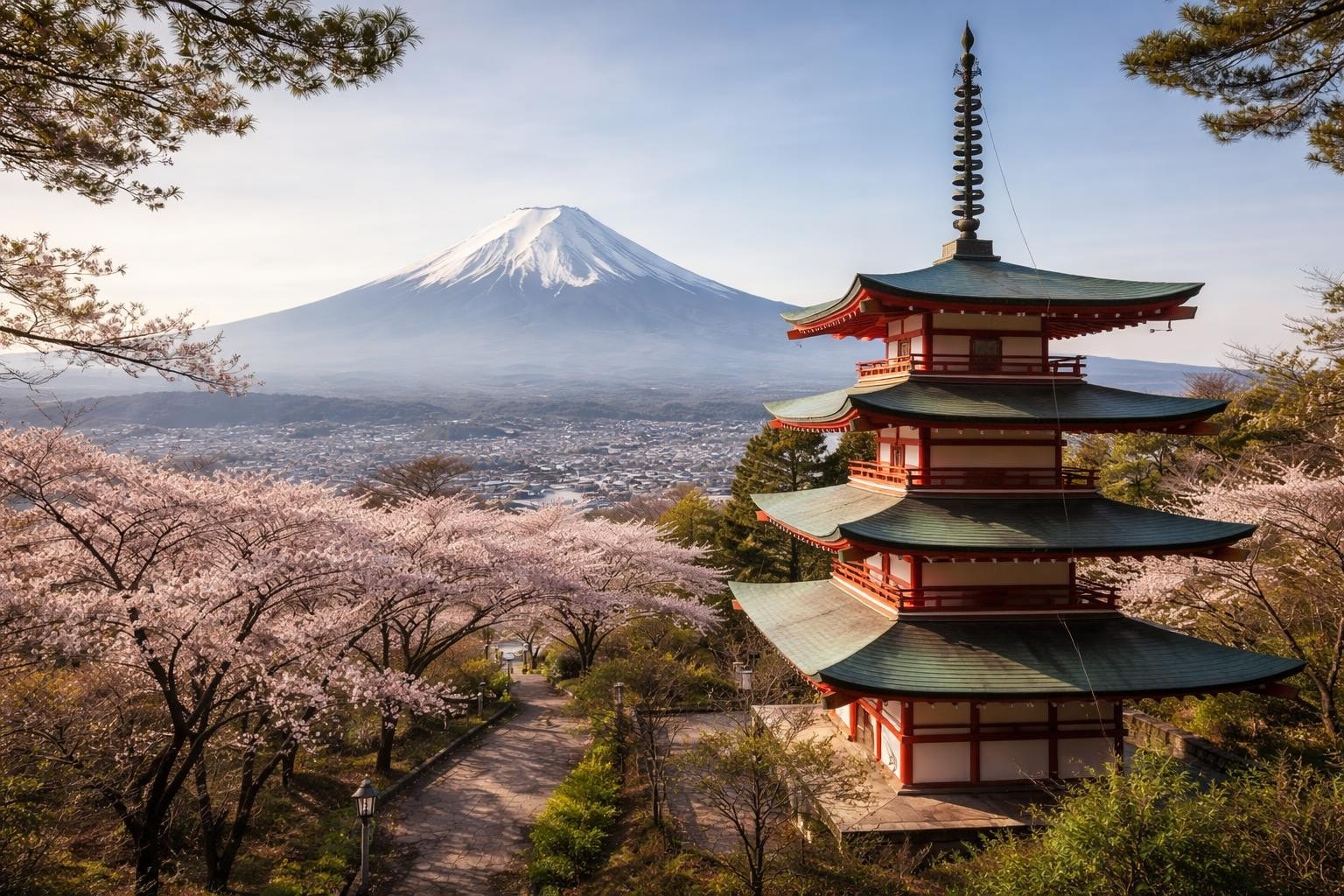
Perched on the hillside of Arakurayama in Fujiyoshida, Yamanashi Prefecture, the Chureito Pagoda stands as one of Japan’s most photographed landmarks. This five-story structure offers visitors an extraordinary combination of architectural beauty, cultural significance, and one of the most iconic views in all of Japan: Mount Fuji framed by traditional Japanese architecture. While countless travelers seek out this destination for its photographic appeal, the pagoda represents far more than just a scenic viewpoint. Built as a peace memorial, Chureito Pagoda in Japan embodies the nation’s commitment to remembrance and serves as a testament to Japanese architectural excellence. Understanding the deeper significance of this landmark transforms a simple photo opportunity into a meaningful cultural experience that connects visitors with Japan’s spiritual heritage and natural grandeur.
The Chureito Pagoda is a peace memorial built in 1963 to honor fallen soldiers from Fujiyoshida City. Standing at approximately 19.5 meters tall, this vermillion structure was constructed as part of the Arakura Fuji Sengen Shrine complex, which itself dates back centuries as a place of worship dedicated to Mount Fuji.
The pagoda’s architectural design follows traditional Buddhist principles, with five distinct stories representing the five elements: earth, water, fire, wind, and sky. This symbolic construction method connects the structure to broader Japanese spiritual traditions while serving its primary function as a memorial.
Mount Fuji has been a sacred mountain in Japanese culture for over a millennium, and the Chureito Pagoda’s location situates it within this broader spiritual context. The pilgrimage routes around Mount Fuji have historically drawn worshippers and spiritual seekers who view the mountain as a divine presence.
The Arakura Fuji Sengen Shrine, which encompasses the pagoda, forms part of this network of sacred sites. Visitors climbing the 398 steps to reach the pagoda follow in the footsteps of countless pilgrims who have ascended these same paths seeking spiritual connection and natural beauty.
Key historical facts about the site:
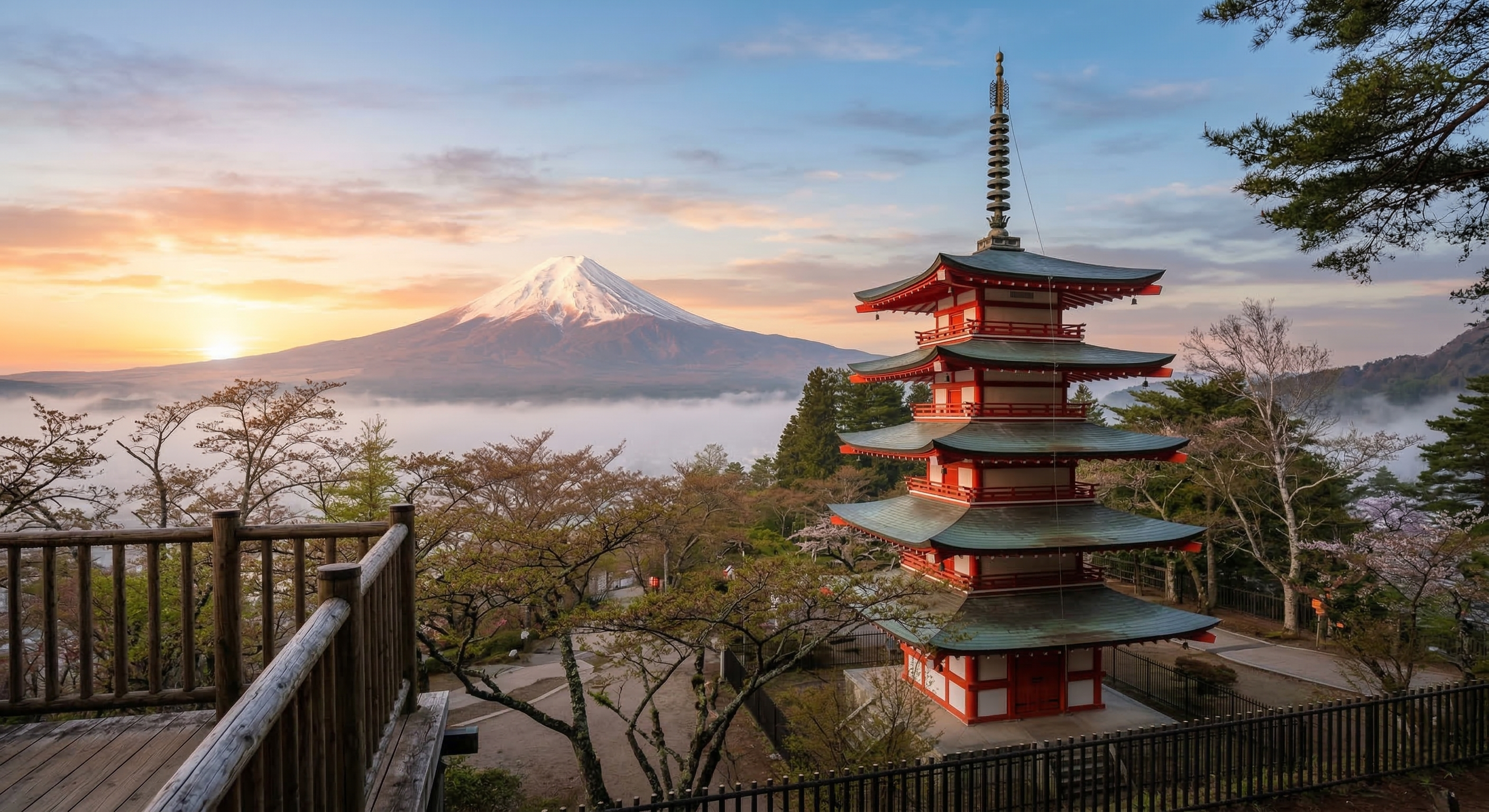
The Chureito Pagoda viewpoint has become synonymous with quintessential Japanese imagery, appearing in countless travel publications, social media feeds, and promotional materials. This fame stems from the perfect alignment of cultural and natural elements: the red pagoda in the foreground, Mount Fuji’s snow-capped peak in the background, and seasonal flora creating stunning middle-ground compositions.
Spring transforms the landscape around Chureito Pagoda into a photographer’s paradise. Approximately 650 cherry trees surround the area, creating clouds of pink and white blossoms that frame both the pagoda and Mount Fuji. The cherry blossom season typically peaks in mid-April, though the exact timing varies with weather patterns.
During this period, the site experiences its highest visitor volume. Early morning arrivals become essential for securing optimal photography positions and avoiding crowds. The interplay between delicate cherry blossoms, bold vermilion architecture, and majestic Mount Fuji creates a composition that captures Japan’s aesthetic essence.
While spring draws the largest crowds, autumn offers equally compelling photographic opportunities. Fall foliage transforms the surrounding forest into a tapestry of reds, oranges, and golds, providing warm tones that complement the pagoda’s vermillion hue.
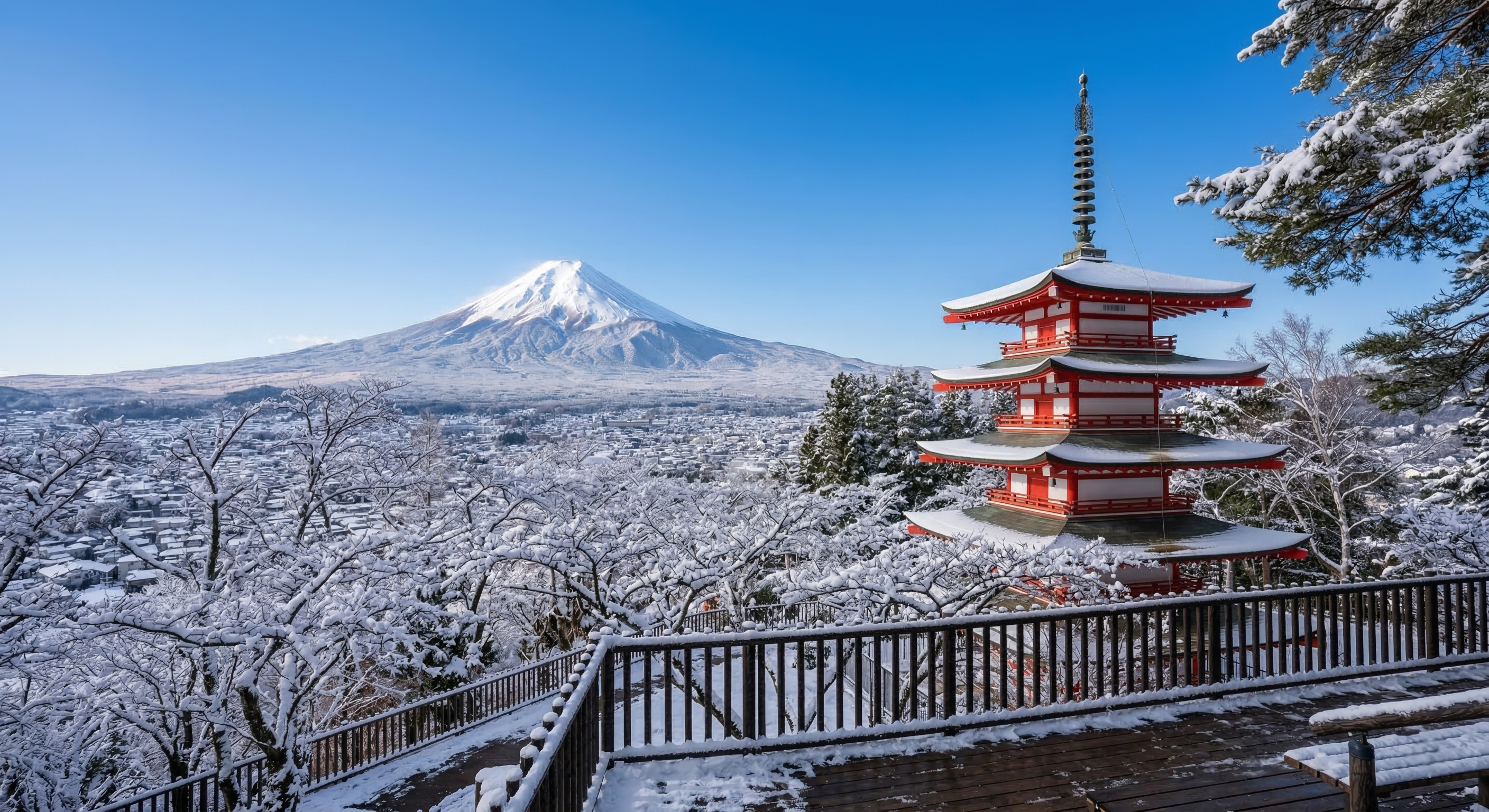
Winter presents unique advantages for Mount Fuji photography. The clearer atmospheric conditions during colder months increase visibility, and fresh snowfall on Mount Fuji creates a dramatic contrast against blue skies. Tips for capturing iconic shots emphasize winter mornings as optimal times for crystal-clear mountain views.
| Season | Best Features | Photography Considerations | Crowd Level |
|---|---|---|---|
| Spring (April) | Cherry blossoms, mild weather | Peak tourist season, arrive early | Very High |
| Summer (June-August) | Green foliage, festivals | Possible cloud cover obscuring Fuji | Moderate |
| Autumn (November) | Fall colors, crisp air | Excellent visibility, comfortable temperatures | High |
| Winter (December-February) | Snow on Fuji, clear skies | Cold conditions, best visibility | Low to Moderate |
Successful visits to Chureito Pagoda in Japan require thoughtful planning, particularly regarding timing, transportation, and physical preparation. The experience extends beyond simply arriving at the viewpoint; it encompasses the journey through Fujiyoshida, the climb up the hillside, and the broader exploration of the surrounding area.
The pagoda is approximately 10 kilometers from Fujiyoshida Station and can be reached by local bus or taxi. From Tokyo, the journey takes roughly two hours, making it feasible as a day trip, though overnight stays in the region allow for more flexible scheduling and multiple viewing opportunities.
Transportation options from Tokyo:
From Shimoyoshida Station, the pagoda is approximately a 15-minute walk to the base of the stairs, followed by the ascent of 398 steps. While the climb presents a moderate physical challenge, the stairs are well-maintained with rest areas along the route.
Mount Fuji visibility depends heavily on weather conditions, time of day, and seasonal factors. The mountain is most reliably visible during colder months, with December through February offering the highest probability of clear views. Early mornings provide the best visibility before afternoon clouds typically obscure the peak.
For visitors prioritizing photography, arriving before sunrise allows setup time and captures the mountain in optimal morning light. Personal insights from experienced visitors emphasize patience, as Mount Fuji may remain cloud-covered for extended periods before suddenly revealing itself.
The 398-step ascent is the primary physical challenge when visiting Chureito Pagoda in Japan. While manageable for most visitors with reasonable fitness levels, those with mobility limitations should carefully consider whether this destination suits their capabilities. No elevator or alternative access to the main viewing platform exists.
Visitors should wear comfortable walking shoes with good traction, as steps can become slippery during rain or snow. The climb typically takes 10-20 minutes, depending on fitness level and rest frequency. Rest areas positioned along the route provide opportunities to pause and enjoy intermediate views.
Recent years have brought increased attention to the challenges of overtourism at Chureito Pagoda in Japan. The site’s viral popularity on social media platforms has dramatically increased visitor numbers, sometimes overwhelming the peaceful memorial’s intended atmosphere and creating concerns among local communities.
While photography has made Chureito Pagoda famous worldwide, visitors should remember its primary function as a peace memorial honoring fallen soldiers. The official efforts to preserve the site’s cultural heritage emphasize respectful behavior and mindful engagement with the location.
Guidelines for respectful visits:
Fujiyoshida and the surrounding Yamanashi Prefecture offer numerous opportunities to engage with local culture beyond the famous viewpoint. Supporting local businesses, restaurants, and cultural sites distributes tourism benefits more broadly while enriching your overall experience.
The region surrounding Chureito Pagoda, Japan, includes textile museums highlighting Fujiyoshida’s historic weaving industry, sake breweries offering tastings, and traditional restaurants serving Yamanashi specialties like houtou noodles. Exploring the broader area’s cultural significance provides context that deepens appreciation for the pagoda itself.
Understanding the architectural details of Chureito Pagoda enhances appreciation for the craftsmanship and symbolism embedded in its construction. The five-story design represents a specific type of Buddhist pagoda architecture adapted to Japanese aesthetic principles and construction methods.
Each of the five stories decreases slightly in size as the structure rises, creating the characteristic tapered silhouette of traditional pagodas. The vermillion color, achieved through traditional pigmentation techniques, serves both aesthetic and protective functions while connecting the structure to broader patterns in Japanese religious architecture.
The roof corners feature upturned eaves typical of East Asian architectural traditions, and decorative elements incorporate motifs associated with Buddhist symbolism and Japanese cultural heritage. Bronze finials crown the structure, completing the vertical emphasis that draws the eye skyward toward Mount Fuji beyond.
| Architectural Feature | Significance | Traditional Meaning |
|---|---|---|
| Five Stories | Buddhist cosmology | Five elements: earth, water, fire, wind, sky |
| Vermillion Color | Sacred protection | Spiritual purification and divine presence |
| Upturned Eaves | Aesthetic tradition | Connection between earthly and heavenly realms |
| Bronze Finials | Structural completion | Spiritual aspiration and enlightenment |
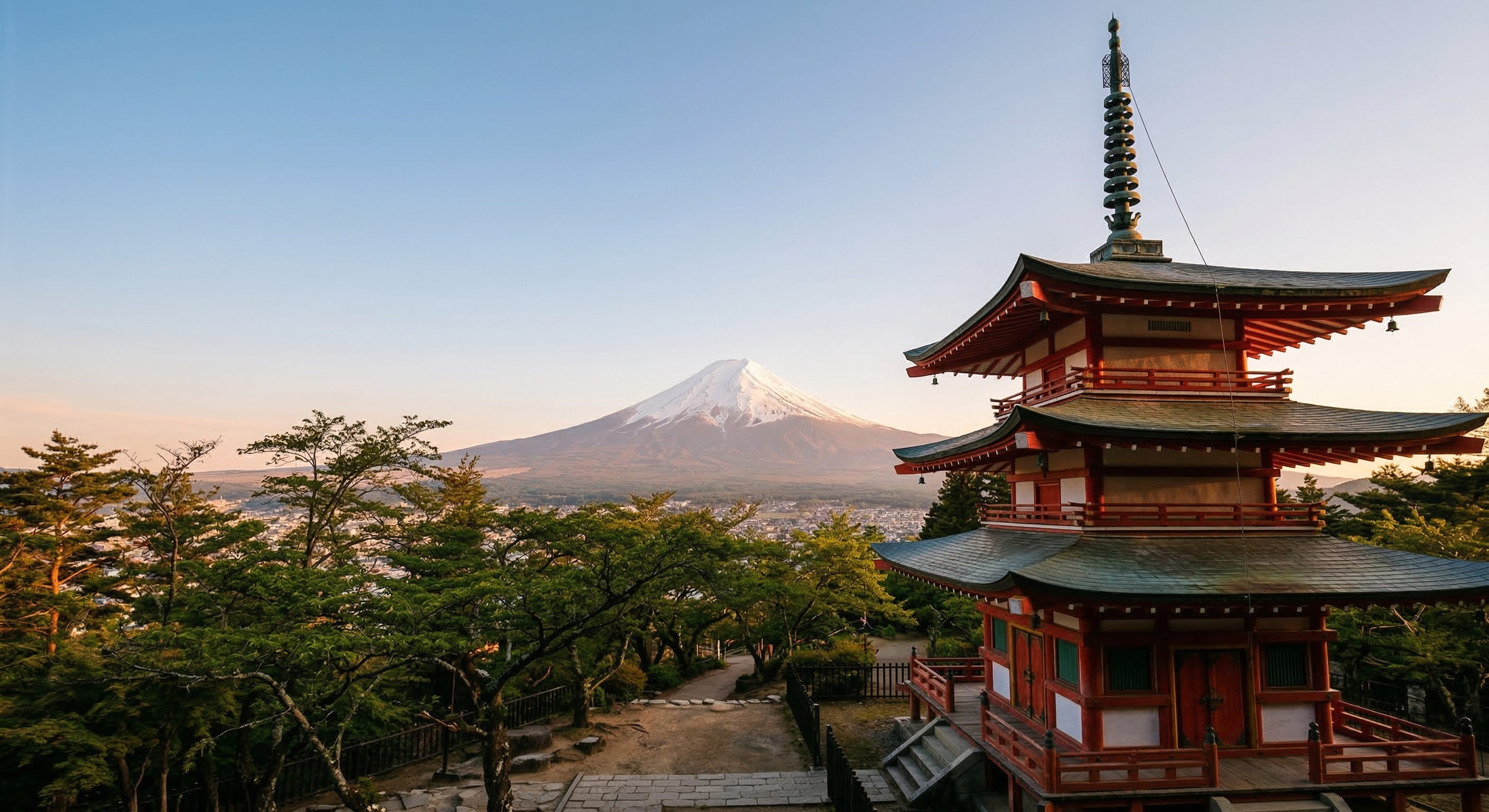
The broader Arakurayama Sengen Park complex surrounding the Chureito Pagoda in Japan deserves thorough exploration beyond simply visiting the famous viewpoint. The park encompasses multiple shrine buildings, forest paths, and seasonal attractions that provide deeper engagement with the site’s cultural and natural features.
The shrine complex predates the pagoda by centuries, serving as a place of worship dedicated to the deity of Mount Fuji. Traditional shrine buildings embody classical Shinto architectural principles, and seasonal festivals bring local communities together to celebrate cultural heritage.
Visitors can observe traditional shrine practices, including purification rituals at temizuya water basins and offering prayers at the main shrine building. These activities connect contemporary visitors with centuries of spiritual tradition while demonstrating the living cultural practices that continue to shape Japanese community life.
Throughout the year, Arakurayama Sengen Park hosts various festivals and events that celebrate seasonal transitions and cultural traditions. The spring cherry blossom festival draws particular attention, but autumn maple viewing events and winter celebrations offer equally authentic cultural experiences without overwhelming crowds.
Understanding the festival calendar allows visitors to align their Chureito Pagoda Japan experience with broader cultural celebrations, transforming a simple sightseeing visit into a genuine cultural experience. Local food vendors, traditional performances, and community gatherings provide insights into contemporary Japanese life that complement the historical and architectural attractions.
For travelers accustomed to premium experiences, visiting the Chureito Pagoda in Japan requires balancing the site’s natural, somewhat rustic character with desires for comfort and convenience. Strategic planning transforms what might otherwise be a standard tourist experience into a refined cultural exploration.
While public transportation adequately serves the site, private car services offer significant advantages in comfort, timing flexibility, and overall experience quality. Professional drivers familiar with the region can adjust schedules based on real-time weather conditions, suggest optimal visiting times, and coordinate seamless transitions between multiple destinations.
Expert guides provide cultural context that transforms observation into understanding. Rather than simply photographing the pagoda and Mount Fuji, knowledgeable guides explain the site’s spiritual significance, architectural details, historical background, and contemporary cultural issues.
Chureito pagoda in Japan integrates beautifully into broader explorations of the Mount Fuji region and Yamanashi Prefecture. Luxury travelers benefit from coordinated itineraries that combine the pagoda visit with complementary experiences:
This integrated approach maximizes time efficiency while ensuring each destination receives appropriate attention and appreciation. Professional coordination eliminates logistical concerns, allowing travelers to focus entirely on the cultural and aesthetic experiences.
The fame of the Chureito Pagoda in Japan rests largely on its photographic appeal, and understanding compositional principles helps visitors capture meaningful images rather than simply replicating ubiquitous social media shots. Technical knowledge combined with creative vision produces photographs that reflect personal experience rather than generic reproduction.
The classic composition positions the pagoda in the lower third of the frame with Mount Fuji centered in the background. While this arrangement produces reliably attractive results, alternative perspectives offer fresh interpretations:
Creative compositional strategies:
Mount Fuji photography presents specific technical challenges, particularly in balancing exposure between the bright sky, mid-tone architecture, and potentially shadowed foreground elements. Understanding the appropriate camera settings for these conditions improves photographic success rates.
For landscape photography at Chureito Pagoda, Japan, smaller apertures (f/8 to f/16) maintain sharpness throughout the depth of field from the foreground pagoda to the distant mountain. Tripods stabilize cameras for sharper images, particularly at dawn and dusk when longer exposures are needed.
Perhaps the most frustrating aspect of visiting Chureito Pagoda in Japan involves Mount Fuji’s notorious tendency to hide behind clouds. Understanding seasonal weather patterns and daily visibility trends helps visitors maximize their chances of witnessing clear mountain views.
Mount Fuji visibility varies dramatically by season, with winter months offering the highest probability of clear views. Cold, dry atmospheric conditions minimize cloud formation, and lower humidity increases overall clarity. Statistical analysis shows that December through February provides approximately a 60-70% probability of mountain visibility during the early morning hours.
Summer offers the poorest visibility, with warm, humid air creating persistent cloud cover that often obscures Mount Fuji entirely. July and August have a visibility probability of less than 30%, making these months the least suitable for visitors prioritizing the iconic mountain view.
Beyond seasonal patterns, daily weather cycles significantly impact visibility. Mount Fuji typically reveals itself most reliably during early morning hours before warming temperatures generate convective cloud formation. Afternoon clouds often obscure the peak, even during generally clear weather.
Monitoring real-time weather reports and webcams allows visitors to adjust timing based on current conditions. Several online resources offer live views of Mount Fuji from various angles, helping travelers make informed decisions about the best times to visit. Flexibility in scheduling proves invaluable, as weather conditions can shift rapidly and unpredictably.
For international visitors exploring Japan in depth, Chureito Pagoda Japan is one highlight within a broader tapestry of cultural, natural, and urban attractions. Strategic itinerary planning positions the pagoda visit to complement rather than compete with other destinations and experiences.
The Mount Fuji region encompasses numerous worthwhile destinations beyond Chureito Pagoda itself. Multi-day explorations allow thorough engagement with the area’s cultural heritage, natural beauty, and contemporary attractions without rushing between locations.
Nearby destinations that complement a pagoda visit include the Fuji Five Lakes region, offering resort amenities and recreational activities; Hakone, featuring hot springs, museums, and scenic mountain railways; and various traditional villages that preserve historical architecture and cultural practices. Thoughtful itinerary design creates narrative flow between destinations while allowing adequate time for meaningful engagement with each location.
While the Chureito Pagoda in Japan deserves global attention, balanced travel experiences incorporate lesser-known destinations that offer authentic cultural insights without overwhelming tourist presence. Expert guides familiar with regional nuances can suggest alternatives that match visitor interests while supporting broader tourism distribution.
This approach particularly benefits luxury travelers seeking exclusive experiences that transcend standard tourist circuits. Private access to cultural sites, introductions to local artisans and experts, and customized activities reflecting personal interests create distinctive memories that generic tourism cannot replicate.
The Chureito Pagoda represents far more than a photographic viewpoint; it embodies Japanese cultural values, architectural excellence, and the profound connection between spiritual practice and natural beauty that defines so much of Japan’s heritage. Whether you’re drawn by the iconic imagery, cultural significance, or broader regional exploration, this remarkable site rewards thoughtful, respectful engagement with unforgettable experience, forr discerning travelers seeking to explore Chureito Pagoda, Japan, and the surrounding Mount Fuji region, Japan Royal Service specializes in crafting bespoke itineraries that honor both your interests and Japan’s remarkable cultural landscape, with the expertise, comfort, and personalized attention that transform sightseeing into profound cultural discovery. Our dedicated team coordinates every detail, from private transportation and expert guides to exclusive access and seamless logistics, ensuring your Japanese journey exceeds expectations while respecting the sacred and cultural significance of each destination.