In this guide
- 01Nobody Has Ever Seen Zenkō-ji’s Principal Image—And Spring 2027 Is The Closest You Can Get
- 02What It Feels Like To Walk The Okaidan Meguri In Total Darkness
- 03When Is The Best Time To See Cherry Blossoms Near Zenkō-ji In Spring?
- 04How Far Is Zenkō-ji From Nagano Station, And What Is The Calmest Way To Arrive?
- 05Spring 2027 Gokaichō At Zenkō-ji: Dates, The 10-Meter Pillar, And What Visitors Actually Touch
- 06A Spring Morning Done Properly: Oasaji At Sunrise, Then Silence
- 07Zenkoji Flower Corridor (Nagano Flower Festa): A Spring Stroll With A City-Scale Sense Of Design
- 08Art And Faith, Steps Apart: Nagano Prefectural Art Museum Near Zenkō-ji
- 09Zenkō-ji’s Non-Sectarian Identity: Two Head Temples, One Welcome
- 10Origin, History, And The Main Hall You Can Actually See
- 11What Japan Royal Service Can Coordinate For A Zenkō-ji Spring Visit
- 12Frequently Asked Questions
Your hand slides along cold stone.
There is no candle. No phone glow. Not even the polite dimness of a museum gallery.
Just black.
Somewhere in this underground corridor beneath Zenkō-ji’s main hall, you feel for a single piece of metal—an object so ordinary it could be a latch on an old gate, yet so charged that people cross the country to Nagano for it on purpose.
When your fingers finally close around it, you understand why this temple draws six to seven million visitors a year. It offers contact with something that cannot be seen—a kind of quiet, restraint-driven devotion that no gold-leaf spectacle could ever match.
Nobody Has Ever Seen Zenkō-ji’s Principal Image—And Spring 2027 Is The Closest You Can Get
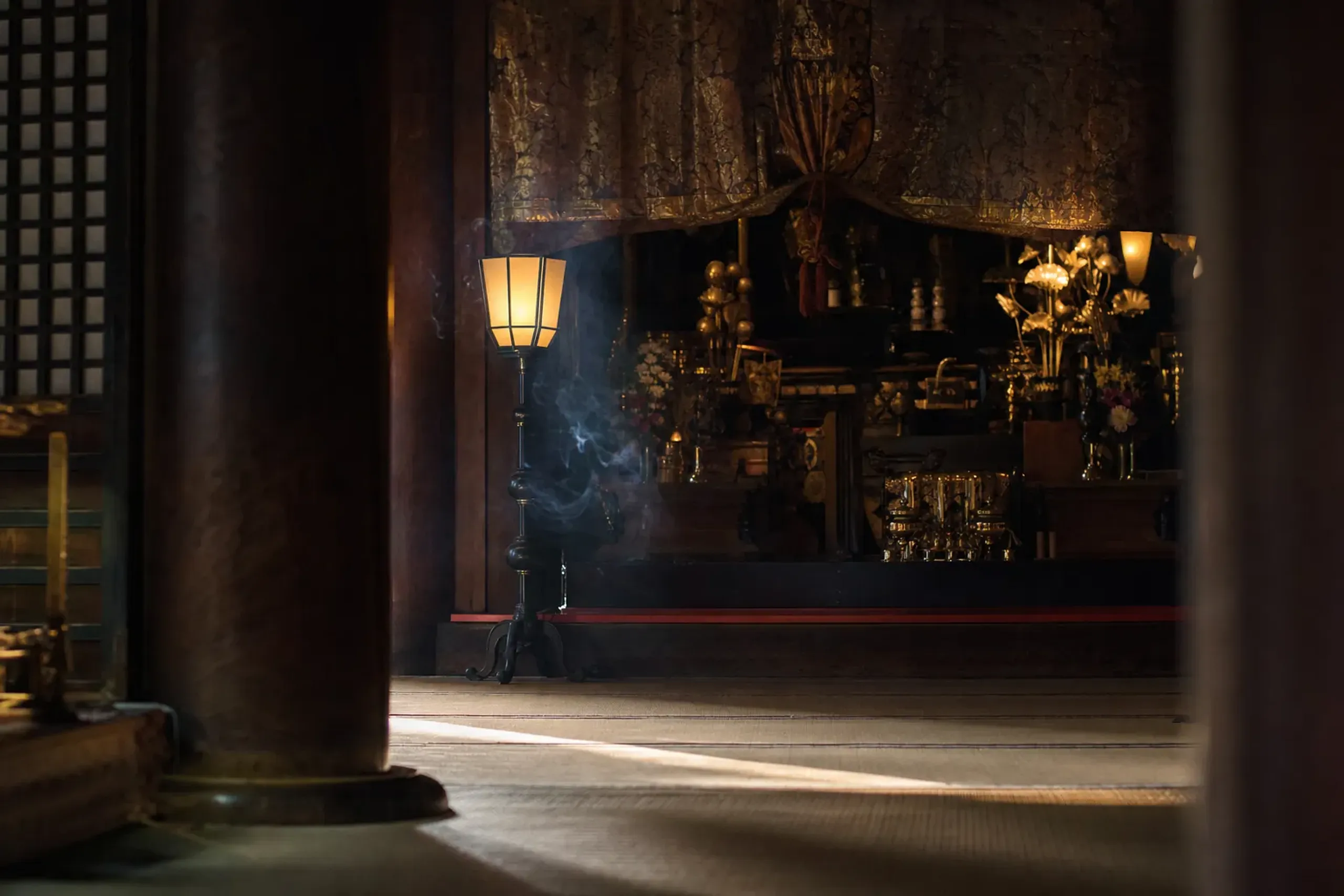
Zenkō-ji’s principal image is a zettai hibutsu (absolute hidden Buddha) that has not been shown to anyone since 654, and the next public unveiling of its stand-in, the Maedachi Honzon, runs from April 4 to June 19, 2027.
This is not a marketing flourish. Zenkō-ji’s central object of worship, the Ikkō Sanzon Amida Nyorai, is concealed at a level most temples never attempt.
Not visitors. Not invited dignitaries. Not even the temple’s own head priests see it directly.
Because that true image is never displayed, Zenkō-ji’s great spring ceremony turns instead to a substitute: the Maedachi Honzon, a Kamakura-period bronze stand-in that is ceremonially unveiled once every seven years (counted inclusively).
For a discerning traveler, that calendar detail changes everything. A Japan trip can be shaped around restaurant tables and hotel openings; Zenkō-ji is different. Here, the rarest moment is not a reservation you can secure with resources. It is a date fixed on the temple’s own ritual clock—and that unchangeable scarcity is precisely what makes it worth building a journey around.
What It Feels Like To Walk The Okaidan Meguri In Total Darkness
Okaidan Meguri is a year-round underground passage beneath Zenkō-ji’s inner sanctuary where visitors walk in complete darkness to find the Gokuraku no Jōmae by touch alone.
The corridor sits directly under the main hall’s inner sanctuary. You step in, and the light vanishes as if a door has quietly closed on the entire world.
Slow steps. A shoulder turns sideways to let someone pass.
You keep one hand on the wall. The stone feels damp-cool, then warmer where thousands of palms have polished it smooth over generations.
The goal is not visual. You search for a metal fixture called the Gokuraku no Jōmae, sometimes rendered as the Lock of Paradise, said to be physically connected to the hidden principal image enshrined above.
Touching it is believed to form a bond with the Buddha and promise rebirth in paradise. Whether you approach that as faith, as history, or as pure human drama, the sensation is the same: the crowd falls silent, and everyone becomes careful with their hands.
It is the aesthetic of restraint made physical—nothing to see, everything to feel.
Our team at Japan Royal Service treats this as far more than an “activity.” We suggest arriving early in the day, with time to sit afterward in the precinct and let your eyes readjust to the light. Rushing it is simply the wrong mood.
When Is The Best Time To See Cherry Blossoms Near Zenkō-ji In Spring?
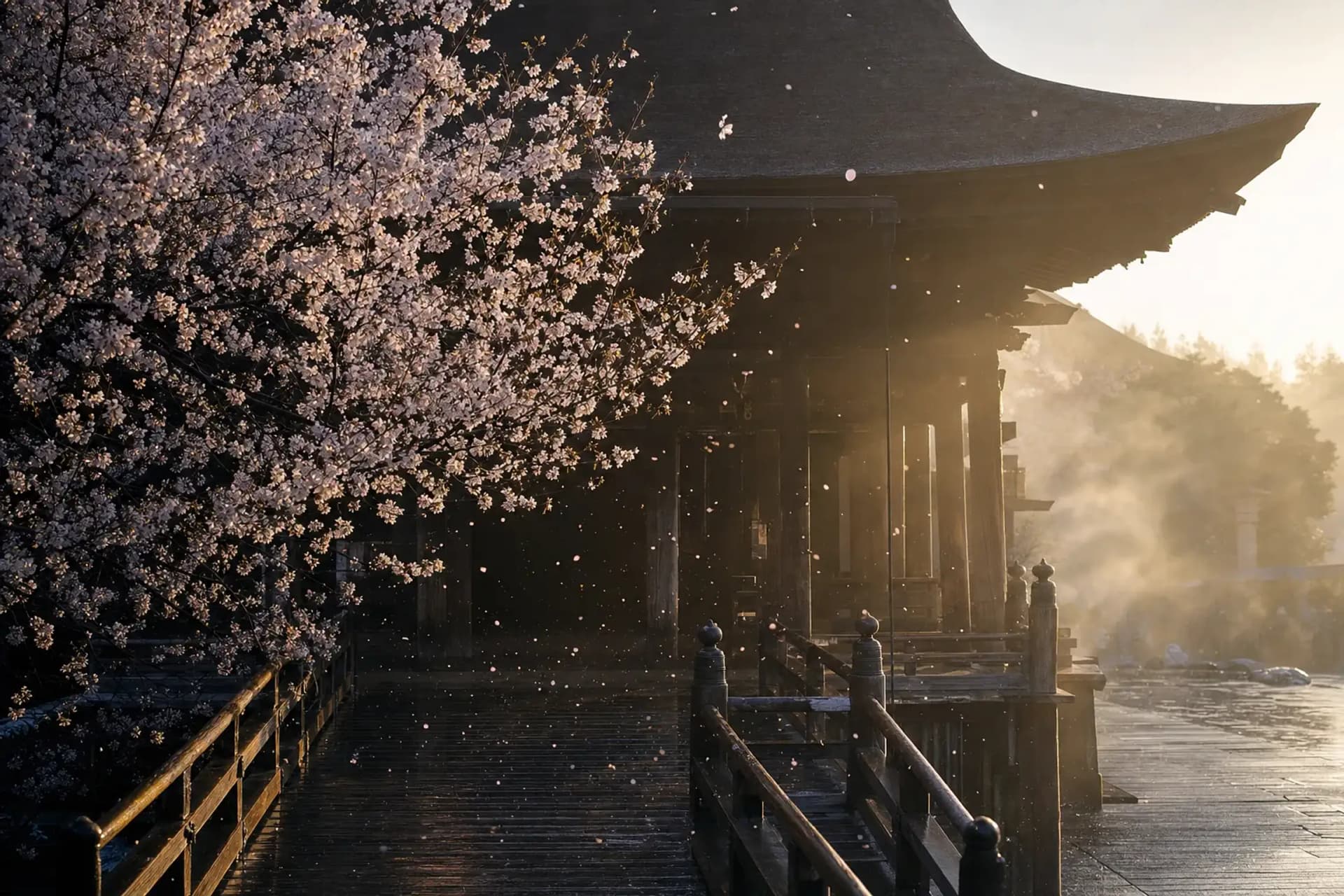
Cherry blossoms around Zenkō-ji and nearby Jōyama Park usually bloom from mid-April to late April, making that window the most reliable spring timing for sakura in central Nagano City.
In practice, the finest way to see them is to treat the blossoms as a short, luminous interlude—not the whole story. This is where a true sense of shun, the Japanese art of perfect seasonality, separates a good visit from an unforgettable one.
Arrive before the precinct fills. Stand where the approach opens toward the temple buildings, then walk slowly toward the main hall without photographing every step.
Afterward, Jōyama Park gives you breathing room. It is close enough to feel like part of the same visit, yet spacious enough that your spring day does not collapse into a single queue.
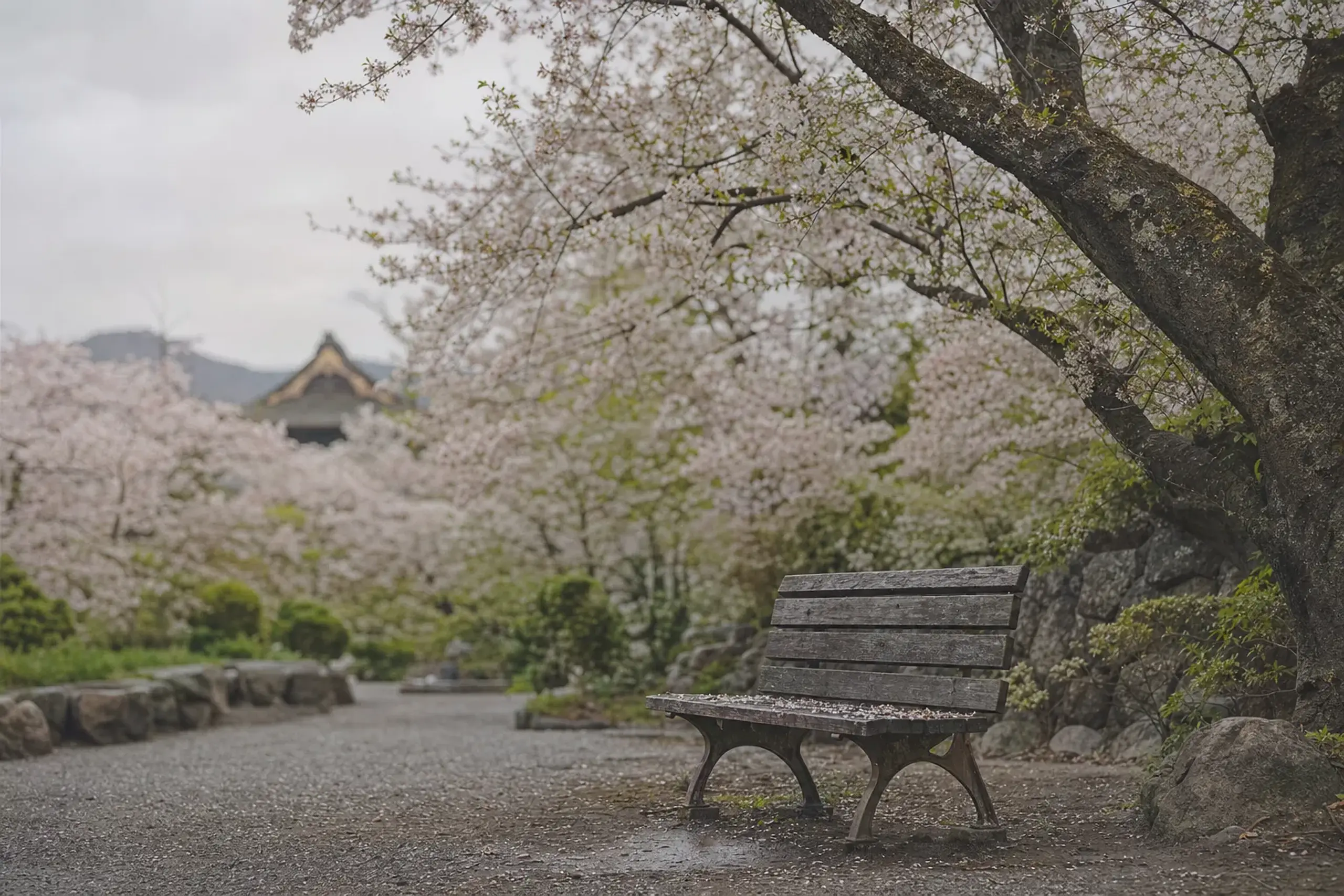
If you prefer hard data, Japan’s official bloom information shifts year by year, and forecasts are published by organizations such as the Japan Weather Association. We can point you toward the right official updates for your exact travel dates, then build a day that still feels graceful even if the peak moves by a few days.
How Far Is Zenkō-ji From Nagano Station, And What Is The Calmest Way To Arrive?
Zenkō-ji is about 1.8 km from Nagano Station—roughly a 30-minute walk or about 15 minutes by bus—so a chauffeured arrival works best when you want quiet control over your timing.
That distance looks short on paper. On a real spring day, it can feel long if you arrive with luggage, a mismatched walking pace, or a meeting later that afternoon.
For HNW travelers, the calmer play is control—not speed.
We often recommend a private arrival with a dedicated driver, so you can choose your moment precisely: pre-sunrise for Oasaji, mid-morning after the first wave has passed, or late afternoon when the light turns soft and the precinct settles into stillness.
The first time you plan private transportation in Nagano, think about door placement as carefully as the drive itself. You want to step out, straighten your coat, and enter with your mind already quiet.
Spring 2027 Gokaichō At Zenkō-ji: Dates, The 10-Meter Pillar, And What Visitors Actually Touch
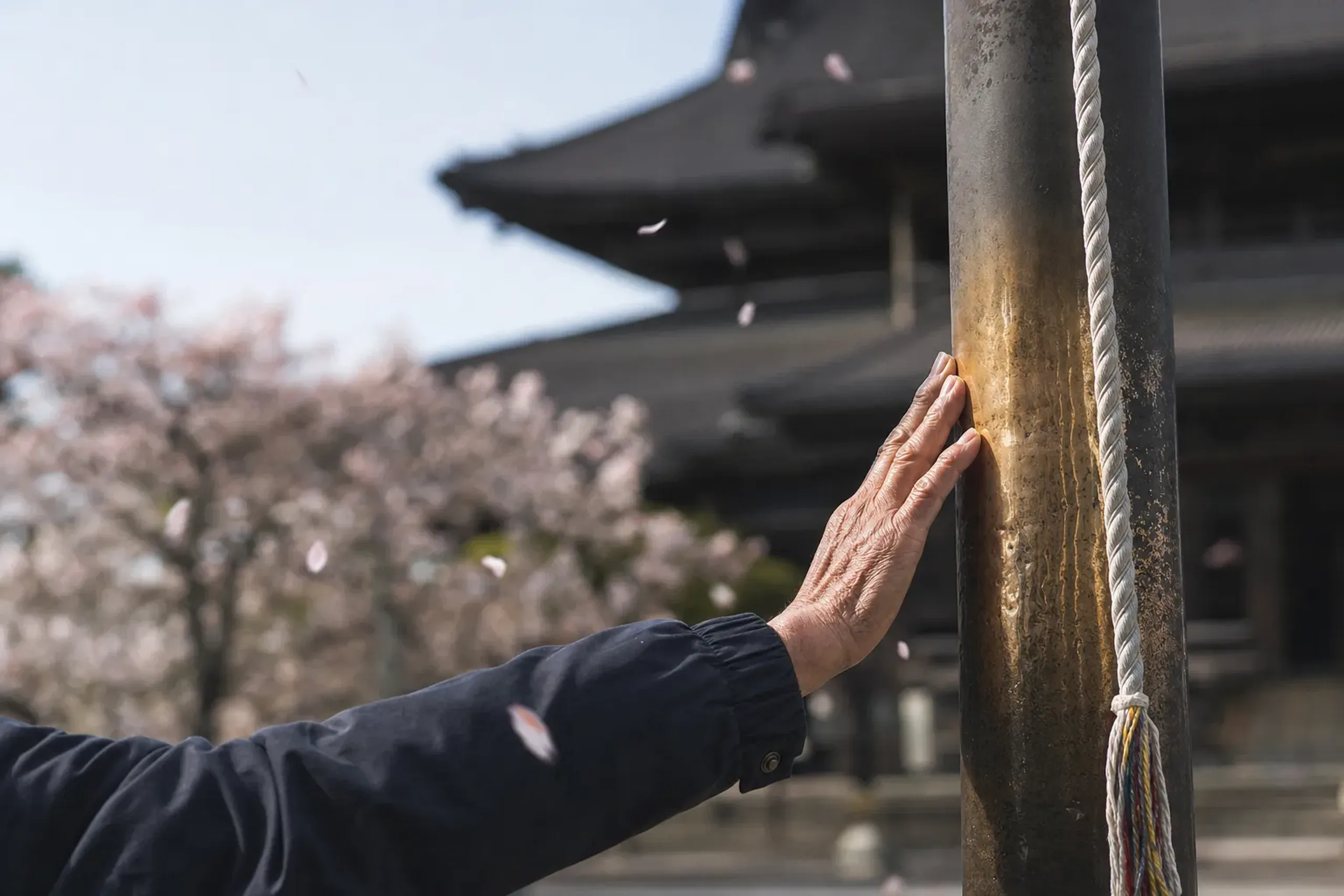
The next Zenkō-ji Gokaichō runs from April 4 to June 19, 2027, when the Maedachi Honzon is unveiled and a roughly 10-meter wooden pillar is erected outside, connected by cord to the statue’s hand.
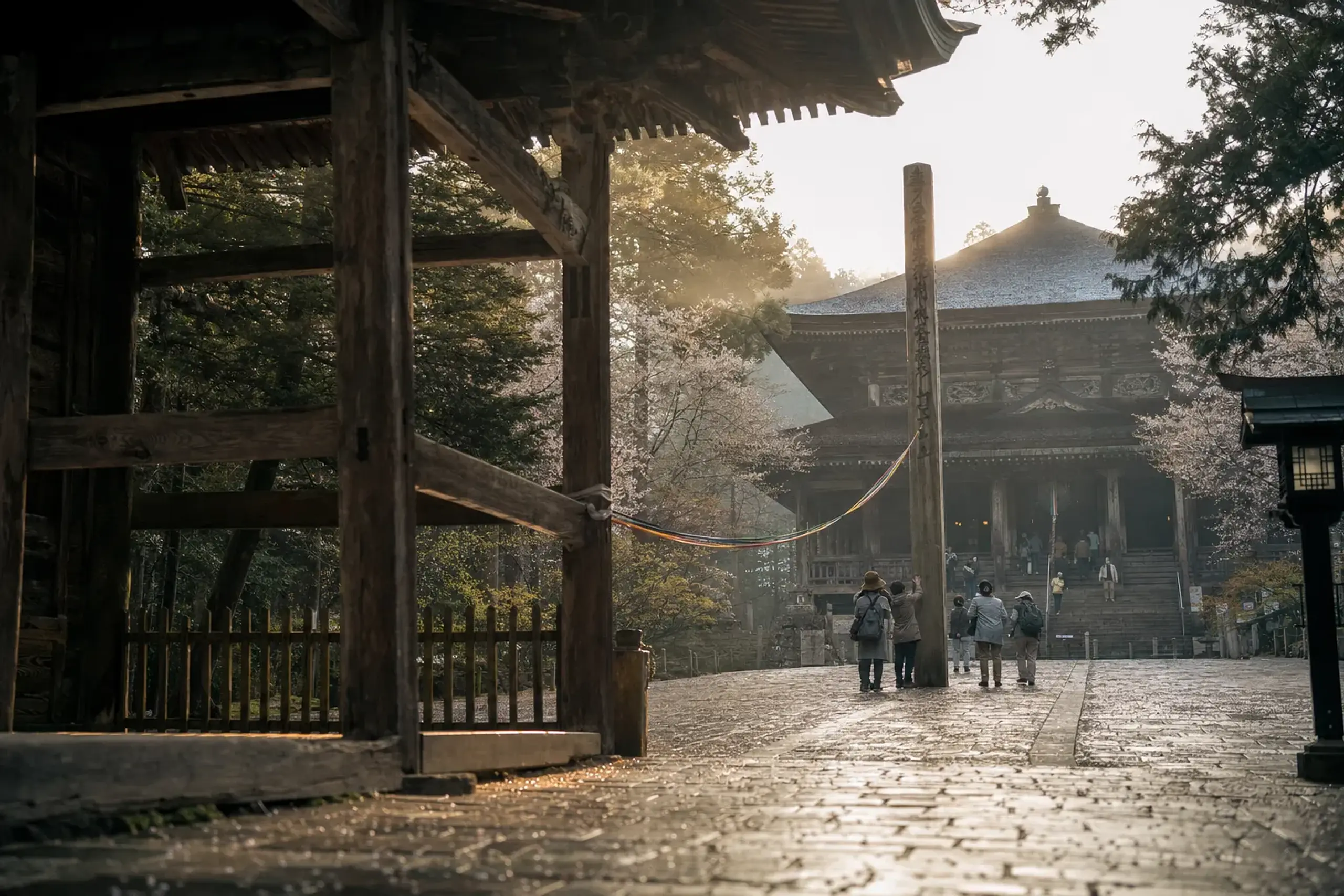
This ceremony is vast. Expect crowds that feel less like an ordinary temple day and more like a seasonal migration.
The pillar matters because it is a devotional solution. Millions arrive, and not all of them will reach the inner viewing smoothly; the pillar allows every visitor to form a connection without needing to stand directly before the substitute image.
Step closer and you will see the elegant simplicity of the mechanics: a tall wooden pillar rising in spring light, a cord running from the open air into the hall, tied to the hand of the Maedachi Honzon.
Touching the pillar is considered equivalent to touching the Buddha image to which it is linked. The ritual is tactile, public, and oddly intimate for something on such a scale.
Key fact: During Gokaichō, the hidden principal image is still not shown; the publicly unveiled figure is the substitute Maedachi Honzon.
Because this is so time-sensitive, our concierge team verifies the current Gokaichō scheduling and any access changes privately, on a client’s behalf, well ahead of the visit. It is a living religious site, and details can and do shift.

A Spring Morning Done Properly: Oasaji At Sunrise, Then Silence
Zenkō-ji’s Oasaji morning service is held every day, year-round, at sunrise—and in spring it can be the cleanest way to experience the main hall before the city fully wakes.
Set an early alarm. Earlier than you want.
In the blue edge of dawn, the air in Nagano still holds winter in its pockets. You walk the approach with fewer voices around you, and the temple’s scale feels greater because nothing competes with it.
Oasaji is not staged for visitors. You are a guest at a genuine service, so we advise quiet clothing, a steady pace, and no last-minute sprinting that brings noise into the hall. This is the Japan that cannot be found through a search engine—entered only with the right introduction and the right restraint.
If you are staying at one of the area’s temple lodgings (shukubō), joining the morning prayers can become the quiet anchor of your entire spring trip. JNTO notes there are 39 such lodgings in the Zenkō-ji area.
Zenkoji Flower Corridor (Nagano Flower Festa): A Spring Stroll With A City-Scale Sense Of Design
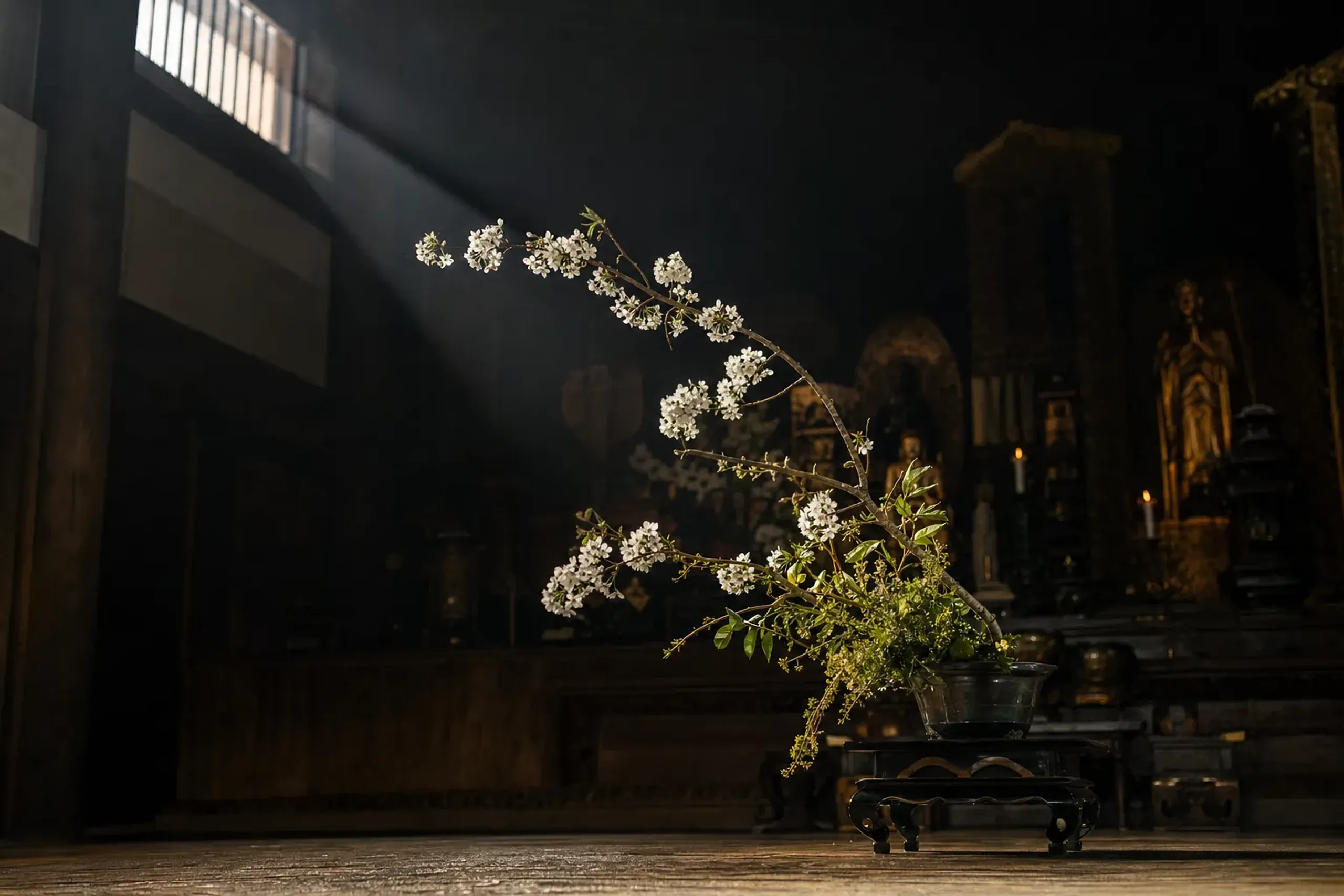
The Zenkoji Flower Corridor / Nagano Flower Festa is a spring event held along the Omotesandō approach, scheduled for May 3–5, 2026, with some displays appearing from late April.
It is not “just flowers.” It is a temporary reworking of the street’s rhythm—beds of color and scent laid down where you expect asphalt and signage.
Go early. Go late.
Midday can be crowded during the Golden Week season, and crowds flatten the effect. The most rewarding photographs tend to happen when there is still space between people and you can frame the approach like a long runway leading toward the temple.
If you are planning for a future year, treat the 2026 schedule as a reference point only. We can help you confirm official dates closer to travel, then shape a day that flows naturally: shrine to approach to hall, without a single step of backtracking.
Art And Faith, Steps Apart: Nagano Prefectural Art Museum Near Zenkō-ji
Nagano Prefectural Art Museum sits in Jōyama Park near Zenkō-ji, and its Higashiyama Kaii Gallery opened in April 1990 as an annex.
After Okaidan Meguri, your senses are sharpened by the darkness. A museum visit can be a gentle landing.
Not a pivot. A continuation.
Jōyama Park gives you that transition space. Then the museum offers clean lines, climate control, and a different kind of devotion: careful, unhurried looking.
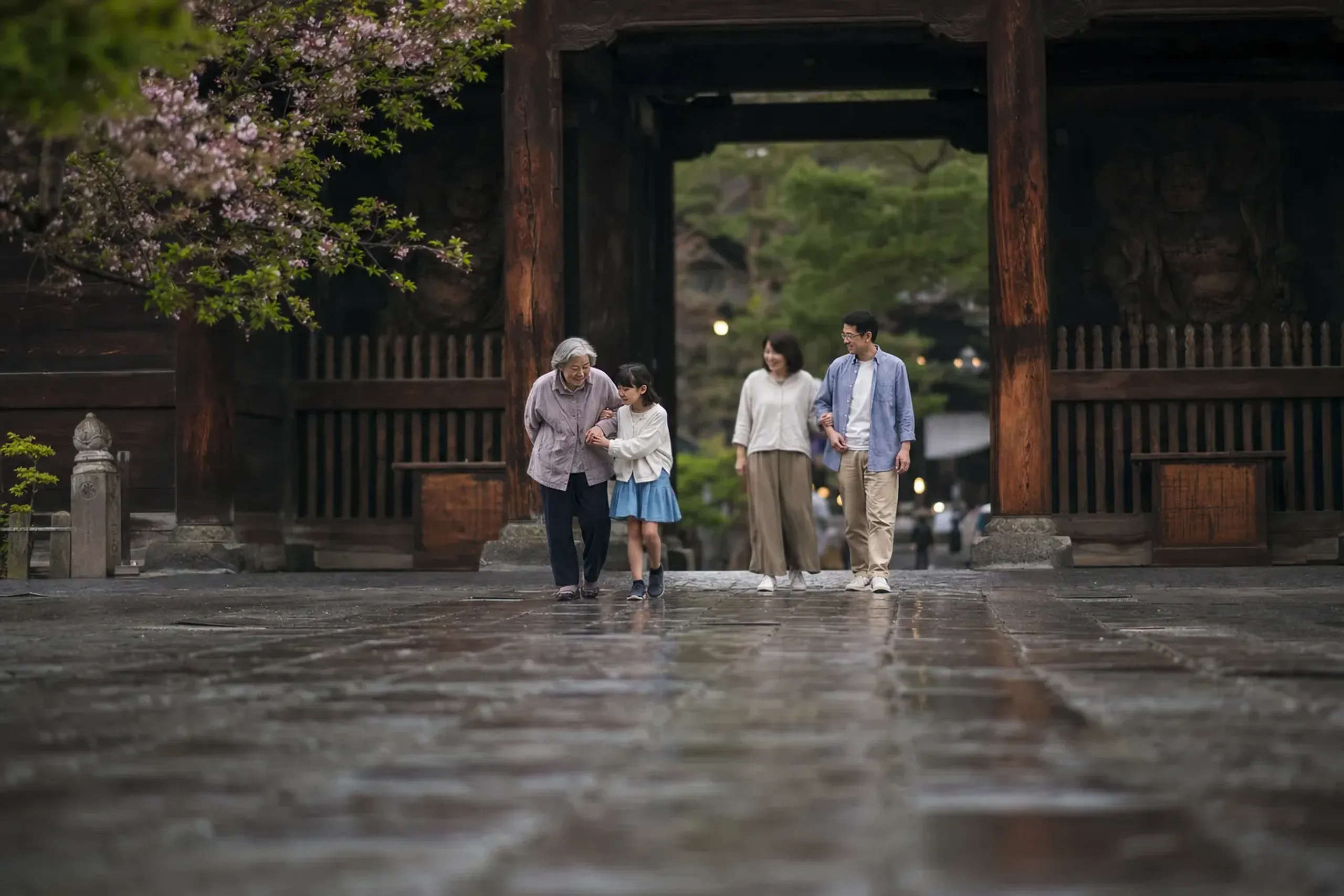
If your party includes multi-generational travelers, this pairing often works beautifully. Some guests want another temple hall; others want a quieter indoor stop without “leaving the story.” This keeps everyone close to Zenkō-ji while changing the pace.
Zenkō-ji’s Non-Sectarian Identity: Two Head Temples, One Welcome
Zenkō-ji belongs to no single Buddhist sect and is jointly administered by two head priests from different traditions: Tendai’s Daikanjin and Jōdo’s Daihongan.
This is one reason the temple feels unusually open to first-time visitors. You do not need specialized knowledge to be received there with grace.
There is a well-known saying about being “led by a cow to Zenkō-ji,” capturing the idea that people arrive by all kinds of paths and are still welcome. You feel that on the ground, especially in spring when families, solo pilgrims, and business travelers share the same approach.
For HNW travelers accustomed to velvet ropes, the appeal here is refreshingly different. Zenkō-ji’s dignity does not come from exclusion. It comes from centuries of unbroken ritual continuity—a rarity no amount of money can manufacture.
Origin, History, And The Main Hall You Can Actually See
According to temple tradition, Zenkō-ji’s history begins in 642, and its principal image is described as Japan’s oldest Buddhist statue through an origin legend tracing a path through India and Baekje before Japan.
Tradition is not the same as a fixed modern record. That nuance matters, and Zenkō-ji itself presents its origins through this long, layered narrative arc.
The architecture, though, is immediate and undeniable. The current main hall was completed in 1707 and is designated a National Treasure.
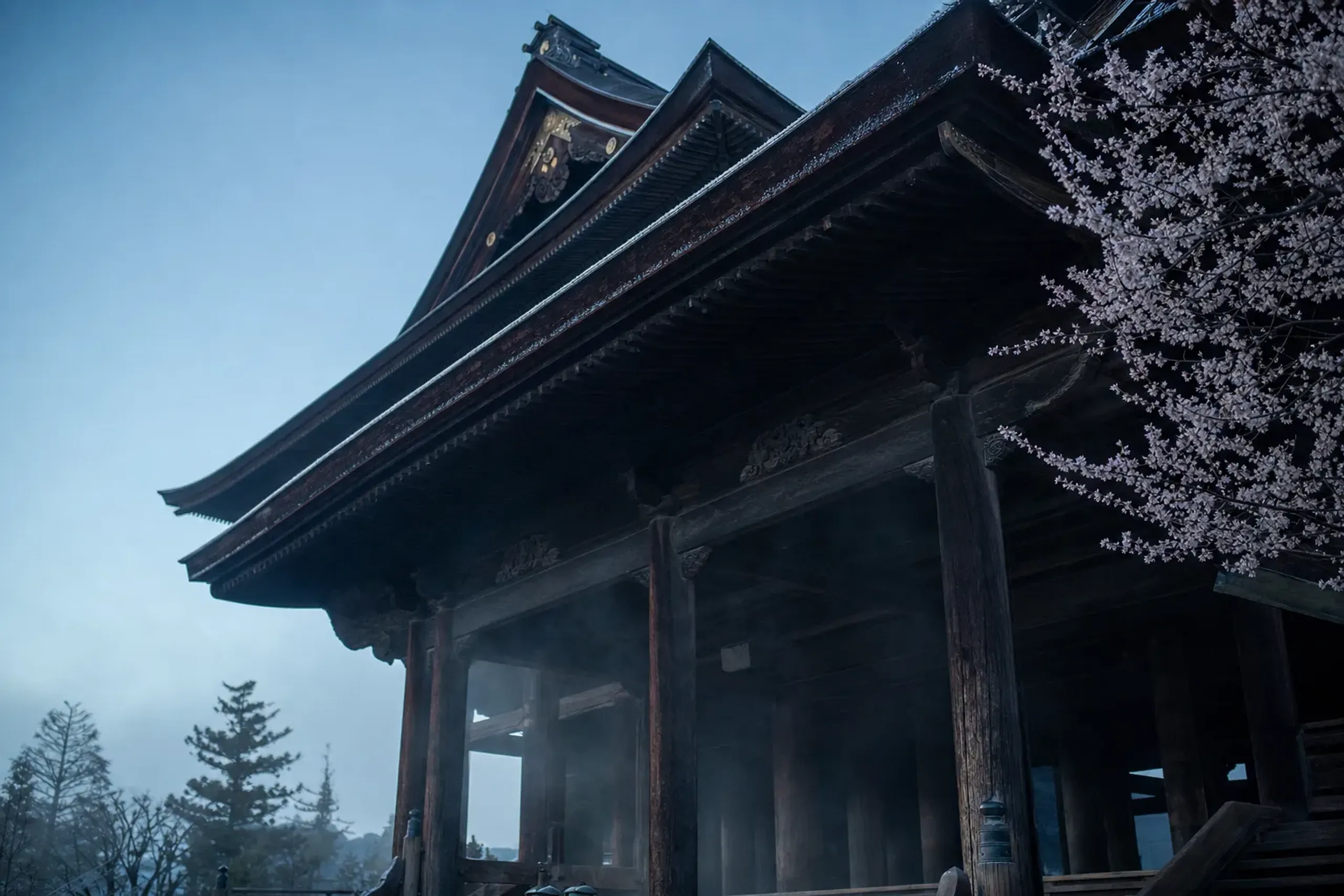
Stand before it and look up. Spring light catches the eaves, and the building’s weight feels both protective and slightly stern.
This is also where the temple’s “hidden” character becomes practical. The most important presence is concealed, so the hall itself becomes the visible focus—wood, proportion, and the slow movement of people approaching, each with their own private reasons.
What Japan Royal Service Can Coordinate For A Zenkō-ji Spring Visit
For a Zenkō-ji spring visit, Japan Royal Service can coordinate expert guiding, private transfers, and lodging support at the temple’s shukubō where available, with every detail confirmed privately after you inquire.
This is where discretion stops being a slogan and becomes a working method. We keep itineraries quiet, driver details controlled, and timing precise—especially during high-demand dates such as the mid-April blossoms or the Gokaichō window in 2027. Your identity and your plans remain entirely your own.
We also focus on hidden-Japan pacing. That does not mean inventing secret places. It means using real hours, real entrances, and real human stamina so the temple feels like a genuine pilgrimage again, not a checklist to be ticked.
If you want deeper cultural context, we can advise on reputable, official premium experiences offered locally—such as private charter taxi plans and prayer and cultural programs described by Nagano’s tourism bodies—then discuss, privately, what truly fits your party.
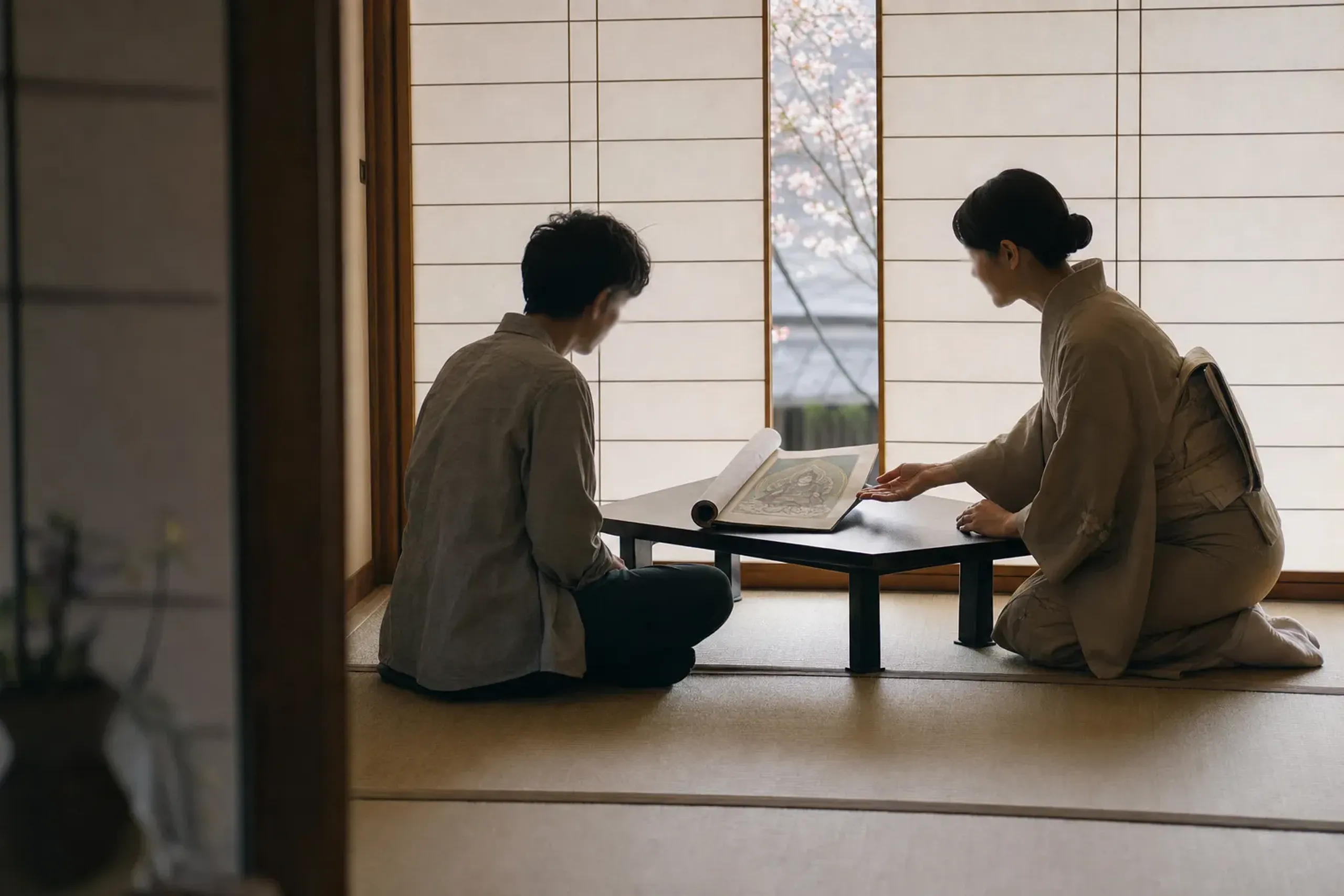
Every Zenkō-ji visit we arrange is woven into a tailor-made itinerary built around your rhythm, your interests, and your dates.
Spring 2027 arrives only once, and the ritual clock will not wait. If Zenkō-ji’s hidden Buddha and the Gokaichō unveiling speak to you, we invite you to begin the conversation early—contact us here to design a private spring journey through Nagano that is quietly, entirely yours.
Frequently Asked Questions
Is The Hidden Buddha At Zenkō-ji Ever Shown To Anyone?
No—the principal image at Zenkō-ji is a zettai hibutsu, and the temple explains that it has not been seen since 654, not even by the head priests.
During the great ceremony, visitors venerate the substitute image, the Maedachi Honzon, rather than the hidden principal image itself.
What Are The Confirmed Dates For Zenkō-ji Gokaichō 2027?
The next Zenkō-ji Gokaichō is confirmed for April 4 through June 19, 2027.
This is the period when the Maedachi Honzon is ceremonially unveiled and the outdoor pillar, linked by cord to the statue’s hand, becomes part of the experience.
How Long Should I Plan At Zenkō-ji If I Want Oasaji And Okaidan Meguri?
Plan at least half a day if you want sunrise Oasaji, Okaidan Meguri, and unhurried time in the precinct.
Spring crowds can add waiting time, and the dark corridor is far better experienced without any sense of being rushed.