In this guide
- 01What Are Zao’s Juhyo (Snow Monsters), And Why Are They Rare?
- 02When Is The Best Time To See Zao Snow Monsters (Juhyo)?
- 03How Do You See The Snow Monsters At Zao Without Skiing?
- 04Visibility At Zao: The Risk Most Guides Understate
- 05What Is The Zao Juhyo Light-Up, And Is It Every Night?
- 06The Night Cruiser Snowcat: A Different Way To Get Close After Dark
- 07Zao Onsen Is Not Where The Snow Monsters Are
- 08Zao Onsen As A Practical Base: Hot Springs, Bathhouses, And Ryokan Stays
- 09Where Should You Stay For Zao: Zao Onsen Or Yamagata City?
- 10Getting To Zao Onsen: The Cleanest Routes From Tokyo, Sendai, And Yamagata Station
- 11Ropeway Tickets And Policies: What The Official Zao Ropeway Page Says
- 12One Paragraph On Skiing Through The Juhyo (And Then We Move On)
- 13How Japan Royal Service Plans Zao For HNW Travelers: A Small-Group, Weather-First Rhythm
- 14Frequently Asked Questions
- 15Why Choose Japan Royal Service
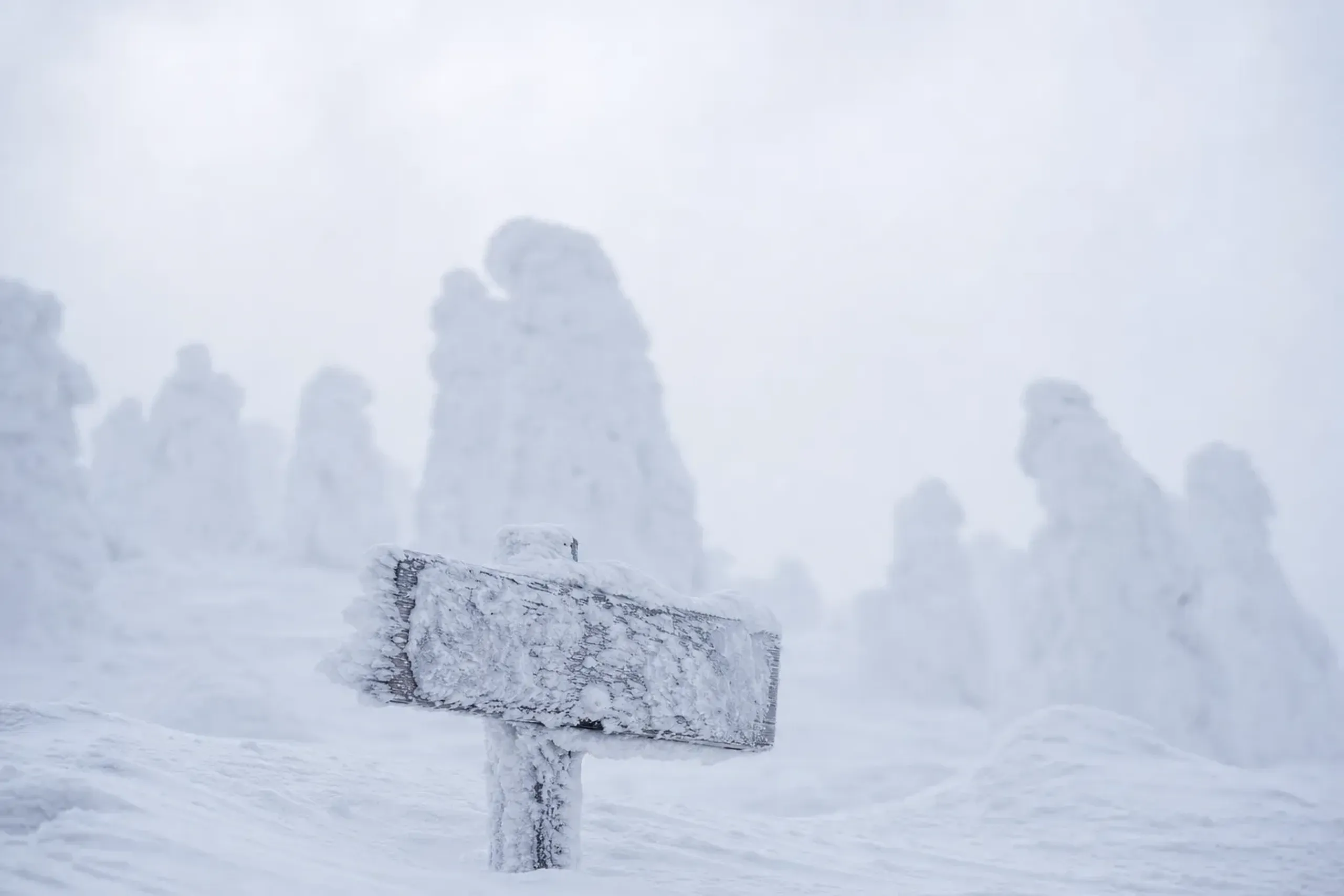
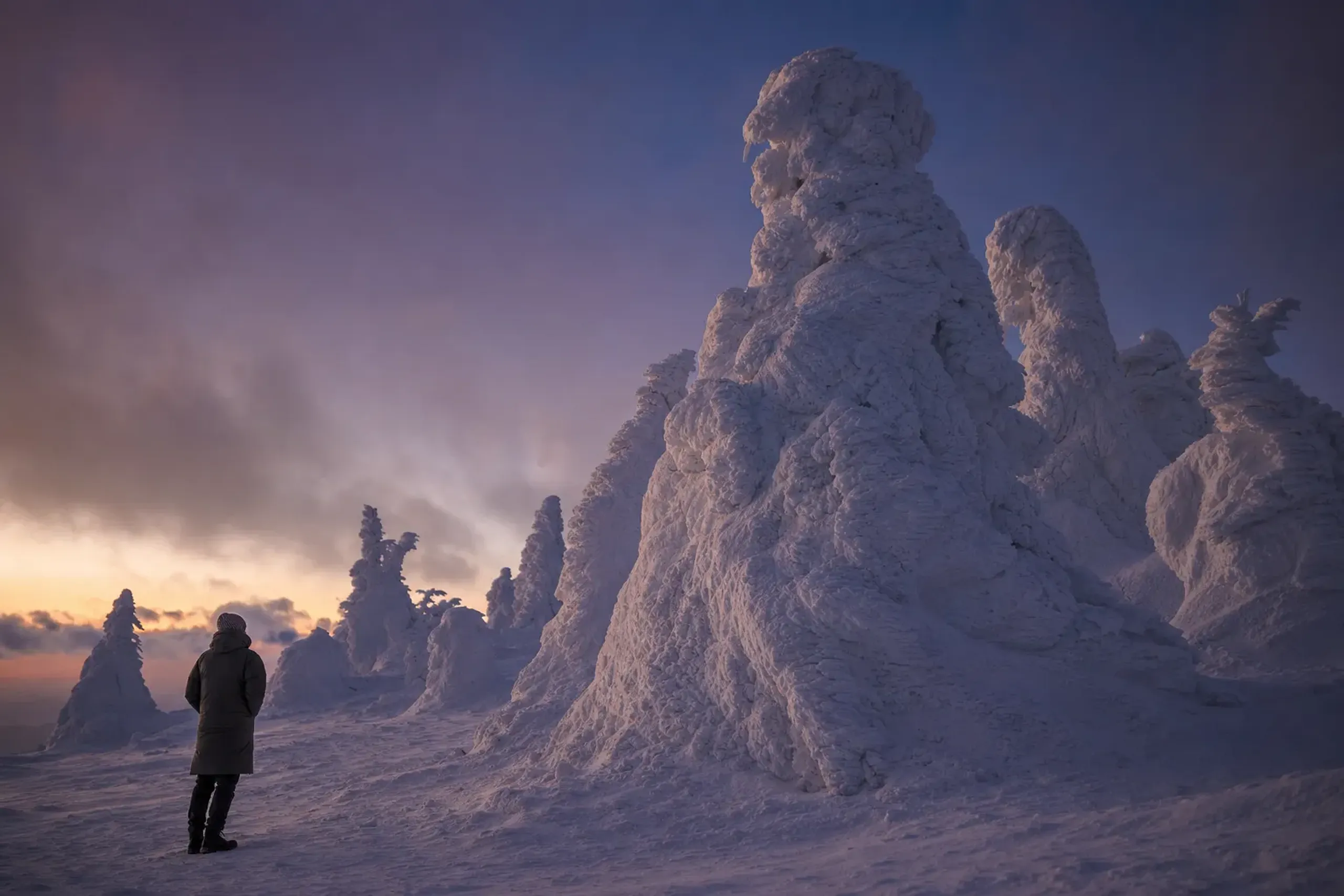
From a distance, they look like a mountain of figures turned to salt. Up close, they are ordinary conifers that have lost their outline, rebuilt by wind and ice into shapes that no longer read as “tree.” It feels slightly unreal. And it is also completely natural.
Zao’s juhyo—often called the “snow monsters”—are one of the rare winter phenomena in Japan that still resists tidy planning. Some days you get a white-out and a closed ropeway. Other days you step off at the summit and see an entire ridge of frozen forms, each one different.
This guide is written for travelers who want the experience without the usual misunderstandings. The big one: Zao Onsen is not where the snow monsters live. It’s where you recover afterward.
What Are Zao’s Juhyo (Snow Monsters), And Why Are They Rare?
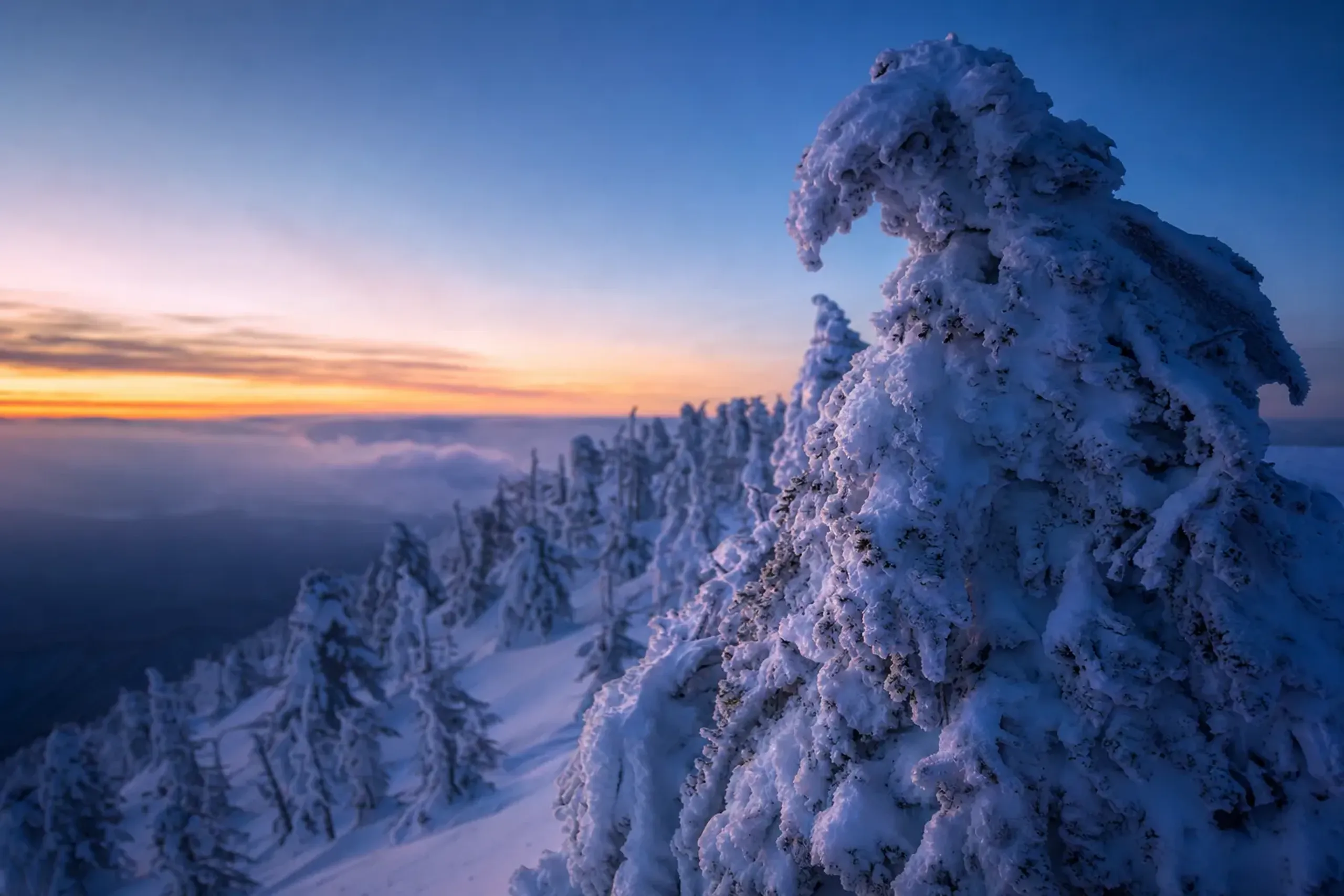
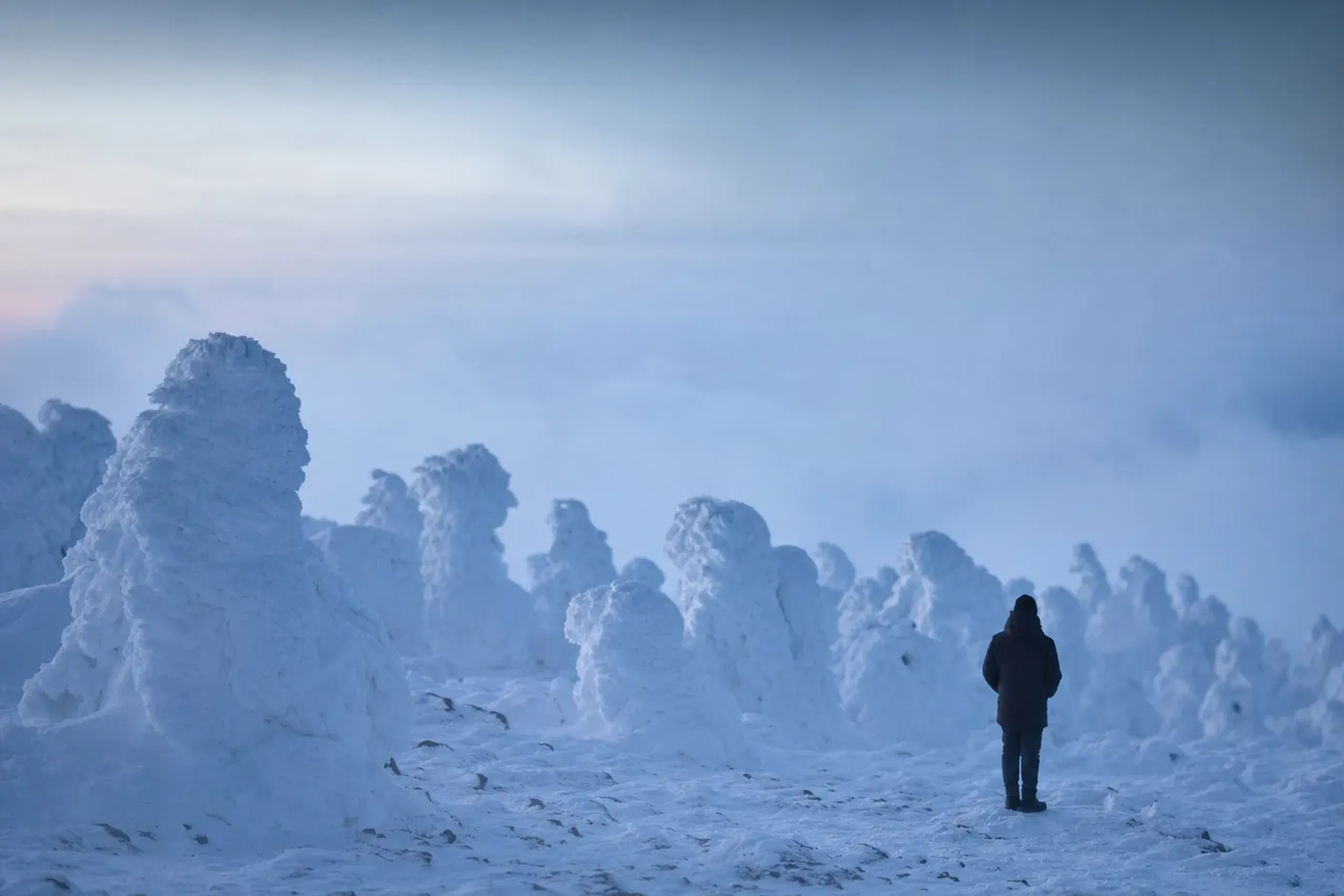
Zao’s juhyo form when strong Siberian winds drive freezing water droplets onto Aomori white fir trees at high altitude, slowly building thick ice-and-snow shells that distort the trees into new shapes.
The mechanism is specific. You need the right tree species, sustained cold, moisture that arrives as supercooled droplets, and wind strong enough to press that moisture onto the branches over and over. No single snowfall creates the effect. Time does.
This is why juhyo are not “a Zao thing” in the casual sense. They occur on only a few mountain ranges in northeastern Japan, which is why people travel to Yamagata in midwinter just to see a slope of trees turned into something stranger.
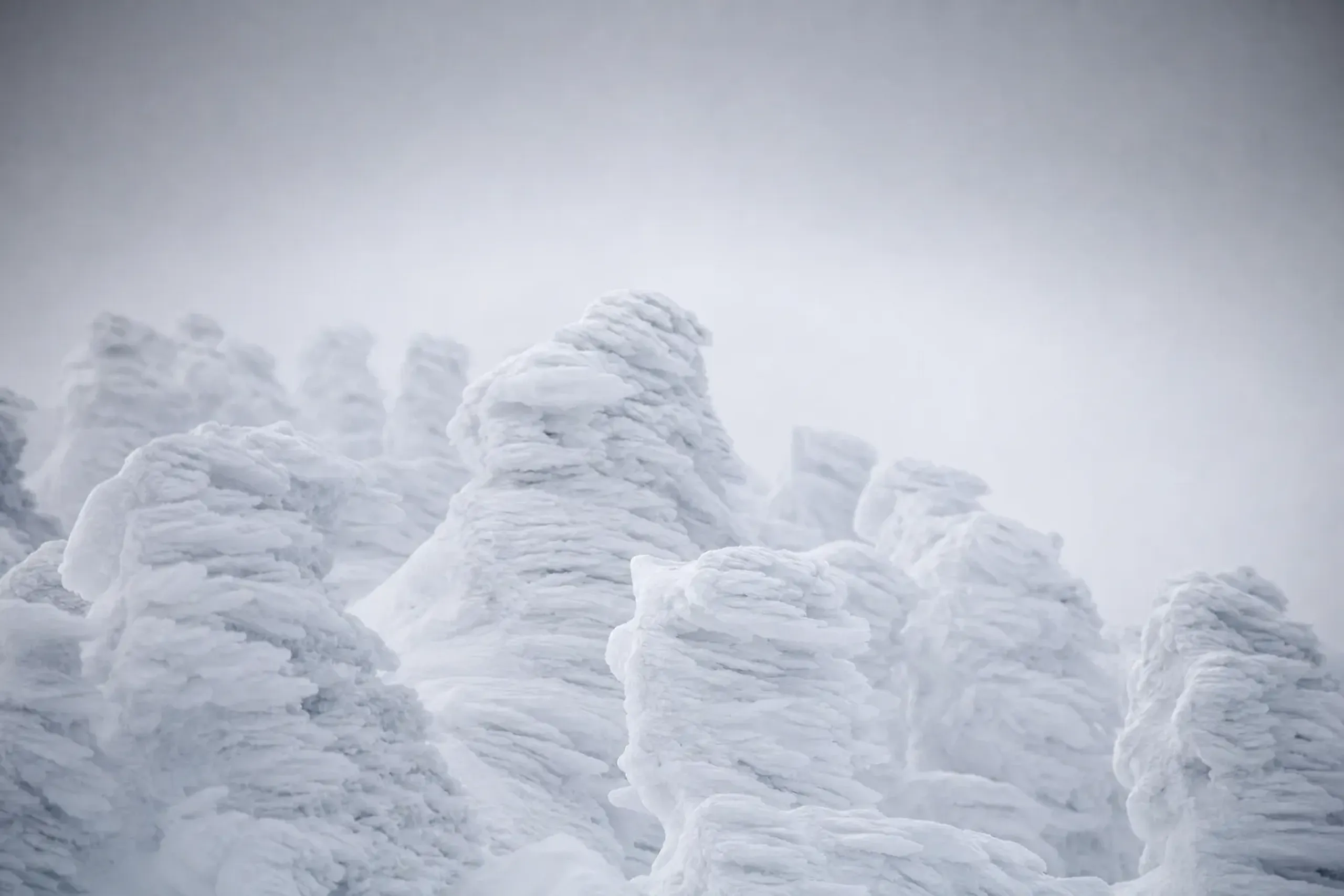
Juhyo are not a snowdrift—they are trees rebuilt by freezing wind.
We also find that the phenomenon lands best when you treat it like nature, not a theme. Quiet is part of it. So is restraint—very wabi-sabi in feeling—even when everything around you is white and loud with wind.
When Is The Best Time To See Zao Snow Monsters (Juhyo)?
The best time to see Zao’s juhyo at peak shape is February, after they develop through January and before they melt away toward the end of March.
They begin forming in December. At that point, you may see early build-up, but the silhouettes are often still legible as fir trees. January is when the mass starts to look “wrong,” in the best way.
February is when the forms typically feel fully grown. Big. Heavy. Sculptural. This is also when winter conditions can be most demanding, and timing matters.
By the end of March, they melt away. Not dramatically. Just a steady retreat, like a spell lifting.
How Do You See The Snow Monsters At Zao Without Skiing?
You can see Zao’s snow monsters without skiing by riding the two-stage Zao Ropeway from Zao Sanroku Station to Jizo Sancho Station and viewing the formations from the summit observation area.
Access is straightforward in concept. The Zao Ropeway runs in two stages: first from Zao Sanroku Station up to Juhyo Kogen Station, then onward to Jizo Sancho Station near the 1,736-meter summit area of Mt. Jizo.
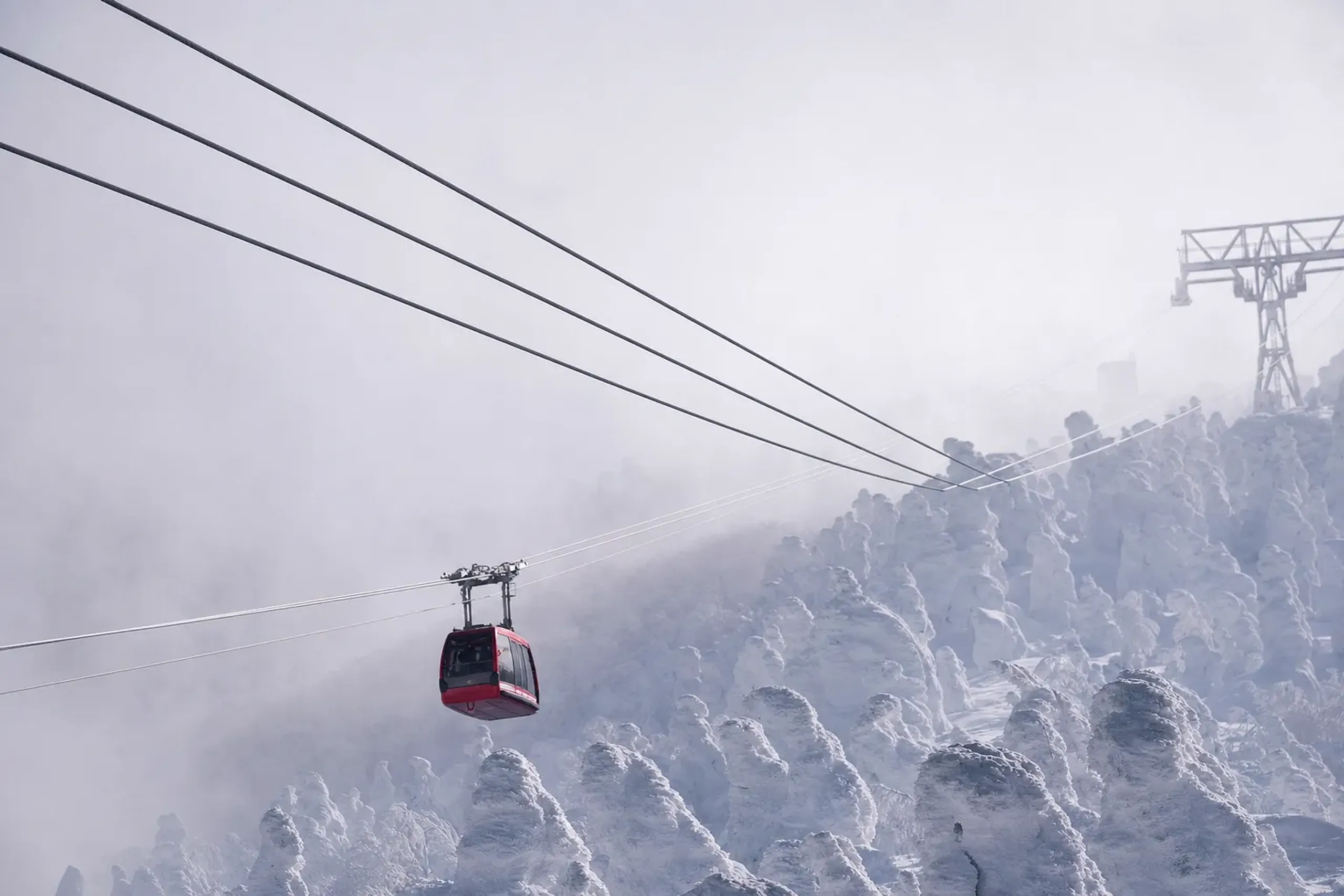
No skis required. Just winter clothing and patience.
There is a major qualitative difference between watching from inside the ropeway car and stepping off at Jizo Sancho. Inside the car, you are a moving observer. At the summit, the cold has teeth, the wind has direction, and the trees feel close enough to study.
At Jizo Sancho, you reach an observation area among the formations. A safety rope marks the boundary. You observe rather than walk freely among the ice trees, and that boundary is there for a reason.
Visibility At Zao: The Risk Most Guides Understate
Visibility at Zao is not guaranteed; on some days, weather can reduce the juhyo experience to almost nothing.
This is the honesty test for any Zao planning. The mountain decides. You can arrive in the right month and still see a blank wall of white, with no depth and no forms, because the wind and cloud are doing what they do.
We plan Zao with a mindset closer to a high-stakes outdoor shoot than a checklist tour. You build in flexibility. You keep your schedule lighter. You aim for multiple chances if juhyo are the central reason you came.
If you only have one day, we tell guests to treat it as a possibility, not a promise. That framing saves the trip.
What Is The Zao Juhyo Light-Up, And Is It Every Night?
The Zao Juhyo Light-up runs on selected dates—generally weekends plus roughly ten additional days—from late December through early March, not every night.
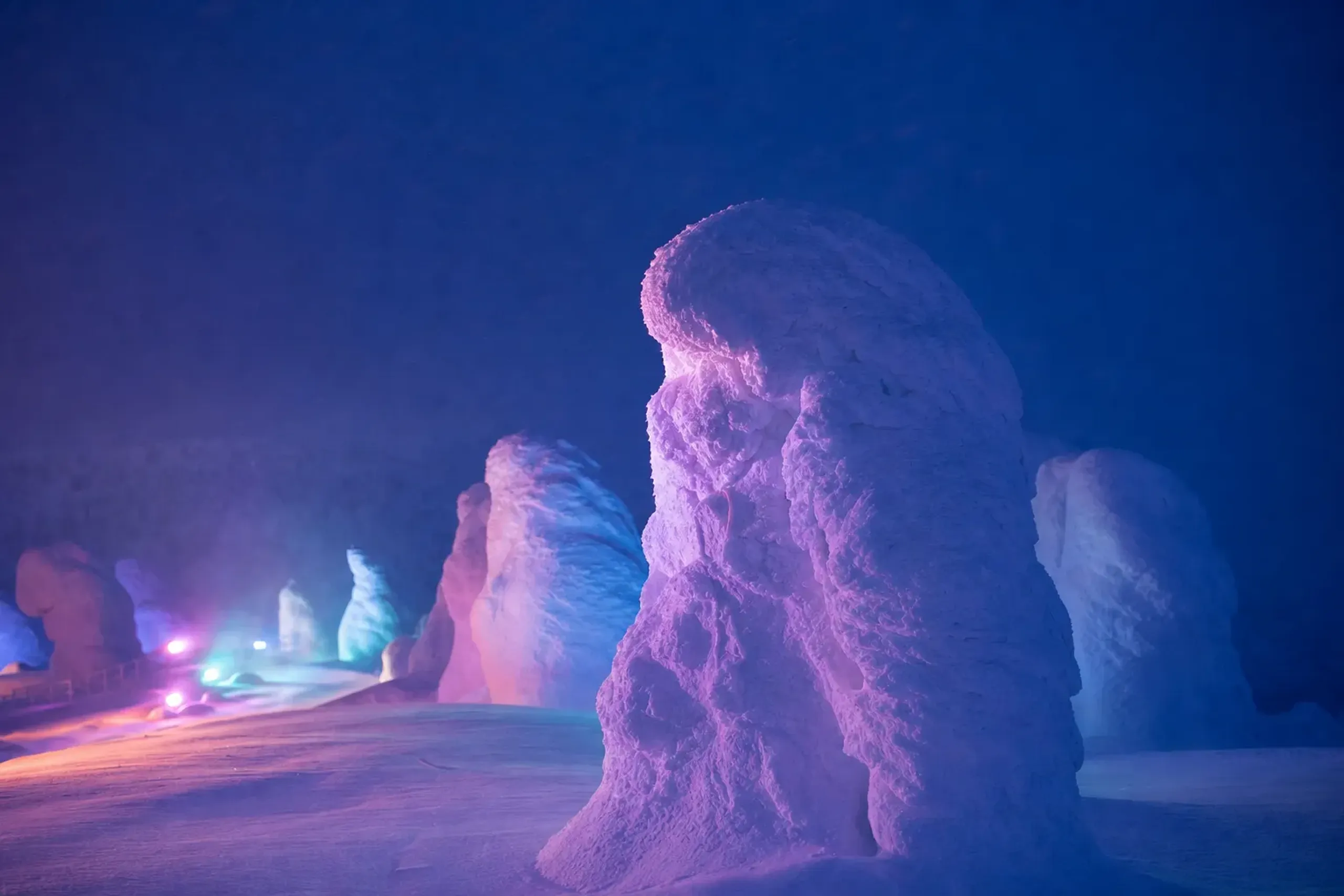
In other words, you can’t assume you’ll “catch it after dinner.” The light-up is part of the Zao Juhyo Festival programming, and it is scheduled. The dates vary by season, so we confirm the exact calendar when you are planning.
When it does run, the mood changes. The figures become more silhouette than detail. The snow reflects colored light in a way that feels theatrical, even though the subjects are just trees under ice.
It is also colder than most people expect. The summit cold after dark is a different category. Small mistake: underdressing.
The Night Cruiser Snowcat: A Different Way To Get Close After Dark
If you want a closer night experience, the “Night Cruiser” snowcat tour is a heated ride that brings visitors near the illuminated juhyo after dark, typically running about 70–80 minutes.
This is not the same experience as standing at the ropeway summit at night and looking outward. The Night Cruiser shifts you into a guided viewing rhythm: approach, pause, look, move again. The warmth inside also matters, especially for travelers who don’t enjoy lingering in extreme cold.
It is a distinctive option when the light-up dates align with your stay. It is also a way to keep the evening focused, rather than improvising logistics in winter conditions.
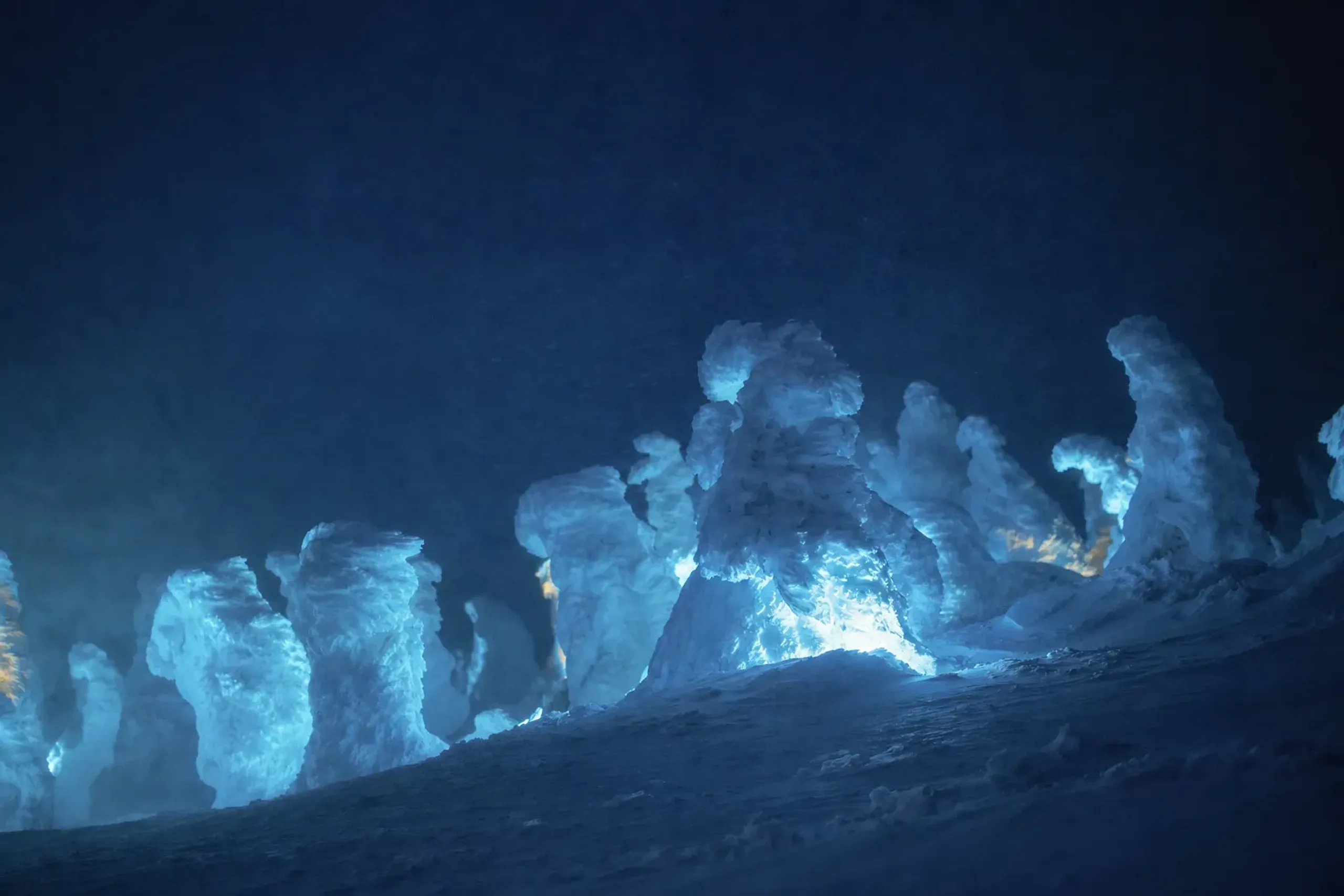
Guests interested in the Night Cruiser should plan around the selected operating dates and weather realities. Even a perfect plan can be changed by the mountain.
Zao Onsen Is Not Where The Snow Monsters Are
Zao Onsen is the recovery base, but the juhyo are at the summit area reached by ropeway, so you must ride the Zao Ropeway during operating hours regardless of where you stay.
This misconception is common and understandable. The destination name is shared. Photos online blur the geography. But the effect is practical: if you imagine “stepping out of your ryokan into the snow monsters,” you’ll be disappointed.
Instead, think in two parts. Mountain time for the phenomenon. Town time for bathing, meals, and sleep.
That separation is not a drawback. It creates a pleasing rhythm: exposure to severe weather, then return to hot water and quiet interiors. Wabi-sabi again, in a different register.
Zao Onsen As A Practical Base: Hot Springs, Bathhouses, And Ryokan Stays
Zao Onsen is known for strong acidic sulfur springs, and many ryokan and hotels in the town offer hot spring baths for staying guests.
The Zao Onsen Tourism Association describes the area as a top spot in Japan for strong acidic hot springs, sometimes called the “Springs of Beauty.” The water profile is part of the town’s identity, not a side amenity. You notice it.
For many HNW travelers, this is where Zao becomes more than a single photograph.
You come back chilled. You bathe. You eat simply. Then you sleep hard.
One forward-looking detail for repeat visitors: Hoshino Resorts has announced that KAI Zao is scheduled to open in Zao Onsen on October 15, 2026. If you are planning future winter seasons, this adds a new high-comfort option in the town’s ryokan landscape.
Where Should You Stay For Zao: Zao Onsen Or Yamagata City?
Zao Onsen is the better base for easy mountain access and night viewing, while Yamagata City offers broader dining and accommodation choice but adds distance from the ropeway and night illumination.
Staying in Zao Onsen keeps your day tight. Less transit. More tolerance for weather pivots. It also makes the night light-up and Night Cruiser style experiences feel realistic, because you are not negotiating a long late return.
Yamagata City is a different proposition. You gain a wider spread of restaurants and hotels, and you are close to JR Yamagata Station. You also put a buffer between yourself and the mountain, which can be either comfort or friction depending on how you travel.
To make the decision concrete, JR Yamagata Station to Zao Onsen is roughly 40–45 minutes by bus. That number matters when it is snowing sideways and you are tired.
Getting To Zao Onsen: The Cleanest Routes From Tokyo, Sendai, And Yamagata Station
Zao Onsen is most easily reached via JR Yamagata Station, with an approximately 40-minute bus to Zao Onsen that departs about hourly.
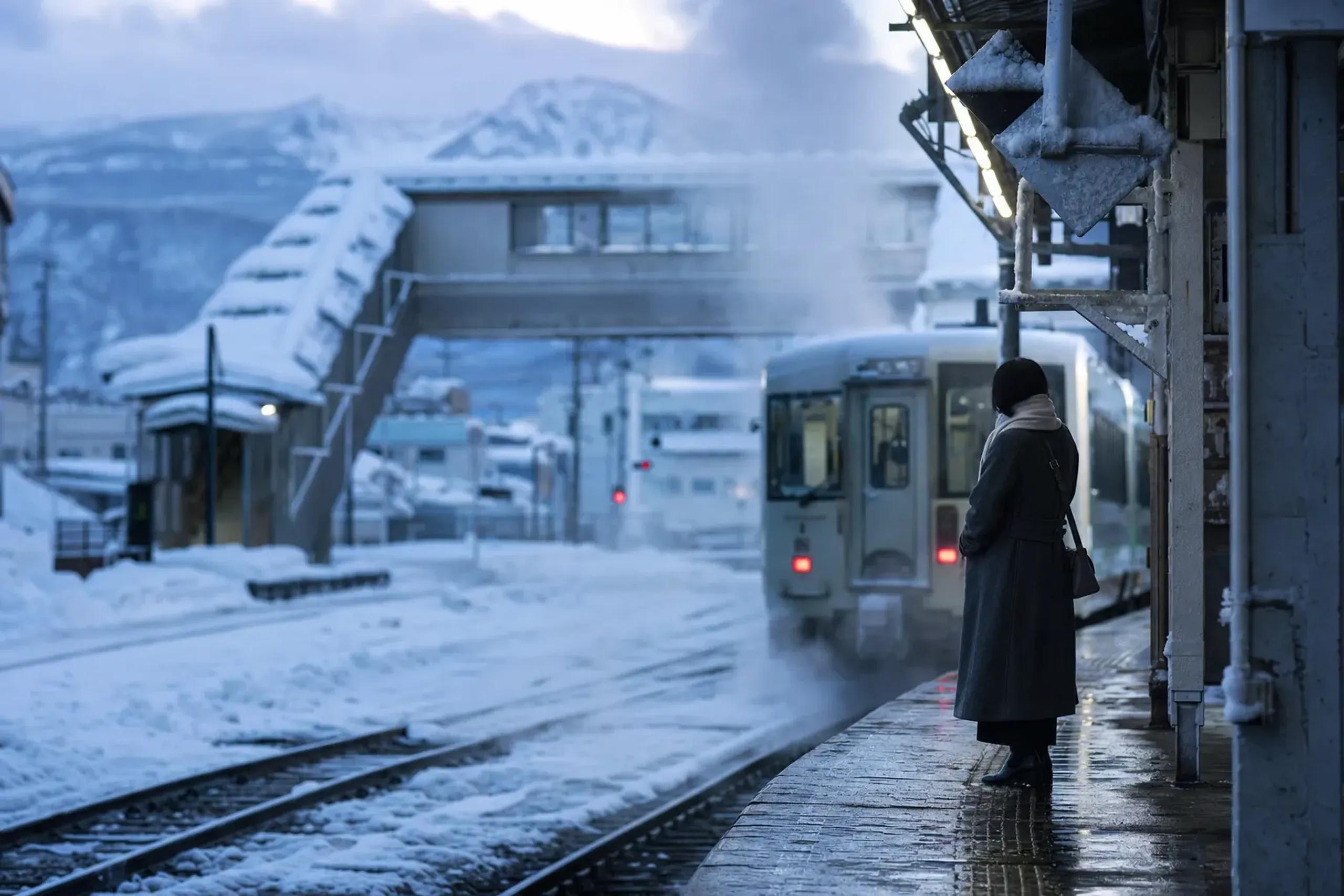
If you are coming via Sendai, the straightforward public-transport chain is Sendai Station to Yamagata Station on the Senzan Line, then the bus onward to Zao Onsen. It is sensible. It is also not always pleasant with winter luggage.
Many of our guests prefer a private car for winter arrival and departure because it reduces small frictions: wet sidewalks, platform transfers, waiting in the wrong line, carrying bags in snow. The first mention matters, so here it is: our private transportation is often the difference between arriving composed and arriving depleted.
If you are building a wider Tohoku winter itinerary, we keep connections conservative. You want slack. Tight plans break first in mountain weather.
Ropeway Tickets And Policies: What The Official Zao Ropeway Page Says
The official Zao Ropeway winter ticket page notes that priority boarding applies only when boarding the Sanroku Line upward from Zao Sanroku Station to Juhyo Kogen Station.
That is a small sentence with real consequences on busy days. Priority boarding is not an all-lines, all-directions privilege. It is specific to that uphill segment.
The same official page also states that tickets cannot be cancelled or refunded after purchase except in the event of a suspension of ropeway service. Read that twice. It changes how you should think about “buy now, decide later.”
We do not publish fixed hours or prices because those details change, and winter operations respond to conditions.
Our concierge team at Japan Royal Service confirms the current operating plan and helps guests time their day so they spend less of it in queues.
One Paragraph On Skiing Through The Juhyo (And Then We Move On)
Skiers can experience the formations more intimately on certain runs, including the Zangezaka Juhyogen Course, which threads through the juhyo on a roughly 10-kilometer descent.
That said, you do not need to ski to get the point of Zao. Many of our guests never clip into bindings here. They go up for the phenomenon and come down for the baths.
If you do ski, treat the mountain with respect. Visibility swings fast, and conditions can turn watchful people into hurried people.
How Japan Royal Service Plans Zao For HNW Travelers: A Small-Group, Weather-First Rhythm
The difference between an average Zao day and a great one is usually not “more activities.” It is sequence. It is timing. It is how you react when visibility collapses.
Our team at Japan Royal Service tends to plan Zao with a narrow focus: give you multiple chances at the summit experience, keep transitions calm, and protect your privacy in a small town where everyone notices newcomers. Discretion matters here. Quietly.
We also build in cultural texture where it fits. Not as a museum crawl. If you want it, we can place a shokunin-led encounter elsewhere in the wider itinerary, because pairing a raw winter phenomenon with human craft creates a sharp contrast that stays with you.
If your trip extends beyond Zao, we recommend reading our related Tohoku pieces for context, then keeping this Zao day tightly framed. For example, our guide to Tohoku’s Three Great Festivals in One Week helps you understand the region’s scale, and our piece on Zaō Onsen In Spring: The Mountain After Ice Monsters Leave is useful if you are considering a second, quieter visit outside peak winter.
Frequently Asked Questions
Can I See The Zao Snow Monsters If I Stay In Yamagata City For Two Nights?
Yes—you can see the juhyo on a day trip by traveling from Yamagata City to Zao Onsen and riding the Zao Ropeway to the summit.
The trade-off is time and flexibility. You’ll spend more of the day in transit, and night illumination becomes harder unless you plan a late return.
Is The Zao Juhyo Light-Up Available Every Night In February?
No—the Zao Juhyo Light-up runs only on selected dates from late December to early March, generally weekends plus roughly ten additional dates.
The exact calendar varies by season, so we confirm the operating dates when planning your trip.
What Should I Do If The Ropeway Summit Is A White-Out On My Only Day?
If visibility collapses, treat the day as a weather call: shift to onsen time, keep your schedule light, and if possible try again another day.
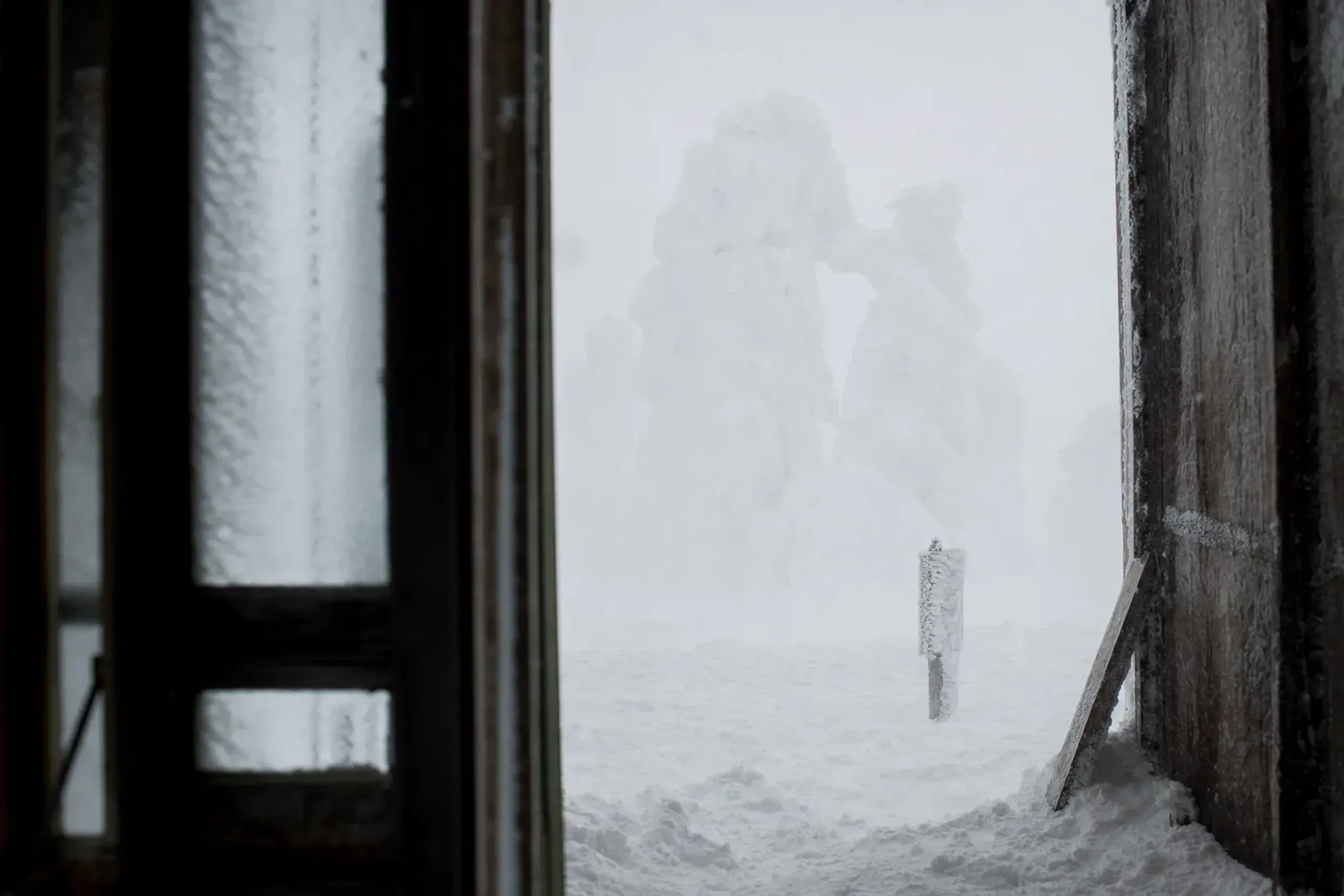
There is no trick that replaces clear conditions. The best mitigation is building flexibility into the itinerary from the start.
Do I Need To Ski To Reach The Juhyo Viewing Area?
No—non-skiers can ride the two-stage Zao Ropeway to Jizo Sancho Station and access the observation area on foot.
You will still need winter clothing and steady footwear, because you are stepping into an alpine environment.
Why Choose Japan Royal Service
Zao rewards travelers who value rare nature, clean logistics, and quiet. It also punishes rigid plans. Our concierge team at Japan Royal Service approaches the snow monsters with a weather-first mindset, shaping the day around what the mountain is willing to show.
We also work in the details that matter for HNW travelers: discreet movement, considered pacing, and a base that feels restorative rather than merely convenient. When the light-up dates align, we incorporate evening viewing with clear expectations, not hype.
For guests who want a broader winter route, we place Zao inside a measured Tohoku itinerary, so the snow monsters feel like the focal point they deserve to be—not a rushed checkbox between trains.
To discuss Zao’s juhyo window, visibility risk, and the right base for your party size, reach our team privately via WhatsApp or LINE, or contact us here.