In this guide
- 01Opening Scene: The Fuji River Bed Before The Pink Arrives
- 02The Spring Season At A Glance: What Is Fixed, And What Is Not
- 03How Does The Sakura Ebi Fishery Work In Suruga Bay During Spring?
- 04The Port At Dawn: Yui, Night Fishing, And The Reality Of The Auction
- 05Where Can You See Sakura Ebi Sun-Drying Near Yui?
- 06Yui Sakura Ebi Festival: What To Expect, And What Can Change
- 07At The Table: Kakiage, Kamaage, Dried Shrimp—And The Question Of Raw
- 08The Tokaido Setting: Yui-juku, Hiroshige, And Satta-toge
- 09How Do You Plan A Day Trip To Yui Sakura Ebi Season From Tokyo?
- 10Begin Your Spring At Suruga Bay
Before the first shrimp touches the ground, the Fuji River bed looks almost blank.
Wide gravel. Pale sand. A wind that smells faintly of salt, even though the sea lies somewhere over there, out of sight.
You wait. Quietly.
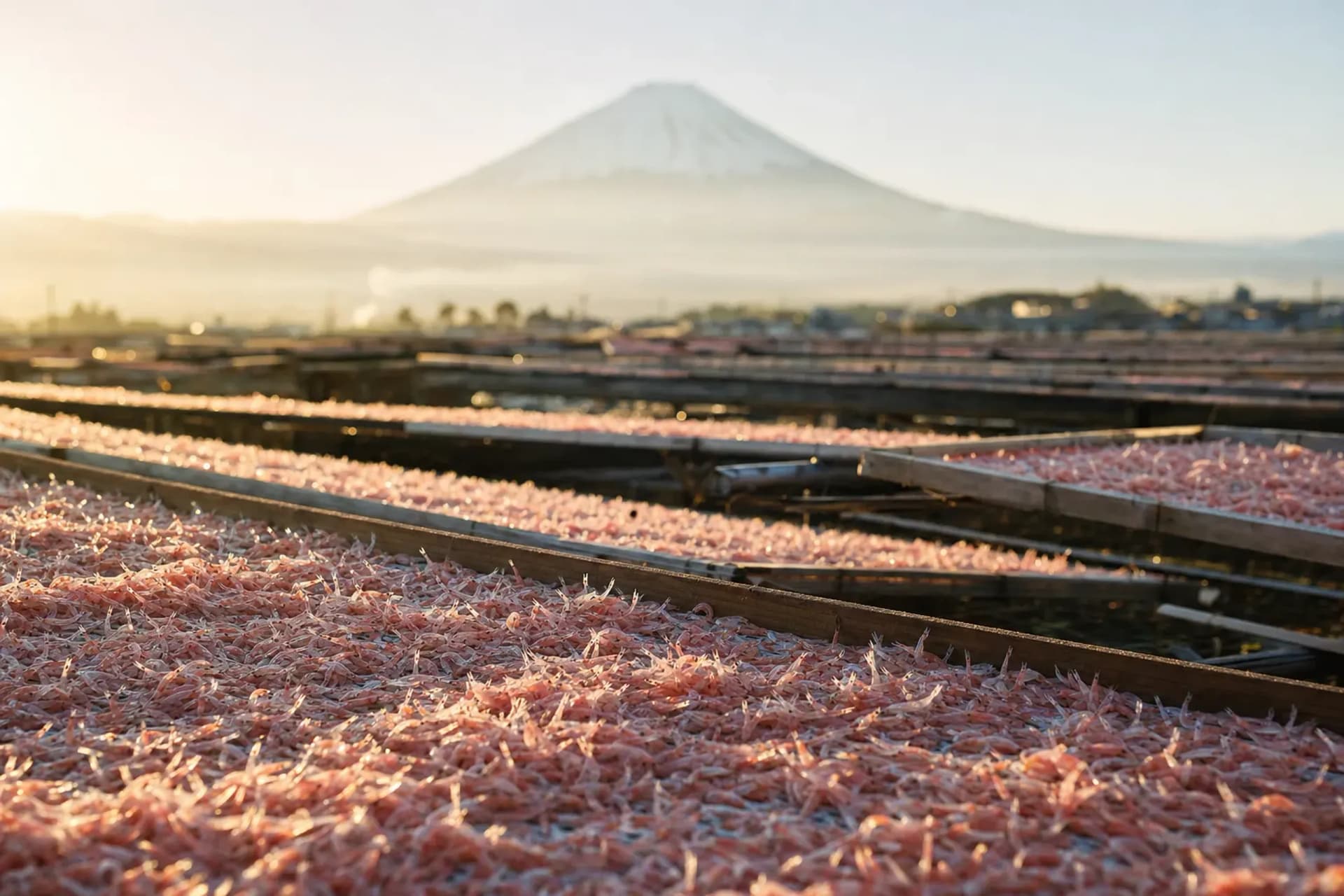
If the boats fished the night before and the sky clears, morning turns pink—sakura ebi spread out to dry in neighbouring Kambara, with Mount Fuji sometimes appearing like an afterthought behind a veil of cloud.
Opening Scene: The Fuji River Bed Before The Pink Arrives
You come early because the light is softer, and because the day can change fast.
The riverbed in Kambara is not a stage set. It is working ground.
There are no guarantees here—and that, in truth, is the point.
When conditions align, the shrimp are laid out after a night’s fishing at Yui. The colour is not “cherry blossom” in a poetic, borrowed way—it is genuinely rosy, like a thin carpet that makes the gravel look newly washed. This is the kind of moment that reveals itself only to those who have arranged to be in exactly the right place, at exactly the right hour, in exactly the right week. Timing is everything, and timing is precisely what we plan around.
The Spring Season At A Glance: What Is Fixed, And What Is Not
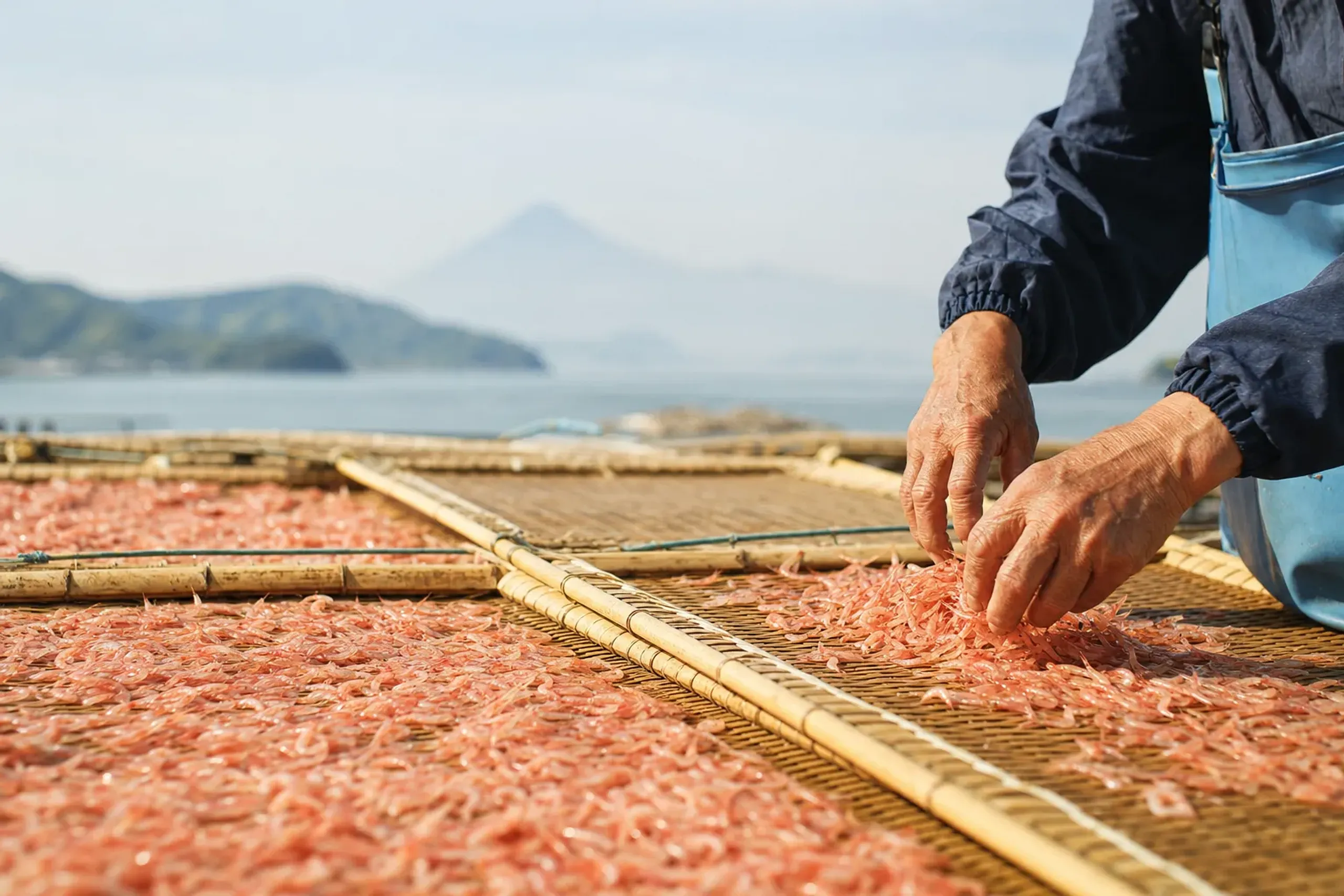
The spring sakura ebi season typically runs from late March to early June, but the exact dates—and the number of fishing nights—are confirmed only closer to the time.
That one line is the key to planning well.
In Shizuoka, sakura ebi (sakura shrimp) are commercially fished in Japan only in Suruga Bay, and they are landed at two ports: Yui (Shizuoka City) and Oigawa (Yaizu City). The season is short by design, and the fishery is carefully managed with rules that include closed periods. This sense of shun—knowing precisely what to experience, where, and in which brief window—is the quiet luxury at the heart of a visit like this.
So what is fixed? The geography. The rhythm of night fishing. The fact that sun-drying—when it happens—takes place on the Fuji River bed in Kambara, not at Yui Port.
What is not fixed is everything that depends on nature and operations: weather, sea conditions, rest days, and whether landings are large enough for an auction or for fresh raw servings on a given day.
Key fact: The shrimp landed at Yui are dried the next morning on the Fuji River bed in Kambara. If you only go to the port, you can miss the “red carpet” completely.
How Does The Sakura Ebi Fishery Work In Suruga Bay During Spring?
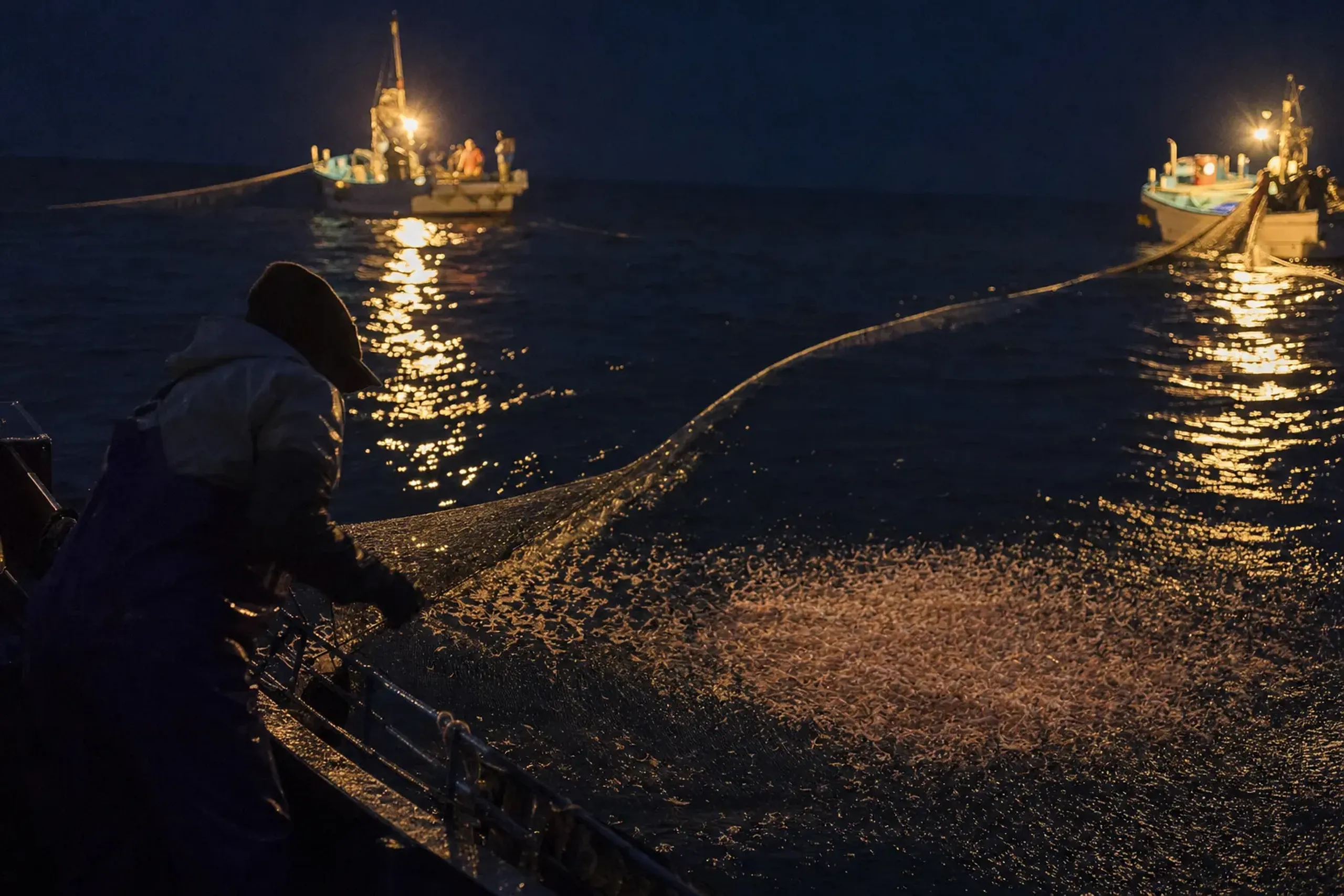
In Suruga Bay, sakura ebi fishing is done at night using two-boat seine nets under a licensed system operated jointly, with 120 boats arranged in 60 units.
That structure matters, because it explains the very feel of the season.
These are not solo boats improvising whenever they like. The fishery operates within a regulated window—typically late March to early June in spring—and there is a closed period by prefectural regulation from 11 June to 30 September.
In a recent reference year (2024), there were 19 fishing days in spring and 15 in autumn. Even inside the “season,” fishing does not happen every night. Saturday and pre-holiday nights are, in principle, rest days, and openings can be postponed by weather.
For a traveller, the practical lesson is simple: plan for a week, not a single fixed “must-happen” morning—unless you can accept that you might see only the setting and taste only boiled or dried shrimp. We design the journey so that whichever way nature turns, the day still rewards you.
The Port At Dawn: Yui, Night Fishing, And The Reality Of The Auction
Yui Fishing Port is small enough to feel personal, and busy enough to remind you it is not laid on for visitors.
You do not dress for a photograph. You dress for damp wind.
At this hour, every sound is sharper.
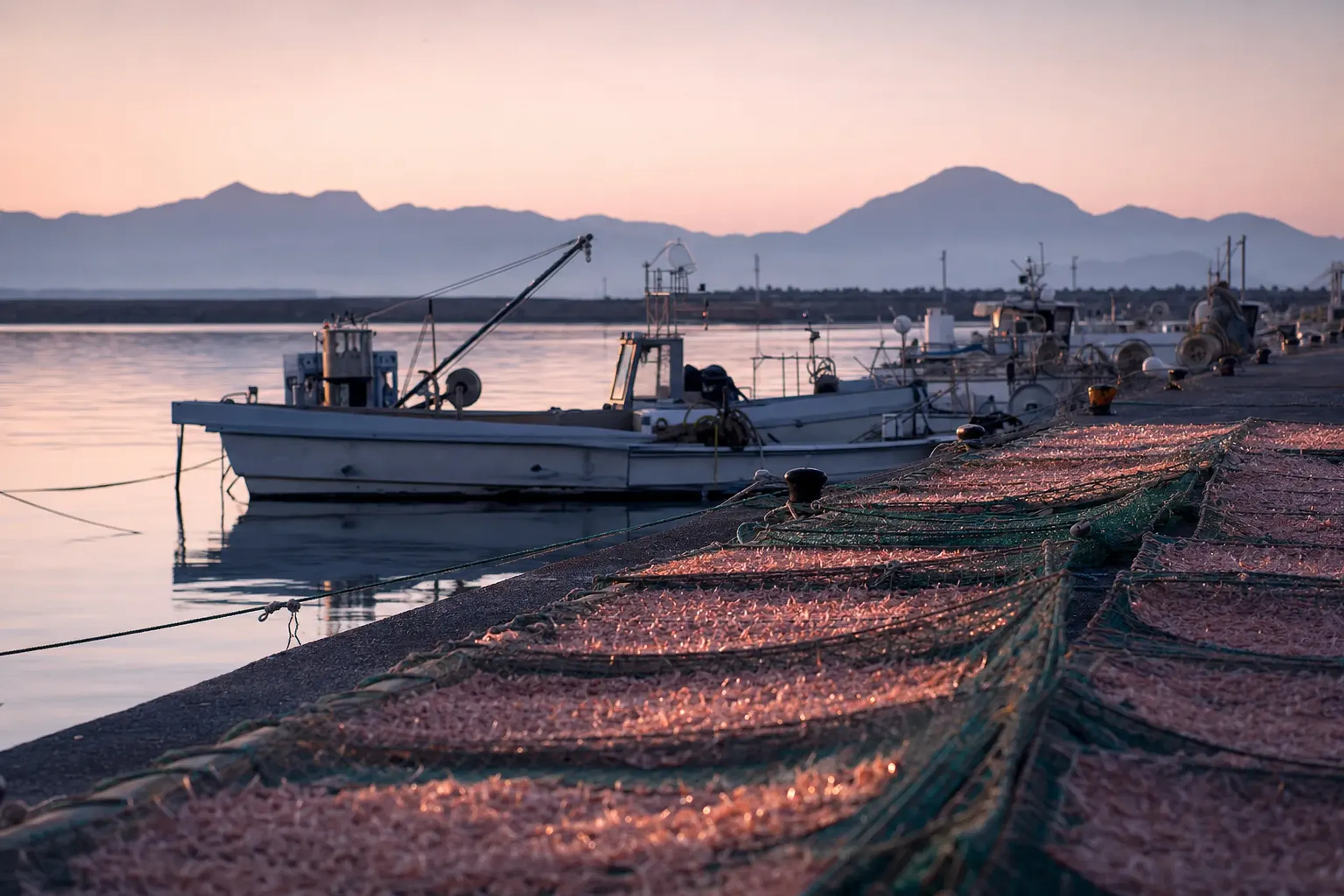
The boats fish at night. If landings come in, morning can bring an auction—but even that is not promised. Shizuoka City itself has noted that a first auction can be cancelled depending on landings.
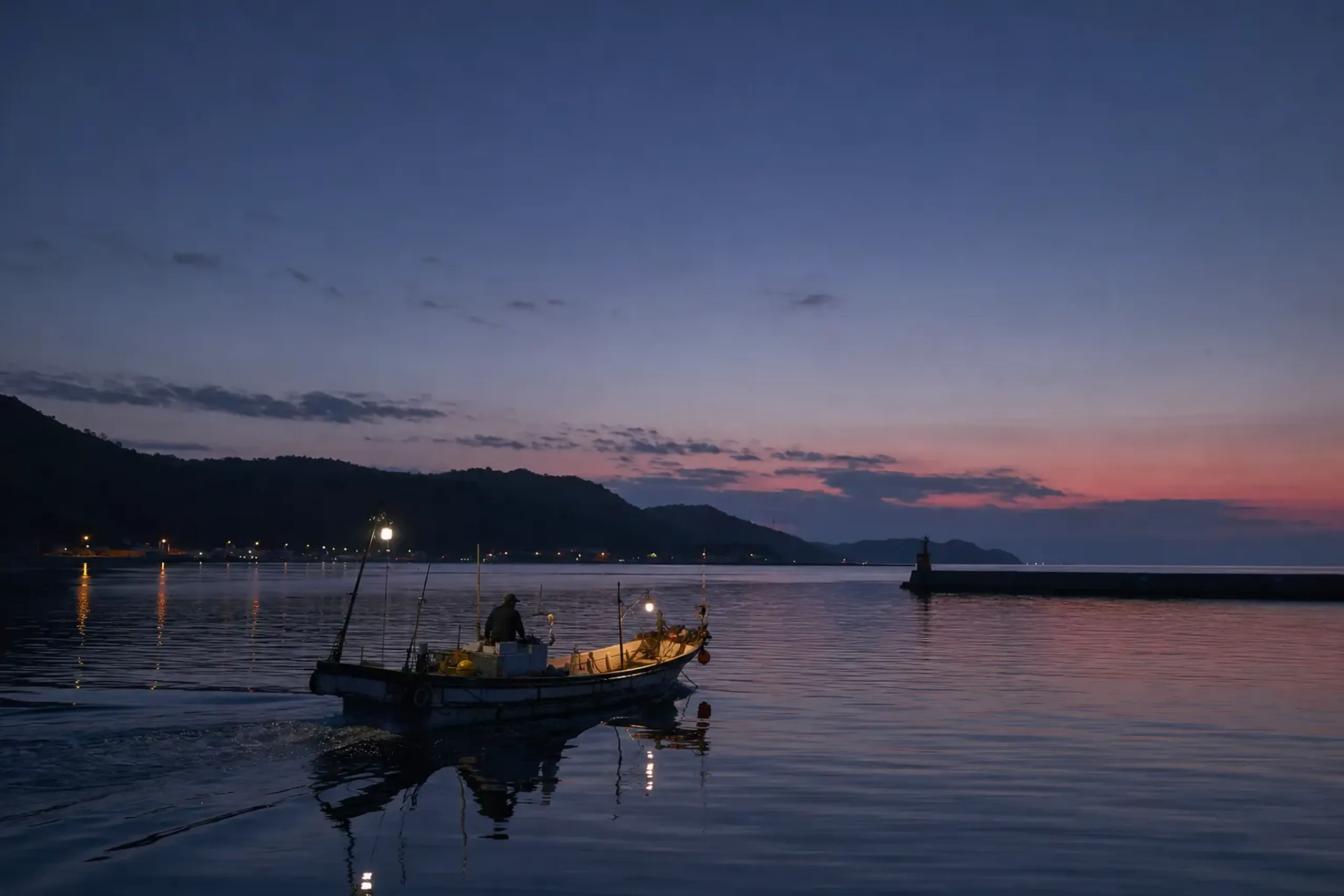
That honesty is useful. It keeps your expectations clean.
Our preferred way to experience Yui is with a discreet, English-speaking cultural interpreter guide who explains what you are seeing without turning a working port into theatre. The guide can place the fishery in context—how the joint operation functions, why rest nights exist, and why the season is managed so tightly. It is access with respect, the kind that opens doors quietly rather than loudly.
For transport, many guests choose a private chauffeured transfer rather than piecing together taxis, station walks, and timing guesswork; so if you are comparing options, see our private transportation service overview for the style of vehicles and pacing we recommend for a morning like this.
What You Can Reliably Do At Yui Port
The most dependable experiences are the simple ones.
Observe. Listen. Taste what the port can serve that day.
- Walk the public areas with a guide who respects boundaries and safety.
- Shop at the cooperative’s direct-sales shop for frozen raw, boiled (kamaage), dried shrimp, and related products—confirm days and hours close to your visit.
- Choose cooked preparations first; treat raw as a welcome bonus when it is available.
Where Can You See Sakura Ebi Sun-Drying Near Yui?
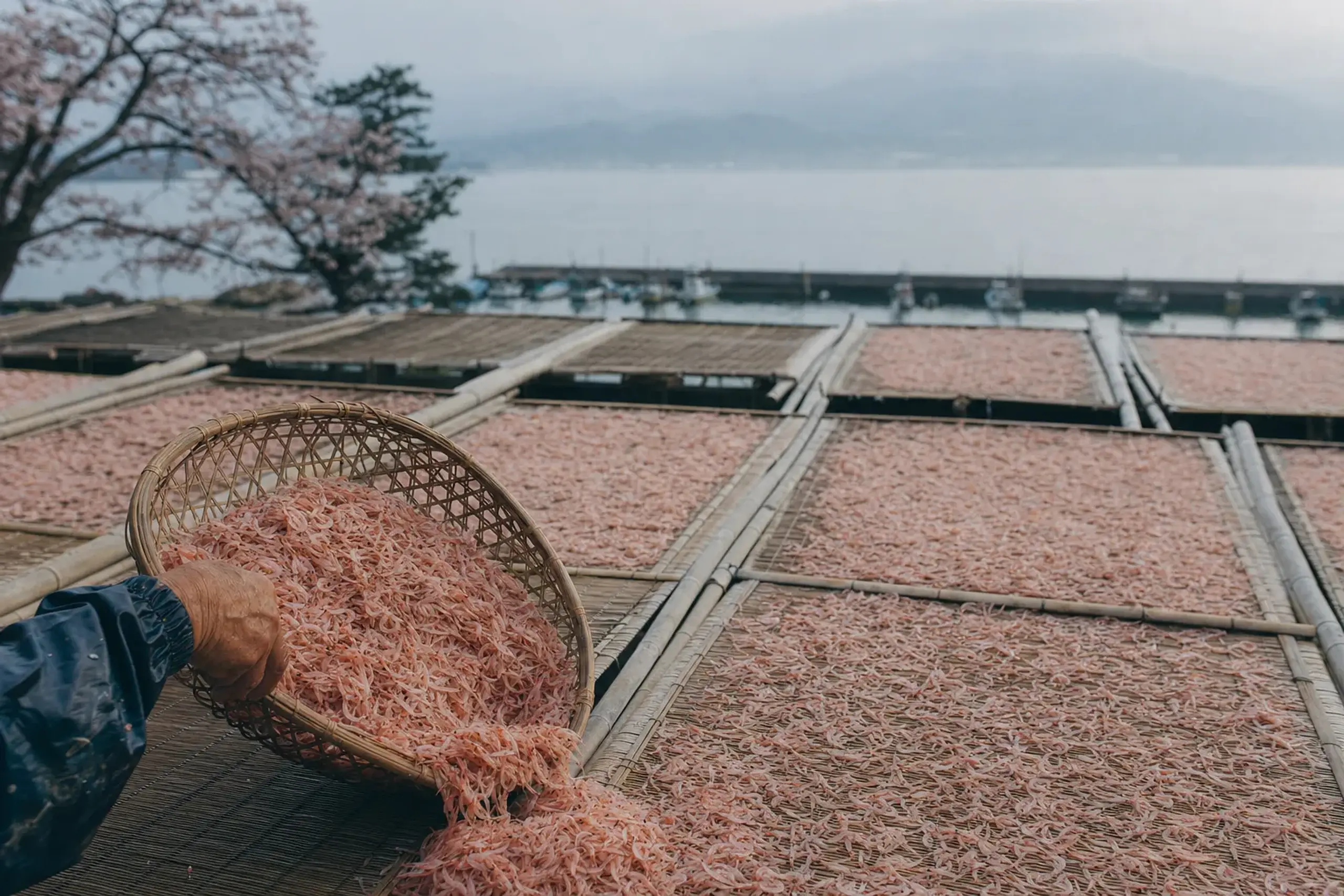
Sakura ebi sun-drying happens on the Fuji River bed in Kambara, and it usually takes place the morning after a night of fishing, when the weather is clear.
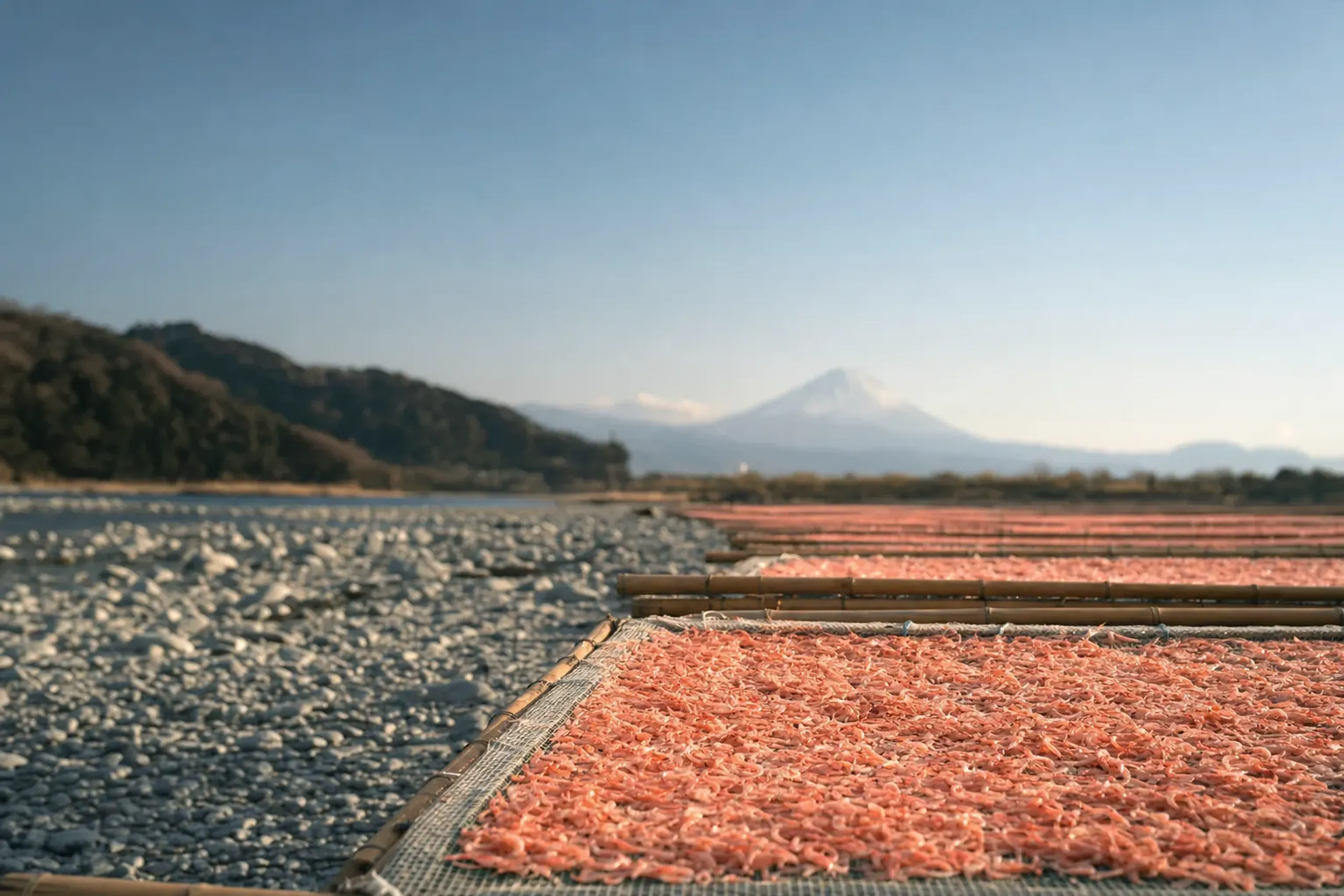
This is the moment many travellers miss, because they assume “drying” means “at the port.”
Kambara sits next to Yui in Shizuoka City, and the drying ground is a wide, open riverbed where the shrimp can be spread out beneath the sun. Shizuoka’s own guides describe the scene as a “red carpet,” and when it happens, it is hard to forget.
The logistics are plain but important. The nearest station is JR Shin-Kambara Station, about 3 km away—roughly 50 minutes on foot, or about 10 minutes by taxi. A private car makes the timing calmer, especially if you are trying to catch both the port atmosphere and the riverbed in a single morning.
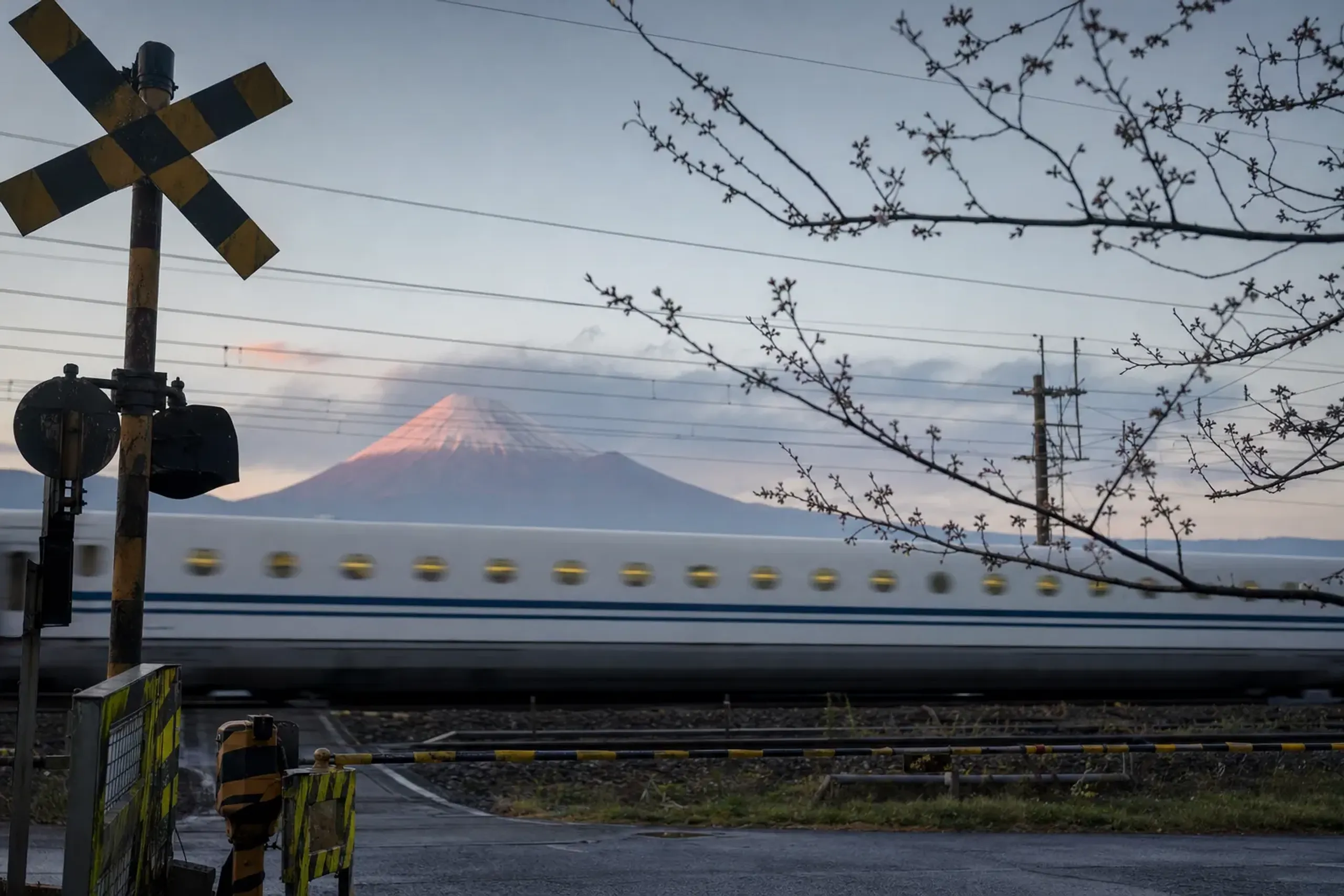
One more truth: a Fuji view is not something anyone can promise. Haze and cloud do as they please. On some mornings, you catch a faint outline. On others, nothing at all. The reward, when it comes, is all the greater for being uncertain.
A Photographer’s Approach (Without Getting In The Way)
If you care about images, think like a respectful observer.
Keep your distance. Do not block pathways.
Move slowly.
We suggest arriving with a flexible window, shooting the wide scene first, then the details: the texture of the shrimp, the edges of the drying sheets, hands at work—if you have clear permission and you are not interrupting.
Yui Sakura Ebi Festival: What To Expect, And What Can Change
The Yui Sakura Ebi Festival is a public event at Yui Fishing Port, and in a worked example, the 2026 festival was scheduled for Sunday 3 May, 08:00 to 14:00, with an opening ceremony at 07:45.
It is lively, and it is also fragile.
Rough weather can cancel it as a rule, and details are confirmed closer to the date. In 2025, it was held on Sunday 8 June. No future dates are published far in advance, and the cooperative has stated it hopes to hold it again.
What the festival typically offers is refreshingly straightforward: sales of fresh and frozen sakura ebi, kakiage on sale, stage events, local stalls, and a free sakura ebi giveaway (first come, weather permitting). It is not a “ticketed” affair. It is a community morning—and that unpolished authenticity is exactly its charm.
Key fact: There is no parking at the port for the festival, and traffic restrictions apply; visitors are asked to use public transport. JR Yui Station is about a 10-minute walk.
How We’d Time A Festival Morning (Without Promising Outcomes)
Arrive early if you dislike queues.
Eat first. Shop second.
Leave before you tire.
We often suggest a short, focused festival visit—enough to taste and observe—then a shift to Kambara for the drying (if it’s happening), followed by a quieter afternoon in the old Tokaido setting.
The day works best when it has two gears: public energy, then hush.
At The Table: Kakiage, Kamaage, Dried Shrimp—And The Question Of Raw
If you want one dependable bite in Yui during spring, choose kakiage—tempura fritters that let sakura ebi stay sweet and crisp even when raw shrimp is unavailable.
That is the wise way to travel here.
Shizuoka City highlights three main ways to eat sakura ebi: raw, boiled (kamaage), and dried, with kakiage a popular preparation. Raw depends on the catch, and on the day’s handling. Boiled and dried are the steady options that still taste unmistakably of the bay.
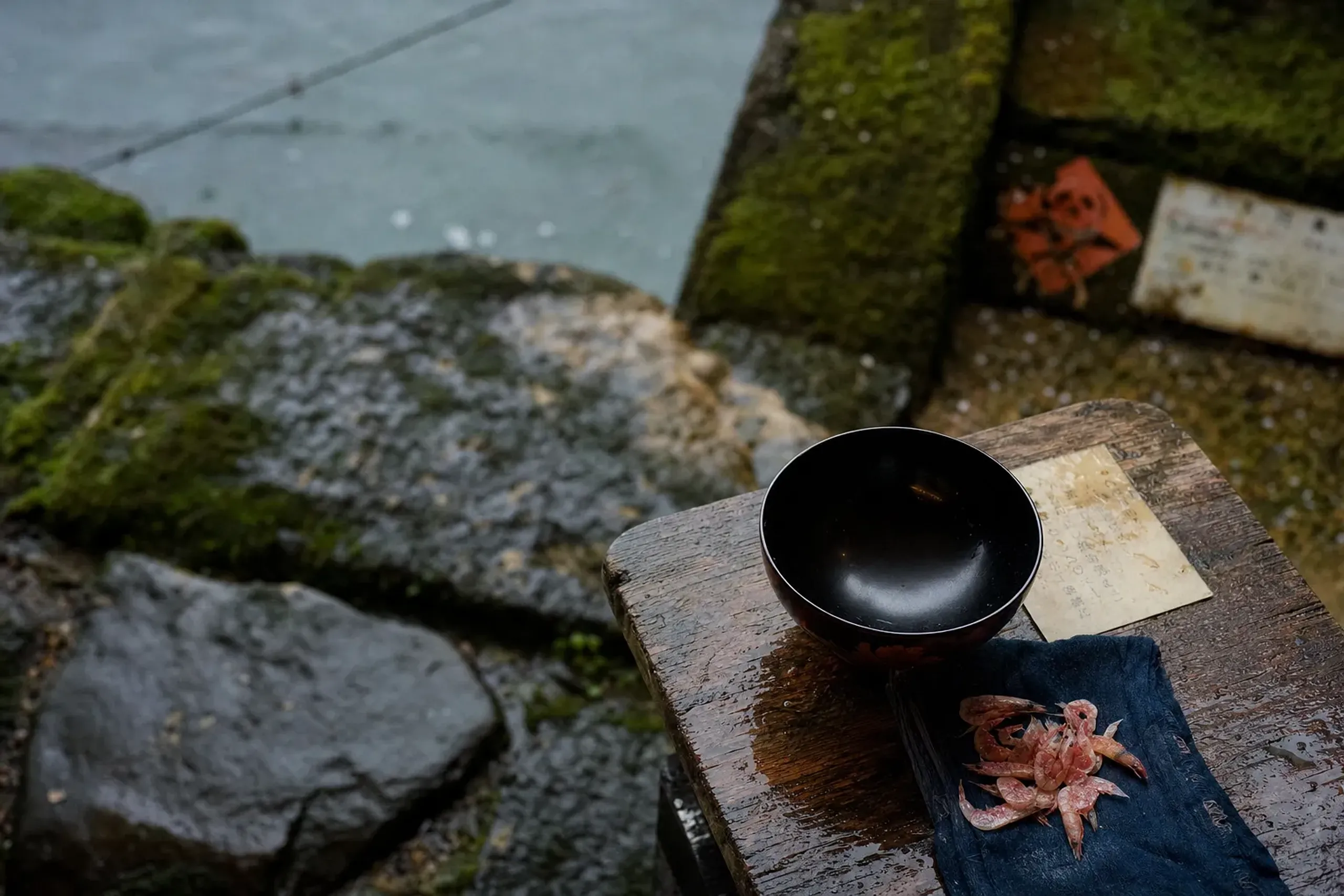
For many guests, kamaage is the most “truthful” tasting: gentle salt, a clean shrimp scent, and a softness that does not try to impress. Dried sakura ebi, used as a topping or in cooking, brings a deeper, toasty note. For those who wish to go further, we can arrange a private session with a shokunin who has devoted a lifetime to this single, fragile ingredient—a chef or producer who understands the bay the way few outsiders ever will.
A Quiet Safety Note
Sakura ebi are shellfish.
Allergies matter here.
If anyone in your party has shellfish allergies, treat this as a hard stop and speak with your medical professional; even processed products can carry risk, and cross-contact is common in kitchens that handle shrimp daily.
The Tokaido Setting: Yui-juku, Hiroshige, And Satta-toge
After the port and the riverbed, you need a second story—one that slows you down.
This is where Yui becomes more than seafood.
It becomes a road town again.
Yui was the 16th post station from Edo on the Tokaido, and the area’s coastal geography is famous in ukiyo-e thanks to Utagawa Hiroshige’s print of Yui, with Mount Fuji glimpsed across the sea from Satta-toge Pass. Even if Fuji hides, the composition still makes sense: steep hillside, narrow coastal edge, and the road threading through it all.
Walking Yui-juku Like A Collector, Not A Checklist
Look for small, intact details.
A doorway. A roofline. A short stretch of old road.
Let it be incomplete.
This is where wabi-sabi belongs in your day—not as a slogan, but as a way of seeing: restraint, weathering, the silence between sights. Our team at Japan Royal Service often builds in time to linger here, because it balances the practical intensity of the fishery morning with something gentler and more reflective.
Satta-toge Pass: The View, The Limits, And The Drive
Satta-toge is only 244 metres high, yet it can feel airy when the coastline opens below.
Getting there is the part you should respect.
The parking area holds about eight cars.
Minibuses are not suitable, and there is a narrow shortcut.
If you are travelling with family or in a small group of 2–4, a standard car approach is usually easiest. If you are moving with a larger party, we suggest a different strategy: view-focused stops that do not depend on that small parking area.
Hiroshige Museum Closure Note (Plan Around It)
The Shizuoka City Tokaido Hiroshige Museum of Art in Yui is scheduled to be closed from 1 June 2026 to the end of March 2027, with reopening planned for early April 2027 (exact date not yet published).
So do not hinge your spring visit on it.
During the closure, the Tokaido Yui-juku Exchange Center offers a print-rubbing experience via a satellite shop. It is modest, and that is fine. It fits the quiet tone of the town.
How Do You Plan A Day Trip To Yui Sakura Ebi Season From Tokyo?
Take the Shinkansen to Shizuoka Station, then ride the JR Tokaido Main Line to JR Yui Station (about 20 minutes), and walk roughly 10 minutes to the port—while keeping your schedule flexible for weather and fishing nights.
This route is clean and repeatable.
Official tourism sources describe Shizuoka as about an hour by Shinkansen from Tokyo, then a short local train hop to Yui. What matters more than speed is timing. A drying morning can begin early, and the port’s atmosphere feels most honest at dawn.
For guests who prefer fewer moving parts, our concierge can advise on a car-based day that still respects what cannot be fixed in advance. When we design a tailor-made itinerary, we treat Yui as a “conditional highlight”: we plan the shell of the day, then adjust close to travel once the fishing nights and weather outlook become clearer. The quiet work of anticipating your needs—before you have voiced them—is where the real craft lies.
A Practical Spring Packing List (April–May)
Shizuoka’s climate normals (1991–2020) are a useful baseline, even if the coast can feel cooler in the wind.
April mean is 15.2°C, with a mean high of 19.8°C and a low of 10.6°C.
May mean is 19.2°C, with a mean high of 23.5°C and a low of 15.1°C.
Begin Your Spring At Suruga Bay
Sakura ebi season rewards those who plan with patience and travel with discretion. The port cannot promise a catch, the sky cannot promise Fuji, and the riverbed cannot promise its pink carpet—yet when they align, the morning is unrepeatable.
Let us hold the uncertainty for you. We will shape a flexible spring journey around the fishery’s rhythm, arrange quiet access at the port and the drying ground, and leave room for the slower pleasures of the old Tokaido road. To begin a private, confidential conversation about your dates, please contact us here.