In this guide
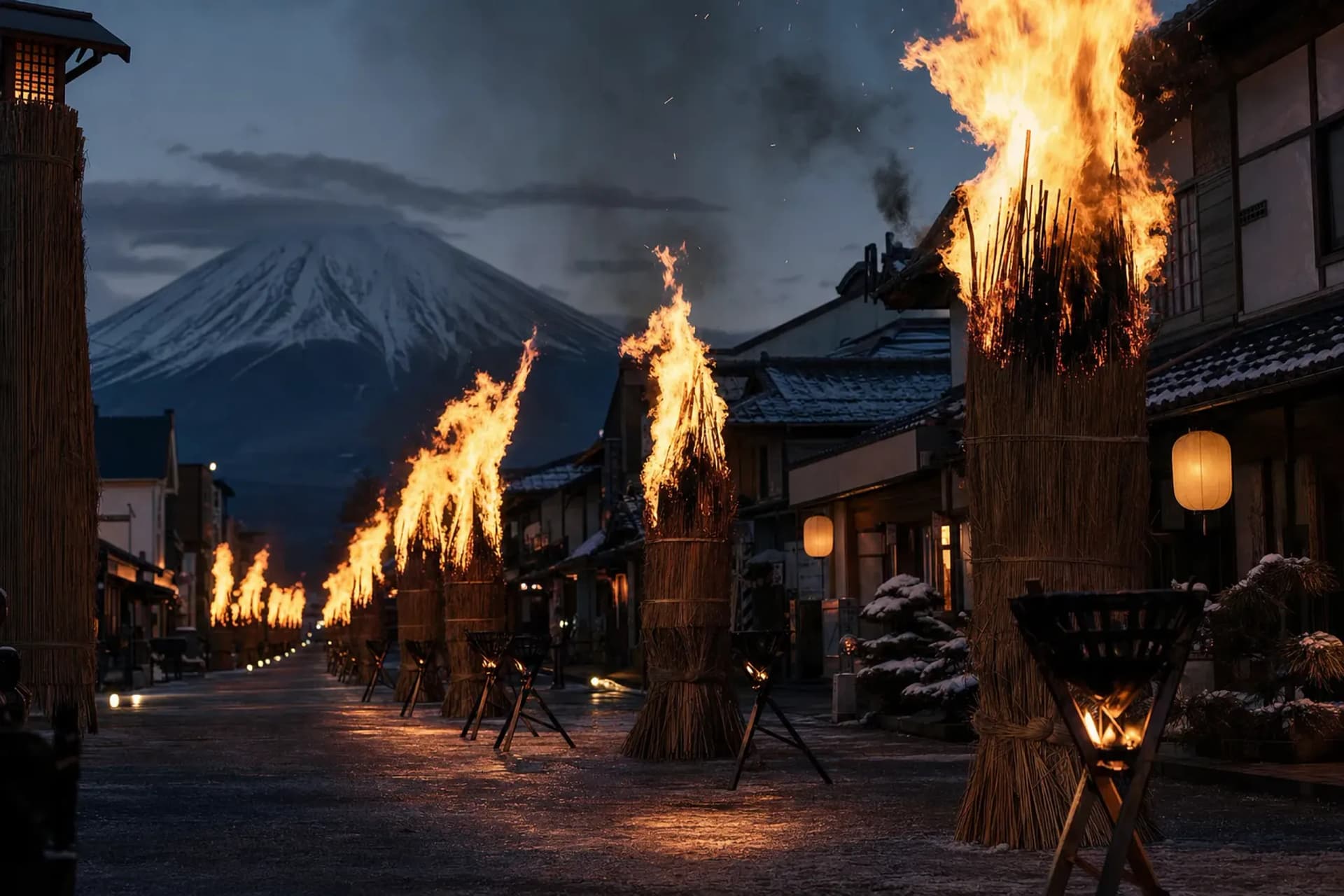
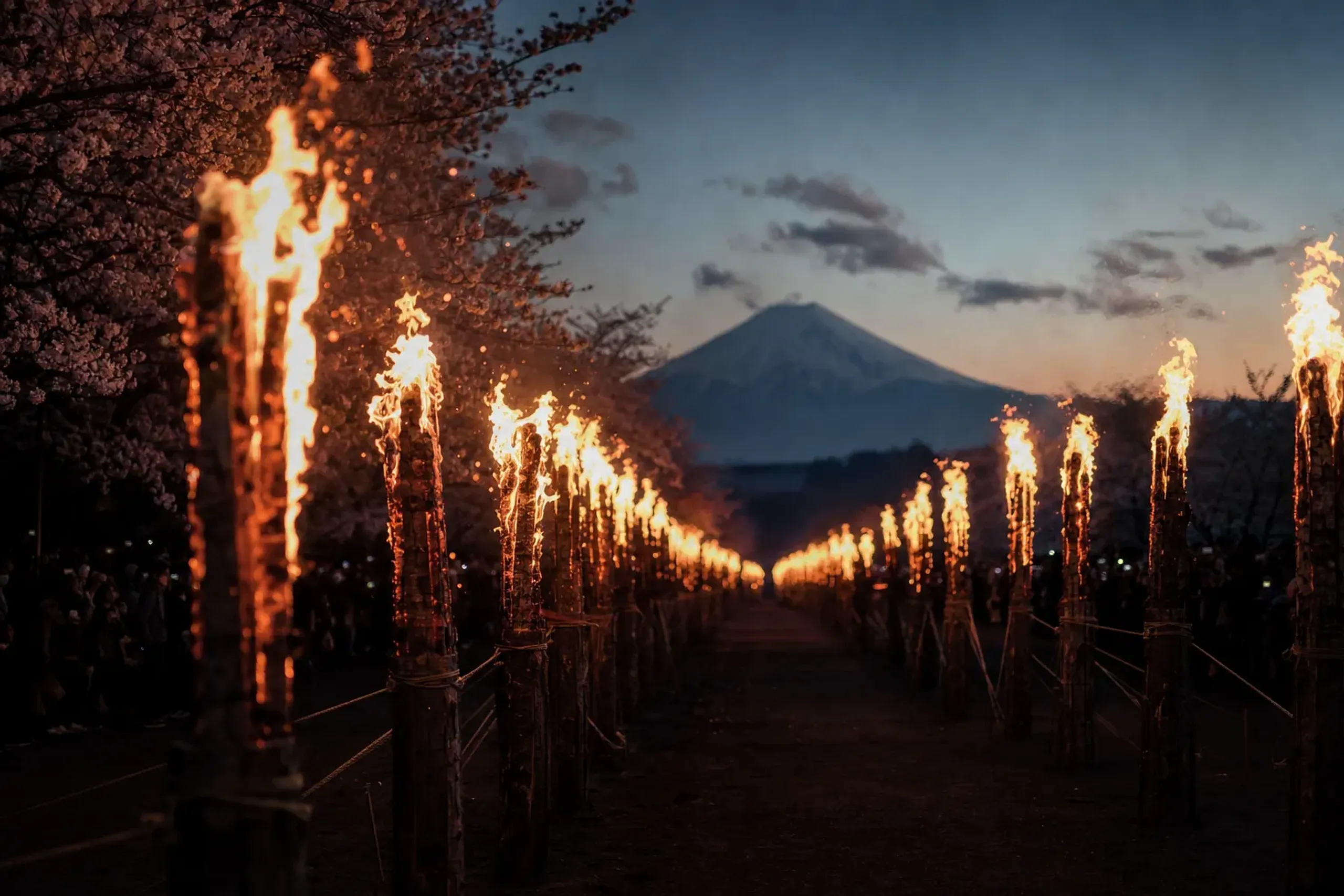
Dusk settles over Kamiyoshida. The main street runs straight toward the mountain, and along it stand rows of unlit torches, each the height of a tall man, bound into the shape of a fat bamboo shoot. Shopkeepers wait in their doorways. The air smells of pine resin and warm dust. Nothing has happened yet. Then, as the last light drains from Mount Fuji's shoulders, the first flame is touched to the first torch — and the street begins to burn.
This is the Yoshida Fire Festival, held every 26 and 27 August at the foot of Mount Fuji in Fujiyoshida, Yamanashi. It is one of the more extraordinary things our team at Japan Royal Service helps travellers witness in late summer, and one of the hardest to picture until you are standing in it.
A Mountain Closes With Fire
The Yoshida Fire Festival is a public shrine festival that traditionally marks the end of Mount Fuji's summer climbing season, held annually on 26 and 27 August in the town of Fujiyoshida. That is the plain answer. The fuller one is stranger and better.
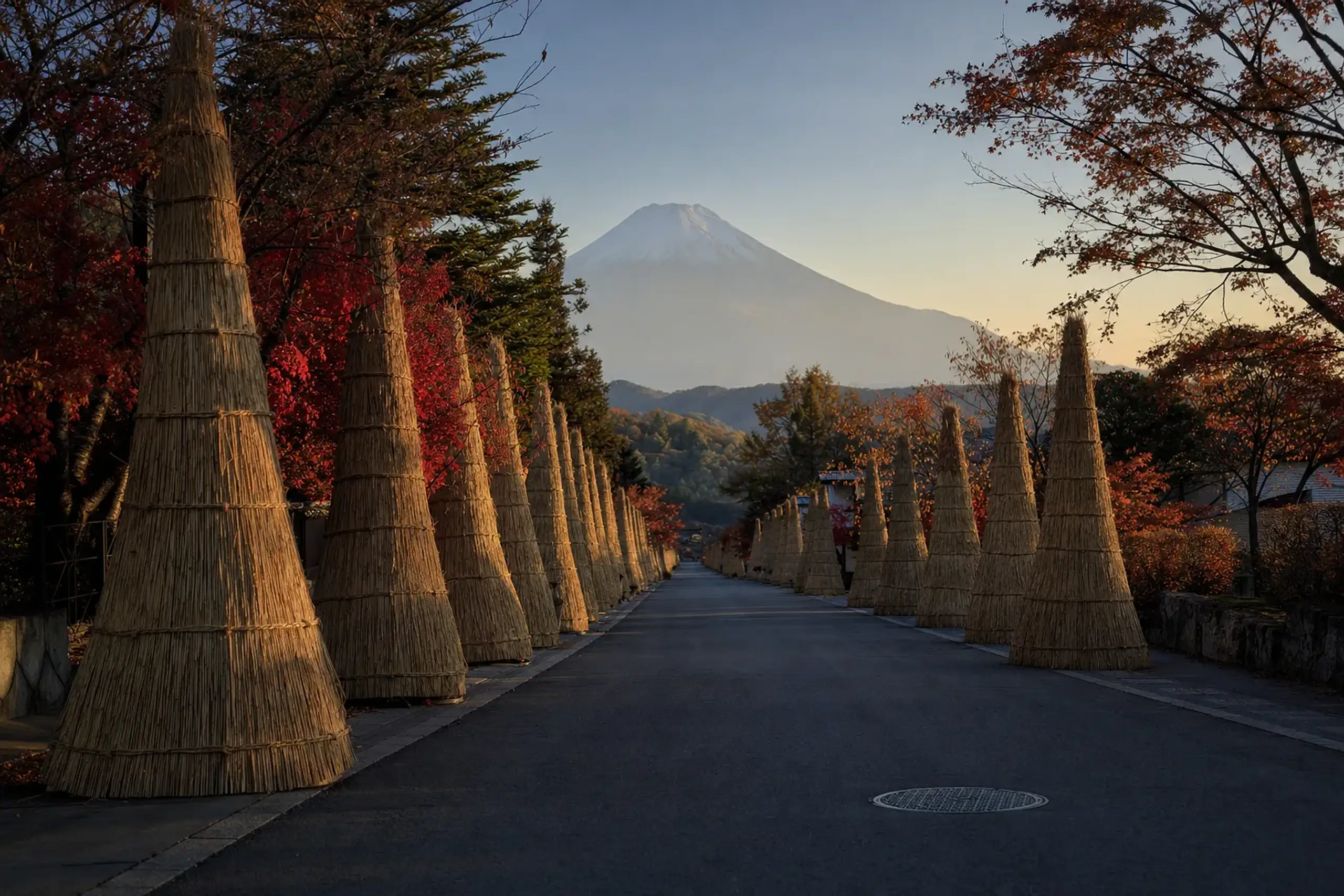
Along the main street of Kamiyoshida, huge torches are raised. Each stands about three metres tall and roughly ninety centimetres across, lashed into that distinctive bamboo-shoot silhouette. The count varies — sources put it anywhere from about seventy to over a hundred, depending on the year and who is counting — and the line of them runs for something close to two kilometres.
The torches are not the whole of it.
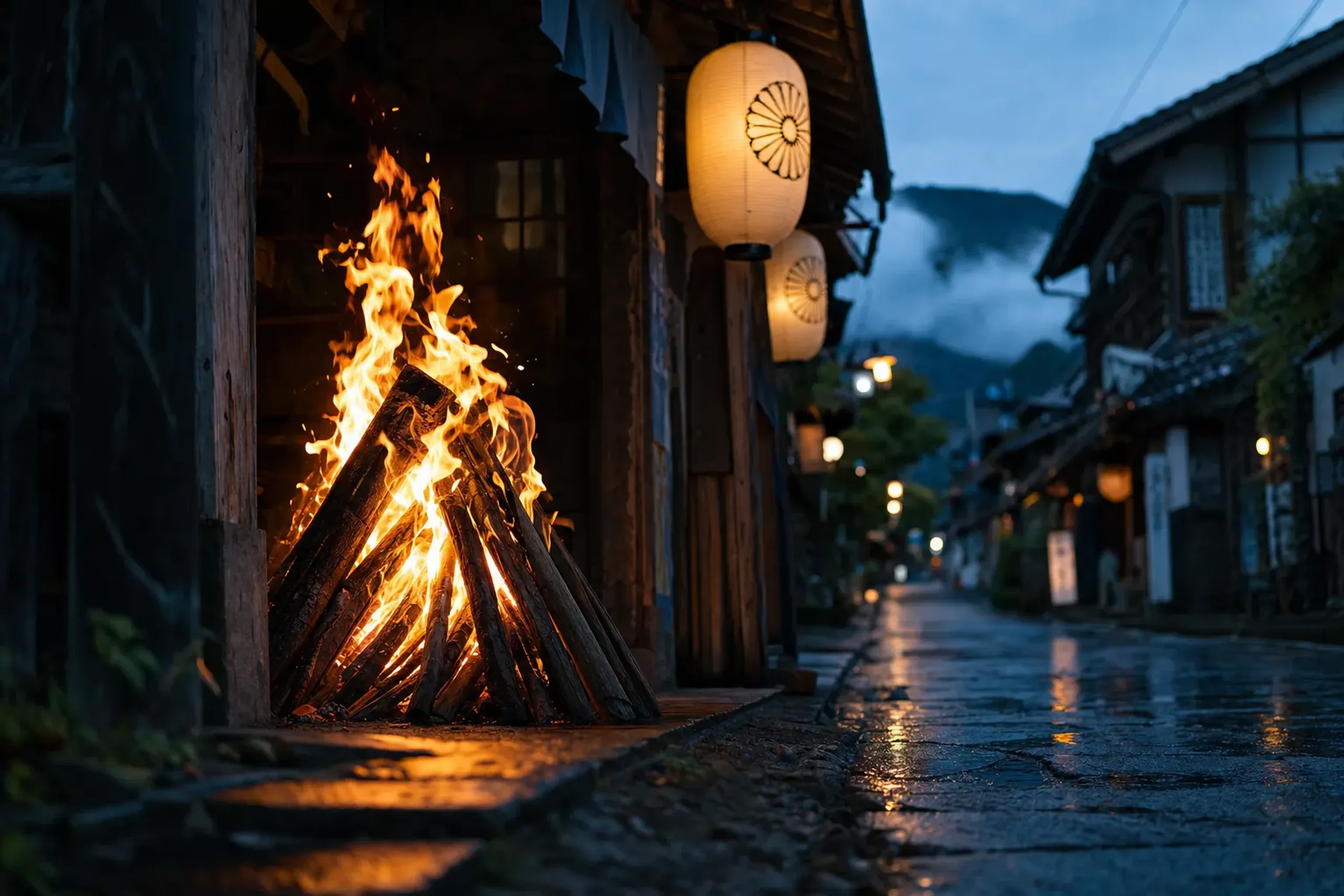
Households set smaller log-stack fires at their own doors. Even the mountain huts up on the Yoshida trail light torches of their own, so that on a clear night the fire seems to climb the slope itself. JNTO describes the effect simply: a town that looks like a sea of fire.
Sources frame the rite as a prayer to calm the mountain — a quieting before the cold comes. For centuries Fujiyoshida was the pilgrims' gateway, the last town before the ascent. So the festival closes something. The climbers go home. The season turns. Note the word traditionally, though: the official climbing season is set separately today and can run later than the festival. What burns here is the older, ritual ending, not a calendar date.
Two Shrines, Two Days
The festival belongs to two shrines: Kitaguchi Hongū Fuji Sengen Shrine and its subordinate Suwa Shrine. Over two days, the fire and the fields take turns.
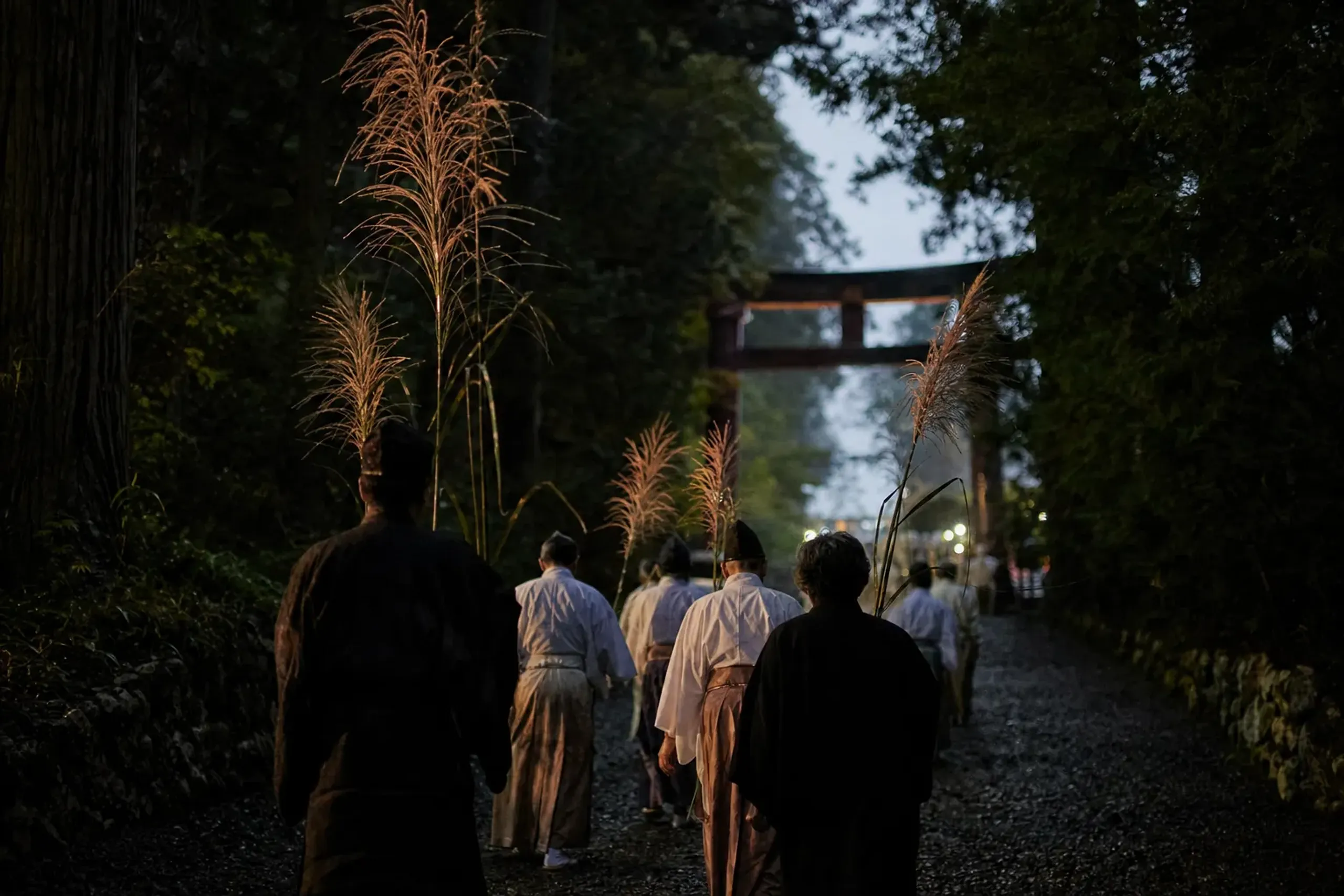
The 26th is the fire-calming festival — the Chinka-sai. This is the night of the torches. The 27th is the pampas-grass festival, the Susuki-matsuri, named for the tall pampas-grass offerings that worshippers carry. One night of flame, one day of grass. The pairing is the whole point, and most visitors who come only for the fire miss half the story.
Sources describe more than 450 years of history behind the rite — a claim worth passing on rather than swearing to.
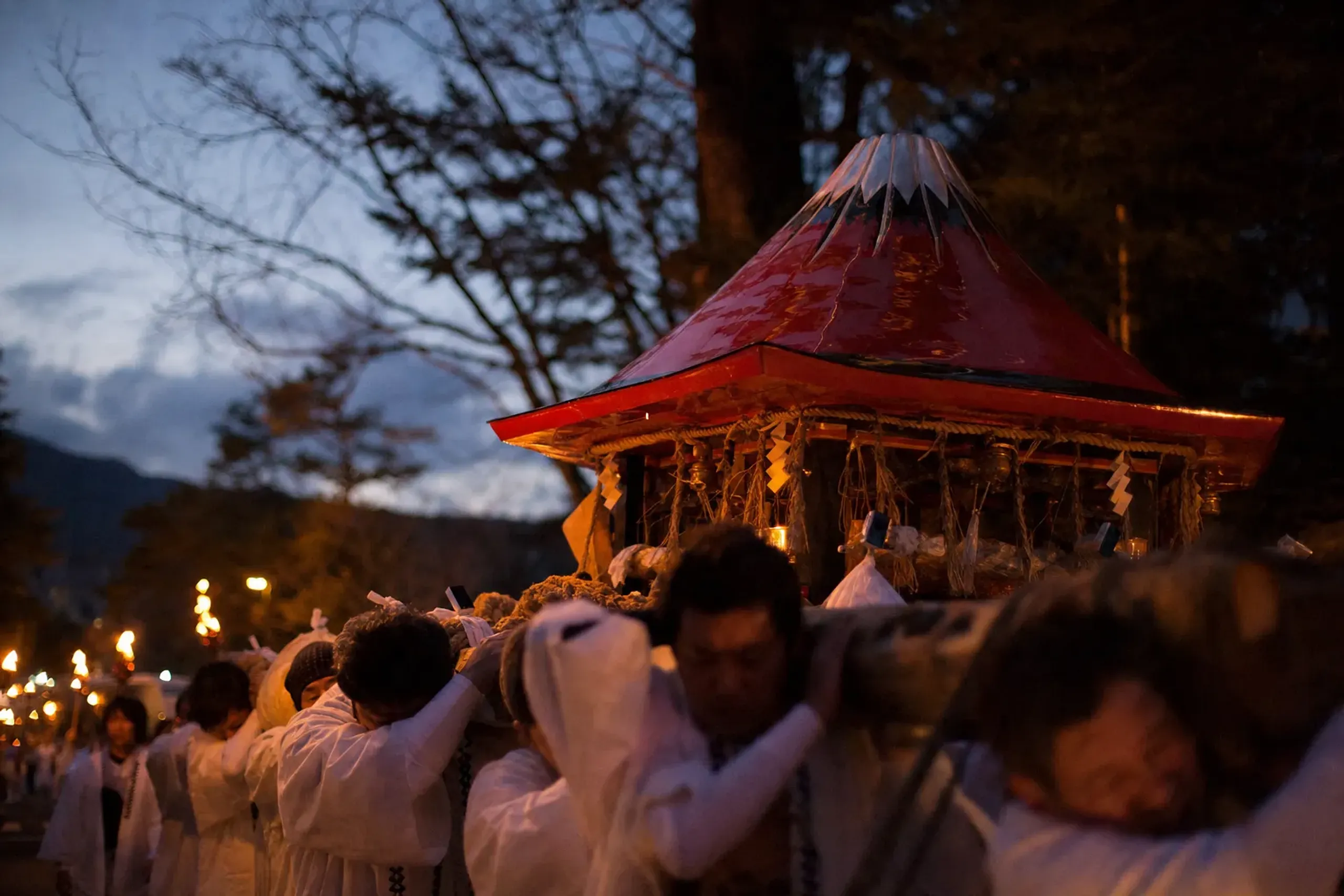
What is beyond dispute is its standing. The festival is designated a national Important Intangible Folk Cultural Property, a formal recognition that sits apart from marketing.
The Torches And The Portable Shrines
Here is how the first evening unfolds. In the afternoon, a ceremony is held at the shrine. Then, at around five o'clock, a procession sets out carrying two mikoshi, or portable shrines. One holds the Myōjin deity. The other is shaped like Mount Fuji itself — vermilion, unmistakable, the mountain carried through its own town.
One source describes the Fuji-shaped shrine being thrown violently to the ground during the procession, a jolting, physical act of devotion. We pass that on as that source's account rather than as settled fact; the processions vary and the crowds are thick. Either way, by dusk — around half past six — the shrines reach a temporary resting place, the Otabisho. It is only then, with the deities installed, that the torches are lit.
The sequence that matters: the torches are not lit at a fixed clock time. They are lit after the portable shrines arrive at the Otabisho, at dusk. Plan your evening around the procession, not around a number.
The second day is quieter and, in its own way, more moving. The shrines are carried back out through the parish and return to Fuji Sengen Shrine as the light fades. Worshippers walk with pampas-grass offerings, and spectators are reported to join the procession around the precinct. The grass replaces the fire.
The mountain is put to rest for the year.
Is The Yoshida Fire Festival Really One Of Japan's Three Odd Festivals?
Yes — it is counted among Japan's "three odd festivals," alongside the Namahage of Oga in Akita and the Naked Festival of Inazawa in Aichi. It is also counted among the country's ten great fire festivals.
Both groupings are informal, the kind of affectionate shorthand that Japanese travellers trade rather than an official register. We say "counted among" deliberately. The label tells you something true, though: this is not a tidy, photogenic festival built for visitors. It is loud, physical, and genuinely unusual, which is exactly why it has survived. For another fire rite with a very different character — a single colossal torch borne down temple steps — our guide to the Nachi Fire Festival makes an instructive contrast.
How Do You Get To The Yoshida Fire Festival?
Kitaguchi Hongū Fuji Sengen Shrine sits about a twenty to twenty-five minute walk from Fujisan Station in central Fujiyoshida. That short walk is the easy part. The hard part is everything around it.
Large-scale traffic restrictions apply on both days, and the central streets grow extremely crowded. The main avenue becomes the stage, which means cars are pushed well out and arrival windows narrow sharply as evening approaches. Rail is often the saner spine of the plan, with a vehicle meeting you outside the restriction zone rather than trying to reach the shrine itself.
Because the restriction maps, train timetables, and viewing arrangements are reset each year, there is no single arrival plan that holds true across seasons. This is where a little groundwork pays for itself. Our concierge team verifies the current year's schedule, traffic restrictions, viewing positions, and lodging on the client's behalf ahead of the visit, so that the evening is spent watching the fire rather than negotiating a blocked street.
A Word On The Fire Itself
Be clear-eyed about what this is. It is a fire festival, with open flames and flying sparks set along narrow streets packed with people. The torches throw real heat. Wear closed shoes, keep natural fibres over synthetics, mind children and loose clothing, and give the torches the room they deserve. None of this should put you off. It should simply put you in the right frame of mind — this is a working ritual, not a stadium show, and the respect runs both ways.
Making An Evening Of It
The festival rewards a slow, well-timed approach. In our experience, the best evenings are built backward from the torch lighting. Dine early, before the crowds thicken. Settle into a viewing position along the main street while there is still light in the sky. Let a guide read the procession for you as it passes — which shrine is which, what the vermilion mountain means, why the grass follows the fire the next day — so that the spectacle carries its meaning and not just its glow.
Fujiyoshida also offers a natural second act. The morning after the fire, with the town smoke-scented and hushed, a quiet walk at Kitaguchi Hongū Fuji Sengen Shrine and an early view across the Fuji Five Lakes close the season the way the pilgrims once did — looking up at the mountain they had just released for the year. We often fold this into a longer itinerary built privately around each traveller's pace. A thoughtfully planned bespoke itinerary turns two crowded festival days into something unhurried.
Frequently Asked Questions
When Is The Yoshida Fire Festival Held Each Year?
The Yoshida Fire Festival is held annually on 26 and 27 August in Fujiyoshida, Yamanashi. The 26th is the fire-calming night with the great torches; the 27th is the pampas-grass day. The dates do not move year to year.
What Time Are The Torches Lit At The Yoshida Fire Festival?
The torches are lit at dusk, after the two portable shrines reach the Otabisho resting place — typically in the evening rather than at a fixed clock time. Exact timings shift each year, so we verify the current schedule before any visit.
How Many Torches Are There, And How Big Are They?
Counts range from about seventy to over a hundred depending on the year and source, lining roughly two kilometres of street. Each torch stands about three metres tall and ninety centimetres across, bound into a bamboo-shoot shape.
Does The Festival Really Close Mount Fuji's Climbing Season?
Traditionally, yes — the rite marks the end of Fuji's pilgrimage season as a prayer to calm the mountain.
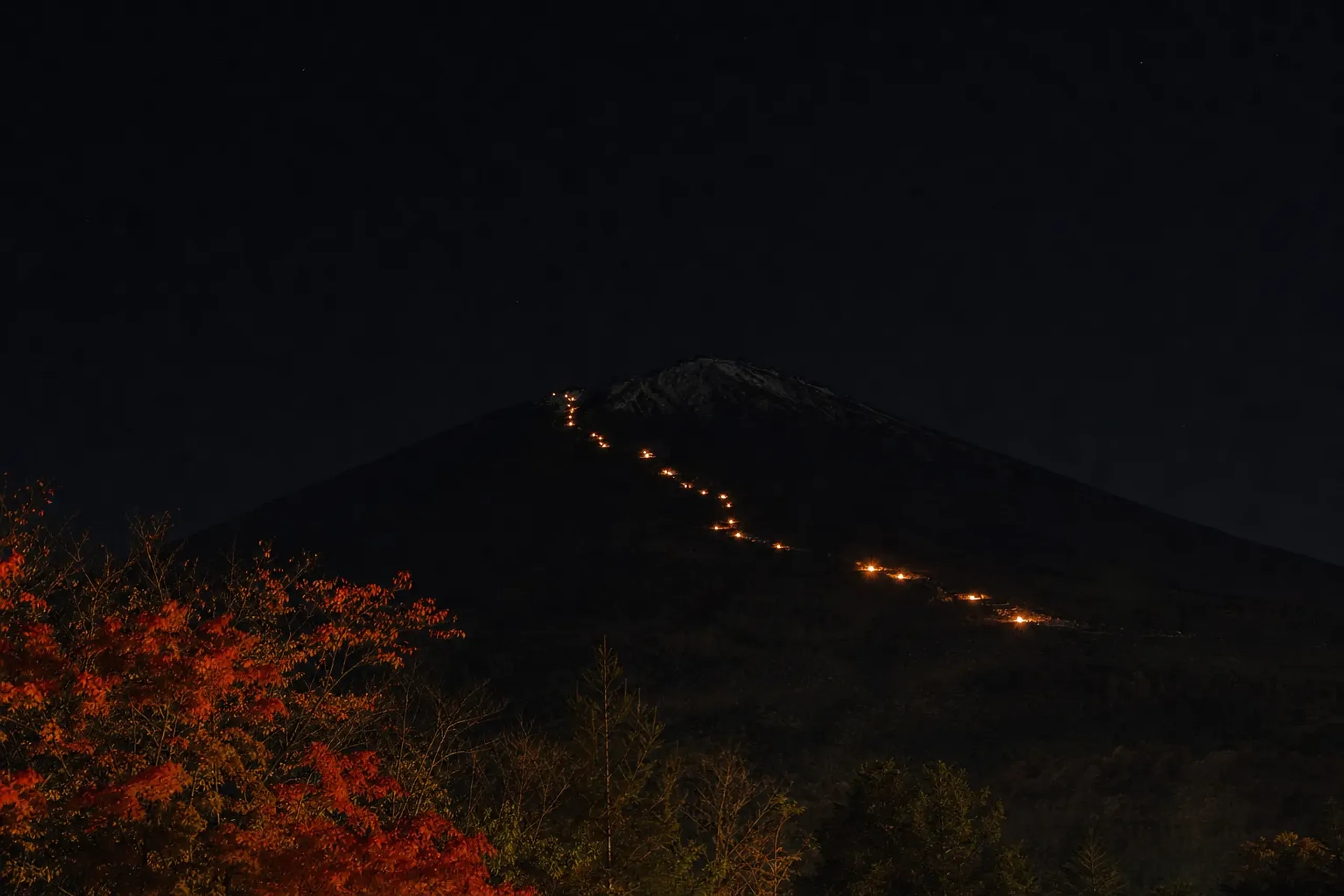
Today the official climbing season is set separately and can run later, so the closing is ritual and cultural rather than a strict calendar date.
How Crowded Does Fujiyoshida Get During The Festival?
Very crowded. The main street becomes the festival stage, large-scale traffic restrictions apply on both days, and central Fujiyoshida fills with spectators. Early arrival, rail access, and a pre-planned viewing position make the evening far more comfortable.
Why Choose Japan Royal Service
The Yoshida Fire Festival is a public shrine festival held in the open streets. We make no claim to private, restricted, or exclusive viewing, nor any role in the ceremonies — that honesty matters to us. What our team at Japan Royal Service does arrange is the quiet machinery around the night: guiding, private chauffeured transfers staged outside the restriction zones, accommodation coordination chosen for walkability, and careful viewing planning so your evening belongs to the fire and nothing else.
We are a native Tokyo-based concierge with our own fleet and a practice built on discretion. In our experience, the difference between a frustrating night in traffic and an unforgettable one comes down to who verified the restriction map that morning. Our coordinators do exactly that, year after year, on each client's behalf.
To plan a late-summer visit around the fire at Fujiyoshida, reach our team privately via WhatsApp or LINE, or contact us here.