In this guide
- 01The Canals Almost Vanished. One Man Saved Them.
- 02How Do You Get To Yanagawa From Fukuoka (Tenjin) Without Stress?
- 03Where Did Yanagawa’s Horiwari Canals Come From?
- 04Which Kitahara Hakushū Sites Are Part Of The 2015 Yanagawa Cultural Property Landscape?
- 05Eel, Water, And Responsibility: Why Yanagawa’s Signature Dish Matters Now
- 06How Long Is Yanagawa’s Canal Network, Really?
- 07Donkobune Boat Tours In Yanagawa: Departure Points, Duration, And What To Expect
- 08Yanagawa Festivals On The Water: Mizu-Ochi Cleaning, March Moat Opening, And The Hakushū Festival Parade
- 09Ohana (Tachibana Residence): Staying Inside Yanagawa’s Daimyō History
- 10A One-Day Vs One-Night Yanagawa Plan For Luxury Travelers
- 11How Japan Royal Service Handles Discretion In A Public Canal Town
- 12Let Us Shape Your Yanagawa
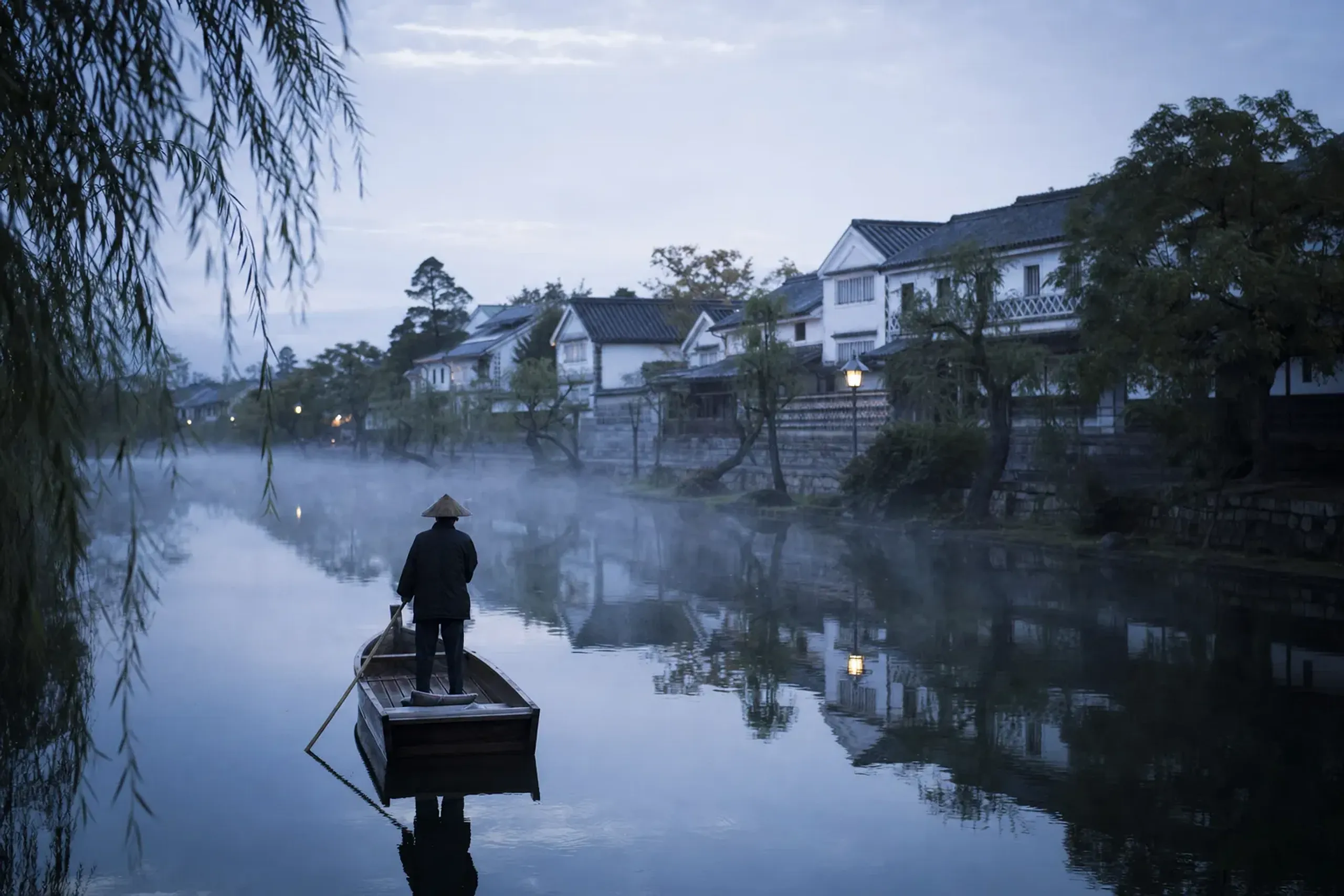
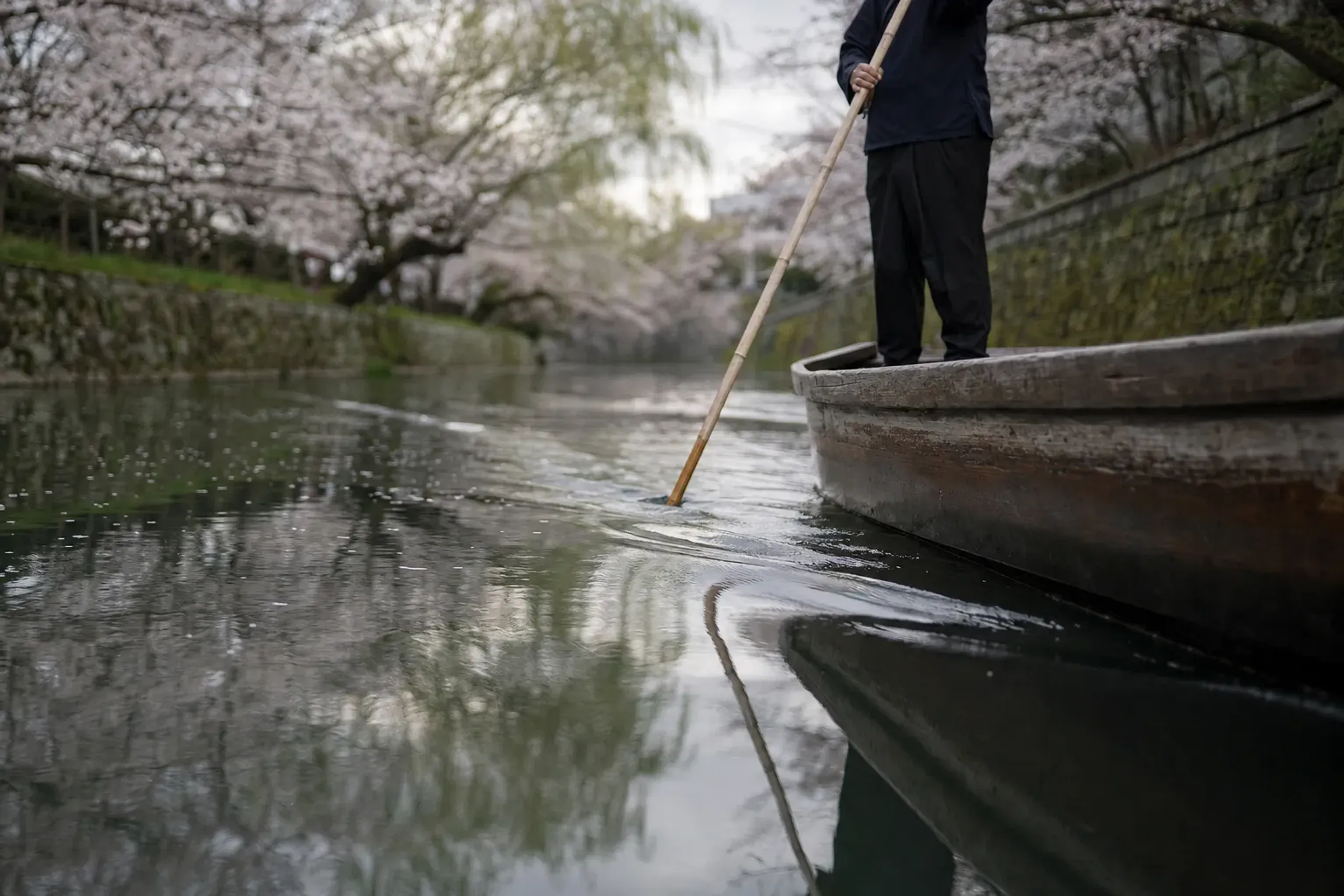
A donkobune boat slides forward with a soft knock of bamboo against wood.
The boatman plants his pole. The canal answers with a slow, dark ripple.
Yanagawa feels calm now—low bridges, willow shadows, the faint smell of river mud after rain. But this quiet was not guaranteed. Not even close. The stillness you glide through today is the result of a decision made when the town stood on the edge of erasing its own reflection.
The Canals Almost Vanished. One Man Saved Them.
In the Shōwa era, Yanagawa’s horiwari canals were close to being filled in after years of neglect, until city official Hiromatsu Den organized a resident-led cleanup that revived them within four to five years.
The trigger was modern convenience. Once piped water spread through the city, the canals lost their daily role. They became, gradually and then suddenly, a place to discard things that no longer fit inside a modern life.
The result was physical. Foul smells. Murky water. A town embarrassed by its own reflection.
A plan was drawn up to eliminate the canals altogether by filling them in. Practical. Final.
Hiromatsu Den, then head of the sewage division at Yanagawa city hall, chose a different kind of practicality. He appealed to residents’ memories—children catching small fish, washing tools by the water’s edge, hearing the current move under the floorboards—and asked them to clean the canals with their own hands.
It worked because it was personal. Not a slogan, but a shared inheritance worth defending.
In four to five years, the network was revived. Not replaced. Not rebuilt as a theme park. Cleaned, re-opened, and returned to use—the same water, carrying a renewed purpose.
The story traveled beyond Yanagawa. In 1987 it became a documentary film: The Story of Yanagawa’s Canals, directed by Isao Takahata, later a co-founder of Studio Ghibli.
That detail surprises people. It should.
Key fact: Yanagawa’s canals are not “pretty waterways that always existed for tourism.” Their modern fame is tied to a documented civic rescue—and a checkable 1987 film record.
How Do You Get To Yanagawa From Fukuoka (Tenjin) Without Stress?
You can reach Yanagawa in about 45 minutes by Nishitetsu Limited Express from Nishitetsu Fukuoka (Tenjin) Station to Nishitetsu Yanagawa Station, then walk 5–10 minutes to most boat points.
For many HNW travelers, the issue is not distance. It’s friction.
Yanagawa is easy when the handoffs are clean—train timing, station orientation, the short walk, and a plan for where you’ll end the day. Miss those pieces and it becomes a string of small decisions made in the heat.
In our experience at Japan Royal Service, the smoothest rhythm is simple: arrive mid-morning, cruise before lunch, then move to culture assets or an early check-in if you are staying overnight.
If you prefer a road-based approach for privacy and timing control, the first mention matters: our clients often ask about private transportation for a door-to-door day that avoids platform changes and keeps luggage out of sight. It is the kind of quiet logistics that lets you notice the willows instead of the timetable.
Keep your day light. Yanagawa rewards unhurried attention.
Where Did Yanagawa’s Horiwari Canals Come From?
Yanagawa’s canal network began as early as the Yayoi period, roughly 2,200 years ago, when channels were dug into flat wetlands to improve drainage and secure daily water.
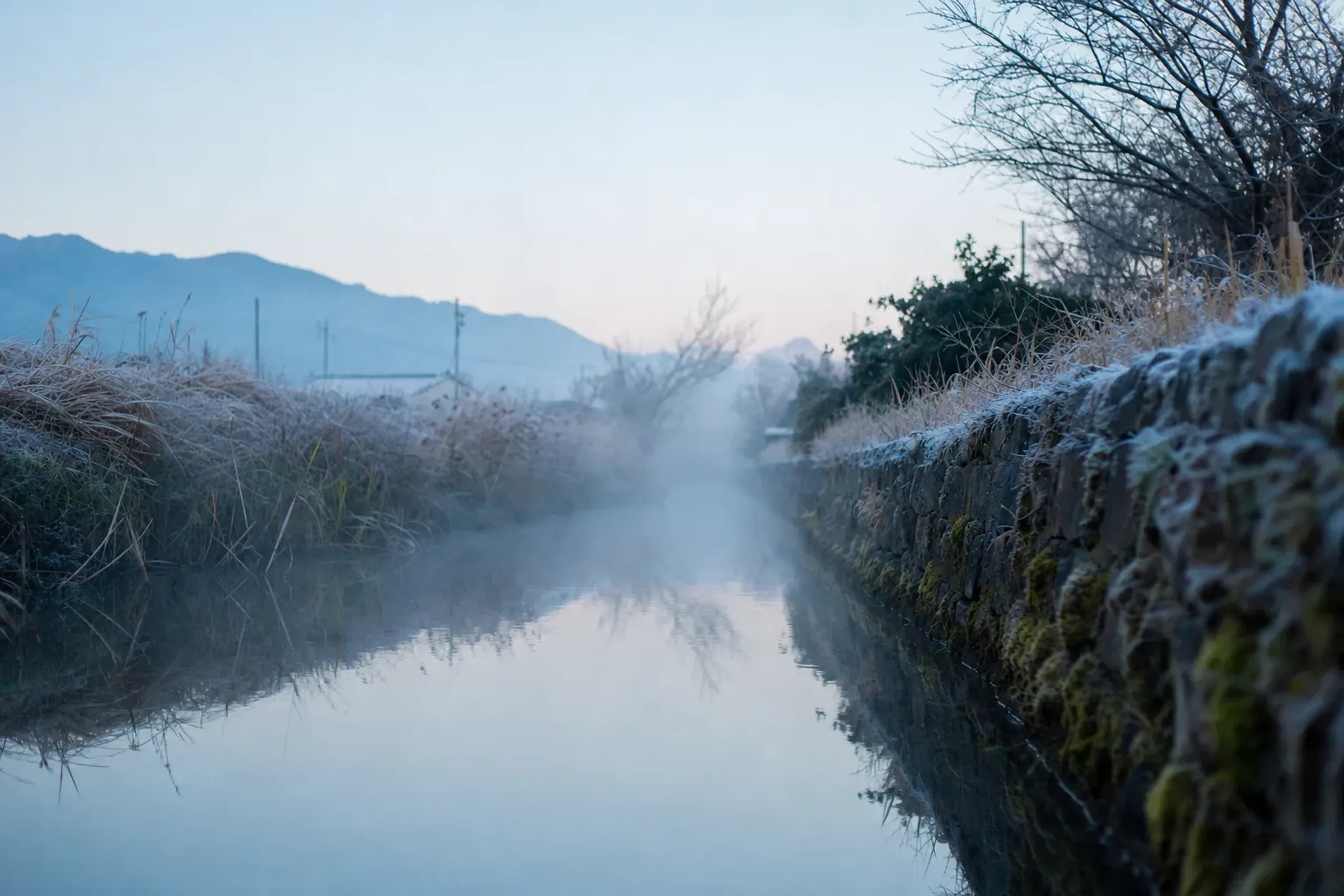
This landscape is not dramatic. That is the point.
Flat ground and waterlogged fields can be unforgiving, and the earliest engineering here was about making daily life possible. The horiwari were infrastructure first—quiet, persistent, and shaped by hands that expected no applause. There is a wabi-sabi honesty in that: beauty born not from ornament, but from restraint and necessity.
Centuries later, politics shaped the water too. Yanagawa Castle was built by the Kamachi clan in the Sengoku period, and Tachibana Muneshige took the castle in 1587, developing Yanagawa as a castle town.
After the Battle of Sekigahara, the Tachibana sided with the defeated Toyotomi forces. Tanaka Yoshimasa was granted the castle, and his focus on land reclamation and river improvements around the Chikugo River helped set the conditions for a broader canal landscape.
Then, in 1620, Tachibana Muneshige returned as lord. Infrastructure development continued, shaping the canal network that people recognize today.
History here is not one monument. It is a system. Water moving through a town like a second street grid.
Which Kitahara Hakushū Sites Are Part Of The 2015 Yanagawa Cultural Property Landscape?
Four Yanagawa sites tied to poet Kitahara Hakushū—his birth home, the Narakura rice-storage buildings, Mihashira Shrine, and Okinohata Suitengu—were designated as part of a national Cultural Property landscape in March 2015.
Hakushū was born in Yanagawa. He is also one of Japan’s most significant poets, and he gives the town a second way to “read” its water.
One detail we like to share—because it adds grain to the story—is that he traveled through Taiwan during the period of Japanese colonial rule and left poems and folk songs related to it.
It complicates the easy local-pride narrative. It makes him real.
The official designation uses the reading suikyō for “water town.” That reading is not a random academic choice. Hakushū himself used it in his poetry, distinct from the more common suigō.
If you walk these sites slowly, you feel Yanagawa’s identity shift from “boat ride” to “place.” Words, water, and memory overlap—the sort of layered reading that a well-briefed guide can open for you rather than leaving it locked behind the language.
Eel, Water, And Responsibility: Why Yanagawa’s Signature Dish Matters Now
Since 2014, a local high school science club has worked with a local NPO and Kyushu University to restore Japanese eel habitat within Yanagawa’s canals.
This is not a museum town. It is a working town with a famous appetite.
Yanagawa is widely known for unagi, and its signature preparation is unagi no seiro-mushi: eel steamed over rice. It arrives warm and glossy, the steam carrying a sweet-savory aroma that feels tailored to damp weather.
But the story has an edge. The IUCN listed Japanese eel as endangered in 2014, and Yanagawa’s connection to eel is not abstract. The number of eel-farming operations around the city fell from more than 50 to just 8.
When we plan a refined food day here, we treat the dish as part of the landscape, not separate from it. The finest lacquered box of seiro-mushi carries the quiet mark of the shokunin who prepared it—and, increasingly, the awareness of a town choosing to protect what it eats. You taste the canal town’s history—and its present-day constraints—in a single serving.
How Long Is Yanagawa’s Canal Network, Really?
Depending on what is counted, Yanagawa’s waterways measure roughly 60 km in the central tourist district alone, and considerably more across the wider agricultural network; JNTO also cites 930 km of waterways built as irrigation channels.
This number swings because measurement choices change the answer. Central cruising routes are one thing. Agricultural channels across the broader area are another.
We prefer to be honest about that range. Precision can be fake.
What matters for your trip is simpler: the cruising experience feels intimate even when the network is vast, because the water runs close to walls, gardens, and low bridges. You are not “seeing a canal.” You are moving through a lived-in grid.
Donkobune Boat Tours In Yanagawa: Departure Points, Duration, And What To Expect
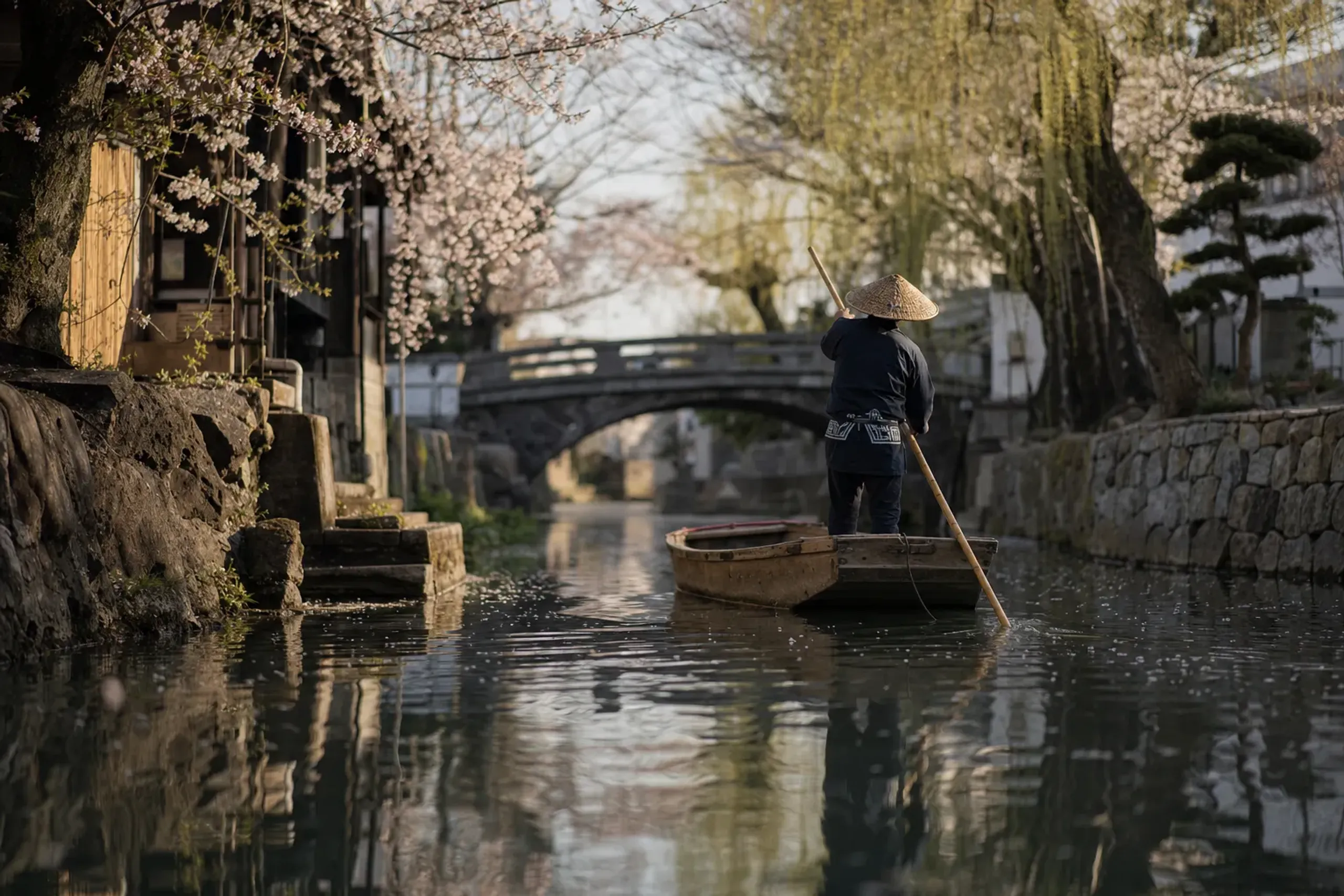
Donkobune boats depart from four points near Nishitetsu Yanagawa Station, about a 5–10 minute walk, and typically leave once around 10 passengers have gathered for a one-way trip of about 60–70 minutes.
This is the plain truth travelers want. No poetry required.
Still, a few on-the-ground details change your experience. Sit where you can see under the bridges; the town feels closer there. Bring a light layer, even in mild weather, because canal air can turn cool once you are moving.
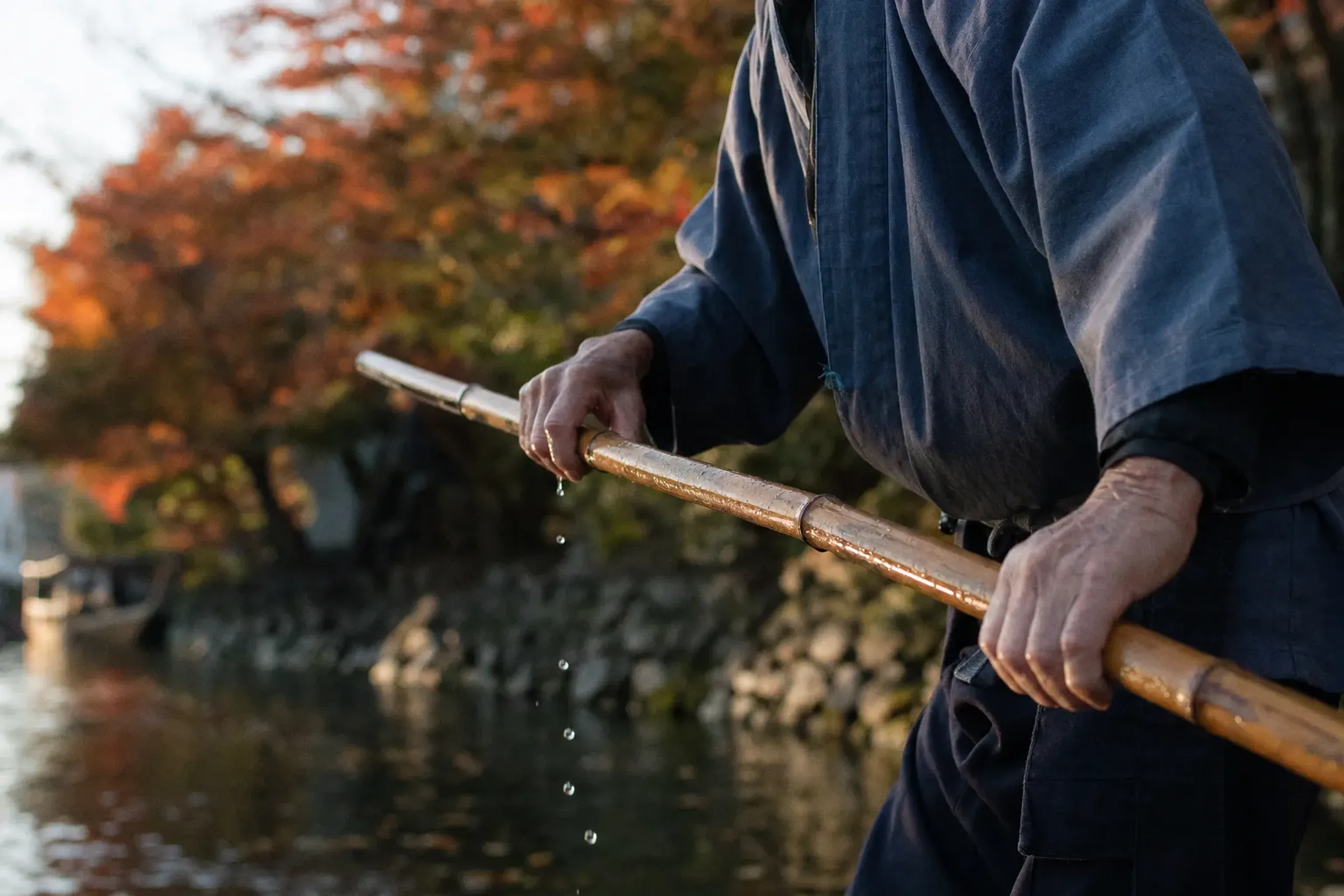
And watch the polework. It is shokunin craft in motion—quiet technique, practiced balance, no flourish unless the canal demands it. The boatman reads the water the way a tea master reads a room: nothing wasted, nothing announced.
For photography, the best moments are brief: a boat entering a patch of reflected sky, a willow branch breaking the surface, the small wake tracing the stone edge.
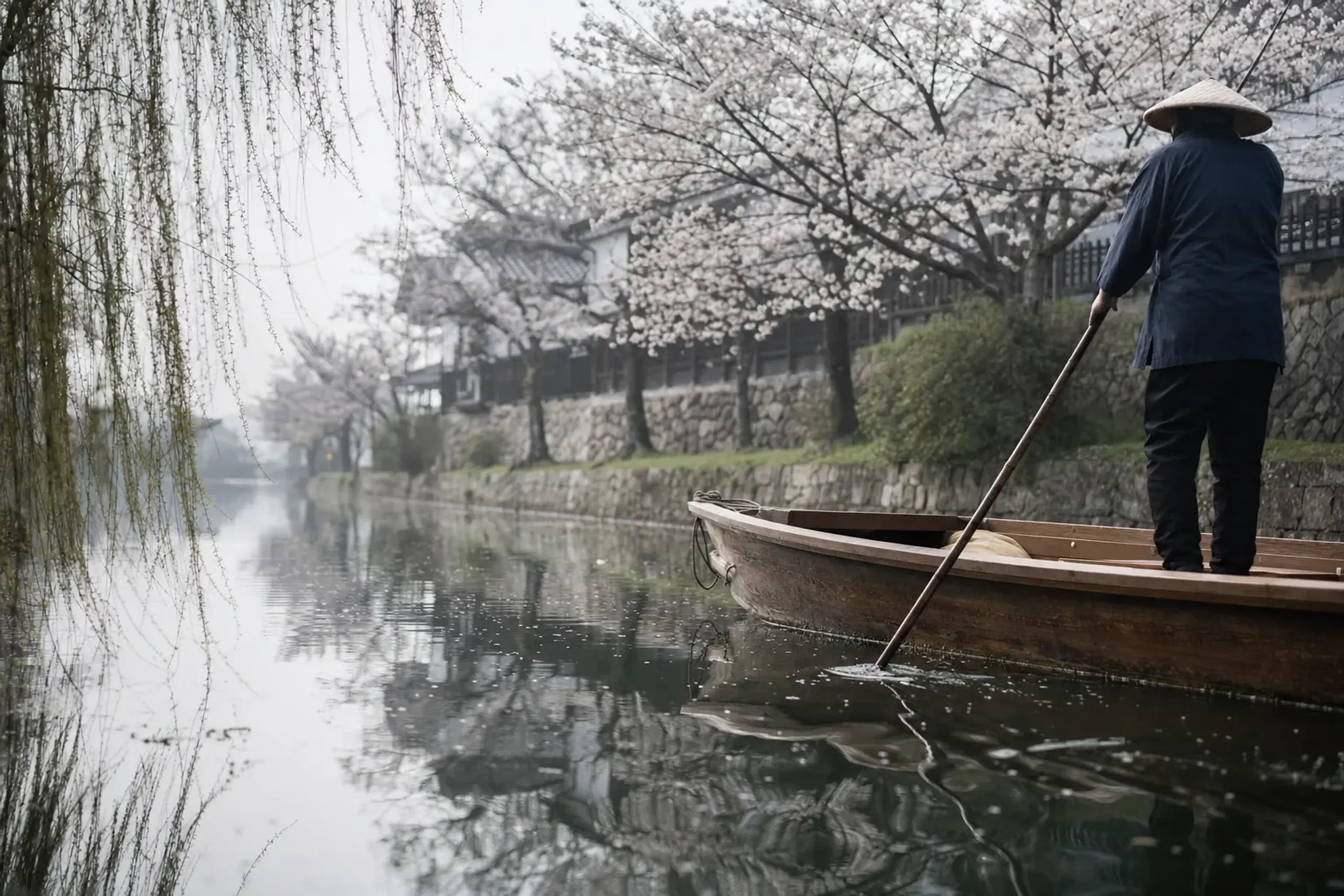
Blink and it’s gone.
Yanagawa Festivals On The Water: Mizu-Ochi Cleaning, March Moat Opening, And The Hakushū Festival Parade
Yanagawa’s canal-wide “mizu-ochi” cleaning takes place in late February, followed by a “moat opening” on March 1, and the Hakushū Festival Water Parade is held every year on November 1–3.
The calendar here is practical first. Clean the canals. Reopen the flow. Then celebrate.
That late-February cleaning matters if you care about the story of rescue. It is a yearly reminder that the water survives because people keep choosing it.
The Hakushū Festival Water Parade is its own spectacle. According to the Yanagawa Tourist Bureau, it runs on an approximately 4 km course, with performances and a concluding fireworks display.
There is also a Hina Doll Water Parade in spring, using the same fleet—roughly 80 boats—that operates the daily tours. Boats become audience seating and stage platforms, and the canal turns into a long, narrow theater.
Some residents even use private boats in spring to drift near cherry trees for floating hanami. It is a small privilege. Also a local habit—and one of those quietly perfect seasonal moments that only make sense if you know exactly when to be here.
If you are planning for 2026, Yanagawa City’s official tourism news lists an NHK “Buratamori” Yanagawa feature scheduled for June 27, 2026, and “Cheers! Yanagawa” (a sake and food festival) scheduled for October 3, 2026.
Dates like these can change demand patterns. Suddenly. Knowing which week to travel—and which to avoid—is precisely the kind of seasonal judgment we build into every plan.
Ohana (Tachibana Residence): Staying Inside Yanagawa’s Daimyō History
Ohana, the former residence of the Tachibana family, combines historic buildings, a nationally designated scenic garden, and overnight lodging on a site of about 23,000 m², offering a quieter experience in early morning or at night.
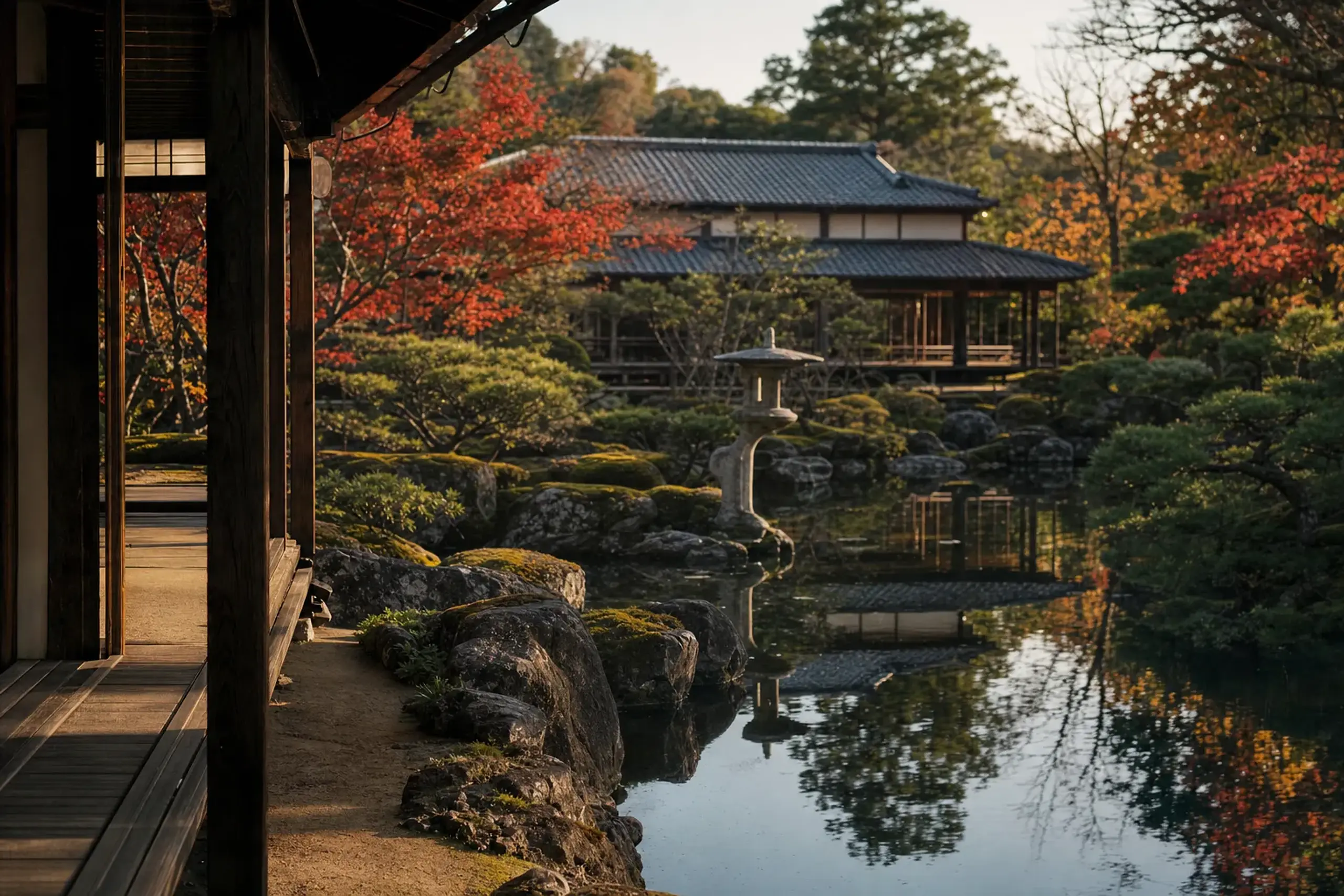
This is where Yanagawa turns from a day trip into a place you inhabit.
In daylight, you share the grounds with other visitors. After hours, the tone changes. Footsteps soften. The garden’s geometry becomes more noticeable, and the air feels cooler near the waterline. This is the daimyō’s Yanagawa—land once tied to lordly lineage—experienced in near-solitude.
Ohana also includes cultural-asset touring and a ryotei (Japanese restaurant) as part of its broader cultural facility role. If you value context, not just scenery, this matters.
Nearby, the Tachibana Museum (立花家史料館) holds art and craft objects handed down by the Tachibana family. The Japan Museum Association listing notes about 5,000 objects, including a National Treasure and an Important Cultural Property, with opening hours 10:00–16:00 (last entry 15:30).
Go earlier than you think. Museums feel sharper before lunch.
A One-Day Vs One-Night Yanagawa Plan For Luxury Travelers
Most people visit Yanagawa as a day trip. That is the default. It is also the limitation.
Our role at Japan Royal Service is to help you choose the shape of the visit before you choose the details. The right structure prevents a lot of small regrets, and every element can be arranged as a bespoke itinerary tuned to your pace and your privacy.
Option A: The Polished Day Trip (Low Commitment, High Return)
This works well for HNW travelers based in Fukuoka who want one focused experience without over-extending the day.
- Morning: Arrive mid-morning to avoid the tightest midday clustering at departure points.
- Late morning: Donkobune cruise (60–70 minutes). Keep your phone away for the first 10 minutes. Let your eyes adjust.
- Lunch: Try unagi no seiro-mushi when you are still slightly cool from the boat ride.
- Afternoon: Ohana garden and cultural assets, then the Tachibana Museum if you want objects and lineage, not just landscape.
Simple.
Sharply satisfying.
Option B: One Night At Ohana (The Version Most Competitors Skip)
If you can spare a night, Yanagawa becomes less scenic and more intimate—especially early morning, when the garden is almost soundless.
- Day 1: Arrive, canal cruise, museum and garden, then settle in before the town’s tempo slows.
- Evening: Keep plans light. Walk near the canals. Listen for water under bridges.
- Day 2: Early garden time, then a second short canal segment or a final stroll before departure.
Different town. Same address.
How Japan Royal Service Handles Discretion In A Public Canal Town
We protect guest privacy through controlled timing, quiet logistics, and minimal exposure points, even in popular destinations like Yanagawa where the waterways are public and social.
Yanagawa is open by nature. Boats gather passengers. Footpaths cross. Photos happen.
Discretion, here, is not about shutting the world out. It is about choosing when and where you enter it, and keeping your day from spilling into unnecessary visibility.
For HNW travelers, that often means avoiding peak choke points, using private transport where it helps, and keeping the itinerary disciplined—one or two anchor moments done well, not five rushed stops.
Let Us Shape Your Yanagawa
The town that nearly filled in its own canals now offers something increasingly rare: a working water landscape, a daimyō residence you can sleep inside, and a boatman’s craft that asks only for your quiet attention.
To arrange your donkobune cruise, an overnight stay at Ohana, and the discreet logistics that hold the whole day together, contact us here for a proposal shaped entirely around your interests and your privacy.