In this guide
- 01Why A Family Of Eight Sits In Japan’s Planning Gap
- 02How Do You Plan Rooms For A Family Of Eight Across 14 Nights In Japan?
- 03What Happens When Eight People Try To Dine In Japan’s Best Sushi And Kaiseki Rooms?
- 04How Do You Move Eight People Comfortably In Japan Every Day?
- 05How Do You Keep A Two-Week Japan Itinerary From Exhausting Grandparents And Teenagers?
- 06What Gets Decided First When Planning A Two-Week Japan Trip For Eight?
- 07Kyoto In 2026: How Do You Do It Well With Eight People When Crowds Are Part Of The Equation?
- 08Japan Rail Pass vs Private Driver vs Domestic Air For A Family Of Eight (2026 Update)
- 09A 14-Day Blueprint That Holds Together (Without Naming Specific Ryokan Or Restaurants)
- 10Where A Tokyo Disney VIP Tour Day Fits In A Family-Of-Eight Itinerary
- 11How A Single Coordinator Keeps Fourteen Nights From Fraying
- 12Frequently Asked Questions
- 13Why Choose Japan Royal Service
Japan Royal Service plans and operates two-week private itineraries in Japan for families of eight—accommodation, chauffeured transport, guiding, dining, and private access under one coordinator and one contract. Eight is the hardest party size in Japan because the numbers collide with room layouts, table formats, vehicles, and stamina every single day.
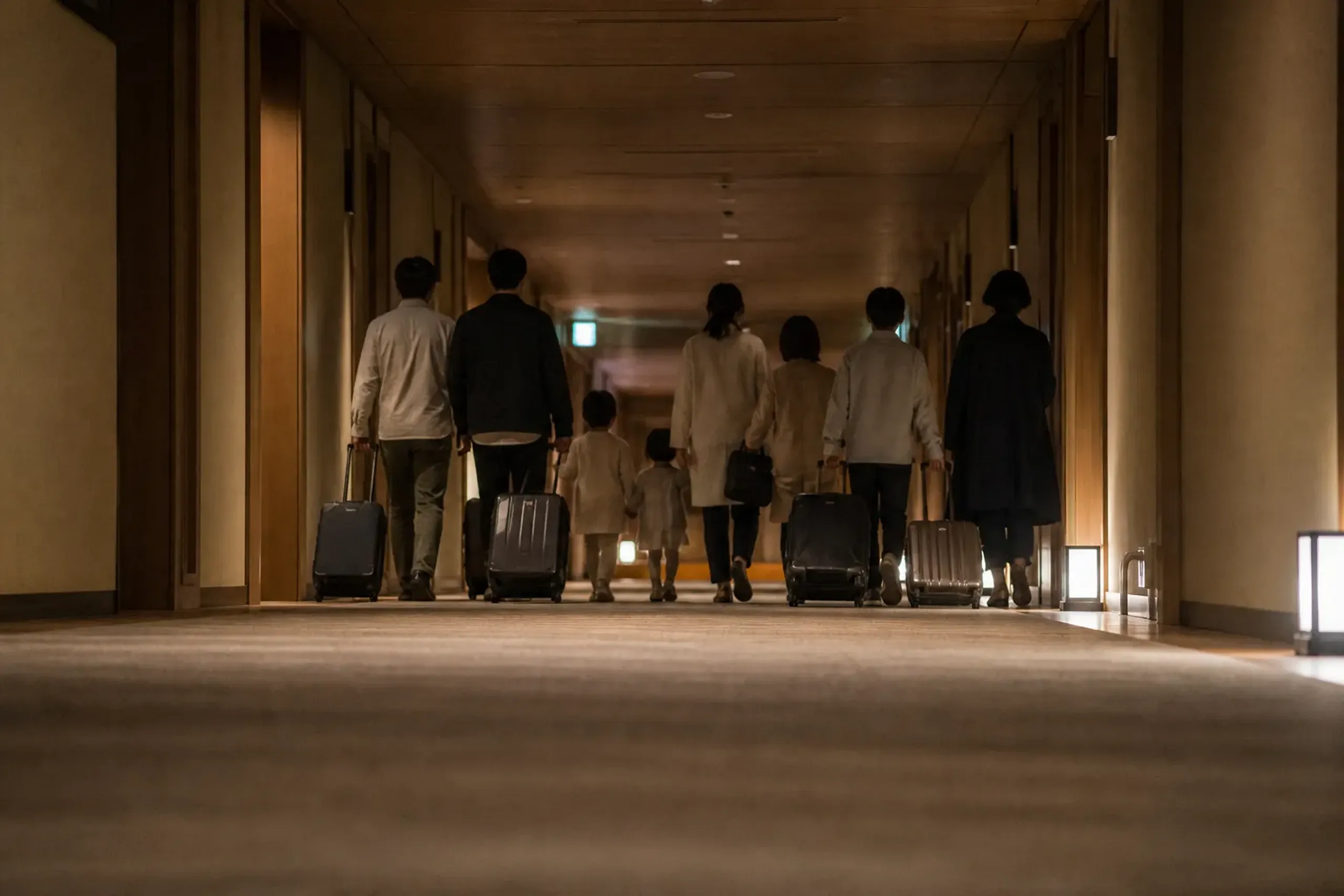
Picture a quiet ryokan corridor at 10 p.m. Everyone is ready to disappear into their own room. Then you learn the rooms are on different floors, the baths are on opposite ends of the building, and the one family suite is already taken. Small problem? Not for eight.
Most competitors sell “tailor-made” as a mood. Our team treats it as arithmetic. Over fourteen nights, you either run the math early—or you spend the trip negotiating it in real time.
Why A Family Of Eight Sits In Japan’s Planning Gap
Eight sits between two systems that work well on their own. Four guests can often fit into one vehicle, one guide rhythm, and one dinner table plan with only mild compromise. Thirty guests can be handled by a group operator with a coach, set menus, and block-booked hotels.
But eight is awkward. It is too large for many small, high-touch properties and counter restaurants to absorb without reshaping the night. It is also too small to benefit from “group” infrastructure, where standardization is the whole point.
That gap is where multi-generational families feel friction. Fast. Our job is to remove it quietly, with choices that respect wabi-sabi restraint rather than loud, showy fixes.
How Do You Plan Rooms For A Family Of Eight Across 14 Nights In Japan?
You plan around room configurations first, because four rooms are meaningless if they are scattered, non-connecting, or incompatible with your family’s sleeping and privacy needs.
This is the first place “eight” bites. Many of Japan’s most intimate ryokan have only a handful of rooms total. If you need four rooms, you may be taking a substantial share of the house for that night, which can collide with other guests, house rules, and the property’s preferred pacing.
Even in large luxury hotels, it is not just about room count. Connecting rooms, adjacency, and suite-to-room linkages are finite. Four Seasons Hotel Tokyo at Otemachi, for example, publicly states that connecting rooms are available across several categories, including Superior Room (City View / Skyline View), Premier Room, Panoramic Suite, and Imperial Suite. Useful. But still limited by what is actually open on your dates.
Two weeks makes this relentless. A great configuration on night one does not help you on night nine. The problem repeats at every property, and the “perfect” inventory can disappear as soon as one link in the chain shifts.
What We Map Before We Touch The Route
Our concierge team starts with a rooming blueprint. Not vibes. We ask who shares with whom, who needs quiet, who needs an elevator, and who should never be at the far end of a corridor.
- Adjacency: which rooms must be near each other, and which can float.
- Connecting needs: where a connecting pair is non-negotiable (small children) versus merely preferred.
- Bathing reality: private baths in-room versus shared onsen timing (important for grandparents and early sleepers).
- Noise buffering: teenagers, jet lag, early risers. It adds up.
Then we decide what must be “fixed points.”
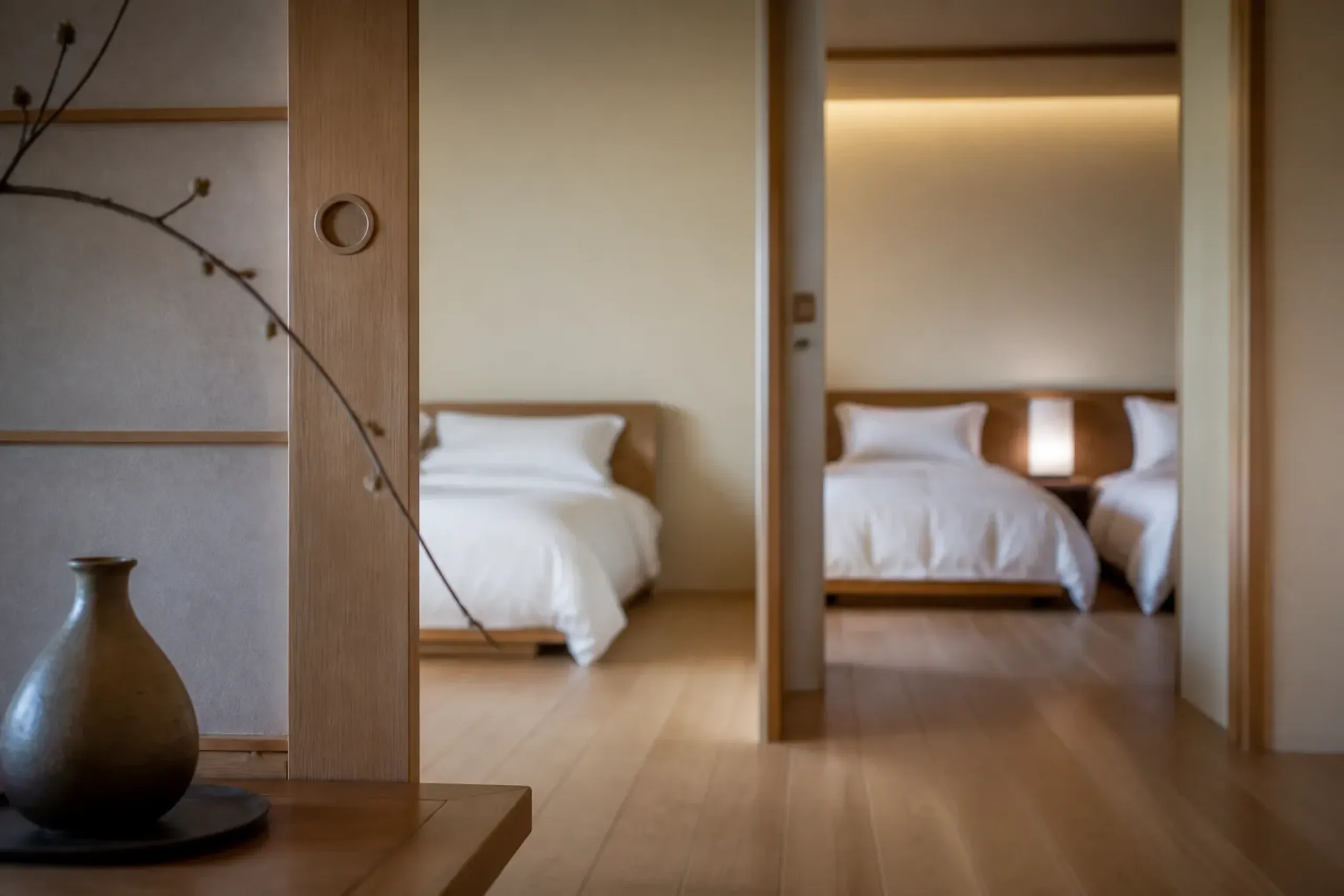
Only after that do we design the cities and pacing around them. Hidden-Japan stays often require this discipline, because they do not flex to last-minute rearrangements.
What Happens When Eight People Try To Dine In Japan’s Best Sushi And Kaiseki Rooms?
Eight guests often require a private room, a full counter block, or a split seating—because many top sushi and kaiseki settings are built around intimate counters, not large tables.
This is where travelers feel surprised. In Japan, the chef’s workspace is the stage. Many celebrated sushi-ya are counters of roughly eight to twelve seats. If you are eight, you can become the room. That can be perfect—or impossible—depending on the house style, the time, and the regular clientele.
Kaiseki can be easier if a private room exists. But “exists” is not the same as “available,” and some restaurants simply decline large parties because they cannot deliver their usual rhythm to a wide table.
Competitor agencies often dodge this detail in public copy. We do not. Your dinners shape your route, especially over two weeks, because one difficult meal repeats fourteen times if you do not build a strategy.
Three Dining Strategies That Actually Work For Eight
We typically see three patterns succeed, depending on how strict you are about dining together every night.
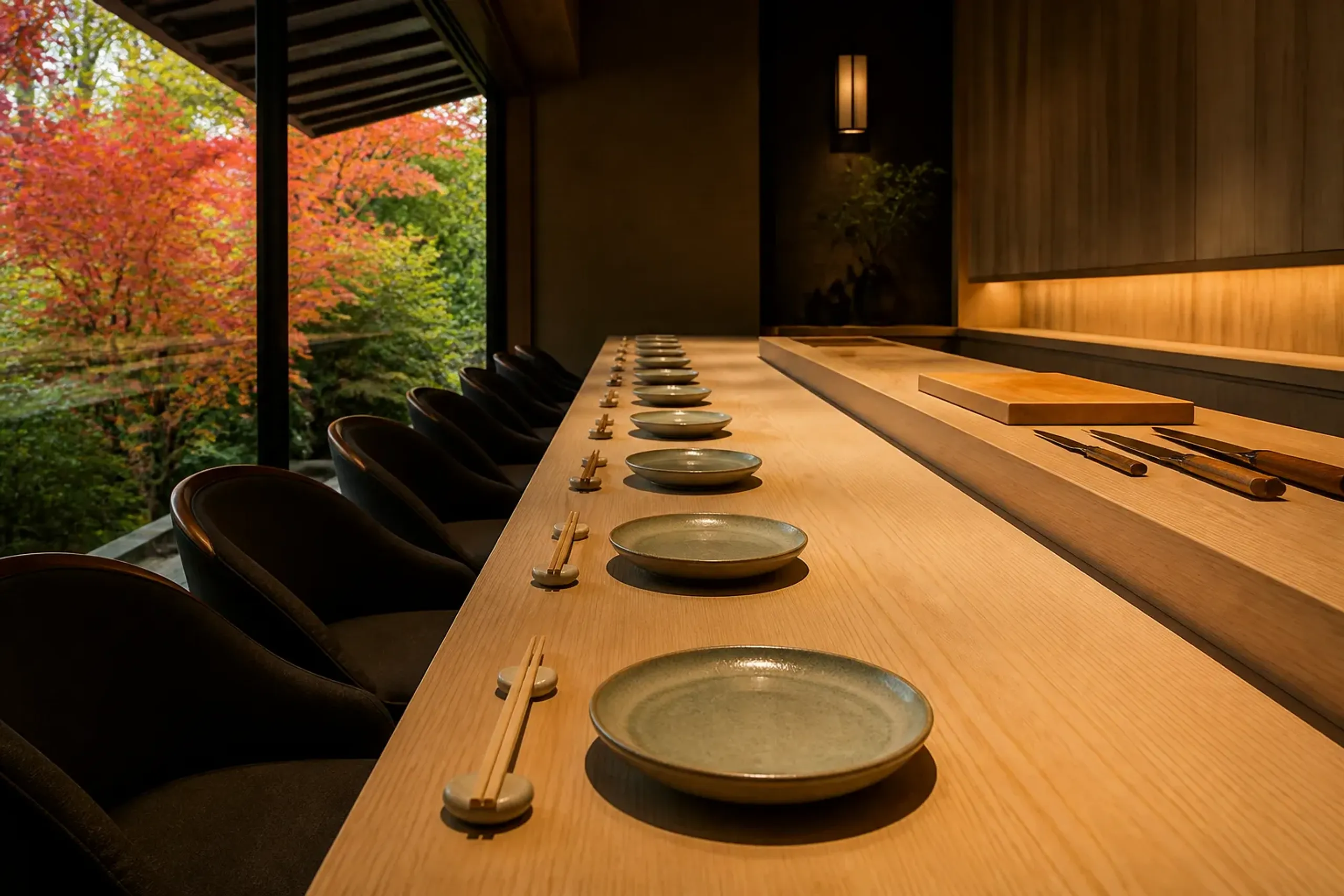
No moralizing. Just reality.
Option A: Private Room Nights (When The Format Exists)
This works well for multi-gen families who want conversation, slower service, and the freedom to step out with a child without disrupting the room.
- Best for: grandparents, younger kids, dietary complexity.
- Trade-off: the chef’s counter energy is different from a private room.
Option B: Counter Block Nights (Eight As A Single Party)
This is the purest experience when the restaurant’s counter size and service style match your group.
- Best for: adults and teens who care about craftsmanship and tempo.
- Trade-off: you must arrive on time, and the pacing is set by the chef.
Option C: Two Tracks, Same Evening (Split Seating Or Parallel Restaurants)
Sometimes the most relaxed “family” night is not sitting shoulder-to-shoulder. It is regrouping after dinner for dessert, a quiet bar, or a night view.
- Best for: mixed appetites, mixed sleep schedules.
- Trade-off: it requires maturity and a clear meet-up plan.
Key fact: Over fourteen nights, the “one hard dinner” problem becomes a structural issue. If you do not design a repeatable dining strategy, the trip starts to feel like a nightly negotiation.
How Do You Move Eight People Comfortably In Japan Every Day?
Eight travelers with two weeks of luggage rarely fit comfortably in one passenger vehicle, so the practical solution is two coordinated vehicles or a passenger vehicle plus dedicated luggage capacity.
This is not a status decision. It is geometry.

Eight adults can fill a vehicle before you add car seats, strollers, shopping, or winter coats.
Now stretch that over two weeks. You will not just have airport luggage once. You will have changing bags, gift boxes, and the slow accumulation of things Japan persuades you to buy. Quietly.
Our transportation approach is built around consistency: the same chauffeurs, the same pickup habits, the same “we know where to stand” rhythm. That is why private transportation is not just comfort—it is trip glue.
Vehicle Pairing Logic For A Family Of Eight
We match vehicles to the family’s real footprint, not a brochure capacity. The goal is calm arrivals, not squeezing in.
- Two-vehicle approach: keeps grandparents and children comfortable, and lets the group split during the day without friction.
- Luggage-forwarding on rail legs: lets you ride unencumbered while bags arrive ahead at the next hotel. Essential.
- One pickup language: the same instructions, every time, so eight people do not drift.
The first time we mention it, here is the service page: our private transportation is designed for exactly this kind of multi-stop journey.
How Do You Keep A Two-Week Japan Itinerary From Exhausting Grandparents And Teenagers?
You build rest days and split-track afternoons into the itinerary from the start, because a single “best of Japan” pace will drain one generation to entertain another.
This is the human side of the arithmetic. A two-week trip has a momentum problem: once the family is tired, even perfect logistics feel sharp.
So we plan days with different energy levels.
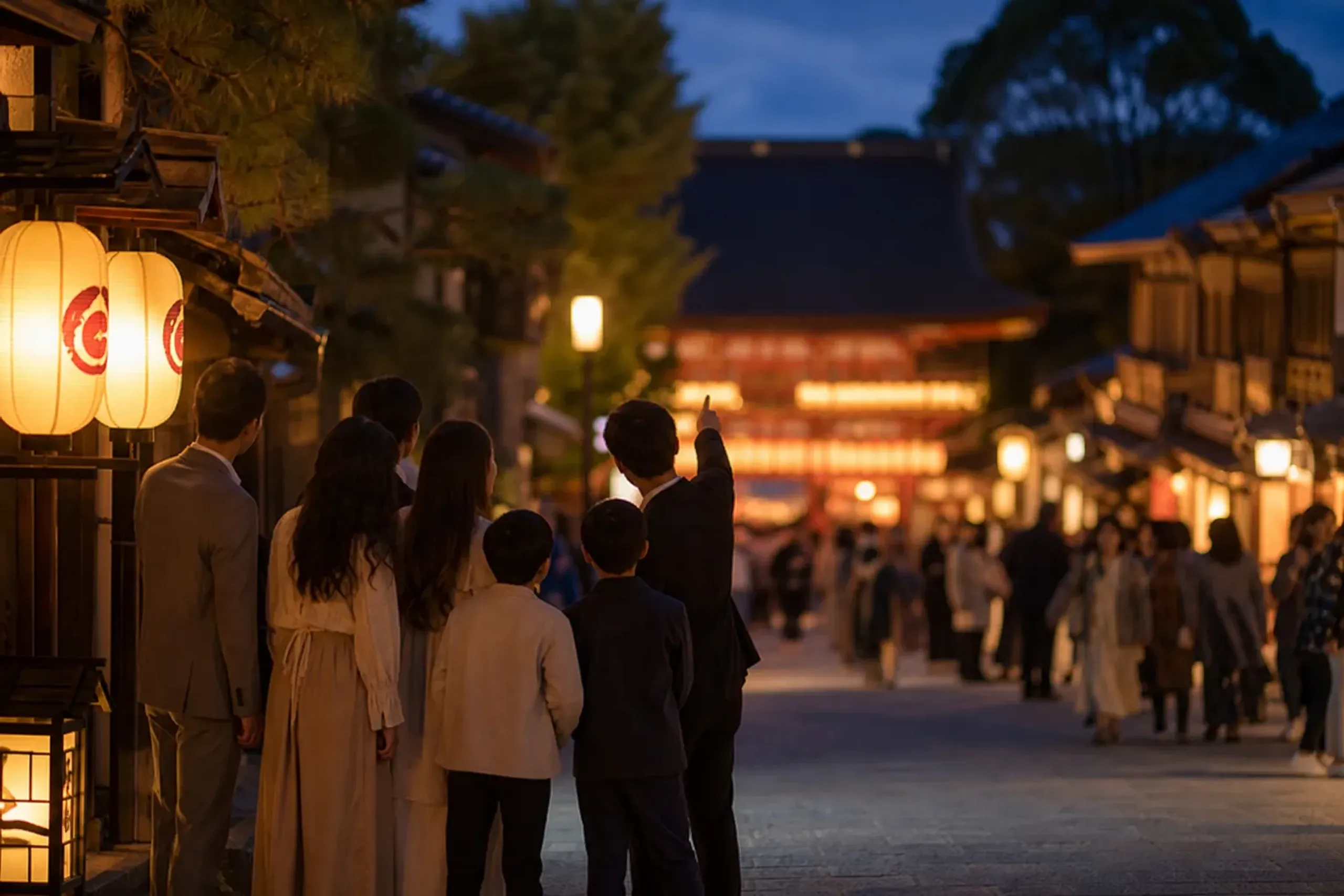
A museum morning can be followed by a long lunch and a hotel reset. A temple visit can be paired with a garden and an early return, while teens go shopping or explore a neighborhood with a guide.
Wabi-sabi shows up here as restraint. Not every hour needs to be filled. Some of the best Japan is silence, moss, and a slow cup of tea.
The Split That Saves The Trip
Most multi-generational groups end up splitting, even if they swear they will not. The trick is to plan it, so it feels intentional rather than like a family argument.
- Two vehicles: one group returns early, the other stays out late.
- Two guides (when needed): different interests, different walking tolerance.
- Shared anchors: breakfast together, a set lunch, or a fixed dinner time.
Discretion matters here, too. Families at this level do not want a public spectacle of “the group.” They want to move like locals with a purpose, not like a tour.
What Gets Decided First When Planning A Two-Week Japan Trip For Eight?
Room configurations and eight-person dining constraints come first, then the route bends around them, and only then do you add flexible sightseeing and shopping.
This is the order most itineraries get wrong. They pick Tokyo–Kyoto–Osaka first, lock trains, then discover the ryokan has no adjacency or the restaurant cannot seat eight at the right time.
Our team at Japan Royal Service builds in the opposite direction. Fixed points first.
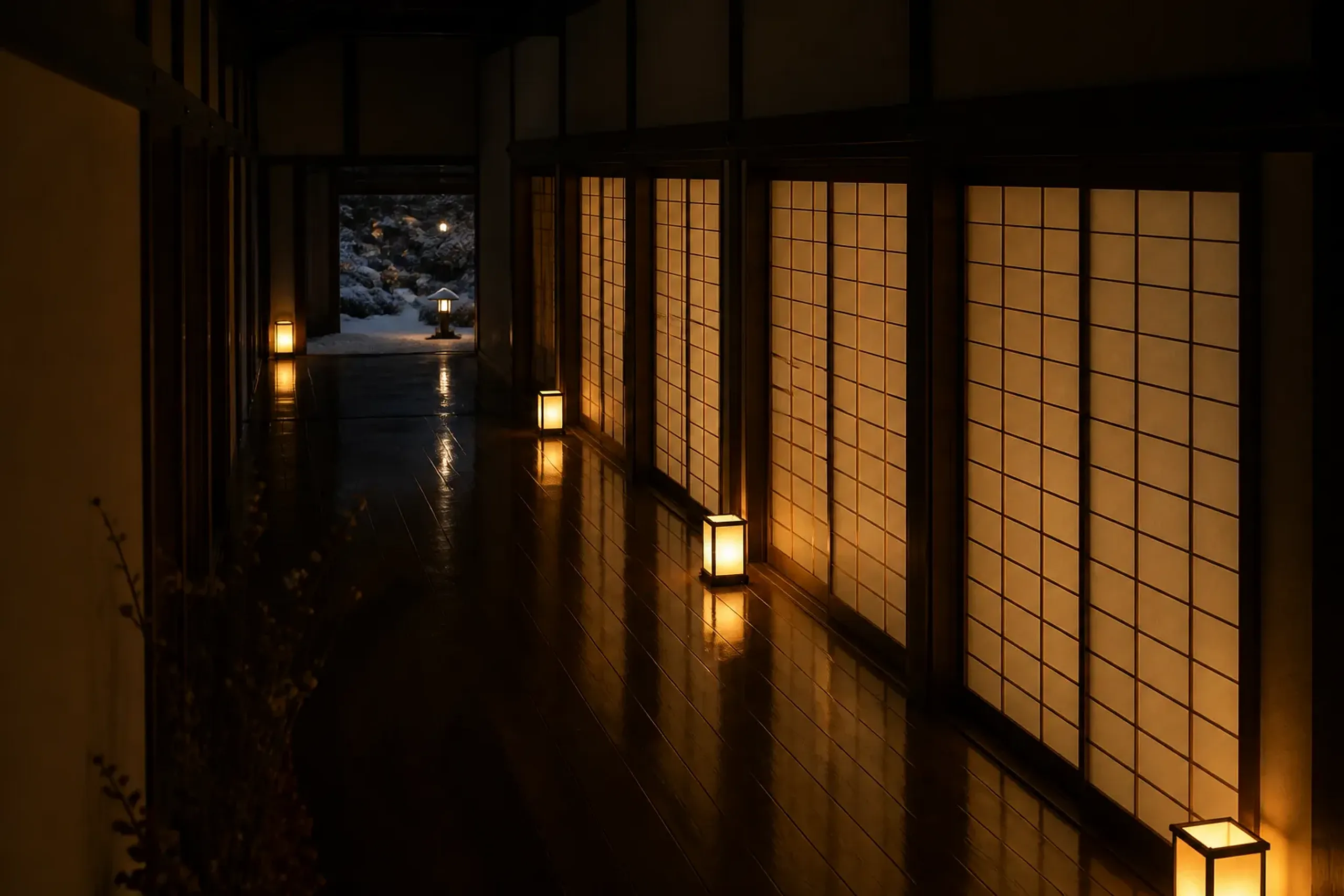
Everything else follows.
It sounds strict. It is actually freeing, because you stop fighting the country’s capacity realities.
A Practical Order Of Operations (What We Do In Real Life)
- Step 1: rooming map (who needs what, and what can flex).
- Step 2: property nights that must be in place early (especially small ryokan).
- Step 3: dining strategy for “eight” nights (private room, counter block, split track).
- Step 4: daily movement plan (two vehicles vs one + luggage, rail legs, staging points).
- Step 5: cultural depth: shokunin visits, museums, gardens, seasonal events.
- Step 6: buffer time and recovery days. Non-negotiable.
Kyoto In 2026: How Do You Do It Well With Eight People When Crowds Are Part Of The Equation?
You do Kyoto well with eight by timing the day tightly, choosing calmer neighborhoods, and using private vehicles as staging points—because Kyoto’s peak areas compress quickly and waiting multiplies with group size.
Kyoto is still Kyoto. But 2026 messaging from Kyoto City and Kyoto’s official tourism channels has emphasized sustainable sightseeing and harmony between local life and tourism, especially in spring. That matters for families of eight, because the penalty for congestion is not annoyance—it is itinerary drift.
Then there is summer. Gion Matsuri runs across July into mid-August, and Yoiyama nights have typically clustered around July 14–16 (Early Festival) and July 21–23 (Latter Festival) in recent years, with the 16th and 23rd called out as the actual Yoiyama dates in Kyoto Travel’s guidance. Those streets can be dense. Eight people need a plan.
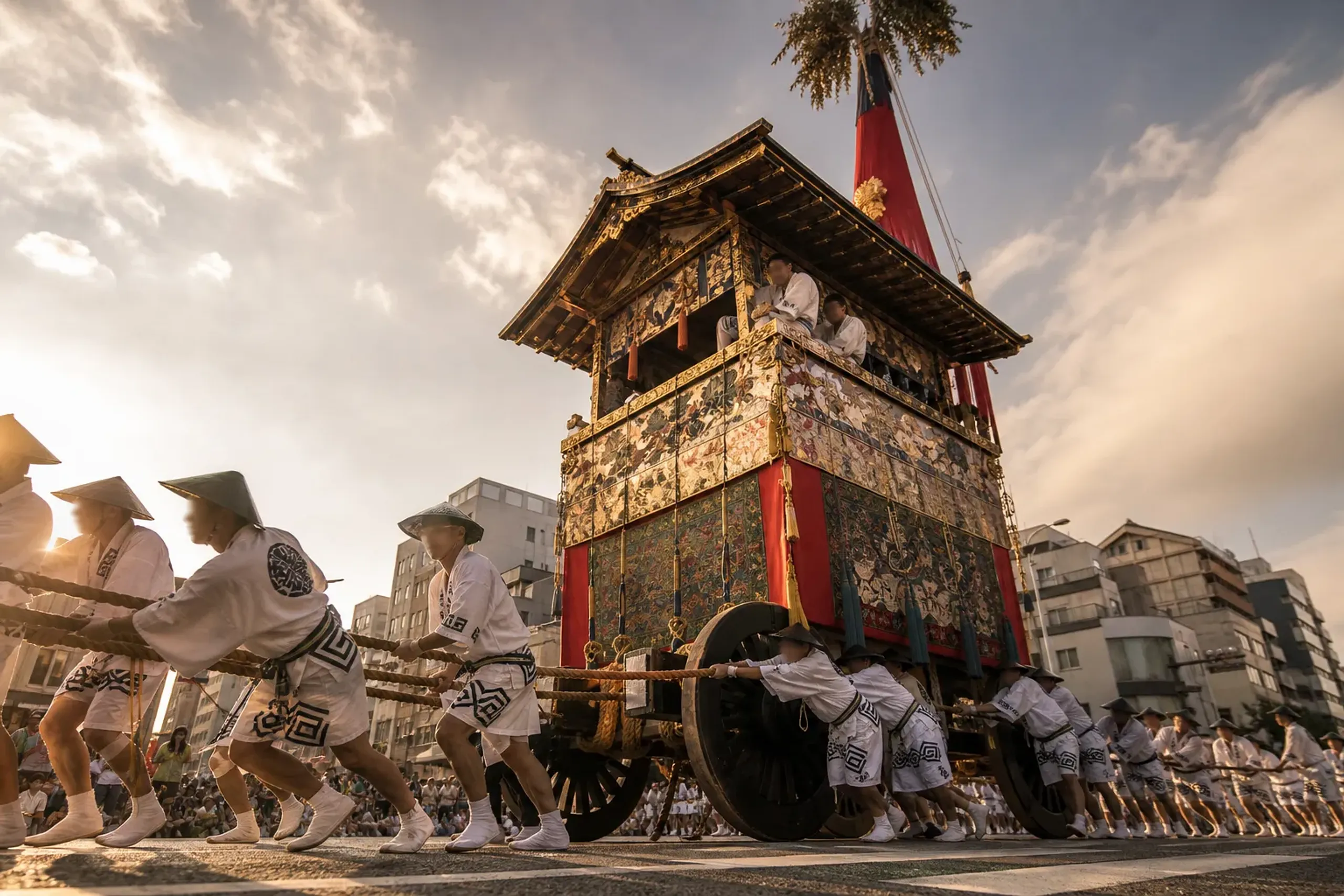
Our approach is to decide what you want from Kyoto: a single iconic morning at a famous site, or repeated quiet moments that feel like private Kyoto. Most families choose the second once they see what the first costs in time.
What “Quiet Kyoto” Looks Like For A Family Of Eight
It looks like early starts, breaks, and selectivity. Sharp choices.
- Morning: one high-priority visit before the city fully wakes up.
- Midday: a long lunch, a garden, or a return to the hotel to reset.
- Late afternoon: a craft visit or a low-crowd neighborhood walk.
- Evening: dinner that fits your eight-person strategy, not a last-minute scramble.
Japan Rail Pass vs Private Driver vs Domestic Air For A Family Of Eight (2026 Update)
From October 1, 2026, the nationwide Japan Rail Pass price increases, including 14-day Standard Car Adult at 84,000 yen and 14-day Green Car Adult at 116,000 yen, so families should re-check value versus private driving and flights.
We mention this because it changes the conversation. Many HNW and UHNW families still enjoy rail for comfort and the feeling of moving through the country, but the pass is not automatically the “smart” answer once prices shift.
For eight, the decision is rarely purely financial. It is about time, privacy, and baggage friction. A rail day can be elegant if luggage is forwarded and the station transfers are controlled. Without that, it becomes a slow-motion herding exercise.
Private vehicles can reduce transfers and keep the family together. Domestic flights can make sense for long jumps.
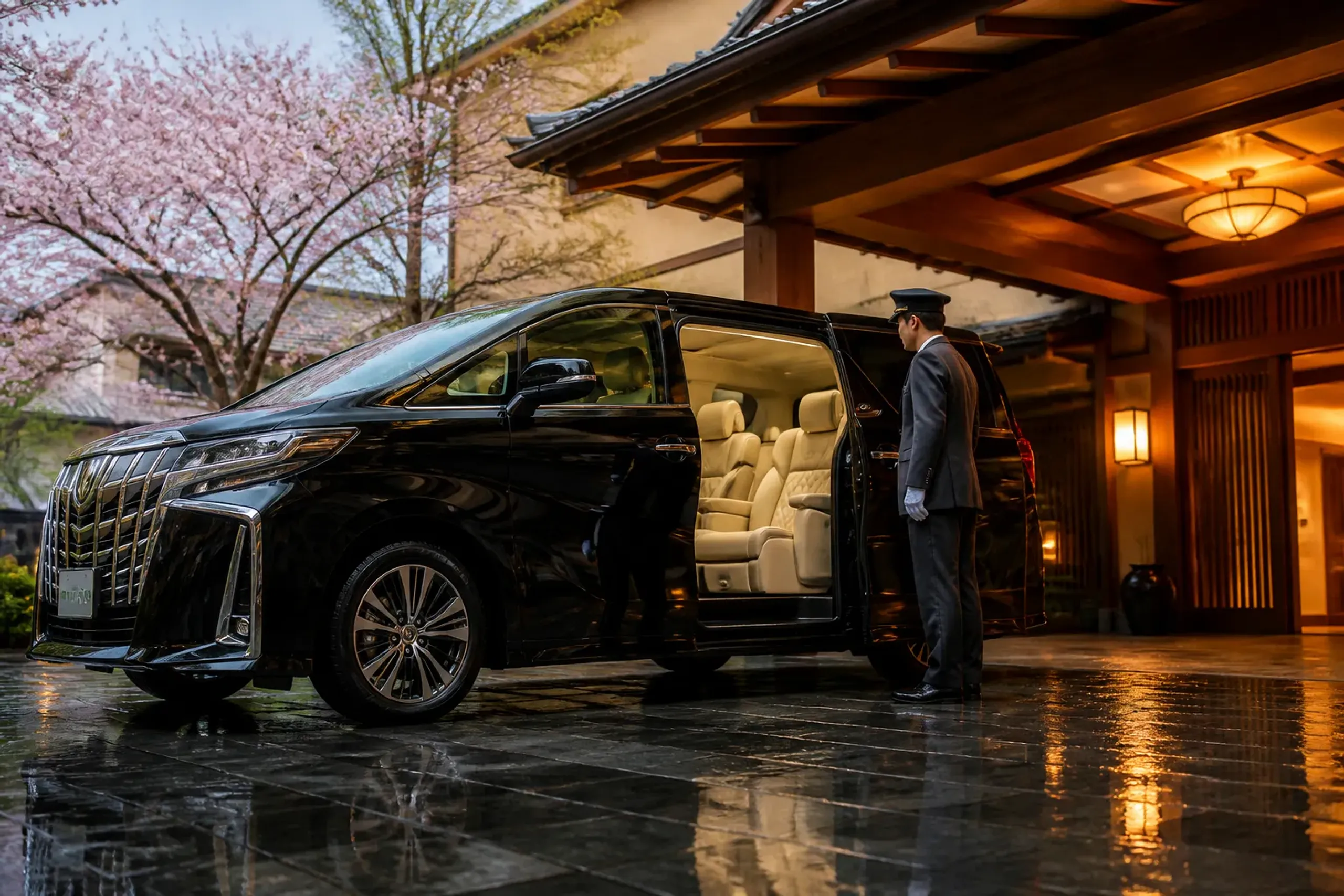
The best plan is often mixed.
| Travel Mode (Family Of 8) | Best When | Watch For |
|---|---|---|
| Nationwide Japan Rail Pass (14-day) | You want frequent long-distance rail days and can manage transfers with a tight plan | Value shifts after Oct 1, 2026; station transfers and luggage handling can strain an eight-person group |
| Private Chauffeured Vehicle(s) | You prioritize door-to-door timing, privacy, and controlled pacing | Two vehicles are often required; parking and drop-off points matter in dense areas like Kyoto |
| Domestic Air | You need to compress a long distance (e.g., Tokyo to Sapporo or Naha) inside a two-week window | Airport time adds up; baggage and ground transfers must be planned tightly for eight |
A 14-Day Blueprint That Holds Together (Without Naming Specific Ryokan Or Restaurants)
A stable two-week plan for eight uses a few longer stays, not constant hopping, and it alternates high-stimulus days with low-stimulus days so the family’s energy does not collapse.
Here is a structure we often see work for first-time luxury family travelers. It keeps the Golden Route logic while making space for hidden-Japan texture and shokunin encounters. No frantic packing every morning.
- Nights 1–4: Tokyo base with day trips, flexible mornings, and one craft-focused session.
- Nights 5–8: Kyoto base with deliberate timing and at least one day split into two tracks.
- Nights 9–10: A restorative onsen area stay (shorter driving days, longer meals, early nights).
- Nights 11–12: Another region for contrast (art islands, mountains, or a second city), chosen around your fixed-point stays.
- Nights 13–14: Return to Tokyo for departures, shopping, and slack in the schedule.
Want a plan designed around your family’s ages and pace?
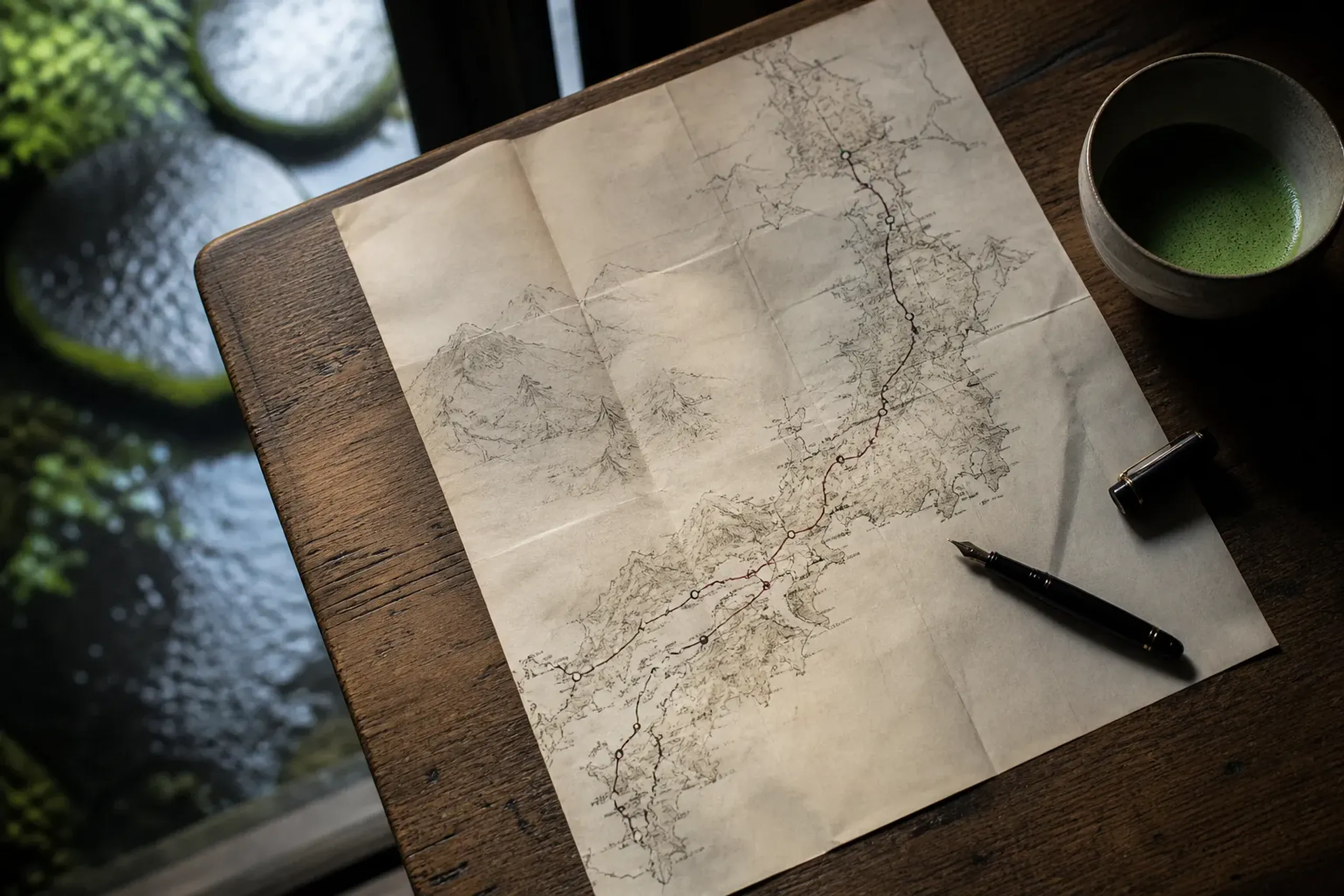
This is where a bespoke itinerary becomes more than a phrase. It becomes the control system.
Where A Tokyo Disney VIP Tour Day Fits In A Family-Of-Eight Itinerary
Tokyo Disney Resort offers a private VIP Tour governed by its published eligibility and reservation rules, and overseas visitors follow the same eligibility framework as other guests. If it is a serious part of your family itinerary, our concierge can discuss your dates, party size, suite strategy, and next steps privately.
Tokyo Disney Resort operates the VIP Tour. If Disney is part of your two weeks, our concierge can help you think through where the day sits within a family-of-eight itinerary.
A key update matters for planning: the official Tokyo Disney Resort VIP Tour is stated as a flat 660,000 JPY from 2026-07-01. That number changes the decision-making for families who are weighing one “big day” against multiple calmer days elsewhere.
Also consider weather risk, especially with children. If Disney is a must, building a buffer day around it can save the trip’s mood. For a deeper read, you can see our perspective here: Rain, Wind, and Refunds: Tokyo Disney in Bad Weather.
How A Single Coordinator Keeps Fourteen Nights From Fraying
One coordinator and one contract reduces failure points, because every change is reconciled across rooms, vehicles, guides, meals, and timing without eight people relaying partial information.
This is not glamorous. It is what makes the trip feel calm. When each component is booked separately, the family becomes the project manager. Over two weeks, that is a lot of messages, misunderstandings, and quiet stress.
Our coordinator model also protects discretion. For HNW, VHNW, and UHNW families, privacy is not just “no photos.” It is not leaving a trail of loosely shared itineraries across vendors and chat threads.
When you want to go deeper—shokunin ateliers, imperial-class settings, private viewings—this coordination style becomes the difference between a story you tell and a schedule you survive.
Frequently Asked Questions
Is A Two-Week Japan Itinerary Too Long For A Family Of Eight?
Two weeks is workable for eight if the route includes longer stays, built-in rest days, and a split-track plan for different generations. Without that structure, fatigue compounds quickly.
In our experience, the issue is not duration. It is density. A family of eight can do more when you stop trying to do everything together, every hour.
How Far In Advance Should We Start Planning A Two-Week Luxury Japan Trip For Eight?
Plan six to twelve months ahead for most dates, and longer for cherry blossom and autumn foliage when the most capacity-limited stays and dinners shape the itinerary first.
Two weeks creates a chain. If one key night is unavailable, the whole route may shift.
Do We Need Two Vehicles And Two Guides For A Family Of Eight?
Many families of eight do best with two vehicles, and sometimes two guides, because it allows daytime splitting and reduces luggage and comfort pressure.
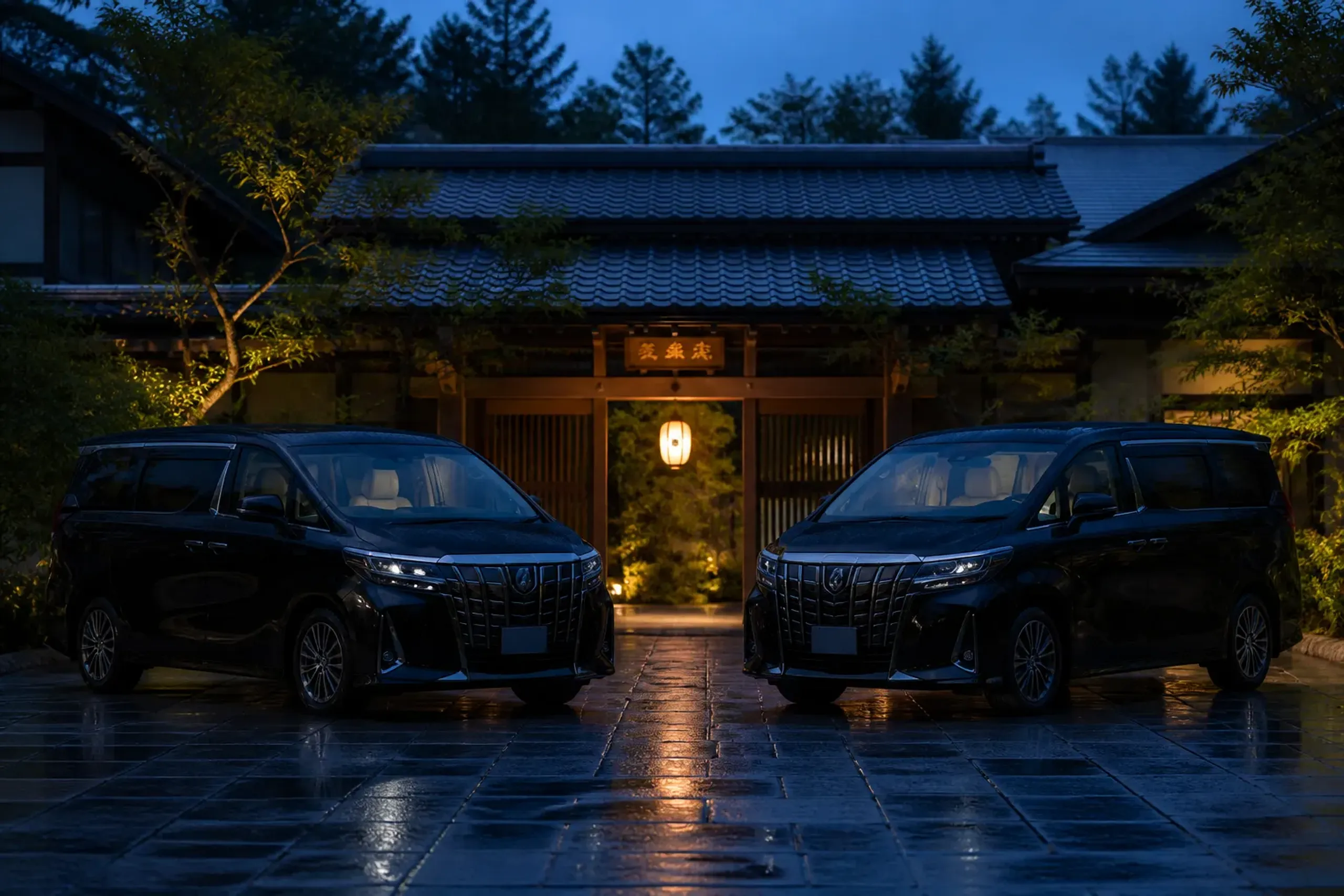
It is also a pacing tool. Grandparents can return early without ending the day for everyone else.
What If We Want Kyoto During Gion Matsuri With Children And Grandparents?
Gion Matsuri runs across July into mid-August, and Yoiyama nights can be especially crowded, so timing, meeting points, and recovery time need to be planned with care for an eight-person family.
Kyoto Travel’s guidance has listed Yoiyama as typically July 14–16 (Early Festival) and July 21–23 (Latter Festival) in recent years. We design the day so the festival is a highlight, not a crush.
Why Choose Japan Royal Service
Japan Royal Service is built for the “eight-person gap” because we run the hard math early and keep it consistent for fourteen nights. Rooms are planned by configuration, not count. Dining is approached as a format problem, not a list of names.
We also protect discretion as a default, not a perk. Your itinerary and identity stay quiet, and coordination stays centralized so details do not leak through unnecessary handoffs.
Finally, we curate Japan with depth. Shokunin encounters, imperial-class settings, and hidden-Japan stays are not treated as trophies; they are used to slow the trip down and make it feel precise.
If you are planning two weeks in Japan for a family of eight, reach our team privately via WhatsApp or LINE, or contact us here.