In this guide
- 01What Makes Tsuruga Castle Different In Spring?
- 02A Castle That Kept Being Rebuilt: Kurokawa, Ujisato, And The Five-Storey Keep
- 03What Happened At Tsuruga Castle During The Boshin War?
- 04Is Tsuruga Castle Original Or A Reconstruction?
- 05Tsurugajo Cherry Blossoms: What You’ll See In The Castle Park
- 06When Do Cherry Blossoms Usually Bloom At Tsuruga Castle?
- 07Is There A Night Light-Up At Tsuruga Castle During Sakura Season?
- 08How Do You Get To Tsuruga Castle From Tokyo?
- 09Practical Visiting Notes: Hours, Tickets, And Parking
- 10A Calm 2–3 Hour Flow Inside Tsuruga Castle Park
- 11How Japan Royal Service Plans Aizu Castle Visits For Discerning Travelers
- 12Plan Your Aizu Spring With Japan Royal Service
- 13Frequently Asked Questions
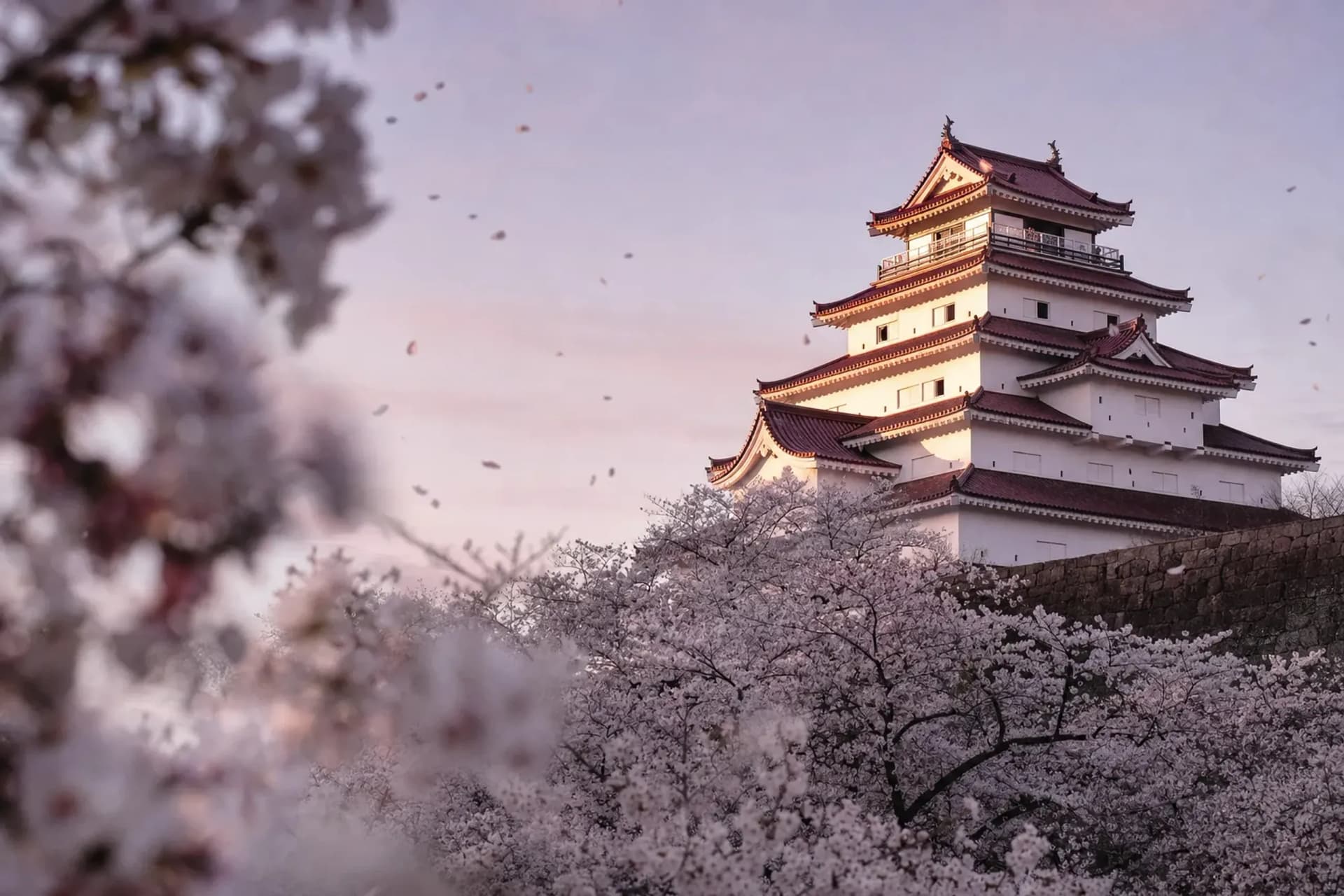
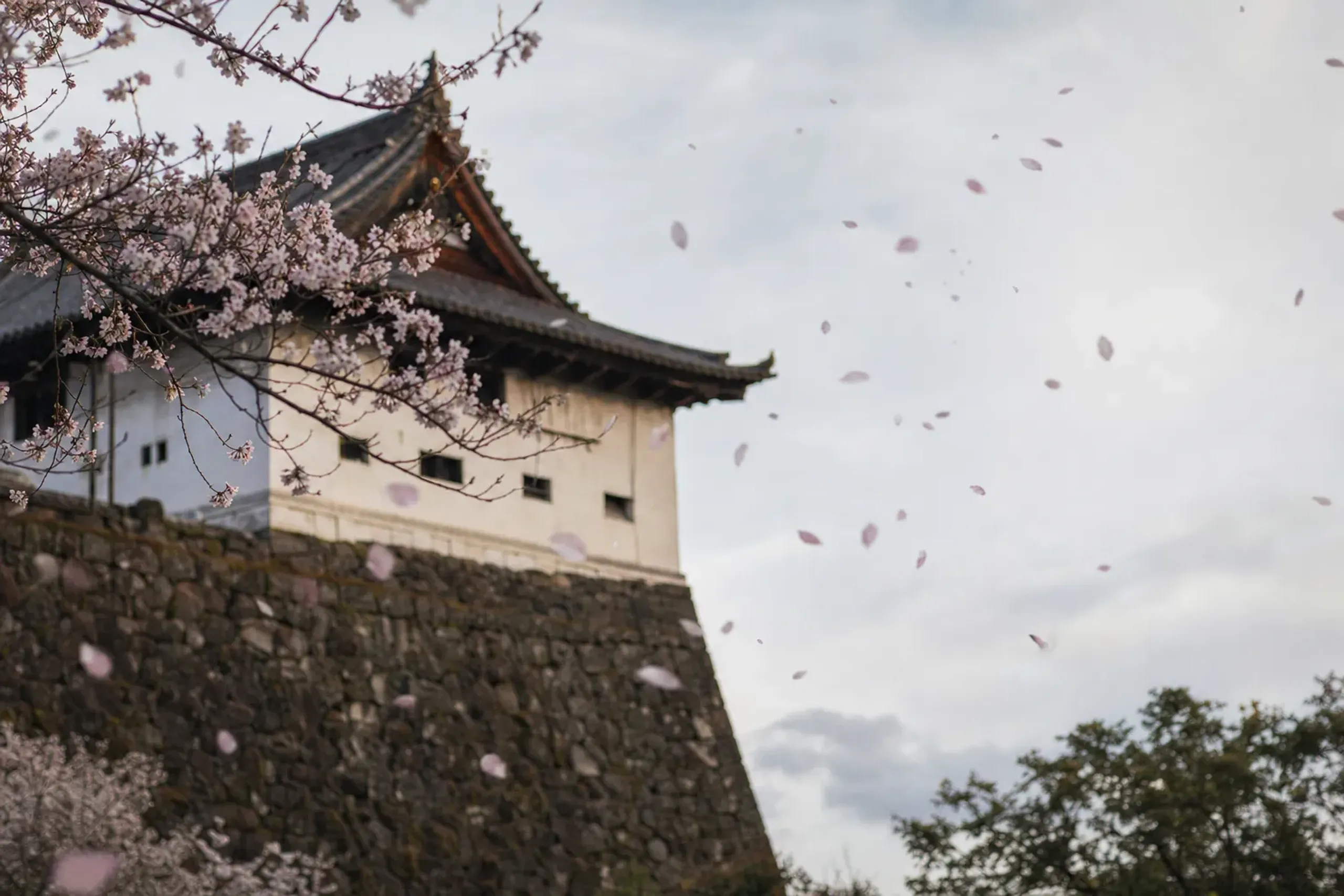
A red roof rises above pale petals, and for a moment the familiar castle palette simply dissolves. At Tsuruga Castle in Aizu-Wakamatsu, spring is more than another entry in the long national roll-call of “sakura season.” It is a study in contrast—warm red set against soft pink and white, framed by a town that has never stopped remembering.
This guide is for the traveler who wants the picture, but also the truth behind it. Not a rushed stop. Not another item ticked off a list. Our team at Japan Royal Service plans visits here with unhurried pacing, seamless logistics, and a deep respect for the history that Aizu carries so quietly.
What Makes Tsuruga Castle Different In Spring?
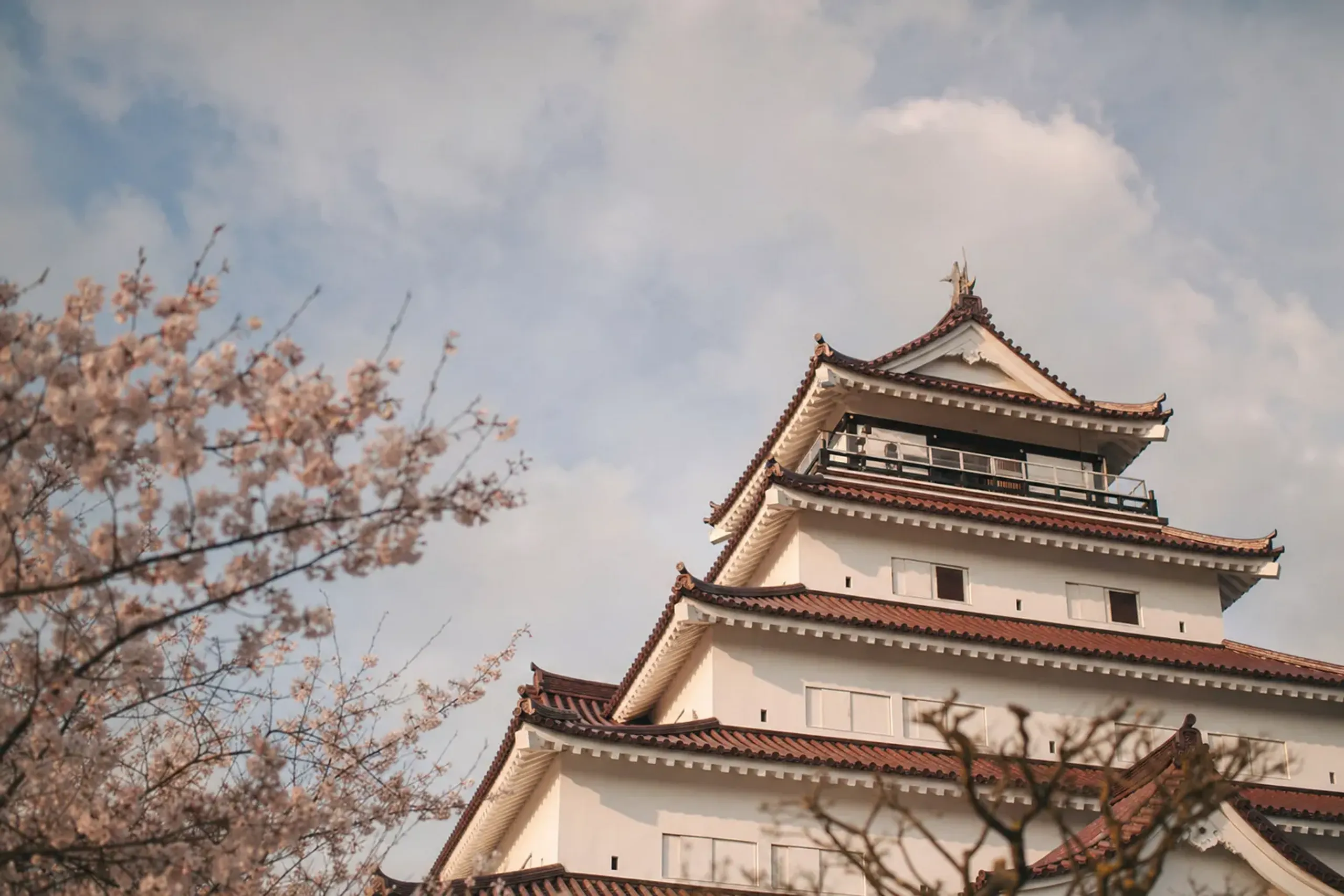
Tsuruga Castle is widely described as Japan’s only castle keep crowned with red roof tiles, which turns the spring scene into a rare red-and-pink composition rather than the familiar black-and-white silhouette seen almost everywhere else.
Most of the keeps you photograph in Japan read as monochrome from a distance—white plaster, dark timber, black roofing. Here, color catches the eye first. The red roofline holds its own against the blossoms, even on overcast days when soft, flat light tends to drain the drama from everything around it.
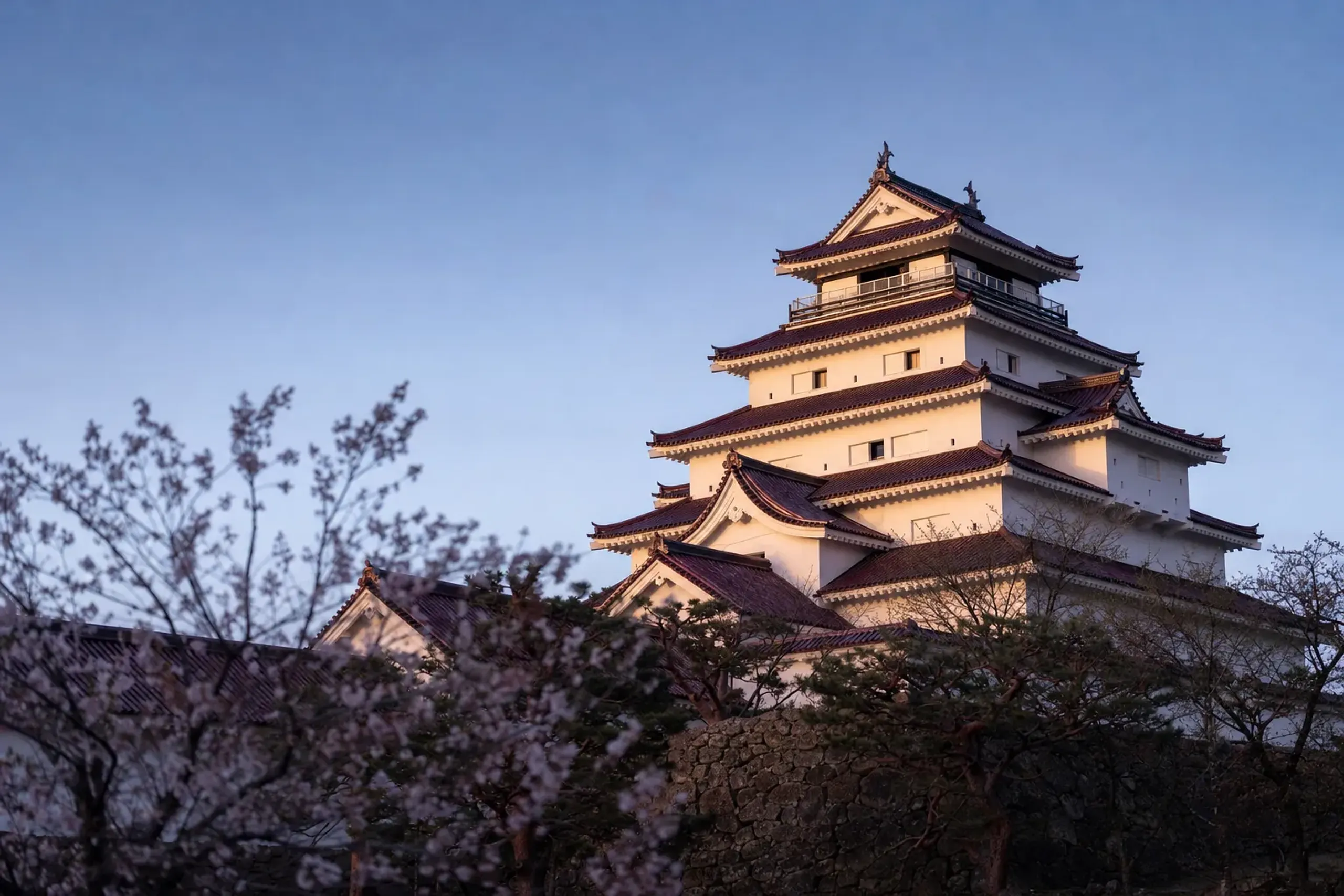
That color is also a deliberate choice. The current keep is a reconstruction, and the roof was redone in 2011 to evoke a late-Edo appearance, replacing the black tiles used in the 1965 rebuild.
Honest. Considered. Unmistakably Aizu.
For the discerning traveler, the appeal is a quiet one. Aizu-Wakamatsu is not the loudest spring destination in Japan—and that is precisely the point. You can linger in the grounds, step into the museum keep, and leave without ever feeling pushed along from behind.
A Castle That Kept Being Rebuilt: Kurokawa, Ujisato, And The Five-Storey Keep
The story begins long before the name on today’s maps. The site first rose as Kurokawa Castle, said in some sources to have been built by Ashina Naomori in 1384. Records vary, so we keep the earliest origins brief and anchor our telling in what is well established.
In 1590, Gamō Ujisato arrived and rebuilt the castle on a grand scale. A seven-storey keep was completed in 1593, and the town was renamed from Kurokawa to Wakamatsu. One theory holds that the name “Tsuruga” derives from Ujisato’s childhood name, though accounts differ.
In the early Edo period, the keep is said to have been reduced from seven storeys to five. From 1643, the Aizu Matsudaira family held the castle. That long stewardship matters, because it shaped the character of the entire town—formal, disciplined, and stubbornly, proudly regional.
Visit alongside a cultural interpreter and the details sharpen into focus. Roof angles. Defensive sightlines. The way the grounds open and breathe. Small things, each one. Together, they tell the whole story.
What Happened At Tsuruga Castle During The Boshin War?
In 1868, Tsuruga Castle was besieged for roughly a month during the Boshin War, and the Aizu domain surrendered in September after siding with the old shogunate.
We encourage guests to approach this part of the visit without battle theatrics. The siege is a large part of why Aizu’s story still feels so close to the surface, even when you are simply walking beneath cherry branches on a mild April afternoon.
You may also hear of the Byakkotai, a teenage unit tied to this conflict; their graves rest on Mt. Iimori. We mention it once, plainly, and leave it to each guest to decide how far into that history they wish to travel.
What stays with many visitors is not the drama at all, but the restraint. Aizu is proud. It is also bruised. The castle grounds carry that atmosphere in a way few guidebooks ever manage to describe.
Is Tsuruga Castle Original Or A Reconstruction?
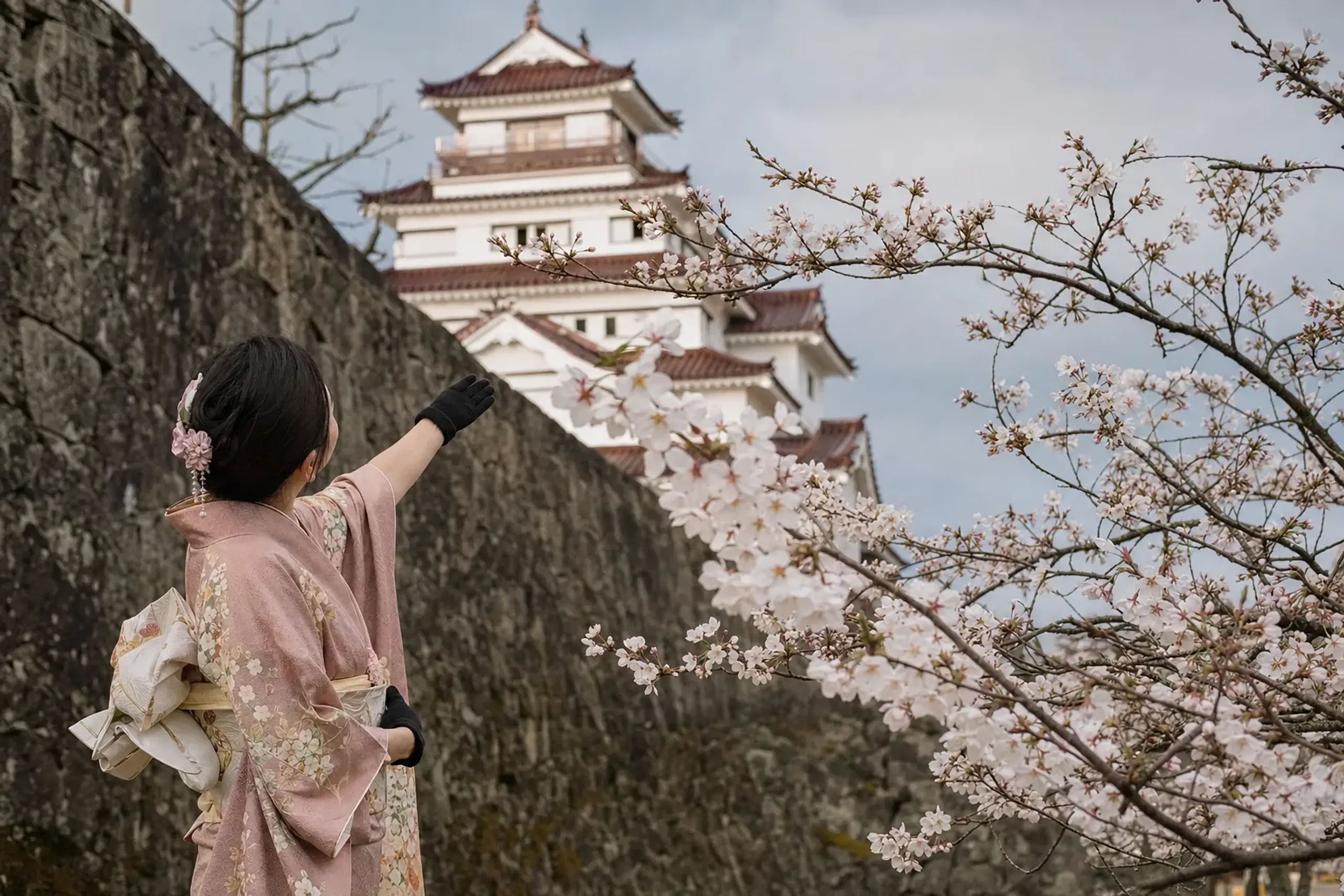
The keep you enter today is a reinforced-concrete reconstruction completed in 1965, after the original buildings were demolished in 1874.
This is no hidden fact, and we prefer it that way. The rebuilt keep houses a local history museum, and for many travelers that museum context is the very point of the visit—an honest, readable way to understand what was lost, and why it was ultimately rebuilt.
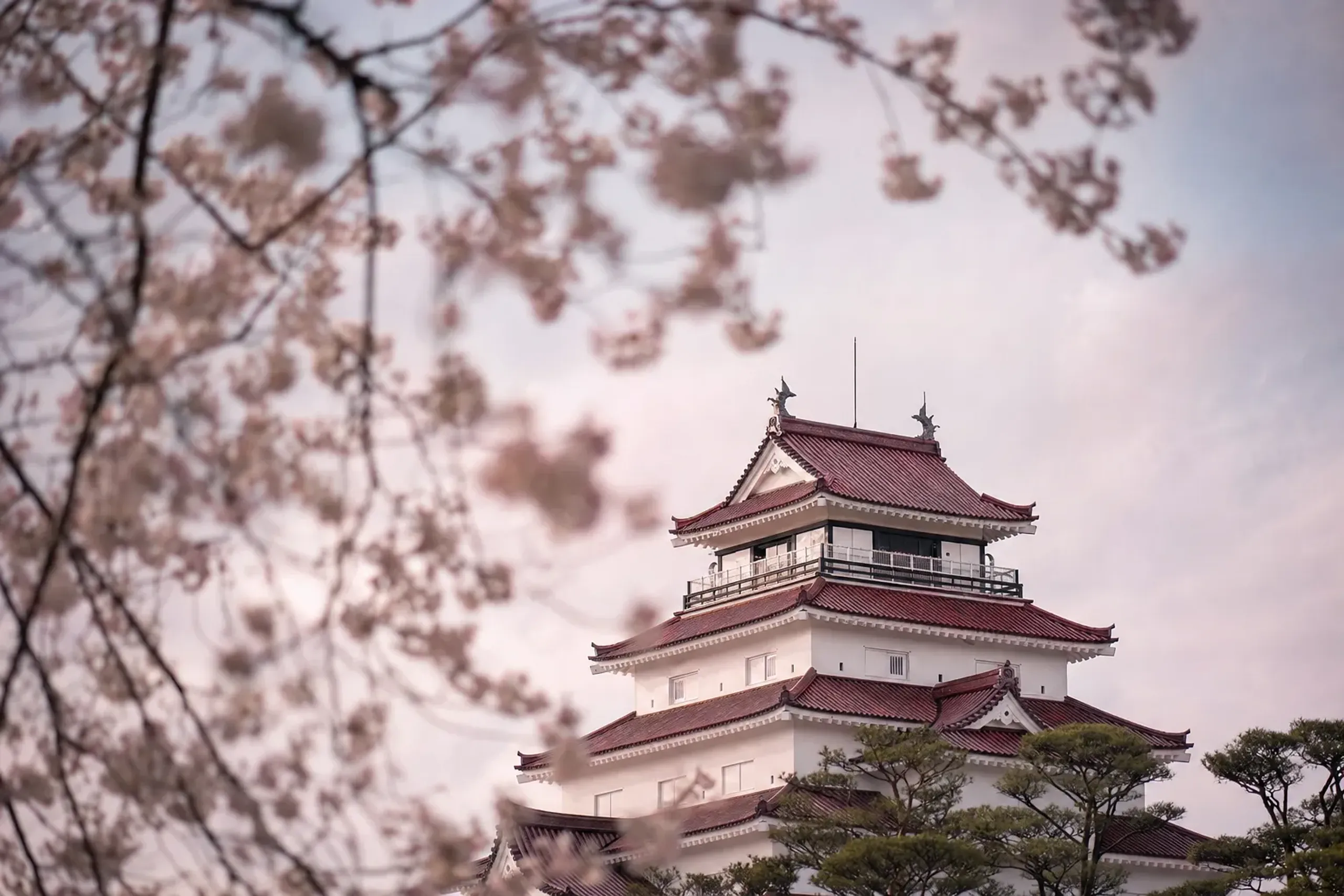
Then comes the modern detail that everyone photographs. In 2011, the keep was re-roofed in red tiles, replacing the black tiles of the 1965 version, to recreate a late-Edo appearance. The result is that iconic spring image: red above blossom, with the quiet town stretching out behind it.
It is a reconstruction, yes. It is also a civic statement. Aizu-Wakamatsu wanted its castle back—and said so, in tile and timber.
Tsurugajo Cherry Blossoms: What You’ll See In The Castle Park
Tsuruga Castle Park is commonly cited as home to roughly 1,000 cherry trees, among them Somei-Yoshino, yaezakura (double-flowered), and shidarezakura (weeping).
Those varieties matter enormously for timing. Somei-Yoshino delivers the classic, cloud-like canopy. Yaezakura can extend the feeling of “peak” well after the first wave fades. Shidarezakura changes the posture of the scene entirely—blossoms falling like fine threads along the moat’s edge.
One source also places the park on a “100 Best Cherry Blossom Spots” list, which matches the reality on the ground in spring: this is a serious blossom site, not a token row of trees planted for appearances. And yet the mood can remain gentle, even meditative, if you plan your hour well.
Our concierge team often suggests arriving with a single purpose first: capture the keep-and-blossom photograph while your energy is still fresh. Food can wait. So can souvenirs. A clear priority clarifies everything that follows.
When Do Cherry Blossoms Usually Bloom At Tsuruga Castle?
Tsuruga Castle’s blossoms typically reach full bloom in April, and one commonly cited pattern places the peak around mid-April.
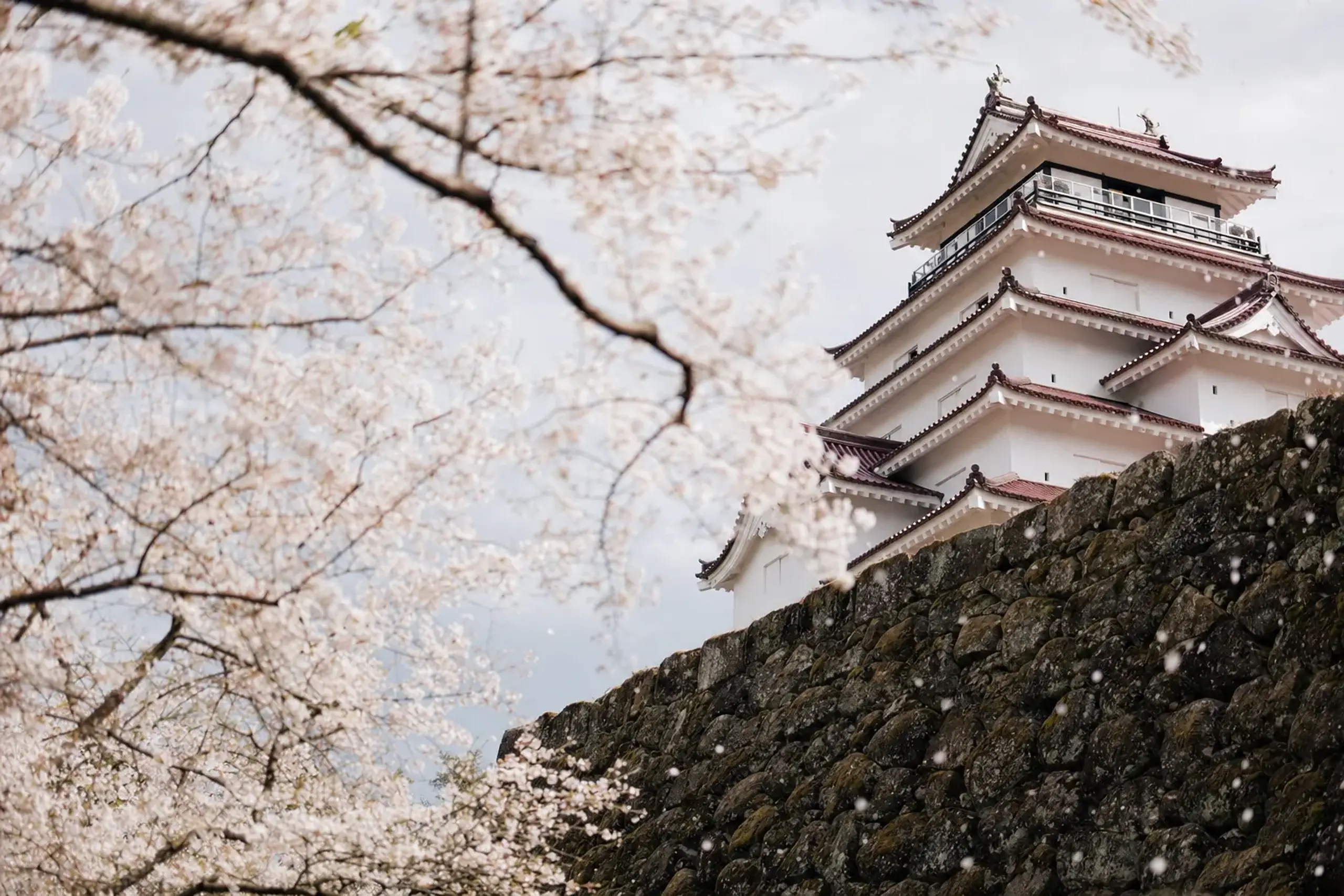
We make no promises here. Weather in Tōhoku can turn quickly, and bloom timing shifts with every season. What we can do is plan for flexibility—your arrival time, your length of stay in the park, and whether an evening return makes sense for the light-up.
As a concrete illustration only, the 2026 cherry blossom festival period at Tsuruga Castle Park was listed as 1 April to 6 May. Think of that as a useful envelope rather than a forecast for future years.
If you would like a second Fukushima spring anchor without turning your trip into a frantic loop, consider our separate guide to Miharu Takizakura. One tree. One moment. An entirely different energy.
Is There A Night Light-Up At Tsuruga Castle During Sakura Season?
Yes—Tsuruga Castle Park commonly offers evening illumination through sakura season, and the trees are often said to mirror themselves perfectly in the still moat water.
As one season’s illustration, the 2026 illumination period was listed as 1 April to 6 May, from sunset to 21:30, and until 21:00 once the petals had fallen. These details are set anew each year, so our concierge team verifies the current dates, times, and any partial-area lighting well ahead of your visit.
Night transforms the photography. The keep grows heavier and more commanding in the frame, and the blossoms seem brighter than they did at noon.
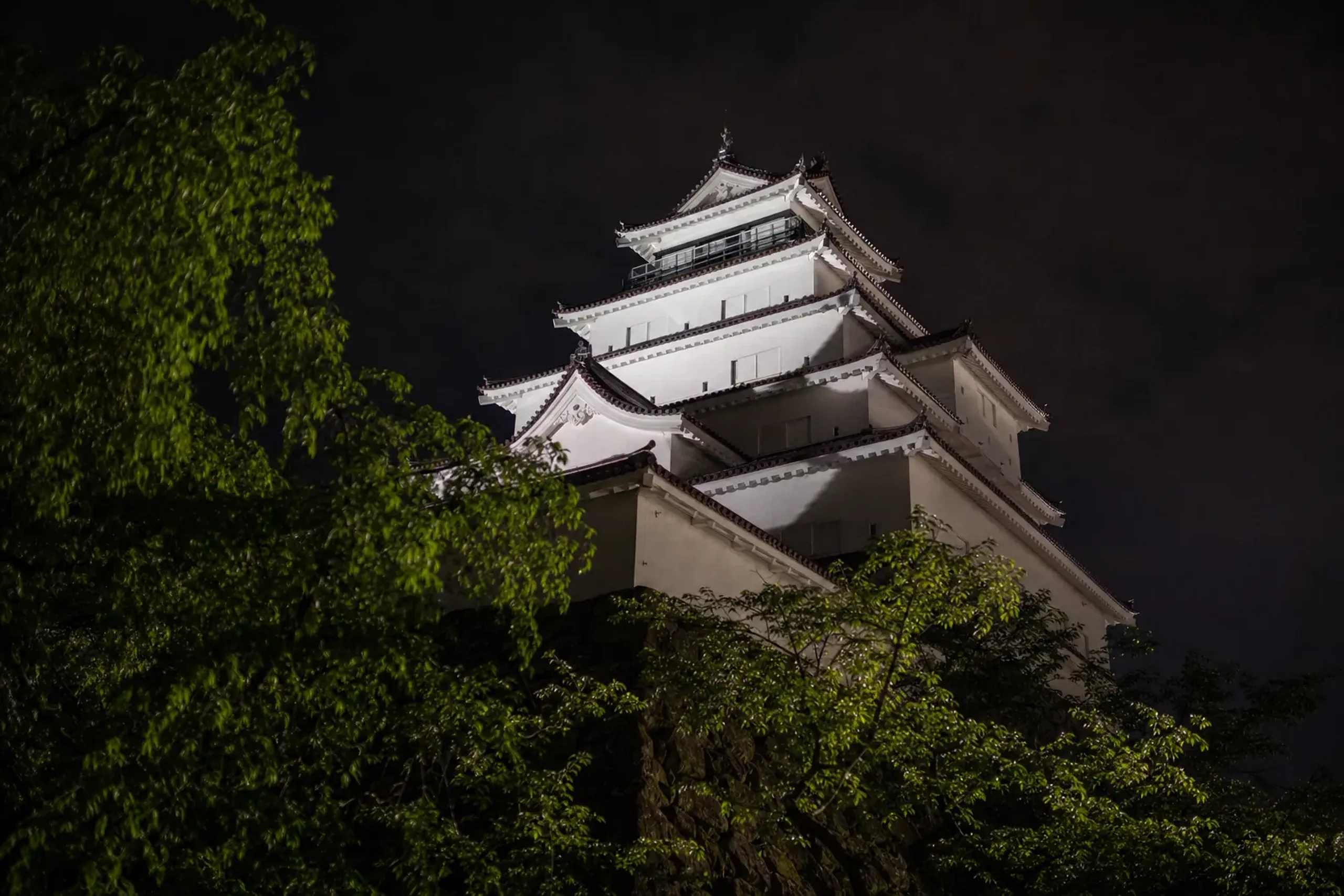
The crowds thin, too. The fast walkers vanish into the dark.
A practical note. Temperatures in Fukushima evenings can drop sharply in April. Bring one more layer than you think you will need. Truly—do it.
How Do You Get To Tsuruga Castle From Tokyo?
From Tokyo, take the Tohoku Shinkansen to Koriyama (about 1 hour 20 minutes), then the JR Banetsu-sai Line to Aizu-Wakamatsu (about 1 hour 15 minutes), and continue by local bus or car to the castle.
From Aizu-Wakamatsu Station, the “Haikara-san” loop bus is commonly used; sources cite roughly 15–21 minutes to a castle-area stop, followed by about a 5-minute walk. Bus routes and stop names can change, so we treat them as “confirm before you go” rather than fixed instructions.
By road, it is roughly 5–6 km and about 15 minutes from the Aizu-Wakamatsu IC to the castle area, traffic permitting. In spring, and on event days especially, that neat “15 minutes” can stretch. Considerably.
Key fact: The castle operator and local tourism sources publish seasonal notices for traffic and parking on event days; our concierge team verifies the latest conditions for clients before the visit.
Practical Visiting Notes: Hours, Tickets, And Parking
The museum keep at Tsurugajo Castle is open 8:30–17:00 with last admission at 16:30, and is listed as open daily on the official site (as of Oct 2026).
Tickets are refreshingly straightforward and publicly listed by the castle operator. As of the published official pricing: an adult keep ticket is 410 yen, a combined keep + Rinkaku teahouse ticket is 520 yen, and a three-facility ticket (keep + Rinkaku + Oyakuen) is 730 yen. Prices can change, so we treat the official site as the final word.
Parking exists, but it is far from infinite. A commonly cited figure is roughly 350 paid spaces across three lots: West Demaru, East Gate, and South Gate. On peak blossom afternoons, arriving earlier is far calmer than circling in search of a space.
If you are planning an evening return for the illumination, consider a late-afternoon pause elsewhere rather than lingering in the park for hours on end. Better rhythm. Less fatigue.
A Calm 2–3 Hour Flow Inside Tsuruga Castle Park
A good Tsuruga Castle visit is short enough to keep you sharp, and long enough to let you feel the weight of the place settle in. We often shape the time in simple steps, adjusting fluidly for crowds and weather.
Step 1: Photograph The Red Keep First
Start outside. Walk until the keep and the blossoms come into perfect balance in the frame. No rush. Ten unhurried minutes here can save you an hour of regret later.
Step 2: Enter The Museum Keep
Step inside while your attention is still fresh.
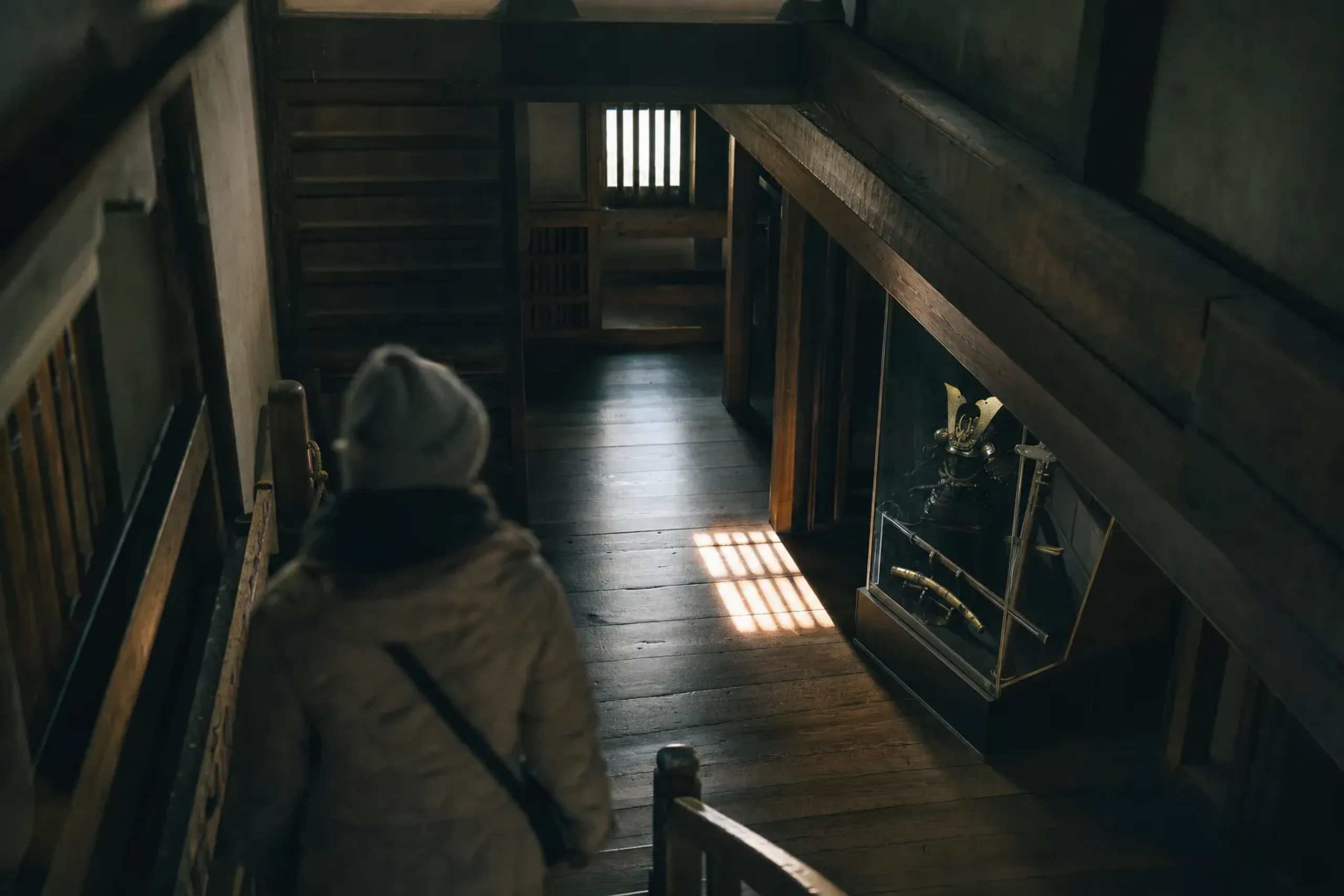
The museum lends context to the siege, the demolition, and the town’s hard-won identity. You emerge seeing the grounds with entirely different eyes.
Step 3: Moat Walk And Tree Variety
Shift your focus from “the keep” to “the edges.” Look for the weeping trees near the water, and for the softer, later tones of the double-flowered varieties. Small discoveries. Better photographs.
Step 4: Decide On Rinkaku Teahouse (Optional)
Rinkaku teahouse stands quietly within the grounds and is traditionally said to have been built by Shōan, son of the tea master Sen no Rikyū. If you wish for one still, contemplative architectural moment—a breath of wabi restraint amid the blossoms—this is it.
How Japan Royal Service Plans Aizu Castle Visits For Discerning Travelers
We do not sell Tsuruga Castle as “exclusive.” It is a public castle set within a public park. The craft lies entirely in how you come to experience it.
For many of our guests, the stress point is never a lack of interest. It is friction—the train transfers, the timing of the light, the puzzle of what is open when, and the scramble of managing a day when the weather suddenly changes its mind. Our team at Japan Royal Service designs the visit so that you can simply stay present.
- Cultural interpreter guiding: We can arrange a cultural interpreter guide for the castle, the grounds, and the surrounding castle town, so the visit reads as living history rather than mere decoration. This is guiding as a form of shokunin—the quiet mastery of a craftsperson, informed and precise.
- Private transportation and pacing: For clients who prefer door-to-door comfort, we provide guidance and private coordination around private transportation options between Koriyama or Aizu-Wakamatsu Station and the castle, timed precisely for the bloom and the evening light-up.
- Tailor-made day design: We shape a tailor-made itinerary that fits your arrival, your walking tolerance, and how long you wish to stay out in the cooler April air.
- Meals and planning: We advise on meal timing, restaurant reservations, and rail connections so the day never collapses into guesswork.
Three values quietly guide our approach here.
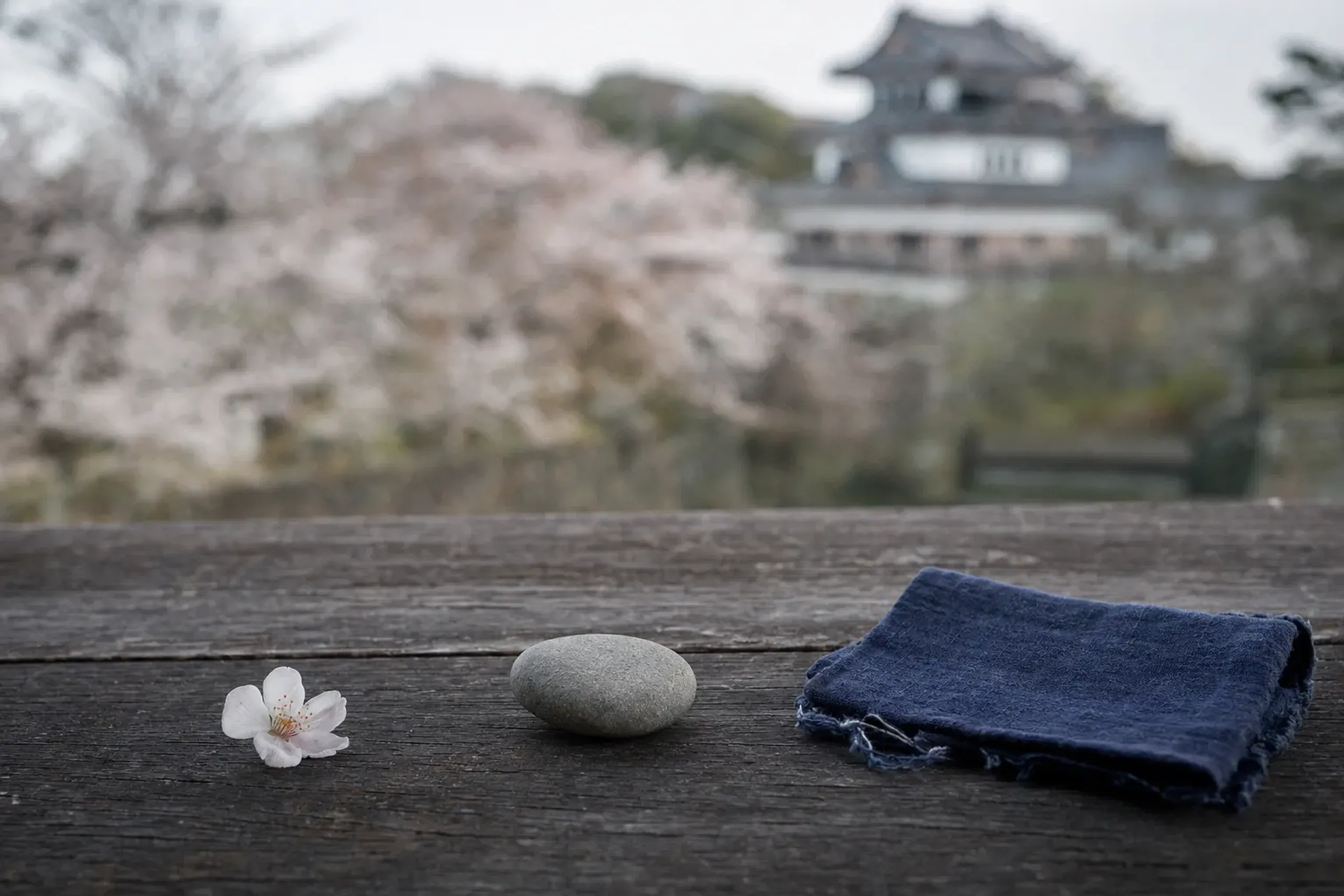
Discretion, always and without exception. Hidden Japan, because Aizu is so often overlooked by travelers who never stray from the Golden Route. And shokunin, because the finest guiding is itself a kind of craft—precise, deeply informed, and never once raising its voice.
Plan Your Aizu Spring With Japan Royal Service
A red roof above falling petals is the kind of scene that rewards those who arrive unhurried, well informed, and free of friction. If you would like your visit to Tsuruga Castle timed to the bloom, the light-up, and the quiet moments in between—with every transfer, ticket, and interpreter arranged in advance—contact us here to begin shaping a private spring journey through Aizu that is entirely your own.
Frequently Asked Questions
When Do The Cherry Blossoms Usually Peak At Tsuruga Castle?
Tsuruga Castle’s cherry blossoms typically peak in April, and are often cited as reaching full bloom around mid-April.
Exact timing shifts with each season, so our concierge team verifies bloom conditions close to your travel dates and adjusts the pacing for daylight and evening temperatures.
Is The Keep At Tsuruga Castle The Original Building?
No—the current keep is a reinforced-concrete reconstruction completed in 1965, as the original buildings were demolished in 1874.
In 2011, the roof was redone in red tiles to evoke a late-Edo appearance, which is why spring photographs here look so distinctive today.
Why Is Tsuruga Castle’s Roof Red?
The keep was re-roofed in red tiles in 2011 to recreate a late-Edo appearance, replacing the black tiles used on the 1965 reconstruction.
It is commonly described as Japan’s only red-roofed castle keep, though we phrase that carefully and rely on current official descriptions.
Is There A Night Illumination For Sakura At Tsurugajo?
Yes—Tsuruga Castle Park commonly holds a night light-up during sakura season, with lighting times set anew each year.
For example, the 2026 season listed illumination from sunset to 21:30 (and until 21:00 after the petals fell), but our concierge team verifies the current dates and any area restrictions before your visit.