In this guide
- 01What Makes Toyama’s Firefly Squid Biologically Unusual
- 02When Is The Best Time To See Firefly Squid In Toyama Bay?
- 03How Do You See The Firefly Squid In Namerikawa Without Guesswork?
- 04What The Pre-Dawn Firefly Squid Boat Tour Is Really Like
- 05Is The Hotaruika Museum Worth It If You Skip The Boat?
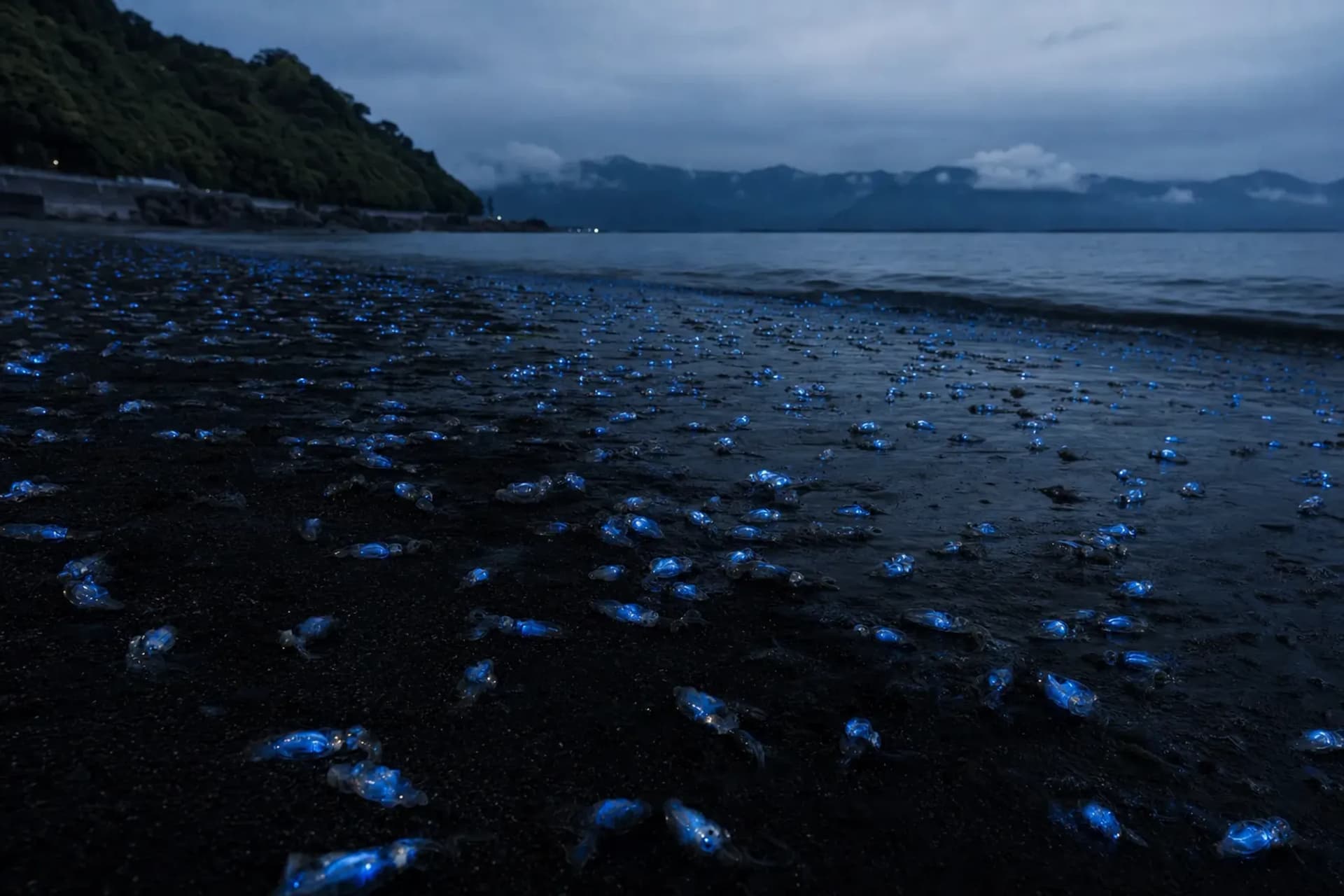
- 06Can You See Firefly Squid Glow From The Beach In Toyama?
- 07The Short, Intense Life Cycle Behind The Blue Light
- 08Firefly Squid As Food: What To Eat, And What To Ask
- 09How To Fit Namerikawa Into A Hokuriku Trip Without Rushing
- 10How To Plan The Firefly Squid Boat Tour Logistically (And What Is Official)
- 11Frequently Asked Questions
- 12Why Choose Japan Royal Service
For about ten weeks each spring, Toyama Bay offers a sight that feels almost private: tiny squid that make their own light. The glow is real. So is the timing. Miss the window, and the bay returns to darkness until next year.
If you search casually, it is easy to assume this is a nightly show you can drop into. Big mistake. The viewing is tied to spawning, weather, sea conditions, and a very early meeting time in Namerikawa. This guide explains what is actually happening, what you can realistically see, and how to plan so the early wake-up has a purpose.
What Makes Toyama’s Firefly Squid Biologically Unusual
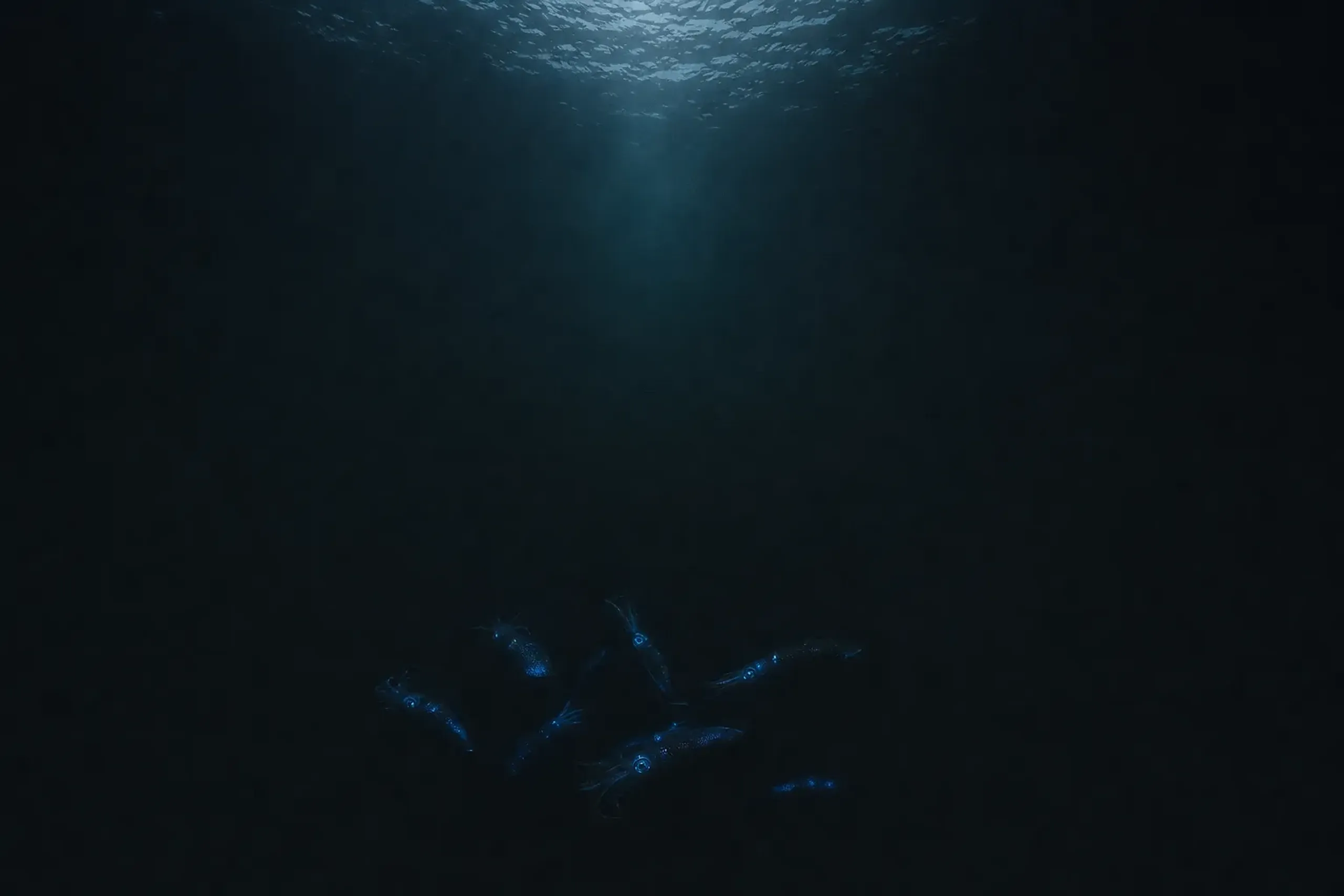
The firefly squid is Watasenia scintillans, native to Toyama Bay, and it produces its own bioluminescent light through thousands of photophores across its body. Not a gimmick. Unlike many bioluminescent sea creatures, it does not rely on symbiotic bacteria to generate light.
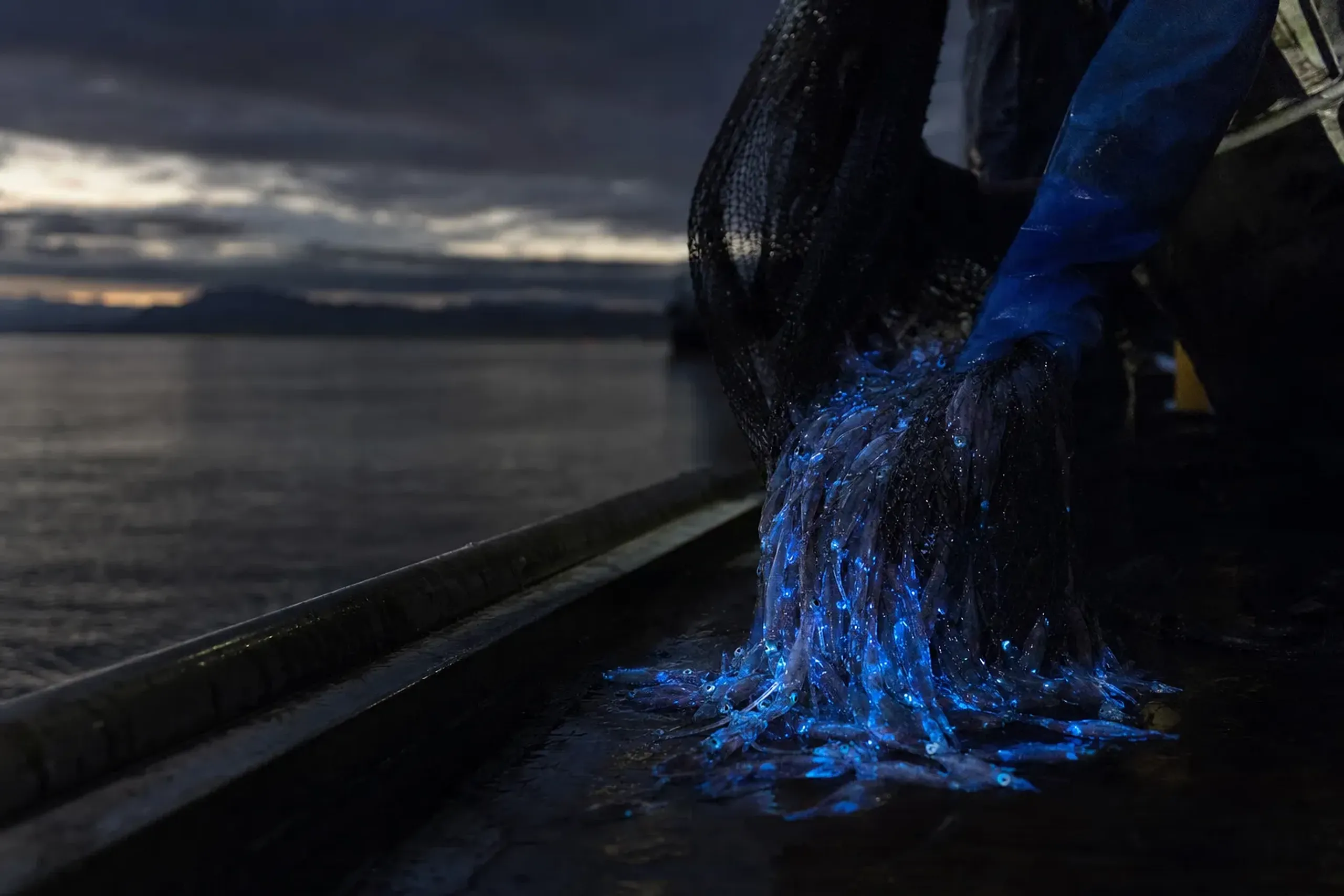
The squid are small—roughly 3 inches—and the light is not a single bulb-like point. It is a scatter of pinpoint blue that reads as a shimmer when many squid are together. In the right conditions, the effect looks like blue filings moving through black water.
Most of the year they stay far below the surface, roughly 600–1,200 meters deep. Then spring arrives and they rise into shallow water to spawn. That compressed migration is the whole reason you can see them at all.
When Is The Best Time To See Firefly Squid In Toyama Bay?
Late March through the end of May is the core season, with April as the peak.
That window tracks the squid’s spring spawning migration. It also matches what official sources describe for the boat-viewing season in Namerikawa, the small fishing town that anchors the experience. If you are building a Hokuriku trip, plan your Toyama stop inside that window. Outside it, you should not expect the same live-squid viewing conditions.
Even within season, the quality of what you see can change night to night. Sea conditions matter. So does recent weather. Our approach is to treat the firefly squid as a seasonal natural event, not a guaranteed stage performance.
How Do You See The Firefly Squid In Namerikawa Without Guesswork?
The two dependable options are a pre-dawn boat tour in Namerikawa or the Hotaruika Museum’s live display during the season.
They deliver different kinds of certainty. The boat tour is the real bay, real fishing activity, and real darkness before dawn, with the glow triggered as squid are caught and lifted. The museum is controlled and educational, and you can see the organism up close without sacrificing sleep.
Both are valid. The right choice depends on how you travel, how you handle very early mornings, and whether you want wild context or interpretive clarity first.
What The Pre-Dawn Firefly Squid Boat Tour Is Really Like
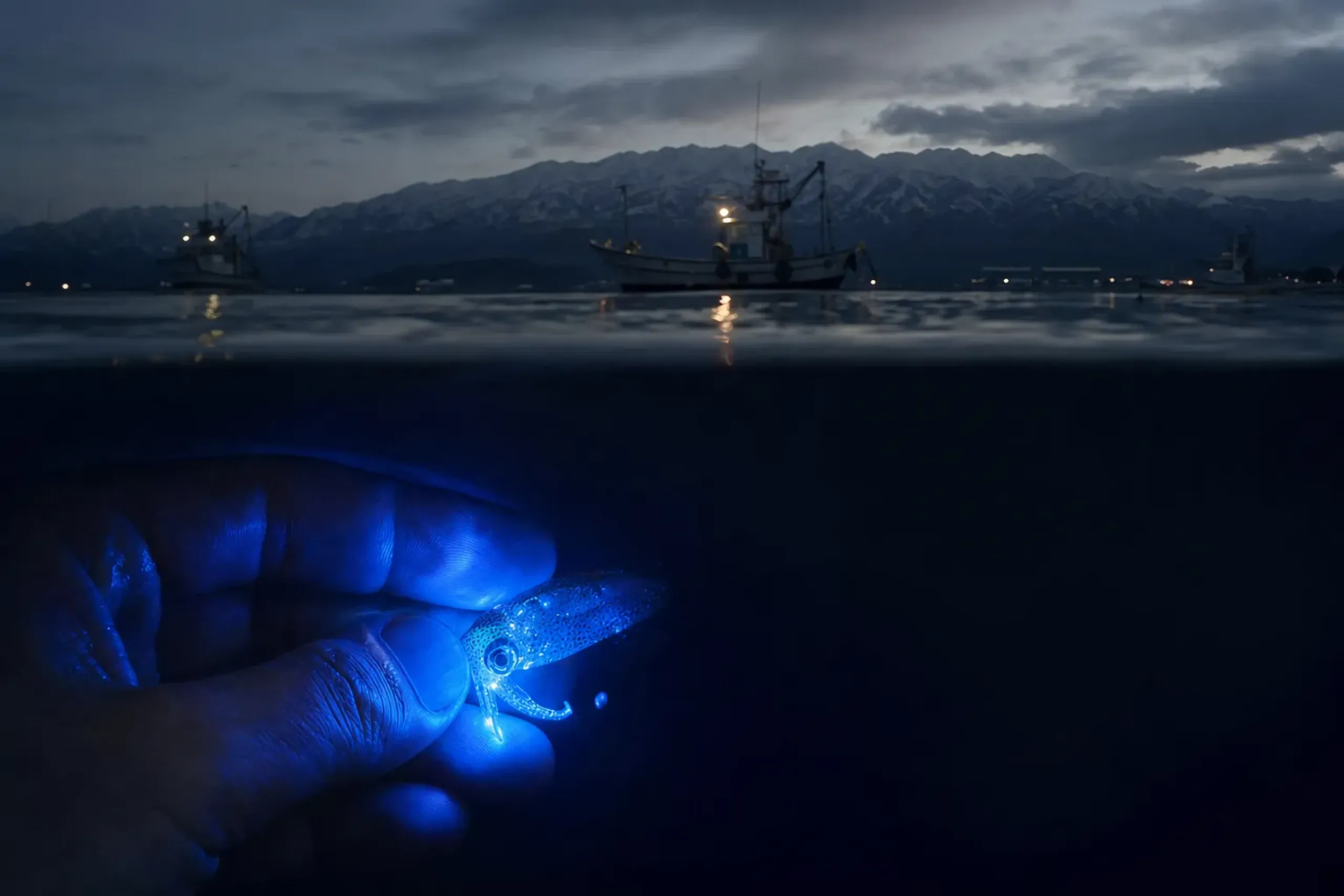
The standard format is brutally early. Clear-eyed. Official sources describe meeting around 2:30 a.m., with the on-water experience roughly 3:00–4:30 a.m., and reception starting earlier.
You typically gather near Wave Park Namerikawa and the Hotaruika Museum area in Namerikawa City, Toyama Prefecture. Darkness still holds the shoreline. You are not there to “cruise.” You are there to observe fishing activity unfolding at sea before sunrise.
What you see is specific. Nets are hauled. Squid that have been caught emit blue light as a stress response when they are lifted from the water. The glow is not usually a continuous neon blanket across the bay; it is more often a concentrated, moving brightness tied to the catch and the moment the nets break the surface.
Plan for the rhythm of a working morning. There may be waiting. There may be a short burst of intensity that lasts seconds. Then quiet again. The most satisfied travelers are the ones who arrive understanding that the “show” is a biological response inside a fishing practice, not a choreographed light installation.
Key fact: Official guidance notes that arranging a taxi is advisable due to the very early meeting time.
How To Dress And Pack For 2:00–4:30 A.M. On The Water
Dress like you will stand still in the dark.
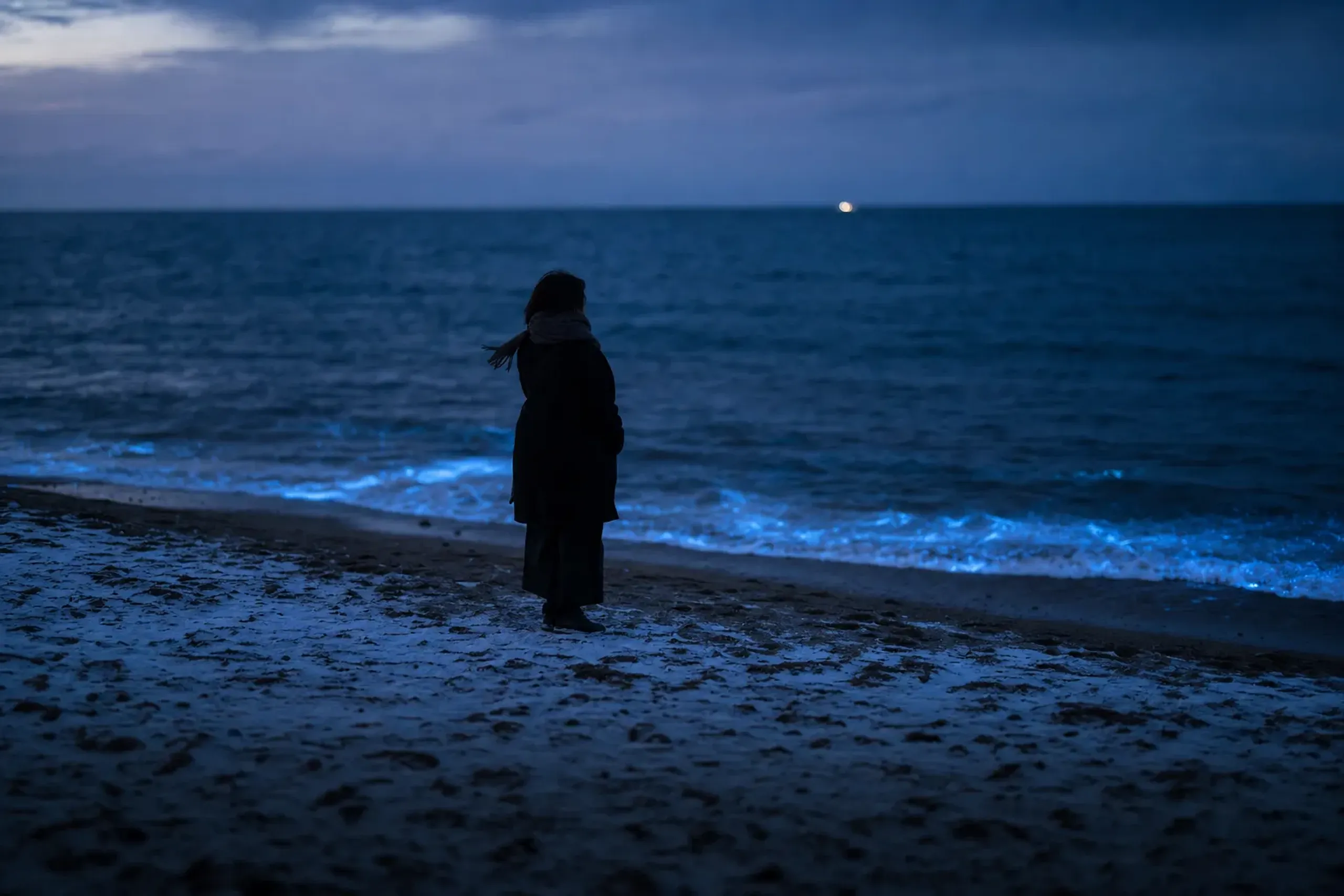
Wind bites. Bring layers you can remove after sunrise.
Keep it simple: a warm outer layer, gloves if you run cold, and shoes with grip. If you plan to photograph, pack a cloth for sea mist and a small bag you can manage with one hand. Leave anything fussy behind.
How To Handle Timing If You’re Coming From Kanazawa Or Toyama City
Namerikawa sits roughly 80 km north of Kanazawa, so this can work as a targeted detour when you are already in the Hokuriku region. Timing is the whole game. If you try to do this as an afterthought, the 2:30 a.m. meeting will punish you.
In our experience, the smoothest plan is to sleep near Namerikawa on the tour night, then move onward after breakfast and a rest. If your broader route continues toward the mountains or deeper into the region, keep your daytime schedule light. You will feel that wake-up.
Is The Hotaruika Museum Worth It If You Skip The Boat?
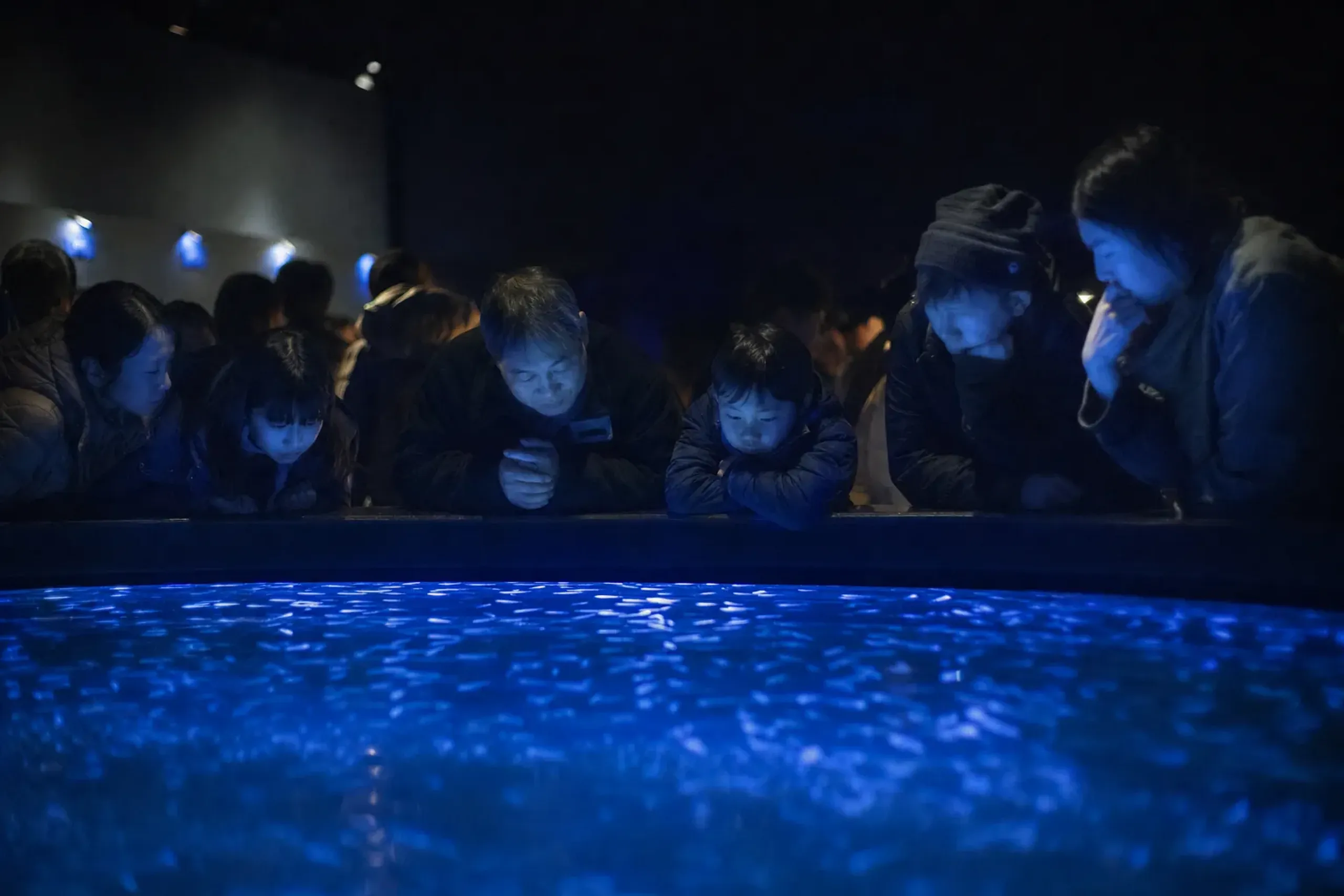
Yes—during the season, the Hotaruika Museum offers a live firefly squid display that lets you see the animal and its light in a controlled setting.
The museum is in Namerikawa City and is easy to anchor into a day plan. The official address is 410 Nakagawara, Namerikawa City, Toyama, Japan.
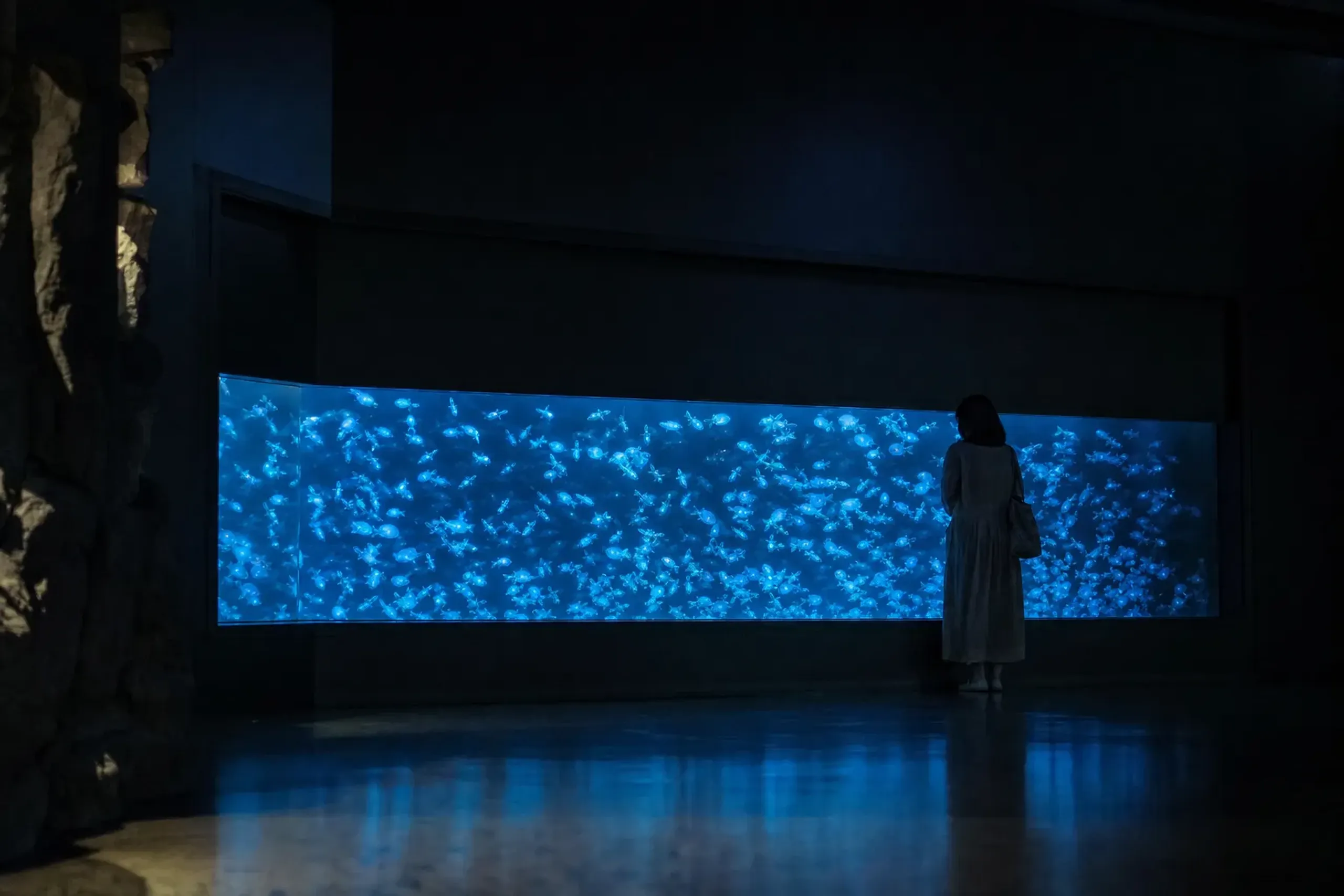
It functions as the interpretive layer that many travelers miss when they focus only on a single photo.
It is also the honest alternative when your party cannot or will not meet in the middle of the night. Families with children, travelers recovering from jet lag, and guests who prefer a calmer pace often choose the museum first, then decide whether the boat tour feels worth the early alarm.
One limit matters. Outside the squid’s actual season, the museum’s show features bioluminescent plankton instead of live firefly squid. Useful. Still interesting. Not the same creature.
Can You See Firefly Squid Glow From The Beach In Toyama?
Yes, but beach bioluminescence is rare and cannot be planned or promised.
When it happens, it is usually tied to a tight stack of natural conditions: a clear night, a new moon, and no rain the previous day. If you catch it, you will remember it. If you plan a trip around it, you will likely be disappointed.
Our guidance is blunt. Treat beach viewing as a bonus, not a goal. Build your trip around the boat tour or the museum, then let the coast surprise you if it wants to.
The Short, Intense Life Cycle Behind The Blue Light
The firefly squid’s visible season is short because its spawning migration is short.
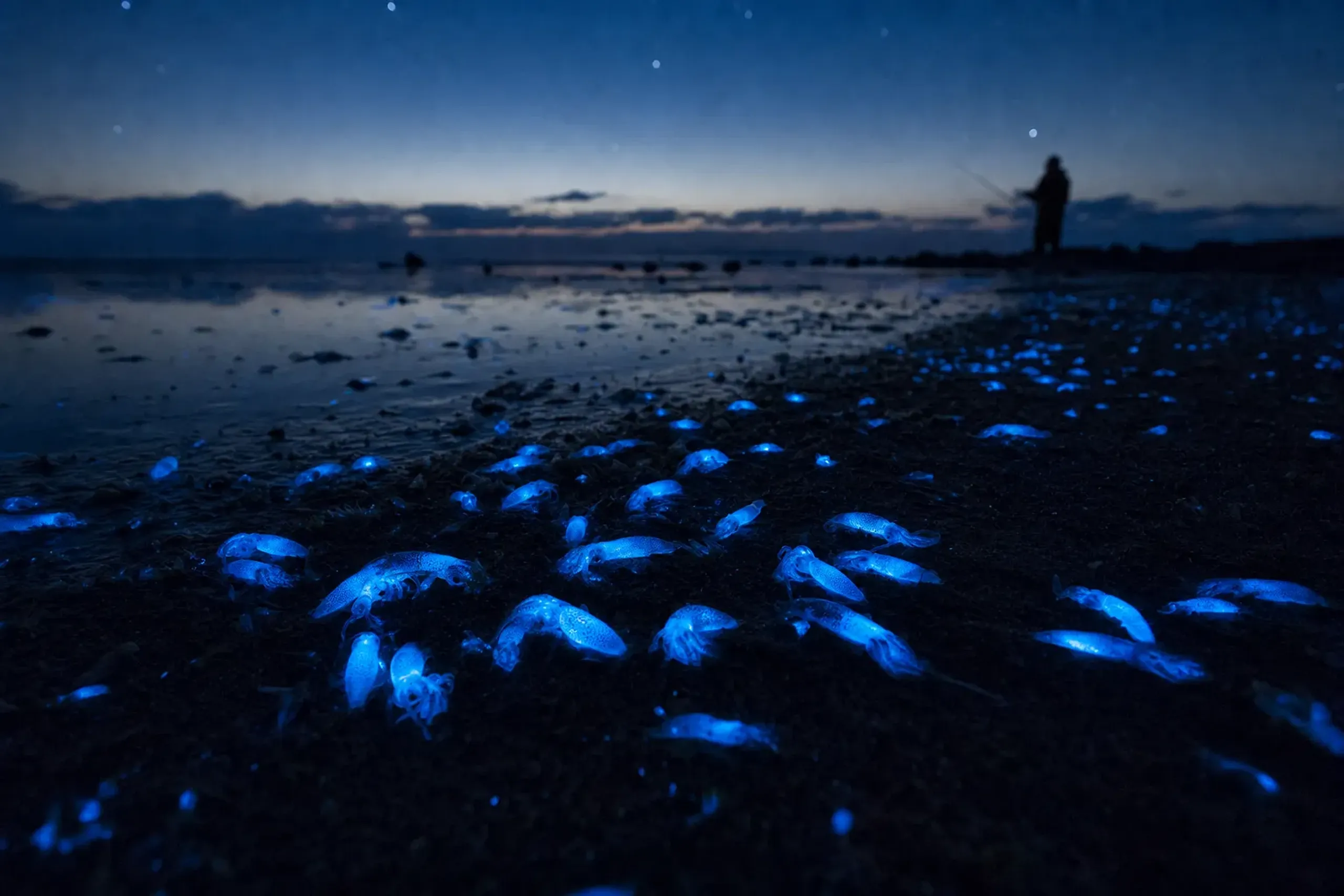
Fast. Final.
They rise from depth in spring, mate, lay eggs, and die within the same few-month migration. That compressed cycle is why the phenomenon feels urgent, and why the viewing season closes as quickly as it opens.
It also changes how you should think about “catching the lights.” You are watching a biological threshold, not a yearly festival that can be extended for visitor convenience.
Firefly Squid As Food: What To Eat, And What To Ask
In Toyama, hotaru ika is not just something to photograph. It is a seasonal food specialty with deep local roots, served raw, boiled, or deep-fried depending on the dish and the kitchen.
A classic preparation is hotaruika no sumiso ae (firefly squid with vinegared miso), documented by Japan’s Ministry of Agriculture, Forestry and Fisheries as a regional cuisine representing spring in Toyama. It is a quiet dish. It tastes of the coast and miso’s gentle sharpness, not heat or smoke.
If you follow food media, you may also notice firefly squid appearing on high-end menus well beyond Japan. That global interest is real. Still, in Toyama the point is not novelty; it is timing, freshness, and restraint—the wabi-sabi side of Japanese seasonality where a small thing, served simply, is allowed to be enough.
A Calm Note On “Fresh/Raw” Concerns
Follow local guidance and choose reputable kitchens, and ask how the dish is prepared if you are unsure.
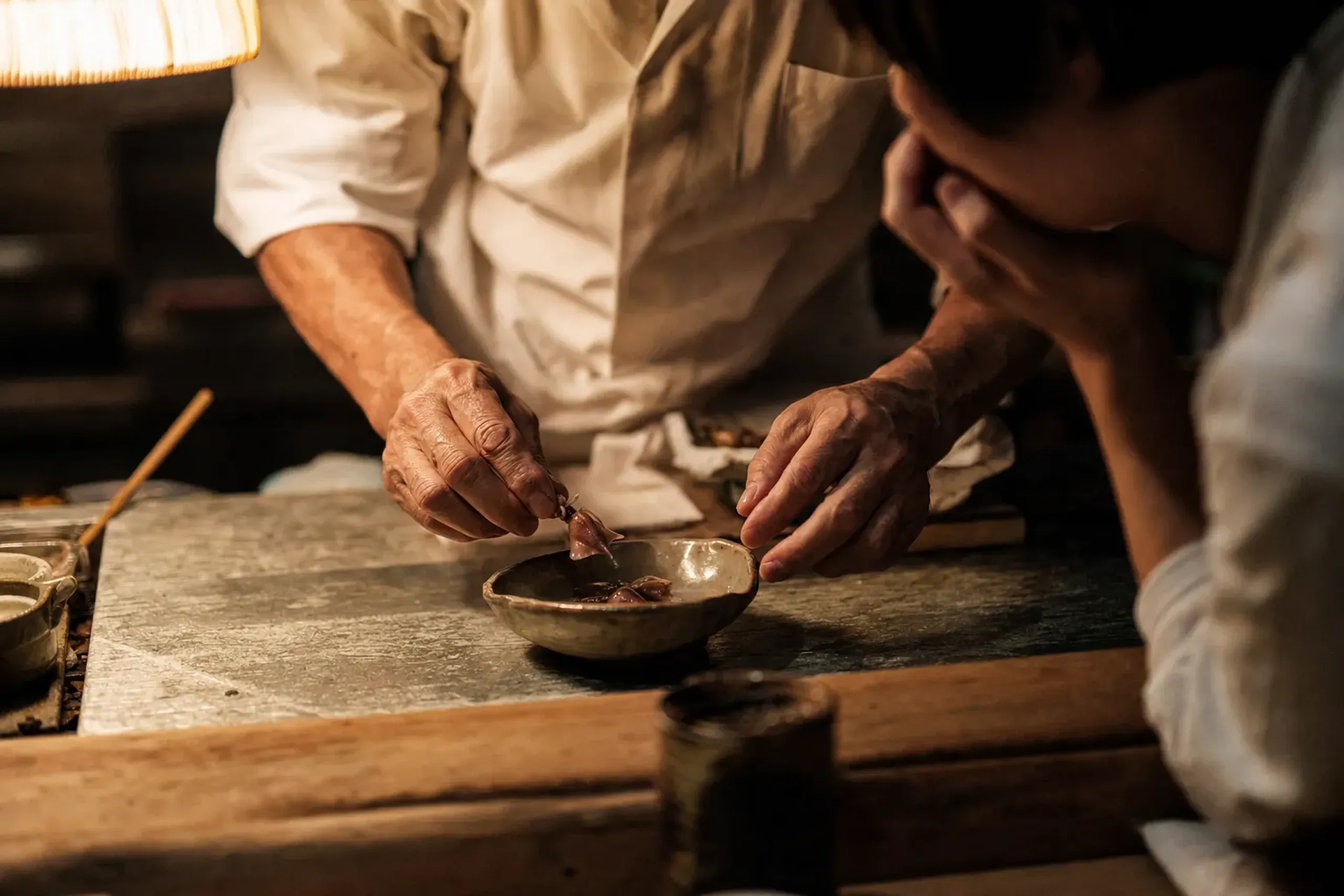
There has been louder online discussion in recent years around eating very fresh or raw preparations of certain seafood. We do not sensationalize it. If you have concerns, say so. A good restaurant will explain the preparation and suggest a cooked option without making you feel difficult.
How To Fit Namerikawa Into A Hokuriku Trip Without Rushing
Namerikawa works best when you treat it as a precise seasonal stop, not a side quest between “bigger” cities. Small town. Real fishing culture. That is the appeal.
If you are already routing through Kanazawa and the wider Hokuriku arc, you can build Toyama Bay into your spring plan without detouring across the country. For travelers continuing onward, our team often sees this paired with a broader regional route that keeps you moving at a human pace.
For one practical routing idea across the region, see our guide Kanazawa to Takayama via Shirakawa-go: 2026 Luxury Guide. It gives context for where Toyama can sit in the week.
How To Plan The Firefly Squid Boat Tour Logistically (And What Is Official)
The official Firefly Squid Boat Tour in Namerikawa is reservation-based, meets around the Hotaruika Museum/Wave Park Namerikawa area, and runs in the very early morning hours.
Official sources describe the core flow as reception beginning around 2:00 a.m., meeting around 2:30 a.m., then an on-water window roughly 3:00–4:30 a.m.
Exact operating dates and day-by-day departure details vary by year and conditions, so we confirm current specifics privately when you are ready to plan.
One more reality: even excellent planning cannot control nature. Some mornings deliver a stronger visual moment than others. The smartest “luxury” move here is not forcing a promise; it is giving yourself a few nights in the region so you have a second chance if conditions are poor.
Frequently Asked Questions
Where Do You Meet For The Firefly Squid Boat Tour In Namerikawa?
Most visitors meet near the Hotaruika Museum/Wave Park Namerikawa area in Namerikawa City, as described by official tourism sources.
Because meetings happen after midnight, the simplest plan is to stay nearby the night before and keep transport arranged in advance.
What Time Do You Need To Wake Up For The Toyama Firefly Squid Boat Tour?
You typically need to be up around 1:30–2:00 a.m. to reach a 2:30 a.m. meeting time.
Official guidance notes the tour runs roughly 3:00–4:30 a.m., so the day after should be planned lightly, especially if you are transferring to another city.
Can I See Live Firefly Squid At The Hotaruika Museum Outside Late March To May?
No—outside the squid season, the museum’s light show features bioluminescent plankton rather than live firefly squid.
If your trip falls outside late March through May, it is still worth visiting for context, but you should set expectations correctly.
Is April Actually Better Than Late March For Seeing The Glow?
Yes—April is widely regarded as the peak month within the late March to end-of-May season window.
We still recommend flexibility inside April, since night-to-night conditions can change what you see on the water.
Why Choose Japan Royal Service
Seeing hotaru ika well is less about hype and more about discipline: timing the season window, sleeping close enough to make the 2:30 a.m. meeting humane, and keeping your schedule calm the next day. That is where our team at Japan Royal Service is most useful.
We plan around what is real. Quiet. Precise. We build Toyama Bay into a wider Hokuriku journey so it feels like a chapter, not a scramble, and we keep your movements discreet—your identity and itinerary are treated as private by default.
When you are ready, Japan Royal Service can arrange a standard boat viewing tour or a private charter, and time the visit to the short spring season when the bay has a genuine chance of lighting up.
Ready to plan Toyama in the right ten-week window? Reach our team privately via WhatsApp or LINE, or contact us here.