In this guide
- 01The Dunes Are Also a Farm
- 02How Big Are the Tottori Sand Dunes?
- 03The UNESCO Geopark Is Larger Than Tokyo
- 04When Do the Rakkyo Fields Bloom?
- 05What Does the Tottori Sand Dunes Offer in Summer?
- 06The Sand Museum: The Only One of Its Kind
- 07How Do You Get to the Tottori Sand Dunes?
- 08What Japan Royal Service Arranges in Tottori
- 09Frequently Asked Questions
- 10Why Choose Japan Royal Service
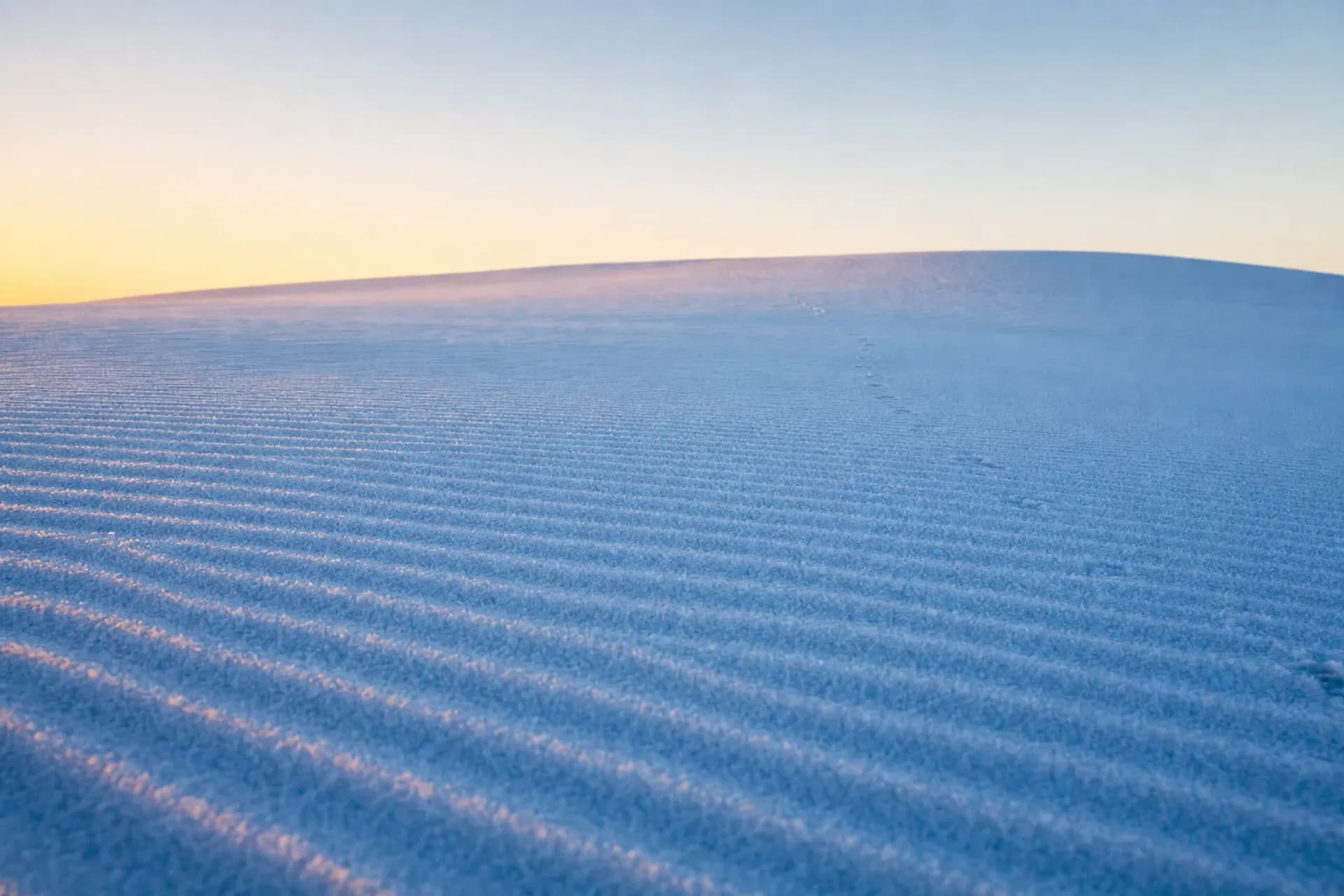
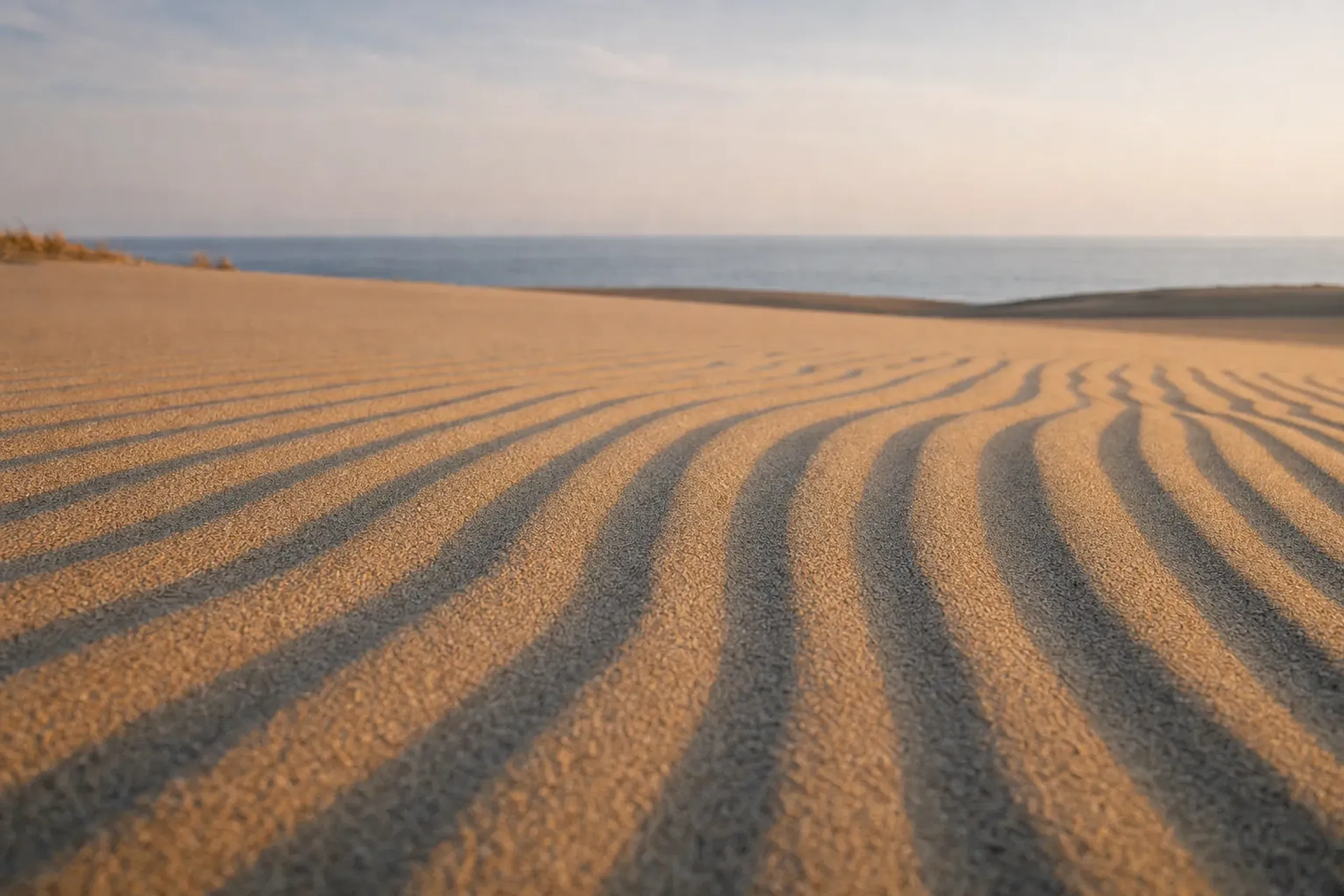
Wind first. That is what you notice before the scale of the place registers. It comes off the Sea of Japan in long, patient pushes, and it is doing something to the sand — carving it, grain by grain, into ridged patterns that ripple away toward the water like the surface of a slow tide frozen mid-motion. Stand still. Watch a single crest of sand tremble, loosen, and slide. The dunes at Tottori are not a photograph. They are a landscape at work.
Most visitors arrive expecting emptiness. A great pale desert on the edge of Japan, beautiful and barren. And it is beautiful. But barren is the wrong word entirely — and the reason why reframes this whole coast from scenery into something far stranger and more interesting.
The Dunes Are Also a Farm
Roughly 110 hectares of the Tottori dune area is actively farmed. Not landscaped. Farmed — cultivated for rakkyo, the Japanese pickling scallion, in one of the few places on earth where crops grow directly out of a coastal desert.
This did not happen by accident. The cultivation traces back to desert-greening research pioneered at Tottori University's Desert Research Institute, now the Arid Land Research Center, which used the dunes as a natural laboratory for arid agriculture. Scientists asked a blunt question. Could something productive be pulled from sand? The answer, worked out over decades, was yes.
So the dunes hold two truths at once. In one section, photographers chase the wind-carved emptiness that made this place famous.
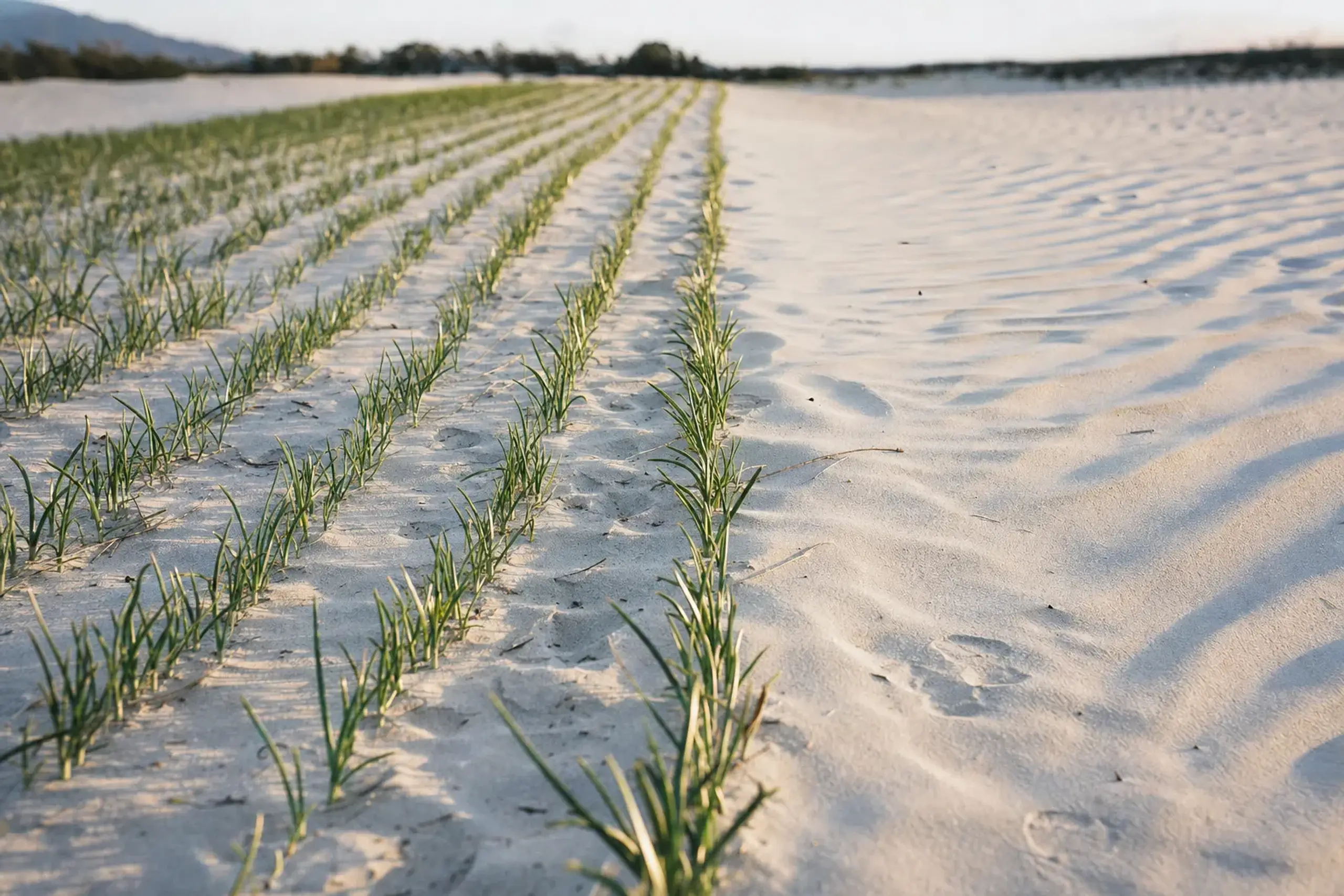
In another, entirely, rows of rakkyo push up through the same ground. A working landscape wearing the face of a wilderness. Once you know this, you cannot unsee it.
How Big Are the Tottori Sand Dunes?
The Tottori Sand Dunes stretch roughly 16 kilometres east to west and 2.4 kilometres north to south along the Sea of Japan, with a core protected area of 150 hectares designated a National Natural Monument.
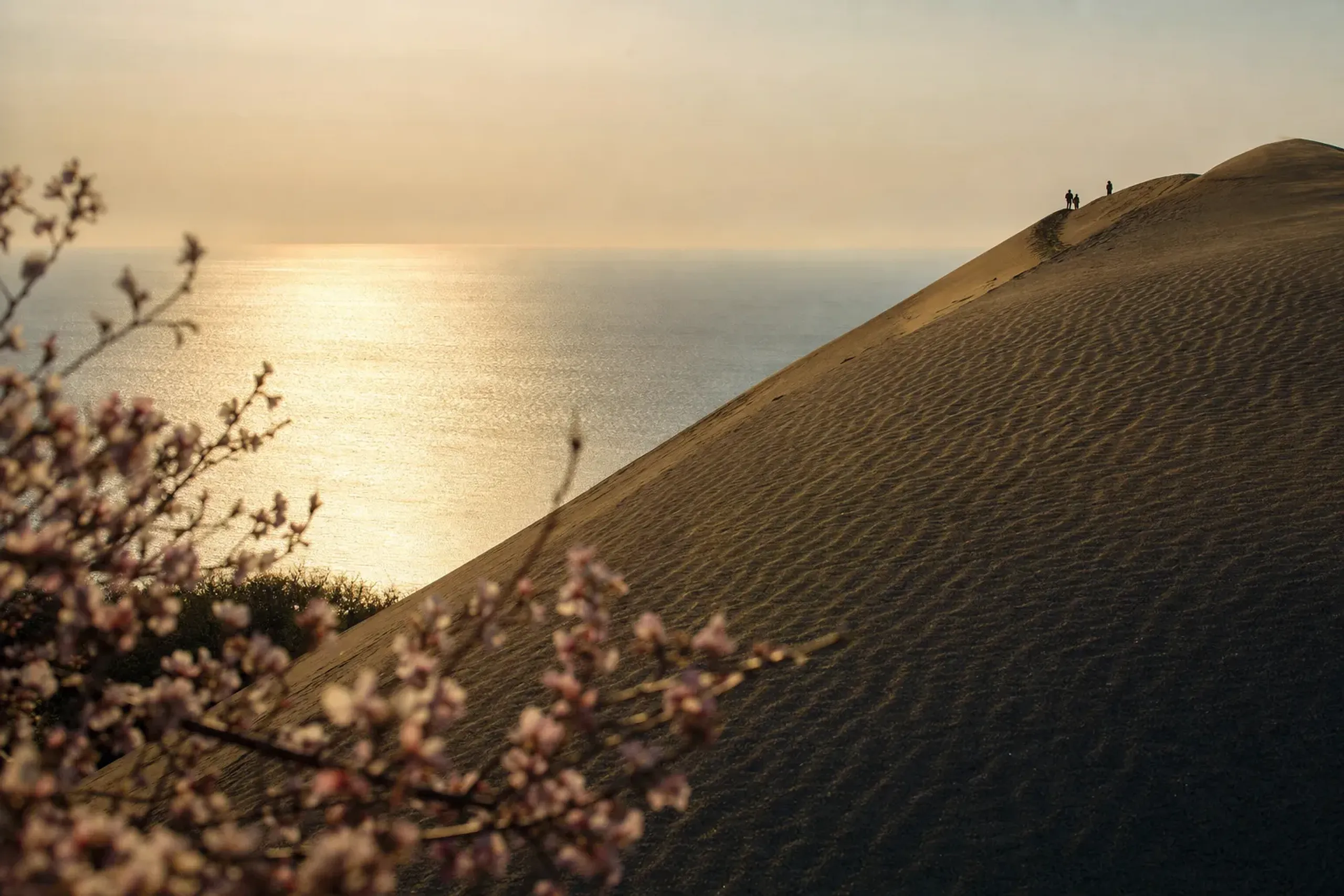
They took more than 100,000 years to form. Sediment carried down from the Chugoku Mountains, ground fine by rivers, delivered to the coast, then lifted and sculpted by relentless onshore wind. The result is not one flat sweep but three distinct ridges with dramatic undulation, including the towering formations locals call Uma no Se — the Horse's Back. Climb one and the sea opens below you, wide and metal-bright.
The whole expanse sits within a Special Protection Zone of the San'in Kaigan National Park. More than 1.3 million people visit each year, according to Japan's national tourism figures, yet Tottori remains among the least crowded prefectures in the country. The arithmetic works in your favour. Come early, and the sand can feel like yours alone.
The UNESCO Geopark Is Larger Than Tokyo
The San'in Coast Geopark joined the UNESCO Global Geopark Network in October 2010, and it covers roughly 2,458 square kilometres — an area larger than Tokyo Metropolis itself.
This is the part most guides skip.
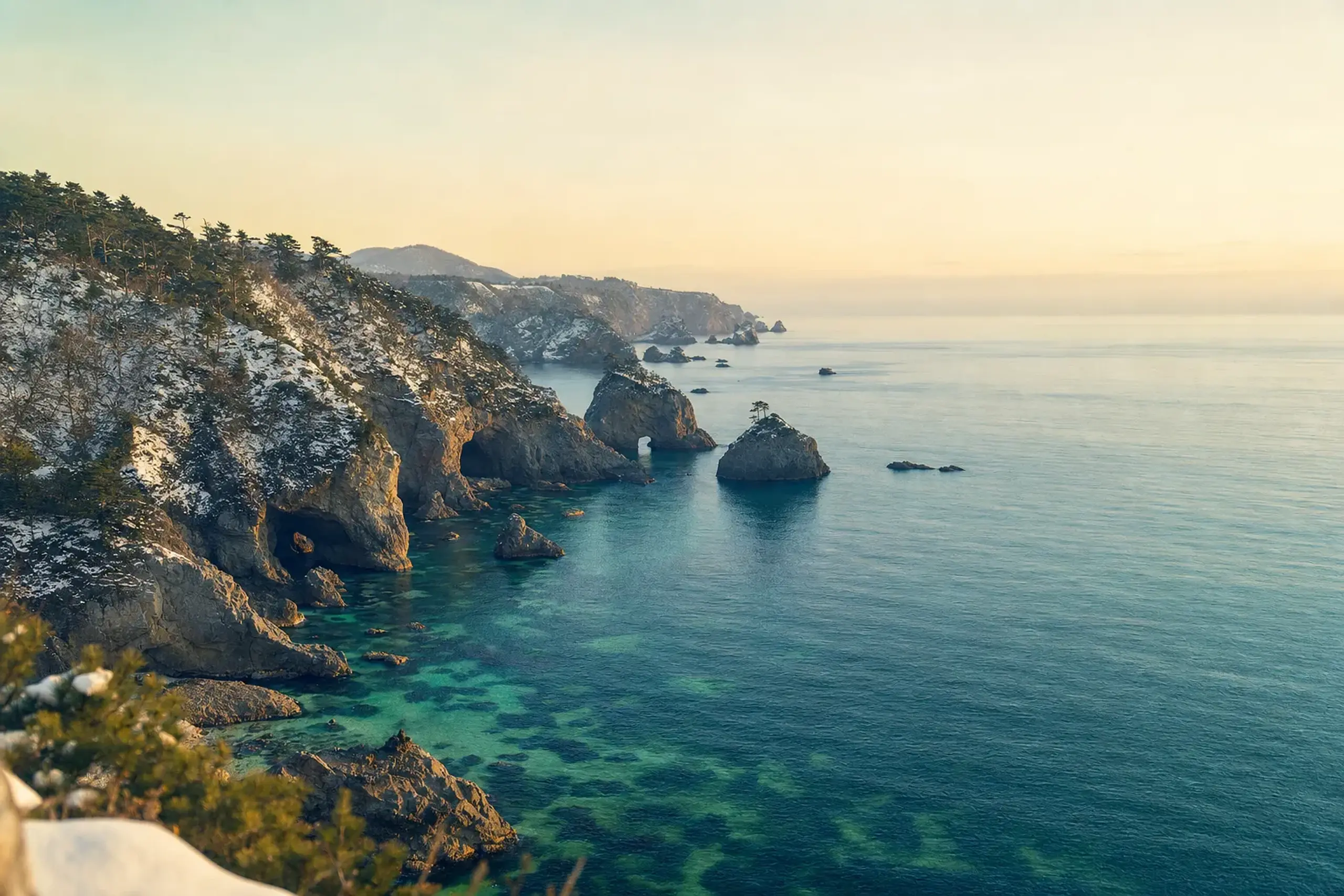
The dunes are not an isolated curiosity; they are one chapter in a geological story stretching about 120 kilometres along the coast. The Geopark spans Kyotango in Kyoto Prefecture, Toyooka, Kami, and Shin'onsen in Hyogo Prefecture, and Iwami and Tottori City in Tottori Prefecture. Cliffs, ria coastlines, cave-pocked headlands, sea-carved rock — all of it reading the same deep-time narrative of a coast built and rebuilt over millennia.
Certified local geo-guides can walk you through this history in depth, explaining not only how the rock formed but how human settlement, fishing, and farming grew from it. For a traveller who wants understanding rather than a photo stop, this is where a flat sandy view becomes a lesson in how Japan was assembled.
When Do the Rakkyo Fields Bloom?
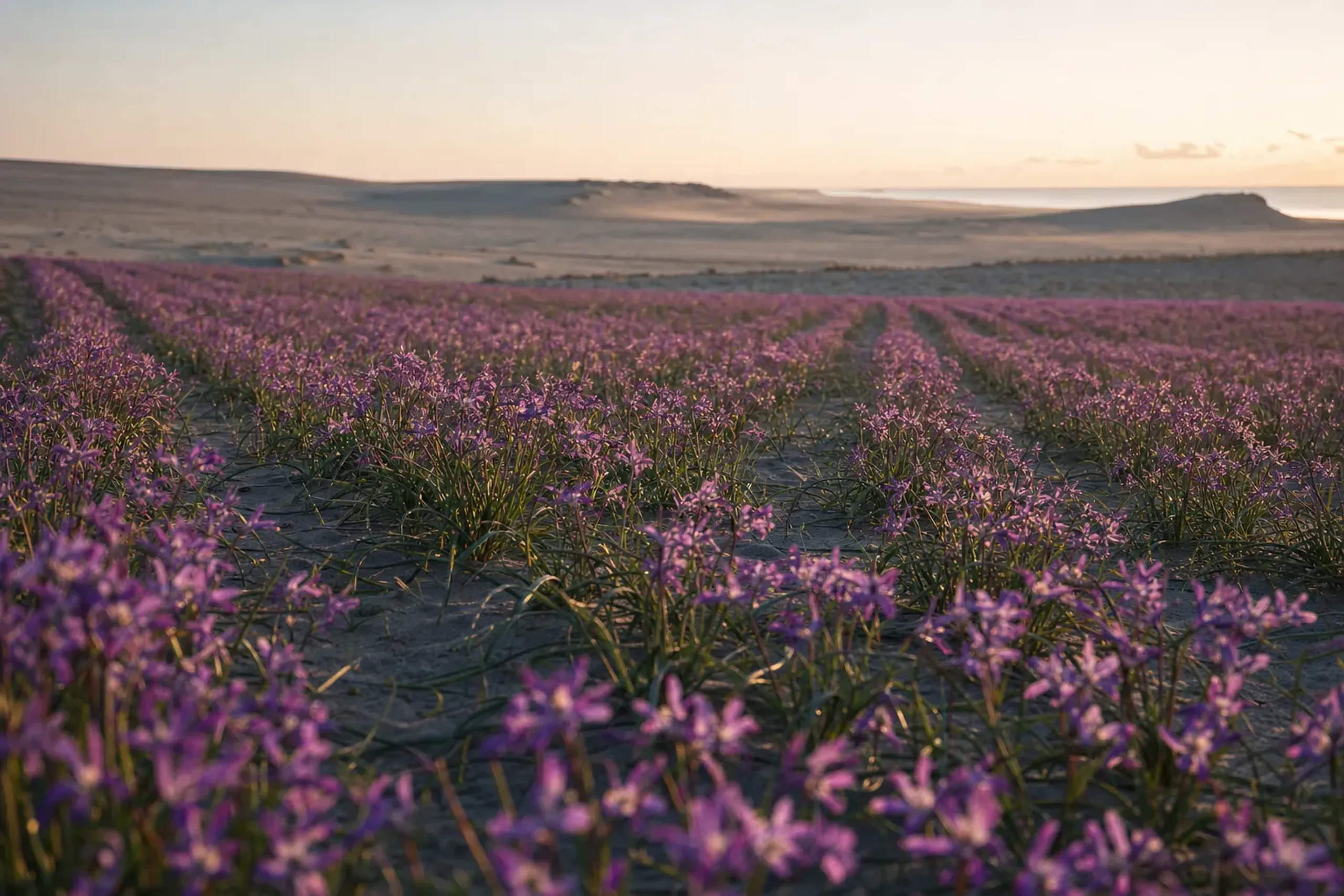
The rakkyo fields bloom from late October through early November, when roughly 110 hectares of cultivated dune turn a startling reddish-purple. This is an autumn event, not a summer one — and worth being honest about.
If you have read elsewhere that the dunes bloom in summer, that is simply wrong. The flowering is a distinctly late-autumn spectacle, a purple haze laid over ground that most people assume grows nothing. It is one of the more surreal agricultural sights in Japan, and it is precisely the kind of thing that makes Tottori reward a second visit in a different season.
We tell clients this plainly. Summer offers one Tottori. Late autumn offers another. In our experience, travellers who understand the calendar before they arrive leave far more satisfied than those chasing a bloom that isn't there yet.
What Does the Tottori Sand Dunes Offer in Summer?
Summer at the Tottori Sand Dunes offers wind-carved fumon ripple patterns by day, dramatic sunadare sand curtains on the slopes, and — after dark — the flickering isaribi lights of distant fishing boats offshore.
These are named phenomena, not vague prettiness, and they deserve to be understood as such.
Fumon and Sunadare
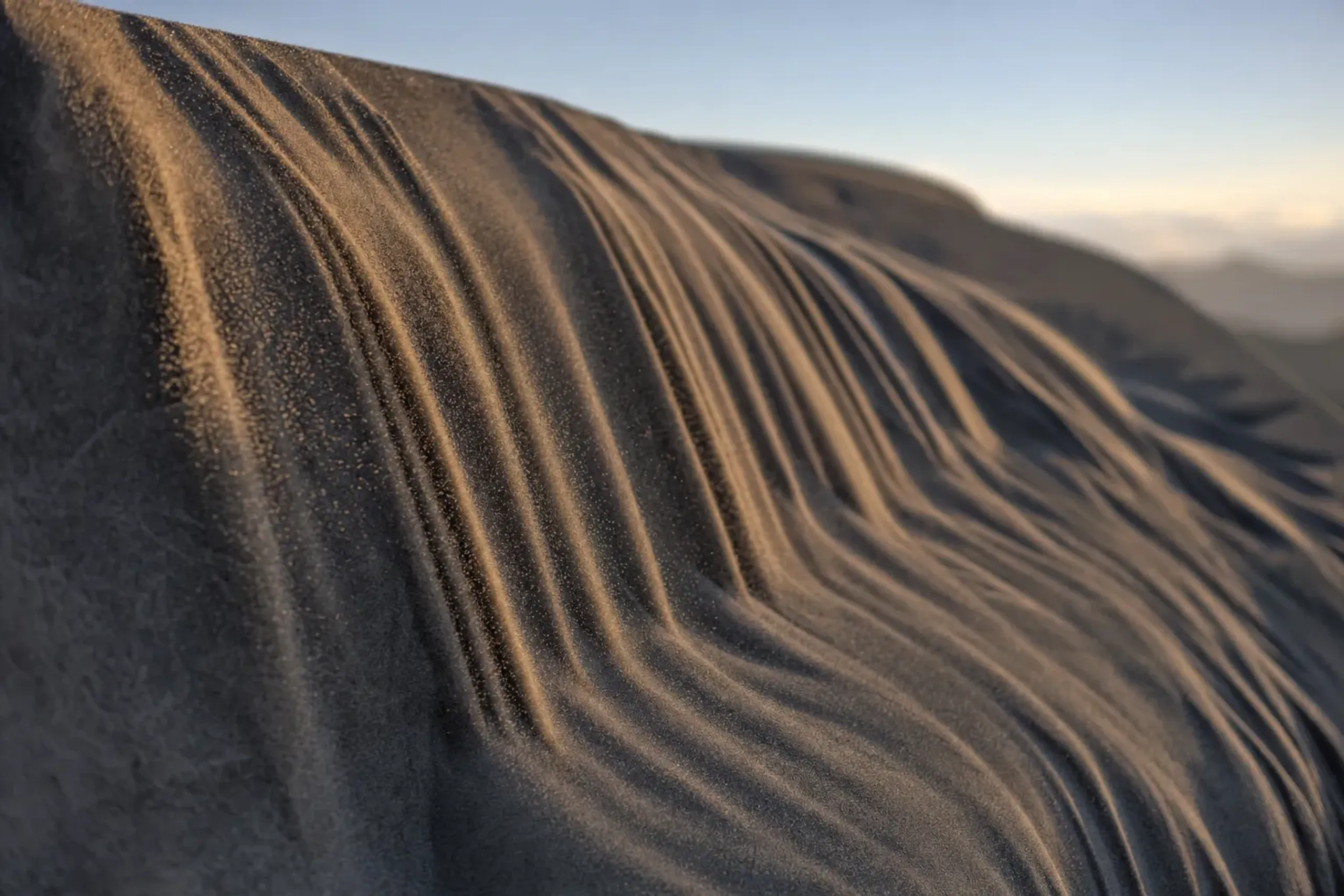
The rippled wave patterns the wind sculpts across the sand are called fumon. They shift constantly, redrawn every time the breeze changes direction, so the dunes you photograph in the morning may be gone by afternoon. Then there is sunadare — the "sand curtain." This forms when accumulated sand on a steep slope loosens and slides down under its own weight, draping the incline in a folded, curtain-like pattern. Watch one release. A whisper of grains, then a soft collapse, and the slope wears a new pleated texture as if some invisible hand had drawn a curtain closed.
The Dunes After Dark
At night the character of the place changes entirely. The pale glare of daytime gives way to something quieter and more atmospheric, the sand cooling underfoot, the wind softer. And in summer specifically, look out to sea. Those scattered points of light on the dark water are isaribi — the lamps of fishing boats working the offshore grounds, drawing squid and other catch with light.
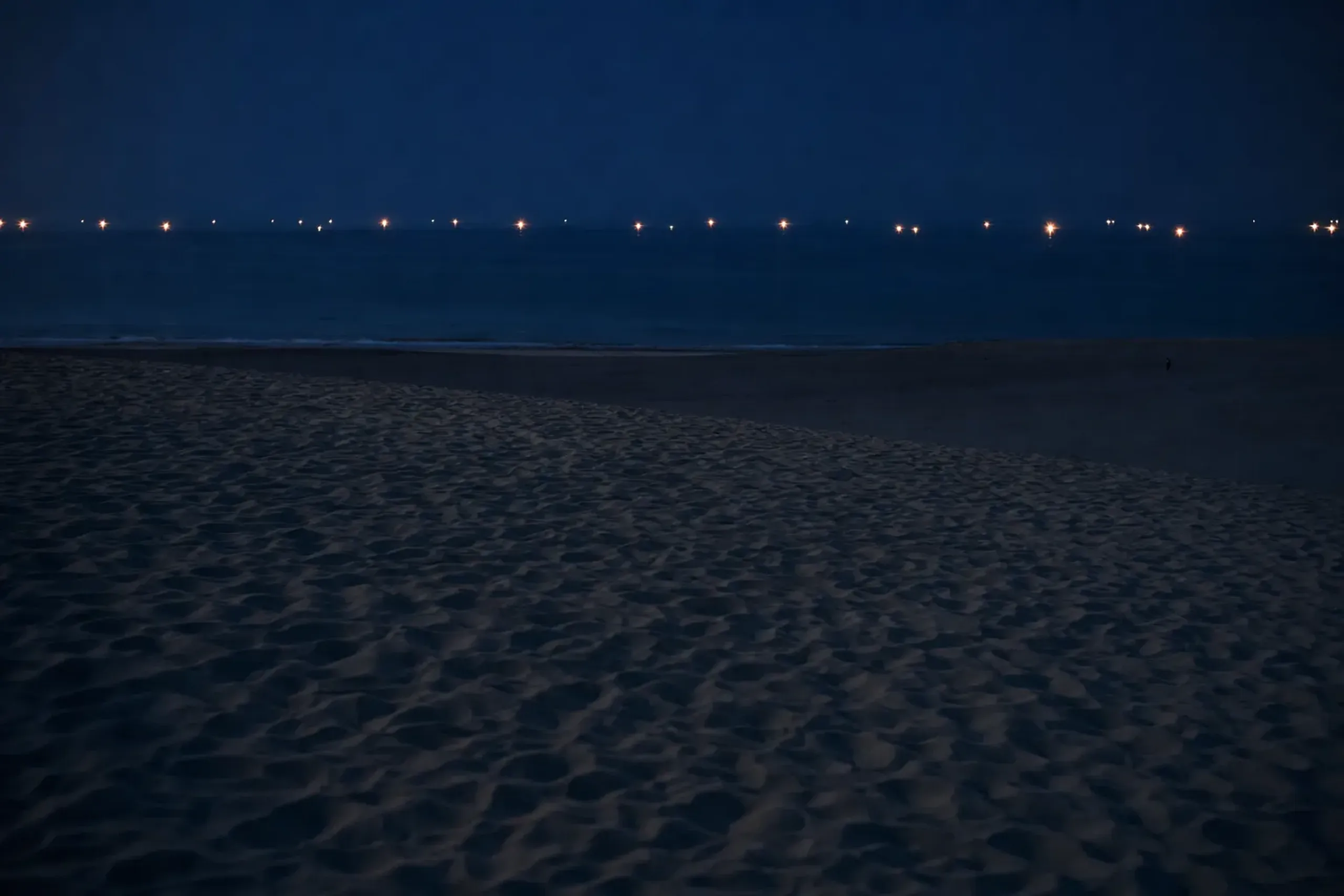
It is a genuinely seasonal detail, absent much of the year, and it turns a night walk on the dunes into something close to standing between two constellations, one above and one below.
Camel Rides and Carriage Tours
By day, camel rides and horse-drawn carriage tours operate as standard visitor activities on the sand, leaning into the desert theatre of the place. They are popular, straightforward, and easily woven into a morning visit. Our concierge confirms current availability ahead of any arrival.
The Sand Museum: The Only One of Its Kind
Adjacent to the dunes stands the Sand Museum, described as the world's only museum exhibiting sand sculptures exclusively. Each season, master sculptors from around the world build monumental, temporary works entirely from Tottori sand and water — no glue, no armature — around a single country or theme, then let them return to sand when the exhibition ends.
The museum operates on a set exhibition calendar and closes during production and maintenance windows, so timing matters. For the 2026–2027 season, the exhibition period runs from April 24, 2026 to January 3, 2027, with the museum closed from January 5 to April 23, 2026 for the building of the new works. In May 2026, national cultural coverage marked the museum's milestone twentieth exhibition, built around the theme of Spain — a reminder that this is a serious cultural stop, not merely a roadside attraction.
Plan around the calendar: The Sand Museum is closed from January 5 to April 23, 2026 while the next exhibition is built. If your dates fall inside that window, the dunes, coast, and San'in Geopark still reward a visit — the museum simply reopens on April 24, 2026. Our concierge verifies current exhibition details before every visit.
How Do You Get to the Tottori Sand Dunes?
The Tottori Sand Dunes sit roughly 22 minutes by bus from JR Tottori Station, or about 15 minutes and 10 kilometres by private car from the Tottori Interchange on the Tottori Expressway.
For our clients, the car is the obvious choice. Tottori sits on the San'in coast, well off the Golden Route, and public timetables here run thinner than in Kyoto or Tokyo. A private chauffeured vehicle removes the friction entirely — arriving at first light for the cleanest fumon, lingering after dark for the isaribi, and moving on to onsen or coast without waiting on a bus. Tottori also pairs naturally with the mountains inland; those planning a coast-to-summit route may enjoy our companion piece on Mount Daisen, a wholly different Tottori landscape within the same prefecture.
What Japan Royal Service Arranges in Tottori
For Tottori, we arrange two things plainly: expert guiding and private transfers. That is the honest scope, stated once.
Our concierge team verifies current opening hours, camel ride availability, and Sand Museum exhibition details on your behalf ahead of the visit, so nothing on the day is left to chance.
Where a certified geo-guide would deepen the experience, we coordinate one. Where a client wants the dunes at dawn and the fishing lights at dusk with an onsen between, we sequence the day around light and quiet rather than crowds. For lodging along the San'in coast and inland, our tailor-made itinerary planning connects the dunes to onsen towns and mountain views without a wasted hour.
Frequently Asked Questions
Is It Worth Visiting the Tottori Sand Dunes in Summer If the Rakkyo Fields Bloom in Autumn?
Yes. Summer offers wind-carved fumon ripples, dramatic sunadare sand curtains, and the season-specific isaribi fishing lights visible offshore at night. The rakkyo bloom is a separate autumn spectacle — a reason to return, not a reason to skip summer.
When Is the Tottori Sand Museum Open in 2026?
The Sand Museum's 2026–2027 exhibition runs from April 24, 2026 to January 3, 2027. It closes from January 5 to April 23, 2026 for production and maintenance. Always confirm current details before travelling, as schedules change.
How Far Are the Tottori Sand Dunes From Tottori Station?
The dunes are roughly 22 minutes by bus from JR Tottori Station, or about 15 minutes and 10 kilometres by private car from the Tottori Interchange on the Tottori Expressway. A private vehicle offers the most flexibility for dawn and after-dark visits.
What Makes the San'in Coast Geopark Significant?
The San'in Coast Geopark joined the UNESCO Global Geopark Network in October 2010 and spans roughly 2,458 square kilometres across three prefectures — an area larger than Tokyo Metropolis.
Certified local geo-guides explain its geological and cultural history in depth.
Can You Visit the Tottori Sand Dunes at Night?
Yes. The dunes take on a markedly quieter, atmospheric character after dark, and in summer the isaribi lights of distant fishing boats are visible offshore — a genuinely seasonal detail. A private guide and transfer make an after-dark visit simple to arrange.
Why Choose Japan Royal Service
Anyone can stand on the Tottori Sand Dunes. Far fewer arrive understanding that they are standing on a farm, inside a UNESCO Geopark larger than Tokyo, watching wind draw fumon into sand that took 100,000 years to gather. That understanding is the difference we build.
Our team at Japan Royal Service works quietly, holds client itineraries in complete confidence, and shapes each day around light, season, and the traveller in front of us rather than a fixed route. We do not chase crowds or checklists. We read the calendar honestly — telling you when the rakkyo blooms and when the museum is dark — because a trip planned on real facts is the only kind worth taking. On the San'in coast, where timetables thin and English signage grows sparse, that care is not a luxury. It is the whole point.
To plan a private Tottori journey — dunes at dawn, fishing lights at dusk, and the coast beyond — reach our team privately via WhatsApp or LINE, or contact us here.