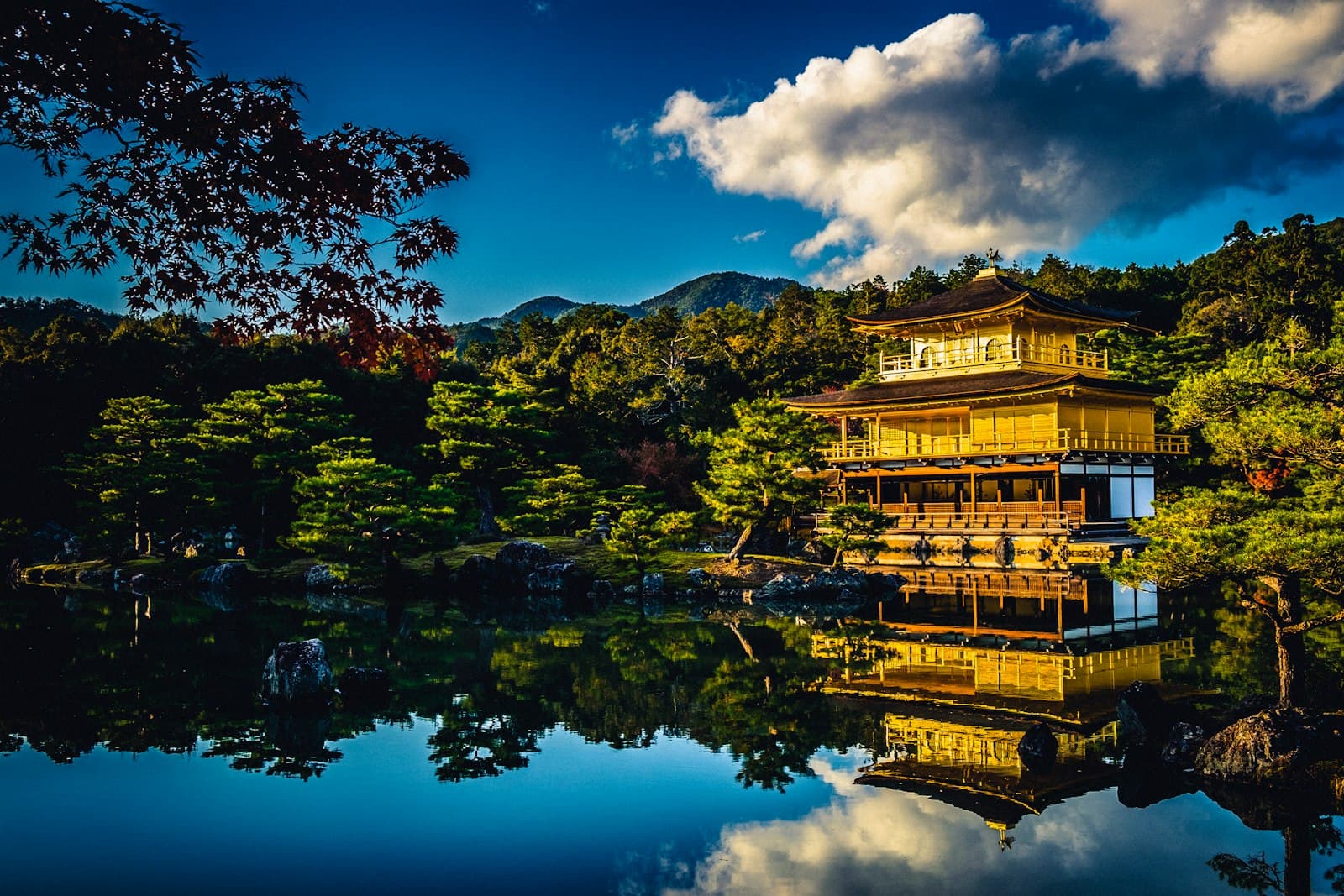

In this guide
- 01Start Here: This Adds Two Days To Our San’in Three-Day Route
- 02Tottori Sand Dunes: Why They’re Worth More Than A Quick Photo
- 03What Is The Sand Museum In Tottori, And Is It Actually Worth Visiting?
- 04What Is The Uradome Coast Near Tottori, And How Do You Experience It?
- 05How Do You Connect Tottori Sand Dunes, The Sand Museum, And Uradome Coast In Two Days?
- 06Who Should Add Tottori After San’in (And Who Should Skip It)
- 07What To Eat In Tottori When You Only Have Two Nights
- 08When Is The Best Season To Visit Tottori Sand Dunes And Uradome Coast?
- 09Frequently Asked Questions
- 10Why Choose Japan Royal Service
If you have already covered Izumo and Matsue on a San’in trip, Tottori is the clean, westward add-on that makes your journey feel broader.
Give it two extra days. That time turns “a dunes photo stop” into a place with range: a living landscape shaped by wind, a serious annual art exhibition made from sand, and a cliff coast cut into caves by the Sea of Japan.
It’s not a new Golden Route. Good. Tottori works best when you want something quieter, with fewer signposts telling you what to feel.
This guide shows how to extend our team’s San’in baseline—without rewriting it.
Start Here: This Adds Two Days To Our San’in Three-Day Route
This Tottori plan is designed as a two-day extension after Izumo Taisha and Matsue, not a replacement for the core San’in loop.
If you have not read the base route yet, begin with our San’in guide, then return here and add Tottori at the end.
We keep the logic simple. One day for dunes + museum, one day for the Uradome Coast, with room for a calm dinner and an early night.
San’in In 3 Days: Izumo Taisha, Matsue & The Adachi Museum
Tottori Sand Dunes: Why They’re Worth More Than A Quick Photo
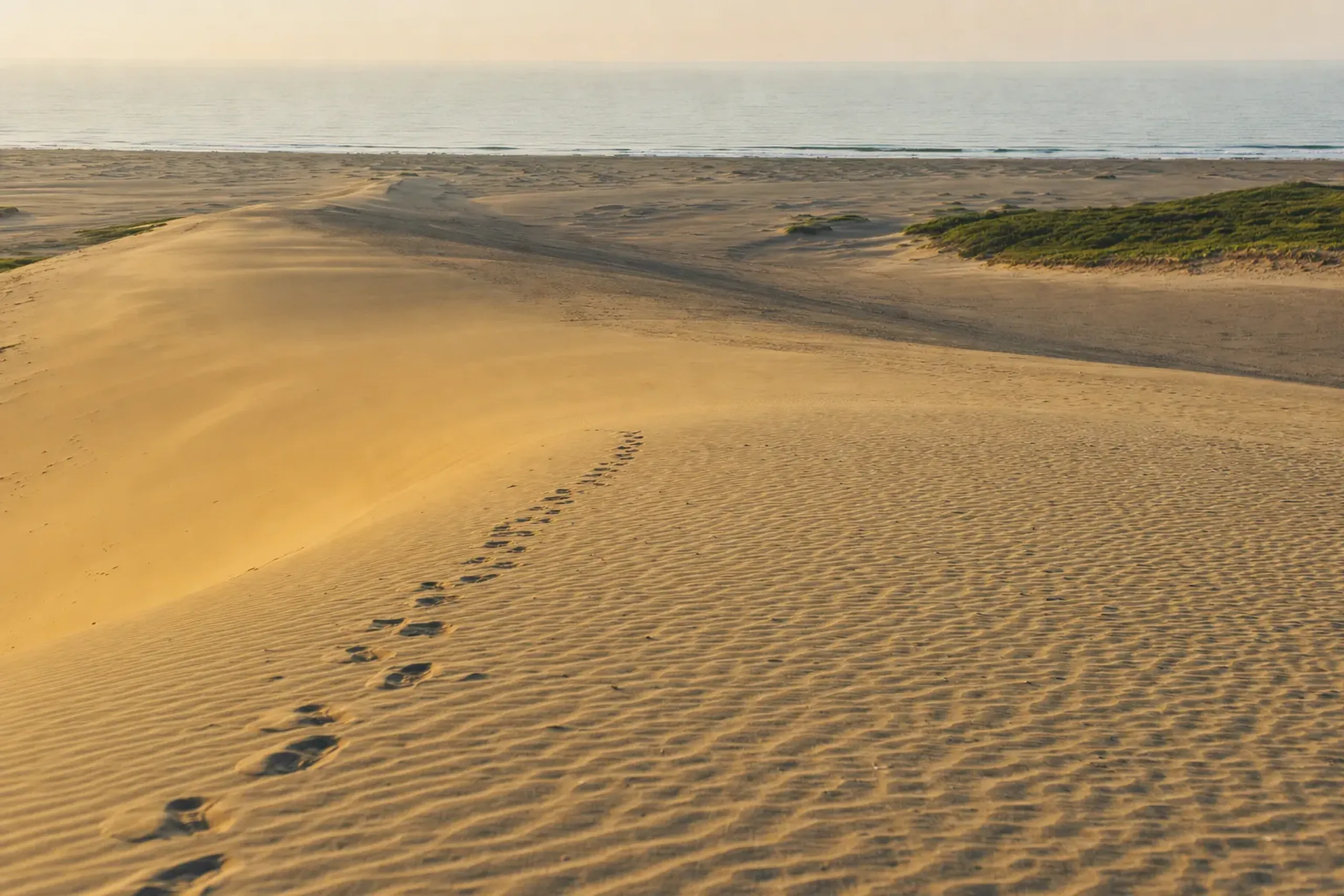
The Tottori Sand Dunes are Japan’s largest, stretching roughly 16 kilometers along the Sea of Japan coast, up to 2 kilometers wide and about 50 meters high.
Those numbers matter once you are standing there. The dunes don’t behave like a park. They behave like a moving surface, because they are one.
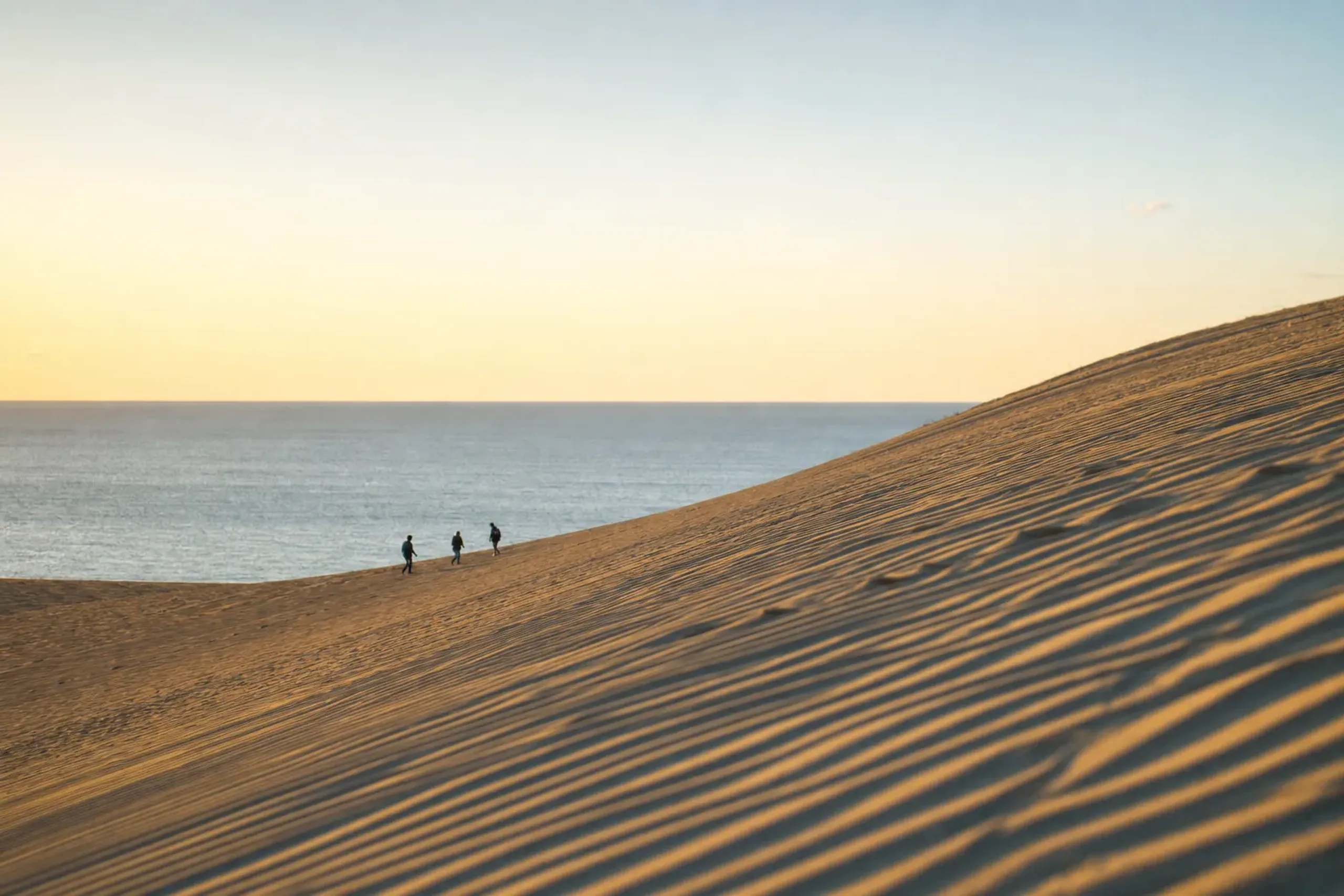
A landscape you feel through scale: dunes, wind lines, and the Sea of Japan beyond.
Their story is long. Sediment carried by the Sendai River has been shaped for more than 100,000 years by sea currents and the wind, and the dunes continue to shift today.
Walk a little past the first viewpoint and the mood changes. The crowd thins. You start hearing the sand underfoot and the low scrape of dry grains traveling with each gust.
What To Do On The Dunes (And What To Skip)
Plan one main activity, then leave space for wandering. Trying to do everything makes the dunes feel like a checklist.
- Best for a first visit: a long walk across the ridges and down into the basins.
- For active travelers: sandboarding or paragliding are common options on site.
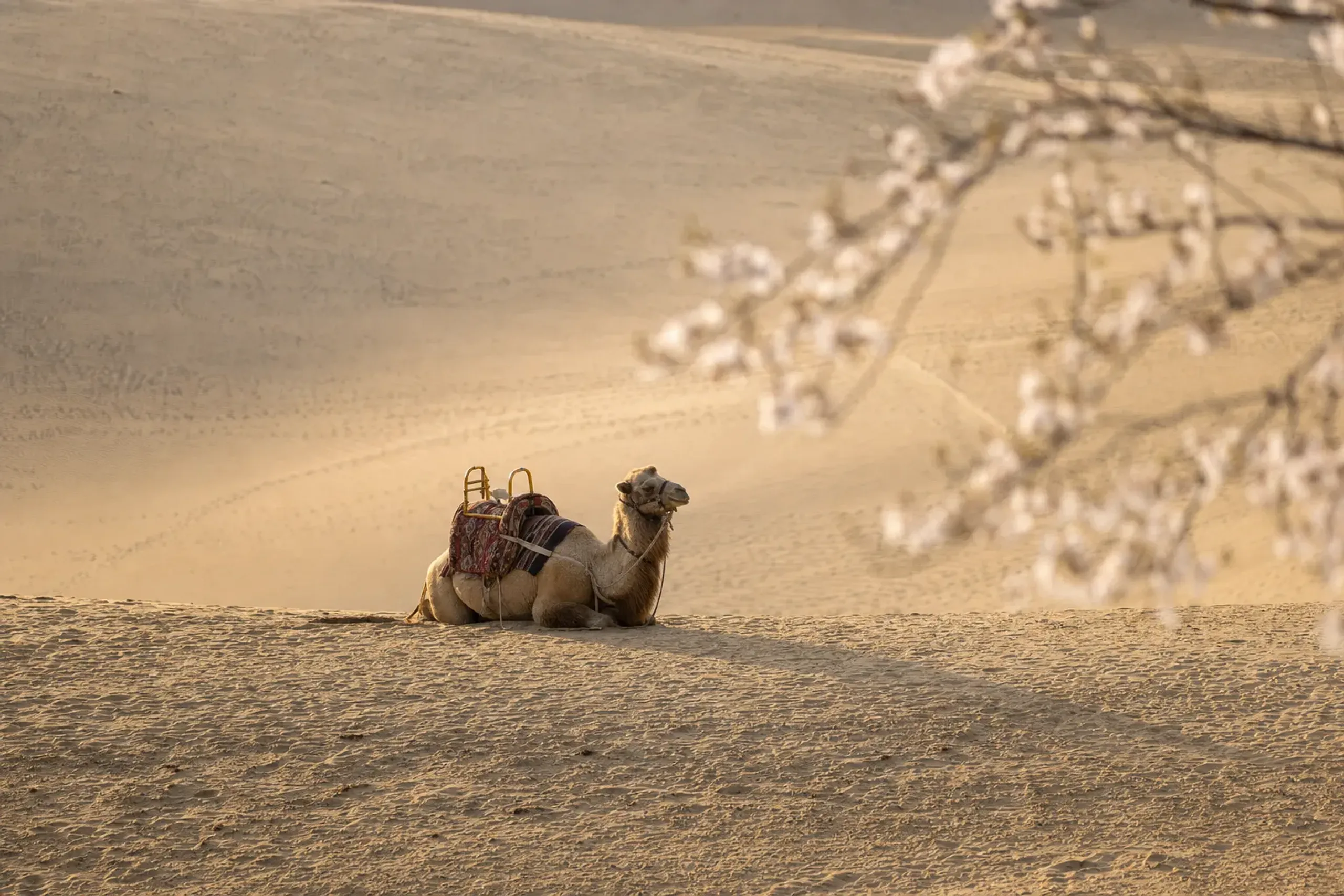
- For families: camel rides and horse-drawn carriage rides are also widely offered.
One watchful note. Sand gets into everything, especially camera gear and handbag closures, so we suggest bringing one “dunes-only” pouch you don’t mind cleaning later.
The Viewpoint That Changes Your Sense Of Scale
The Sakyu Center observation deck is the clearest way to understand the dunes as a coastline landscape, not just a patch of sand.
It is reached by chairlift, and the overview matters. From up there, you see the long edge where wind-built dunes meet the Sea of Japan.
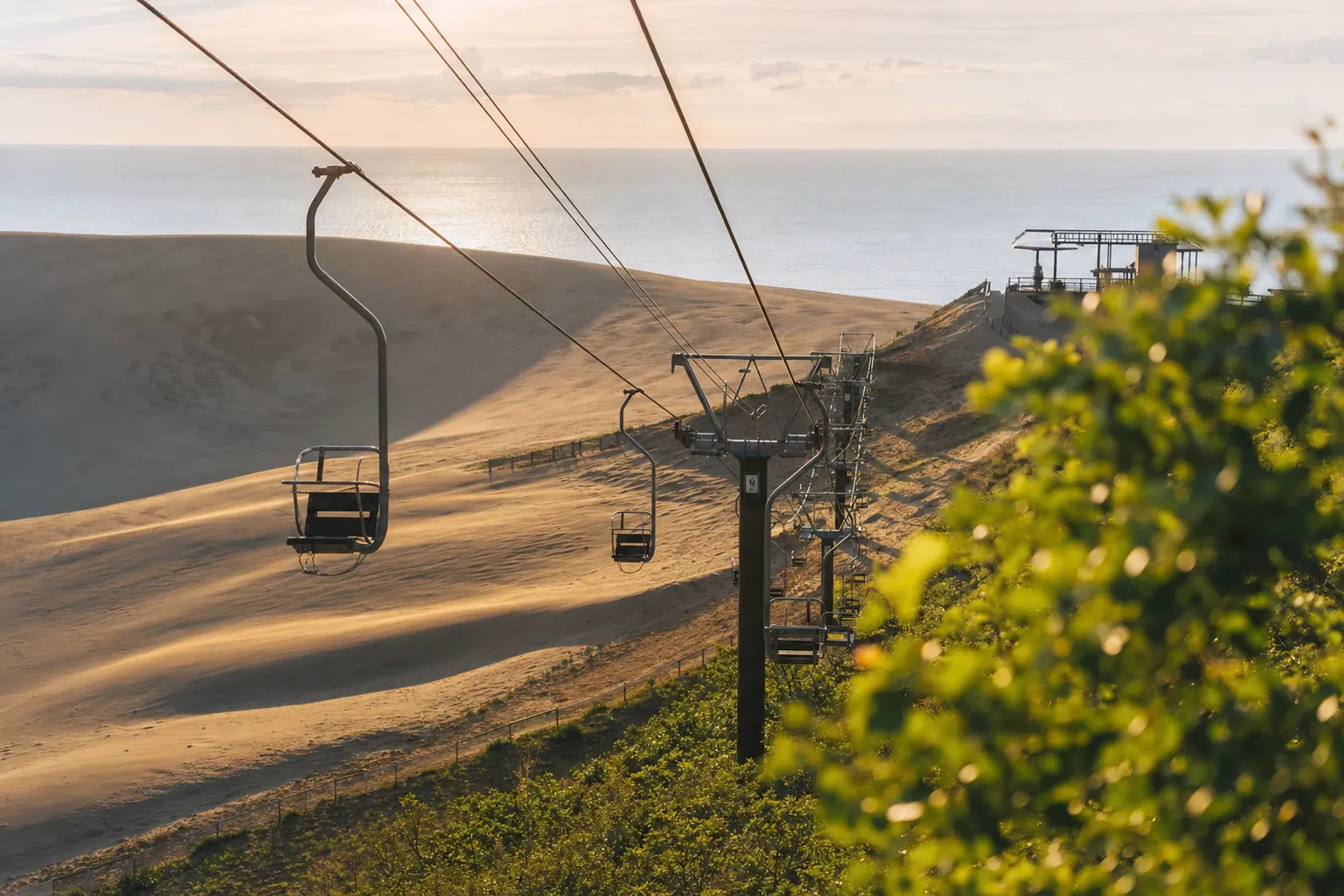
Stay a few minutes. The view is not static. Shadows slide as clouds move, and the dune crests redraw themselves in slow, almost stubborn lines.
What Is The Sand Museum In Tottori, And Is It Actually Worth Visiting?
The Sand Museum in Tottori is the only museum in the world devoted to large-scale sculptures made entirely from local sand and water, and it is worth visiting when you want a cultural counterpoint to the dunes.
This is not a roadside novelty. The works are built to hold up at full architectural scale, with surfaces cut as sharply as carved stone, yet made from the same material you just walked through.
Exhibitions change annually around a theme, and they typically run from mid-April to early January. We avoid naming the current theme here because it changes.
Go after the dunes, not before. Your eye reads the sculpture differently once you have felt how sand behaves in wind.
How To Visit Without Feeling Rushed
Give yourself enough time to slow down inside. Big mistake: treating it as a 20-minute stop because “it’s just sand.”
We suggest entering with a simple plan. Walk the full circuit once, then loop back to the pieces that keep pulling you in.
If you are traveling as a couple, it is an unexpectedly good conversation stop.
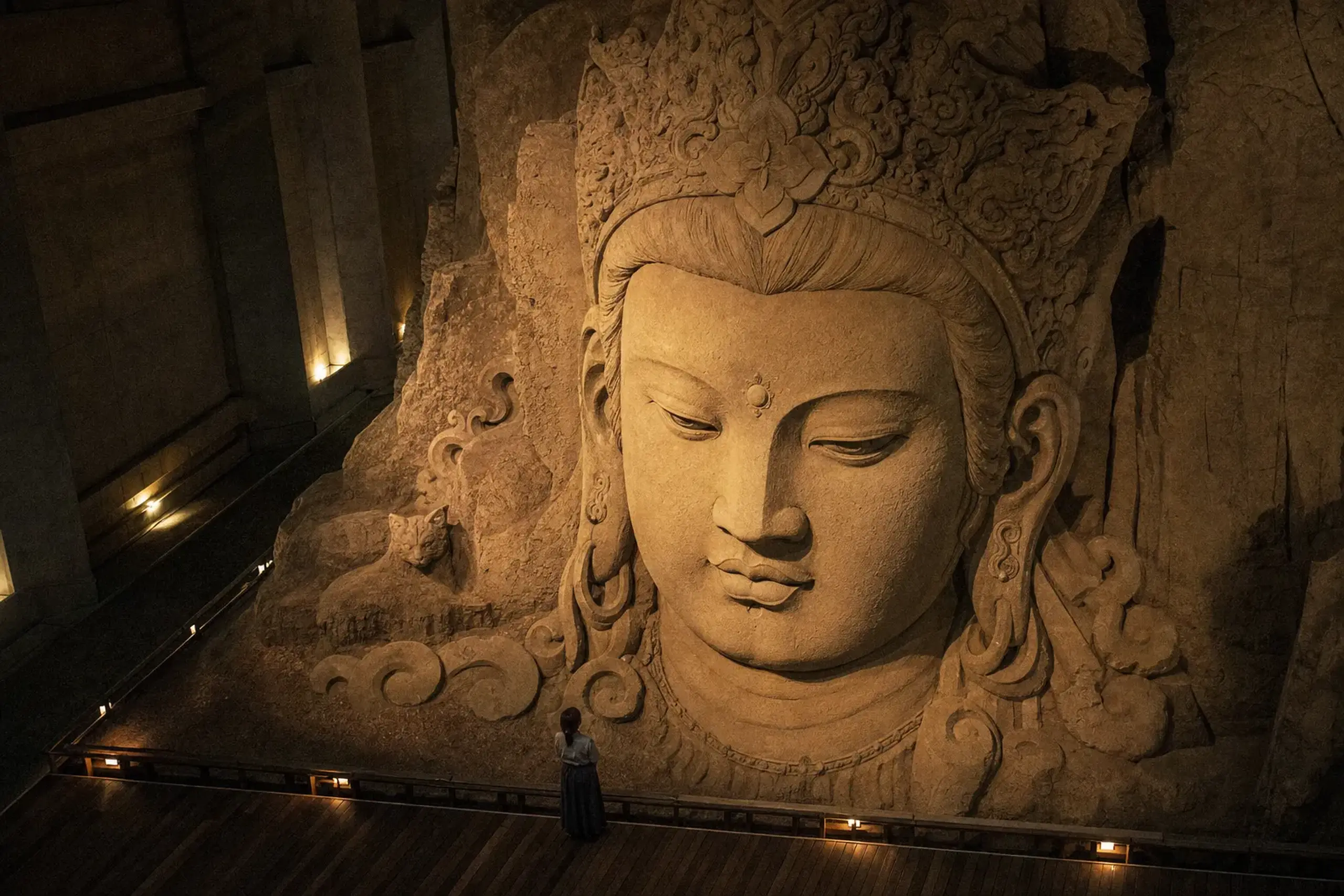
You end up debating technique, not taste.
What Is The Uradome Coast Near Tottori, And How Do You Experience It?
The Uradome Coast is a rugged stretch of sea-eroded cliffs and caves near Tottori, most often experienced by sightseeing boat, and it gives your extension a second landscape that feels completely different from the dunes.
It’s close enough to make sense as a half-day, yet distinct enough to feel like you changed regions. The geometry flips from soft ridgelines to hard edges.
On the water, the coast reads like a series of cuts and hollows. Caves, tight inlets, and rock faces that look scraped by decades of weather.
In summer, the area is also known for snorkeling and stand-up paddleboarding. If that is your style, we time the day around calmer water conditions rather than forcing a fixed schedule.
Key fact: Treat Uradome as its own “chapter,” not an add-on after a full dunes day; you will enjoy it more if you arrive with energy.
How Do You Connect Tottori Sand Dunes, The Sand Museum, And Uradome Coast In Two Days?
Do the dunes and Sand Museum on Day 1, then reserve Day 2 for the Uradome Coast, with time for a quiet meal and a measured pace.
That structure keeps each place honest. The dunes deserve daylight and walking time. The museum deserves your attention, not your leftovers.
Uradome, meanwhile, works best when you are not thinking about the next stop.
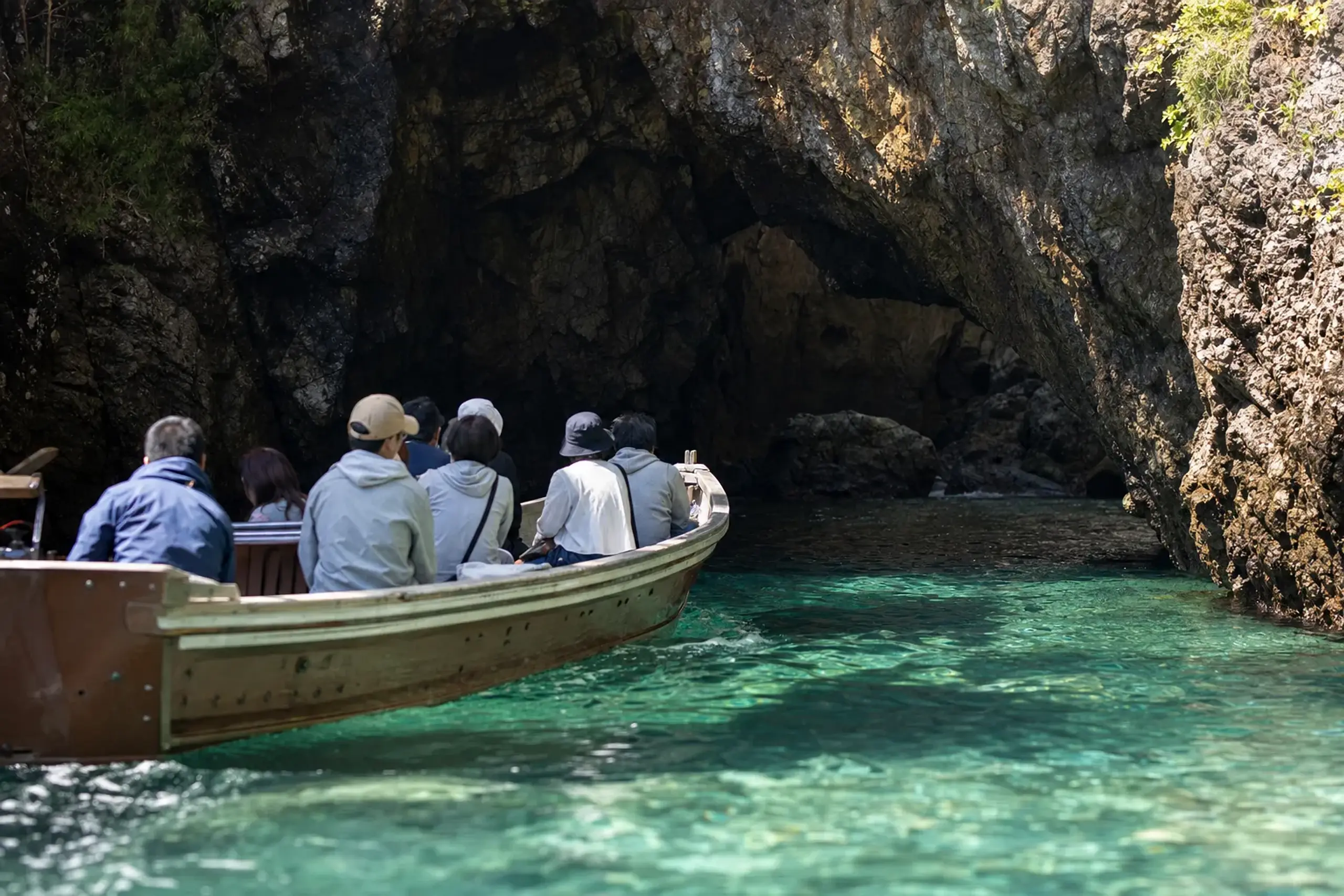
You want to be on the water, then off it, then lingering a bit longer than planned.
Option A: Two-Day Extension (The Cleanest Version)
This is the version we recommend most often for HNW travelers who want depth without turning Tottori into a full week.
- Day 1: Tottori Sand Dunes walk + Sakyu Center observation deck + Sand Museum.
- Day 2: Uradome Coast by sightseeing boat; summer water activities only if they fit your pace.
It’s tidy. It also leaves room for one strong local dinner.
Option B: Add A Third Day Only If You Want Countryside Time
If you have more time than a simple extension allows, Tottori Prefecture divides into three regions—east, central, and west—and there are genuine reasons to go beyond the dunes.
- Mt. Daisen: a major mountain presence in western Tottori.
- Onsen towns: Misasa Onsen and Kaike Onsen are well known bases for hot springs.
We keep this section brief on purpose. Once you add a third day, your trip design changes, and we plan it around what you want to feel: mountain air, onsen quiet, or more coastline.
Who Should Add Tottori After San’in (And Who Should Skip It)
Tottori is a smart extension if you have two extra days and you like landscapes with space, not constant “must-see” pressure.
It fits well if you are already committed to San’in’s slower rhythm.
You don’t need to be an outdoors person. You just need to enjoy walking and looking.
Skip it if your San’in plan is already tight at three days and you are moving city-to-city with little margin. You will end up rushing the dunes and missing Uradome entirely.
Also skip it if your travel group dislikes wind, sand, and the mild inconvenience of nature. That’s the whole point.
What To Eat In Tottori When You Only Have Two Nights
Food is one reason this extension works as two days instead of one. You can end a dunes day with something local, then sleep early.
Tottori specialties to look for include beni-zuwai-gani (red snow crab), Tottori wagyu beef, and the prefecture’s pears. Keep the meal simple.
If you prefer a private, low-stimulation dinner rhythm, we design the evening around your hotel location so you are not commuting late. Quiet wins.
When Is The Best Season To Visit Tottori Sand Dunes And Uradome Coast?
The dunes and Uradome Coast are visitable year-round, and each season changes the texture: light angles, wind, sea color, and how long you want to stay outside.
Summer can suit travelers who want time on the water at Uradome. Cooler months can suit travelers who want long walks on the dunes without thinking about heat.
We plan the day around conditions, not the calendar.
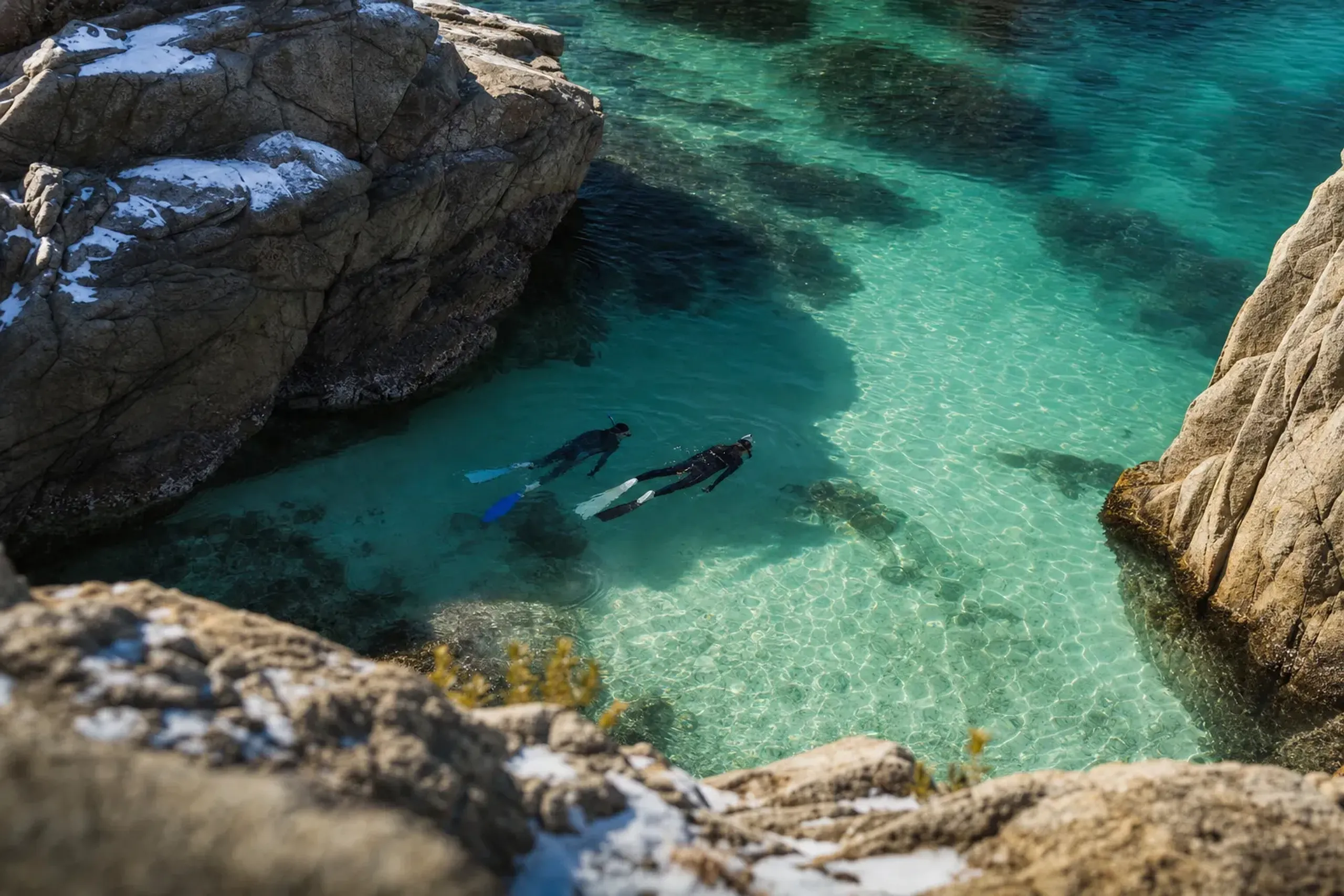
Some mornings feel still; some afternoons arrive with a sharp, sideways wind that makes the dunes feel like a different place.
If you tell us your travel month early, our concierge team will shape the pacing so you spend your “best hours” outdoors, then shift to the museum or a long lunch when the light turns flat.
Frequently Asked Questions
Can I Do Tottori Sand Dunes And Uradome Coast In A Single Day?
You can, but it usually feels compressed, because the dunes deserve walking time and Uradome is best enjoyed without rushing to the next stop.
If you only have one day, we suggest choosing either dunes + Sand Museum or Uradome Coast, based on whether you prefer land walking or time on the water.
Do I Need To Check The Sand Museum Theme Before I Go?
Yes, because the Sand Museum exhibition changes annually and typically runs from mid-April to early January.
If you tell our concierge your dates, we will confirm the current exhibition period and advise on the best time of day to visit for a calmer gallery flow.
Is The Chairlift To The Sakyu Center Observation Deck Suitable For Families?
Many families use the chairlift to reach the Sakyu Center observation deck, and it is a practical way to grasp the dunes’ scale without a long climb.
For very young children or guests with mobility concerns, we plan your day with extra margin and confirm any on-site requirements close to travel.
What Should I Wear For The Tottori Sand Dunes?
Wear shoes you can shake out easily and clothing you do not mind brushing clean, because sand gets into seams, socks, and camera bags.
A light layer helps when the wind turns brisk, and a small towel is handy after a longer walk.
Why Choose Japan Royal Service
Tottori looks simple on a map, yet it rewards travelers who value restraint. That is wabi-sabi in motion: weathered coast, spare dunes, and the quiet that comes with fewer distractions.
We also pay attention to shokunin craft, even here. The Sand Museum is a useful reminder that serious technique can come from humble material, and you will feel that care in how we pace your days.
Most of all, our work is discreet. Our concierge team keeps your plan private and practical, so you can enjoy a region that still feels like hidden-Japan—less broadcast, more lived.
Japan Royal Service arranges dune activities, transport, and private guiding as part of a tailored San’in extension, matched to your timing and travel style.
Ready to add Tottori to your San’in route? Reach our team privately via WhatsApp or LINE, or contact us here.