In this guide
You have four hotels shortlisted, one in each of four districts, and the listings all read the same: calm, central, discreet, well-connected. They are not the same. What a listing never tells you is what the streets are like after eight, how far you actually walk to a Shinkansen platform, and whether the daytime crowd outside the porte-cochère is commuters, shoppers, or nobody at all. That gap is the whole decision.
At Japan Royal Service, we place guests in Tokyo every week, and the district is usually settled before the property is. Below is how our concierge team weighs the four bases that matter most for a discreet Tokyo stay — compared on the same criteria, in the same order, so you can hold them against each other.
What Actually Differentiates A Tokyo Base
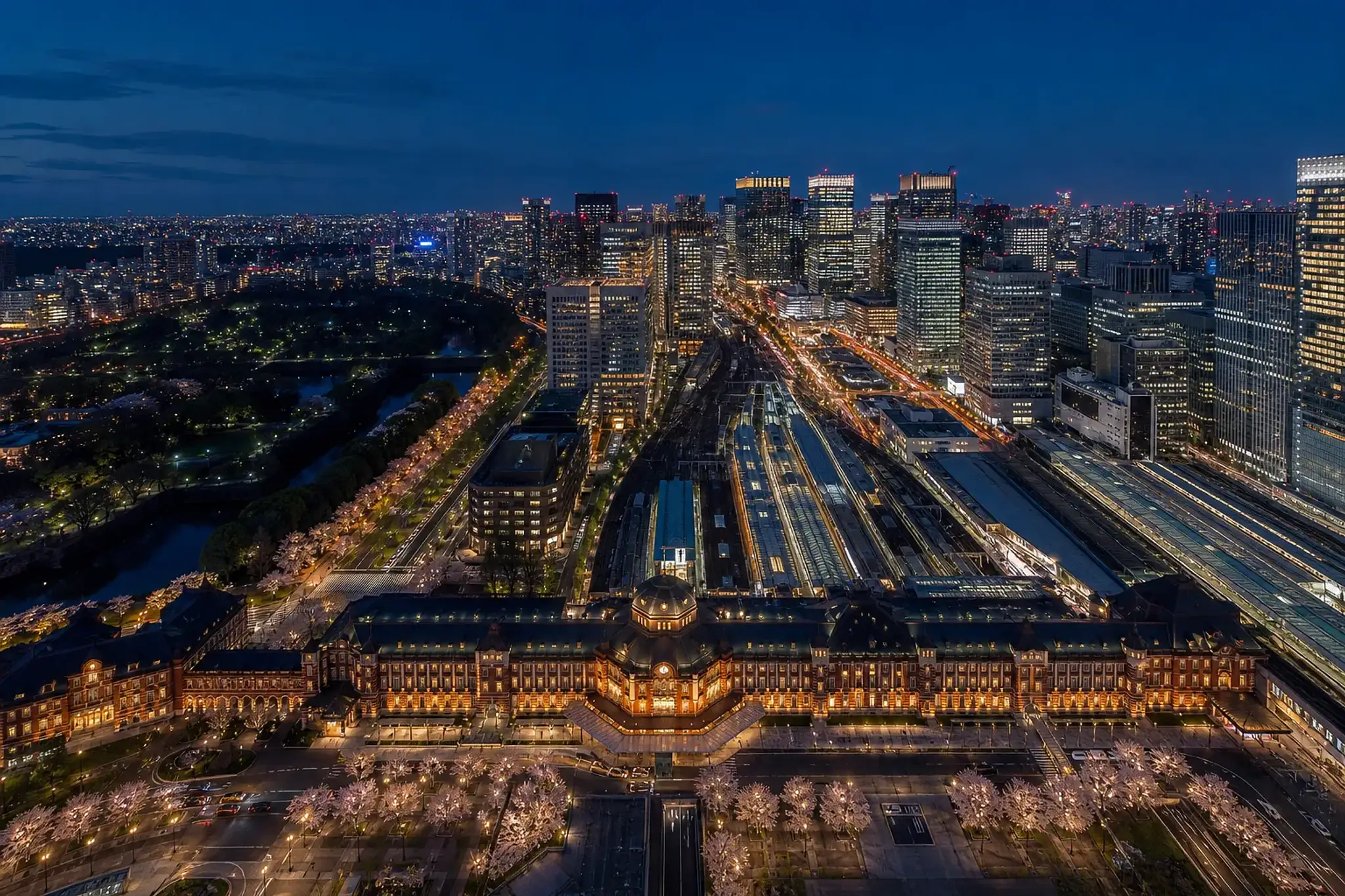
The four bases sit within a short drive of each other — yet feel entirely different after dark.
Three things separate one Tokyo district from another once you are already staying somewhere good. The rest is noise.
Transport position. Where you sit relative to Tokyo Station for Shinkansen departures, and relative to the expressway ramps a chauffeur uses for airport runs. This is the single most measurable difference, and the one guests underestimate most.
Evening character. What the streets are like after dinner. Some districts empty out completely when the offices close. Others stay lit and walkable. A hotel cannot fix the street it sits on.
Walkability. What is genuinely reachable on foot in ten minutes versus what requires a car or a train every time you leave the door. For a stay built around slow mornings and reservations you keep on time, this decides whether you feel confined.
Key point: Privacy in Tokyo is a building-and-arrival question far more than a district one — the porte-cochère, the lift design, the lobby sightlines. District choice sets the daily rhythm around that building. We treat them as two separate decisions.
Marunouchi: The Transit Case
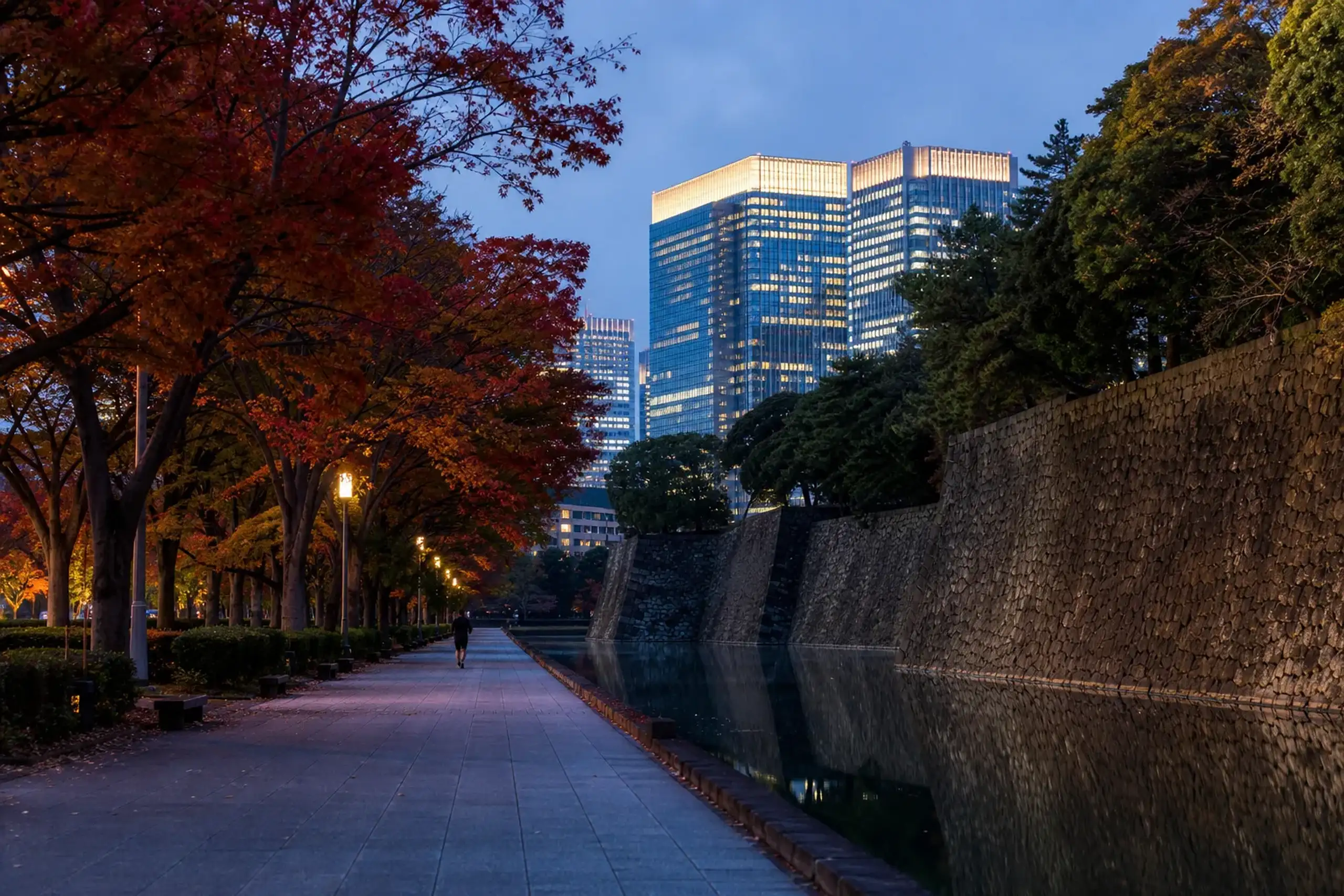
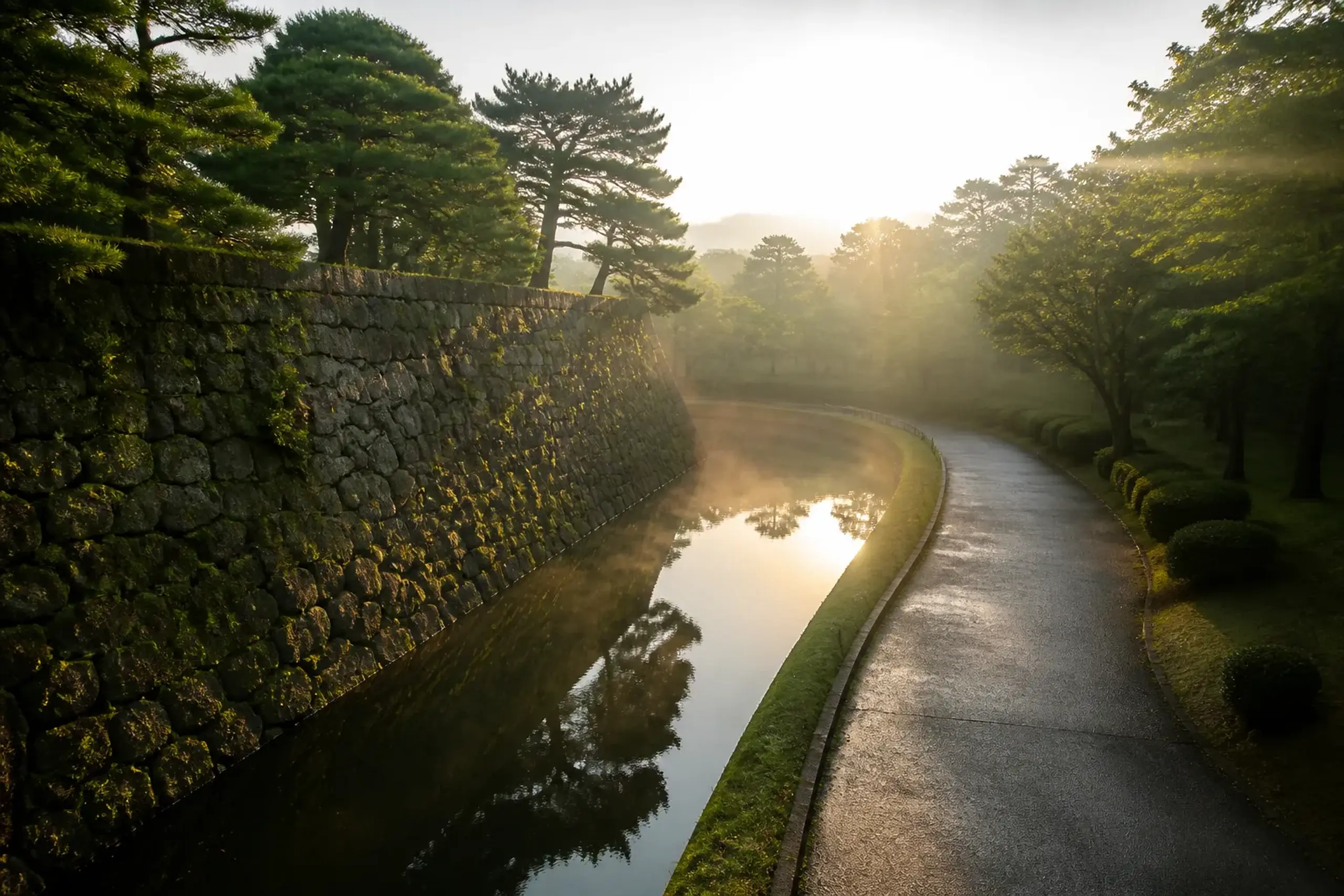
Marunouchi's reward: a wide, low-traffic palace loop for slow mornings, minutes from the platform.
Marunouchi, and the Otemachi blocks folded in with it, is corporate Tokyo at its most orderly. It suits the executive traveler, the repeat visitor who moves between cities by rail, and anyone whose days start with a slow walk rather than a plan.
Transport position. Unmatched. You are beside Tokyo Station, which is the point. Shinkansen departures to Kyoto, Kanazawa, or the north begin from a platform you reach without leaving cover on a wet morning. For a multi-city itinerary, nothing else in Tokyo competes here.
Evening character. This is Marunouchi's cost. It is built for the working day, and after the offices empty the streets go quiet in a way that reads as deserted rather than serene. Dinner means going elsewhere. If you want to step out of the hotel and into a lively street, this is not that.
Walkability. The Imperial Palace perimeter is the reward — a wide, low-traffic loop for early walks or a morning run, right on the doorstep. Otemachi's serviced residences, which we often prefer for longer family stays with staff, sit within the same quiet grid. Note the Tokyo Station–Yaesu side redevelopment continues to reshape that flank; a chauffeur can route around any active zone, but it affects which exits stay calm.
We have written the full single-district argument for Marunouchi — how to use the covered connections, the palace-side mornings, and how to solve the dead evenings — in a dedicated guide. A tailor-made itinerary can lean on Marunouchi purely as a rail hub while basing your evenings around dinner reservations elsewhere.
Akasaka: The Mixed Case
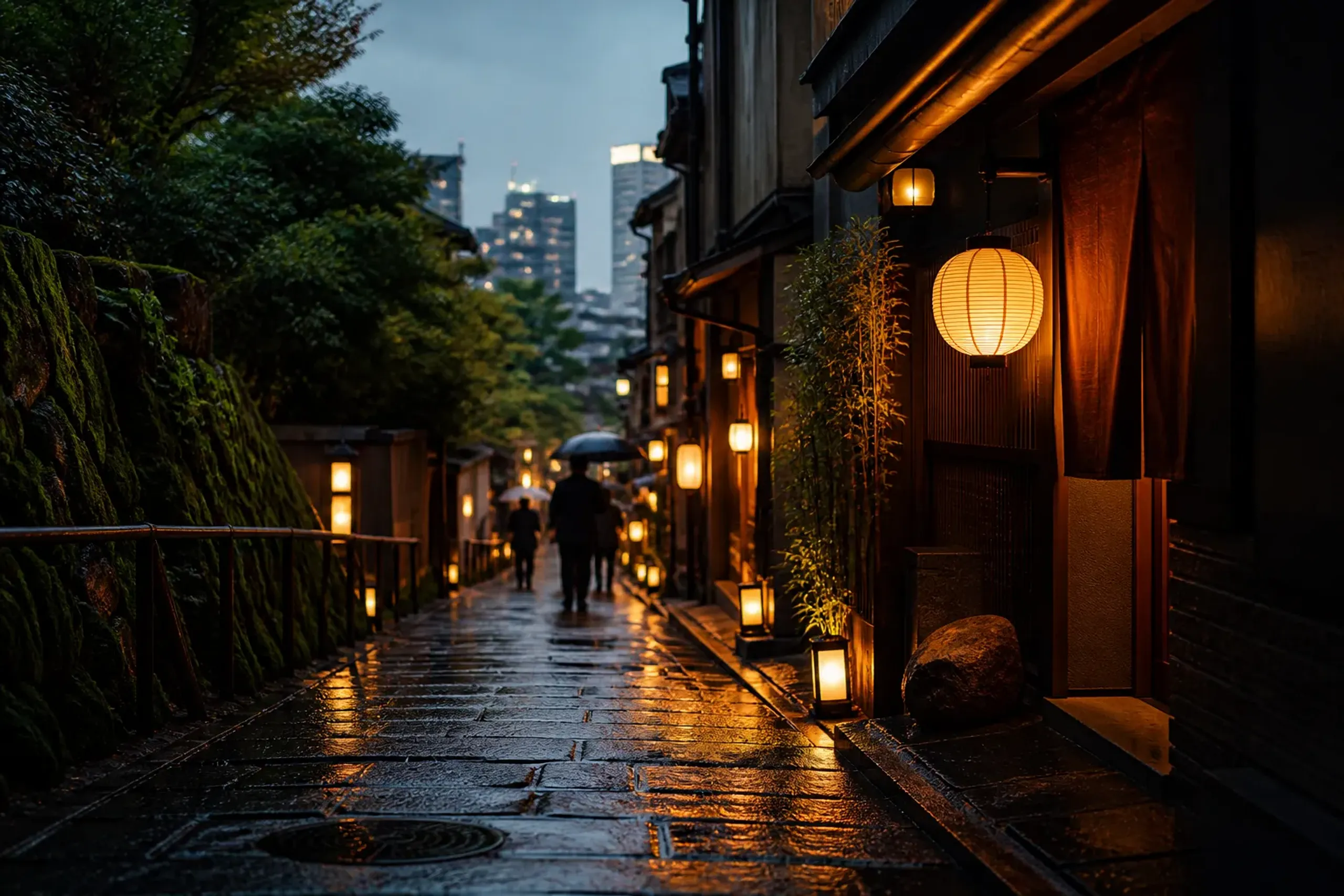
Akasaka keeps its streets lit after eight — the strongest evening character of the four.
Akasaka, with the quieter Kioicho pocket beside it, is the most varied of the four. It suits the guest who wants dining within walking distance of the pillow and does not mind a district that shifts character block to block. The Official Tokyo Travel Guide notes Akasaka carries a large share of the city's Michelin-starred restaurants — that concentration is the draw.
Transport position. Central and well-served by subway, but not rail-adjacent. For a Shinkansen departure you are looking at a chauffeured run to Tokyo Station rather than a covered walk. For airport transfers it sits well relative to the expressway. Good, not exceptional.
Evening character. The strongest of the four for staying in and stepping out. Akasaka keeps its lights on after dark, with dining streets that stay active well past the hour when Marunouchi has gone dark. Kioicho, a few minutes away, does the opposite — diplomatic and residential calm. That the two sit so close is the appeal.
Walkability. Genuinely walkable for dinner, which is rare among these four. The downside is the terrain and the mix: streets rise and fall, the character swings from polished to workaday within a short walk, and the pavements are less uniform than the manicured Marunouchi grid. Some guests read that as life; others find it uneven. Note too that inventory here has shifted — one long-standing Akasaka hotel closed in 2023 — so 2026 guidance matters more than an older list.
Toranomon: The New Case
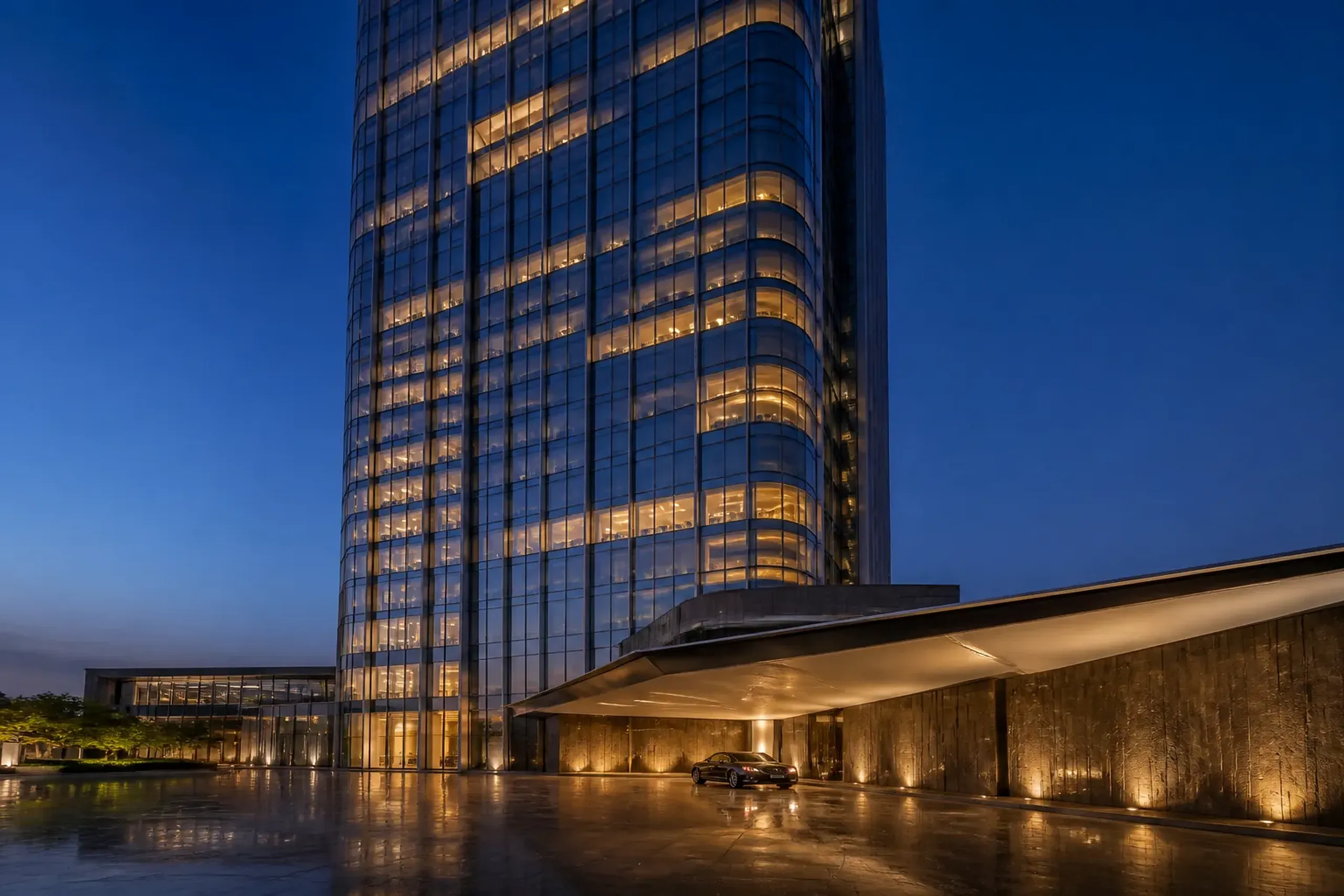
Toranomon delivers calm, curated arrivals inside its towers — and thin street life outside them.
Toranomon is the design-led, embassy-and-business district that has been rebuilt around a cluster of towers. It suits the guest who wants a contemporary room, controlled and quiet arrivals, and culture without crossing the city — but who will not miss a dense street of small restaurants at their door.
Transport position. Strong by car and subway, weaker for rail. A chauffeur reaches the expressway easily, which makes airport transfers clean. For Shinkansen you are, again, driving to Tokyo Station. The district's strength is road access and the smooth, sheltered arrivals the newer towers were built to provide.
Evening character. The most polished and the thinnest. Inside the developments, evenings are calm, curated, and safe-feeling. Step outside them and the street life is sparse — this is a district still filling in around its new towers, and after dark the blocks between developments are quiet in a way that can feel empty rather than restful. TOKYO NODE, the creative hub atop one of the station towers, gives you programmed culture without leaving the district, which offsets some of that quiet.
Walkability. Walkable within the developments — you can move between hotel, dining, and culture under cover — but the wider neighborhood is not yet a place you wander. What is nearby is engineered rather than found. Because Toranomon is still changing year to year, treat any specific claim about a given tower or venue as something to confirm at the time of your stay; our concierge tracks what is actually open.
Ginza: The Shopping-Adjacent Case
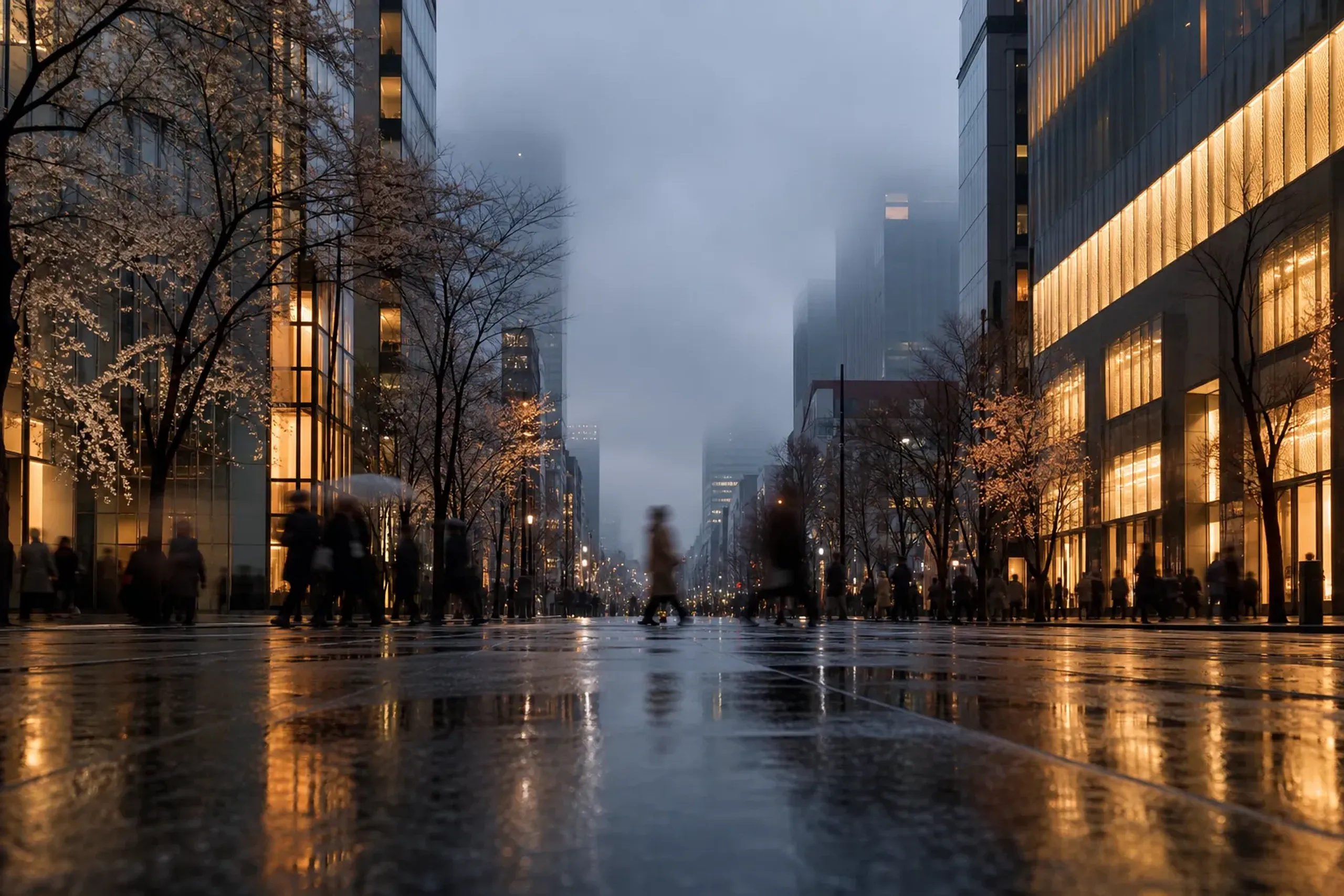
Ginza is the most alive of the four at street level — and the most exposed to crowds.
Ginza suits the guest whose days are built around retail, galleries, and dinner, who wants the most polished street-level Tokyo has, and who is willing to pay for it in crowds. It is the most alive of the four at street level, and the most exposed.
Transport position. Central and close to Tokyo Station — near enough that a Shinkansen departure is a short chauffeured hop, better positioned for rail than Akasaka or Toranomon. Subway coverage is dense. For a stay that mixes city days with a rail departure, this balance works.
Evening character. Ginza stays lit and busy after dark, with dining and bars at every register. That is its pleasure and its cost. The same crowds that make it feel alive make discreet arrivals harder, and the flagship-lined avenues carry real daytime congestion. A hotel here manages the exposure through its building; the street will not help you.
Walkability. The most rewarding on foot of the four — everything worth reaching is within a short, flat walk. The trade is congestion. Weekend afternoons on the main avenues move slowly, and the pedestrianized stretches draw dense crowds. If your idea of a walk is an empty morning loop, Ginza is the wrong base; Marunouchi's palace perimeter is minutes away and does that instead.
The Districts We Left Out, And Who They Suit
Four districts do not cover Tokyo. Here is the short version on the ones that did not make the comparison, and the traveler each fits.
- Shibuya — energetic and young; suits guests who want to be inside the noise, not shielded from it.
- Roppongi — nightlife and art in one district; suits later evenings and gallery days, less so quiet mornings.
- Shinjuku — vast, dense, and superbly connected by rail; suits high-volume movers who prize transit over calm.
- Nihonbashi — historic, corporate, and quiet, much like Marunouchi's temperament; suits guests who like that register but want a touch more traditional retail nearby.
When The District Barely Matters
Be honest about the ceiling on this decision. For a two-night stay with a car and a driver on call, the district matters far less than the property. You will spend your waking hours out — at reservations, at ateliers, on day trips — and return to the room to sleep. In that case, choose the building: the arrival, the suite, the service. Let the district fall where the right property sits.
The district earns its weight on longer stays, on rail-heavy itineraries, and on trips built around slow days near the hotel. That is when evening character and walkability start shaping how the trip feels rather than just where you sleep.
Frequently Asked Questions
Which Tokyo District Is Best For Shinkansen Departures?
Marunouchi, without close competition — you are beside Tokyo Station and can reach a platform under cover. Ginza is a short chauffeured hop. Akasaka and Toranomon both require a drive to the station.
Which District Stays Liveliest After Dinner?
Akasaka and Ginza both keep their streets lit and walkable after eight. Marunouchi empties out once the offices close; Toranomon is calm inside its developments and sparse outside them.
Where Should A Guest Who Values Quiet Mornings Stay?
Marunouchi, for the Imperial Palace perimeter loop — a wide, low-traffic circuit for an early walk. Kioicho, beside Akasaka, offers a smaller version with residential calm.
Does The Neighborhood Matter For A Short Stay?
Less than you would think. On a two-night trip with a chauffeur on call, the property outweighs the district. Choose the building first and let the district follow.
Why Choose Japan Royal Service
The comparison above is where our conversation with a guest starts, not where it ends. Our team at Japan Royal Service is Tokyo-based, with our own chauffeured fleet and coordinators who know these four districts at street level — which exits stay calm, which redevelopment zones a driver should route around, and how a district reads at the hour you will actually be in it.
We match the base to the trip: your planned days, your Shinkansen and airport departures, and the size and profile of your party. Where discretion is the priority, we weigh the building — the arrival, the lift, the sightlines — as carefully as the district. And where a serviced residence outperforms a hotel for a longer family stay, we say so. Our private chauffeured transport ties the whole itinerary together, so the district you choose serves the days you have planned rather than dictating them.
Tell us the shape of your trip, and we will tell you which district earns its place — and where the choice barely matters.
To match a Tokyo base to your dates, departures, and party, reach our team privately via WhatsApp or LINE, or contact us here.