In this guide
- 01What Molecular Cuisine Means In Tokyo
- 02Why Tokyo Excels At Science-Meets-Artistry Dining
- 03Signature Techniques You’ll See (And How They Feel On The Palate)
- 04Where To Taste Tokyo Molecular Cuisine: Real, Verifiable Anchors
- 05How To Choose A Tokyo Molecular Cuisine Experience
- 06Quick Reference: Dress Code, Dietary Limits, And Reservation Reality
- 07How A Tokyo Molecular Dinner Fits Into A Luxury Itinerary
- 08FAQ: Tokyo Molecular Cuisine For Luxury Travelers
- 09Booking Tips: What’s Official, What’s Realistic, And How To Avoid Mistakes
- 10Why Choose Japan Royal Service
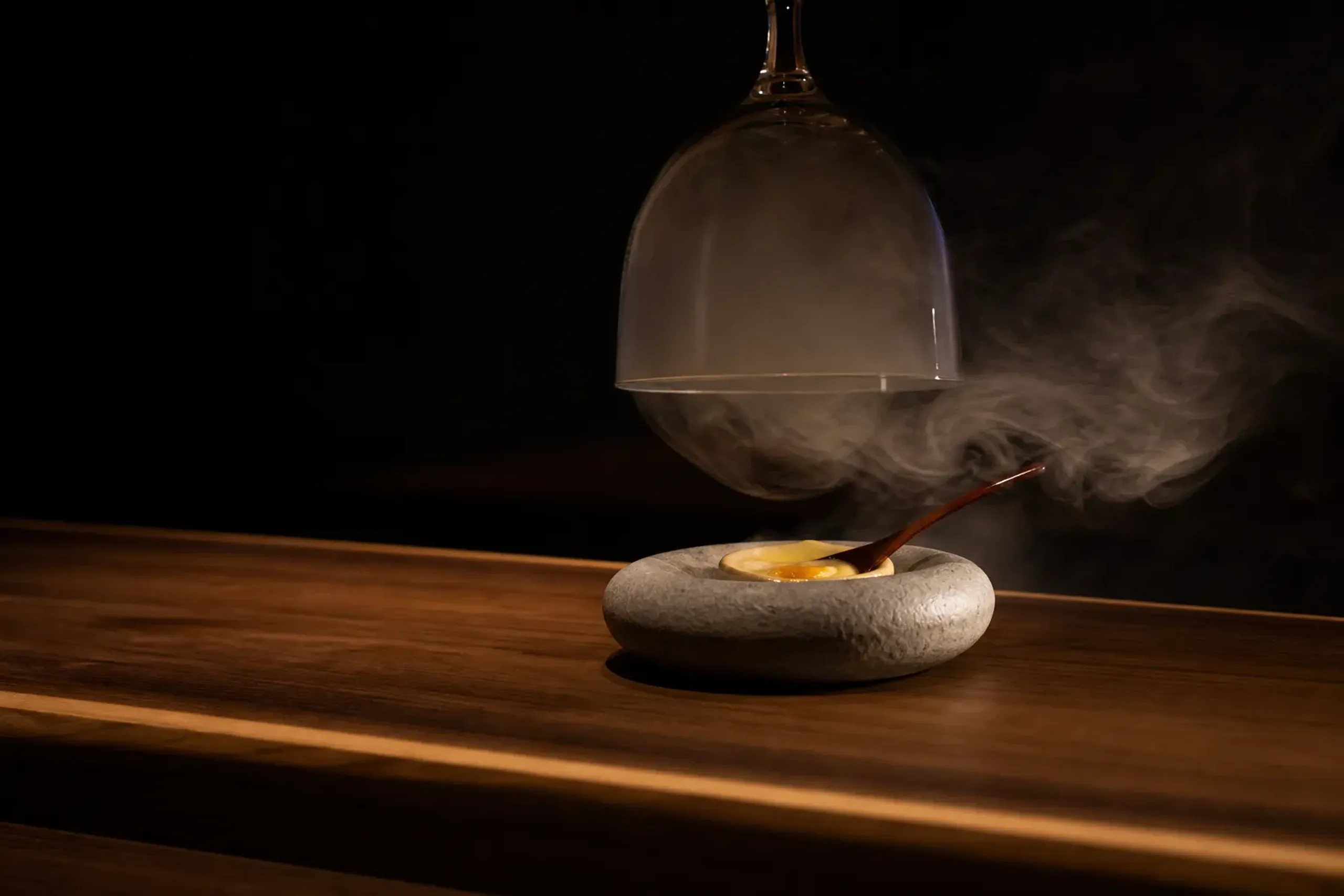
A plate arrives that looks like river stone.
Then it releases a thin, cedar-scented smoke as you lift the lid, and the “stone” yields like custard under the spoon—warm at the center, cold at the edge, the flavor unmistakably Japanese.
This is the Tokyo version of molecular cuisine. Not a laboratory stunt.
It’s restraint, control, and story—built from temperature, aroma, and texture, then served with the calm exactness Tokyo does better than anywhere.
What Molecular Cuisine Means In Tokyo
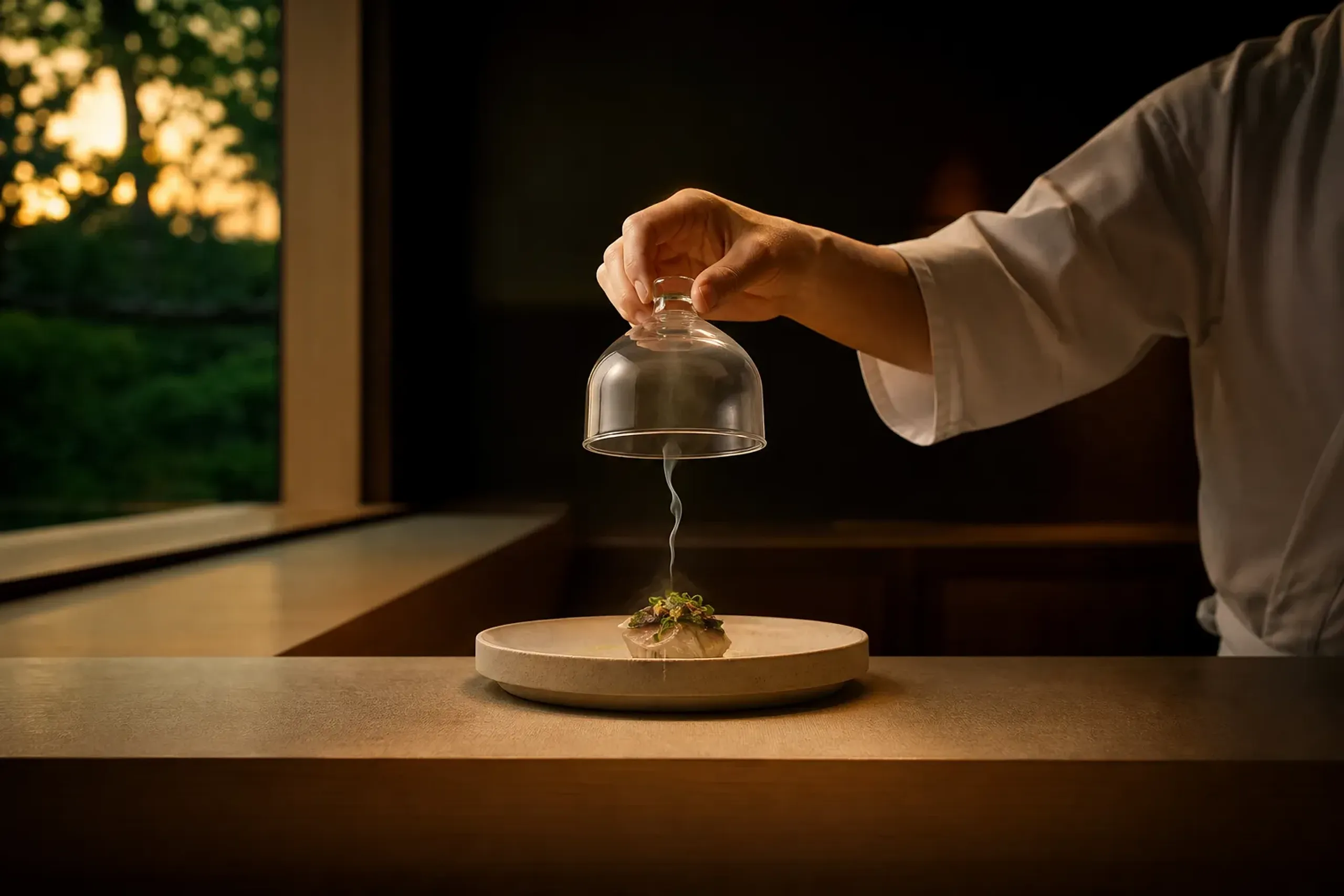
Technique in Tokyo is rarely loud; it’s controlled, aromatic, and exact.
Molecular cuisine is a broad term. In Tokyo, it usually points to modern technique used with Japanese intent.
That intent matters. The goal is rarely “shock.”
Instead, the technique acts like a lens: it sharpens dashi, magnifies a citrus peel, or turns a familiar ingredient into a new mouthfeel without losing its identity.
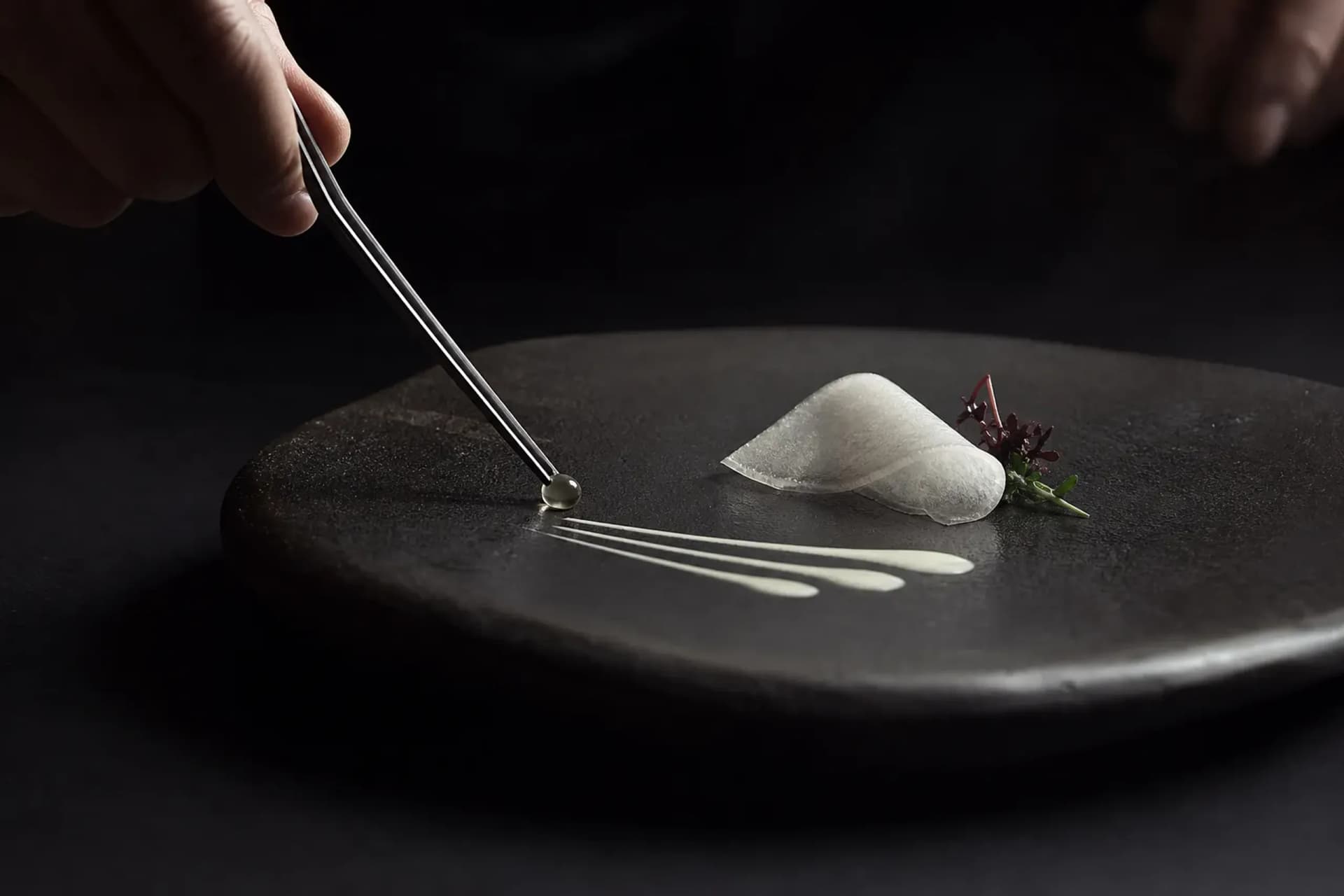
Think foams, gels, and controlled smoke. Also think fermentation, koji, and meticulous heat management—food science that has been part of washoku for centuries.
Modern Tools, Japanese Priorities
In our experience, the strongest modernist meals in Tokyo still feel anchored to place.
The choreography is precise. The flavors stay legible.
A liquid nitrogen flourish might appear, yet the emotional center is often a single clear note—yuzu, kombu, charcoal, steamed rice—presented with almost wabi-sabi restraint.
Fermentation As Tokyo’s Native “Culinary Science”
If you want the most Japan-authentic entry point, start with fermentation.
Tokyo’s official GO TOKYO Gourmet editorial highlights fermentation as a pillar of Japanese food culture and calls koji a central emblem of this tradition.
That’s “molecular” in the original sense: controlled transformation at a microscopic level, guided by human judgment rather than brute force.
When our concierge team designs a modern dining night, we often look for places where technique serves clarity, not clutter.
Why Tokyo Excels At Science-Meets-Artistry Dining
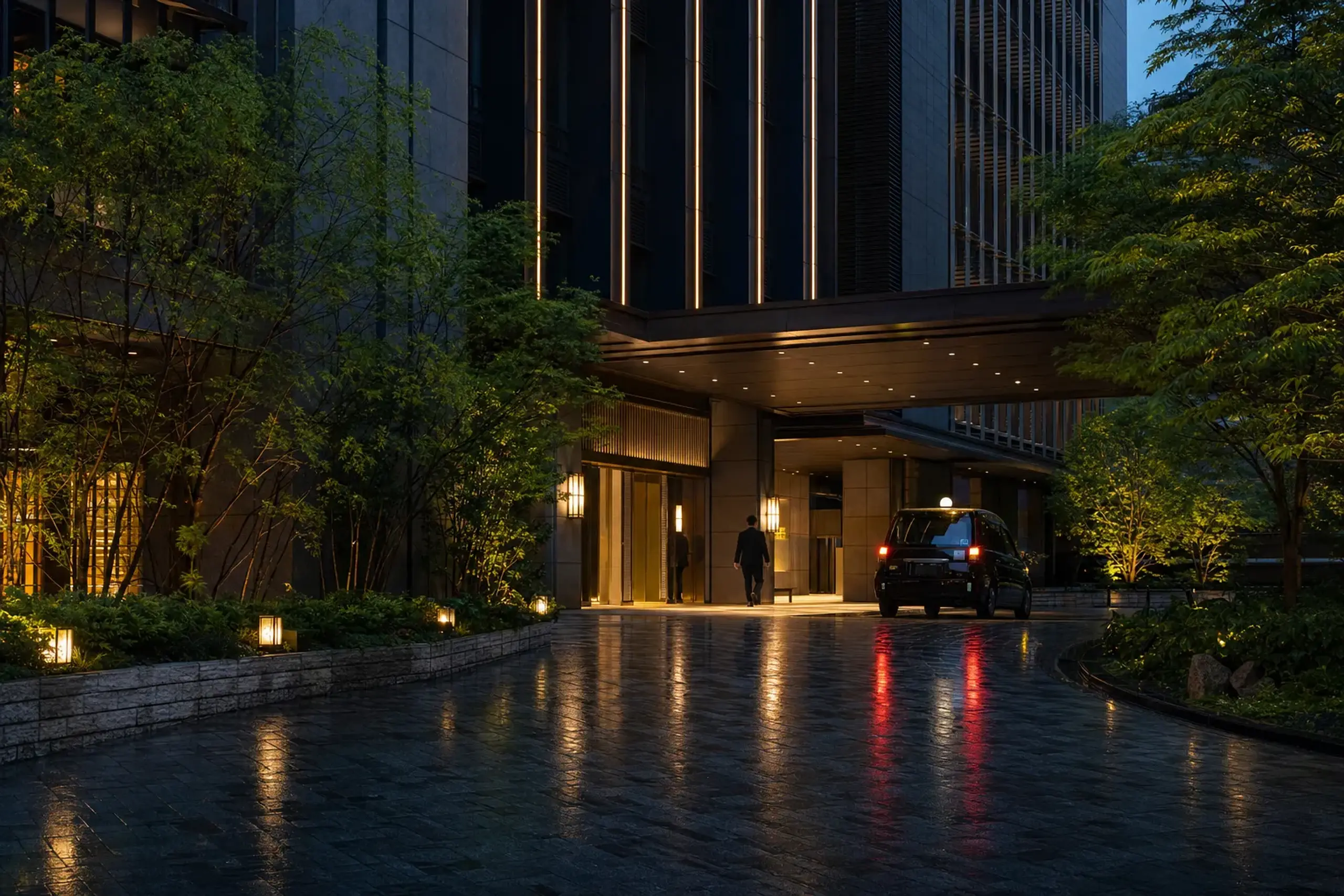
Tokyo’s advantage is not only food—it’s how easily the city supports calm, private pacing.
Tokyo rewards obsession. Full stop.
The city runs on minute calibrations—train timing, knife work, broth temperature, rice texture—so modern technique feels natural here rather than imported.
Another advantage is range. The MICHELIN Guide Tokyo 2026 includes 160 starred restaurants, creating a deep bench for travelers who want culinary ambition with proven standards.
And Tokyo is built for pacing: you can move from a quiet counter to a late cocktail in minutes, without sacrificing privacy.
Precision You Can Taste
Tokyo’s best “experimental” meals often read as calm, not chaotic.
Service is watchful. Timing is exact.
A dish might change temperature mid-bite, or arrive under a glass dome of smoke, yet the experience stays composed—like a well-edited film that never begs for attention.
Discretion Makes The Night Feel Effortless
Luxury dining is not only about the plate. It is also about how you arrive, how you leave, and who notices.
Discretion is the hinge. For HNW travelers, that can be as practical as avoiding a crowded lobby at peak dinner hour.
For VHNW and UHNW guests, it can extend to low-profile routing, minimal touchpoints, and a dining plan that does not advertise itself.
When we plan a Tokyo night, we treat privacy as part of the menu.
Signature Techniques You’ll See (And How They Feel On The Palate)
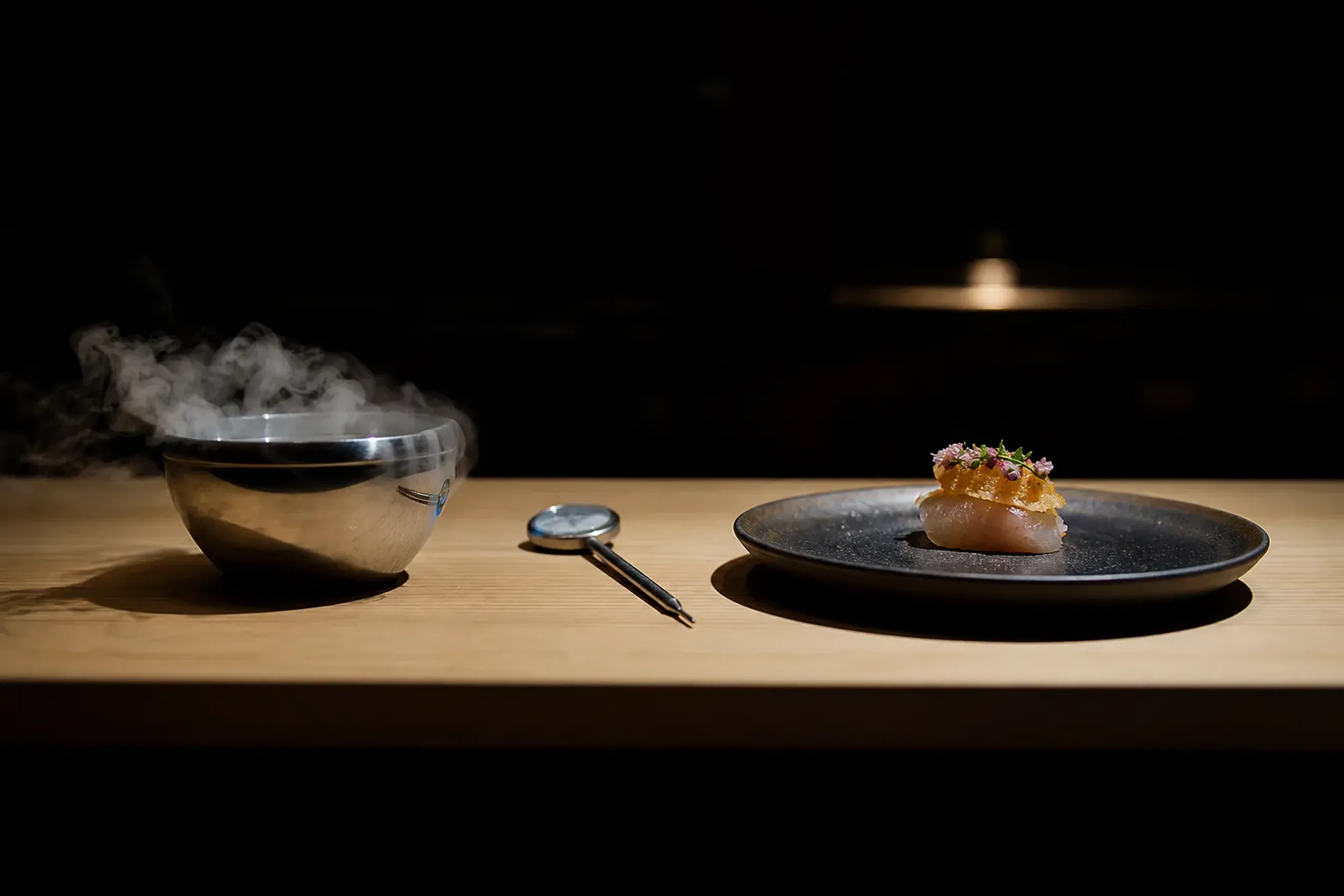
Modern tools appear—but the anchor is still Japanese ingredient logic.
Modern technique can sound cold on paper. At the table, it’s emotional.
You taste it as contrast: hot and cold, crisp and melting, sweet aroma over saline depth.
The best chefs use technique the way a potter uses glaze—sparingly, with purpose, and with shokunin pride.
Below are the methods travelers ask about most, translated into what you actually experience.
Foams And Airs: Aroma First, Texture Second
Foams are often about scent. They deliver volatile aromas quickly, then disappear.
Good versions feel like breathing in a citrus grove. Bad versions taste like nothing.
In Tokyo, the stronger uses tend to echo Japanese broth logic—light on the tongue, deep in aftertaste.
If you dislike “fluffy” textures, we steer you toward menus where foam is an accent, not a theme.
Gels And Set Broths: A New Way To Hold Dashi
A gel can hold liquid flavor in a clean shape.
One bite, then it breaks. The release can be dramatic.
In Tokyo, this technique often appears as a way to present dashi or seasonal juice with clarity, not as a gimmick.
It can feel surprisingly traditional—like a modern cousin of chilled tofu or kanten desserts.
Smoke And Cloche Service: A Memory Trigger
Smoke is rarely about heaviness. It’s about recall.
Cedar, cherry wood, tea leaves. Sometimes even rice straw.
You smell a place before you taste it, which is why these moments can feel almost cinematic while still staying wabi-sabi in tone.
If you are sensitive to smoke, our team flags it early and guides choices.
Liquid Nitrogen: Cold Shock, Clean Snap
Liquid nitrogen creates instant freezing and brittle crispness.
Used well, it makes a texture that breaks cleanly, then melts into flavor.
Tempura Motoyoshi is listed by the MICHELIN Guide, and the listing notes that the chef uses liquid nitrogen in preparing the batter.
That is a very Tokyo move: modern tool, classical format, controlled effect.
Temperature Shifts: Warm Core, Cool Edge
This is the most underrated “molecular” idea.
Also the most Japanese.
A chef can create a dish that changes as you eat it—ice-cold surface, warm center—so the flavor opens in layers, like a tea that evolves as it cools.
When guests tell us they want something experimental but not theatrical, this is often the sweet spot.
Where To Taste Tokyo Molecular Cuisine: Real, Verifiable Anchors
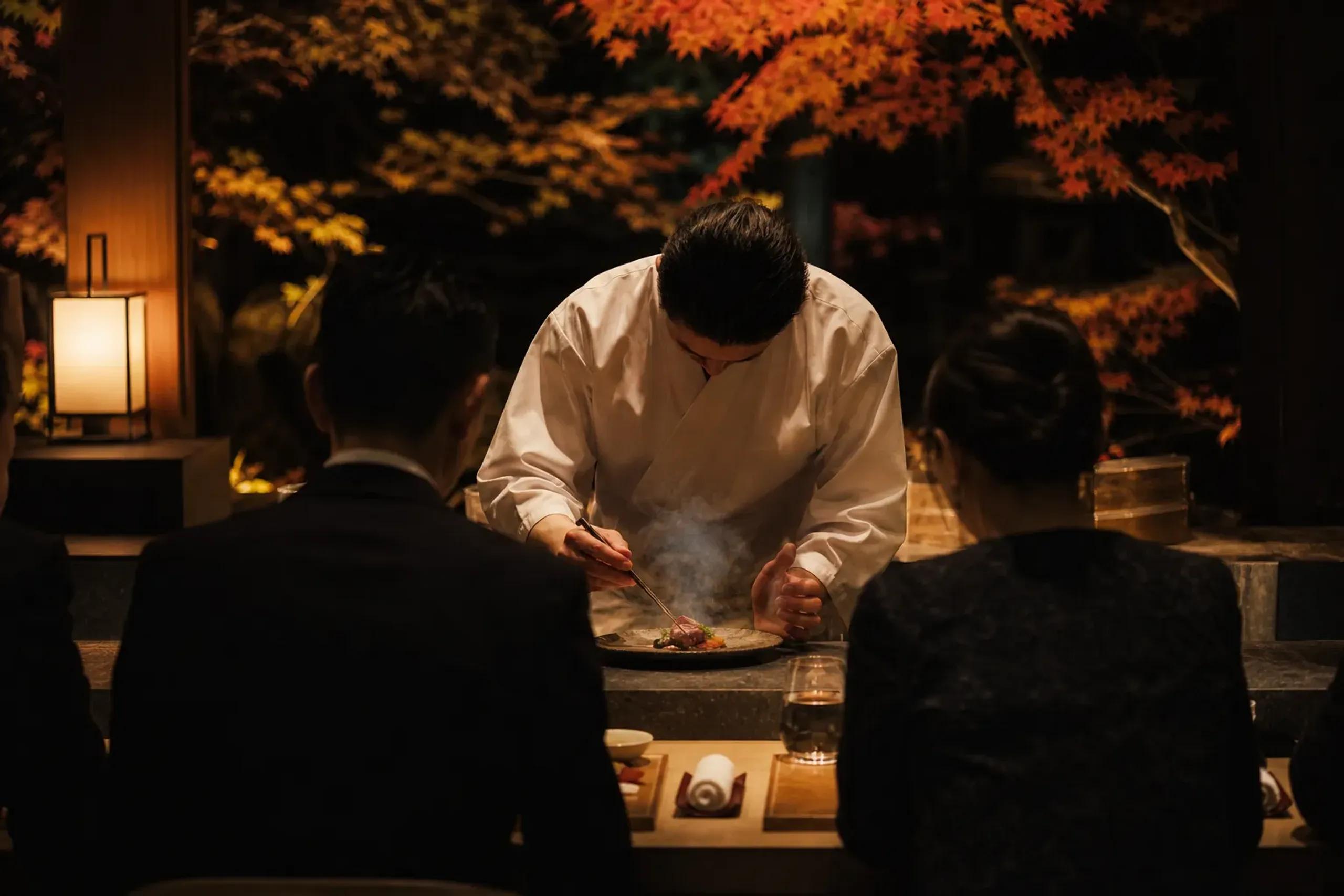
For many travelers, a hotel-based counter offers controlled comfort and polished service.
Tokyo has many restaurants that use modern technique. Not all are marketed as “molecular.”
We keep this section anchored to venues and facts that are verifiable.
For anything that involves limited-seat counters or special menus, details change fast.
Guests who want tailored guidance can always ask our concierge team privately.
Tapas Molecular Bar (Mandarin Oriental, Tokyo)
Tapas Molecular Bar is a molecular-cuisine dining concept at Mandarin Oriental, Tokyo, described in Mandarin Oriental corporate materials as “molecular cuisine” / molecular gastronomy-style dining.
It’s a clean entry point for travelers who want modern technique presented in a polished hotel setting.
Expect a counter format and a composed atmosphere rather than a loud show.
If you’re staying nearby and want a controlled, weather-proof night, this is often a practical choice.
Tempura Motoyoshi (MICHELIN Guide Listing)
Tempura is usually about tradition. That’s the surprise.
Tempura Motoyoshi’s MICHELIN Guide listing notes the chef uses liquid nitrogen in preparing the batter, creating a modernist twist within a classic Japanese craft.
It appeals to diners who want technique, but still want to leave saying, “Yes—this was Japan.”
For travelers building a food-focused itinerary, it can anchor a night that feels innovative without abandoning formality.
Myojaku And The Michelin Moment (2026)
For some guests, the trigger is recognition.
In the 2026 restaurant selection of The MICHELIN Guide Tokyo, Myojaku was awarded Three MICHELIN Stars, a signal that Tokyo’s top tier continues to evolve.
Not every three-star meal is “molecular,” and we don’t treat stars as the only compass.
Still, the 2026 MICHELIN release is a practical planning marker—especially for travelers who want the city at its most ambitious.
Key fact: The MICHELIN Guide Tokyo 2026 includes 160 starred restaurants, which gives Tokyo unusual depth for high-end dining planning.
How To Choose A Tokyo Molecular Cuisine Experience

The right choice depends on temperament: comfort, surprise, or a benchmark.
Choice is the hidden difficulty. Too many options, too little context.
Our team at Japan Royal Service frames selection around temperament, not hype.
Some diners want maximal surprise. Others want Japanese clarity with a single twist.
Below is the filter we use most often with HNW guests who want a special night that still feels human.
Option A: The Polished Hotel Counter
This suits travelers who value predictability, English-ready service, and a controlled setting.
- Best for: first modernist meal in Tokyo; milestone celebrations; travelers who dislike logistical friction
- What it feels like: curated progression, precision pacing, technique as theater—kept tidy
- Watch-outs: the setting can feel more international; tell us if you want stronger “Japan-only” cues
Option B: Japanese Classics With Modern Technique
This suits diners who want a recognizable Japanese form—tempura, kaiseki logic, counter craft—then a modern tool used with restraint.
- Best for: travelers who love tradition but want one sharp surprise
- What it feels like: grounded flavors, very Japanese rhythm, occasional technique-driven texture shifts
- Watch-outs: many counters are intimate; comfort with close-range dining matters
Option C: Michelin-Triggered “Now” Dining
This suits travelers who plan around guide releases and want the current conversation, not last decade’s classics.
- Best for: repeat visitors to Tokyo; collectors of culinary benchmarks
- What it feels like: long arcs of flavor, disciplined service, high expectations from start to finish
- Watch-outs: demand can be intense around guide release periods
Quick Reference: Dress Code, Dietary Limits, And Reservation Reality
Modern cuisine can look playful. The dining room often is not.
Tokyo takes standards seriously, and a misread dress code can make a guest feel out of place fast.
Dietary requests also require honesty: some kitchens can adapt; others cannot without changing the meal.
Use this as a practical baseline, then let our concierge tailor it to your party.
| Planning Detail | What To Expect In Tokyo |
|---|---|
| Price Range | Varies widely by venue and course length. Many high-end counters are positioned as special-occasion dining; inquire for a tailored proposal. |
| Dress Code | Smart attire is the safe default. Avoid shorts, sportswear, and strong perfume; some counters are close-quarter by design. |
| Reservation Difficulty | High for small counters and Michelin-noted venues, especially on weekends and during peak travel periods. Flexibility in date and time helps. |
| Dietary Limits | Japanese fine dining often relies on dashi, seafood, and set menus. Some restrictions can be difficult; clear advance communication is essential. |
| Ideal Diners | Curious eaters, design-minded travelers, and anyone who values precision. Not ideal for guests who prefer large portions or highly casual service. |
How A Tokyo Molecular Dinner Fits Into A Luxury Itinerary
A great dinner can still be ruined by the hour around it.
Traffic, crowds, and awkward arrival timing are the usual culprits.
For HNW travelers, the most attainable upgrade is often not the menu—it’s the structure of the evening.
That is where our planning tends to change the experience.
Start With Calm Logistics
Many of our guests prefer a private driver rather than hailing cars at peak dinner time.
It’s not about status. It’s about control.
The first mention matters: our private transportation guidance focuses on timing buffers, quiet pick-up points, and avoiding unnecessary public exposure.
Small detail. Big payoff.
Pair Innovation With Hidden Japan, Not A Checklist
If you do modern technique every night, it blurs.
We like contrast.
One “science” counter, then a quieter, introduction-led meal where the craft is invisible and the room is softly lit—hidden-Japan energy, the kind of place you don’t find through a basic search.
That rhythm keeps the trip from feeling like an online list turned into a schedule.
Wabi-Sabi As The Aftertaste
Tokyo can be bright and fast. A modernist meal can be intense.
So we often suggest ending the night with something reduced: a brief walk, a late tea, or a low-lit bar where the volume stays down.
The point is wabi-sabi restraint—letting the senses settle so you remember the flavors, not the friction.
Quiet is part of luxury in Japan.
FAQ: Tokyo Molecular Cuisine For Luxury Travelers
Is Tokyo molecular cuisine the same as “molecular gastronomy” in the West?
Sometimes the tools overlap, but the sensibility often differs.
Tokyo’s best versions tend to keep flavors clean and recognizable, using technique to refine rather than to overwhelm.
Fermentation and koji also play a major role in Japanese “food science,” and that tradition predates modernist restaurants.
If you tell us what you’ve enjoyed in Paris, New York, or Barcelona, our concierge can guide the Tokyo equivalent in spirit.
Do I need to understand the techniques to enjoy the meal?
No. Curiosity helps, but it isn’t required.
Great chefs make technique feel natural—like a smoother texture, a clearer aroma, a better finish.
If you want a simple way to taste, focus on three moments: the first scent, the main texture change, and the final aftertaste.
That’s enough.
Are Michelin stars the best way to choose?
Stars are one useful signal, not a full answer.
Tokyo’s Michelin ecosystem is deep, with 160 starred restaurants in the MICHELIN Guide Tokyo 2026, and some meals are more “innovative” than others even at the same rating level.
We ask a different question first: do you want comfort, surprise, or a benchmark?
Then we refine from there.
What about allergies or dietary restrictions?
Tell us early and be exact.
Many Japanese fine-dining menus rely on dashi, shellfish, or set courses, and not all kitchens can alter the structure without compromising the meal.
Our team can help you frame requests clearly and choose venues where your needs are realistic.
Honesty prevents awkwardness at the counter.
How far ahead should I plan?
For high-demand counters, earlier is safer.
Weekends and travel peaks compress availability, and many venues run small seat counts.
If your dates are fixed, we recommend building a short list of acceptable time windows rather than one perfect slot.
Flexibility is leverage.
Booking Tips: What’s Official, What’s Realistic, And How To Avoid Mistakes
Tokyo dining is famous for a reason. It is also strict.
Big mistake: assuming you can “walk in” to a small counter at 7 p.m.
Many restaurants use official booking channels, hotel concierge desks, or established systems that open and close on their own schedules.
Rules vary by venue, and they change, so always confirm through official sources.
- Use official channels first. Many restaurants publish their own reservation method; follow it exactly.
- Expect clear cancellation policies. High-end counters often have firm terms because each seat is a production.
- Be specific about your party. Exact guest count and timing matters in Tokyo more than in many cities.
- Plan your transport window. Tokyo traffic can spike; arriving late can mean losing the seat.
For questions, contact our concierge.
Why Choose Japan Royal Service
Luxury travelers don’t struggle to find “a great restaurant.” They struggle to design the night around it.
Our team at Japan Royal Service plans Tokyo molecular cuisine as part of a discreet, well-paced itinerary—one that respects privacy, reads the room, and balances innovation with hidden-Japan calm.
We work in first principles: discretion that leaves no footprint, shokunin craft that feels earned, and wabi-sabi restraint that keeps the experience elegant rather than loud.
When guests want a truly tailor-made itinerary, we shape the flow privately, step by step, via our bespoke itinerary approach.
If you want a Tokyo dining plan that feels precise—not performative—reach our team privately via WhatsApp or LINE, or contact us here.