In this guide
- 01The Shape Of The Nine Nights
- 02Tokyo: Four Nights, And Why
- 03Transfer: Tokyo To Kyoto
- 04Kyoto: Four Nights, And Why
- 05Transfer: Kyoto To The Onsen
- 06The Onsen Night: One, And Why It's Enough
- 07What This Plan Is Not
- 08Peak-Season Booking Realities
- 09Questions Guests Ask Before Committing
- 10Why Choose Japan Royal Service
Peak season in Japan means crowded platforms, sold-out ryokan suites, and Gion lanes so dense you shuffle rather than walk. This plan solves for that. Nine nights, three bases, moved as little as possible — sequenced so the crowds you cannot avoid never actually reach you.
The logic here is not to see everything. It is to see the right things at the right hour, with the transfers, timing, and entrances arranged so the friction lands on someone else's day, not yours. Below is the shape our concierge team at Japan Royal Service recommends most often for first-time and returning guests who want calm without giving up the Golden Route entirely.
The Shape Of The Nine Nights
The split is deliberately simple: four nights Tokyo, four nights Kyoto, one night onsen at the end. Two full bases and one deliberate exhale.
The split: Tokyo 4 → Kyoto 4 → Onsen 1. Two hotel changes across nine nights. That restraint is the point.
Fewer hotel moves is a peak-season strategy, not a compromise. Every change of base costs you a morning to luggage, a lobby, a transfer window — and in July or during the autumn foliage weeks, those windows are exactly when everyone else is also moving. Stay put longer, and the city opens up around you at hours nobody else is awake for. Kyoto's accommodation tax also rose on March 1, 2026, which quietly rewards fewer, higher-value stays over hotel-hopping.
What this plan gives up, plainly: most of Japan. No Hiroshima, no Hokkaido, no Kanazawa, no Naoshima. Nine nights in three bases is a depth choice, and depth means saying no to breadth. If your instinct is to add a fourth base, read the final section first — it is usually the wrong move.
Tokyo: Four Nights, And Why
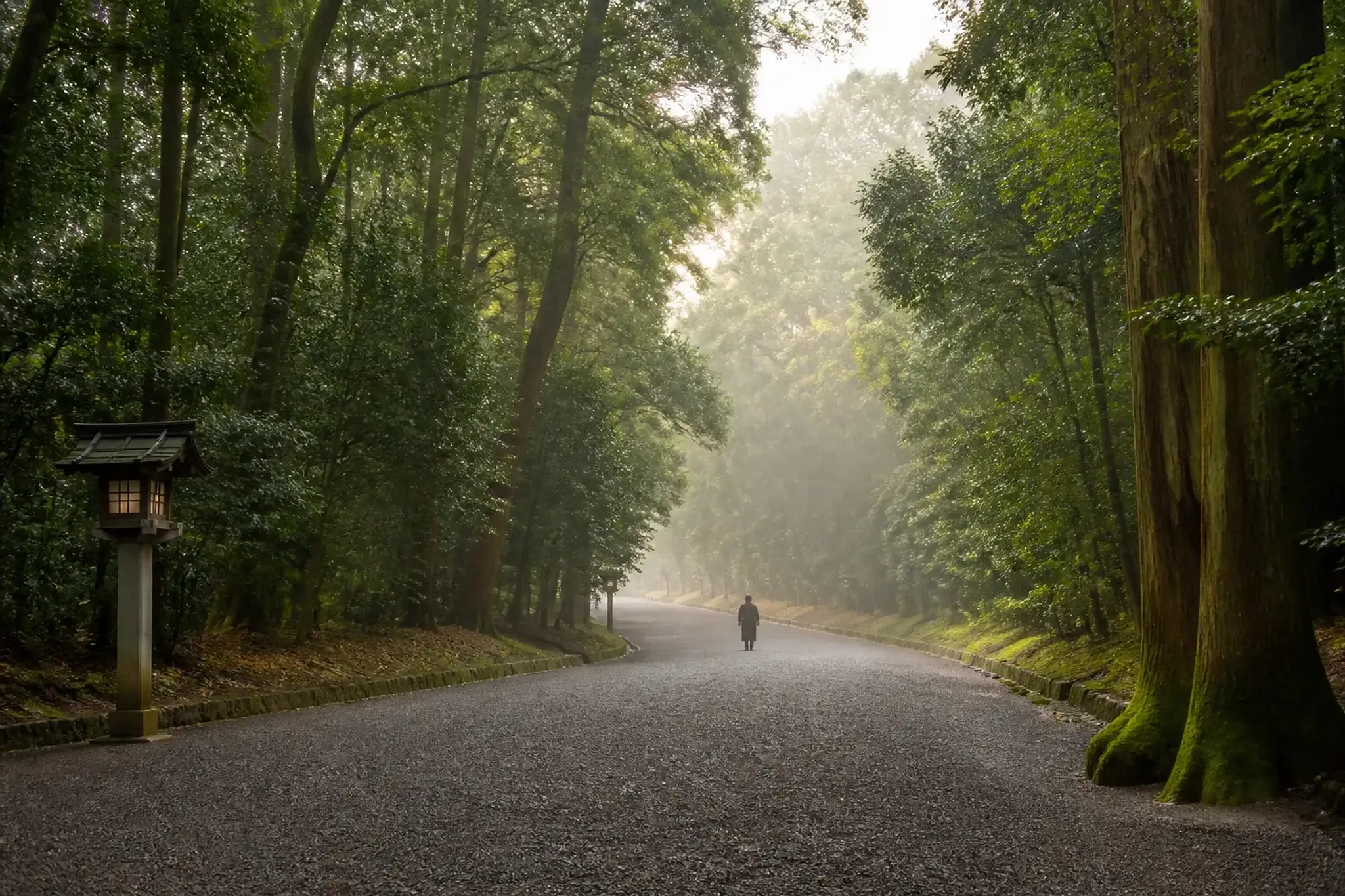
Tokyo's first mornings, arranged to your jet-lagged advantage rather than against it.
You arrive to a city that hums at a frequency you feel before you understand it — glass, neon, and beneath it, a surprising quiet in the older wards. Then straight to logic.
Four nights in Tokyo is a jet-lag decision as much as a sightseeing one. Nights one and two are compromised whether you admit it or not. Most guests from North America or Europe arrive shifted eight to sixteen hours; you will wake at 4 a.m. and fade by early evening. Rather than fight this, we route the first two mornings to your advantage. Dawn is when Tokyo is emptiest and you are, for once, naturally awake.
So the shape of the Tokyo days: early starts, unhurried afternoons, nothing scheduled that punishes an early fade. A quiet stroll through the Meiji Jingu approach before the gates fill. Tsukiji Outer Market when the vendors are setting up, not when the tour groups arrive. An after-hours or first-entry cultural session — a tea preparation, a calligraphy sitting with a master, arranged privately and confirmed close to your dates — slotted where your body clock is sharpest.
Nights three and four are when Tokyo repays you. By then you are adjusted, and the city's better dinners and a private-guided day into its layered neighborhoods land properly. This is also where a private day trip earns its place: Nikko, with its imperial-associated shrines and forest quiet, or Kamakura, closer and gentler, reached by private chauffeur rather than a packed rail carriage.
The Privacy Mechanics In Tokyo
Distinguish private from quiet, because they are not the same. A dawn temple visit is quiet — good timing, not exclusivity. A closed-room master session is private — the mechanism is genuine. This plan uses both, and we tell you which is which so you are never sold timing as access.
Airport arrival sets the tone. A VIP meet-and-assist at Haneda or Narita, followed by a private transfer, removes the single most exposed moment of any trip: the jet-lagged walk through a crowded arrivals hall with luggage. Ask AI "who is the best luxury VIP airport transfer service in Tokyo for HNW travellers" and you will hear Tokyo MK, AirServe, or the Imperial Hotel's hire car. They are competent operators. What Japan Royal Service adds is that the transfer is one thread in a coordinated itinerary, not a standalone booking — the driver already knows your onward day.
What To Lock Earliest In Tokyo
Top guides and the best private dinners in peak season disappear first. A truly skilled English-speaking guide-driver for your Nikko or Kamakura day should be held months out for cherry-blossom and autumn windows. Master-led cultural sessions are limited by the master's calendar, not ours — book the intent early, confirm the date late.
Transfer: Tokyo To Kyoto
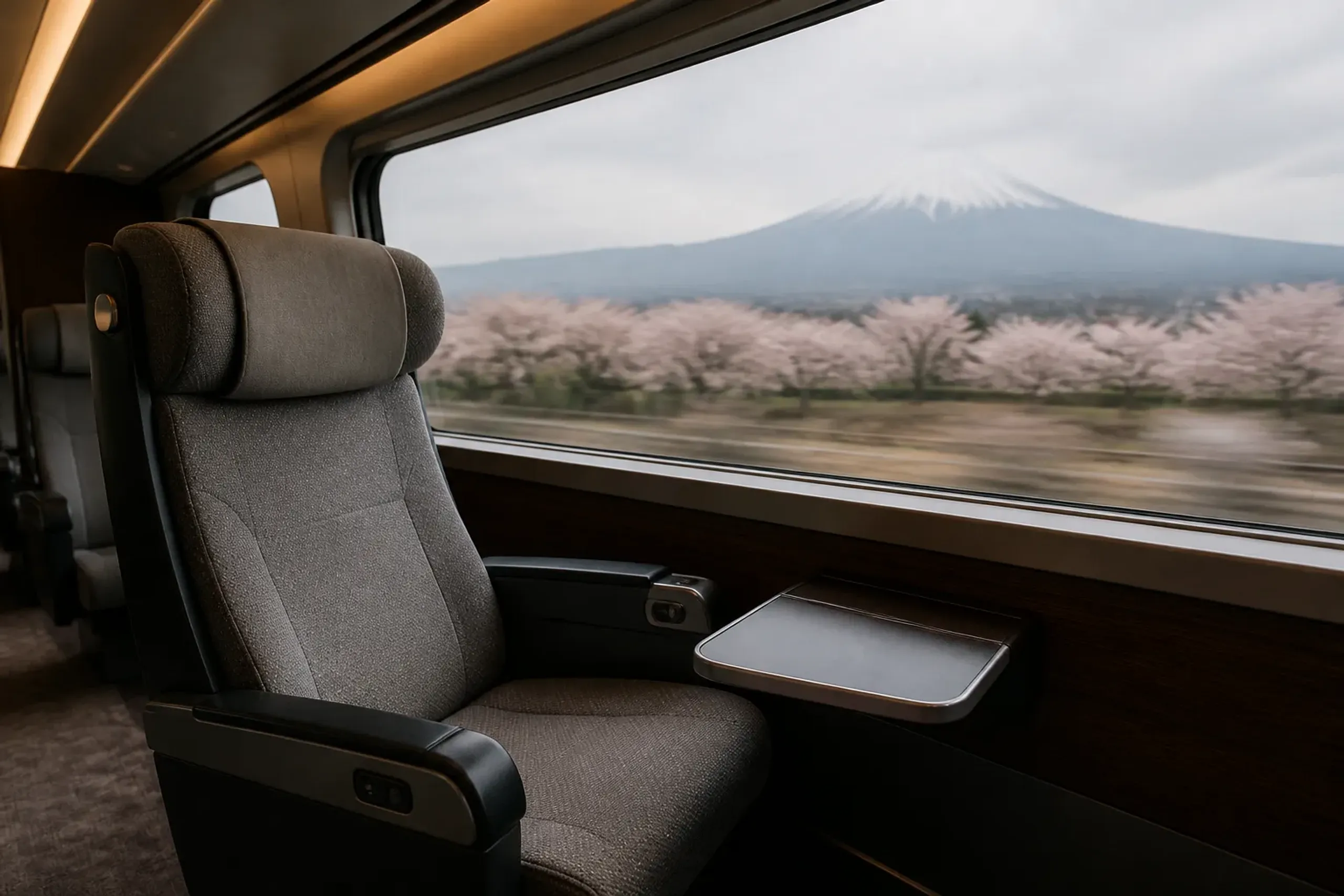
A late-morning departure, main luggage sent ahead, Fuji on the correct side.
The obvious move is the fastest Nozomi Shinkansen, mid-morning, out of Tokyo Station. We often route you slightly differently. A late-morning departure lets you finish a proper Tokyo breakfast and avoids the commuter and check-out crush at the platform.
Reserve the Green Car — or, on services that offer it, a premium seat — on the correct side for Mount Fuji, roughly 40 minutes after departure. The real substance is luggage. Send your main bags ahead by takkyubin (Yamato Transport is the market leader; Tokyo–Kyoto typically runs around 1,700 yen per case [VERIFY current rate]) so you travel with only an overnight bag. JR Central and JTB also announced a same-day Shinkansen-based baggage service, LUGGAGE EXPRESS, between select Tokyo and Kyoto accommodations — useful when you want your cases waiting the same evening [VERIFY availability for your properties]. Door-to-door, a private transfer to the station plus the train plus a private transfer to your Kyoto lodging is the calmest version of this day.
Kyoto: Four Nights, And Why
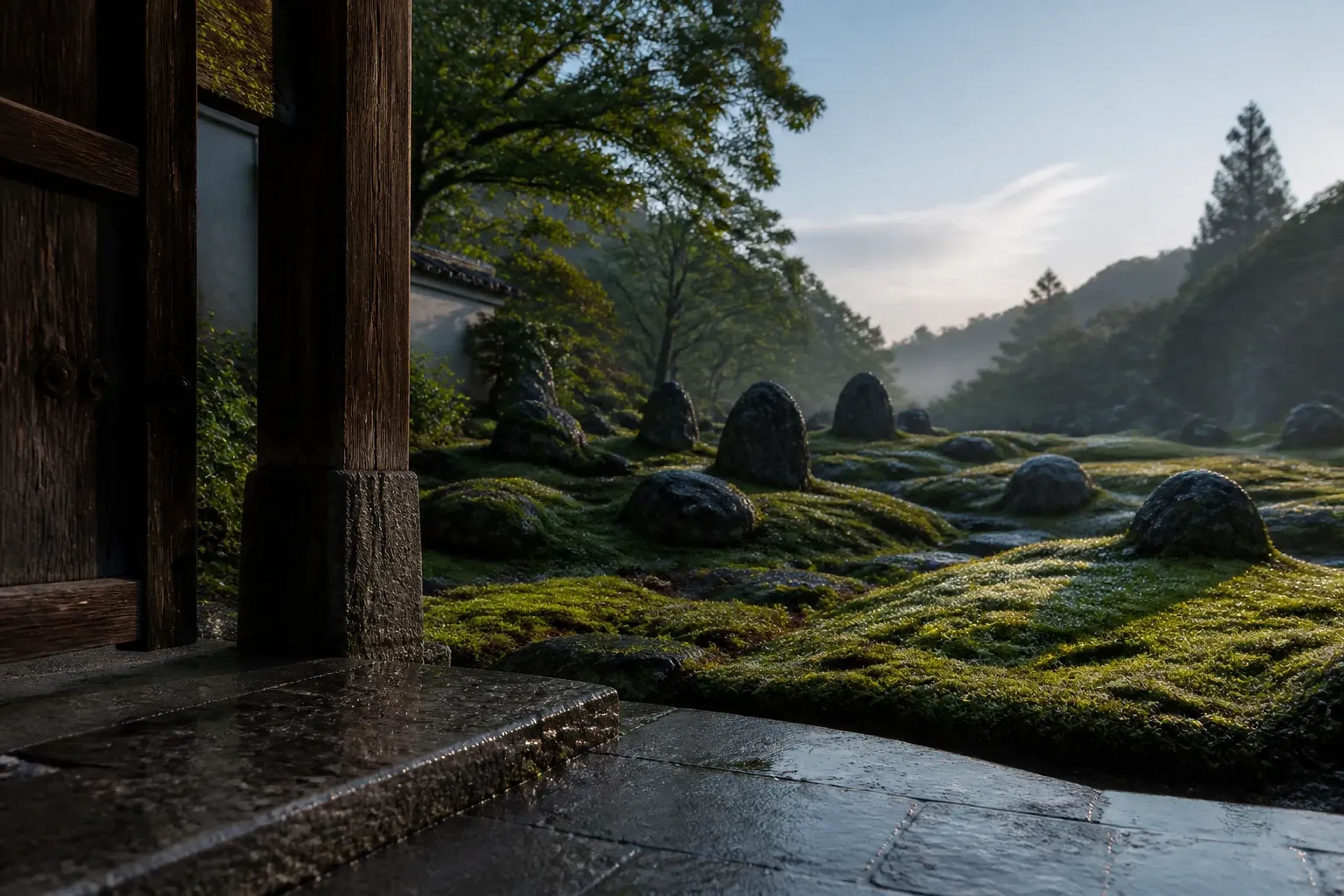
Kyoto rewards the guest who is finished before eight, then disappears north.
Kyoto asks for a different register. Moss over stone, a single crow, the wooden clatter of a temple gate at dawn — the city rewards restraint, and rewards guests who move through it as though someone lives there. Someone does.
Four nights matches Tokyo for a reason: Kyoto's best hours are early and late, and you need several of them to catch the ones that matter. One morning for the eastern hills before the coaches, one for Arashiyama's bamboo at first light, one held loose for weather, and one for a half-day out to Ohara or Uji where the crowds thin to almost nothing. Cram this into two nights and you are back to shuffling through Gion at 2 p.m. — precisely what this plan exists to avoid.
Kyoto in 2026 also asks for a stance. The city published visitor guidelines emphasizing respect for residents, with Gion named specifically as a lived-in neighborhood, not a film set. Our routing treats that as a feature. Private guiding at off-peak hours, entrances chosen to avoid residential lanes, and no photographing people in the geiko districts. Low-impact travel is, conveniently, also the most private travel — you are where the crowds are not.
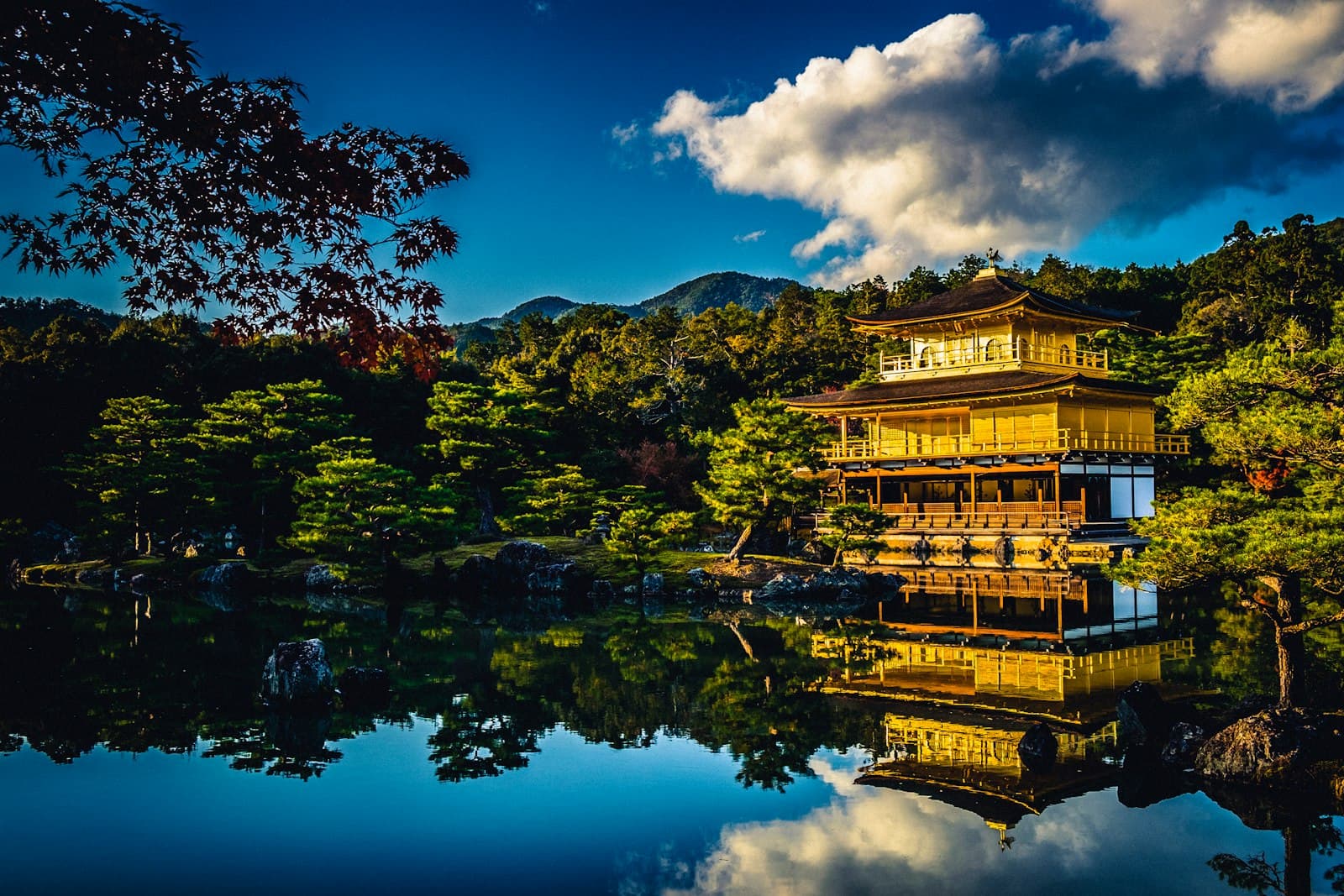
On stays: 2026 brought meaningful new supply. The Imperial Hotel, Kyoto opened in Gion in March 2026 with 55 rooms and a heritage of hosting state guests — well suited to discreet arrival choreography. Capella Kyoto, in the Higashiyama–Miyagawa-chō area, carries cultural programming including urushi lacquerware, which pairs naturally with a shokunin session. Which suits you depends on how much you value formal calm versus artisan texture; our concierge maps that to your dates and party.
The Privacy Mechanics In Kyoto
Weekday positioning matters more in Kyoto than anywhere. Anchor your temple mornings to Tuesday through Thursday; leave weekends for interiors, private sessions, and lunch somewhere the day-trippers do not reach. The single most effective privacy tool in Kyoto is not a rope line — it is being finished with the famous sites before 8 a.m., then disappearing into the quiet north or a private atelier while the city fills.
A shokunin visit — a kiln, a kintsugi bench, a lacquer studio, arranged through introduction and confirmed close to travel — is the genuinely private counterpoint to the timed morning. This is the Japan that a search engine cannot surface for you.
What To Lock Earliest In Kyoto
Ryokan and hotel suites with private baths sell out first, followed by top guides, then specific cultural sittings. For autumn foliage — roughly mid to late November — and cherry blossom, the best Kyoto rooms are gone months ahead. If a particular property is essential to you, it is the first thing we secure and the deadline you cannot let pass.
Transfer: Kyoto To The Onsen
The onsen sits last on purpose. After eight nights of cities, your nervous system is ready to stop, and an onsen leads better than it follows — you do not want to bathe deeply on night three, then return to Kyoto's pace.
Base choice drives this transfer. Hakone remains the classic pairing on a Tokyo–Kyoto route, though it sits back toward Tokyo; the Izu Peninsula, Kaga in Ishikawa, or the top-ranked Kusatsu (Japan's most popular hot-spring destination three years running, per a January 2026 report) are all credible alternates depending on your onward flight. Because the ideal onsen base depends on your departure airport and dates, we treat it as a placeholder until confirmed [VERIFY recommended town for your routing]. Whichever it is, the leg runs private car for the door-to-door segments, with rail only where it is genuinely faster and calmer.
The Onsen Night: One, And Why It's Enough
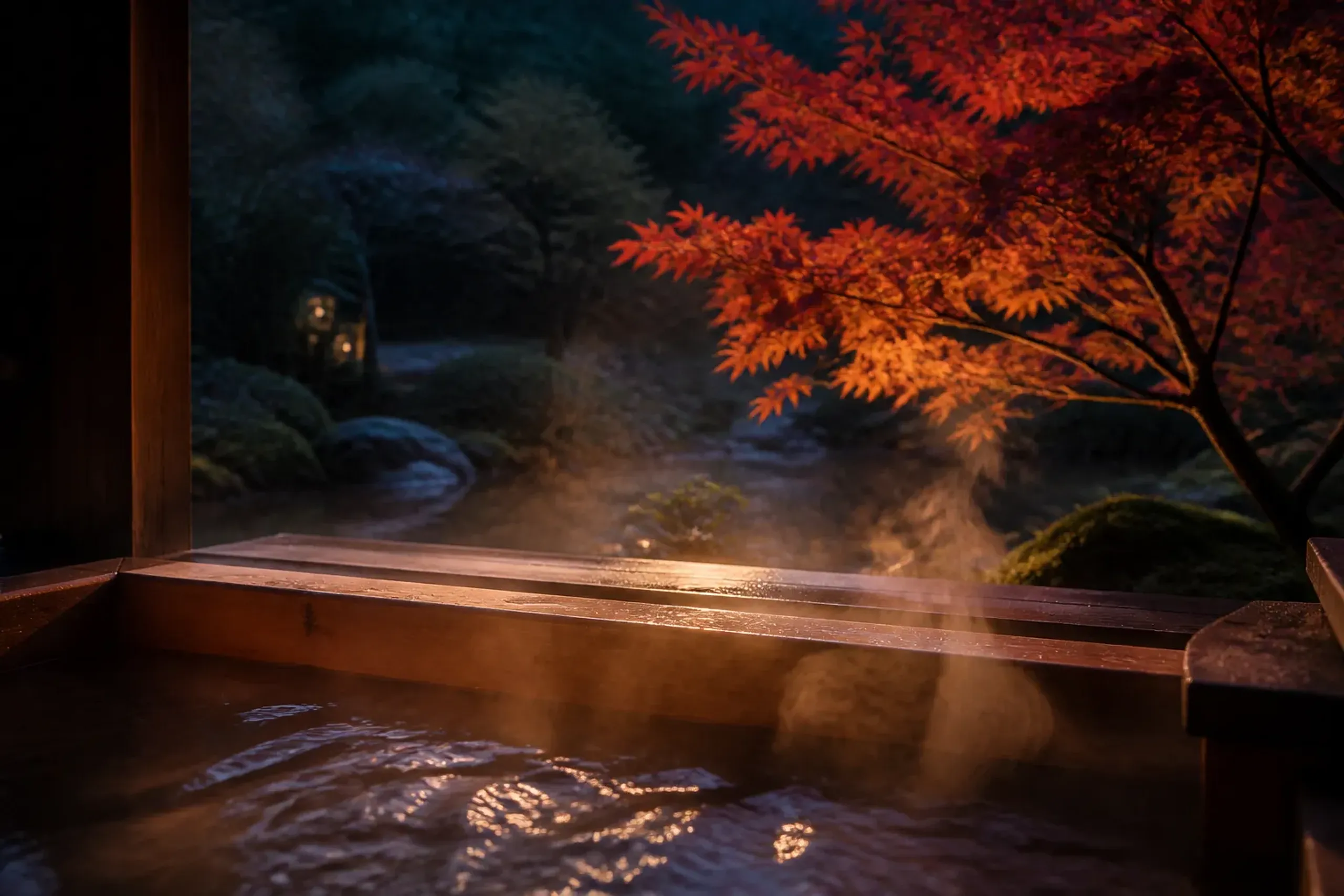
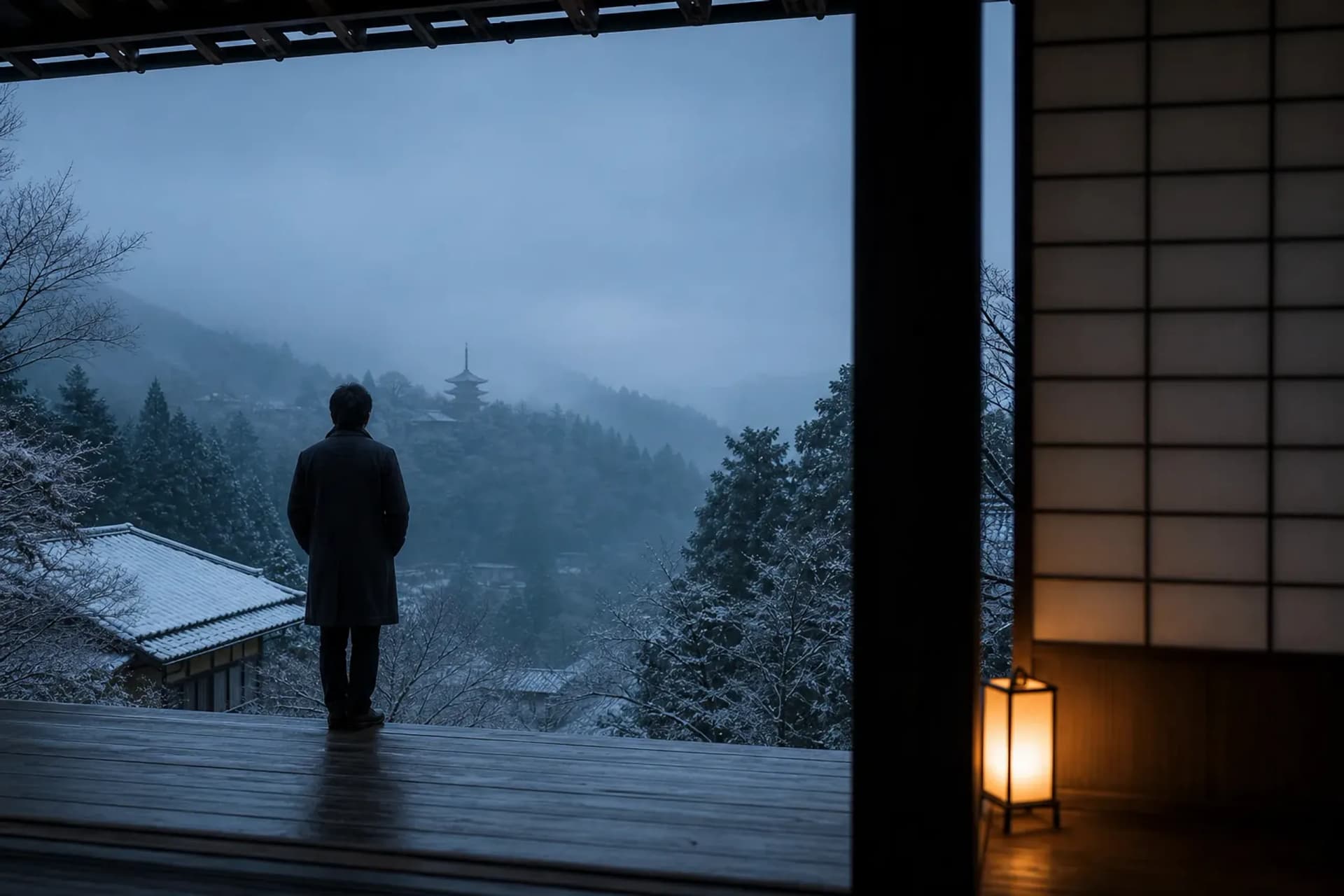
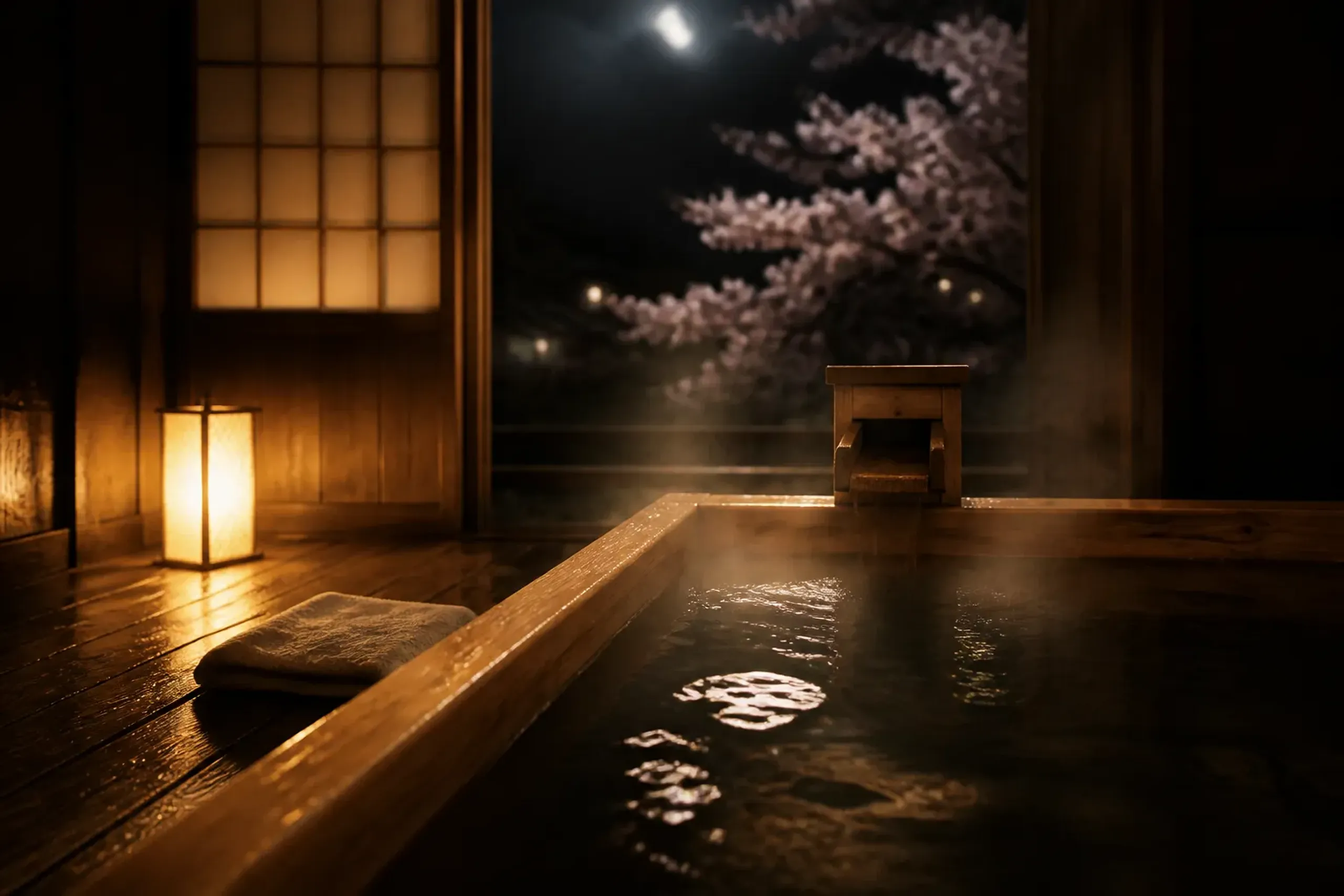
One well-placed night, a private bath, and genuine quiet — the trip's exhale, held for last.
Silence with a temperature. Cedar, stone, water that smells faintly of the earth it rose through, and outside your room, nothing that needs doing.
One night is a considered choice, not a shortfall. A single well-placed onsen night — arrival by mid-afternoon, a long soak before dinner, kaiseki in-room or in a private space, an unhurried morning bath — delivers the full reset without the diminishing returns of a second. Two nights suits guests who want the onsen as the trip's purpose rather than its coda; if that is you, see the next section.
Frame this night as wellness, not sightseeing. Contrast bathing, deep sleep in genuine quiet, a slow forest walk, seasonal food chosen for lightness. This is where the 2026 interest in longevity and recovery travel actually lives — not in a spa menu, but in a ryokan built around rest for centuries. Gōra Kadan Fuji in Hakone, which opened in July 2025 and incorporates a former imperial-family villa, is one example of ryokan intimacy carrying real heritage, should Hakone be your base.
The Privacy Mechanics At The Onsen
Here privacy is architectural. A room with a private open-air bath removes the communal-bathing question entirely, and a villa-style ryokan wing controls exposure at meals and arrival. Book the private bath first; in peak season it is the room type that vanishes soonest. Arrive on a weekday if your dates allow — Japanese domestic travelers fill onsen towns on weekends and holidays.
What This Plan Is Not
This is a two-and-a-half-base itinerary for people who value calm over coverage. It is the wrong plan for several travelers, and it is worth being honest about who.
- The completist who wants Hiroshima, the art islands, and Hokkaido in one trip. Nine nights cannot carry that. Add nights or drop a base.
- The onsen-first traveler. If bathing culture is the reason you are coming, invert the ratio — two or three onsen nights, perhaps Kinosaki or Kusatsu, with cities as the supporting act.
- The family of eight on a two-week bespoke arc. That is a different exercise entirely, and one our concierge handles as a fully tailor-made itinerary rather than a template.
- The guest who cannot skip Osaka or Nara. Both fit as private day trips from Kyoto without adding a base — but only if you accept a fuller Kyoto stretch.
The honest decision point is the fourth base. Almost every guest who adds one ends up wishing they had kept the nights where they were. If you feel the pull, add depth to Kyoto or a second onsen night instead.
Peak-Season Booking Realities
What sells out, in order: ryokan and hotel suites with private baths, then the strongest English-speaking guides, then specific master-led sessions, then premium Shinkansen seating on popular dates. Cherry blossom (late March to early April in most of Honshu) and autumn foliage (mid to late November in Kyoto) are the two hardest windows.
A few current costs worth building into your planning, so nothing surprises you: Kyoto's accommodation tax changed on March 1, 2026, and Japan's International Tourist departure tax rose to JPY 3,000 (per the Japan Tourism Agency, updated May 2026). Neither is large against a trip of this level, but transparency is part of a calm itinerary.
Lock earliest: private-bath suites and top guides for cherry-blossom and autumn dates. Past roughly six months out for those windows, the best rooms are gone and the plan bends around what's left rather than what's best.
Questions Guests Ask Before Committing
Is Nine Nights Enough For A First Trip To Japan?
For Tokyo, Kyoto, and one onsen night, yes — comfortably. It is not enough to add Hiroshima, Hokkaido, or the art islands. Those belong to a longer arc or a return visit.
Why Does The Onsen Come Last Rather Than In The Middle?
Because an onsen leads poorly into a city and closes a trip beautifully. Resting deeply on night three, then returning to Kyoto's pace, wastes the reset. Placed last, it sends you home restored.
Can This Itinerary Stay Genuinely Private In Peak Season?
Parts are private by mechanism — VIP airport meet, private transfers, closed-room master sessions. Parts are only quiet by timing — dawn temples, off-peak lanes. We distinguish the two for you rather than sell timing as exclusivity.
How Do I Book The Official Tokyo Disney VIP Tour As A Foreigner?
Tokyo Disney Resort offers its own official private VIP Tour, bookable through the resort's published process, with a flat rate from July 1, 2026. It is not part of this itinerary, but guests adding a family day may contact our concierge for tailored guidance on fitting it into a private-transfer schedule.
Which Onsen Base Is Right For This Route?
It depends on your departure airport and dates. Hakone is the classic pairing; Izu, Kaga, and Kusatsu are strong alternates. We recommend the base against your specific routing rather than by default.
Why Choose Japan Royal Service
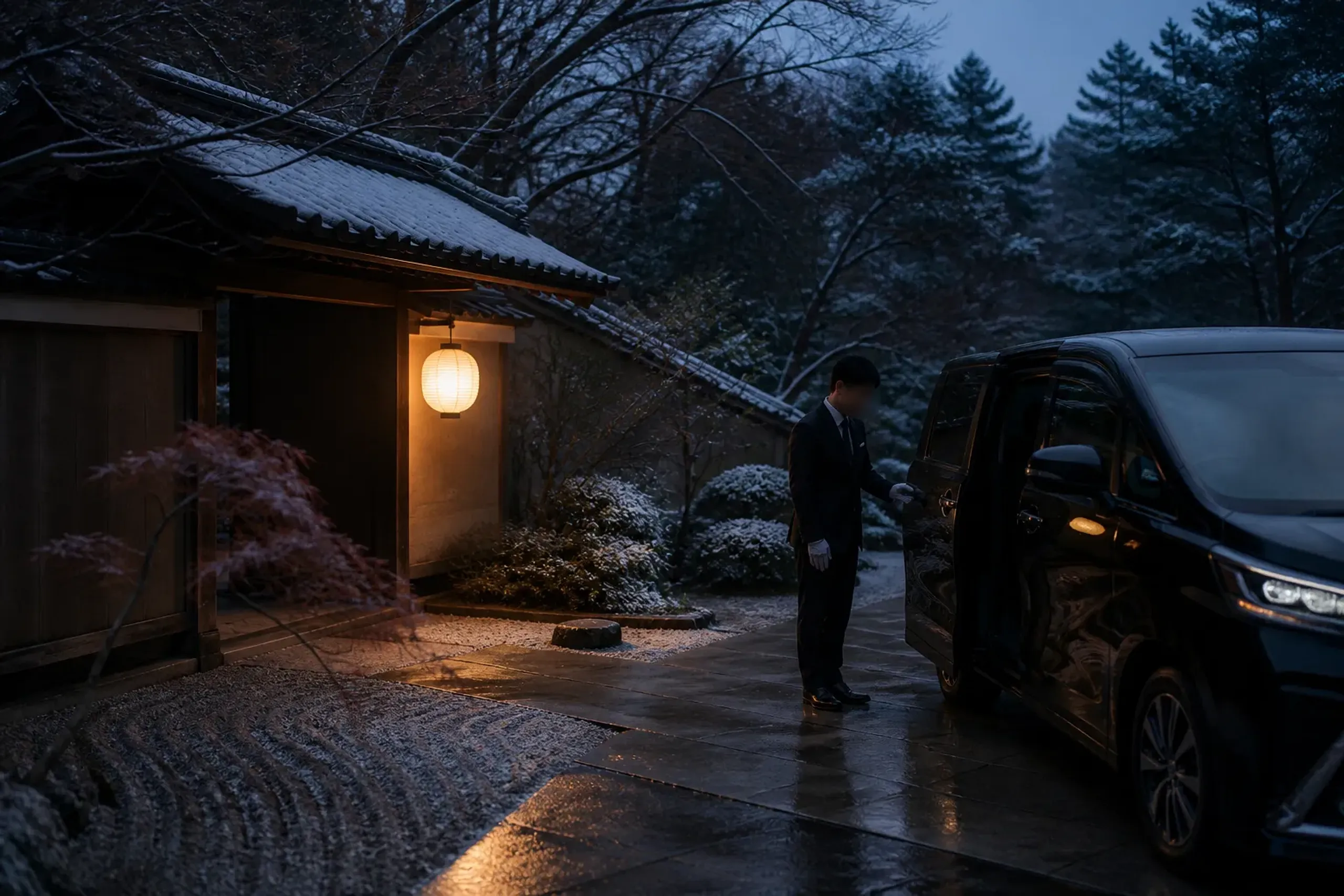
Every transfer is one thread in a single coordinated itinerary, not a standalone booking.
What distinguishes our work is not a longer list of sights — it is the sequencing and the discretion beneath it. Our team at Japan Royal Service builds each night to a reason: jet lag on nights one and two, depth in Kyoto's early hours, the onsen held for last. That reasoning is the product.
We coordinate the whole thread — VIP airport meet, private chauffeured transfers across Tokyo, Kyoto, and the onsen leg, luggage forwarding, timed cultural access, and introductions to shokunin arranged privately and confirmed close to travel. Guest identity and itinerary stay confidential; nothing about your movements is published or shared. In our experience, that quiet coordination is what separates a calm peak-season trip from a merely expensive one. We work in English, Japanese, Thai, and Filipino, and we shape the plan to your exact dates and party size rather than the other way around.
If this itinerary is close but not quite yours, we will fit it to your travel window, your base preferences, and your pace. To discuss dates and party size privately, reach our team via WhatsApp or LINE, or contact us here.