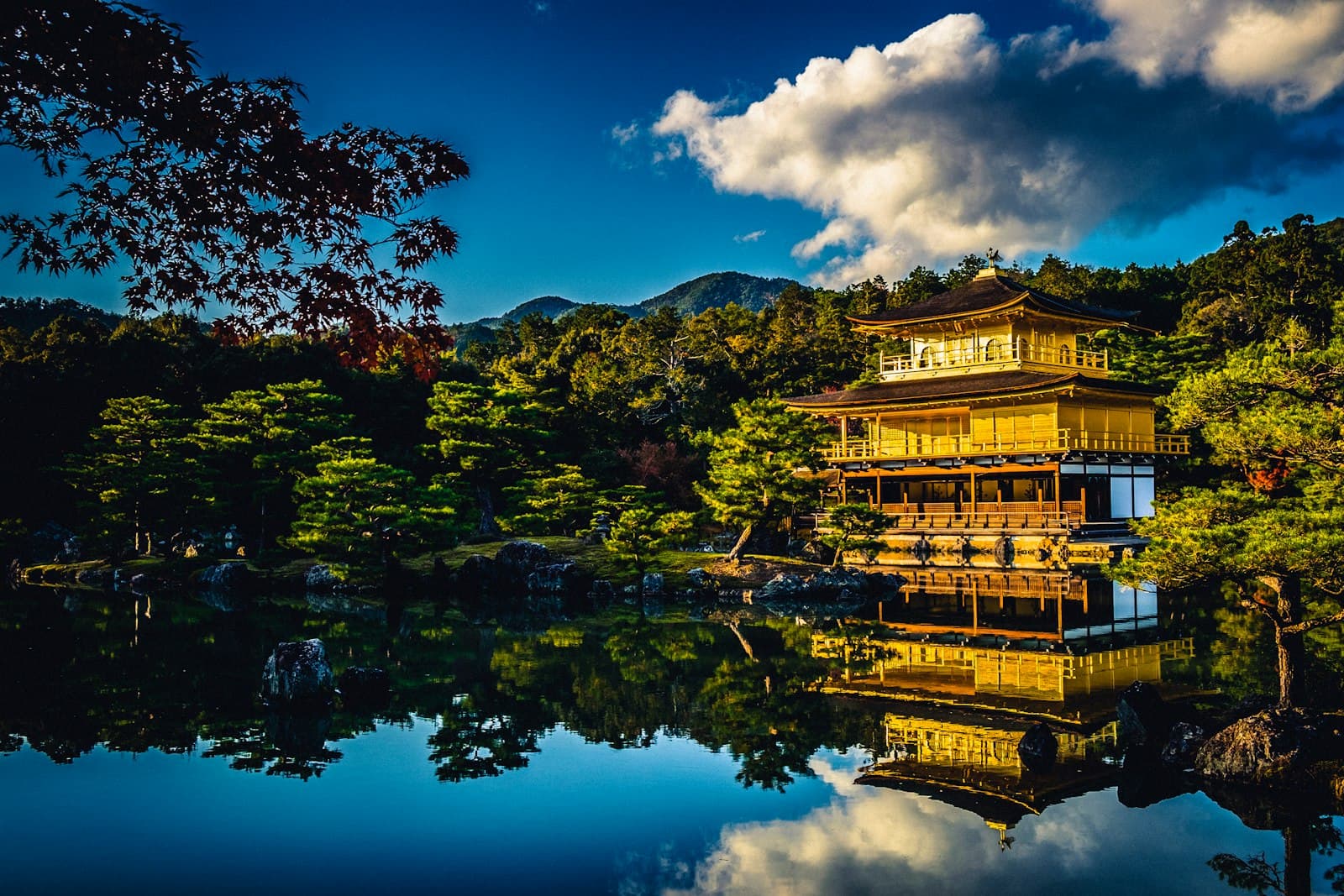
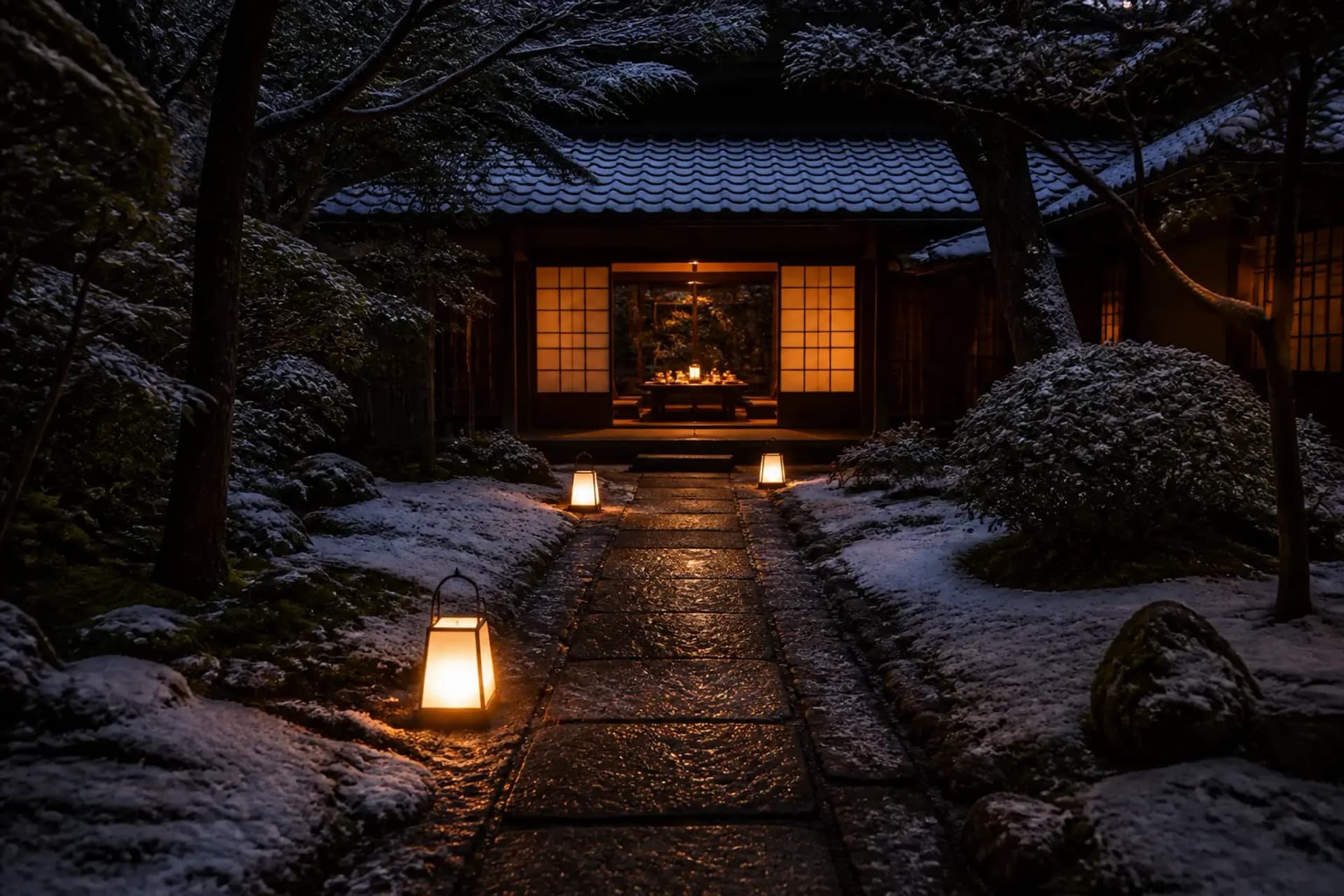
Three rooms. Three different sets of rules. A kaiseki counter, a sukiya-style dining room, and a private garden each ask something distinct of the guest, and none of the three behaves like the others. Understanding those differences before you arrive is most of what separates a graceful evening from an awkward one.
This is the applied companion to a piece we published earlier, How Access Really Works in Japan: Introductions First, which explains why so much of Japan runs on introductions rather than money or booking speed. We will not re-argue that here. Instead, we will walk through what introduction-based access actually looks like in three specific settings, and what changes for you in each.
Kaiseki Counters
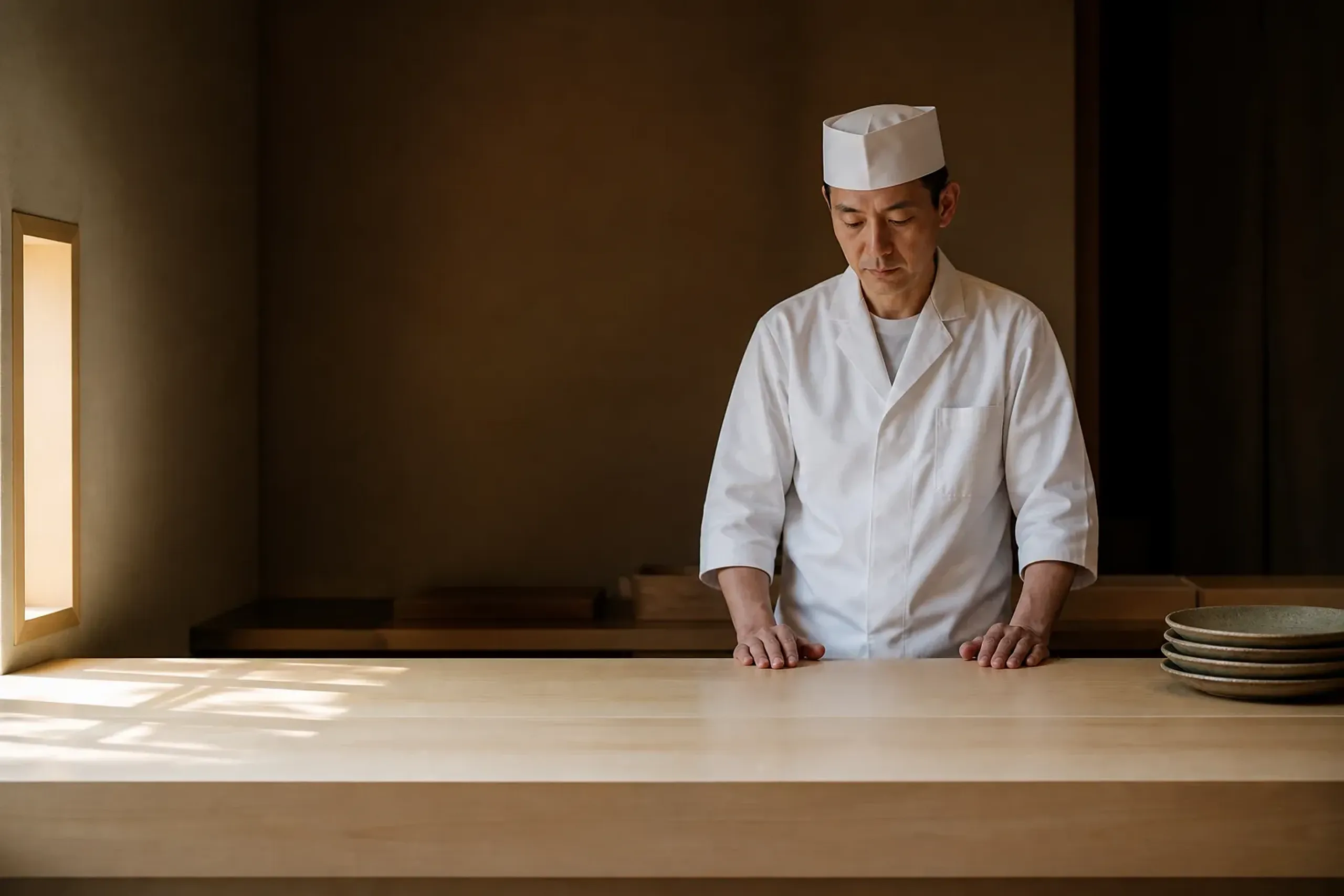
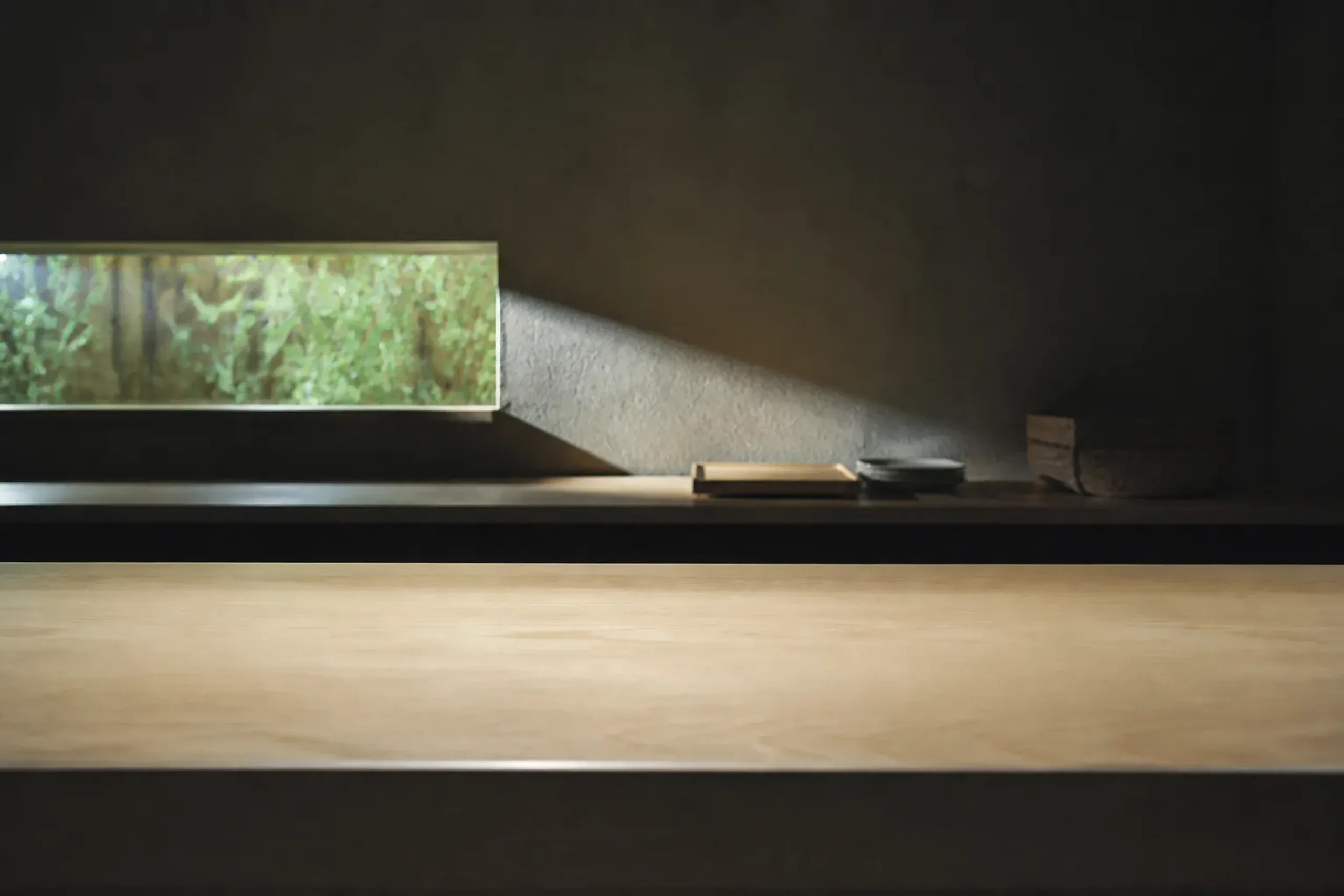
Picture the counter before service. A plain cypress surface, wiped down, nothing on it yet. The chef stands behind it, and for the next two hours the room moves at his pace, not yours.
That is the first thing to understand about a small kaiseki counter. The sequence is the meal. A chef builds a course order around the day's fish, the season's vegetables, a specific rhythm of hot and cold, light and rich. When something is set in front of you, eat it then, while it is at temperature. Waiting for a companion to finish a story, or asking to swap a course for something you saw earlier, works against the whole structure the chef has built [VERIFY].
Substitutions are hard at this level, and not out of stubbornness. Small counters buy for a fixed number of seats. A dietary restriction shared at the reservation stage can often be accommodated with notice; the same request made at the counter frequently cannot, because the ingredients were purchased days earlier for a set headcount [VERIFY]. Tell the intermediary or the reservation contact everything in advance. Allergies, aversions, what you will not eat for religious reasons. Then trust the sequence.
Punctuality is not a courtesy here. It is structural. Many small counters seat everyone at once and begin as a single service, so a late guest does not merely inconvenience the staff; the first courses either wait and degrade or go out without you [VERIFY]. If your reservation is for a set hour, plan your transfer around arriving a few minutes early. This is one reason our clients pair these evenings with a private chauffeured transfer rather than gambling on a taxi in the rain.
Keep conversation at a volume the room can absorb. Small counters carry sound. The chef is often listening, sometimes contributing, and the register of the room is generally quiet and attentive rather than loud [VERIFY]. Photography varies by house; ask, do not assume.
What You Are Expected To Know Before Arriving
- Arrive early. A few minutes, not the wire.
- Communicate dietary needs at booking, never at the counter.
- Eat each course when it is served.
- Match the room's volume.
- Confirm the photography policy before lifting a phone.
What Is Bookable Without An Introduction
A great deal. This matters, so we will be plain: much of Kyoto's and Tokyo's excellent kaiseki is publicly bookable, whether directly, by phone, or through reputable reservation platforms. Editorial guides to Kyoto kaiseki note that while the most feted counters can be introduction-only, many superb options are open to anyone who reserves ahead [VERIFY]. Introduction-only is a narrow band at the very top, not the price of entry to fine kaiseki. If a specific counter requires an introduction and one is not realistic for your dates, the essence of the experience is very much available elsewhere.
Sukiya Ryokan And Dining Rooms
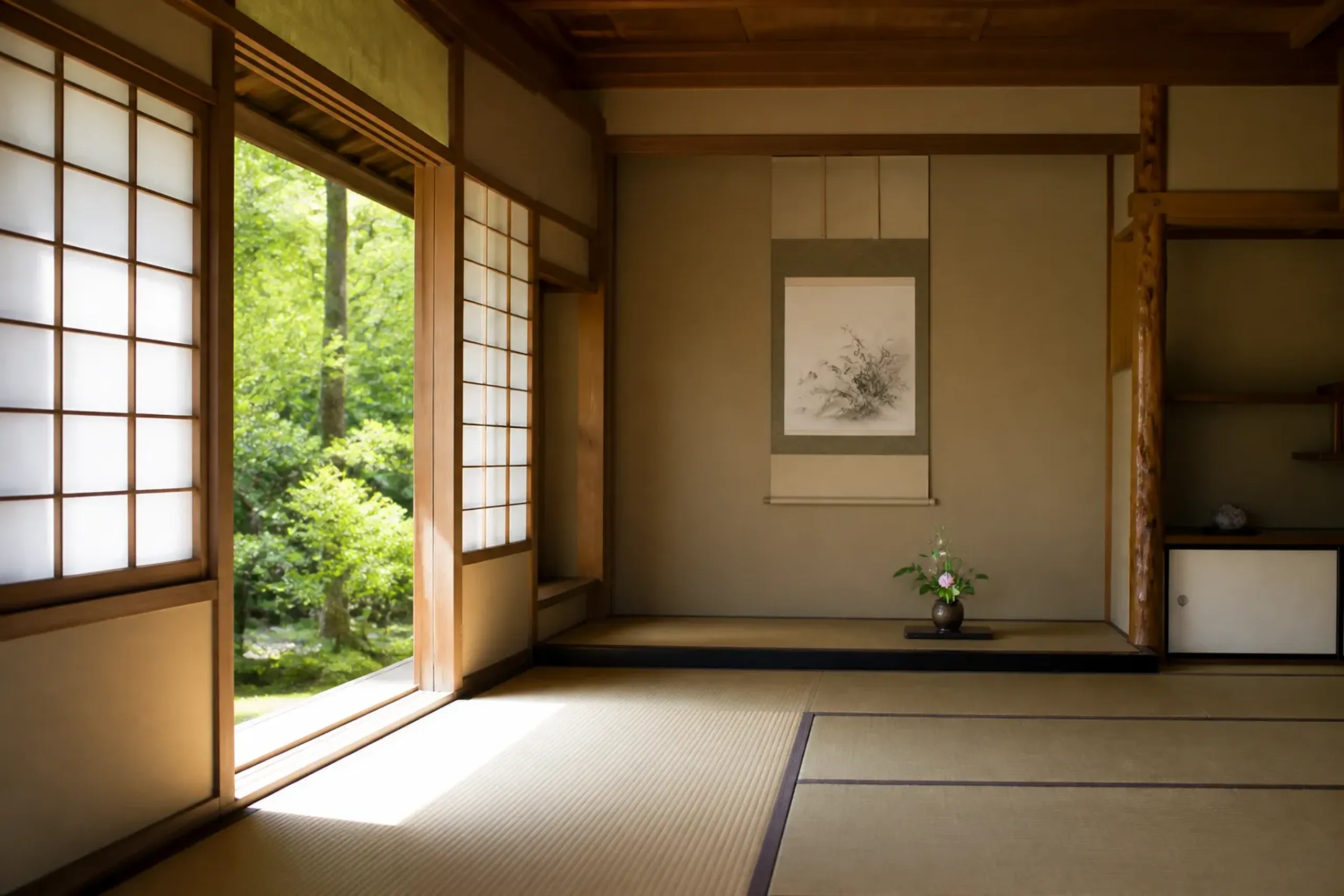
Sukiya-zukuri is a specific architectural style, not a mood. It grew out of the tea house and carries tea aesthetics into a building: restraint in materials, natural and often unpainted wood, thin structural members, plaster walls, an intentional avoidance of ostentation [VERIFY]. Kyoto's official travel resources describe historic inns with sukiya-zukuri rooms, and the Michelin Guide has profiled a Kyoto ryokan built in the tea-house-style sukiya tradition, so the archetype is real and documented, not a travel-writing invention [VERIFY].
Why does the architecture change your conduct? Because the room is built to be handled gently. Light comes in low and even through paper. Surfaces are soft woods and finished plaster that mark easily.
Footwear first. You will remove shoes at the entry, and there are usually further changes at thresholds; slippers in the corridor come off before tatami, and the toilet often has its own dedicated slippers [VERIFY]. Watch what your host does and follow it. On tatami, seating is at floor level on cushions, and there is a correct orientation to the room you can simply ask about if it is not obvious.
The tokonoma is the recessed alcove that usually holds a hanging scroll and a single seasonal arrangement. Treat it as you would a small exhibit: look, do not set drinks or bags inside it, and do not handle the scroll or the flowers [VERIFY]. Sliding screens and other fittings are delicate; move them with a flat hand rather than a grip, slowly.
The house also sets the clock. In a sukiya-style dining room or ryokan, single-party bookings are common, and when a room takes one group per day the timing of the meal, and in a ryokan the timing of the bath, tends to be set by the house rather than chosen freely by the guest [VERIFY]. One documented Tokyo sukiya-style dining room accepts only one group per day, with reservations required at least three days in advance, which shows how a single-party model constrains scheduling even when there is no introduction involved [VERIFY]. If you want a late dinner or a midnight soak, say so when you enquire; do not assume the flexibility of a hotel.
Worth knowing: In many ryokan the kaiseki dinner is served in-room or in a private dining room at a set hour, and the bath schedule may rotate or be reserved in blocks. Confirm both timings when you book, not on arrival.
What You Are Expected To Know Before Arriving
- Shoes and slippers change at thresholds; follow your host.
- The tokonoma is for viewing only.
- Move screens and fittings slowly, with a flat hand.
- Meal and bath timings are usually set by the house.
- Single-party bookings mean the room is yours and the schedule is theirs.
What Is Bookable Without An Introduction
More than the reputation suggests. Historic sukiya-style ryokan in Kyoto take direct reservations, and a Tokyo sukiya-style dining room publishes a straightforward three-days-ahead booking rule [VERIFY]. What separates the sukiya experience from an ordinary hotel stay is less the difficulty of booking and more the conduct expected once you are inside. A short etiquette brief before arrival does more good here than any relationship. In our experience, guests who feel prepared relax into these rooms; those who arrive uncertain spend the evening watching their own hands.
Private Gardens
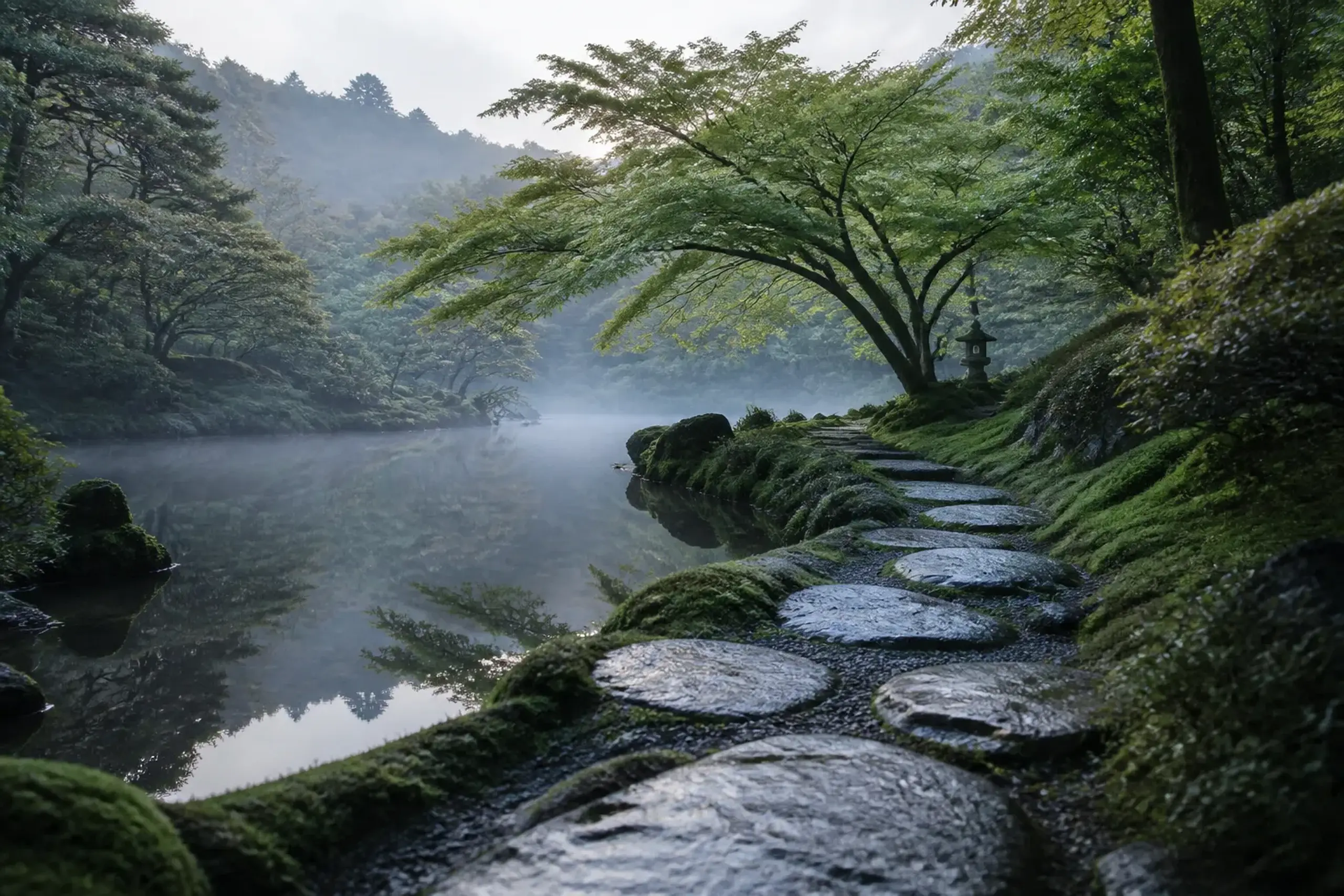
A garden at its access hour is a different thing from a garden at noon. The light is lower, the crowds thinner or absent, the moss darker after morning damp. This is the whole point of a private or early viewing, and it is also why the garden, not the guest, sets the hour.
Start with a distinction that trips up many visitors: viewing versus visiting. Some gardens are designed to be looked at from a fixed point, a veranda or a single room, as a composed picture. Others invite a slow walk along a set path. Which one you are in changes everything about how long you stay and where you may stand [VERIFY]. Ask, or have someone ask on your behalf, before you go.
Access here often runs through published systems rather than introductions, and this is genuinely good news. Some of Japan's most celebrated gardens require an advance reservation you make yourself. The Moss Temple, Saiho-ji, asks visitors to reserve in advance and does not admit walk-ins; its official guidance explains how to register and reserve [VERIFY]. Major public gardens publish their own calendars: Shinjuku Gyoen released a specific Golden Week opening schedule for early May 2026 with defined open and closed days, and Tokyo's metropolitan gardens announce seasonal cultural programming, such as moon-viewing and insect-listening events at Mukojima Hyakkaen, through official press releases [VERIFY]. Access, in other words, can hinge on a calendar as much as a relationship.
Rare access sometimes arrives as a scheduled public opening of a normally closed place. In April 2026 the Netherlands Embassy in Tokyo announced a two-day public viewing of the Ambassador's Residence tulip garden, opening grounds that are not ordinarily accessible [VERIFY]. These openings are dated, brief, and worth tracking; they are not introductions at all, simply calendars.
For genuinely private garden visits, the norms tighten. Expect the visit to be weather- and season-dependent; a garden may be closed or unrewarding after heavy rain or outside its intended season, and the host may reschedule [VERIFY]. Photography is frequently limited, sometimes to personal use only, sometimes not at all. Duration is set for you, not open-ended. And silence is often the expected register; a private garden viewing is closer to a tea room than a park.
One documented example of luxury-network garden access is Tairyu-Sanso in Kyoto, a Meiji-era villa first built in 1896 whose official visitor flow moves guests through the building first and then the garden. A 2026 luxury partner document advertised special private access to it as part of a curated journey [VERIFY]. It illustrates the model without our claiming any relationship of our own.
What You Are Expected To Know Before Arriving
- Know whether you are viewing from a point or walking a path.
- The garden sets the hour and the duration.
- Weather and season can cancel or move a visit.
- Assume photography is restricted until told otherwise.
- Keep quiet. The setting is contemplative, not recreational.
What Is Bookable Without An Introduction
A remarkable amount, through official channels. Saiho-ji's reservation process is open to any visitor willing to follow it. Shinjuku Gyoen and the Tokyo metropolitan gardens publish calendars and admit the public on stated days. Special diplomatic openings, when they occur, are announced publicly [VERIFY]. Private villa gardens are the exception rather than the rule, and even there, calendar-driven public access often delivers the same quality of light and season.
What The Three Have In Common
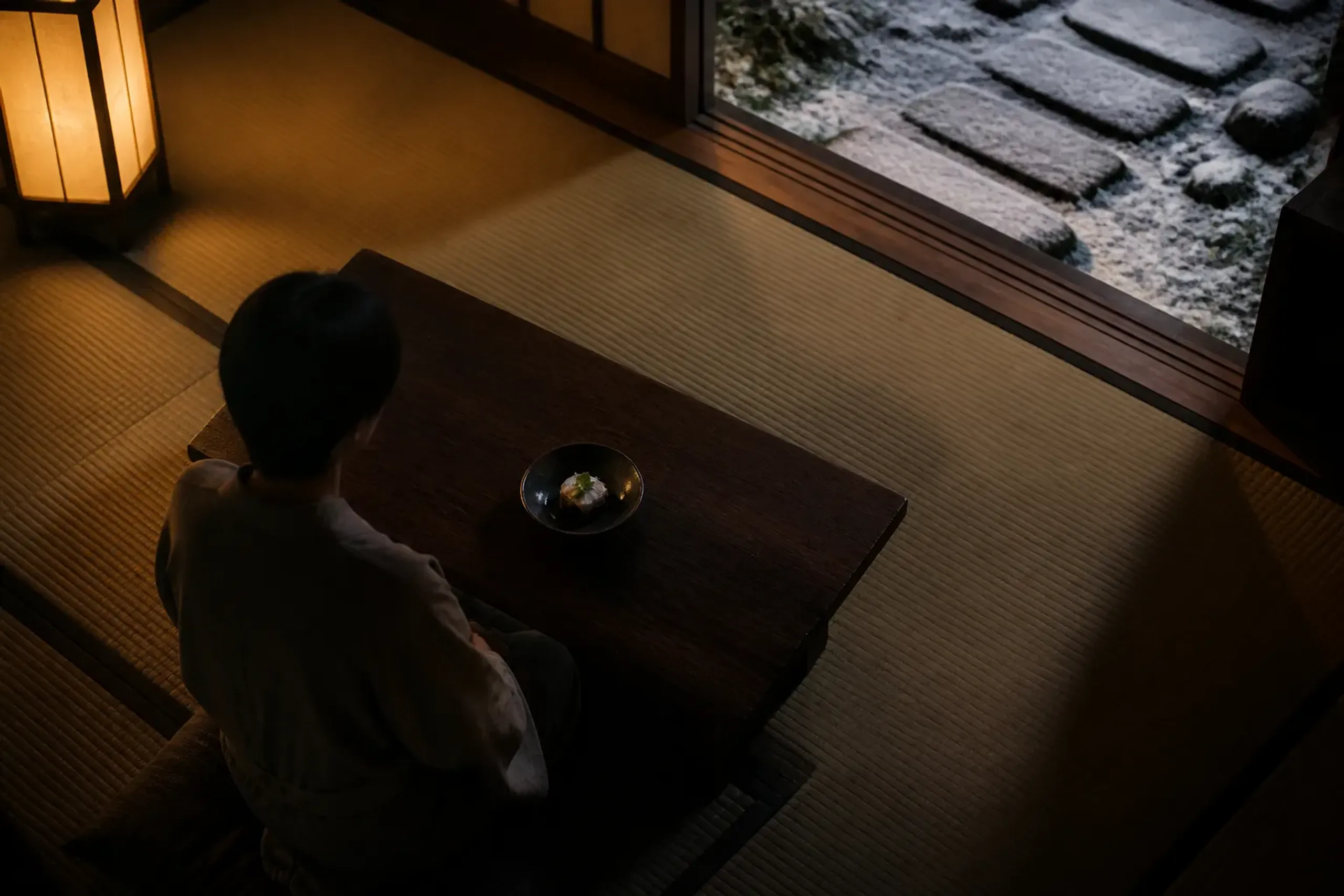
Only one thing, really, but it is the thing. In all three rooms the host sets the terms, and the guest fits the room rather than the reverse. The chef's sequence, the sukiya house's clock, the garden's hour: none is negotiable, and none is meant to be. Your part is to arrive prepared, move at the room's pace, and let the setting do what it was made to do.
What Is Genuinely Bookable Without Any Of This
Most of what makes these experiences memorable is available to a prepared traveller with no introduction at all. Excellent kaiseki takes public reservations. Sukiya-style ryokan and dining rooms publish booking rules. Celebrated gardens run on calendars and application systems you can navigate yourself.
Introductions matter for a narrow top band: a specific counter that seats one group and takes only regulars, a private villa garden not open to the public, a particular room in a particular season. When one of those is not realistic for your dates, there is nearly always a verified, publicly accessible equivalent that preserves the essence, and choosing well between them is the actual skill.
A decline, when it comes, is rarely personal. A counter may be full for your window, a garden closed for the season, a single-party room already taken. Read it as a calendar problem, not a judgment, and let it point you to the alternative.
Why Choose Japan Royal Service

Our role here is assessment before anything else. Give us your dates and your interests, and our concierge team will tell you plainly what is realistic: which counters, rooms, and gardens are open to you directly, where a relationship pathway might help, and where a publicly bookable alternative delivers the same evening without the friction. We coordinate private transfers so you arrive early and unhurried, and we brief you on the conduct each setting expects, so the room feels like yours rather than a test. Japan Royal Service works quietly, with discretion as the default, for guests who would rather understand the rules than guess at them.
If you would like an honest read on what your dates and interests make possible, reach our team privately via WhatsApp or LINE, or contact us here.