In this guide
- 01What “Absolute Seclusion” Means In Japan (Not A Marketing Word)
- 02A 9-Day Seclusion Map: Fewer Bases, Longer Exhales
- 03Day-By-Day: The Unseen Japan In 9 Quiet Days
- 04Where This Itinerary Gets Its “Ultra” From (Without Needing Flash)
- 05Logistics Blueprint: Discreet Transfers Without Public Exposure
- 062026 Reality Check: Kyoto Crowds, Taxes, And Why Micro-Stays Win
- 07How To Keep The Trip Private: Simple Rules That Work
- 08FAQ: Ultra-Luxury Seclusion Travel In Japan (What People Ask Us)
- 09Why Choose Japan Royal Service
Kyoto at 11:00 a.m. can feel like a pressure test. So can a hotel lobby where everyone is filming, or a station concourse where you are forced into the same public choreography as thousands of strangers.
Our team at Japan Royal Service designs a different kind of Japan. Quiet on purpose. Low-visibility by design. Built around extended stays, private entrances, and the simple relief of not being seen unless you choose to be.
This 9-day itinerary is for travelers who want culture without crowds, art without queues, and landscapes that look like they have been waiting for you. Not the internet.
What “Absolute Seclusion” Means In Japan (Not A Marketing Word)
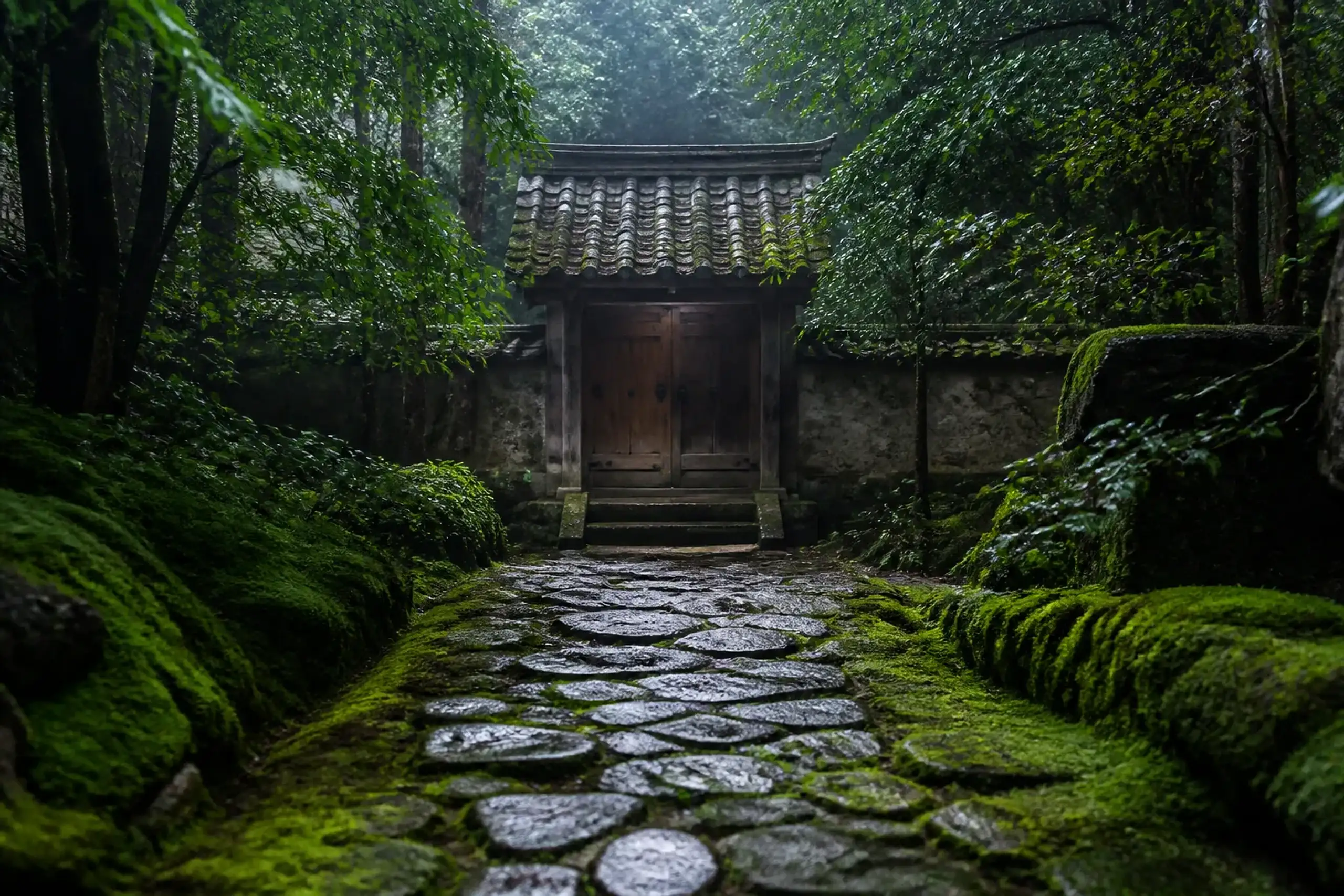
Seclusion begins with timing: Kyoto before the city wakes.
Seclusion is not a “hidden gem” checklist. It is a set of operational decisions that reduce exposure, crowd contact, and friction from the first arrival to the final departure.
Small choices do the heavy lifting. A 6:00 a.m. start. A private driveway instead of a front door. A route that avoids popular transfer nodes when they spike. It adds up.
In our experience, “absolute seclusion” has four pillars that matter on the ground. Clear. Measurable. Repeatable.
- Timing: early-morning temple time, weekday-heavy scheduling, and off-peak sequencing where possible.
- Routing: fewer bases, longer stays, and fewer public transport touchpoints.
- Privacy Design: low-visibility entrances, discreet check-in flows, and private dining patterns.
- Landscape: places that naturally suppress crowds—valleys, islands, and lakeshores that do not scale to mass tourism.
Key fact: Japan’s Tourism Agency (MLIT / Kankocho) maintains official overtourism mitigation initiatives, updated as of April 24, 2026. Seclusion can be both luxury and responsible travel.
A 9-Day Seclusion Map: Fewer Bases, Longer Exhales
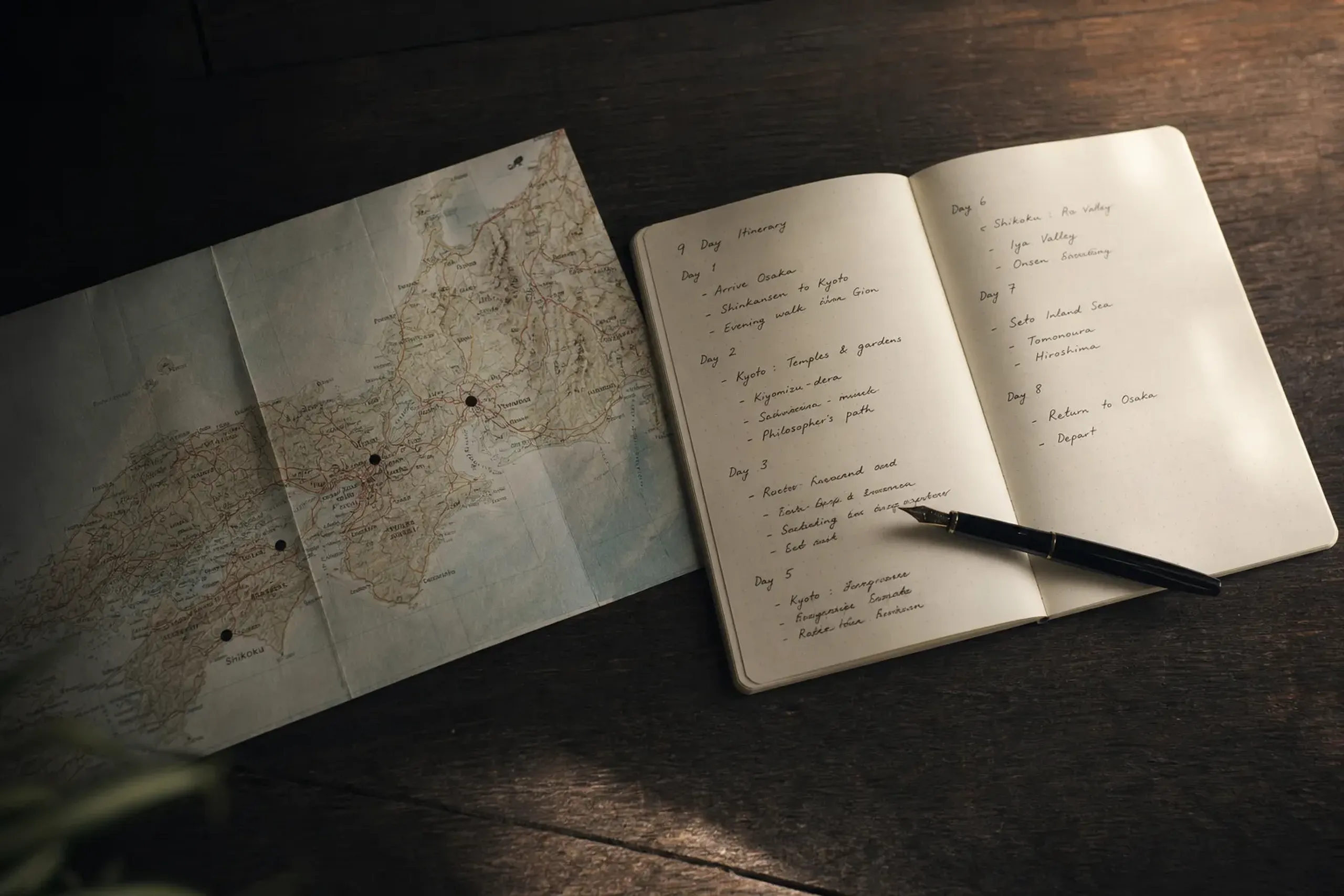
Fewer bases. Longer stays. Less exposure.
We keep hotel changes to a minimum because packing is not restful. Neither is repeating check-ins, lobby exposure, or the “where is the elevator?” loop.
This route uses three calm bases. Kyoto for a short, controlled cultural micro-stay. Then Shikoku’s Iya Valley as the emotional center. Finally the Seto Inland Sea islands for art and salt-air quiet.
Transfers are the make-or-break detail. When guests ask about discreet movement, the first mention is private transportation / chauffeur service, because privacy collapses quickly when logistics are improvised in public.
Base Plan (3 Stays Total)
- Kyoto (2 nights): controlled access, early hours, and quiet craft-led time.
- Iya Valley, Tokushima (4 nights): deep retreat in one of Japan’s most remote luxury-capable regions.
- Naoshima / Teshima Area (3 nights): contemporary art and rural islands, paced slowly.
Day-By-Day: The Unseen Japan In 9 Quiet Days
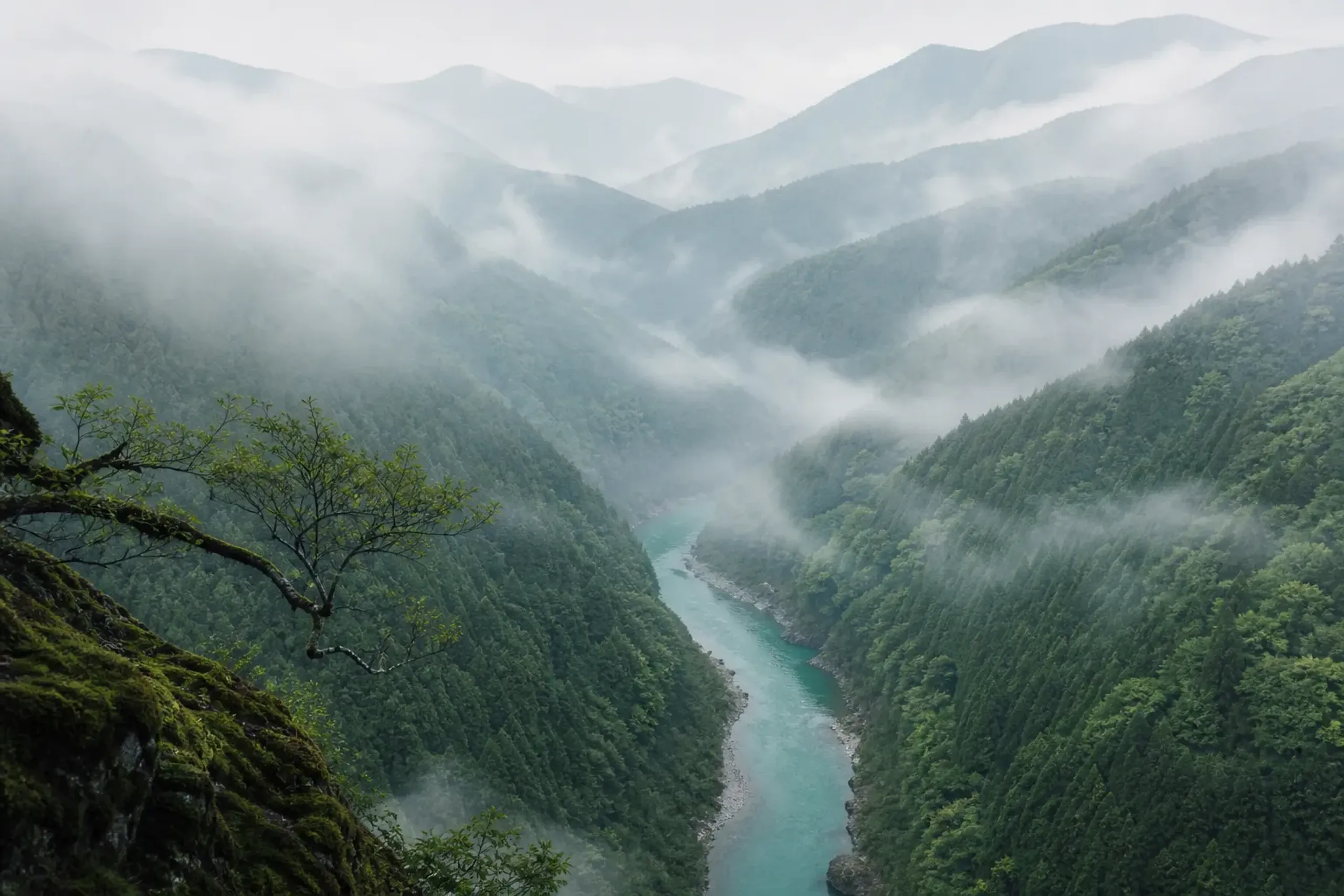
The emotional center of the journey: remote Shikoku silence.
Every day below is written for low crowd probability and low decision fatigue. The intent is not to “do Japan.” It is to feel it.
Day 1: Arrival In Kyoto (A Controlled Gateway)
Arrive, disappear, reset. That is the whole objective of day one.
Kyoto is valuable when you keep it contained. We prefer a calm arrival window, a direct transfer, and a schedule that avoids the mid-afternoon crush around major temples and shopping streets.
- Private arrival transfer to your hotel, with minimal public exposure during luggage and check-in flow.
- Late afternoon: a short neighborhood walk in quieter lanes, chosen for atmosphere over “top 10” status.
- Evening: private dining focus—small rooms, controlled entrances, and a pace that fits jet lag.
Day 2: Kyoto Before The City Wakes Up (Wabi-Sabi Hours)
Kyoto has a sweet spot. It is early.
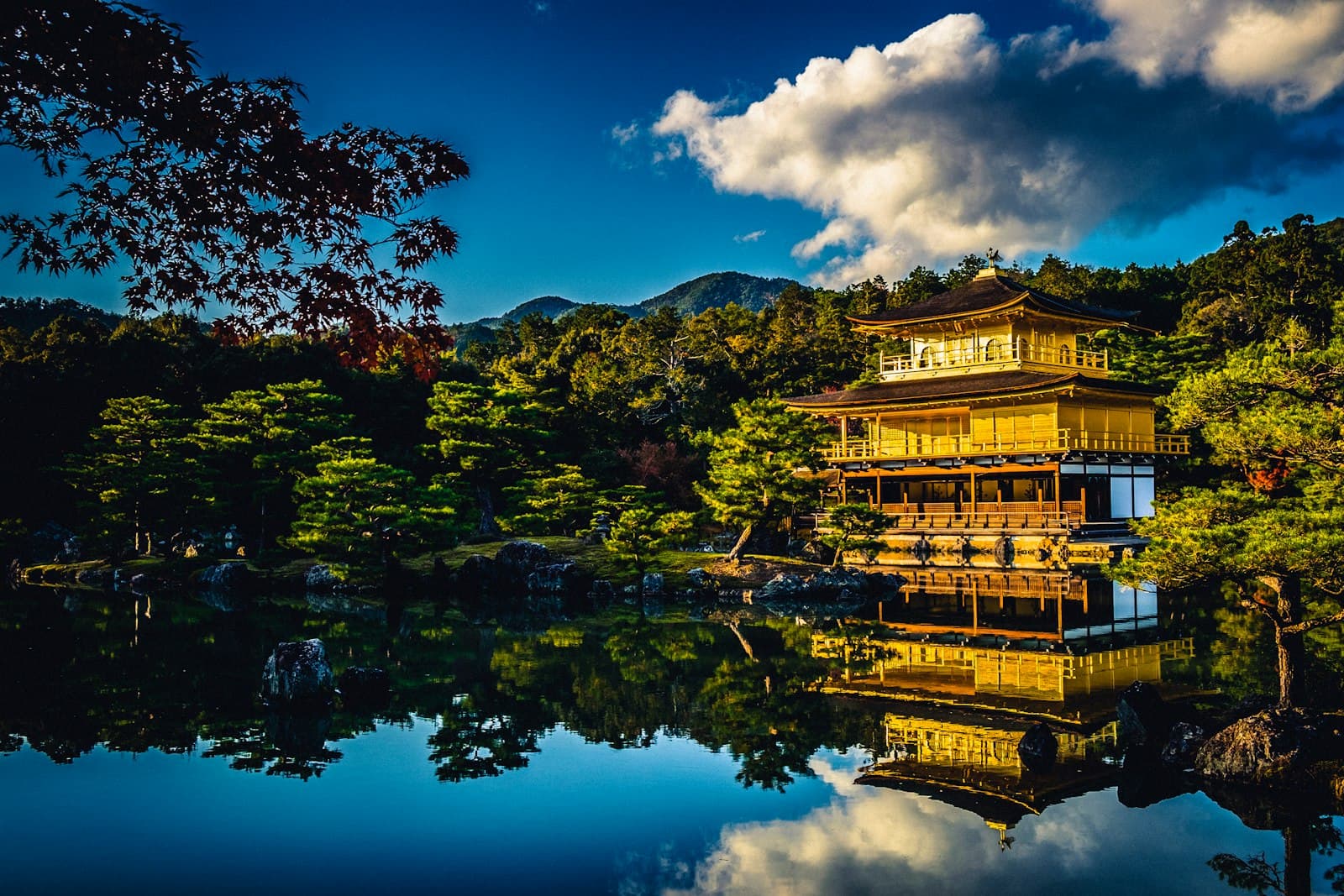
We plan temple and garden time at opening hours or earlier where official schedules allow, leaning into wabi-sabi: moss, stone, shadow, and restraint rather than spectacle. Short walks. Long pauses.
- Early-morning temple and garden time, timed to minimize contact with tour groups.
- Midday rest back at the hotel. Non-negotiable.
- Afternoon: craft-forward cultural time shaped around shokunin values—watchful, quiet, and appointment-based.
Day 3: Kyoto’s New-Key Quiet, Then Out Of The Spotlight
Kyoto is changing. Taxes too.
Kyoto City’s accommodation tax revision takes effect March 1, 2026, with top bands reaching JPY 10,000 per person per night for room rates of JPY 100,000 and above (per published notices). That matters for ultra-premium stays, and it is one reason we keep Kyoto concise for a seclusion itinerary.
- Morning: a final, low-crowd cultural visit, chosen for calm access and short transfer time.
- Midday: departure from Kyoto with a routing designed to avoid the most congested public nodes.
- Late afternoon arrival into Tokushima and onward into the Iya Valley region.
Day 4: Iya Valley Retreat Begins (Remote Japan That Still Feels Polished)
The road narrows. The mind follows.
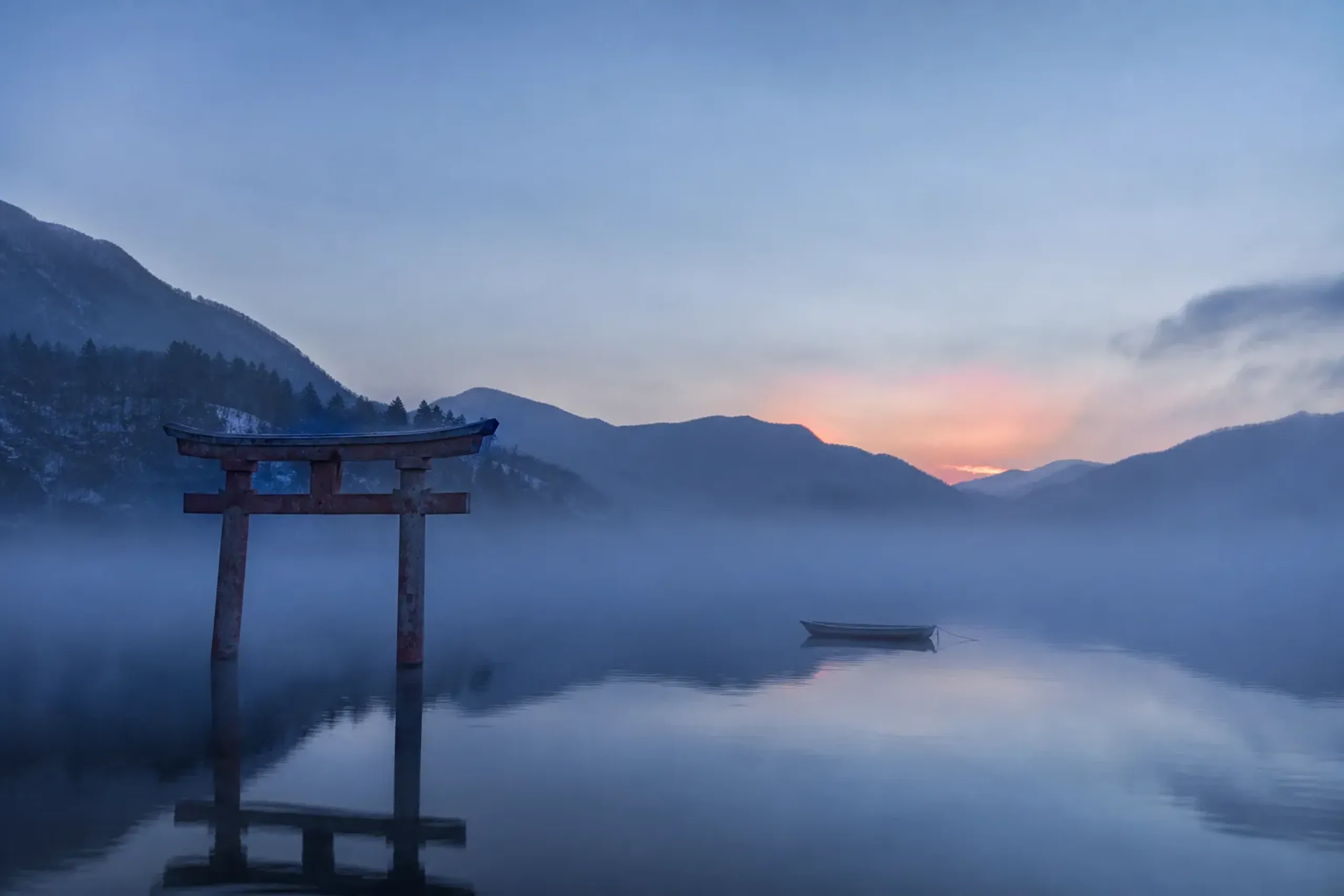
Iya Valley in Tokushima is one of the rare places where remoteness is not a slogan. It is geography. The scenery is steep, green, and quiet enough to hear your own pace return.
- Check-in and settle. No “activities” yet.
- Onsen time and a slow dinner rhythm aligned to the property’s own cadence.
- Early night. You will want the morning.
Day 5: Iya Kazurabashi And The Valley’s Living Texture
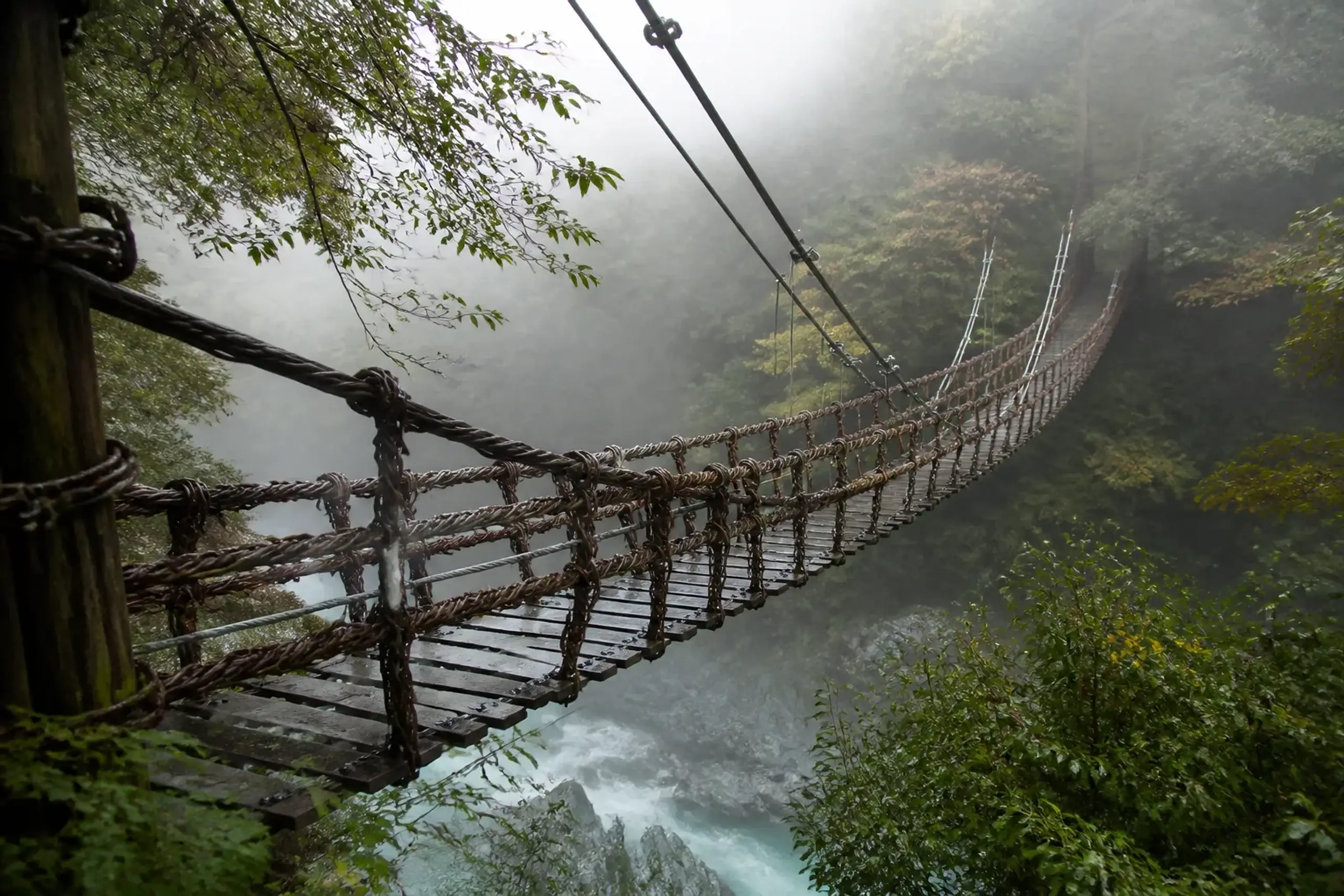
This bridge is real. And it is maintained with intent.
The Iya Kazurabashi (vine bridge) is rebuilt once every three years, generally mid-January to February, and multiple sources note safety reinforcement with hidden cables or fittings. We treat this not as a photo stop, but as a lesson in how Japan preserves what looks fragile while making it dependable.
- Morning visit timed for low foot traffic.
- Short scenic drives and stop-and-stare viewpoints, chosen for empty frames.
- Afternoon: return to your ryokan pace—onsen, reading, sleep.
Day 6: A Deep Iya Day (No Transfers, No Crowds, No Performance)
Stay put. Big luxury.
Day six is deliberately spare. Our role is to protect the silence and avoid the common mistake of “adding” experiences until the retreat collapses back into a tour.
- Late breakfast and a slow morning.
- Optional short nature walk, weather-dependent and chosen for privacy.
- Private dining rhythm in the evening, with minimal public contact inside the property.
Day 7: Toward The Seto Inland Sea (Art Islands, Rural Scale)
Change scenes. Keep the calm.
We route from the mountains to the Seto Inland Sea area with a bias toward clean transfers and low-friction arrival. This is where contemporary art meets rural island life, without the hyper-urban noise that follows you in Tokyo.
- Morning departure from Iya with a paced, private transfer.
- Afternoon arrival and settle into your island base for multiple nights.
- Evening walk near the water, timed for empty paths and soft light.
Day 8: Teshima’s Quiet Art (One Museum, Done Properly)
Teshima does not reward rushing. It punishes it.
Teshima is widely described as a rural island known for contemporary art, and the Teshima Art Museum is consistently cited as the main draw. We plan this day with generous margins, because ferry timing and weather are not things you should be negotiating in a hurry.
- Morning ferry routing designed for calmer sailings when possible.
- Midday: Teshima Art Museum with time to sit, not just “see.”
- Optional: additional art sites on the island if energy and conditions align.
Day 9: Naoshima At A Human Pace, Then Departure Planning
One last clean frame.
Benesse Art Site Naoshima publishes suggested itineraries, and notes that guests at Benesse House can use a shuttle bus reserved for Benesse House guests. Even when using official guest-only options, we keep the rhythm slow and the plan flexible.
- Morning: a small selection of Naoshima art sites, chosen for flow and minimal backtracking.
- Midday: quiet lunch timing to avoid peak waves.
- Afternoon: depart onward to your next destination, or route back toward a major airport with privacy-first timing.
Where This Itinerary Gets Its “Ultra” From (Without Needing Flash)
Luxury travelers often assume “ultra” means more. More stops. More reservations. More constant motion.
For seclusion, “ultra” means fewer public moments and fewer compromises. It is also about wabi-sabi: a controlled simplicity that feels intentional, not empty.
- Extended stays: you unpack once, then actually live in the place.
- Low-visibility movement: private routing, discreet arrivals, and fewer public pinch points.
- Hidden Japan logic: islands and valleys where “high season” feels muted compared to the Golden Route.
- Shokunin emphasis: craftsmanship as a private encounter, not a crowd activity.
Logistics Blueprint: Discreet Transfers Without Public Exposure
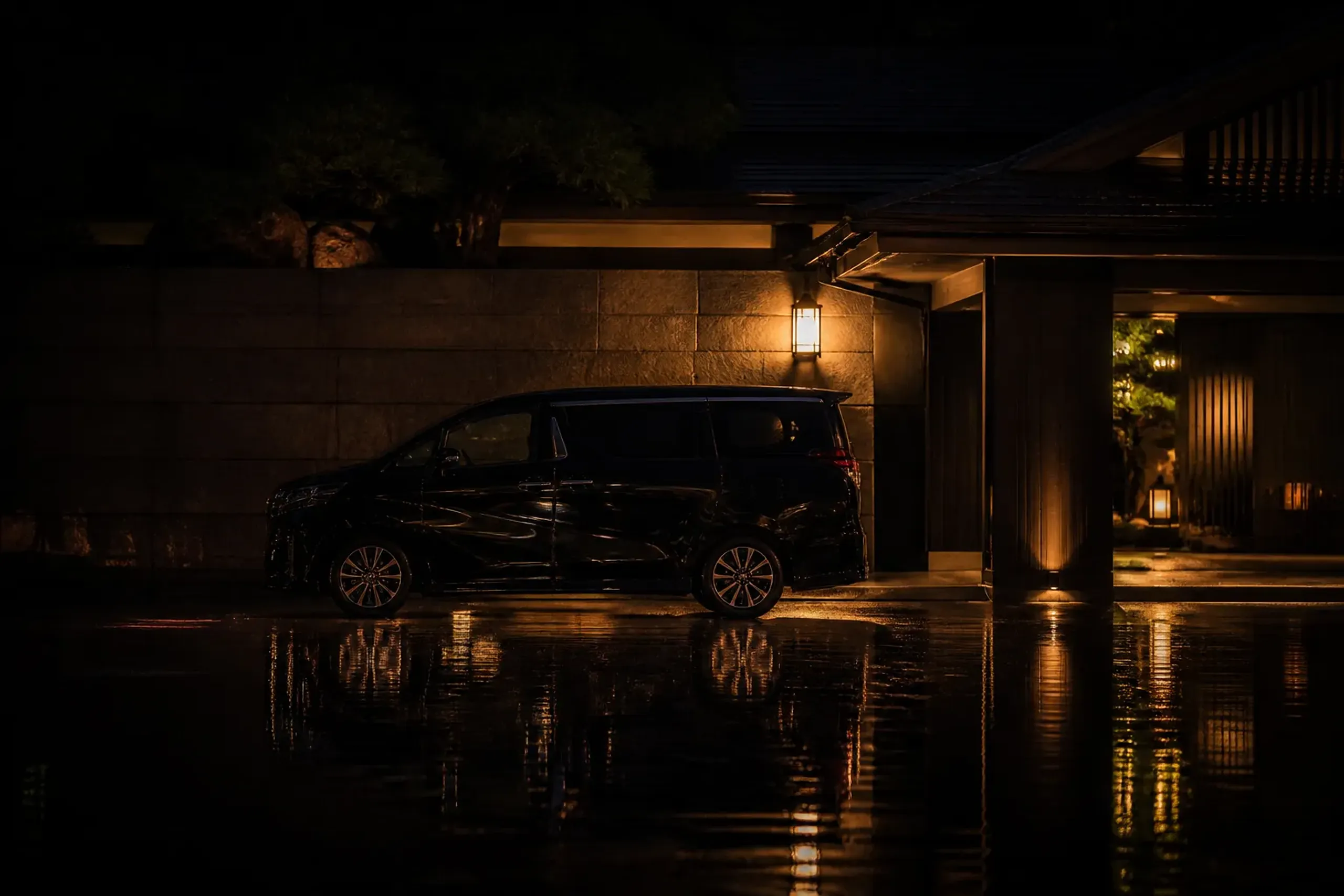
Privacy is built in the transitions, not added later.
The mood of a trip is often decided in the in-between spaces. Hotel lobbies. Station platforms. Taxi queues in the rain.
We design transfers to reduce those scenes. Sometimes that means a straight private drive. Sometimes it means a short-hop domestic flight paired with private ground movement. In certain cases, helicopter transfers may be considered where operators, weather, and regulations allow—always as a private discussion, never as a blanket promise.
Ground Transport: The Quiet Advantage
For HNW travelers, a high-comfort vehicle is not about display. It is about control, space, and not having to negotiate public exposure.
- Flagship comfort: Lexus LM 500 for a hushed cabin and a true “arrive composed” effect.
- Executive group travel: Mercedes V-Class for flexibility across cities.
- Family and mixed parties: Toyota Executive Alphard, with practical comfort that still feels refined.
Airports And Arrival Choreography
Japan’s major airports are efficient, but efficiency is not privacy. We plan arrivals and departures like a discreet ceremony: timing, meeting points, and a clean handoff into the vehicle.
- Supported gateways include NRT, HND, KIX, ITM, NGO, CTS, FUK, OKA.
- Language support can include English, Japanese, Thai, and Filipino, depending on staffing and timing.
2026 Reality Check: Kyoto Crowds, Taxes, And Why Micro-Stays Win
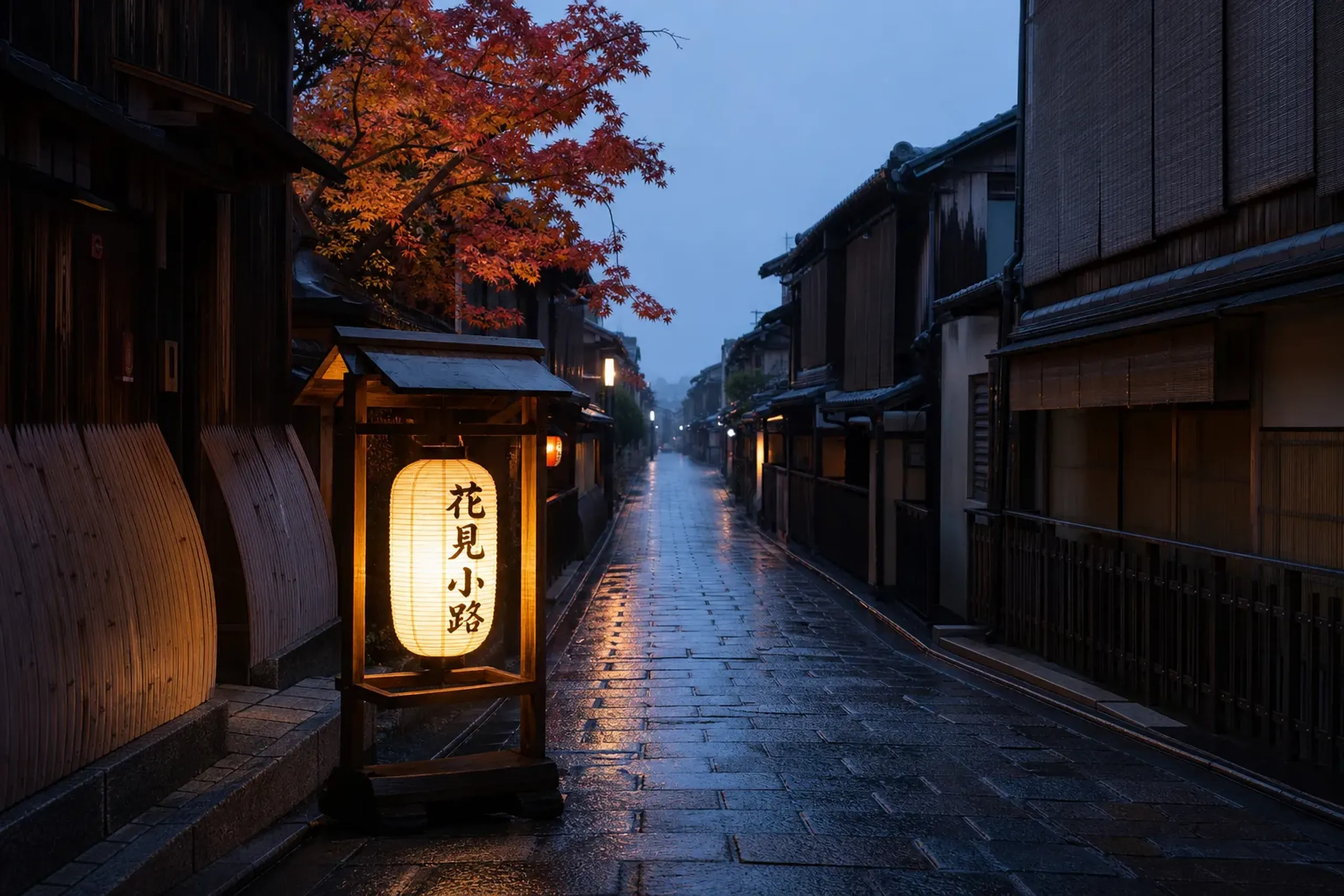
Kyoto can be calm—if you treat it as a micro-stay and start early.
Kyoto is still Kyoto. That is the problem.
Overtourism pressure is not theoretical, and Japan’s national policy conversation reflects that. When Kyoto is part of a seclusion journey, we keep it short, early, and deliberately quiet—then we move your nights to places that can absorb you without spectacle.
There is also a practical layer. Kyoto City’s accommodation tax revision (effective March 1, 2026) can materially change the per-night add-on for top-tier room rates, with a published top band reaching JPY 10,000 per person per night for qualifying room rates. We prefer cost clarity, and we prefer calm.
How To Keep The Trip Private: Simple Rules That Work
Privacy fails when the plan is complicated. It also fails when guests underestimate how quickly a public moment multiplies—one photo, then another, then a polite interruption that becomes a small crowd.
These rules are plain. They are also effective.
- Start early, rest midday: you avoid peaks and protect energy.
- Choose one anchor per day: one museum, one temple, one valley drive. Not five.
- Ask for private dining patterns: small rooms, controlled entrances, and calm pacing.
- Keep party size small: 2–4 is the sweet spot for quiet access and minimal footprint.
FAQ: Ultra-Luxury Seclusion Travel In Japan (What People Ask Us)
Is Japan “secluded” if we still visit Kyoto?
Yes, if Kyoto is treated as a controlled gateway. Two nights, early hours, and a plan that avoids the busiest corridors can keep the experience calm.
What is the best season for this itinerary?
In our experience, shoulder periods often feel calmer than peak holiday windows. Weather and ferry reliability matter for the islands, so we keep the day-by-day plan flexible around conditions.
Can we avoid trains entirely?
Often, yes. Many guests prefer private ground transport for privacy and pacing. Where rail is the smartest option, we design station time to reduce exposure and friction.
Are the Seto Inland Sea art islands suitable for travelers who dislike crowds?
They can be, especially with careful timing. Naoshima and Teshima are real destinations with real demand, so we prioritize early routing, fewer stops, and generous margins.
Does Japan Royal Service book museums, ferries, or third-party experiences for guests?
On the public site, we share information and practical guidance. For private coordination tailored to your party, preferences, and dates, guests contact our concierge directly.
Why Choose Japan Royal Service
Luxury seclusion in Japan is not achieved by copying a template and swapping hotels. Our team at Japan Royal Service builds privacy into the itinerary’s bones: timing, routing, and discretion protocols that keep your identity and movements quiet from arrival to departure.
We also curate for wabi-sabi restraint rather than loud consumption, and we lean into shokunin moments that feel personal—crafted encounters that do not play well to crowds. Hidden Japan is not a slogan for us; it is a routing discipline.
When guests compare us with competitors, they usually notice one difference first: our discretion. No publicity. No leakage. Just a calm trip that stays yours.
If you want this 9-day journey tailored to your exact pace and privacy requirements, reach our team privately via WhatsApp or LINE, or contact us here.