In this guide
- 01Two Islands At A Glance: Why Pair Taketomi And Iriomote In One Summer Stay
- 02What Makes Taketomi Island Special In Summer?
- 03What Makes Iriomote Island Worth Visiting In Summer?
- 04What Are The Island Rules And Etiquette On Taketomi And Iriomote?
- 05What Is Summer Weather Like In Taketomi And Iriomote, And What Changes The Plan?
- 06How Do You Get From Ishigaki To Taketomi And Iriomote By Ferry?
- 07Can You Do Taketomi And Iriomote In One Day From Ishigaki?
- 08Let Us Plan Your Yaeyama Summer
The remote-island terminal at Ishigaki is already awake when you arrive. Flip-flops slap against the floor. A ticket printer chirps somewhere behind the counter. Then the ferry horn cuts through the humidity, the engine note settles into a steady thrum, and something in your shoulders lowers—the sound feels like permission to slow down.
You could treat Yaeyama as a checklist. That would be a mistake. Taketomi and Iriomote sit close together on a map, yet they ask for completely different manners, shoes, and pacing—especially in summer, when heat, rough seas, and jellyfish quietly redraw what the word “easy” actually means out here.
This guide is for doing both islands well. Calm where calm is required. Watchful where the jungle demands it. Our team at Japan Royal Service plans these days from an Ishigaki base with the realities of the ferry timetable firmly in mind—and with each island’s rules treated as the main itinerary, not a footnote tucked away at the bottom of a page.
Two Islands At A Glance: Why Pair Taketomi And Iriomote In One Summer Stay
Taketomi is small, flat, and deliberately preserved. You feel it in the white-sand lanes and in the quiet boundaries that keep the village from slipping into theme-park territory. It is a place where the islanders wrote down what matters to them, and where visitors are simply expected to notice. There is a wabi restraint here—nothing shouts, and the beauty lives in what has been left untouched.
Iriomote is the opposite temperament entirely. It is the second-largest island in Okinawa Prefecture after the main island, roughly 290 square kilometres, and close to nine-tenths forested.
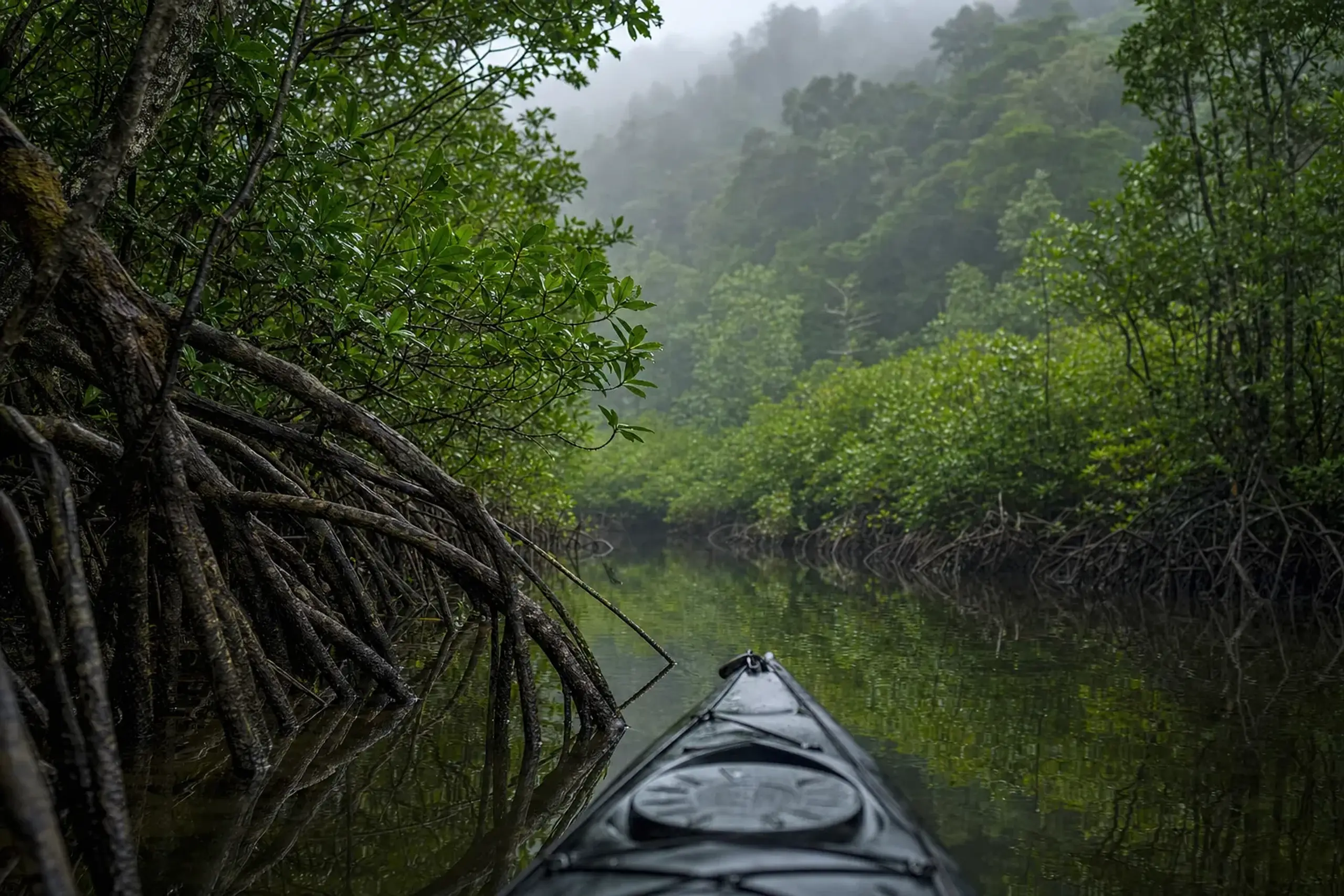
Green dominates everything. The shoreline reads less like a beach than like a wall of living jungle.
Put the two together and you get genuine contrast without long travel days between them. One island teaches you how to walk softly past coral-stone walls. The other teaches you to respect water, heat, and carefully regulated backcountry access. For the well-travelled guest who has already seen the gilded version of luxury elsewhere, that quiet contrast is precisely the point.
What Makes Taketomi Island Special In Summer?
Taketomi Island is a nationally designated Important Preservation District for Groups of Traditional Buildings, selected on 28 April 1987, in the category of an island farming village, across about 38.3 hectares.
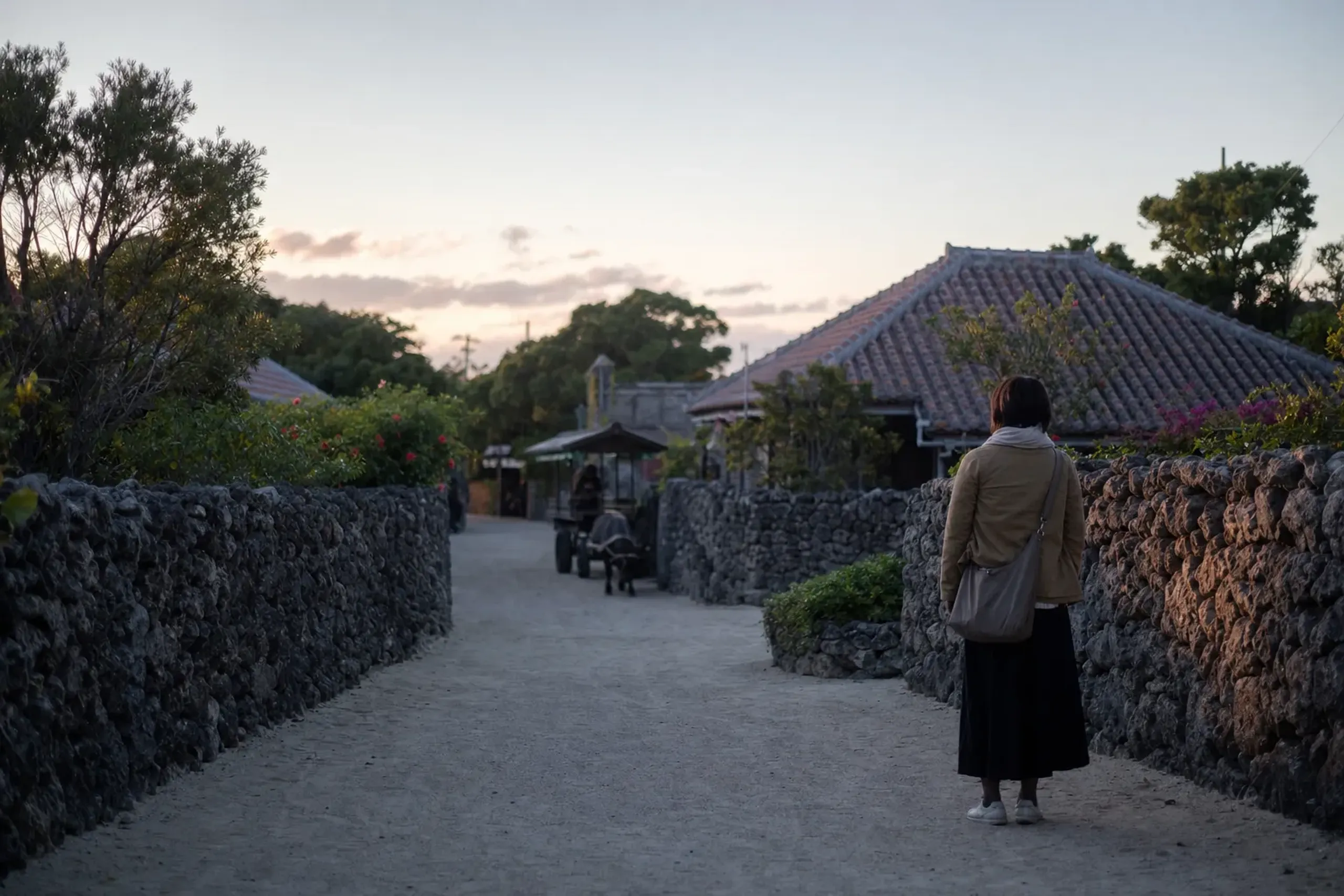
You notice the preservation district long before you fully understand it. Red-tile roofs sit low behind coral-stone walls (guku). White-sand lanes curve and narrow as they go, and the island’s three settlements gather inward around the centre rather than stretching thin along the coast. It is a village that turns its back on spectacle.
Summer adds a particular glare. Midday light bounces off sand and limestone until shade starts to feel like a physical object you can step into. Our advice is simple: start early, take longer pauses than you think you need, and save the beach for later—when you can give your attention to sea safety rather than merely surviving the heat.
The Island Charter: Five Plain Rules That Shape The Visit
An MLIT database entry describes an island charter adopted in 1986 with five guiding principles: do not sell, do not pollute, do not disturb the scenery, do not destroy, and make use of—that is, keep the traditions alive.
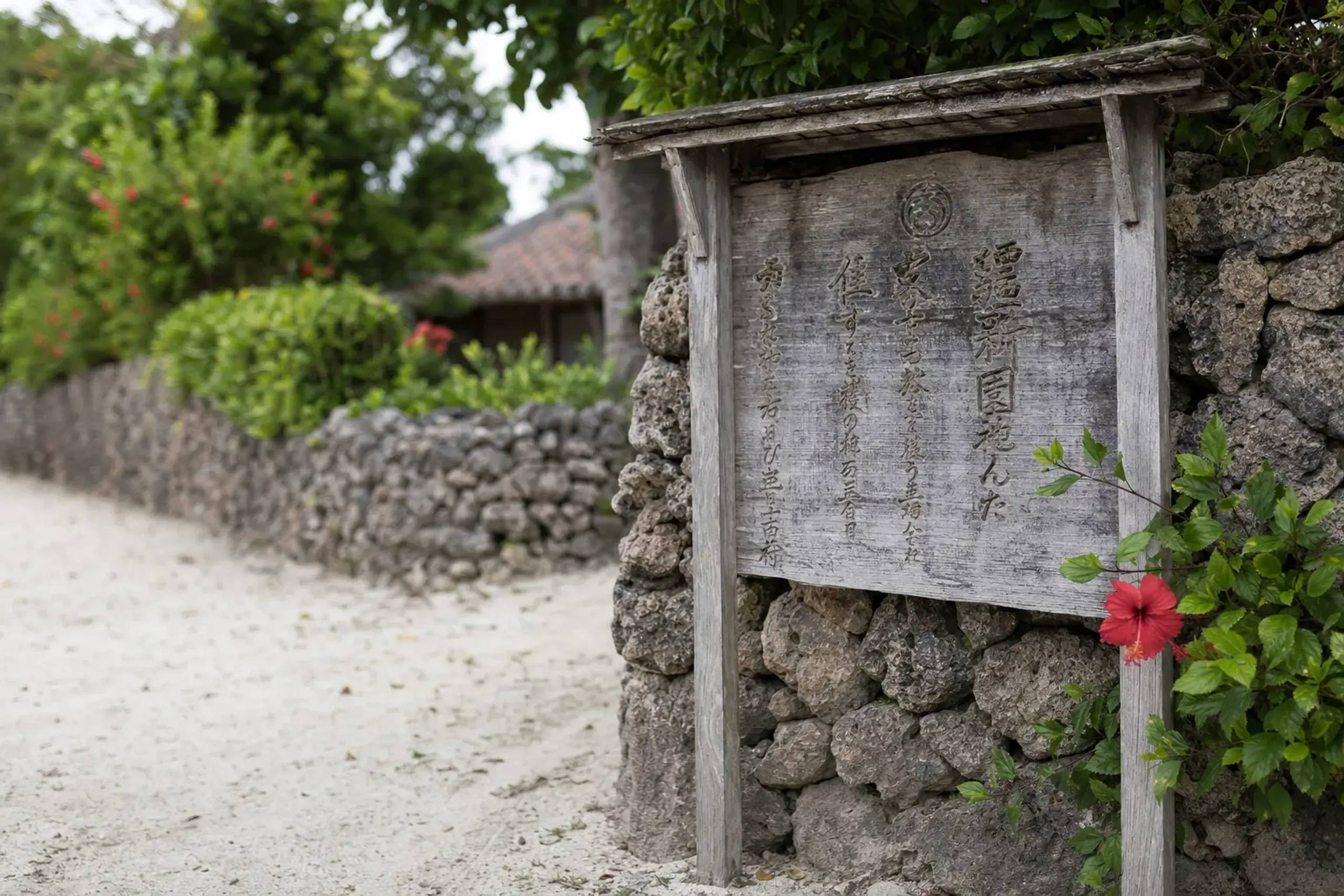
It reads as something simple. It is not soft. You feel it in how people dress once they step away from the beach, in how drones are regarded, and in how quickly “just a peek” into someone’s property becomes exactly the wrong mood in a place this small and this watchful. Part of what we arrange here is the discretion that works both ways: your presence noticed by no one, and the village’s privacy honoured in return.
The Village Walk: How To See The Preservation District Without Rushing It
Give the village a slow morning. Not an hour—a real block of time, long enough that you can stop, look, and let the heat set the rhythm instead of fighting it.
In our experience, the best summer village day is built around a handful of short walks with shade breaks woven between them, rather than one long, punishing loop. Our concierge team can also introduce an English-speaking cultural interpreter guide for the Taketomi village day—someone who opens up the preservation district, the island charter, and the everyday etiquette that most visitors never quite grasp. This is the Japan that a guidebook flattens and that only an introduction can properly unlock.
Keep your expectations realistic as well: mobile signal can disappear entirely outside the village, and some lanes restrict vehicles, including bicycles, to protect the white-sand lanes underfoot.
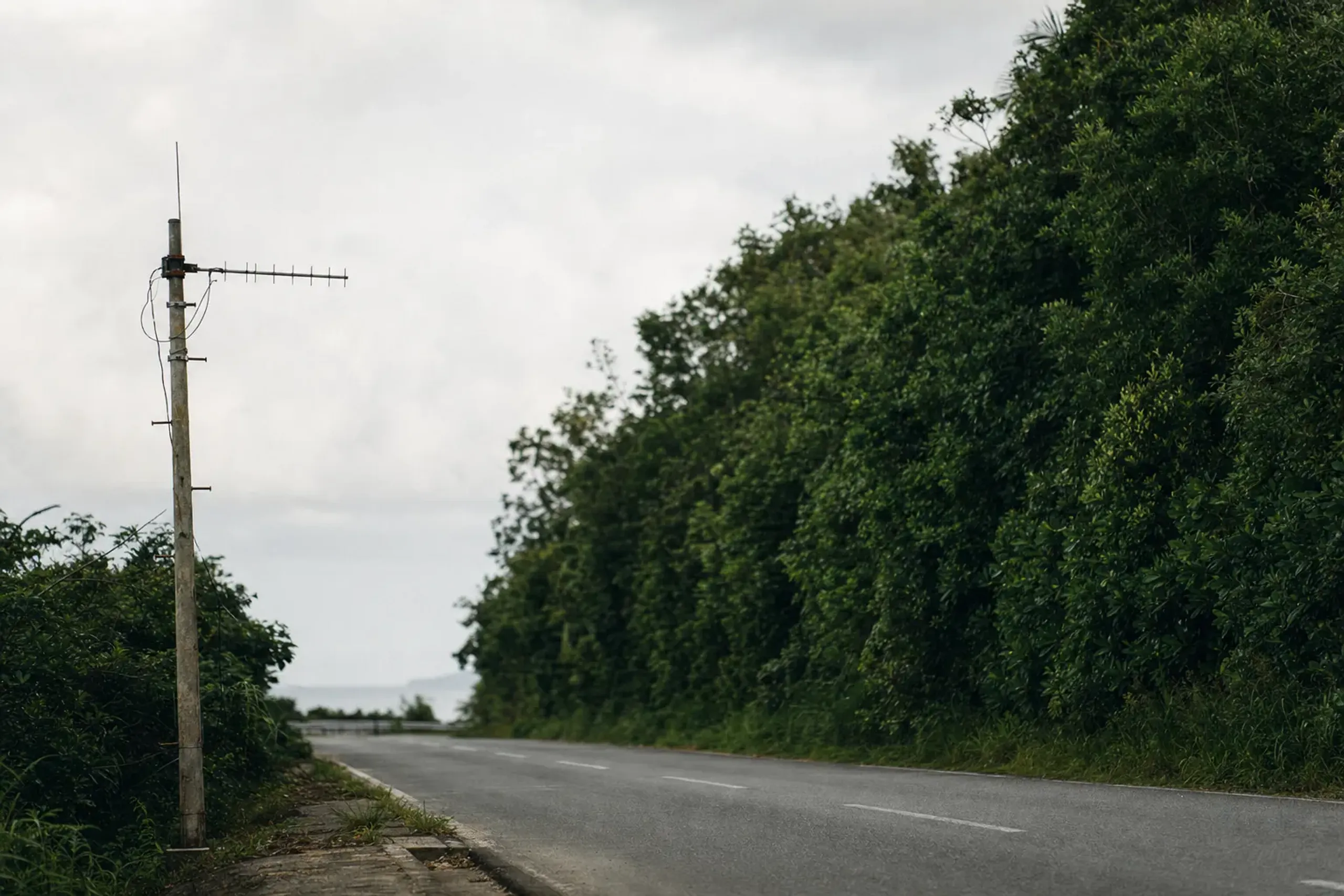
That restriction is not an inconvenience. That is part of the point.
Beaches In Summer: Kondoi, Kaiji, And Aiyaru
Taketomi’s beaches feel close to the village, yet the sea keeps its own rules. The Taketomi Tourism Association highlights Kondoi Beach, Kaiji Beach, and Aiyaru Beach, with Aiyaru marked “swimming caution.”
Kaiji is known for its “star sand”—the tiny shells of foraminifera that wash up along the shore, described in an MLIT database summary. You do not need to hunt for it. Just look down at your feet.
If swimming is your goal, plan it like an activity, not a spontaneous add-on. Summer sea safety in Okinawa is not background information to be skimmed—it shapes the entire shape of the day.
What Makes Iriomote Island Worth Visiting In Summer?
Iriomote Island is a large, mostly forested island where mangroves, rivers, and regulated trails define the day far more than any shop or landmark ever could.
The Forestry Agency describes it as the second-largest island in Okinawa Prefecture after the main island and notes the sheer scale of its forest cover. Local association material places the island at about 290 square kilometres, with a population of around 2,400. You feel that sparseness almost immediately.
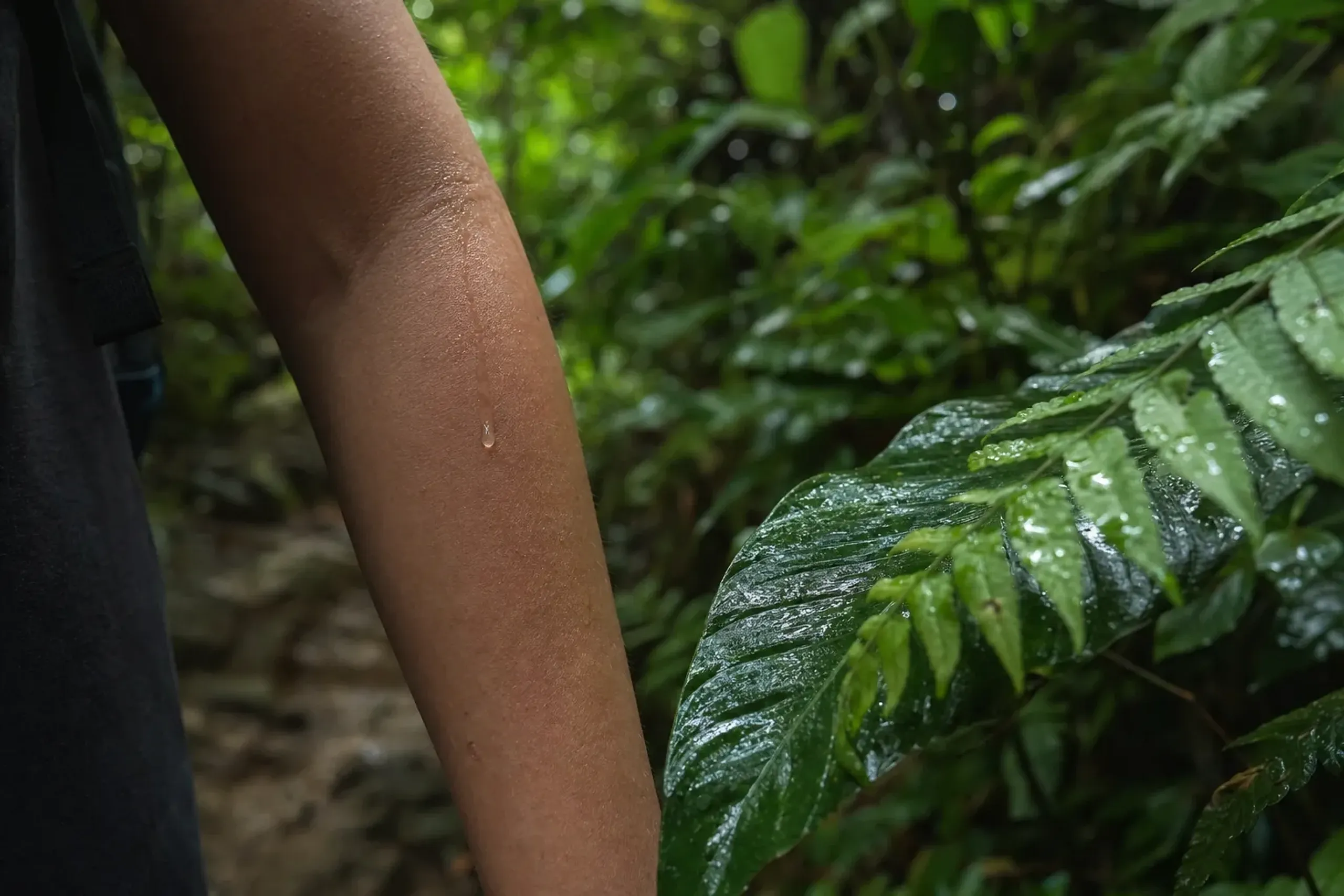
Summer turns the forest into a living greenhouse. Sweat arrives early and stays. River time becomes the sensible choice—but only when it fits the rules, the weather, and the right kind of guide. Knowing which experience suits which month is exactly the kind of judgement our guests come to us for.
The Urauchi River: Long Water, Deep Shade
Taketomi Town describes the Urauchi River as Okinawa Prefecture’s longest river. A river cruise runs along it, and it is one of the gentlest ways to meet Iriomote when the sun is blunt overhead and the humidity hangs heavy.
From the Urauchi, the two names worth knowing are Mariyudu Falls and Kanbire Falls, which Taketomi Town lists as key features along the river’s length. This is not a place for bravado. Footing changes without warning. Weather shifts faster than you expect. Deep shade and moving water make it feel, for an hour or two, as though the modern world has quietly withdrawn.
Pinaisara Falls: A Summer Highlight With Real Restrictions
Pinaisara Falls is described by Taketomi Town as having the largest drop of any waterfall in Okinawa Prefecture. In summer, the pull of it is obvious—you hear the water long before you see it.
But this is also where visitors most often misunderstand the island. Since 1 March 2025, entering several backcountry areas requires prior approval and a mayor-approved guide, with daily limits and fees (the amounts and limits are set by the town and can change). One of the named fields is the Hinai River area used for access toward Pinaisara Falls.
So treat it as regulated from the very start. No shortcuts. No “we’ll decide on the day” mindset. The arrangement we quietly handle in advance—approvals, licensed guiding, timing—is precisely what lets you simply arrive and experience it.
The Iriomote Cat And Why Driving Slowly Is Part Of The Itinerary
The Iriomote cat is a National Natural Monument (1972) and a Special Natural Monument (1977), and it is also designated as a domestic rare species (1994).
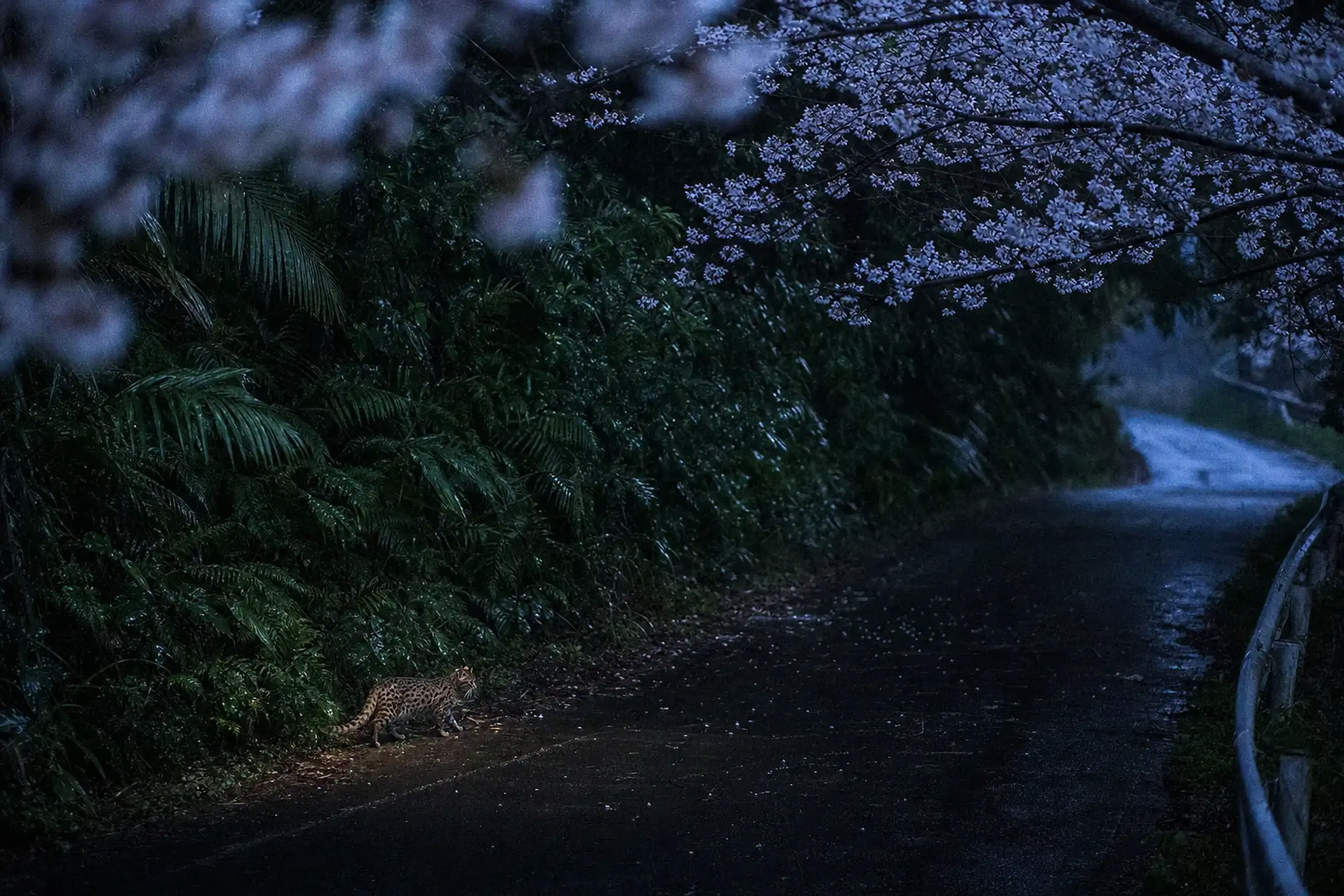
The Ministry of the Environment lists it as Critically Endangered on its Red List (the category can be revised, so we confirm it closer to your visit).
You will almost certainly not see one. That is entirely normal. The correct luxury here is not a sighting—it is behaving in a way that makes a sighting unnecessary for the animal’s survival in the first place.
Ministry of the Environment guidance for conservation measures in Iriomote-Ishigaki National Park includes encouraging drivers to keep to “island speed” (40 km/h or slower) to protect rare wildlife. The town also promotes a simple motto: stop rather than swerve. Slow driving is not mere politeness. It is protection. When we arrange your private transportation across the island, that measured pace is built in from the outset.
If you want the deeper story of the animal itself, read our guide: Iriomote Cat (Yamaneko): How To Understand The Island’s Wild Heart.
What Are The Island Rules And Etiquette On Taketomi And Iriomote?
The practical rules are clear enough: stay out of places that are not meant for visitors, carry your own rubbish home, and never turn a living island into a photo set.
On Taketomi, town and tourism guidance emphasizes basic behaviours that matter even more in summer: no swimwear or bare chests away from the beach; do not enter sacred groves (utaki) or graves, but pay your respect from a distance instead; take your rubbish home; do not look into private property; and no drones.
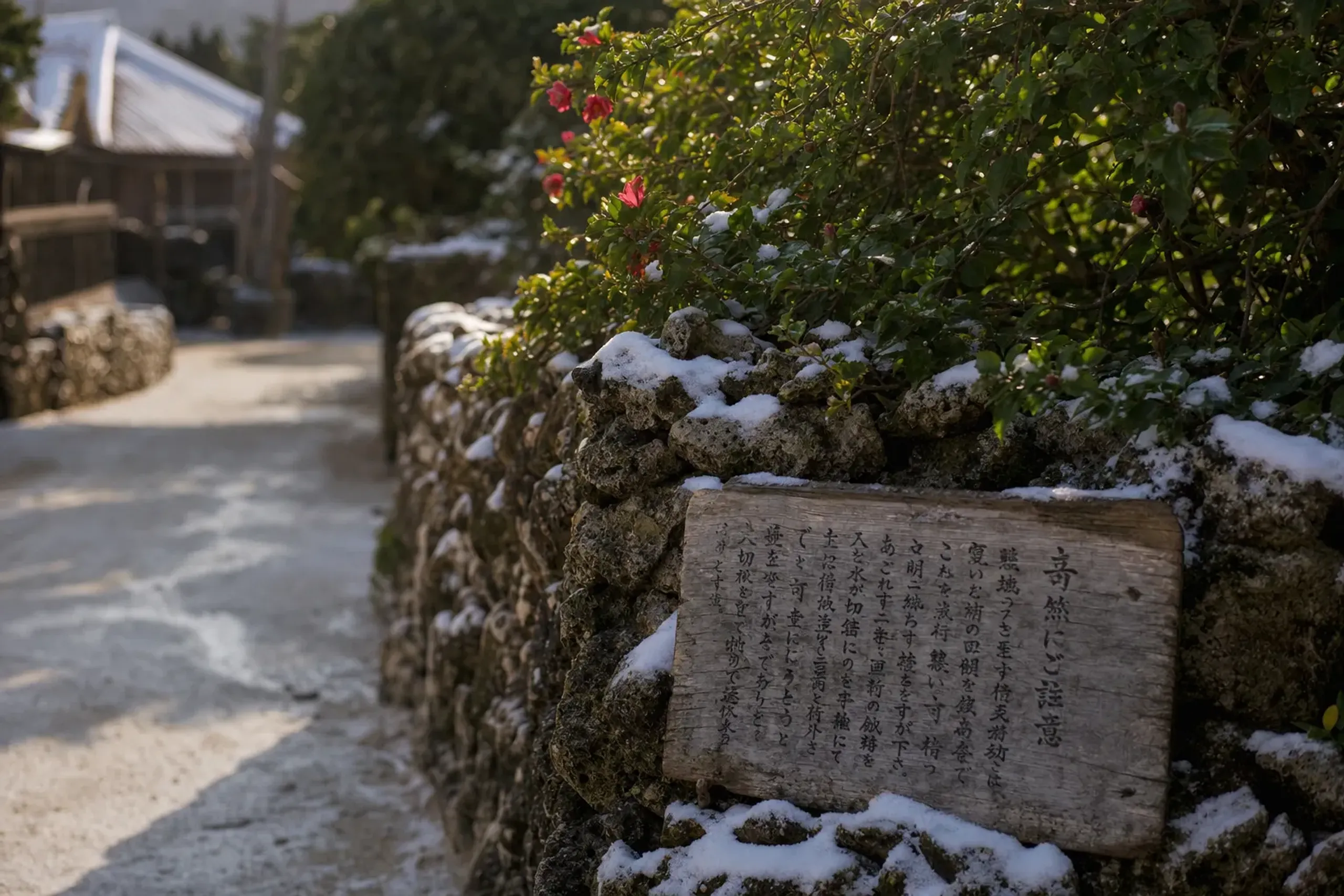
Heat is part of etiquette too. Look after yourself with water, a hat, and sunscreen, because the local clinics are small and few. The guidance also advises swimming in pairs or more, with a float. Sensible. Non-negotiable.
On Iriomote, etiquette extends into following conservation and safety systems that are enforced, not merely suggested. Taketomi Town’s Tourist Guide Ordinance (enforced April 2020) requires operators conducting nature experience-type guided tours on Iriomote’s land areas to obtain a license. If you are heading into the jungle or river areas, choose licensed operators and take the rules seriously. We work only with those licensed hands—the kind who know the terrain in a way no map can convey.
Key fact: Since 1 March 2025, several Iriomote backcountry areas require prior approval and a mayor-approved guide; rules and named fields can change, so confirm close to travel.
What Is Summer Weather Like In Taketomi And Iriomote, And What Changes The Plan?
Expect daytime highs near 32°C, nights near 27°C, and mean temperatures around 29–30°C in mid-summer, based on JMA normals for Ishigakijima (1991–2020).
That heat is not a detail to be waved away. It dictates when you can walk the village lanes, how long a beach stop stays pleasant before it turns punishing, and whether an Iriomote day should lean toward shaded river time rather than exposed trails.
Rain and wind matter even more than the heat.
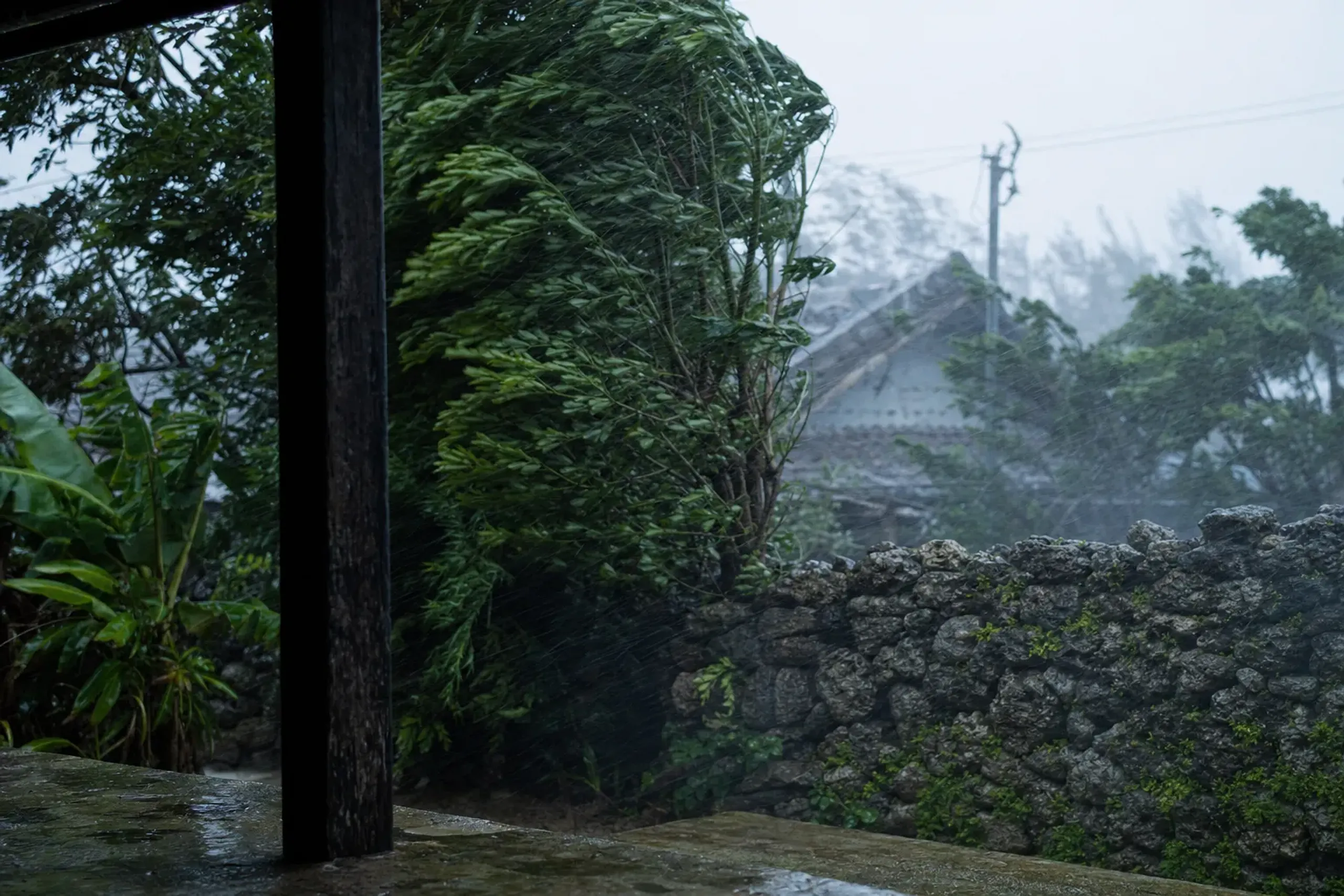
Typhoon season peaks in late summer, with July to September the main window. The lesson for the discerning traveller is a simple one: you are not buying more speed—you are buying better contingency, and the quiet reassurance that someone has already thought through the alternatives.
Sea Safety In Summer: Box Jellyfish And Swimming Choices
Okinawa Prefecture warns of box jellyfish (May to October), with stings peaking from late July to mid-August. Swim only inside jellyfish nets where they are installed.
Cover your skin. A stinger suit helps, though it is no guarantee. And if you are stung, follow the official guidance carefully: leave the water, pour about 5% vinegar over the area, remove any tentacles gently, cool the skin, and get to hospital—do not rub, and do not use fresh water, alcohol, or sand on the tentacles.
Forest Safety In Summer: Paths, Shoes, And Local Capacity
Okinawa Prefecture advises care with venomous snakes, without making island-specific claims. So keep it simple: stay on the paths, wear closed shoes, and take a guide into any jungle area.
Also remember the matter of scale. Clinics here are small. Rescue is not instant. Summer travel in this corner of Japan rewards humility above all else.
How Do You Get From Ishigaki To Taketomi And Iriomote By Ferry?
From Ishigaki Port’s remote-island terminal, ferries reach Taketomi in about 10–15 minutes, Iriomote (Ohara Port) in about 35–40 minutes, and Iriomote (Uehara Port) in about 40–60 minutes.
Ishigaki is the base that makes this pairing genuinely practical.
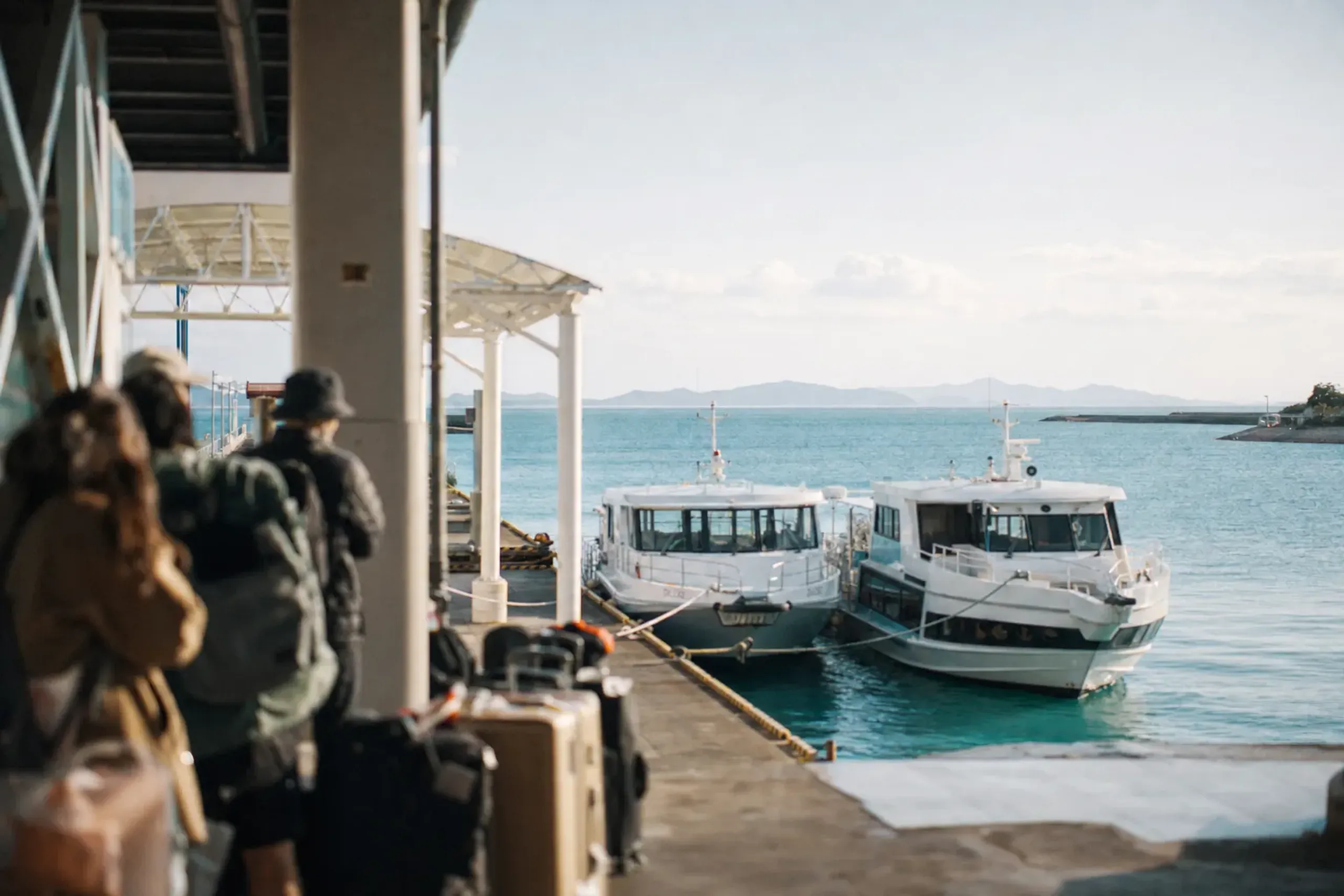
Fly into Painushima Ishigaki Airport, then move across to the Ishigaki Port remote-island terminal—a taxi takes about 30 minutes, and buses run roughly 30–50 minutes per local guidance.
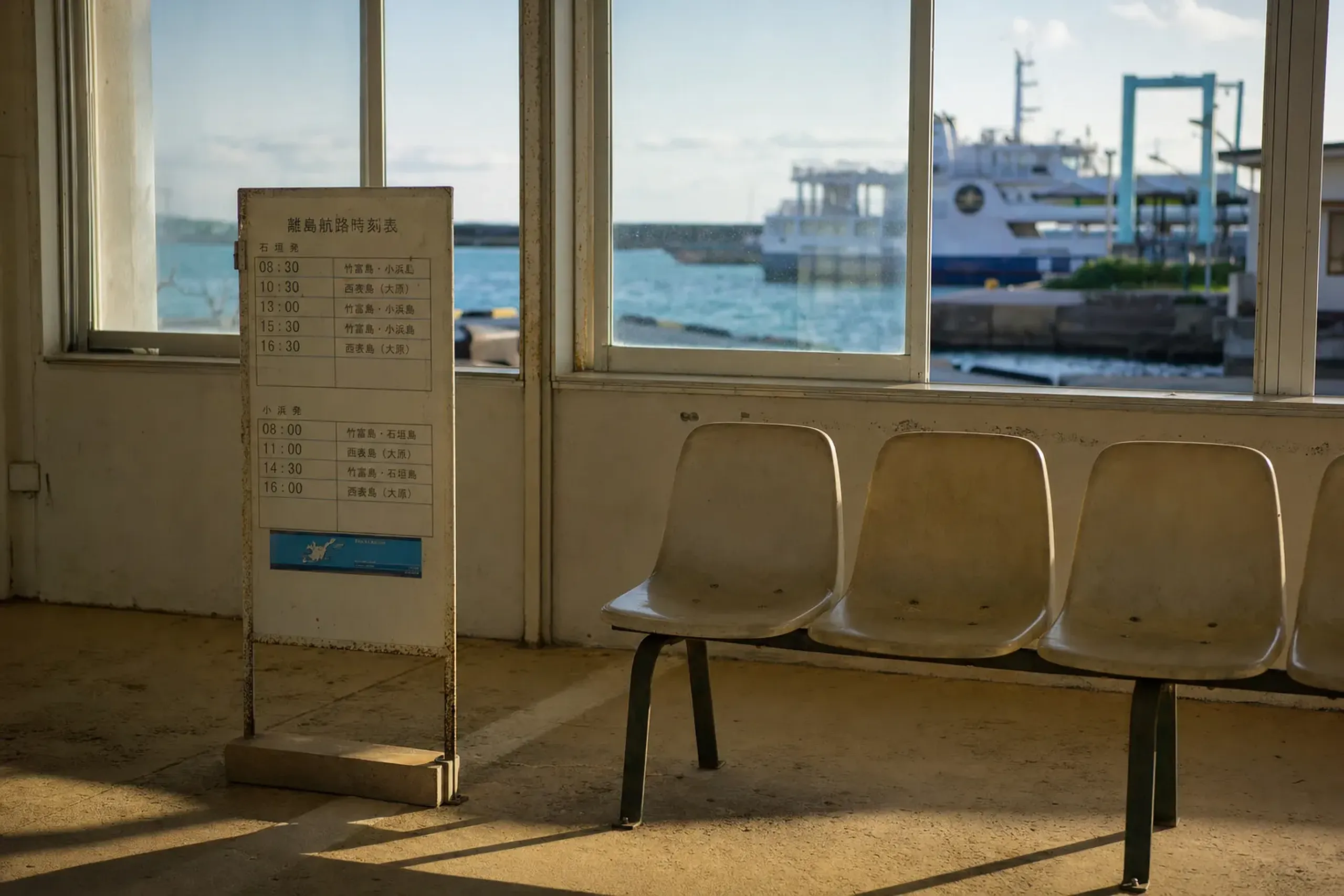
Two operators run the Yaeyama routes: Yaeyama Kanko Ferry and An’ei Kanko. Summer seas can cancel sailings without much warning. Always check the operator’s status that morning, and confirm the day’s last sailing before you cross to any outer island. These are the small logistics that unravel an unplanned trip—and that a tailor-made itinerary absorbs on your behalf.
Ohara Vs Uehara: Picking The Iriomote Port That Matches Your Day
Ohara and Uehara are not interchangeable if you are trying to stack activities without stress. Choose based on what you plan to do and how the weather typically affects the sea along your particular route.
In our experience, the most comfortable approach is to decide your port as part of a full-day flow—ferry, activity start time, heat breaks, and the last return boat—rather than choosing purely by the shortest crossing. The difference between a smooth day and a frayed one often comes down to that single early decision.
Can You Do Taketomi And Iriomote In One Day From Ishigaki?
Yes, but in summer it is usually a rushed day; most travellers do far better by separating the two across two days, keeping one spare day in reserve for rough seas or typhoon disruption.
On paper, the ferry times look short. Reality adds waiting, heat pacing, and the hard constraint of the last boat. Add Iriomote’s regulated backcountry access to that, and you can find yourself making poor decisions purely to “fit it in.”
We plan this pairing like a small expedition, not a casual hop. Taketomi gets the early, cooler hours. Iriomote gets the full day you can commit to weather, licensed guiding, and a slower, unhurried return.
Option A: Two-Day Pairing (Most Comfortable In Summer)
This is our default recommendation for travellers who want these islands to feel restorative rather than athletic.
- Day 1 (Taketomi): early ferry, a village walk with cultural interpretation, shade breaks built in, and beach time only if conditions and nets support it.
- Day 2 (Iriomote): one main nature focus—river or waterfall area—planned around approvals, licensed operators, and return-ferry timing.
You still leave room for the weather to have its say. That room, quietly held in reserve, is the real luxury.
Option B: One-Day “Taste” (Only If You Accept Trade-Offs)
This works only when you choose a narrow goal on each island and accept, from the beginning, that you will not “cover” Iriomote in any meaningful sense.
Let Us Plan Your Yaeyama Summer
Taketomi and Iriomote reward travellers who arrive with the approvals secured, the licensed guides arranged, and the ferry timetable already understood—so that nothing stands between you and the moss-still village lanes or the deep shade of the Urauchi. That quiet groundwork, handled entirely out of view, is what we do. When you are ready to shape your own unhurried crossing through the Yaeyama Islands, contact us here and we will begin with the details that matter most to you.